The book ‘Reinventing Modern Architecture in Greece: From Sentimental Topography to Ekistics’ writen by Marianna Charitonidou examine the intersections of modern architecture, urban planning, politics, and culture in Greece and beyond, focusing on figures such as Constantinos Doxiadis, Adriano Olivetti, the Smithsons, Xenakis, and Zenetos. Drawing on extensive archival research, it highlights ekistics, critical regionalism, and postwar reconstruction, especially under the Marshall Plan, emphasizing interdisciplinarity, technological change, and the relationship between society, environment, and human settlements across history and global contexts. An invited lecture based on this book will be delivered on 17 February 2025 between 19.00 and 21.00 at the Alan Baxter Associates Gallery 77 Cowcross St London EC1M 6EL and online.
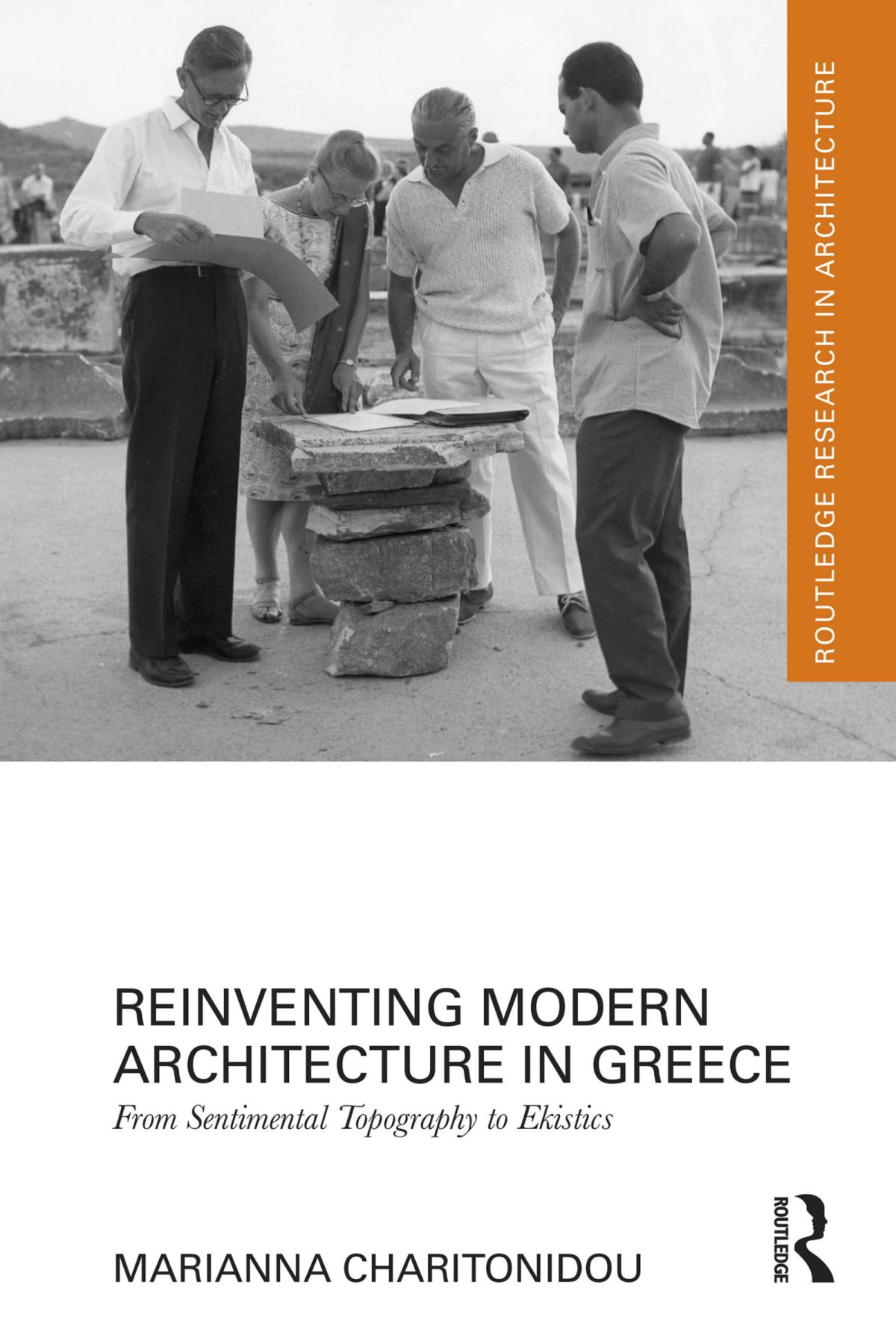
This book examines the connection between the politics of the Marshall Plan and urban planning and identifies the key players, such as the Greek architect and urban planner Constantinos A. Doxiadis and the Italian industrialist Adriano Olivetti. It also explores the architects of the Mataroa mission, who played a vital role in the cross-fertilisation between France and Greece, and the role of travel to Greece for architects during the 19th century.
This book delves into the work of Constantinos A. Doxiadis, Adriano Olivetti, Alison and Peter Smithson, Iannis Xenakis, Takis Zenetos, Henri Lefebvre, Cornelius Castoriadis, Aris Konstantinidis, Dimitris Pikionis and others. It sheds light on how Doxiadis introduced “ekistics” as a novel approach to understanding the science of human settlements.
This book proposes that the manner in which these aforementioned architects and urban planners addressed the role of technology in everyday life and the relationship between society, history, culture, nature, architecture and urban planning could enrich our ongoing methods and debates on architecture, urban planning, ecology, social equity and democracy.
This book is based on extensive archival research and will be of interest to architects, artists, researchers and students and scholars in architecture, architectural history and theory, art, urban sociology, cultural theory, science and technology studies, philosophy, ecology, cybernetics and aesthetics.
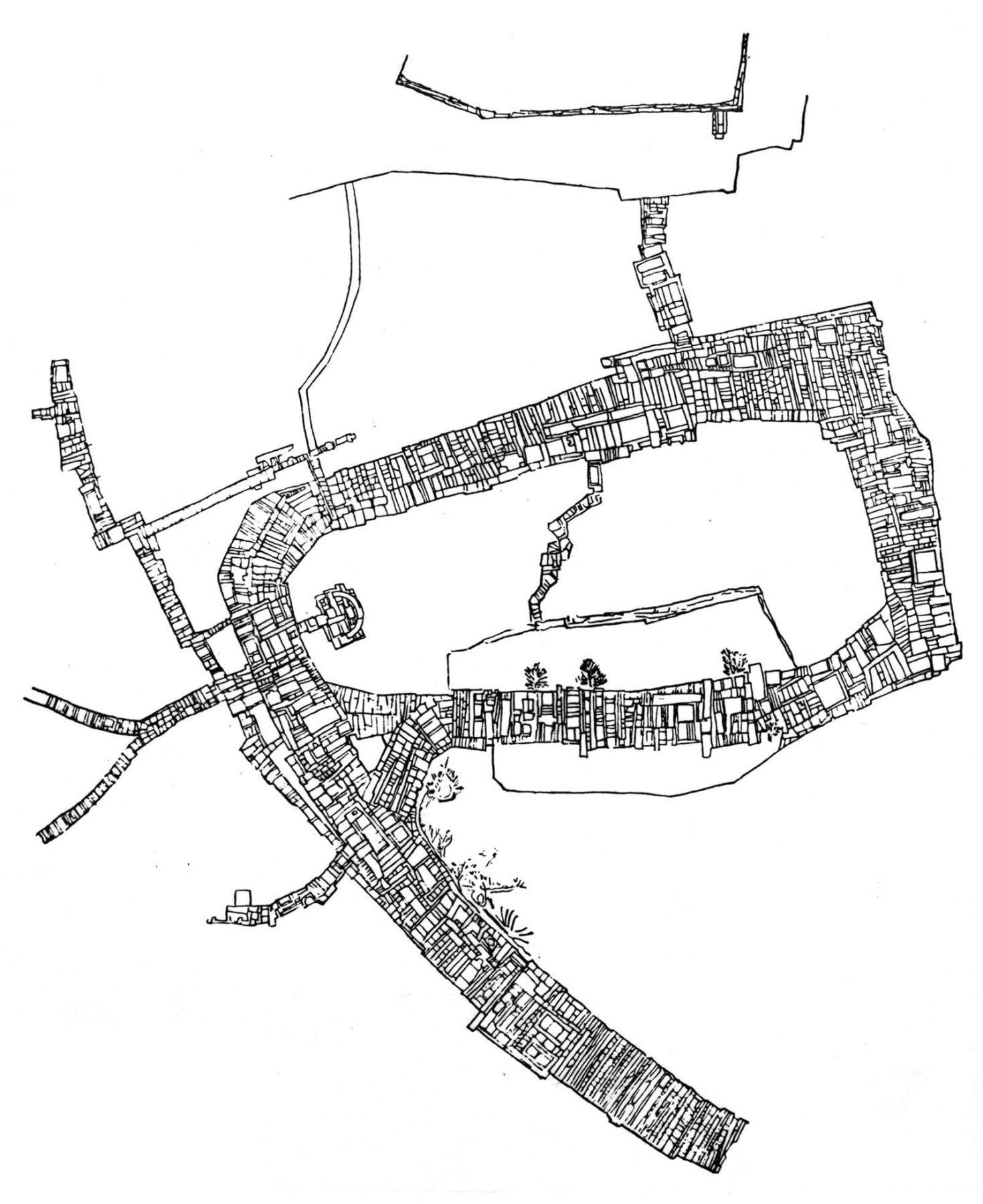
Dimitris Pikionis, Road and footpath study for the landscaping of the area immediately below the Acropolis, 1954–1957, ANA_67_55_34 © 2024 Benaki Museum‑Modern Greek Architecture Archives.
Dr. Marianna Charitonidou (PhD, MPhil, MSc, MarchEng) is architect engineer & urban planner, historian & theorist of architecture, urbanism & art, philosopher, expert in sustainable environmental design, curator & urban Sociologist. She is the founder and principal of Marianna Charitonidou Think Through Design Studio. She is a licensed architect engineer, urbanist, and historian/theorist of architecture and urbanism. She holds a PhD Degree and an MPhil Degree from the National Technical University of Athens, an MSc Degree from the Architectural Association, and a Master’s Degree from the Aristotle University of Thessaloniki. She is the author of many books, among which are: Architecture, Photography and the Moving Eyes of Architects: The View from the Car (London, New York: Routledge, 2026), Reinventing Modern Architecture in Greece: From Sentimental Topography to Ekistics (London, New York: Routledge, 2025), Architectural Drawings as Investigating Devices: Architecture’s Changing Scope in the 20th Century (Routledge, 2023) and Drawing and Experiencing Architecture: The Evolving Significance of City & Inhabitants in the 20th Century (Transcript Publishing, 2022). She has been teaching at the University level since 2011. She has been a Lecturer and Researcher at ETH Zurich, Princeton University, Columbia University, École française de Rome, the Getty Research Institute and the Canadian Centre for rchitecture. She has received numerous awards for her research, teaching, conference presentations, and writings on architecture and urban studies. She curated the exhibition The View from the Car: Autopia as a New Perceptual Regime at ETH Zurich.
An invited lecture based on this book will be delivered on 17 February 2025 between 19.00 and 21.00 at the Alan Baxter Associates Gallery 77 Cowcross St London EC1M 6EL and online.
The event will be hosted by Docomomo UK.
Learn more about the event, here!
Docomomo members go free. To book a member’s ticket please see here. To become a member see here.
Tickets for attendance in person and online are available here. Tickets will also be available on the door for £15.
For online attendance, please book your ticket before 18.00 on the day of the event. A link to watch the talk online will be sent to attendees before it begins.
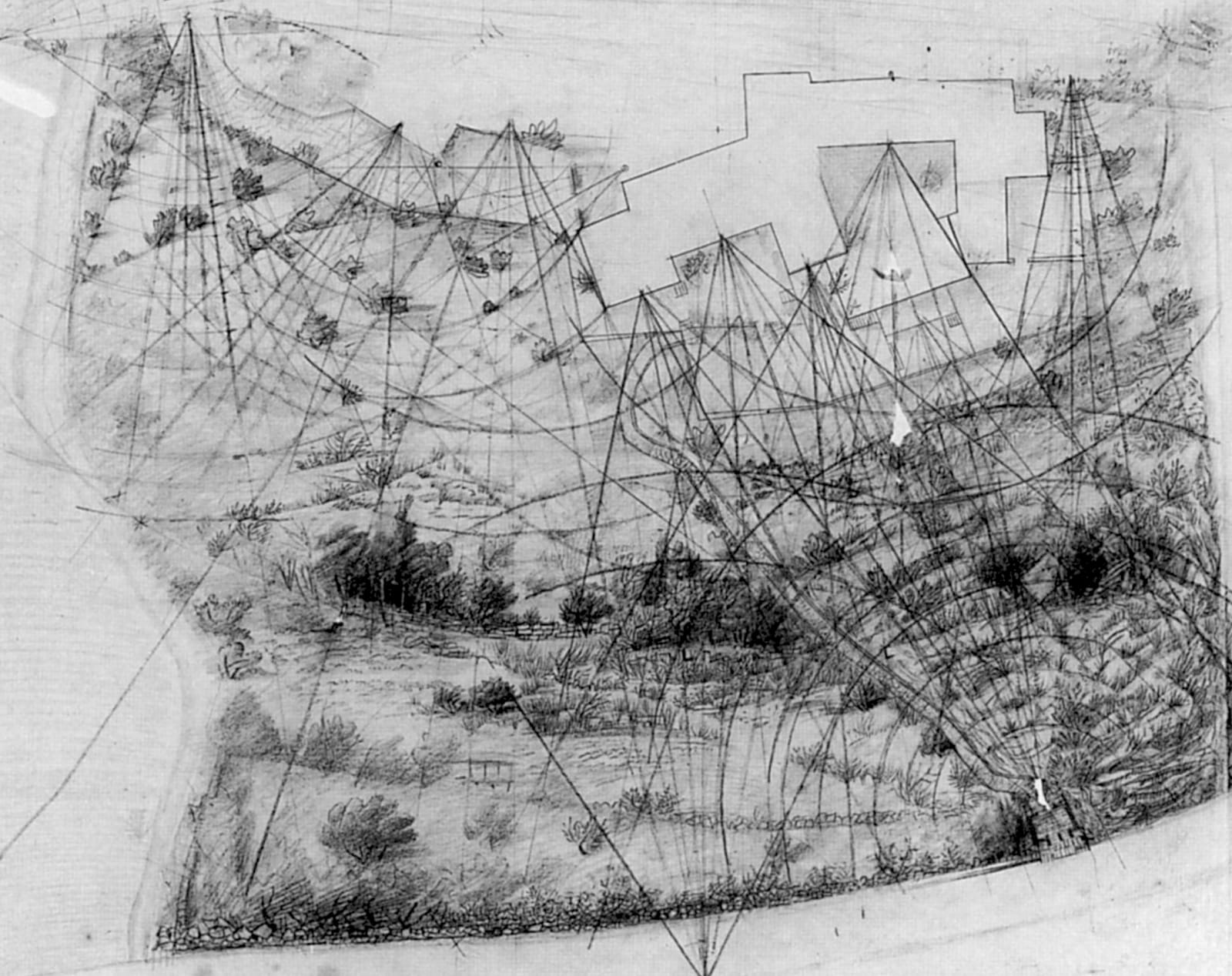
Dimitris Pikionis, Xenia Hotel, Delphi, 1951–1956, general layout of the site and vegetation, (collaboration with Alexander Papageorgiou), ΑΝΑ_67_25_02 © 2024 Benaki Museum‑Modern Greek Architecture Archives.
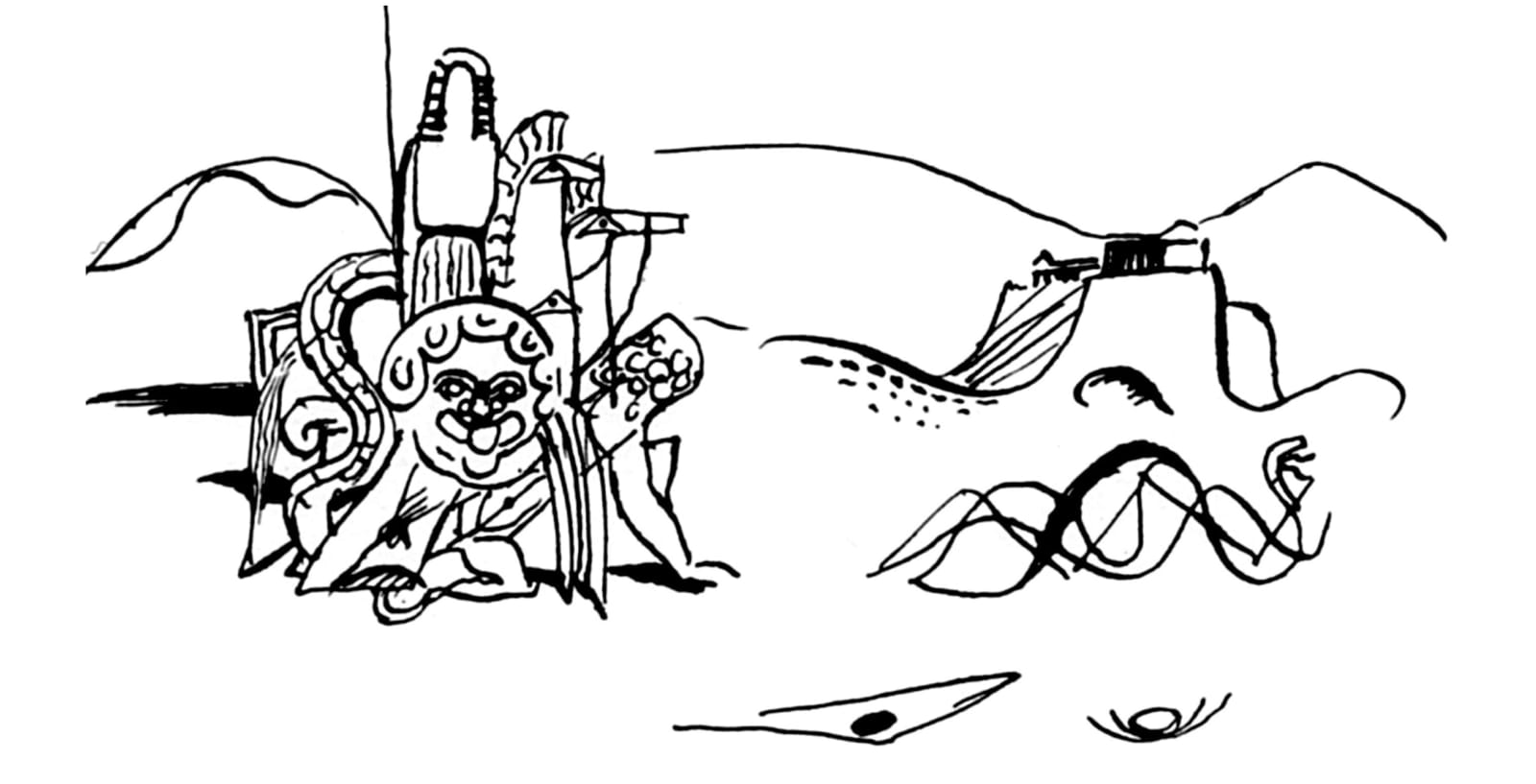
Dimitris Pikionis, drawing from the “Attica” series, 1940–1950, which aimed at a synthesis of nature, art and myth, ΓΕ_47666 © 2024 Benaki Museum‑Modern Greek Architecture Archives.
This lecture will focus on the work of Constantinos A. Doxiadis, Alison and Peter Smithson, Iannis Xenakis, Takis Zenetos, Aris Konstantinidis, and Dimitris Pikionis.
It aims to show the role of interdisciplinarity in their creative strategies and the interplay between literature, philosophy, architecture, urban planning, and ecology in their thought and work.
It will pay particular emphasis on how Doxiadis introduced ‘ekistics’ as a novel approach to understanding the science of human settlements.
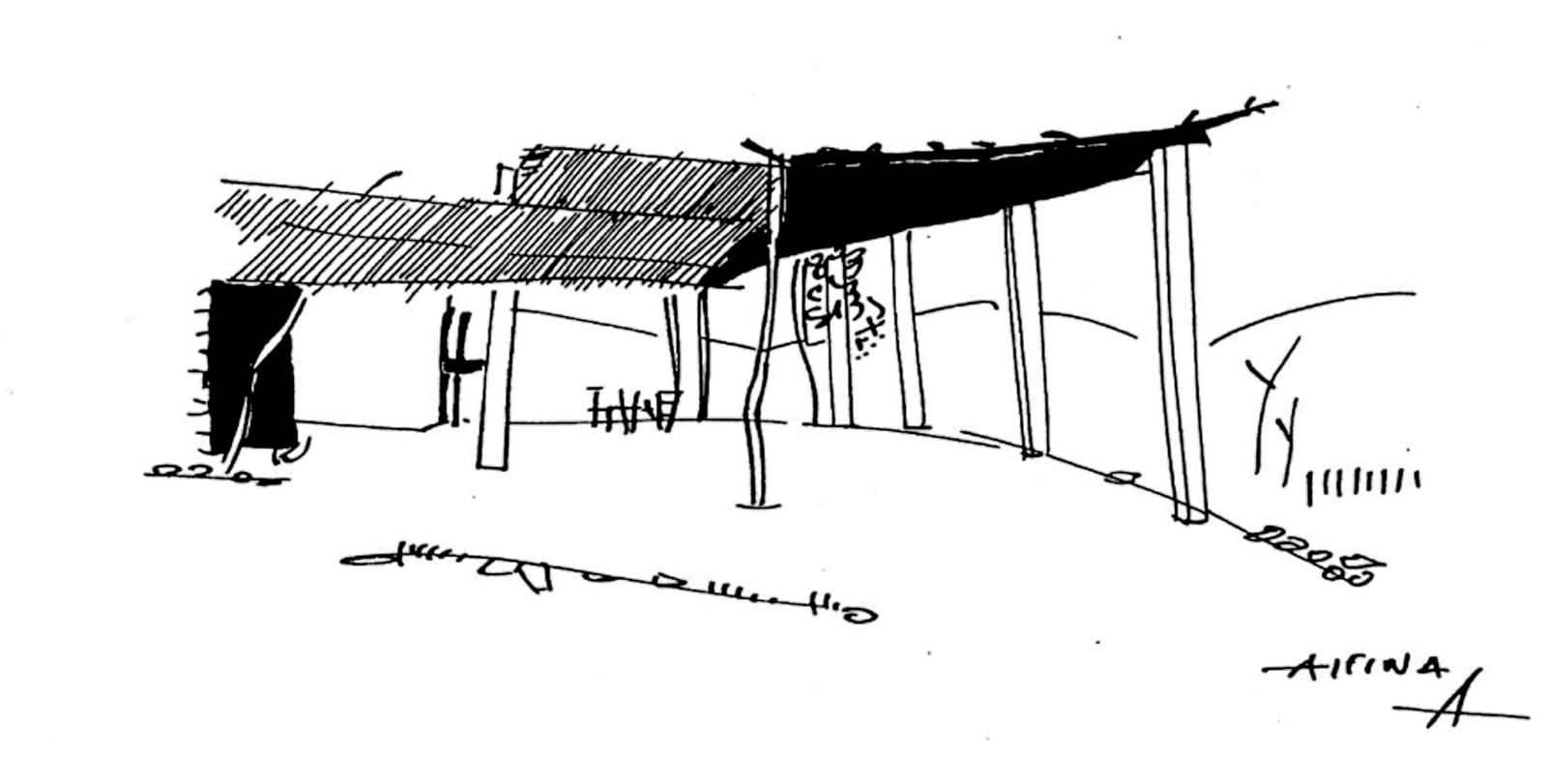
Aris Konstantinidis, a sketch made in Aegina, Greece. Credits: Alexandra and Dimitris Konstantinidis/Konstantinidis family archives.
The lecture will examine key figures in 20th-century architecture and urban planning, focusing on Constantinos A. Doxiadis, Takis Zenetos, Alison and Peter Smithson, Iannis Xenakis, Aris Konstantinidis, and Dimitris Pikionis. It will explore the connections between architecture, urban planning, philosophy, literature, and urban sociology, drawing upon the work of 20th-century intellectuals such as Albert Camus, Henri Lefebvre, and Cornelius Castoriadis. It will shed light on how architecture and urban planning have interacted with society, history, culture, nature, ecology, social equity, and democracy. The research on which this lecture focuses is based on extensive archival research and will be of interest to architects, artists, researchers, students, and scholars in architecture, architectural history and theory, art, urban sociology, cultural theory, science and technology studies, philosophy, ecology, cybernetics, and aesthetics.
The lecture also explores the role of urban mobility, environmental concerns and the expansion of urban networks in the debates that took place within the framework of the Delos Symposia.
The main research object of this lecture is the examination of the relationships between the changes regarding the epistemological object of architecture within the Greek context and the corresponding transformations within the international context.
The lecture draws upon the questions that are addressed in Marianna Charitonidou’s book entitled Reinventing Modern Architecture in Greece: From Sentimental Topography to Ekistics (London, New York: Routledge, 2025). The lecture is based on extensive archival research and delves into the modernist reinterpretation of the myth of Greece.
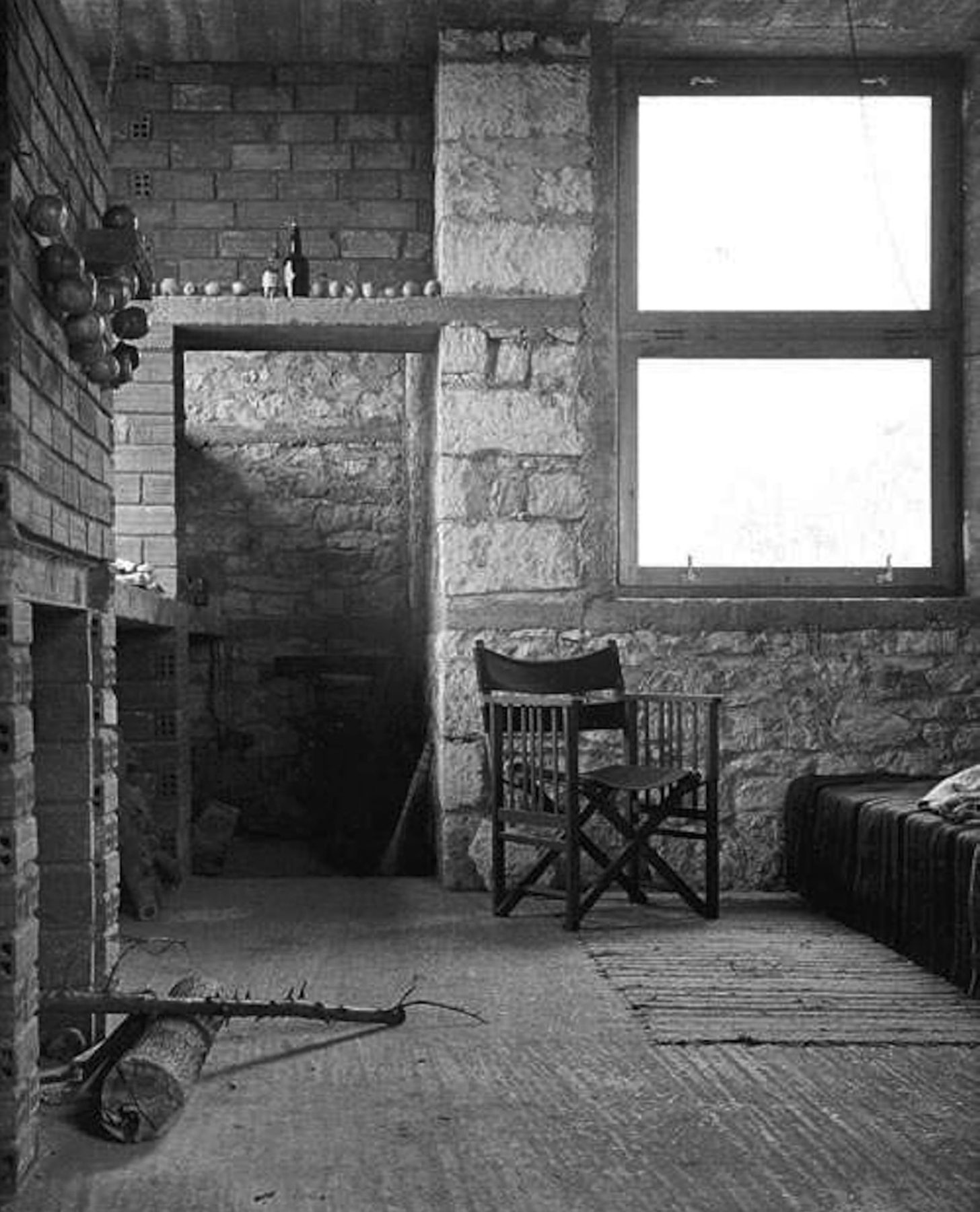
Aris Konstantinidis, a photograph of Vacation House in Sikia, Corinthia, Greece, 1951. Cr edits: Alexandra and Dimitris Konstantinidis/Konstantinidis family archives.
Critics’ Reviews
Marianna Charitonidou’s scholarly work, based on extensive archival research, delves into the modernist reinterpretation of the myth of Greece, especially within the urban crisis context since the Marshall Plan. She explores dialogues between influential European architects and Greece, with a focus on Constantinos A. Doxiadis’s theory of ekistics—an interdisciplinary and ecological framework for human settlements that transcends the technocratic approaches of postwar planners and architects.
By linking ekistics with contemporary theories of “critical regionalism,” Charitonidou offers a sophisticated critique of today’s digitally influenced techno-aesthetic ecological approaches, revealing significant connections between historical modernist regional perspectives and Helleno-centric ideas.”
Gevork Hartoonian, Emeritus Professor of the history of architecture, University of Canberra, Australia, recently the author of Mies Contra Le Corbusier: The Frame Inevitable (Routledge 2024), and the editor of Valances of Historiography: Essays on Architectural History (Routledge, December 30, 2024).
Marianna Charitonidou’s book presents a vital theoretical contribution to architectural and urban history and theory, making it essential for architects and cultural and political theorists alike. It emphasises the interconnectedness of architectural processes with broader cultural, scientific, ethical, and political systems. This significant epistemological hypothesis serves as the foundation of the text. The book is well-structured and contributes meaningfully to architectural and urban history and theory and the humanities. It highlights Constantinos A. Doxiadis’s and Adriano Olivetti’s visions for post-war reconstruction, linking them to innovative approaches in sciences and socio-political theory. Additionally, it examines the impact of the Marshall Plan on urban planning in Greece and Italy and the cultural journey of architects and intellectuals following WWII amid Greece’s deterioration.
Constantinos Moraitis, Emeritus Professor of architecture and landscape, School of Architecture, National Technical University of Athens, Greece, and recently the author of Aktaionos Weddings: Texts on the Landscape, its Cultural Approach and Design (Tziola, 2024).
The book is a most laudable effort to discuss modern Greek architecture within an international cultural framework.
Alexander Tzonis, Emeritus Professor of architectural theory, history and design cognition, Delft University of Technology (TU Delft), Netherlands, co-author with Liane Lefaivre of Architecture of Regionalism in the Age of Globalization: Peaks and Valleys in the Flat World, 2nd edition (Routledge, 2020).
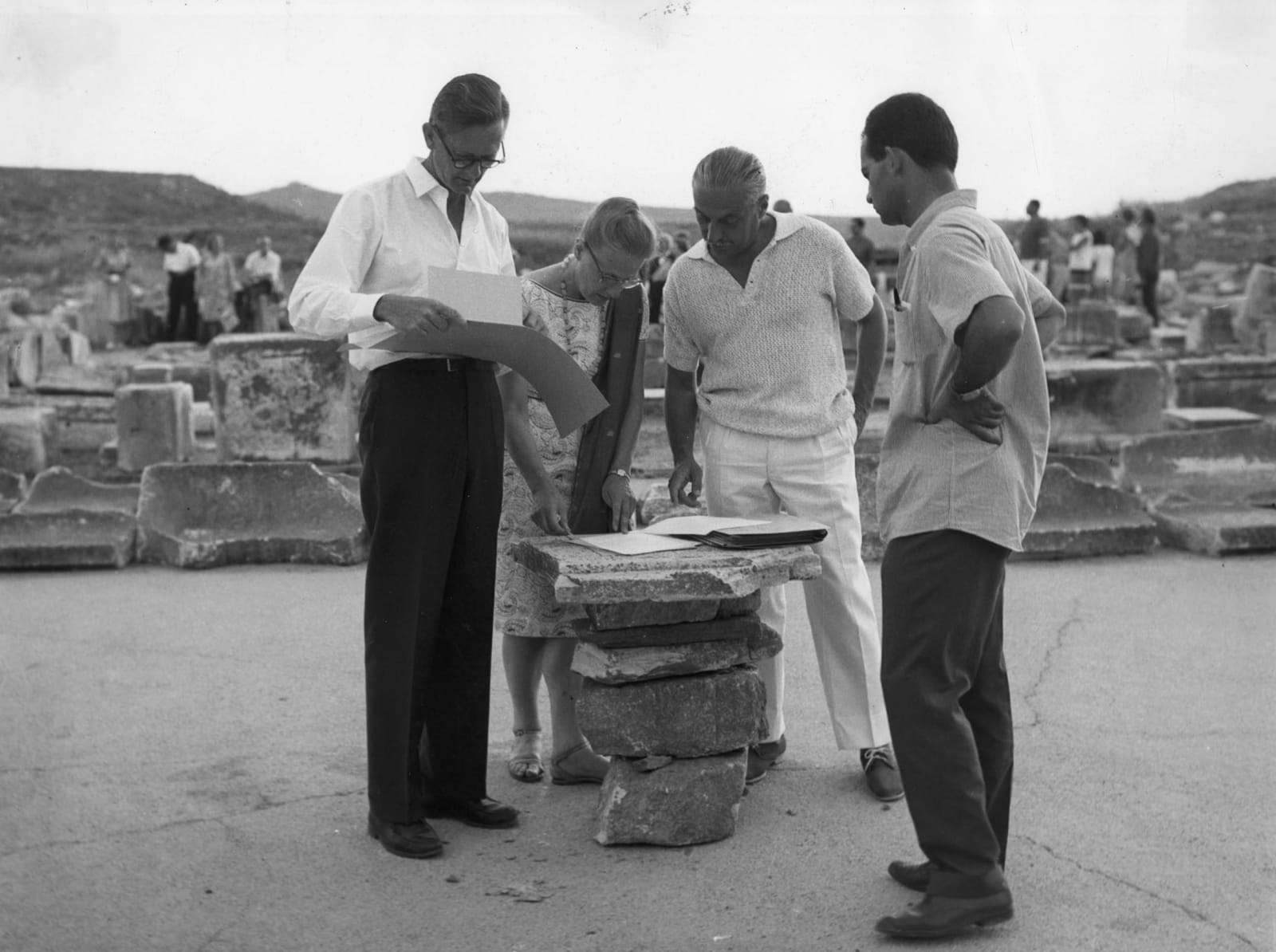
Final preparation before signing the First Declaration of Delos in July 1963; from left: Edmund Bacon, Jacqueline Tyrwhitt and Constantinos Doxiadis. Source: Constantinos A. Doxiadis Archives, Photographs, File 31252 © Constantinos and Emma Doxiadis Foundation.
The book aspires to be an essential reference for students and scholars in architecture, urban planning, and the humanities at large. The architects and urban planners studied in this book are significant figures of the 20th century on an international level. In parallel, the book places particular emphasis on the circulation of ideas between Greece and other countries from a transnational perspective.
A pivotal moment for the understanding of the specificities of Greek architecture and its introduction in the international debates is the coining of the notion of ‘critical regionalism’ coined by Alexander Tzonis and Liane Lefaivre in their seminal article entitled “The Grid and the Pathway: An Introduction to the Work of Dimitris and Susana Antonakakis”1 in the early 1980s and was shortly afterwards employed by Kenneth Frampton, in his renowned essays “Towards a Critical Regionalism: Six Points for an Architecture of Resistance”2 and “Prospects for a Critical Regionalism”3. Tzonis and Lefaivre connected ‘critical regionalism’ to the ideas of Patrick Geddes and Lewis Mumford. Their writings on ‘critical regionalism’ highlight the work of Greek architects Dimitris Pikionis, Aris Konstantinidis, and Suzanna and Dimitris Antonakakis. Even though there are a couple of studies on ‘critical regionalism’ and certain monographic studies on Greek architects, which tend to interpret their architectural expression as attempts to bridge Helleno-centric and modernist models, there is no comprehensive study on the different forms that the so-called Helleno-centric approaches have taken, not only in various historical periods but also during the same period, albeit by different architects.
1. Alexander Tzonis, Liane Lefaivre, “The Grid and the Pathway: An Introduction to the Work of Dimitris and Susana Antonakakis”, Architecture in Greece, 15 (1981): 164-178; Lefaivre, Tzonis, “The Grid and the Pathway”, in Architecture of Regionalism in the Age of Globalization: Peaks and Valleys in the Flat World. 2nd ed. (London; New York: Routledge, 2020), 123-130, doi: https://doi.org/10.4324/9780367281182
2. Kenneth Frampton, “Towards a Critical Regionalism: Six Points for an Architecture of Resistance”, in Hal Foster ed., The Anti-Aesthetic: Essays on Post-Modern Culture (Seattle: Bay Press, 1983), 16-30.
3. Frampton, “Prospects for a Critical Regionalism”, Perspecta, 20 (1983): 147-162.
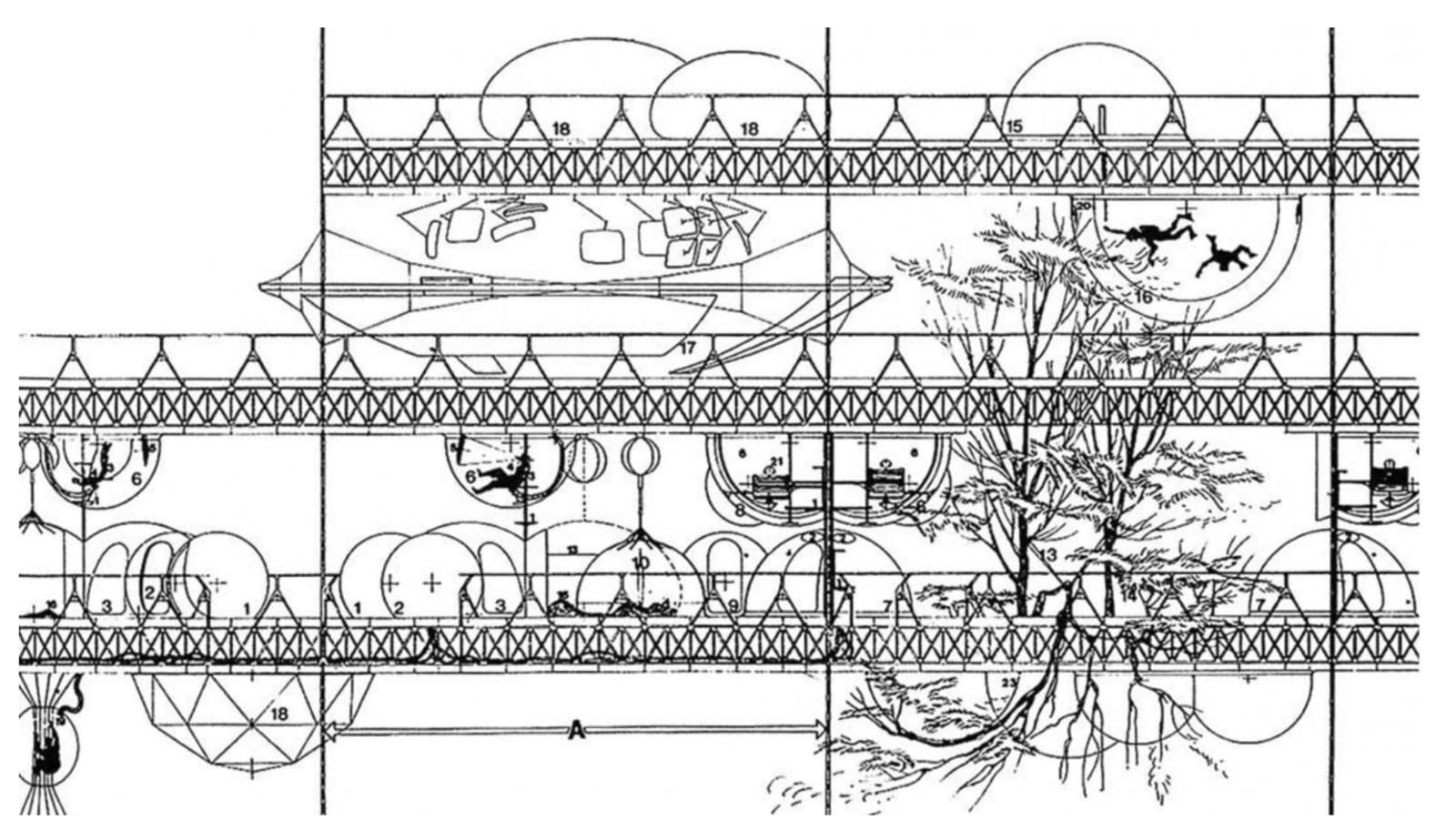
Takis Ch. Zenetos, section showing a partial view of the urban space grid for “Electronic Urbanism”, 1971. Image courtesy of Takis Ch. Zenetos’s Archive.
The point of departure for this study is to address this issue systematically and to interpret the various attempts to conceive Helleno-centrism differently as distinct endeavours to redefine the identity of Greek architecture and its addressee. This observation confirms my hypothesis that the case of Greek architecture is characterised by a specificity related to this effort to redefine what is Helleno-centric.
Before analysing how the various Helleno-centric approaches, which dominate the architectural debates within the Greek context, were conceived as bridged, in a paradoxical way, with the tendency to conceive architecture as modernist, the book invites its readers to explore how the conception of Philhellenism has changed, on the one hand, and how the conception of the image of Greece and travel to Greece has changed historically, on the other hand. This invites them to conceive the evolution of Helleno-centric approaches in architecture in a new way.
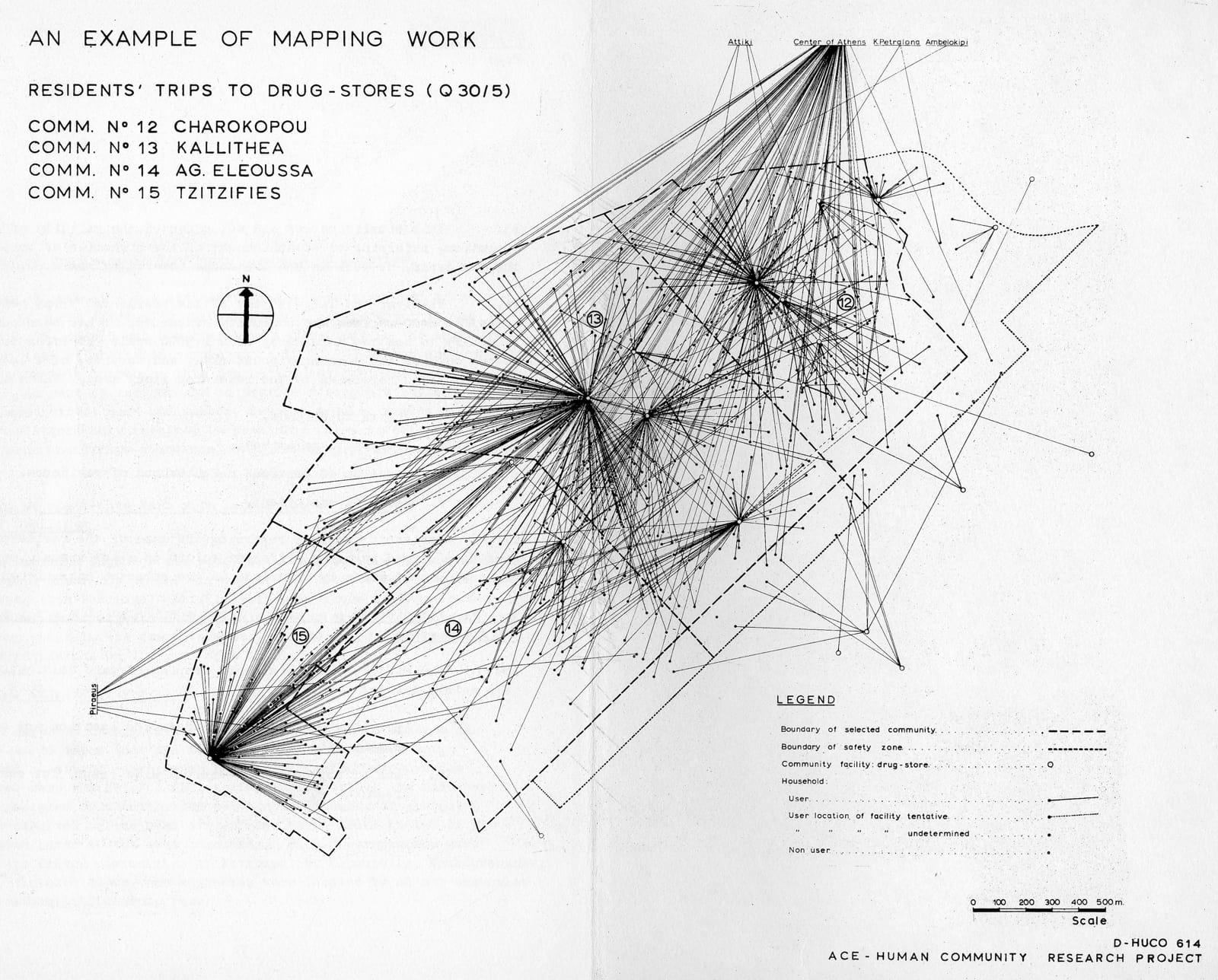
Athens Center of Ekistics, HuCo, map of residents’ trips to drug stores, ca.1964. Source: Constantinos A. Doxiadis Archives © Constantinos and Emma Doxiadis Foundation.
A hypothesis that this book takes as a point of departure is the following: in periods of crisis, what appears to be the primary domain of attraction regarding the image of Greece is nature and its archetypal character, while in periods of normalisation, the ancient monuments constitute the main points of reference for the image of Greece. The book is guided by the intention to explore how these reorientations regarding the shift of interest between nature and the ancient monuments as far as the fiction of Greece is concerned can be diagnosed in the modes of representations employed by the architects under study.
Regarding the relationship of Greece with the French contexts, two case studies have been chosen to be studied: firstly, the Travels to Greece of the Villa Medici pensionnaires in the 19th century, and, secondly, the trajectories of the architects of Mataroa, which correspond to the following two chapters: the first chapter titled “The Greek Travels of the Villa Medici Pensionnaires in the 19th Century: Perceiving Ancient Monuments between Architecture and Archaeology” and the third chapter titled “The Architects of Mataroa, Henri Lefebvre and Cornelius Castoriadis’s Autogestion: Reinventing Polis as Project”. The former invites the readers to reflect upon the divergences between the ways of perceiving ancient Greek monuments by the architects and the archaeologists during the 19th century, while the latter helps the readers understand the reasons for which a large part of the Greek architects that embarked on Mataroa were interested in urbanism, as their choices to concentrate their studies on urbanism during their stay in France confirms.
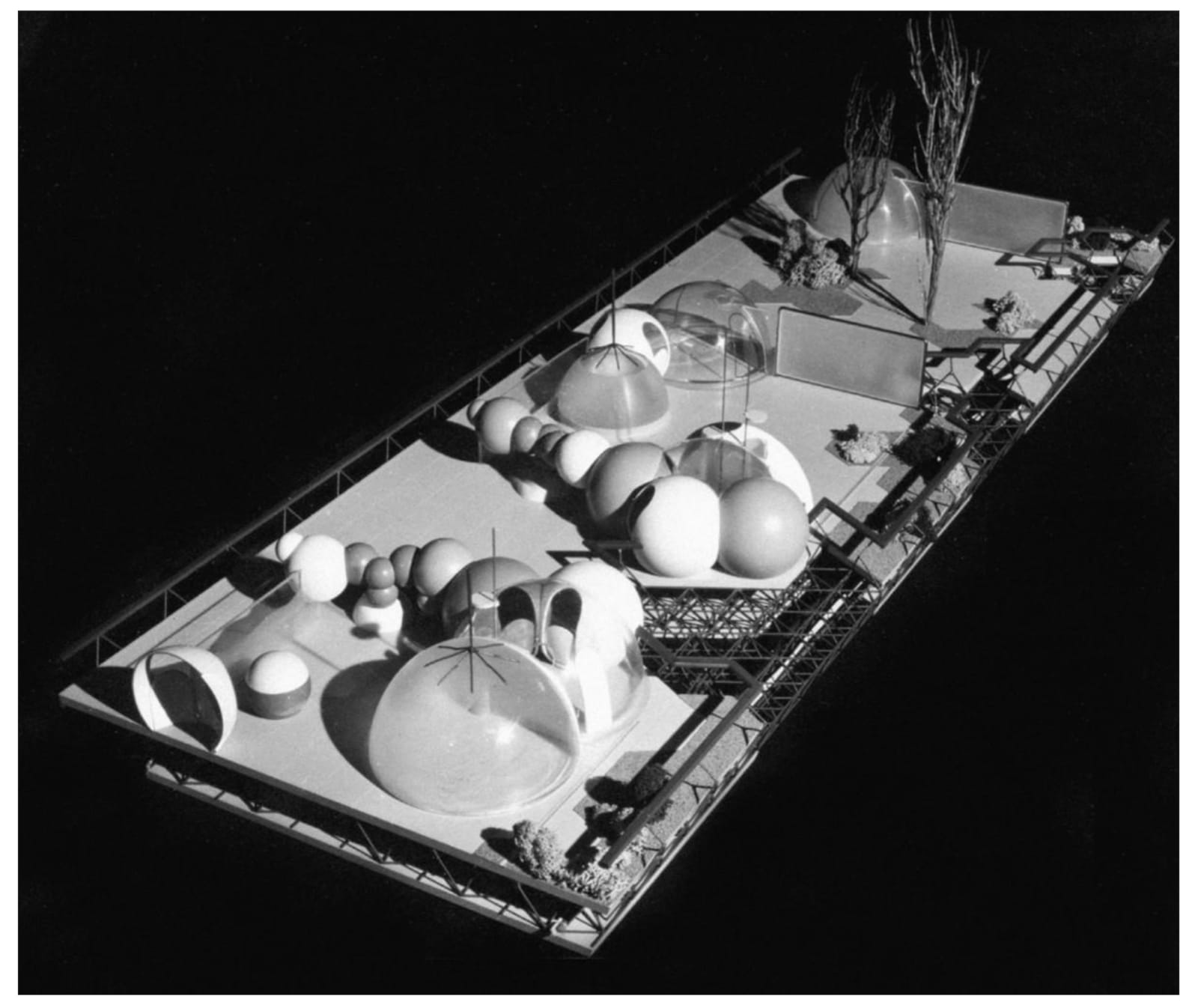
Takis Ch. Zenetos, physical model for “Electronic Urbanism” showing part of a level, 1971. Image courtesy of Takis Ch. Zenetos’s Archive.
Regarding modernity in Greek architecture, the book, in the chapter titled “Dimitris Pikionis, Aris Konstantinidis, and Albert Camus: Greece’s Entry into Modernity and Mediterranean Humanism”, relates the shift from modern discourses towards discourses that aim to challenge “monoculturalism” to the architectural thought of Greek architects Dimitris Pikionis (1887-1968) and Aris Konstantinidis (1913-1993). At the core of the reflections developed in the second chapter of the book entitled “Dimitris Pikionis, Aris Konstantinidis, and Albert Camus: Greece’s Entry into Modernity and Mediterranean Humanism” is the work of Albert Camus. Particular emphasis is placed on Okwui Enwezor’s “Modernity and Postcolonial Ambivalence”, where the author analyses “the dispersal of the universal, the refusal of the monolithic, a rebellion against monoculturalism”4. Such an intention to challenge “monoculturalism” is central to the work of Albert Camus, Dimitris Pikionis, and Aris Konstantinidis.
4. Okwui Enwezor, “Modernity and Postcolonial Ambivalence”, in N. Bourriaud, ed., Altermodern Tate Triennial (London: Tate Publishing, 2009).
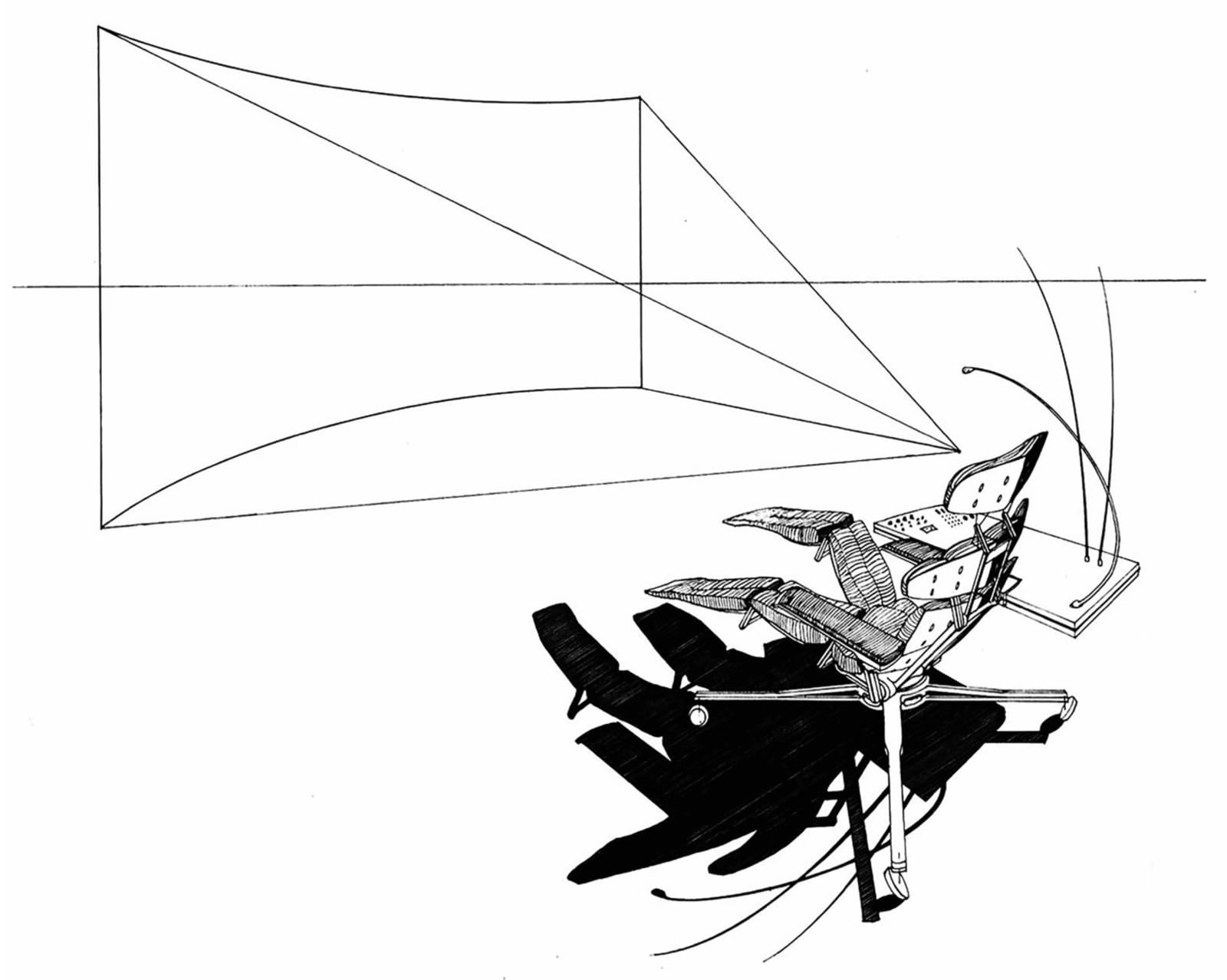
Takis Ch. Zenetos, perspective drawing for the all‑purpose furniture for “Electronic Urbanism”, 1967. Image courtesy of Takis Ch. Zenetos’s Archive.
The fourth chapter of the book titled “Takis Zenetos’s Electronic Urbanism: Social Structures and Reconstruction of Mass Society” is devoted to the work of Takis Zenetos (1926-1977). It investigates his project titled “Electronic Urbanism”. This project by Zenetos involved designing housing units suitable for remote work conditions. It also compares Zenetos’ approach to automobile circulation in Athens with that of Constantinos A. Doxiadis. Zenetos worked on “Electronic Urbanism” for more than twenty years. He started working on this project during his studies in Paris and presented it for the first time at the Modern Housing Organization’s exhibition in Athens in 1962. He presented the final stage of this project, which was devoted to the theme “The City and the House of the Future”, at the first Building Exhibition at Zappeion in 1971. Zenetos incorporated his design for all-purpose furniture in this project, distinguished in the lnterdesign 2000 competition (1967). Takis Zenetos’s study entitled “The City and the House of the Future” was the outcome of systematic research on the development of applications in the domain of electronics. Zenetos defined the forthcoming applications of ‘tele-management’, ‘tele-work’ and ‘tele-services’. Considering the accelerating mutation of the living units in future cities, he proposed flexible systems for both buildings and infrastructures. Zenetos conceived “Electronic Urbanism” in conjunction with a shift in social structure, that is to say, in conjunction with “an unprecedented mobility in its structure and the independence of its members”, to borrow his own words.
The analysis of Zenetos’s intention to provide comfortable, flexible and independent home office conditions through the design of individual living units using advanced technological achievements could be helpful for better understanding how architecture could respond to the challenge of providing contemporary home-office conditions, taking into account the complexity of the psychological and physiological needs of citizens.
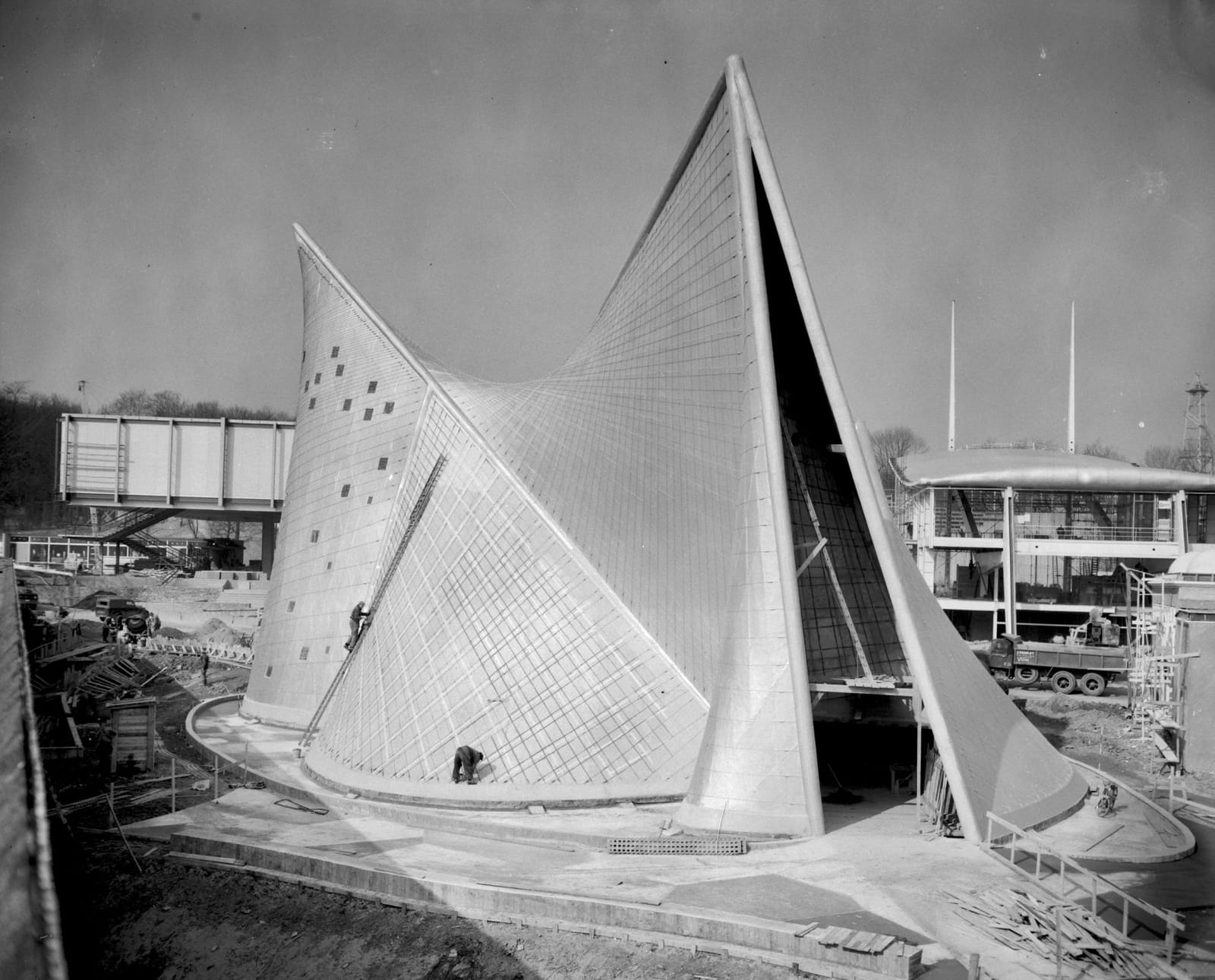
Photograph of Philips Pavilion for the 1958 World’s Fair in Brussels. Credits: Photograph taken by Herbert Behrens on 20 March 1958. Distributed under the terms and conditions of the Creative Commons Attribution (Creative Commons CC0) licence.
The book also features a chapter titled “Iannis Xenakis’s Formalised Music: Connecting Space, Music, and Mathematics” devoted to Iannis Xenakis (1922–2001). Xenakis was an avant-garde composer, music theorist, architect, performance director, and engineer. At the core of the chapter devoted to Xenakis is comparing his ideas with those of the French philosophers Gilles Deleuze and Félix Guattari and those of the emblematic architect of the twentieth century, Le Corbusier. Particular emphasis is placed on the work of Xenakis for the design of the Philips Pavilion of the 1958 Brussels World Fair during the period of his employment at Le Corbusier’s office in Paris. The Philips Pavilion is famous for its hyperbolic paraboloid form. Xenakis pioneered compositional methods and correlated music and architecture with mathematics and physics, using models from set theory, probability theory, thermodynamics, the Golden Mean, and the Fibonacci sequence. At the same time, his philosophical ideas on music raised the demand for unity of philosophy, science, and art, contributing to the general reflection on the crisis of contemporary European music in the 1950s and 1960s.
Xenakis moved to Paris in 1947. Before moving to Paris, he was awarded a degree in Civil Engineering from the National Technical University of Athens, where he enrolled from 1940 to 1946. In Paris, through the intervention of Georges Candilis, Xenakis was engaged by the renowned architect Le Corbusier, for whom he was employed until 1959. Xenakis collaborated with Le Corbusier for twelve years, from 1947 through 1959. He started working for Le Corbusier as an engineer for the Atelier des Bâtisseurs (ATBAT), founded for the Unité d’habitation of Marseille. This project was one of the first to which Le Corbusier applied his theory of the Modulor. In the framework of his collaboration with Le Corbusier’s office, Xenakis also worked on the Unité d’habitation of Rezé-les-Nantes, the Chandigarh project, the project for the monastery of La Tourette, a youth and cultural centre in Firminy in France, the Olympic Stadium in Baghdad and the Philips Pavilion of the 1958 Brussels World Fair.
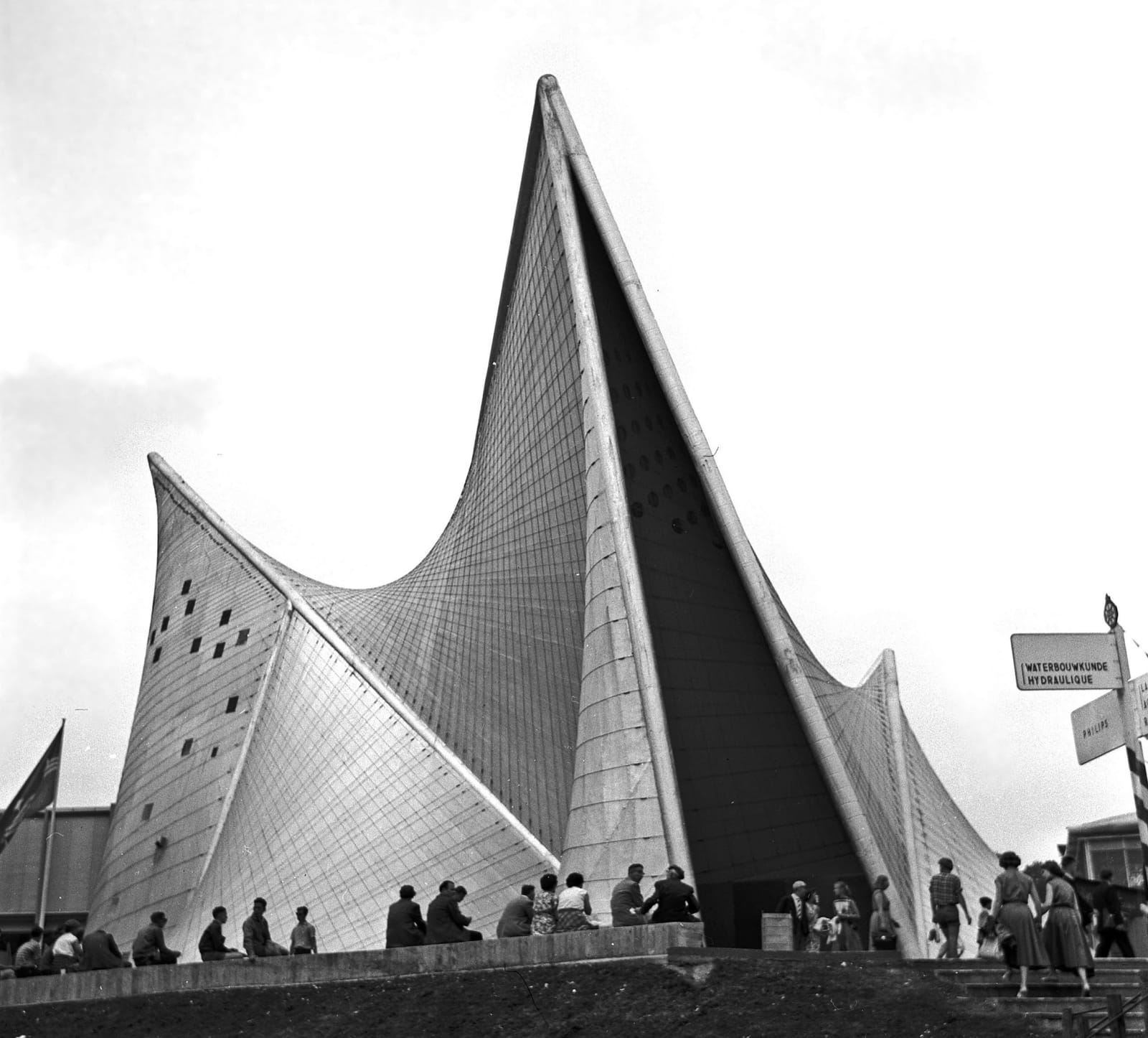
Photograph of Philips Pavilion for the 1958 World’s Fair in Brussels, 1958. Credits: Photograph by Wouter Hagens. Distributed under the terms and conditions of the Creative Commons Attribution (CC BY‑SA 3.0) licence.
The sixth chapter of the book titled “Alison and Peter Smithson’s Understanding of the Notion of Space in Greek Architecture: The ‘As Found’ as Topographical Sensitivity” explores how travels to Greece influenced the work of Alison Smithson (1928-1993) and Peter Smithson (1923-2003). The architects were inspired by the social vibrancy of traditional Greek villages and their fortification walls, viewing them as a counter to the strict functionalist principles favoured by many early attendees of the Congrès Internationaux d’Architecture Moderne (CIAM). During the last CIAM, held in Otterlo, Netherlands, in 1959, Peter Smithson began his presentation with images from his visits to Greek coastal villages, focusing mainly on how the aggregation of these villages reflects the social and cultural patterns of their residents’ everyday lives.
This chapter investigates how the concept of “cluster city” in the Smithsons’ work connects to the influences they experienced in Greek village architecture. It pays close attention to the relationship between the continuity of streets and houses in traditional Greek villages and the core ideas behind the “Urban Reidentification” grid introduced at the ninth CIAM.
Furthermore, this chapter delves into their writings on Greece and sketches and photographs from their trips, highlighting their deep exploration of the links between architecture and geography, particularly regarding morphological possibilities. Particular focus is given to two essays by Peter Smithson: “Space and Greek Architecture” (1958) and “Theories Concerning the Layout of Classical Greek Buildings” (1959). The Smithsons’ work intended to concurrently investigate three key areas: the relationship between architecture and territory, the open-ended nature of morphology, and the interplay between social and spatial dimensions in architecture and urban design.
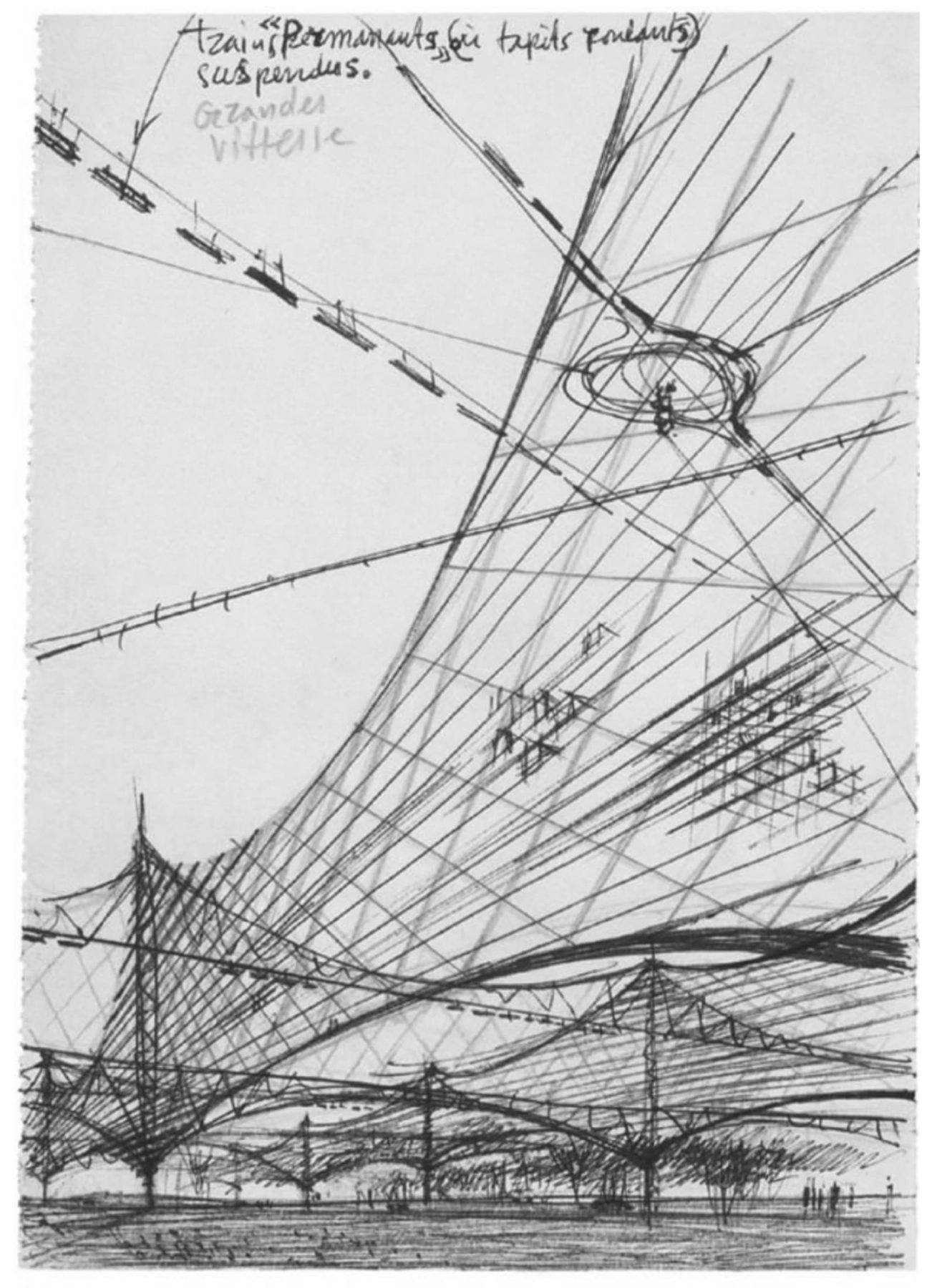
Takis Ch. Zenetos, sketch for the “Cable City Project for a Suspended City” (“Ville suspendue”), 1961. Image courtesy of Takis Ch. Zenetos’s Archive.
Α large part of this book is devoted to the ideas of Constantinos A. Doxiadis (1913-1975) and his conception of ekistics. The seventh, eighth, ninth and tenth chapters of the book titled “Constantinos A. Doxiadis and Adriano Olivetti’s Role in Politics: Marshall Plan and Urbanism and Housing in Postwar Era”, “From the Ministry of Reconstruction to the Dissemination of Ideas through Networks: Urban Networks, Human Settlements and Ekistics”, “Constantinos A. Doxiadis, Adriano Olivetti, and the Settlements of Utopia: Industry and Optimism” and “Urban Analytics and Technophile Culture in Constantinos Doxiadis and Adriano Olivetti’s Practices: Towards a Computerised Vision” respectively are devoted to the Greek architect, urban planner and political figure Constantinos A. Doxiadis and the Italian industrialist and political figure Adriano Olivetti (1901-1960).
Regarding Doxiadis’s theory, the book places particular emphasis on analysing Doxiadis’s work within a framework that aims to shed light on the complex relationships between the Cold War policies, including the European Recovery Program (ERP), known as Marshall Plan, on the one hand, and architecture and urbanism, on the other hand.
To fertilise the understanding of Doxiadis’s perspective during the post-war years, the book also compares his ideas regarding the relationship between politics and urban planning with Adriano Olivetti’s approach to how politics and urban planning interact. Doxiadis used the concept of ‘entopia’ to refer to his strategies of reshaping certain aspects of society via spatial interventions, while Adriano Olivetti (1901-1960), within the framework of his endeavour to conceive and explain how the formation of communities can affect social reality and reshape certain aspects, adopted a perspective that scholars have described as ‘concrete utopia’. The book highlights how architecture and urban planning, influenced by the Marshall Plan, shaped national identity in Greece and Italy. It also places much importance on the interplay between urban planning and politics. In other words, this research is built upon the general understanding that the Marshall Plan played a crucial role in the reconstruction of Europe after the Second World War. Architecture and urbanism were fundamental in this respect.
The book identifies key players regarding the connection between the politics of the Marshall Plan and agendas for urban design, such as Constantinos A. Doxiadis and the Italian industrialist Adriano Olivetti. It aims to add a comparative layer between Greece and Italy regarding the connection between politics and urbanism during the Cold War period. To do so, it sheds light on how Doxiadis and Olivetti conceptualised technocracy and its relation to politics and urban planning differently.
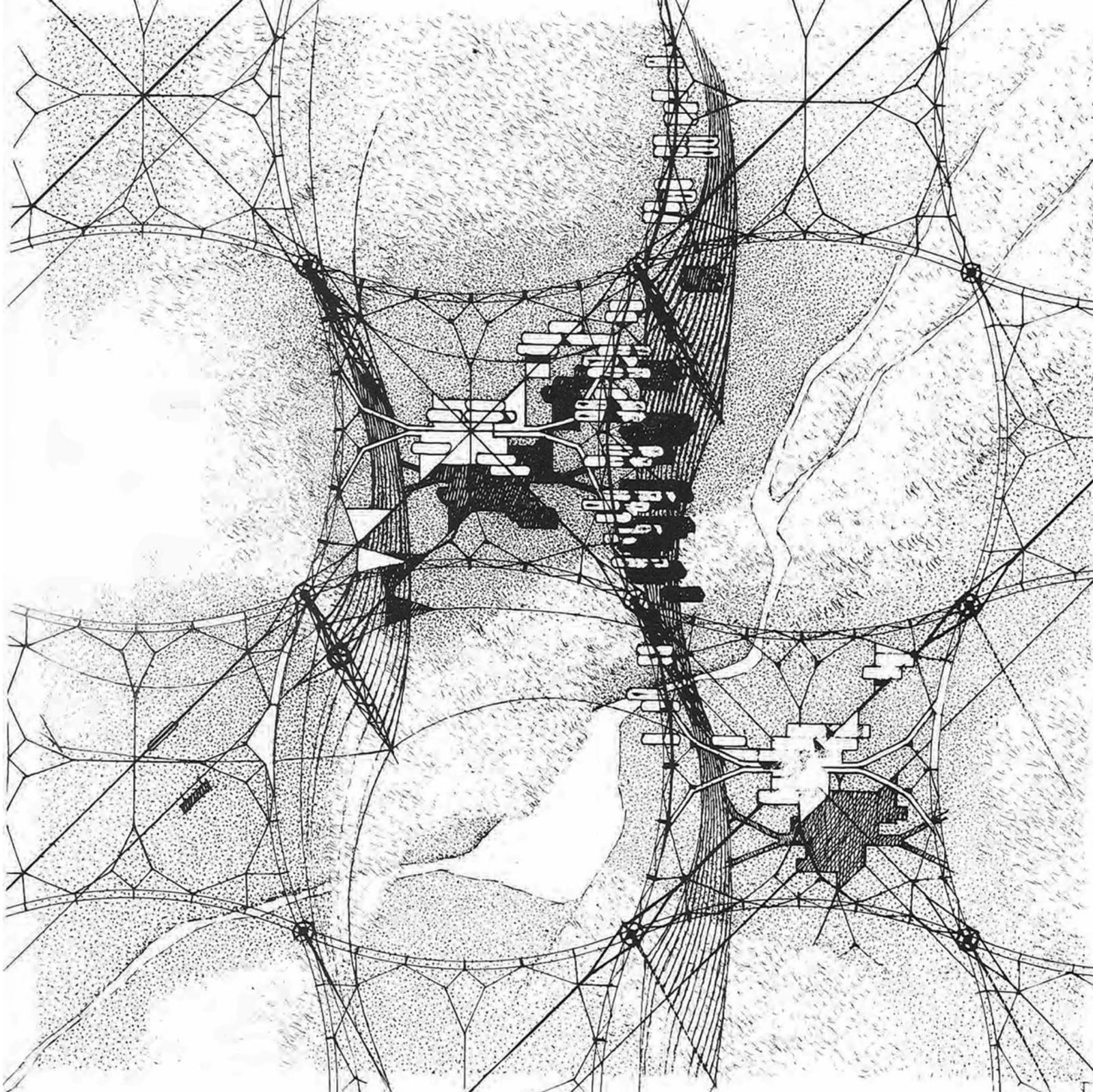
Takis Ch. Zenetos, general plan for the “Cable City Project for a Suspended City” (“Ville suspendue”), 1961. Image courtesy of Takis Ch. Zenetos’s Archive.
The United States of America were very much interested in influencing the fictions and agendas that accompanied the Greek and Italian post-WWII reconstruction. For these reasons, the formation of national identity in post-war Greece and Italy was a significant issue in various domains, including architecture, urban design and cinema. Doxiadis exemplifies the post-war Greek technocratic élite5, while Olivetti encapsulates the spirit of the post-war Italian entrepreneurial bourgeoisie. The book pays particular attention to the analysis of Doxiadis’s five-year mandate at the Ministry of Reconstruction, on the one hand, and Olivetti’s role as president of the Istituto Nazionale di Urbanistica (INU) from 1950 and vice-president of the United Nations Relief and Rehabilitation Administration (UNRRA-CASAS program) from 1959, on the other hand. The UNRRA-CASAS program, developed under the aegis of the United Nations, was a bi-national agency whose mission was to make use of funds from the European Recovery Program (ERP).
5. According to Andreas Kakridis, Doxiadis’ stance should be understood within the context of the post-war apolitical technocratic élite. See Andreas Kakridis, “Rebuilding the Future: C. A. Doxiadis and the Greek Reconstruction Effort (1945-1950)”, The Historical Review/La Revue Historique, 10 (2013): 135-160.
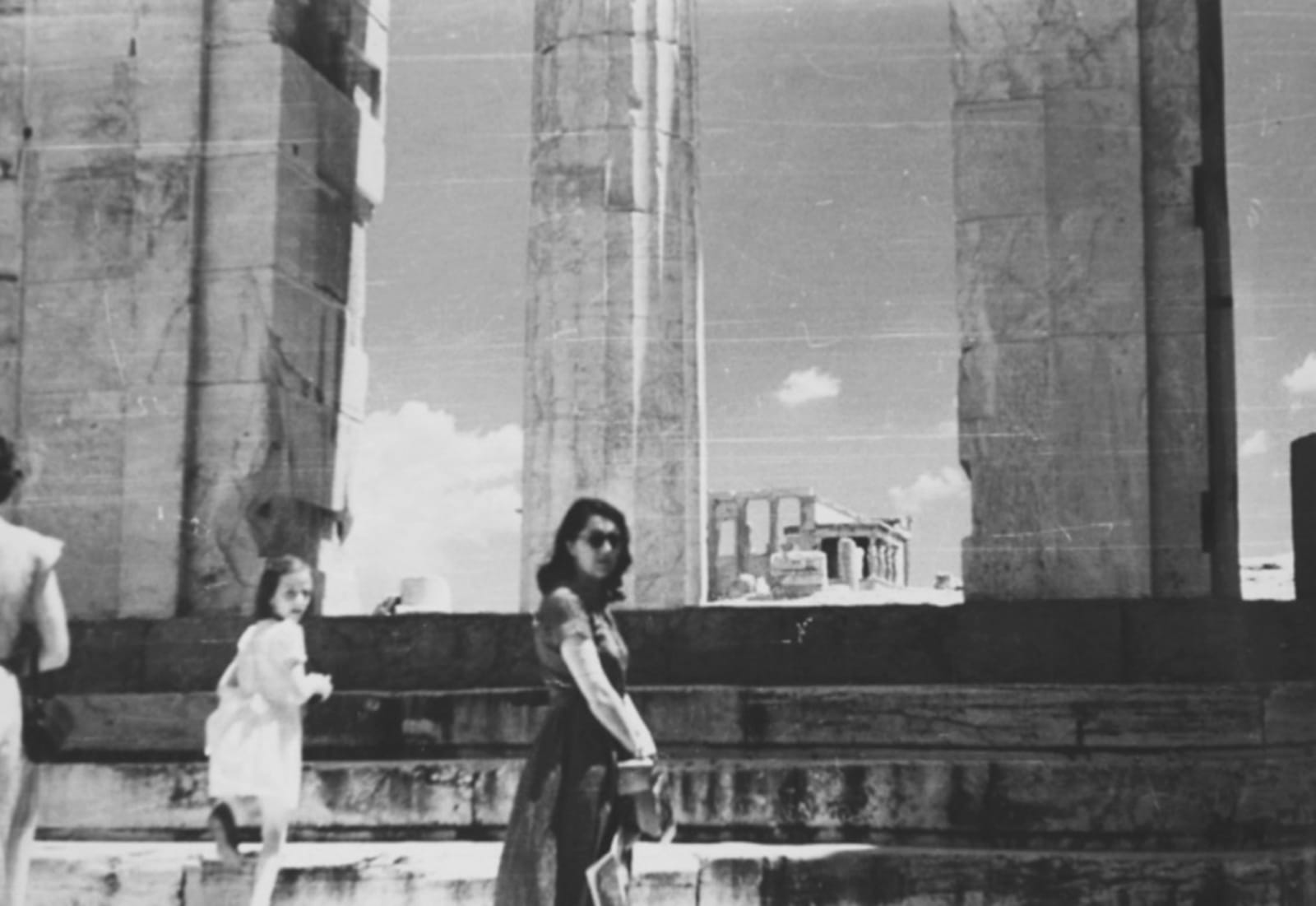
View of Erechtheion and Alison Smithson, Acropolis, Athens, Greece, 1951. View as seen entering through the Propylaea. Photograph taken by Peter Smithson. Credits: Smithson Family Collection.
The book also examines how Constantinos Doxiadis introduced ‘ekistics’ as a novel approach to grasping the science and artistry of human settlements.
He argued that “Ekistics aims to co-ordinate “economics, social sciences, political and administrative sciences, technology and aesthetics into a coherent whole”, creating “a new type of human habitat”6.
Pivotal for better grasping the notion of ‘ekistics’ is its etymology: “οίκος” in Greek refers to home (from the Greek οίκος-house, home- and οίκω-seat or settle-). According to Doxiadis, ‘ekistics’ operate at three levels: firstly, general ekistics; secondly, urban planning; and thirdly, building design and construction. At the core of the book is the emphasis that Doxiadis placed on both holism and interdisciplinarity. The book also examines Constantinos Doxiadis’s understanding of ‘ekistics’ as condisciplinary science. More specifically, the book analyses the distinction that Doxiadis drew between interdisciplinary and a condisciplinary science. In “Ekistics, the Science of Human Settlements”, published in Science in 1970, Doxiadis highlights: “To achieve the needed knowledge and develop the science of human settlements we must move from an interdisciplinary to a condisciplinary science”7.
6. Constantinos A. Doxiadis, Architecture in Transition (London: Oxford University Press, 1963), 96.
7. Doxiadis, “Ekistics, the Science of Human Settlements”, Science, 170(3956) (1970), 393
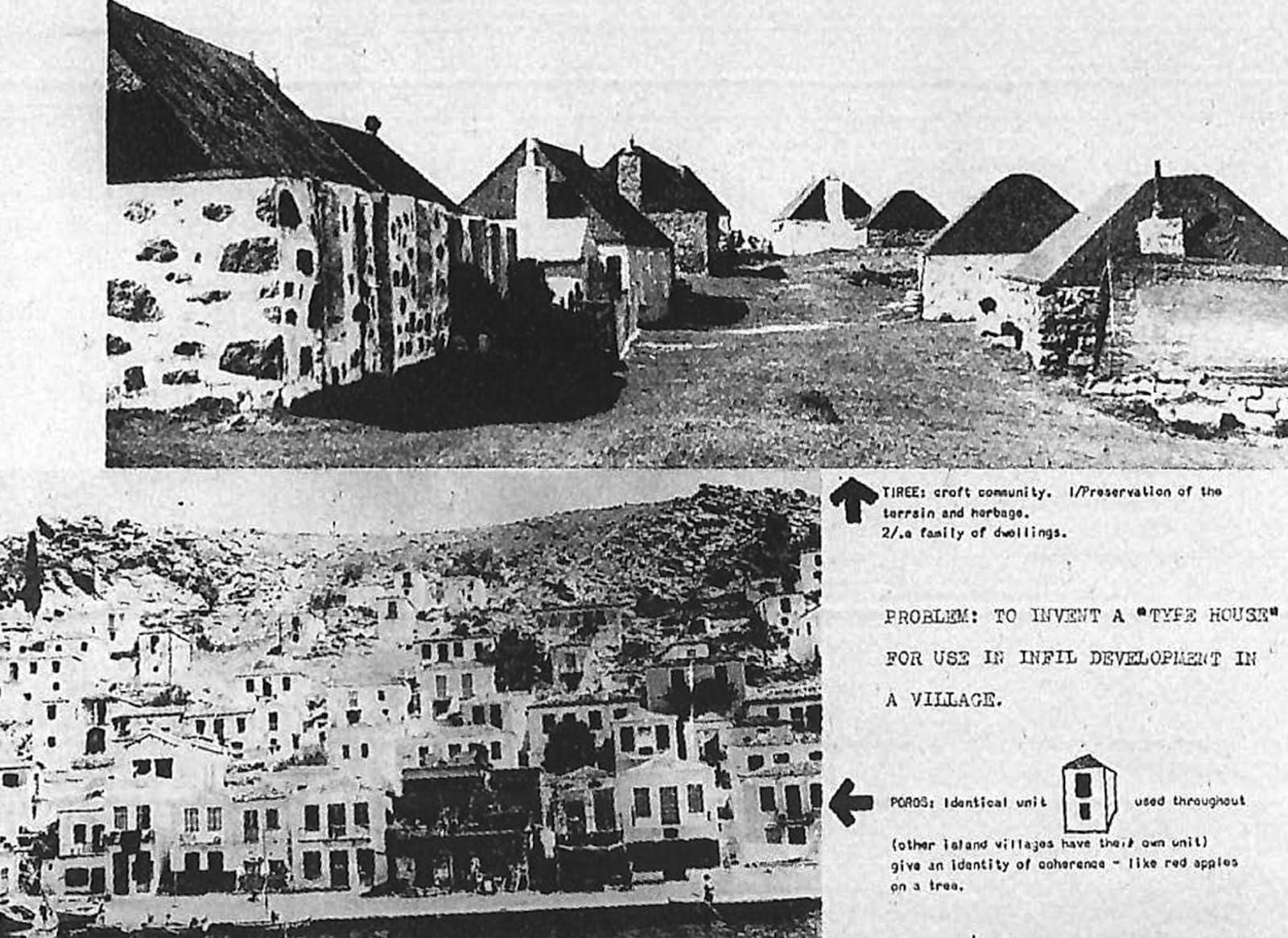
Alison and Peter Smithson, a photograph of Poros island in Greece, showing the aggregation of units. Detail from the CIAM grille entitled “Housing Appropriate to the Valley Section” presented at the tenth CIAM 10 in Dubrovnik, Yugoslavia in 1956. Credits: Smithson Family Collection.
The book also explores how the history and legacy of the Delos symposia (1963-75), which were organised by the Greek architect-planner Constantinos A. Doxiadis, could enrich current debates on human settlements, networks, housing for people with low incomes in the Global South, and environmental and ecological issues related to the climate change. More specifically, the main objective of the last four chapters of the book, for instance, is to compare the directions that the reconstruction projects took after WWII in Italy and Greece, paying particular attention to the work and approach of the Greek architect and town planner Constantinos A. Doxiadis and the Italian industrialist Adriano Olivetti. Greece was one of the countries most devastated by WWII.
Doxiadis focused on how architectural and urban planning strategies can adapt to the changing conditions of settlements. Within such a framework, he conceptualised the so-called ‘ekistic grid’8 as a tool aiming to provide architecture and urban planning solutions that promote ‘entopia’. Doxiadis was convinced that ‘entopian’ architecture and urban planning projects should place particular emphasis on the following five elements and their interconnections: Nature, Man, Society, Shells, and Networks9. Doxiadis believed that his method was grounded in the conviction that “ekistics should account for planning, mapping, economics, geography, sociology, and cultural manifestations of community existence.10”
8. Doxiadis, “Economics and the ekistic grid”, Ekistics, 40(236) (1975): 1-4.
9. Doxiadis, “The Twelve Radical Changes needed for Action for Human Settlements”, Ekistics, 38(29) (1974), 393.
10. Julian Wolfreys, Writing London: Vol. 3: Inventions of the City (Basingstoke: Palgrave Macmillan, 2007), 161; Doxiadis, Between Dystopia and Utopia (London: Faber and Faber, 1966).
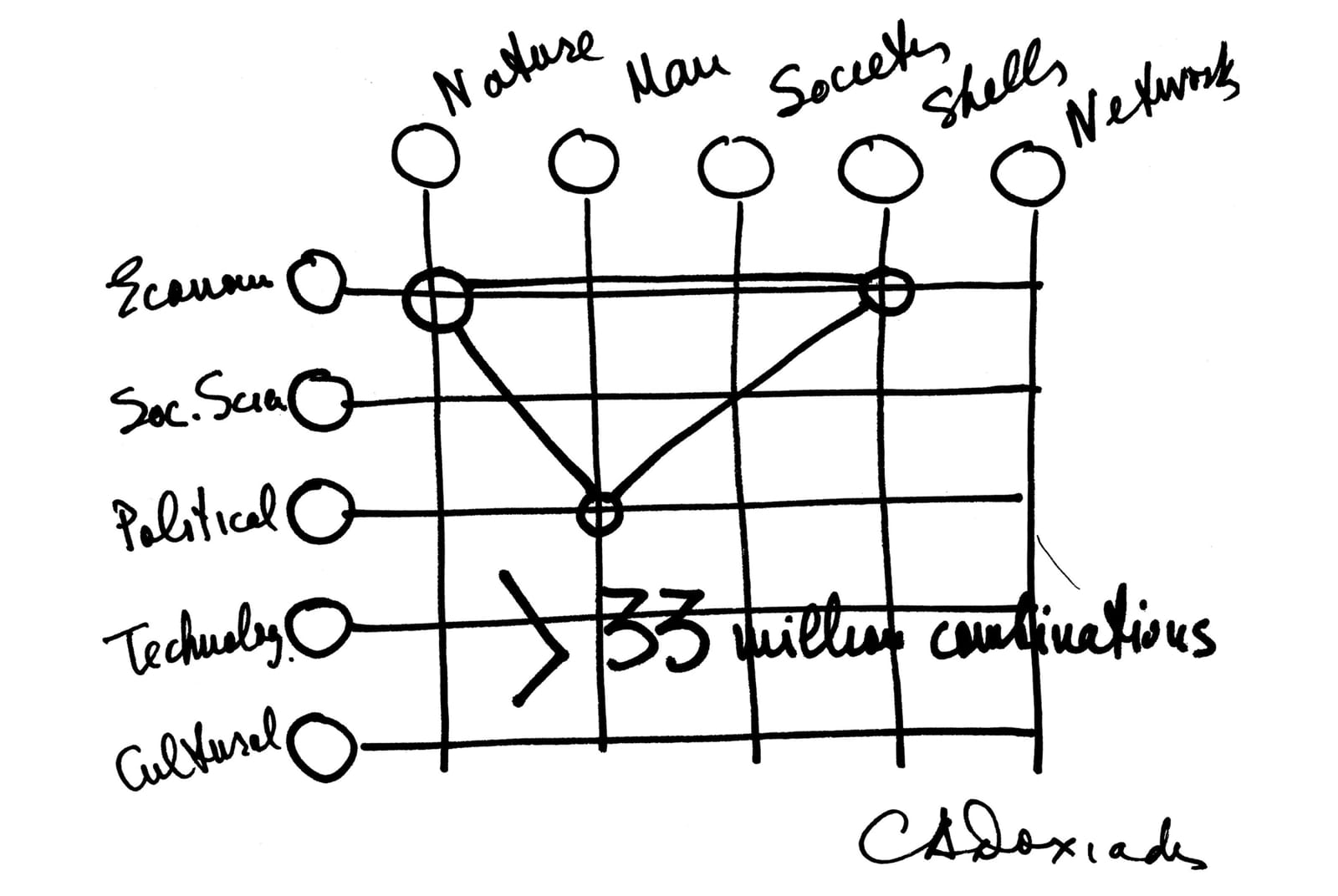
Sketch of Ekistic Grid by Constantinos A. Doxiadis. Source: Constantinos A. Doxiadis Archives © Constantinos and Emma Doxiadis Foundation.
Examining the history and legacy of the Delos Symposia, organised by Constantinos Doxiadis from 1963 to 1975, reveals the significance of interdisciplinarity in Doxiadis’s methodology. In the Declaration of Delos – the document endorsed by those involved in the Delos Symposia – the participants conveyed their desire to: first, establish a new field of human settlements; second, launch foundational research of significant impact; and third, unite experts from related disciplines to collaborate on projects in this area. At the heart of the Delos Symposia was the investigation of innovative collaboration techniques among experts from various research, development, and practice fields focused on improving human settlement design strategies.
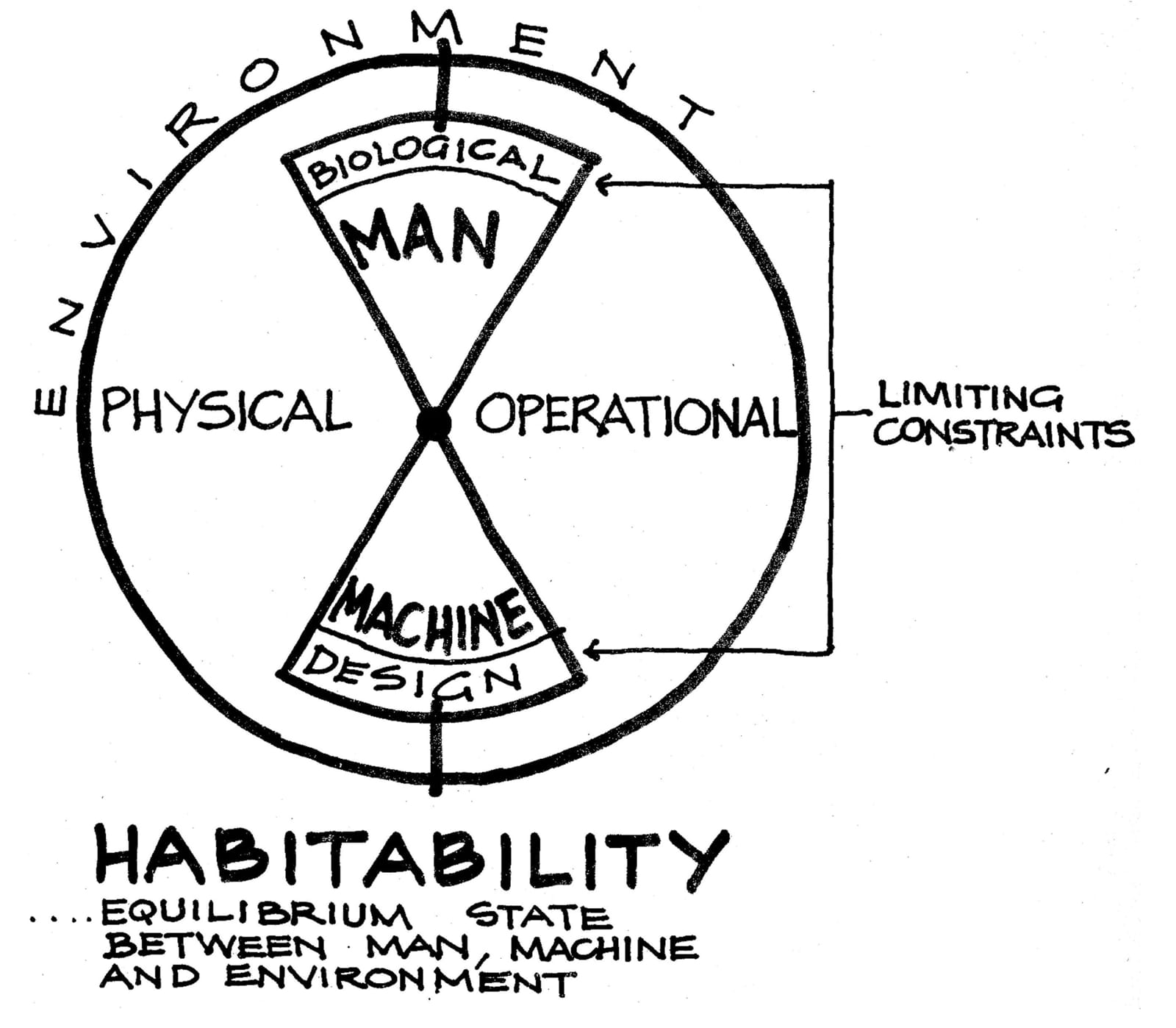
Diagram by Constantinos A. Doxiadis published in the report of Delos Symposium 6 held in 1968. Source: Constantinos A. Doxiadis Archives © Constantinos and Emma Doxiadis Foundation.
This book also explores the role of urban mobility, environmental concerns, and the expansion of urban networks in the debates that took place within the framework of the Delos Symposia.
The reflections that the book develops about Doxiadis’s understanding of ‘ekistics’ in this book draw upon his conviction that ‘ekistics’ should aim to offer citizens “equal chances in all aspects and expressions of the social system in space”11, as it becomes evident in his ideas developed throughout his career from the early years of his work at the Ministry of Reconstruction until his late years at his own firm, which was responsible for a broad spectrum of projects throughout the world. Here, we should note that a significant percentage of his projects by Doxiadis Associates were located in the so-called “Global South” and were driven by the effort to achieve social equity and provide poorer people with better conditions of everyday life.
11. Doxiadis, “The Twelve Radical Changes needed for Action for Human Settlements”, 392.
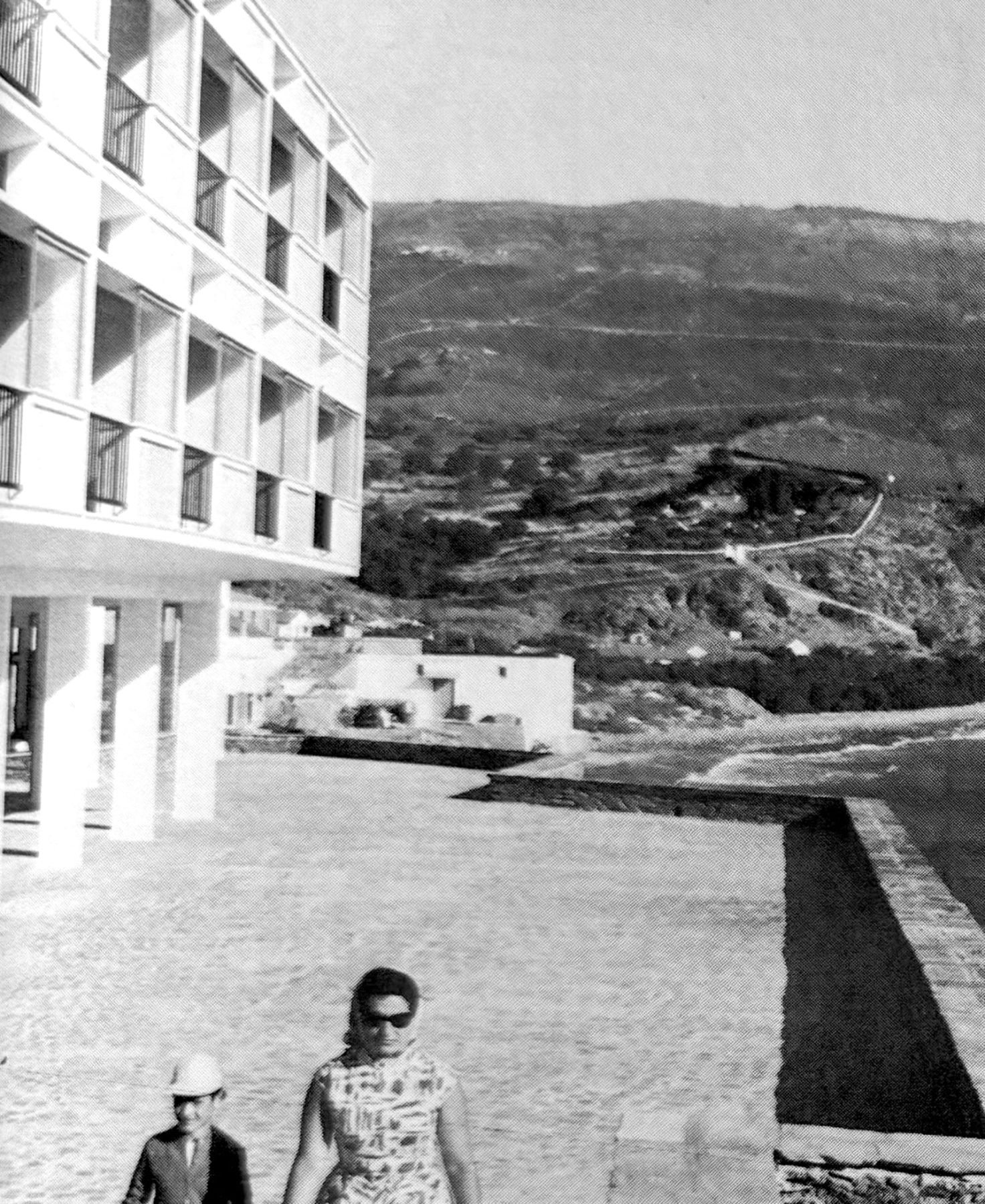
Aris Konstantinidis, Hotel Triton, Andros Island, Greece, 1958. Credits: Alexandra and Dimitris Konstantinidis/Konstantinidis family archives.
Facts & Credits
Title Reinventing Modern Architecture in Greece: From Sentimental Topography to Ekistics
Typology Book
Published by Routledge
Writer Marianna Charitonidou
Pages 240
Illustations 63 B/W
Publication Date May 30, 2025
READ ALSO: Ιστορικά κτήρια στο Μαρούσι - Οδοιπορικό στην αρχιτεκτονική παράδοση της πόλης | Έκδοση του Δήμου Αμαρουσίου