The European Commission and the Fundació Mies van der Rohe are proud to announce the 40 shortlisted works for the 2026 European Union Prize for Contemporary Architecture / Mies van der Rohe Awards. This year’s edition, supported by the European Union’s Creative Europe Programme, received 410 nominations, which were thoroughly analysed and discussed by the seven-member jury – President Smiljan Radić, Carl Bäckstrand, Chris Briffa, Zaiga Gaile, Tina Gregorič, Nikolaus Hirsch, and Rosa Rull – before drawing up the shortlist.
The European Commission and the Fundació Mies van der Rohe have announced the seven finalists for the 2026 European Union Prize for Contemporary Architecture / Mies van der Rohe Awards, supported by the European Union’s Creative Europe programme. Five projects have been selected in the Architecture category and two in the Emerging category.
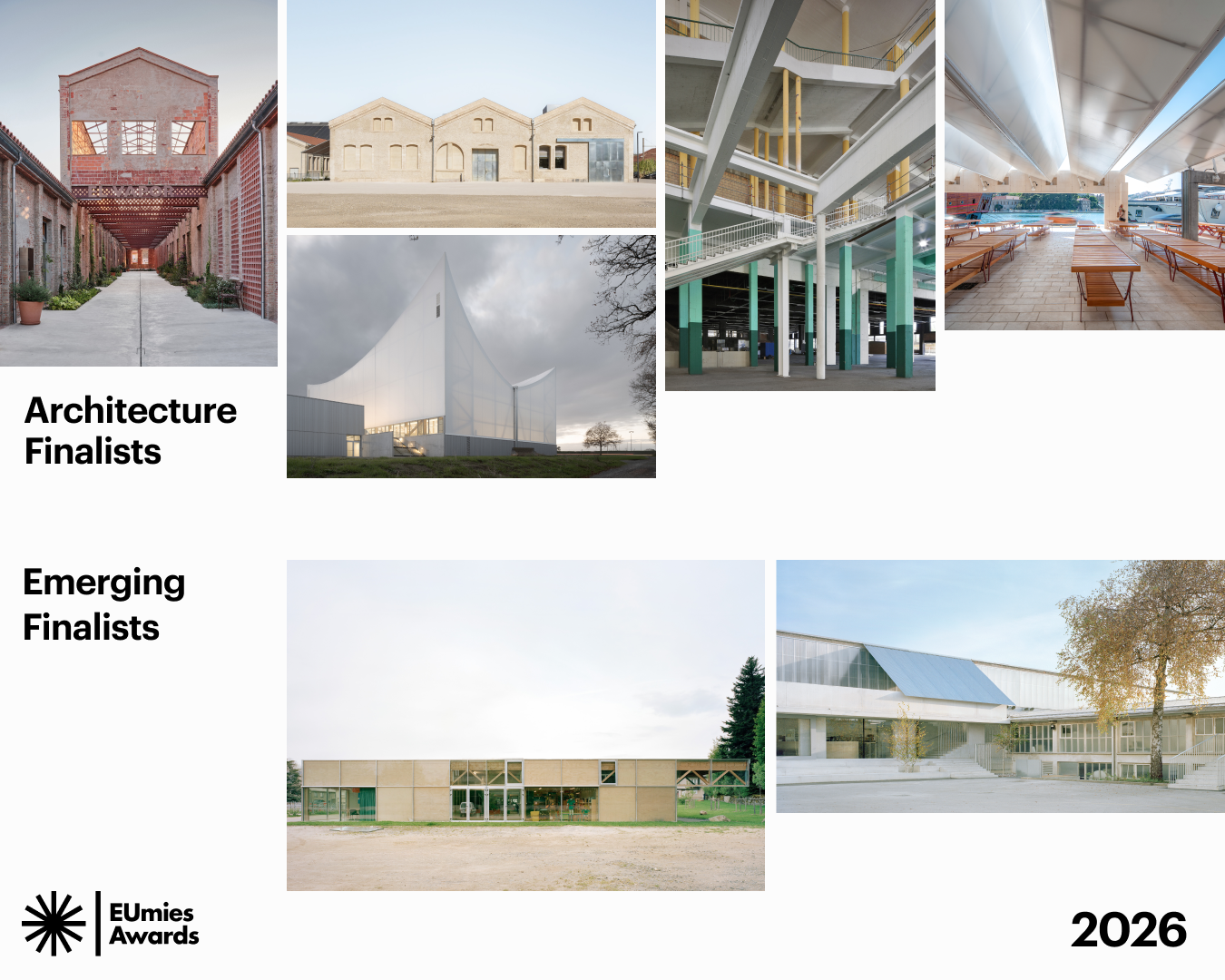
The jury considers the 7 finalist works of the EUmies Awards 2026 to be exemplary contributions to the future of European architecture.
They highlight how architecture can respond to both specific local conditions and broader societal challenges, creating inclusive, high-quality environments where people live, learn, and meet.
These works demonstrate a careful balance between radical innovation and sensitivity to context. Some transform overlooked areas – former industrial zones, small villages, or peripheral urban districts – while others intervene in larger cities with subtlety and respect for existing neighbourhoods. In each case, the architects’ decisions are guided by a deep understanding of the social, cultural, and environmental forces shaping contemporary life.
What unites these works is their focus on the human dimension: architecture that does not merely occupy space but enhances everyday life.
They show that architecture can be both rigorous and playful, experimental yet grounded, and always attentive to the people who inhabit and use it. In a Europe facing political, environmental, and social challenges, these works offer hope and demonstrate the enduring value of thoughtful, engaged design.
In March, the jury will visit the seven finalist works and will decide on the Prize Winners.
The announcement of both the Architecture Winner and the Emerging Winner will take place on 16 April in Oulu, Northern Ostrobothnia, Finland, one of the two European Capitals of Culture 2026.
The EUmies Awards Days with the Awards Ceremony, exhibitions and debates, will take place on May 2026 in Barcelona in the context of Barcelona World Capital of Architecture UNESCO-UIA. Save the date for the lectures, debates, exhibition opening and celebration with the jury members, winners, finalists, clients and other guests and representatives.
The 5 Architecture Finalists
Charleroi Palais des Expositions, by AgwA, architecten jan de vylder inge vinck
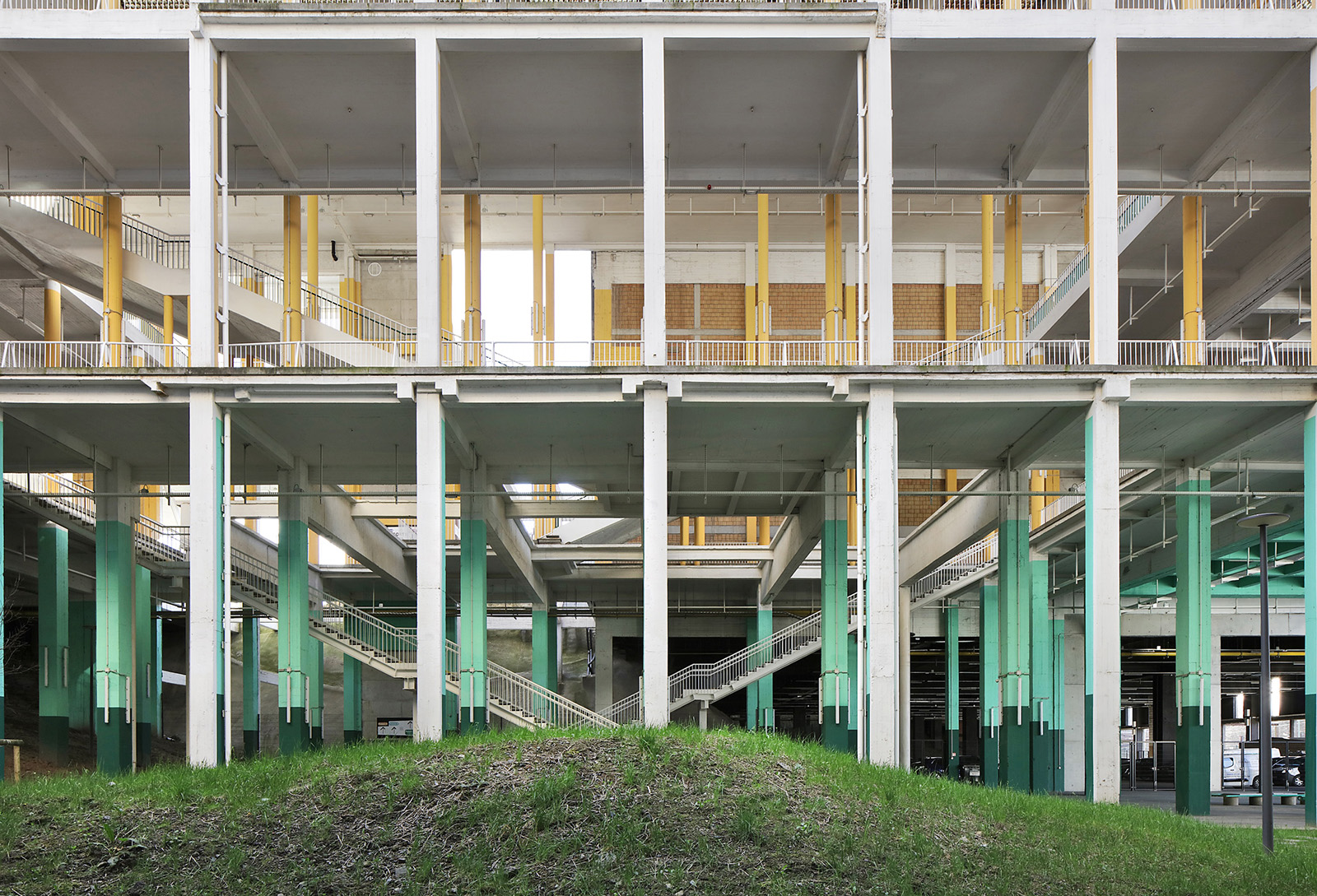
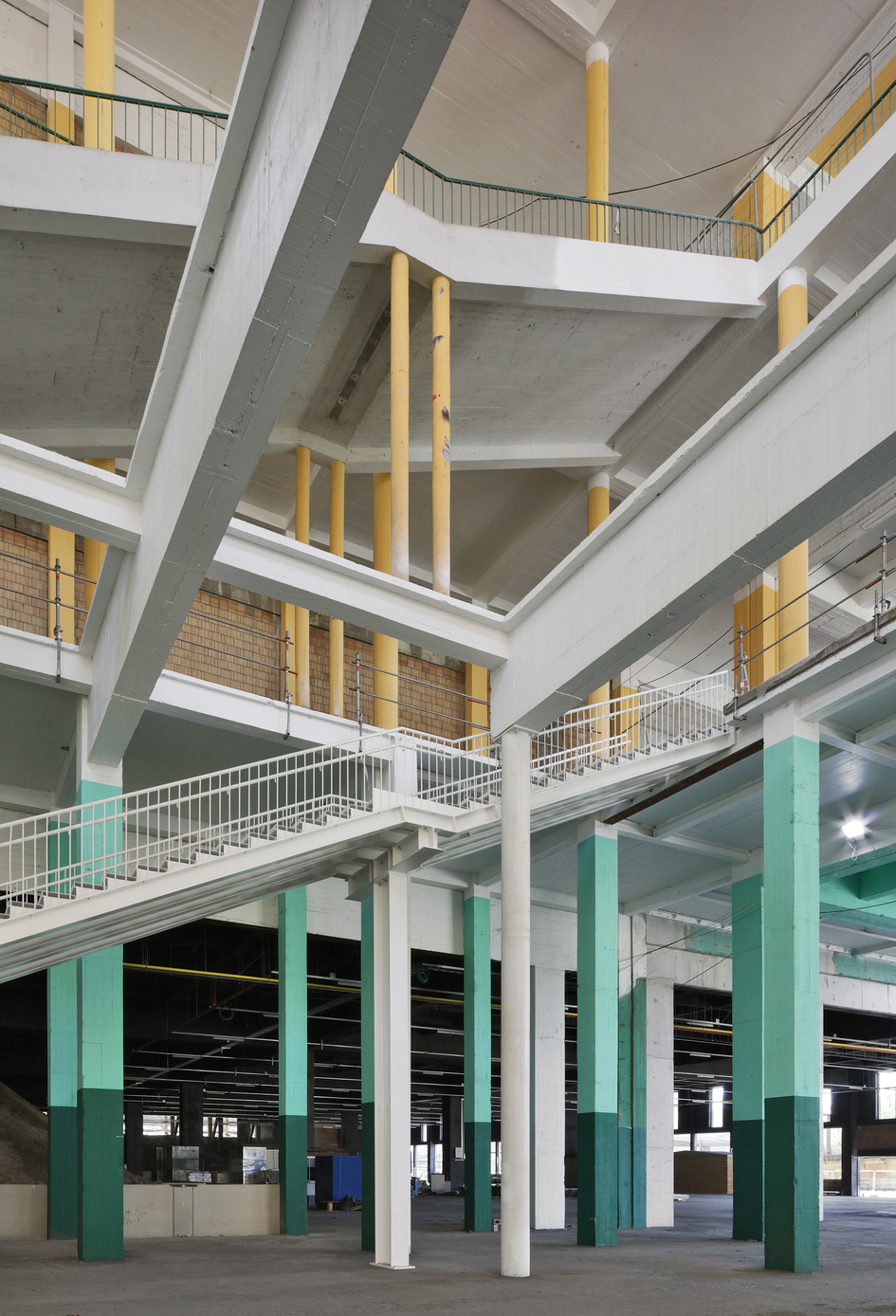
This project renovates a 1950s convention centre to better serve today’s city and its residents. Instead of demolishing the building, the existing structure is reused and opened up. The former closed central hall extends the public space inside the building, making it more accessible and easier to move through. Outside, hard paved areas are replaced by a continuous green park, improving the environment and reconnecting the building with its surroundings. The result is a building that preserves its original character while offering a completely new experience: the same building as before, but seen and used in a new way.
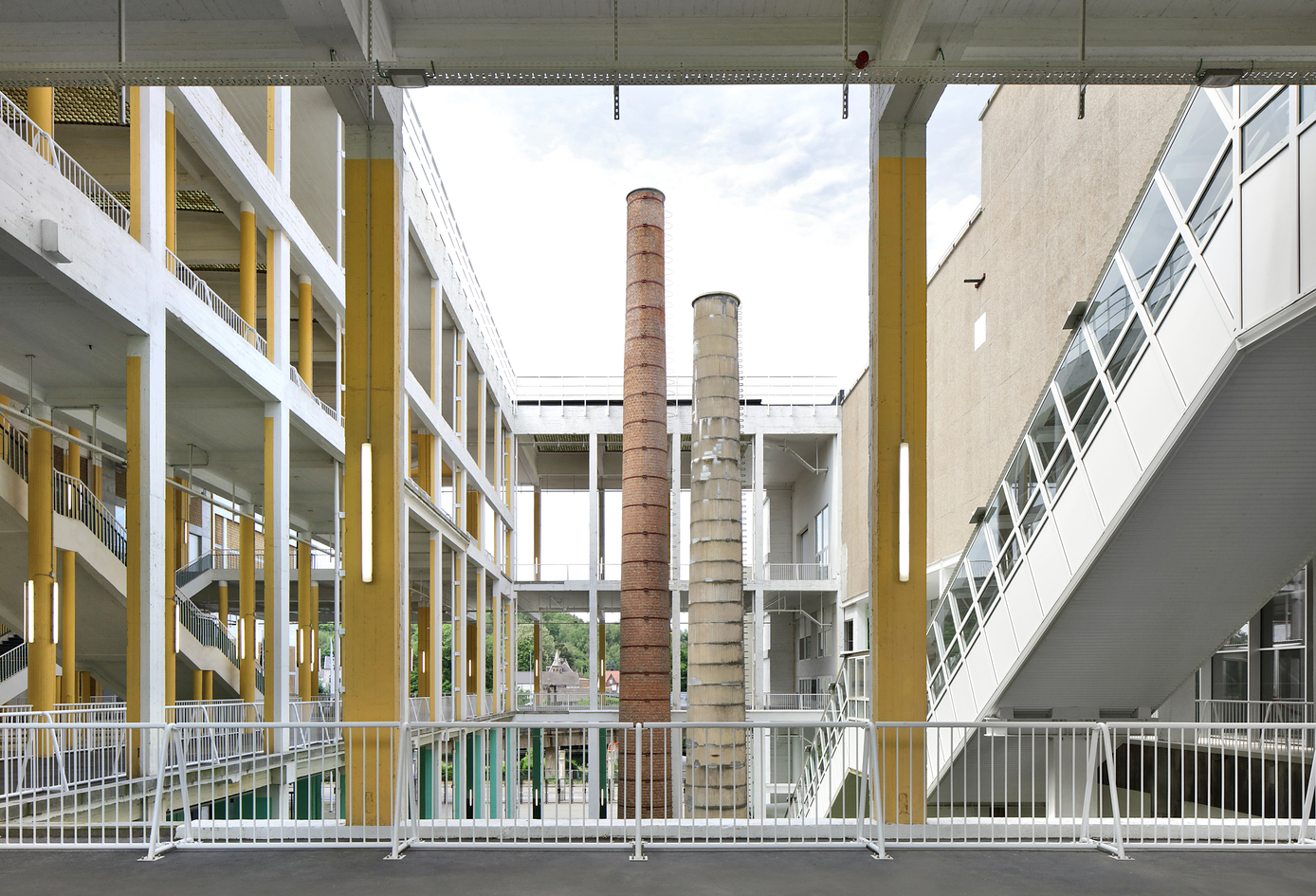
Facts & Credits
Project title Charleroi Palais des Expositions
City Charleroi, Hainaut, BE
Architects AgwA, Brussels + architecten jan de vylder inge vinck, Ghent
Architectural programme Culture – Congress Centre, Culture Centre, Exhibition, Dance
Intervention type Regeneration
Location Industrial Fabric 20th Century
Client City of Charleroi (Public)
Photography © FILIP DUJARDIN
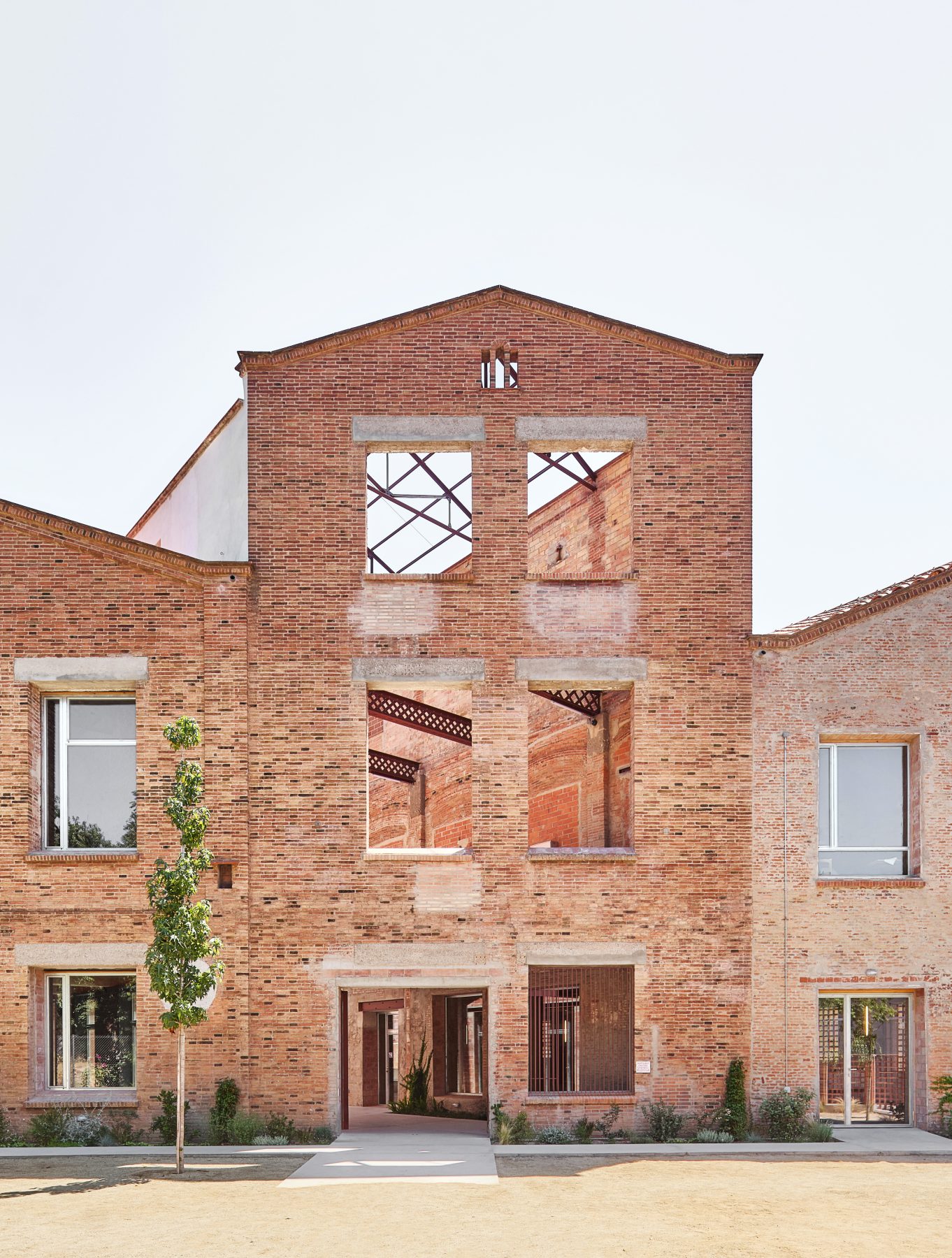
Rehabilitation of Vapor Cortès – Prodis 1923, by H ARQUITECTES
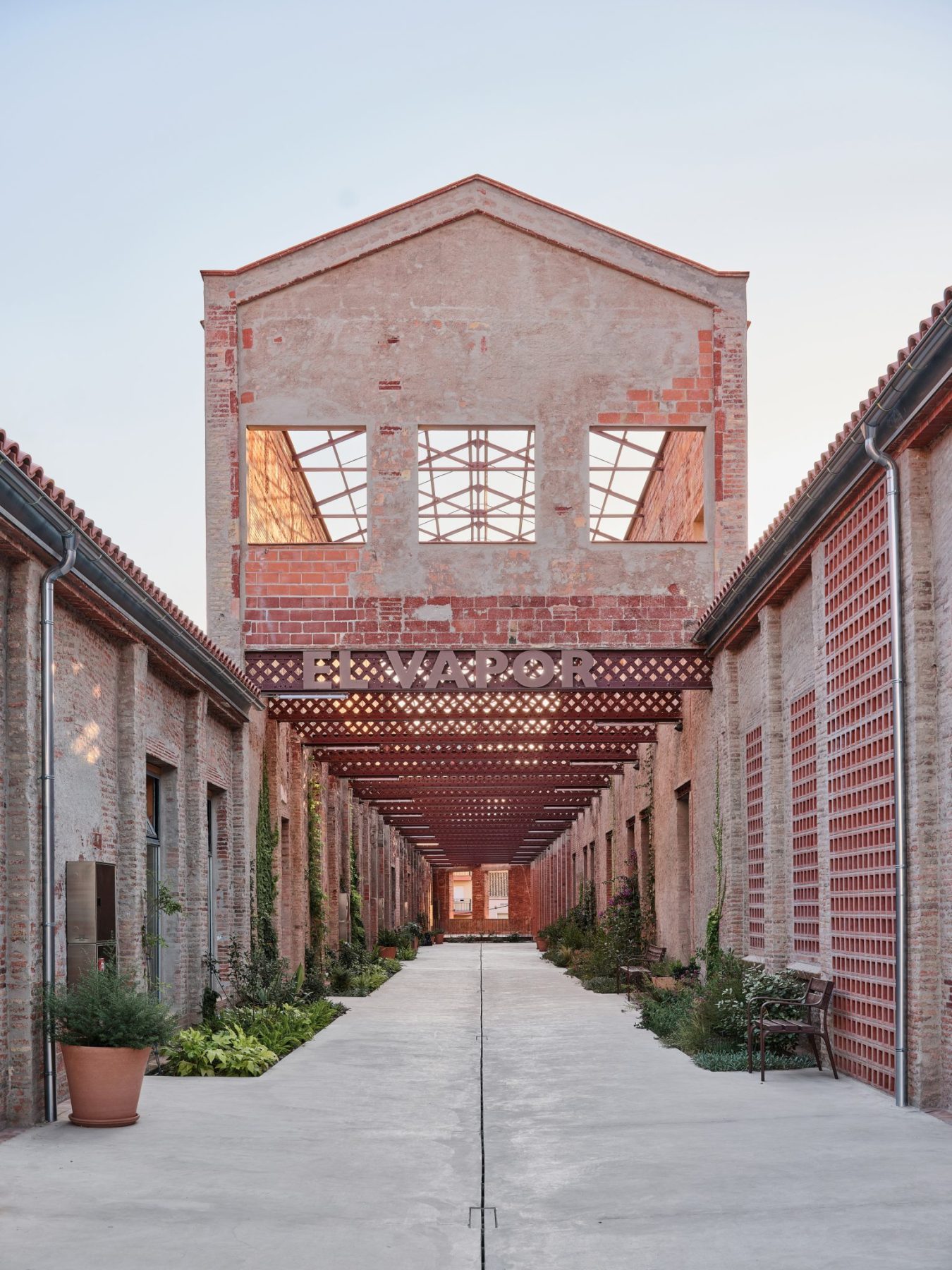
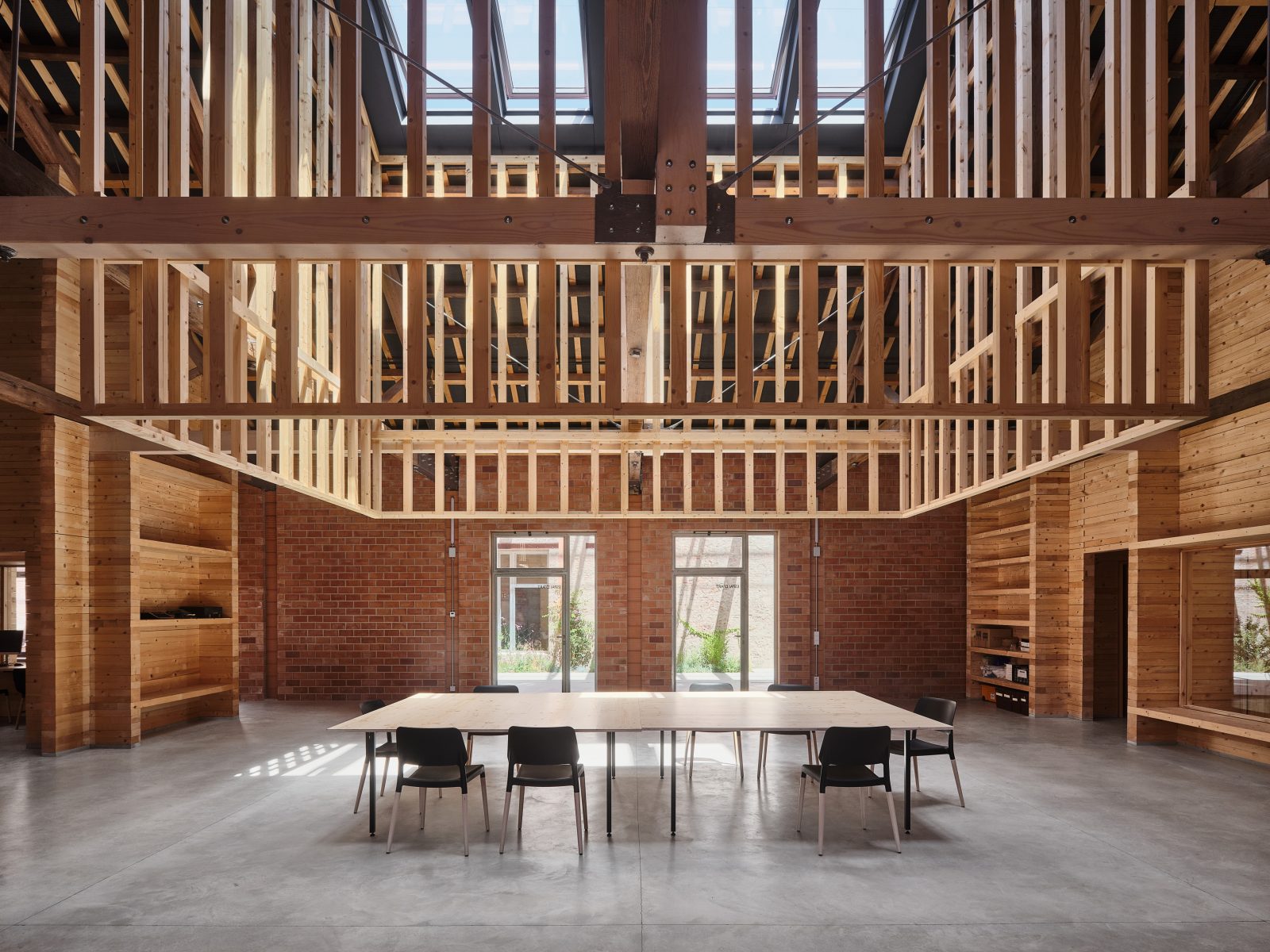
The new Prodis headquarters transforms the old Vapor Marquès warehouses into an inclusive centre organized around a recovered passage that becomes a new street for the city. The new intervention introduces wooden structures, skylights, and energy passive systems while respecting its original character.
Facts & Credits
Project title Rehabilitation of Vapor Cortès – Prodis
City Terrasa, Catalonia, ES
Architects H ARQUITECTES (David Lorente, Josep Ricart, Xavier Ros, Roger Tudó), Sabadell
Architectural programme Social welfare – Community
Intervention type Regeneration
Location Industrial Fabric 20th Century
Client Prodiscapacitats Fundació Privada Terrassenca (PRODIS) (Private)
Photography © ADRIÀ GOULA
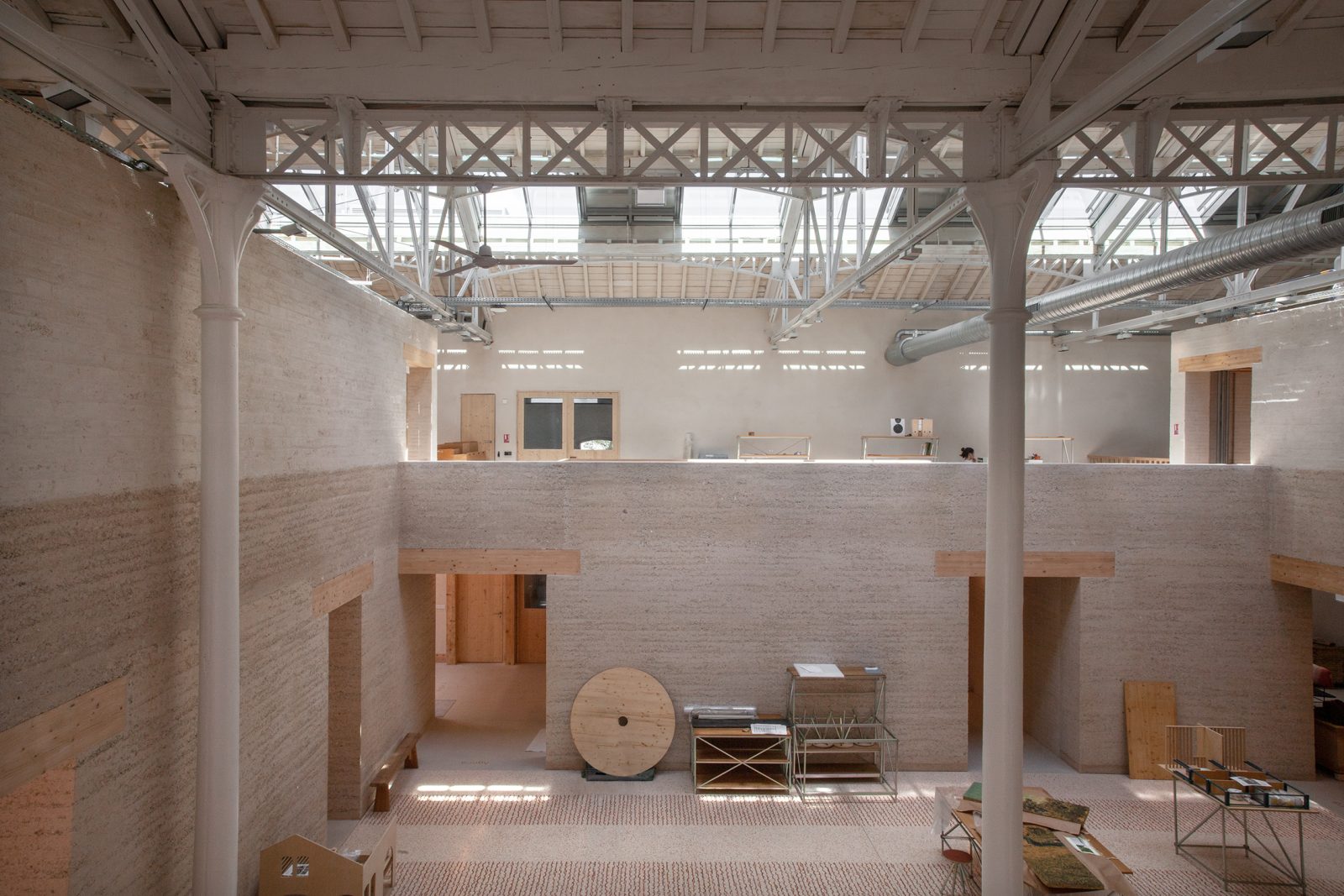
Lot 8, LUMA Arles – Renovation of Le Magasin Électrique, by ASSEMBLE, Atelier Luma, BC architects & studies
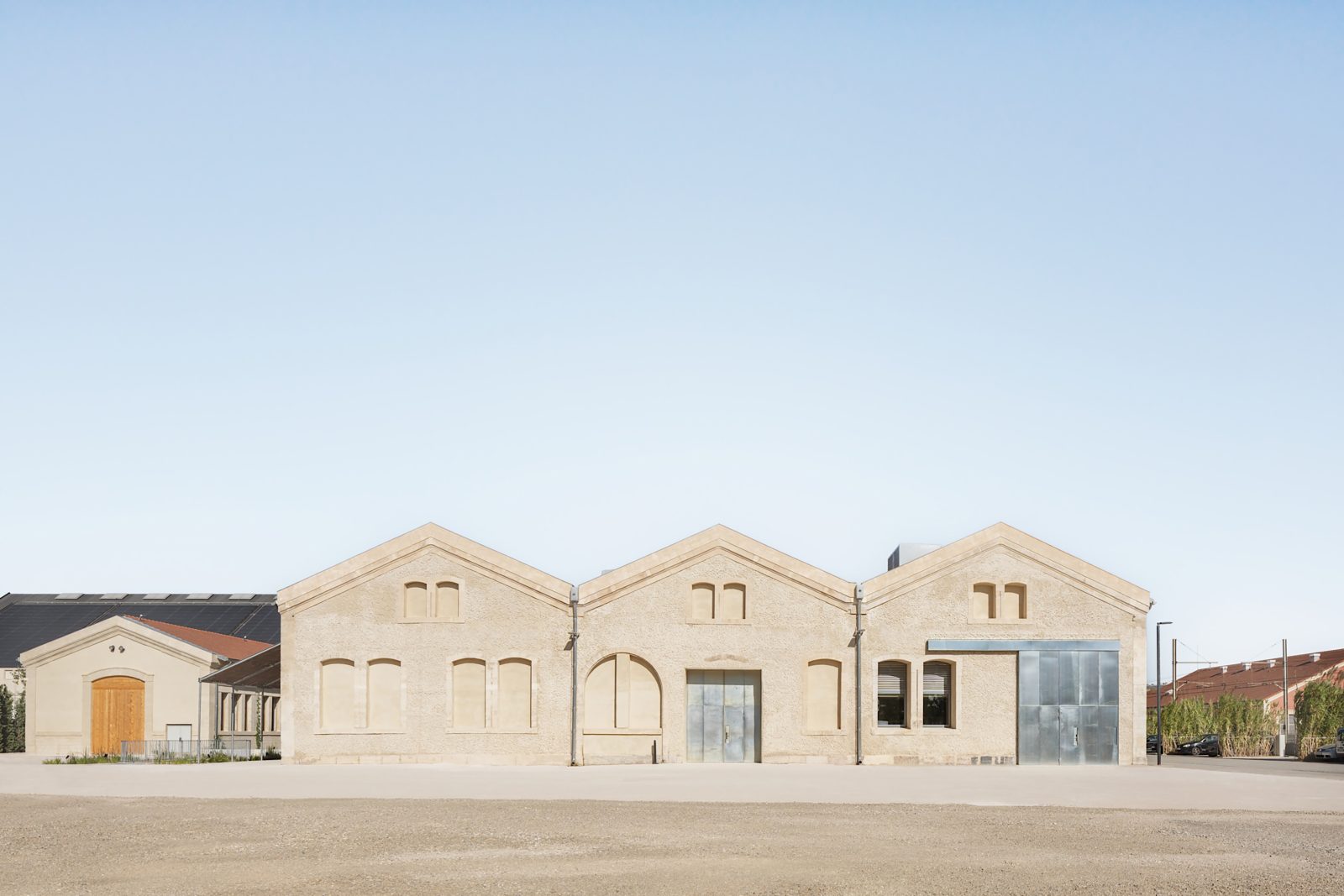
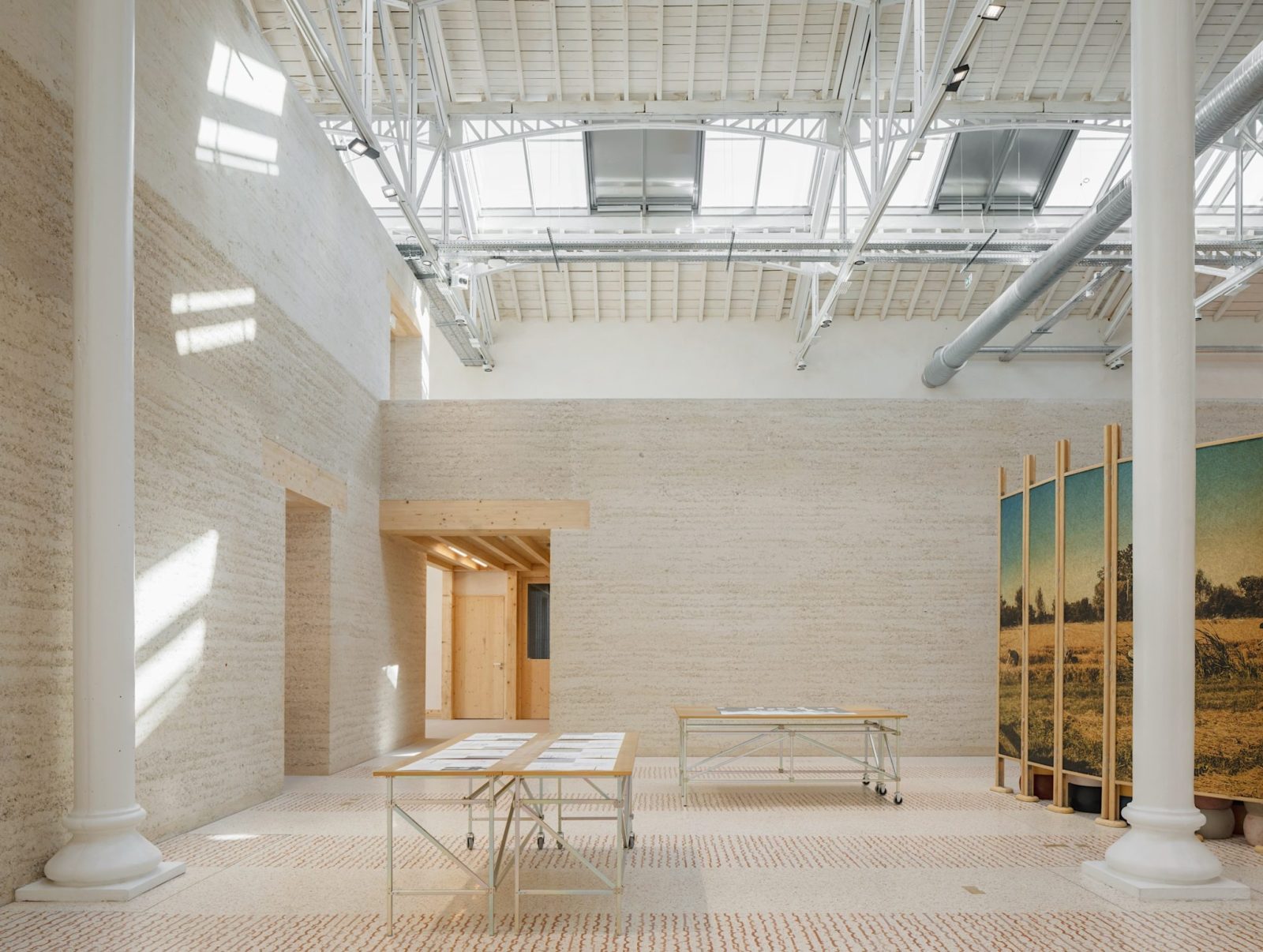
In 2019 the Luma Foundation commissioned Assemble and BC Architects to transform a 19th- Century train depot in Arles into Atelier LUMA, a design lab exemplifying bioregional design, using Camargue resources, regenerative materials and local knowledge for a sustainable, socially engaged architecture.
Facts & Credits
Project title Lot 8, LUMA Arles – Renovation of Le Magasin Électrique
City Arles, Provence-Alpes-Côte d’Azur, FR
Architects Atelier Luma,, Arles, BC architects & studies, Brussels, with ASSEMBLE (James Binning, Joe Halligan, Maria Lisogorskaya, Adam Willis, Jan Boelen, Daniel Bell, Laurens Bekemans, Baptiste Chatenet)
Architectural programme Industrial – Research
Intervention type Regeneration
Location Industrial Fabric 19th Century
Client The Luma Foundation (Private)
Photography © ADRIÀ GOULA
Josephine Baker – Marie-Jose Perec Sports and Cultural Centre, by onze04
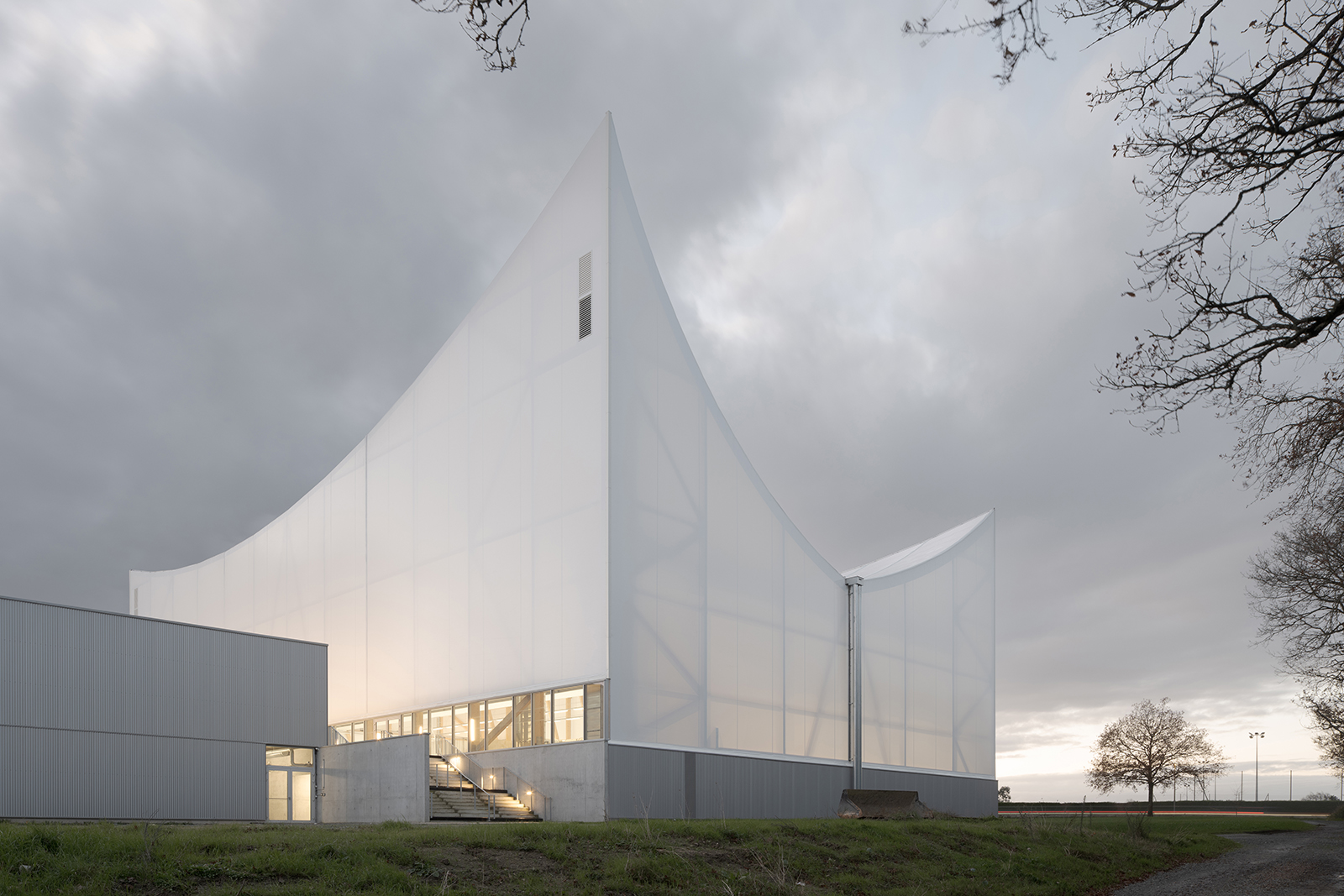
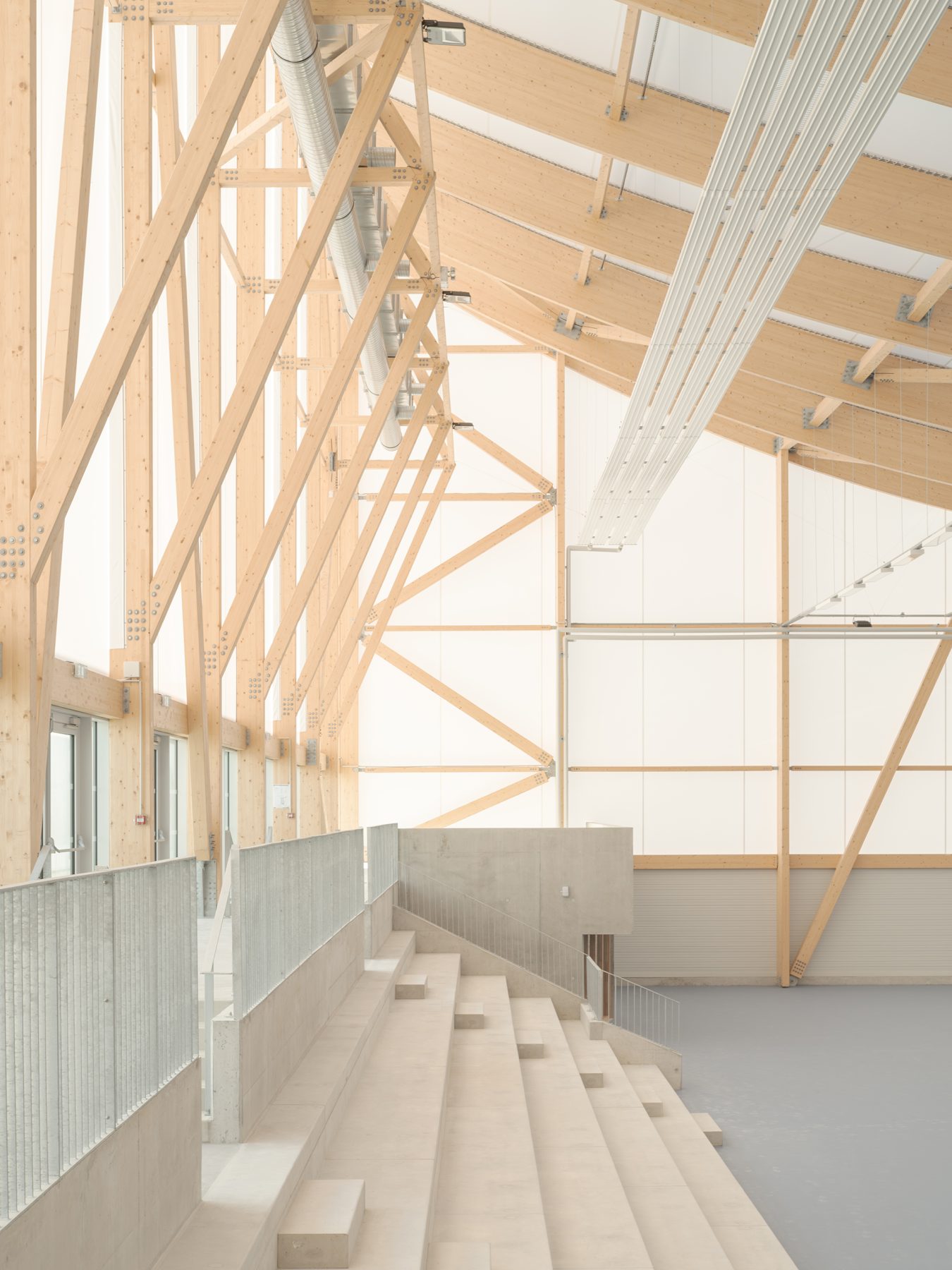
The project creates a new cultural and sports facility hosting regional competitions. It forms a major hub integrating existing facilities and reconnecting the area with neighbouring districts. Its textile-roof hall offers natural light and ventilation, becoming a symbolic urban landmark.
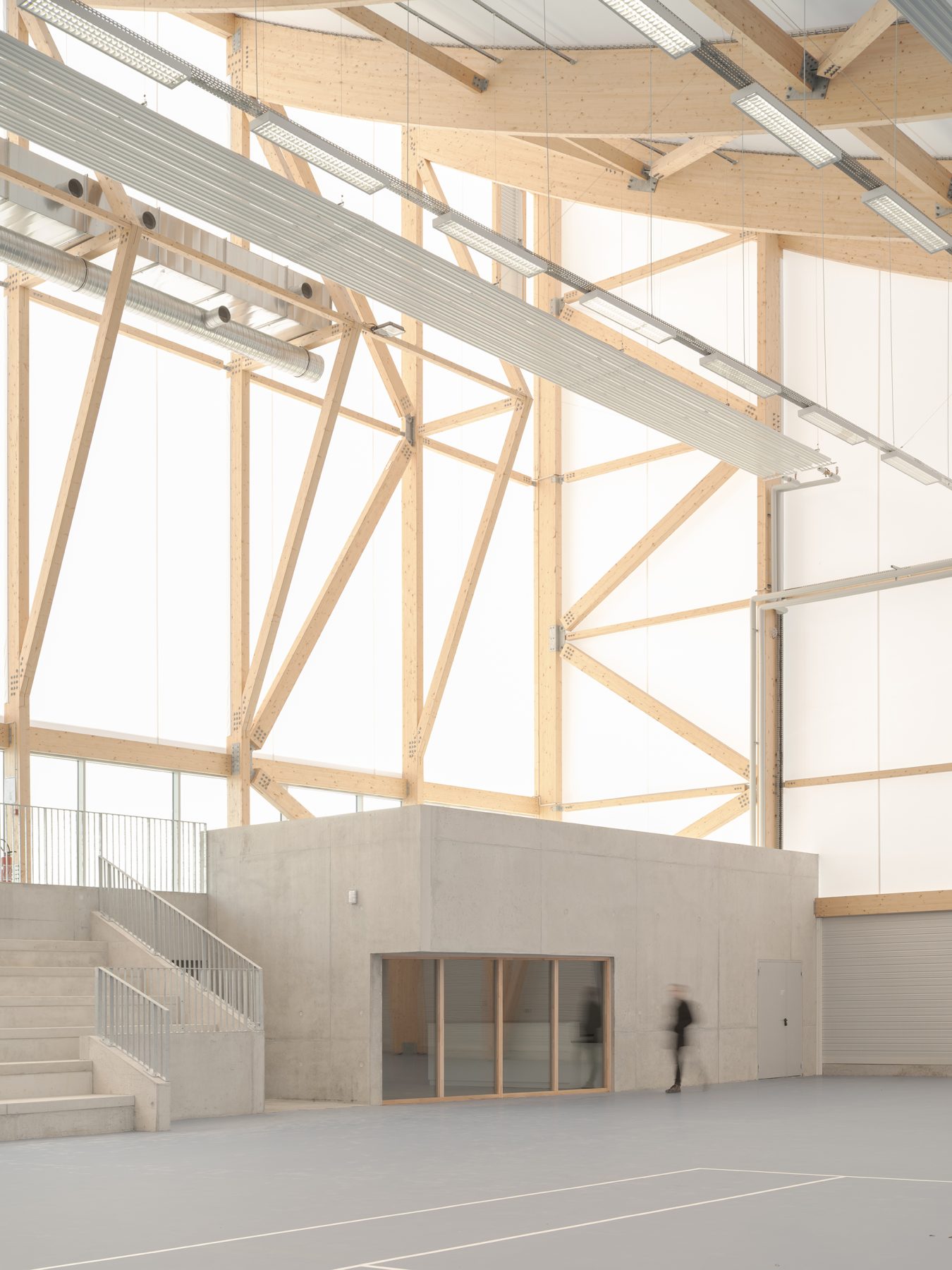
Facts & Credits
Project title Josephine Baker – Marie-Jose Perec Sports and Cultural Centre
City La Bouëxière – Beuzid–ar–C’hoadoù, Brittany, FR
Architects onze04, Nantes-Barcelona (Gustavo Silva-Nicoletti)
Architectural programme Sport & Leisure – Sports Centre, Tennis, Children & Youth
Intervention type New Construction
Location Periphery
Client Commune de La Bouëxière (Public)
Photography © JUAN CARDONA
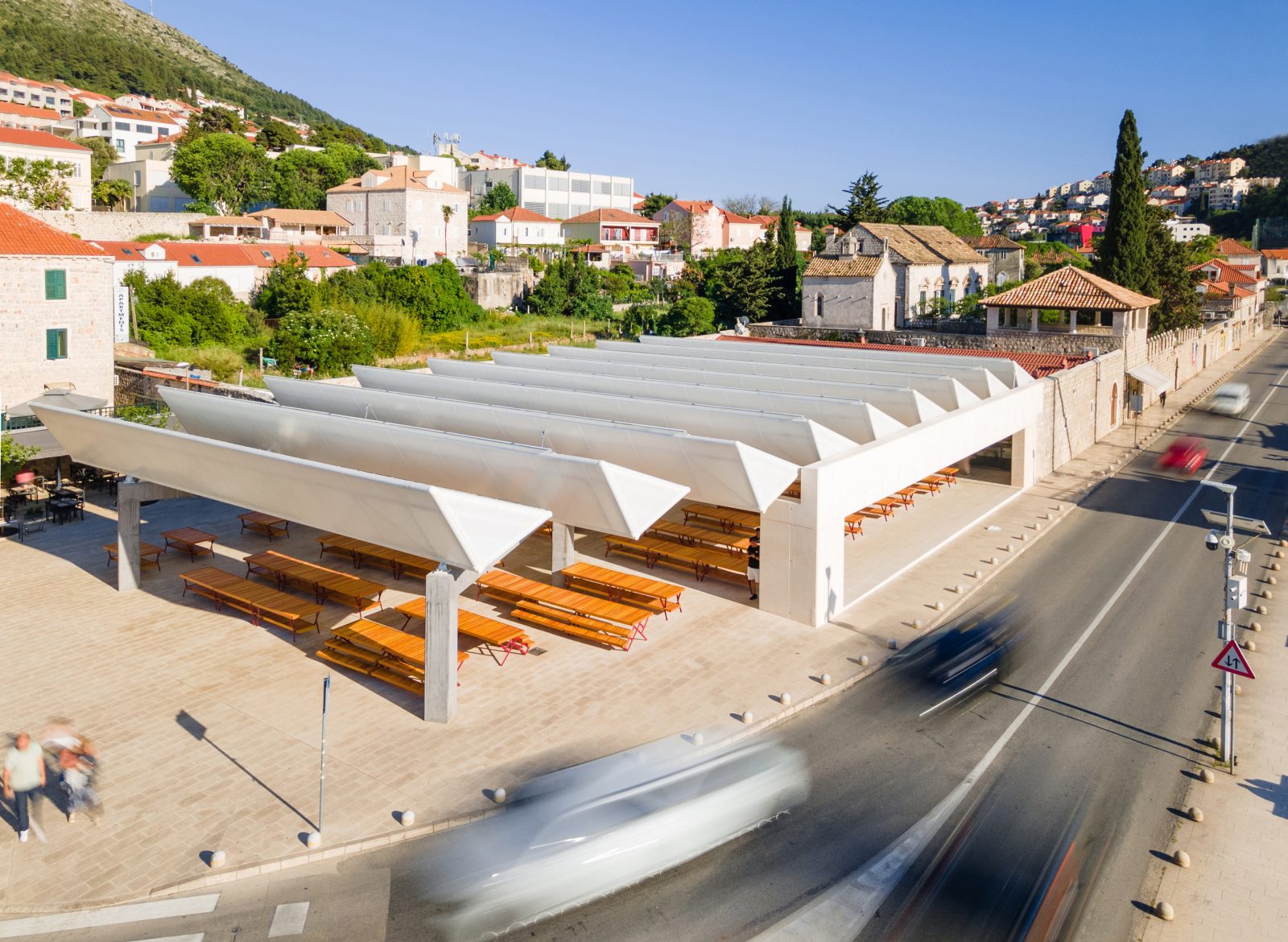
Gruž Market in Dubrovnik, by ARP / Peračić-Veljačić
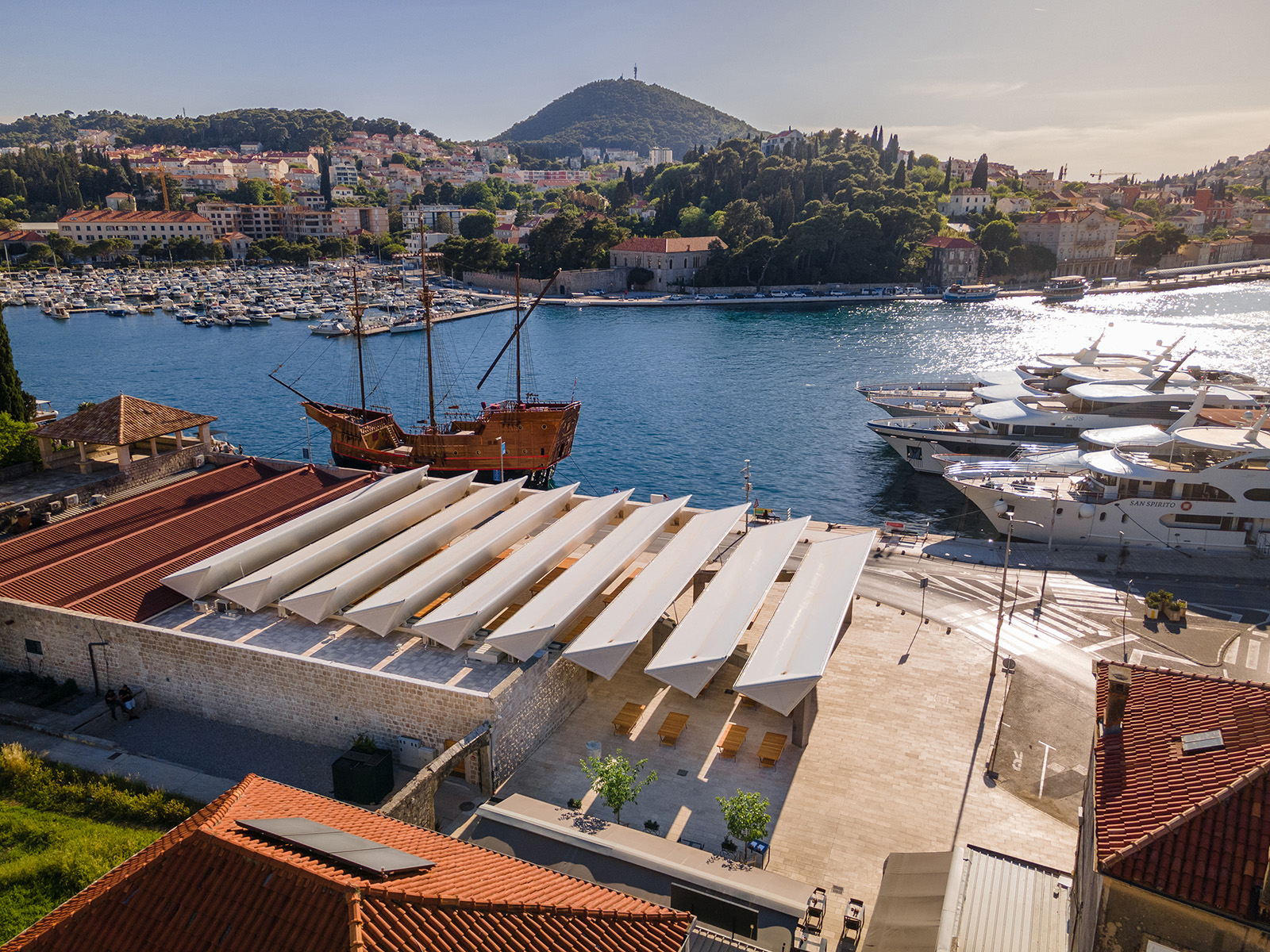
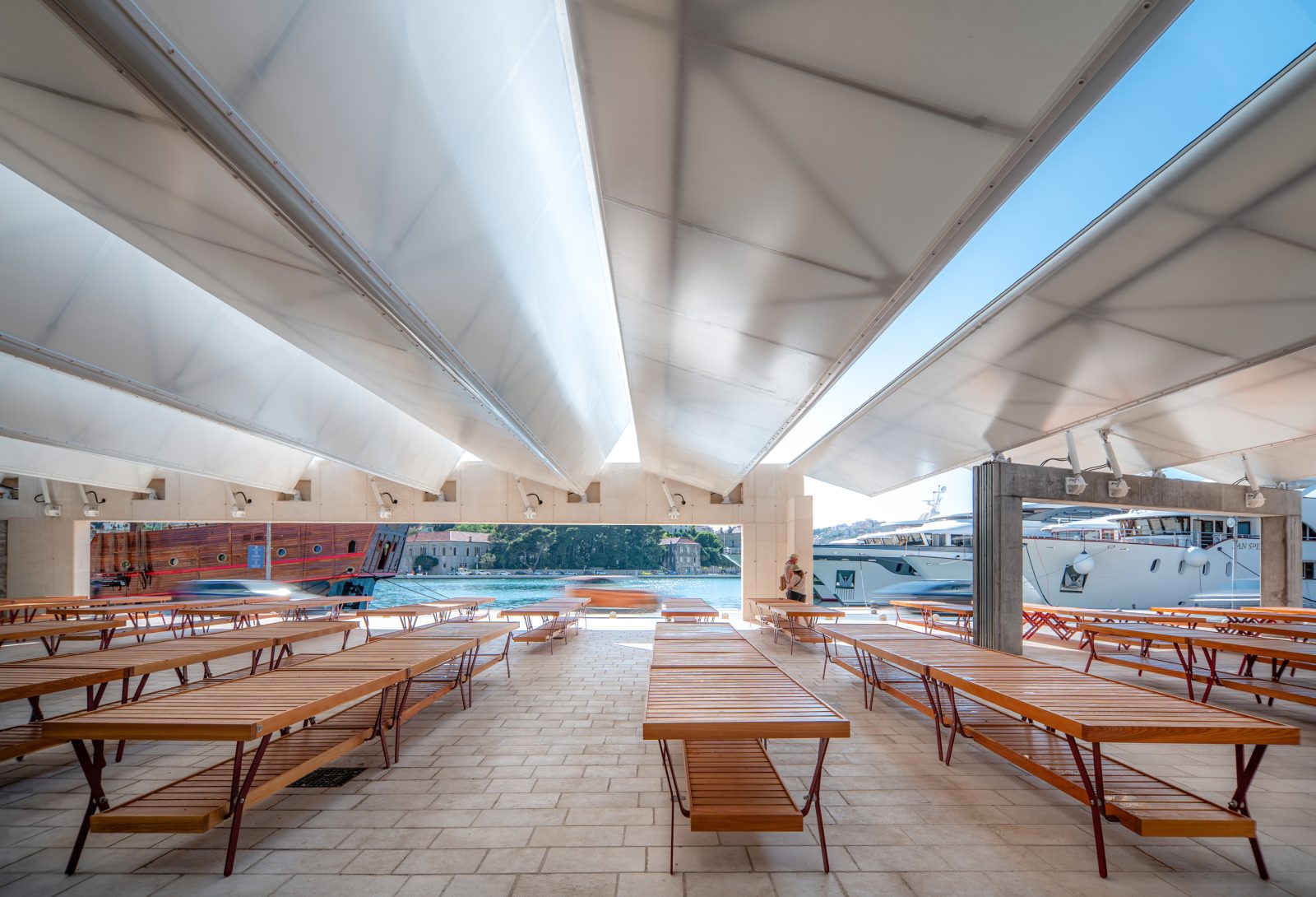
An adjustable and carefully shaped canopy/roof, lightweight and optimistic in its appearance, floats above the marketplace and articulates spatial and cultural relations. At once, it gives integrity to the market square, new life to the heritage, public climatic shelter and new identity to the city.
Facts & Credits
Project title Gruž Market in Dubrovnik
City Dubrovnik, Adriatic Croatia, HR
Architects ARP / Peračić-Veljačić, Split (Dinko Peračić, Miranda Veljačić)
Architectural programme Commerce – Market
Intervention type Regeneration
Location Historic Centre
Client Sanitat Dubrovnik (Public)
Photography © DRAGAN NOVAKOVIĆ
The 2 Emerging Finalists
Multi-Service Cultural Centre Le Foirail, by Betillon & Freyermuth*, Crypto Architectes
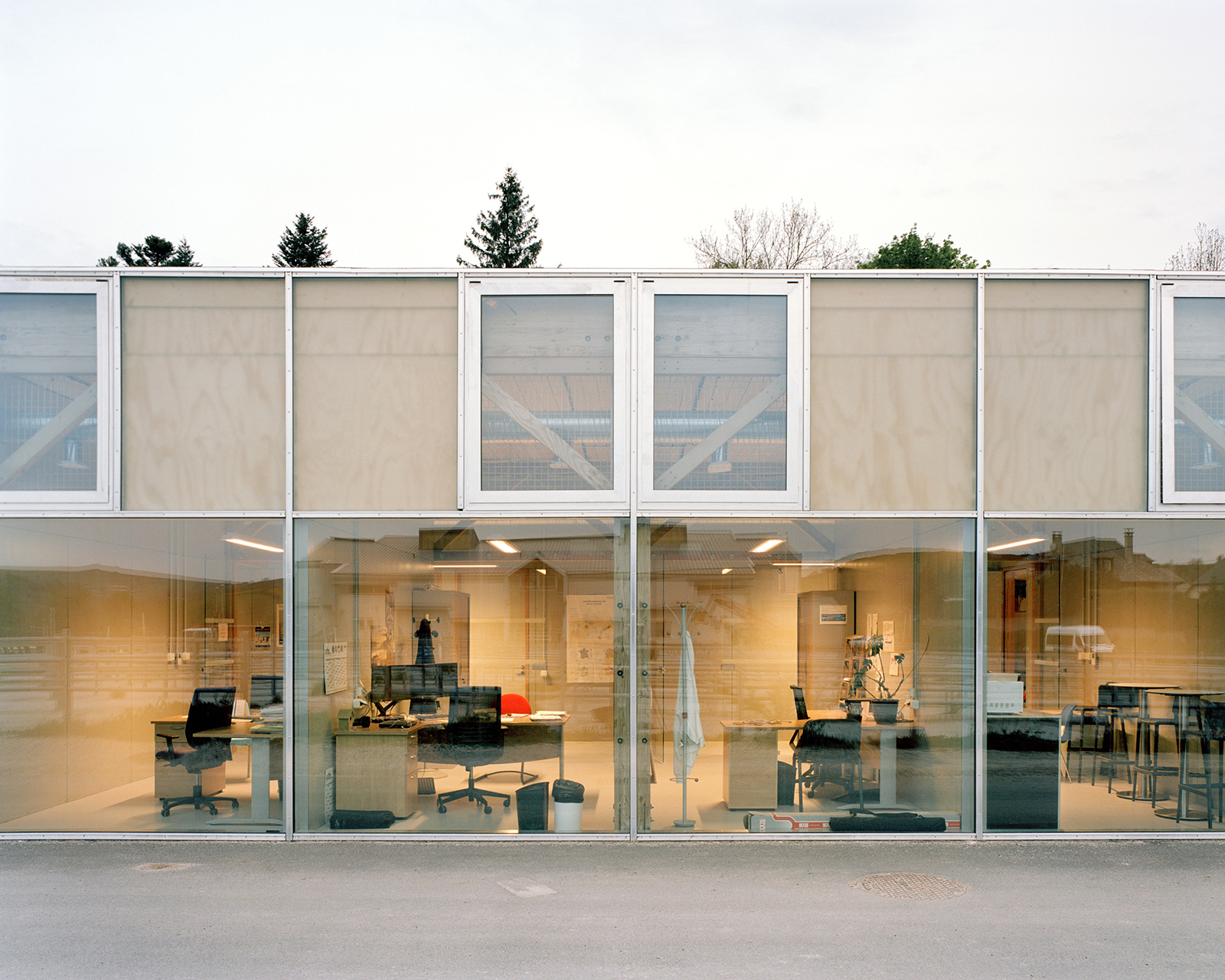
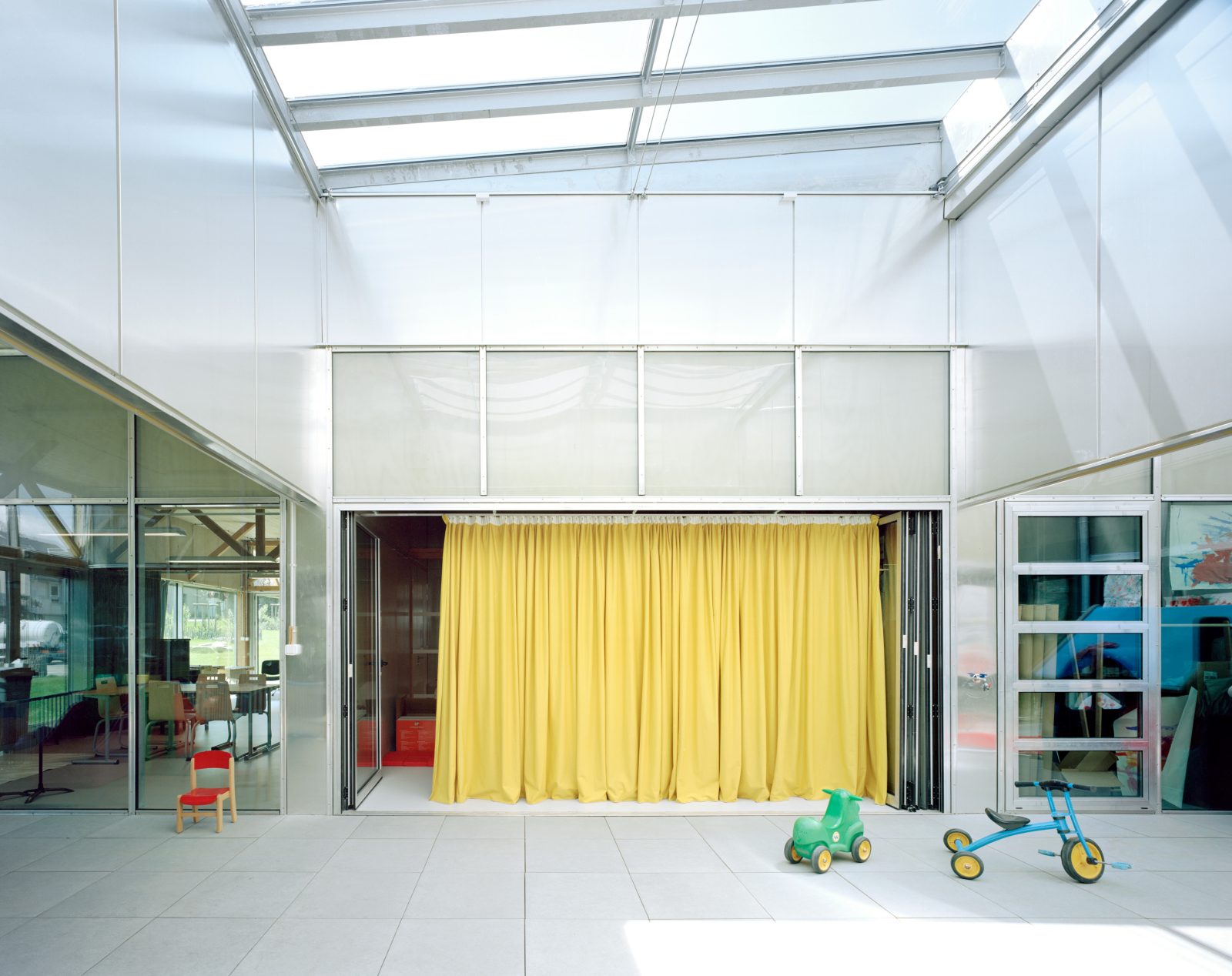
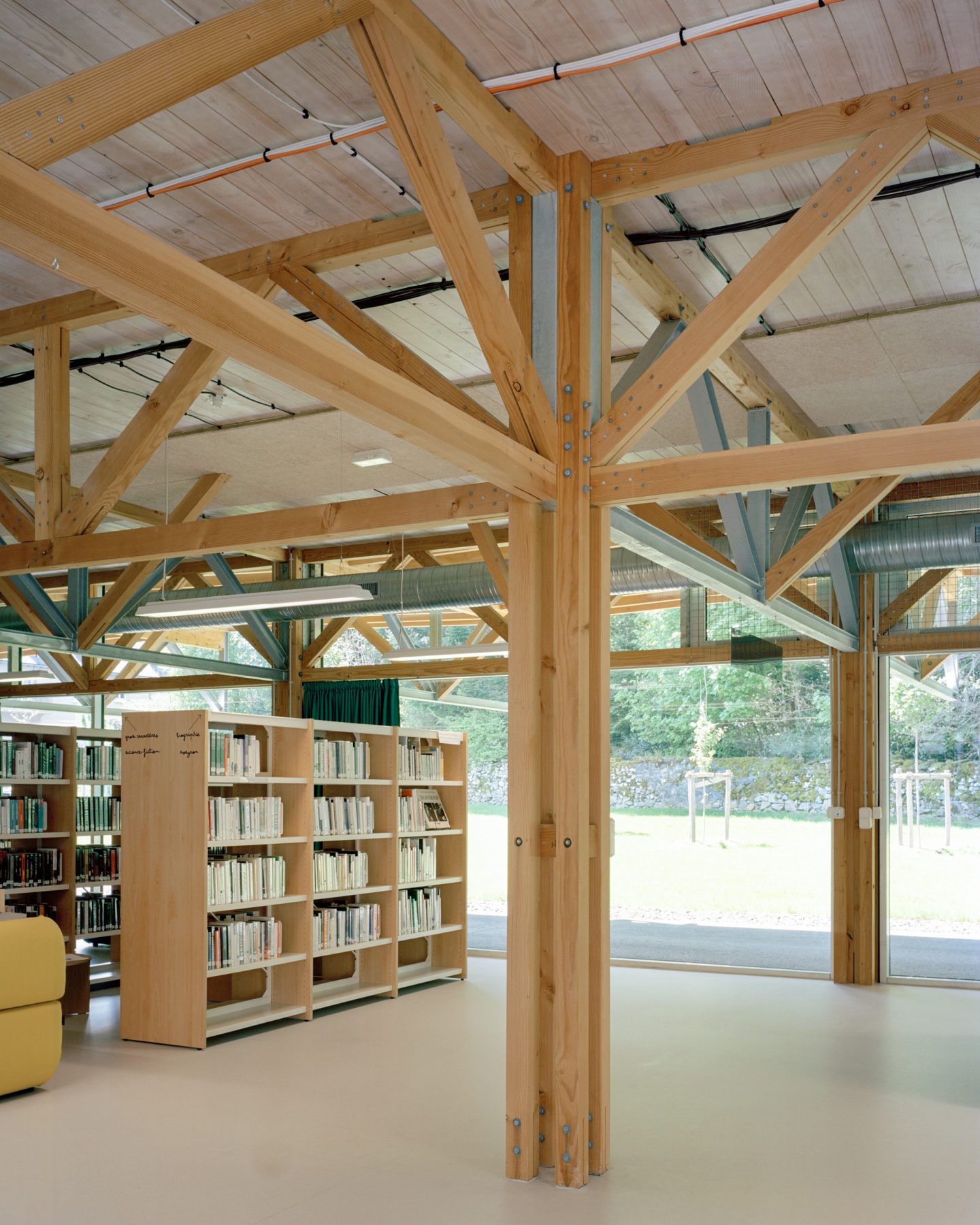
A radical hall in Laguiole, open and adaptable, rooted in a proud rural territory with limited resources. Rather than imitating historical styles, the building serves as a shared public space: a flexible, functional structure that can evolve over time and support collective life and local identity. Built using local resources, with materials and uses designed to grow and change.
Facts & Credits
Project title Multi-Service Cultural Centre Le Foirail
City Laguiole-La Guiòla, Occitanie, FR
Architects Betillon & Freyermuth* and Crypto Architectes, Toulouse (Raphaël Betillon Guillaume Freyermuth, Jean Baptiste Friot)
Architectural programme Mixed Use Cultural and Social – Children & Youth, Library, Music, Civic Centre
Intervention type New Construction
Location Historic Centre
Client Communauté de communes Aubrac, Carladez et Viadène (Public)
Photography © MAXIME DELVAUX
Temporary Spaces for Slovenian National Theatre Drama, by Vidic Grohar Arhitekti
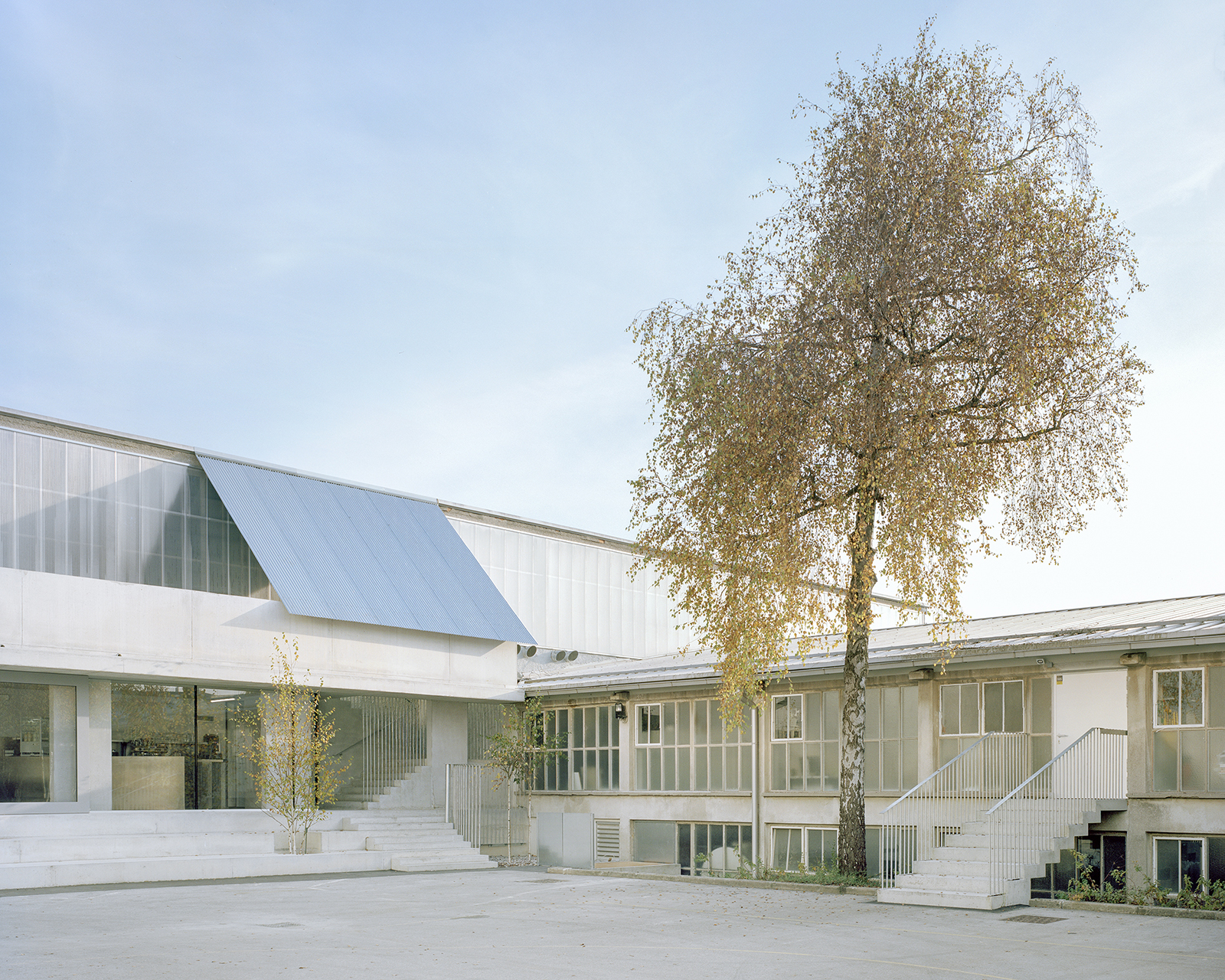
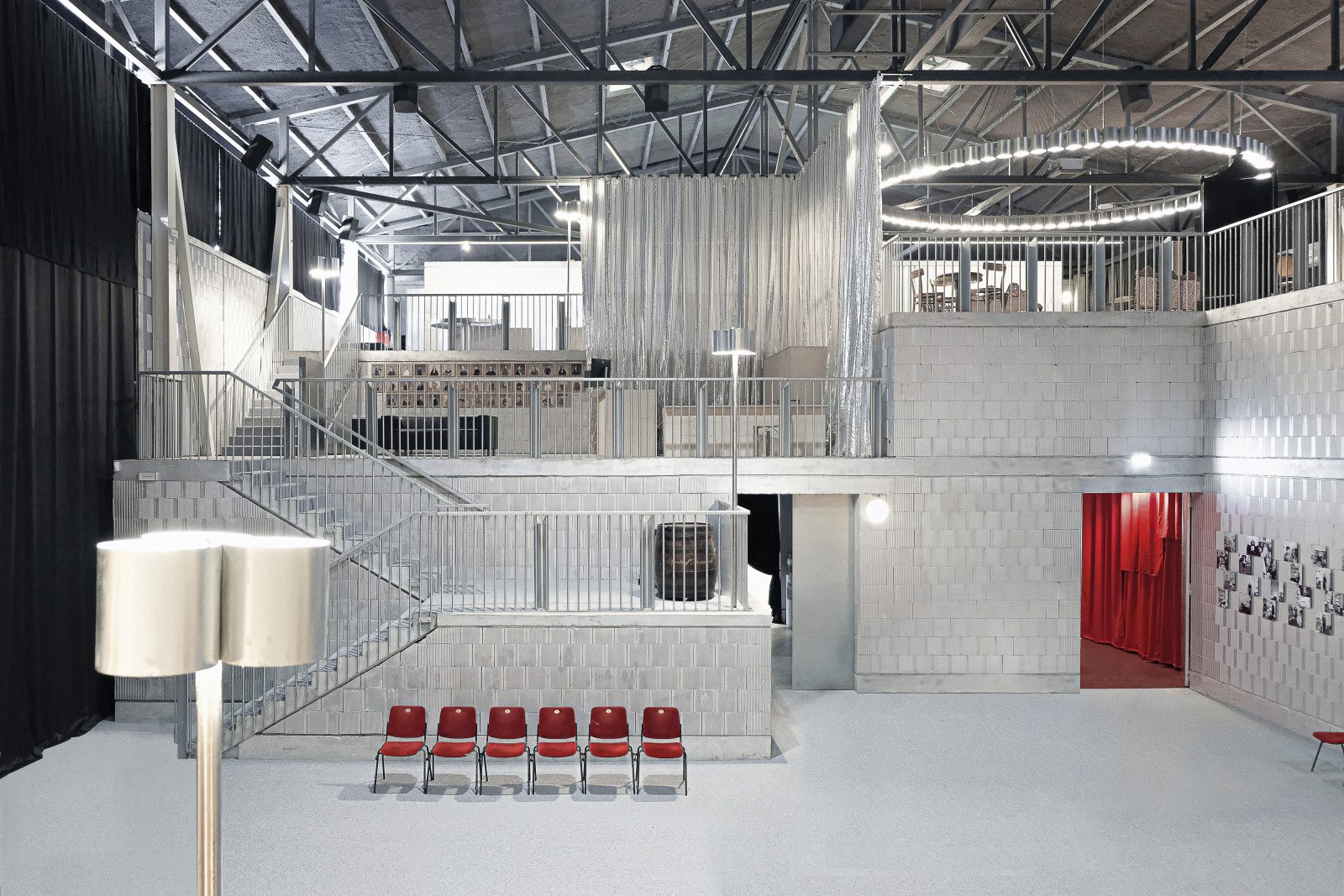
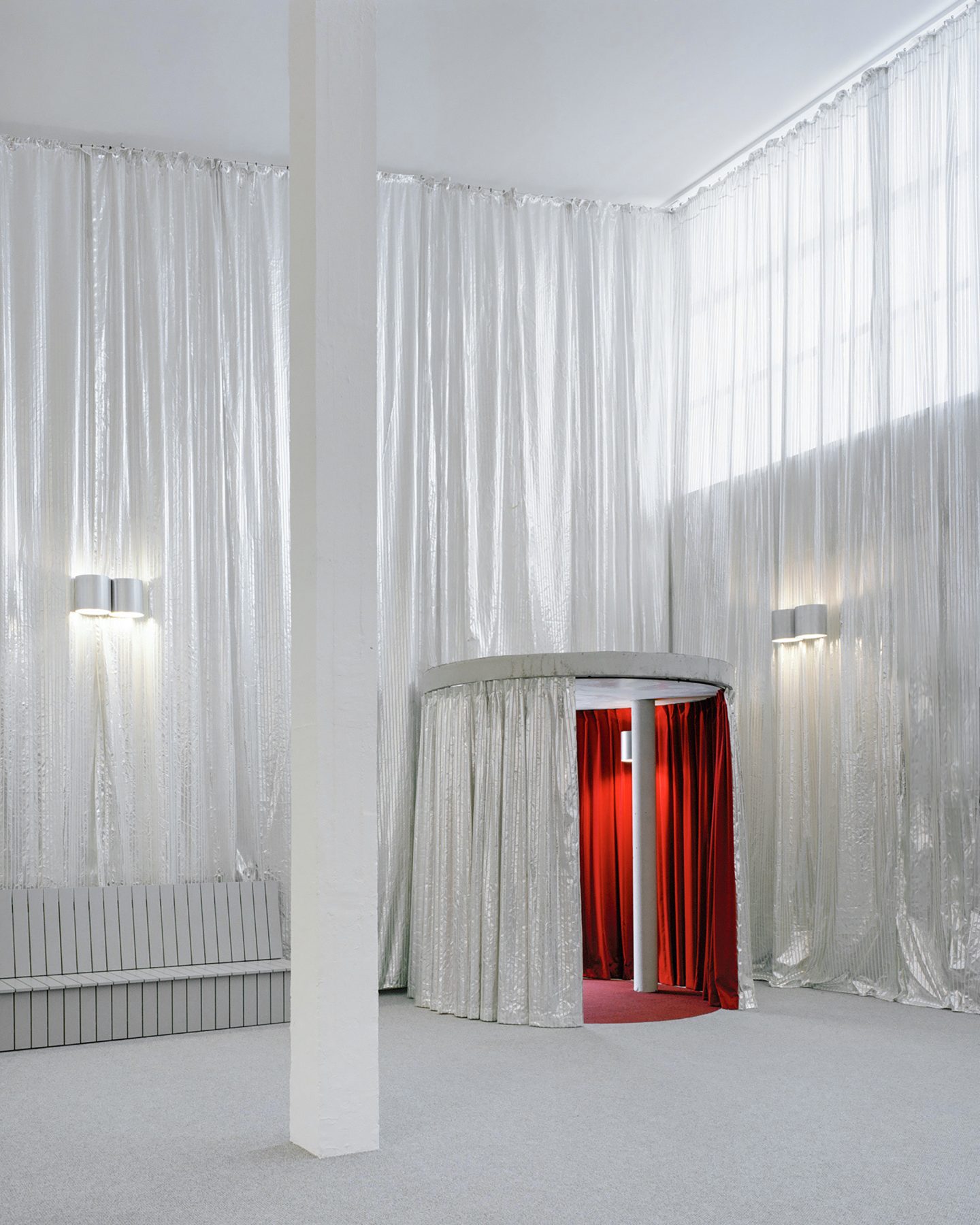
The project involves the adaptive reuse of a former industrial hall as a Temporary National Theatre during the renovation of the city’s historic theatre building. Located within a complex of 1960s industrial halls on the city’s fringe, it establishes a new programatic centre. A series of low-budget interventions carried out in a short period transformed the abandoned industrial hall into a vibrant new public building.
Facts & Credits
Project title Temporary Spaces for Slovenian National Theatre Drama,
City Ljubljana, Western Slovenia, SI
Architects Vidic Grohar Arhitekti, Ljubljana (Anja Vidic, Jure Grohar)
Architectural programme Culture – Theatre
Intervention type Regeneration
Location Industrial Fabric 20th Century
Client L56 d.o.o. (Mixed)
Photography © MAXIME DELVAUX
“The seven finalists demonstrate how architecture shapes shared space and helps define the urban landscape that accommodates people’s lives. They highlight the diversity of approaches to the design and reuse of buildings and existing contexts. Contemporary architecture balances careful preservation with thoughtful intervention, transforming both heritage and ordinary structures into meaningful spaces for people. What impressed me most is seeing how emerging and established architects alike embrace simplicity, rigor, and flexibility, creating spaces that are both functional and sensitive, where every decision — from material to scale — reflects professional commitment and care for the people who inhabit them.”
Rosa Rull, co-founder of BAILORULL + ADD Arquitectura, Barcelona
“Serving on the EU Mies Awards 2026 jury was a truly enriching experience. From the first sketches to the close study of each project, I was reminded that architecture is both a tactile and intellectual practice. These projects demonstrate the values we should strive for today – sustainability, social responsibility, multifunctionality, and cultural sensitivity. In a world often full of uncertainty, this award celebrates what is meaningful and enduring in architecture, and it is a privilege to be part of this ongoing exploration of space, material, and human experience.”
Chris Briffa, founder of Chris Briffa Architects, La Valletta
“Architecture is more than constructing buildings; it is a means of shaping shared environments and enabling new forms of collective life. The most outstanding projects of this year’s EUmies Awards 2026 demonstrate how spatial practice can combine formal rigor with deep engagement in the social, political, and climatic forces that define our present moment.”
Nikolaus Hirsch, Artistic Director of Kanal Architecture, Brussels
The Architecture and Emerging Winners will be announced on 16 April 2026 during an event at the Aalto Silo in Oulu, European Capital of Culture 2026, with a conversation including a representative of the European Commission, the director of the EUmies Awards, Ivan Blasi, and local representatives of Oulu European Capital of Culture and of the Finnish architecture institutions.
The EUmies Awards Days including the Awards Ceremony, will take place on 11 and 12 May 2026, at the Mies van der Rohe Pavilion in Barcelona and Palau Victòria Eugènia, in a two- day-long-event that will include lectures by the authors of the winning and finalist works, discussions with the architects, clients, policymakers and jury members; the exhibition with the 410 works participating in the EUmies Awards 2026; and the events of the Barcelona World Capital of Architecture UNESCO-UIA.
Partners
The EUmies Awards are organised by Fundació Mies van der Rohe and the European Commission, with support from the EU Creative Europe Programme. The Awards are anchored in a strong European architectural ecosystem through institutional partnerships with the Architects’ Council of Europe (ACE) and the European Association for Architectural Education (EAAE), and are developed in collaboration with World Architects and the European Cultural Centre (Venice). Sponsors include Jung, Jansen, and Zumtobel, with additional support from USM and Hotel Alma Barcelona. The Advisory Committee ensures the Awards’ relevance and impact across Europe.