Rural Living explores how architecture intersects with rural landscapes and agricultural ways of life, questioning how we inhabit non-urban land.
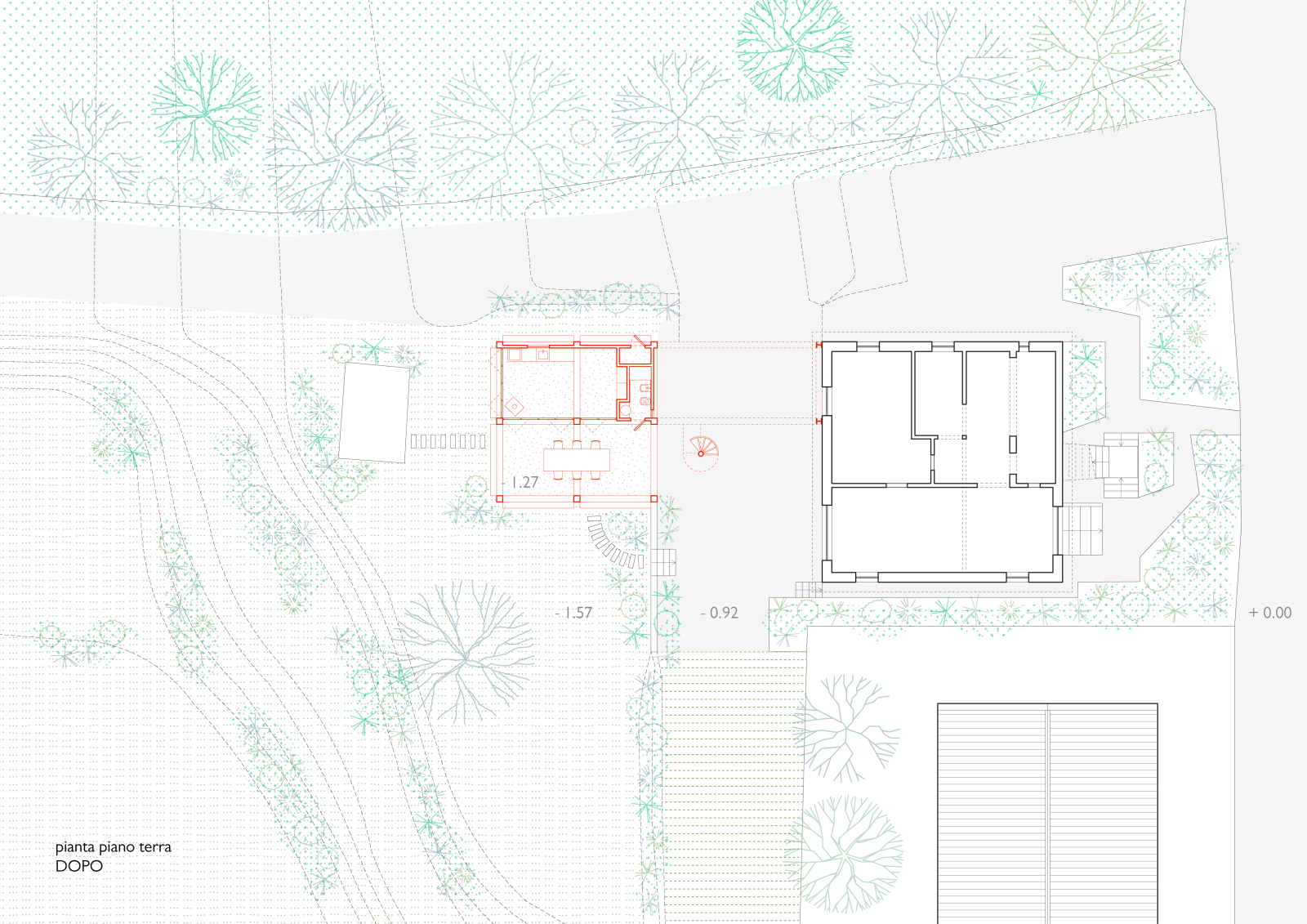
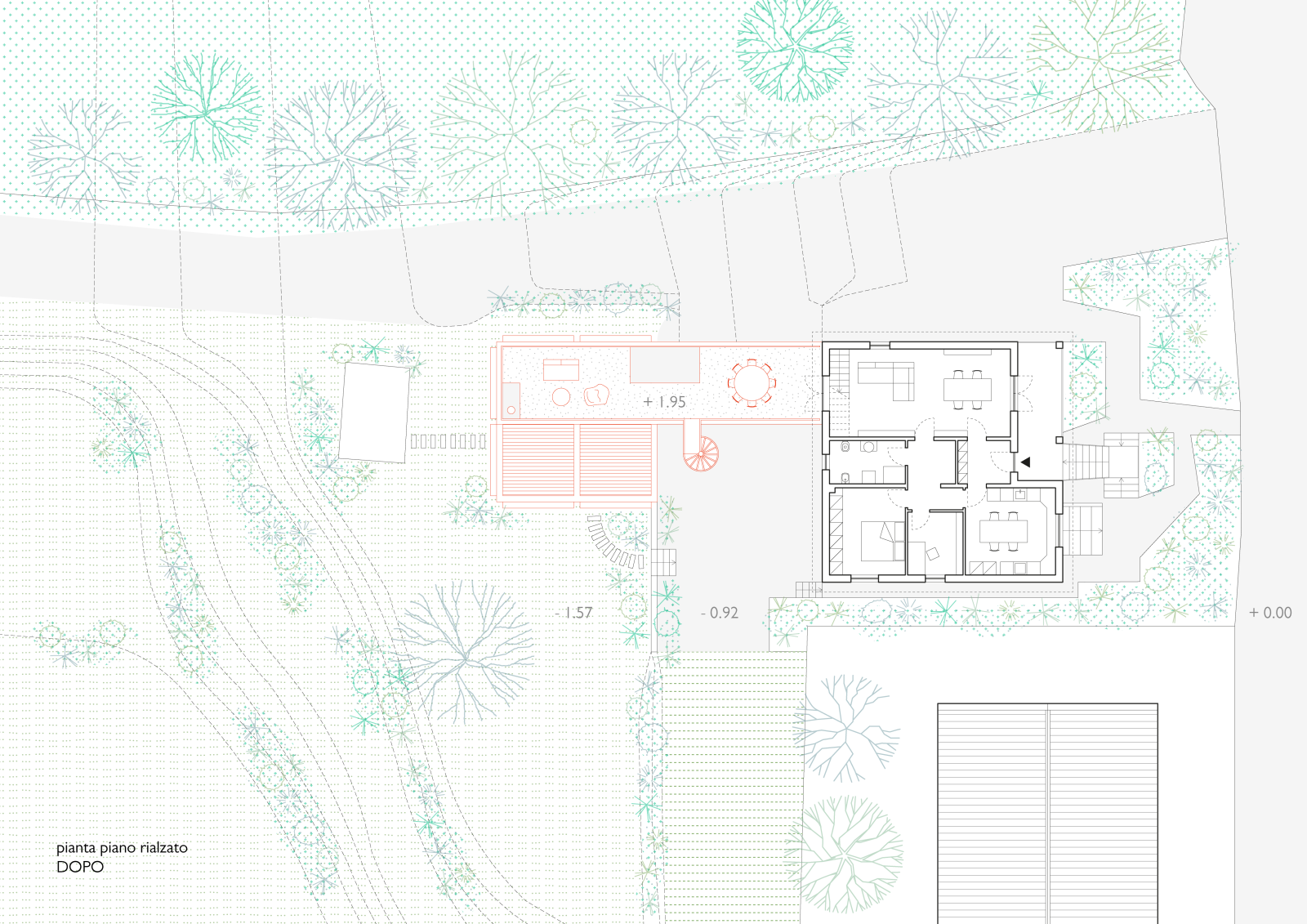
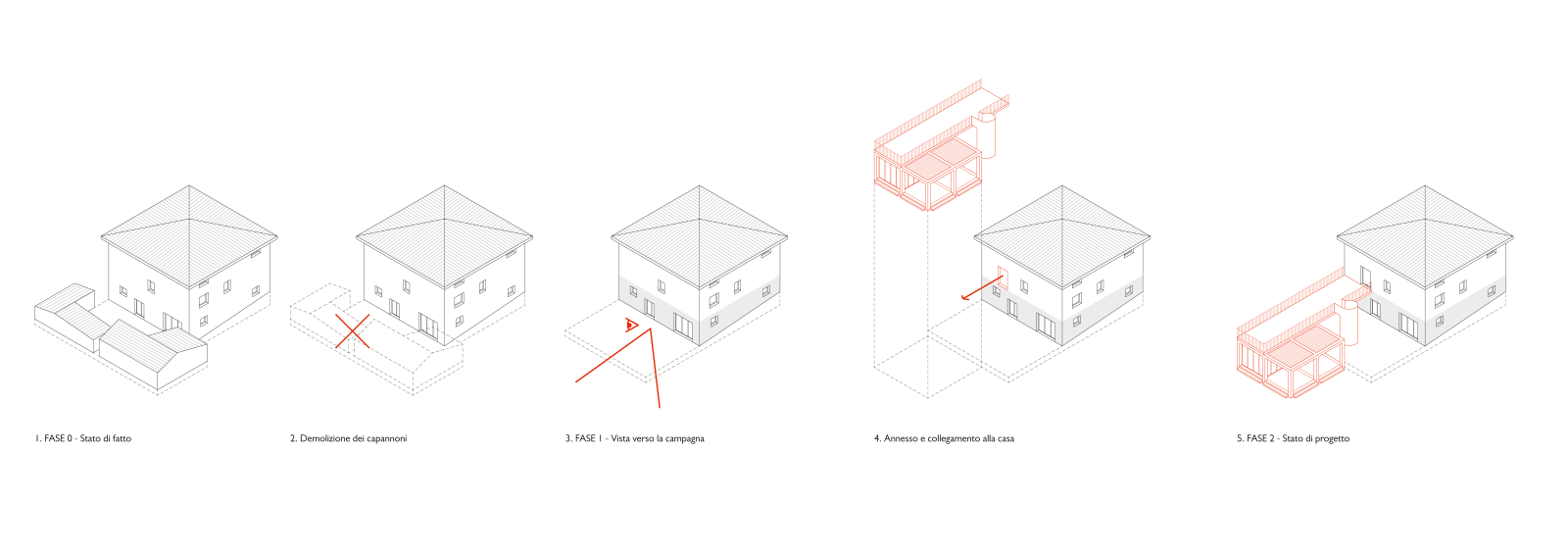
Mecozzi Verdini extend a countryside villa near Loretello in Italy’s Marche region with Annesso Rosso, a red concrete annexe connected to the existing house by a slender steel bridge. Conceived as a modern architectural fragment, the intervention engages the surrounding rural landscape by mediating between natural hills, the domestic garden, and cultivated agricultural fields, establishing a dialogue between nature, architecture, and contemporary rural living.
The design of the new expansion offered Mecozzi Verdini the opportunity to engage with the historical layering of landscape uses in relation to architecture, giving shape to a new volume conceived as an architectural fragment integrated into the rural landscape.
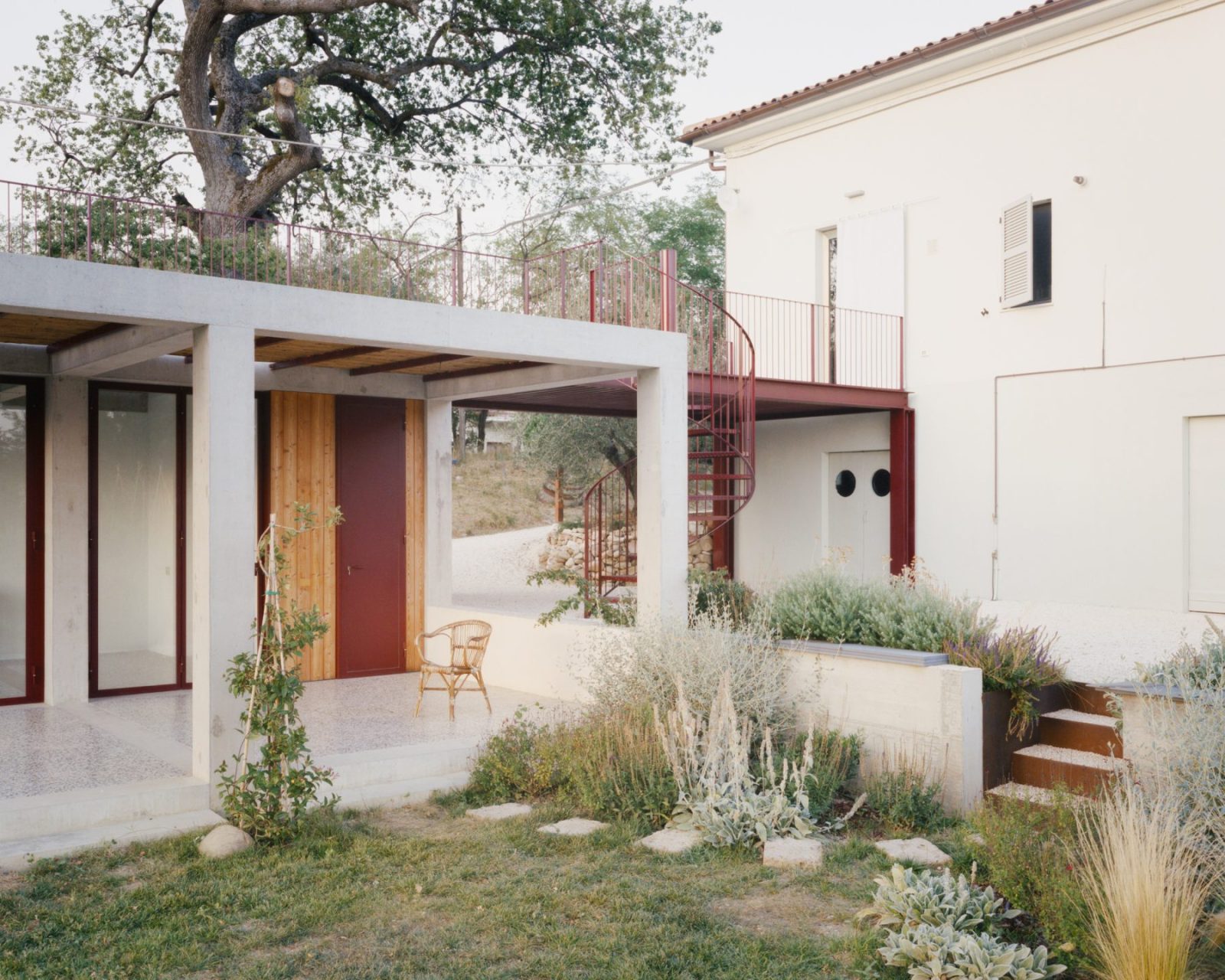
The intervention addresses three dimensions of the contemporary countryside, the natural, the domestic, and the agricultural, establishing a spatial dialogue between architecture and territory.
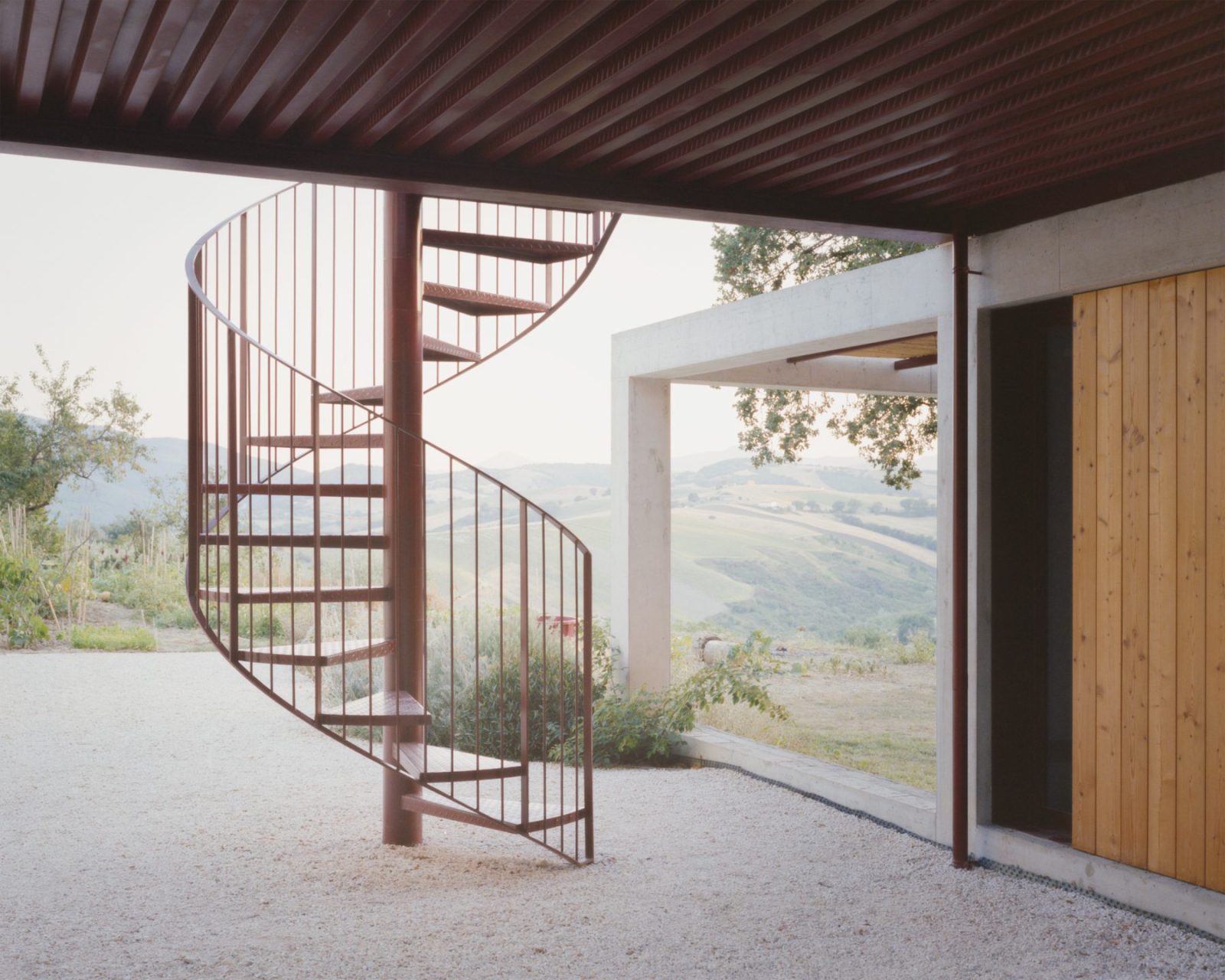
The project originates from the renovation of a traditional 1960s countryside villa in Italy’s Marche region, where the transformation becomes an occasion to reinterpret rural living through a contemporary lens. The intervention reflects a balance between continuity and innovation, allowing past and present to coexist in conversation with the surrounding landscape.
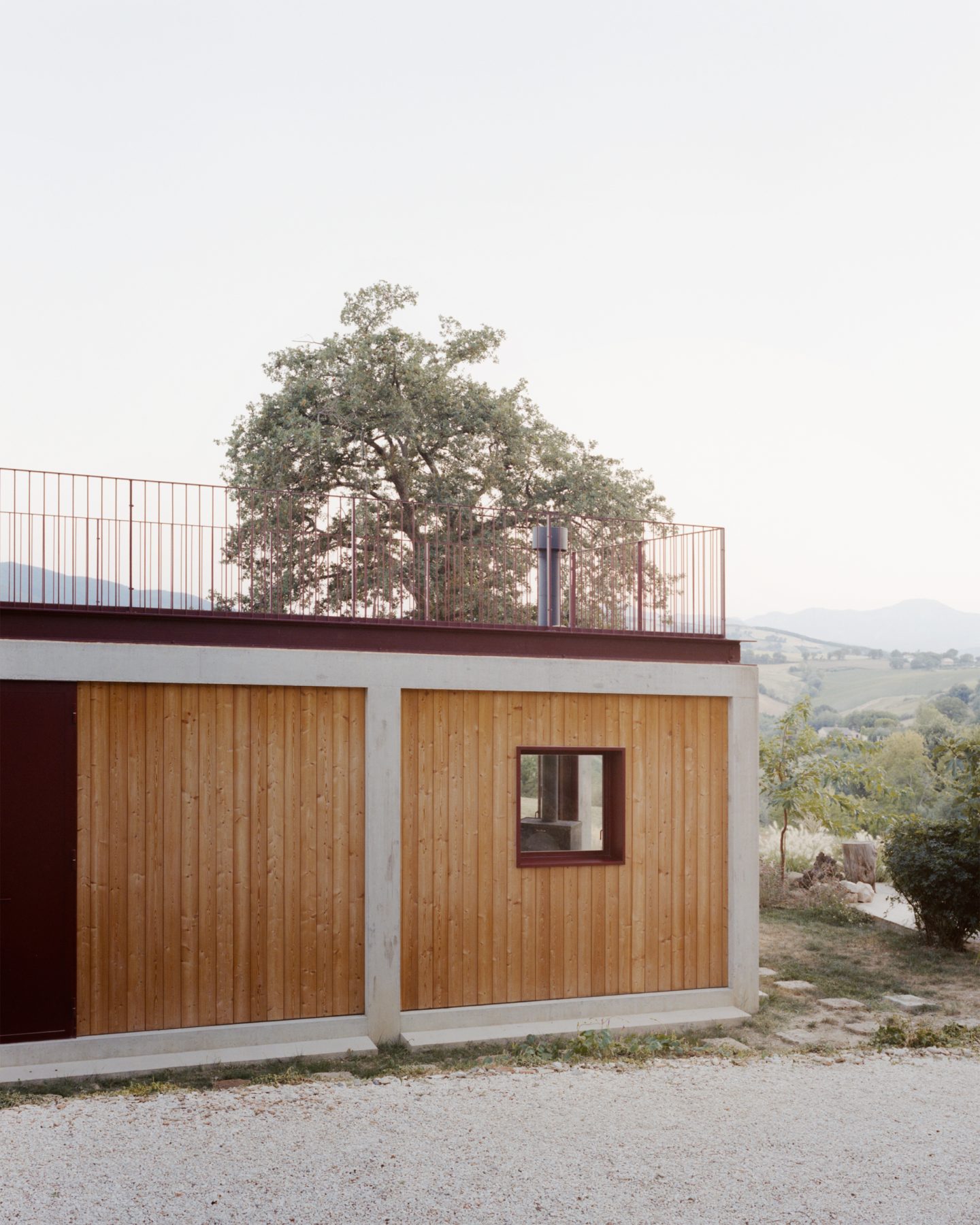
It reactivates a place deeply rooted in local memory and tradition.
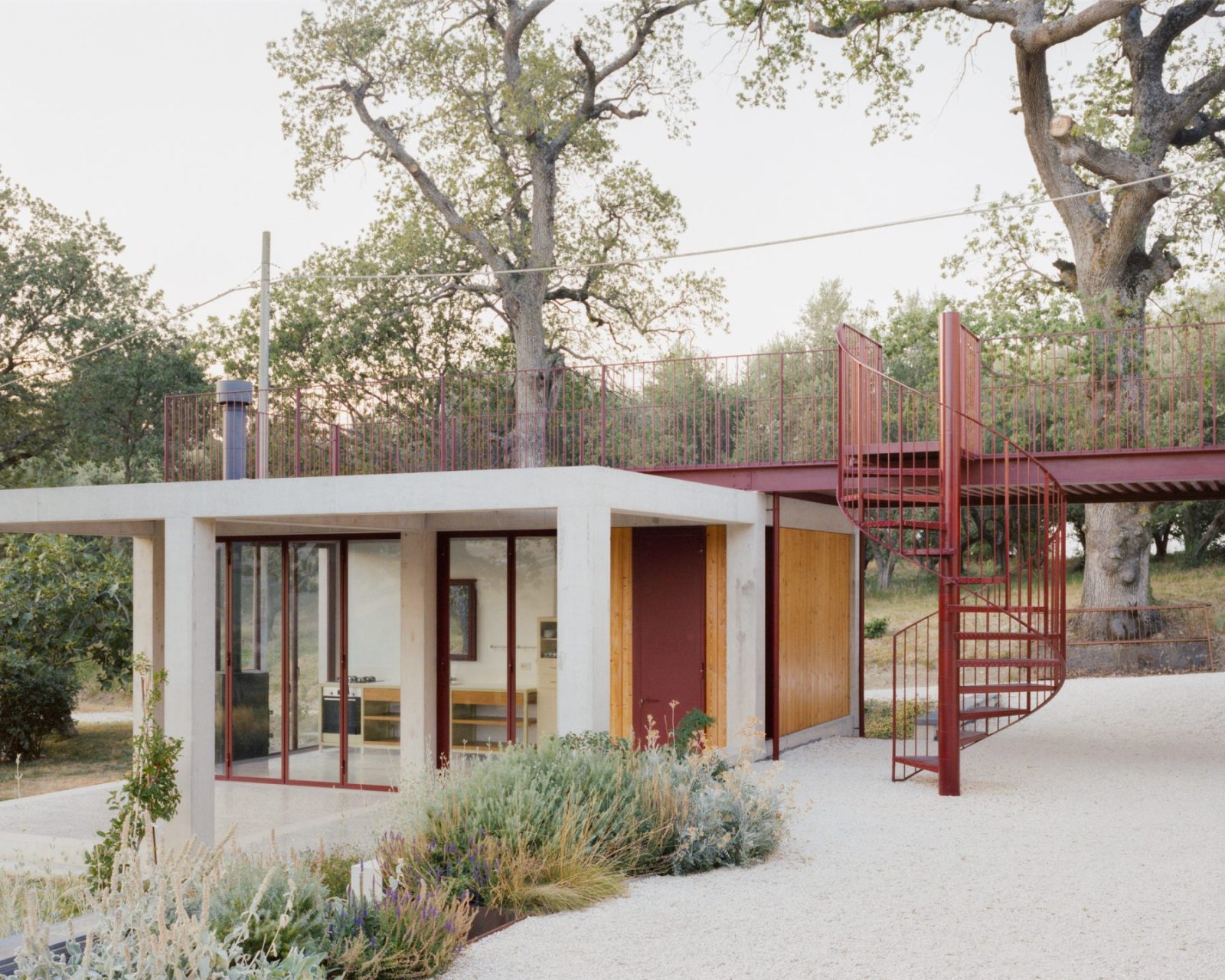
Attention is directed toward the outdoor spaces behind the main building, previously occupied by disused agricultural annexes that once sheltered tools and manual work. The demolition of these volumes opened expansive views across the Marche hills toward Mount Catria, fundamentally reshaping the visual relationship between architecture and landscape.
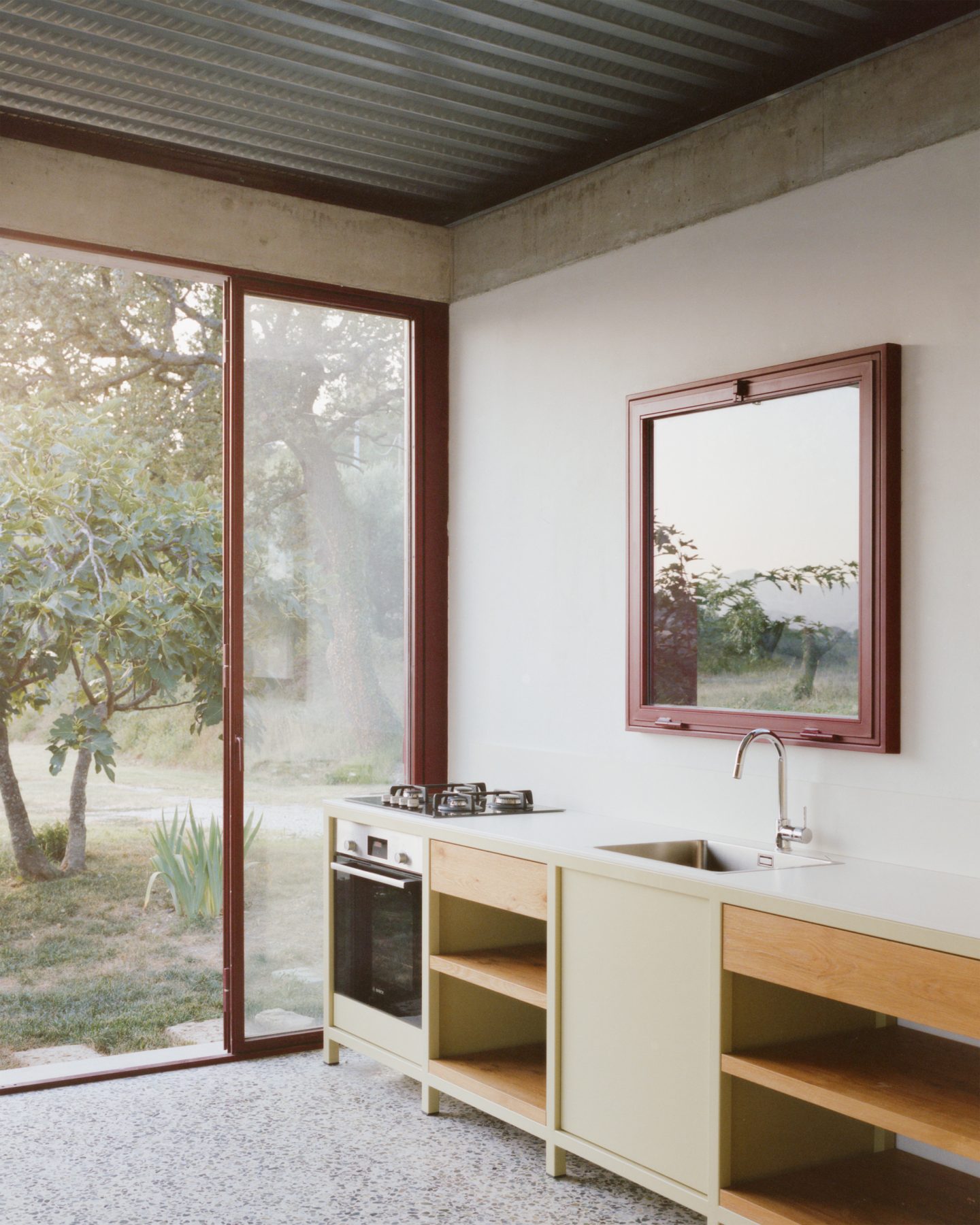
The site unfolds through three distinct landscape conditions. The natural hills form a wild and unspoiled backdrop, representing the most primal dimension of the territory. Closer to the house, the domestic garden introduces a more intimate layer, planted with rustic species yet arranged with a contemporary sensibility. Beyond this, the agricultural landscape of cultivated fields and vegetable gardens establishes a productive layer that filters and frames the new architecture, creating a balanced coexistence between human intervention and nature.
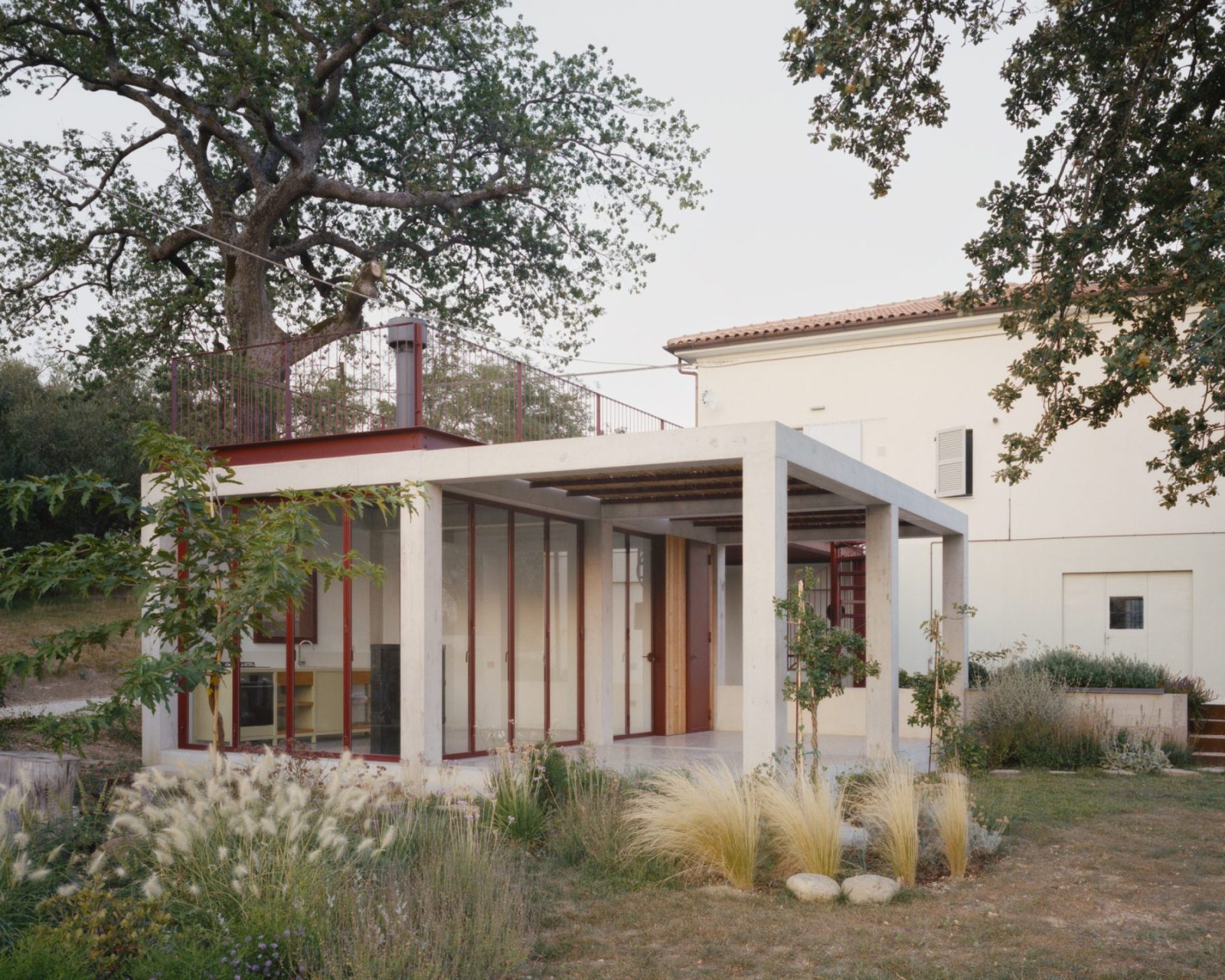
At the center of this renewed spatial composition stands the new annex, constructed in concrete and iron.
The volume becomes the focal point of contemporary domestic life, while its roof establishes a physical and spatial connection to the renovated main house, which retains its original architectural character. This elevated connection also functions as a terrace overlooking the surrounding landscape, reinforcing the relationship between habitation and territory.
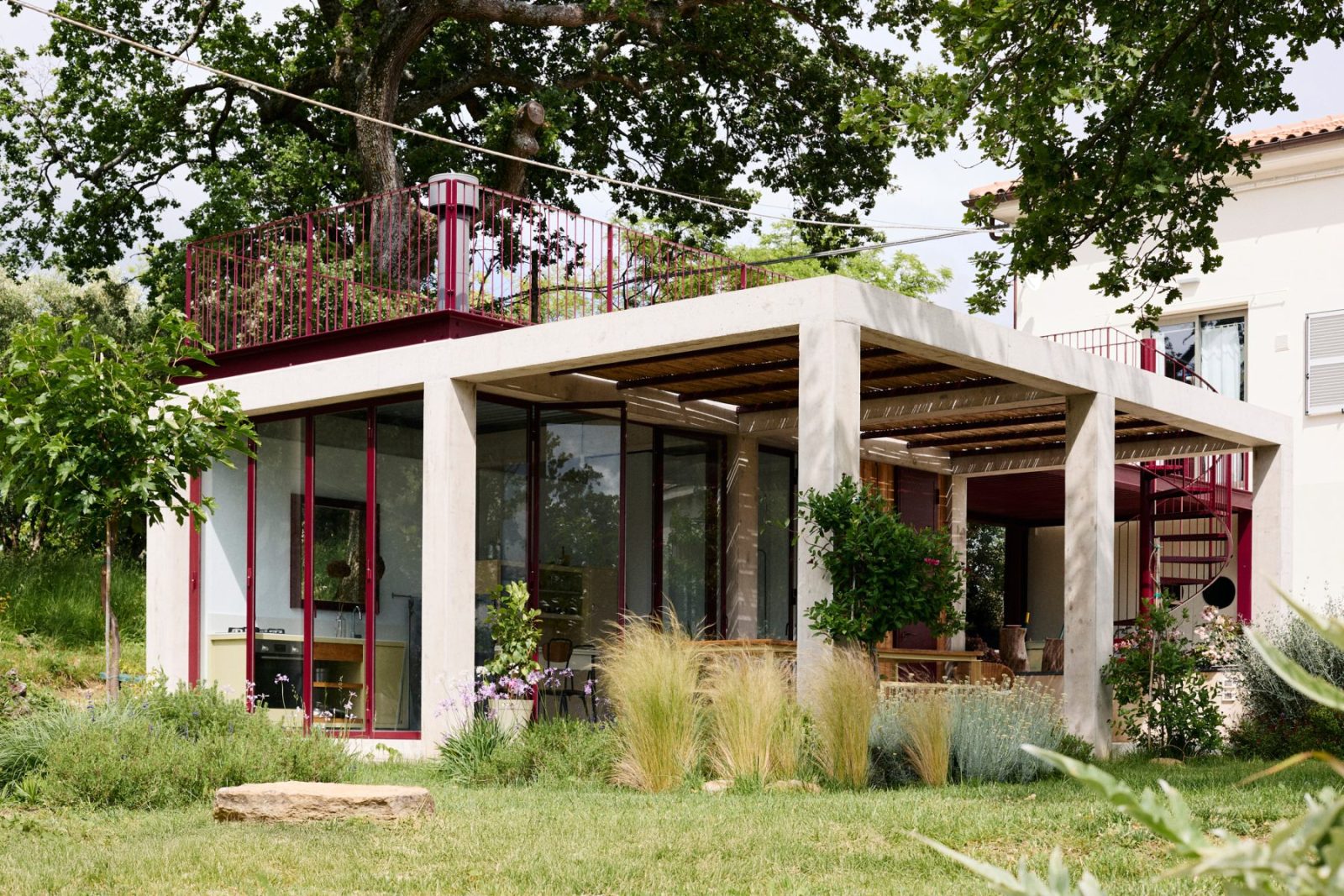
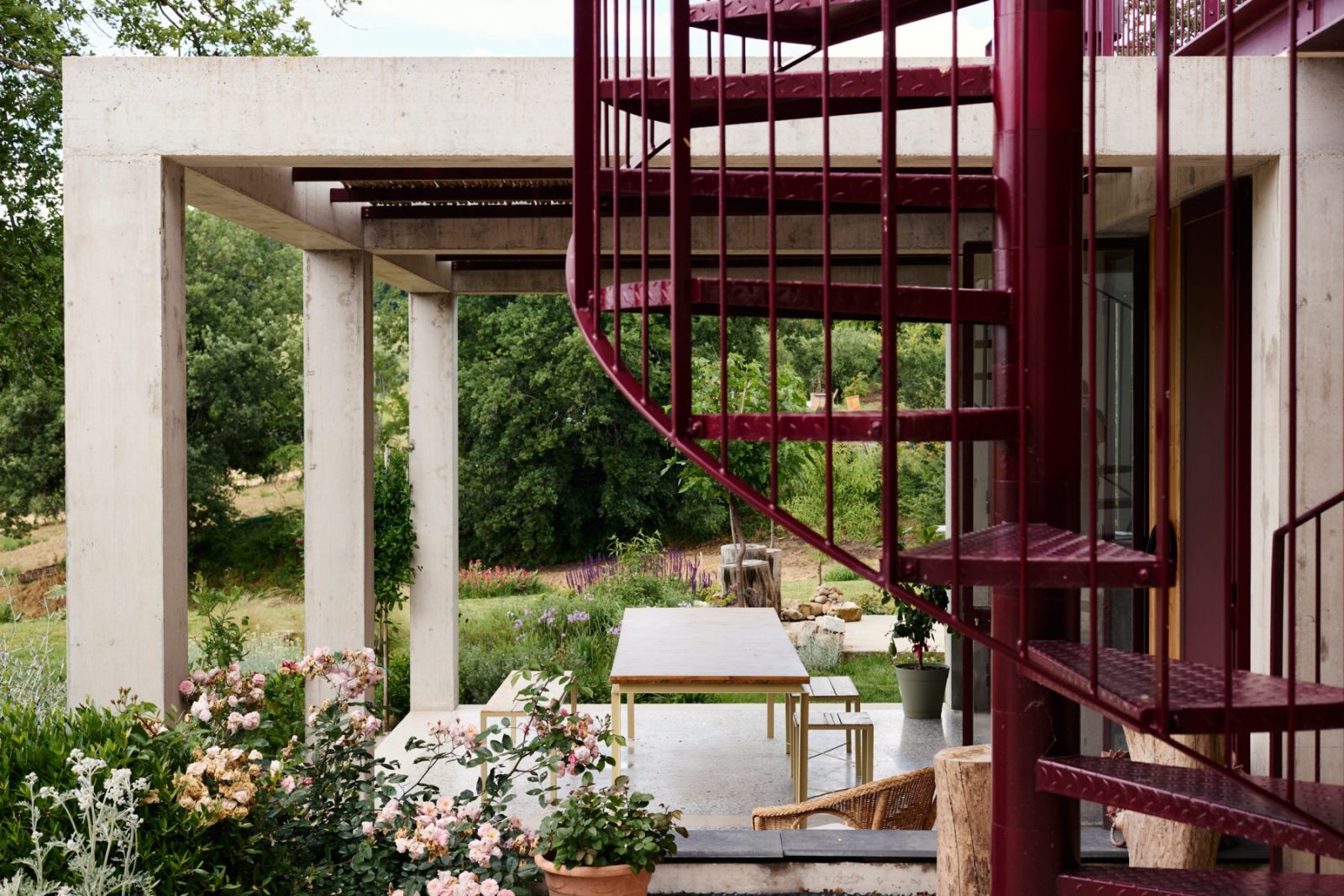
More than a physical link, the element operates as a symbolic bridge between two ways of inhabiting the countryside: the tradition of cultivated land and a more open, contemporary interpretation of rural living.
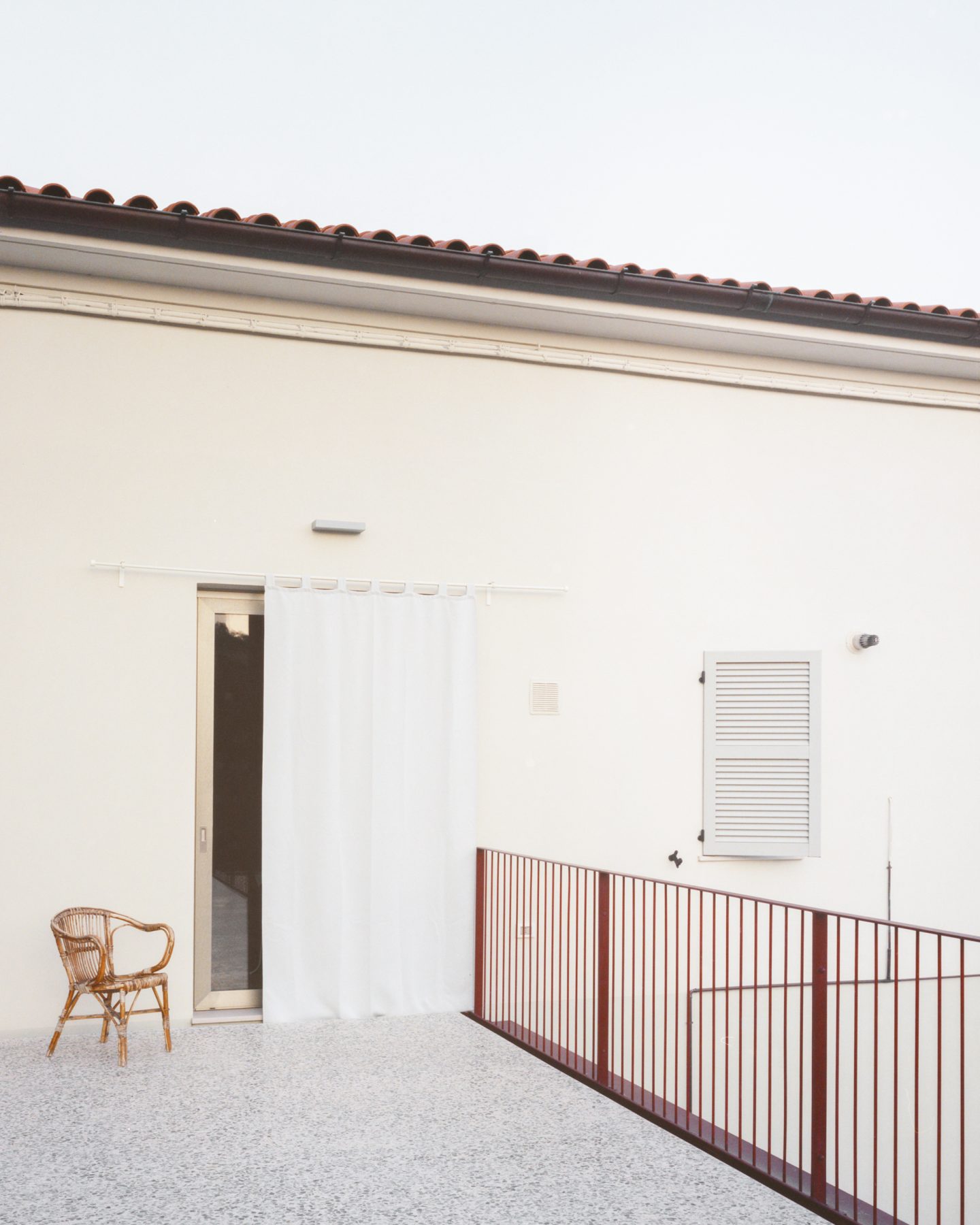
The intervention demonstrates an integration of architecture, landscape, and memory, embracing the inherited qualities of the site while projecting them toward a contemporary future.This architectural narrative unfolds within the broader context of Loretello, a historic hilltop village located approximately 30 kilometers inland from Senigallia in the Marche region. Despite its small scale, the village hosts a dynamic community of artistic, entrepreneurial, and cultural initiatives defined by a shared commitment to research, craftsmanship, and attention to detail.
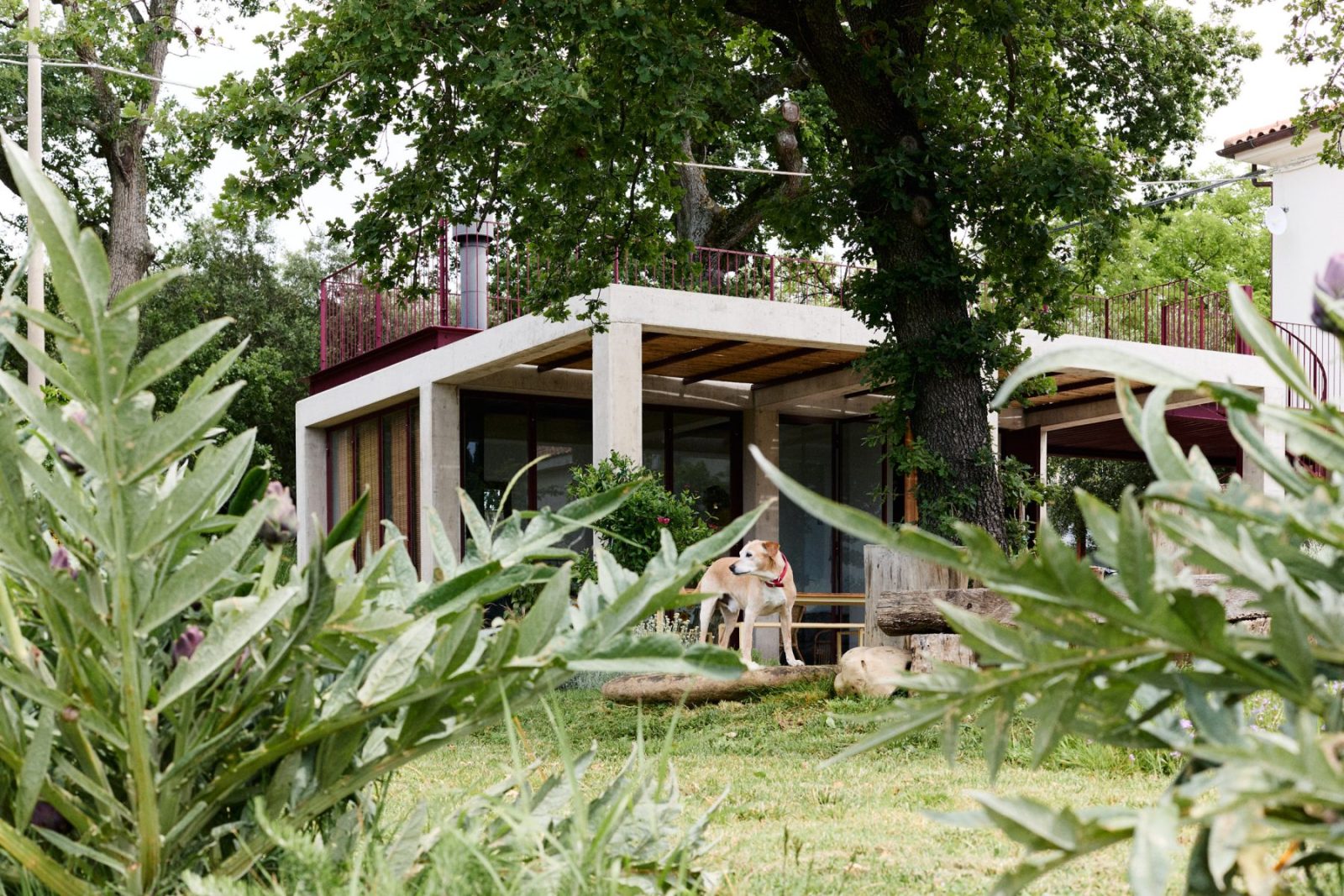
Within the medieval walls —and in their immediate surroundings— a restaurant, boutique hotel, winery, and the residence of an artist coexist in close dialogue with the local community, whose identity remains deeply connected to the territory and its collective memory.
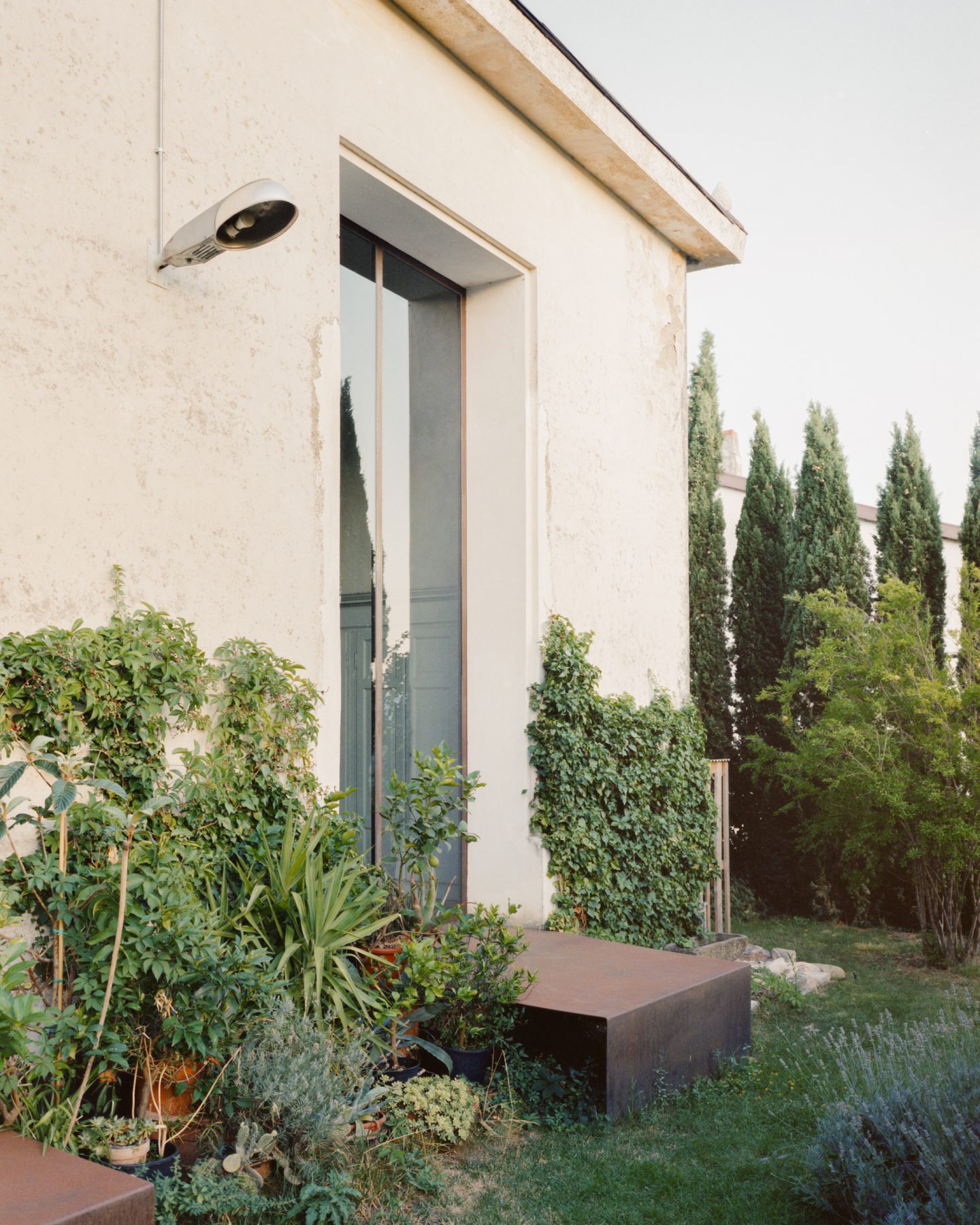
Within this context, Annesso Rosso emerges as a contemporary architectural intervention that engages with the spirit of the place, carefully negotiating the boundary between tradition and modernity.
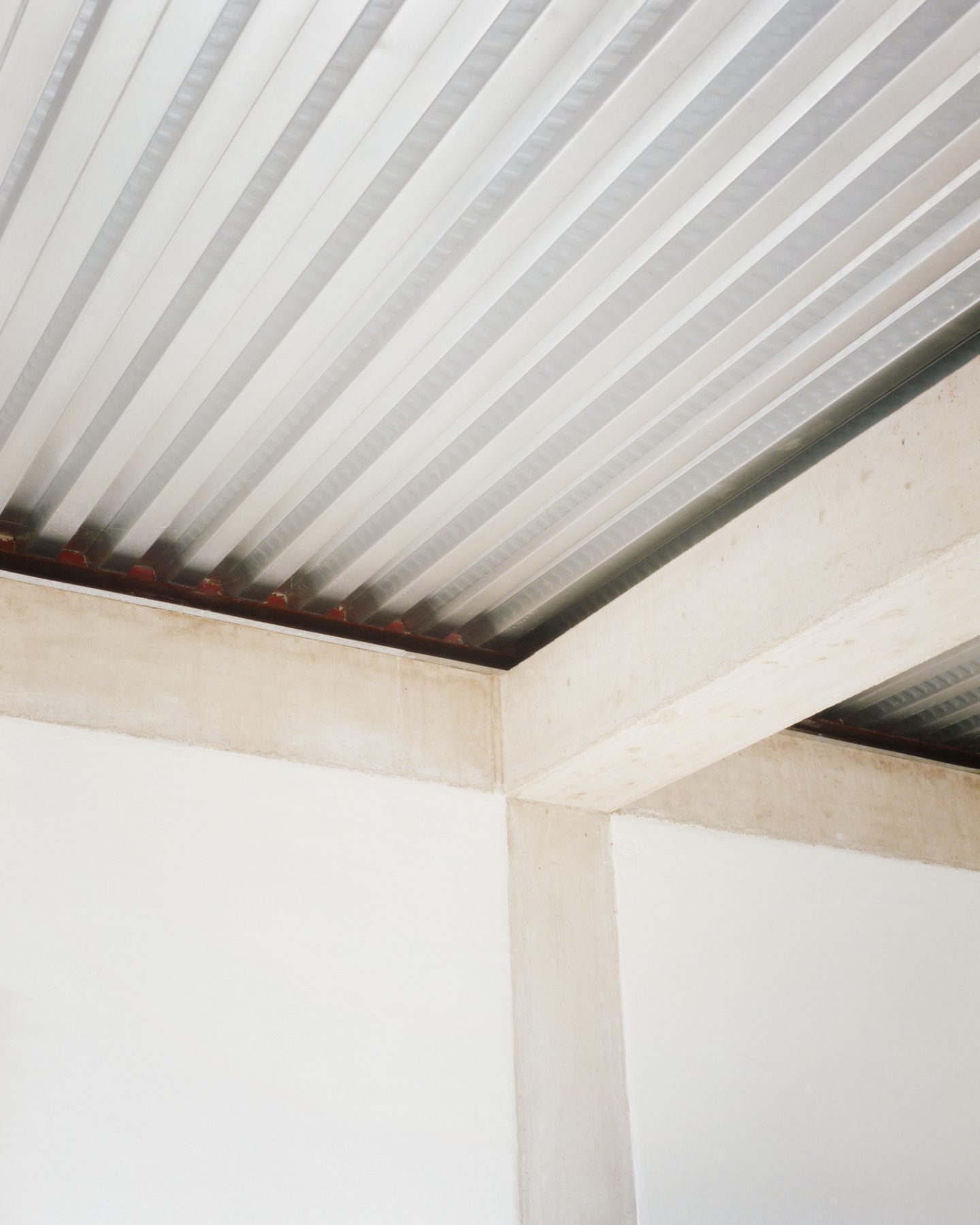
While subtly referencing a restrained brutalist sensibility through its material presence, the project maintains a strong connection to the surrounding rural landscape.
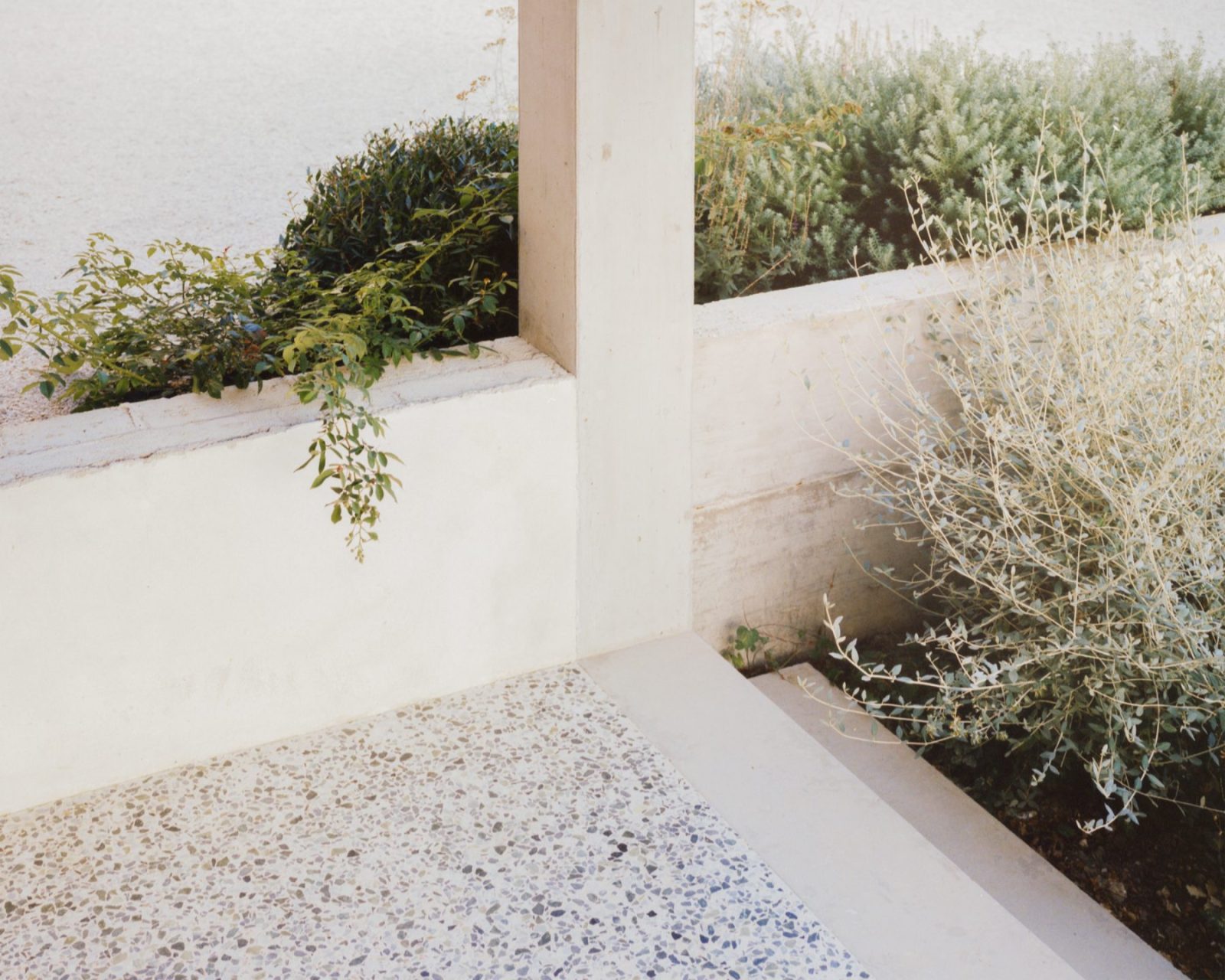
The result is an architectural fragment that anchors itself within the layered character of the Marche countryside, where architecture, landscape, and community intersect.
Plans
Facts & credits
Project title: Annesso Rosso
Architecture: Mecozzi Verdini
Architecture and Landscape team: Giovanni Mecozzi, Cecilia Verdini, Filippo Minghetti Pictures Simone Bossi, Andy Massaccesi
Structural design: Angelo Sermonesi
Planting: Andrea Sabbatini
Building company: Fausto Boldrighini
Date of completion: 2025
Photography: Andy Massaccesi, Simone Bossi
READ ALSO: Mezi Srnky Bistro in Prague by Markéta Bromová combines a distinct terrazzo floor with a signature maroon palette