Casa Botijo by ALE ESTUDIO, collective housing in Madrid, champions rational, austere construction, where structural and enclosure elements are expressed honestly and in harmony with their neighbourhood.
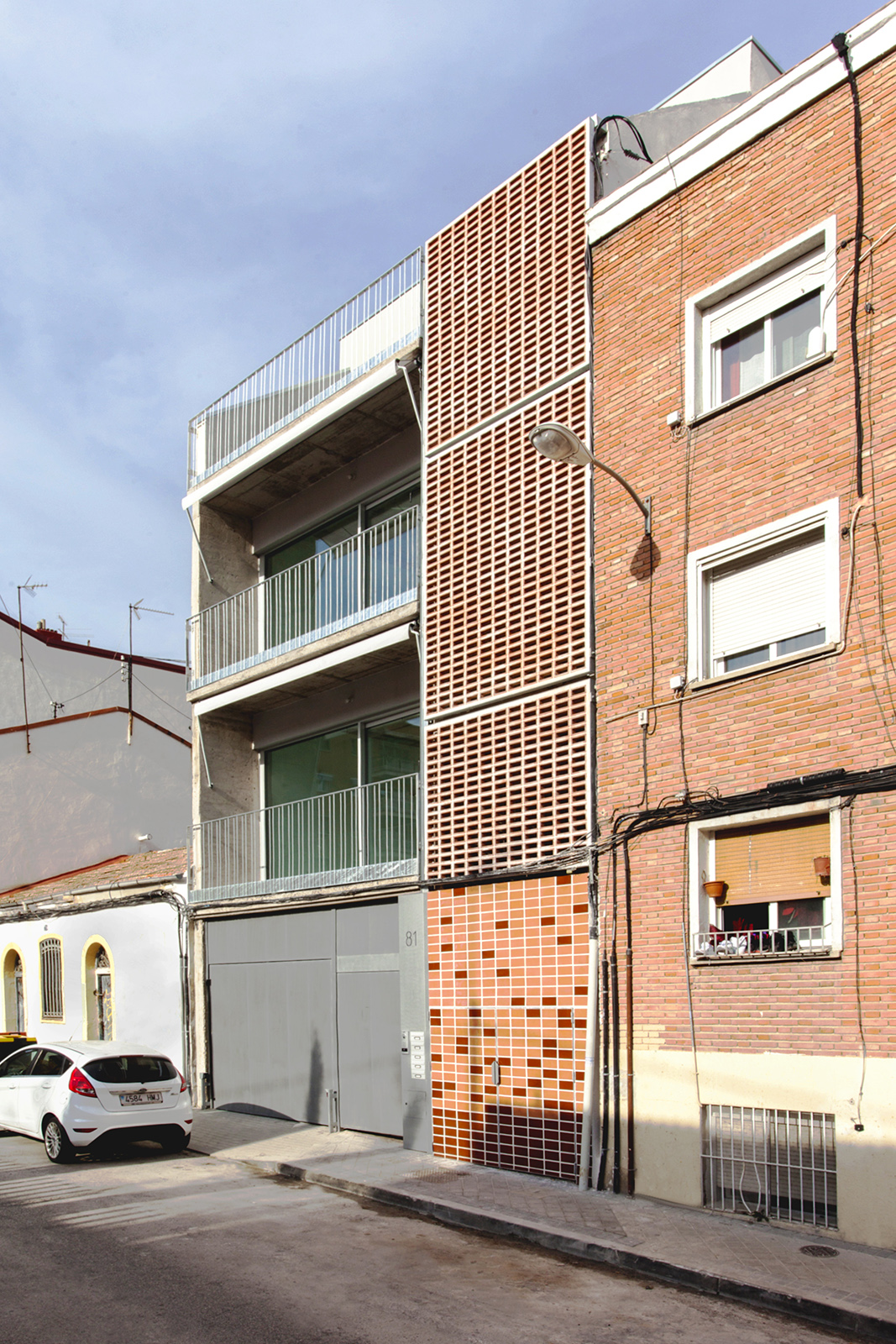
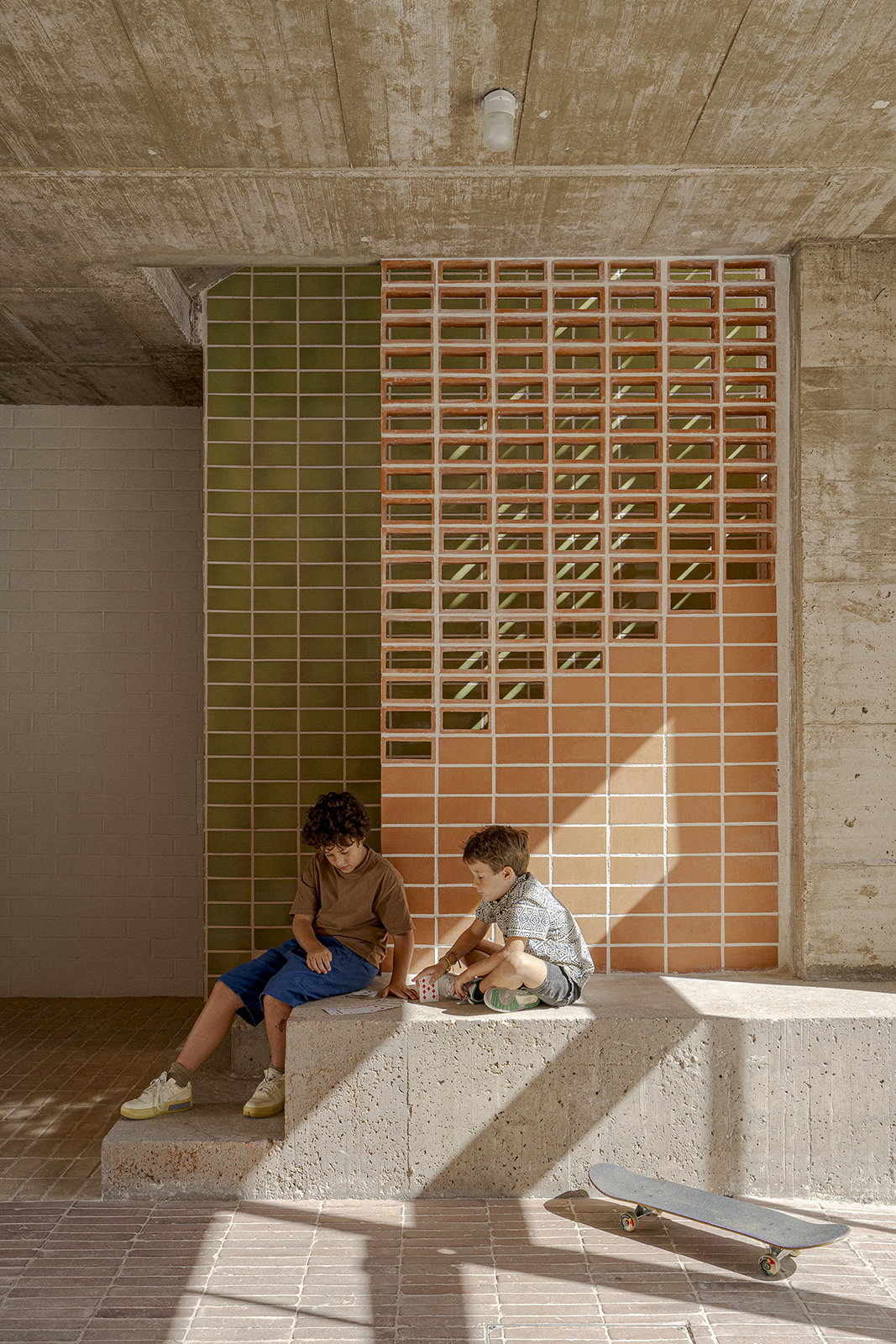
Casa Botijo is located on a street where low-rise houses coexist with small early 20th-century industrial warehouses. It’s a place where neighbors still bring their wicker chairs out from the kitchen to sit on the sidewalk, their eyes half-closed under the afternoon sun. A neighborhood within the neighborhood — modest in scale, quiet in tempo, with time seemingly stretching.
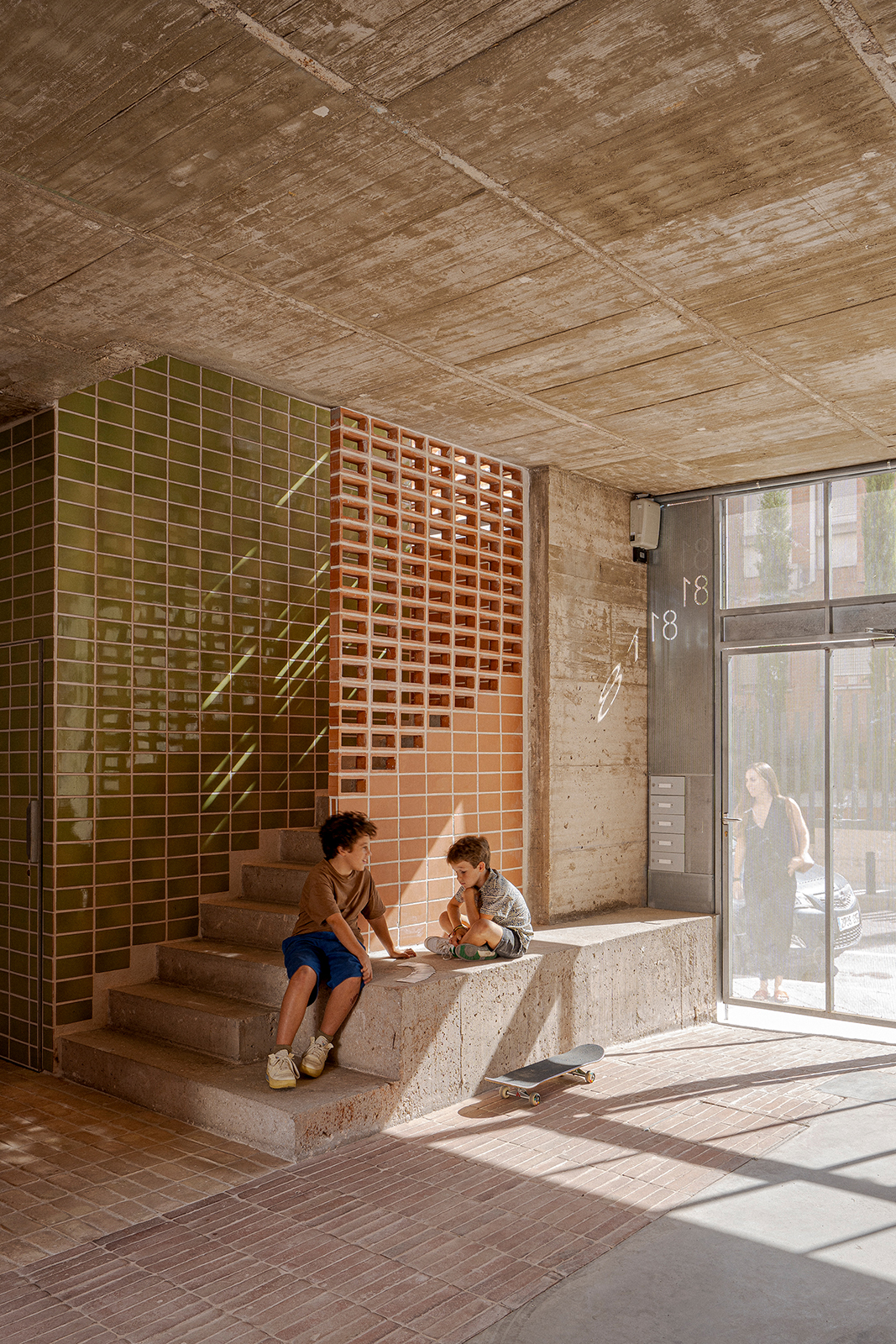
Red brick is the dominant material that defines the street’s character.
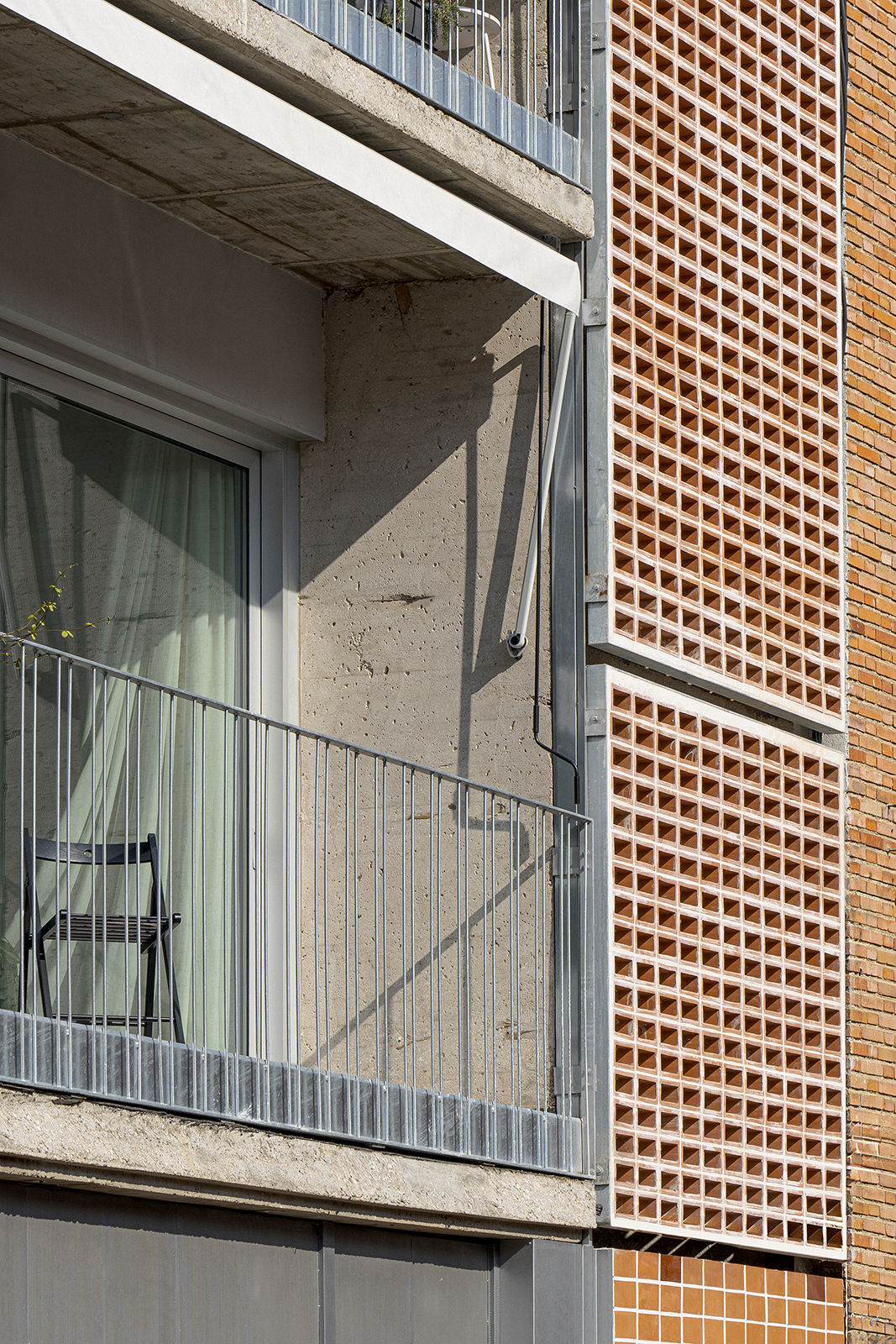
It wraps both the low houses and the industrial sheds, creating a cohesive urban landscape. The project picks up on the elements that define the area: materials like brick, exposed concrete, and galvanized steel (though used more sparingly); recurring architectural features such as lattice screens, patios, awnings, and balconies; and the social rituals of its neighbors — shading their eyes with a hand to soften the sun, and always looking for a calm space to talk and share time together.
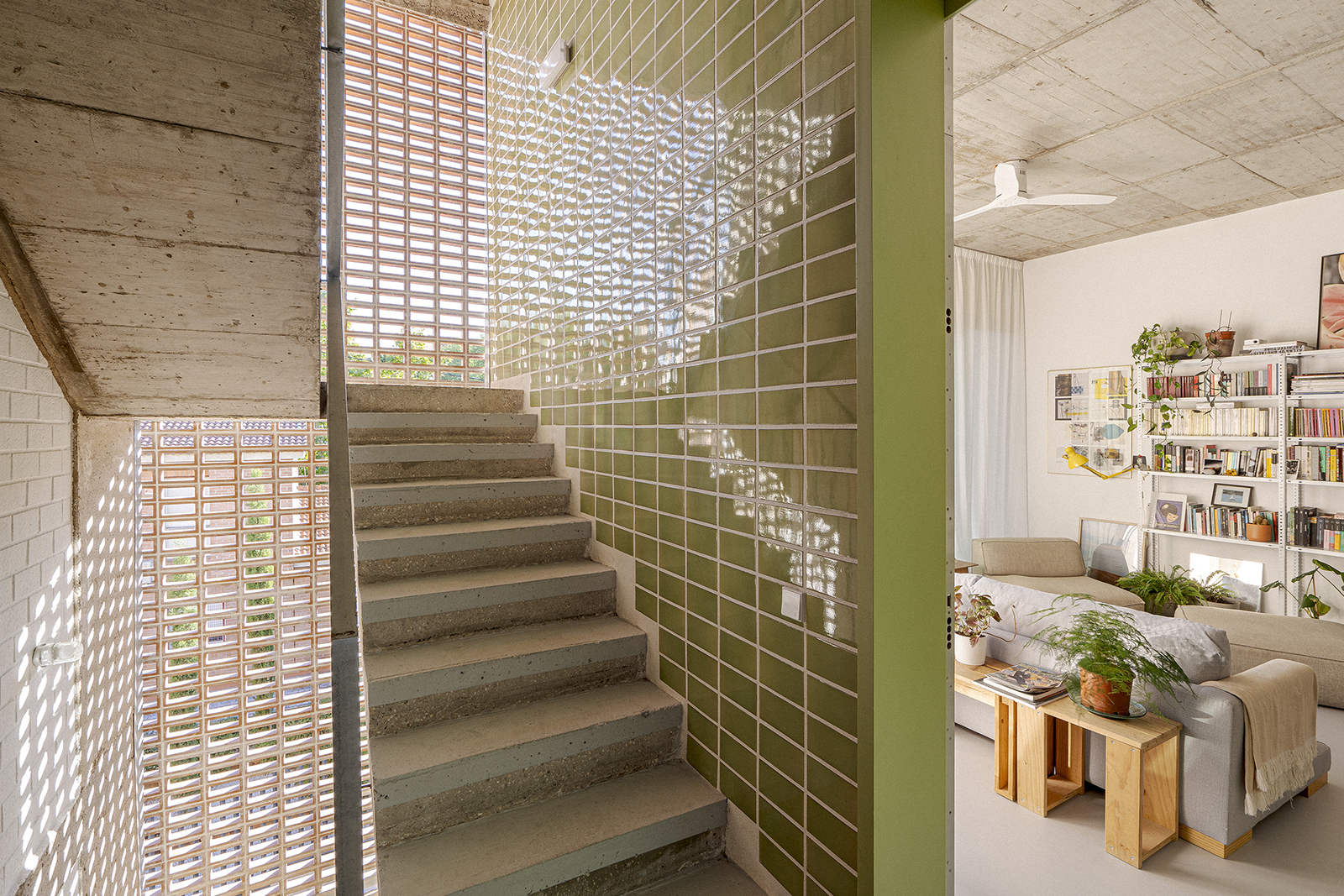
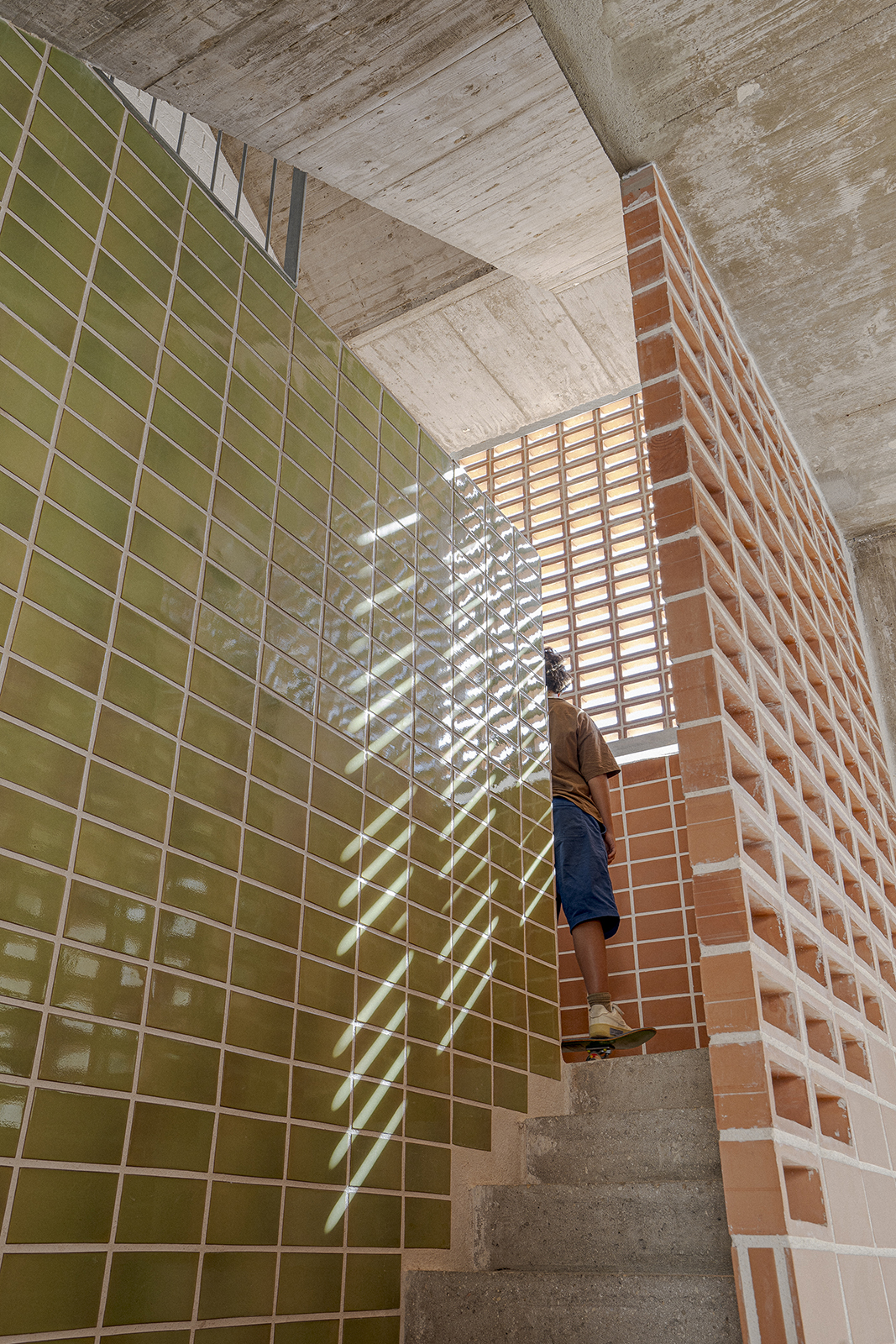
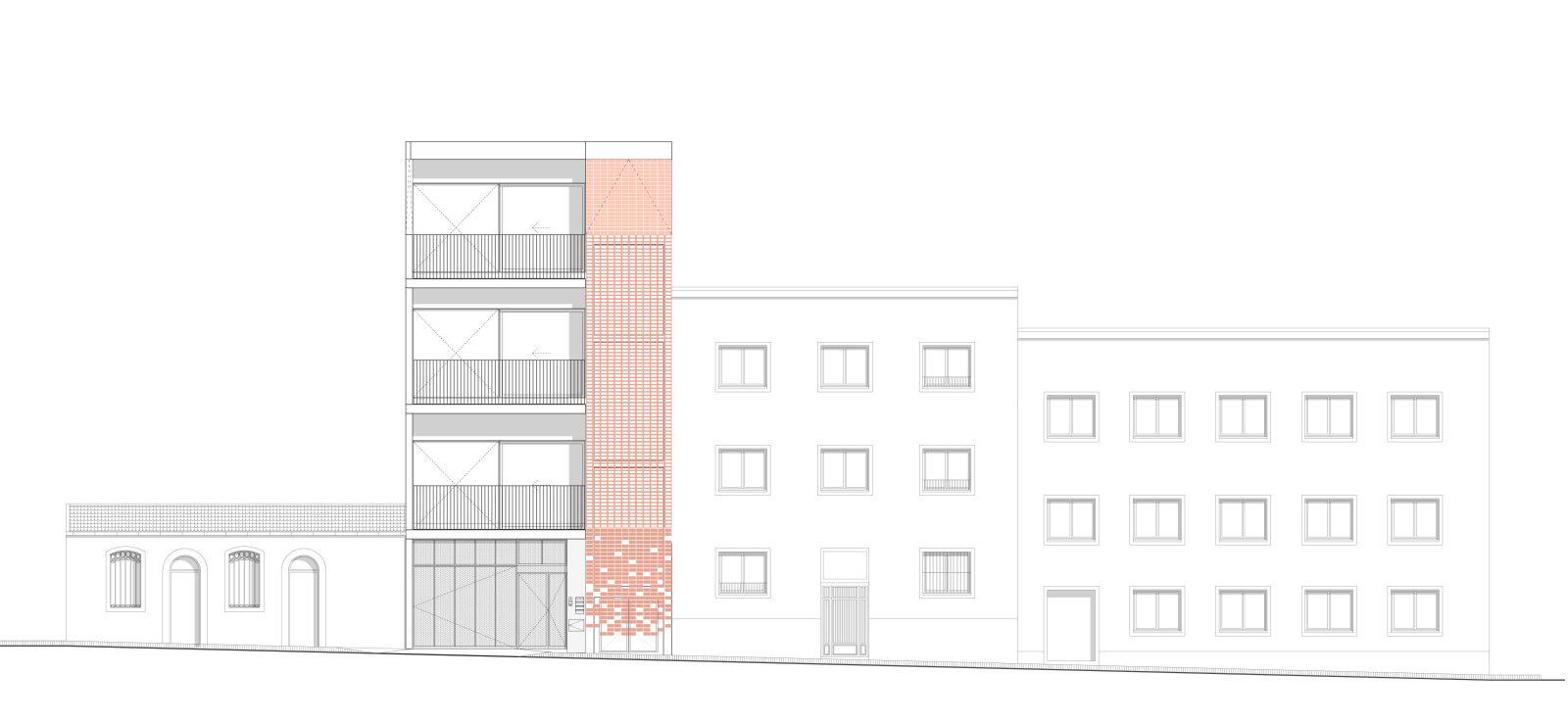
From this attentive observation, the most iconic element of the building emerges: a ceramic lattice that conceals the stairwell.
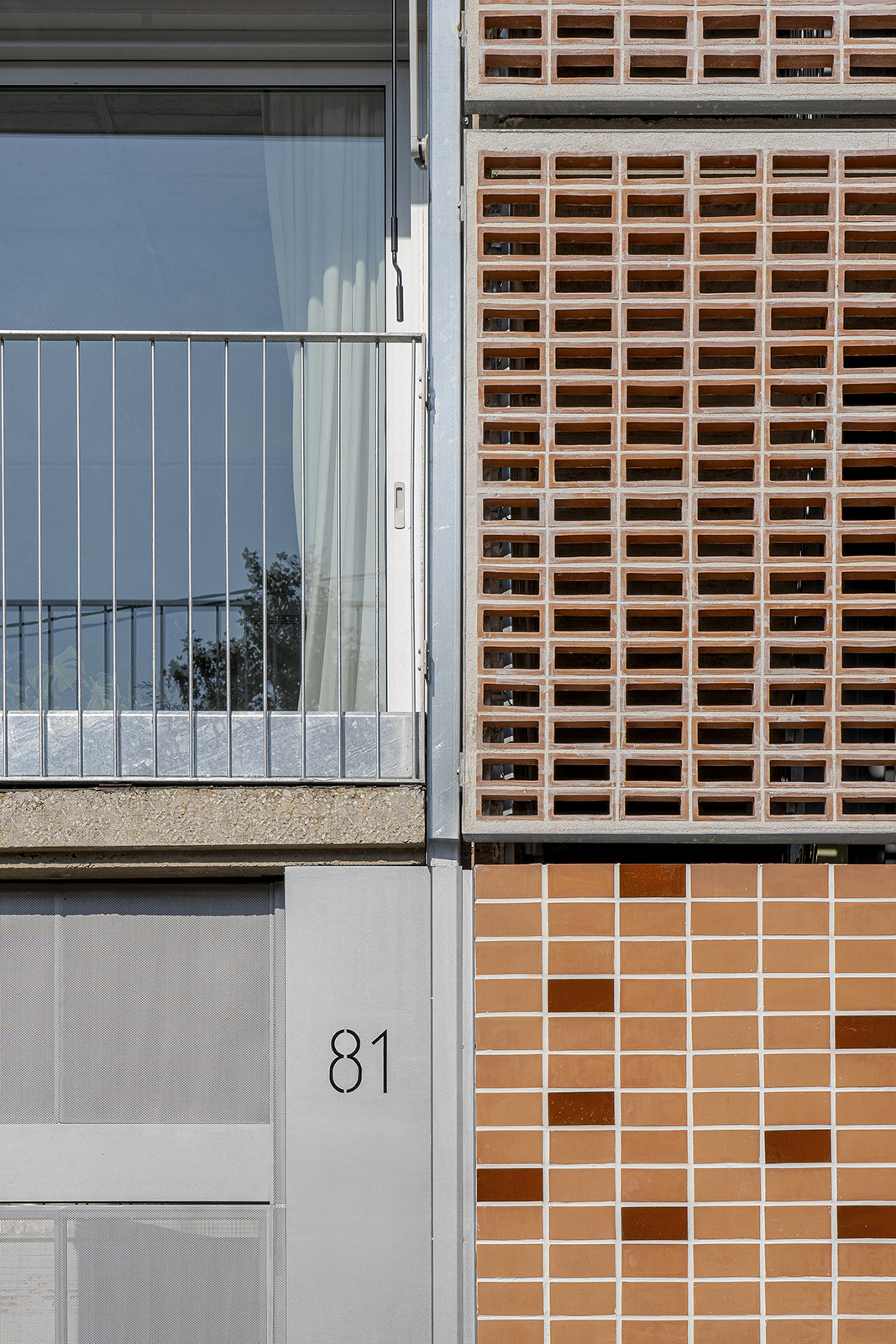
On the facade, the lattice becomes a kind of large brickwork seam that visually intertwines with the neighboring building.
The ground floor is freed up for communal use, creating a sort of urban agora — a place to sit, rest, or play.
The staircase extends this idea of shared space, promoting interaction among the residents of the building. The lattice filters sunlight like the hands of the neighbors still chatting on the street, casting ever-changing shadows across the building’s glazed interior walls.
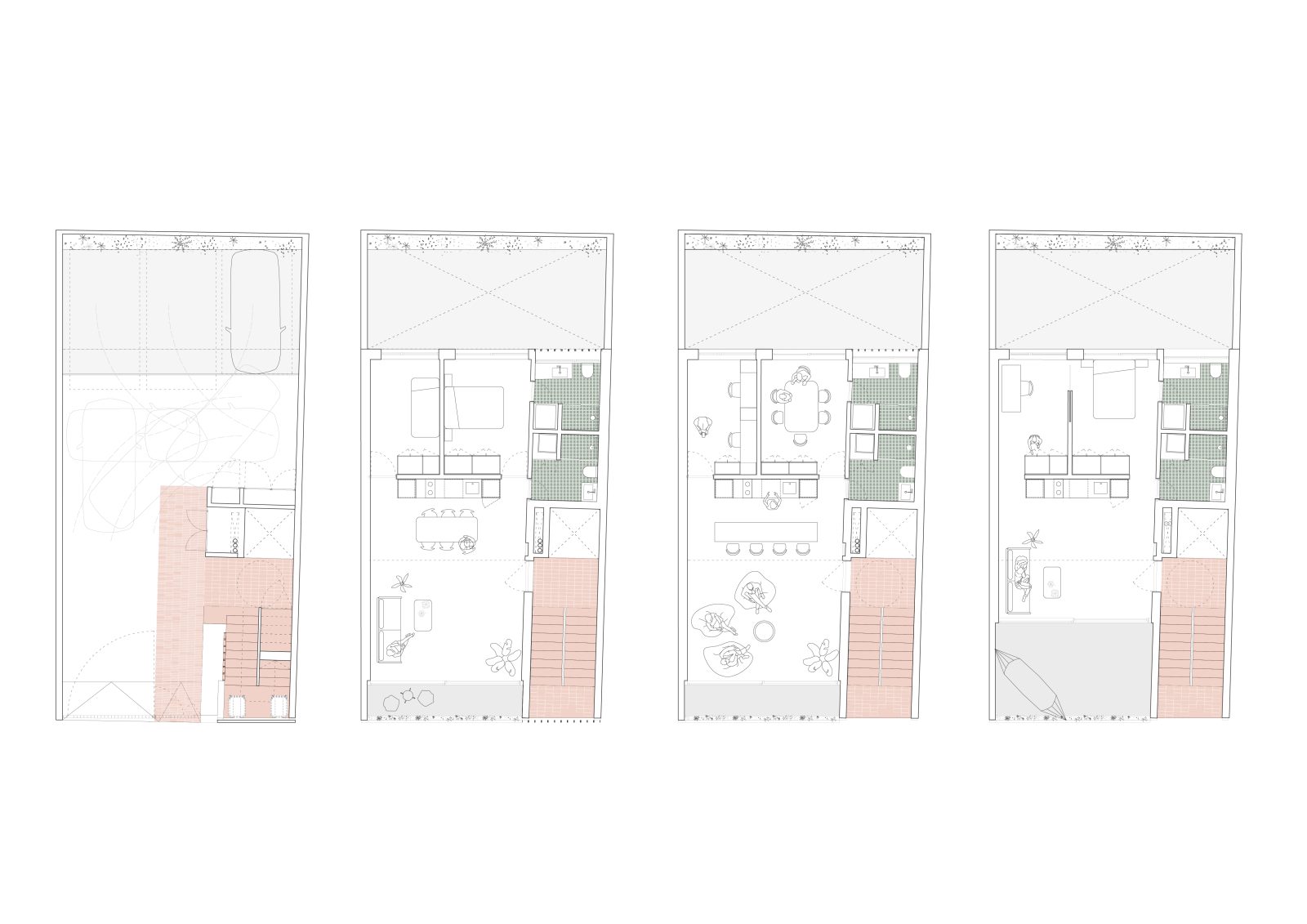
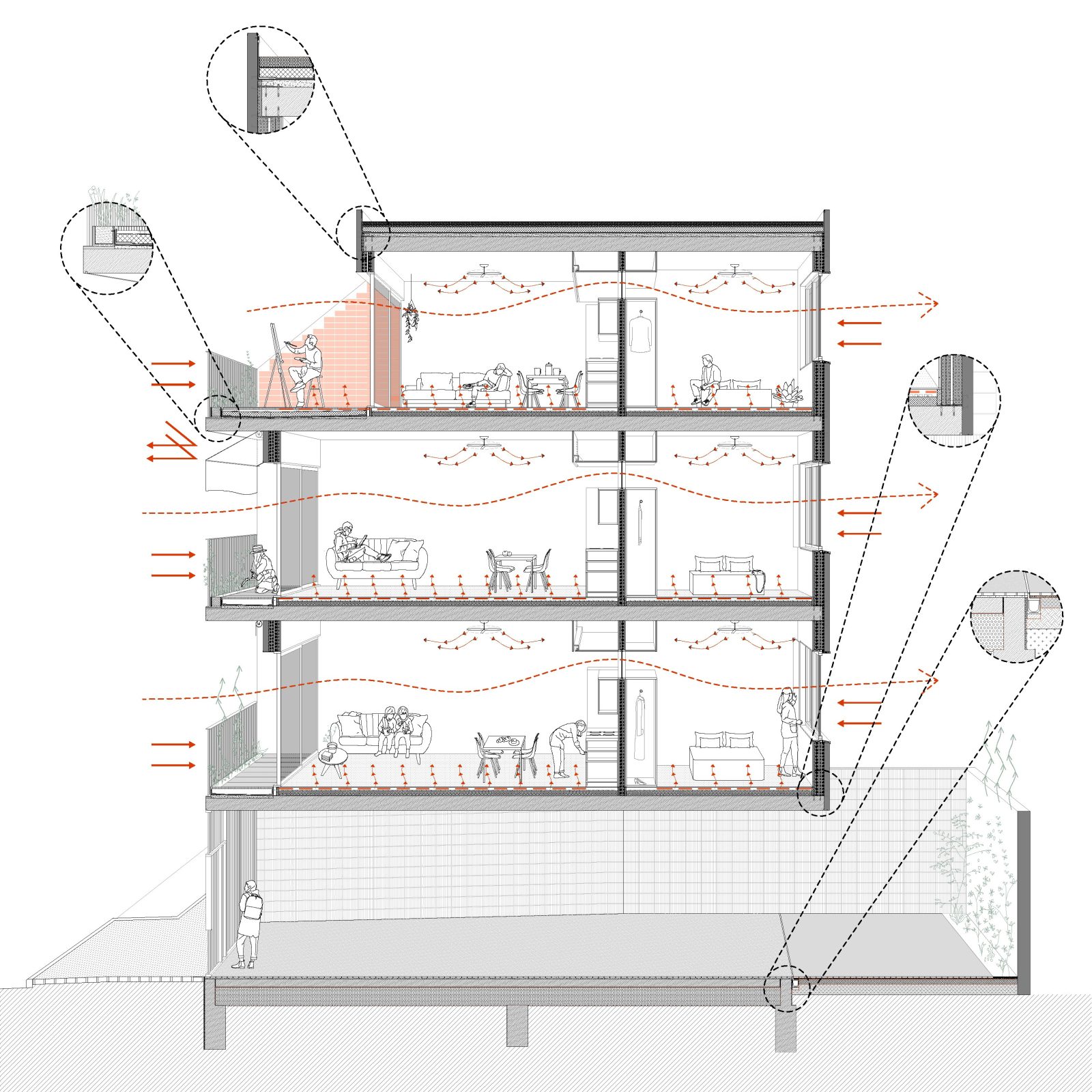
Behind the staircase, a compact services core houses the bathrooms, freeing up the rest of the floor plan. The layout follows a T-shaped scheme, organizing three flexible spaces of different sizes that can adapt and change over time. The apartments are rectangular and 12 meters deep, and thanks to a setback at the rear facade that creates a shared patio, all rooms receive natural light and ventilation.
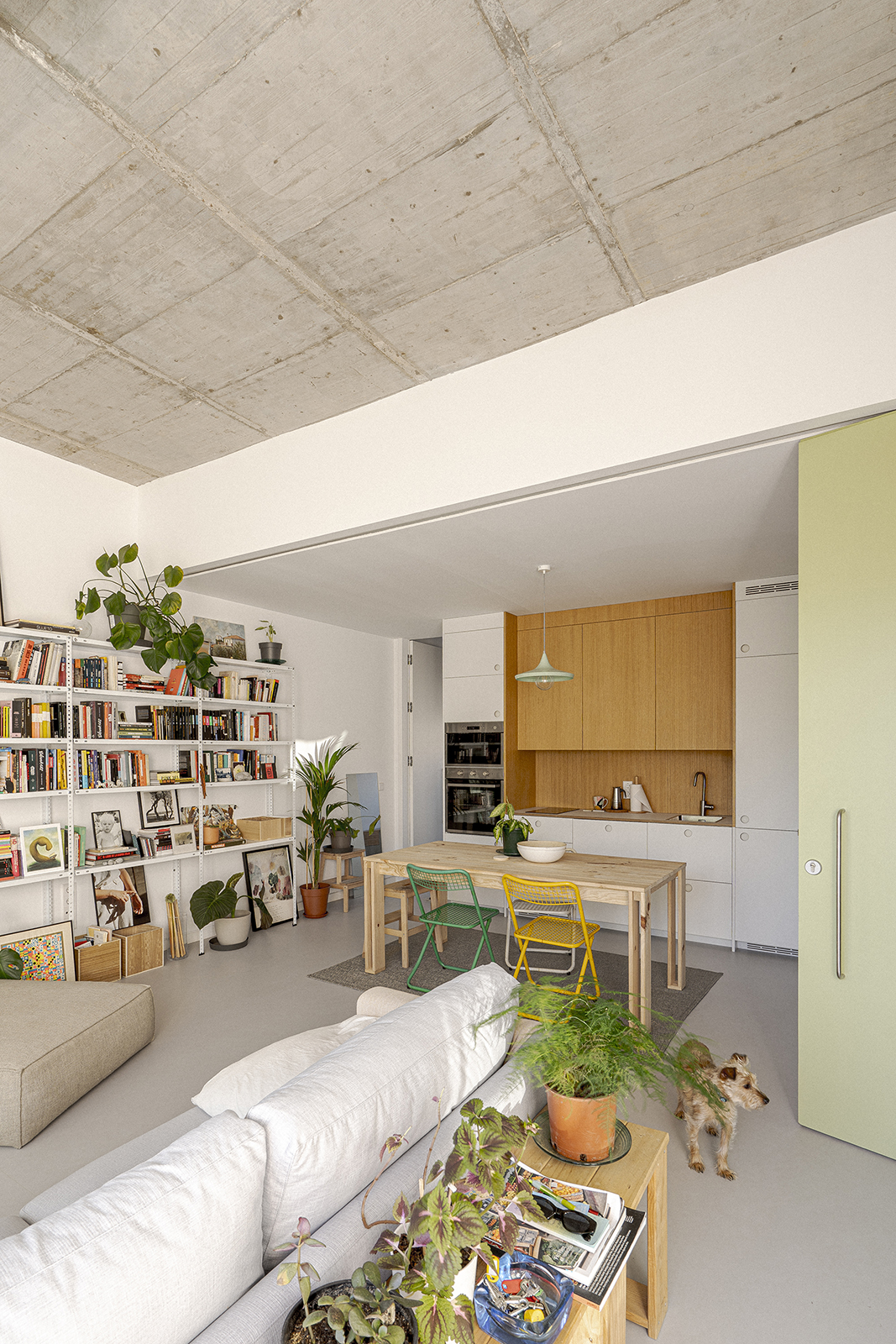
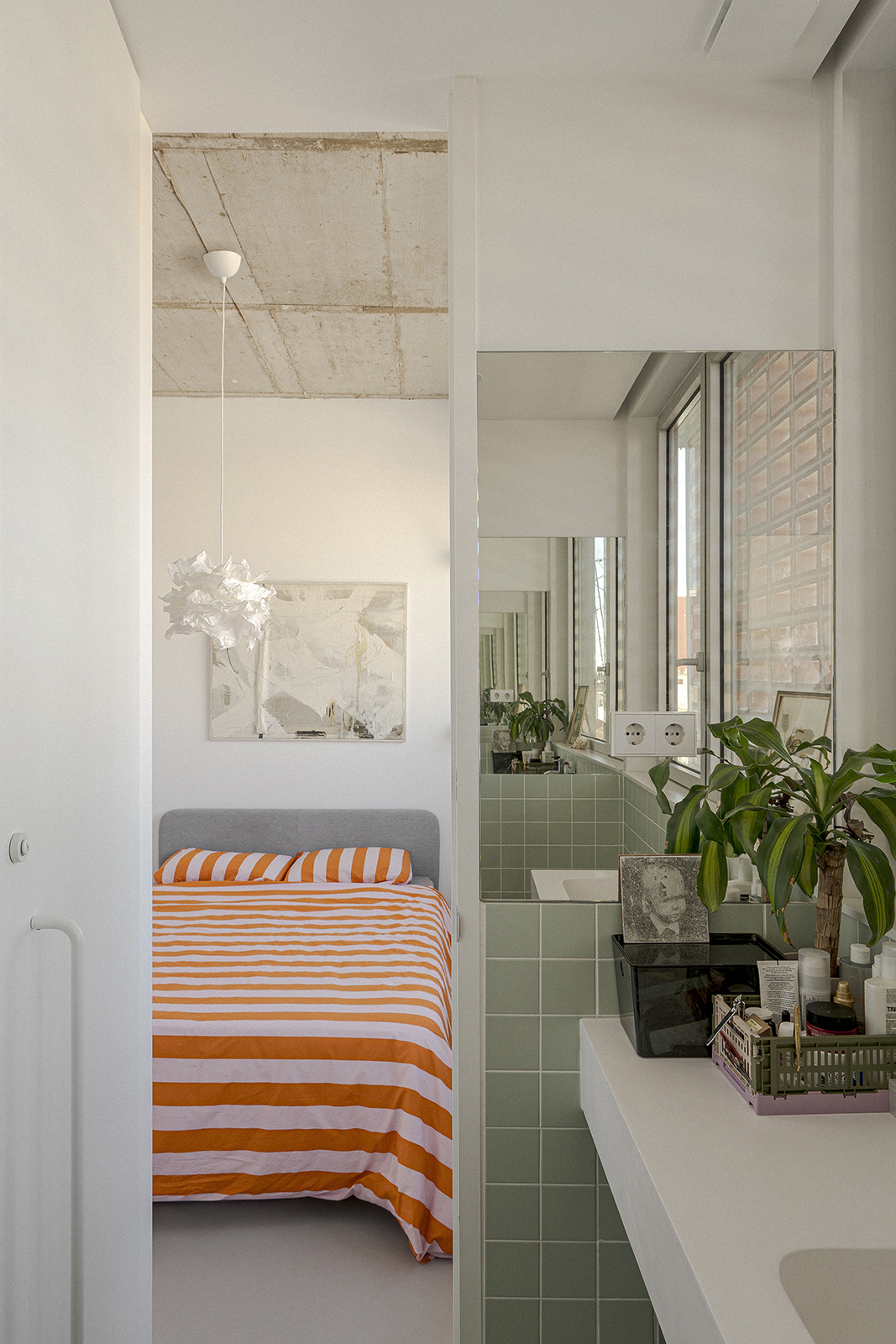
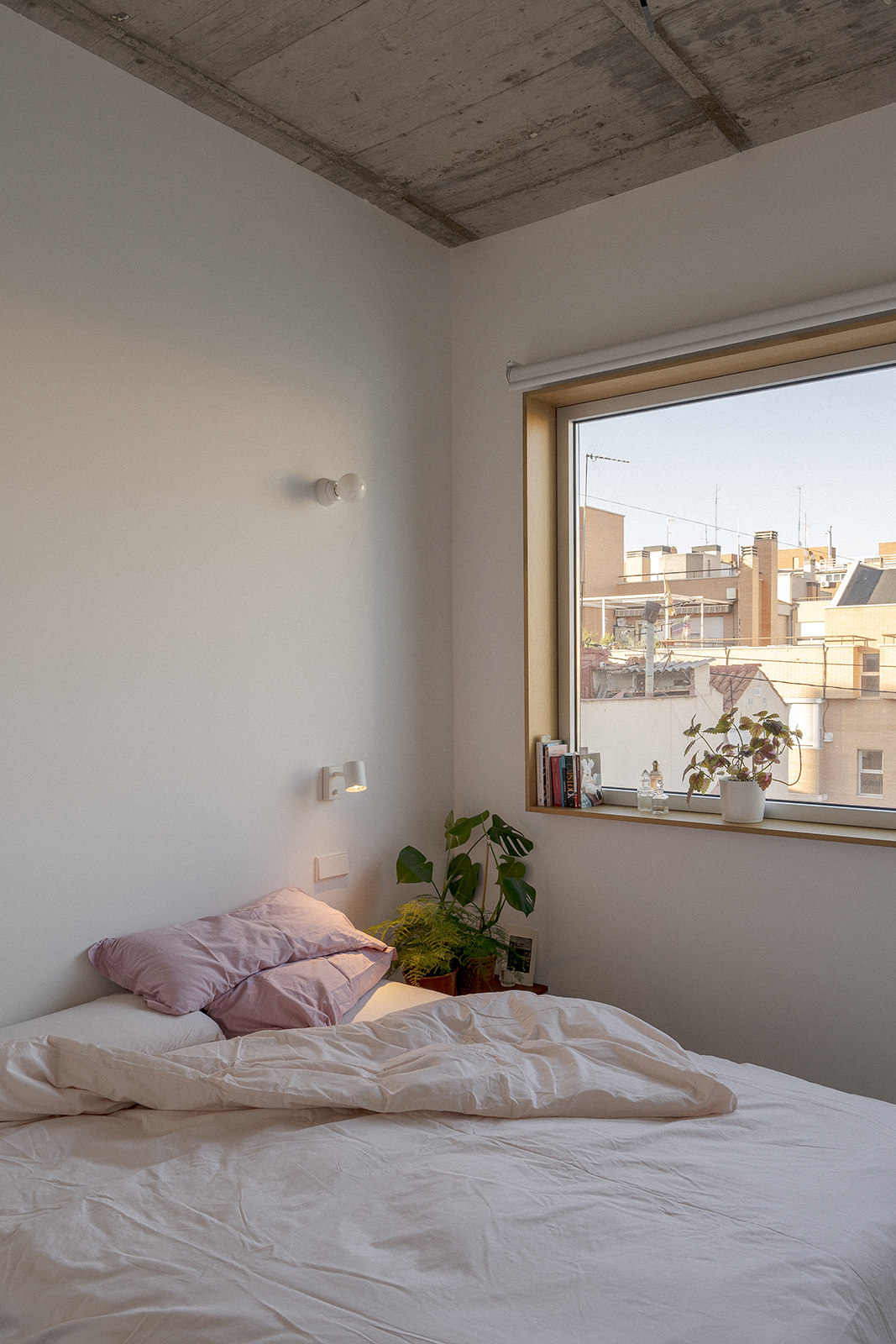
The ceilings, finished in exposed concrete, were left unplastered and without false ceilings to emphasize the generous 3.20-meter height. This free height adds a sense of spaciousness and improves cross ventilation.
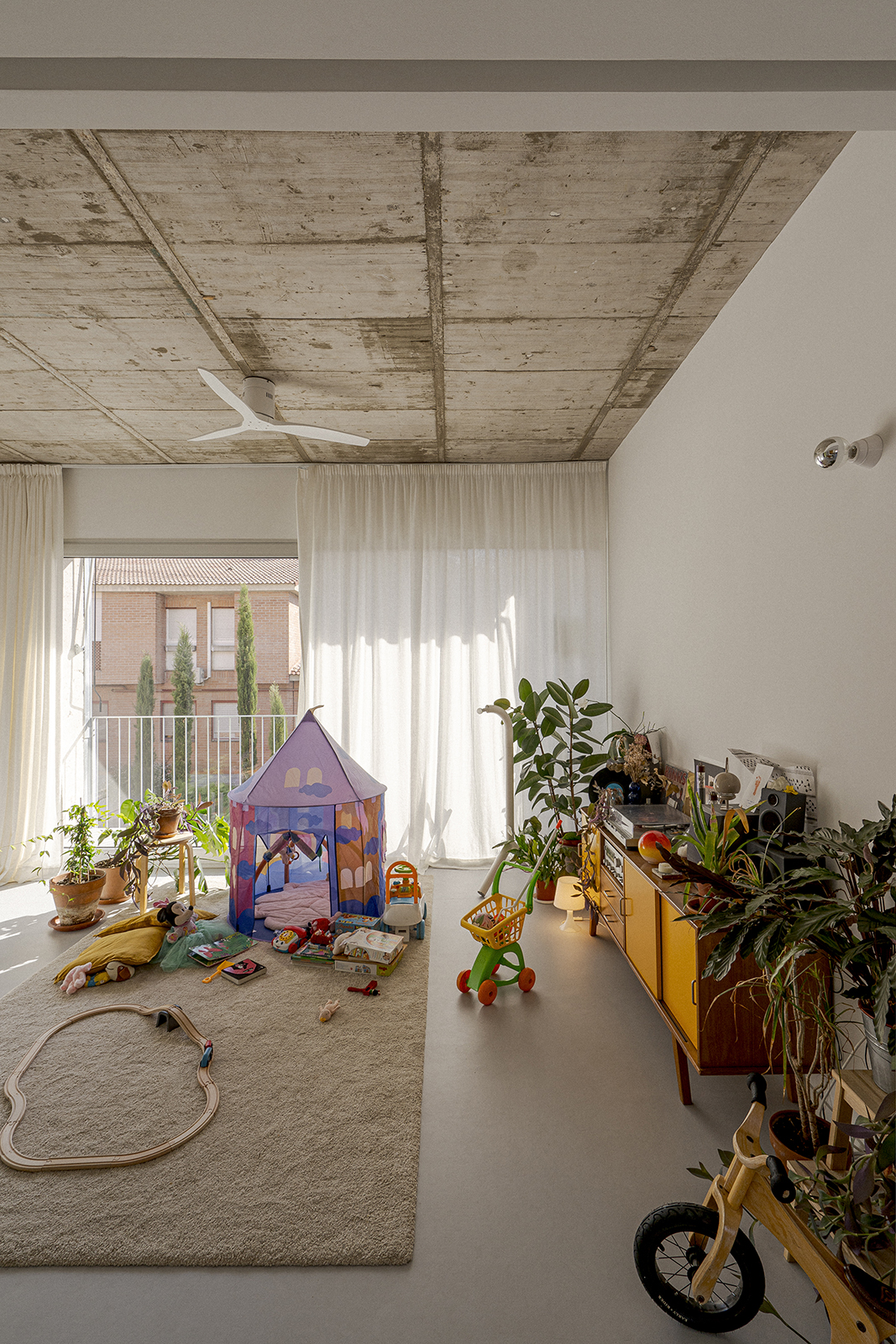
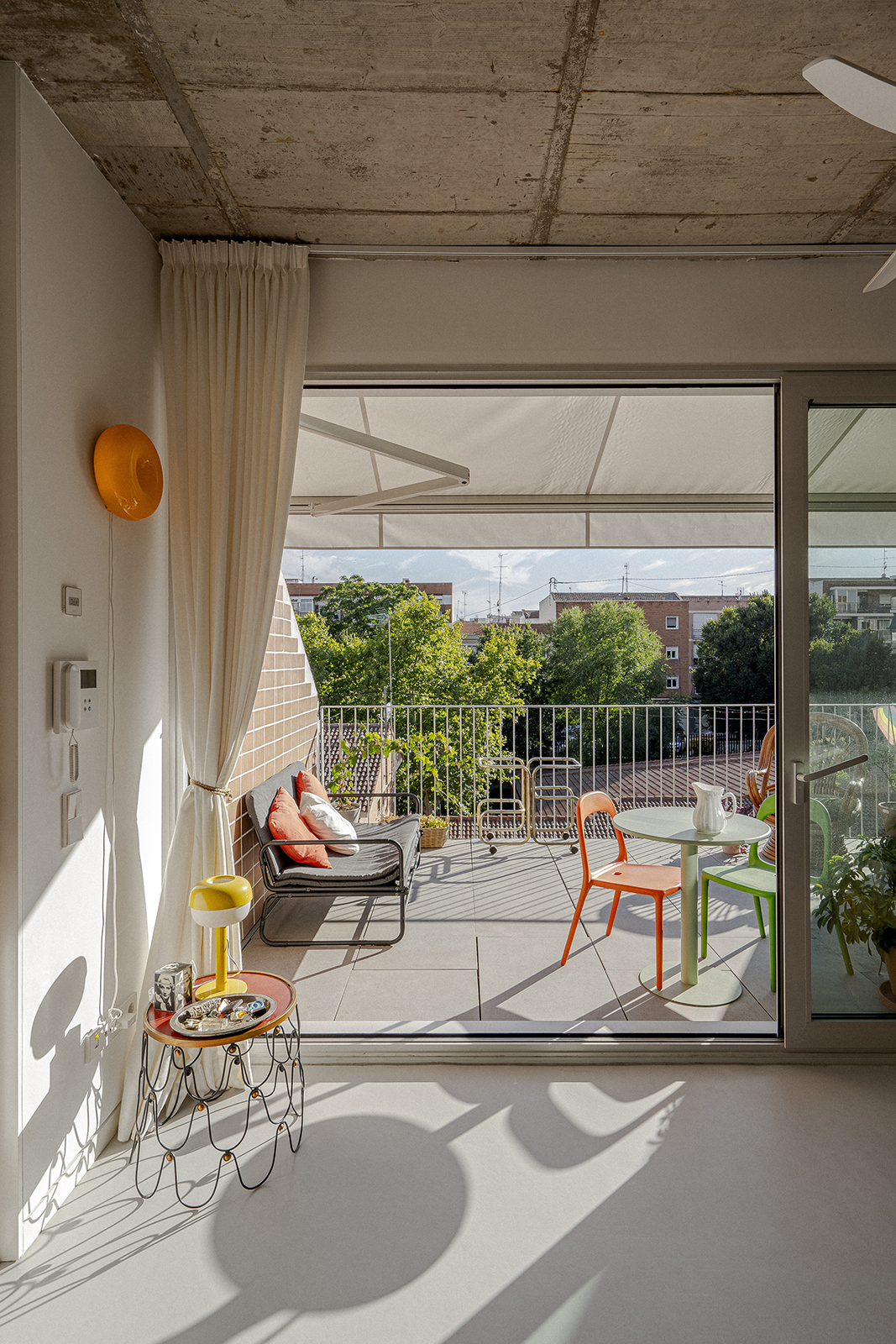
A large window spans the entire front of each apartment, bringing in southern light and naturally heating the main room.
A roll-up awning, echoing those on neighboring buildings, tempers the brightness.
Outside, a small terrace invites you to sit and observe — just like the neighbors do with their chairs out on the street — while enjoying views over a small square.
Casa Botijo champions rational, austere construction, where structural and enclosure elements are expressed honestly and in harmony with their surroundings.
Inside the apartments, linoleum floors and wood finishes contrast with the raw materials — concrete, brick, galvanized steel — adding warmth to the interior atmosphere. The bioclimatic approach was essential to the project. High thermal inertia, achieved through more than 10 cm of insulation; natural cross ventilation running from north to south, optimized by the apartment height for more efficient air renewal; natural light in every room with adjustable solar protection; and an aerothermal radiant heating and cooling system, all contribute to low energy consumption and reduced demand.
Check another project by ALE ESTUDIO here!
Facts & Credits
Project title Casa Botijo
Typology Collective housing building
Location Calle Padre Oltra 81, Carabanchel, 28019 Madrid, Spain
Architecture ALE ESTUDIO
Scope of professional work Building construction
Plot area 126 m²
Built area 365 m²
Housing unit area 70 m²
Construction company Dasepa Construcciones S.I.
Site manager Alarifes Técnicos S.L.
Collaborators Maria González, María Rodriguez
Structural engineering C. Jofemar S.L.
Photography MaruSerrano
Text Raquel Congosto
READ ALSO: House Ben & Elise | Renovation of a family house in Brussels by Ouest Architecture