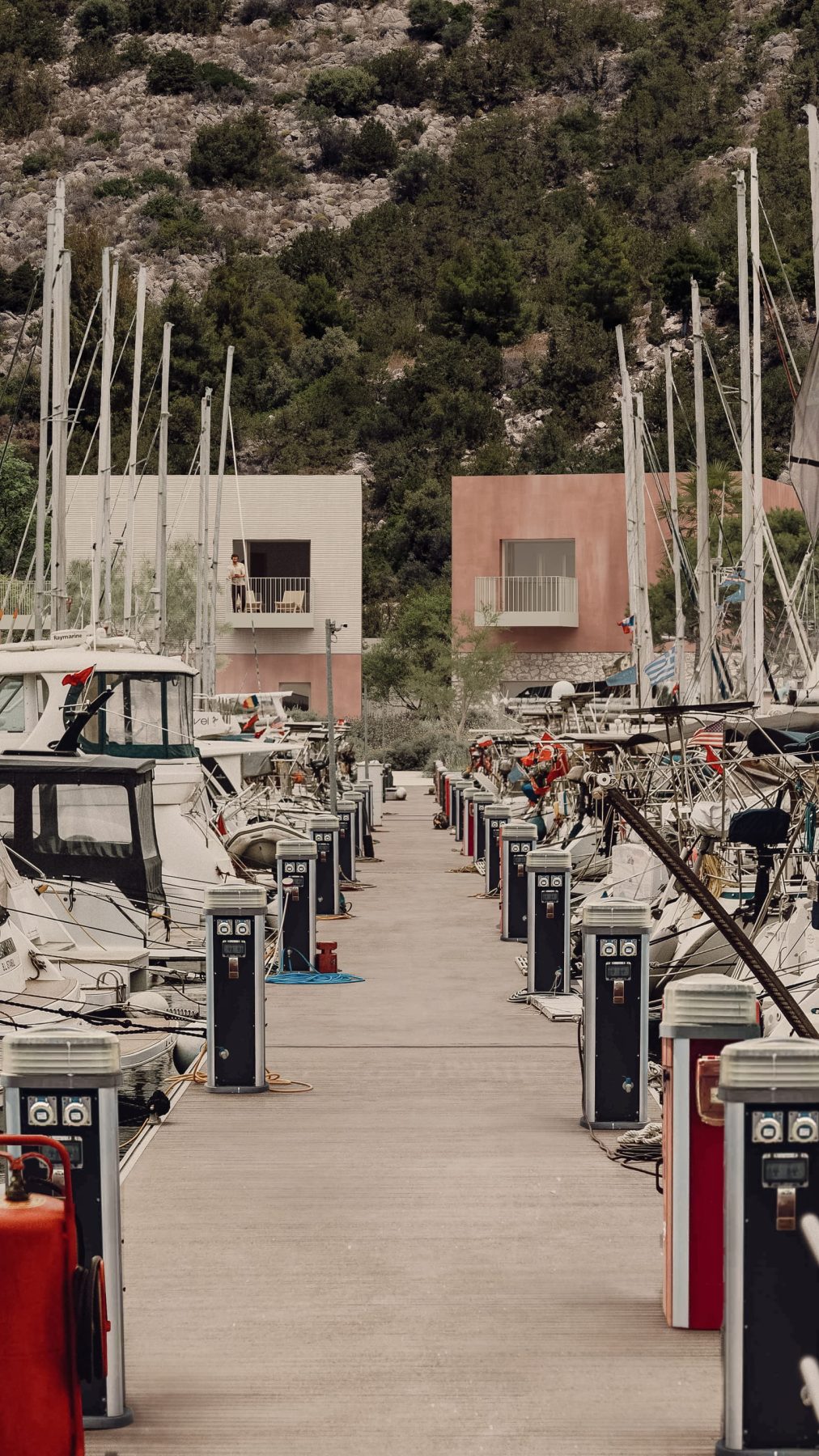
Marina Ermioni, designed by Neiheiser Argyros, reimagines waterfront infrastructure as a contemporary extension of the historic Greek village. The project combines advanced marine facilities with a low-rise architectural ensemble rooted in the scale, materials, and spatial patterns of Ermioni. Drawing on vernacular forms, local stone, pigmented plaster, and a masterplan structured around the shopping street, plateia, and promenade, the marina is conceived as a modern village at the water’s edge — where public life, landscape, and maritime culture are woven into a cohesive, place-specific environment.
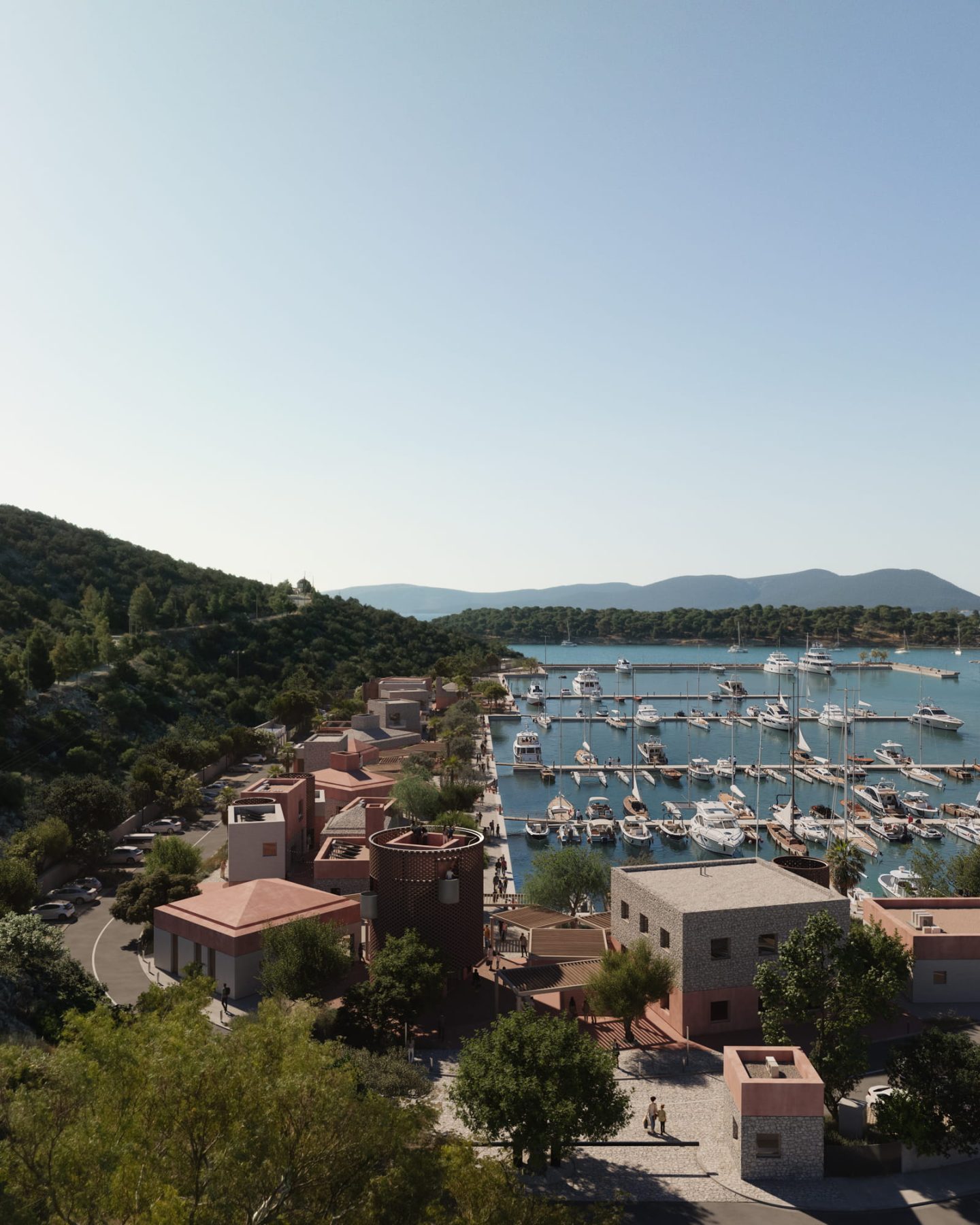
In the naturally sheltered inlets of the Gulf of Hydra, a new marina development in Ermioni proposes an alternative to the isolated, object-like model of waterfront infrastructure. Rather than presenting itself as a self-contained enclave, Marina Ermioni is conceived as a spatial, material, and cultural continuation of the village it meets at the shoreline — a contemporary reinterpretation of regional vernacular logic expressed through marine infrastructure, architecture, and landscape.
A MARINA CONCEIVED AS A VILLAGE
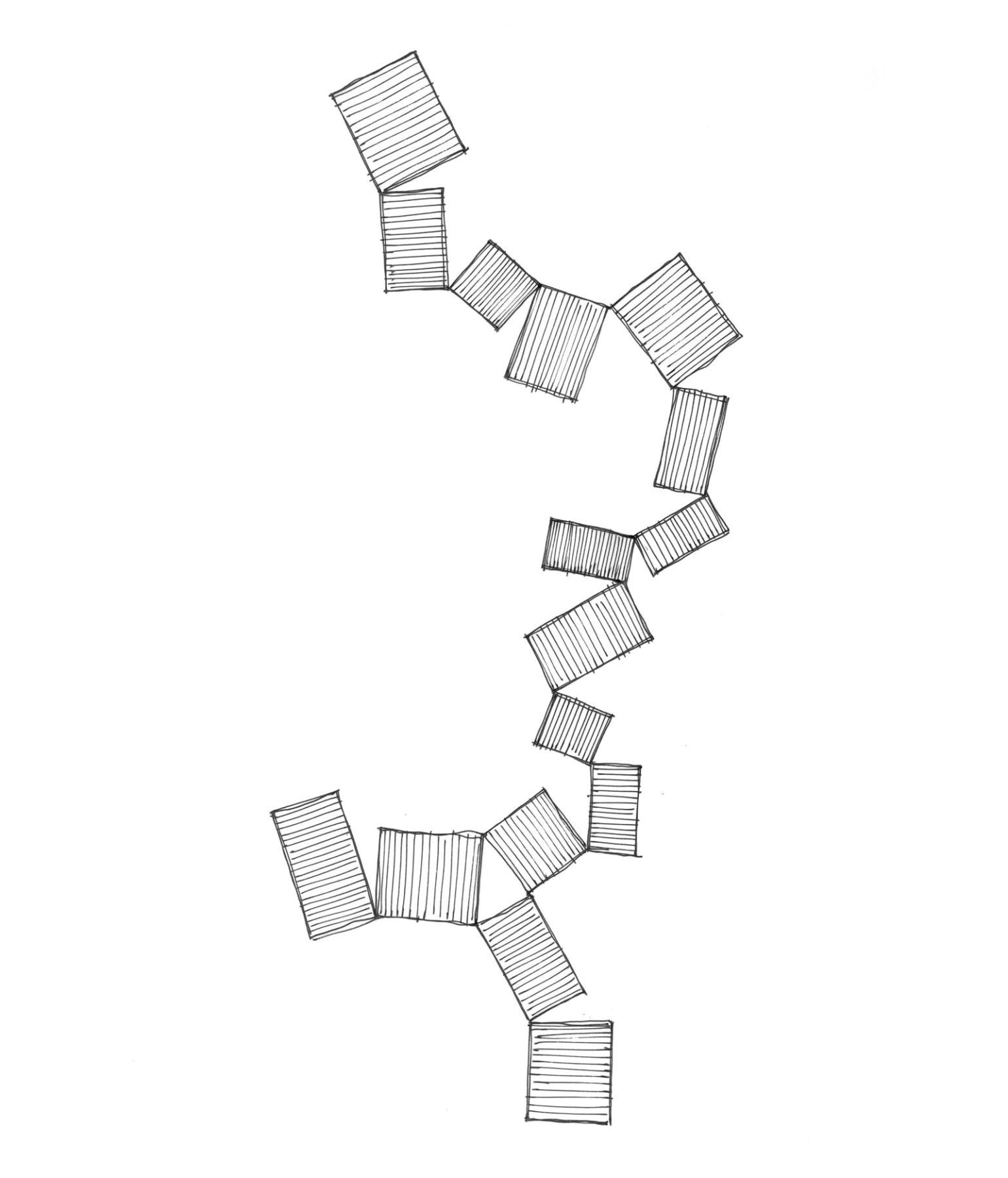
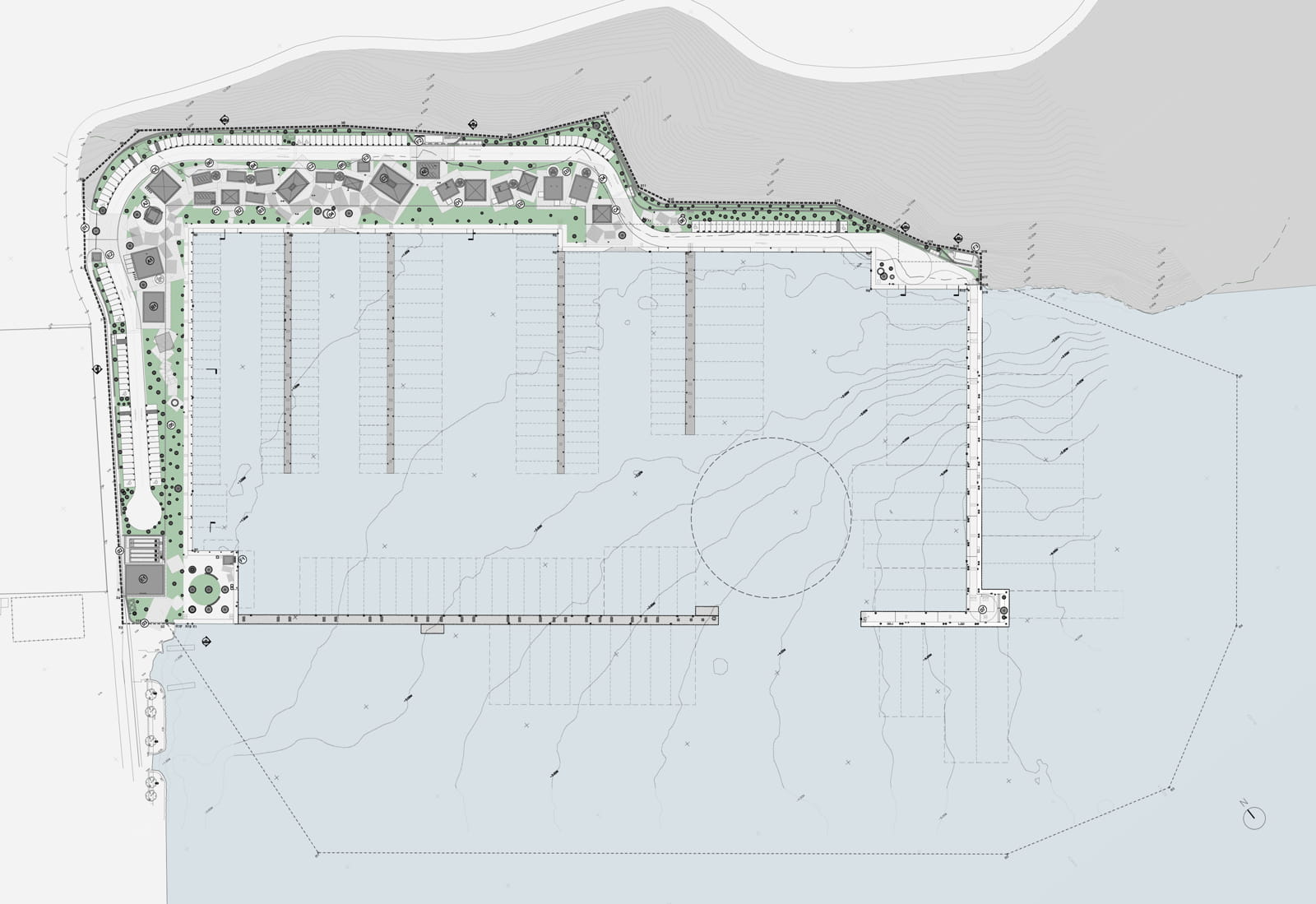
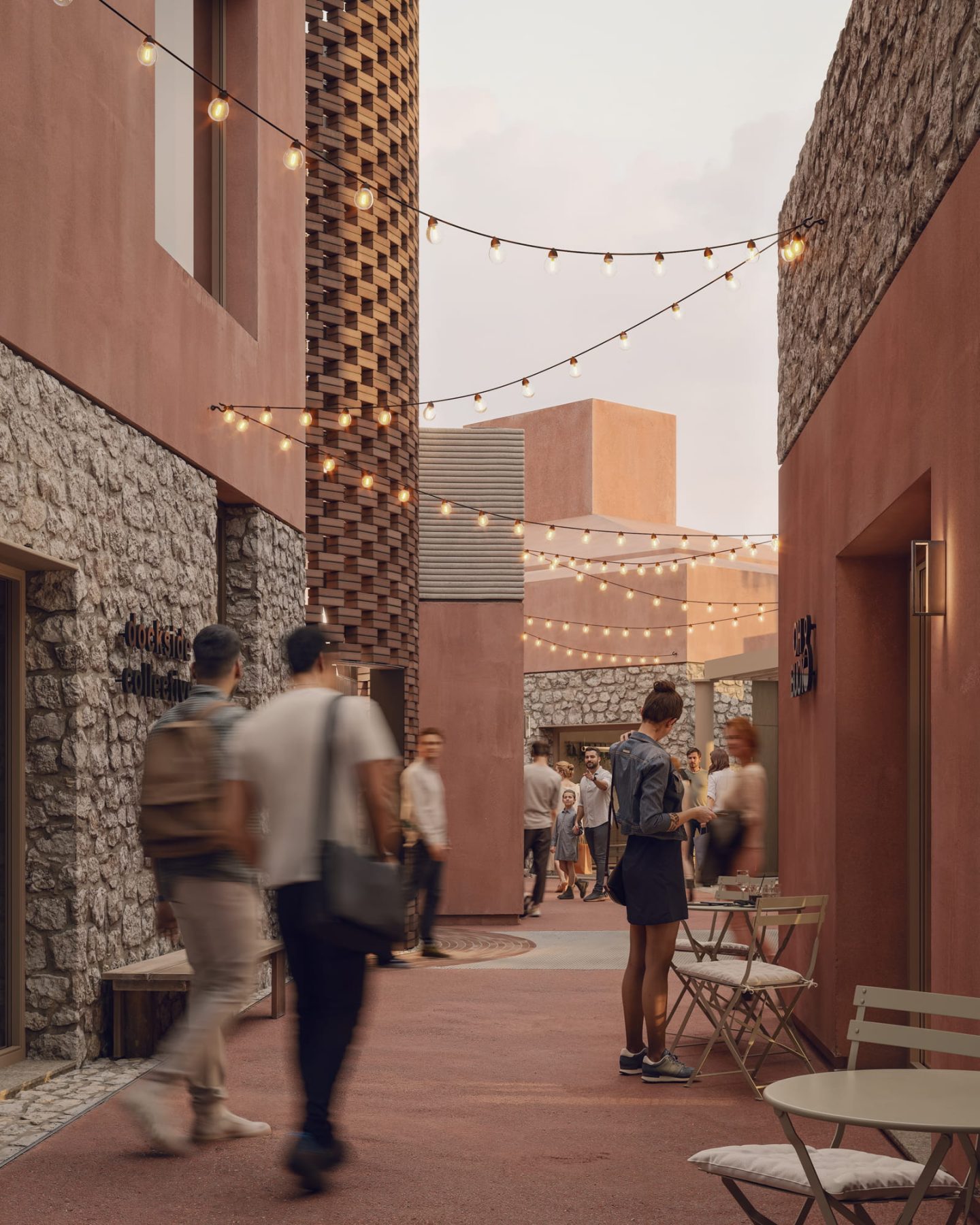
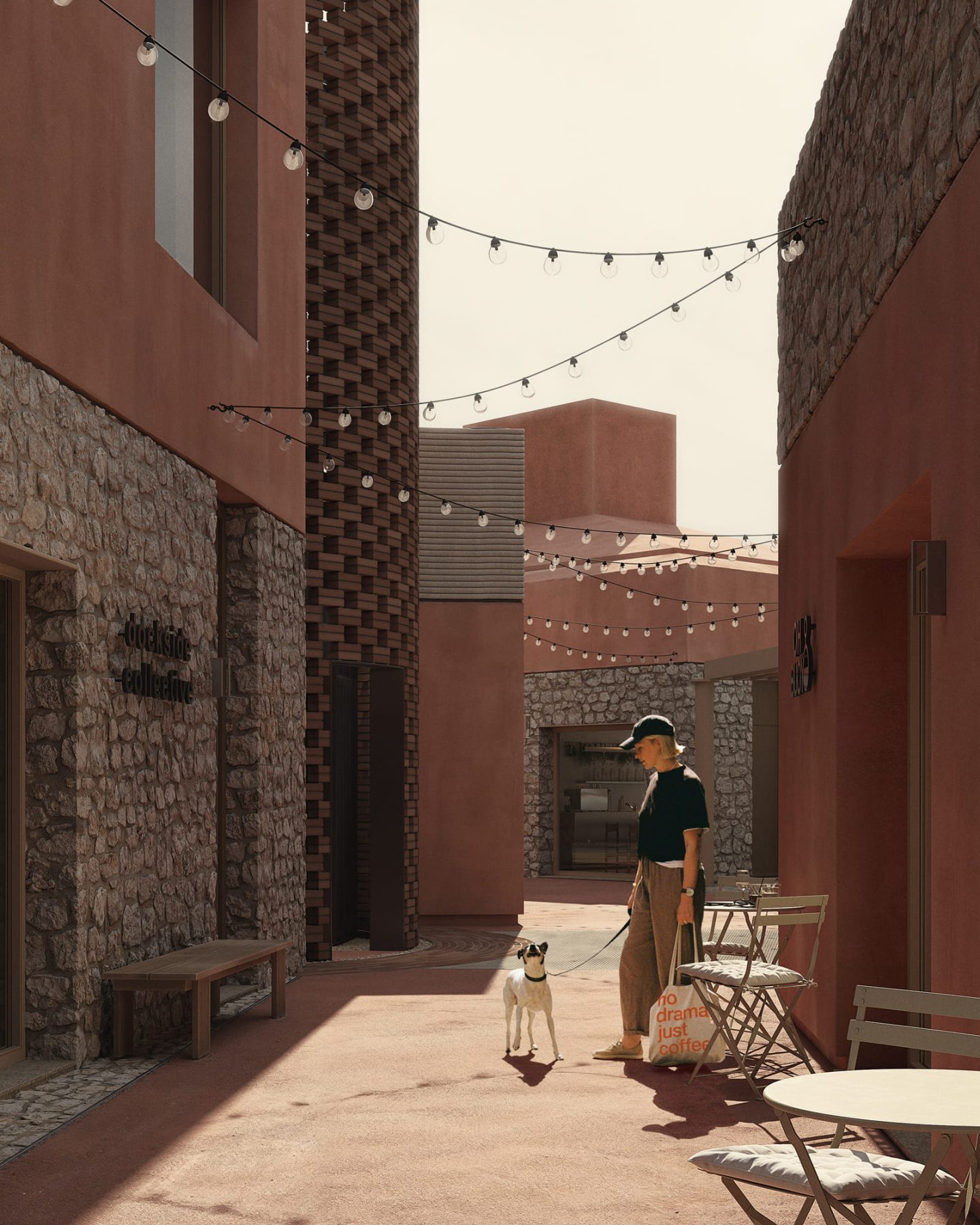
The project approaches the marina not as a singular megastructure but as a fragment of settlement. Its masterplan draws from the spatial DNA of Ermioni and other traditional Greek waterfront settlements, translating three foundational elements of village life into the organization of the site: the commercial street, the central plateia, and the waterfront promenade.
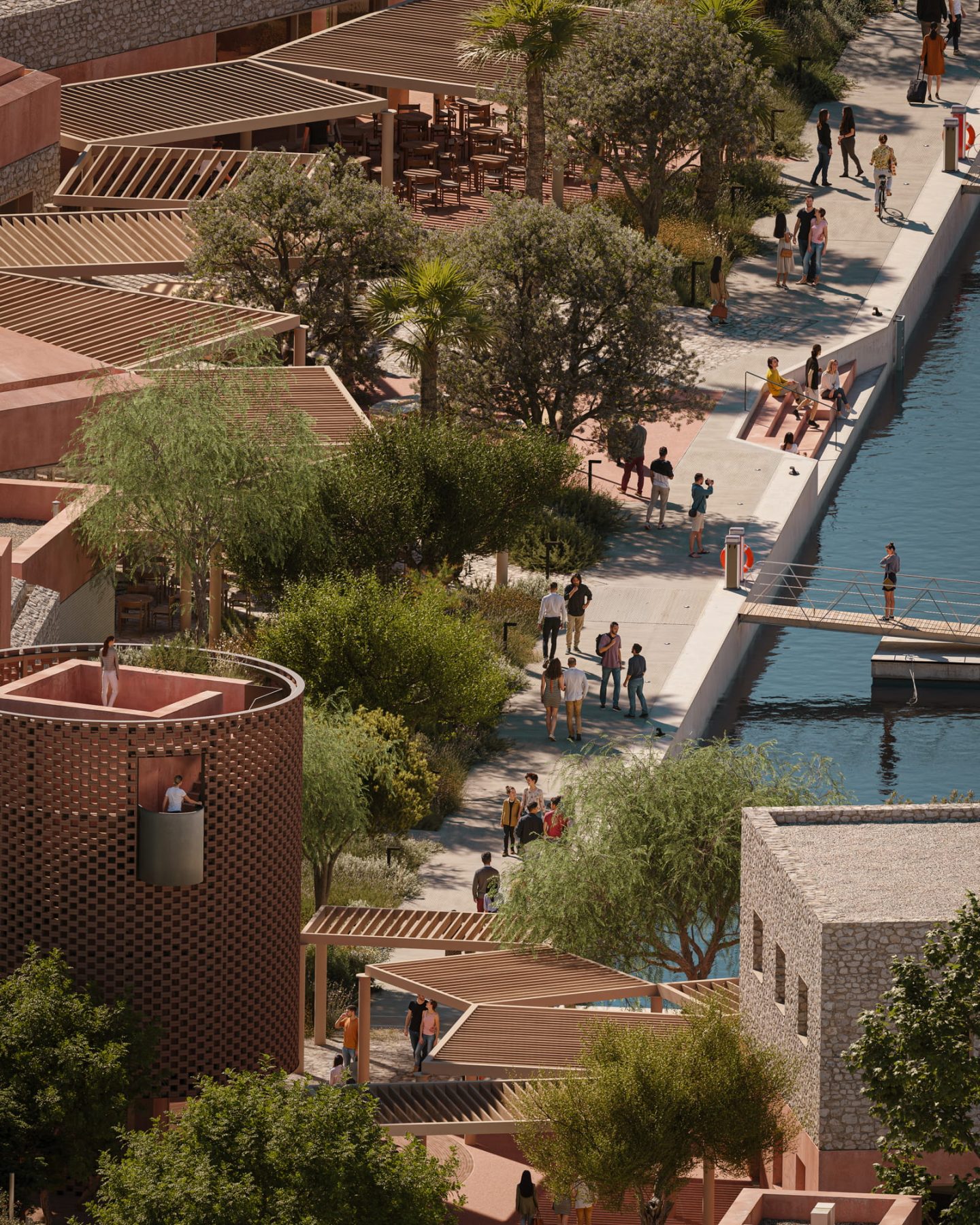
A linear retail and hospitality spine functions as a contemporary “shopping street,” while a generous plaza establishes a social center at the heart of the development. Along the water, a continuous pedestrian promenade extends the existing village edge, reinforcing the Greek coastal tradition of the shoreline as shared civic space. In this way, the marina operates as an urban extension rather than a destination apart, allowing daily local life and visiting maritime culture to coexist within a unified public realm.
CONTEMPORARY VERNACULAR FORMS
The architectural language is rooted in the forms and proportions of Greek vernacular construction, distilled into simple, legible volumes.
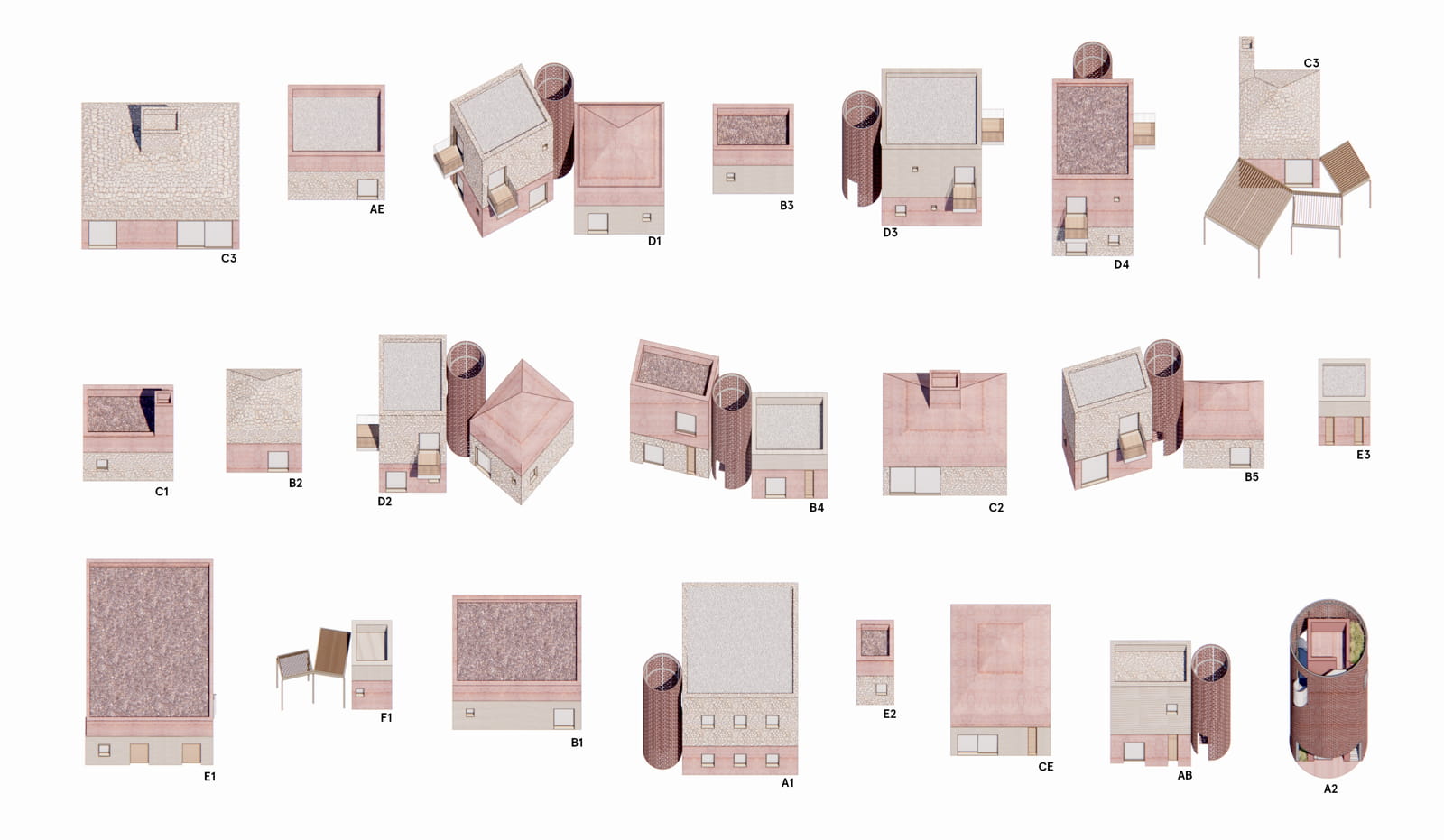
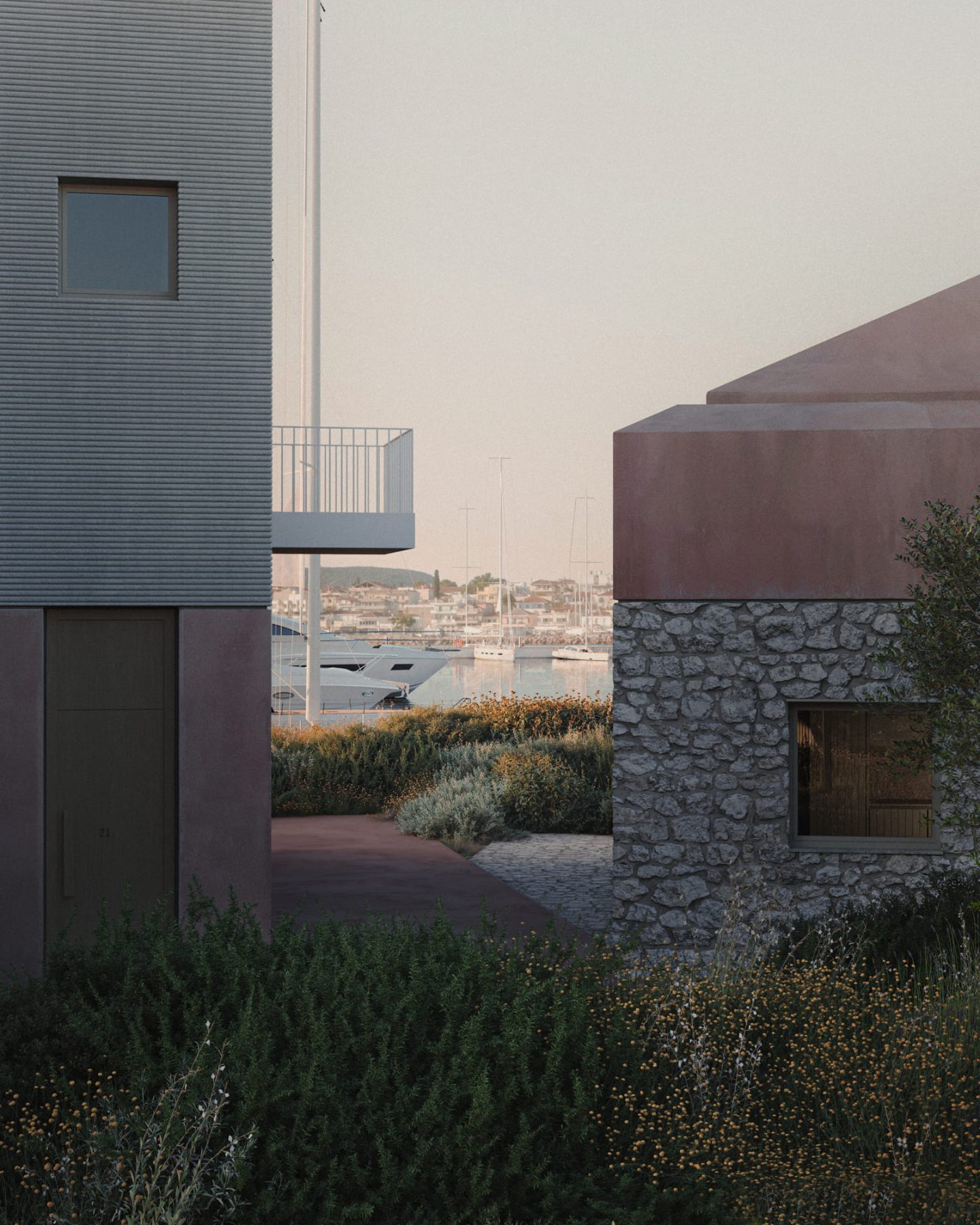
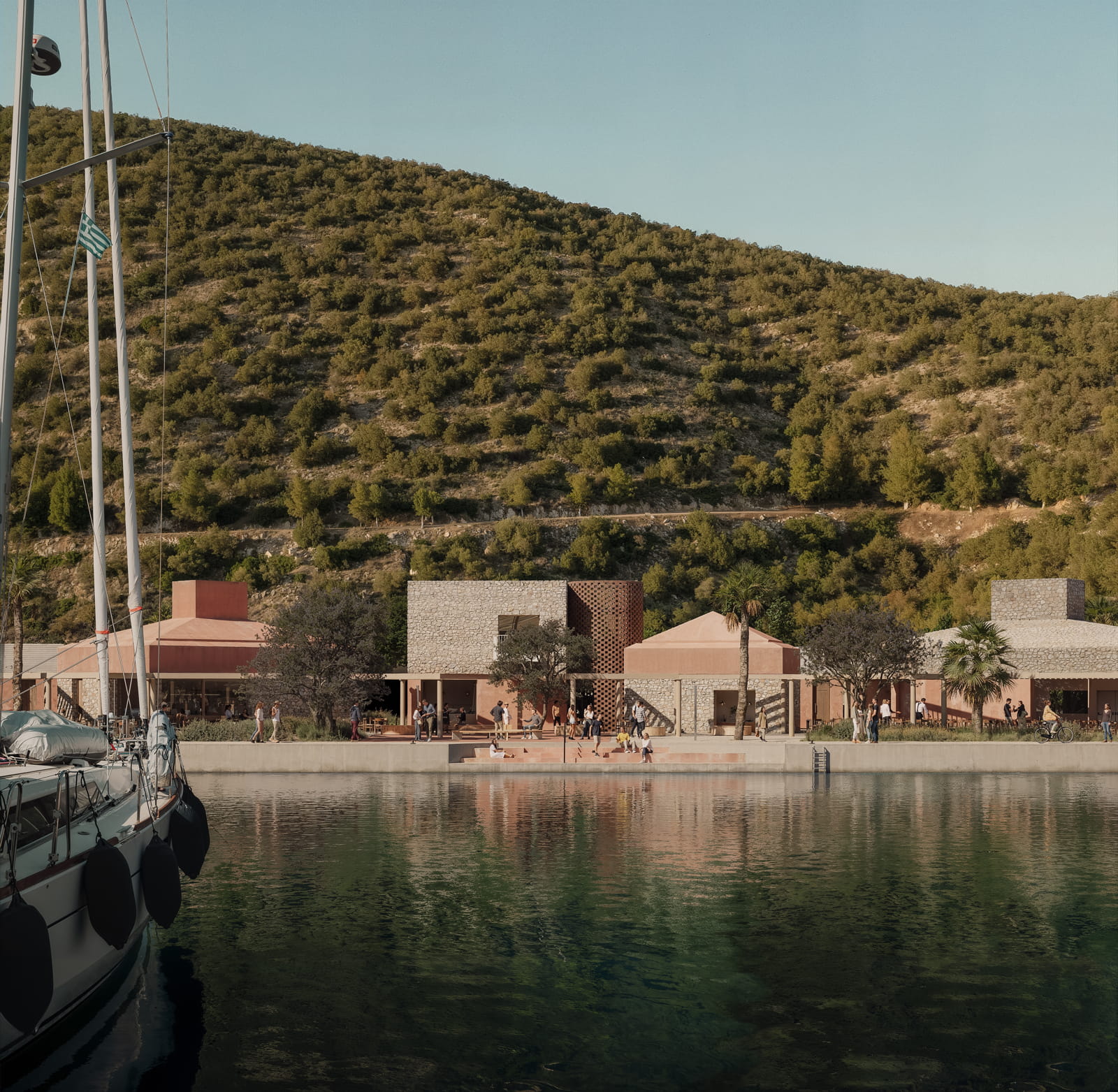
Buildings are limited to one or two stories, maintaining a scale consistent with Ermioni’s existing fabric. Their massing alternates between flat-roofed and pitched archetypes, yet traditional motifs are abstracted: overhanging eaves, gutters, and terra-cotta tiles are omitted, and in pitched forms the wall material folds upward to become the roof surface itself.
Large, mullion-free openings introduce a degree of transparency uncommon in historic precedents, reframing familiar typologies through contemporary detailing. Timber doors, balconies, and articulated chimneys — particularly where restaurants and bakeries are located — lend each structure a specific identity within a tightly controlled formal system.
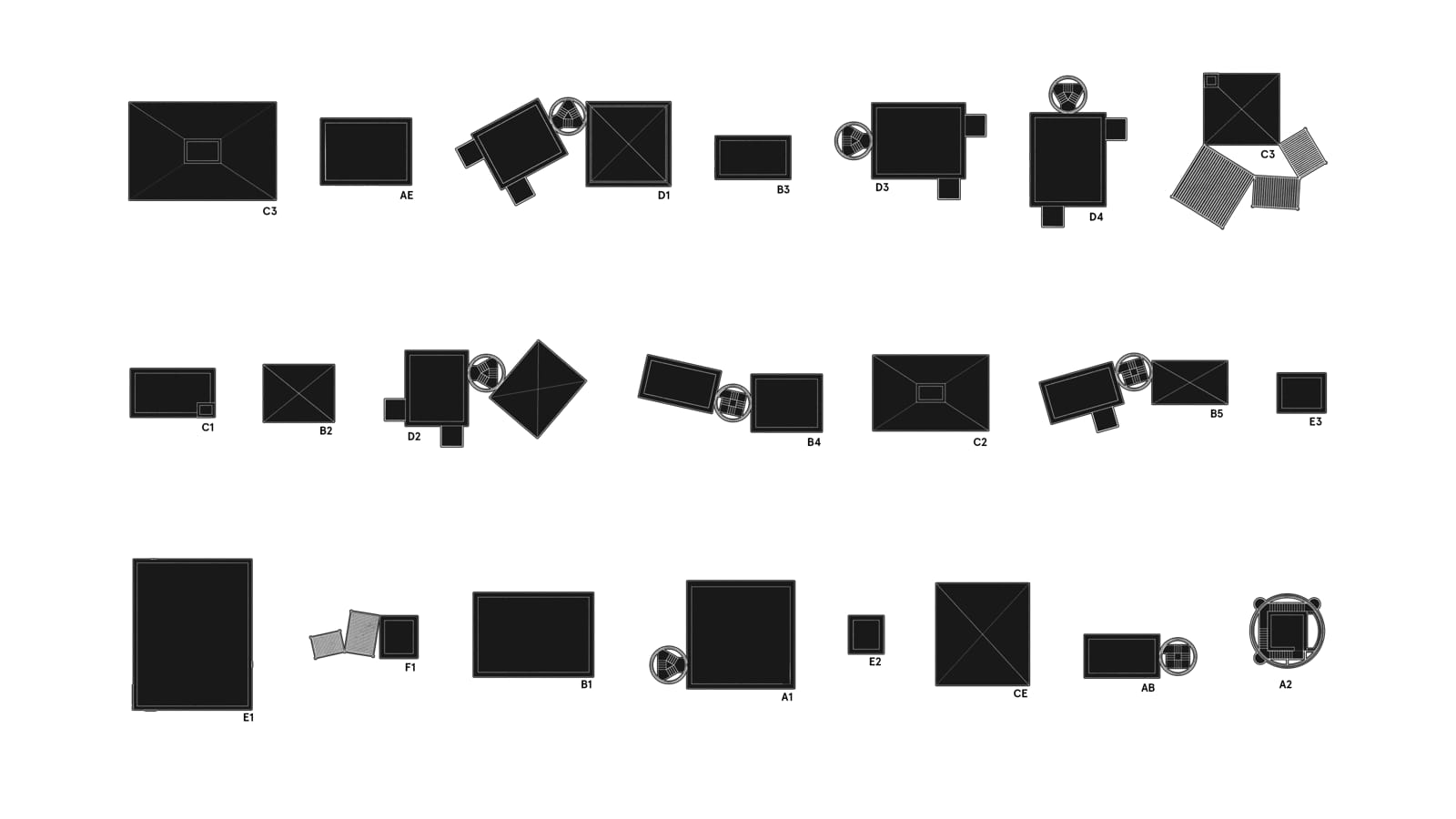
A unifying 3-meter datum line binds all 26 buildings across the site. This horizontal reference organizes façades and is extended into a series of pergolas set at the same height, linking structures to one another and to the landscape. The datum acts as an ordering device, establishing visual continuity while allowing variation in individual volumes.
CONNECTING THE ANCIENT AND THE PRESENT
Ermioni’s identity has long been shaped by the sea. Aristotle noted that its early inhabitants were purple-shell fishermen, and for centuries the town thrived on the extraction of dye from murex shells gathered along its coast. This labor-intensive craft produced the vivid purple hues — porphyry — that signified prestige across the ancient Greek, Roman, and Byzantine worlds.
The new material palette is deliberately restrained, relying on two primary elements: Ermioni’s grey local stone and a pigmented plaster inspired by porphyry tones.
These materials alternate above and below the 3-meter datum — one building presenting stone at the base and plaster above, the next reversing the combination — producing a rhythmic variation within a consistent framework.
The new marina draws on this legacy not as a literal reconstruction, but as a subtle cultural thread woven into its architectural expression. Light purple and pink tones, inspired by the historic murex dye, are incorporated into the pigmented plaster, concrete, and hardscape, giving the development a distinct chromatic identity. In this way, the architecture quietly echoes Ermioni’s past while framing a contemporary future — a modern village that carries forward the spirit of the place from which it grows.
COASTAL PEDESTRIAN ECOLOGIES
The landscape extends the architectural logic into the terrain. Instead of picturesque, meandering resort pathways, the ground plane is composed of overlapping rectangular pads derived from adjacent building footprints.
These interlocking surfaces form a network of informal spaces and connections, reinforcing the geometric clarity of the architecture.
Planting strategies shift across the site. Toward the rear, native shrubs, grasses, and small trees echo the surrounding hillside ecology, while the waterfront zone adopts a more civic and sensory character, with fragrant and seasonally flowering species alongside cypress, olive, and plane trees. A system of pergolas structures shaded pedestrian routes, encouraging a slow, social use of the public realm.
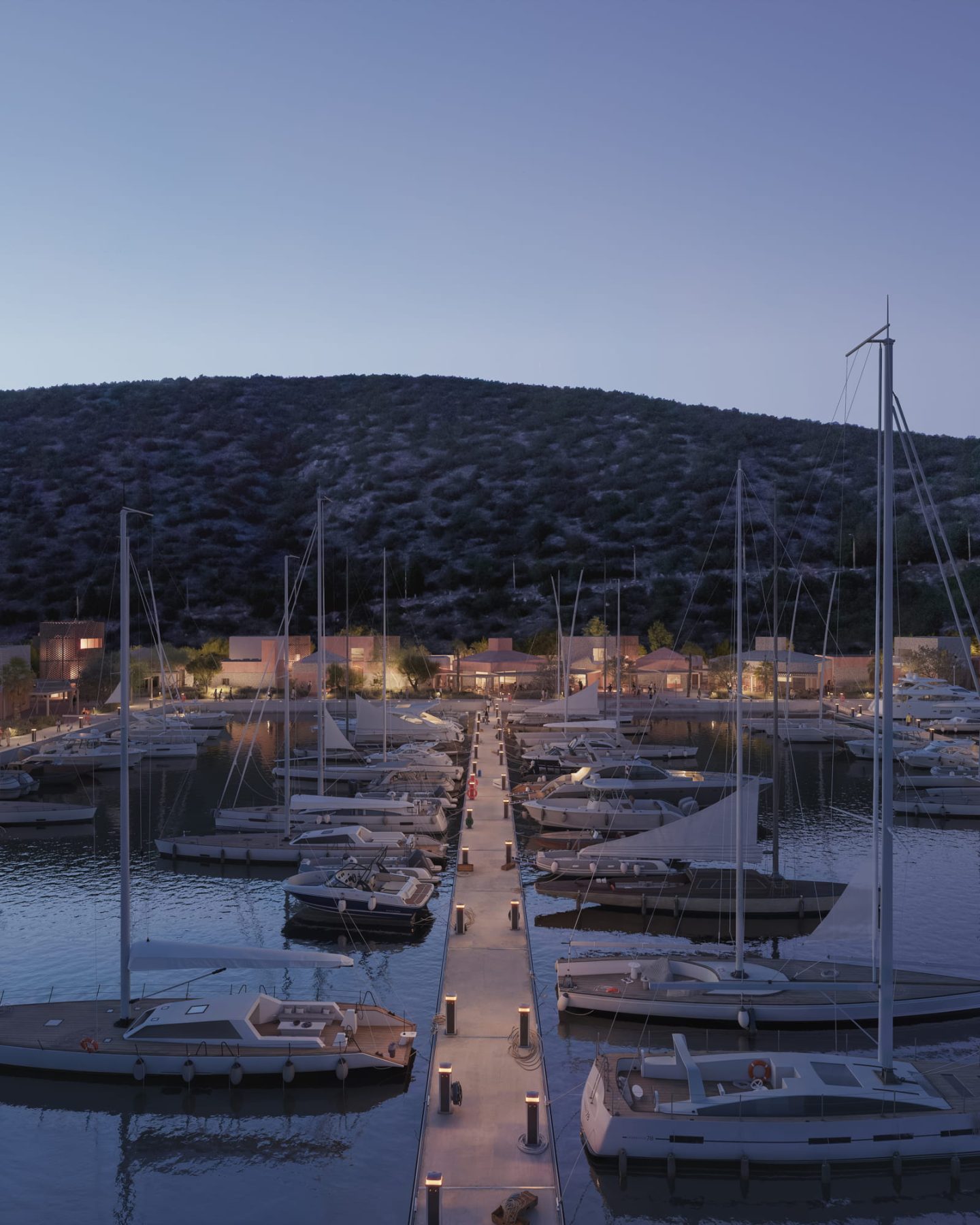
Vehicle access and parking are positioned discreetly to the rear, allowing the shoreline to remain fully pedestrian. Broad amphitheatrical steps descend to the water, functioning as both water-taxi landings and informal gathering edges, while a small shaded park at the end of the windward pier offers views back toward the historic settlement.
GLOBAL AND LOCAL
The Ermioni Marina is envisioned as both contemporary and timeless—a bold new gateway to the sea that will be seen and experienced by thousands of visitors, yet remain rooted in the rhythms, materials, and character of its surroundings. By uniting cutting-edge marine facilities, sensitive architectural design, and vibrant public spaces, the project aims to redefine Ermioni’s waterfront and elevate the region on the map of international nautical tourism. Just as importantly, it will serve as a welcoming, year-round amenity for local residents, blending daily community life with global maritime culture.
Facts & Credits
Title Marina Ermioni
Typology Architecture, Marina
Location Ermioni, Peloponnese, Greece
Status Under Construction
Architecture, Land Zone Masterplan & Landscape Design Neiheiser Argyros
Softscape Consultant SRLA Simon Rackham
Sea Zone Masterplan, Environmental Study & Marine Works Design Marnet S.A.
MEP Design JEPA Ltd.
IT/AV/Network Design Praxis Factor
Lighting Design Matina Magklara Lighting Architecture
Structural Design & Traffic/Hydraulic Liontos and Associates
Planning Consultant Ioakeim Stavrou
Project Manager Hill International
Renderings DUEE Studio
Text by the authors
READ ALSO: Dream Houses: Laboratory of Architecture #3 designed a home as an avant-garde garden pavilion on the outskirts of Tbilisi, Georgia.