The Exeter Road Pavilion in London, designed by Neiheiser Argyros for an art collector and amateur DJ, unites an interior cabinet and exterior canopy in a single continuous gesture, treating storage and shelter as one architectural problem. A contemporary cabinet of curiosities, defined by a perforated stainless-steel façade, functions simultaneously as storage and structure, supporting a simple canopy while accommodating books, records, and artworks. At the same time, it creates a flexible setting for garden gatherings, workouts, and the occasional ping-pong match.
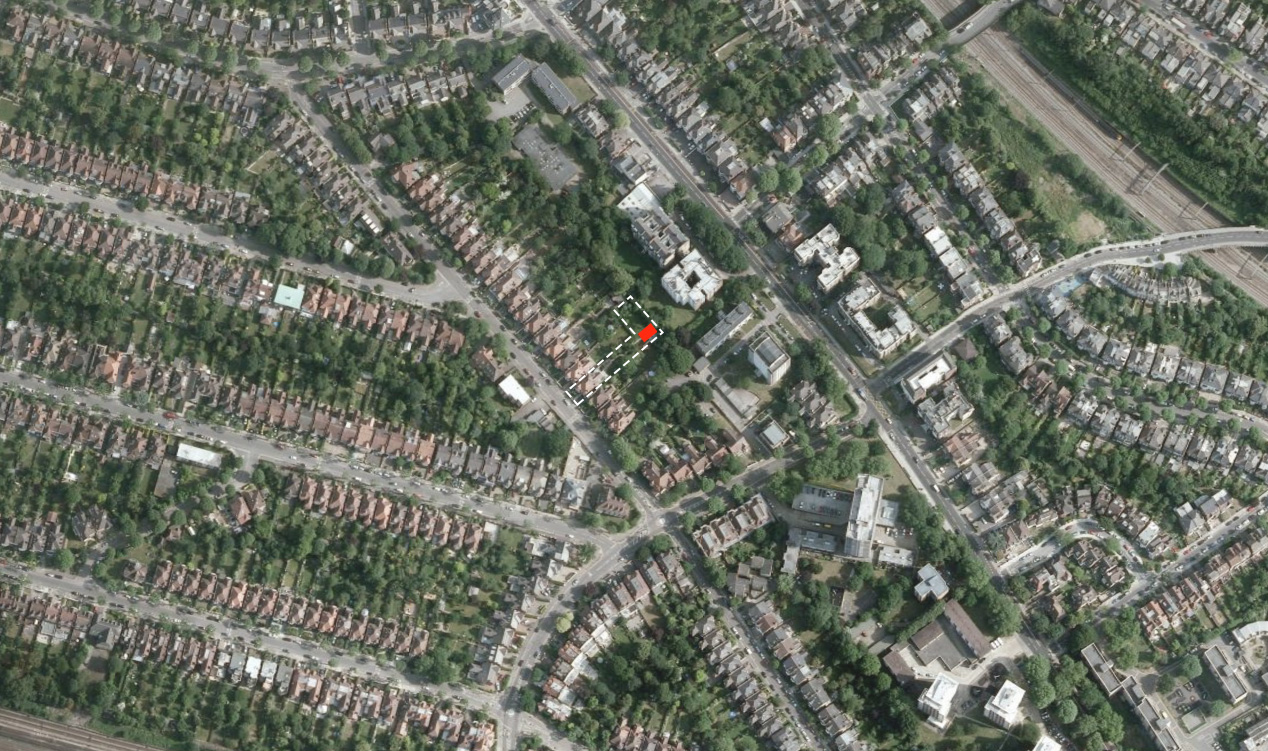
The Exeter Road Pavilion is an adaptive reuse of a modest Victorian garden outbuilding in northwest London, reimagined for an art collector and amateur DJ seeking a space equally suited to storage and sociability. The brief called for an environment capable of accommodating books, records, and artworks, while also supporting garden gatherings, workouts, and the occasional game of ping-pong.
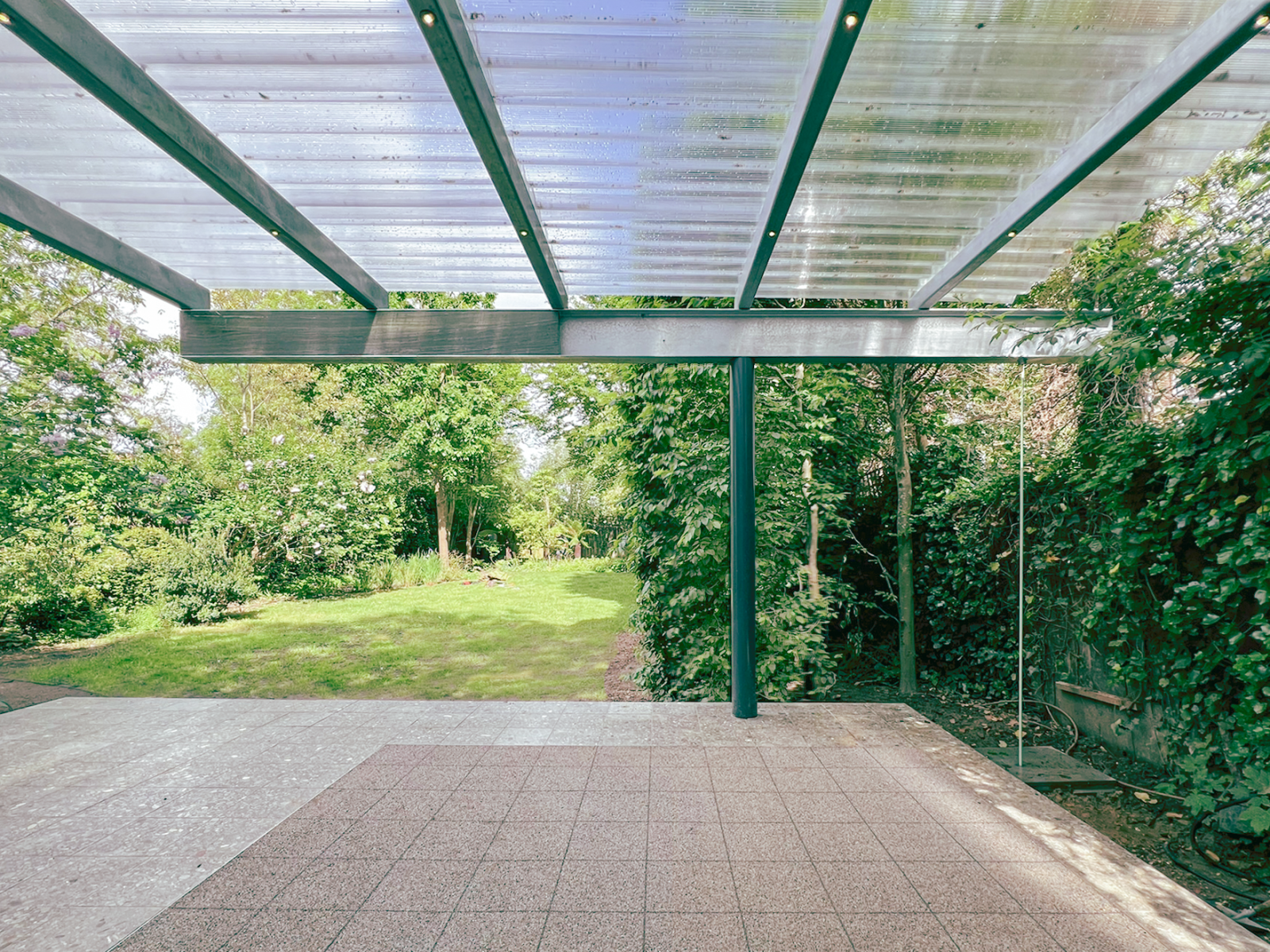
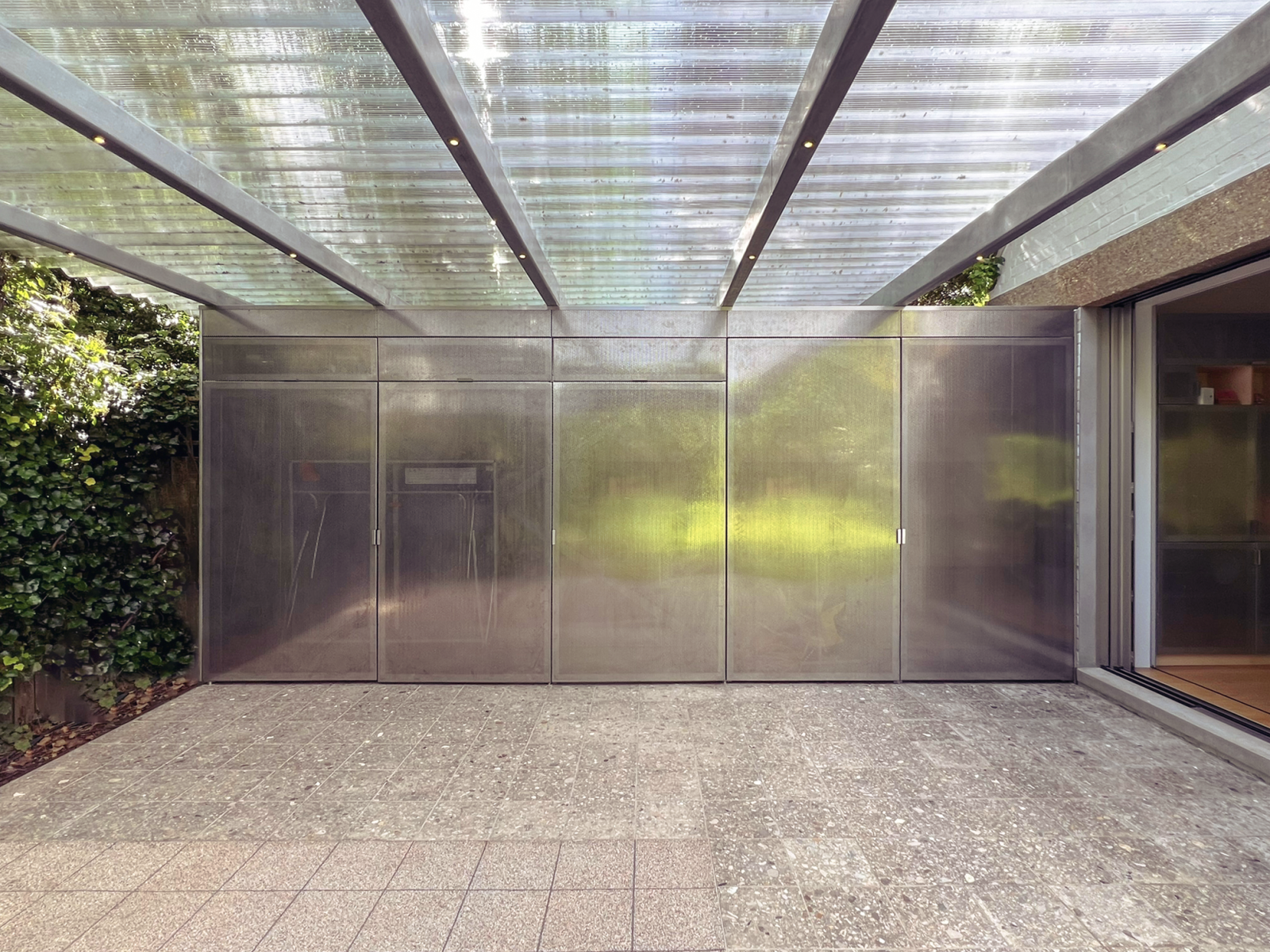
From the outset, the project was defined by a dual ambition: to create an interior cabinet for storage and an exterior canopy for shelter.
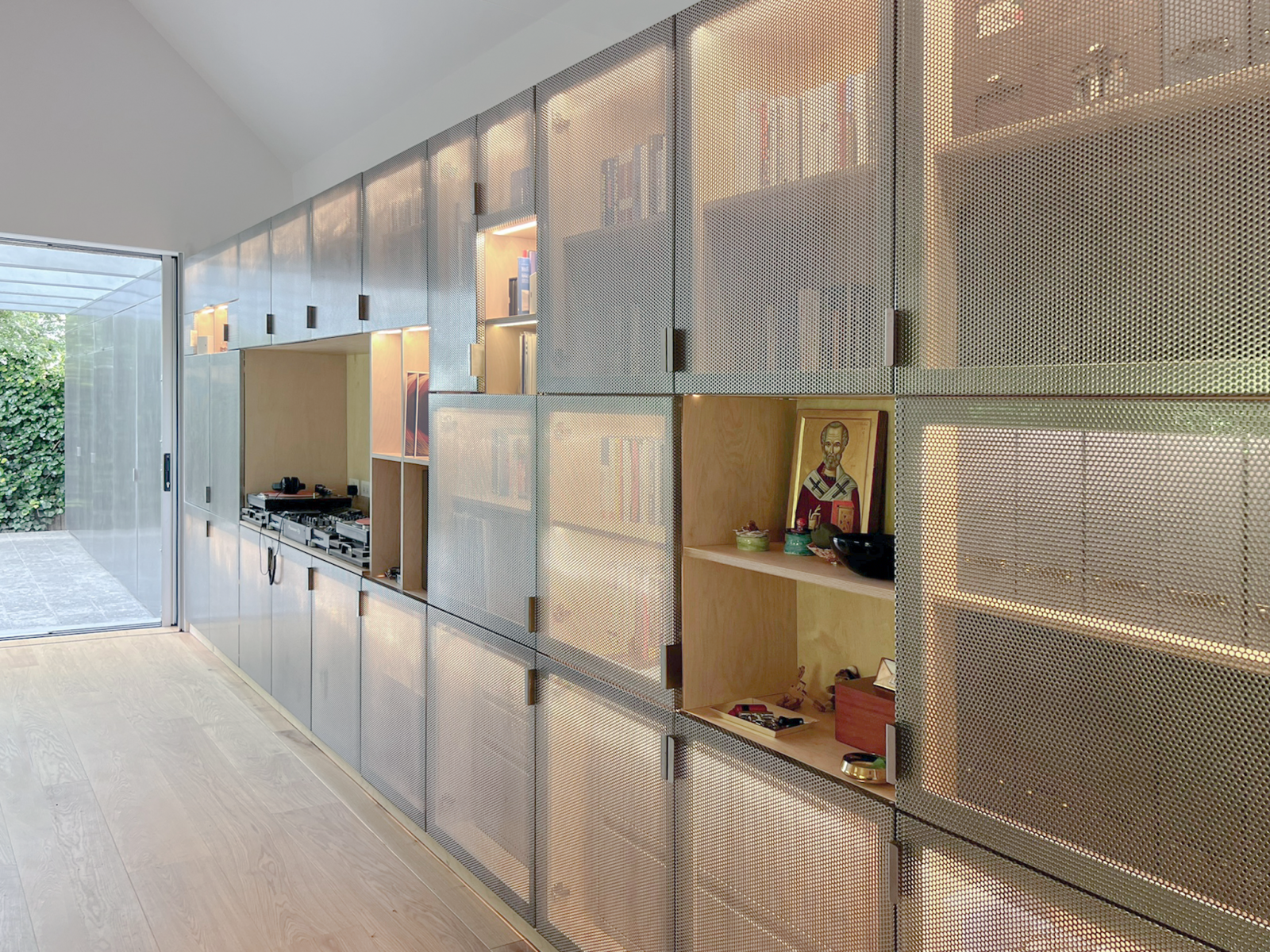
Rather than treating these as discrete elements, they were approached as a single, continuous architectural problem.

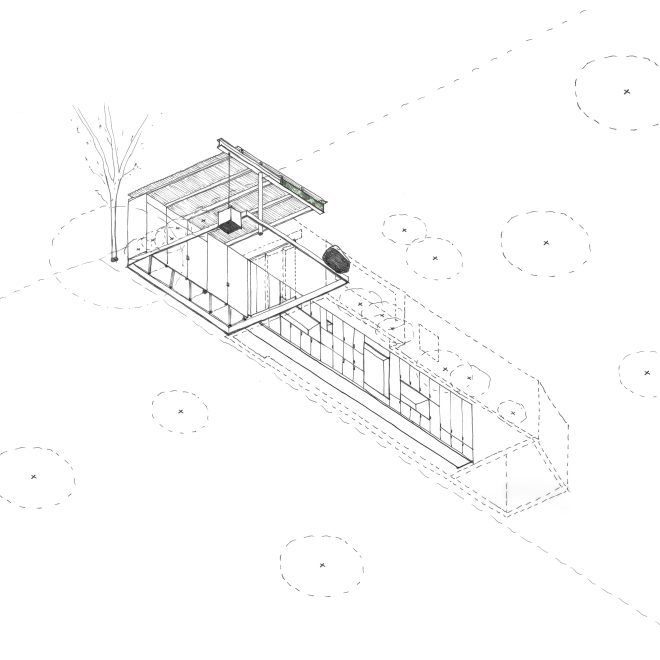
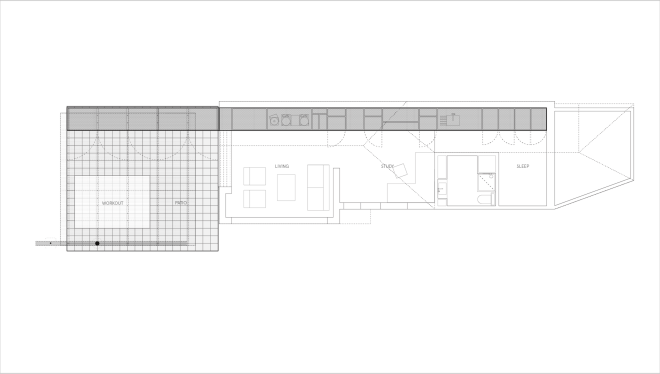
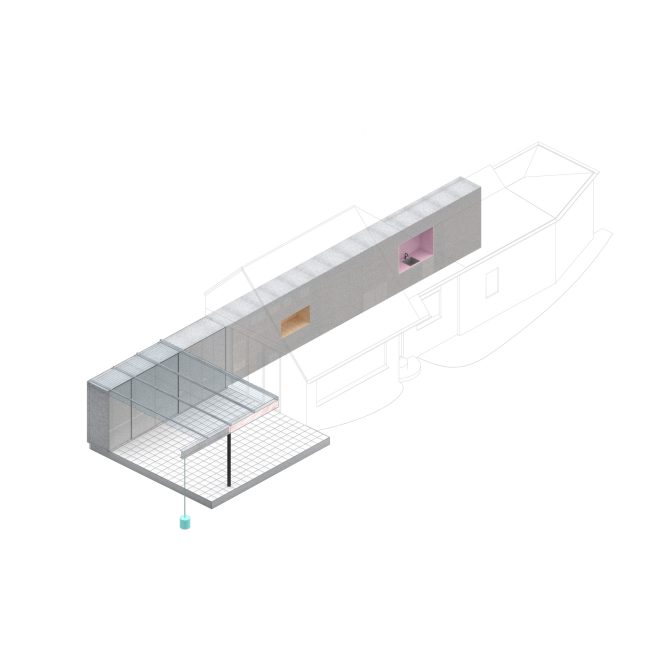
At the core of the project is a long, continuous cabinet—conceived as a contemporary cabinet of curiosities—that originates within the refurbished outbuilding and extends seamlessly into the garden. It houses the client’s eclectic collection: art storage and display, shelving for books and vinyl records, a DJ booth, television, files, and an evolving array of family photographs and personal artifacts. As it moves outward, the cabinet accommodates a ping-pong table, free weights, and garden games, maintaining a consistent architectural language across interior and exterior conditions.
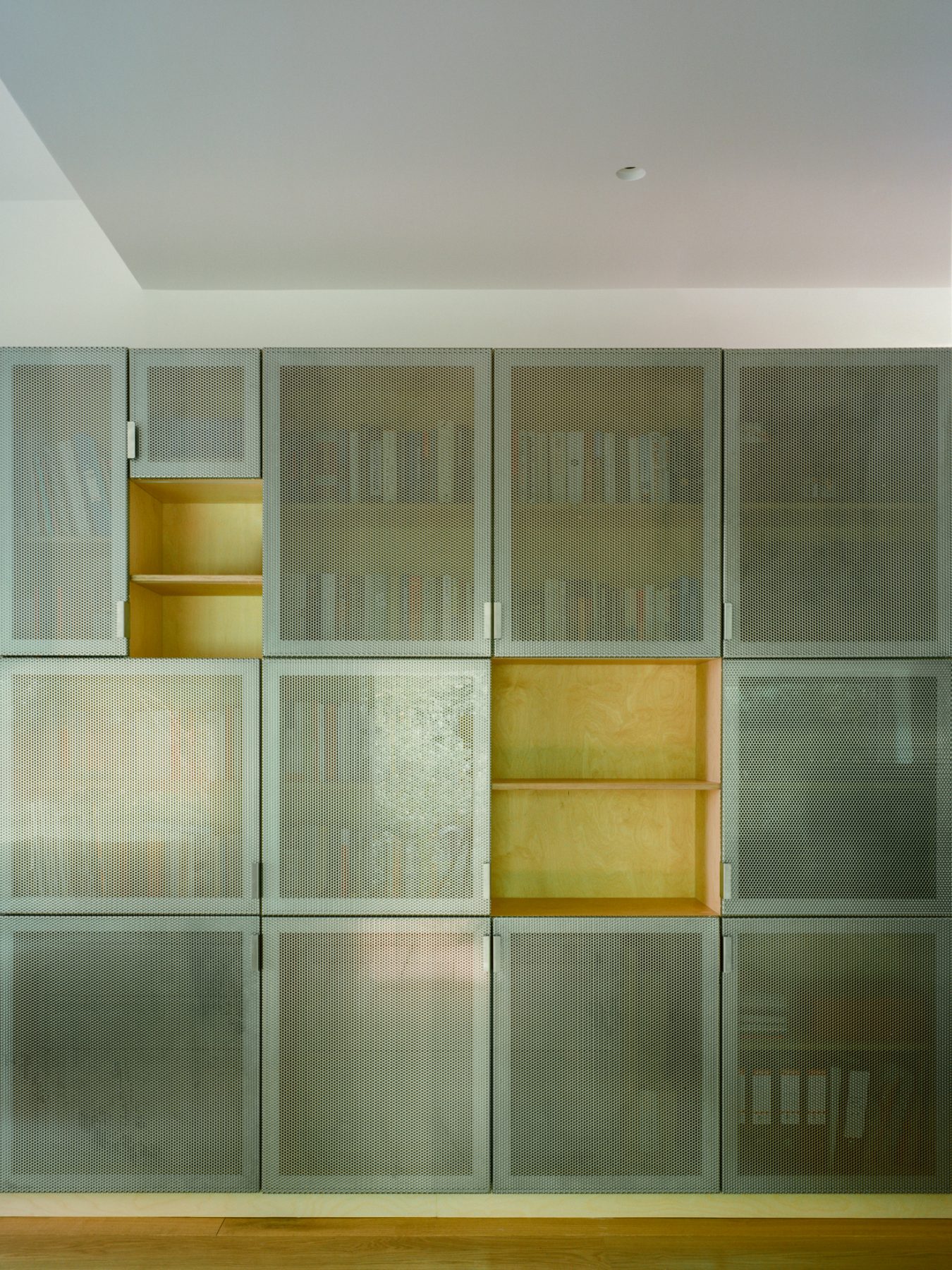
Despite the diversity of its contents, the cabinet presents a unified presence through a perforated stainless-steel screen that runs along its length. This surface modulates visibility—at times transparent, at others reflective or nearly opaque—responding dynamically to shifts in natural and artificial light. The cabinet thus operates simultaneously as a device of revelation and concealment, linking inside and outside through a single, continuous gesture.
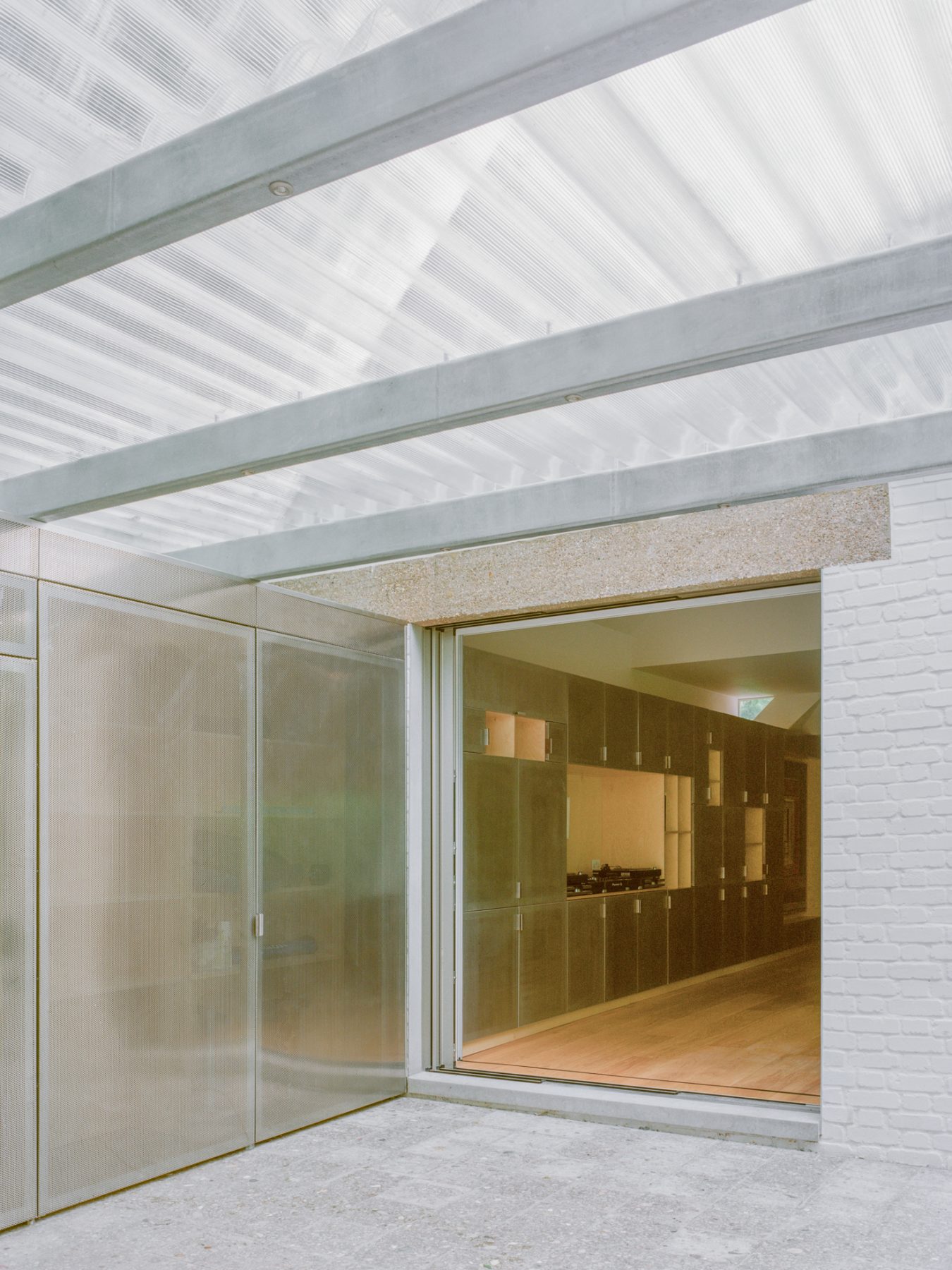
Crucially, the cabinet functions as both storage and structure. It not only contains the program but also supports the canopy above.
The project explores not simply the integration of cabinet and canopy, but the productive tension between them—holding the two in a state of calibrated imbalance. This approach draws inspiration from the work of Fischli & Weiss, particularly their photographic series of precariously balanced everyday objects, suspended in a moment of near-collapse. Their notion of provisional codependence informs the pavilion’s structural and conceptual logic.
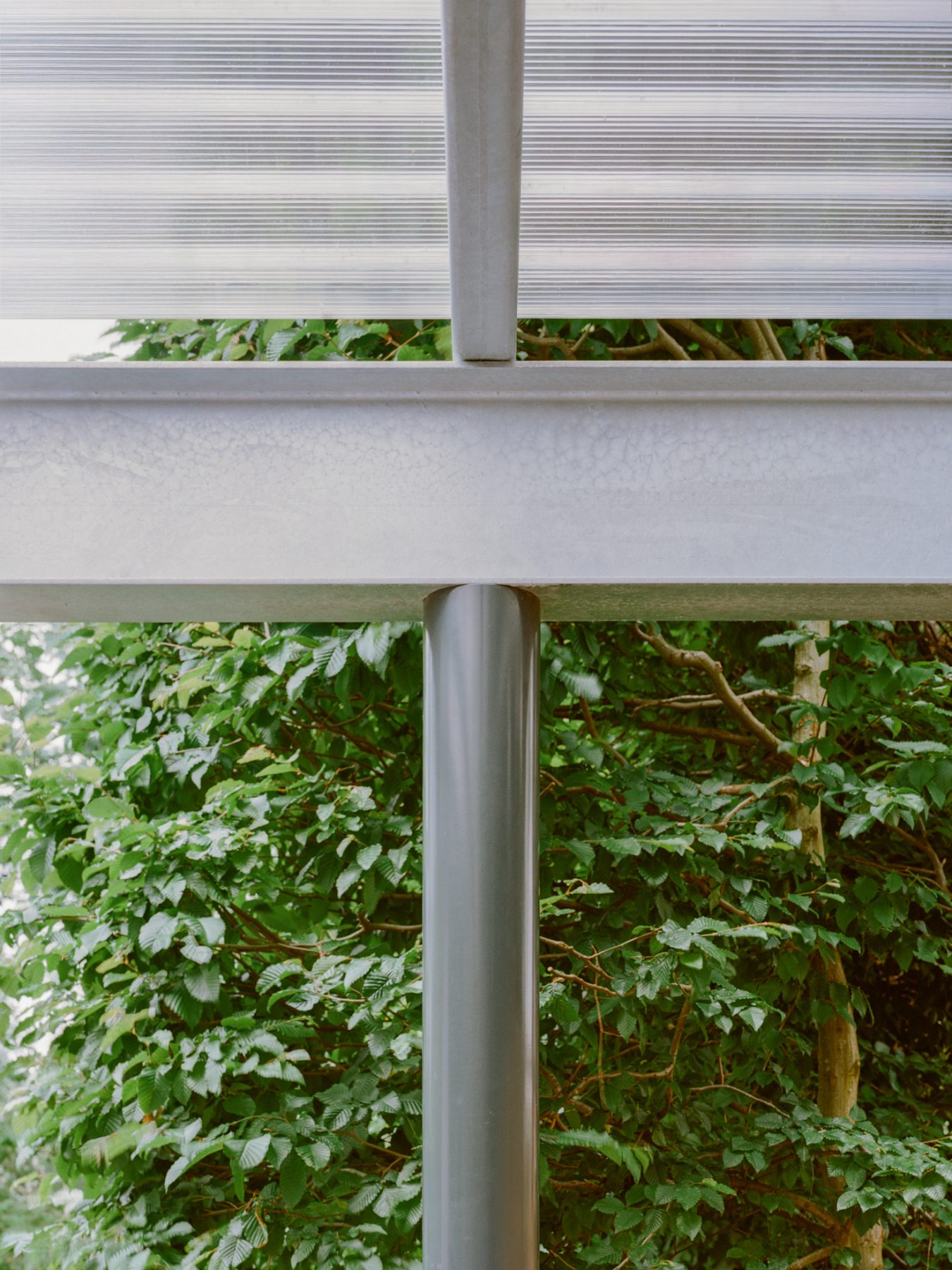
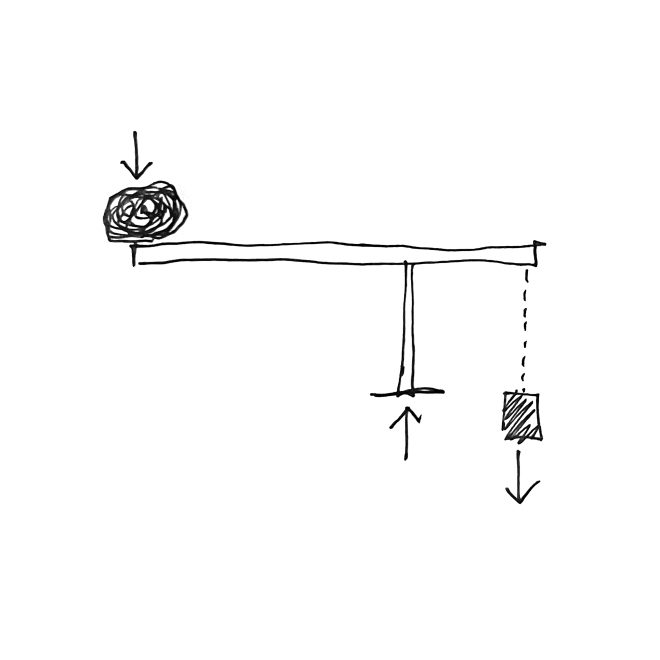
This idea is translated architecturally through a canopy that appears straightforward in form, yet reveals a non-intuitive structural logic.
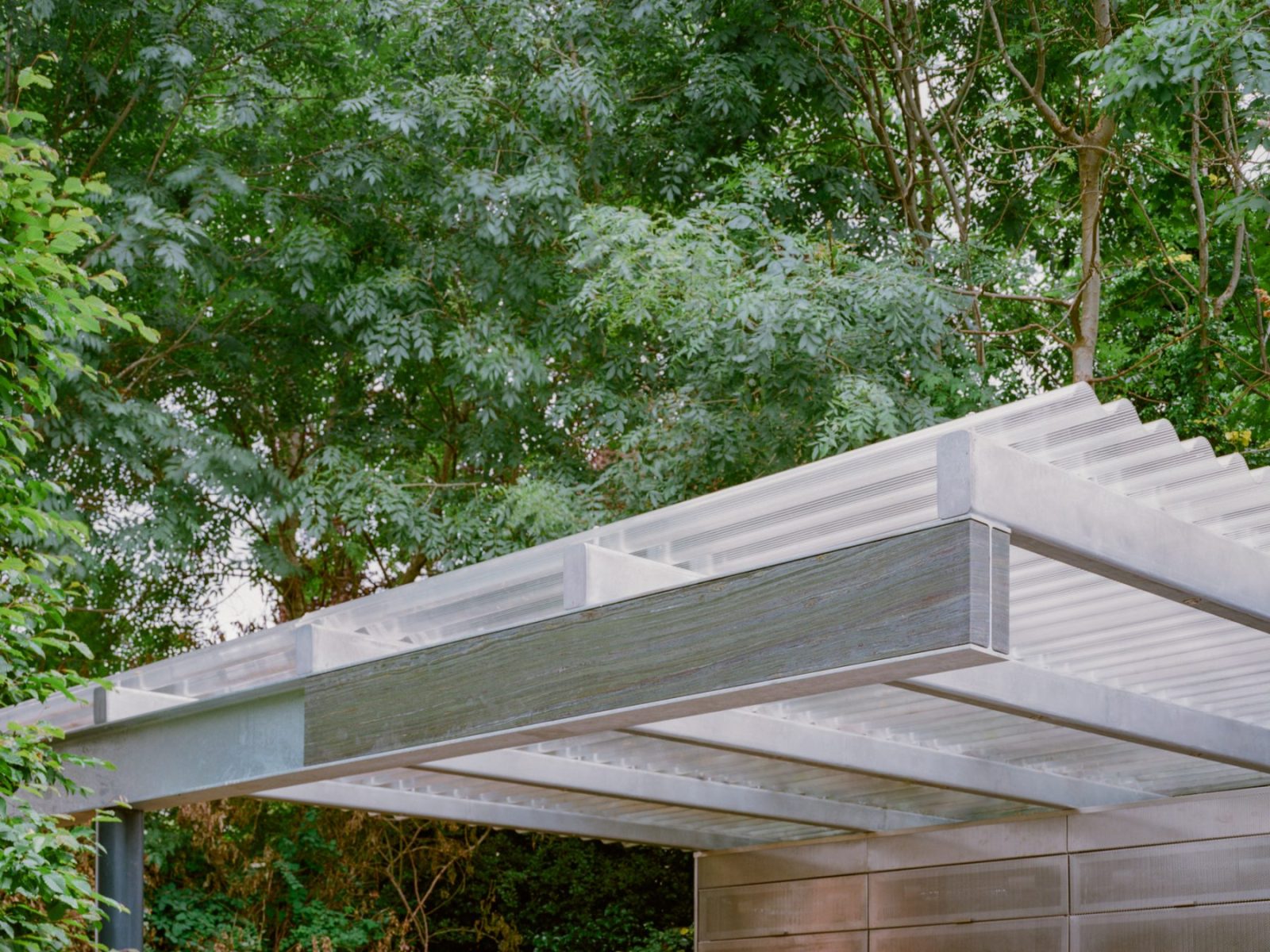
By omitting a column where support might typically be expected, a subtle sense of precarity is introduced.
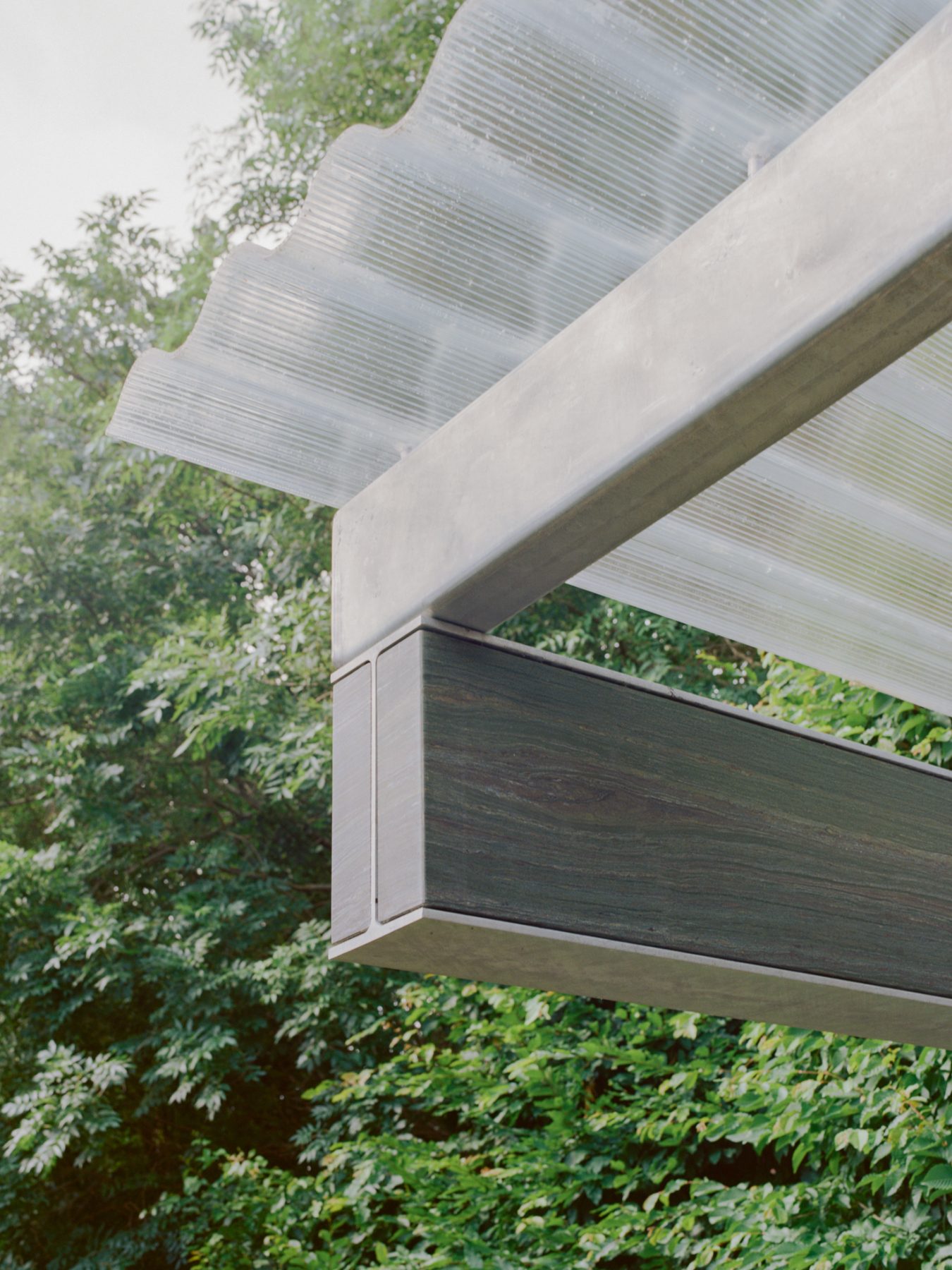
Stability is re-established through counterbalance, offering an alternative and legible expression of forces at play. The result is a composition that elevates the ordinary, amplifying the banal until it becomes quietly extraordinary.
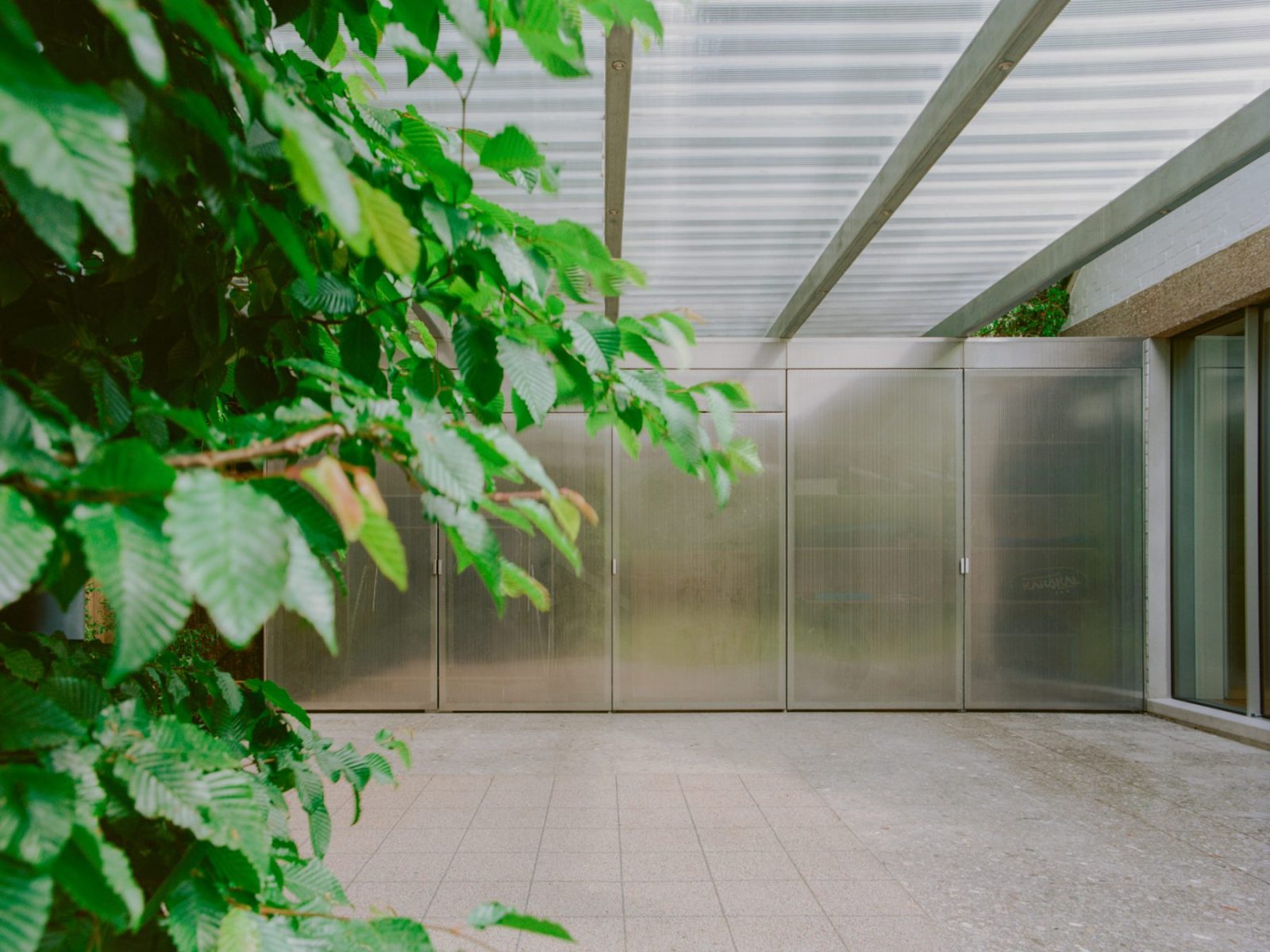
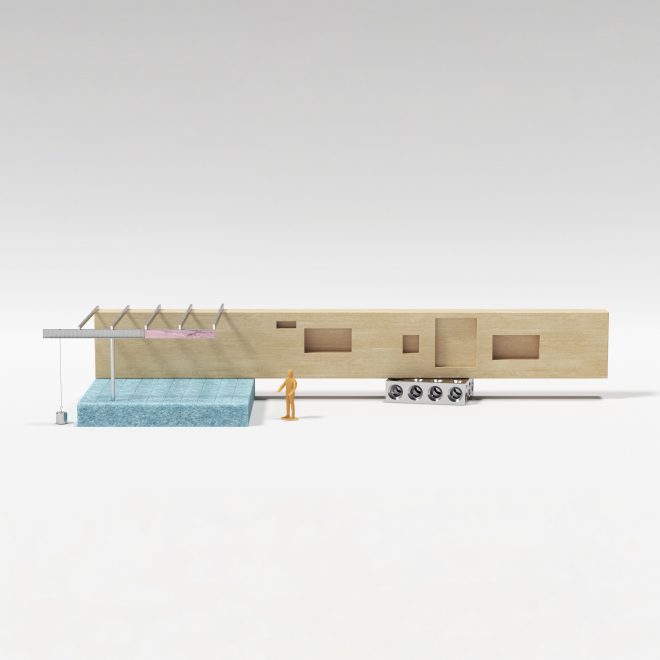
In its realized form, the counterweight takes shape as a solid mass of precision-milled marble, carefully nested within the web of a galvanized steel I-beam. Opposite, an exposed tension rod anchors the structure to a substantial concrete block set below ground, allowing the canopy to hover with an unexpected lightness.
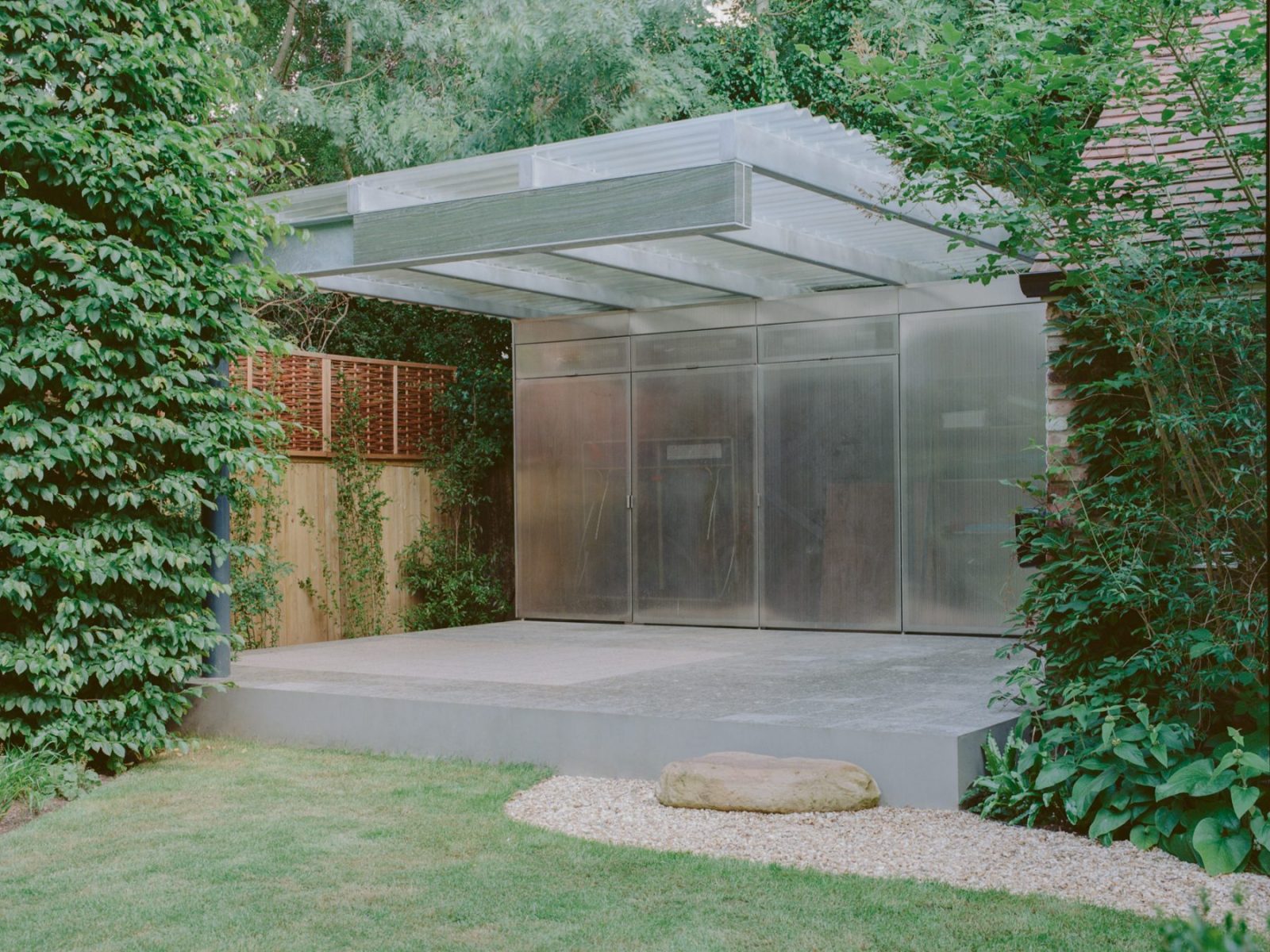
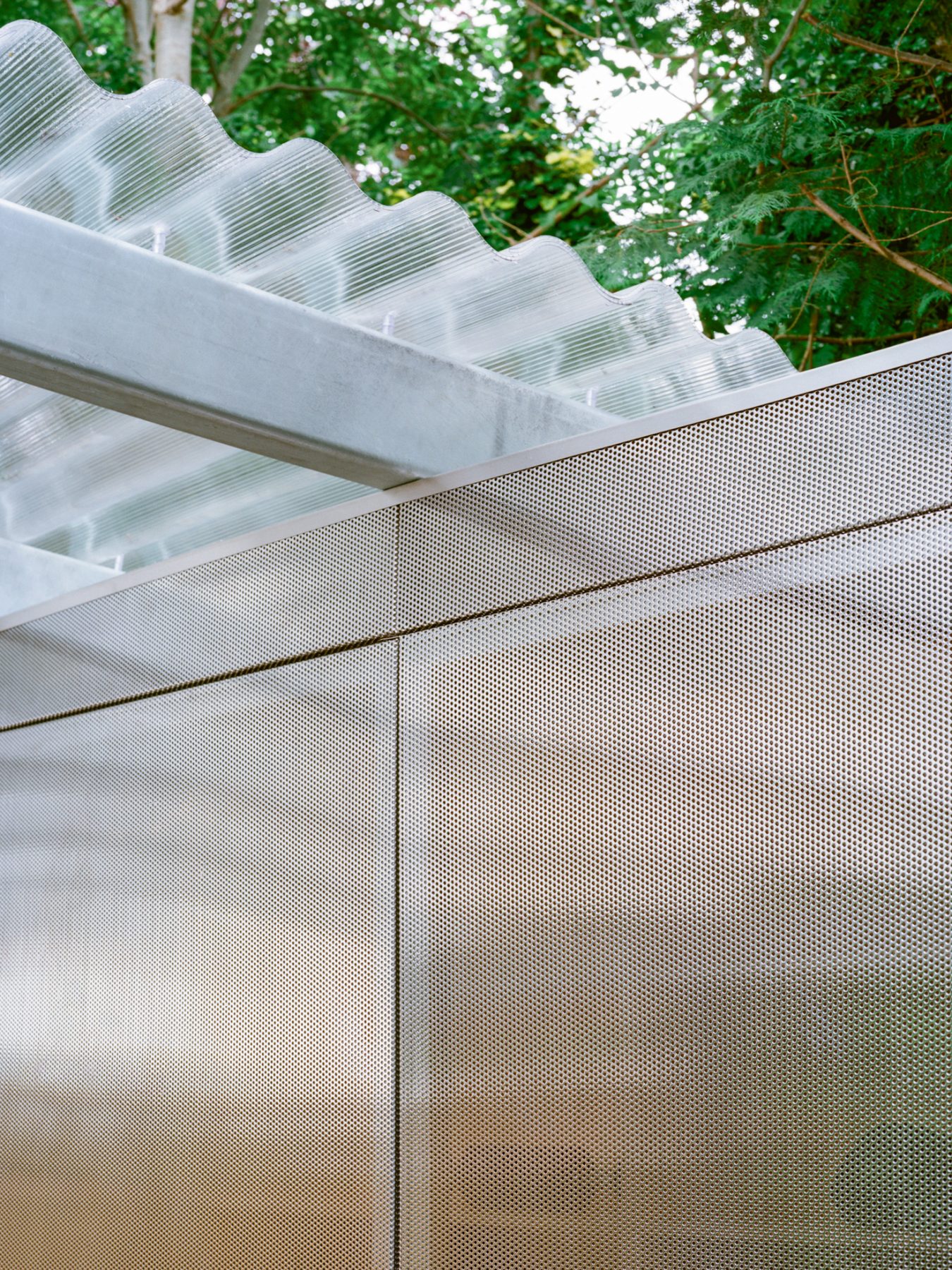
The cabinet itself is clad in stainless steel panels that simultaneously reflect the shifting garden and reveal glimpses of the collection within.
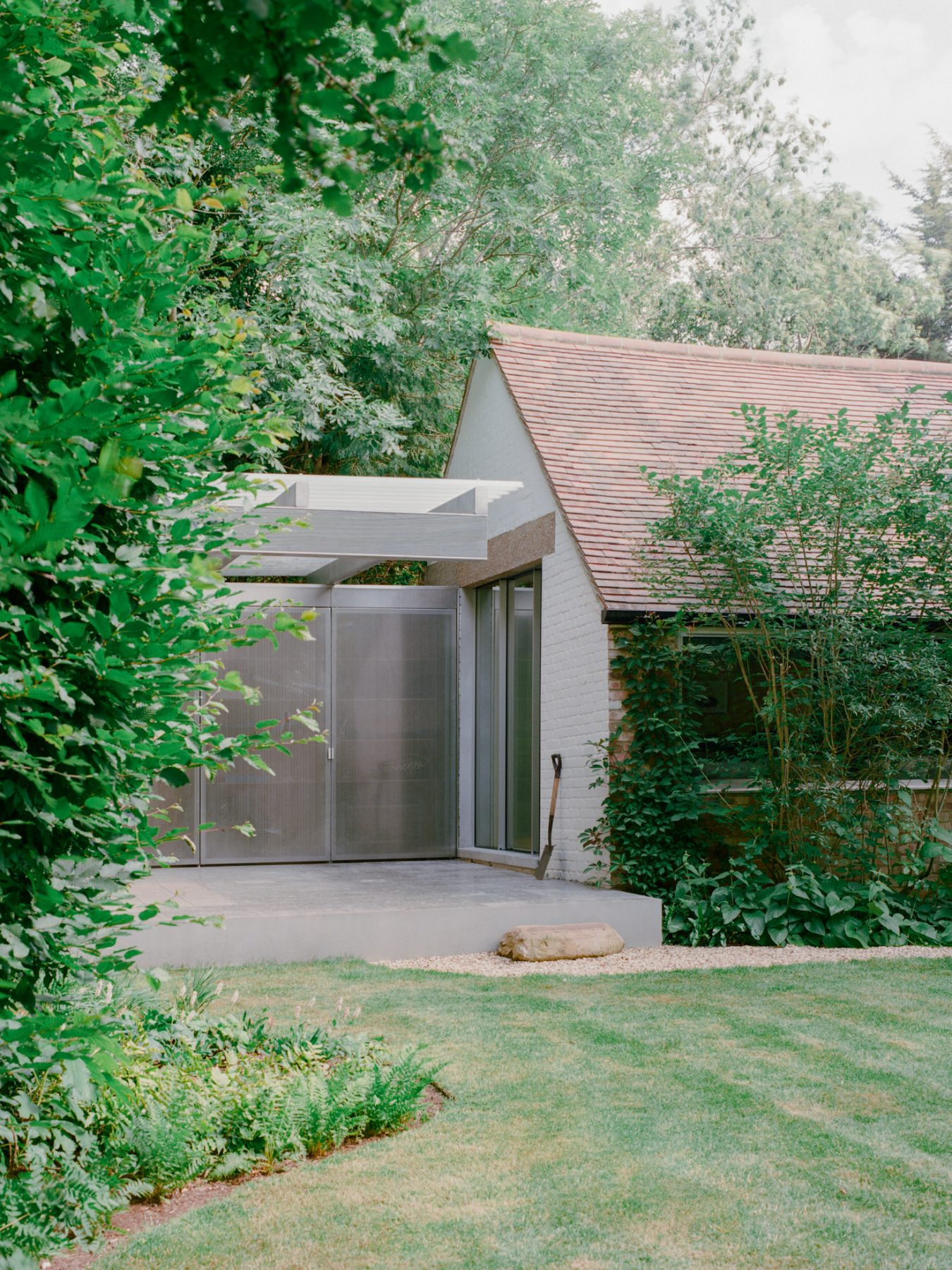
The canopy is composed as a stratified assembly of marble, steel, and polycarbonate—materials both raw and refined—stacked in clear, legible layers.
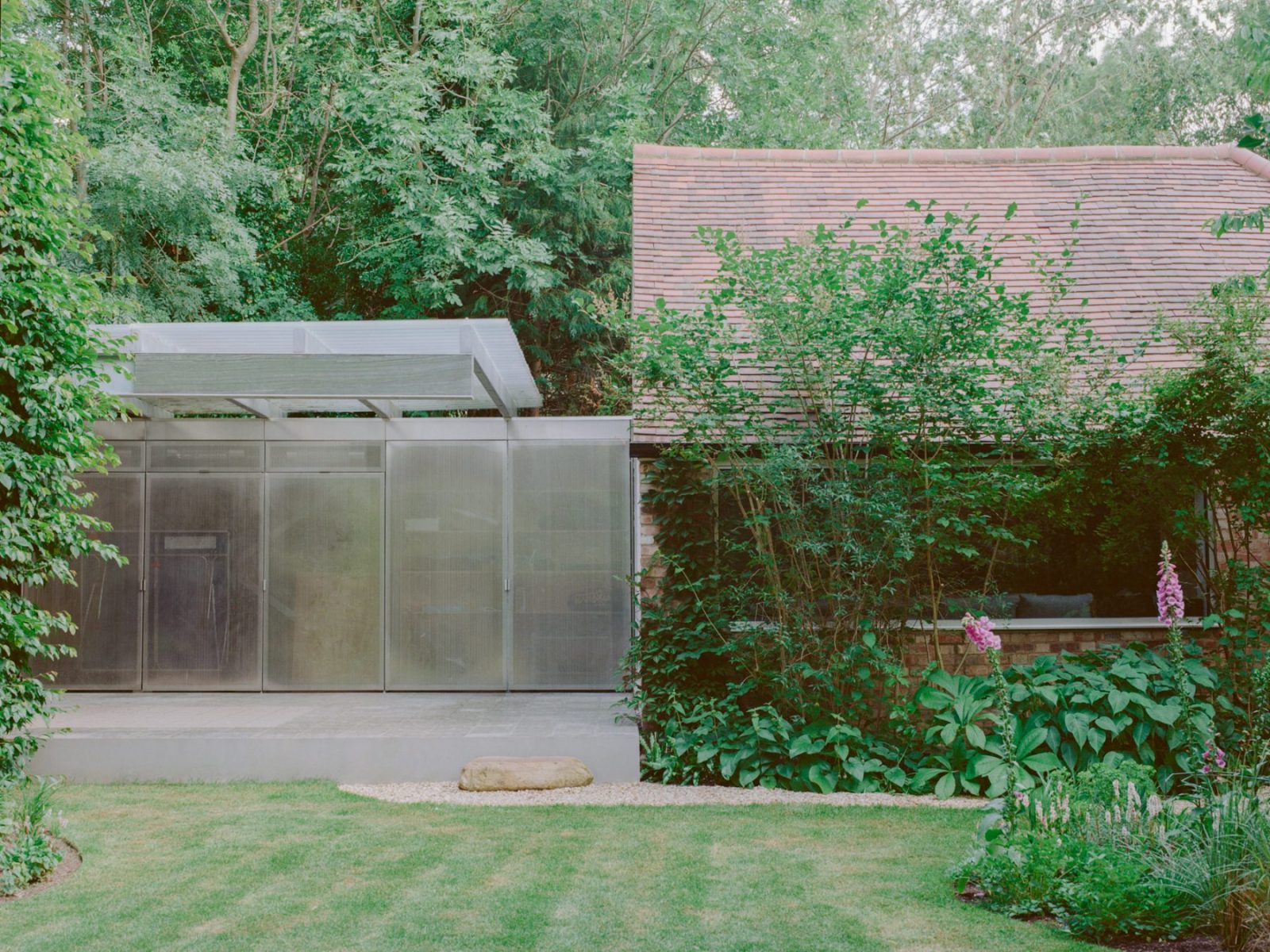
Extending the interior into the landscape, it draws the garden inward through reflection and translucency.
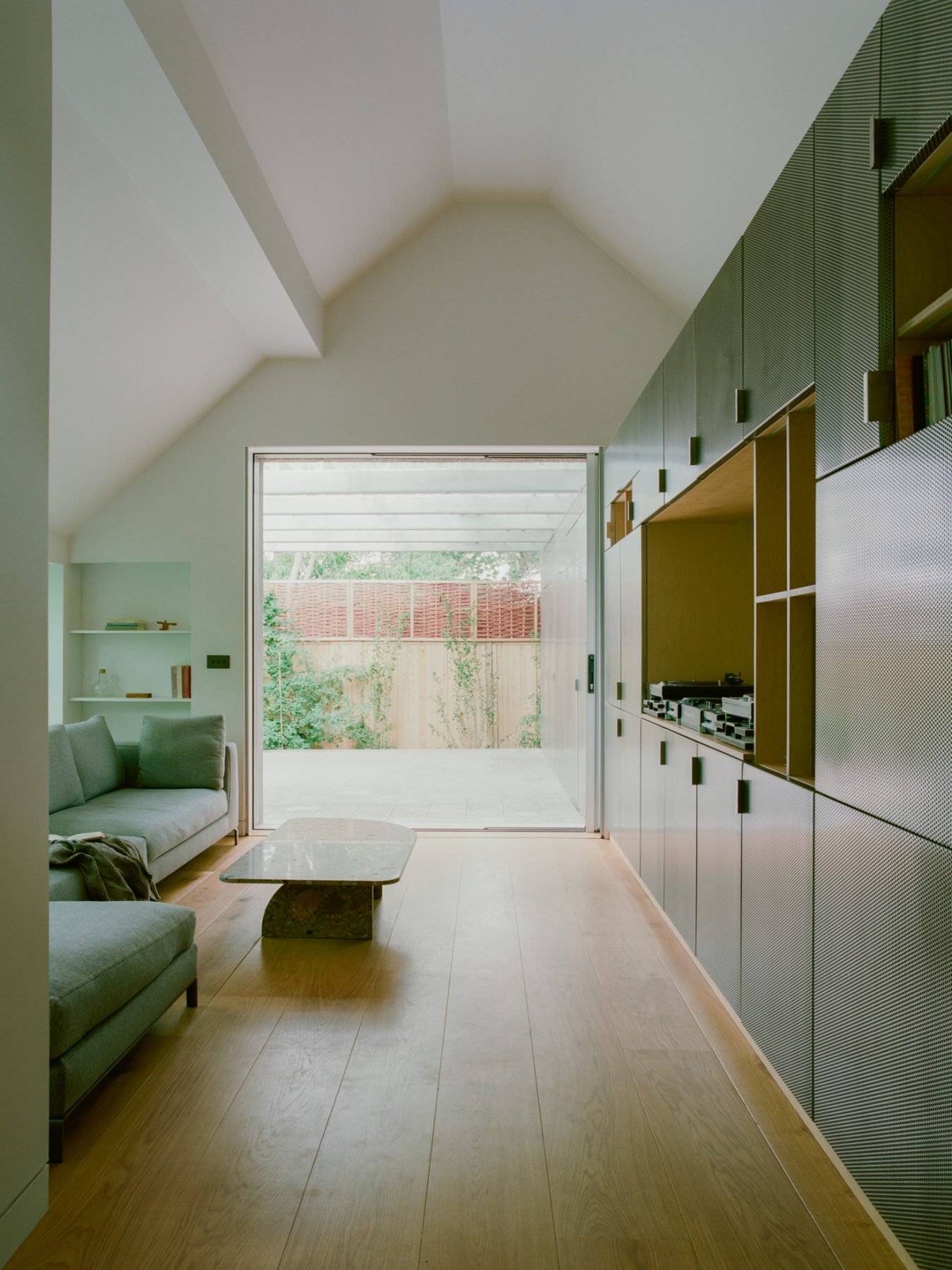
As light conditions shift and vegetation evolves over time, the pavilion becomes an instrument of observation: a site where structure, storage, and landscape remain in continuous, perceptible dialogue.
Plans & Models
Facts & Credits
Architecture: Neiheiser Argyros
Neiheiser Argyros Team: Ryan Neiheiser, Xristina Argyros, Nikolas von Schwabe, George Foufas, Stelios Gatsinos
Structural engineer: Constant
Contractor: Haydon Finch
Photography: Lorenzo Zandri, Neiheiser Argyros