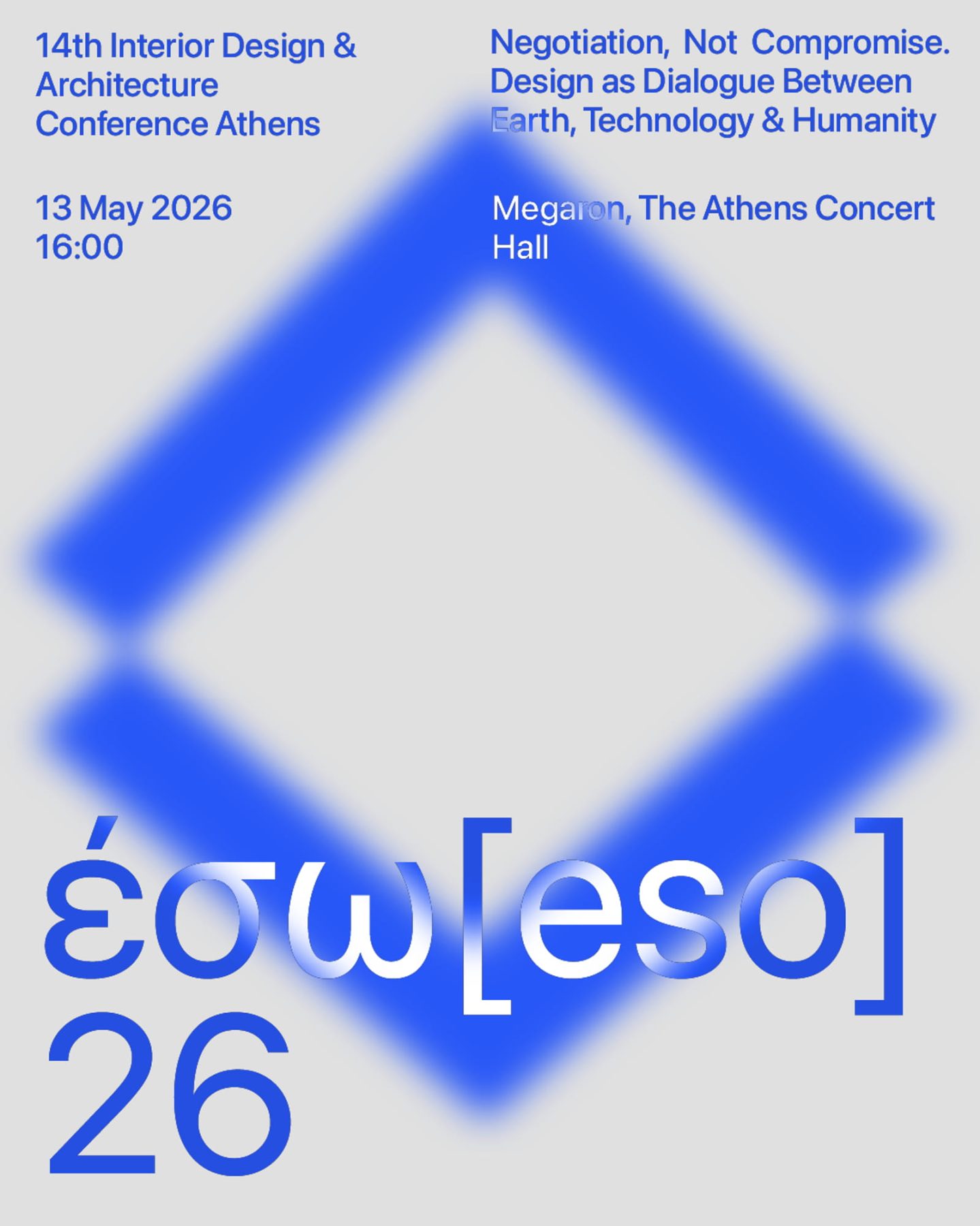
ESO Conference, the leading event for Design and Architecture, returns to the Athens Concert Hall on May 13, 2026, with the central theme: “Negotiation, Not Compromise. Design as Dialogue between Earth, Technology, and Humanity.”
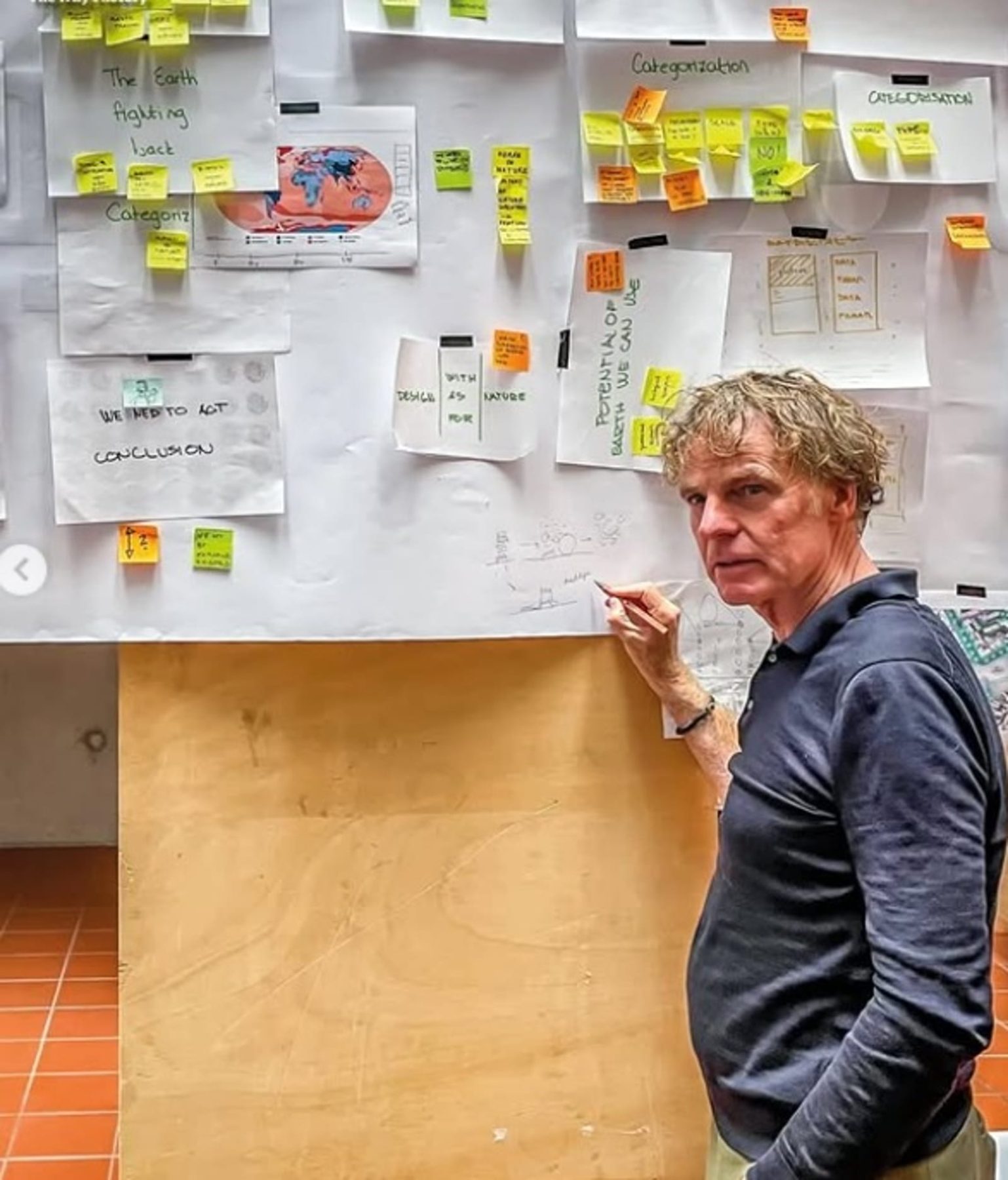
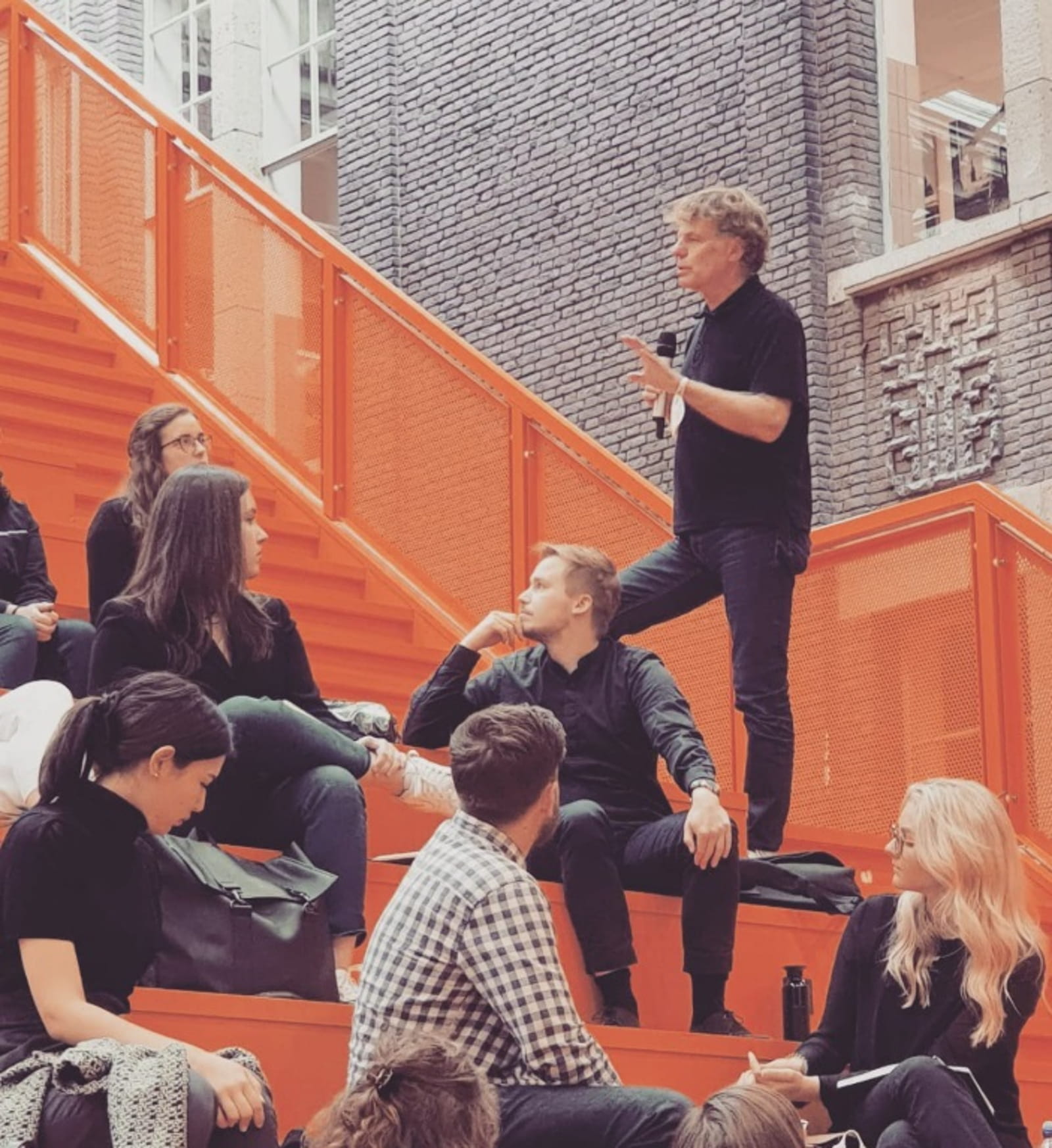
Winy Maas, Founding Partner and Principal Architect of MVRDV, participates as a speaker at this year’s ESO 2026. Across projects of different scales, MVRDV approach architecture as an active negotiation between technology and nature, and between social, spatial, and technical systems. Their work does not treat sustainability, innovation, or urban life as separate agendas, but as interdependent forces that must be carefully balanced through design. Maas’ commitment to green, user-defined, and sustainable cities positions architecture as a mediator between environmental responsibility and human experience.
From experimental buildings to large-scale masterplans, MVRDV’s projects explore how density, ecology, infrastructure, and public life can coexist productively. Technological solutions are not ends in themselves, but tools to support social interaction, accessibility, and new forms of collective space. At the same time, natural systems—light, landscape, climate, and greenery—are integrated as structuring elements of the built environment.
Book your tickets for ESO 2026, here!
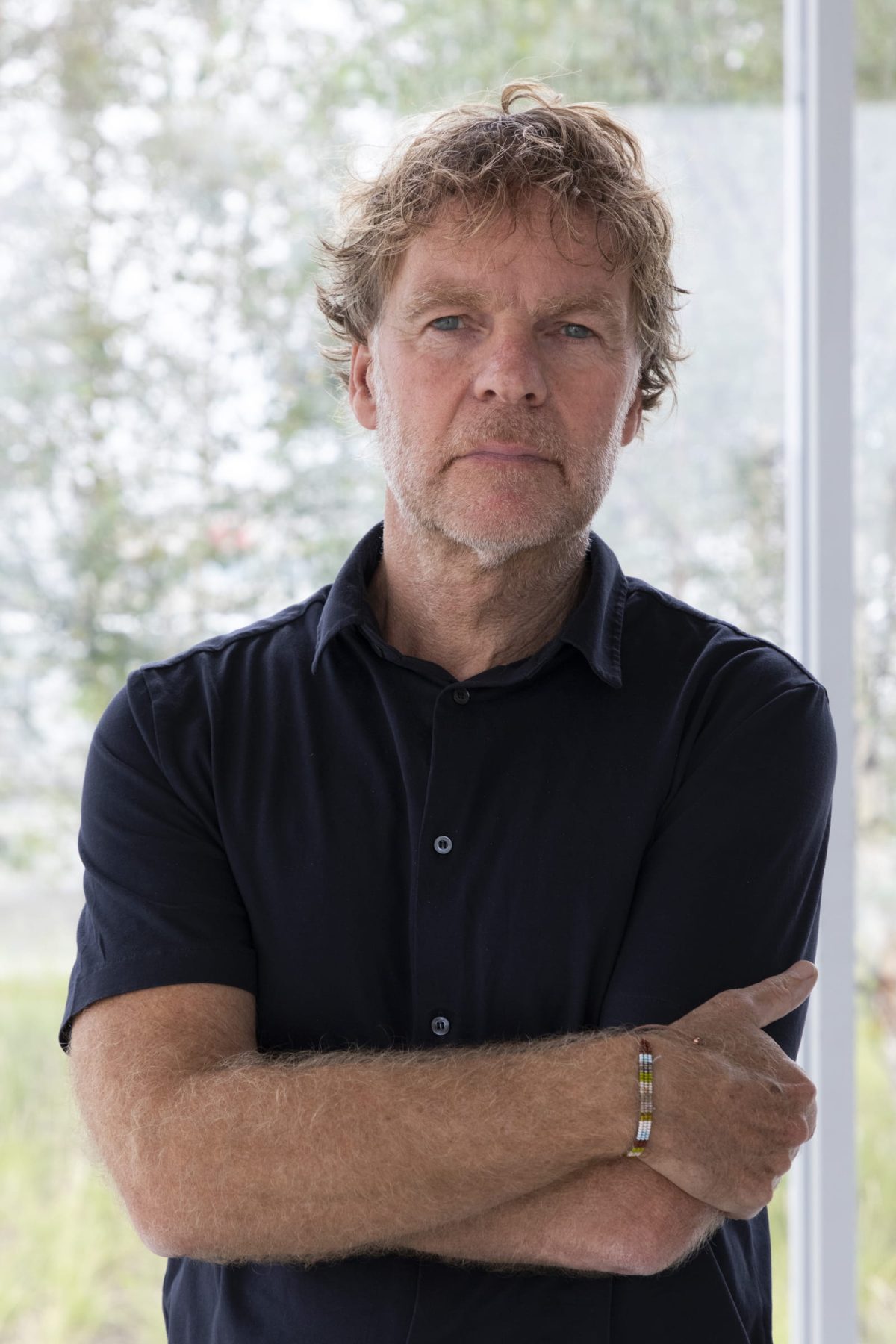
“I advocate denser, greener, more attractive and liveable cities, with an approach to design that centres around user-defined, innovative, and sustainable ideas for the built environment, regardless of typology or scale.” – Winy Maas
At ESO 2026, under the central theme “Negotiation, Not Compromise. Design as Dialogue – Between Earth, Technology, and Humanity,” architecture is approached not as a fixed solution, but as a living process of mediation between complex, and often conflicting, forces. This understanding aligns closely with the work and thinking of Winy Maas, founding partner and principal architect of MVRDV, whose career has been defined by exploring how design can actively negotiate density, sustainability, technology, and human experience.
Maas’ projects consistently operate in the space between opposites.
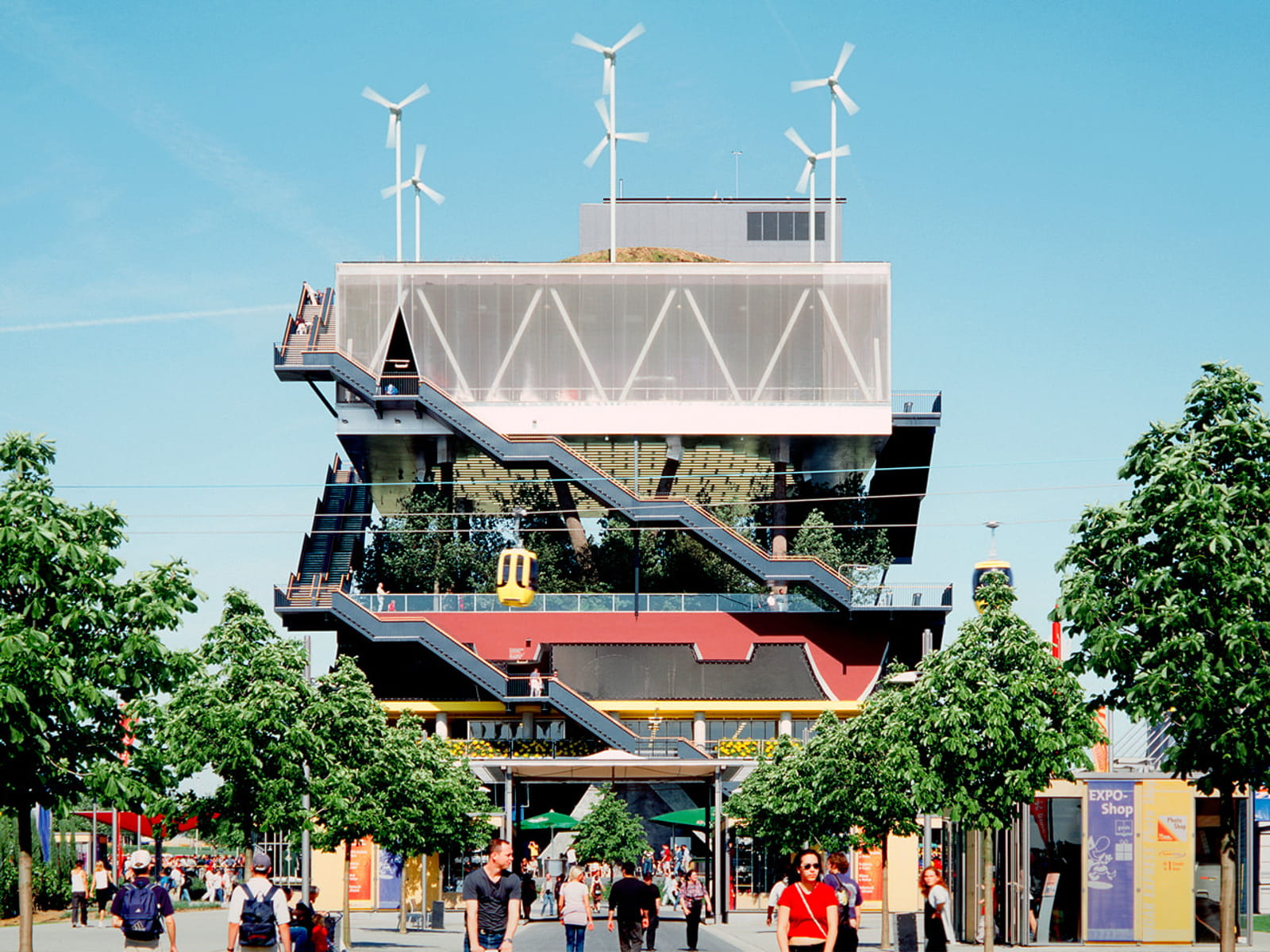
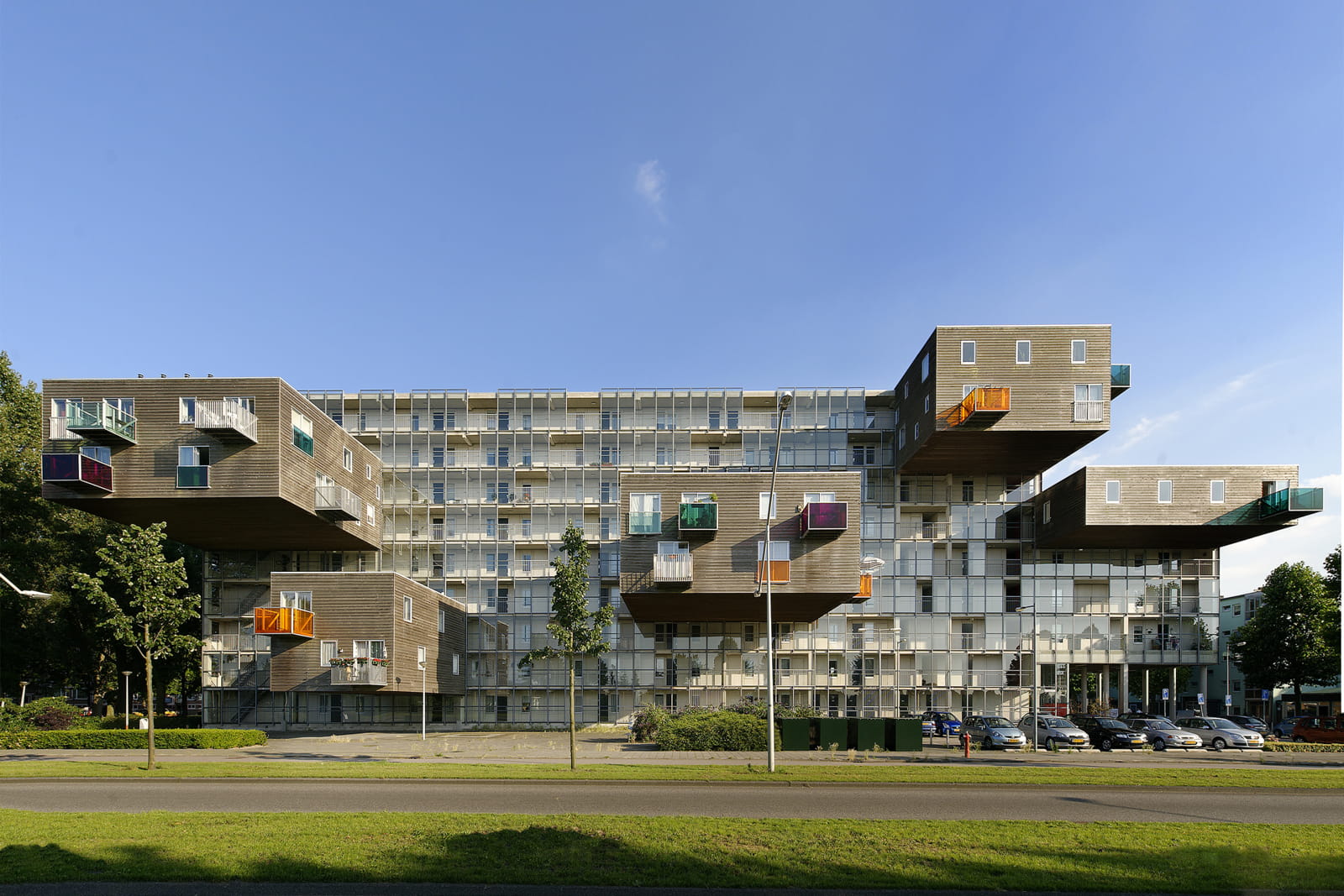
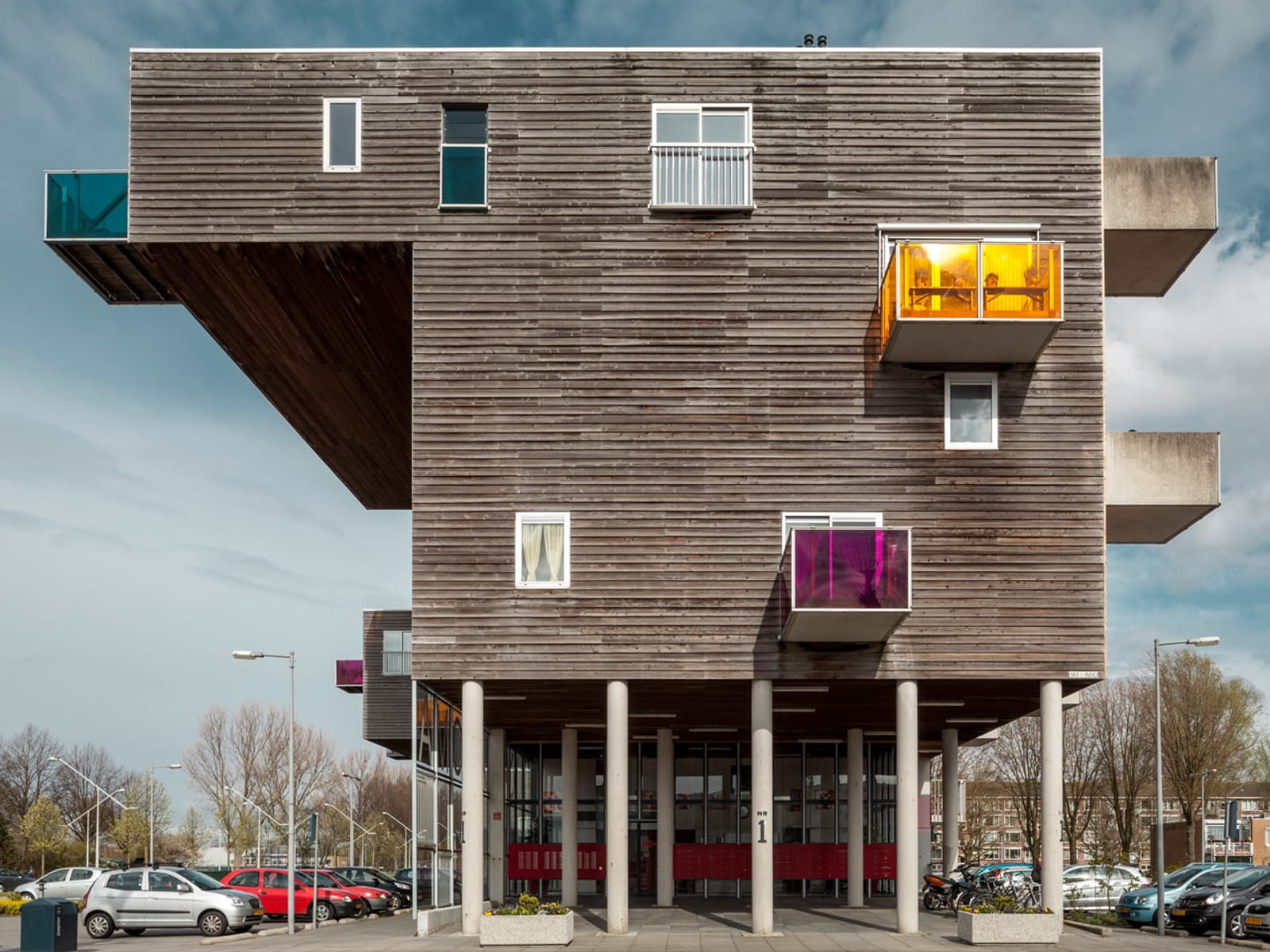
Works such as the Dutch Pavilion at Expo 2000 proposed a vertical stacking of landscapes, reframing the relationship between nature and construction. Villa VPRO reimagined the office as a fluid, topographical environment, dissolving rigid hierarchies between workspaces. Housing projects like WoZoCo negotiated strict urban and regulatory constraints through radical structural invention, while Markthal in Rotterdam merged living, commerce, and public life into a single civic gesture. In Crystal Houses, traditional material language meets cutting-edge glass technology; in the Tianjin Binhai Library, digital imagination and public space converge in a new cultural interior landscape. More recently, projects such as Valley in Amsterdam and the Radio Hotel and Tower in New York address high-density urban living as an interplay between architecture, greenery, and social interaction, while Depot Boijmans Van Beuningen redefines the boundary between preservation, accessibility, and public engagement.
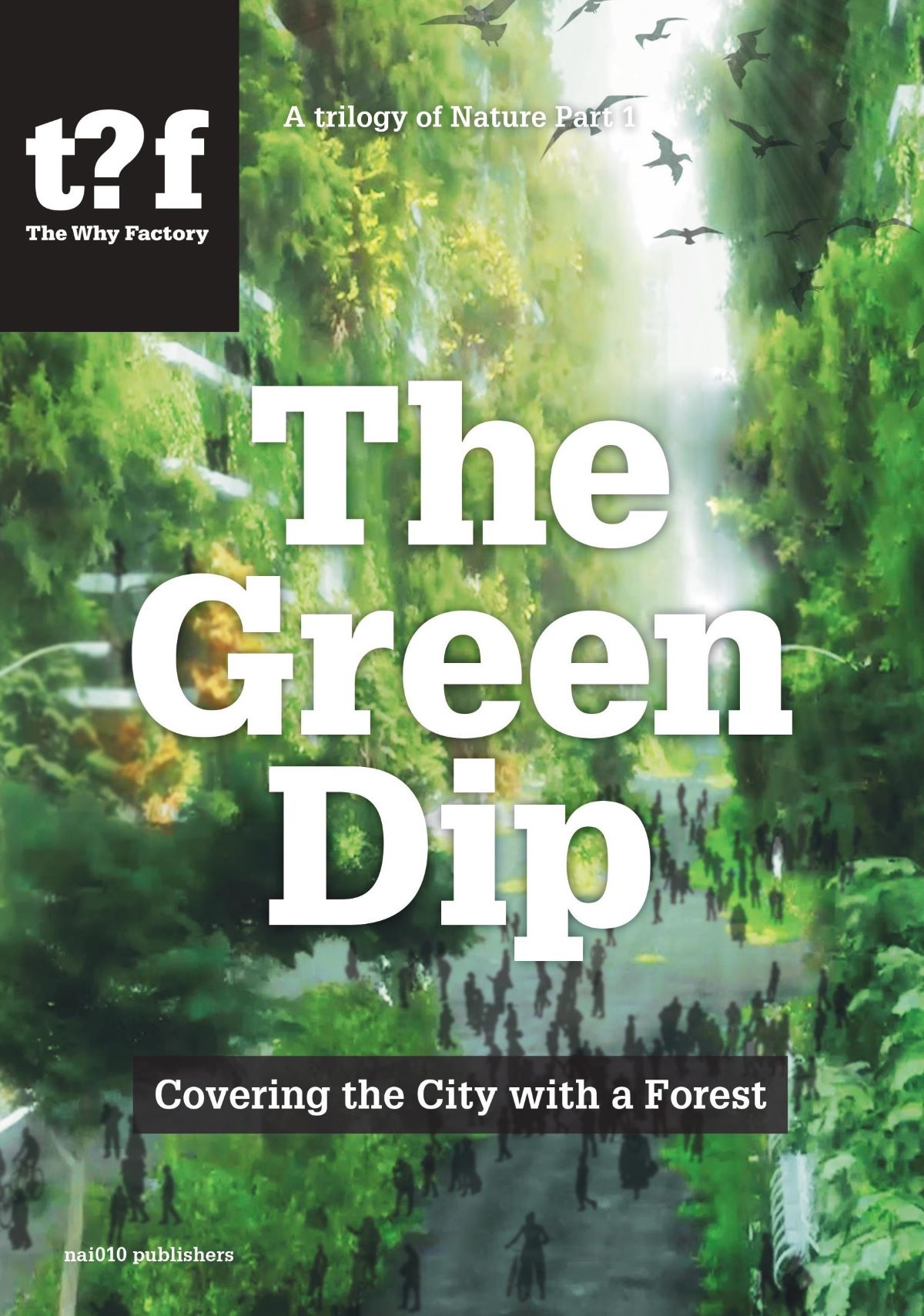
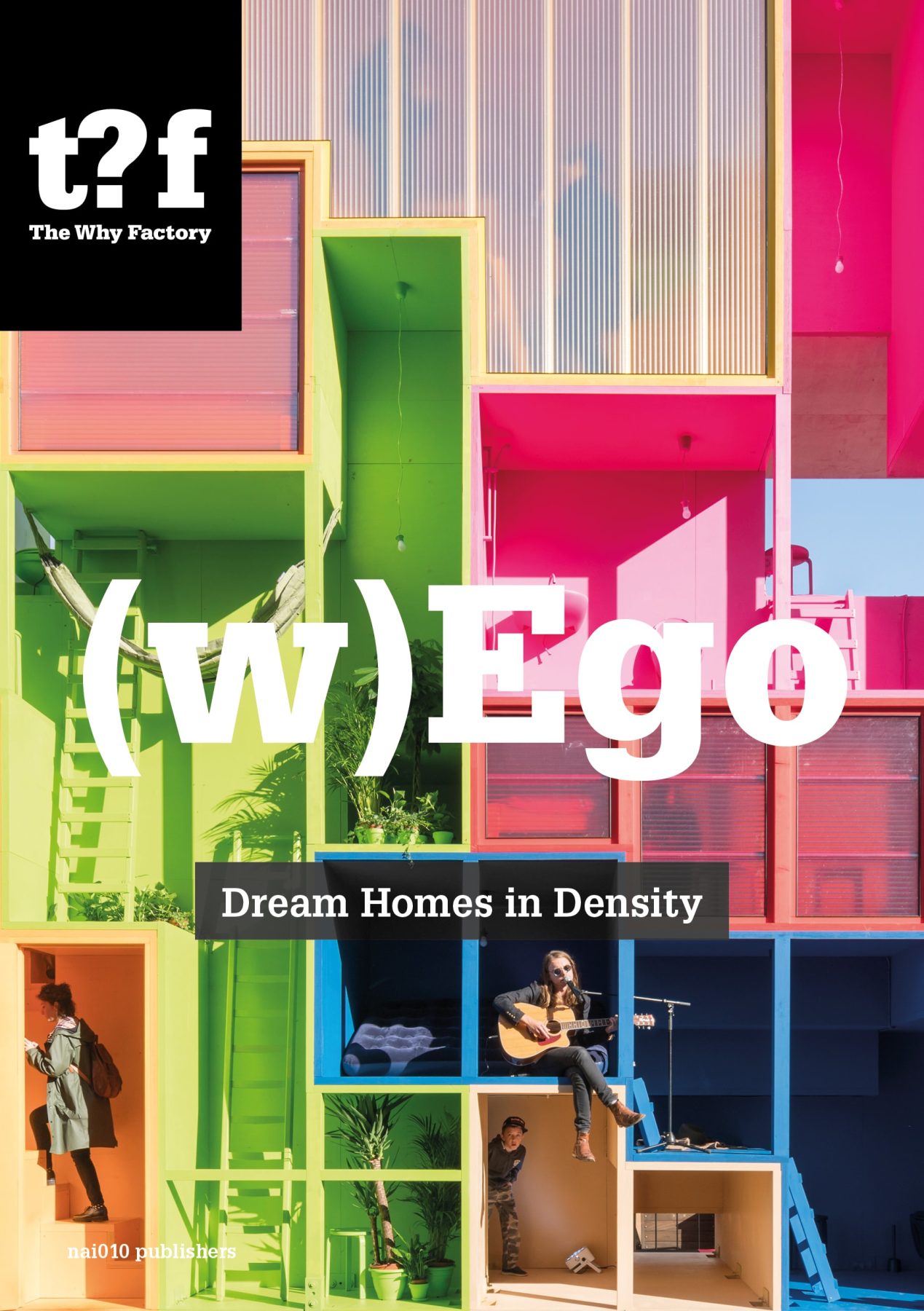
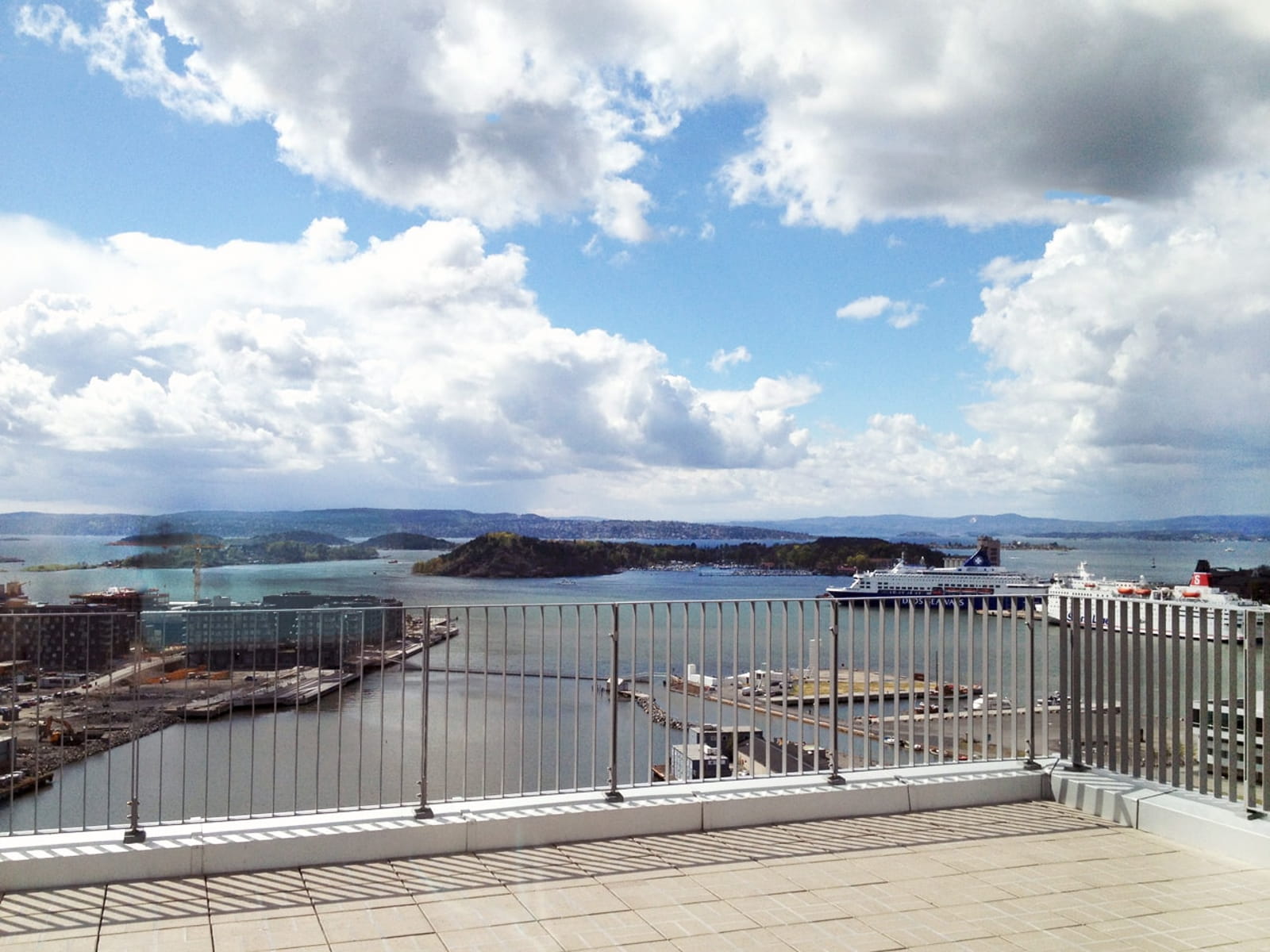
Beyond individual buildings, Maas’ large-scale masterplans — including visions for Greater Paris, Bordeaux’s Left Bank, and Oslo’s waterfront — extend this logic to the metropolitan scale, where ecological systems, infrastructure, economy, and everyday life must be balanced. His leadership of The Why Factory at TU Delft further reinforces this position, fostering speculative research that challenges existing standards and imagines alternative futures for cities shaped by environmental urgency, technological change, and evolving social patterns.
Winy Maas’ participation in ESO 2026 therefore reflects the conference’s core proposition: that architecture today is not the art of compromise, but the practice of continuous negotiation. His work demonstrates how design can function as a dynamic dialogue — between earth and built form, innovation and tradition, human needs and planetary limits — making his contribution especially resonant with the intellectual, social, and environmental questions ESO seeks to foreground.
WORKS
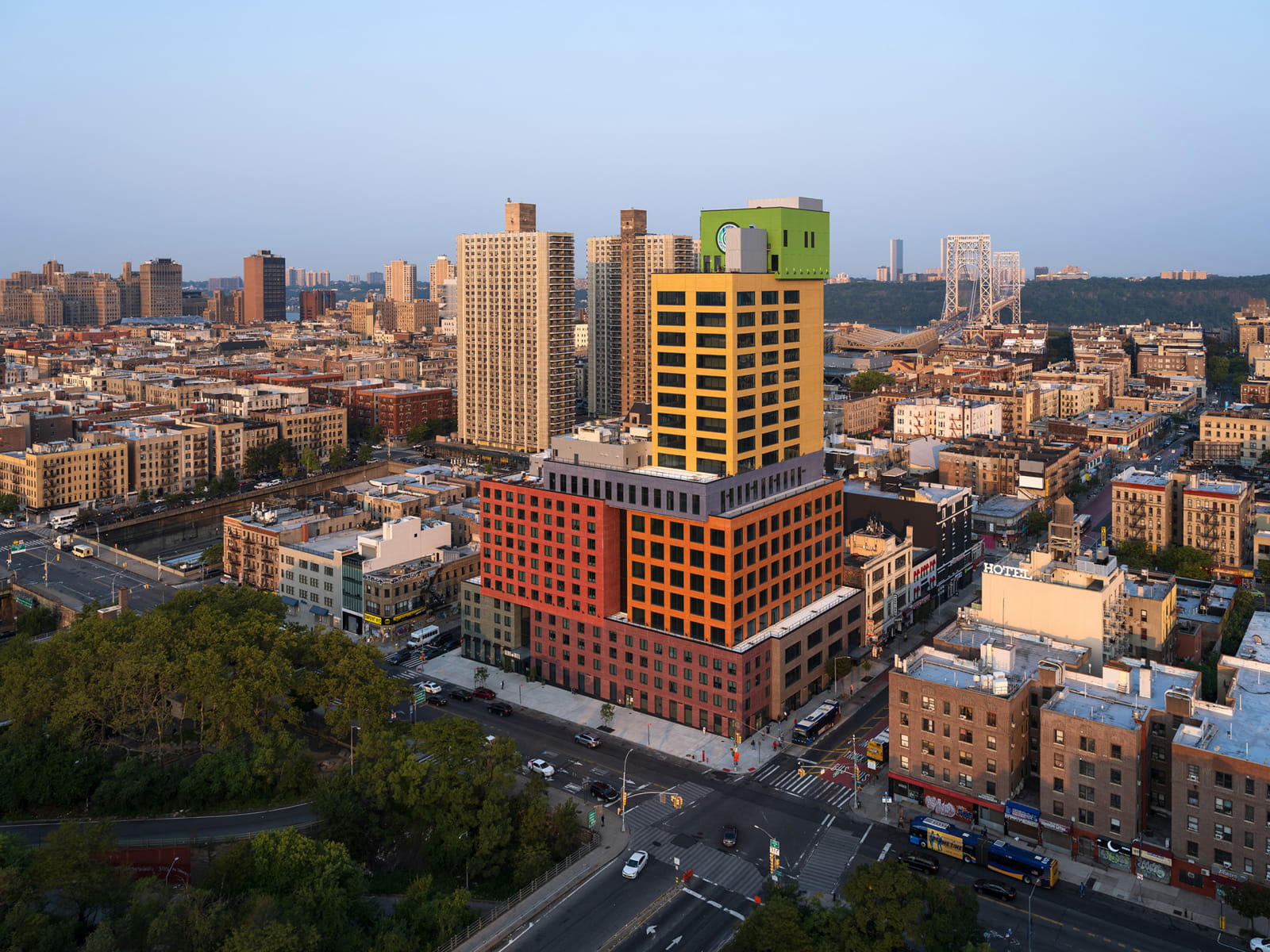
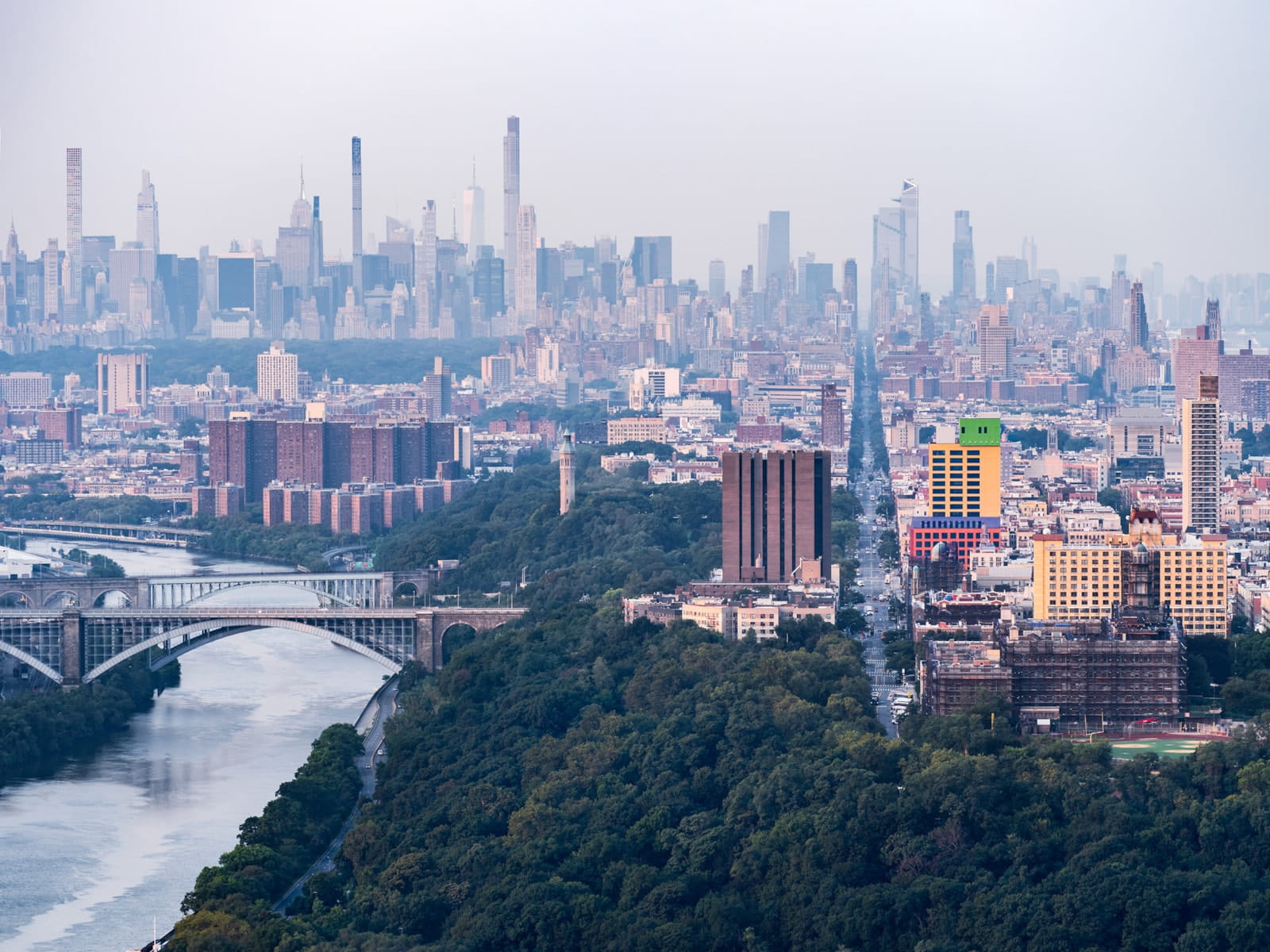
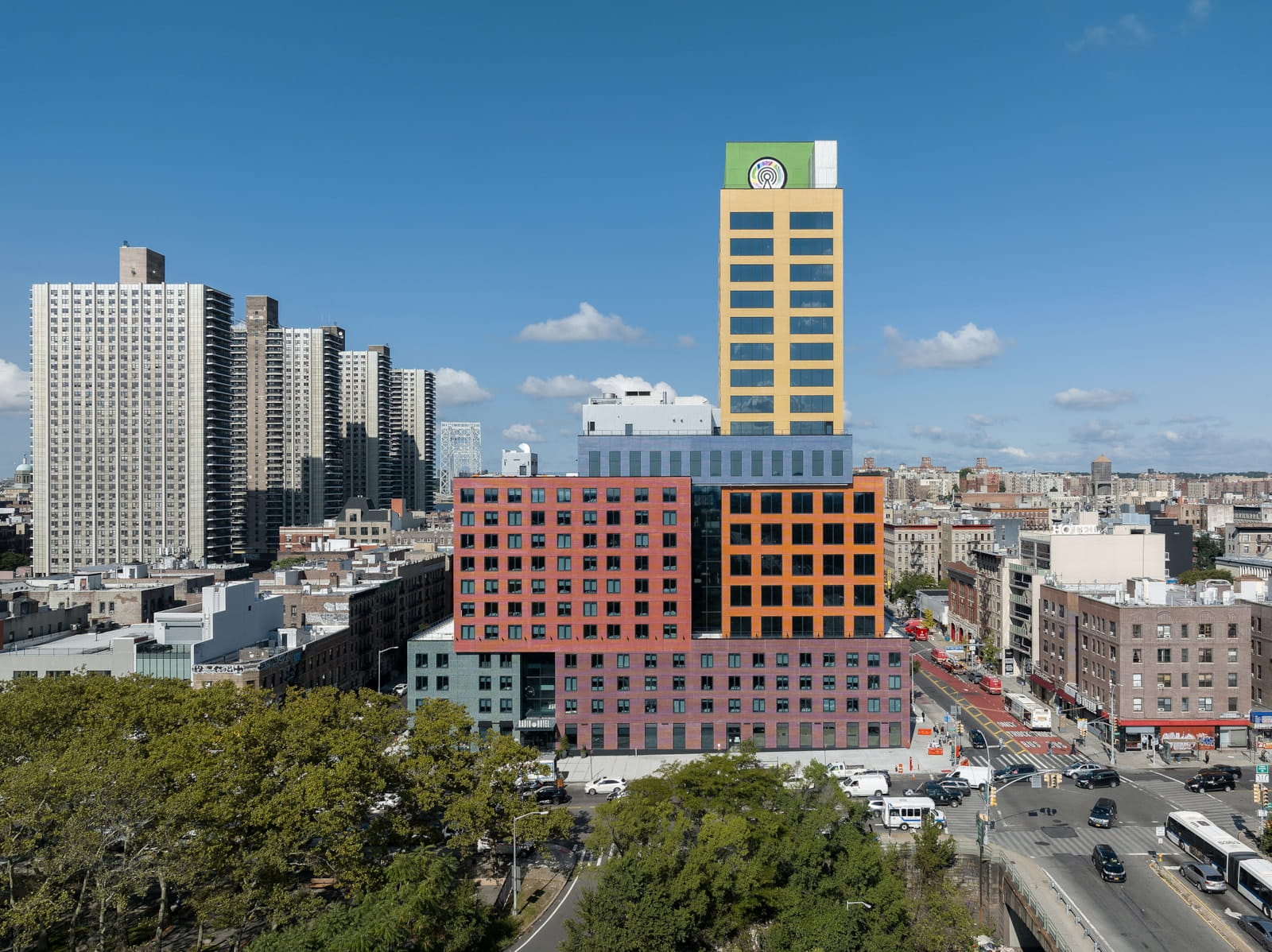
New York’s Radio Hotel and Tower (2022)
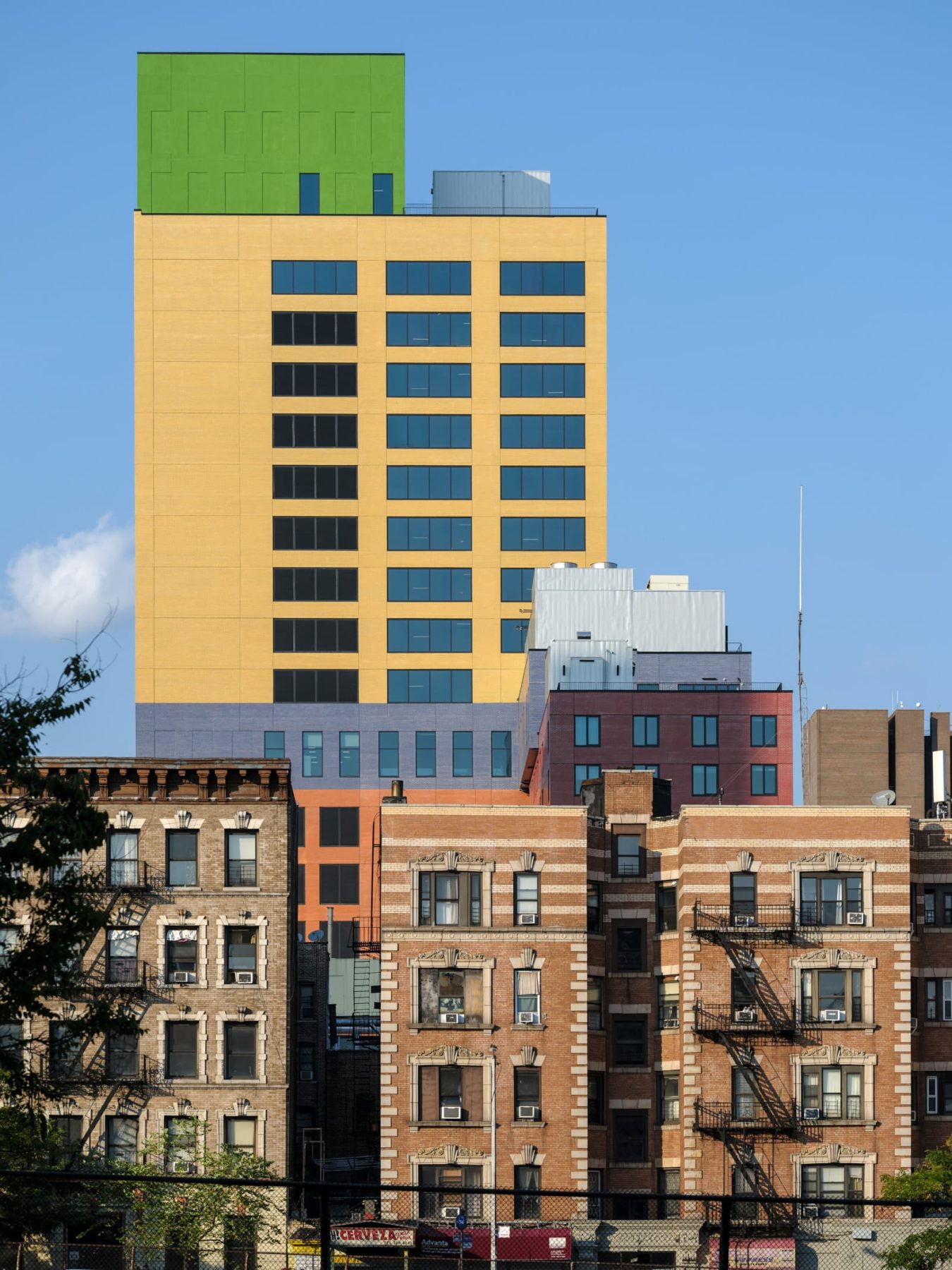
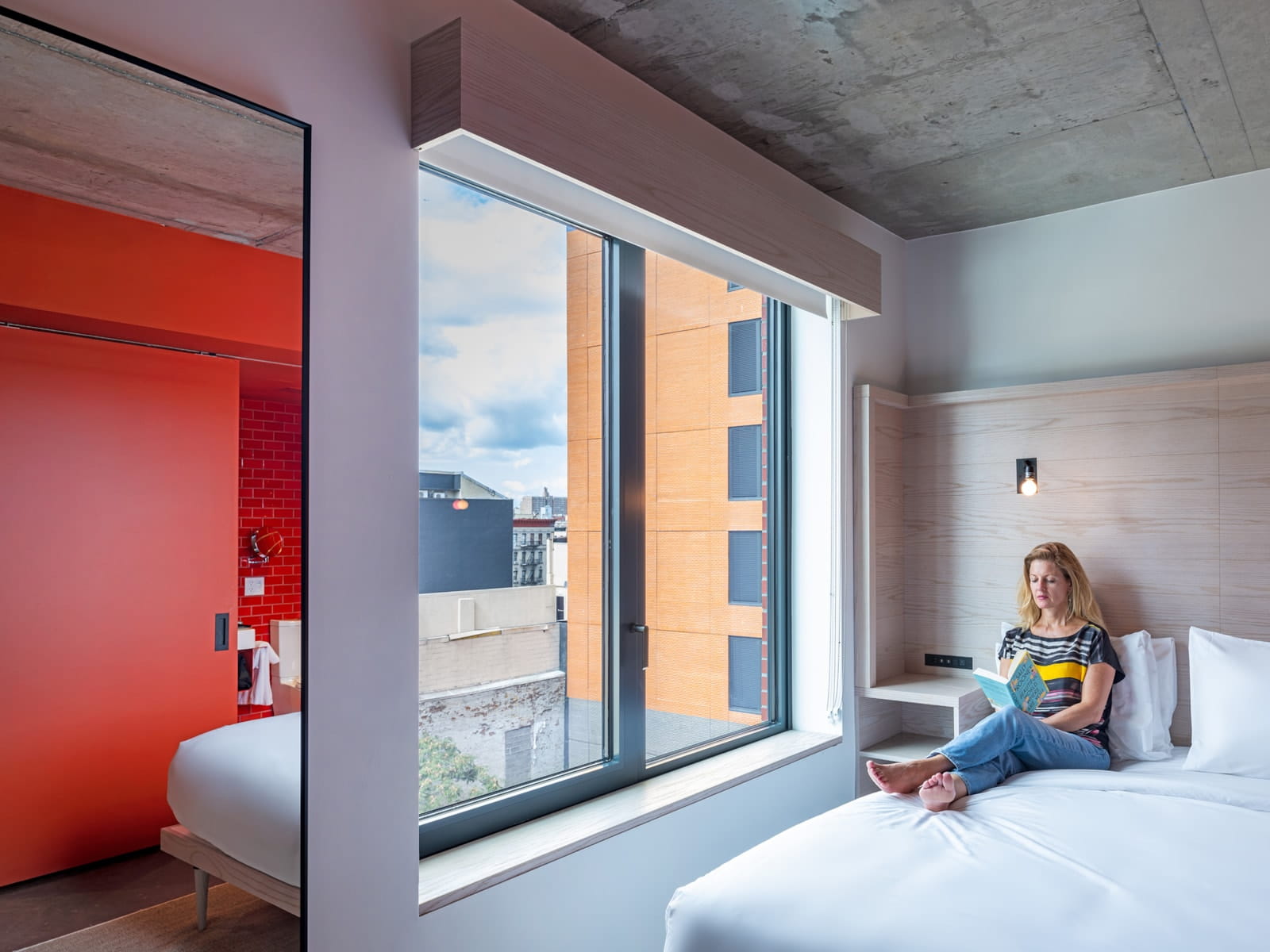
Radio Hotel and Tower is MVRDV’s first completed building in the United States, located in Upper Manhattan, New York. The design responds to its context through a distinctive stack of block-sized forms clad in eight different colours of glazed brick, creating what the architects describe as a vertical village that respects the scale of the neighbouring buildings while adding a bold presence to the skyline.
The mixed-use project incorporates a hotel, offices, and hospitality spaces, filling a gap in amenities previously missing in the neighbourhood. Its stacked configuration not only reduces visual bulk but also creates numerous outdoor terraces, with each block offering roof space on the block below.
The vibrant palette nods to the local area’s colourful storefronts, blending subdued tones at street level with brighter hues above. This thoughtful approach makes the building both a community anchor and a local landmark.
Amsterdam’s Valley (2022)
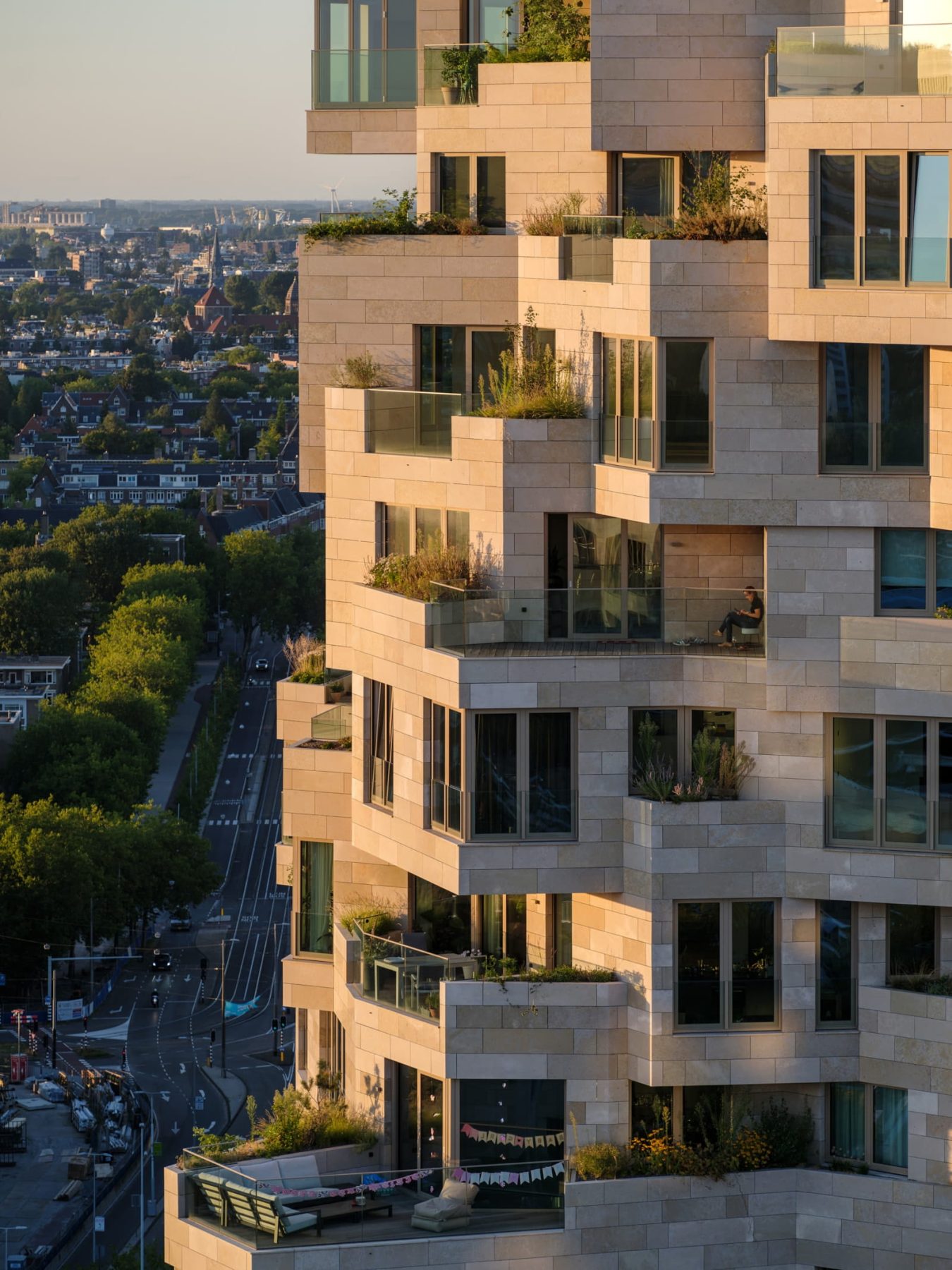
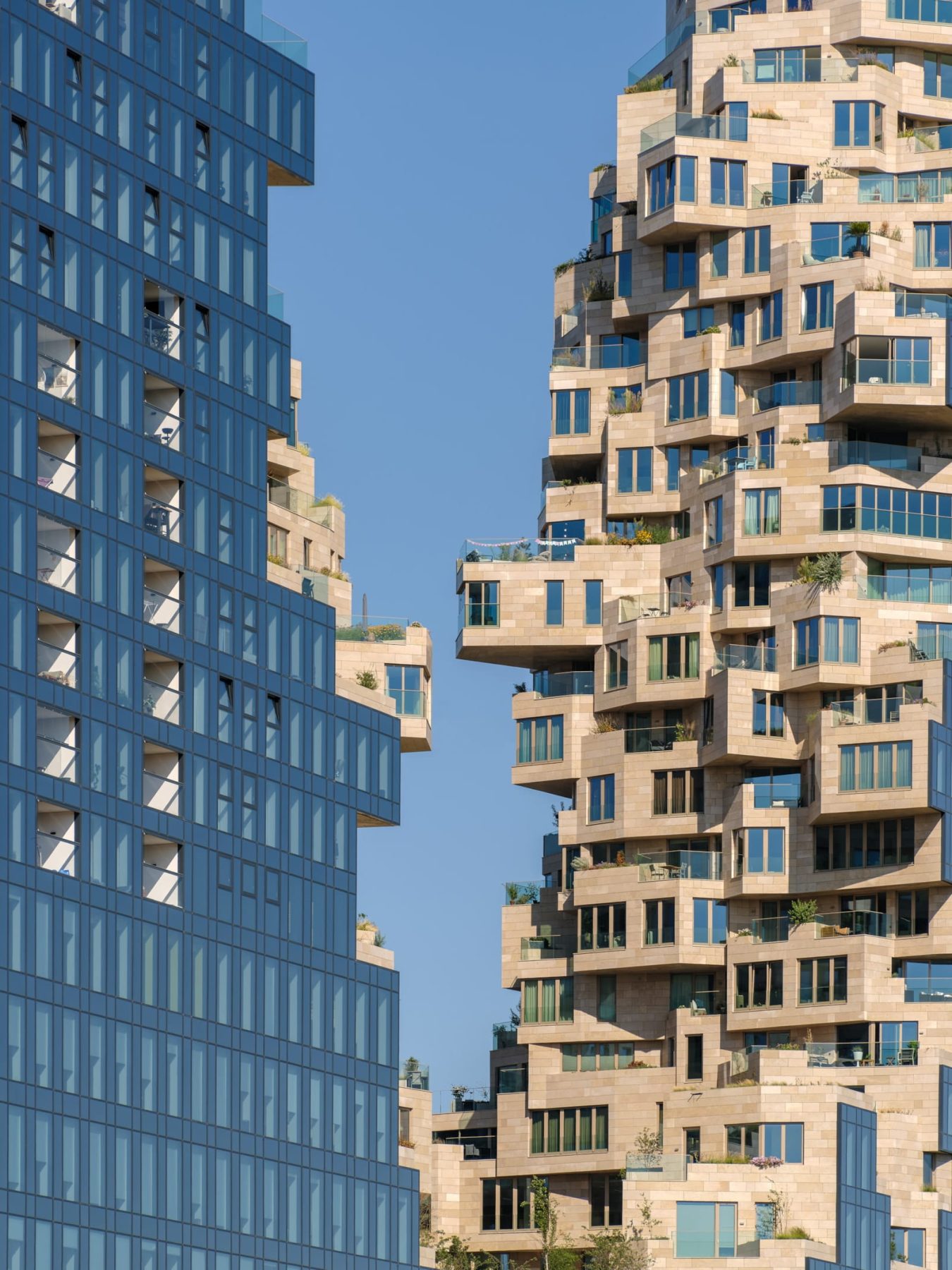
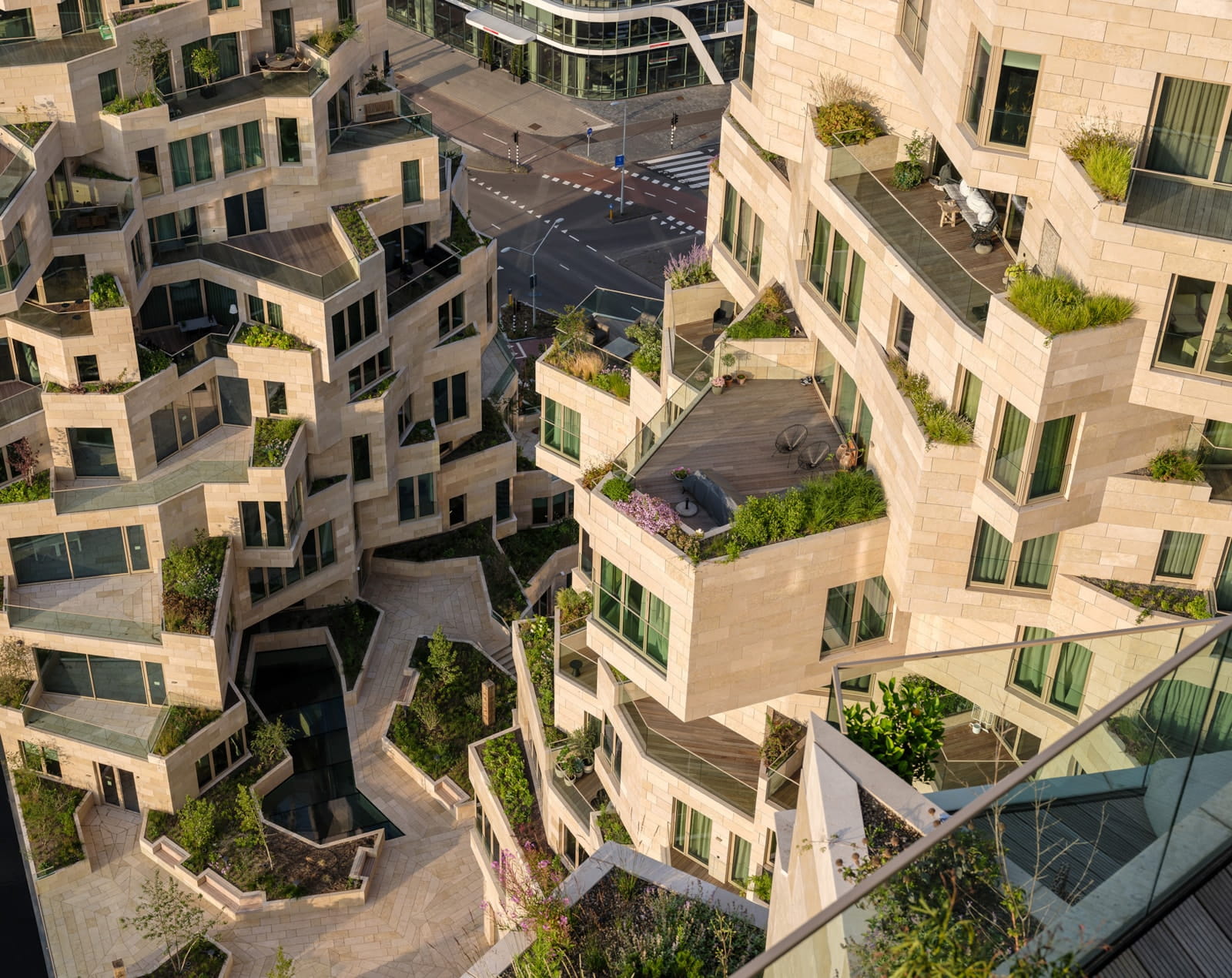
Valley, designed by MVRDV, is a striking mixed-use complex located in Amsterdam’s Zuidas neighbourhood, realised between 2014 and 2022. The 75,000 m² development is distinguished by three towers of 67 m, 81 m, and 100 m, with dramatic cantilevered apartments that give the building a unique silhouette.
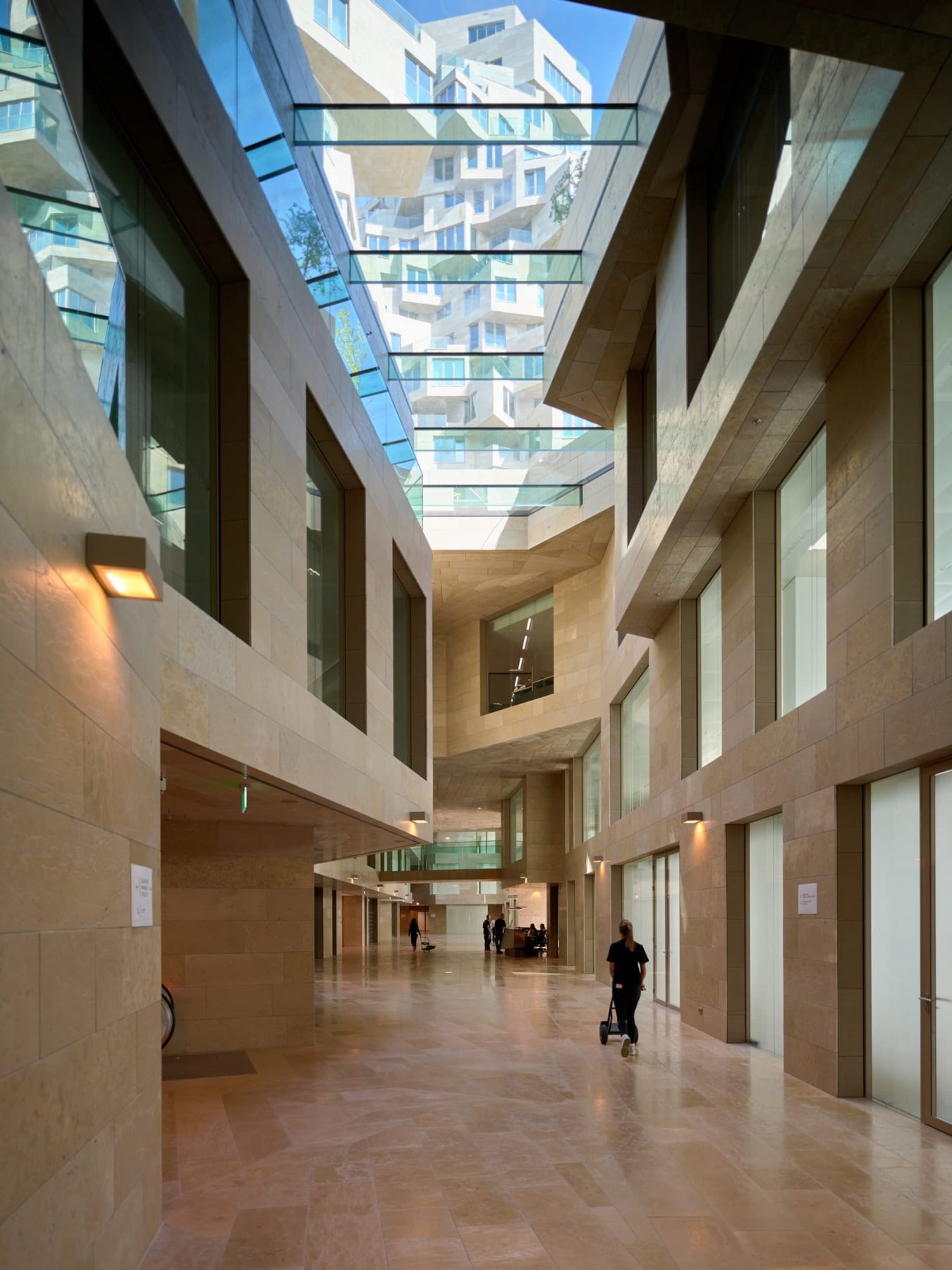
Externally, Valley appears as a refined glass shell that reflects the business district context. Internally, this shell opens to an expressive, geological character of natural stone and greenery, creating a “valley” that winds between the towers on the fourth and fifth floors — a publicly accessible landscaped space linked to the street by a footpath.
The program blends offices, residential units, cultural spaces, bars, and restaurants, inviting residents, workers, and visitors into a vibrant urban environment. Valley also features a sky bar at the top of the tallest tower and has earned multiple architectural awards.
Depot Boijmans Van Beuningen, Rotterdam (2021)
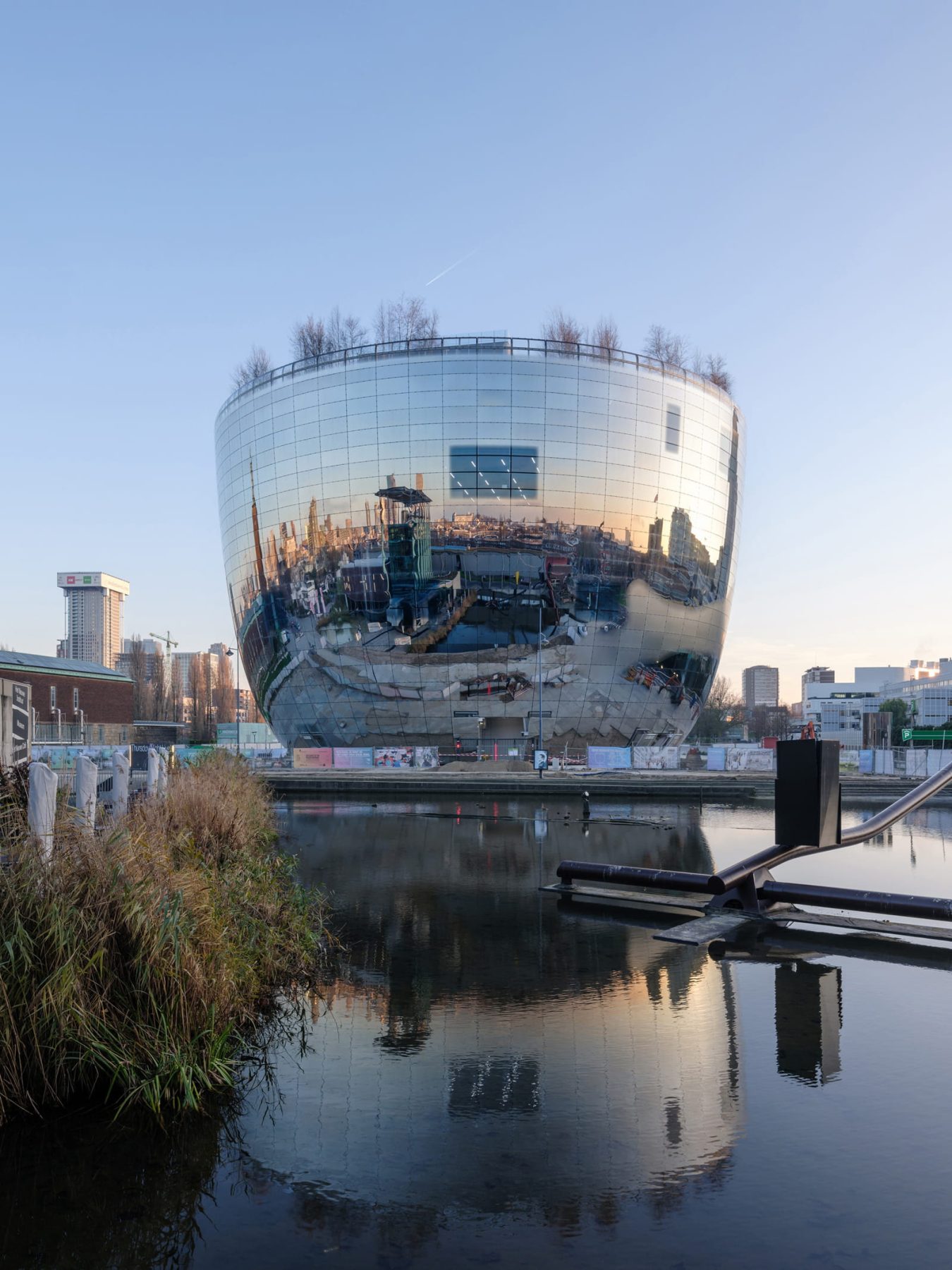
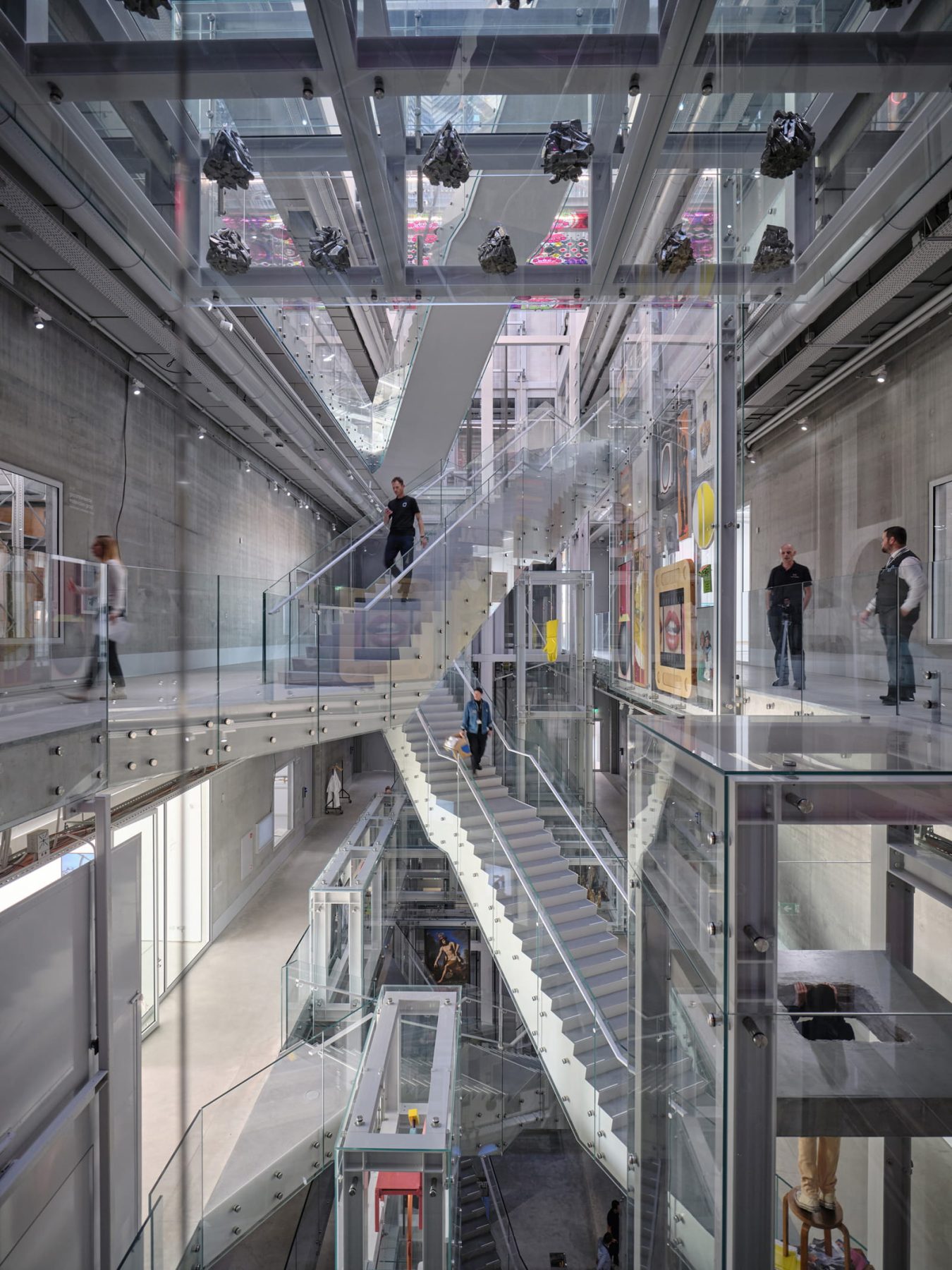
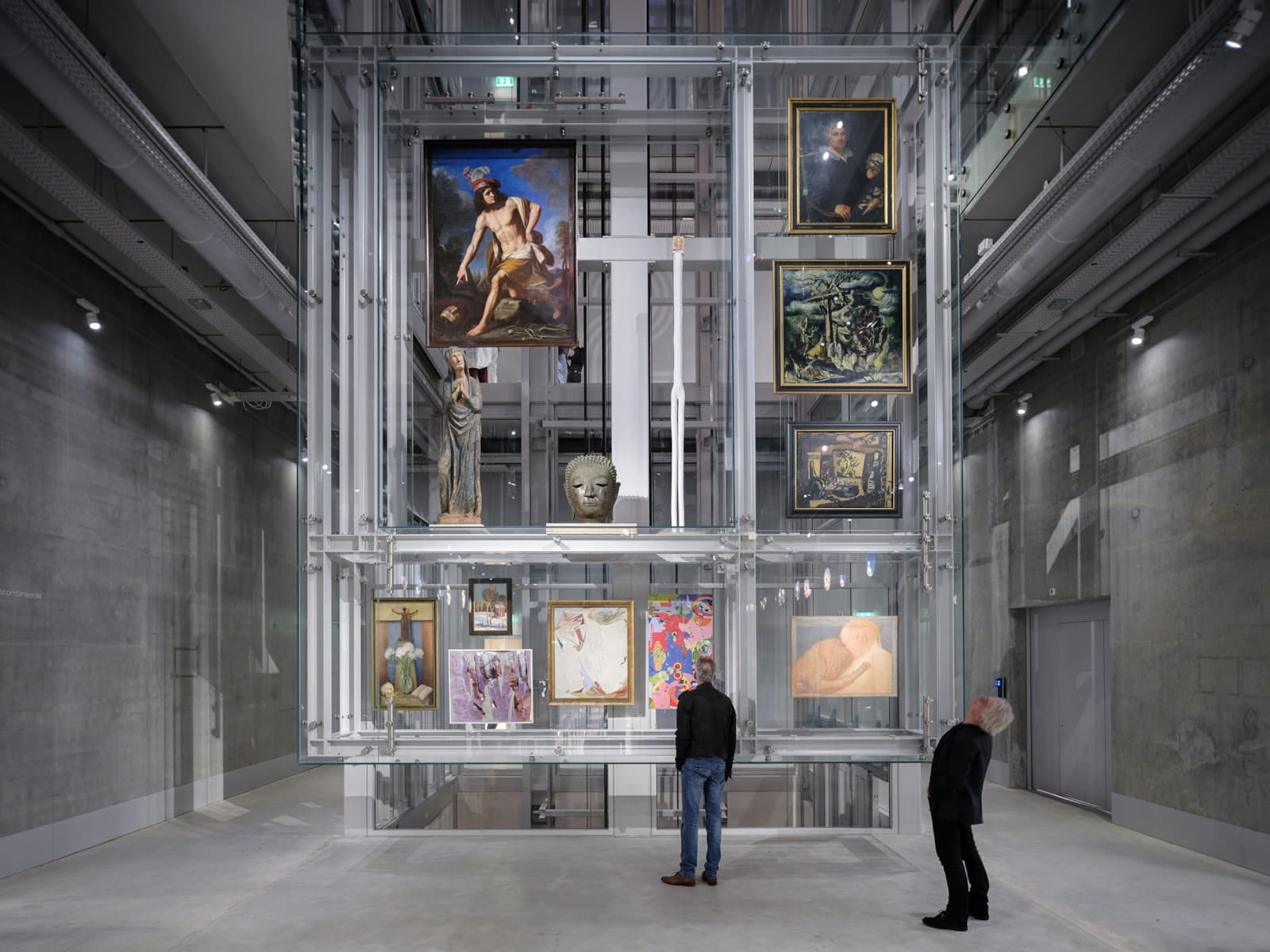
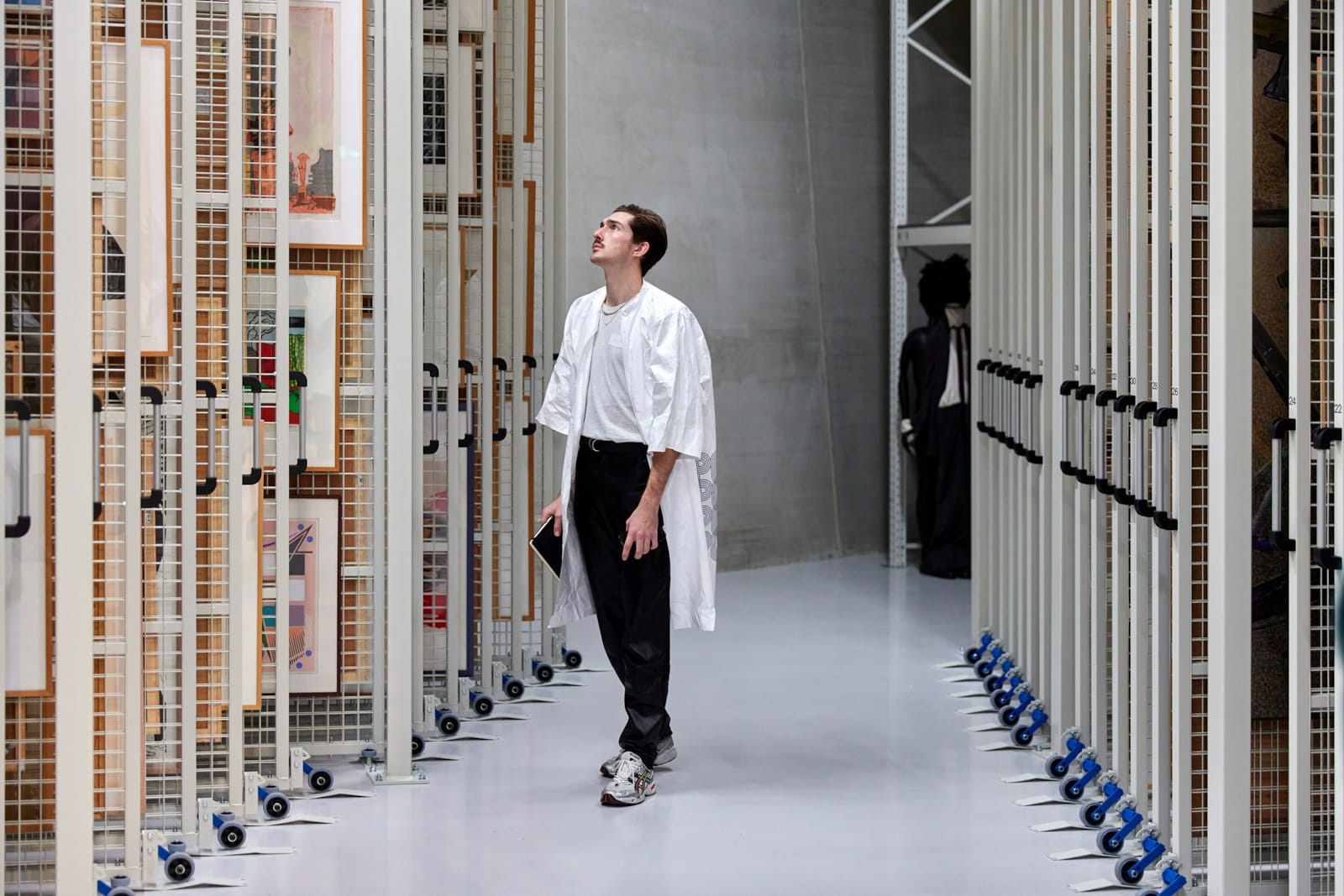
Depot Boijmans Van Beuningen in Rotterdam’s Museumpark, designed by MVRDV, is the world’s first fully publicly accessible art depot. Opened between 2013 and 2020, the project reimagines the traditional museum storage facility by making the entire collection visible to visitors rather than hidden away.
The design comprises a distinctive reflective ovoid volume that responds to its surroundings and creates a bold architectural presence while maintaining views through the park. Inside, visitors can explore exhibition halls, observe conservation and restoration processes, and experience what it means to care for and maintain a significant art collection.
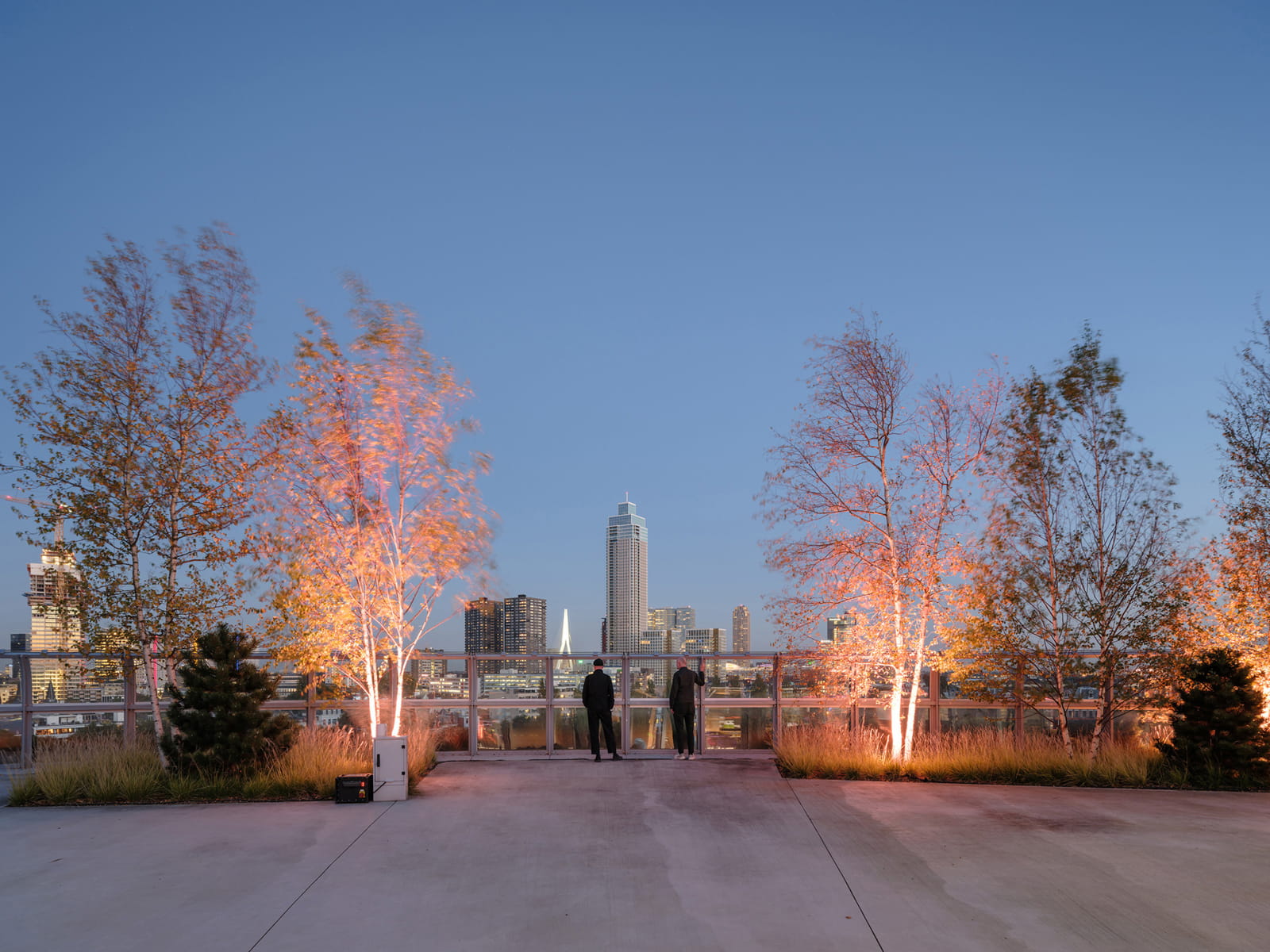
The building also features a rooftop garden and a restaurant, adding social and cultural amenities to its program. With its innovative concept and comprehensive transparency, the Depot transforms how people engage with art and its preservation.
Tianjin Binhai Library, China (2017)
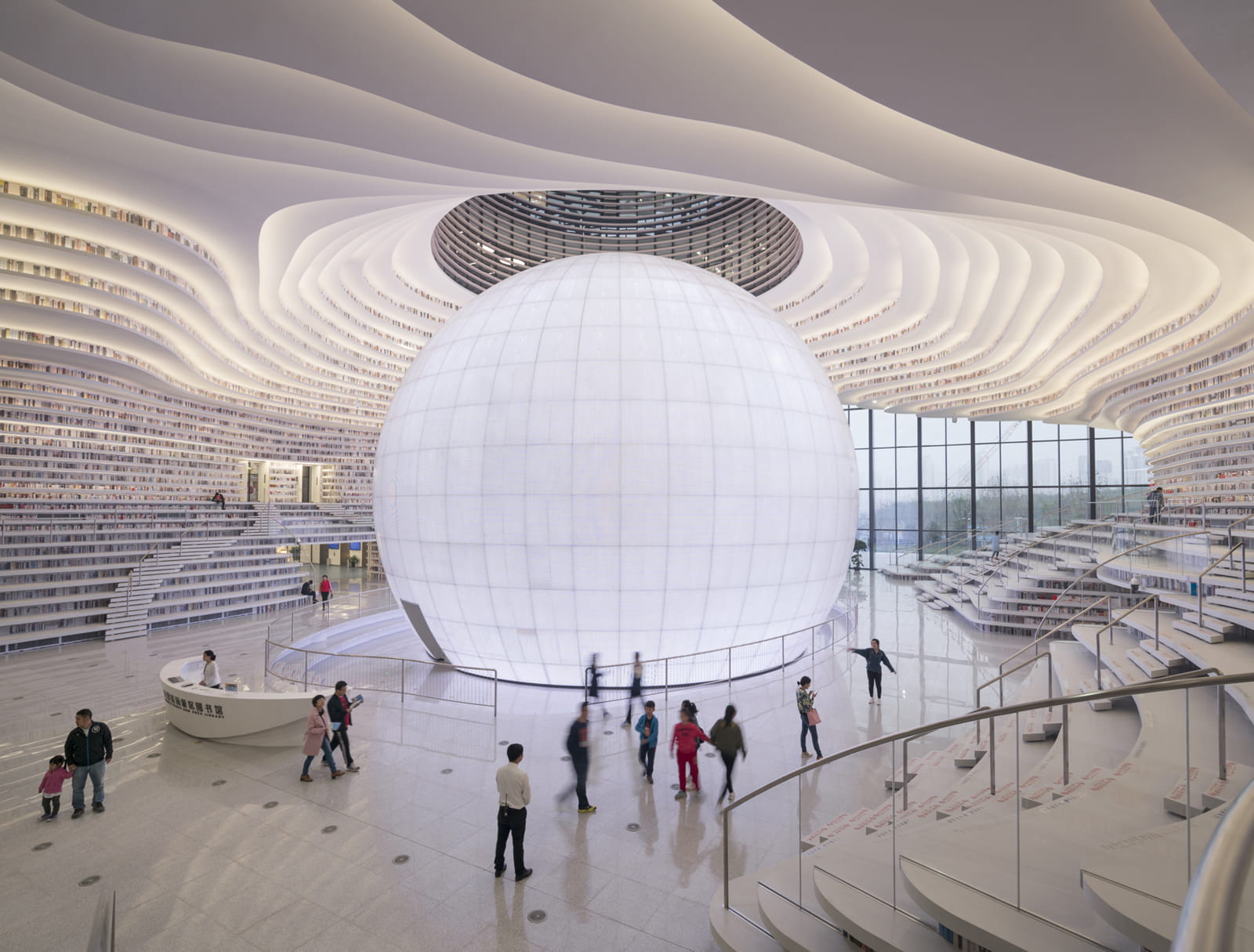
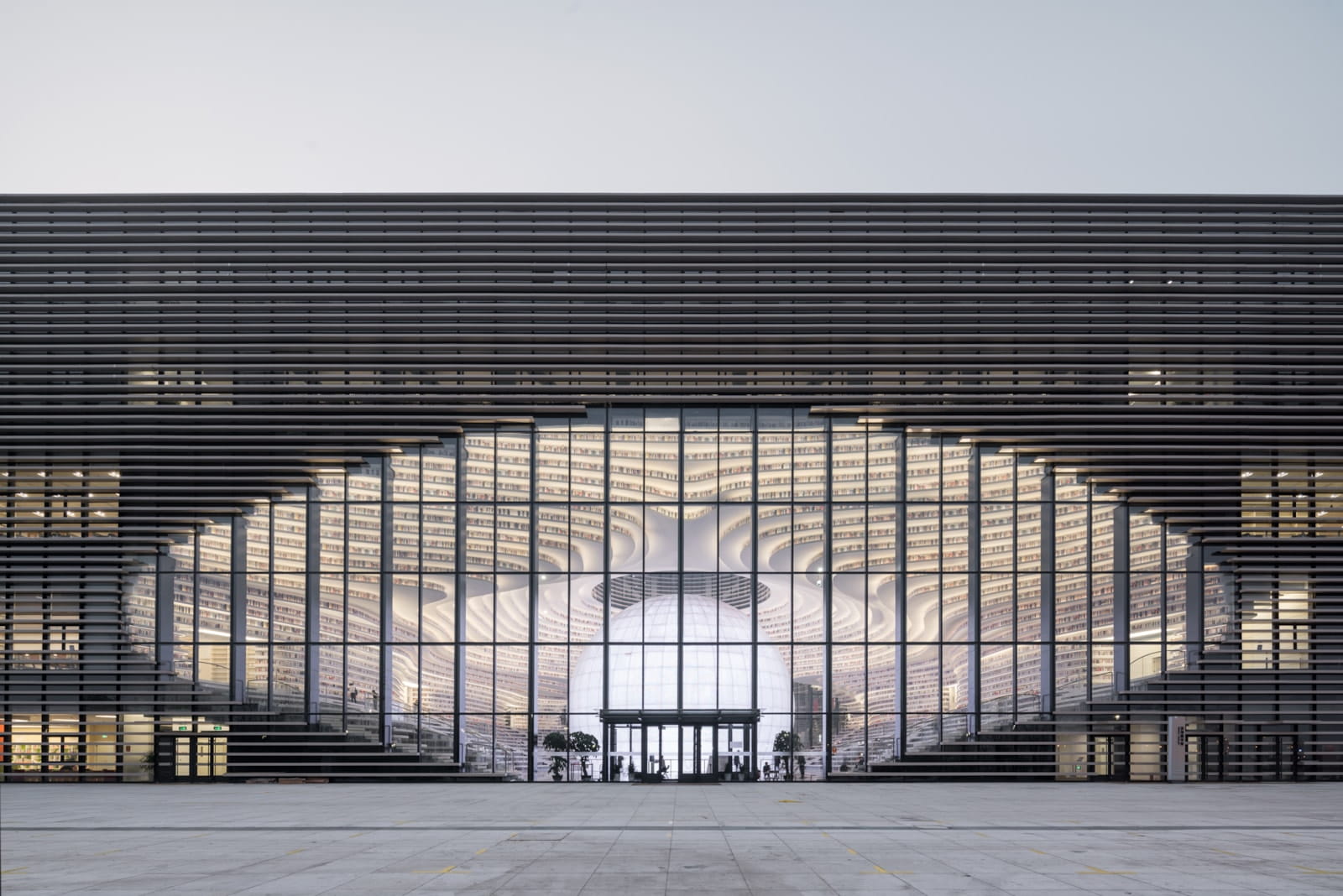
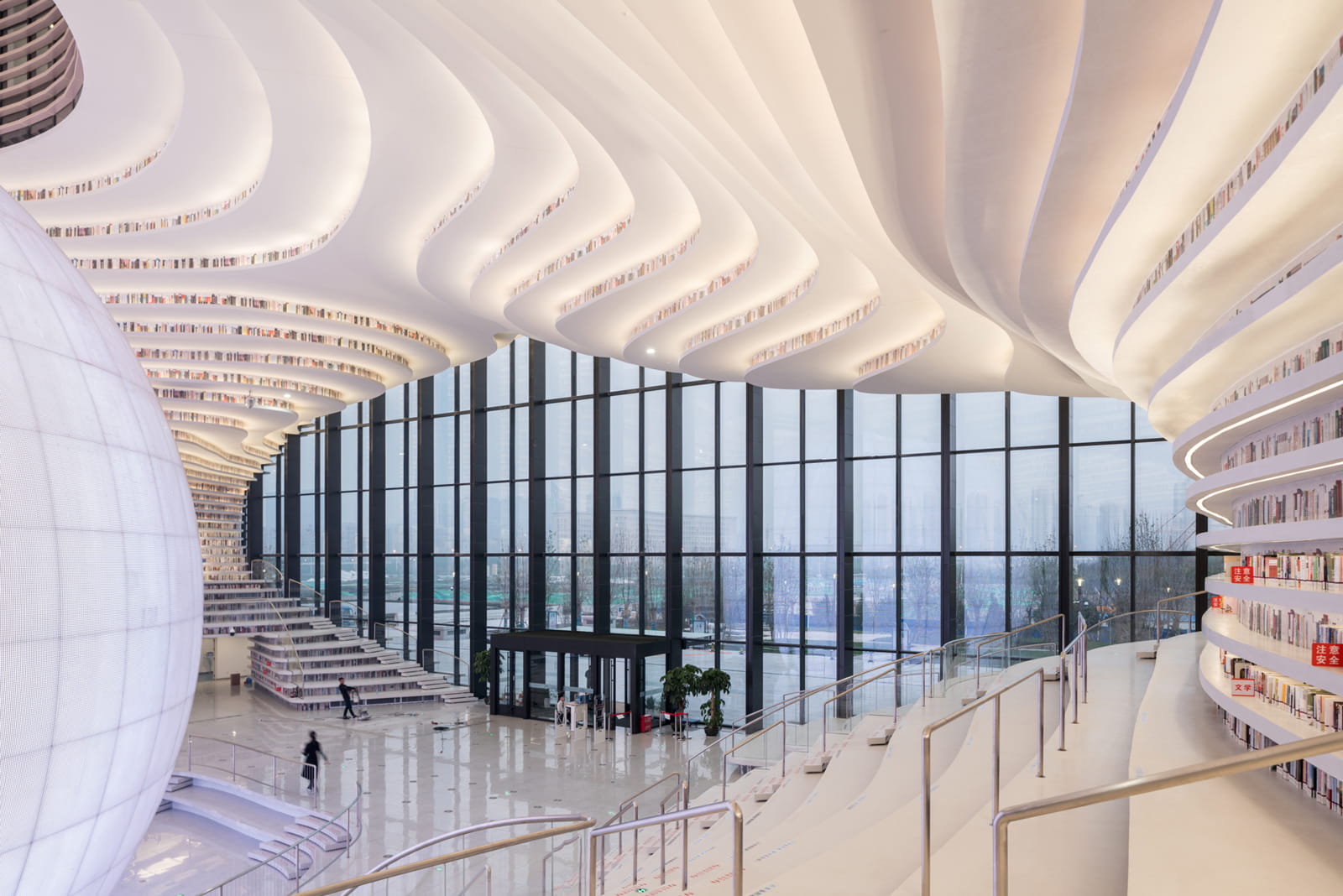
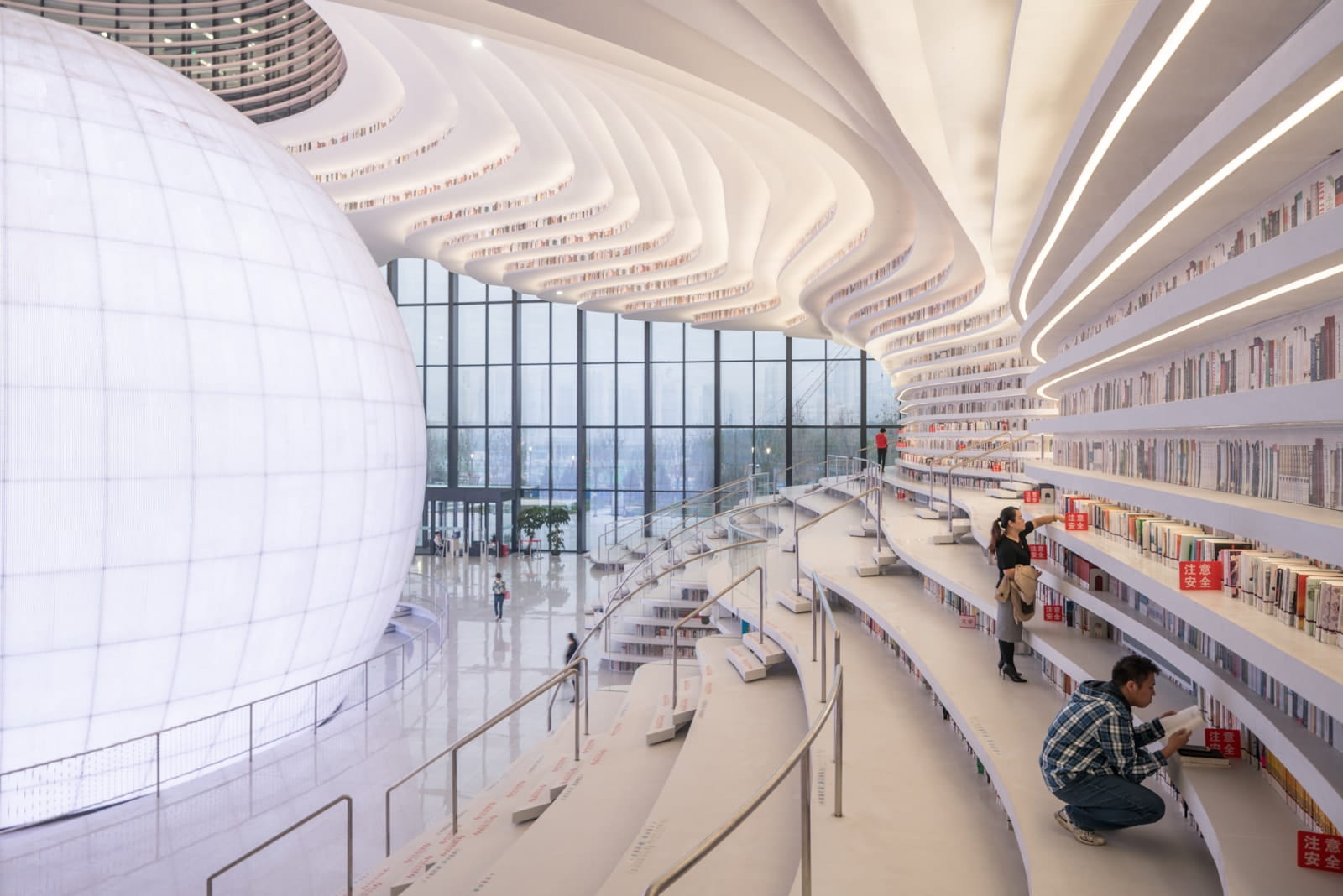
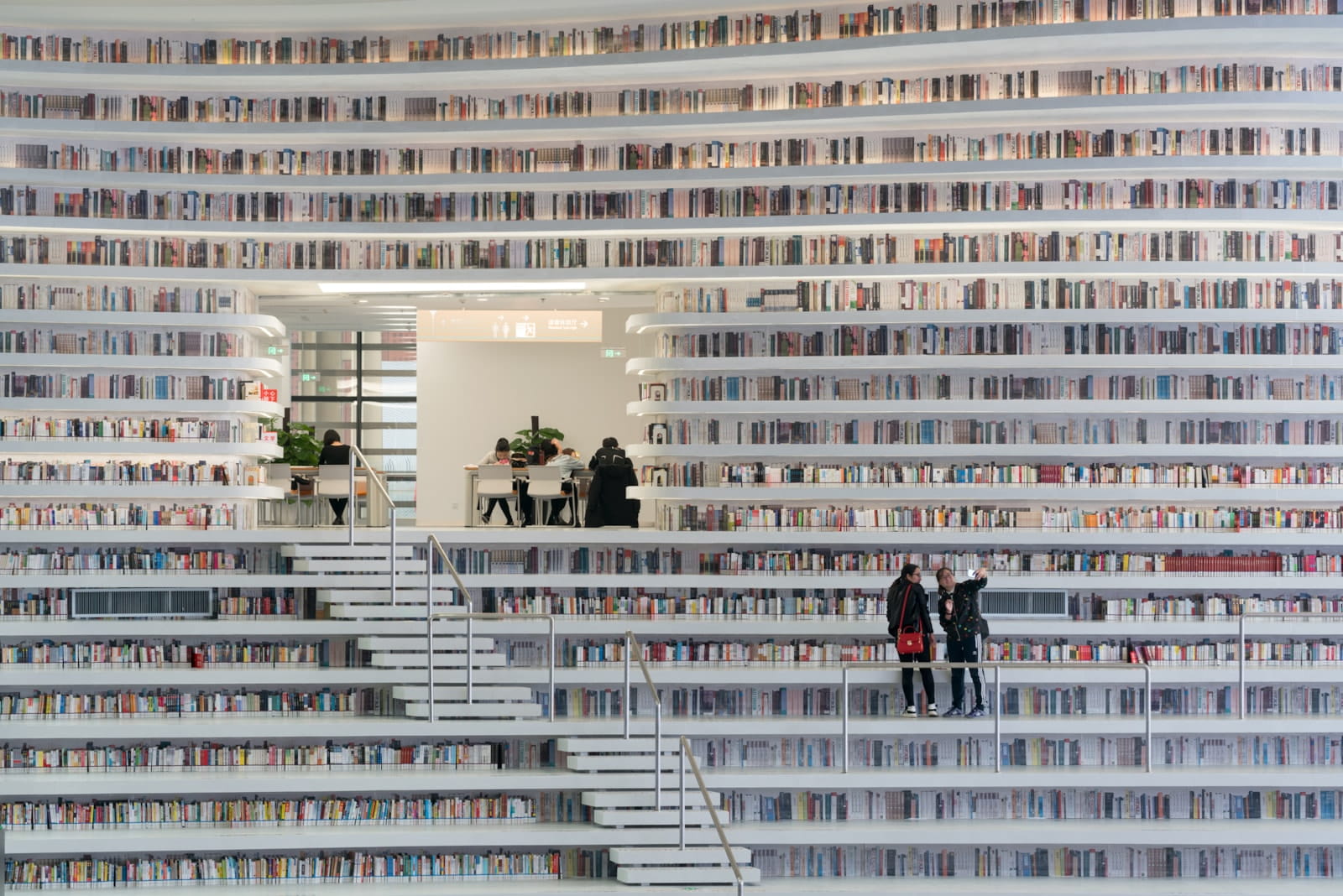
Tianjin Binhai Library, designed by MVRDV with the Tianjin Urban Planning and Design Institute (TUPDI), is a striking 33,700 m² cultural centre in Tianjin, China that forms part of a larger cultural district masterplan. The design features a luminous spherical auditorium—“the Eye”— set within a dramatic atrium, around which floor-to-ceiling cascading bookcases create an undulating, topographical interior landscape.
These terraced shelves extend through the space, shaping seating, circulation, and even the building’s external louvres. An oval opening punctures the mass, framing the Eye and enlarging spatial perception, while the library’s five levels contain a variety of educational and cultural facilities accessed from the central atrium.
From ground floor reading areas to upper-floor meeting, office, and audio rooms with rooftop patios, the project also acts as a connector between the adjacent park and the cultural complex, offering both public and social space.
Crystal Houses in Amsterdam (2016)
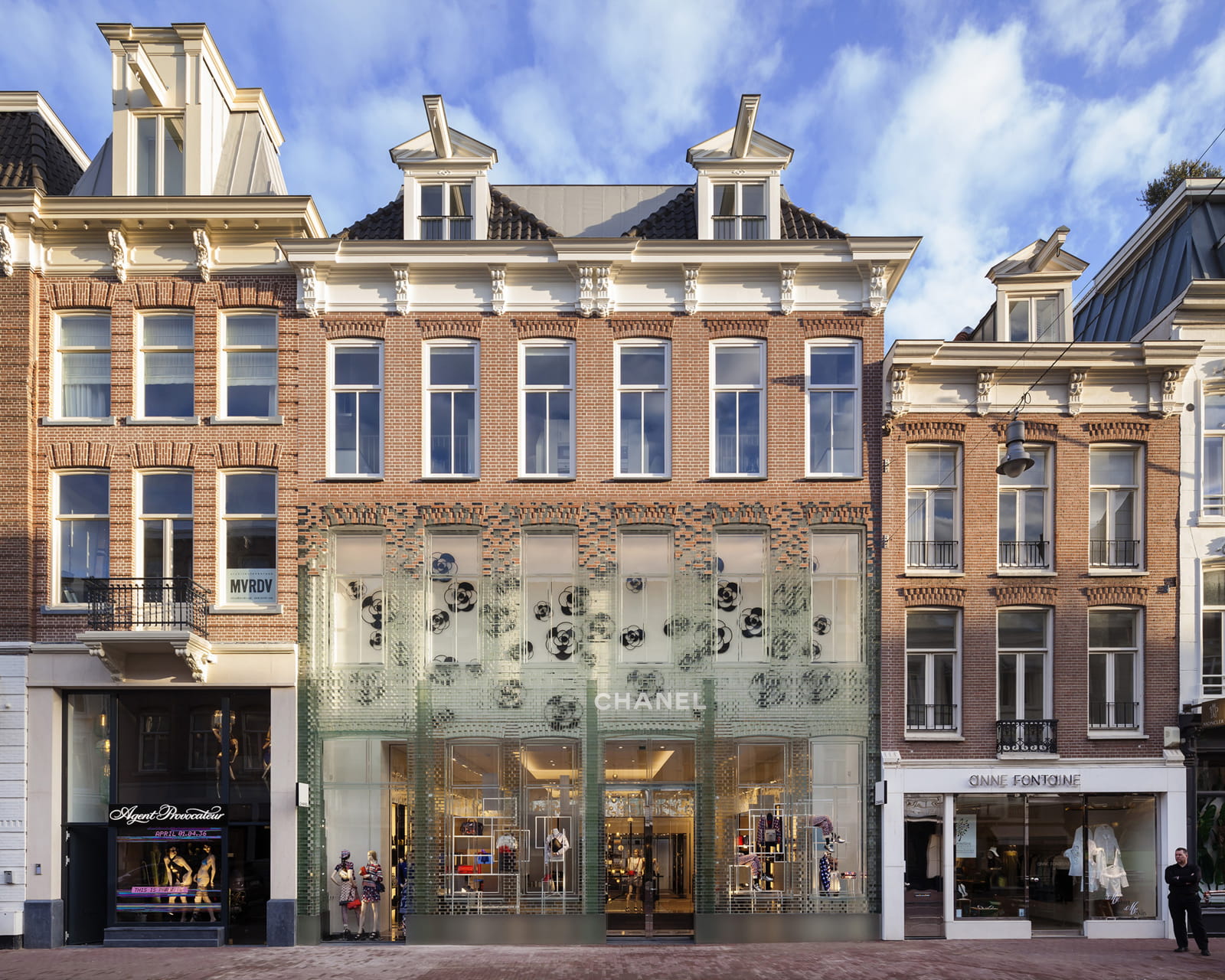
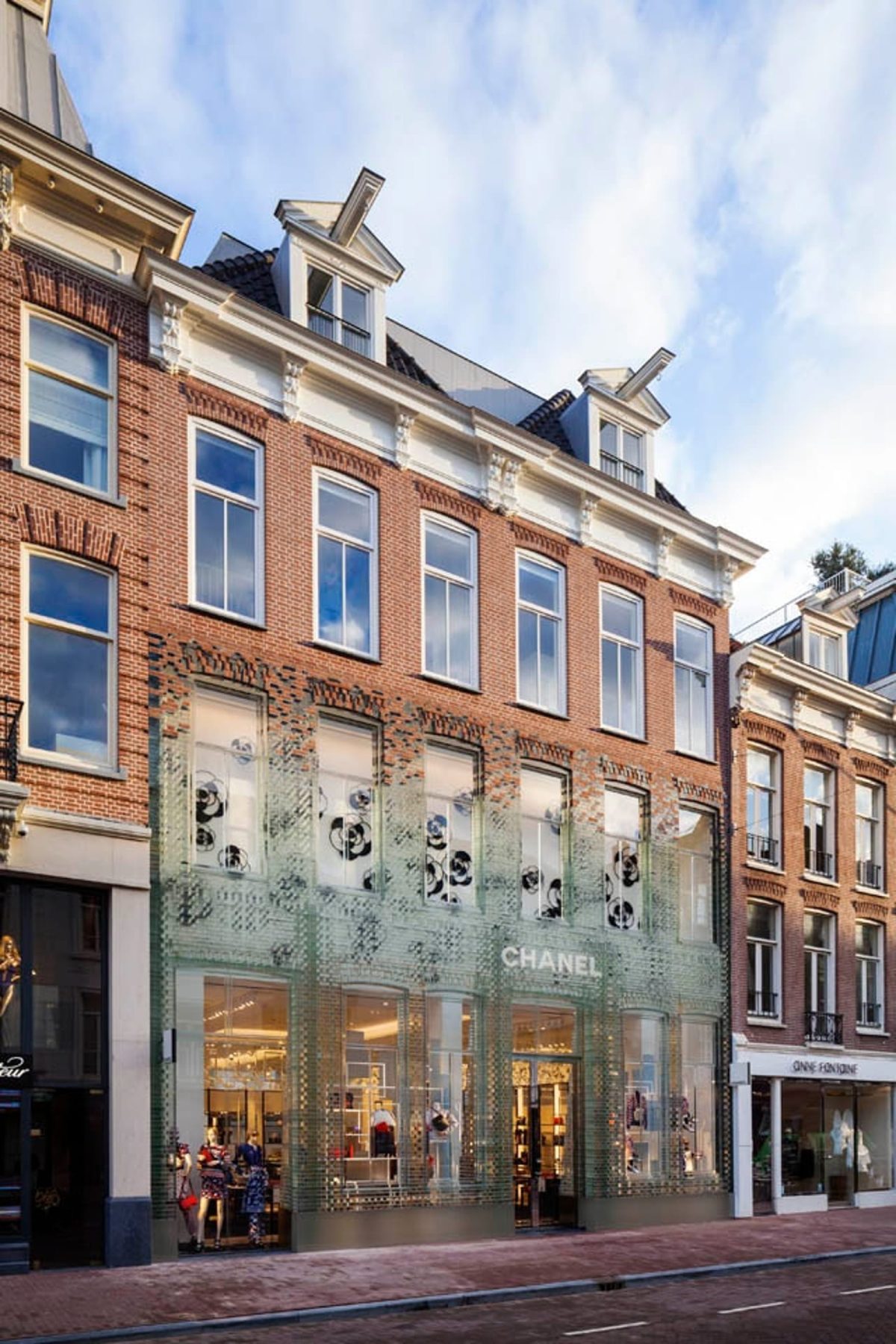
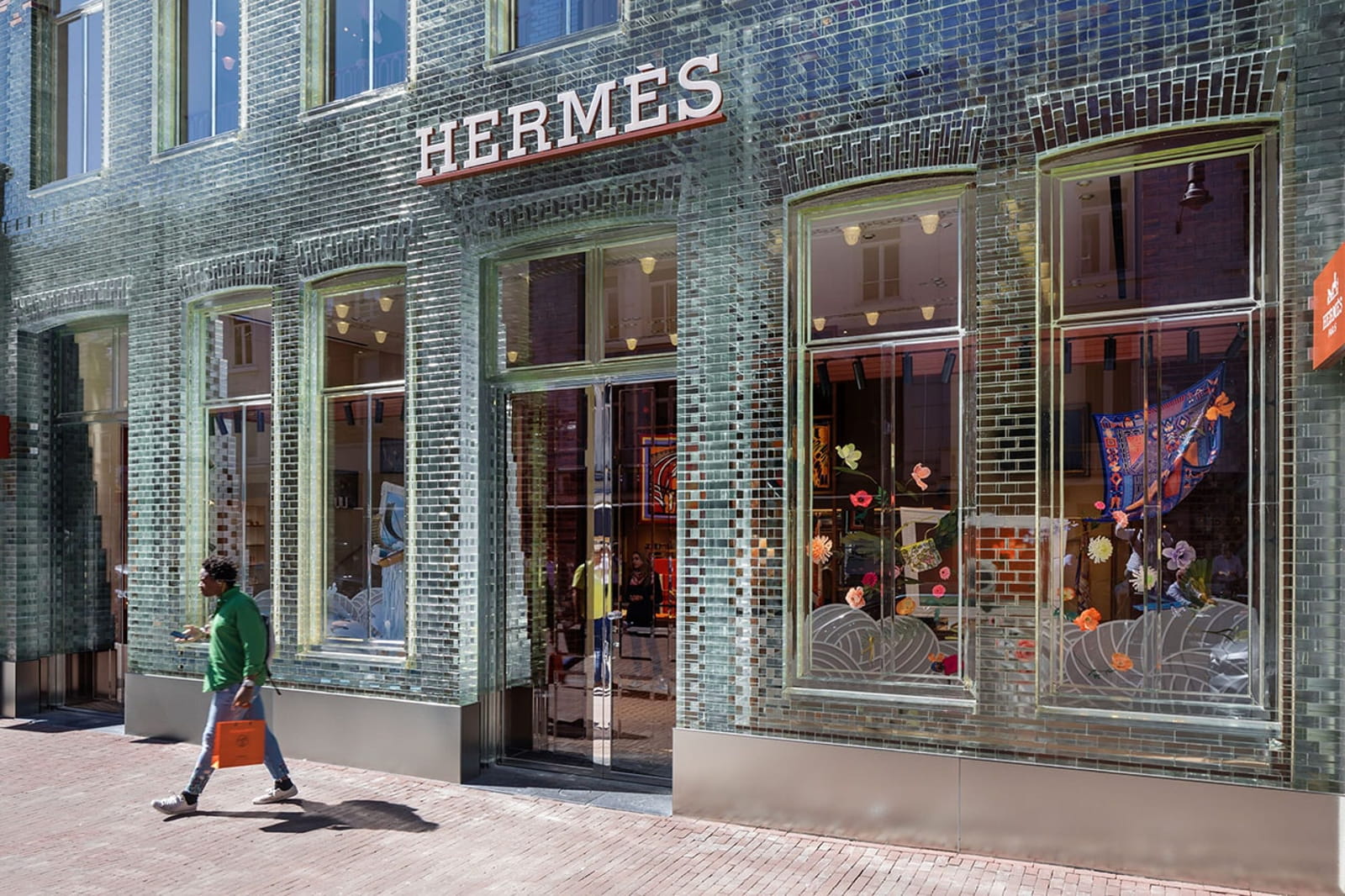
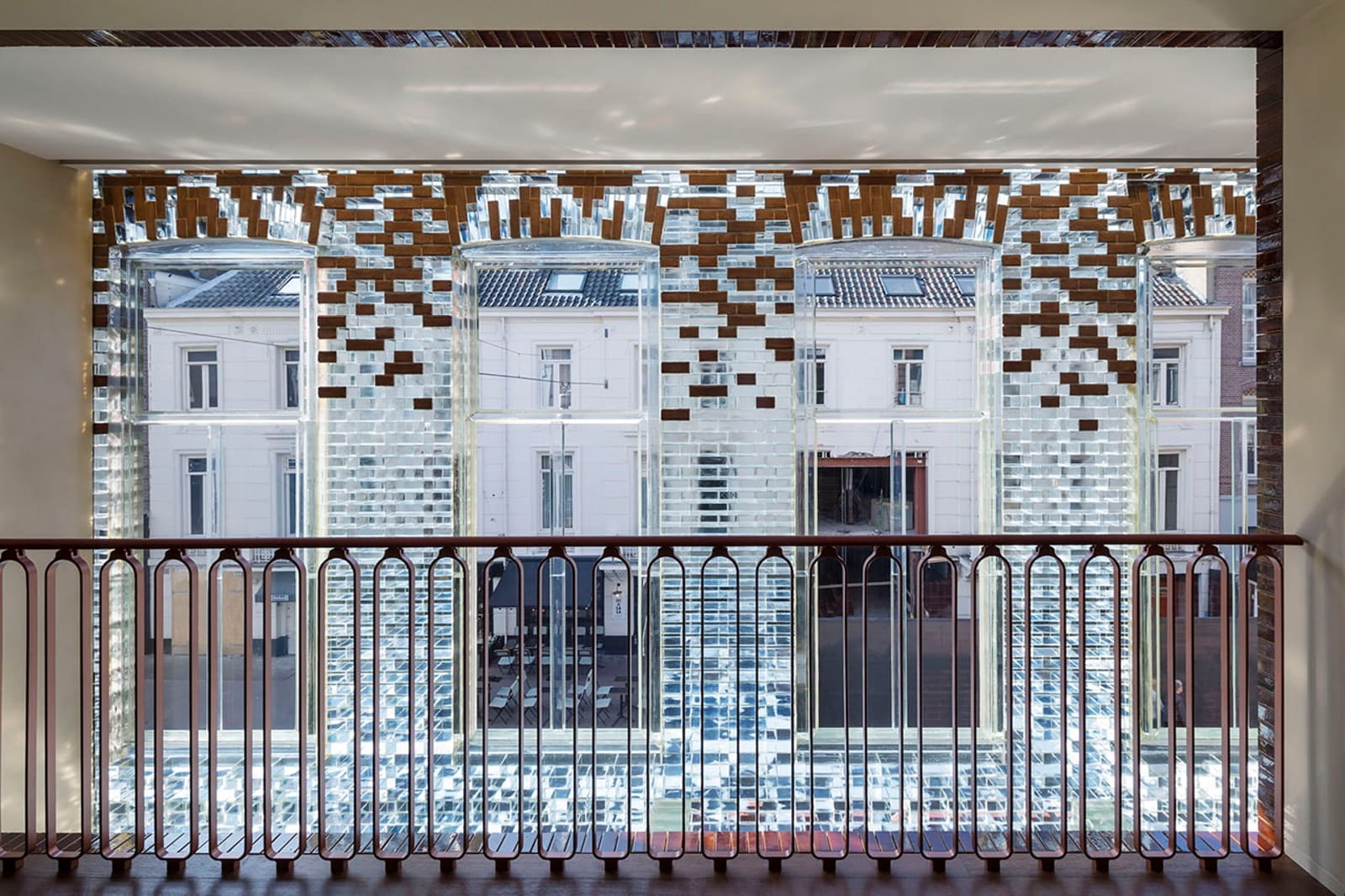
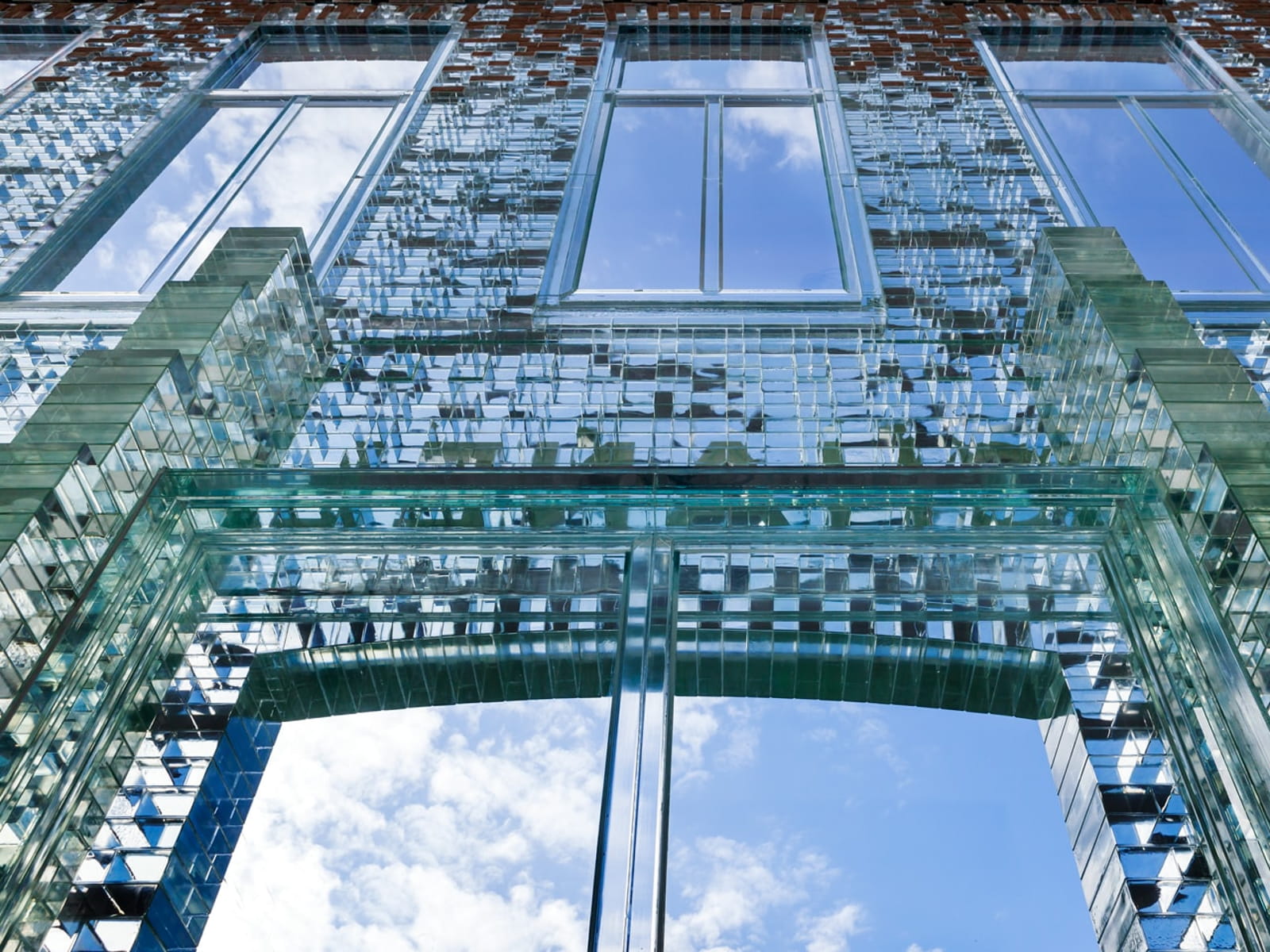
Crystal Houses by MVRDV is a realised project in Amsterdam, Netherlands, located on the city’s upscale PC Hooftstraat shopping street with a program combining retail and residential spaces. The building is defined by its entirely transparent façade, composed primarily of glass bricks, glass window frames, and glass architraves, which reinterpret the vernacular character of the historic street while allowing contemporary retail visibility.
The retail area of 620 m² and the 220 m² of housing create a unified architectural statement that balances distinctive flagship store presence with respect for the existing urban ensemble.
Beginning from a concept to combine Dutch heritage with international architecture, the façade design mimics traditional brick layering and detailing but is stretched vertically to comply with zoning and to increase interior space. Glass bricks gradually dissolve into a traditional terracotta brick façade for the upper residential portion, visually floating above the shop floor.
Rotterdam’s Markthal (2014)
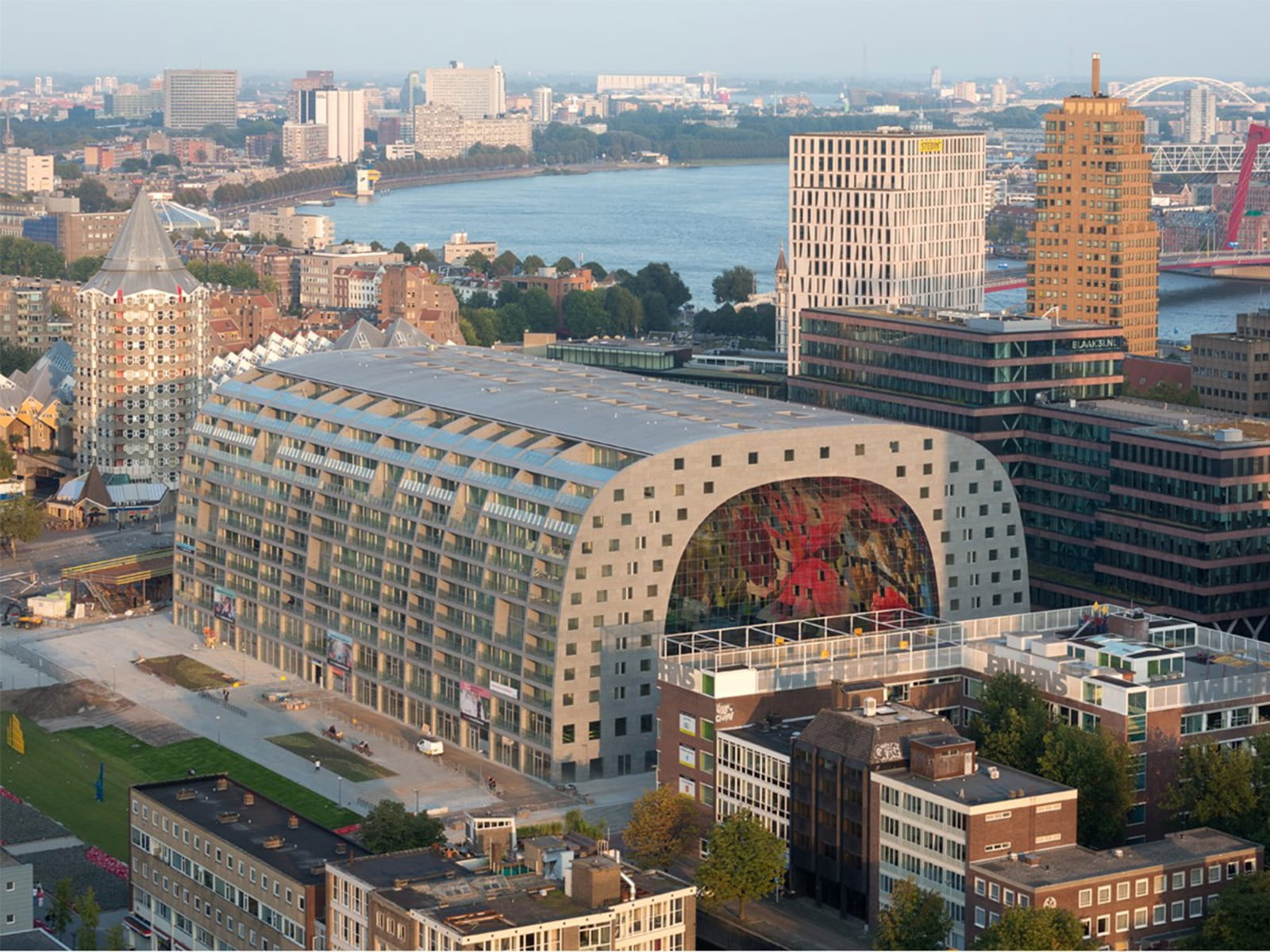
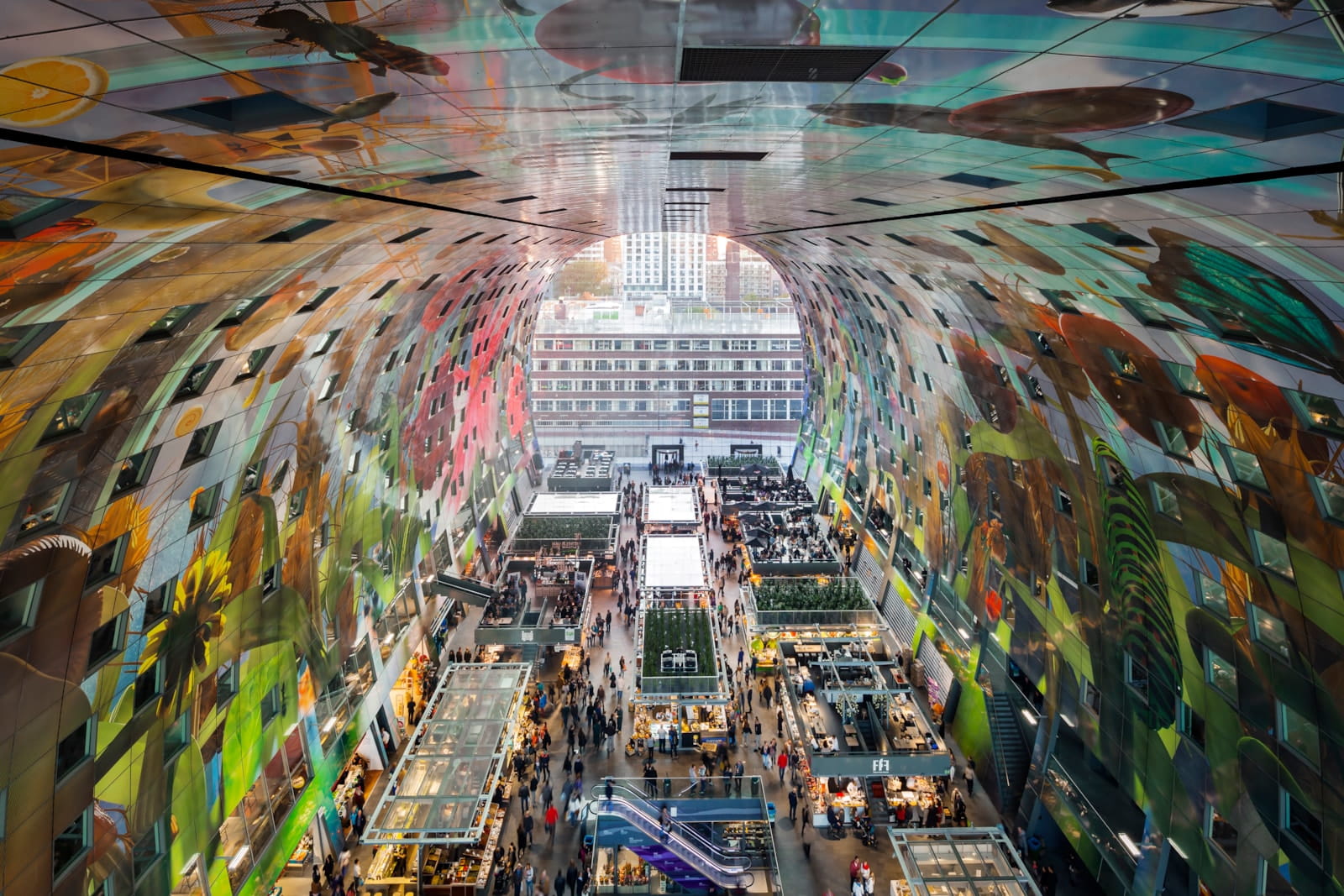
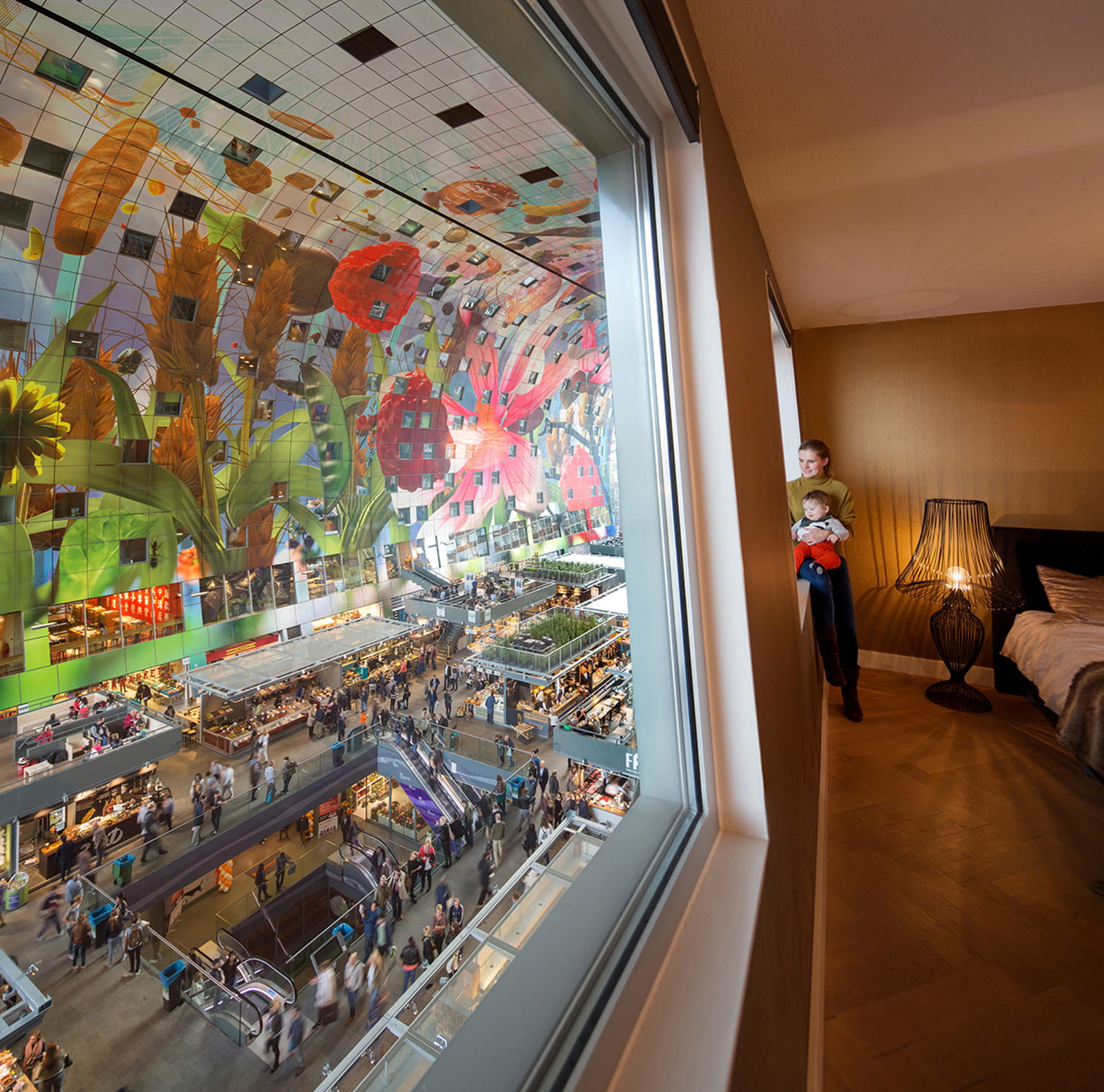
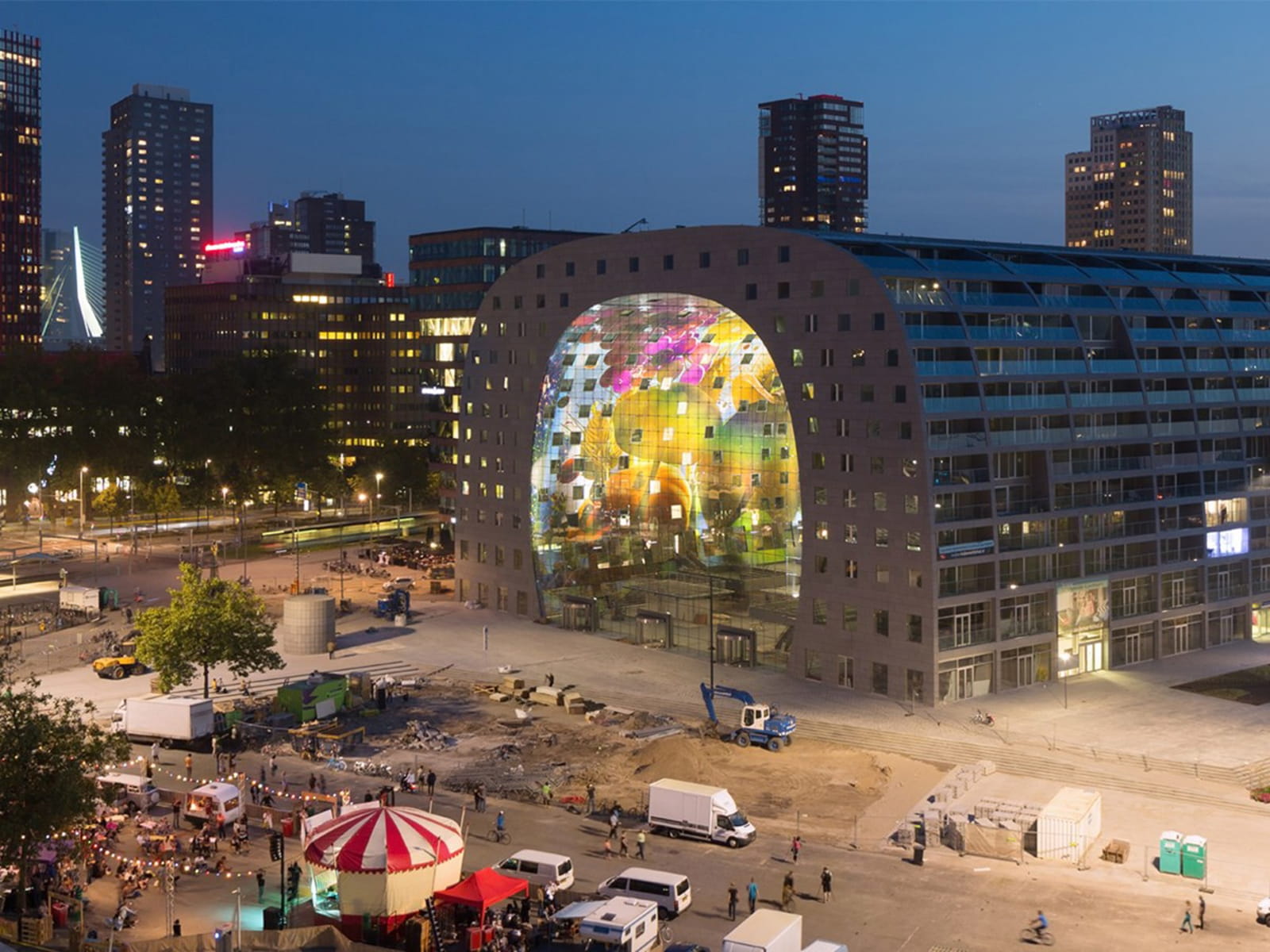
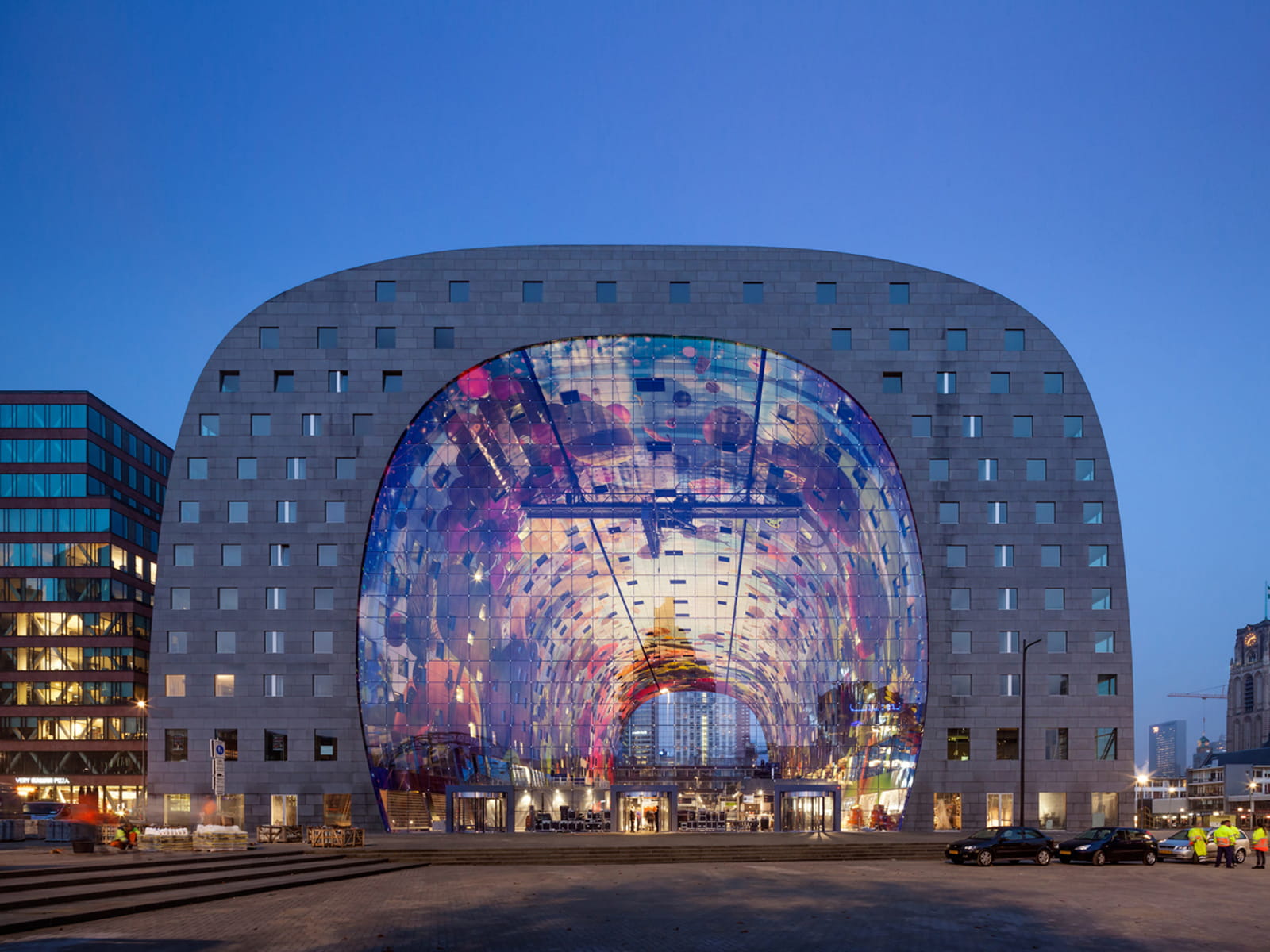
Markthal in Rotterdam, Netherlands, is a realised mixed-use project by MVRDV that integrates food, leisure, living, and parking into a single architectural work. Its defining feature is a large arch that houses privately developed apartments arranged above a covered square, creating a unique hybrid of market hall and public space.
Beneath the arch, the central market hall comes alive during the day with 96 fresh-food stalls and a variety of products, while restaurants and cafés enliven the space into the evening. The programme includes retail units, a supermarket, and a centre for healthy-eating education, all designed to be seamlessly part of the everyday life of residents and visitors alike.
A monumental mural enlivening the vaulted interior showcases oversized depictions of food, reflecting the hall’s function and giving the space a vibrant identity.
Glass Farm in Schijndel, Netherlands (2013)
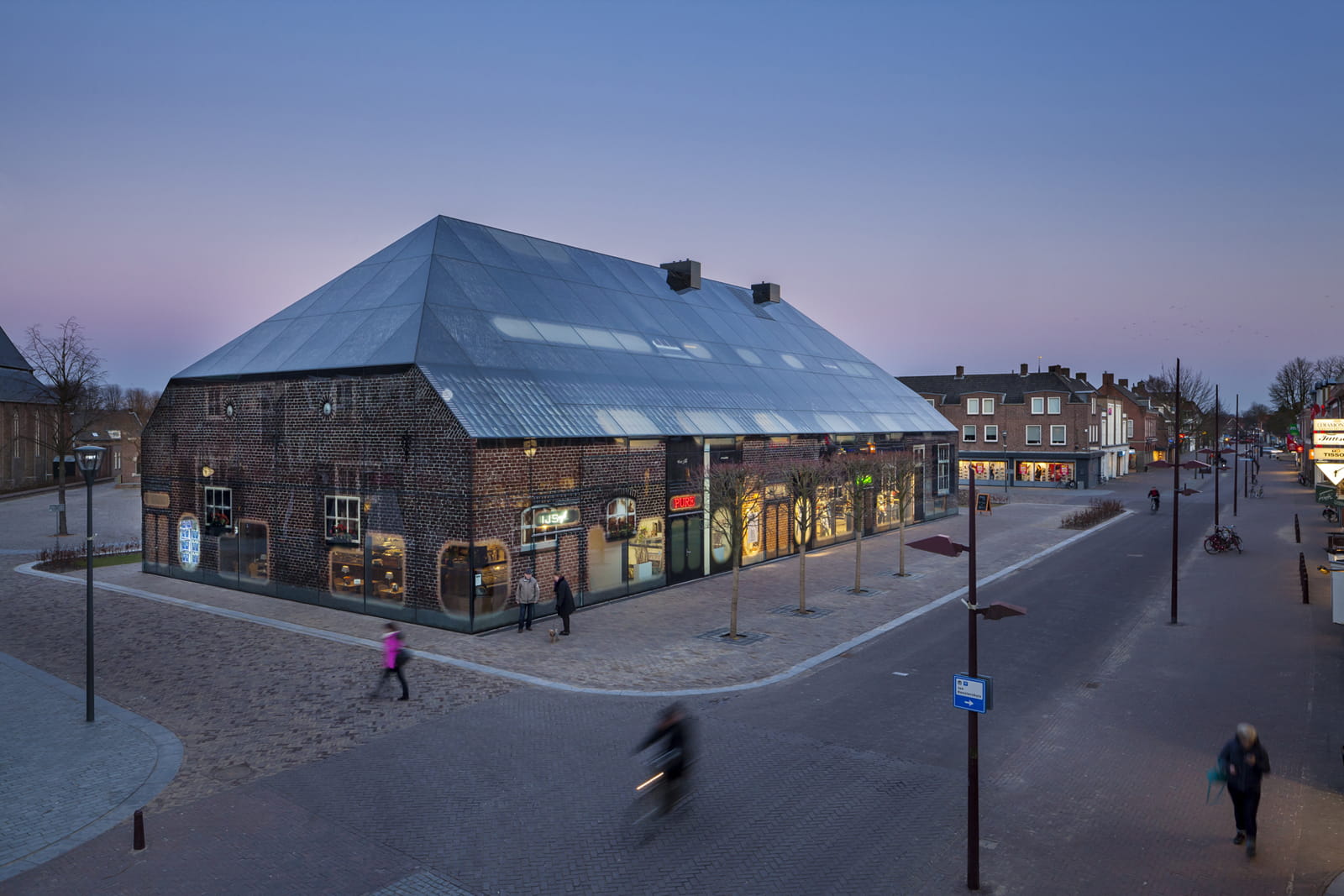
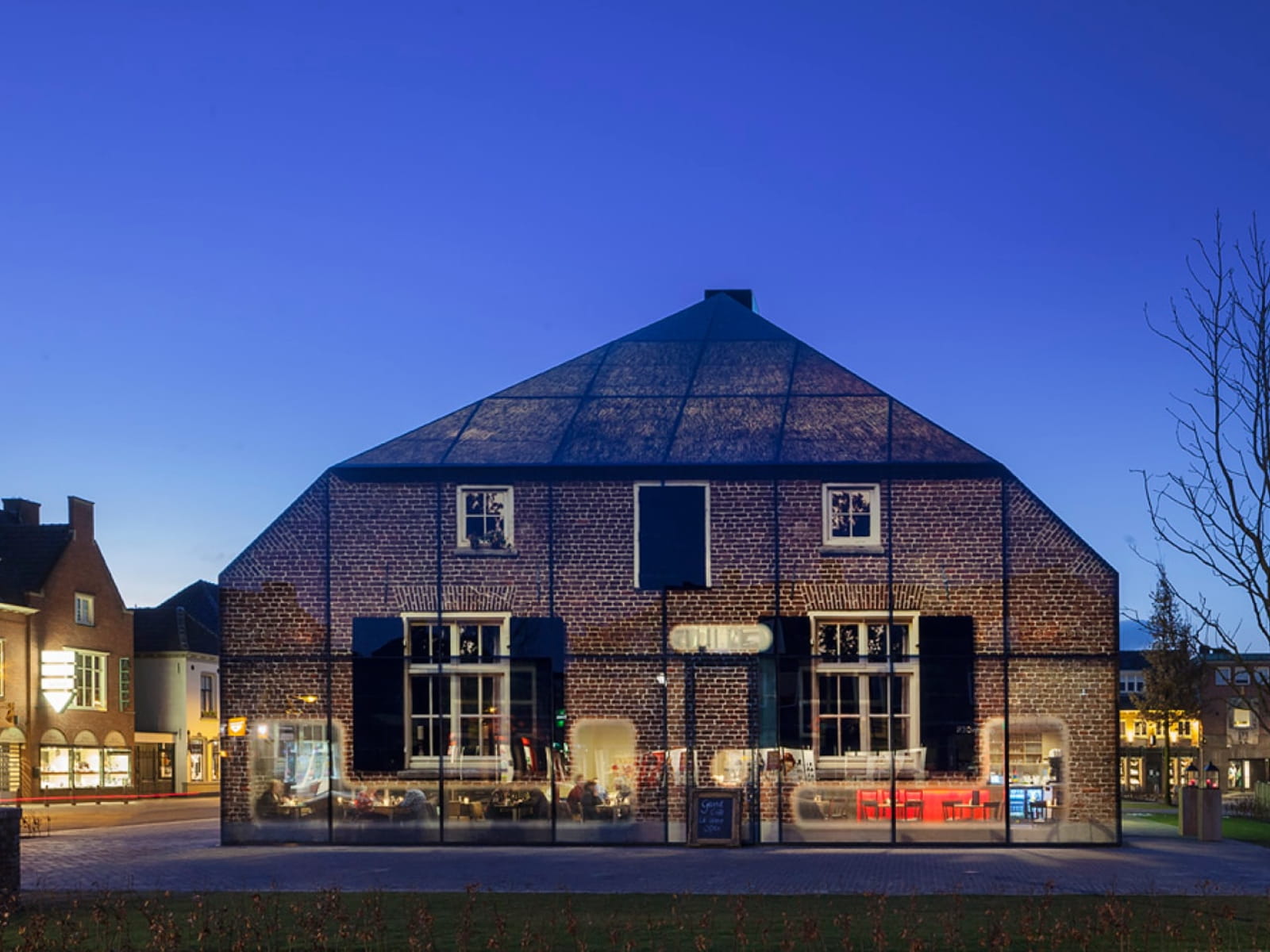
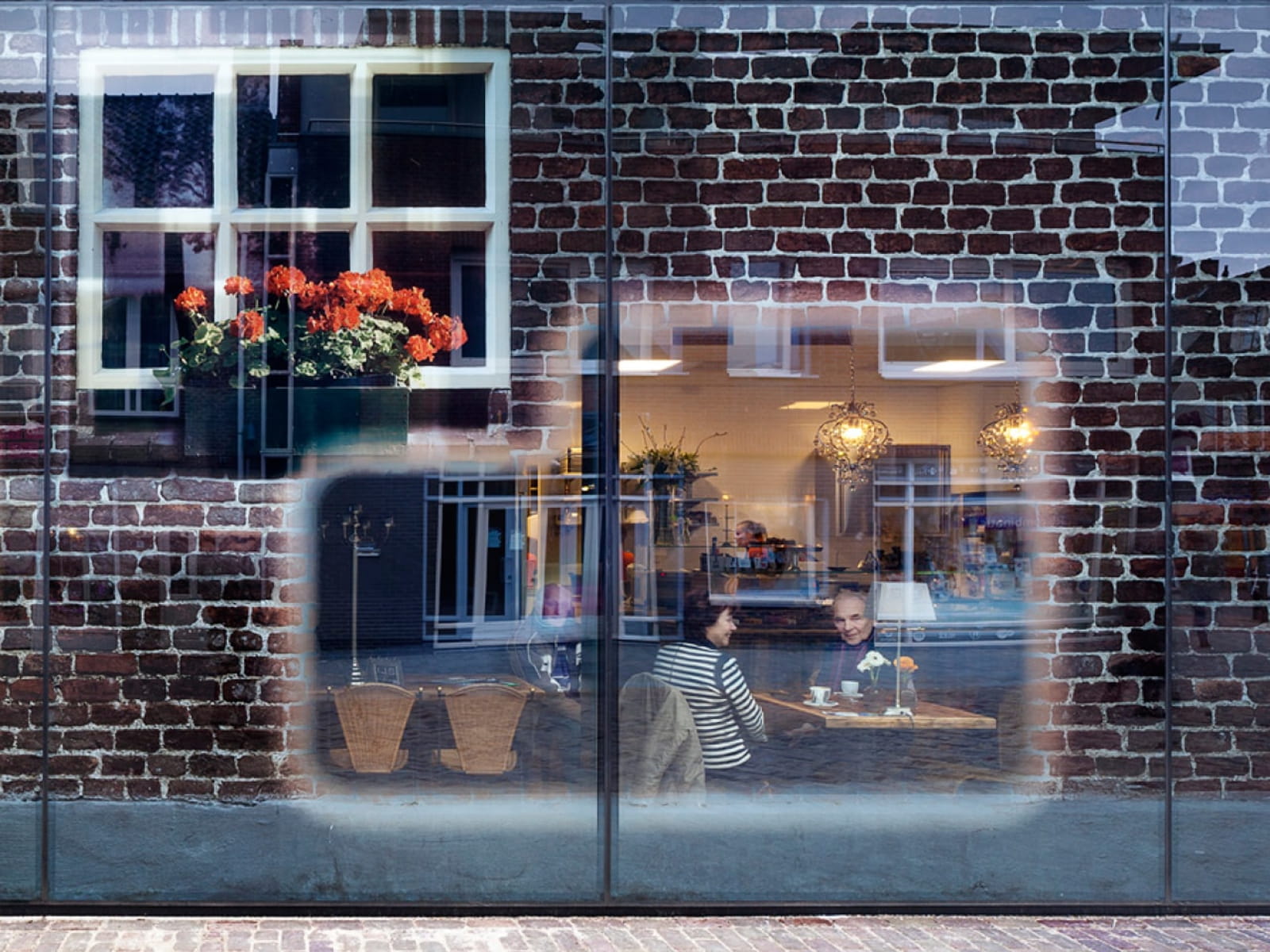
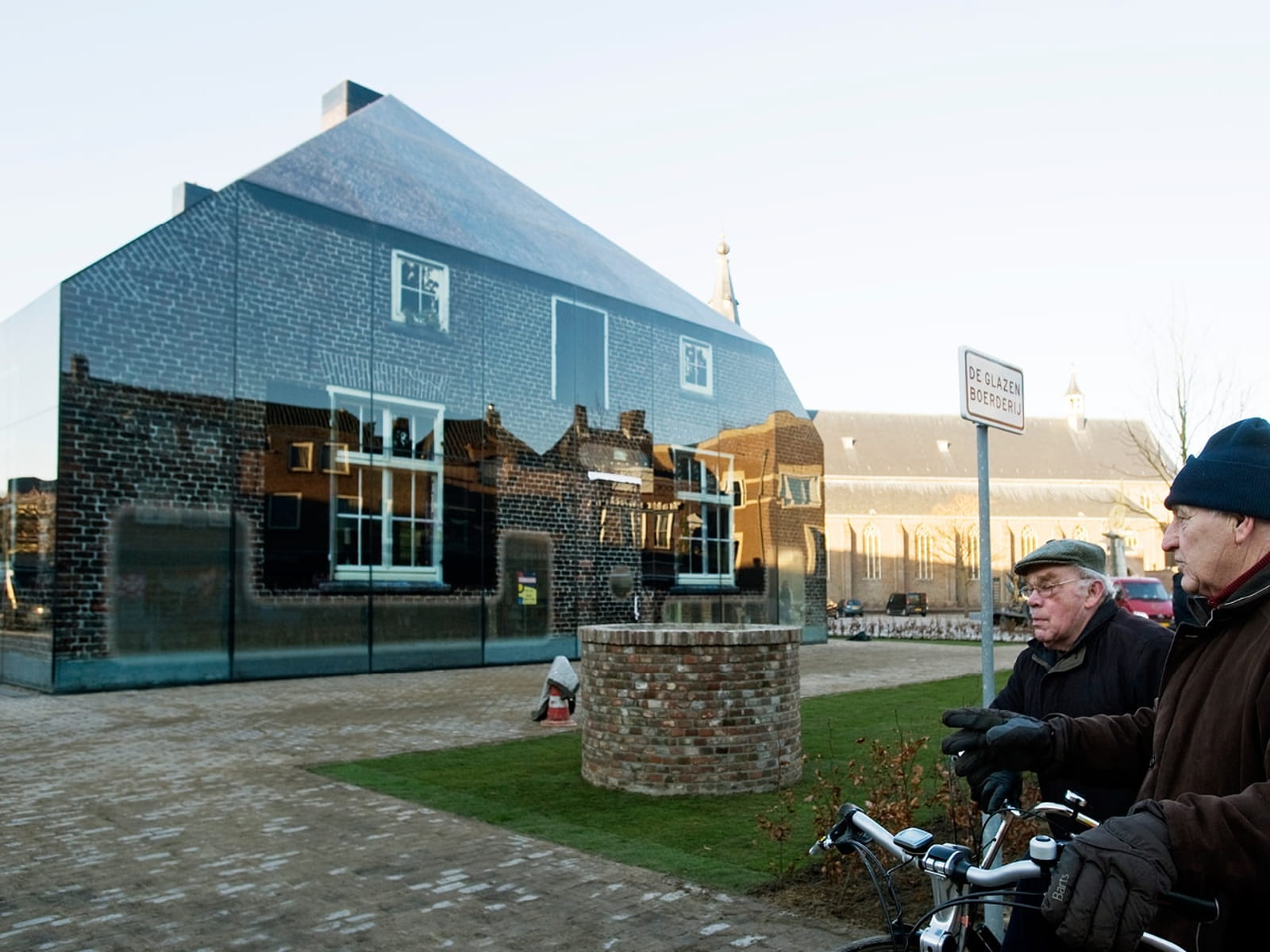
Glass Farm by MVRDV is a realised mixed-use building in the market square of Schijndel, Netherlands that responds to the long-standing challenge of filling the void left by World War II bomb damage. The project is MVRDV’s seventh proposal for the site and is defined by a glass envelope onto which a photographic collage of a ‘typical’ traditional Schijndel farm—developed from images of all remaining local farms—is printed.
Scaled 1.6 times larger than a real farm, the design creates a monumental reinterpretation of the vernacular farmhouse. The 1,600 m² building houses a variety of public amenities including retail, cultural functions, bar-restaurants, and wellness spaces behind its striking glazed façade.
Variable translucency in the printed glass and internal illumination at night reinforce the building’s presence and layered dialogue between tradition and contemporary architecture.
Dutch Pavilion at Expo 2000 in Hannover
Expo 2000 was the Netherlands Pavilion designed by MVRDV for the 2000 World Expo in Hannover, Germany. The pavilion’s theme, “Holland creates Space,” explored how a densely populated country can make the most of limited land.
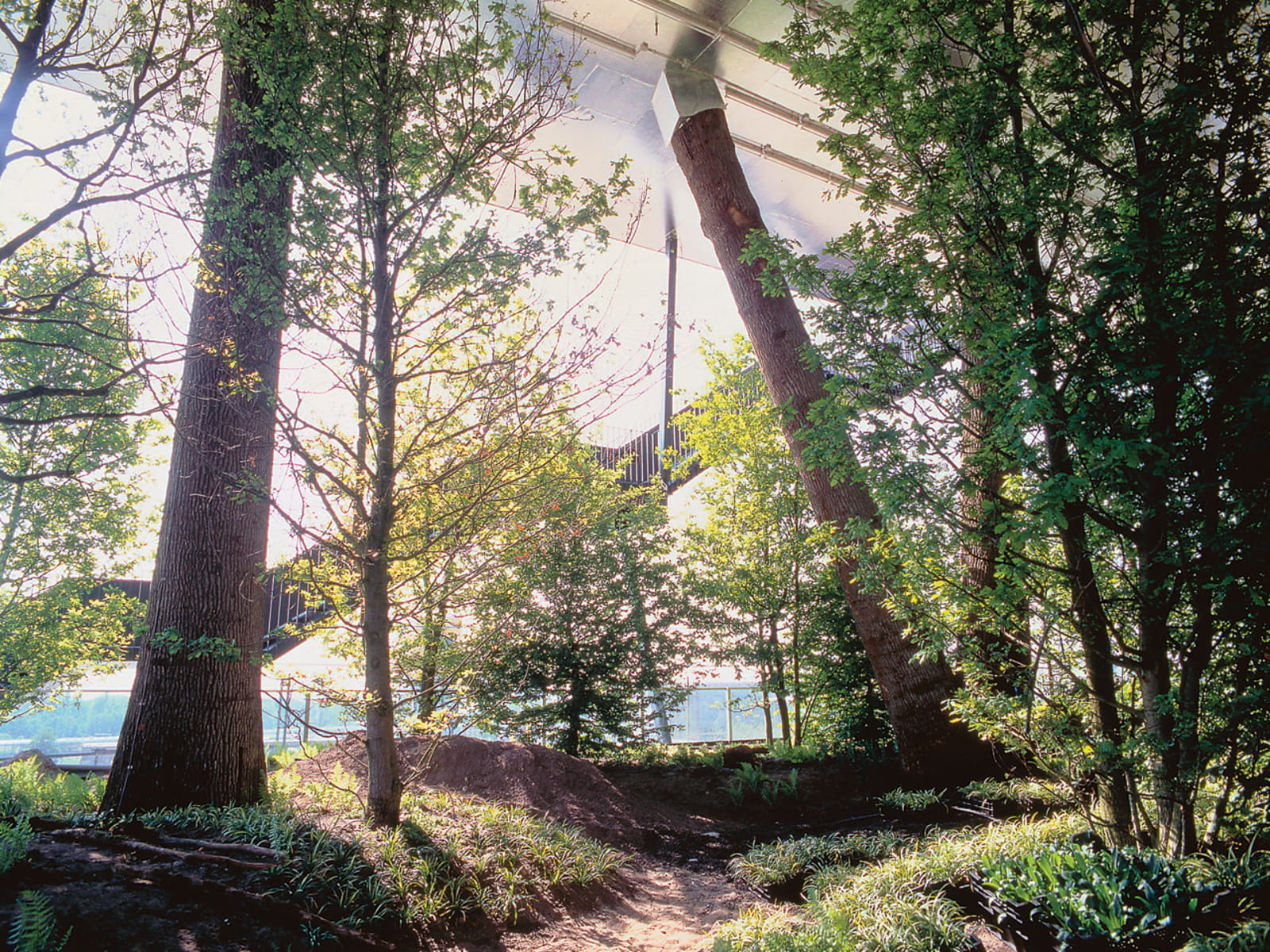
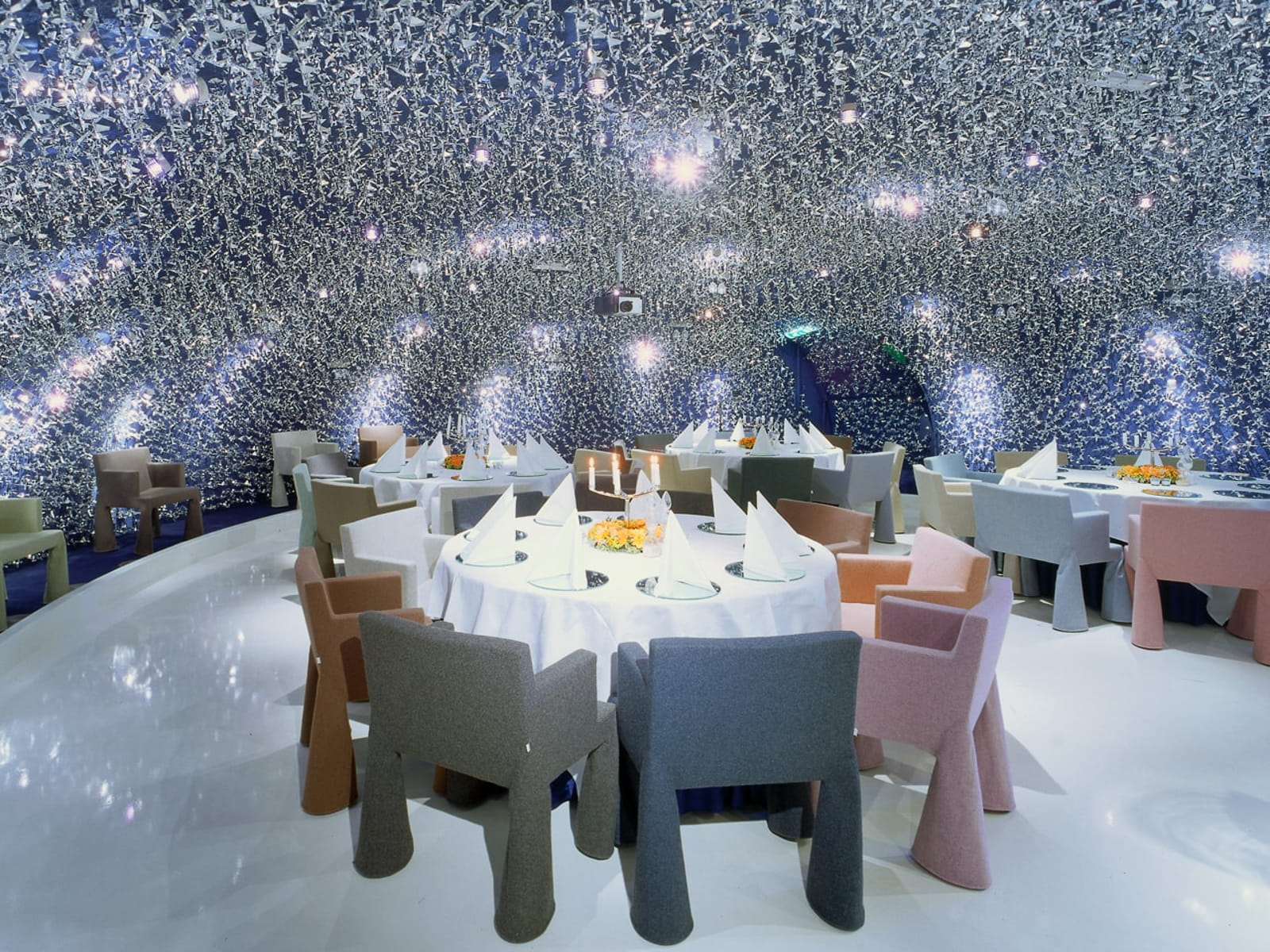
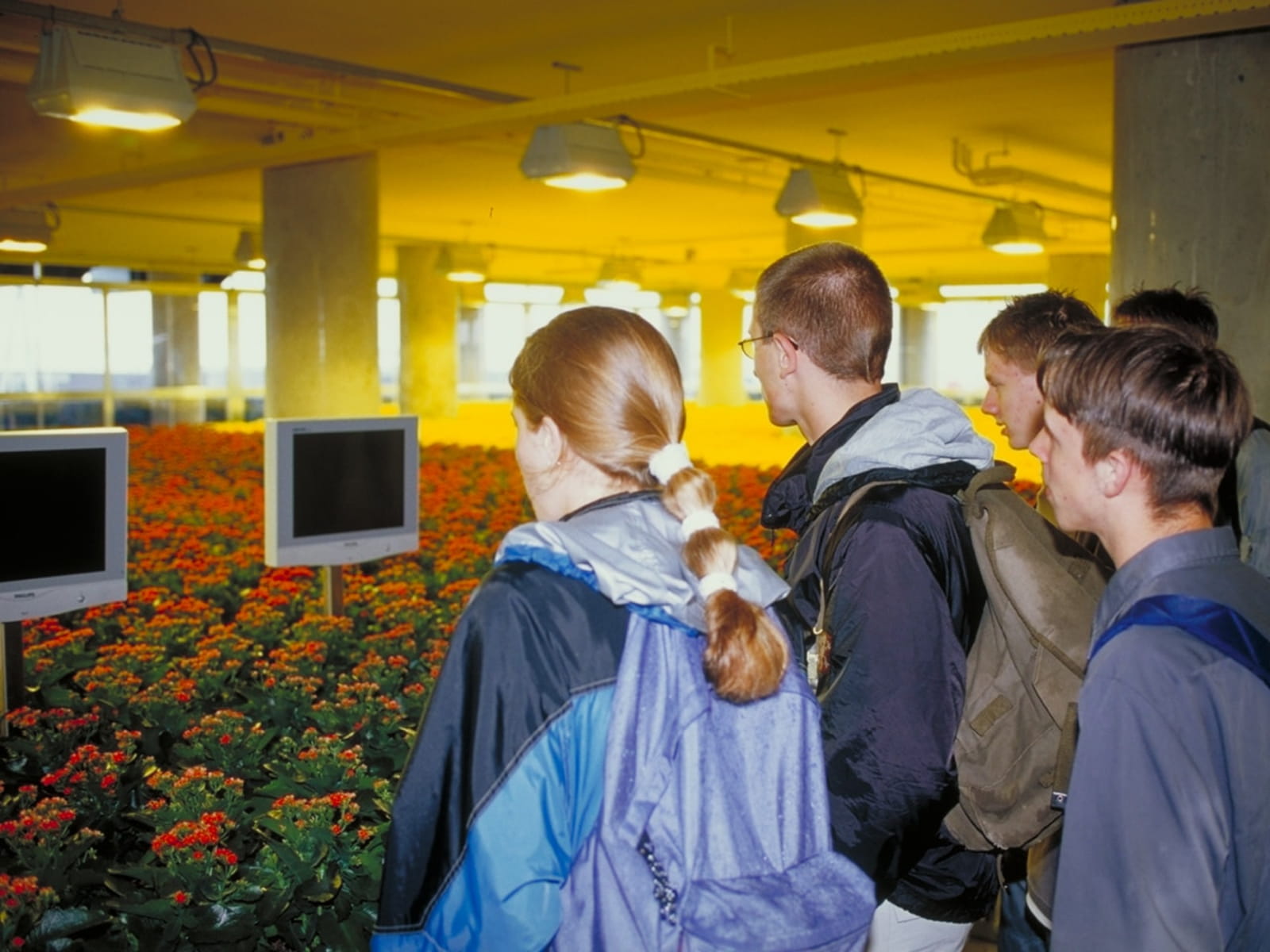
Six distinct Dutch landscapes were stacked into a vertical composition, forming an independent eco-system that symbolised Dutch cultural sustainability by blending progressive thinking and contemporary culture with traditional values. The architecture referenced familiar elements of the Dutch landscape—like tulips, windmills, and dykes—while also suggesting the nation’s open-minded approach to space and nature.
Rather than treating nature and technology as opposites, the design proposed that they could reinforce one another, creating multi-level public spaces that extend the existing landscape and allow for visibility, accessibility, and interaction.
The pavilion was realised between 1997 and 2000 and earned architectural recognition for its innovative approach.
Villa VPRO in Hilversum, Netherlands (1997)
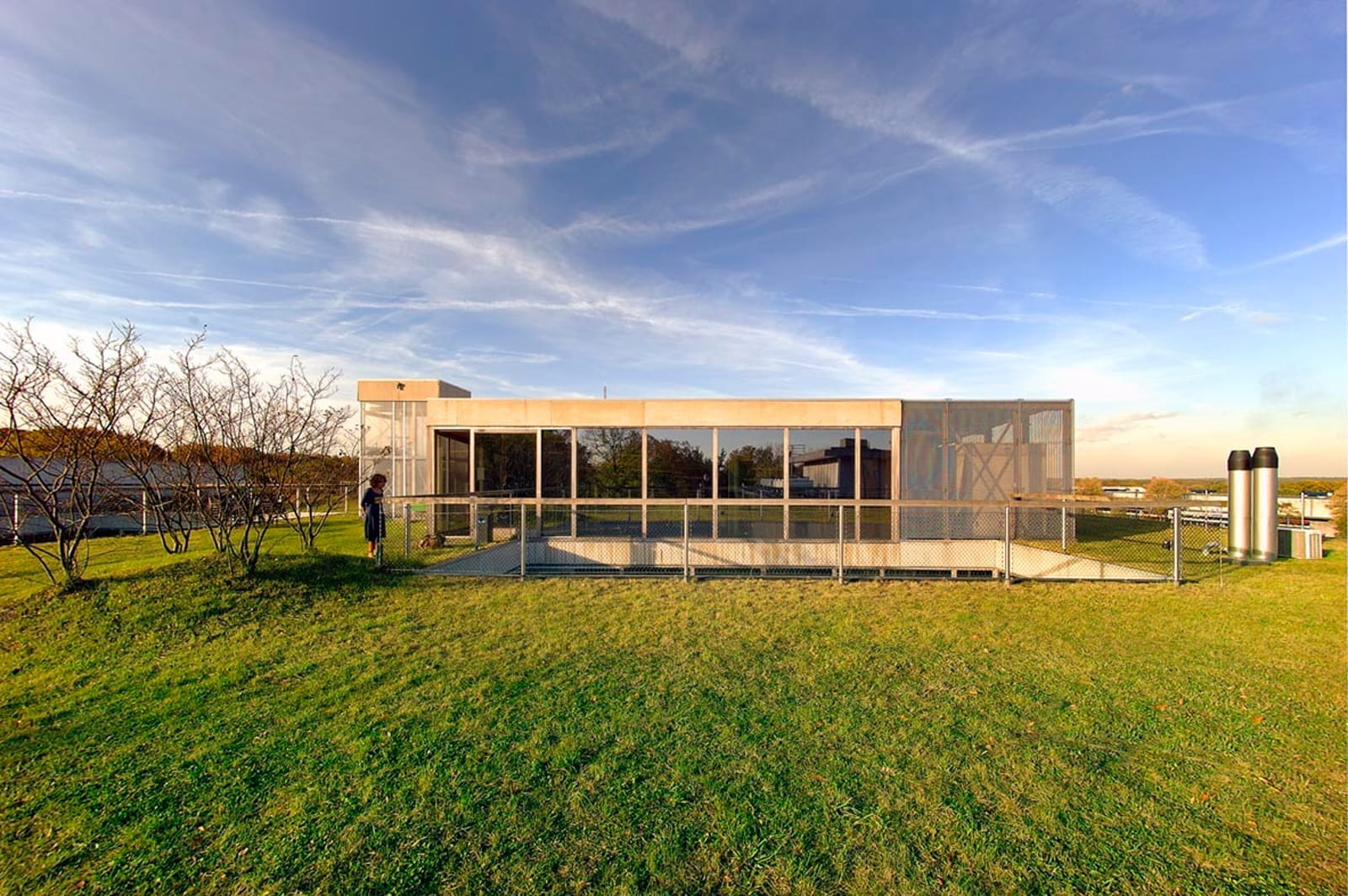
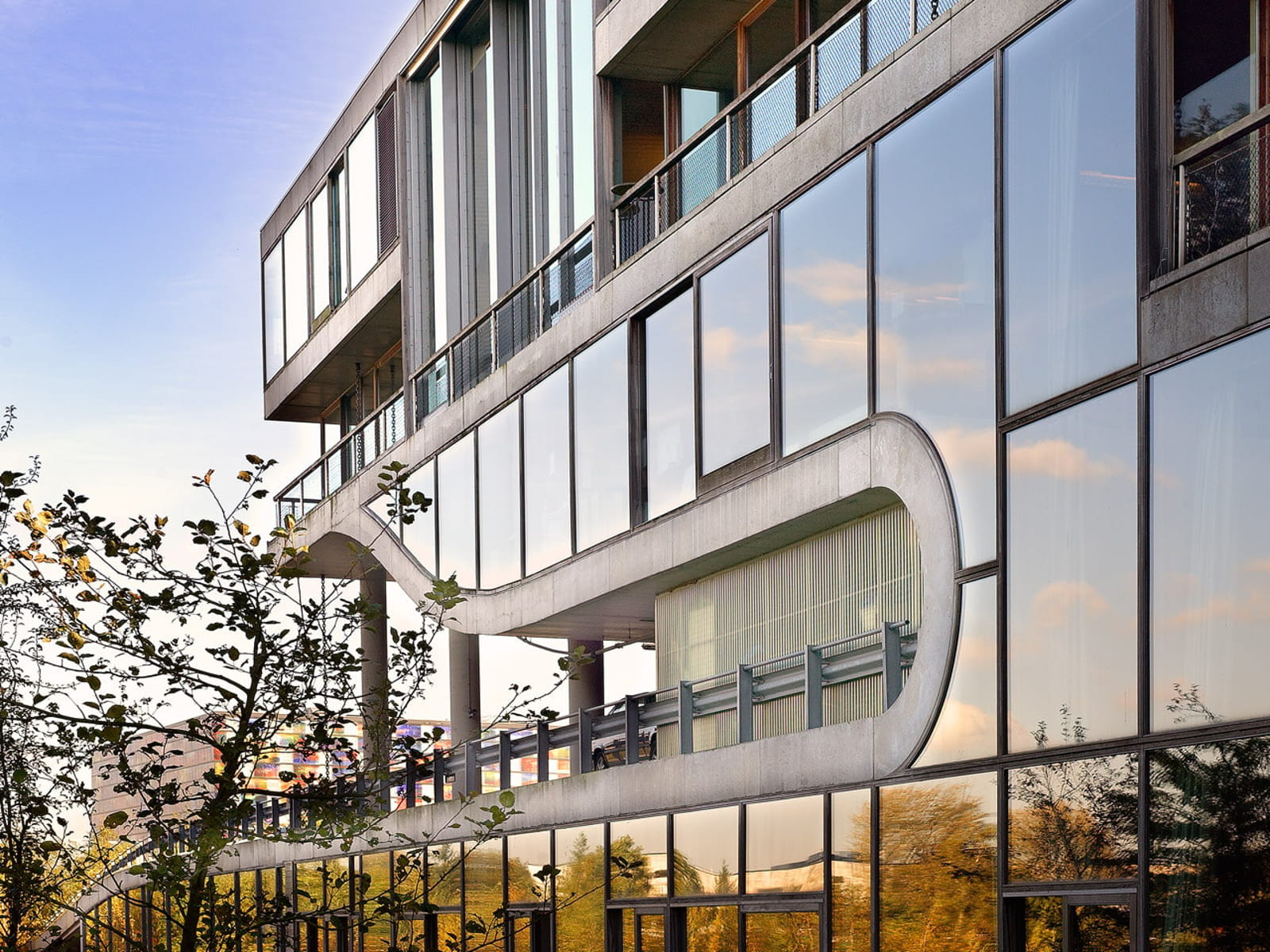
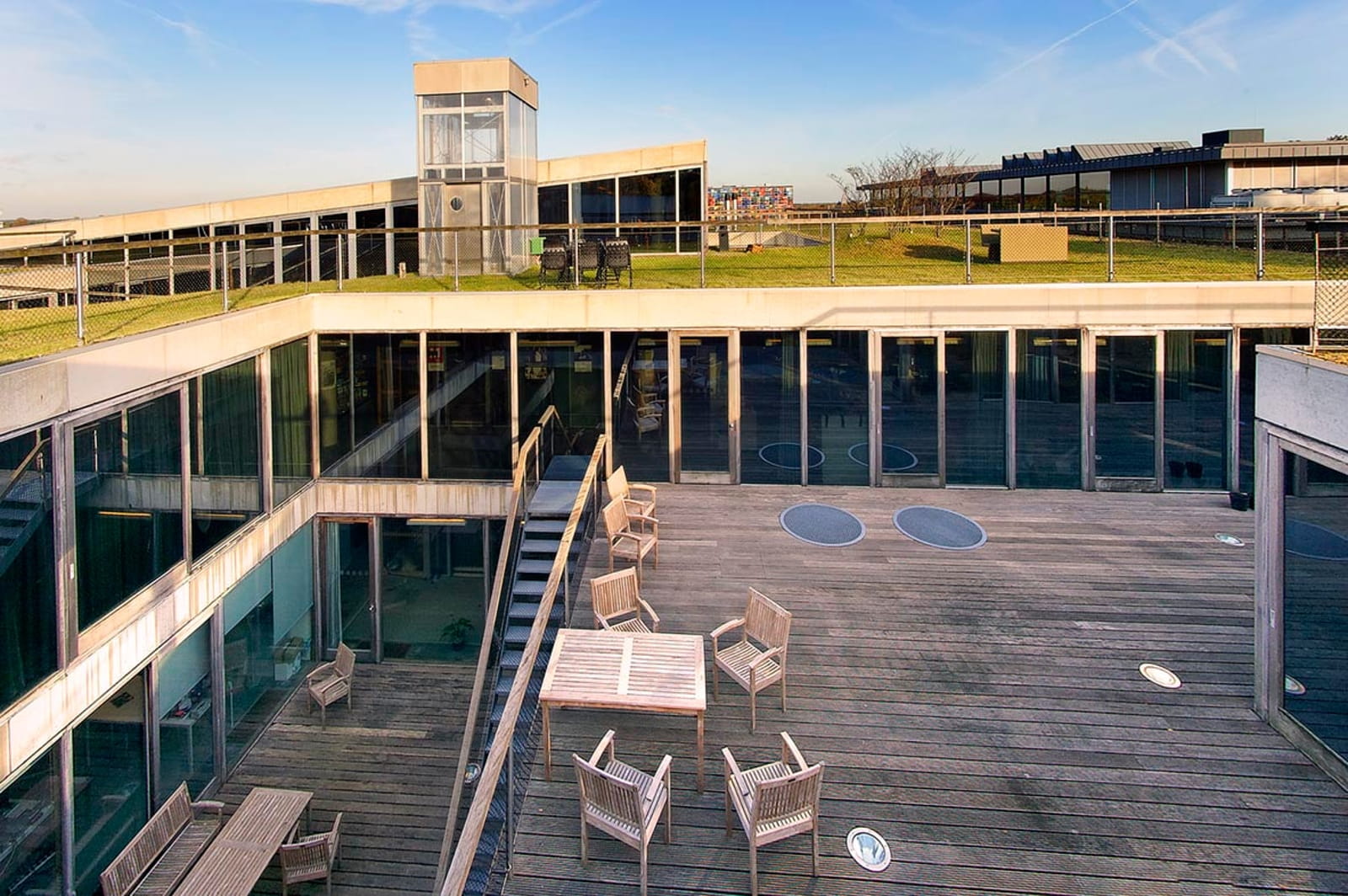
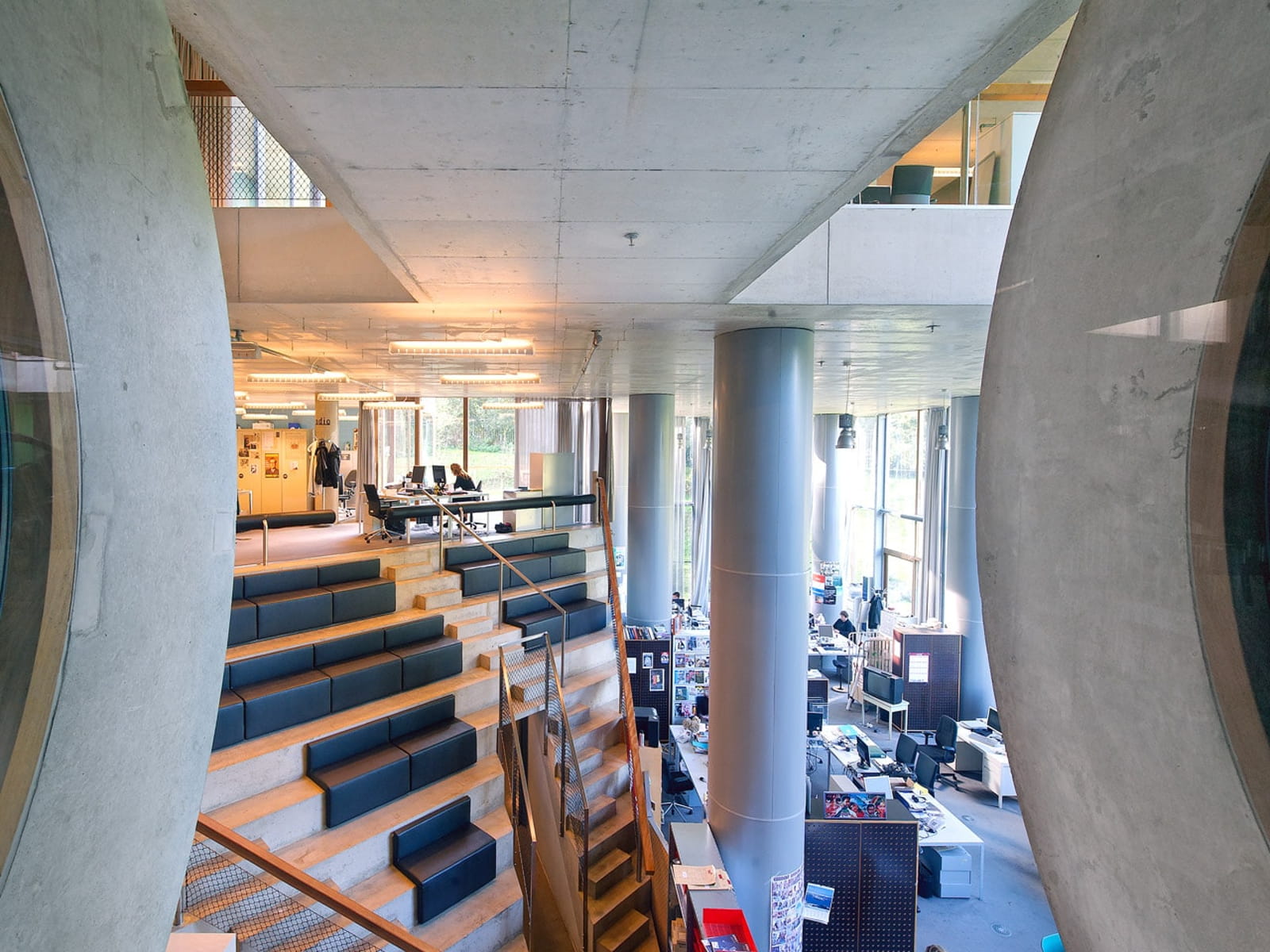
Villa VPRO, realised in 1997, is the first completed project by MVRDV, located in Hilversum, Netherlands. Inspired by the informal spatial qualities of the broadcasting company’s former villas, the design departs from traditional office typologies by creating an undulating, stepped concrete landscape that allows people to transition seamlessly between floors.
The building’s structure — with floors supported by a grid of columns and stabilising props — maximises transparency and eliminates typical office partitions, while technical systems are discreetly hidden within hollow floors and semi-transparent shafts. Materials such as stone, steel, wood, and plastic replace conventional finishes, and generous floor-to-ceiling apertures connect interior spaces with gardens, balconies, terraces and patios.
A verdant grass-covered roof embraces the building’s “geological” form and replaces the landscape lost to construction. Villa VPRO integrates diverse spatial typologies — echoing lounges, attics, patios and halls — into a dynamic, flexible workplace.
WoZoCo in Amsterdam (1997)
WoZoCo is the first housing complex realised by MVRDV, completed between 1994–1997 in Amsterdam-Osdorp, Netherlands for the Het Oosten Housing Association.
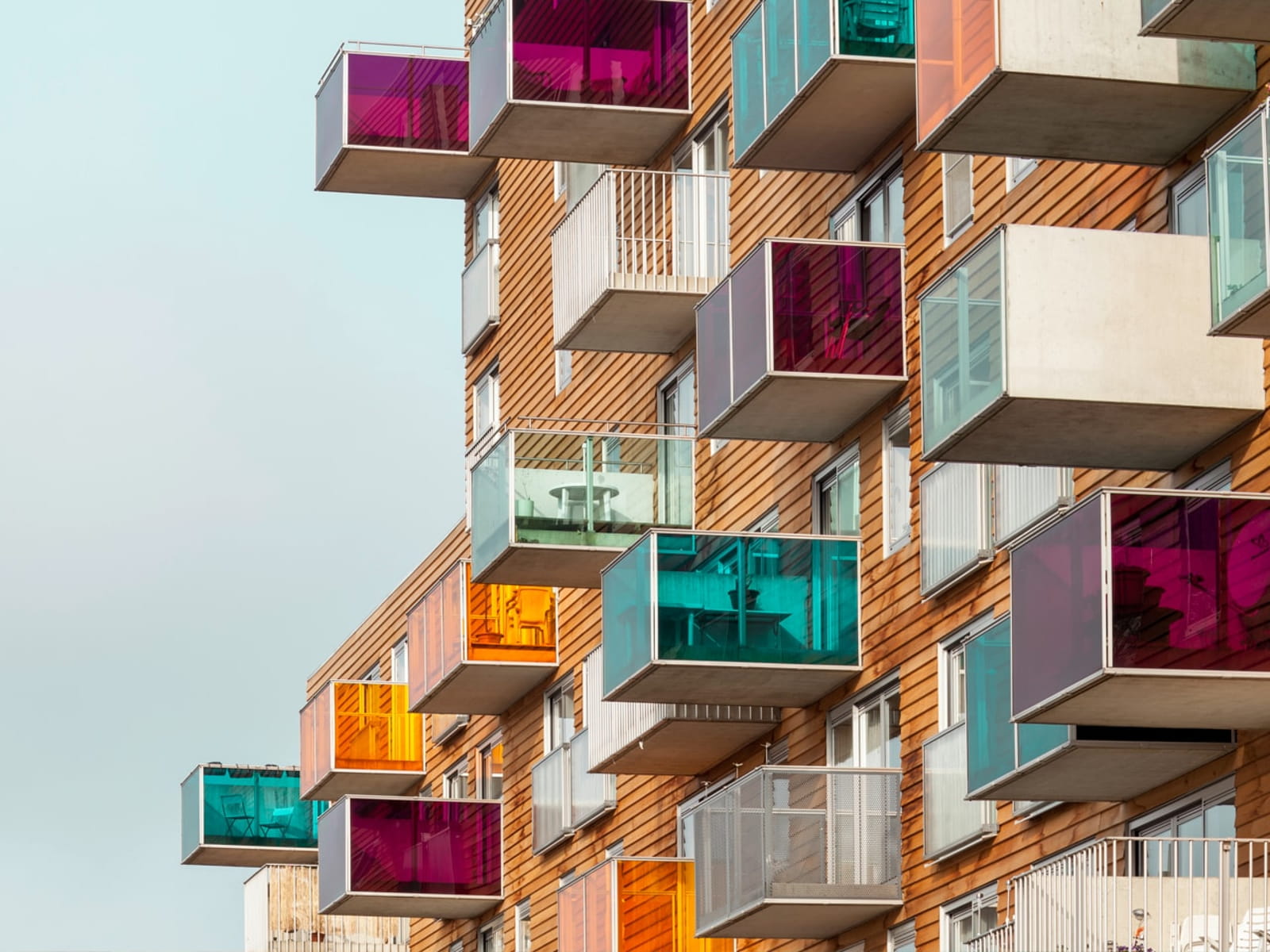
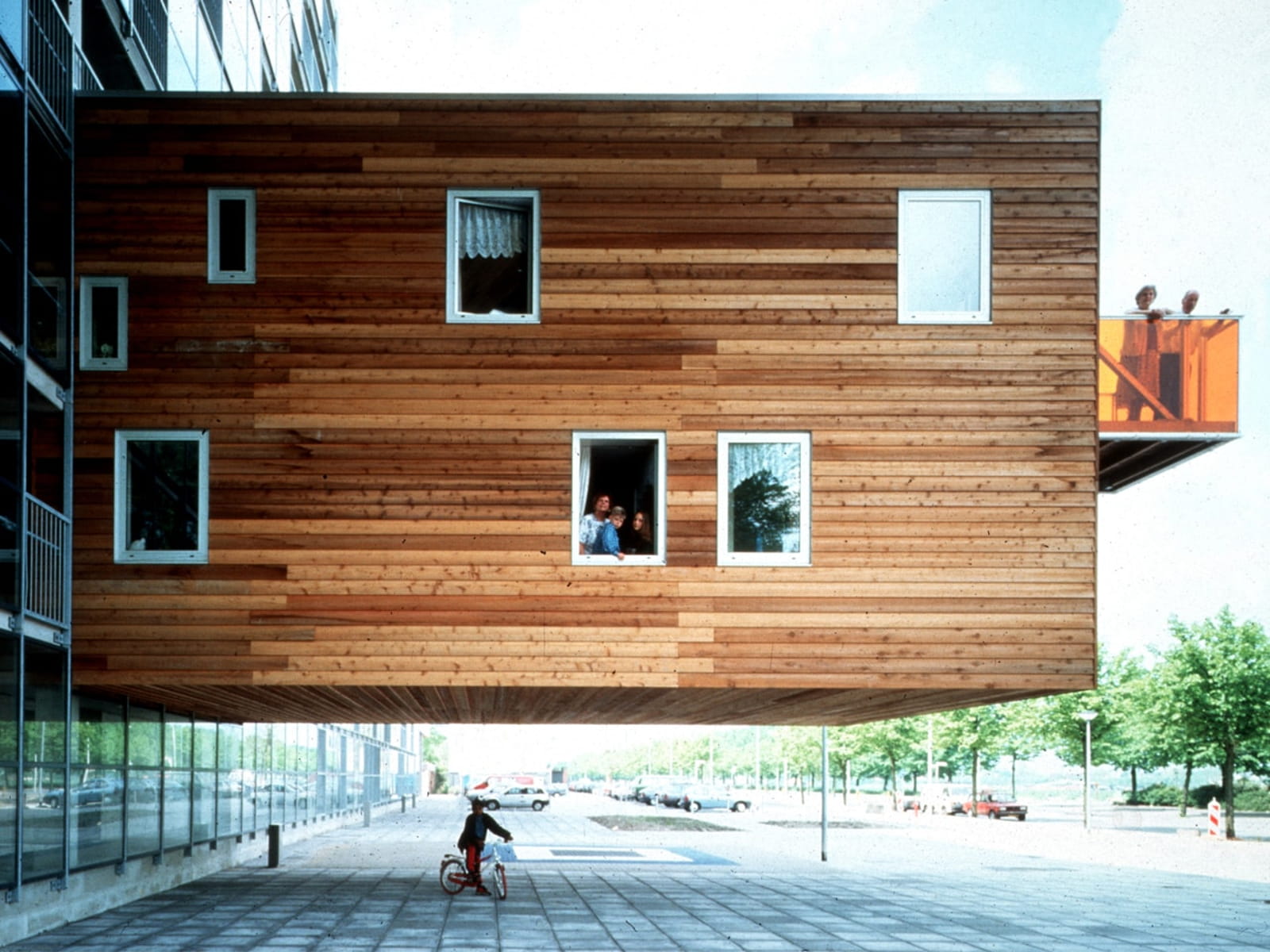
Designed to provide 100 residential units for elderly residents, the project responds directly to site constraints and urban context. Due to zoning and daylight requirements, only 87 units fit within the main slab of the building. To achieve the required programme without reducing open space, MVRDV proposed cantilevering the remaining 13 apartments from the north façade, giving them an East-West orientation and views over the adjacent meadow without compromising sunlight for other units.
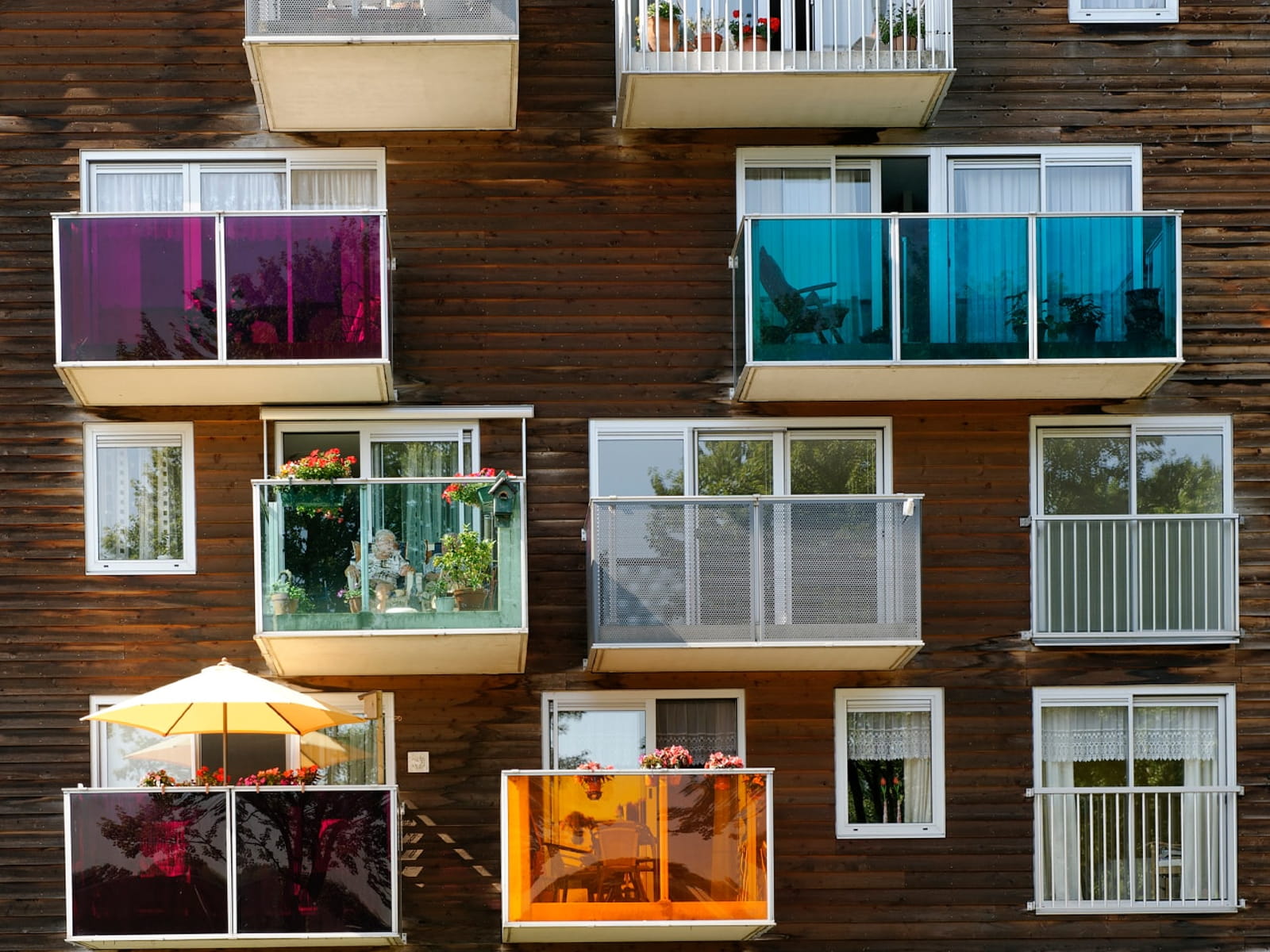
This inventive approach not only maximised housing capacity but also preserved the quality of public and green spaces. Variations in window positions, balcony sizes, and materials give each apartment its own character, while smart, cost-saving design solutions helped make WoZoCo one of the most economically efficient social housing projects in Amsterdam.
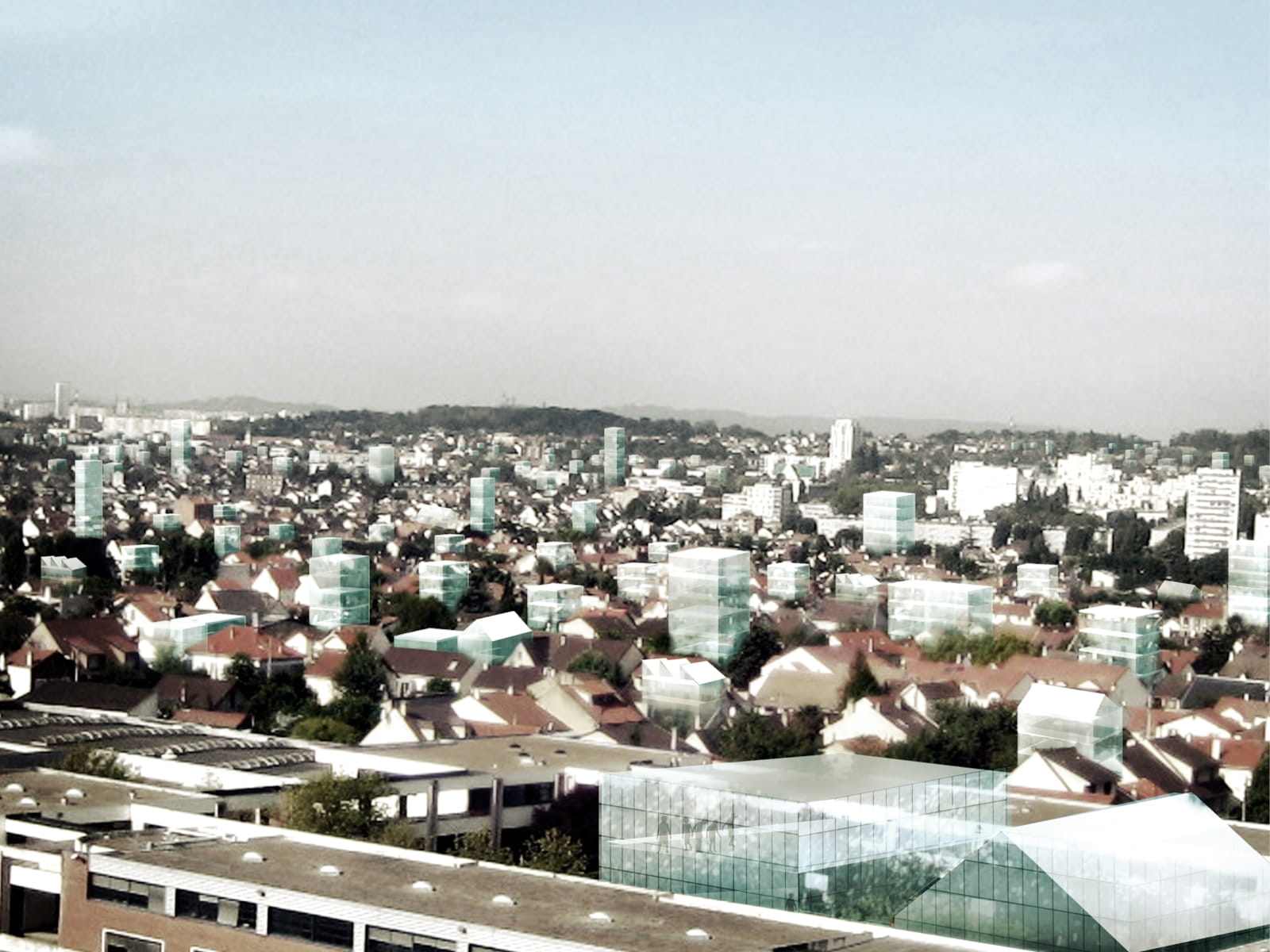
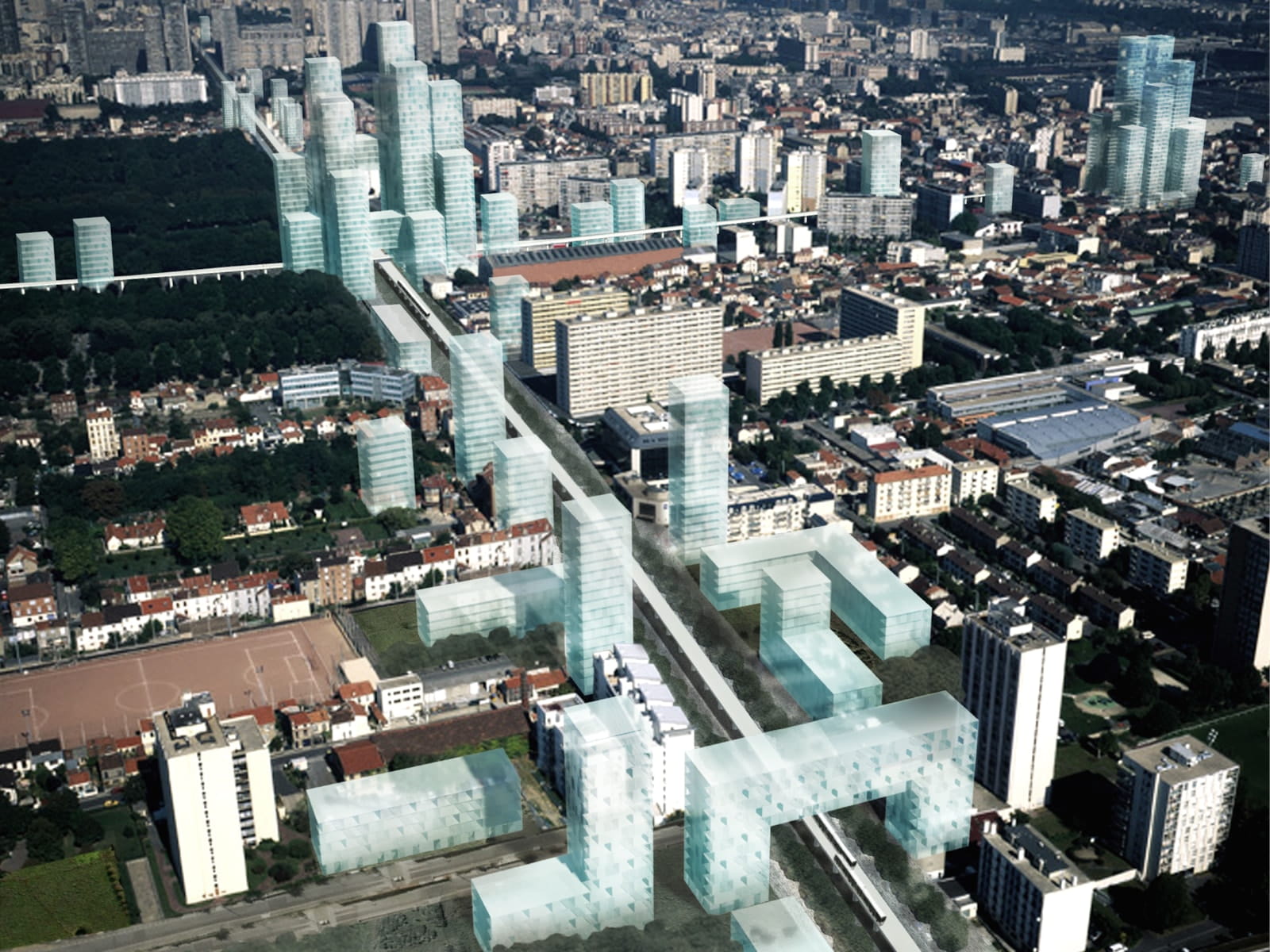
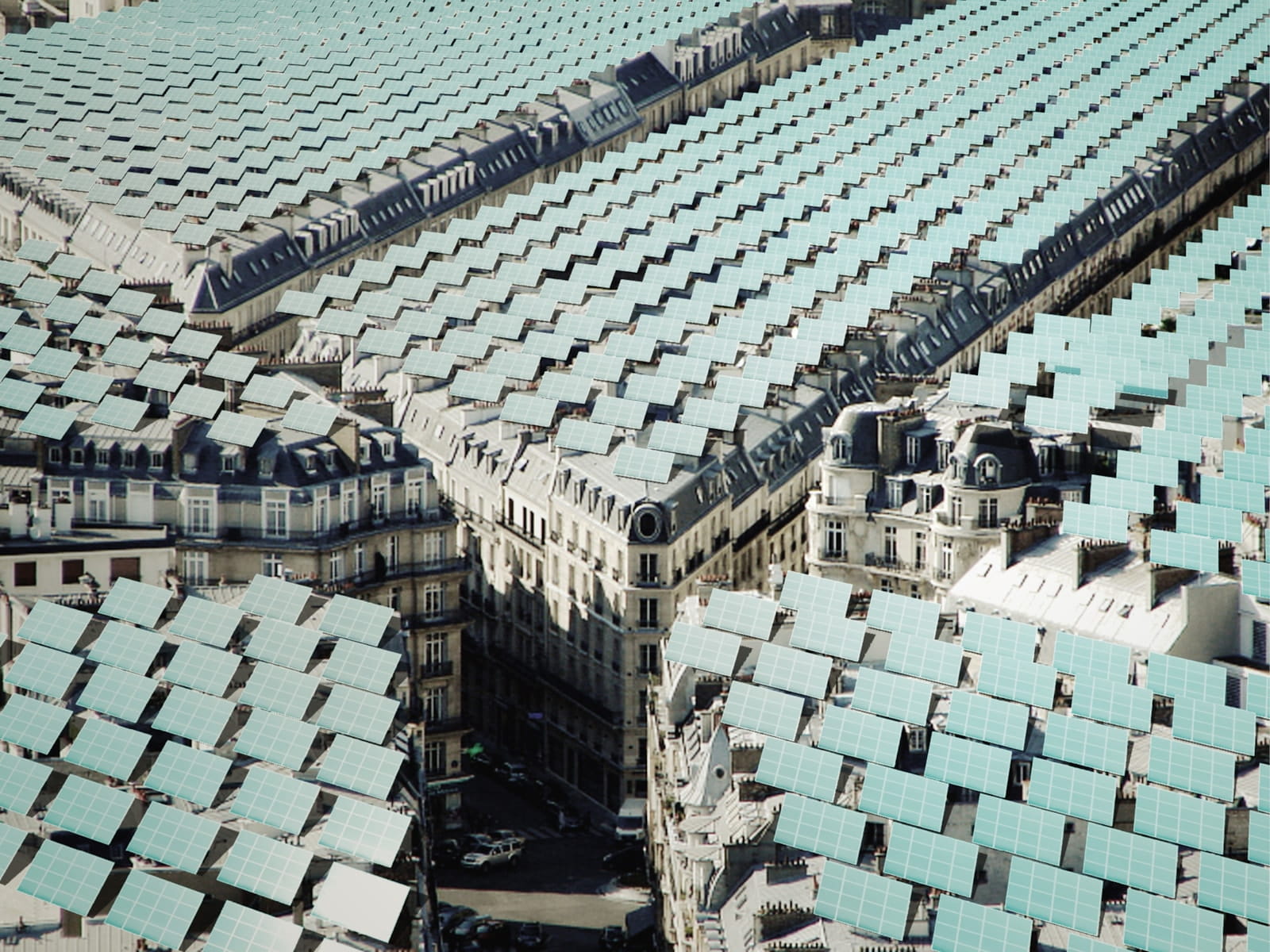
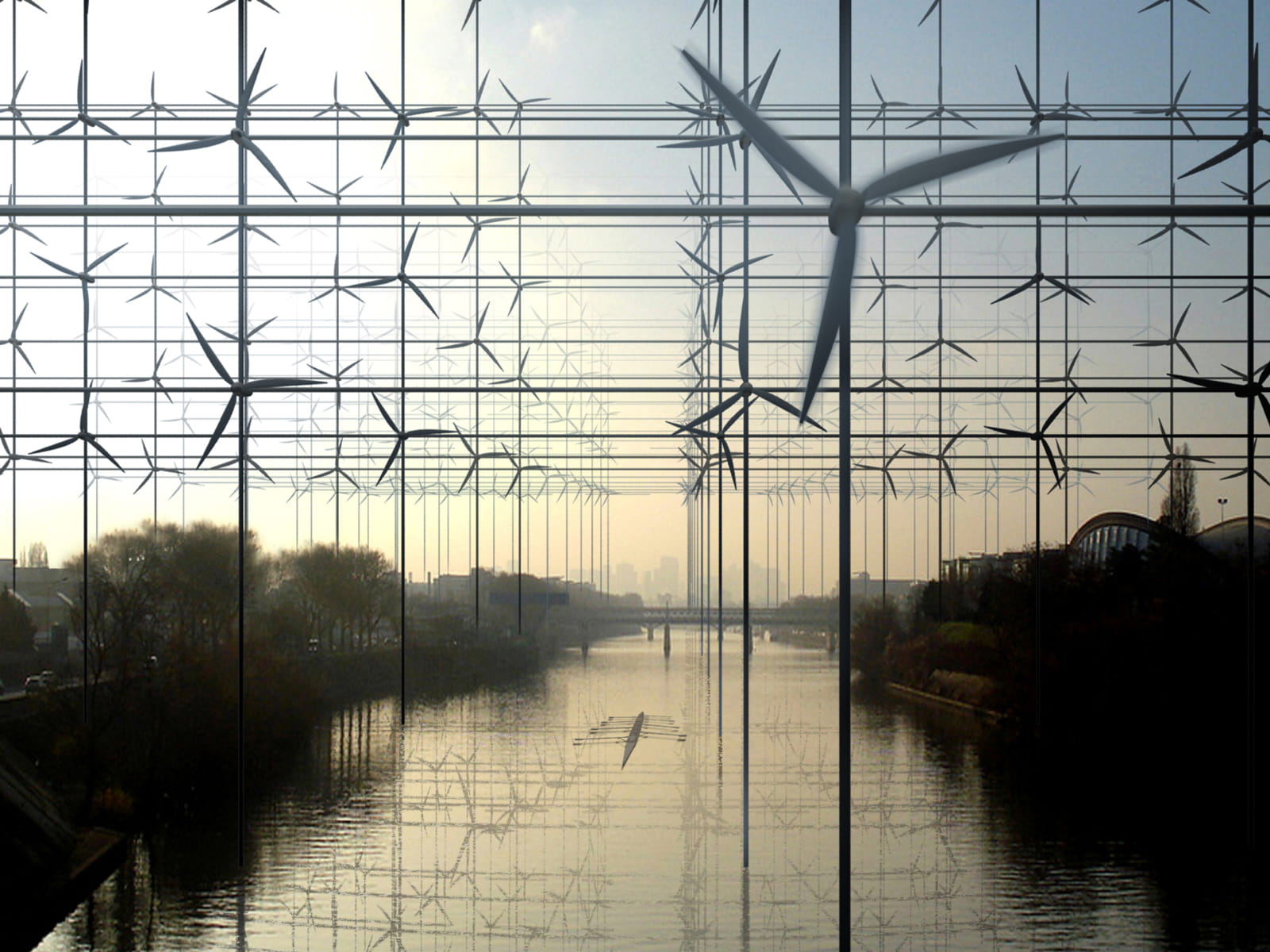
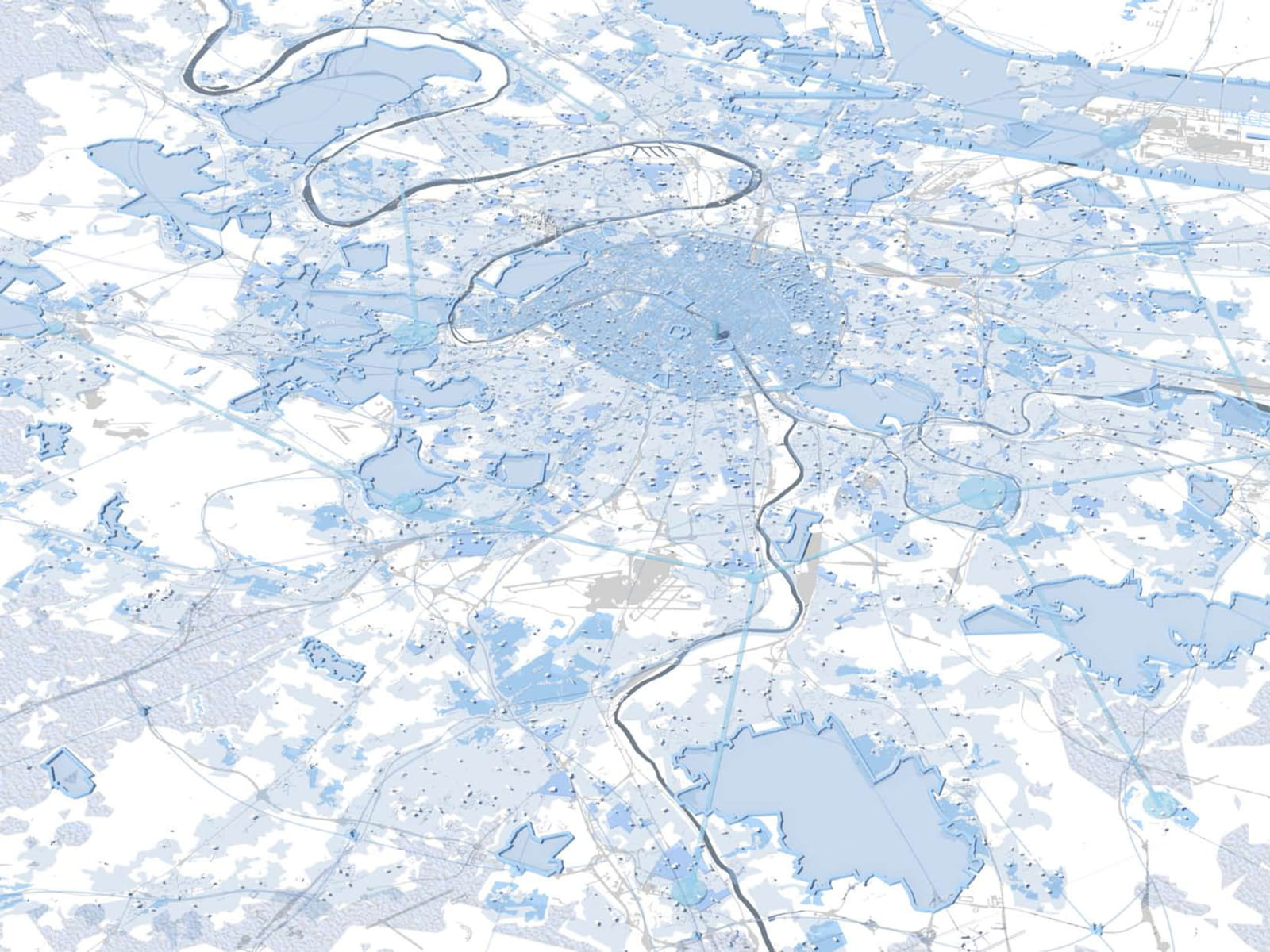
Future of Greater Paris (2009)
Grand Paris is a visionary urban planning proposal by MVRDV, developed in collaboration with ACS and AAF in response to France’s 2008 national consultation for the Greater Paris region. The project, realised as a master plan design (2008–2009) for the French Ministry of Culture and Communication, reimagines Paris as one of the most compact, dense, and sustainable high-quality cities in the world under the concept “Paris Plus petit.”
Rather than expanding outward, the vision proposes a spatial agenda that balances ambition with responsibility, preserving historical continuity while accommodating future growth through 17 large-scale interventions informed by analysis of urban fabric, spatial possibilities, and programmatic needs. Strategies include creating a grand central station at Les Halles, densifying below the Périphérique with additional metro lines and infrastructure, freeing surface space for housing, and investing in transport, nature, education, culture, social cohesion, and renewable energy.
Grand Paris reframes metropolitan transformation as a holistic negotiation between density, sustainability, infrastructure, and quality of life.
Left Bank in Bordeaux
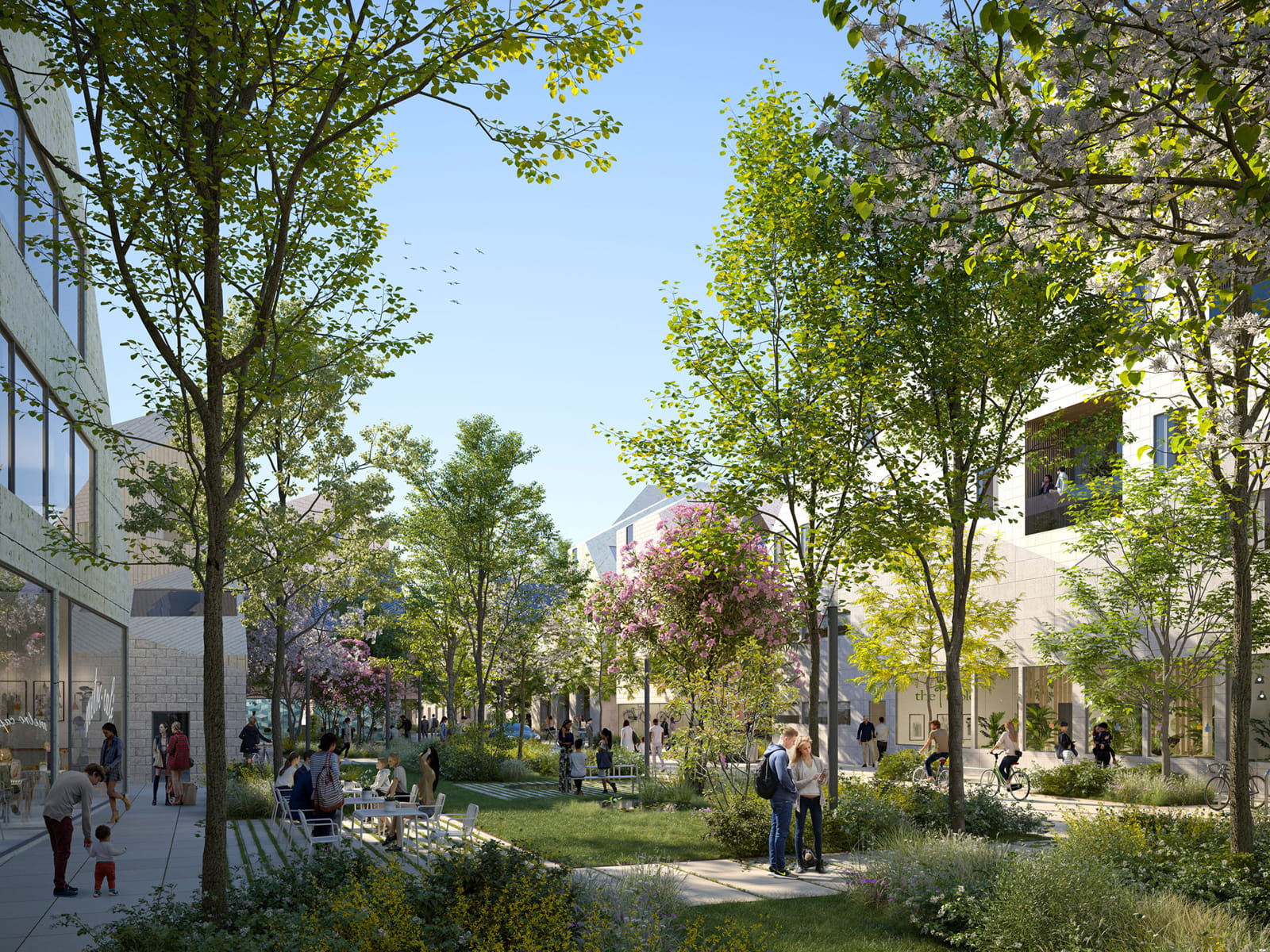
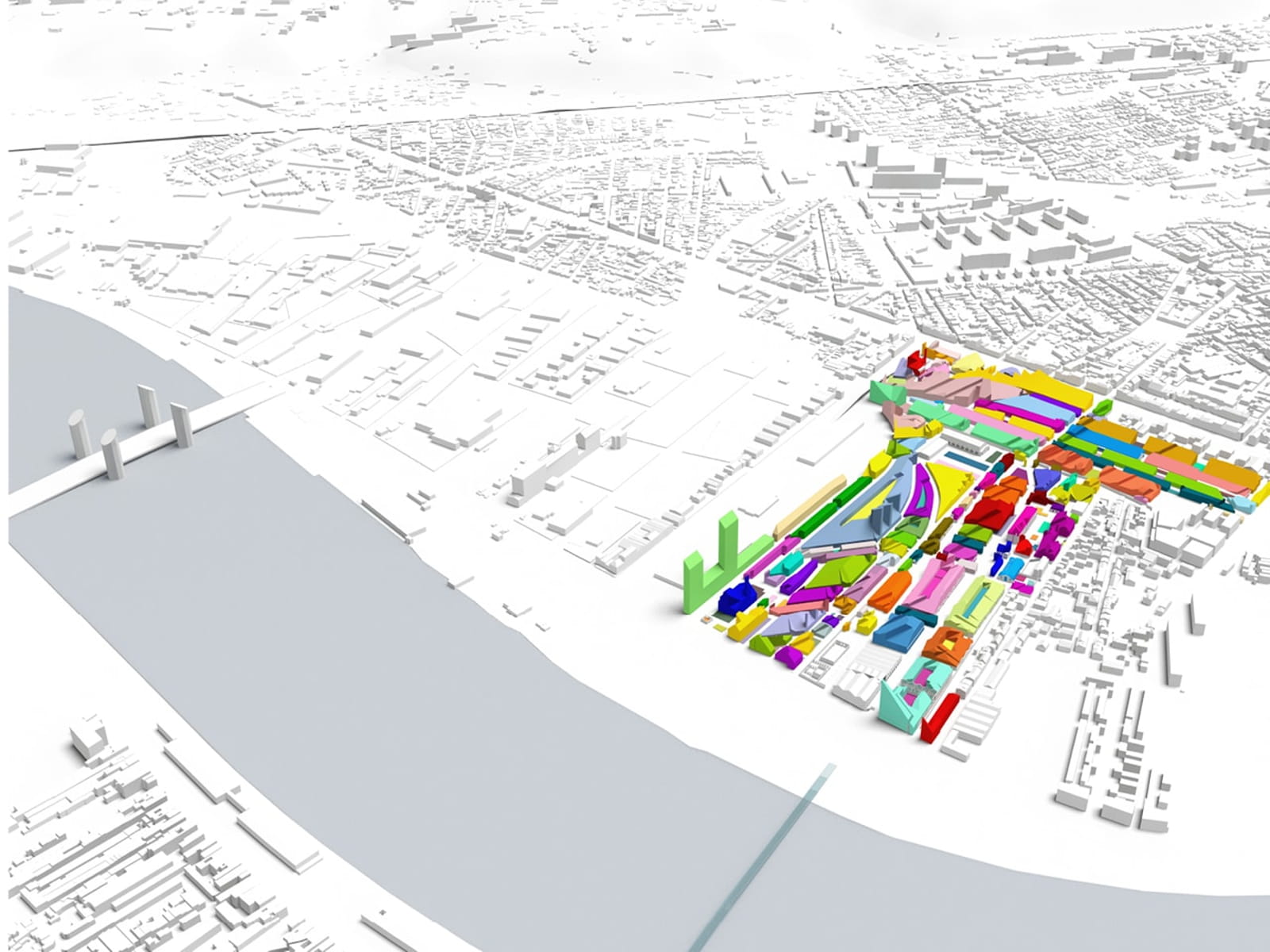
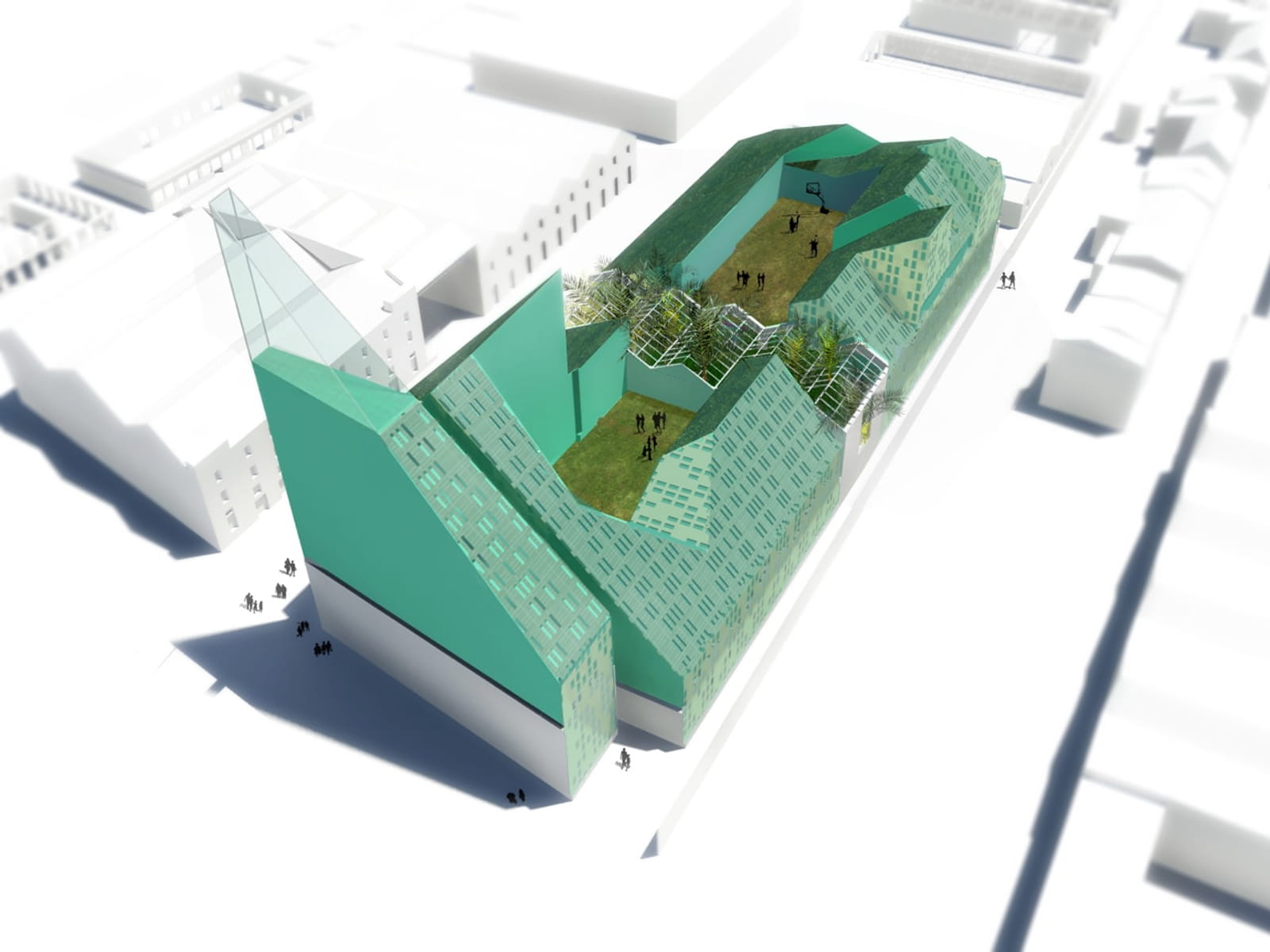
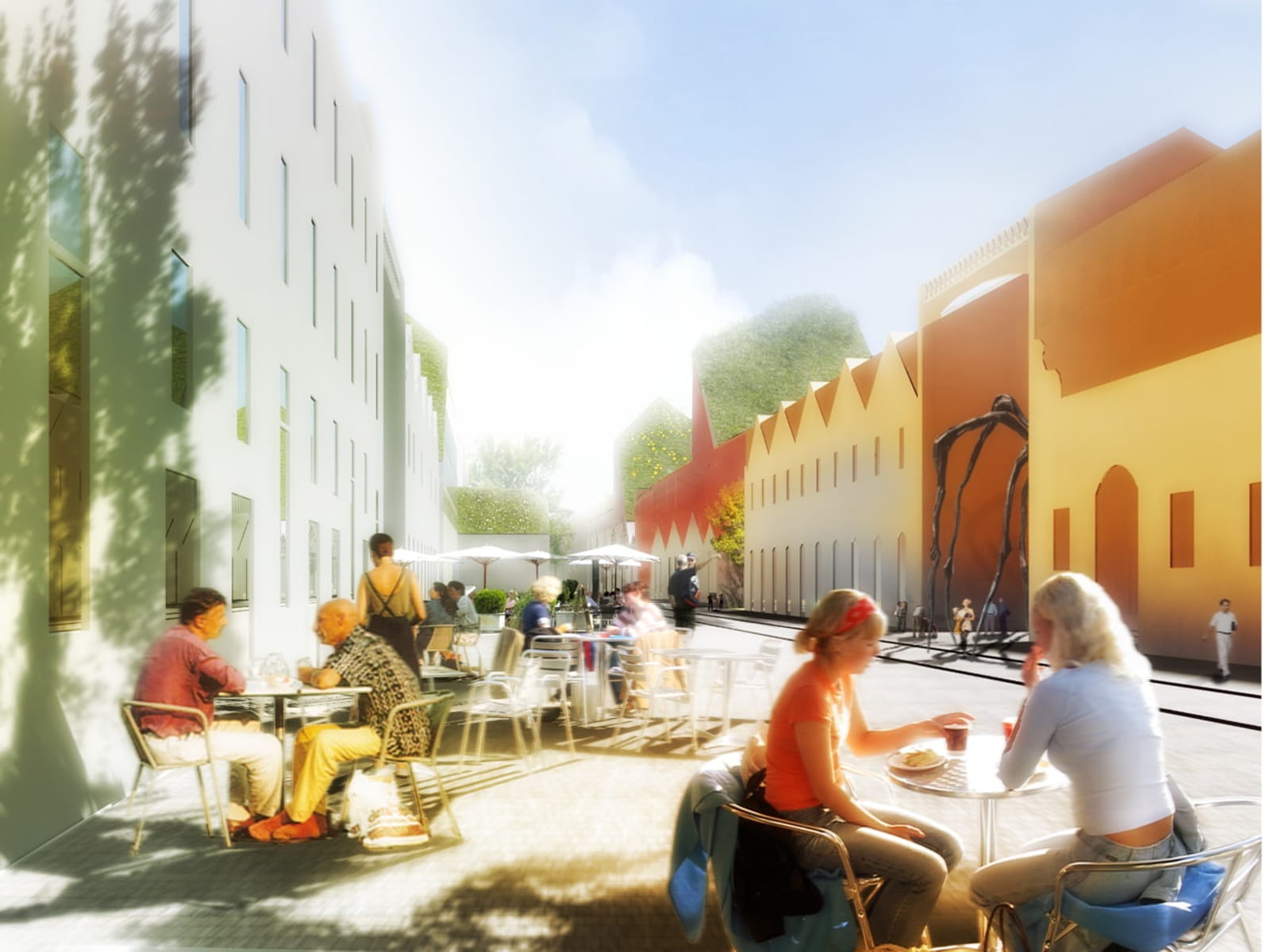
Bastide Niel is an ambitious masterplan by MVRDV to transform a 35 hectare site of former barracks and railyards in the centre of Bordeaux, France into a vibrant new urban district. The design seeks to create a neighbourhood that is both rooted in the tradition of the European city and updated for contemporary life—historic, mixed, intimate, light, green, and dense.
The plan carefully retains and densifies existing structures and rail artefacts, using their original layout to shape a network of narrow, shared-space streets that balance pedestrians, cyclists, public transport, and cars, creating an intimate urban fabric of 144 city blocks.
Public spaces are richly planted and designed to manage rainwater, while buildings throughout the district are guided by environmental principles like daylight access, solar integration, and natural ventilation. Bastide Niel will integrate housing, cultural facilities, offices, retail, and public infrastructure into a cohesive, sustainable urban neighbourhood.
Waterfront of Oslo (2016)
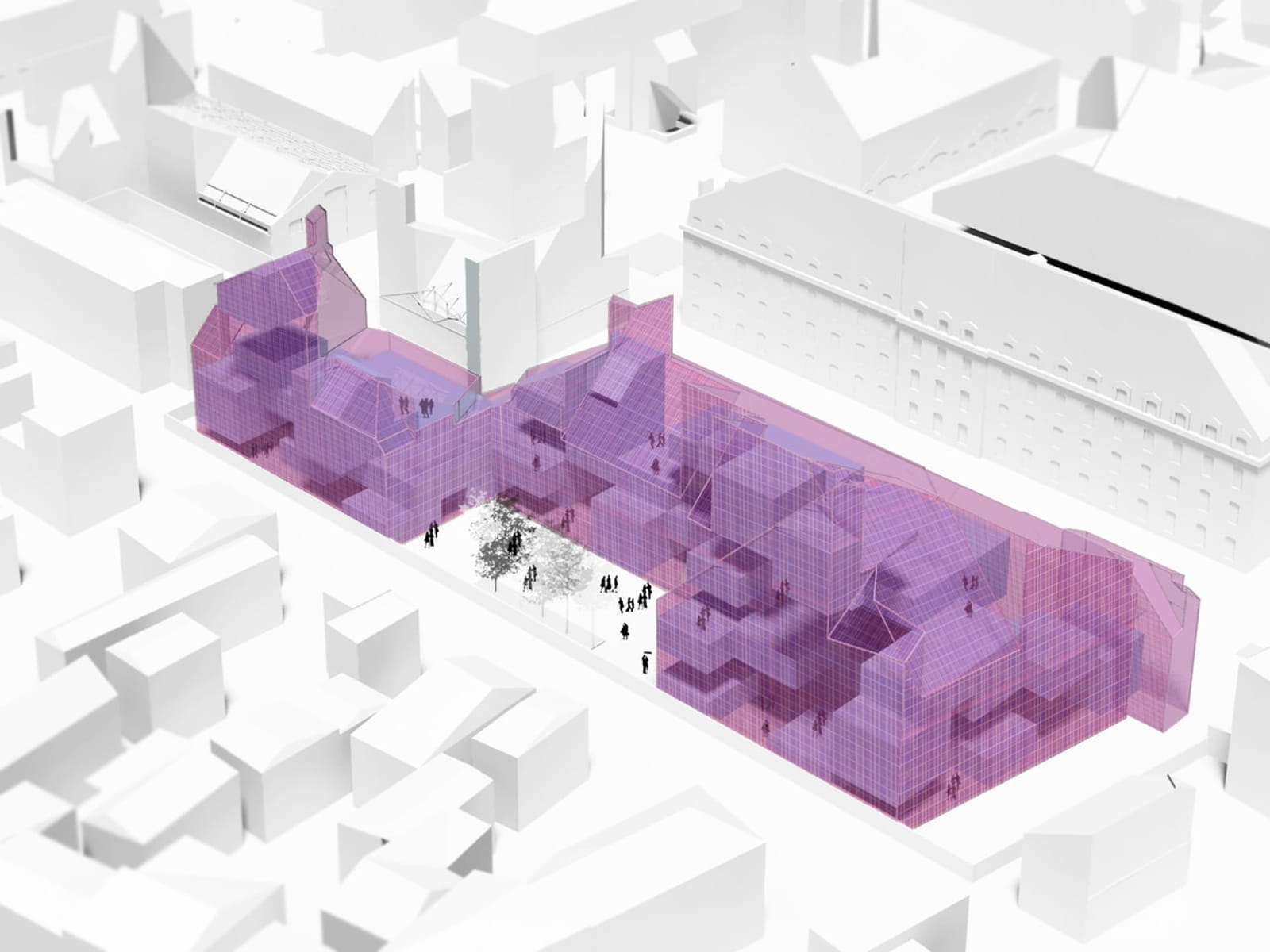
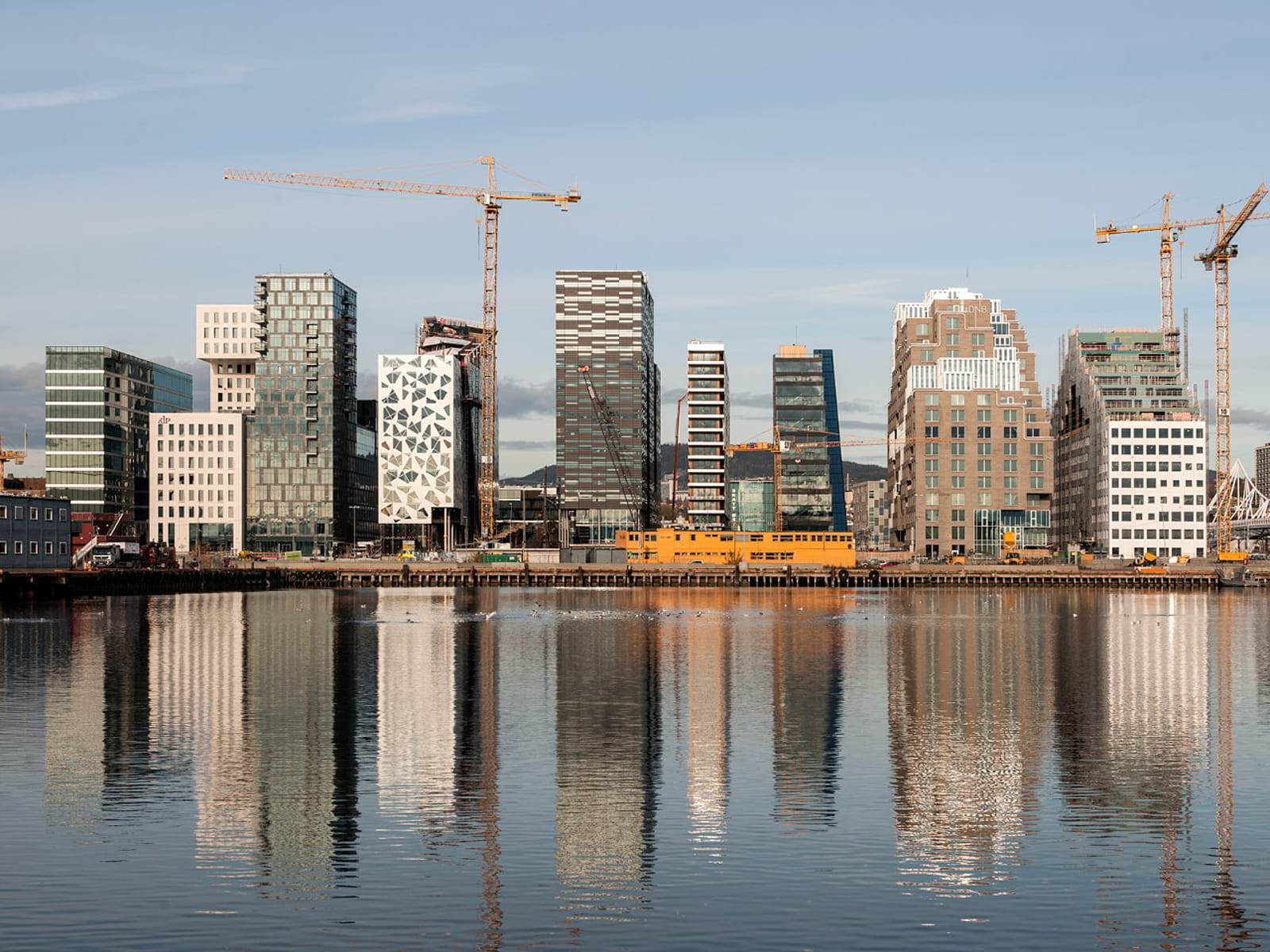
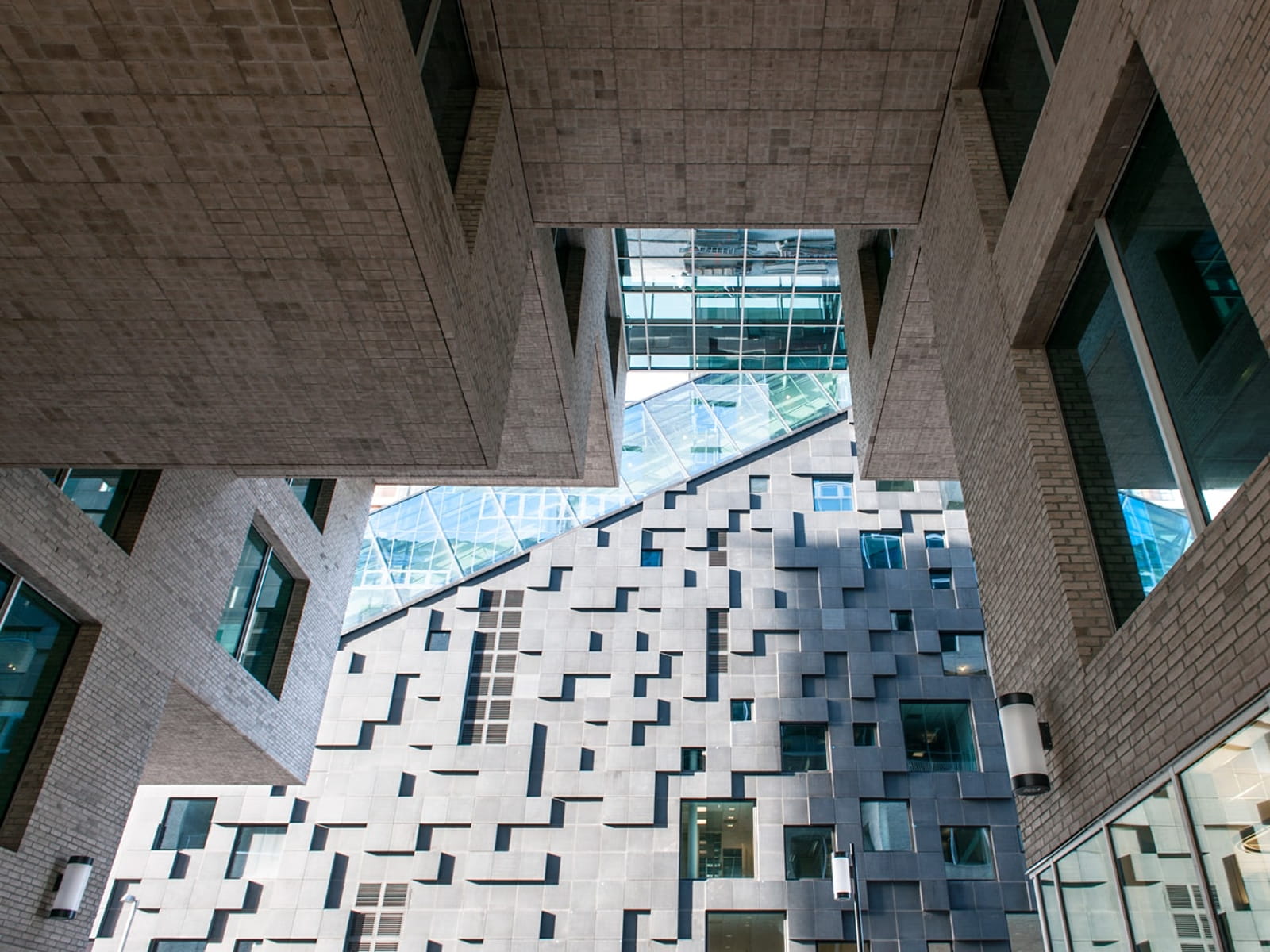
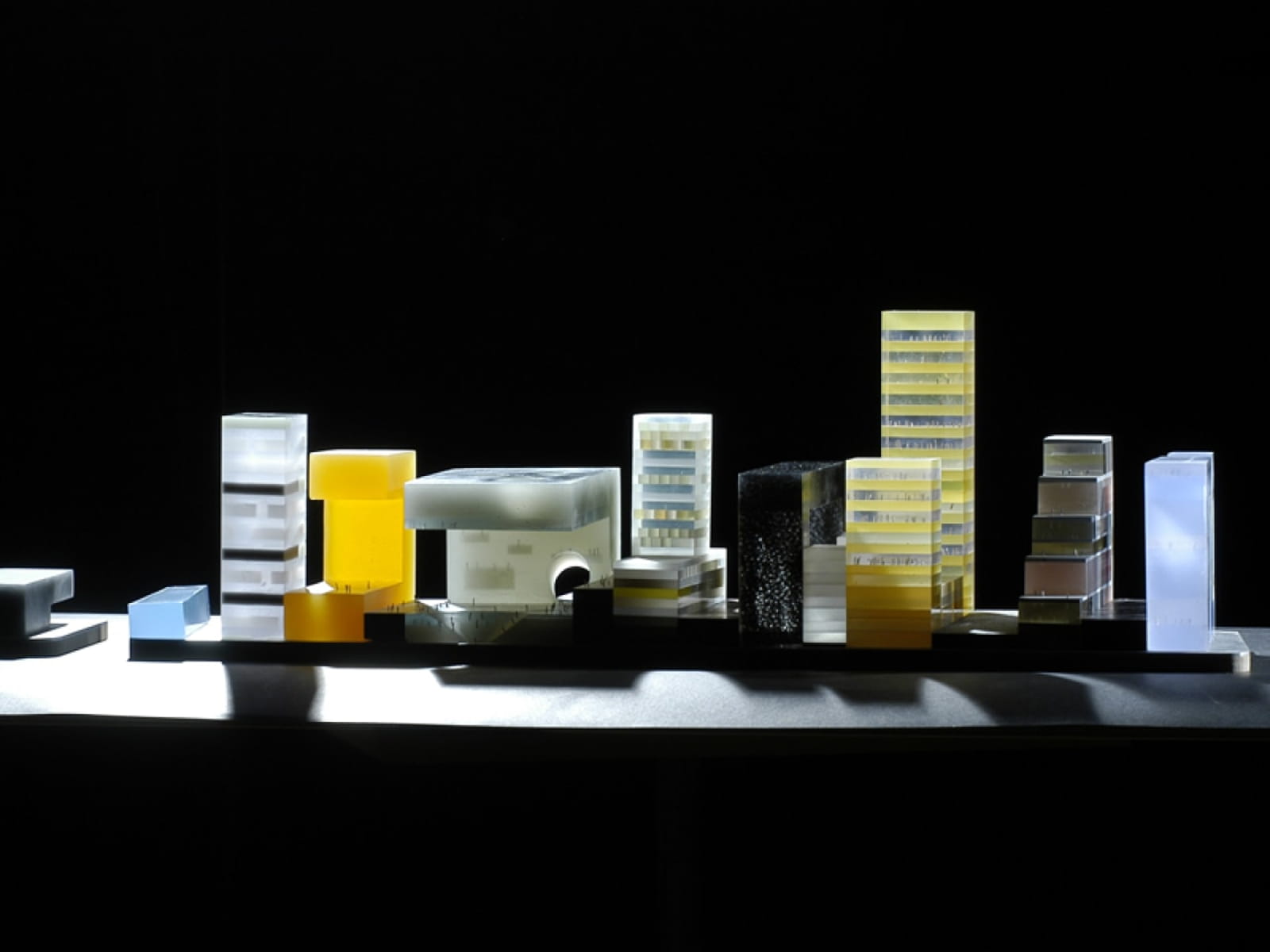
Bjørvika Barcode is a dense mixed-use urban masterplan in Oslo, Norway, realised between 2003 and 2016 after MVRDV, together with Norwegian firms Dark and A-lab, won the competition for the Bjørvika waterfront development. The masterplan, covering 220,000 m², is situated between the city’s fjord waterfront and the major transport hub at Oslo Central Station and was developed by Oslo S Utvikling (OSU).
The project is characterised by a sequence of slender, distinct buildings arranged along narrow strips of land—creating a striking linear composition known as the “Barcode.” This layout maximises views toward the fjord and creates a pedestrian-friendly zone at the heart of the city, while integrating flexible space for housing, offices, commercial, and cultural uses. Each building expresses its own material identity and form within a set of shared urban rules designed to promote diversity, spatial flexibility, and strategic density in the evolving waterfront district.
Book your tickets for ESO 2026, here!
Facts & Credits
Title ESO 2026 – “Negotiation, Not Compromise. Design as Dialogue Between Earth, Technology, and Humanity”
Typology Conference, Architecture, Design
Location Alexandra Trianti Hall, Megaron Athens Concert Hall
Date Wednesday, May 13rd, 2026
Content creation & Media Partnership by Archisearch.gr
Produced & curated by the Design Ambassador
READ ALSO: A Whimsical Reuse: Cove Architectes turned a two-century-old barn in Auvergne into a family house using local materials and artisanal techniques