Dream Houses is a curated exploration of domestic architecture where vision, craft, and innovation converge. Each residence is shaped by light, materiality, and intent revealing homes that transcend function to become expressions of a deeply personal yet enduring way of living.
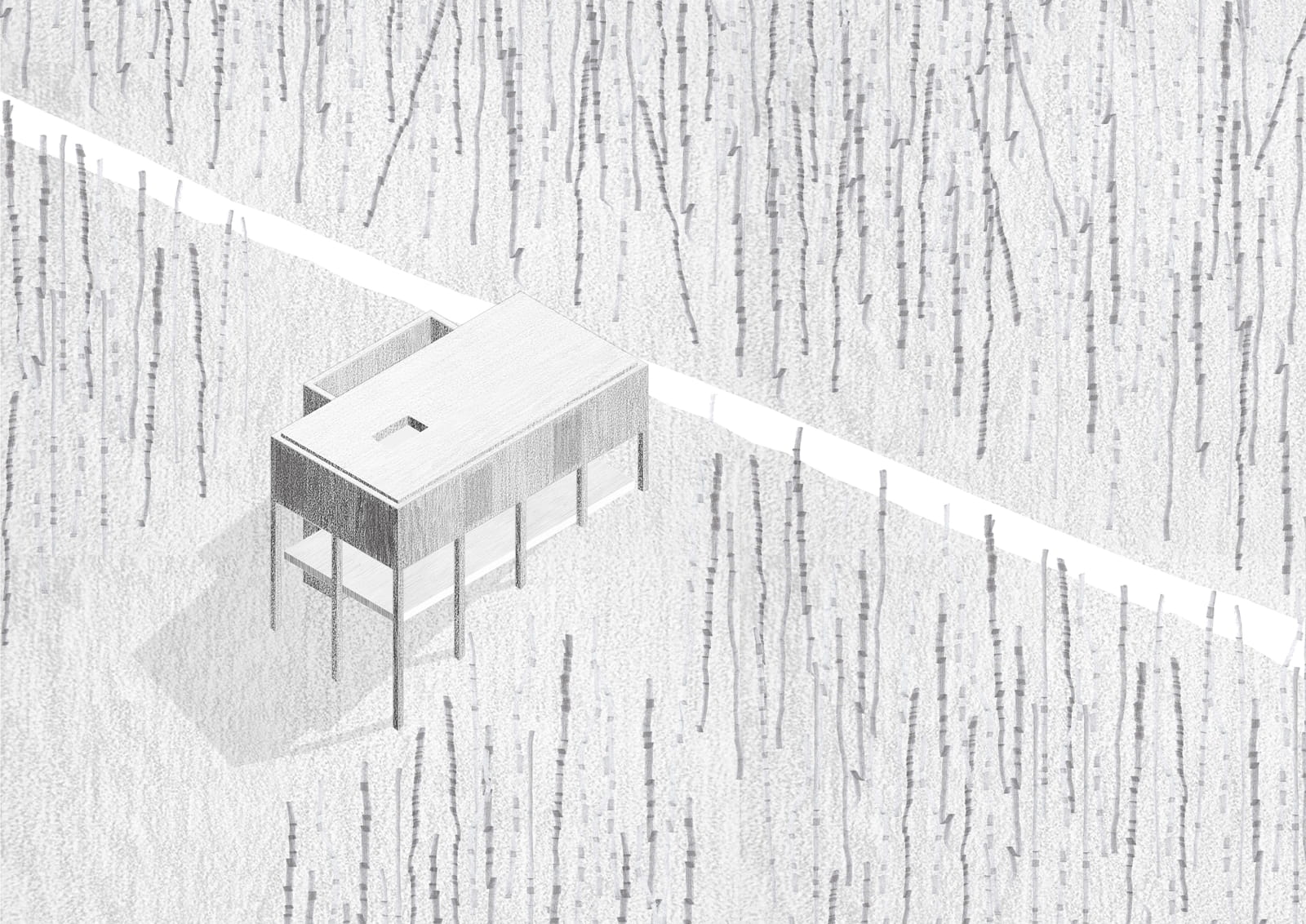
In Tskneti, Wunderwerk reinterprets the “Tsknetian wall” as an architecture of openness. A raised concrete volume and a permeable ground plane allow the forest to enter domestic space, transforming the wall from boundary into mediator between dwelling and landscape.
“For centuries, the mountainous belt surrounding Tbilisi has served as the city’s natural filter and refuge. Among these elevations, Tskneti stands out — set on the eastern slopes of the Trialeti Range, where the dense urban fabric dissolves into oak and pine forests. Long regarded as a place of retreat, Tskneti offered an alternative to the intensity of the city, where architecture mediated a close relationship with nature.
During the Soviet period, Tskneti evolved into a suburban resort shaped by planned sanatoria and extensive forest planting. Private dachas gradually formed a closed social enclave reserved for party officials and the intelligentsia, while the broader population remained excluded — privilege was to be present, yet discreet.
The 1990s disrupted this order. As state structures collapsed, abandoned villas were occupied by internally displaced families, while a new elite withdrew behind high concrete walls. Two parallel forms of enclosure emerged: temporary residents dismantled wooden fences for firewood, while wealthier owners fortified their plots with solid barriers. Walls ceased to be merely architectural elements and became social boundaries, fragmenting the landscape and eroding communal space. Over time, enclosure became an inherited condition, shaping both perception and building practices. Today, municipal policies are gradually limiting tall, opaque fences in an effort to restore the openness that once defined the area.”
“The house presented here responds to this long-standing culture of retreat and separation, proposing a different architectural ethic for Tskneti — a way of living without walls,” say Wunderwerk architects.
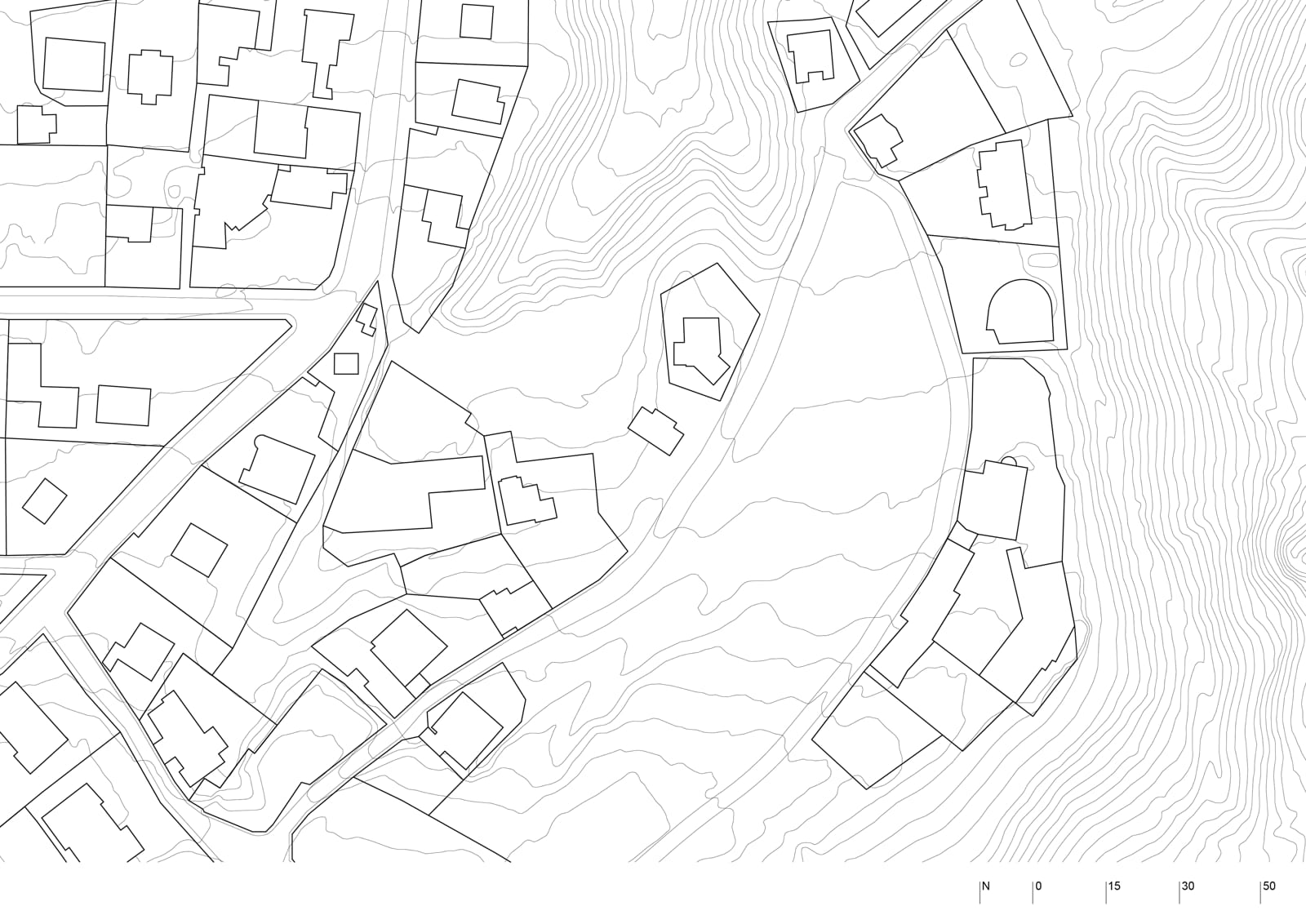
Positioned on the southeastern edge of the settlement, the site borders a natural ravine that forms part of the ecological ventilation system serving both Tskneti and Tbilisi. Despite its forested surroundings, the steep topography historically discouraged construction.
The project begins with a fundamental question: how can architecture occupy a sensitive slope while allowing the landscape to remain an active participant? The response is articulated through a strategy of minimal ground contact.
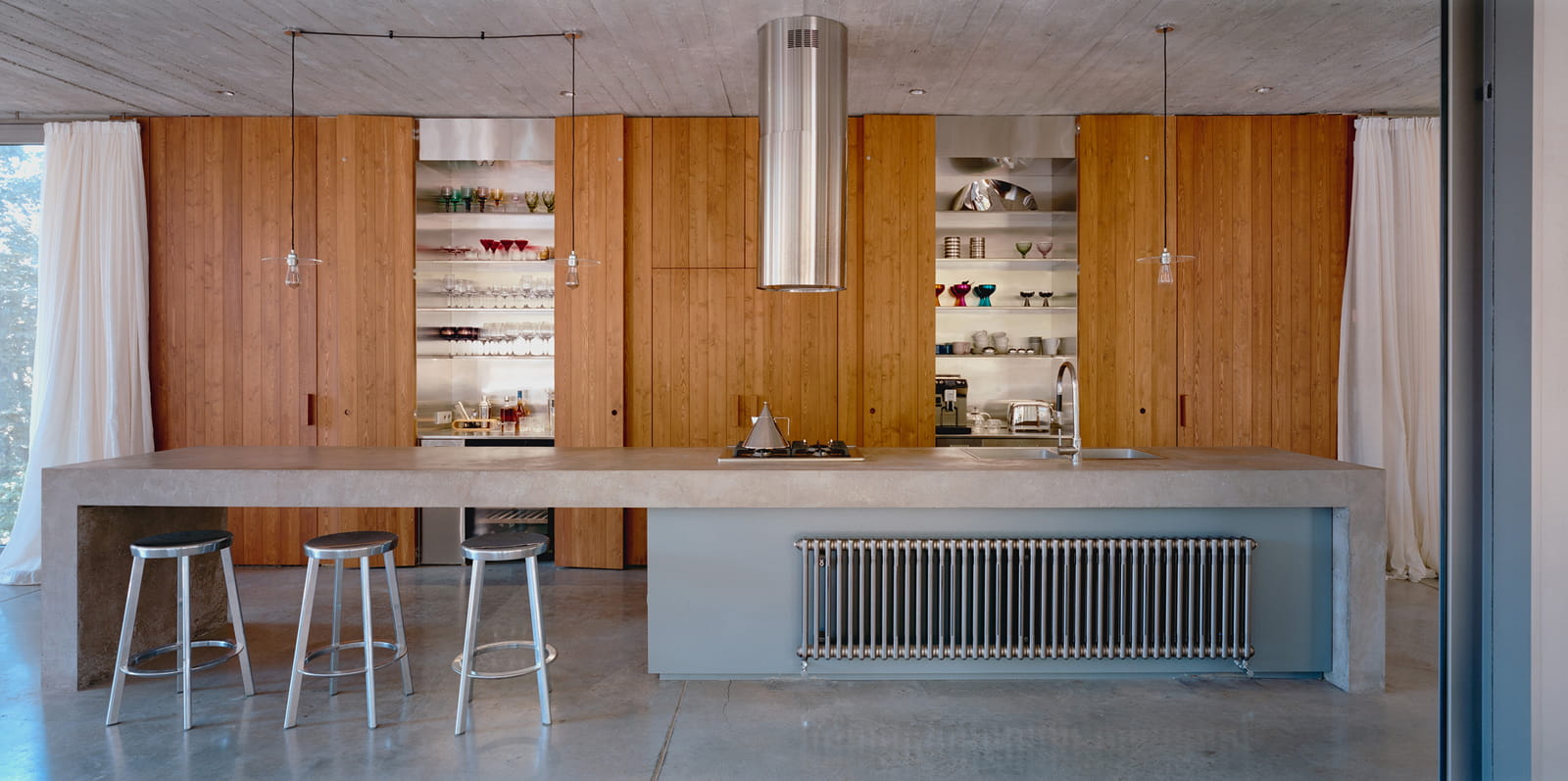
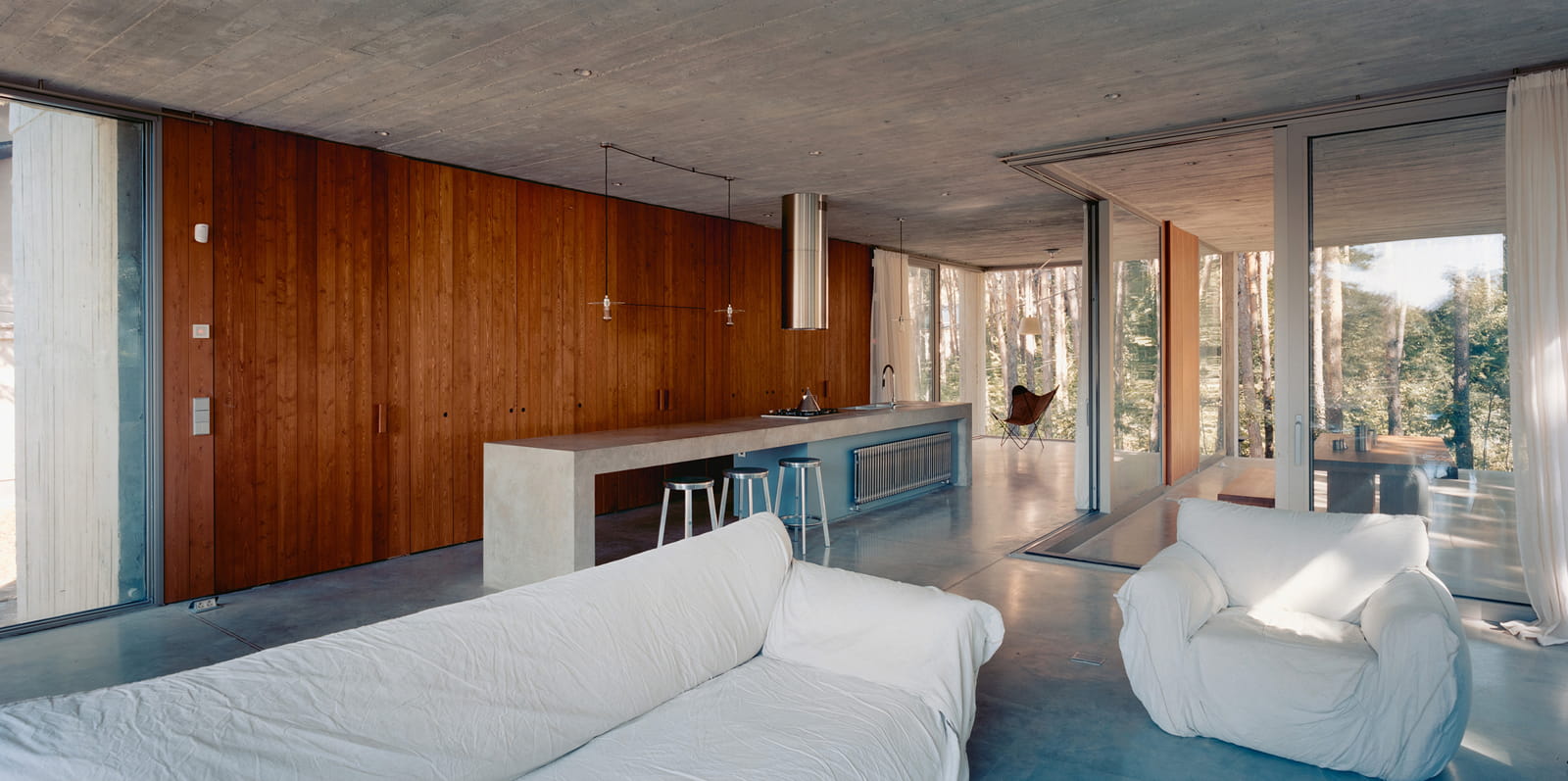
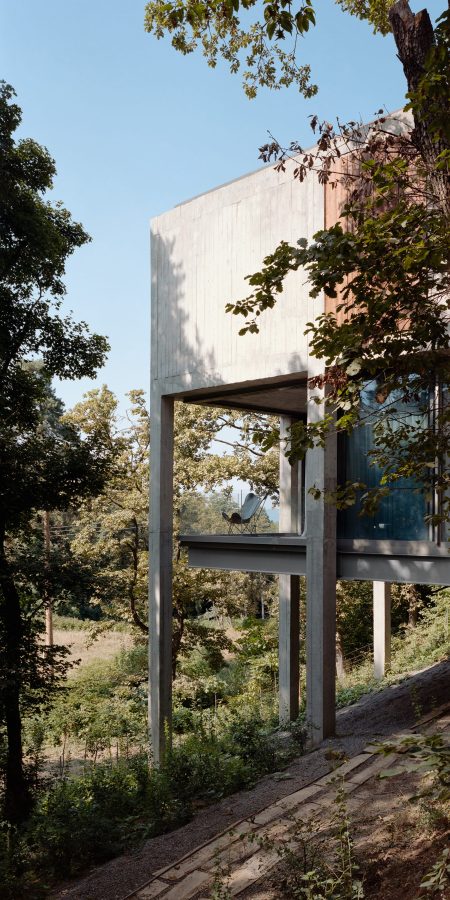
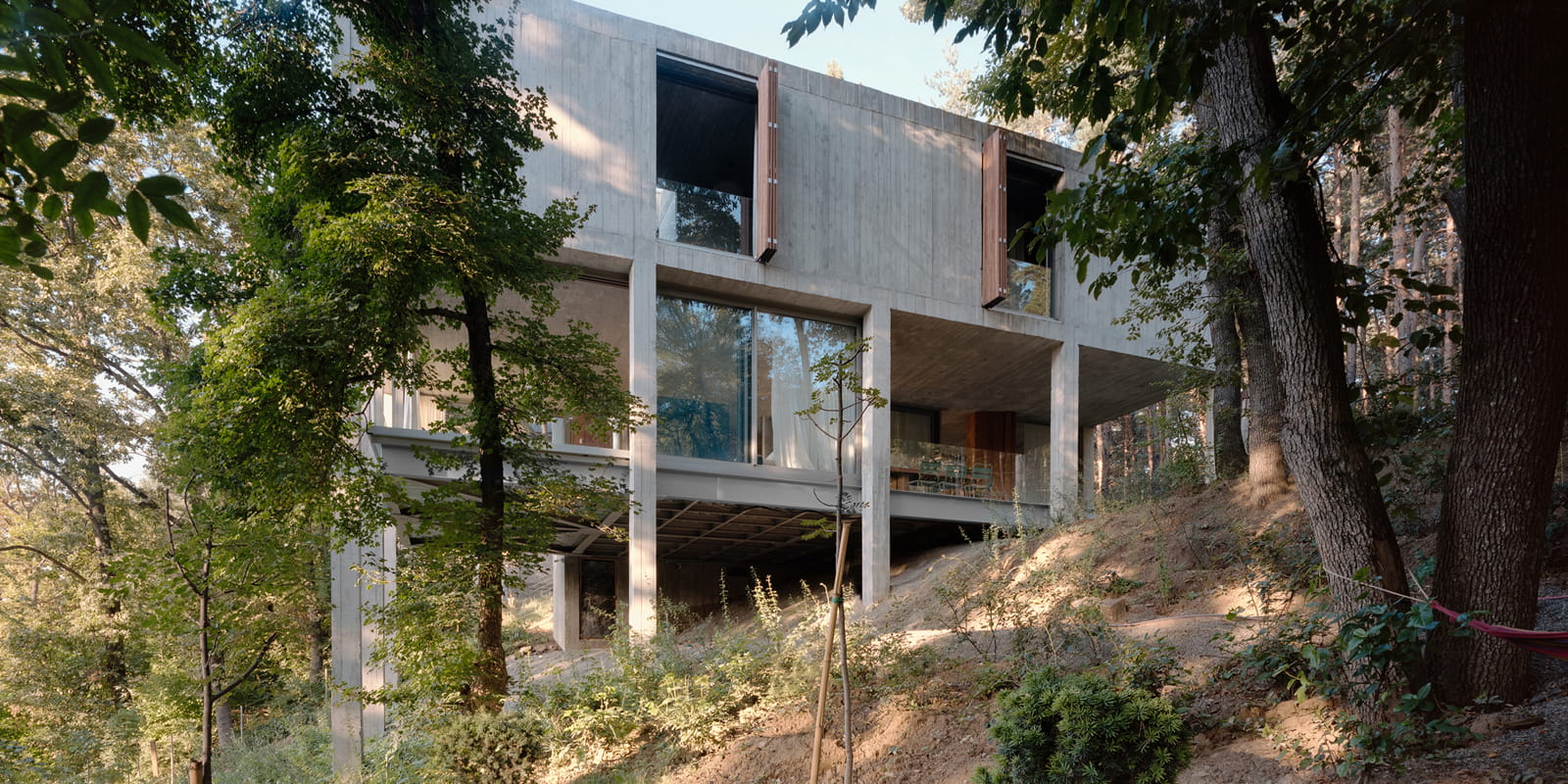
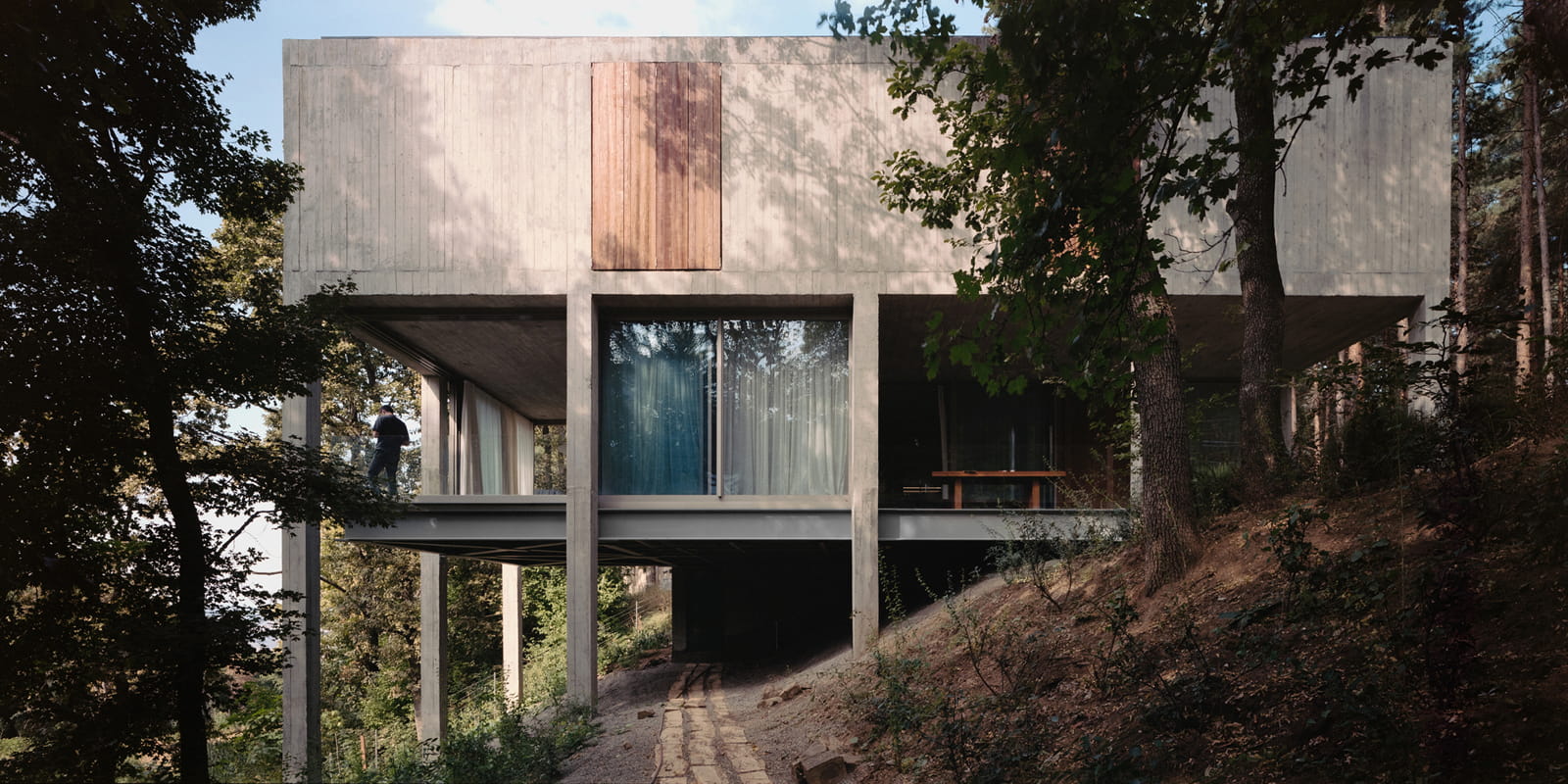
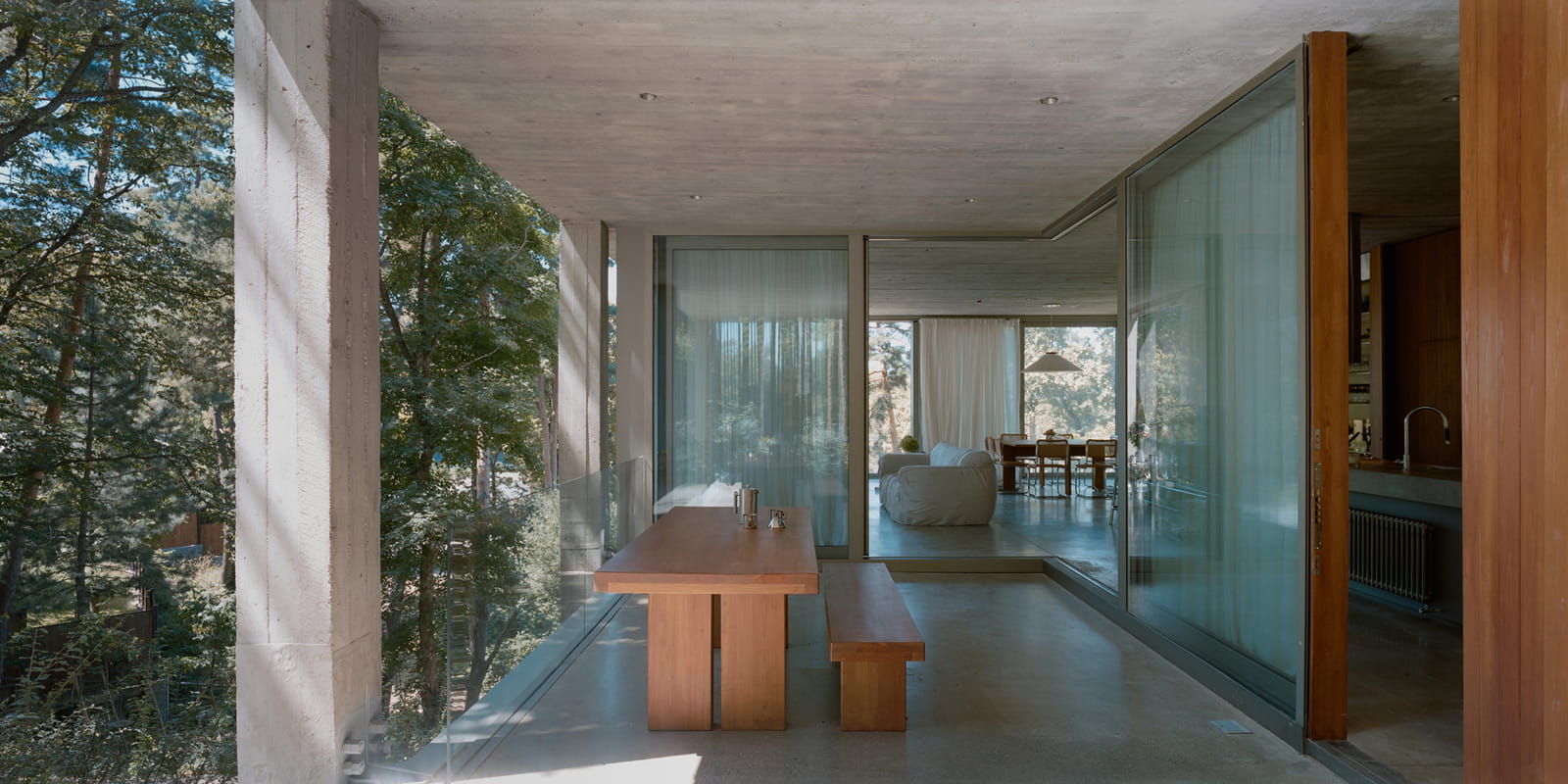
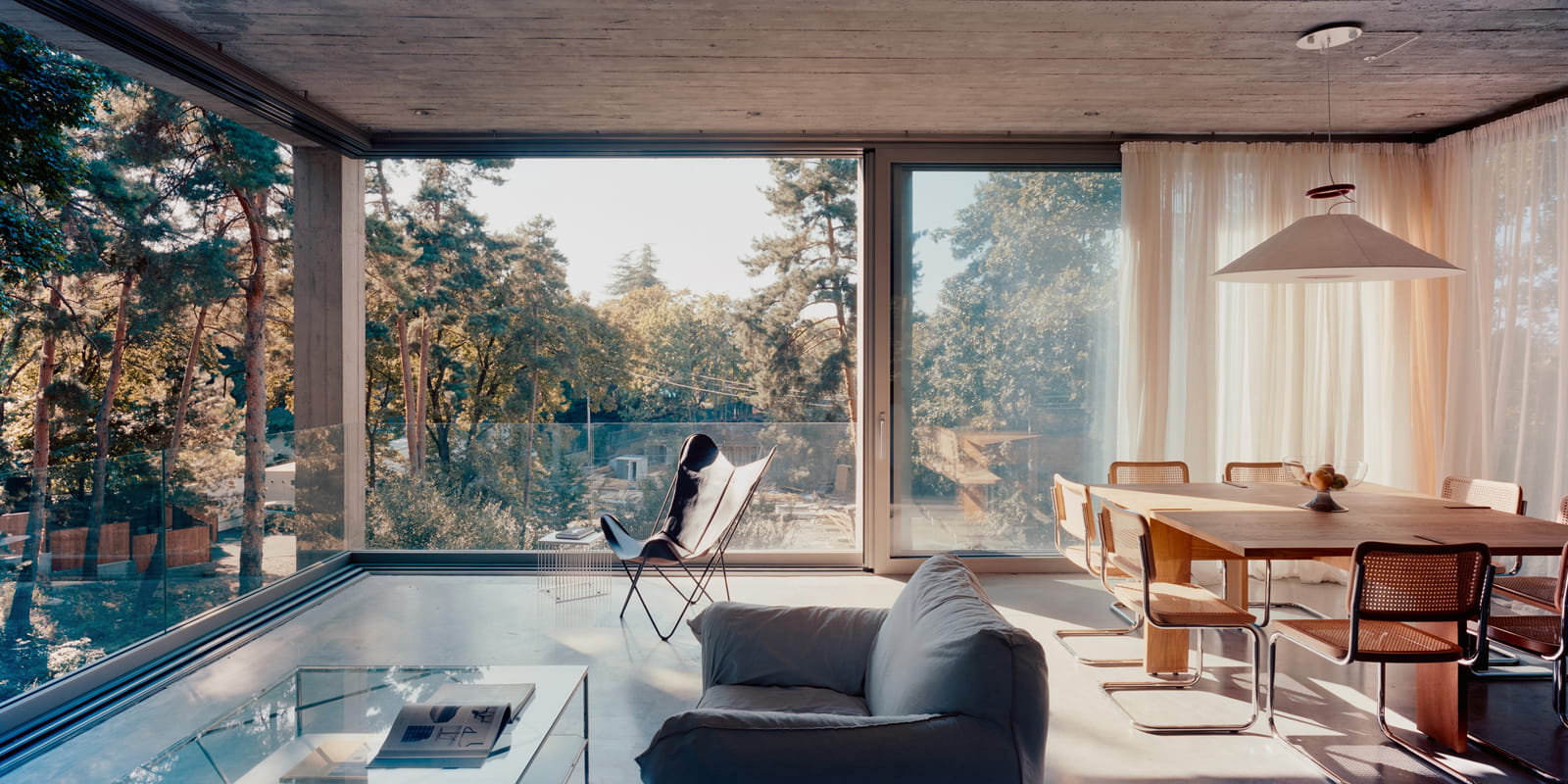
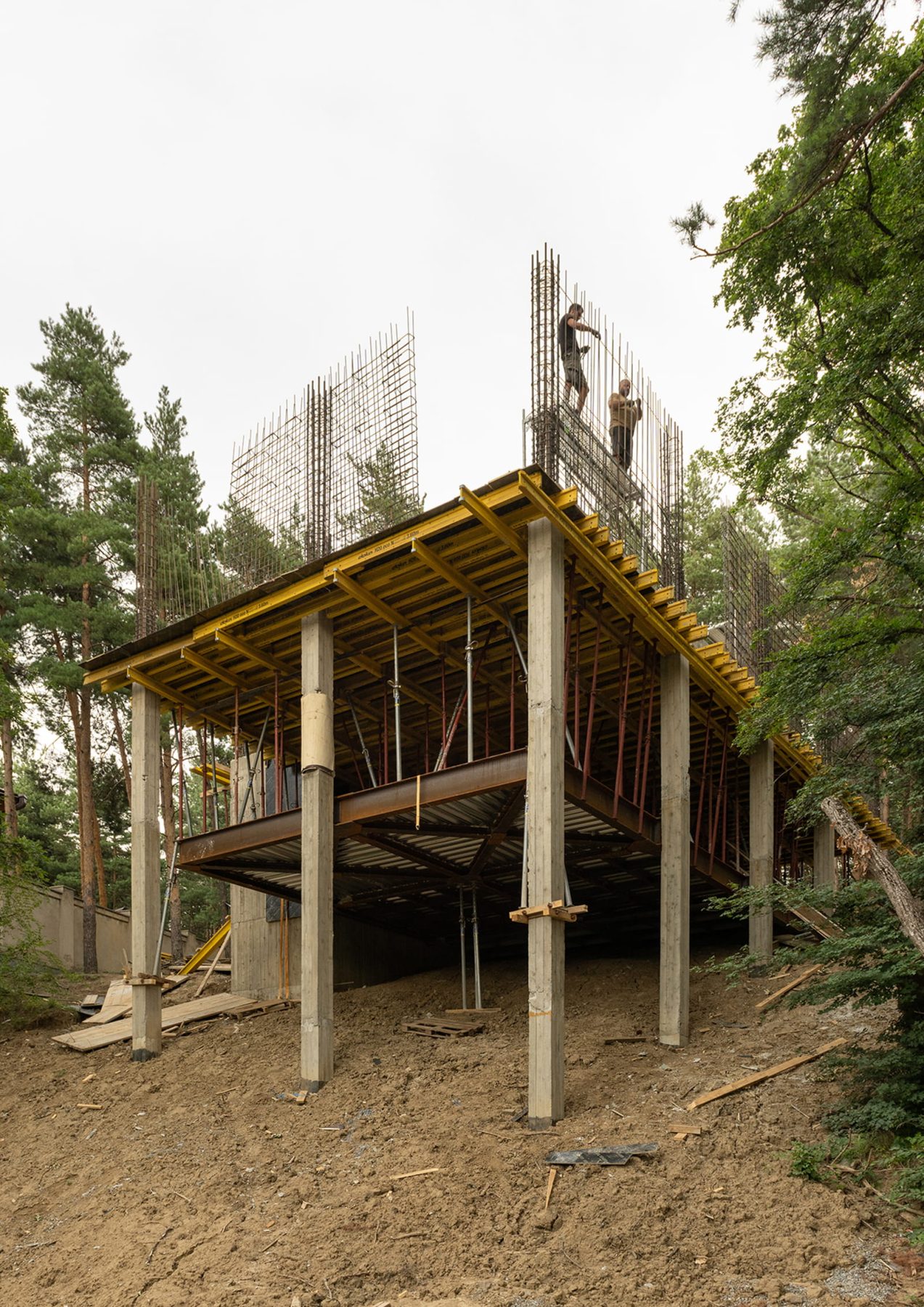
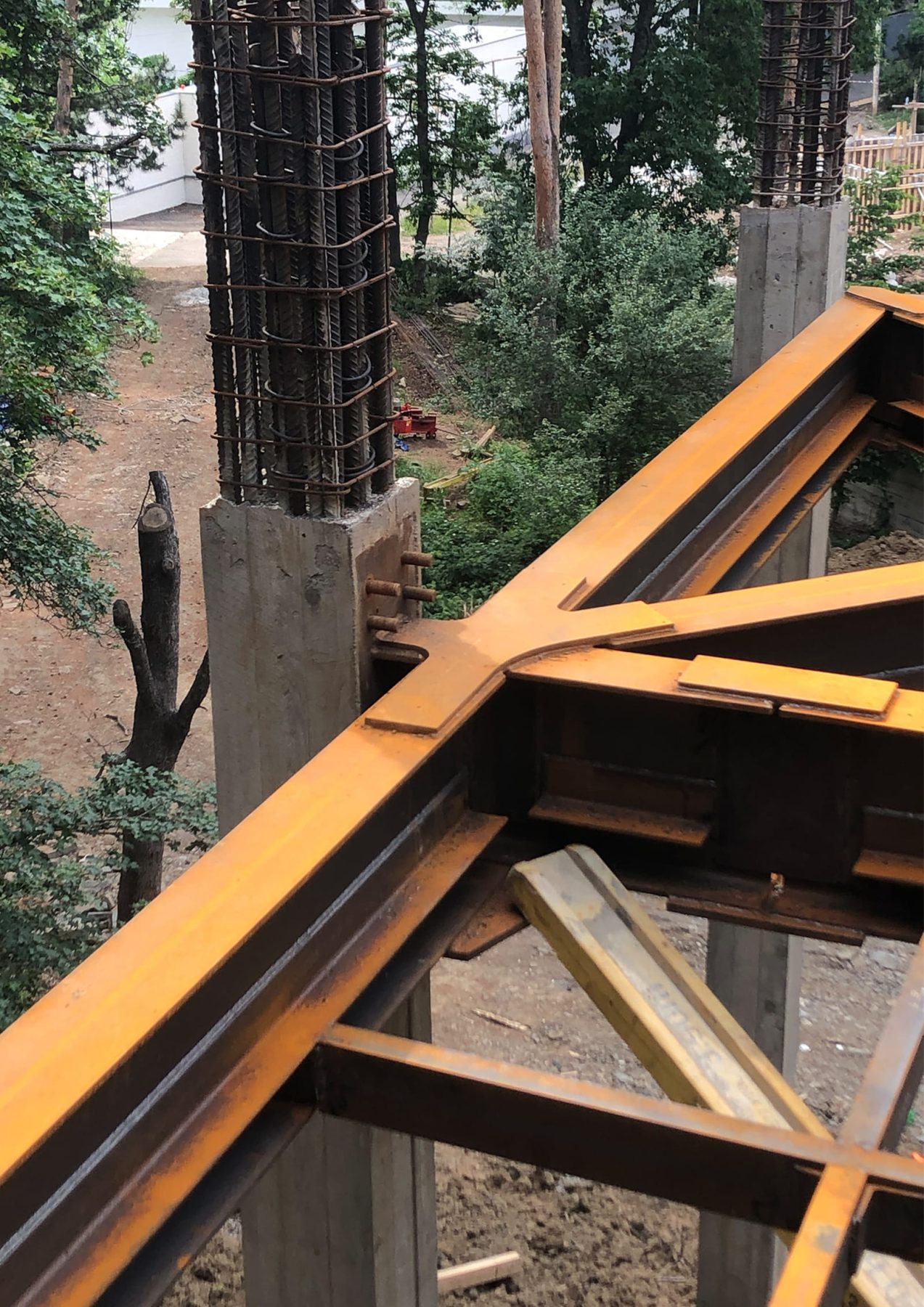
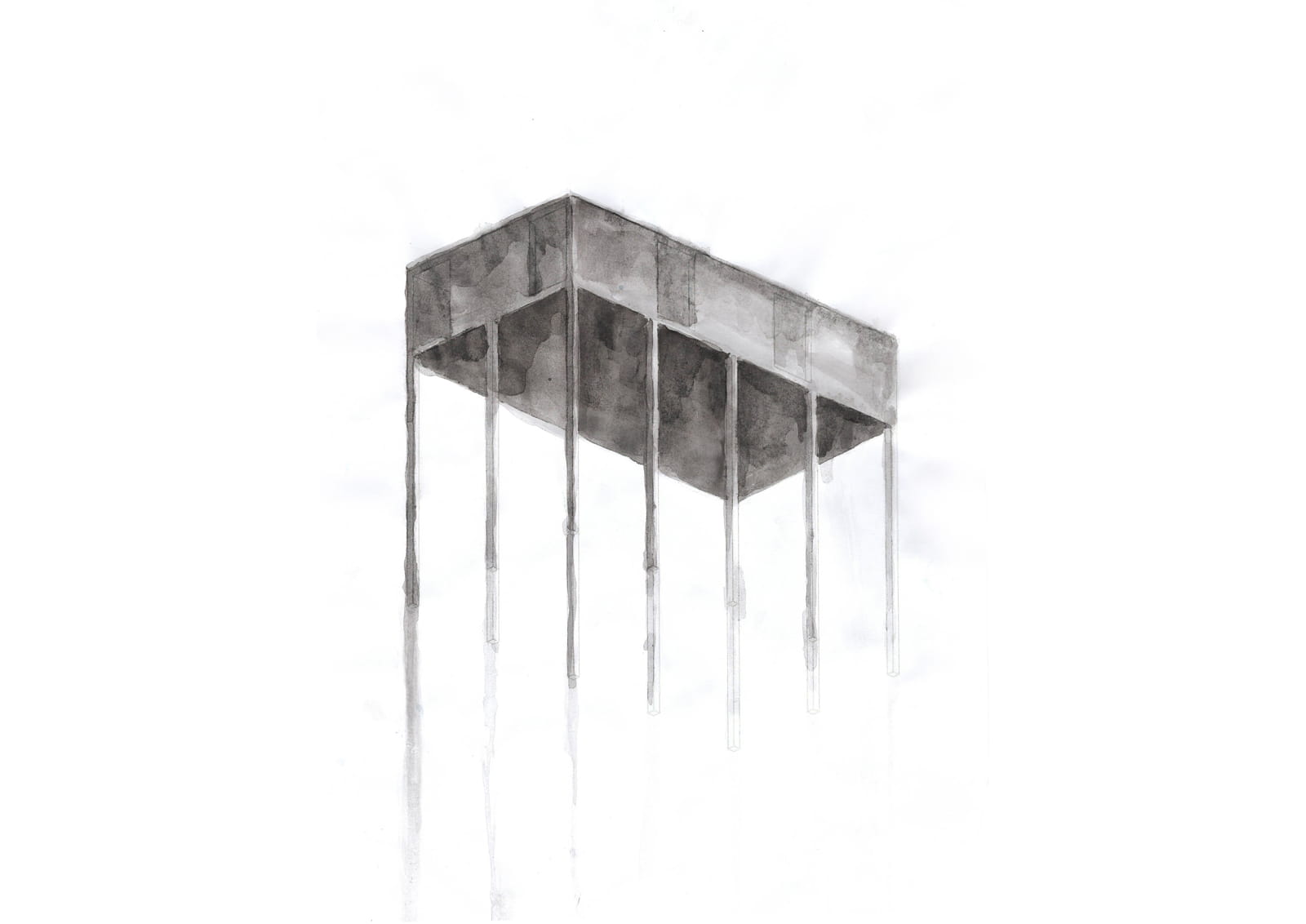
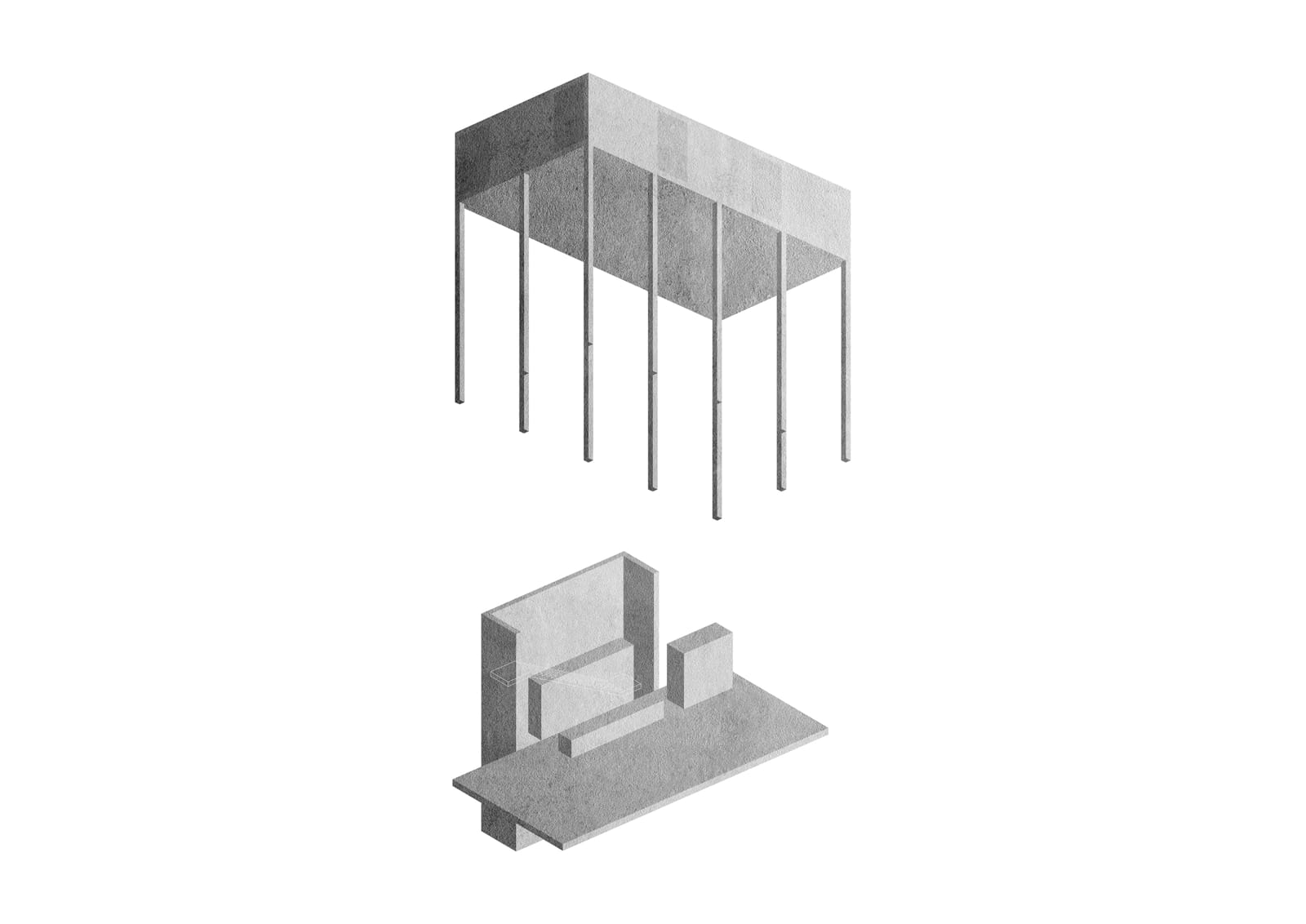
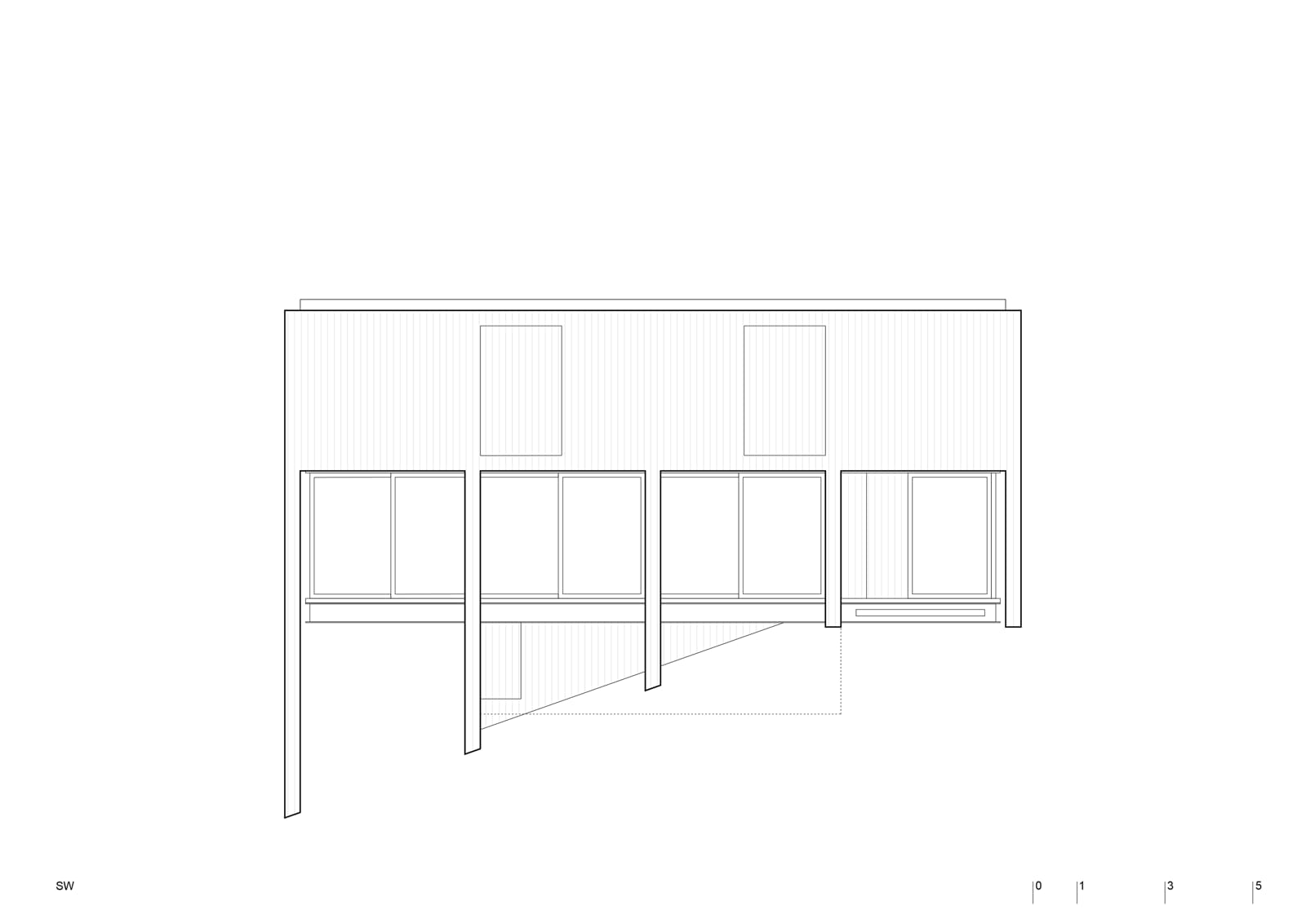
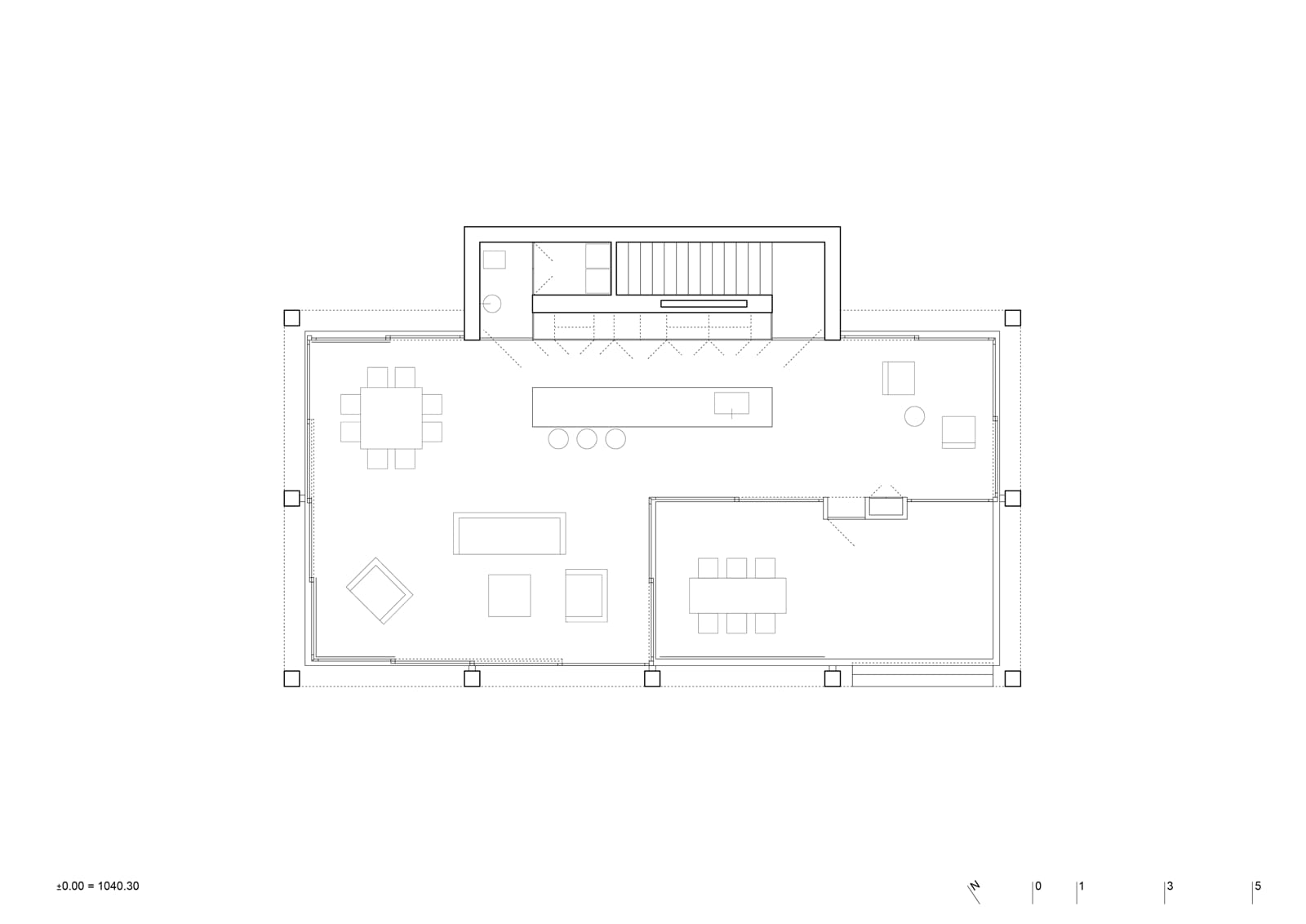
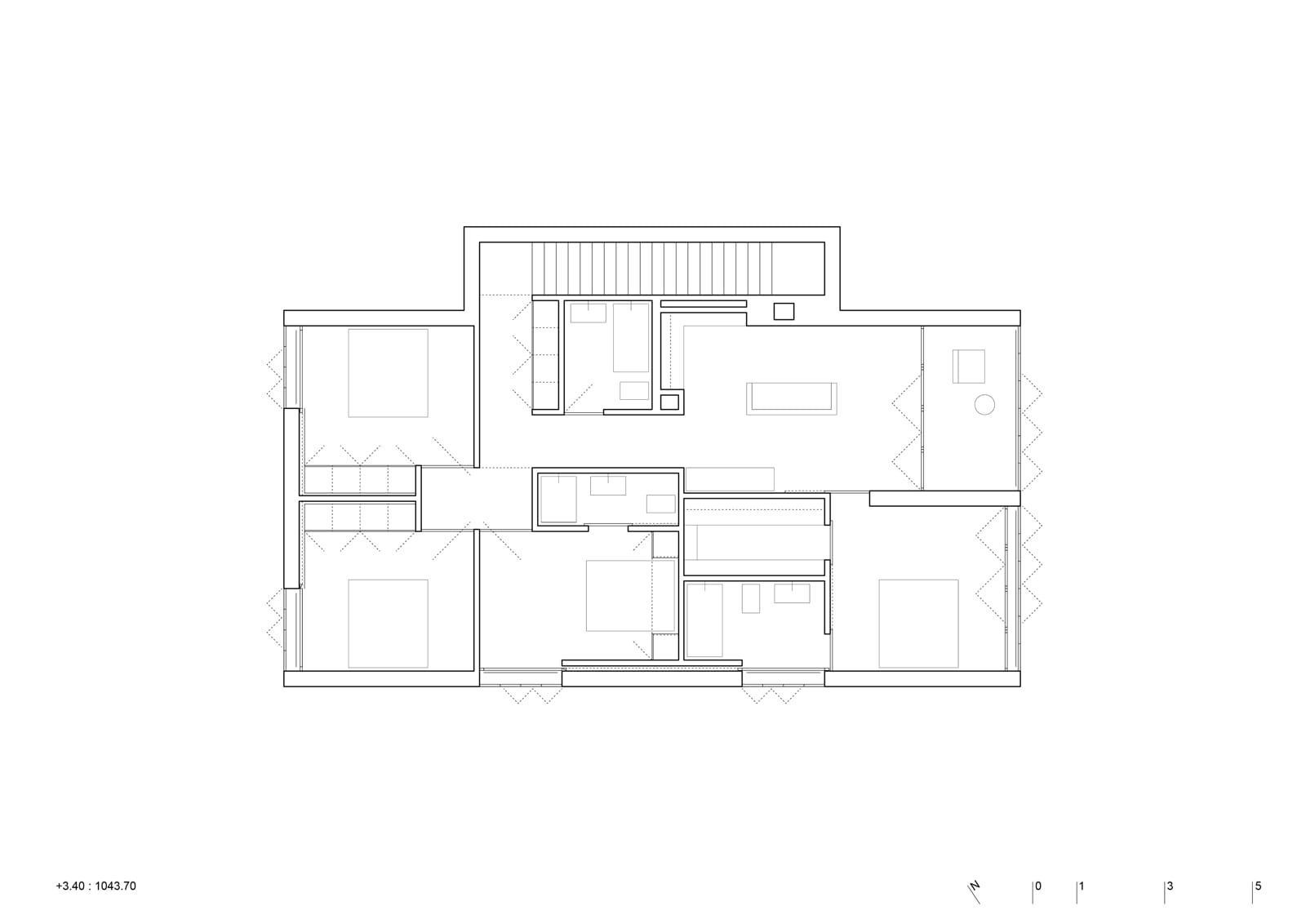
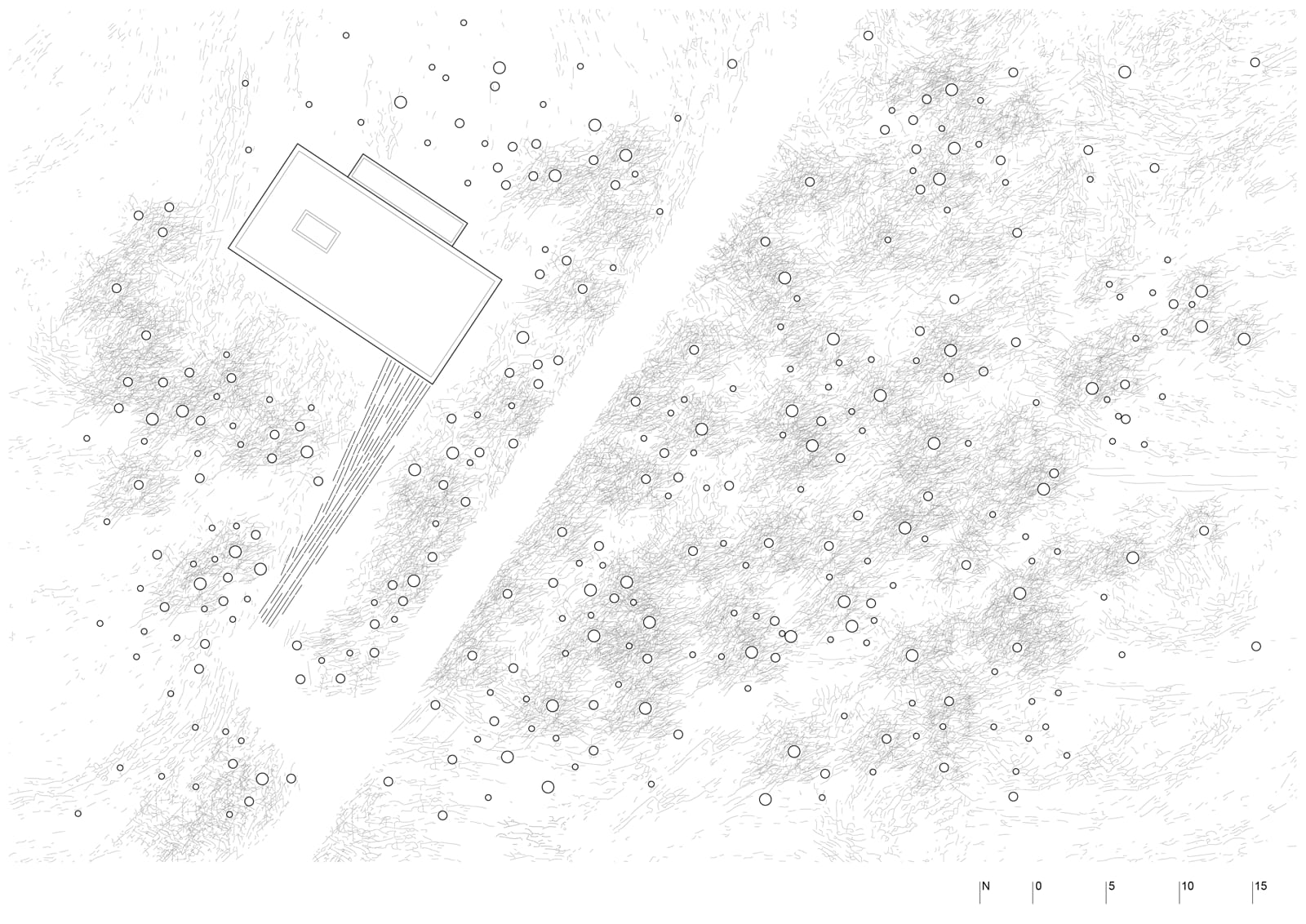
The house is elevated above a natural clearing, supported by slender concrete columns anchored to bedrock. These vertical elements carry a monolithic concrete volume that accommodates the private programme. Beneath it, a ground-level open platform—formed by a suspended metal frame—hosts the living areas, defined by a fully glazed façade that visually dissolves into the forest.
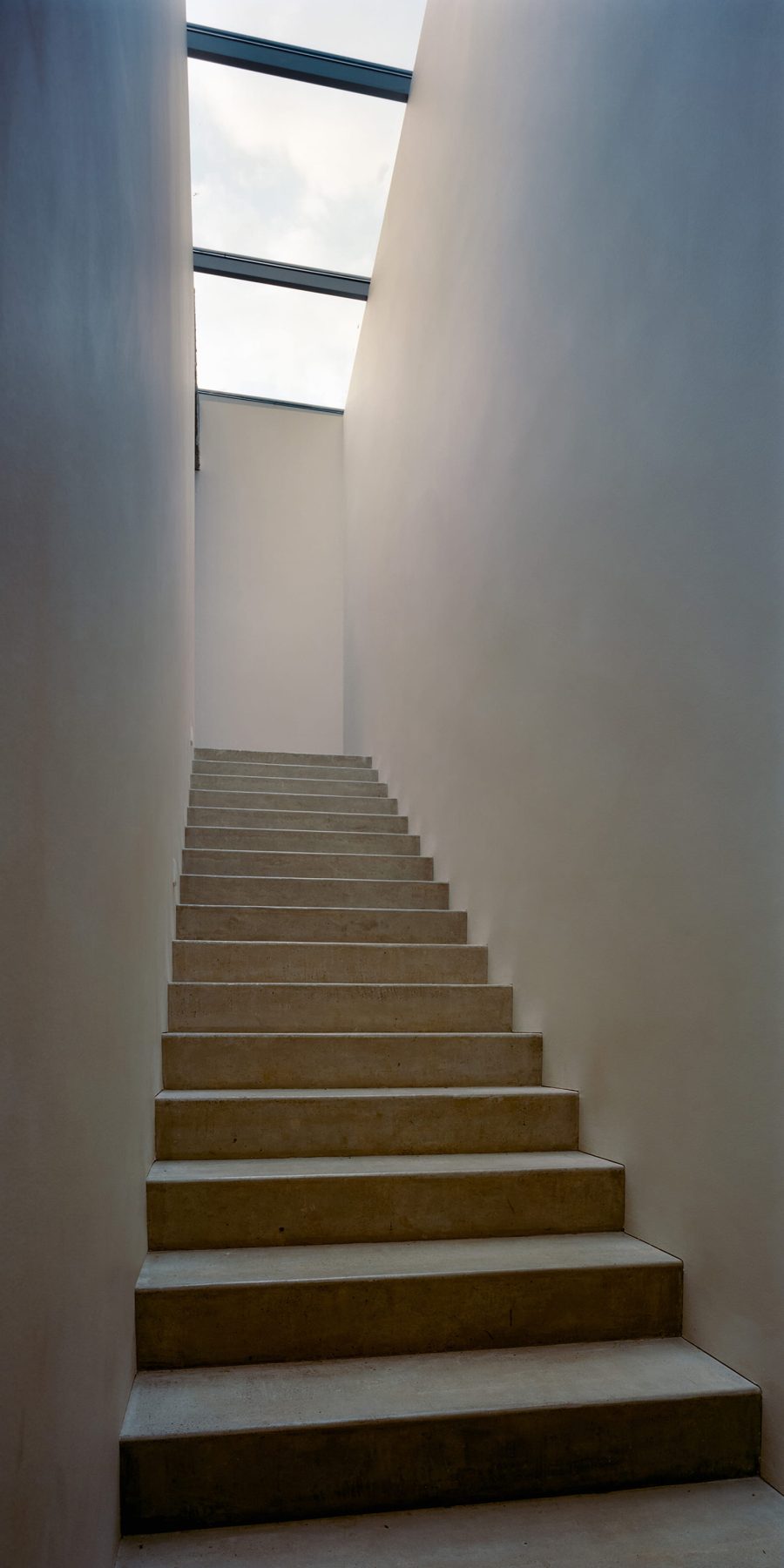
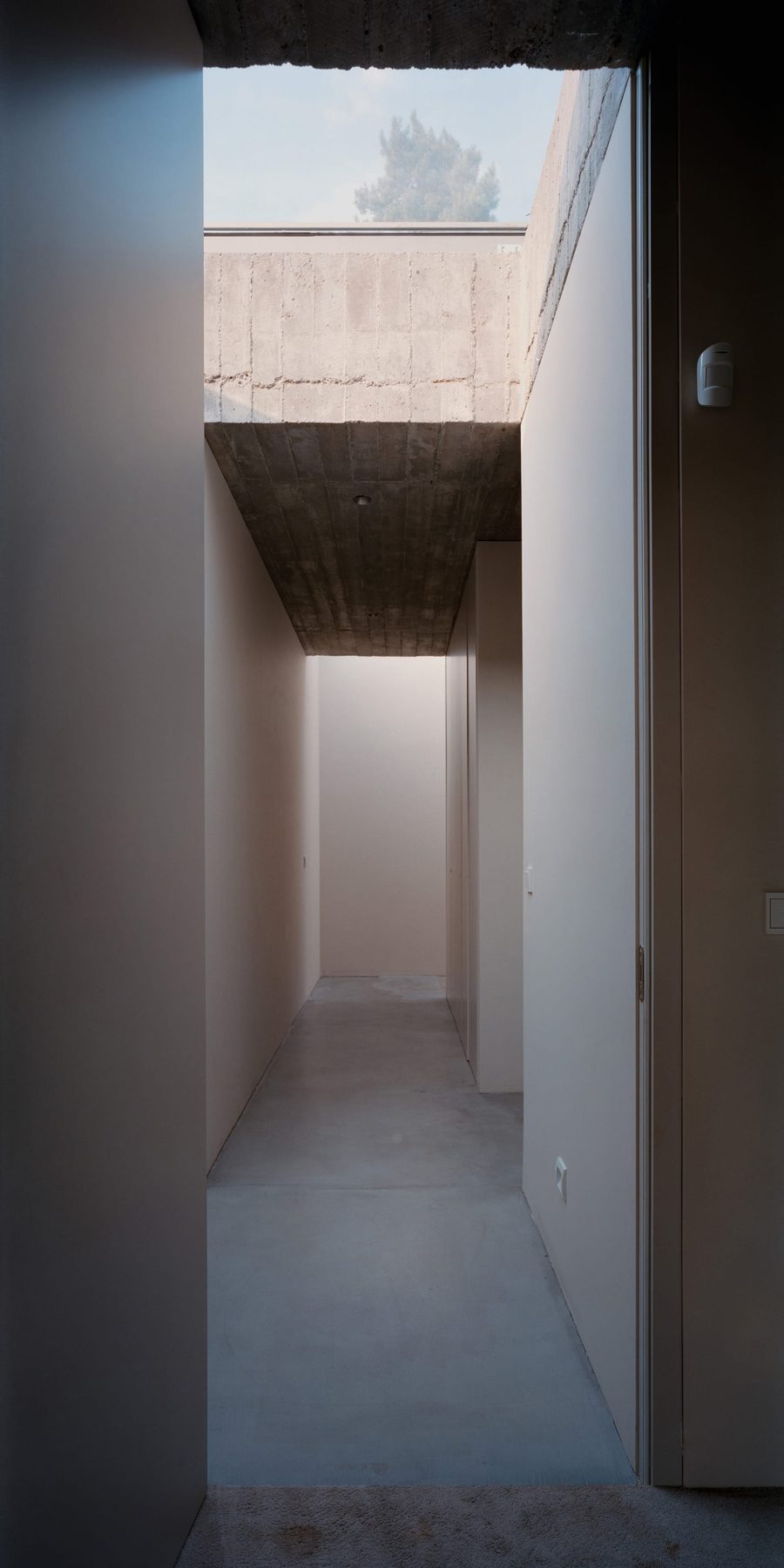
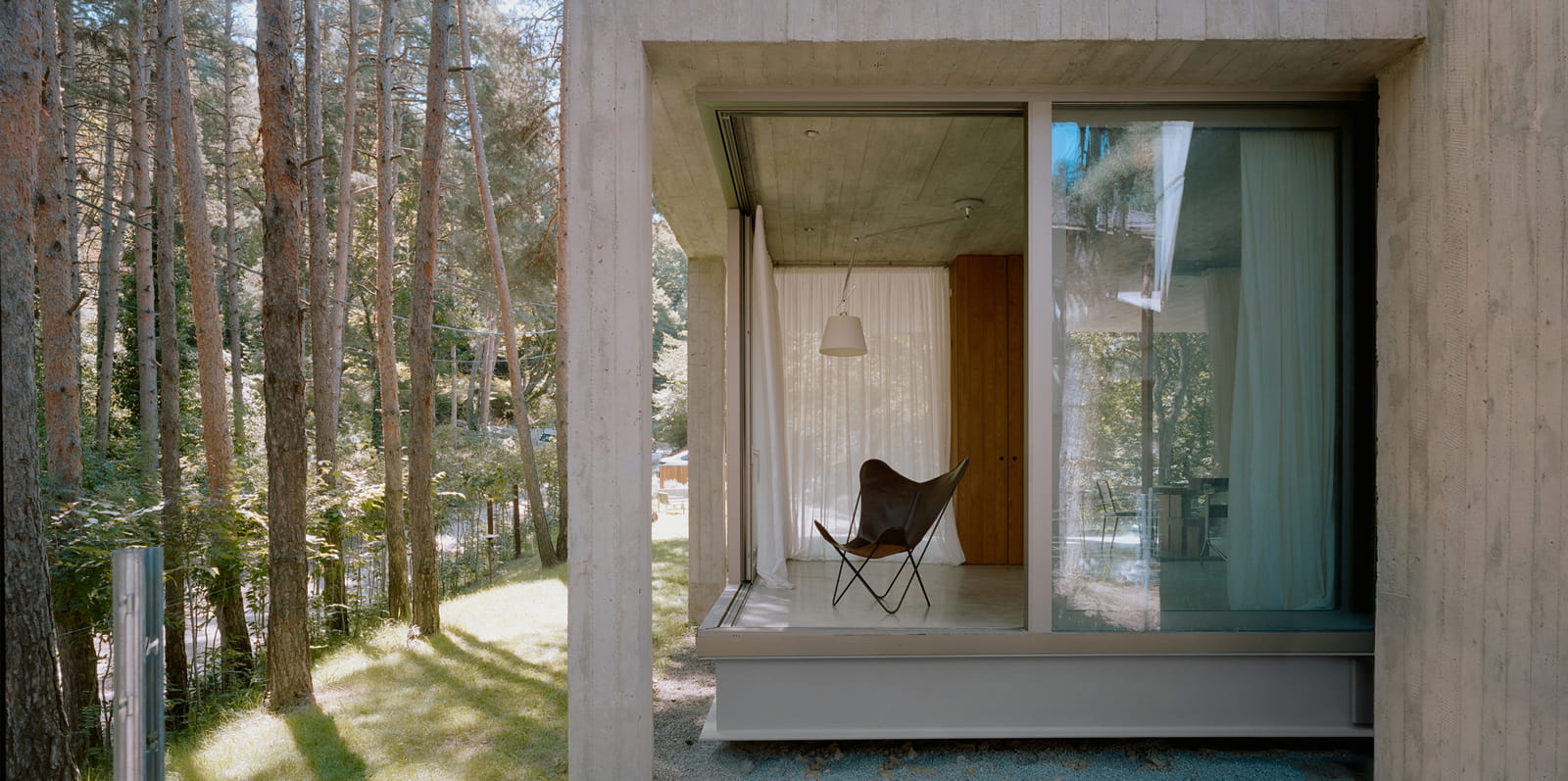
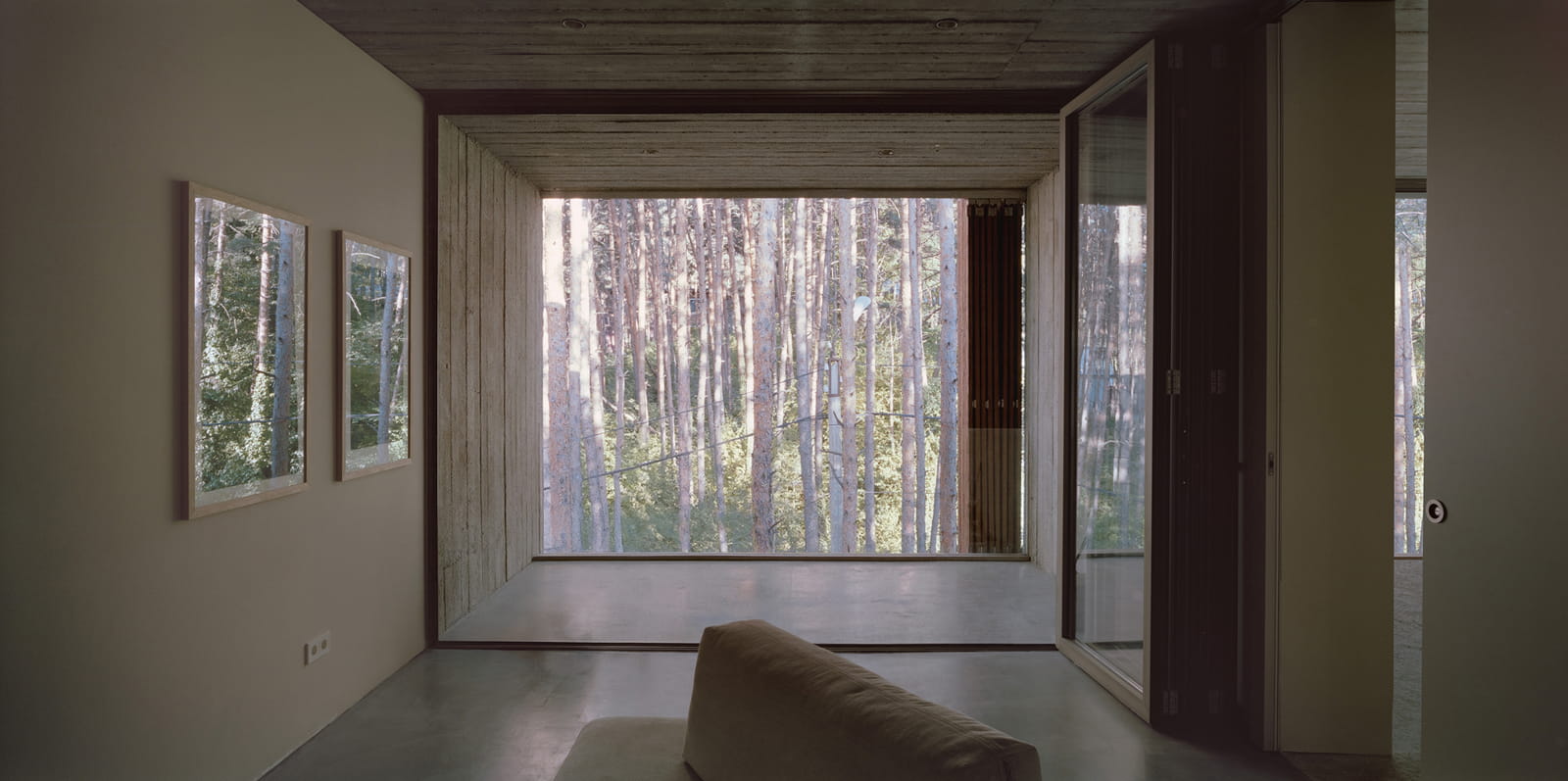
Landscape design by Studio Ruderal reinforces this approach by extending the surrounding vegetation directly into the plot through the use of native species, re-establishing the continuity of the forest and removing the necessity for perimeter walls. A generous terrace operates as an intermediary threshold, while a sliding corner façade further blurs the distinction between interior and exterior space. On the upper level, windows are precisely framed to capture curated views of the forest canopy.
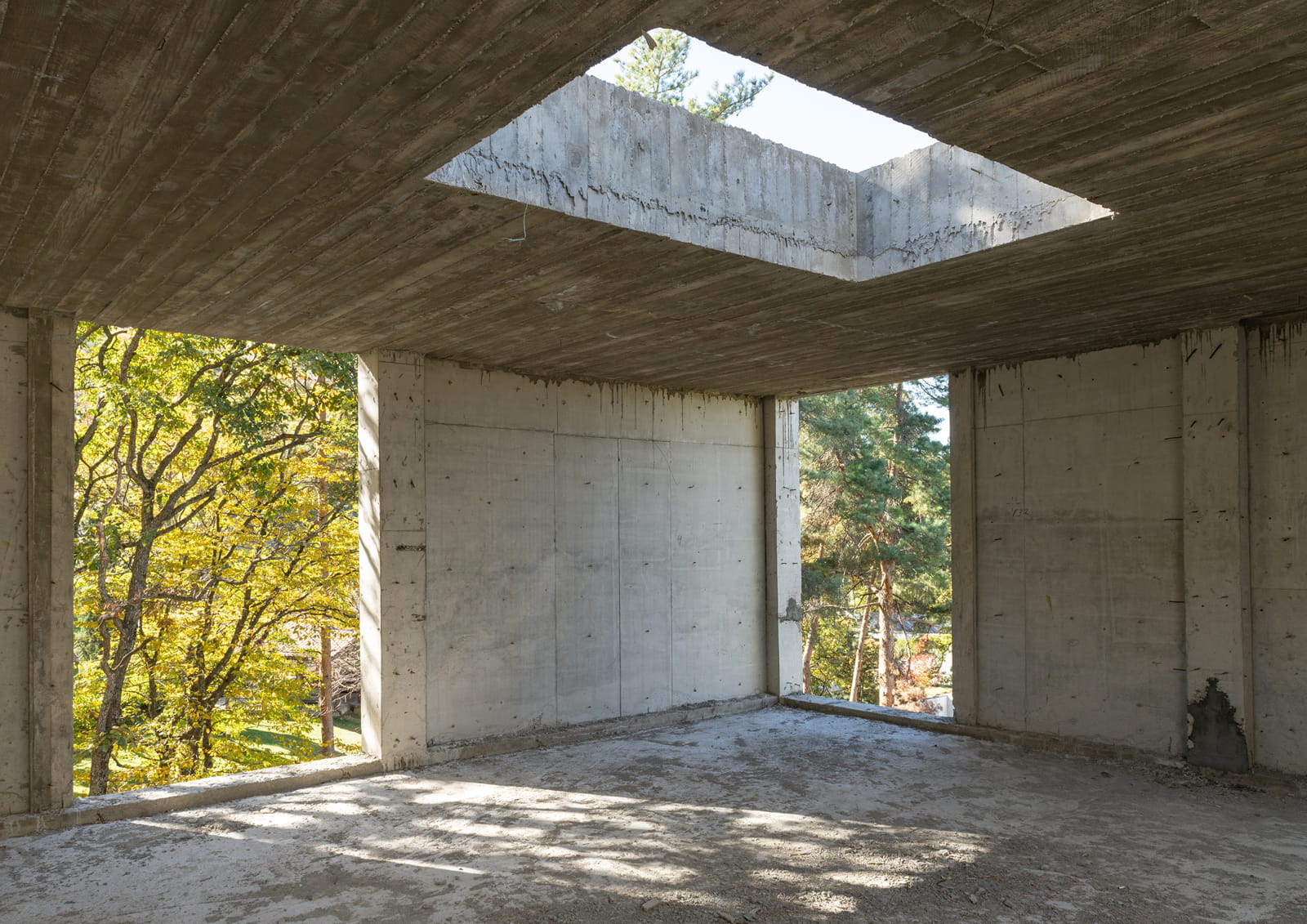
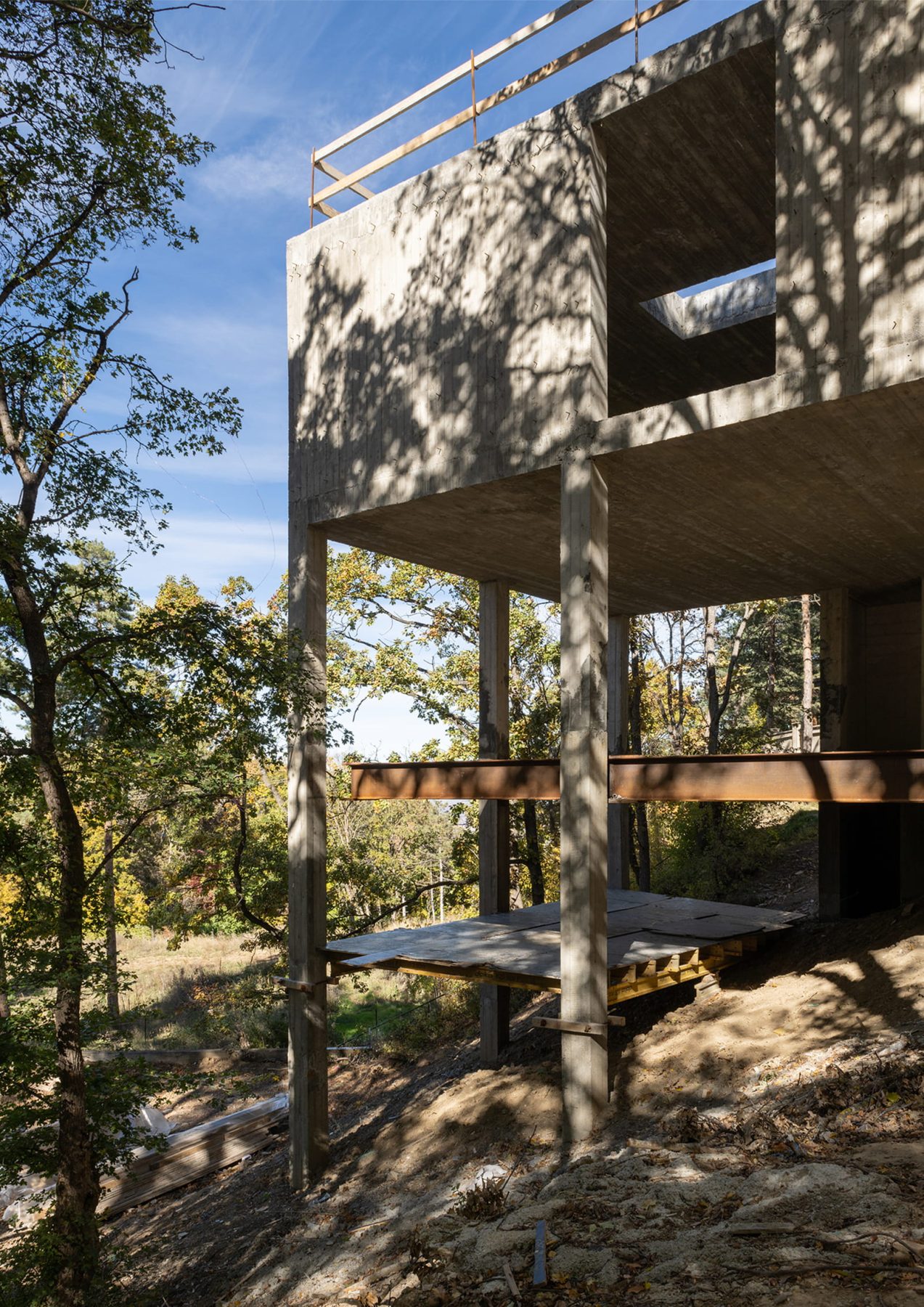
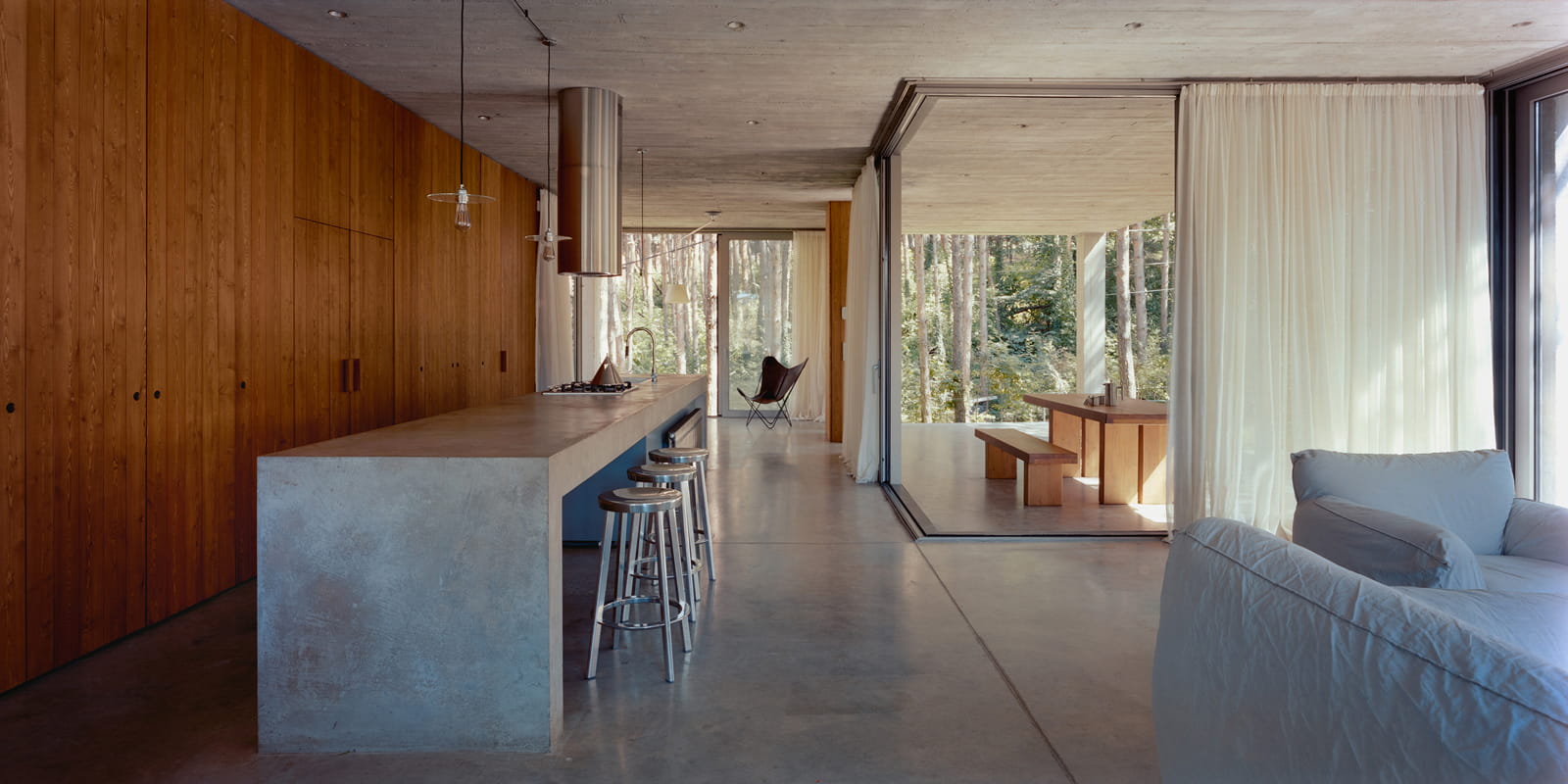
Externally, folding wooden shutters and rough timber-form concrete are intended to weather into a unified, textured surface, allowing the volume to visually merge with its surroundings over time.
This material language continues indoors through shutter-like wooden elements that discreetly conceal functional components, maintaining a coherent architectural expression. In this way, the project reinterprets the notion of the “Tsknetian wall.” Rather than a defensive perimeter, the wall is transformed into a suspended, monolithic volume paired with a permeable, open ground plane.
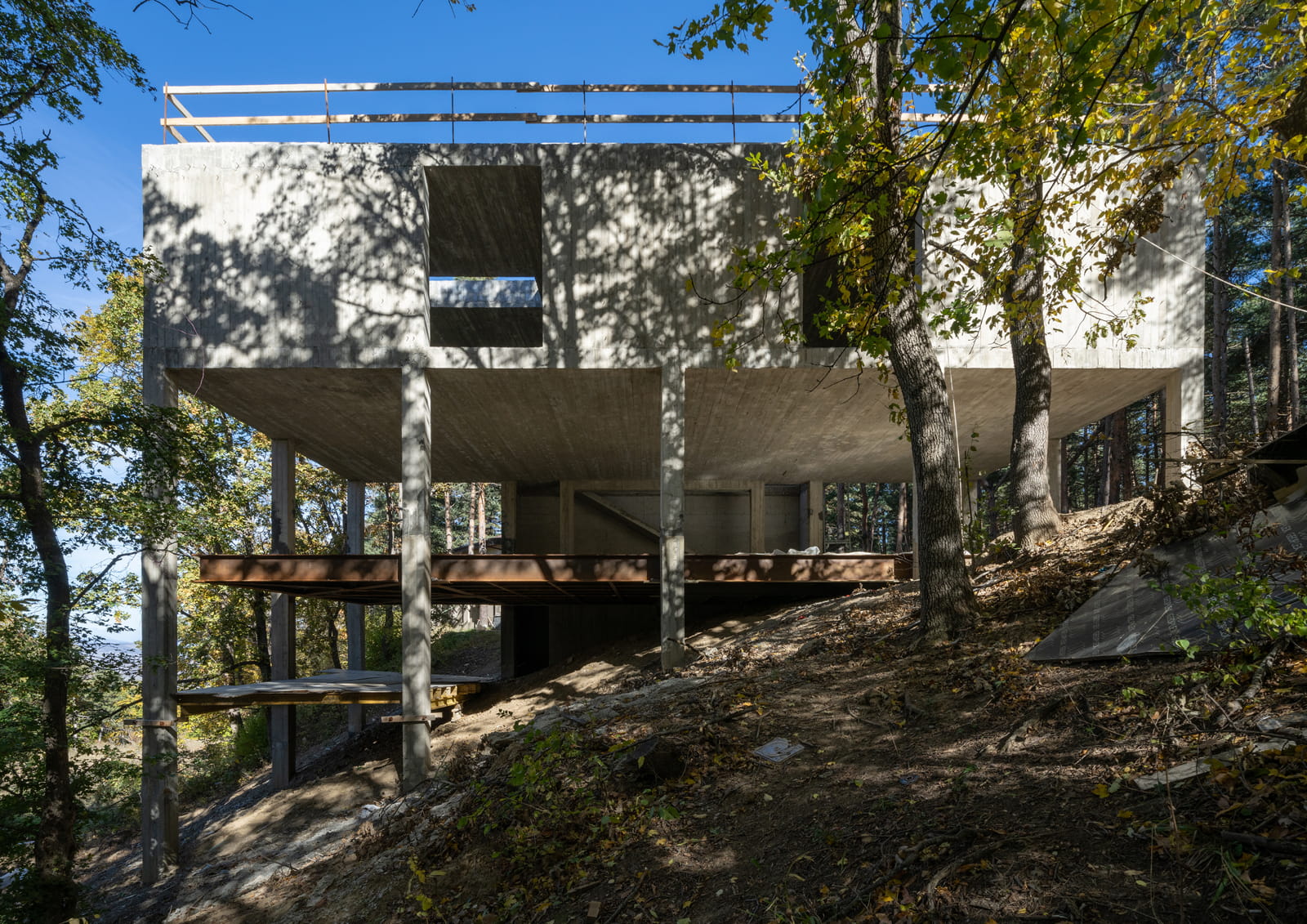
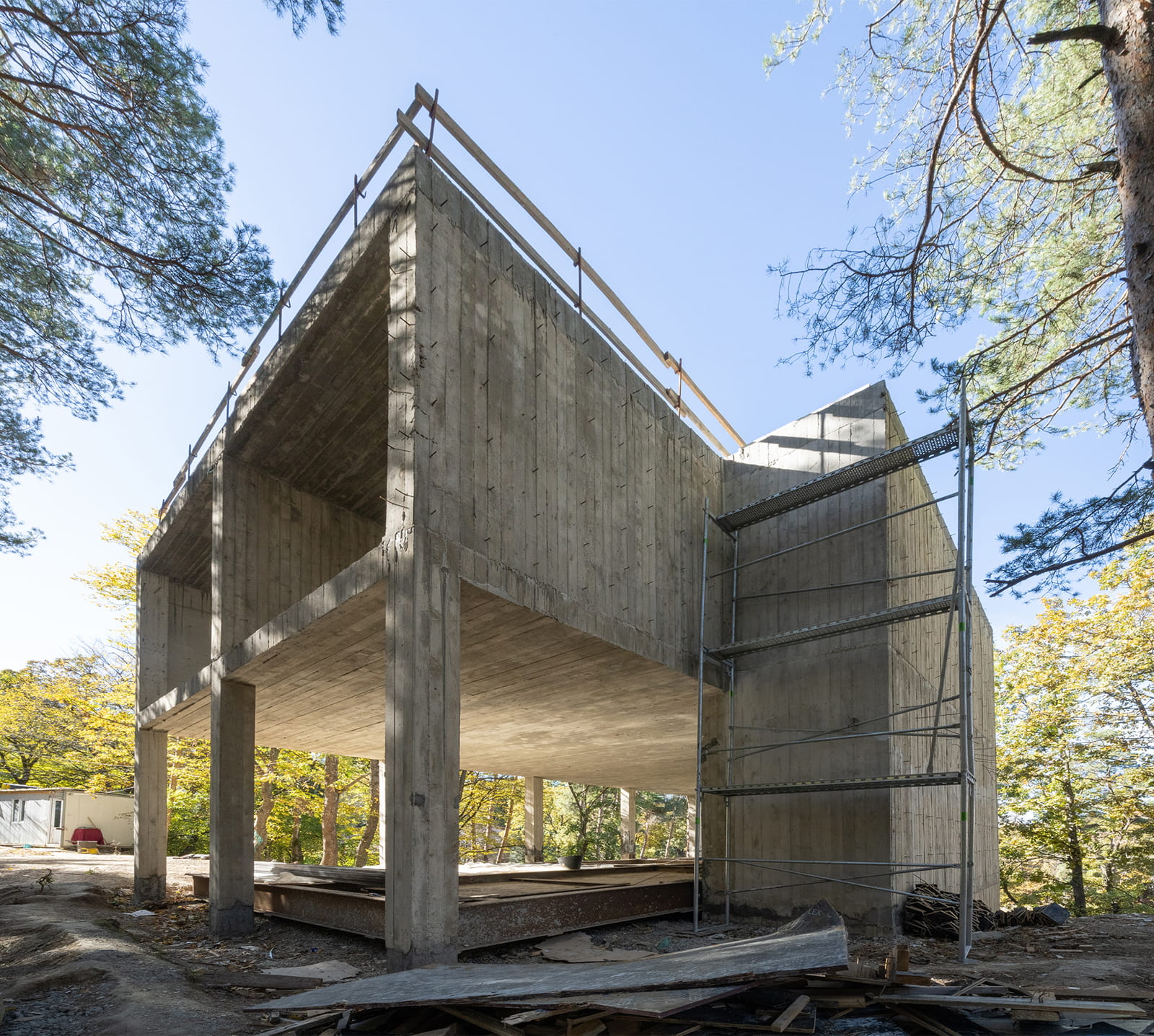
The architecture does not withdraw from the site but engages it, inviting vegetation, light, and air into the spatial experience.
By eliminating enclosure and allowing the forest to extend into the domestic realm, the house seeks to restore immediacy between people and place, positioning the landscape not as a backdrop, but as an integral and active presence in everyday life.
Drawings & Sketches
Bio
Wunderwerk is an architecture practice based in Tbilisi. Founded in 2013 by Gigi Shukakidze, the office operates in various fields of architecture, urbanism and research to find out as much as possible about the buildings and beyond them. In 2017 Gigi Shukakidze co-founded Tbilisi Architecture Biennial, which brings together professionals from diverse disciplines united under specific topic on a biennial basis. From 2016 he is an independent expert jury at EU Mies Award – Mies van der Rohe Foundation. In 2021 he started teaching at VA[A]DS – Free University of Tbilisi.
Facts & Credits
Title The House and the Wall
Typology Architecture, Residence
Location Tskneti, Georgia
Area 300 m2
Status Completed, 2024
Architecture Wunderwerk
Design Team Gigi Shukakidze, Nikoloz Lomidze, Barbare Kacharava, Irina Dikhaminjia
Structural Study Q Engineering
Landscape Design Ruderal
Photography Angus Leadley Brown, Gigi Shukakidze
Text by the authors
READ ALSO: Roman Bauer Arquitectos designed a convertible photographer’s workshop-studio in Lima, Peru