Η τρίτη διοργάνωση των GRAIL AWARDS ολοκληρώθηκε, τη Τετάρτη 21 Ιανουαρίου 2026, στην τελετή απονομής των βραβείων στο κατάμεστο αμφιθέατρο Ιωάννης Δεσποτόπουλος του Ωδείου Αθηνών. Ο θεσμός των Βραβείων Αρχιτεκτονικής, Εσωτερικών Χώρων και Φωτισμού GRAIL, σε παραγωγή Βασίλη Μπαρτζώκα και Δημήτρη Φακίνου, ένωσε την εγχώρια δημιουργική σκηνή, στοχεύοντας σταθερά και σθεναρά, στην εξωστρέφεια της ελληνικής αρχιτεκτονικής εντός και εκτός συνόρων.
Το “Tetris House” στην Αντίπαρο, σχεδιασμένο από τους ARP – Architecture Research Practice, έλαβε έπαινο στην κατηγορία Κατοικία της ενότητας Αρχιτεκτονική των GRAIL Awards 2026. Το έργο επαναχρησιμοποιεί ένα ημιτελές σκυρόδετο κέλυφος, μετατρέποντάς το σε κατοικία που απαντά σε ζητήματα βιωσιμότητας και πολεοδομικών περιορισμών. Μέσα από τοπικά υλικά, παθητικές στρατηγικές και ανανεώσιμες πηγές ενέργειας, η μελέτη αξιοποιεί βασικές γεωμετρίες, εμπνευσμένες από το παιχνίδι Tetris ως συνθετικό εργαλείο, προτείνοντας μια αρχιτεκτονική που «δουλεύει με ό,τι υπάρχει». Γ-σχήματα και ορθογώνιοι όγκοι συγκροτούν μια κοινοβιακή μορφή κατοίκησης, με το νερό ως πυρήνα της καθημερινής ζωής.
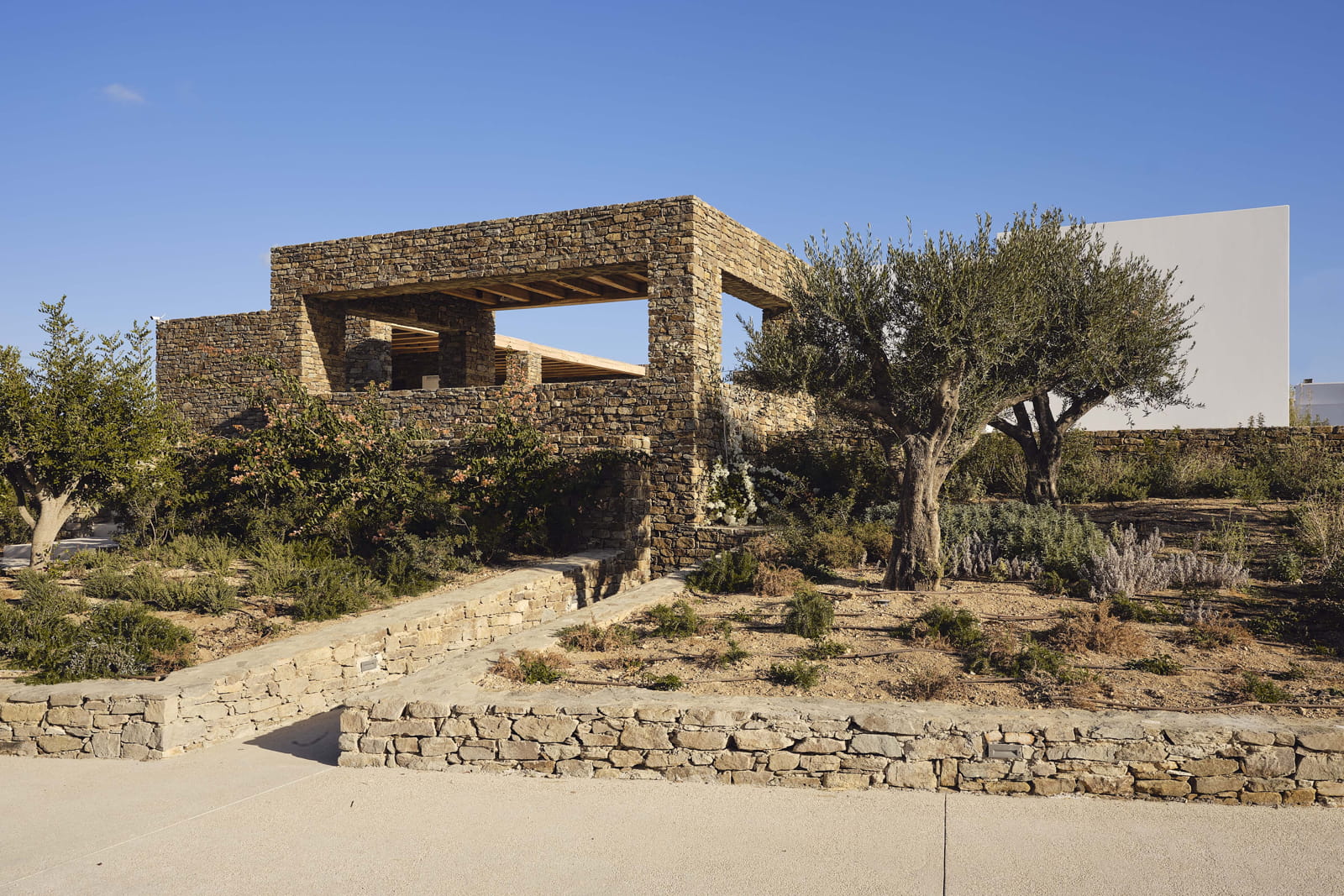
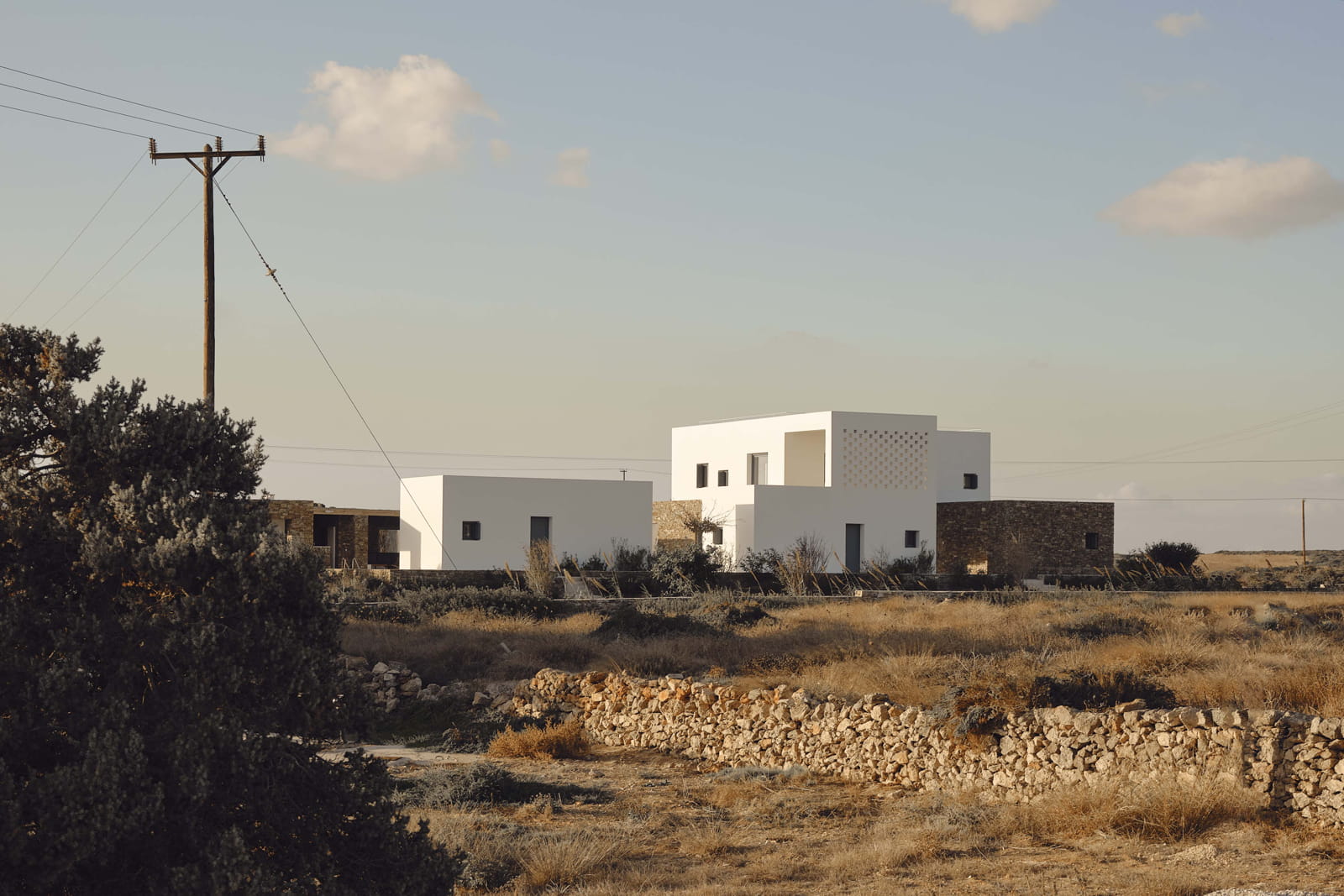
Ένα υφιστάμενο κτίσμα από σκυρόδεμα αποτέλεσε την αφετηρία του έργου—ένα από τα πολλά που δημιουργήθηκαν ως αποτέλεσμα παλαιότερης πολεοδομικής ρύθμισης, η οποία επέτρεπε την παράταση της ισχύος οικοδομικών αδειών υπό την προϋπόθεση της κατασκευής του φέροντος οργανισμού. Ως συνέπεια, ημιτελείς κτίσματα από οπλισμένο σκυρόδεμα παρέμειναν για χρόνια αδρανή στο τοπίο, αποτελώντας ένα γνώριμο αλλά αναξιοποίητο απόθεμα. Τη στιγμή της έναρξης του έργου, ο συγκεκριμένος σκελετός παρέμενε ανενεργός για περισσότερα από δέκα χρόνια. Η απόφαση διατήρησης και επανάχρησής του απαντά σε κρίσιμα ζητήματα περιβαλλοντικής στρατηγικής, οικονομικής βιωσιμότητας, καθώς και στους περιορισμούς που επιβάλλει το ισχύον πολεοδομικό πλαίσιο. Παρότι το έργο αναπτύχθηκε μέσα σε ένα πλαίσιο αυστηρών περιορισμών, επιδιώκει να ενταχθεί με φυσικότητα στο περιβάλλον του.
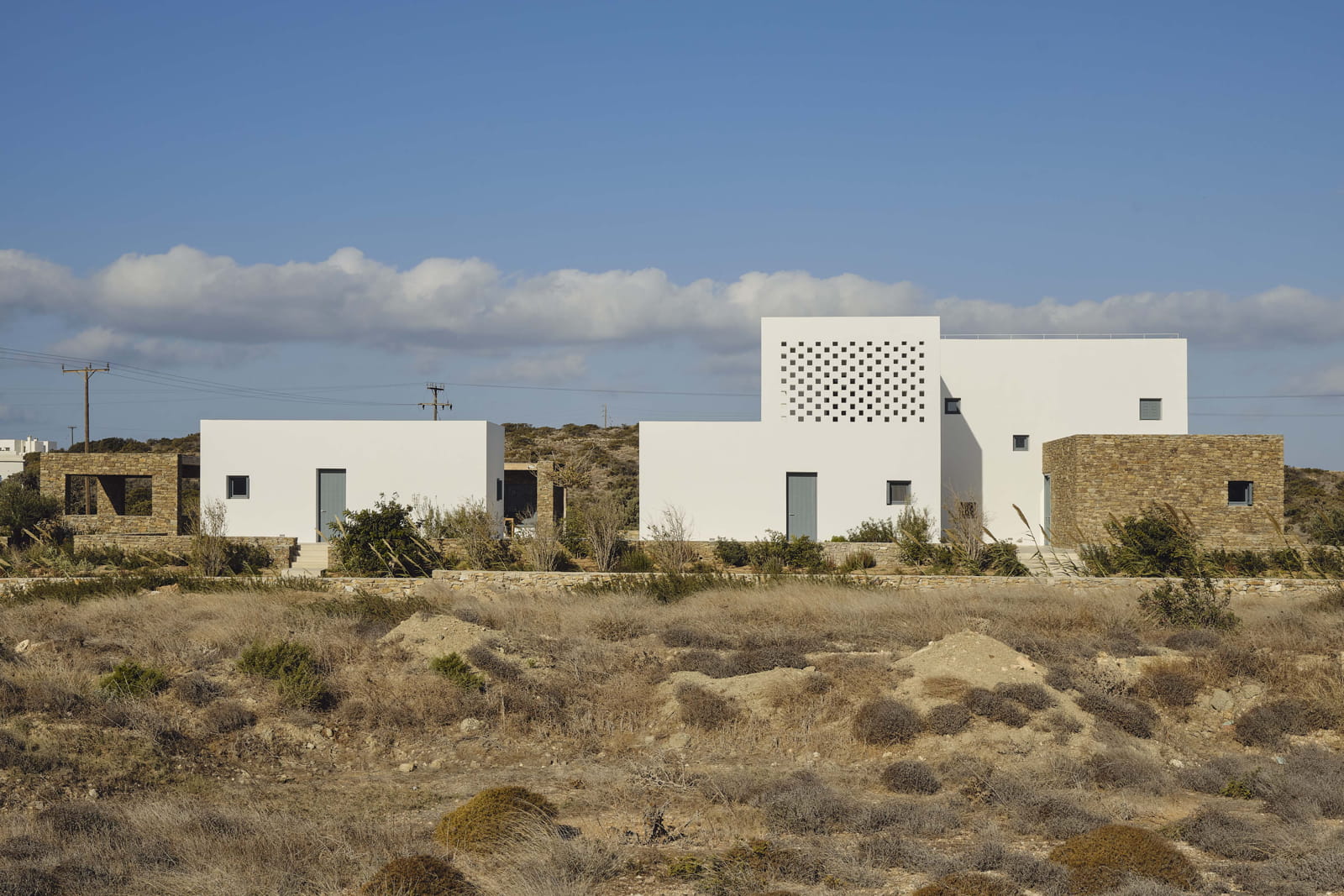
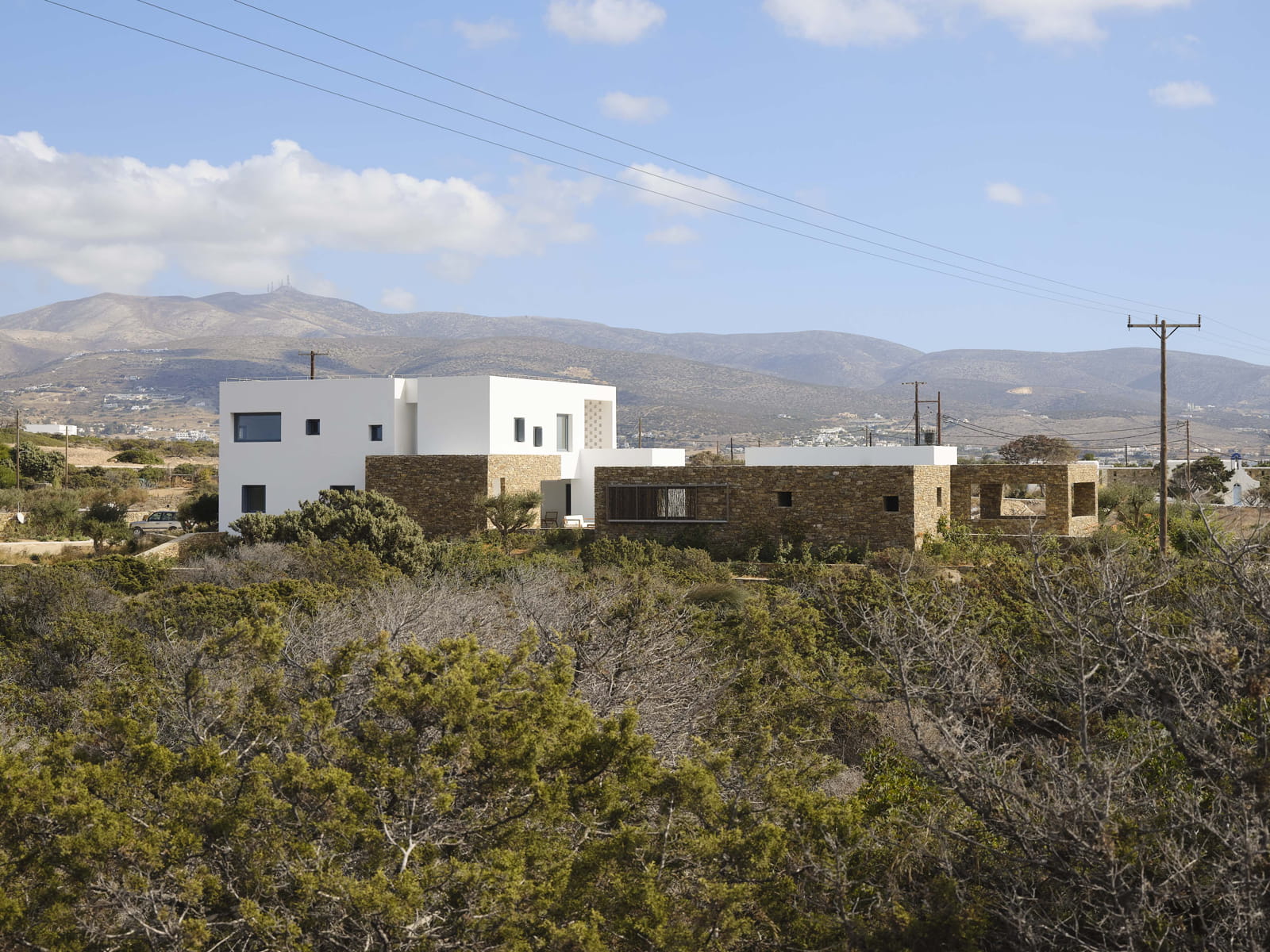
Στον πυρήνα της συνθετικής προσέγγισης βρίσκεται η αναζήτηση ισορροπίας μεταξύ παρελθόντος και παρόντος, ιδιωτικότητας και εξωστρέφειας, δομής και τοπίου.
Από τα πρώτα διαγράμματα, η μελέτη στράφηκε σε έναν πειραματισμό με απλές γεωμετρίες, οι οποίες σταδιακά παρέπεμπαν στις βασικές μορφές του παιχνιδιού Tetris της δεκαετίας του ’80—όχι ως κυριολεκτική αναφορά, αλλά ως εργαλείο σύνθεσης που επιτρέπει την άρθρωση και την αλληλοδιείσδυση των όγκων.
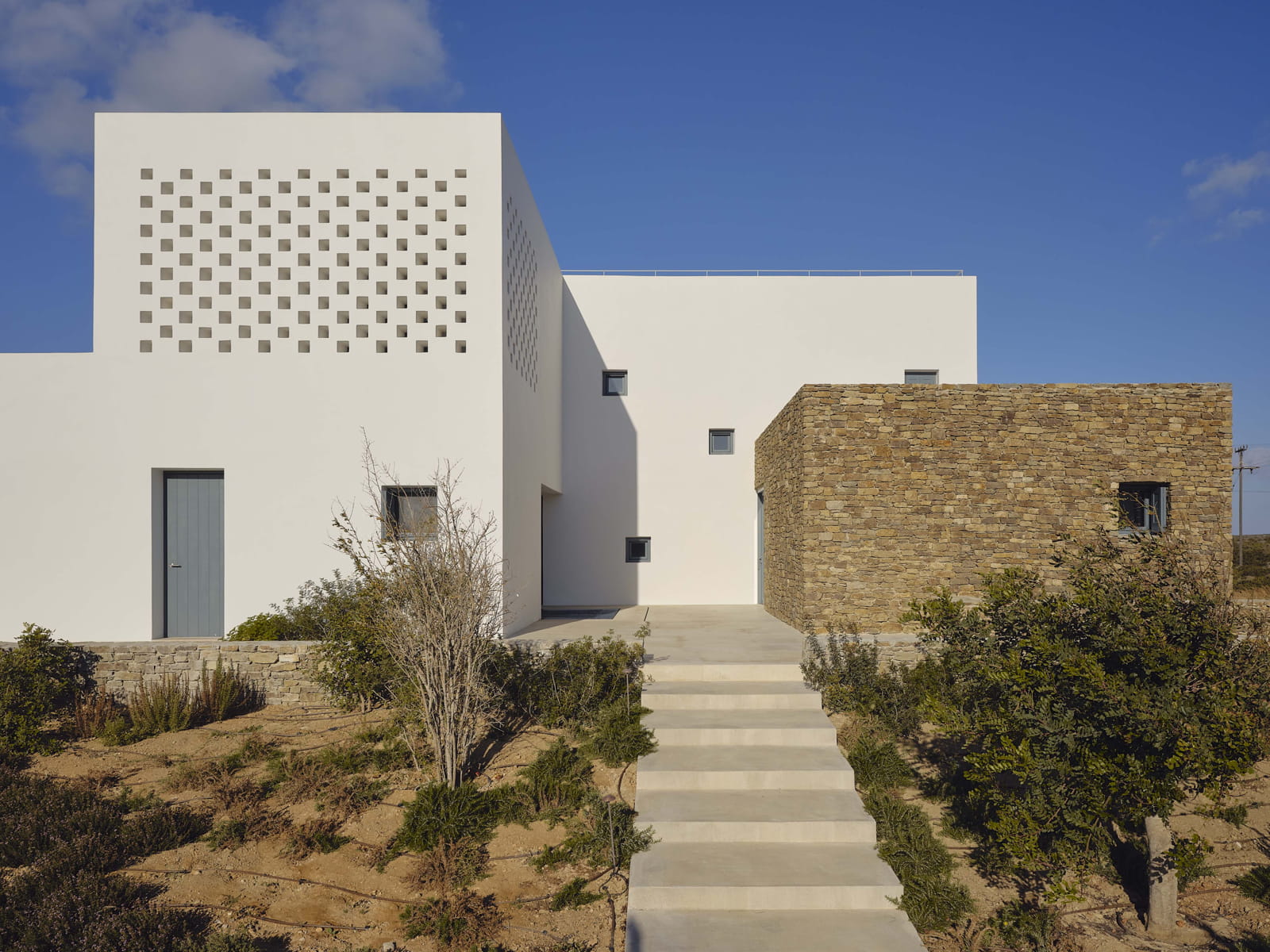
Η σχεδιαστική διαδικασία εξελίχθηκε έτσι σε μια πρακτική προσεκτικής αφαίρεσης και ακριβούς προσθήκης.
Αφαιρέθηκαν μόνο τα απολύτως απαραίτητα τμήματα του υπάρχοντος σκελετού και εισήχθησαν Γ-σχήματα και ορθογώνιοι όγκοι, με στόχο την καθαρότητα τόσο στη μορφολογική όσο και στη λειτουργική οργάνωση. Η προσέγγιση αυτή δεν απαντά μόνο στις ιδιαιτερότητες του κελύφους, αλλά προτείνει και ένα ενδεικτικό μοντέλο που μπορεί να επαναληφθεί σε αντίστοιχες περιπτώσεις: μια ρεαλιστική και σαφή αρχιτεκτονική στρατηγική.
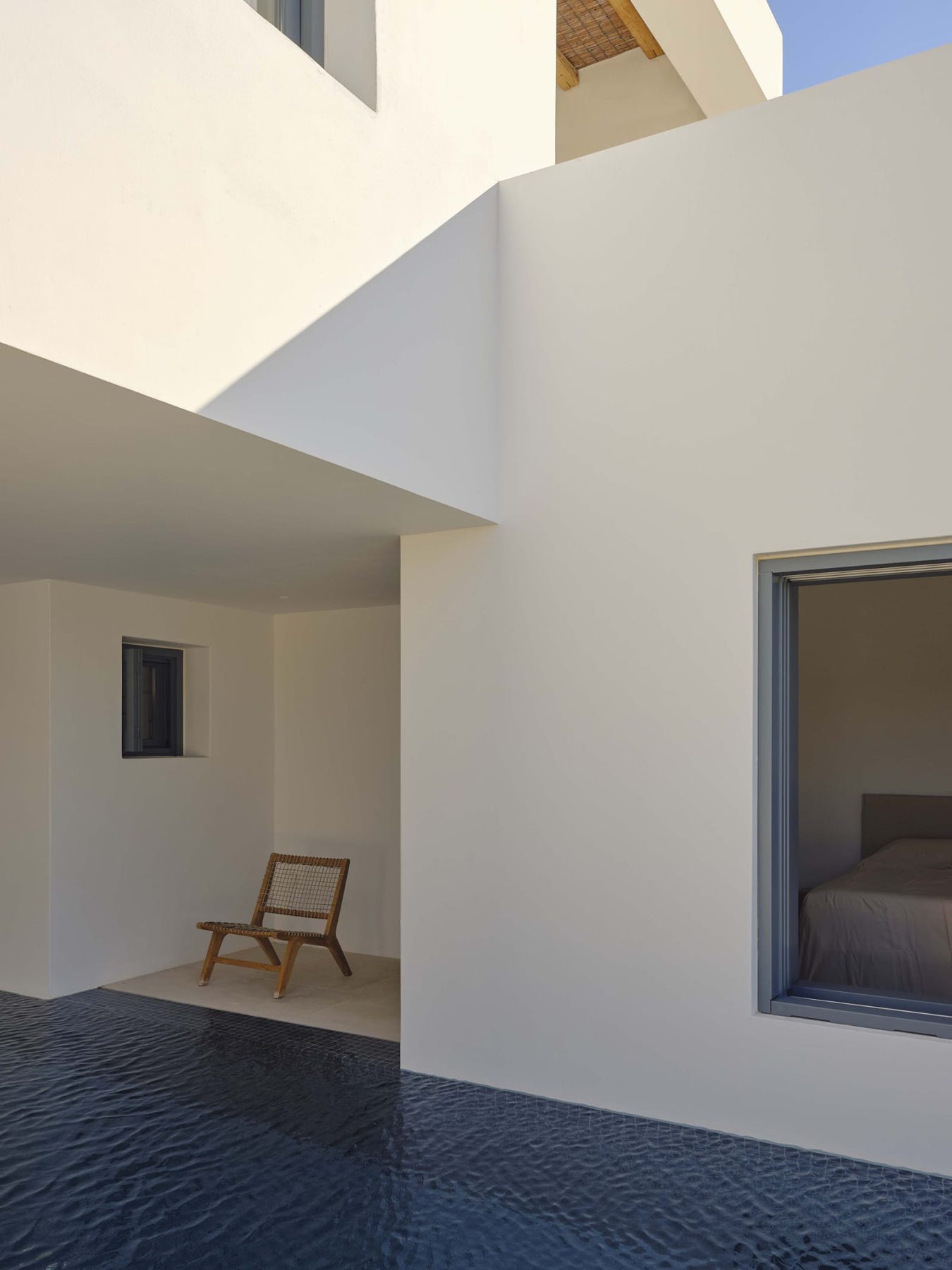
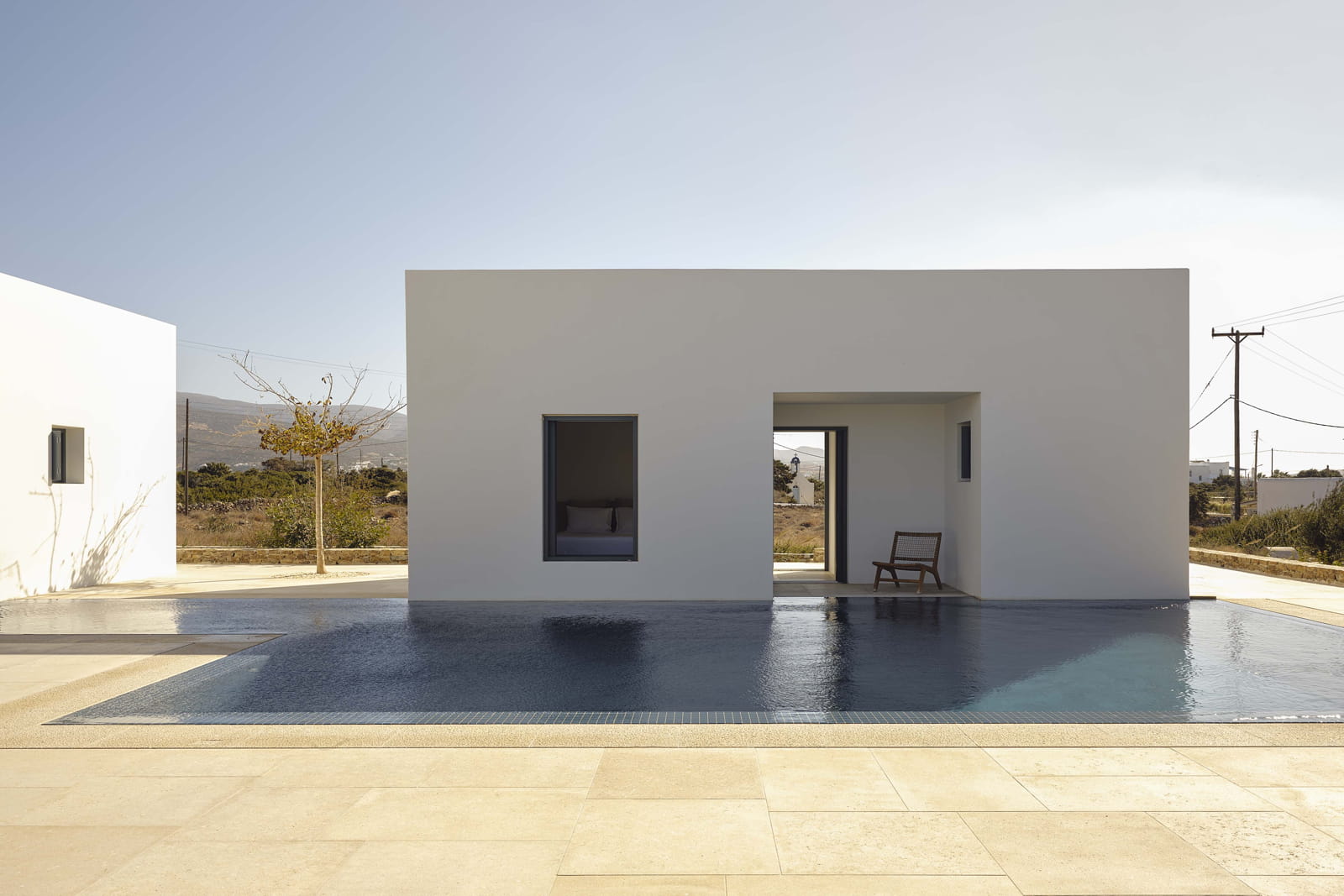
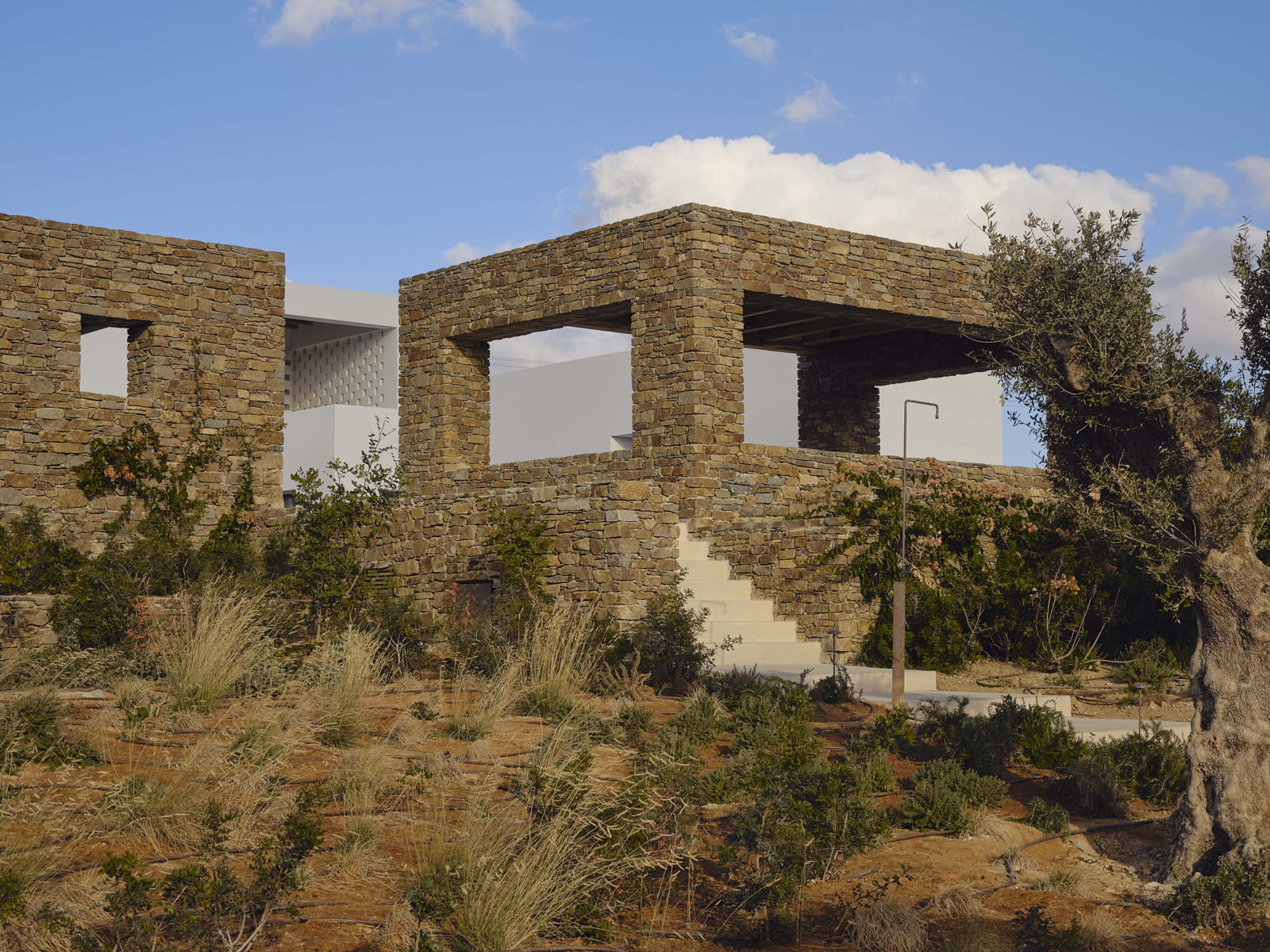
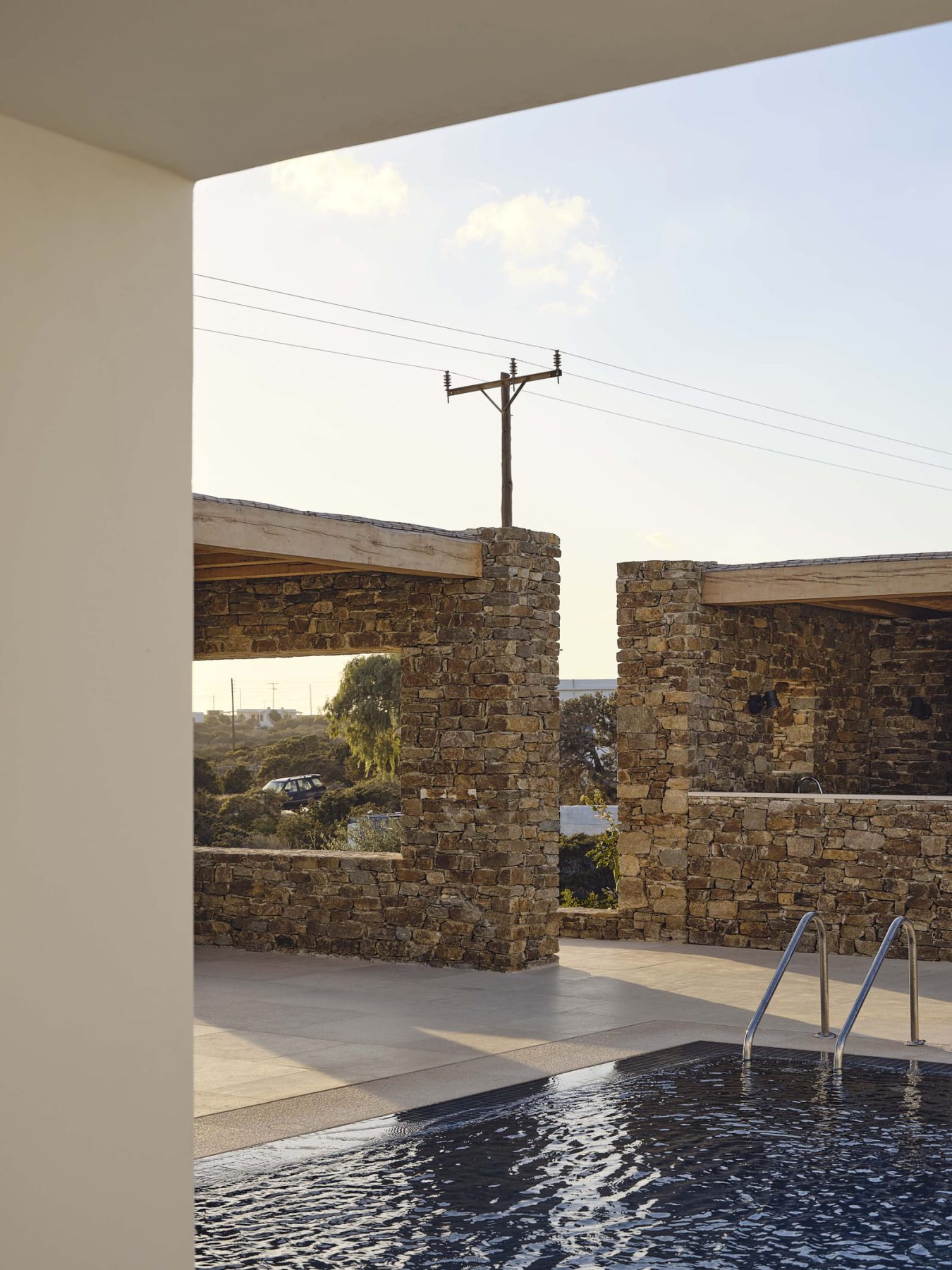
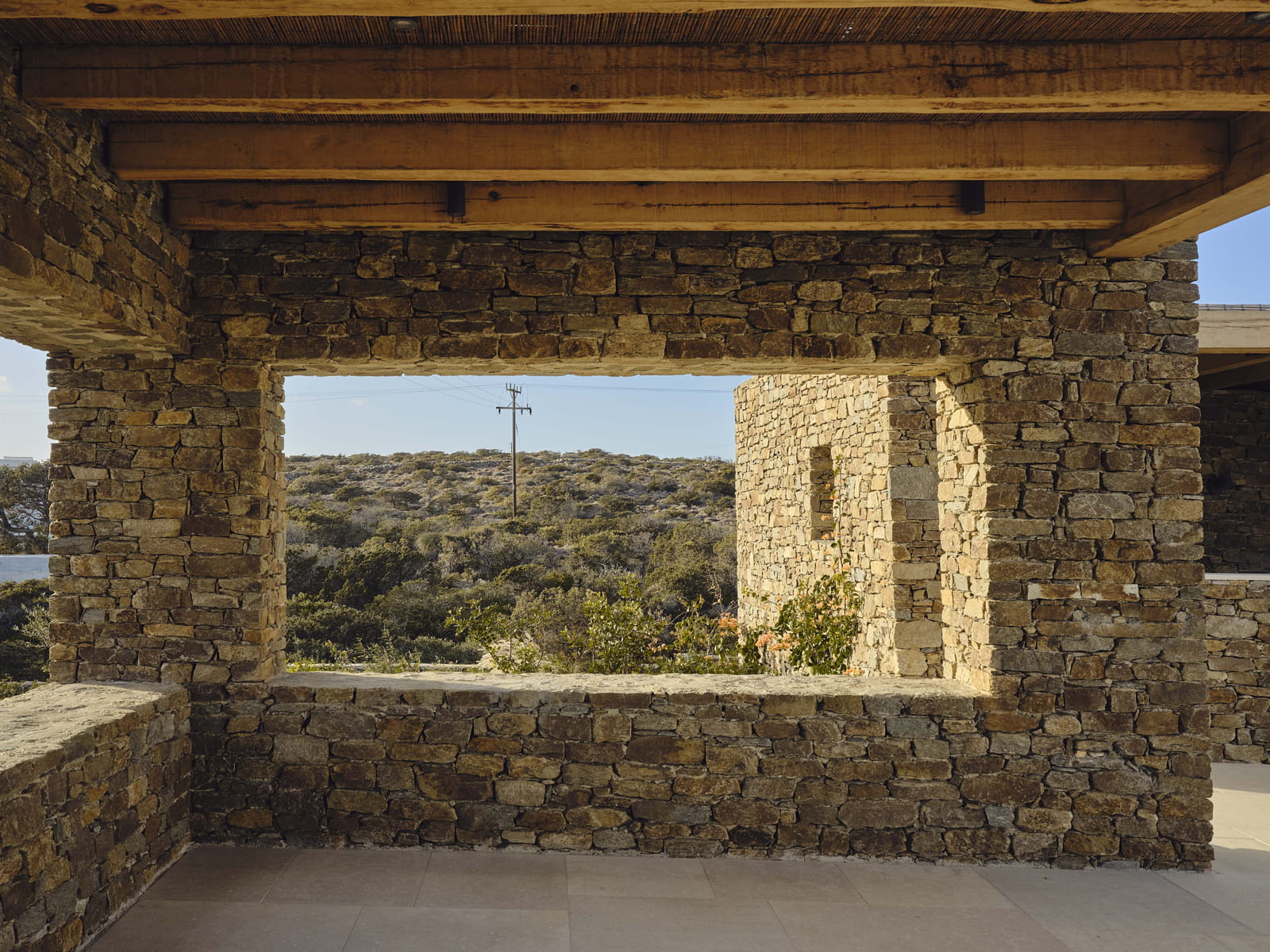
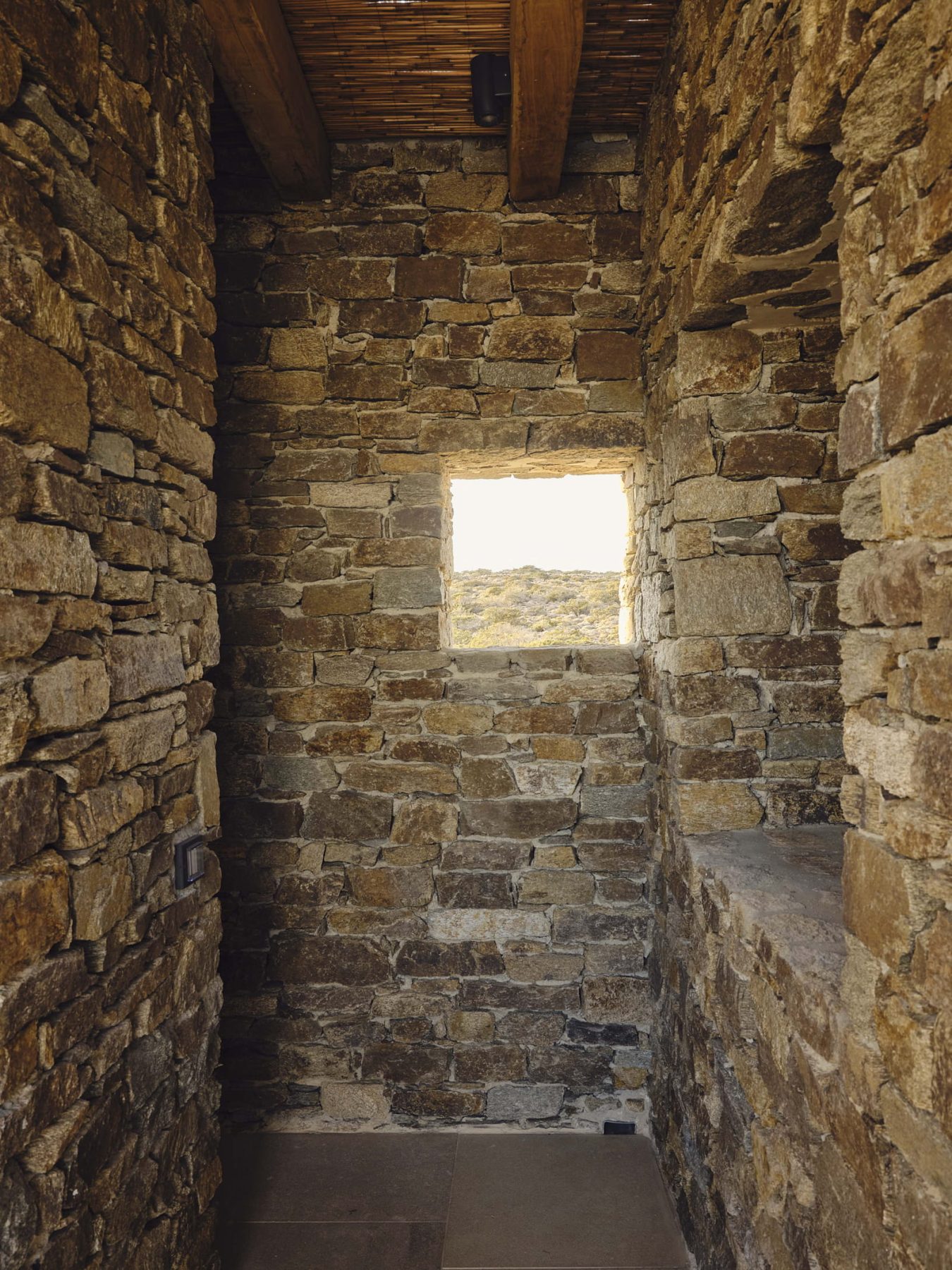
Το έργο διερευνά παράλληλα τη σχέση ανάμεσα στις τοπικές συνθήκες και τον σύγχρονο σχεδιασμό, αξιοποιώντας την τοπική τεχνογνωσία και τις διαθέσιμες τεχνικές—από τις ξερολιθιές που οριοθετούν το οικόπεδο έως τα στοιχεία σκυροδέματος που κατασκευάζονται με ξύλινα καλούπια.
Πρόκειται για μια αρχιτεκτονική που εργάζεται συνειδητά “με ό,τι υπάρχει”.
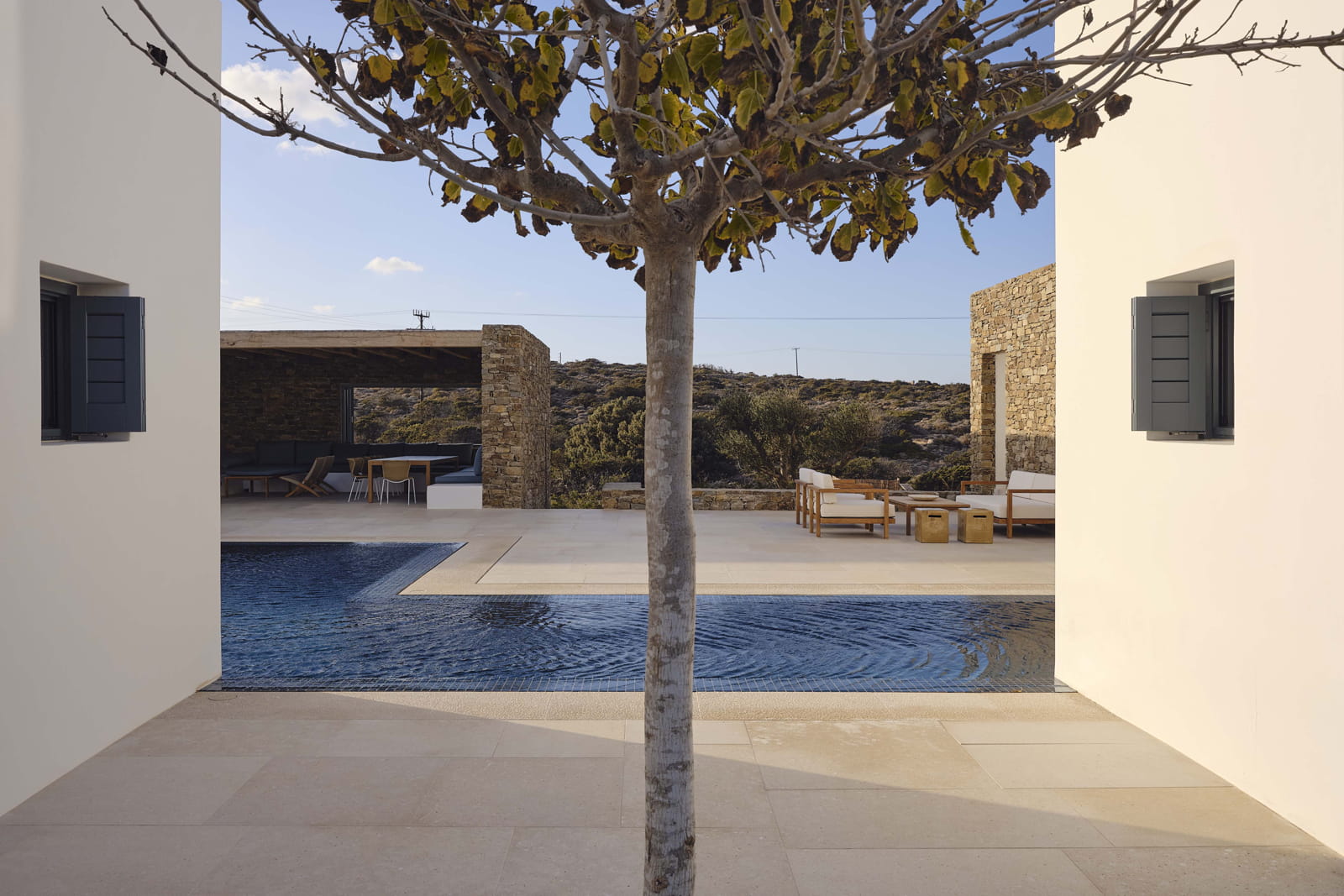
Το οικόπεδο χαρακτηρίζεται από επίπεδη τοπογραφία και εγγύτητα τόσο στο λιμάνι όσο και στον οικισμό. Με γειτονικά οικόπεδα σε όλες τις πλευρές, πλην της δυτικής—η οποία αναμένεται να παραμείνει αδόμητη λόγω προστατευόμενης δασικής ζώνης—απουσιάζει η εξωστρέφεια που συναντάται συχνά σε παραθαλάσσιες κατοικίες.
Η κατοικία ισορροπεί ανάμεσα στην εσωστρέφεια και την εξωστρέφεια, το κλειστό και το ανοιχτό, το προστατευμένο και το ορατό.
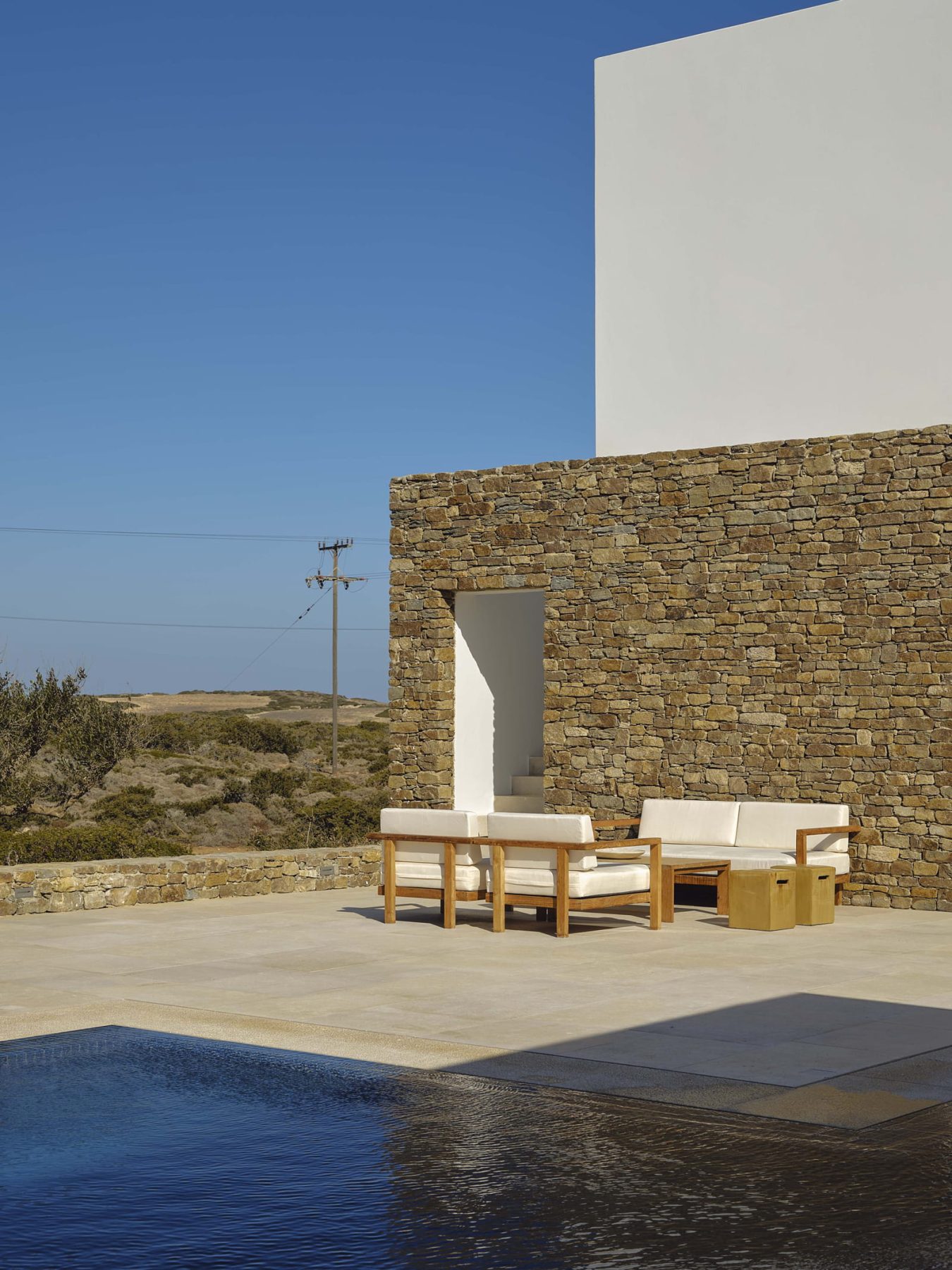
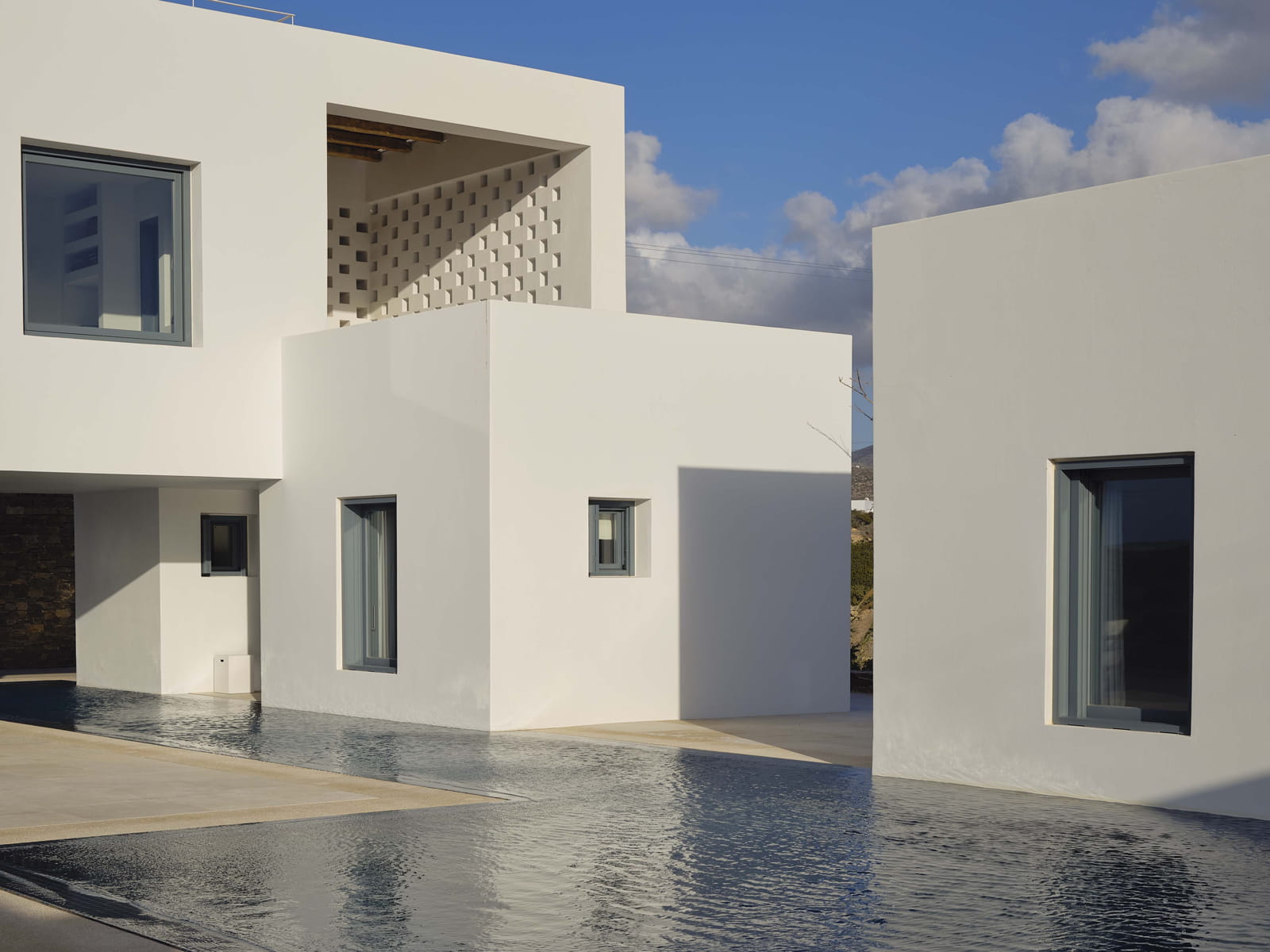
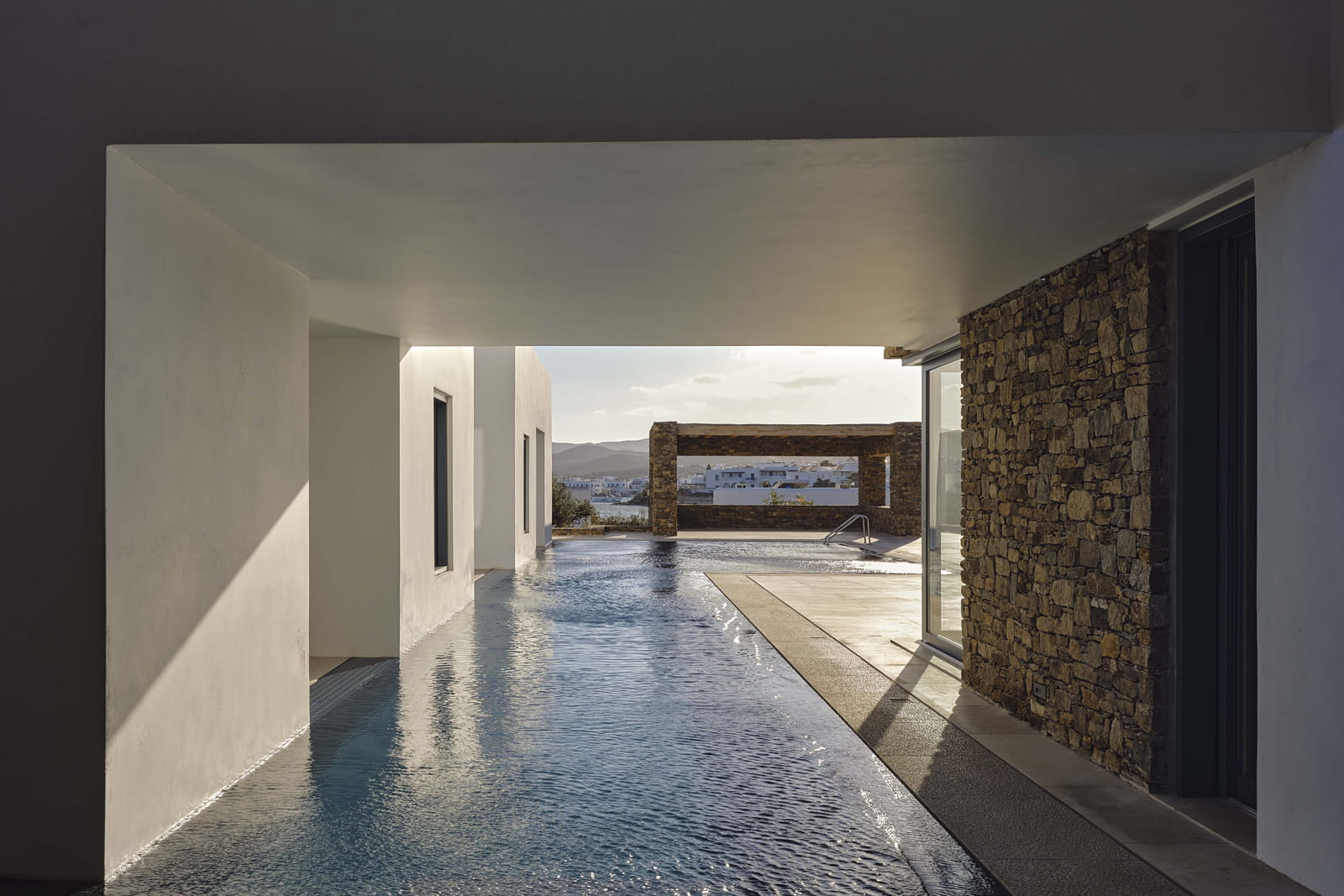
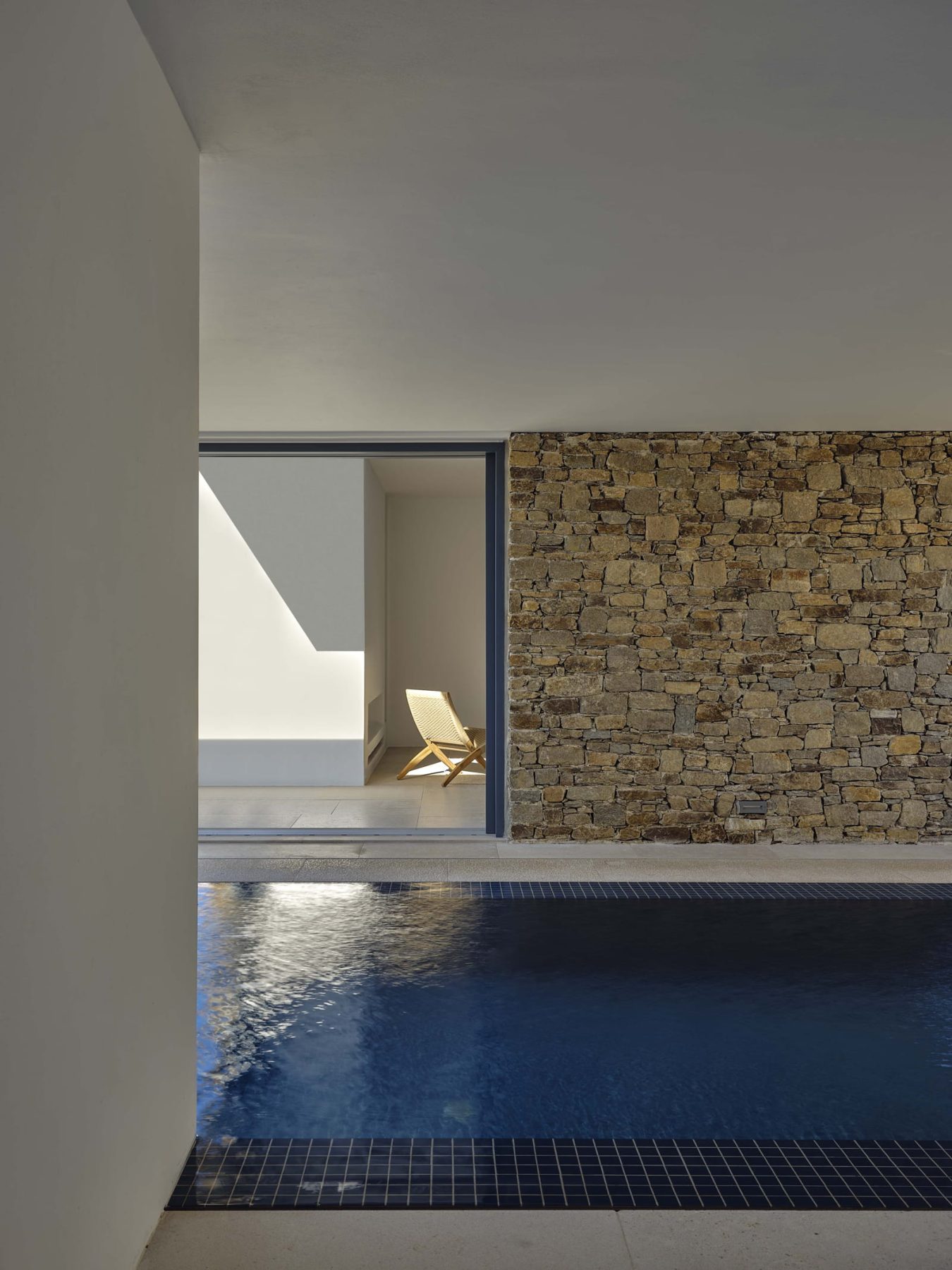
Στο ισόγειο, η διάταξη των όγκων γύρω από μια κεντρική πισίνα διαμορφώνει μια προστατευμένη αυλή, εξασφαλίζοντας ταυτόχρονα ιδιωτικότητα και ανεμπόδιστες θέες.
Η χωρική αυτή οργάνωση απομακρύνεται από τη συμβατική γραμμική διάταξη χώρων και προτείνει μια πιο συλλογική αντίληψη κατοίκησης, με το στοιχείο του νερού να καθορίζει την κίνηση, να αποκαλύπτει σταδιακά τους χώρους και να λειτουργεί ως σημείο αναφοράς της καθημερινής ζωής.
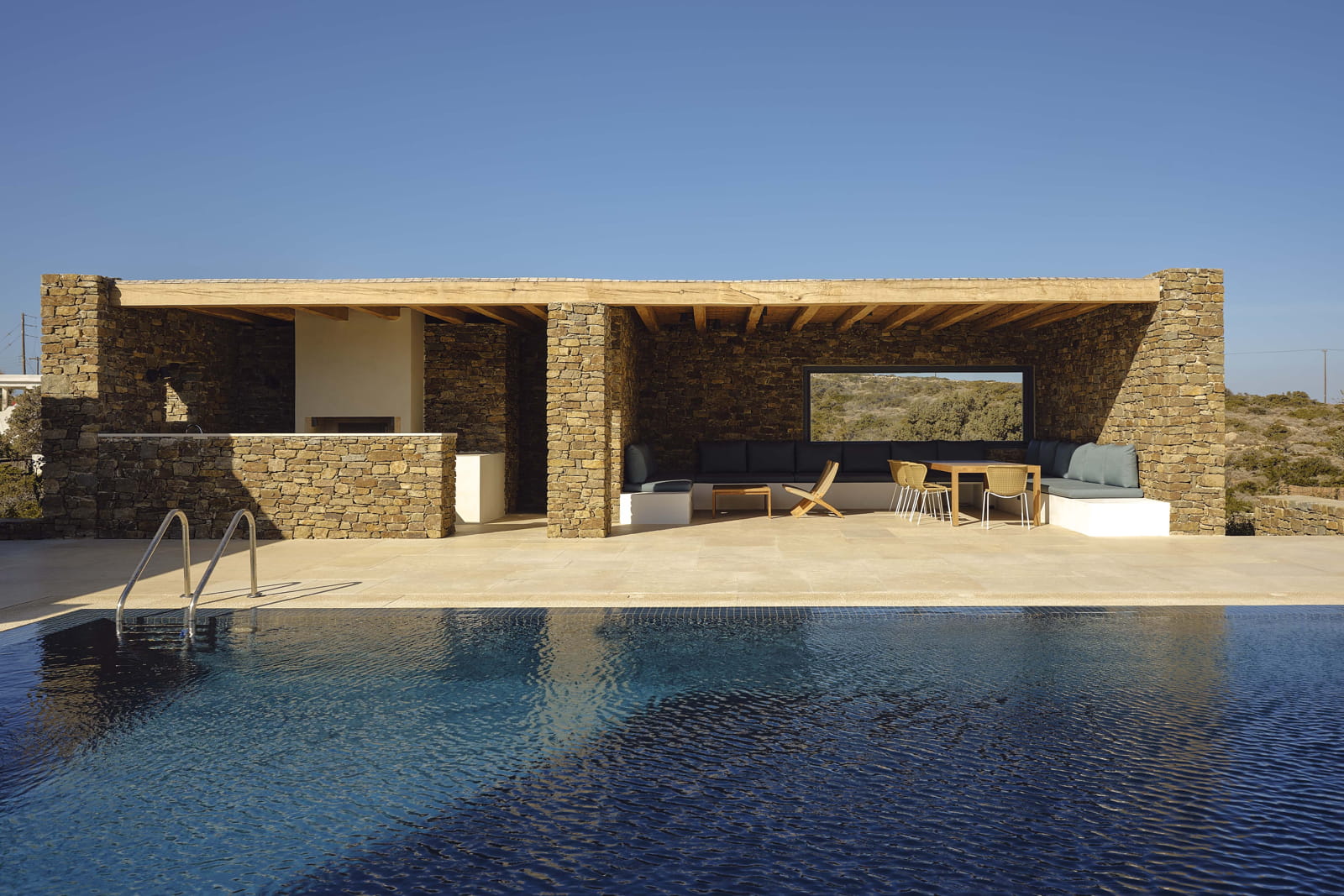
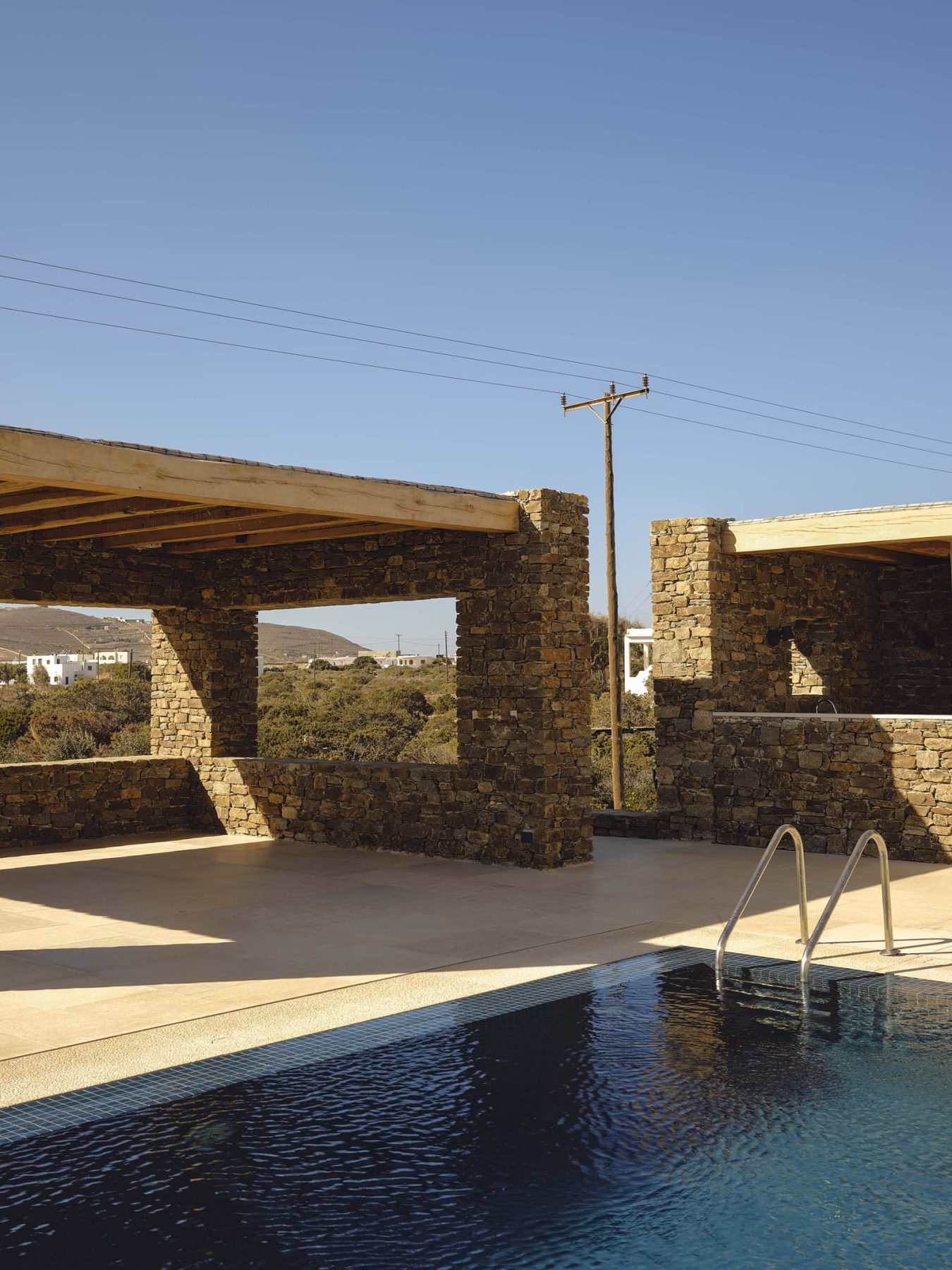
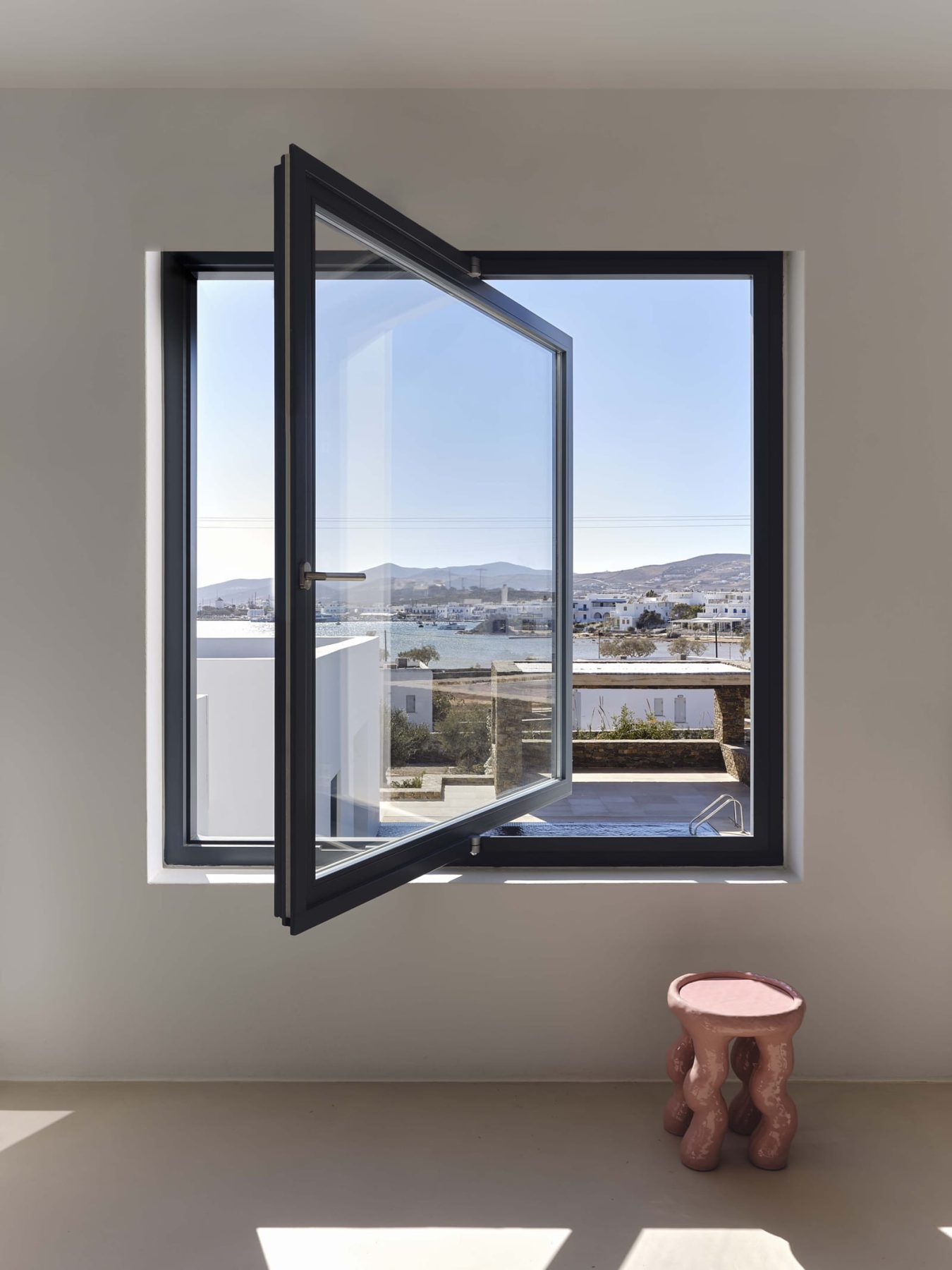
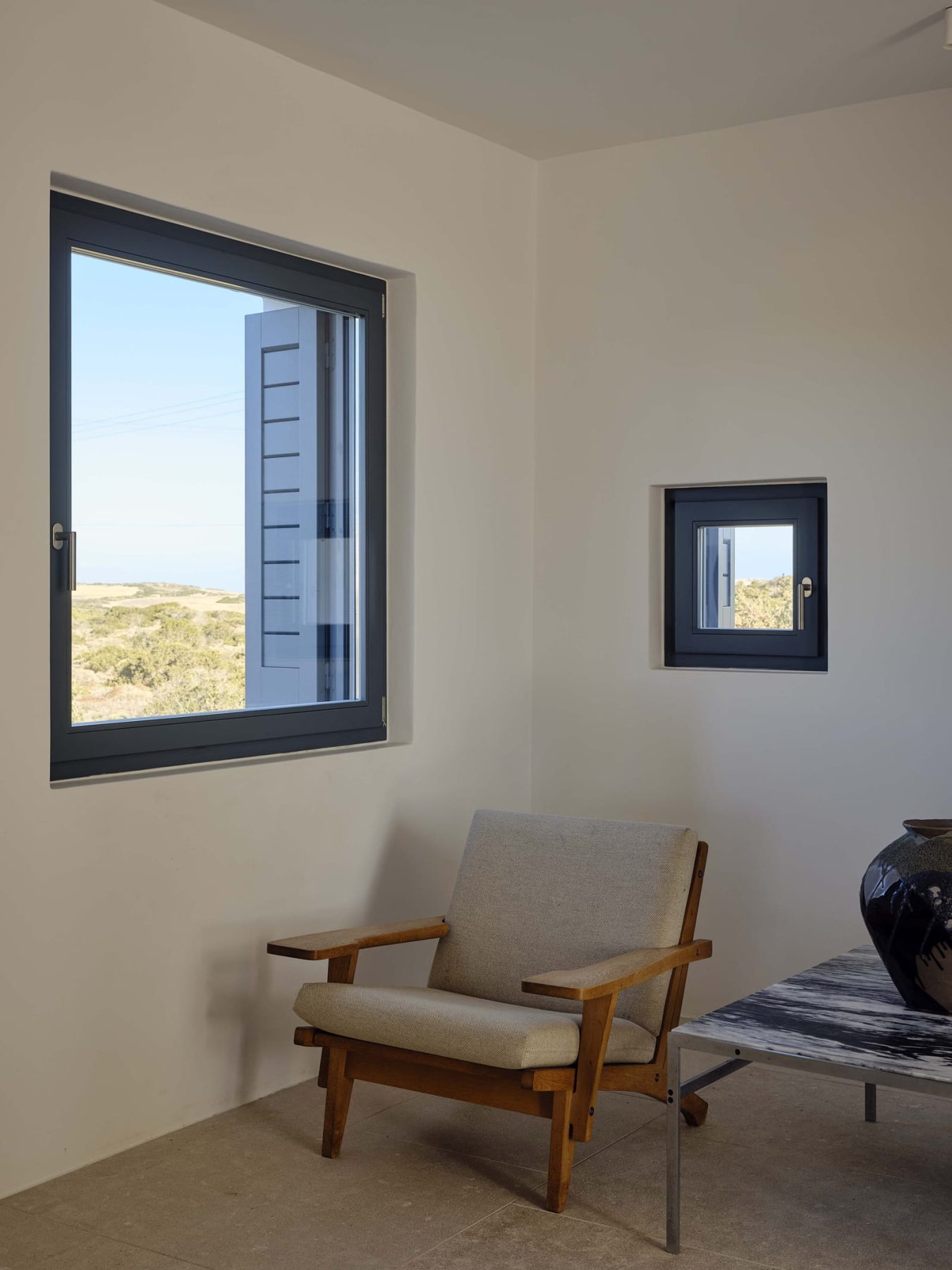
Στον επάνω όροφο, το καθιστικό και το κυρίως υπνοδωμάτιο ανοίγονται προς τη βόρεια, πιο άγρια όψη του νησιού, ενώ ταυτόχρονα διατηρούν οπτική επαφή με τη δραστηριότητα του λιμανιού μέσω ενός μεγάλου ανοίγματος. Ένα εξωτερικό κλιμακοστάσιο εξασφαλίζει ανεξάρτητη πρόσβαση τόσο στον όροφο όσο και στο βατό δώμα, το οποίο απολαμβάνει ανεμπόδιστη θέα στο τοπίο.
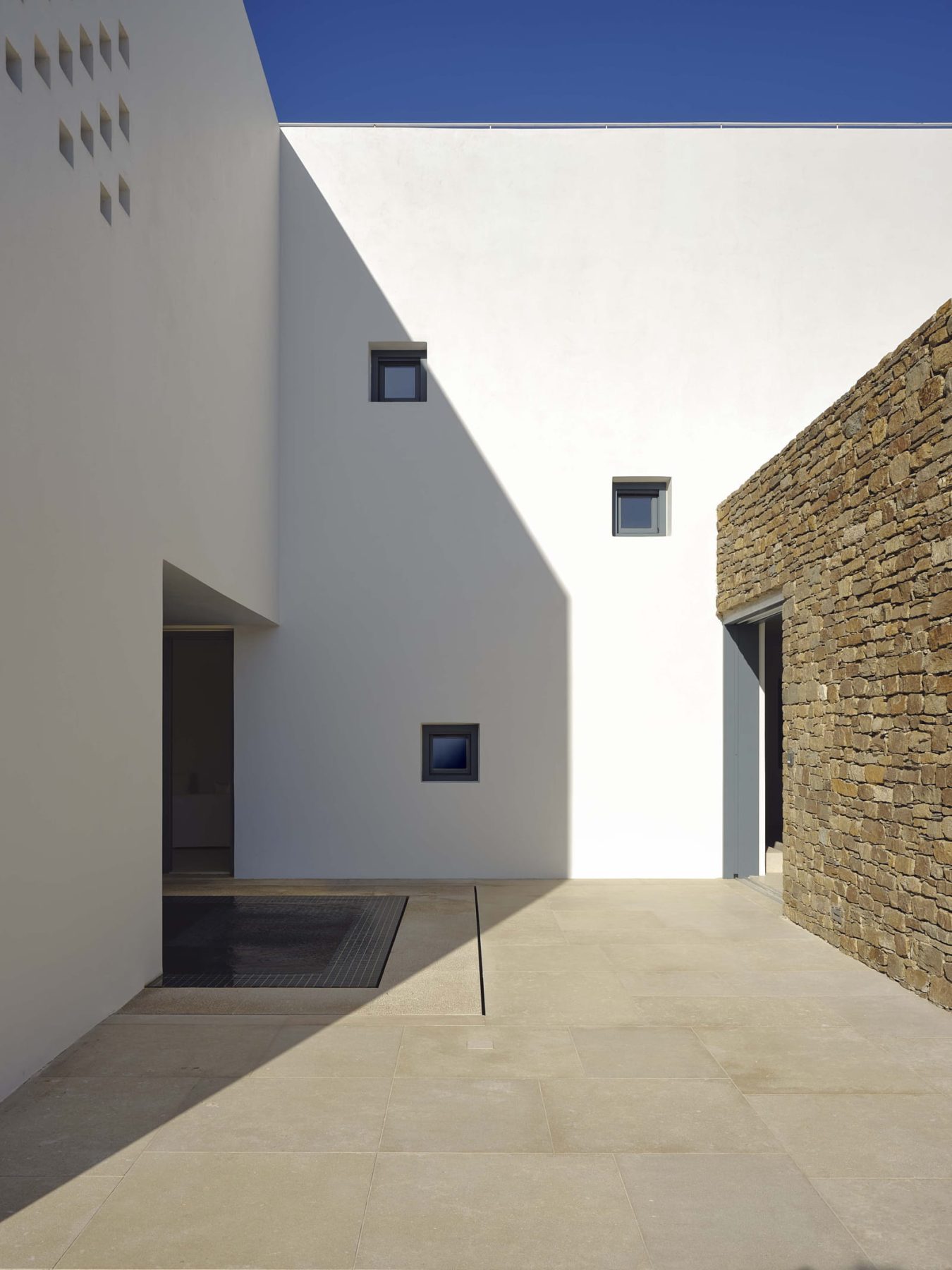
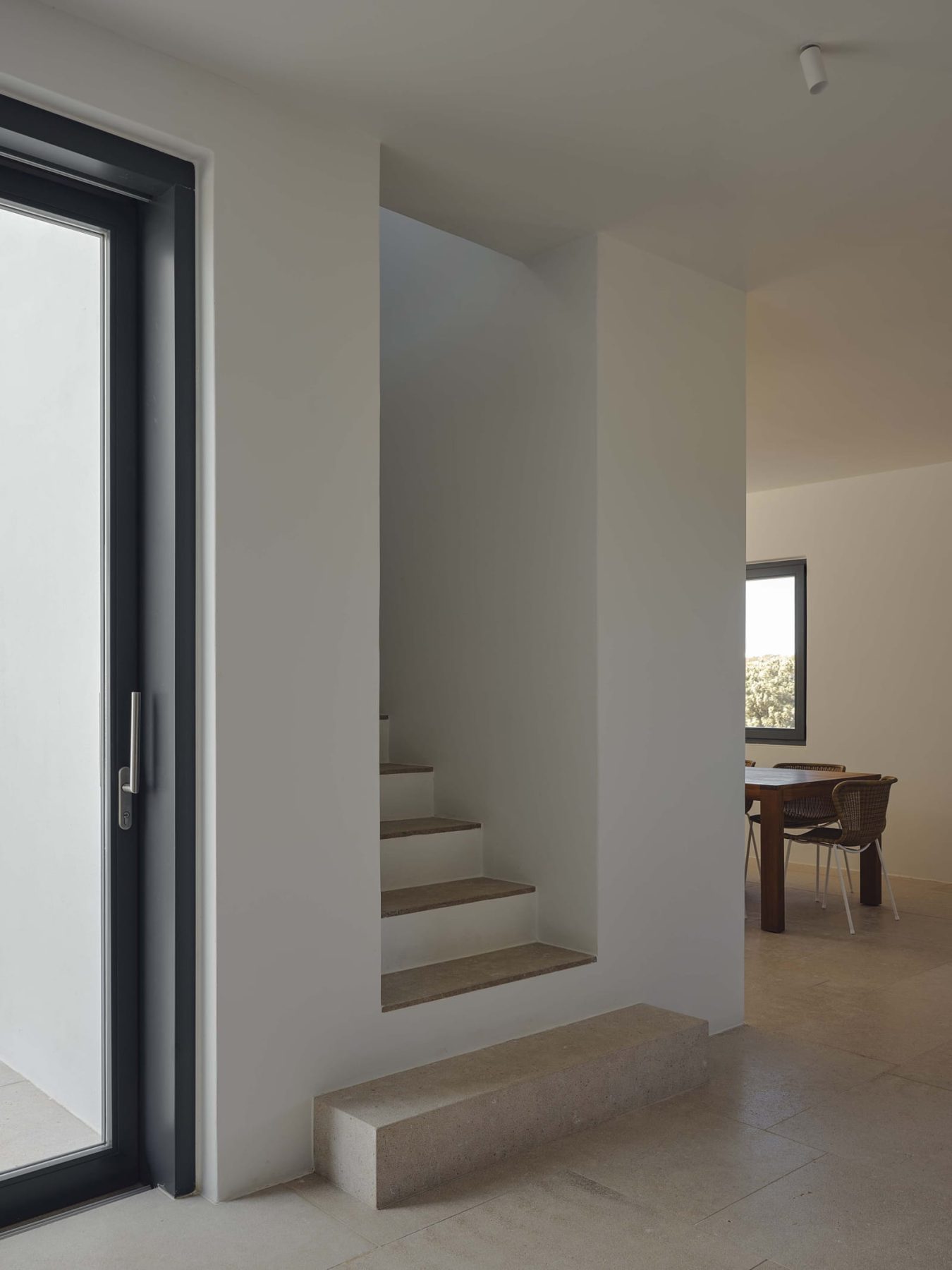
Το έργο ενσωματώνει παθητικές στρατηγικές σχεδιασμού με στόχο τη μείωση της ενεργειακής κατανάλωσης, δίνοντας έμφαση στον φυσικό φωτισμό και τον αερισμό για την επίτευξη διαμπερότητας, καθώς και στην εφαρμογή σύγχρονων τεχνολογιών θερμομόνωσης. Χαρακτηριστικό παράδειγμα αποτελεί ο φεγγίτης στην απόληξη της εσωτερικής κλίμακας, ο οποίος λειτουργεί ως φυσικός πύργος ψύξης. Για τις εξωτερικές επιφάνειες και τη διαμόρφωση του περιβάλλοντος χώρου χρησιμοποιείται τοπική φυσική πέτρα, ενώ η φύτευση αποτελείται από γηγενή είδη, τα οποία, λόγω της προσαρμοστικότητάς τους στο τοπίο, συμβάλλουν στη μείωση της κατανάλωσης νερού. Τέλος, η κατοικία καλύπτει πλήρως τις ενεργειακές της ανάγκες μέσω φωτοβολταϊκών πάνελ.
Στοιχεία έργου
Τίτλος έργου Tetris House
Τυπολογία Αρχιτεκτονική, Κατοικία
Τοποθεσία Αντίπαρος, Κυκλάδες, Ελλάδα
Κατάσταση Υλοποιημένη, 2025
Αρχιτεκτονική ARP – Architecture Research Practice
Σχεδιαστική Ομάδα Argyro Pouliovali, Nora Delidimou, Nicole Kotsis, Marilena Stavrakaki, Anna-Maria Labrinopoulou
Μηχανολογική Μελέτη TETRAS S.A.
Στατική Μελέτη Erisma
Σχεδιασμός Εσωτερικού Χώρου Vana Krimnioti
Αρχιτεκτονική Τοπίου H. Pangalou & Associates
Φωτογραφία Giulio Ghirardi
Kείμενο από τους δημιουργούς
Μάθετε περισσότερα για τα GRAIL Awards 2026, εδώ!
The third edition of the GRAIL Awards concluded on Wednesday, January 21, 2026, with the awards ceremony held at the packed Ioannis Despotopoulos Auditorium of the Athens Conservatoire. The GRAIL Awards for Architecture, Interior Design, and Lighting—produced by Vasilis Bartzokas and Dimitris Fakinos—brought together the Greek creative scene, maintaining a steady and determined focus on promoting the international visibility of Greek architecture, both within Greece and beyond its borders.
Tetris House in Antiparos, designed by ARP – Architecture Research Practice, received an Honorable Mention in the Housing category of the Architecture section of the GRAIL Awards 2026. The project reuses an unfinished concrete shell, transforming it into a residence that addresses issues of sustainability and urban planning constraints. Through the use of local materials, passive design strategies, and renewable energy sources, the proposal employs basic geometries—drawn from the logic of the game Tetris as a compositional tool—advancing an architectural approach that “works with what already exists.” L-shaped and rectangular volumes form a communal mode of living, with water positioned at the core of everyday life.
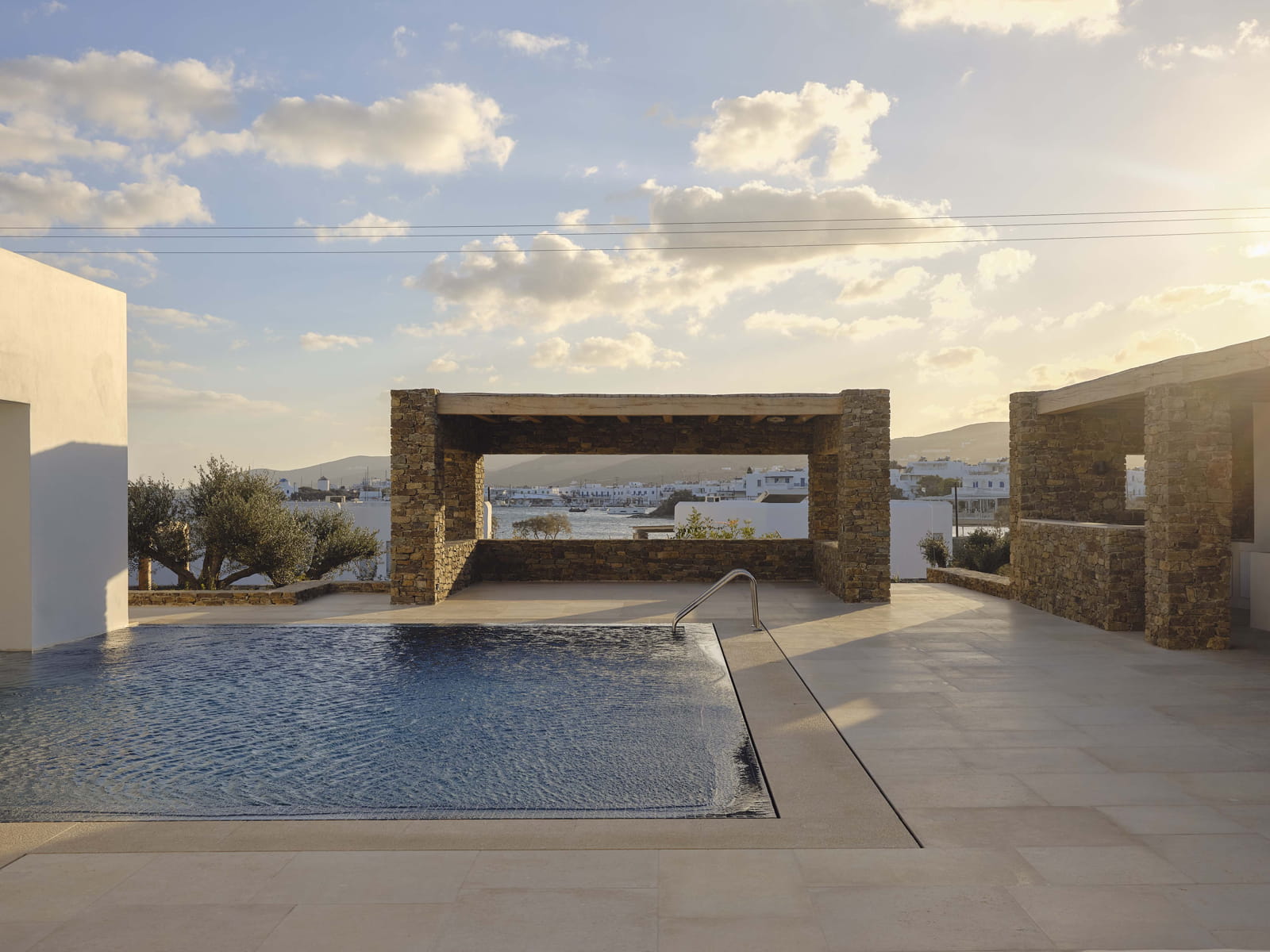
An existing concrete structure served as the starting point of the project—one of many created as a result of an earlier urban planning regulation that allowed the extension of building permits on the condition that the load-bearing structure was constructed. As a consequence, unfinished reinforced concrete buildings remained inactive in the landscape for years, forming a familiar yet underutilized building stock. At the time the project began, this particular structural frame had been inactive for more than ten years. The decision to preserve and reuse it responds to critical issues of environmental strategy, economic viability, and the constraints imposed by the current planning framework. Although the project was developed within a context of strict limitations, it seeks to integrate naturally into its surroundings.
At the core of the compositional approach lies the pursuit of balance between past and present, privacy and openness, structure and landscape.
From the earliest diagrams, the study turned to an exploration of simple geometries, which gradually alluded to the basic forms of the 1980s game Tetris—not as a literal reference, but as a compositional tool that enables the articulation and interpenetration of volumes.
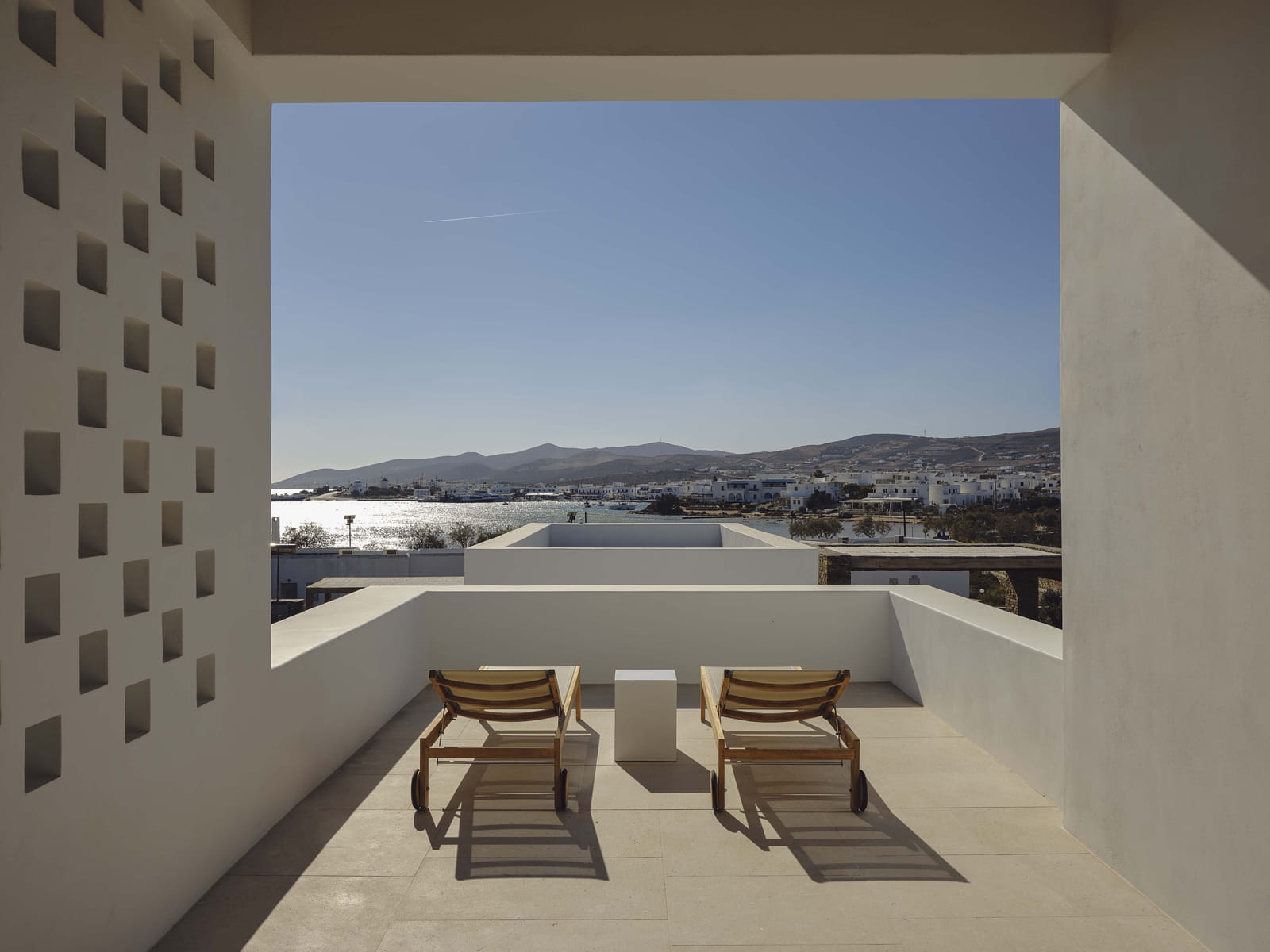
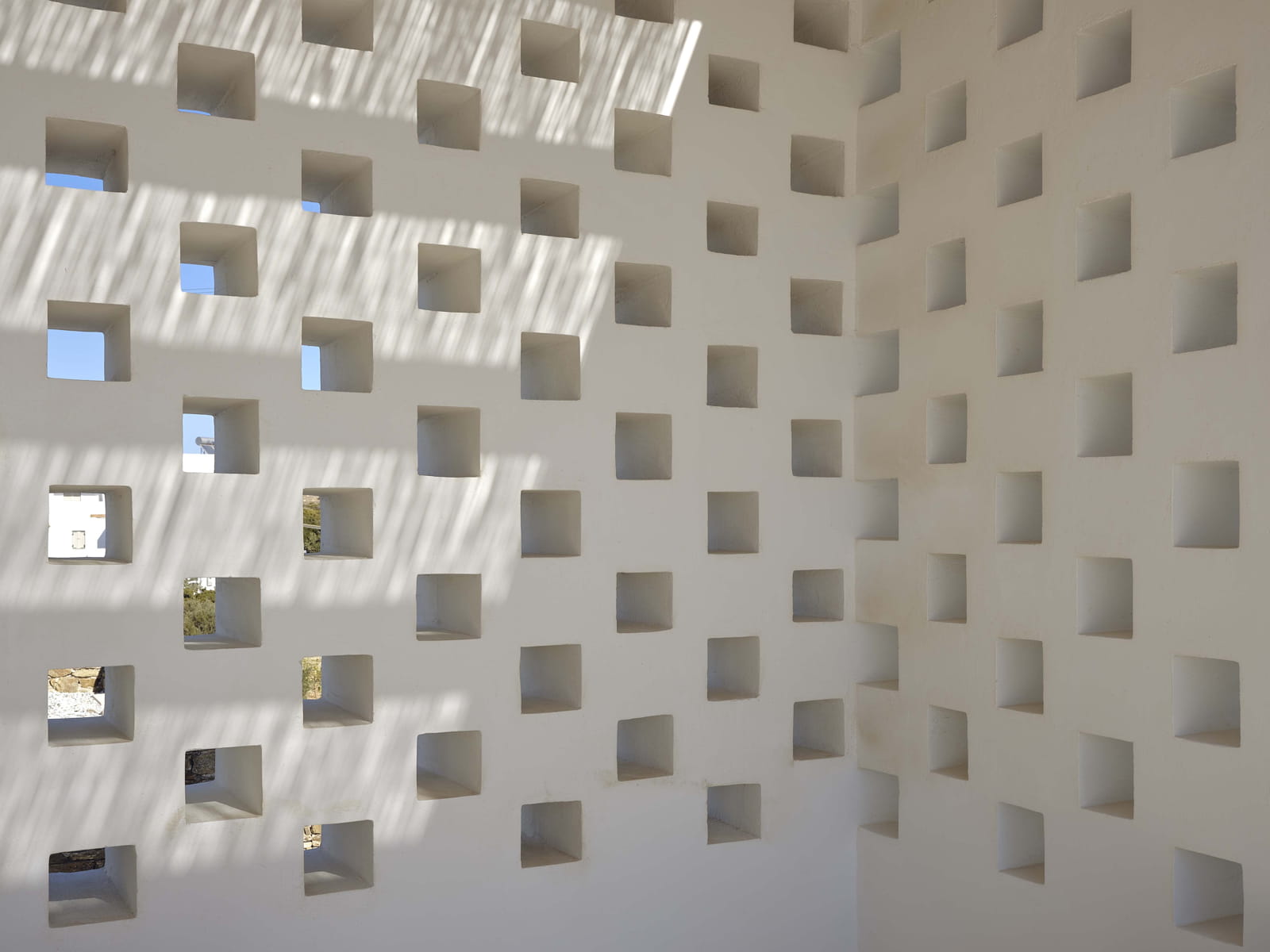
The design process thus evolved into a practice of careful subtraction and precise addition.
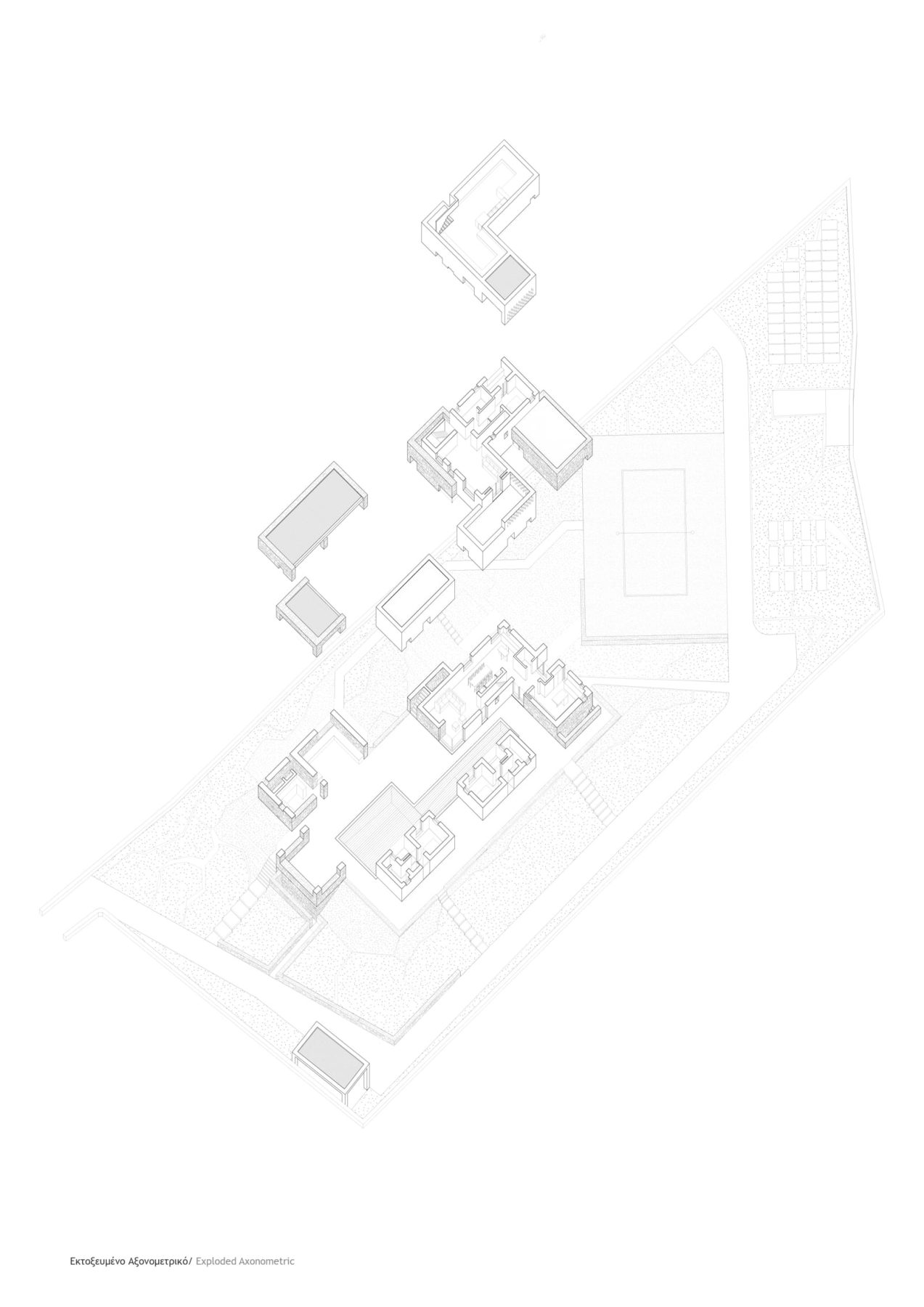
Only the absolutely necessary parts of the existing structural frame were removed, while L-shaped and rectangular volumes were introduced, aiming for clarity in both morphological expression and functional organization. This approach not only responds to the specific conditions of the shell but also proposes an indicative model that can be replicated in similar cases: a realistic and clearly defined architectural strategy.
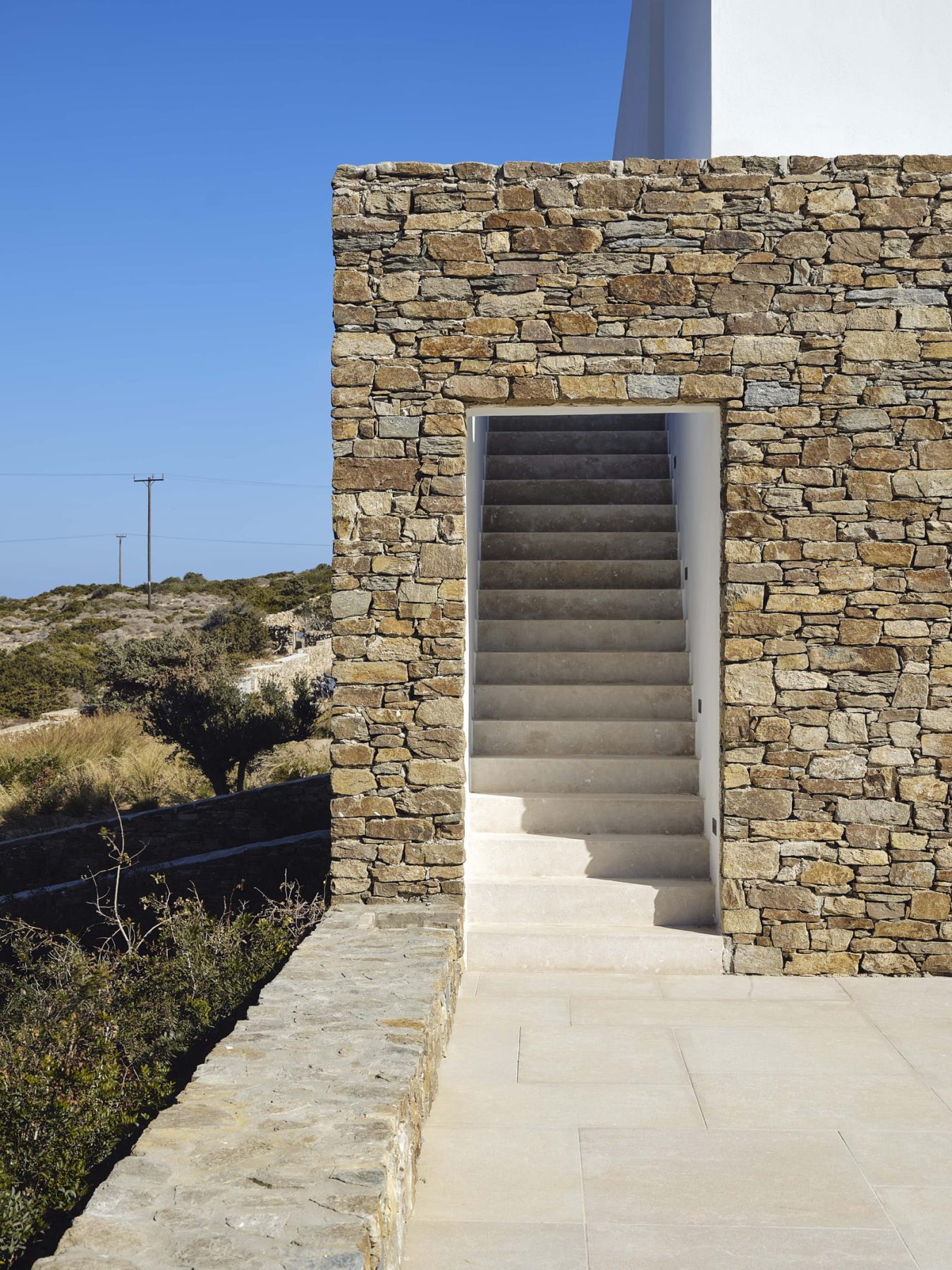
The project simultaneously investigates the relationship between local conditions and contemporary design, making use of local know-how and available construction techniques—from the dry-stone walls defining the plot boundaries to the concrete elements cast with wooden formwork.
It is an architecture that consciously works “with what already exists.”
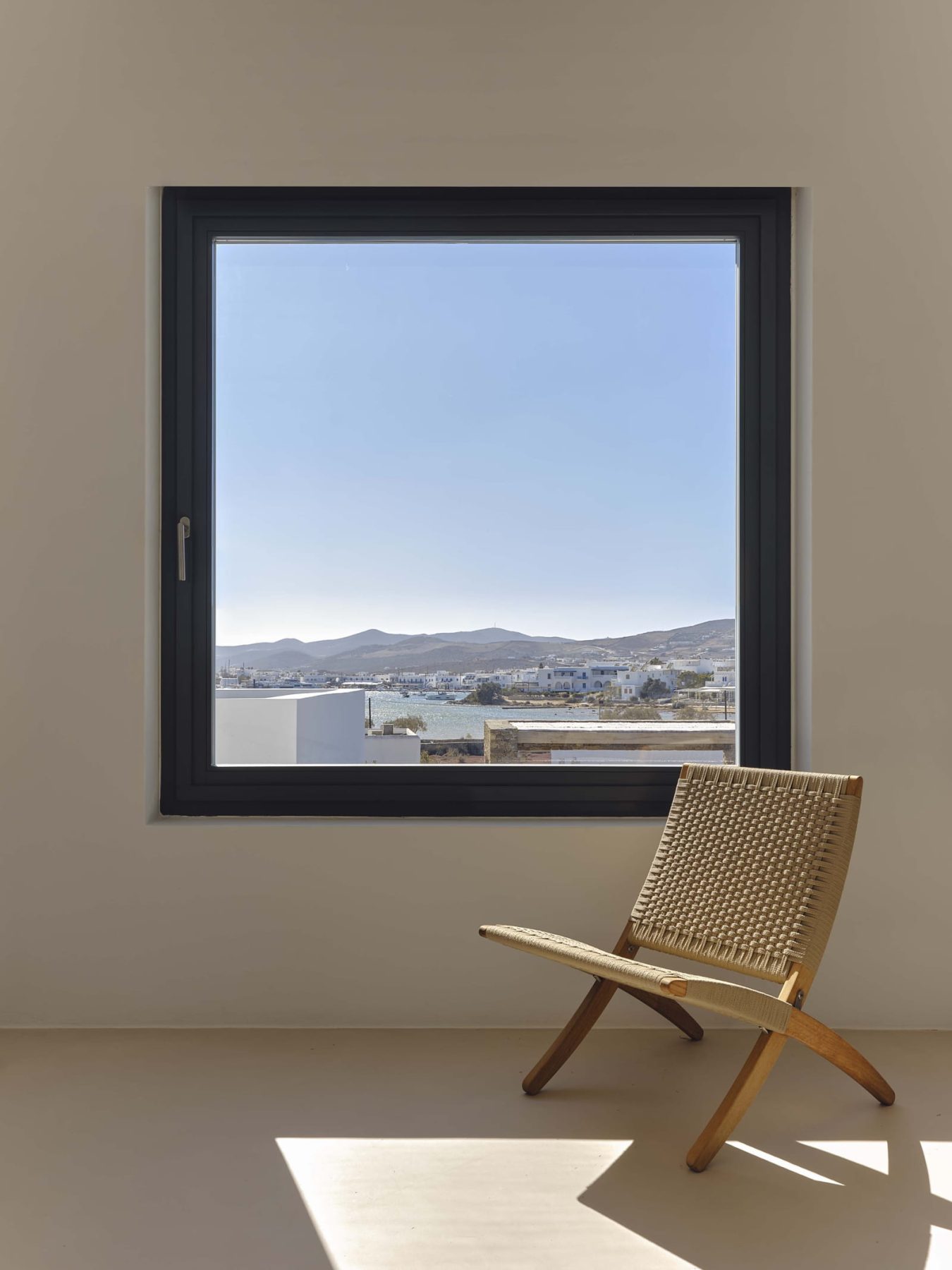
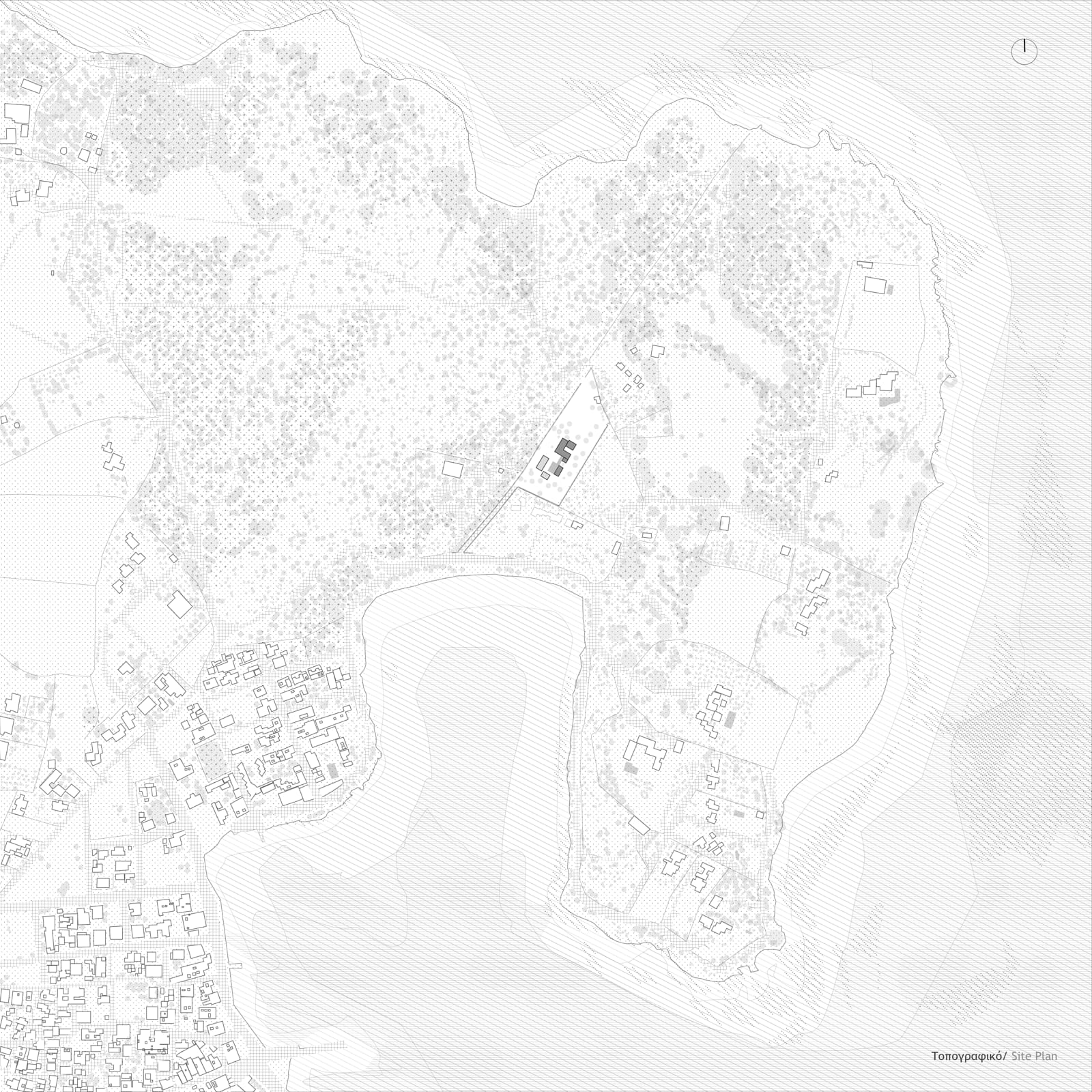
The plot is characterized by flat topography and proximity to both the harbor and the settlement. With neighboring plots on all sides except the western one—which is expected to remain undeveloped due to a protected forest zone—the extroversion often associated with seaside residences is absent.
The house balances between introversion and extroversion, openness and enclosure, protection and visibility.
On the ground floor, the arrangement of volumes around a central pool forms a protected courtyard, ensuring both privacy and unobstructed views.
This spatial organization departs from the conventional linear sequence of rooms and proposes a more collective notion of living, with water guiding movement, gradually revealing spaces, and acting as a reference point for everyday life.
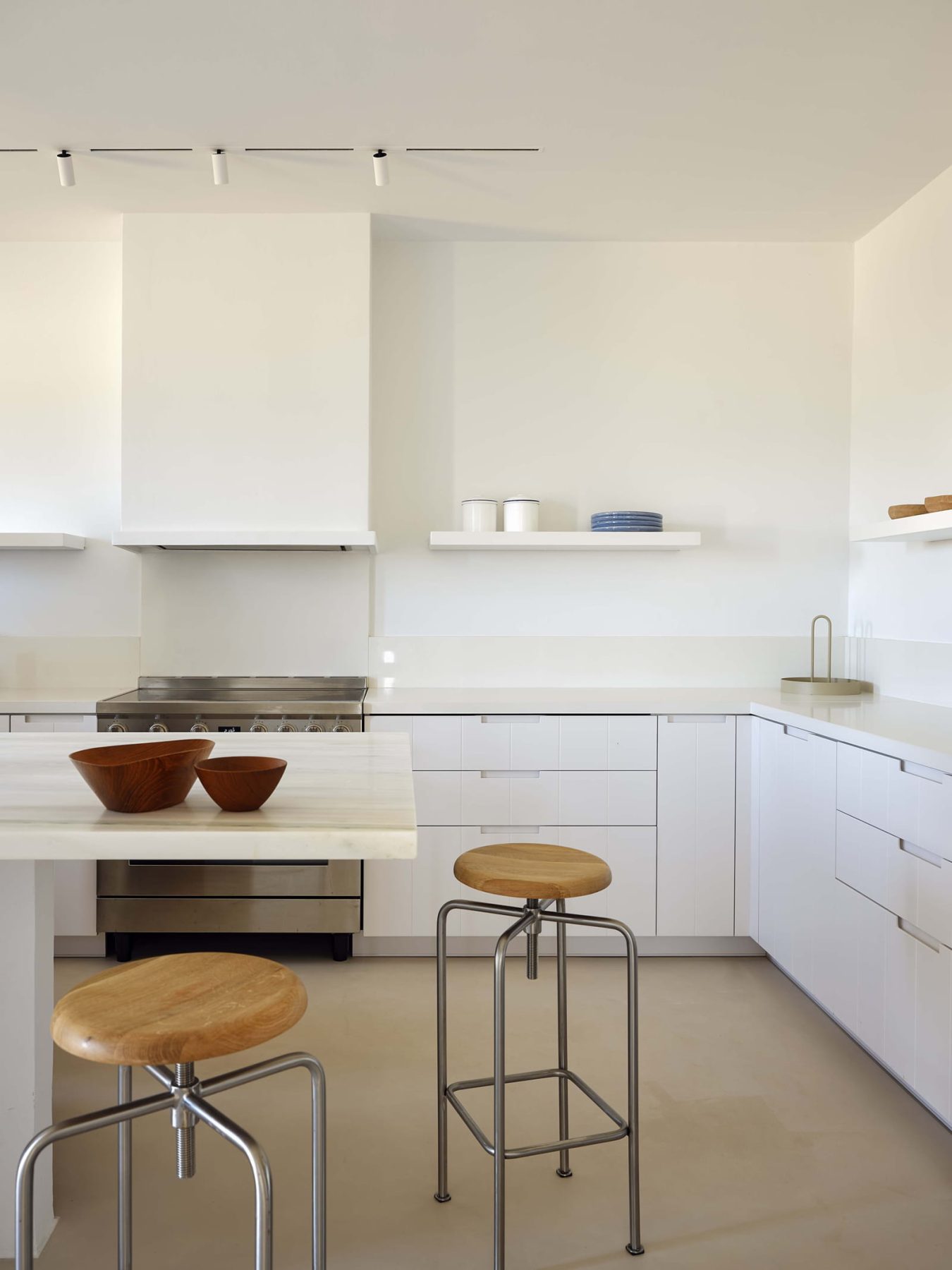
On the upper floor, the living area and the master bedroom open toward the northern, more rugged side of the island, while simultaneously maintaining visual contact with the activity of the harbor through a large opening. An external staircase provides independent access to both the upper floor and the accessible roof terrace, which enjoys uninterrupted views of the surrounding landscape.
The project incorporates passive design strategies aimed at reducing energy consumption, emphasizing natural daylight and cross-ventilation, as well as the application of contemporary thermal insulation technologies. A characteristic example is the skylight at the top of the internal staircase, which functions as a natural cooling tower. Local natural stone is used for the exterior surfaces and the shaping of the outdoor spaces, while planting consists of native species that, due to their adaptability to the landscape, contribute to reduced water consumption. Finally, the residence fully covers its energy needs through photovoltaic panels.
Drawings
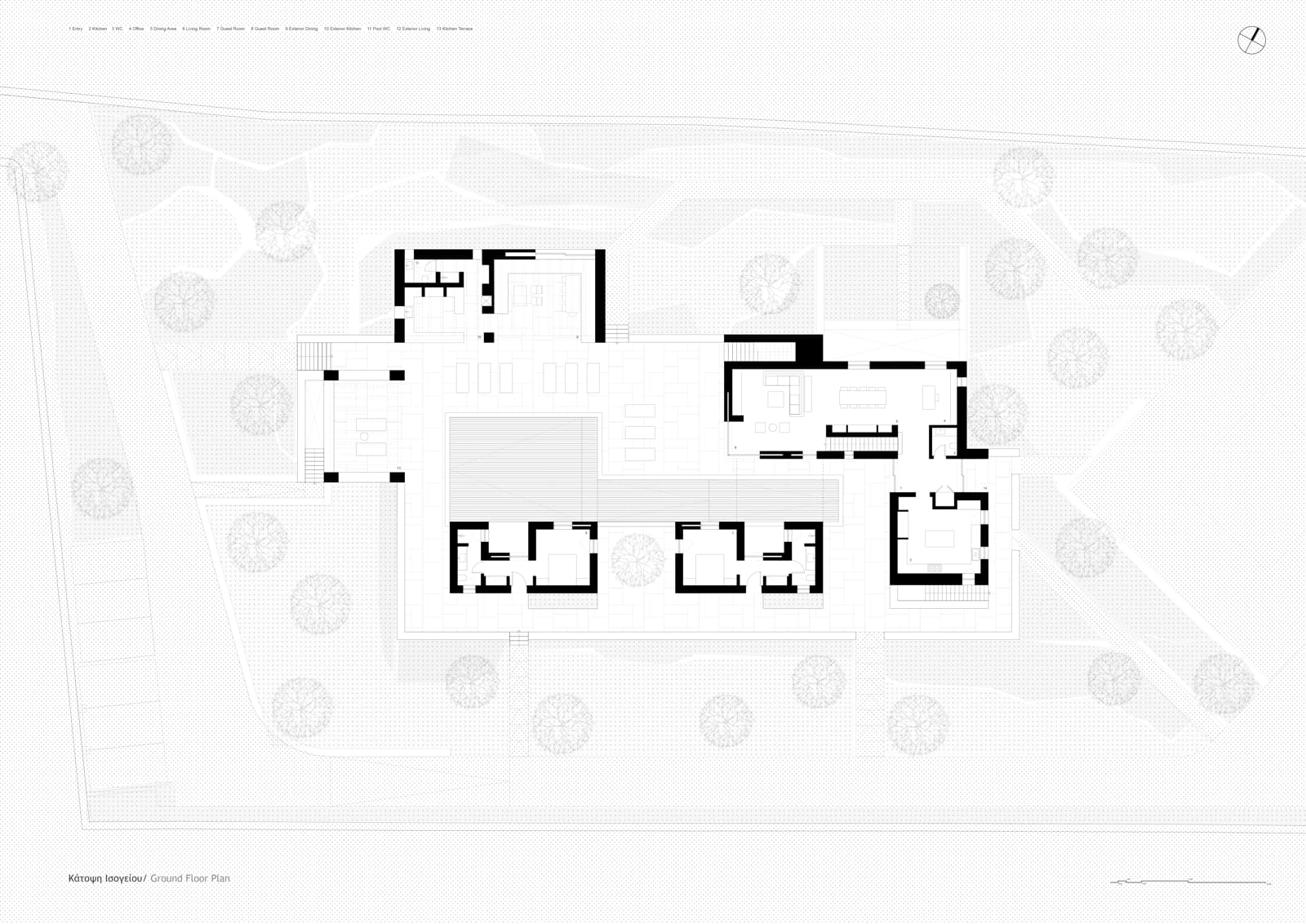
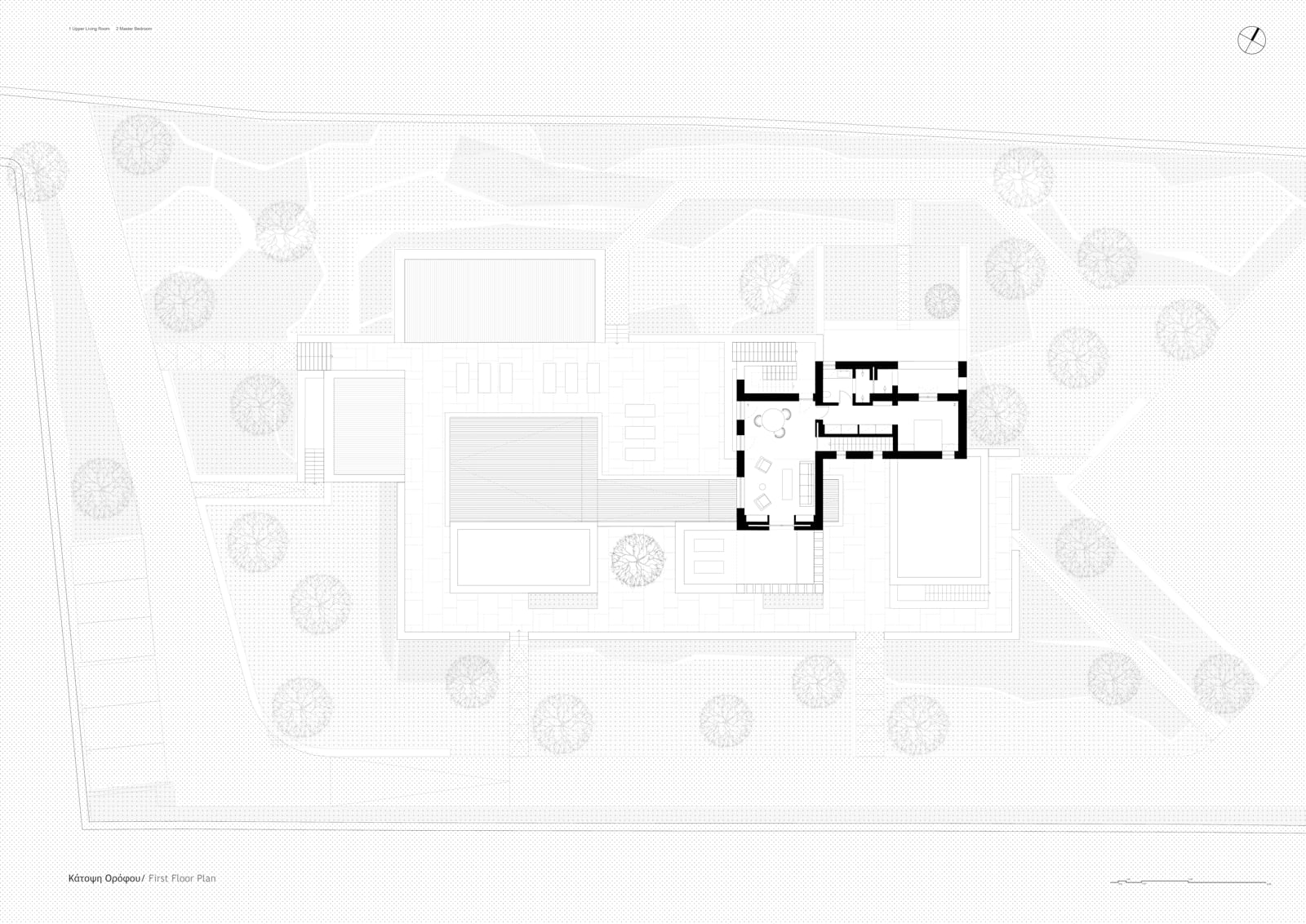
Overall, Tetris House articulates an architectural approach grounded in dialogue with the existing structure, the landscape, and its constraints. The logic of the game Tetris—the precise placement of distinct forms to create a coherent and functional whole—is translated into a strategy of controlled subtraction and targeted addition, where volumes “lock” into one another. Through the reuse of the load-bearing structure, clear geometry, local materials, and passive strategies, the project transforms a remnant of the past into a contemporary, sustainable dwelling, balancing memory and evolution, privacy and collectivity, while proposing a realistic and repeatable model of architectural design.
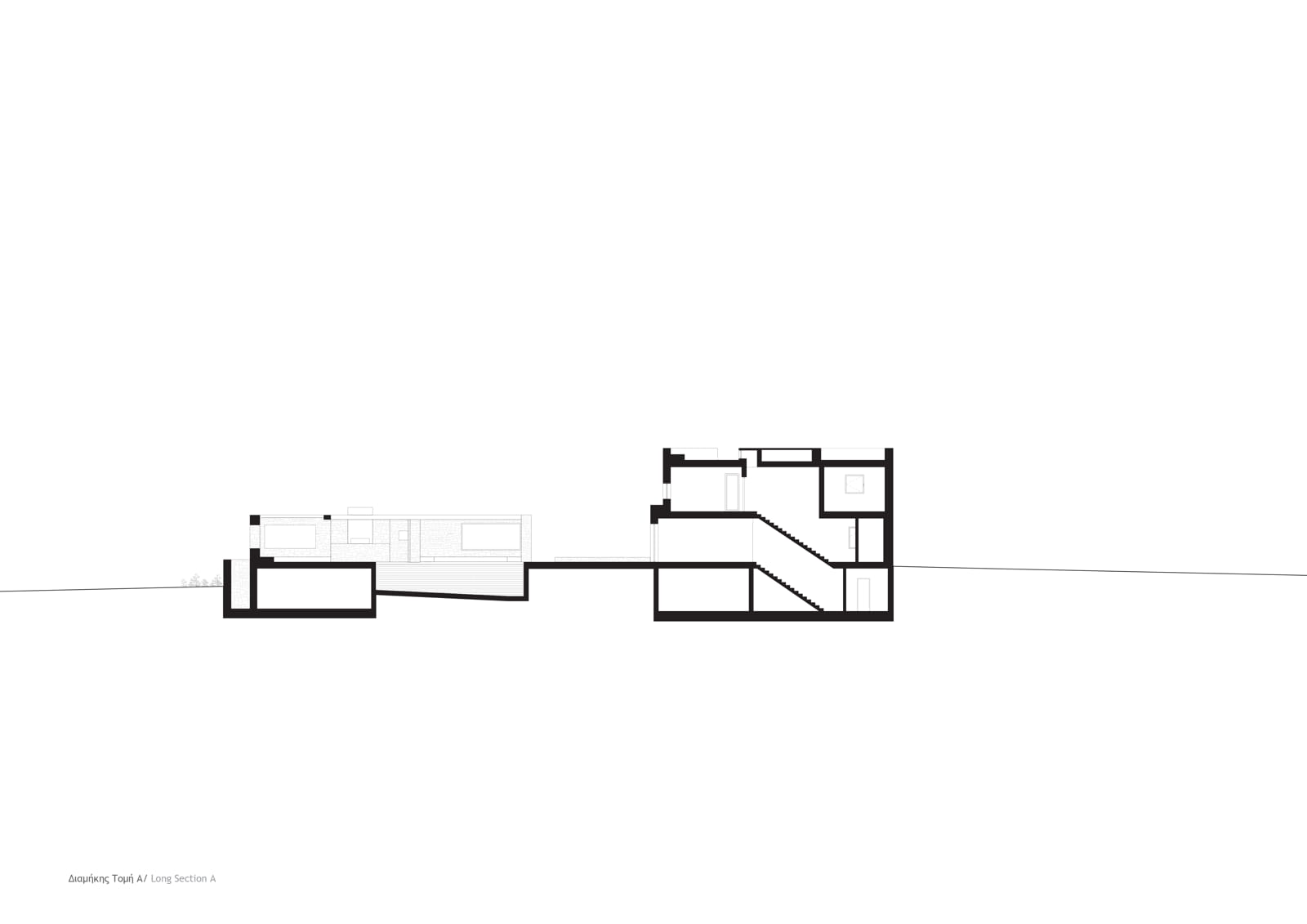
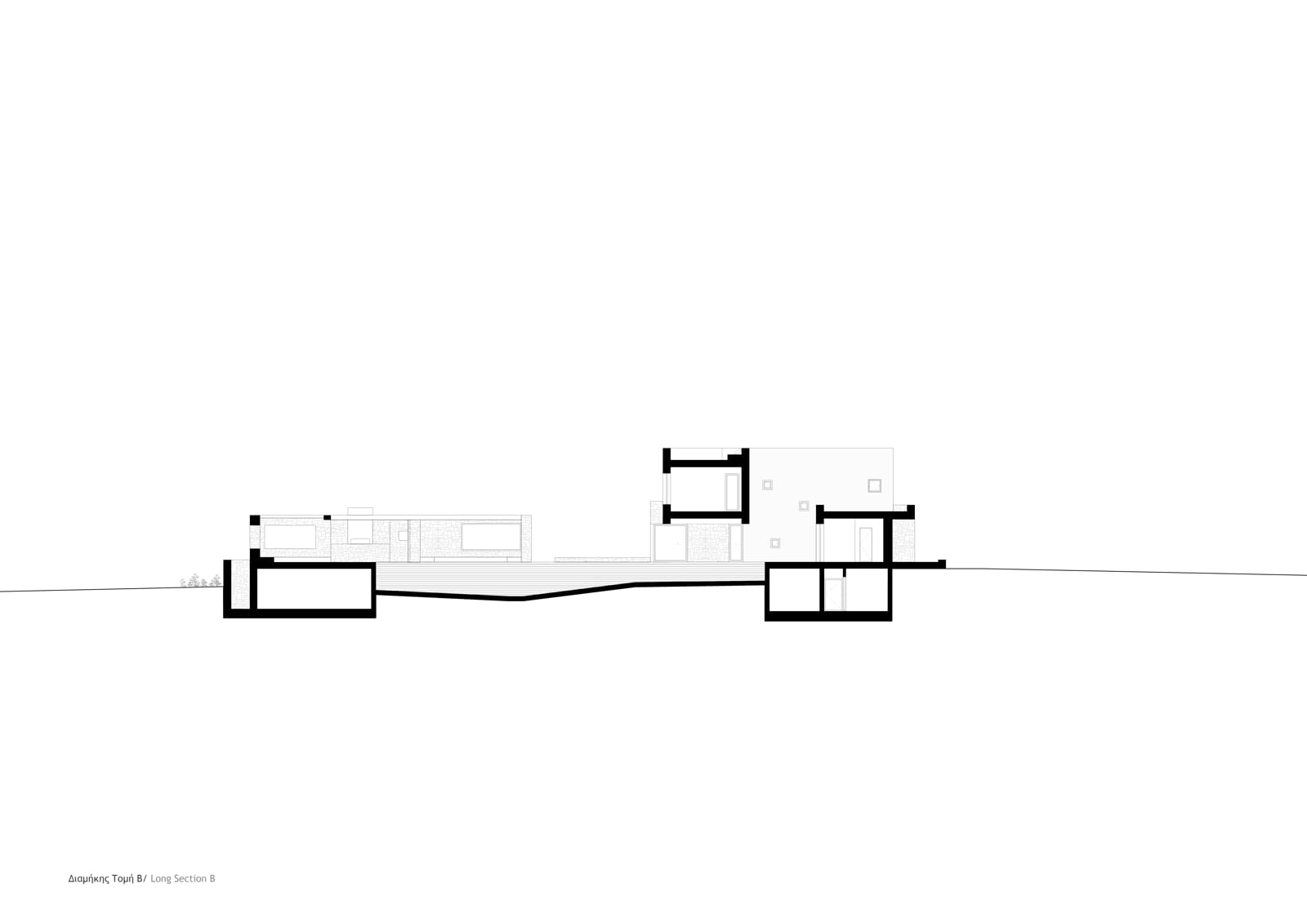
Facts & Credits
Title Tetris House
Typology Architecture, Residence
Location Antiparos, Cyclades, Greece
Status Completed, 2025
Architecture ARP – Architecture Research Practice
Design team Argyro Pouliovali, Nora Delidimou, Nicole Kotsis, Marilena Stavrakaki, Anna-Maria Labrinopoulou
Mechanical Engineers TETRAS S.A.
Structural Engineers Erisma
Interior Design Vana Krimnioti
Landscape Architecture H. Pangalou & Associates
Photography Giulio Ghirardi
Text by the authors
Learn more about GRAIL Awards 2026, here!