As part of a broader urban-revitalization project in Beroun, Czech Republic, a former industrial site is being transformed into an educational campus. OVA architects design an alternative learning environment that maintains a strong connection to greenery, introduces spatial flexibility, and emphasizes social interaction and play.
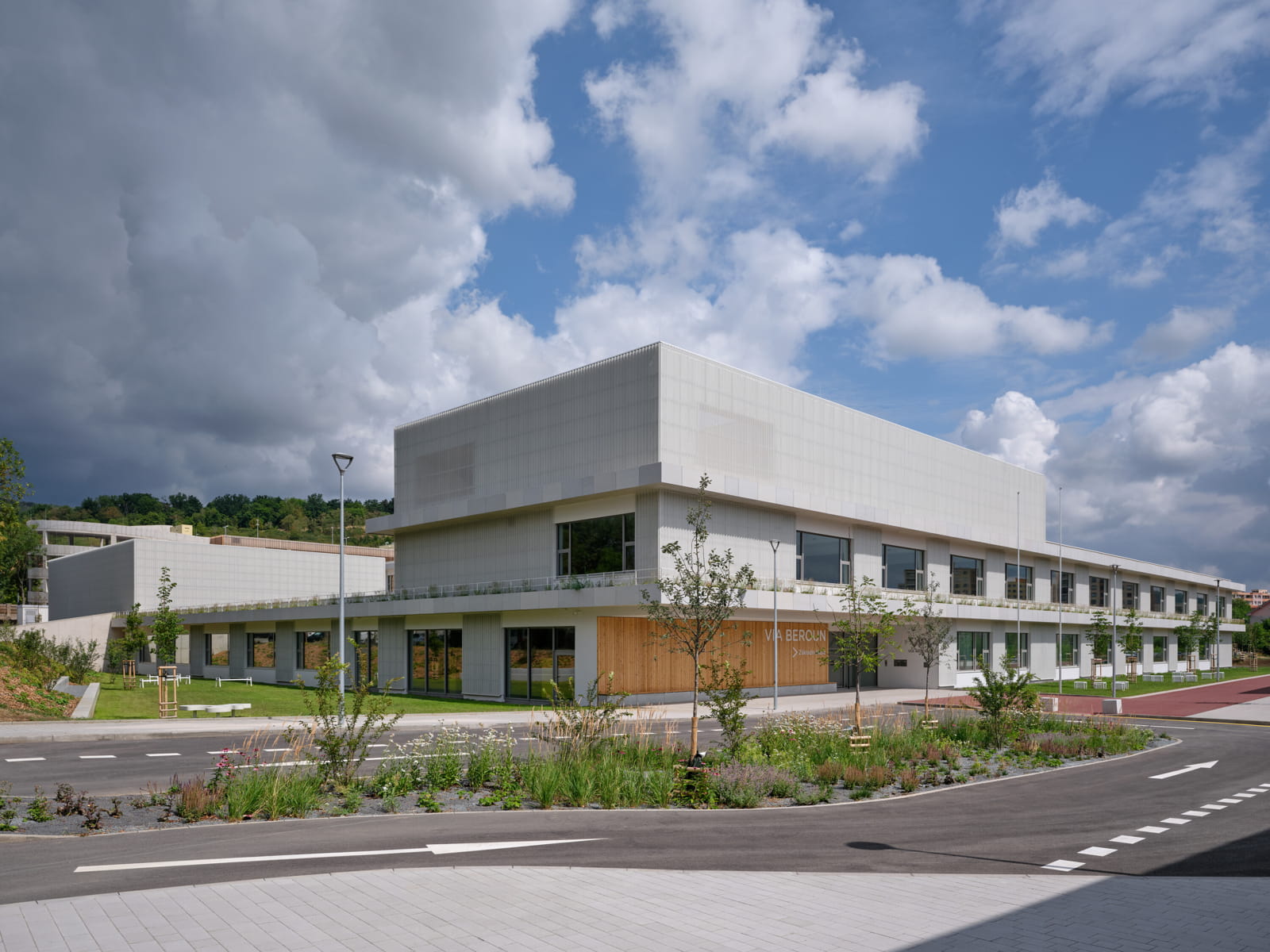
Located near the historic center of Beroun, the VIA school campus, comprising a kindergarten and elementary school, transforms a former industrial site into a vibrant space for learning, play, and community life.
The project is a part of the first stage of revitalizing the former Tiba textile factory brownfield, supporting the transformation of this part of the town into a lively and welcoming urban space.
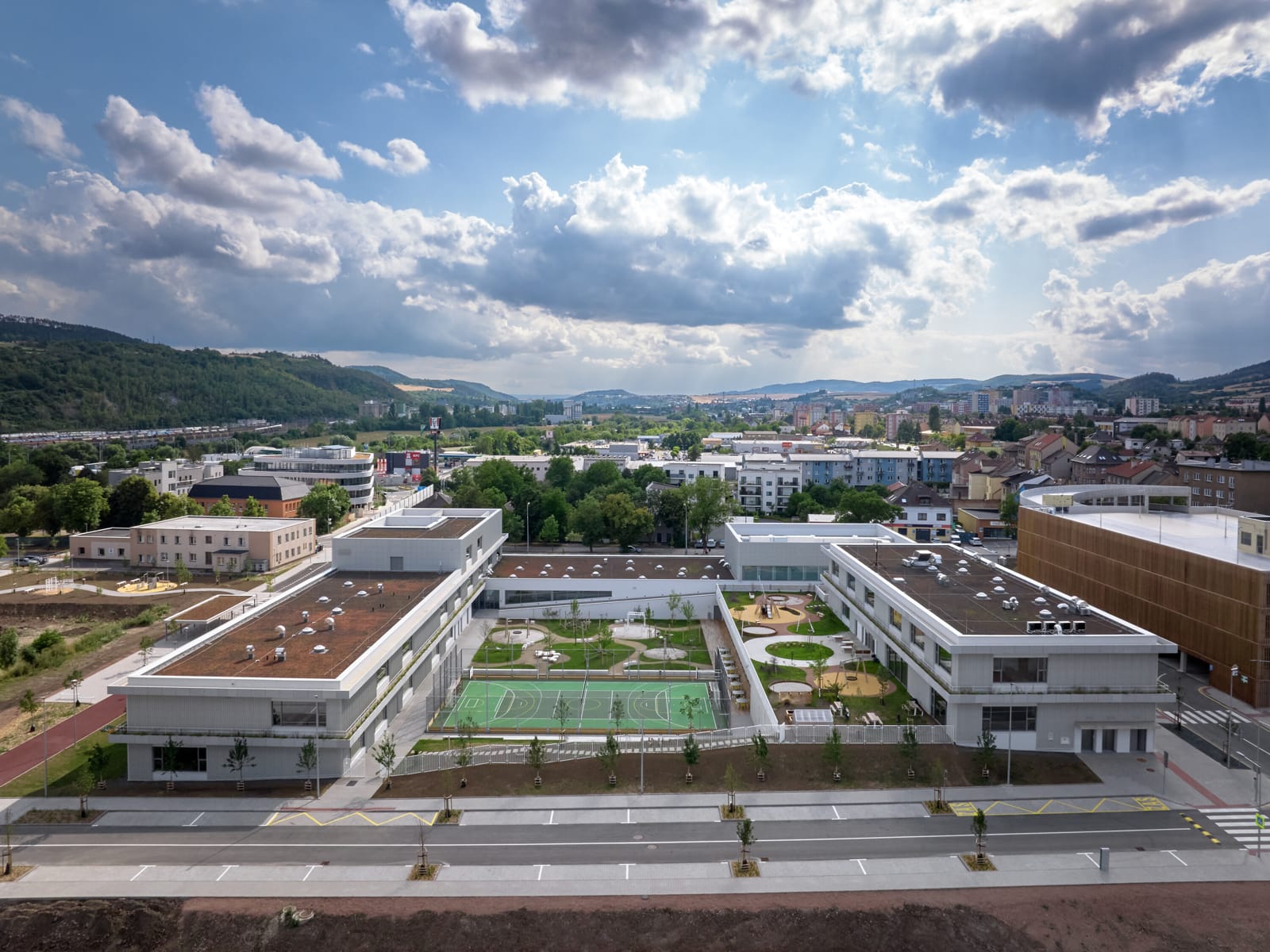
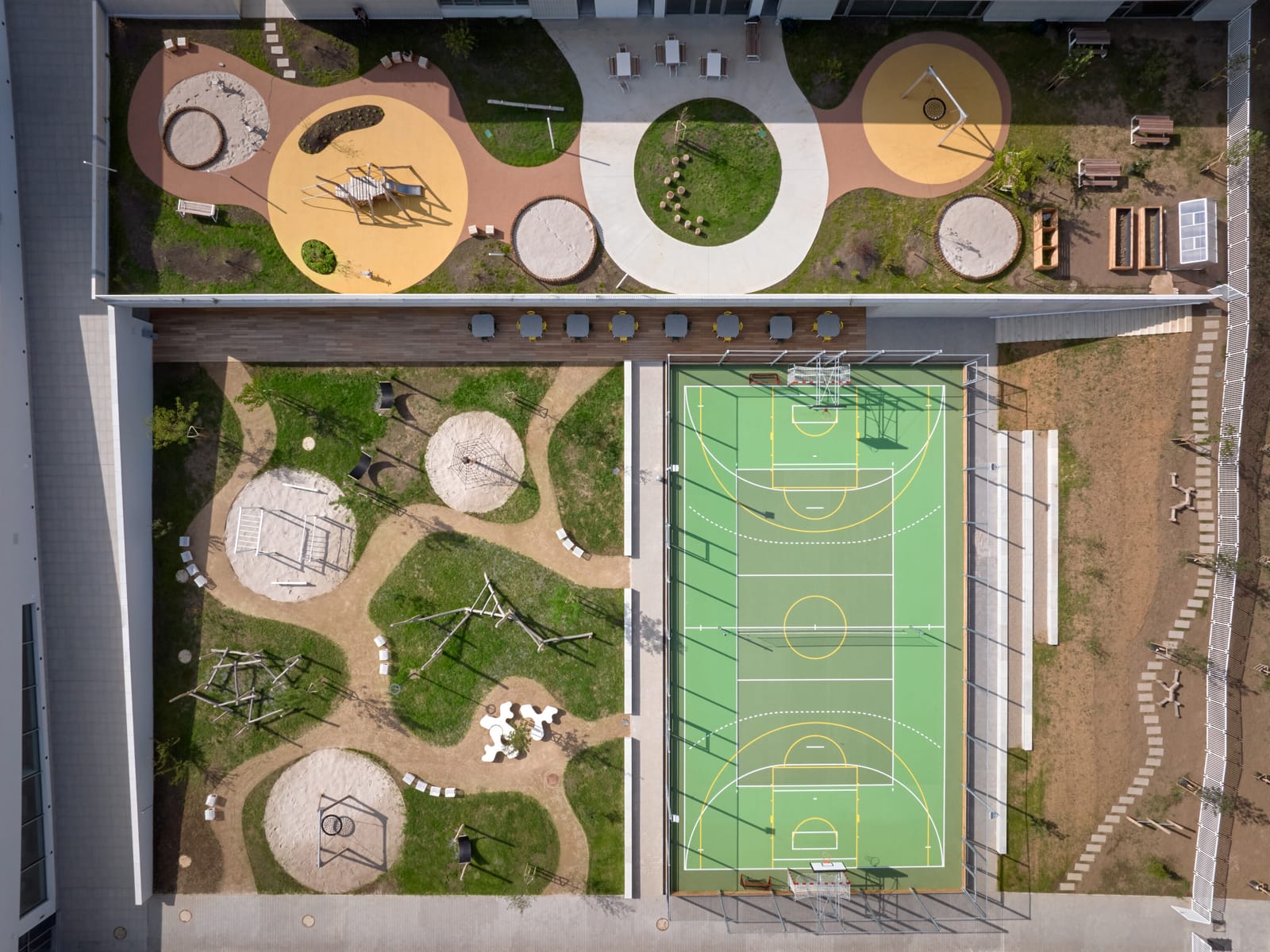
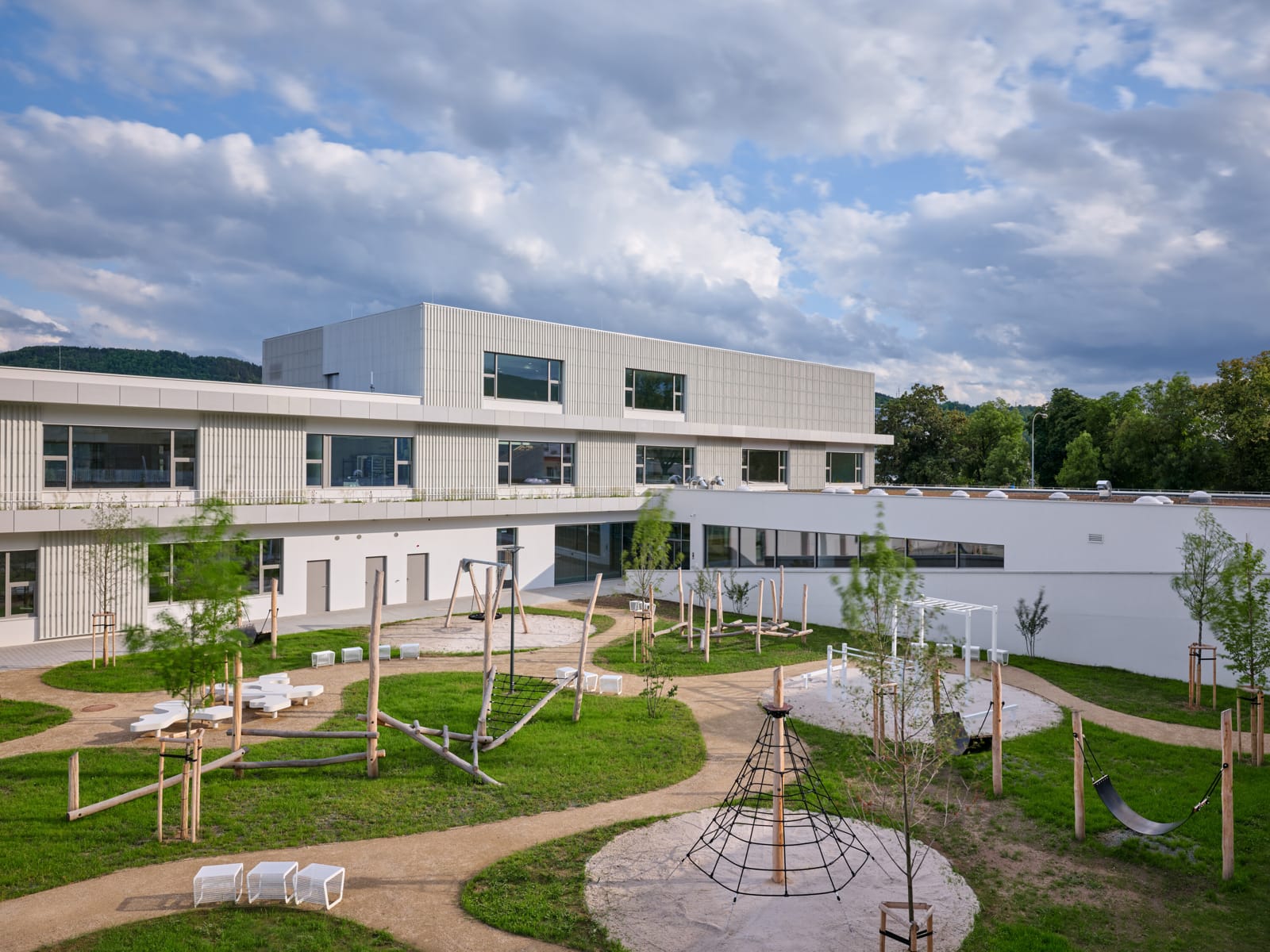
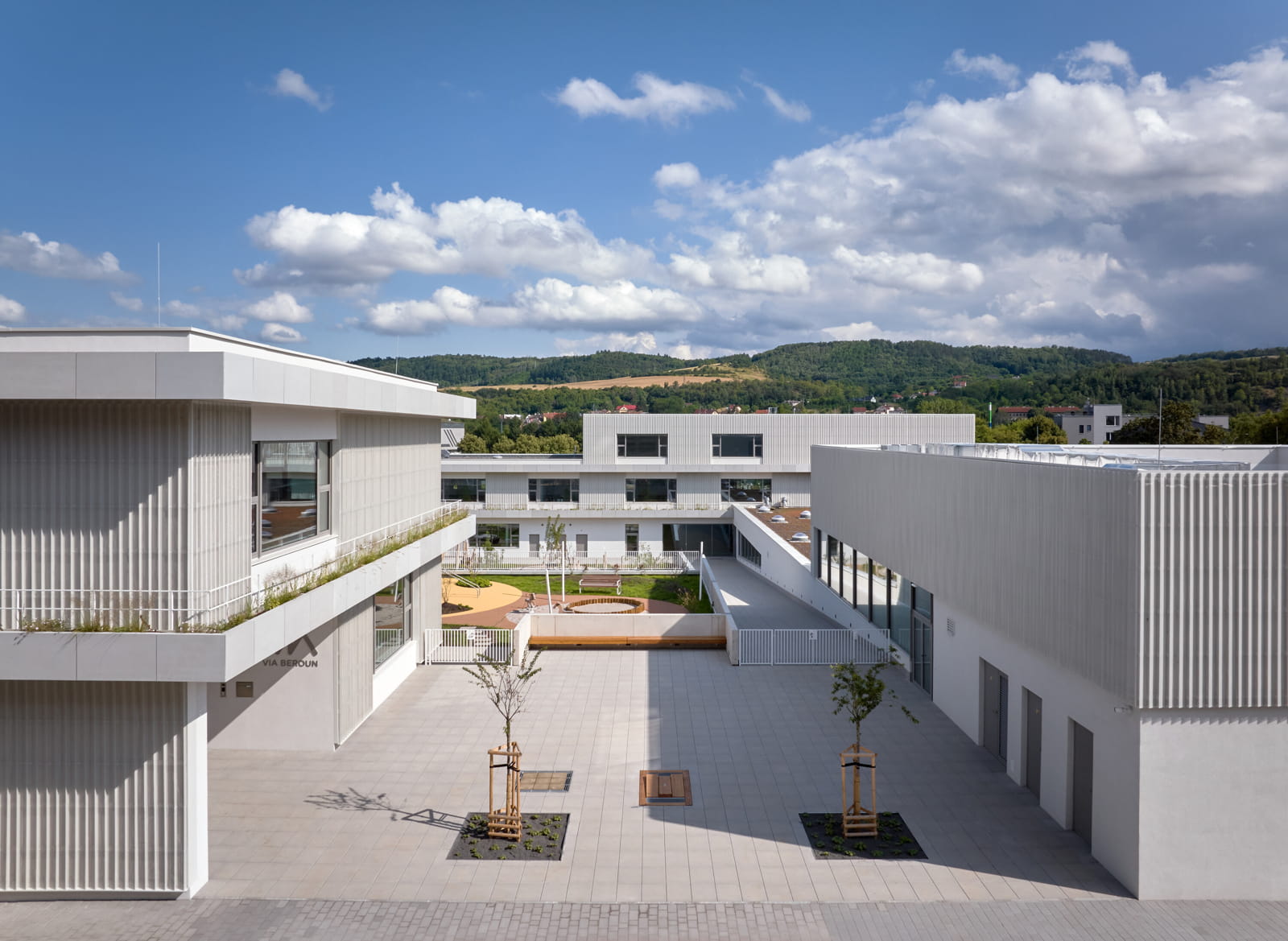
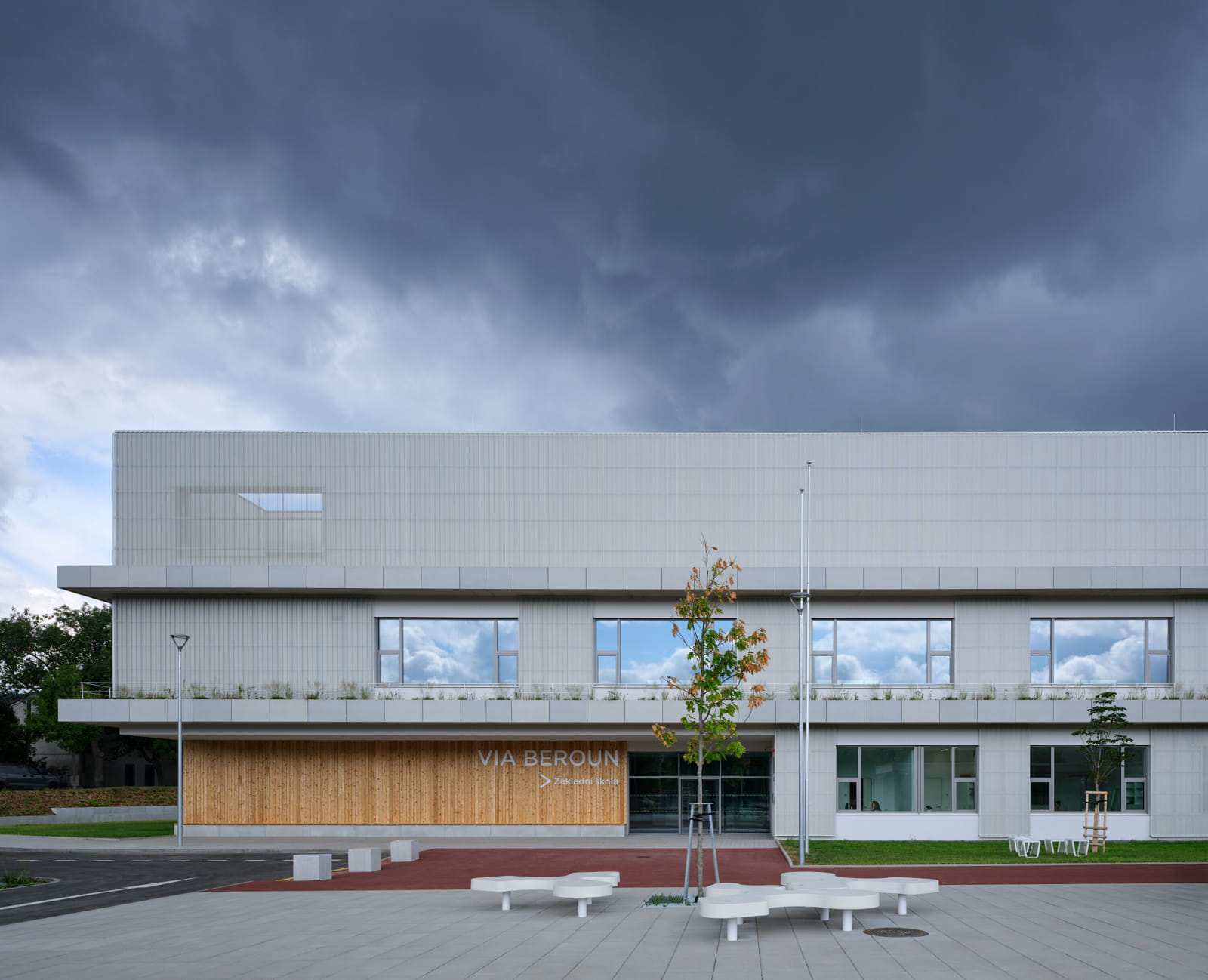
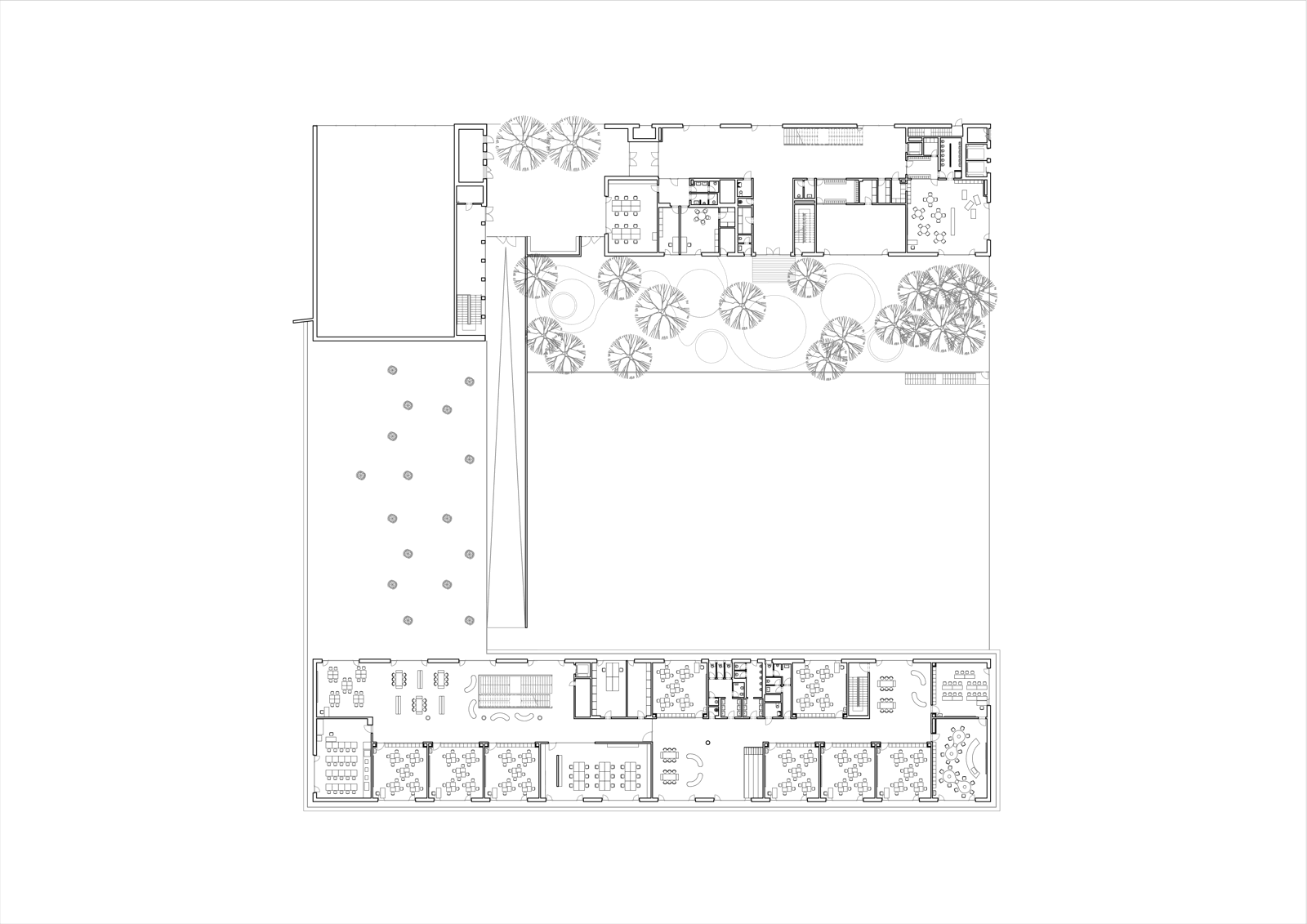
The campus is designed as a three-story building with wings arranged around a central courtyard in the shape of a “U.” The design utilizes terrain modeling, creating the illusion of a two-story structure.
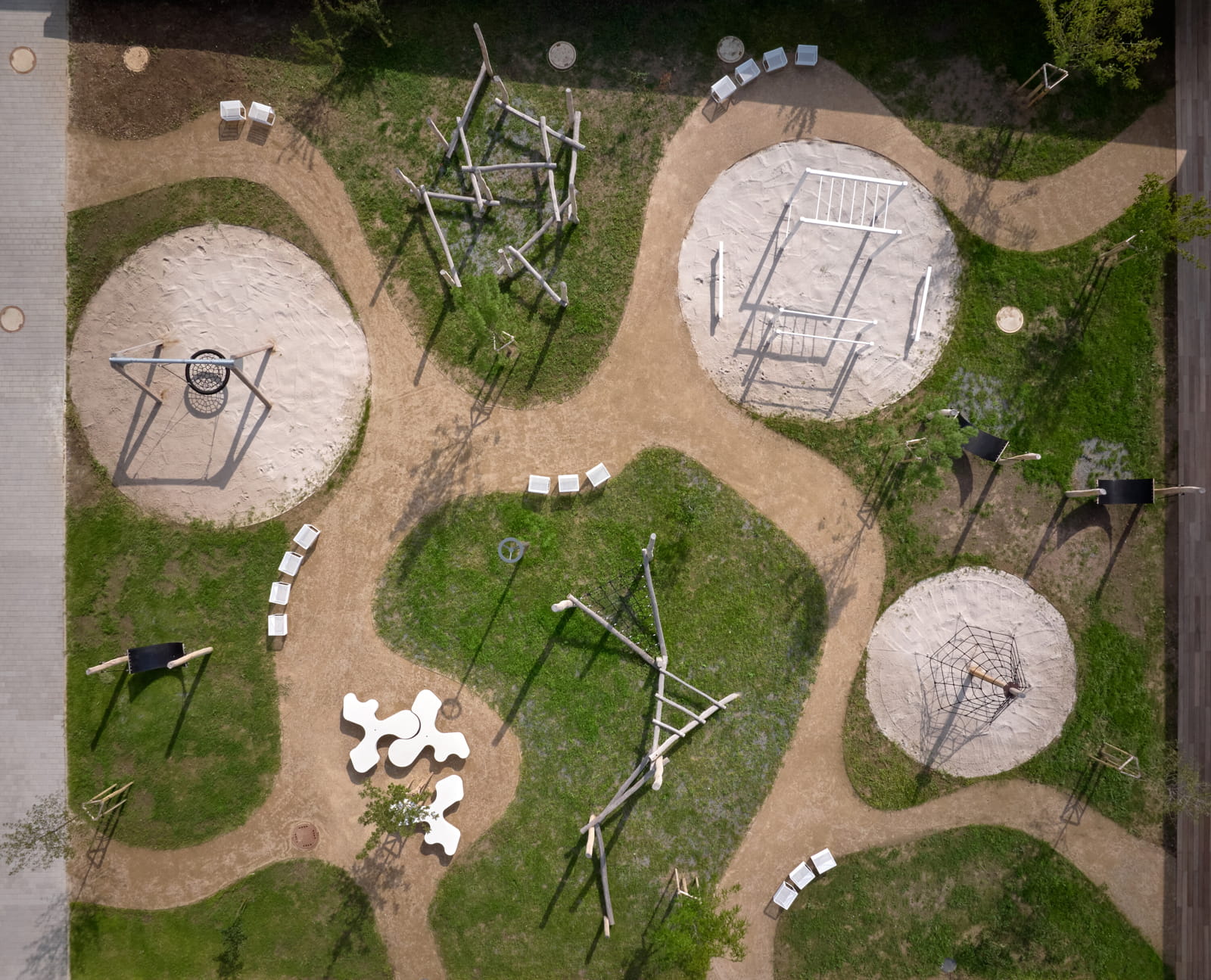
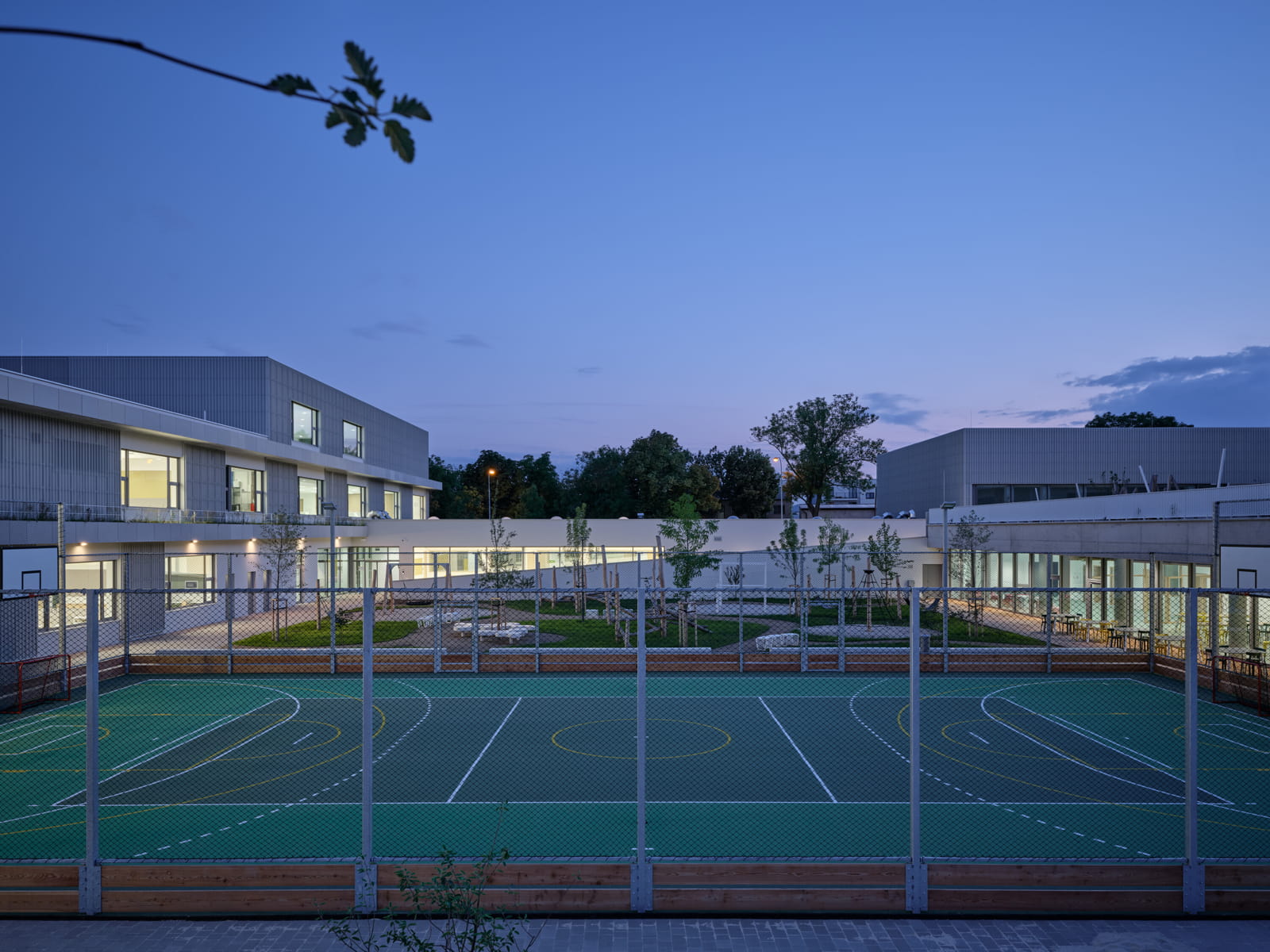
Greenery is a prominent element that permeates the entire school: rich plantings of trees and grasses surround the building and fill the courtyard, which serves as a green heart of the complex.
The courtyard features lawns, trees, and an educational garden with raised beds and a greenhouse, while adjacent playgrounds lead to a grassy slope.
Extensive glazing allows the vibrant life of the campus to be seen from every angle, and on the upper floors, planters with grasses rest on concrete window sills.
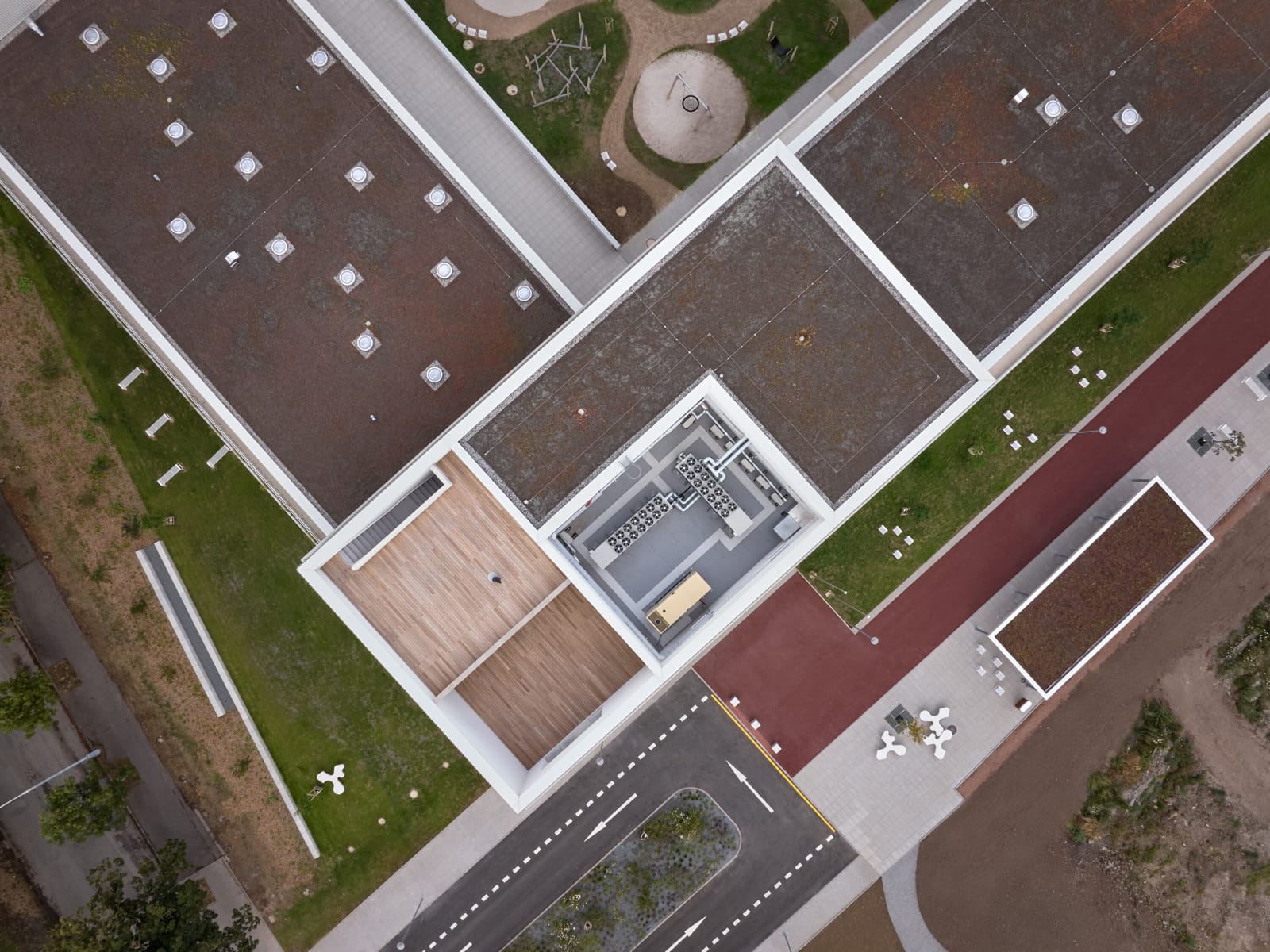
Rooftops host both intensive green roofs with shrubs and small trees and extensive green spaces, complemented by outdoor furniture, exercise installations, and playful elements that provide opportunities for movement, creativity, and connection.
The entire concept is unified by a playful façade of corrugated white sheet metal, seamlessly connecting all its parts into a daily hub of learning, play, and social interaction.
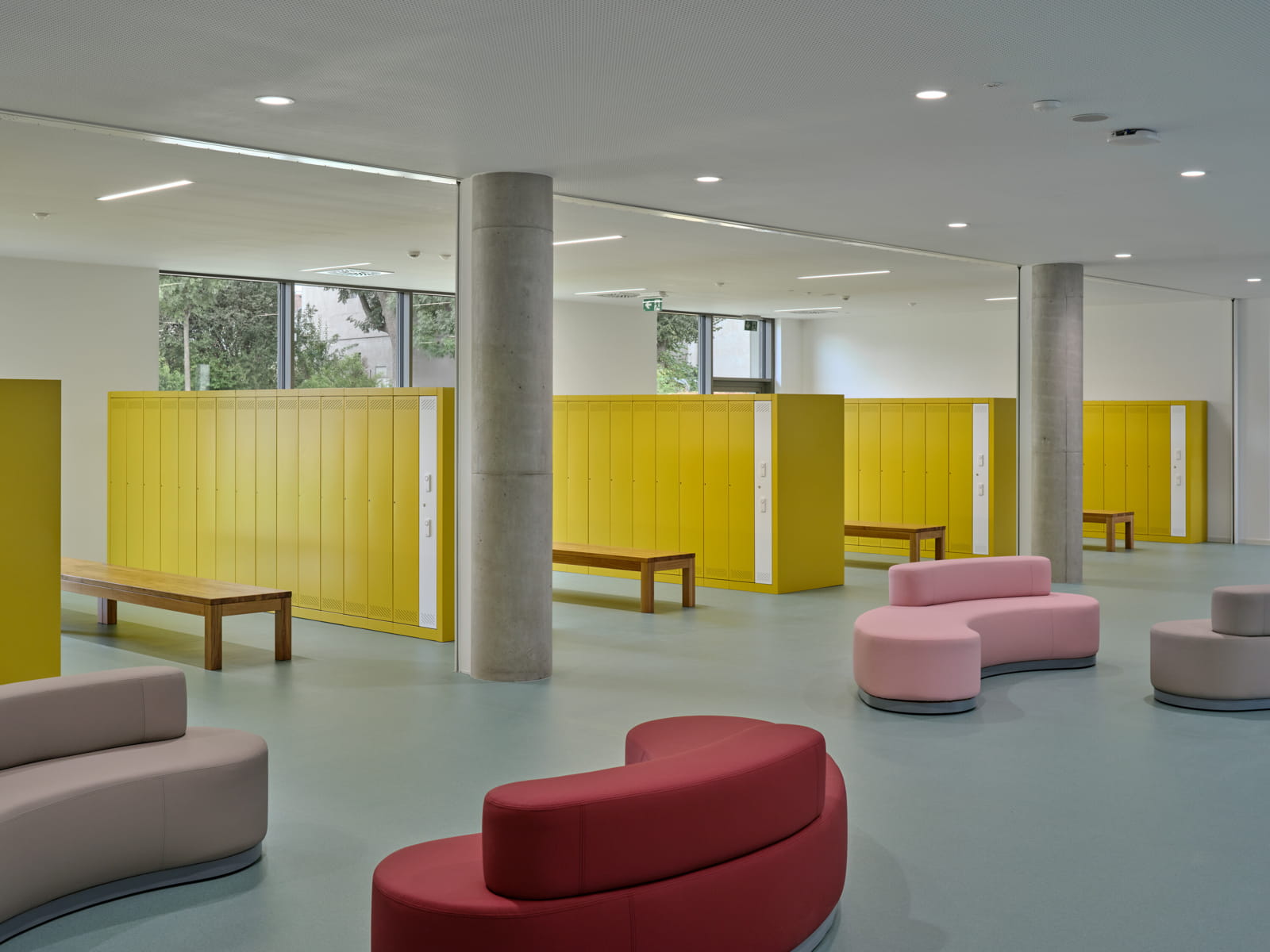
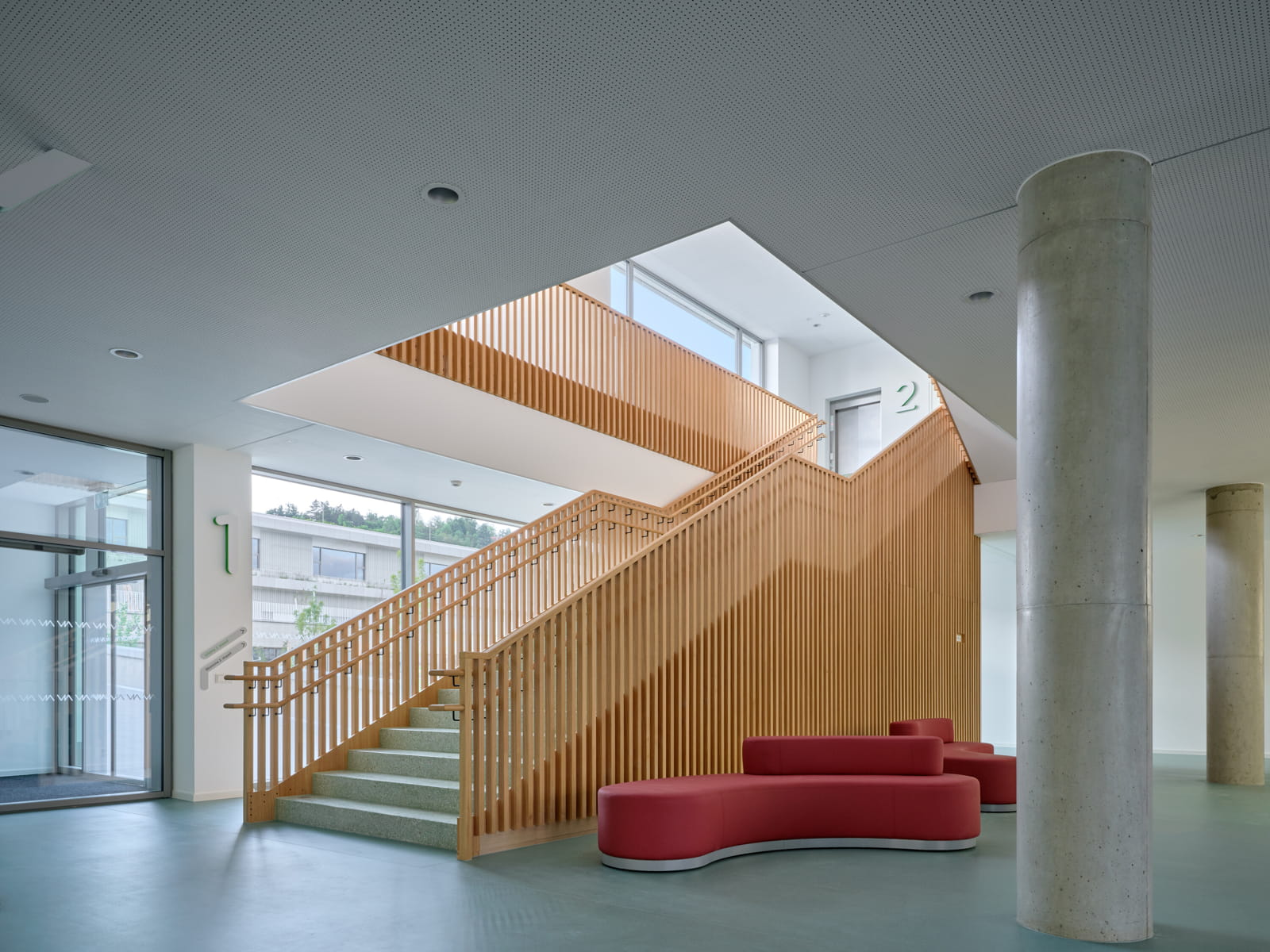
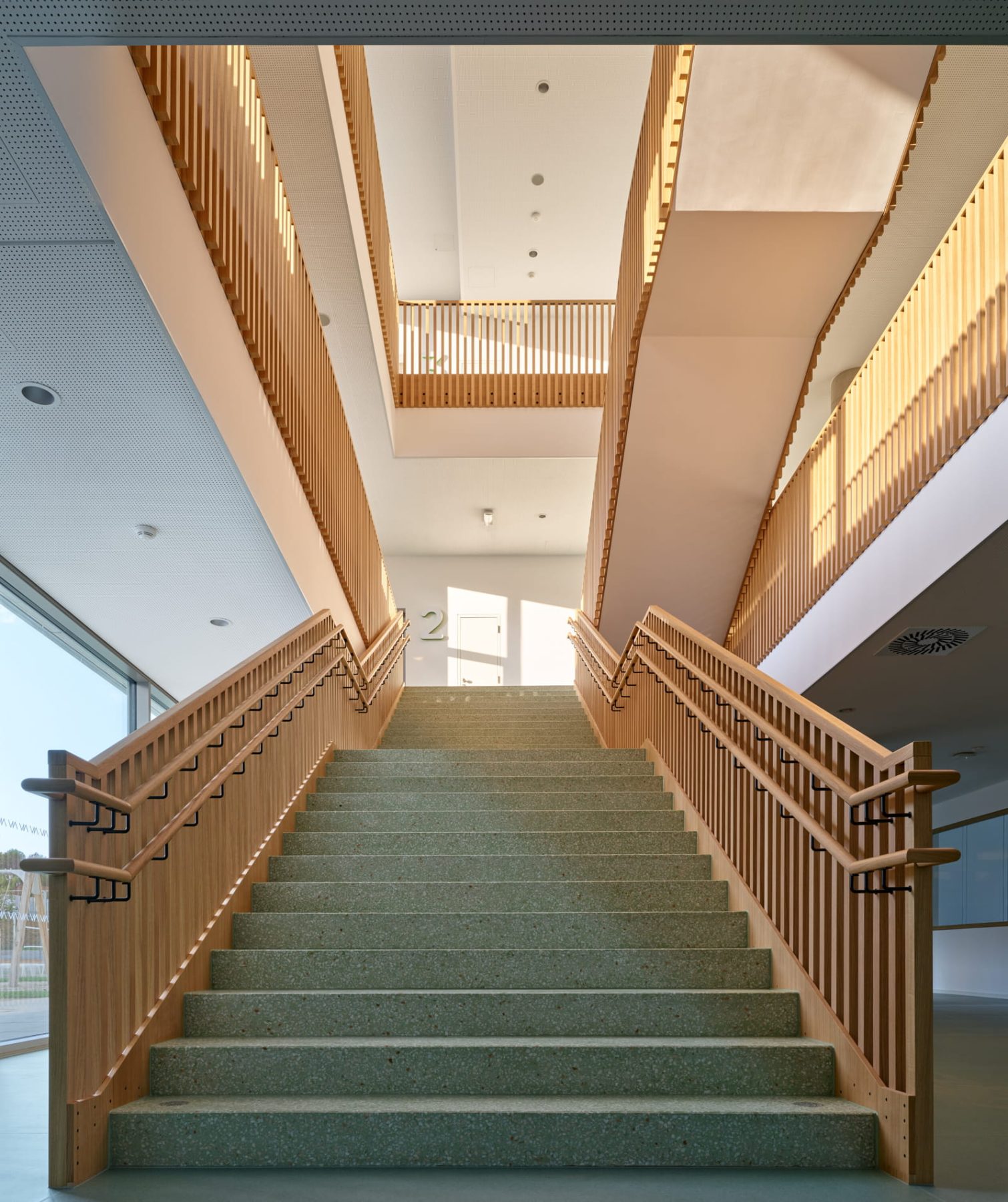
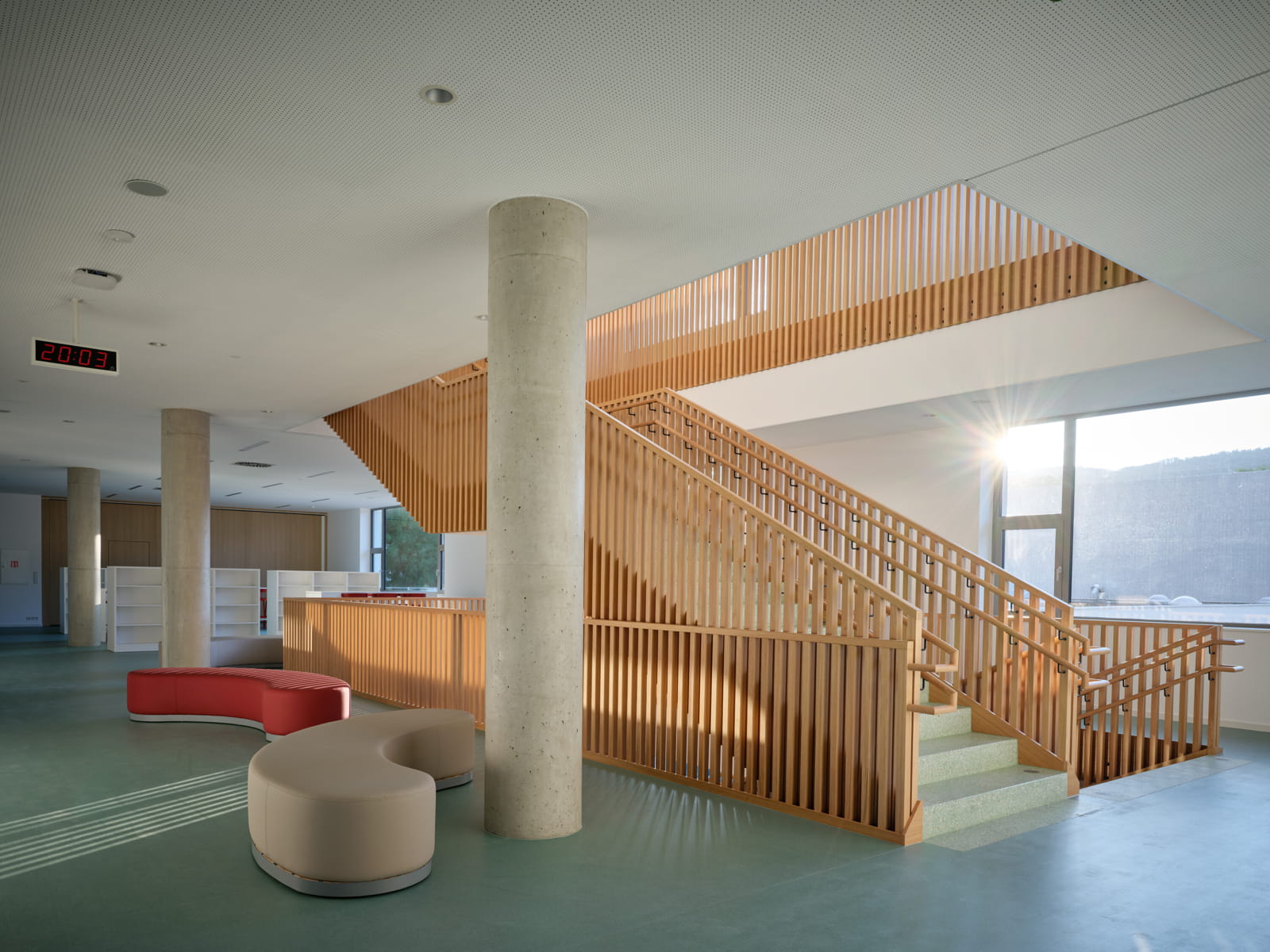
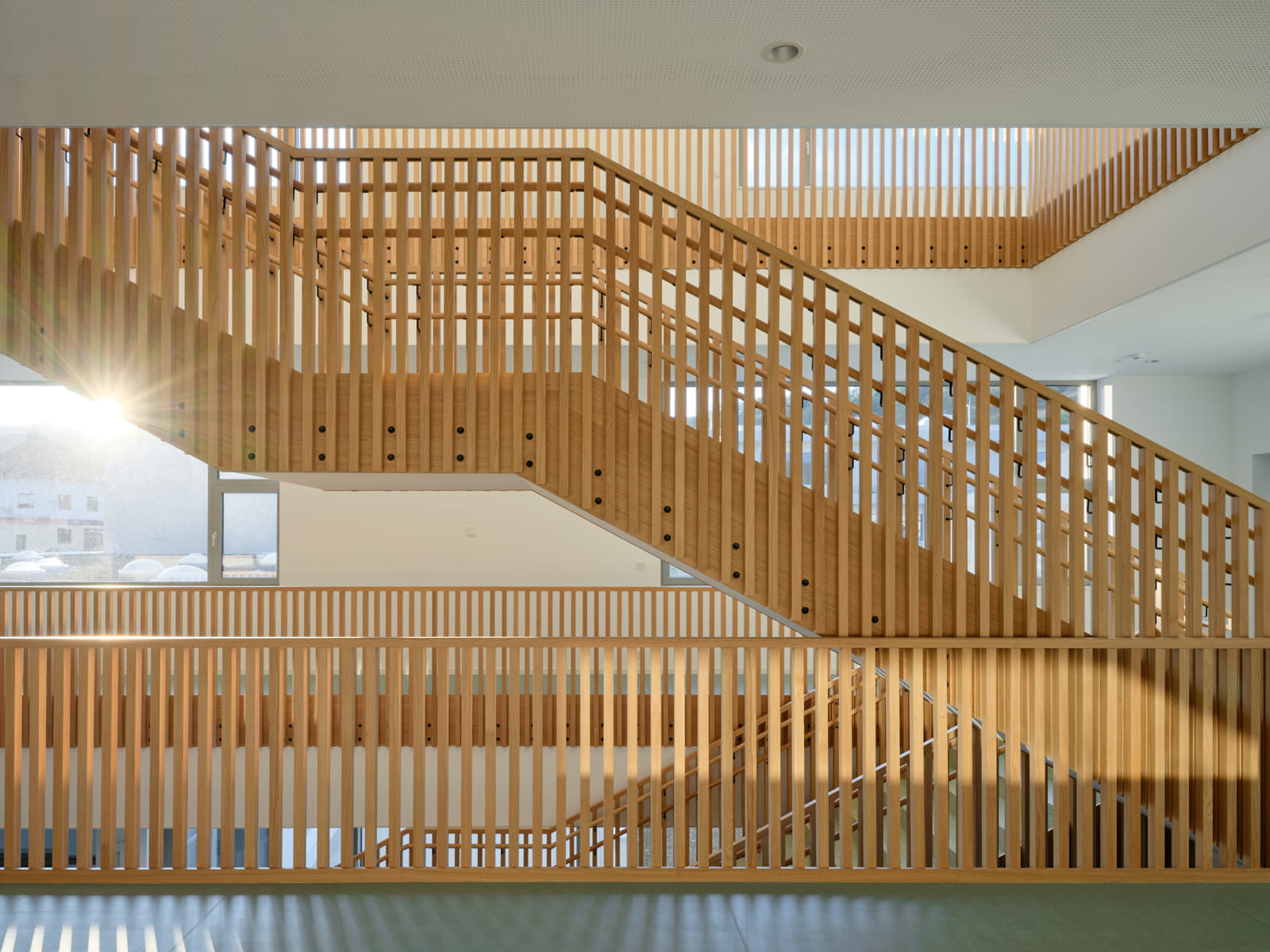
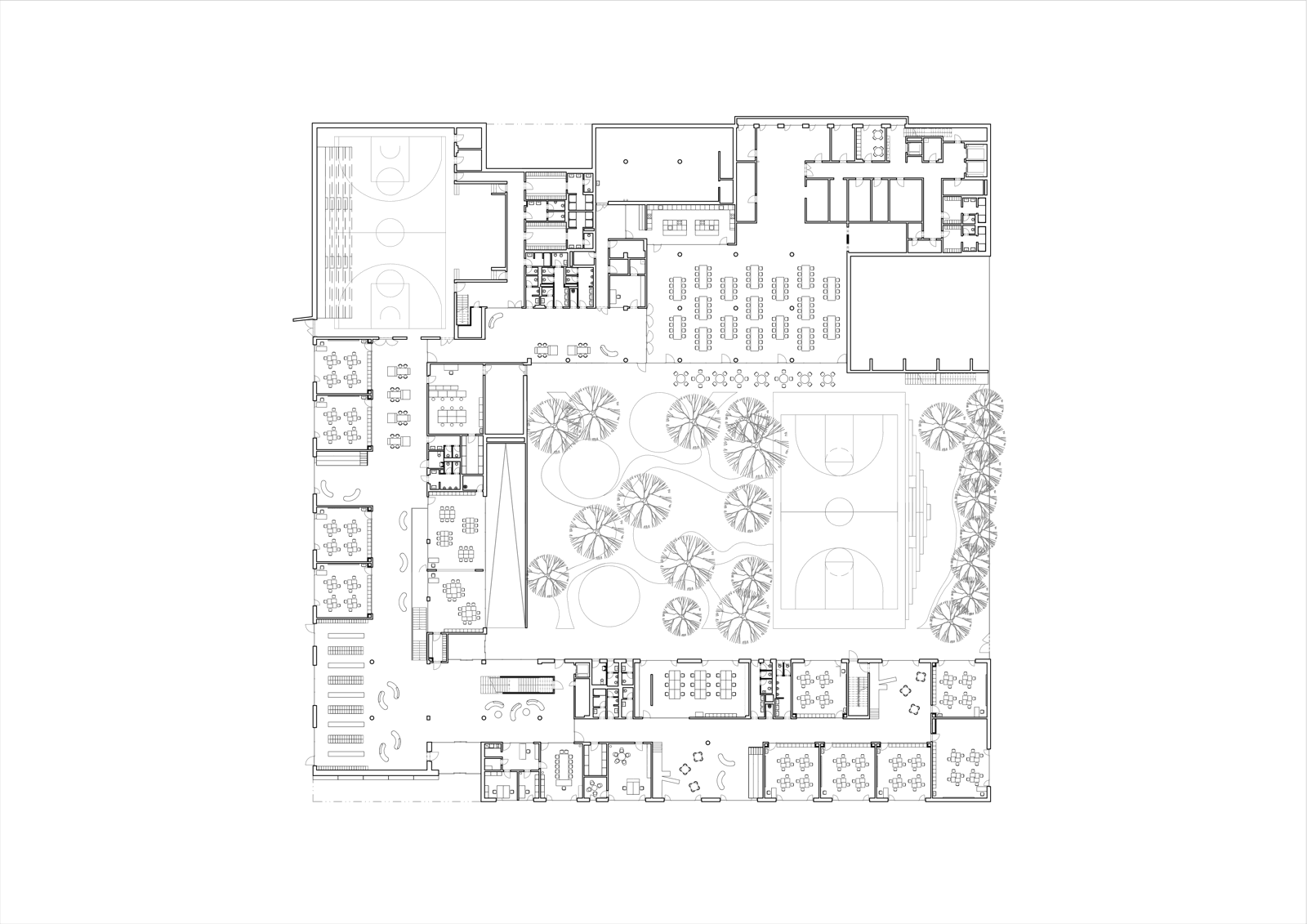
The entrance to the elementary school leads into the main hall, which features a central staircase, an administrative block, and changing rooms. Along the corridors running both north and south are the classrooms for the lower grades, as well as shared spaces for alternative learning, relaxation, and play.
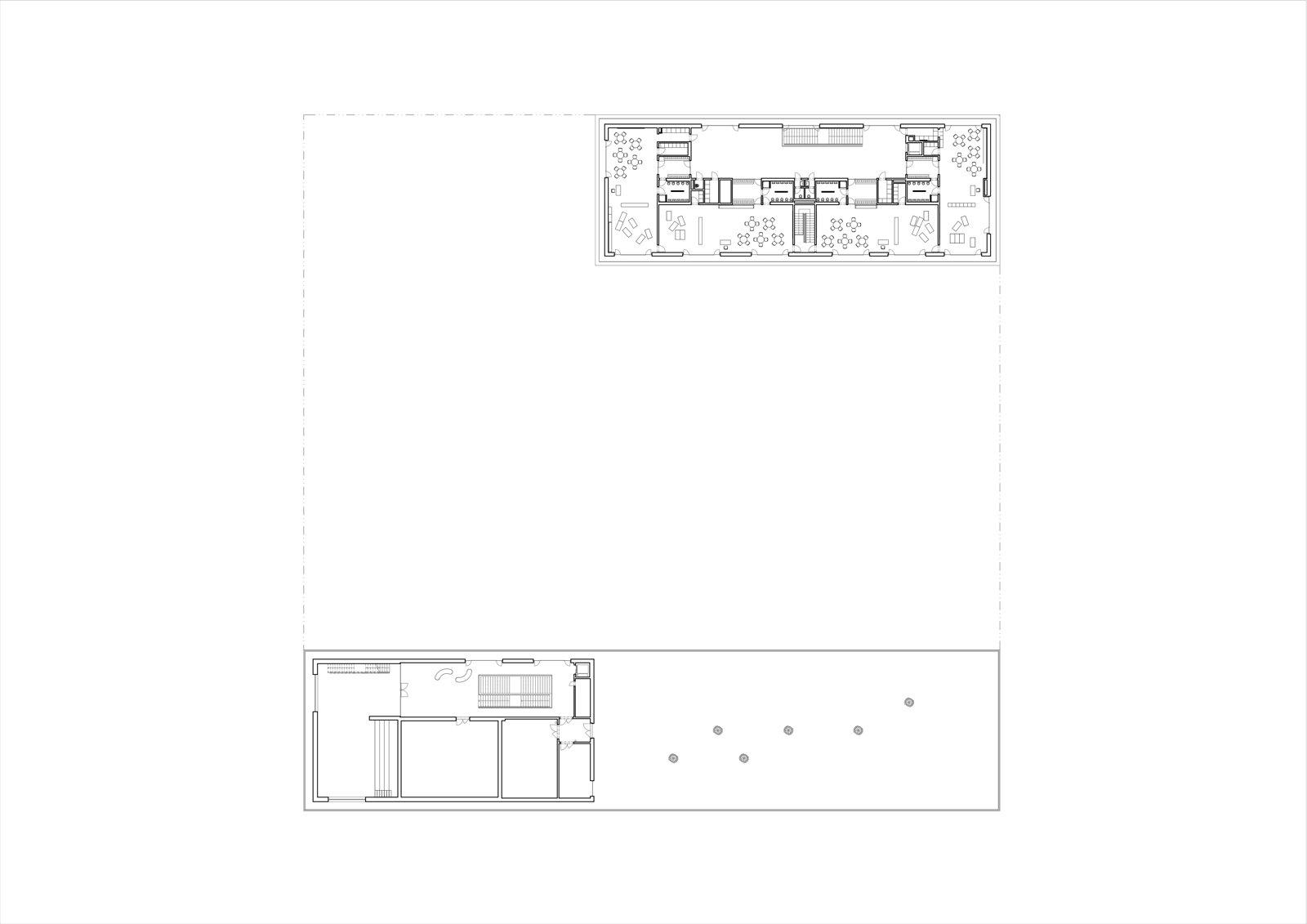
The upper grades are located in the southern wing on the second floor and are accessible via the central staircase. The corridor in the southern wing is expanded with bays intended for alternative learning. Beneath the covered grandstand on the third floor are an outdoor classroom, a service courtyard, and access to the roof terrace.
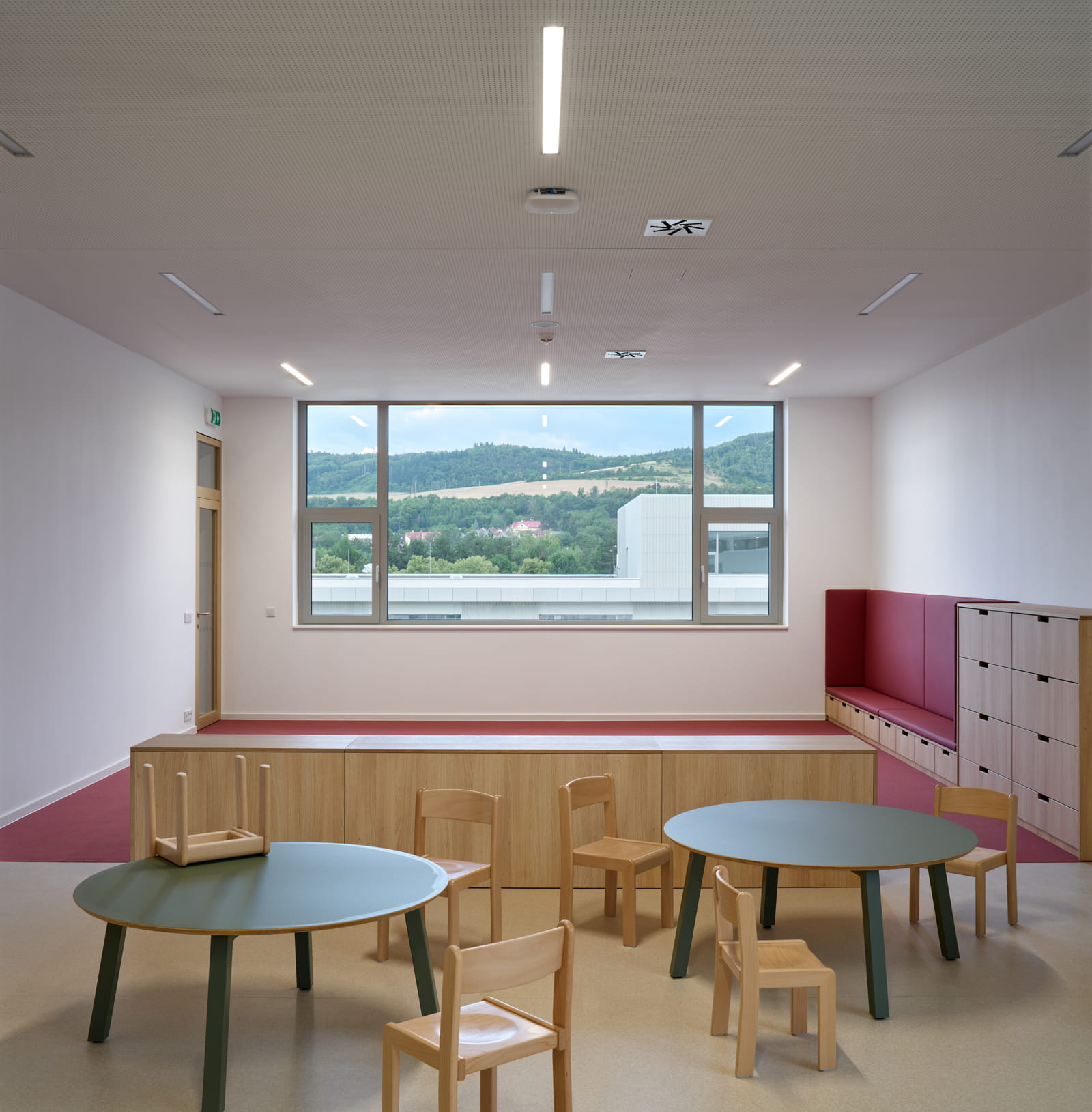
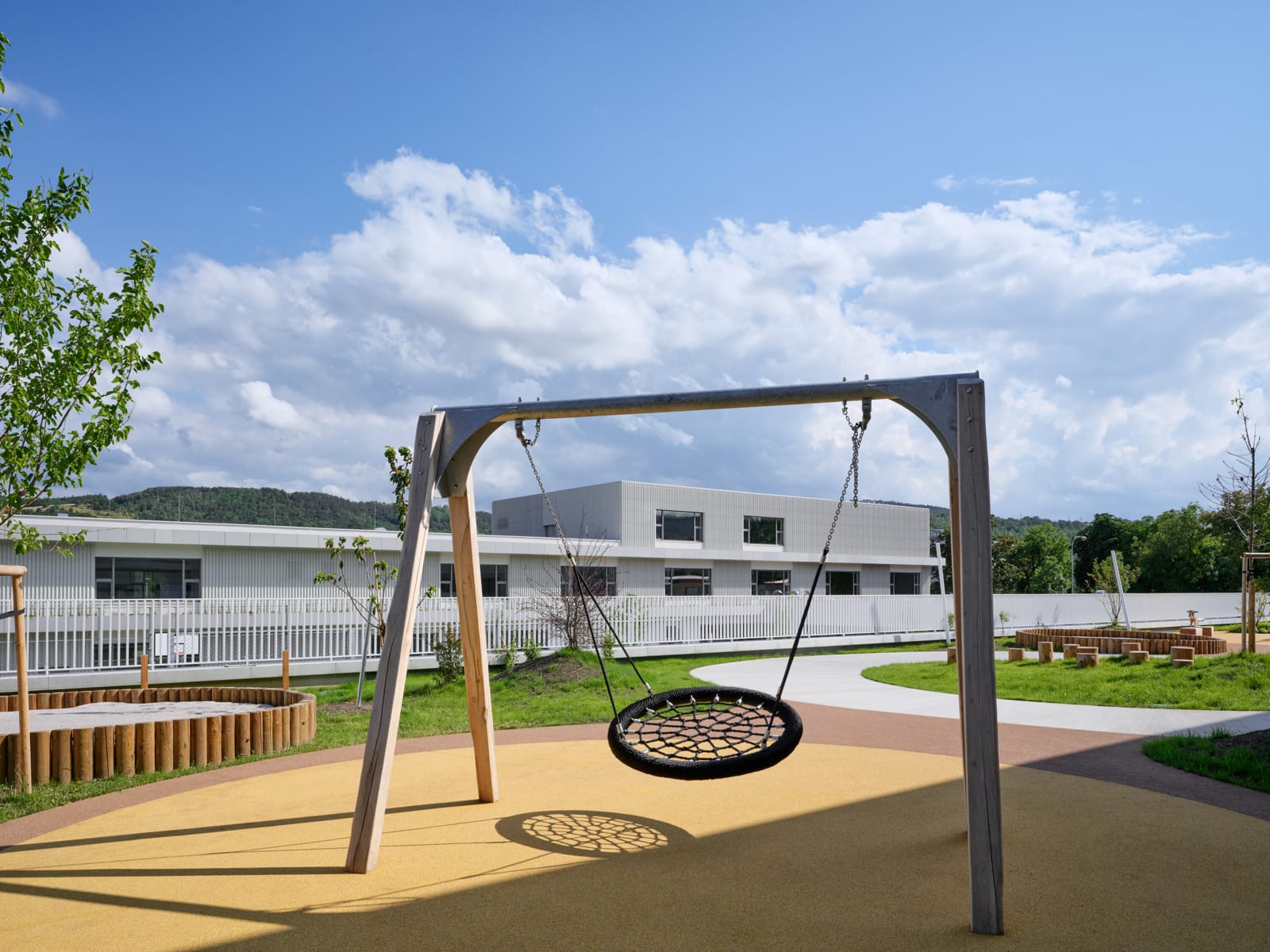
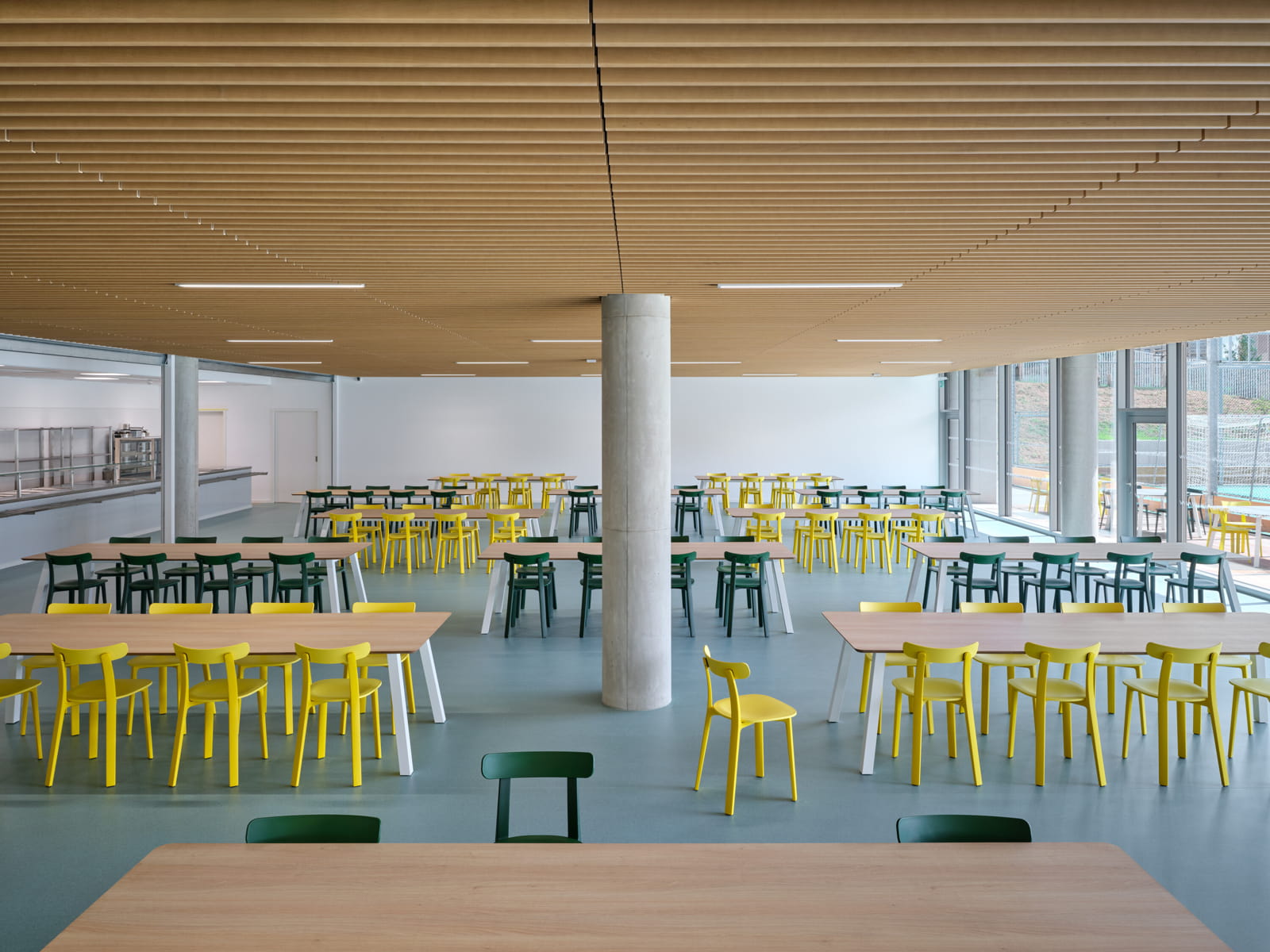
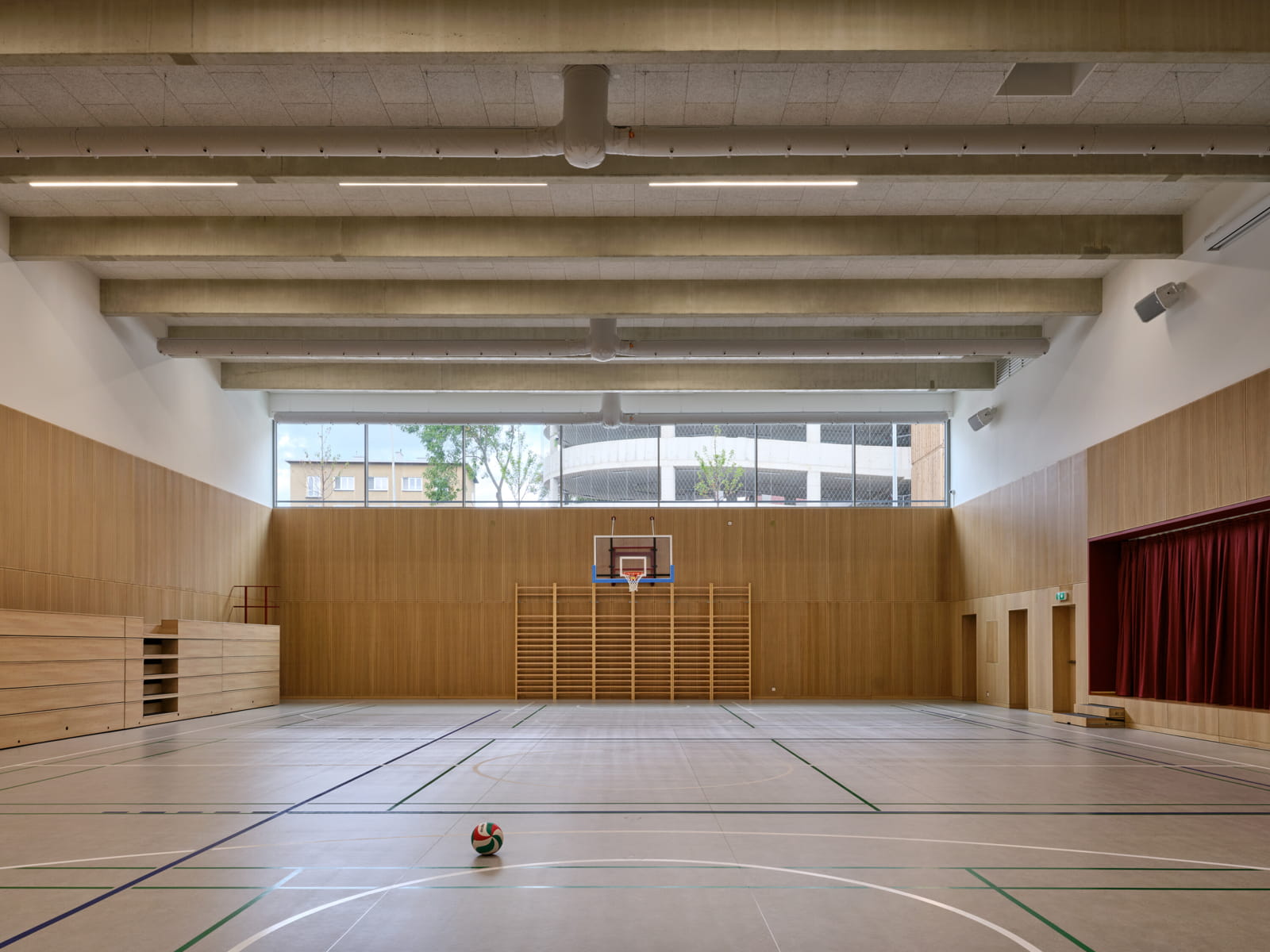
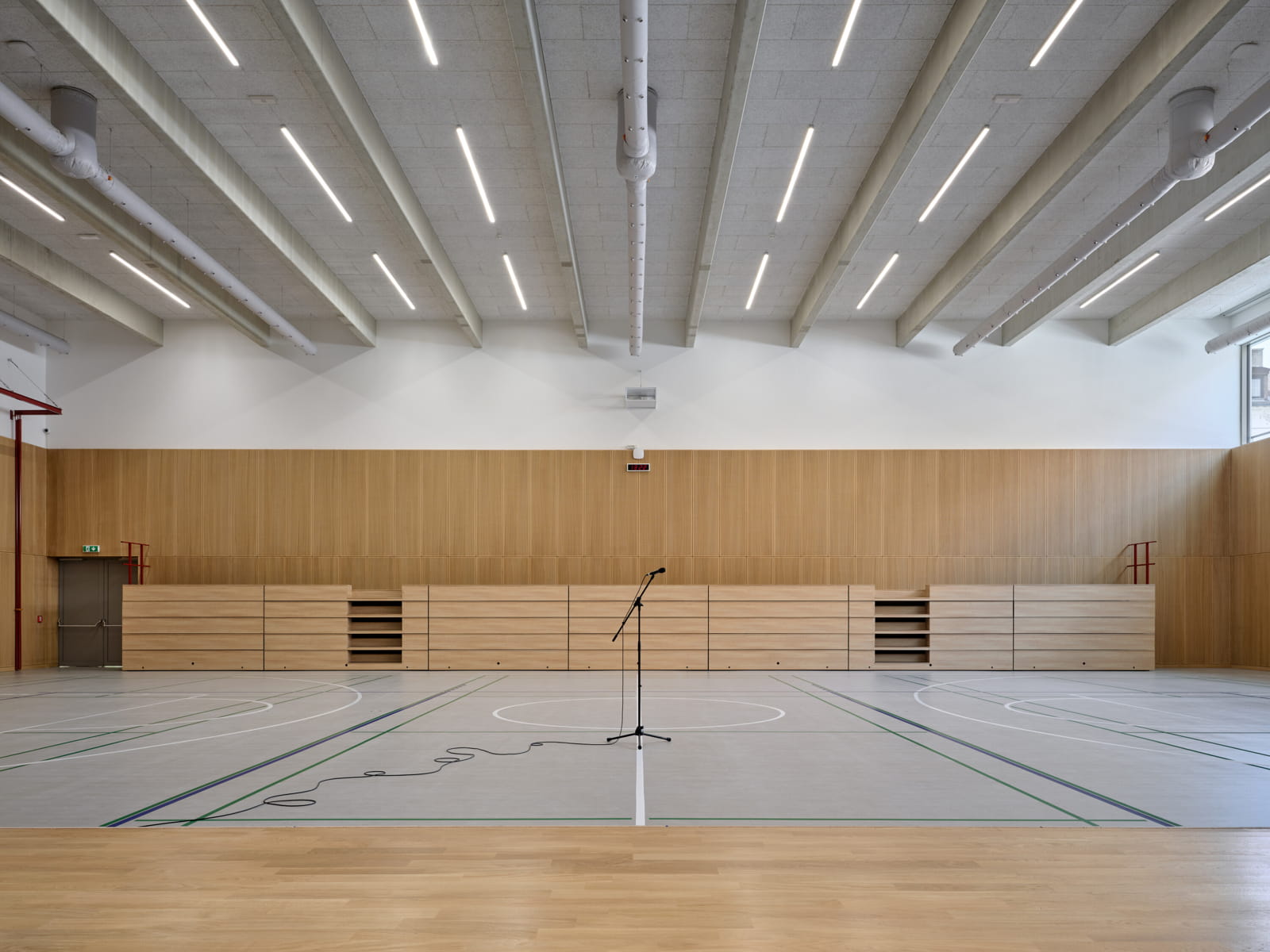
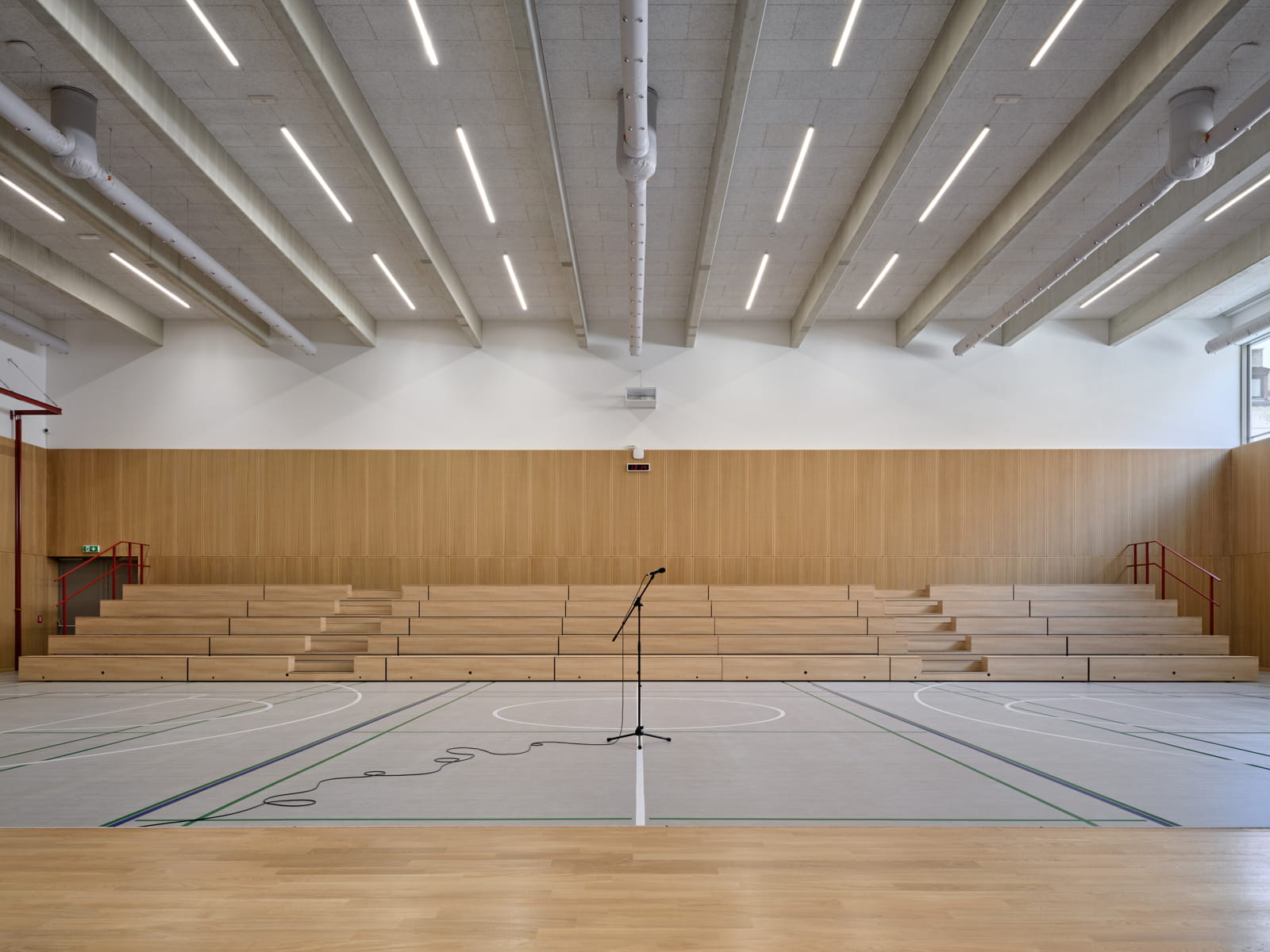
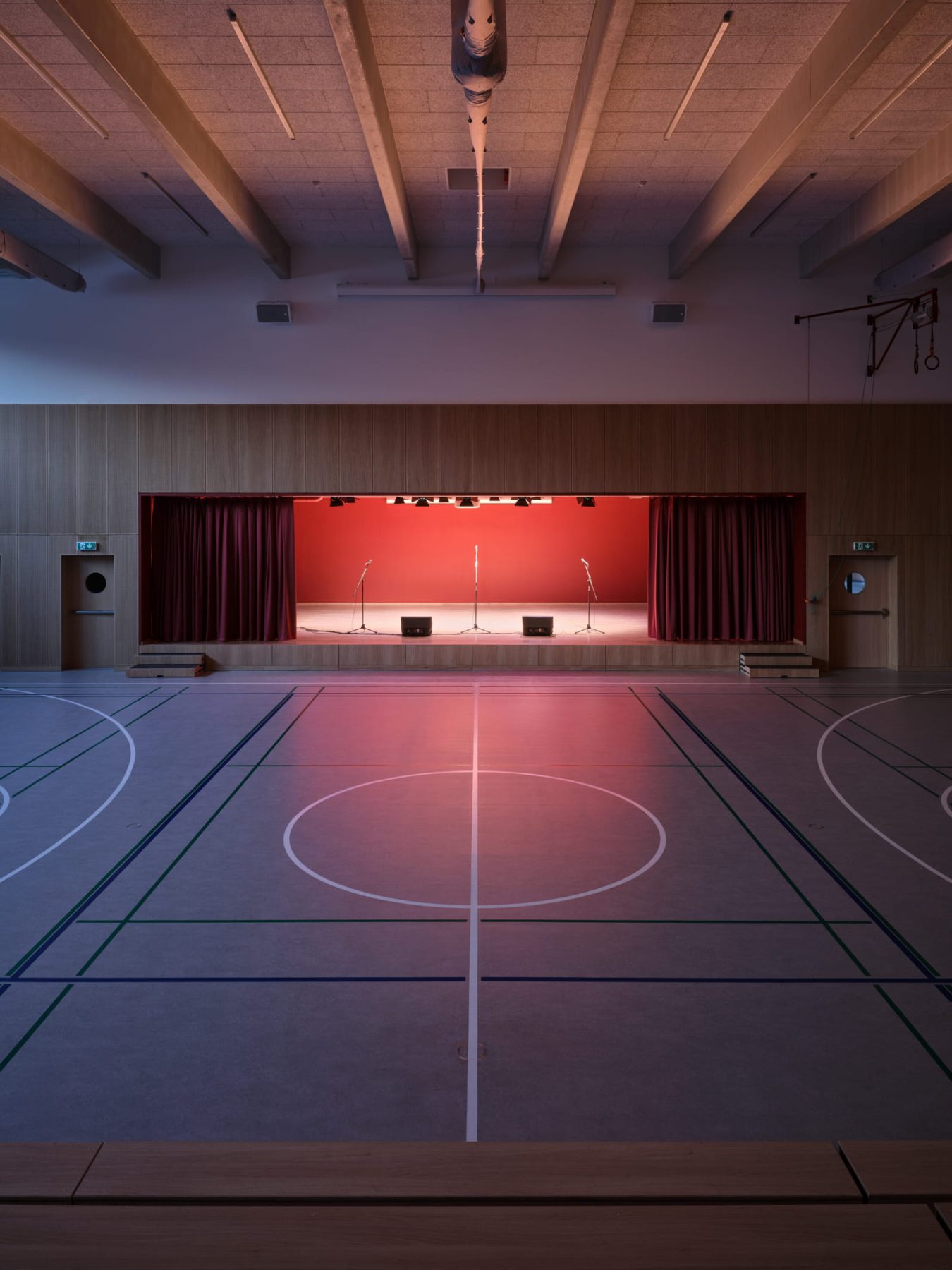
The northern wing features a multifunctional hall, a cafeteria with supporting facilities, and operational and technical areas that serve the entire school, while the upper levels are dedicated to the kindergarten. The kindergarten has a separate entrance to ensure a safe and independent flow for younger children and includes classrooms, activity spaces, and a dedicated roof terrace that doubles as an outdoor learning and play area.
Large windows and skylights allow abundant natural light, while visual connections to the school’s greenery and courtyard integrate the kindergarten into the broader campus environment.
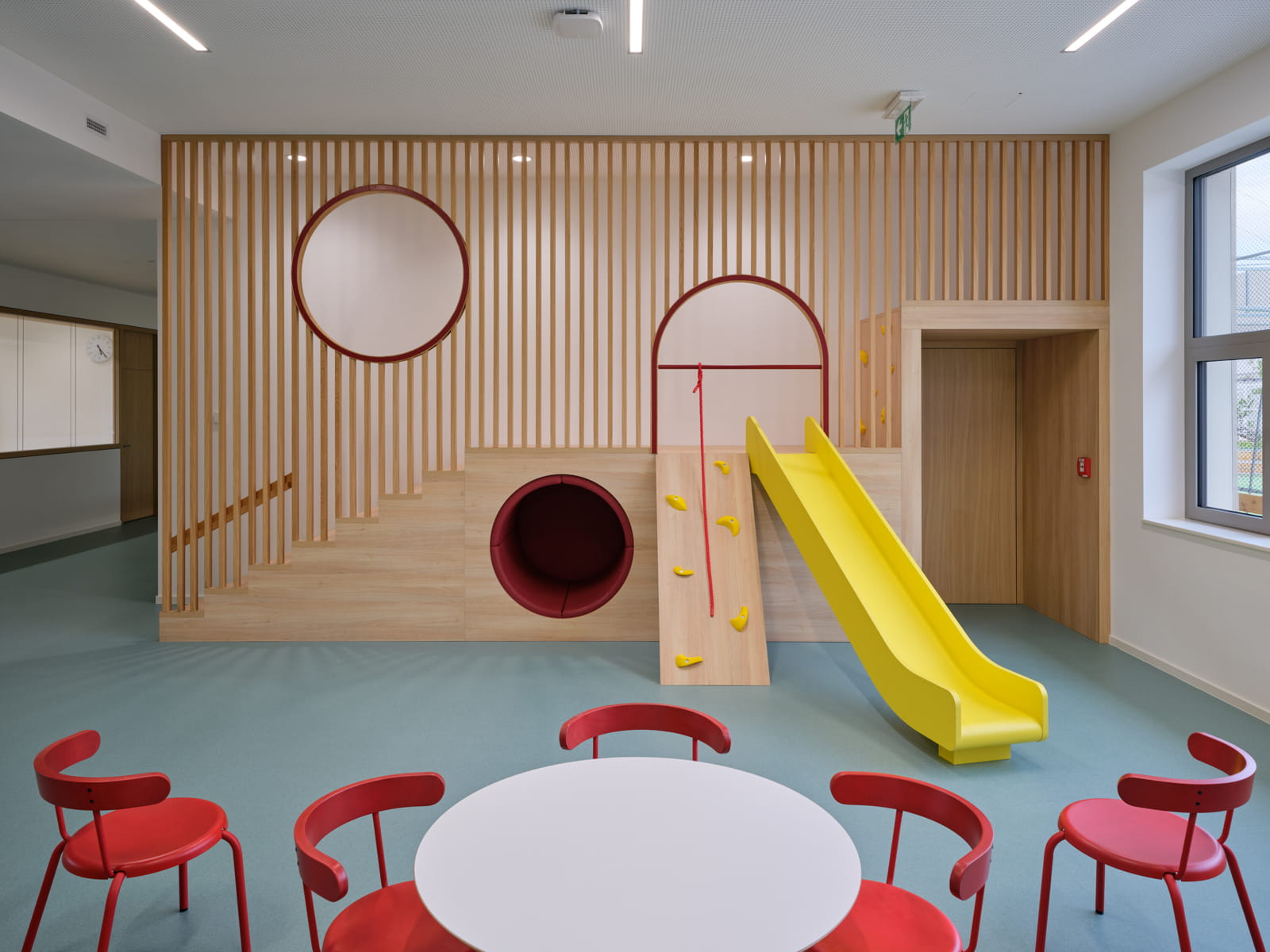
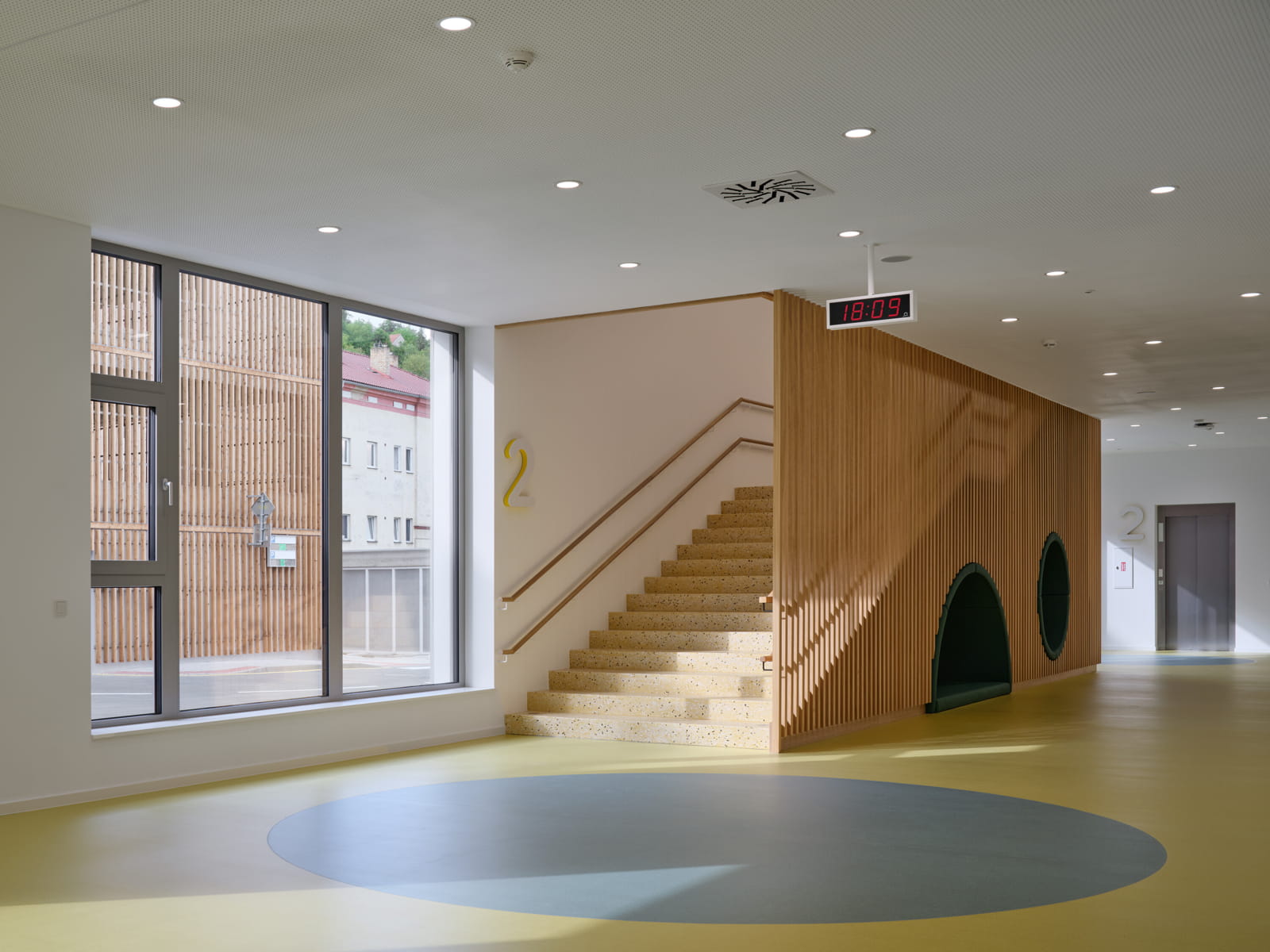
The interior of the building emphasizes its representative character, reflected in the choice of materials, particularly wood and terrazzo flooring.
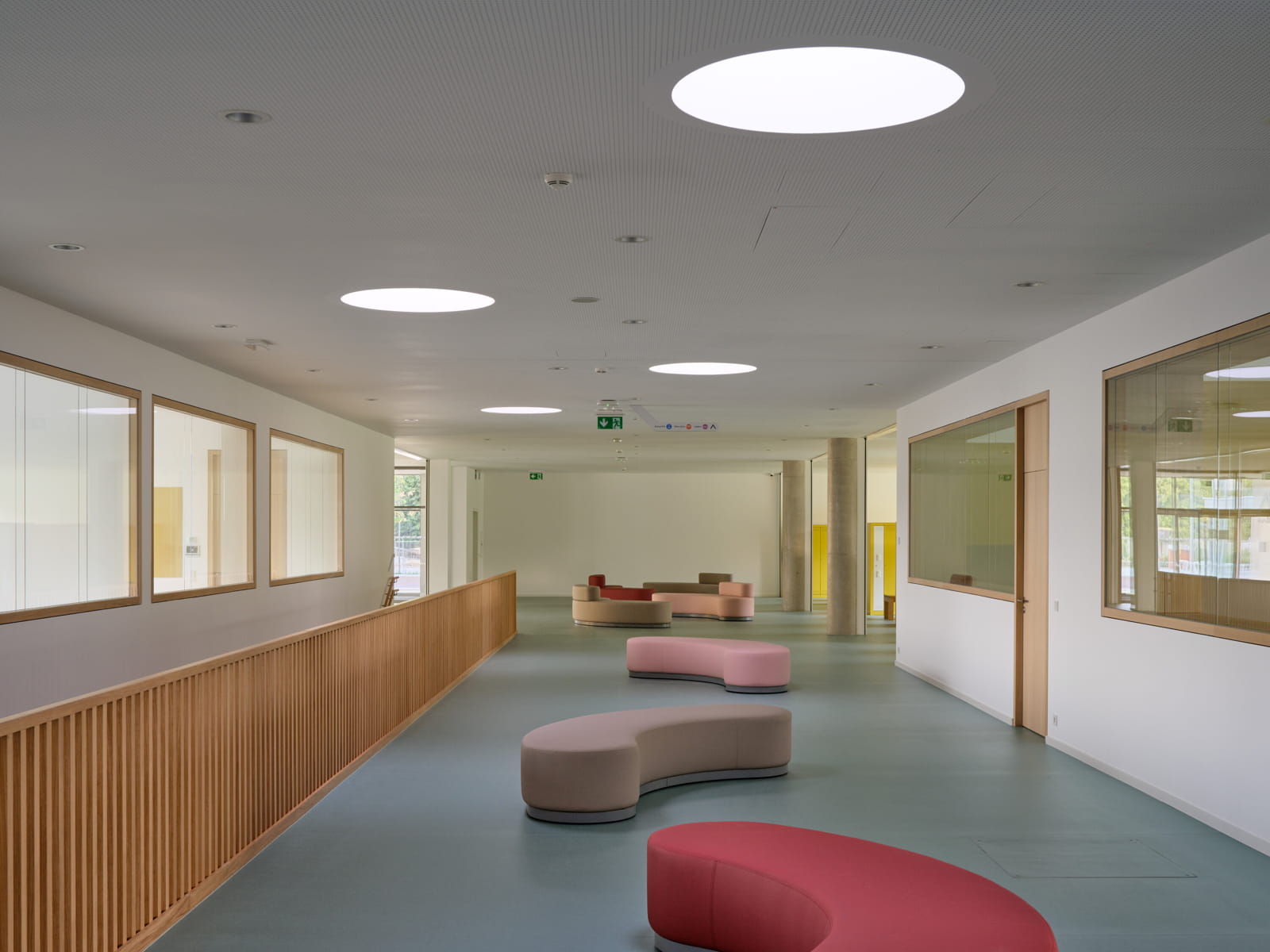
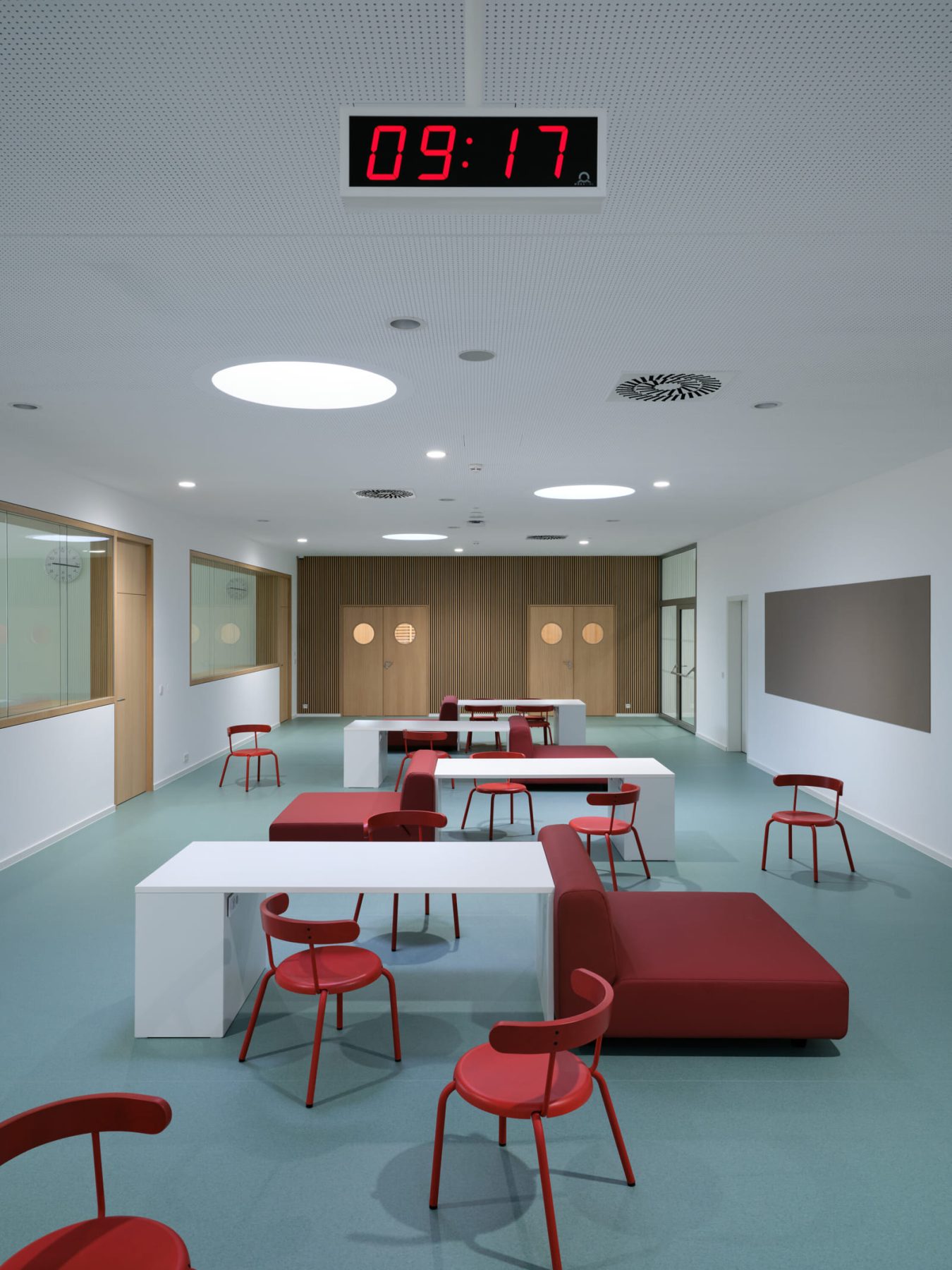
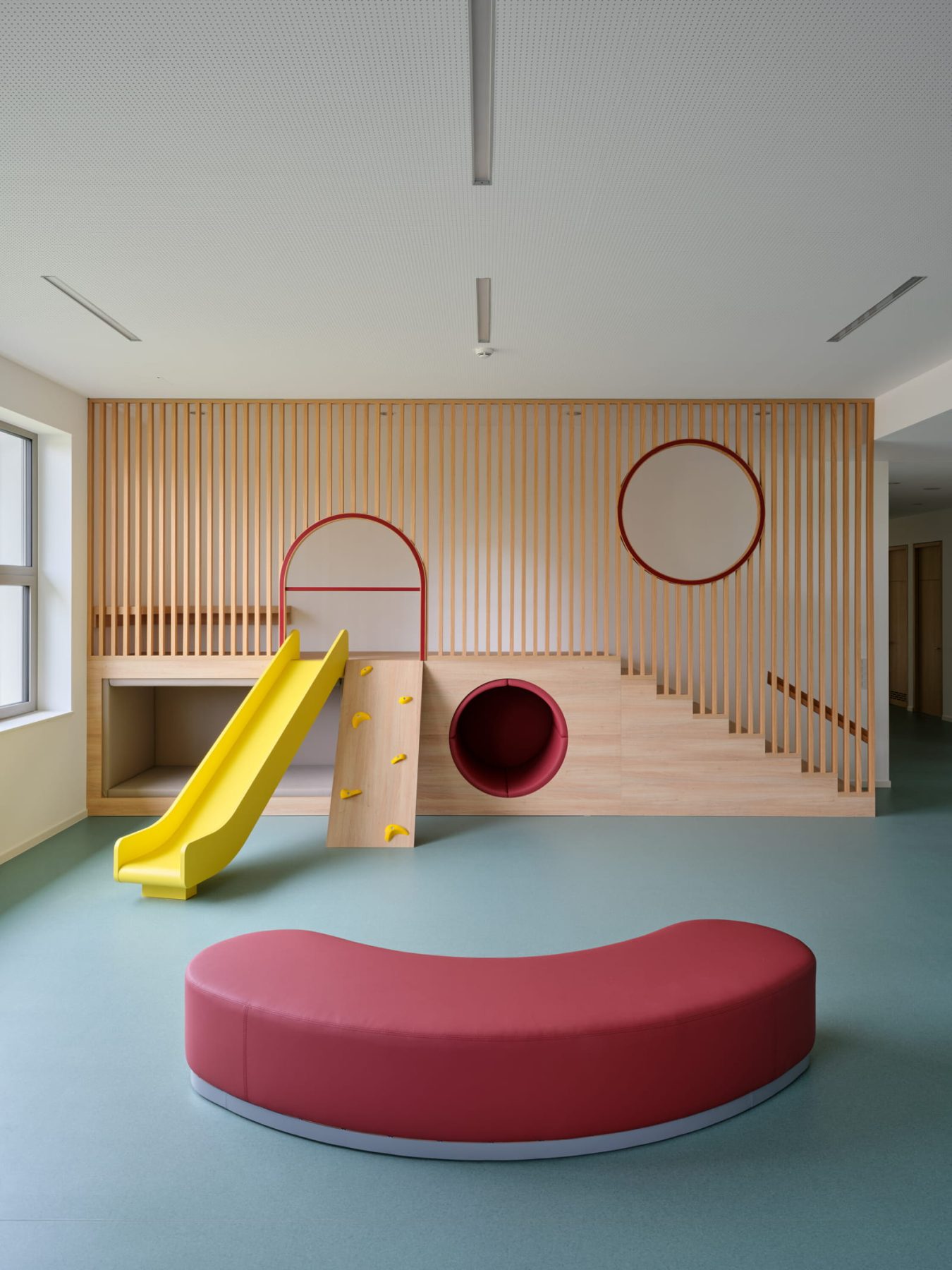
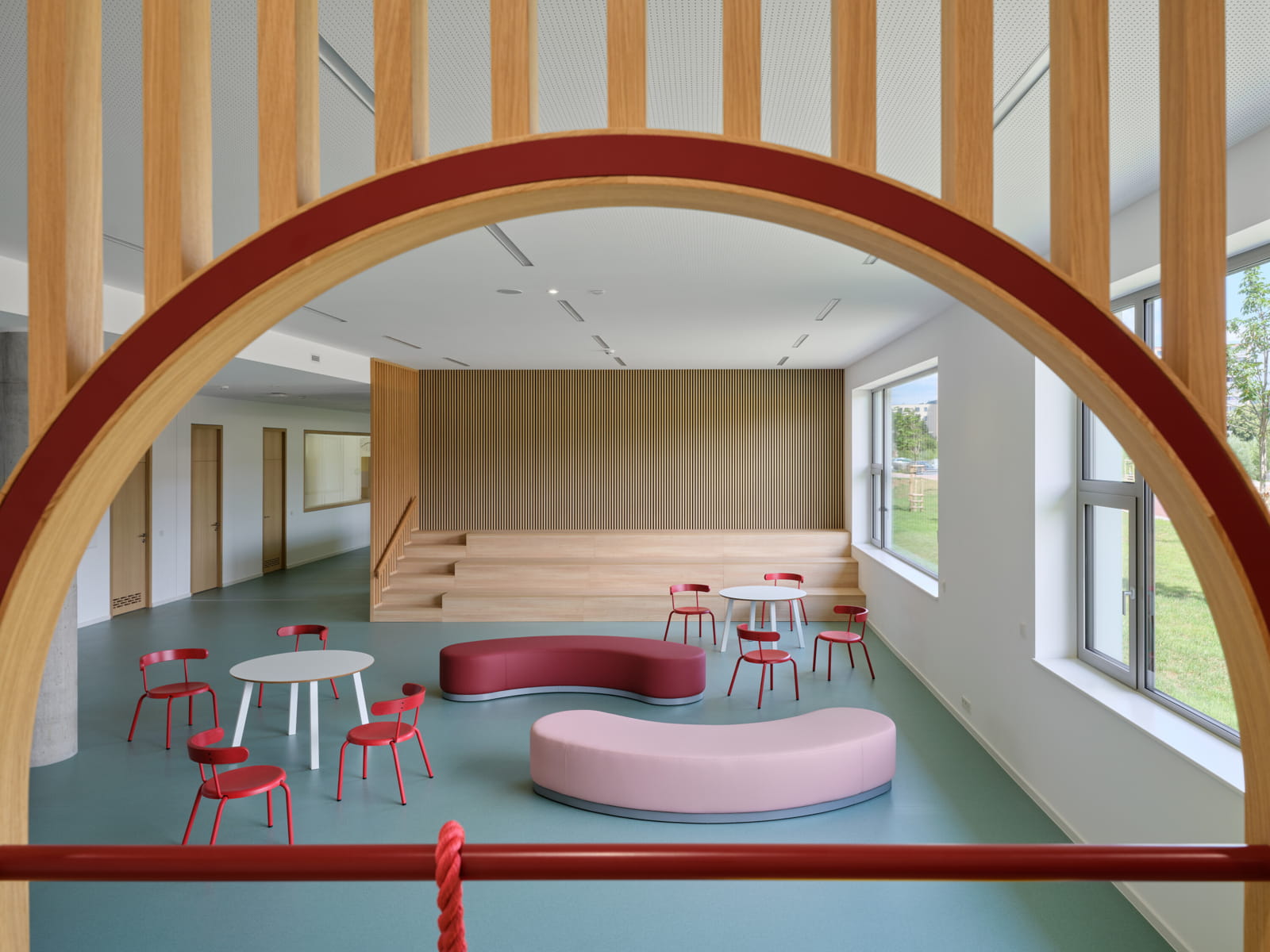
Special attention is given to the unique life of the corridors, which offer generous spaces with various seating types and views into the classrooms.
The corridors are designed for children to meet, play, and study independently; they also provide opportunities for alternative learning or extracurricular activities outside the main classrooms.
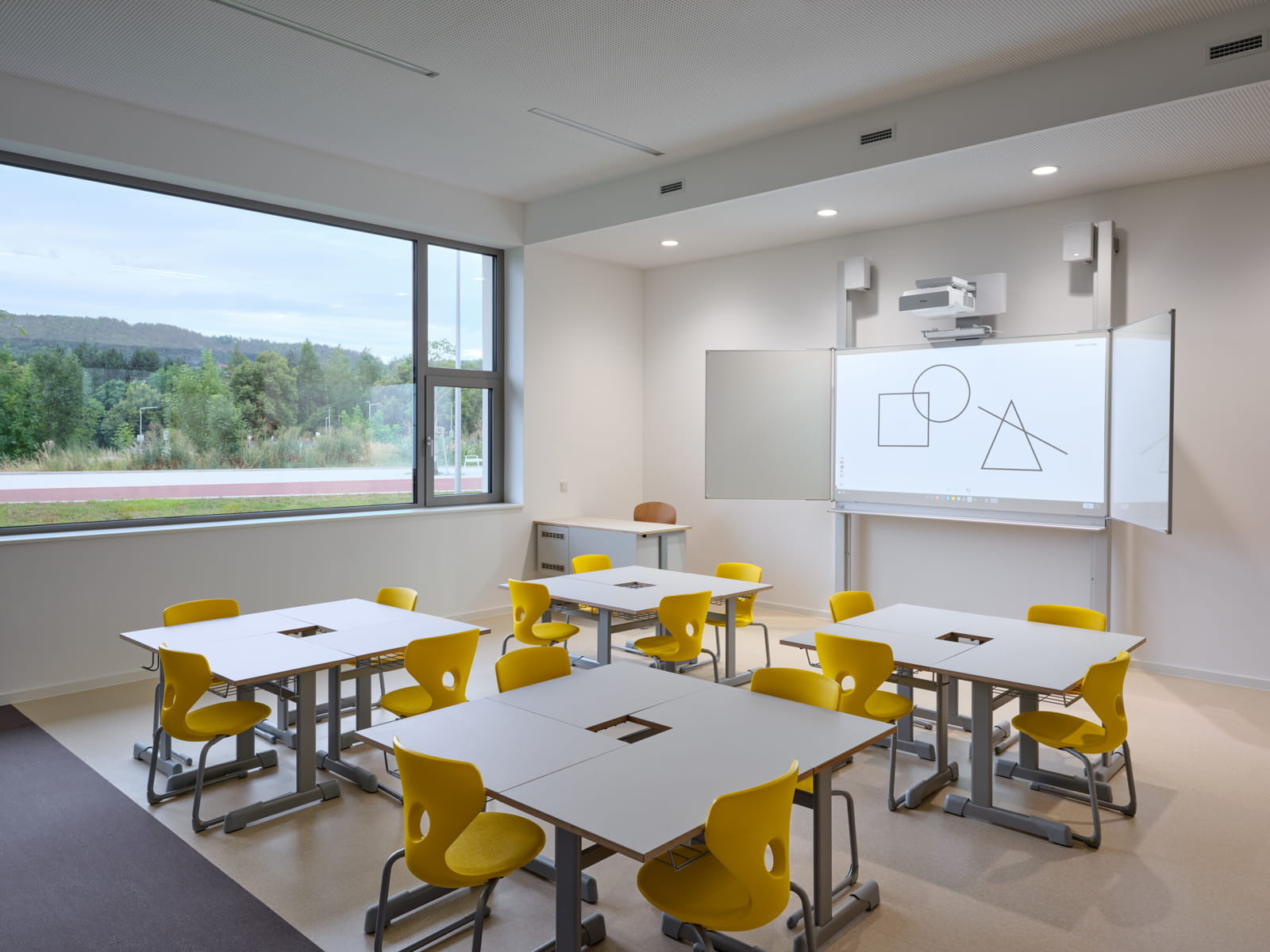
The elementary school classrooms and laboratories are flexible, spacious rooms with various seating layouts and modern equipment.
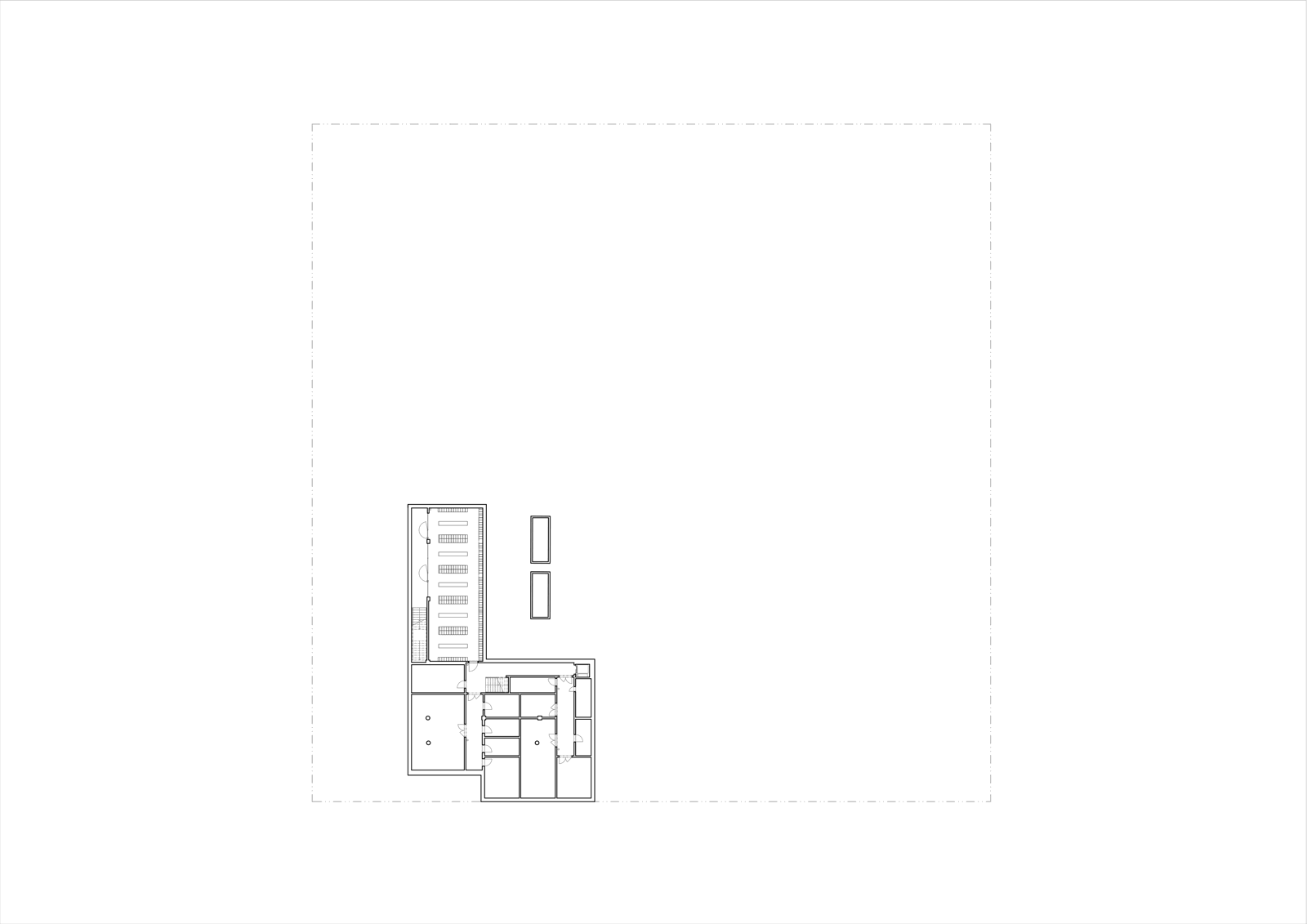
Drawings
About OVA
Jiří Opočenský and Štěpán Valouch founded their architectural office in 2007. Today, the OVA team has more than thirty permanent members, with certified architect Ondřej Králík as a partner.
Original artistic solutions with a strong connection to place characterize their work. In the design process, emphasis is placed on fostering dialogue with the client, establishing functional relationships, and paying close attention to detail. In their proposals, they seek timeless solutions, unique concepts, and costs that correspond to the client’s objectives.
Their first major project was the renovation of the Community House in Slavonice. They succeeded in winning competitions for apartment buildings in Pec pod Sněžkou and for the reconstruction and extension of Lasvit’s headquarters, which, upon completion, received the Czech Architecture Award 2020.
In 2025, the studio completed two elementary schools in Chýně and Beroun, residential housing in Hradec Králové, and the renovation of the Grand Shopping Center in Pardubice. They are currently working on projects won through competitions, such as the completion of the 4th Quadrant of Vítězné náměstí in collaboration with BCA (NL) and a multifunctional sports arena in Pardubice in collaboration with PPP. Their most recent achievement is 1st place in an international open competition for a velodrome sports hall in Brno.
Facts & Credits
Title VIA Kindergarten and Elementary School
Typology Architecture, Education
Location Beroun, Czech Republic
Area 5 050 m2
Status Completed, 2025
Architecture OVA (Jiří Opočenský, Štěpán Valouch, Ondřej Králík)
Design Team Petr Bočan, Jakub Neumann, Martina Formánková
Landscape architecture TERRA FLORIDA
Photography BoysPlayNice
Text by the authors
READ ALSO: Stories of Contemporary Domesticity | Episode 5_Home as a psychic state: pensi pascual's architectural acupuncture