A Whimsical Reuse explores refined architectural transformations where history is reinterpreted through poetic interventions and contemporary craft. Forgotten spaces gain new life, revealing a dialogue between memory, material, and contemporary ways of living.
Designed by HPA Arquitetura, Casa Corten in Celorico de Basto, Portugal transforms a former timber factory into a garden house embedded in the slope. Fragmented corten-clad volumes and green roofs merge with the terrain, while west-facing glazing enhances solar gain and views. Exposed concrete, perforated corten screens, and photovoltaic panels support a sustainable approach, with fluid indoor–outdoor spaces reinforcing the project’s landscape-driven character.
Casa Corten emerges from a contextual response to the site’s pre-existing industrial memory. A former timber factory now in ruin, where only oxidized steel sheets remained as silent traces of its past.
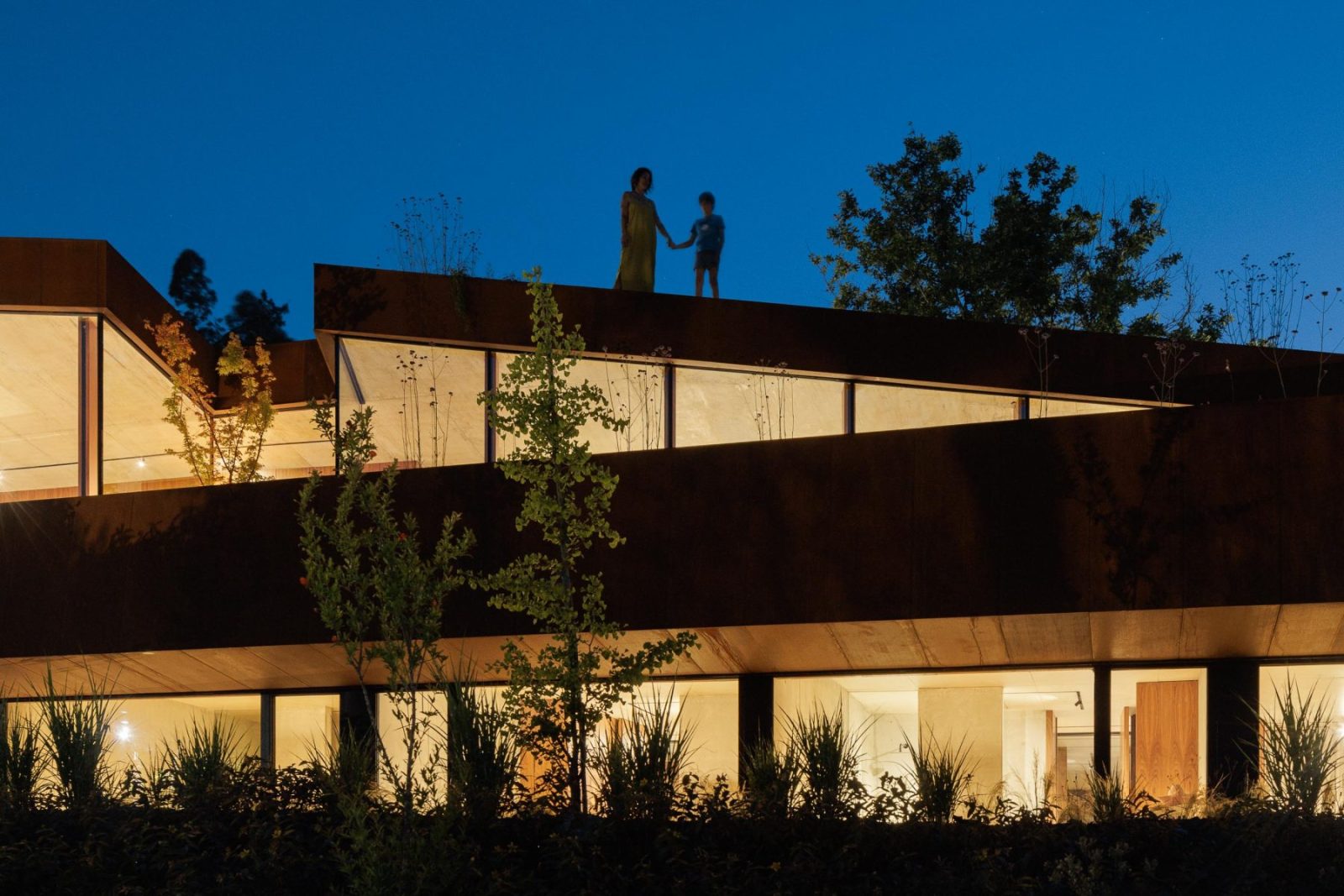
The project adopts a site-specific architectural strategy, allowing the form to be shaped by topography, orientation, and memory.
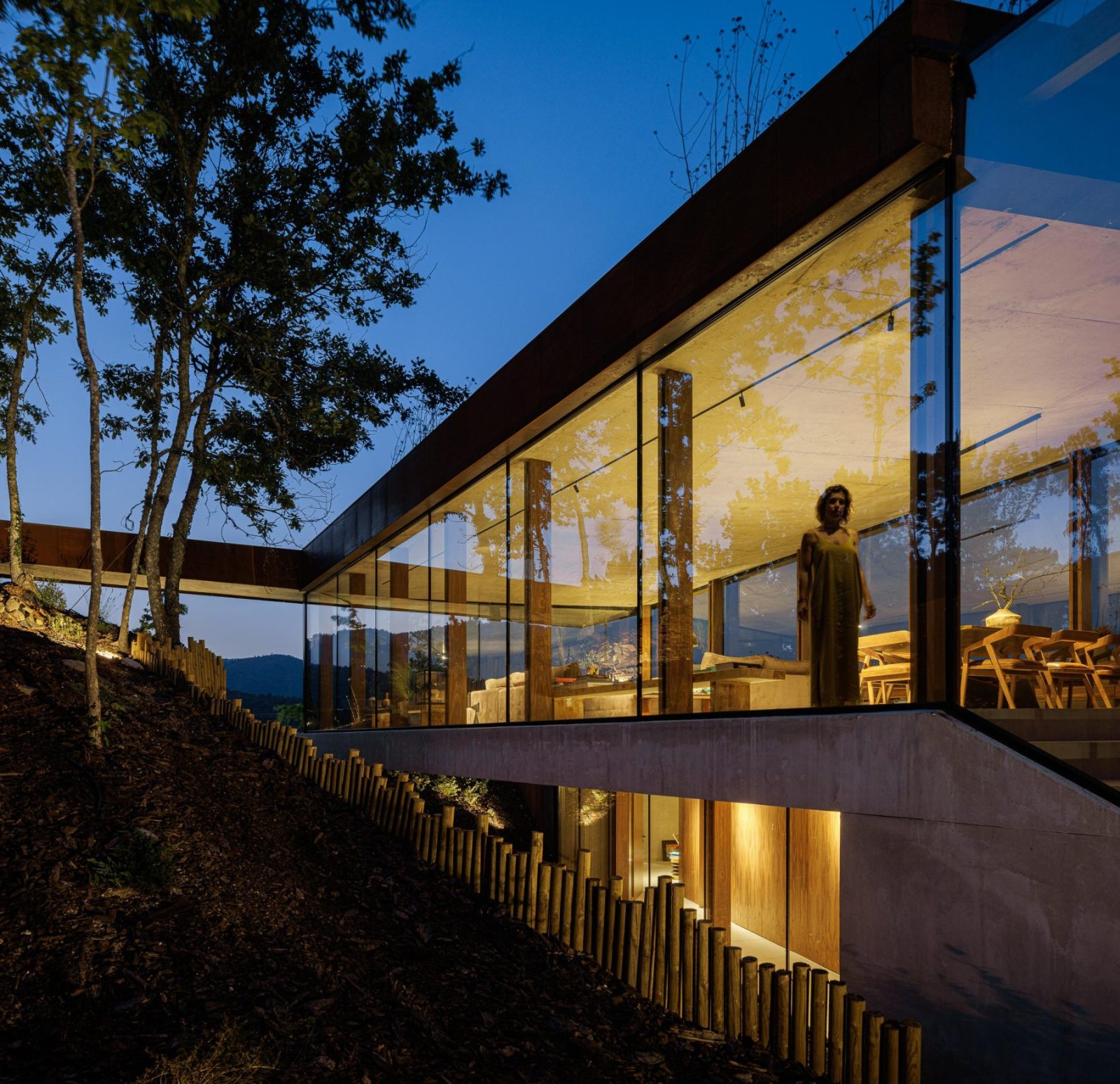
The resulting fragmented volumetry follows the natural contours of the terrain, minimizing both visual intrusion and physical impact while embedding the house within its surroundings. Two primary constraints defined the design approach: the steep slope and the east-facing orientation. The inclination of the terrain is resolved through the incorporation of extensive green roofs on both levels, enabling the built volumes to read as sculpted extensions of the ground plane.
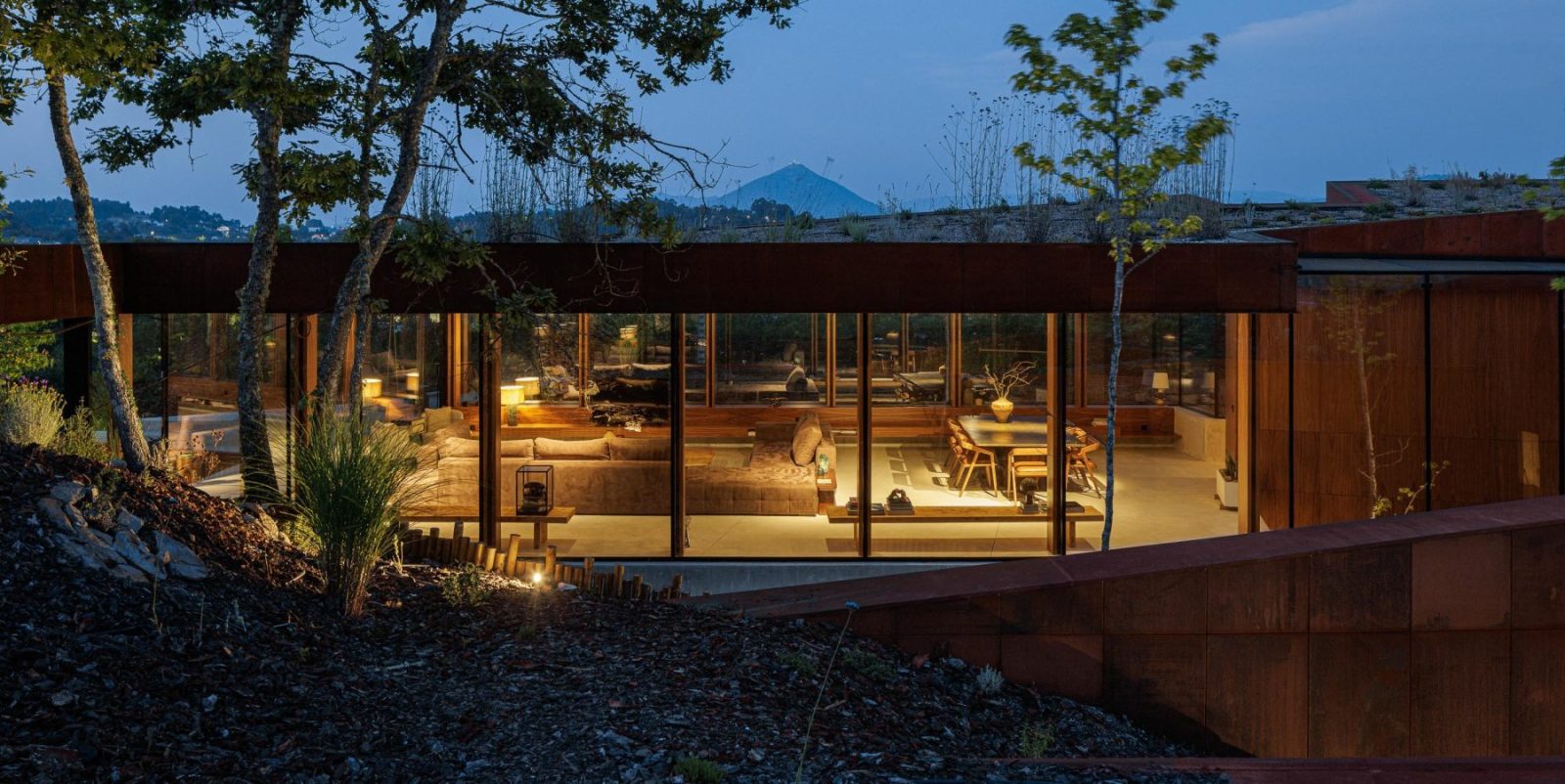
This gesture softens the architectural presence and reinforces a seamless integration with the landscape. In response to the inverse solar exposure, the main openings are oriented westward, maximizing passive solar gain and ensuring optimal daylight conditions throughout the interior. Simultaneously, the architectural act of subtly “lifting” the house from the terrain allows natural light to reach the lower level while preserving the native vegetation.
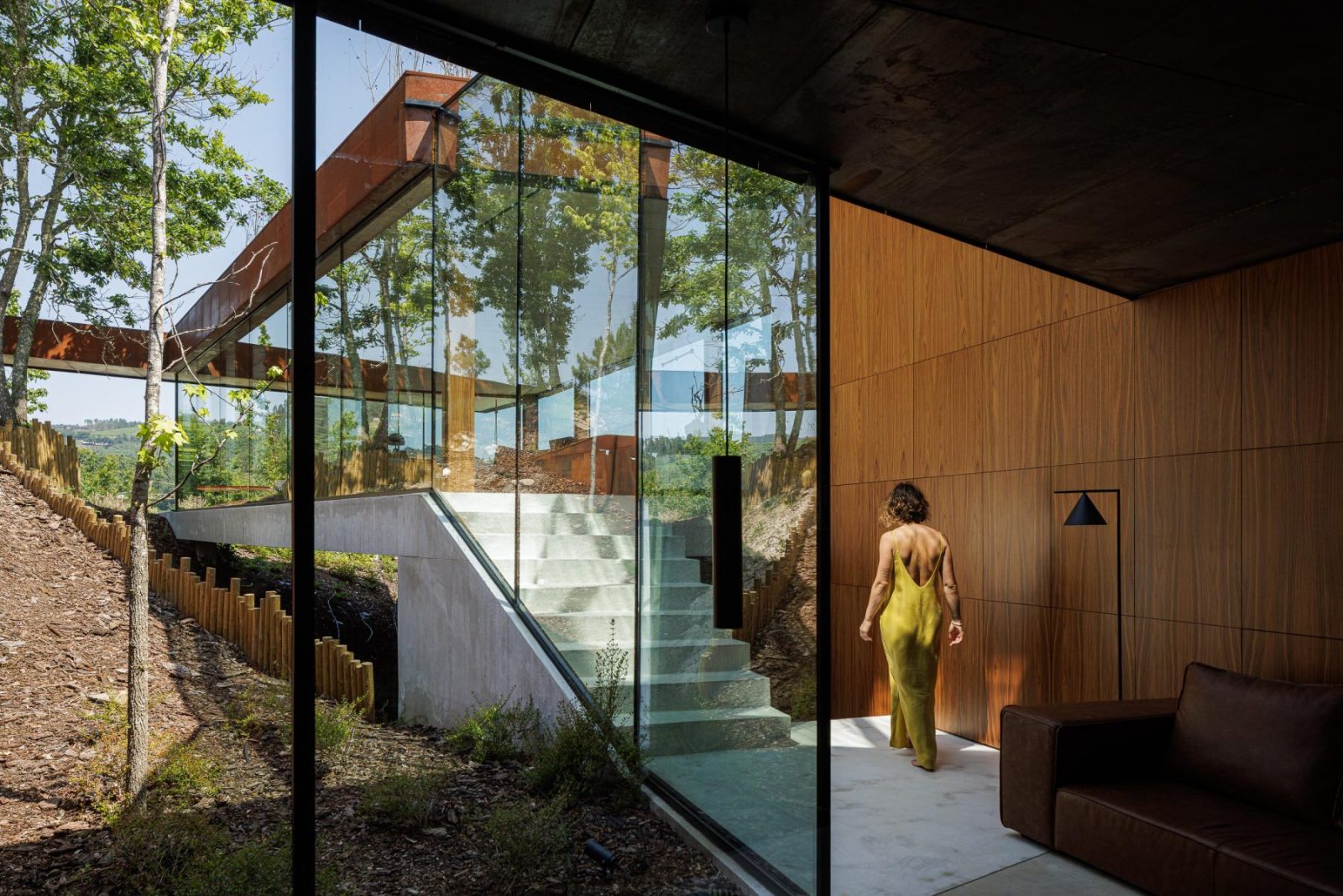
The garden evolves into the spatial and conceptual core of the project, linking the two levels and transforming a topographical constraint into a defining architectural asset.
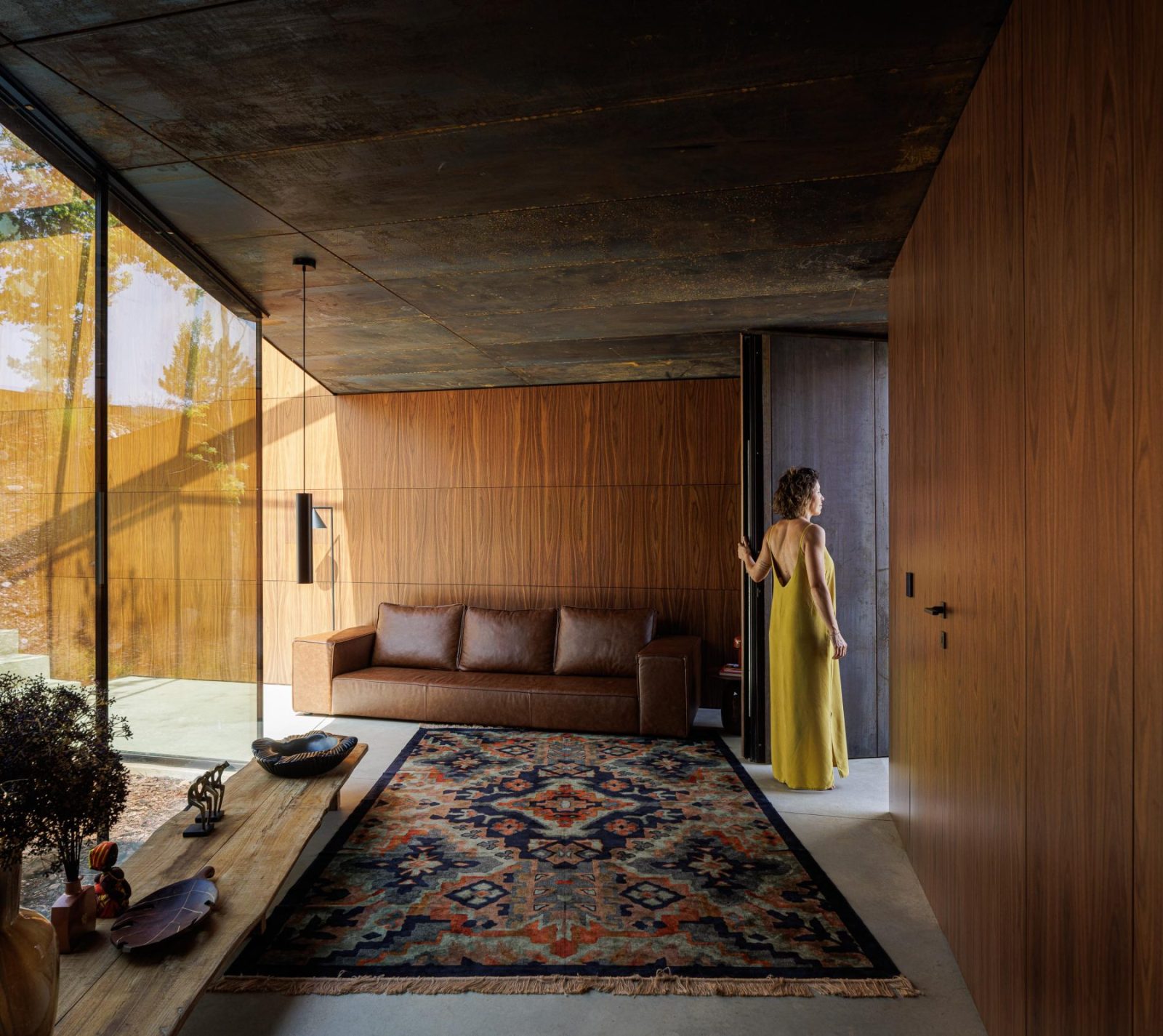
The upper floor is recessed along the site’s natural line, breaking down the massing and enhancing privacy from the adjacent path. Fully glazed façades dissolve the boundary between interior and exterior, establishing uninterrupted visual continuity with the landscape and allowing panoramic views and abundant daylight. On the southern elevation, a perforated corten steel brise-soleil operates simultaneously as a climatic device and a visual filter, mitigating solar exposure while safeguarding privacy and reinforcing the building’s material identity.
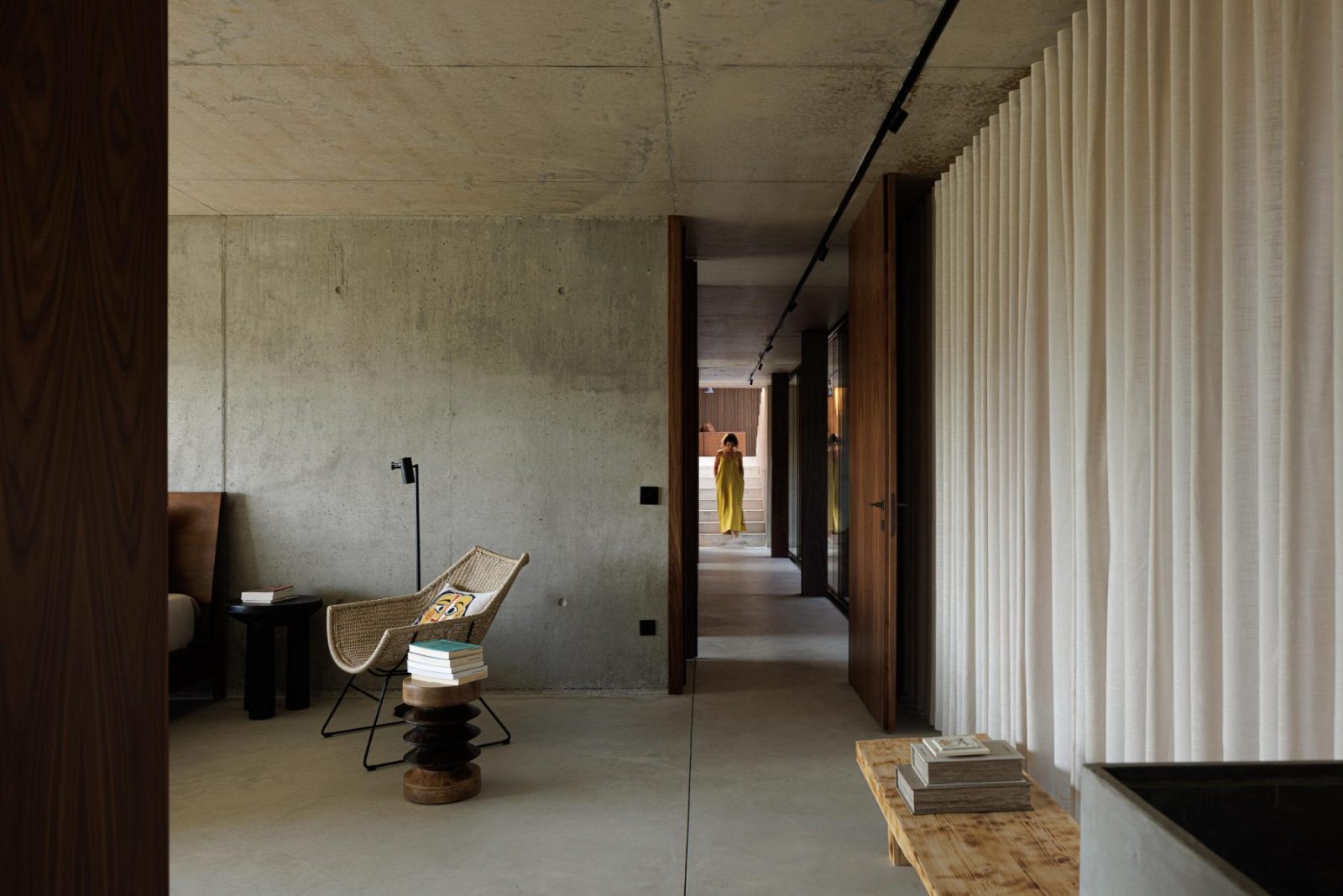
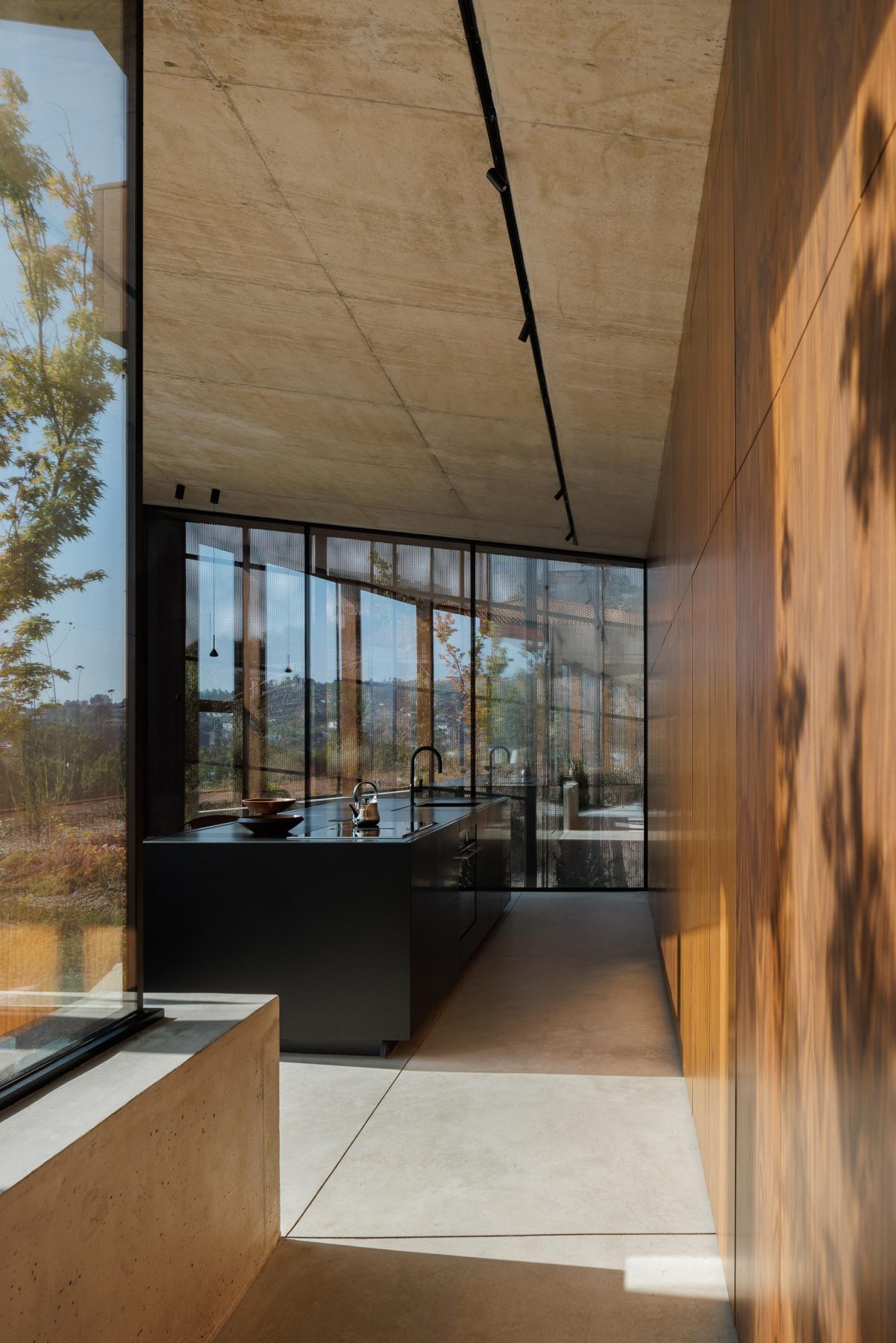
Materiality is grounded in continuity with the site’s industrial past and its natural context. Corten steel wraps the exterior envelope and strategically extends into the interior, particularly within the entrance hall and the suites, where it is juxtaposed with raw, irregularly textured, naturally stained concrete. This restrained palette establishes a tactile dialogue defined by chromatic depth, material honesty, and an embrace of imperfection.
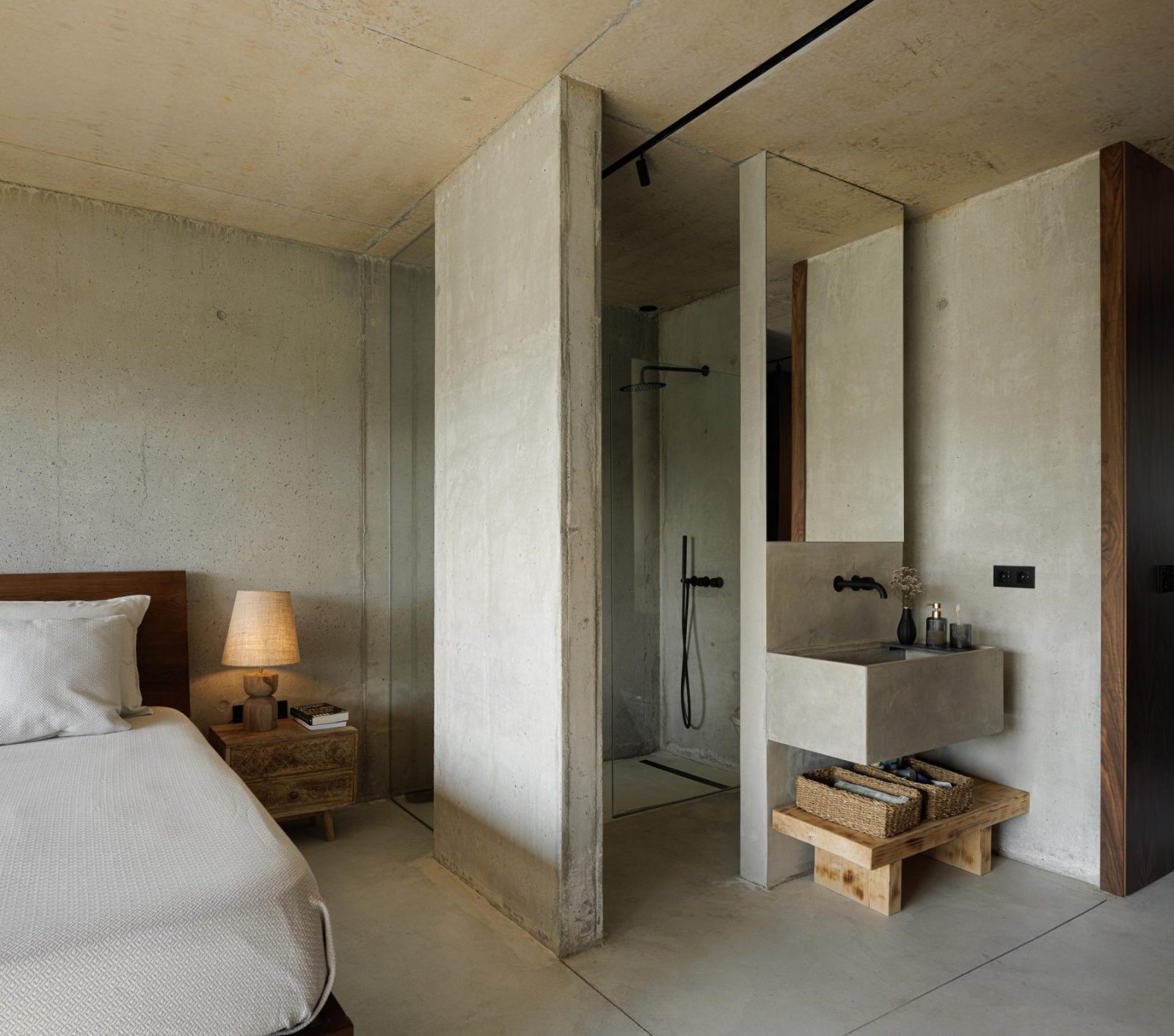
Internally, spatial organization prioritizes openness, luminosity, and a constant visual relationship with the surrounding landscape. The corten and wood clad entrance hall functions as a vertical connector between the private and social zones, while exposed concrete across floors, walls, and ceilings reinforces spatial continuity and structural clarity. The lower level accommodates four suites embedded into the terrain, whereas the upper level hosts the kitchen, dining, and living areas beneath a dynamic, high-pitched roof that unfolds toward 360-degree landscape views.
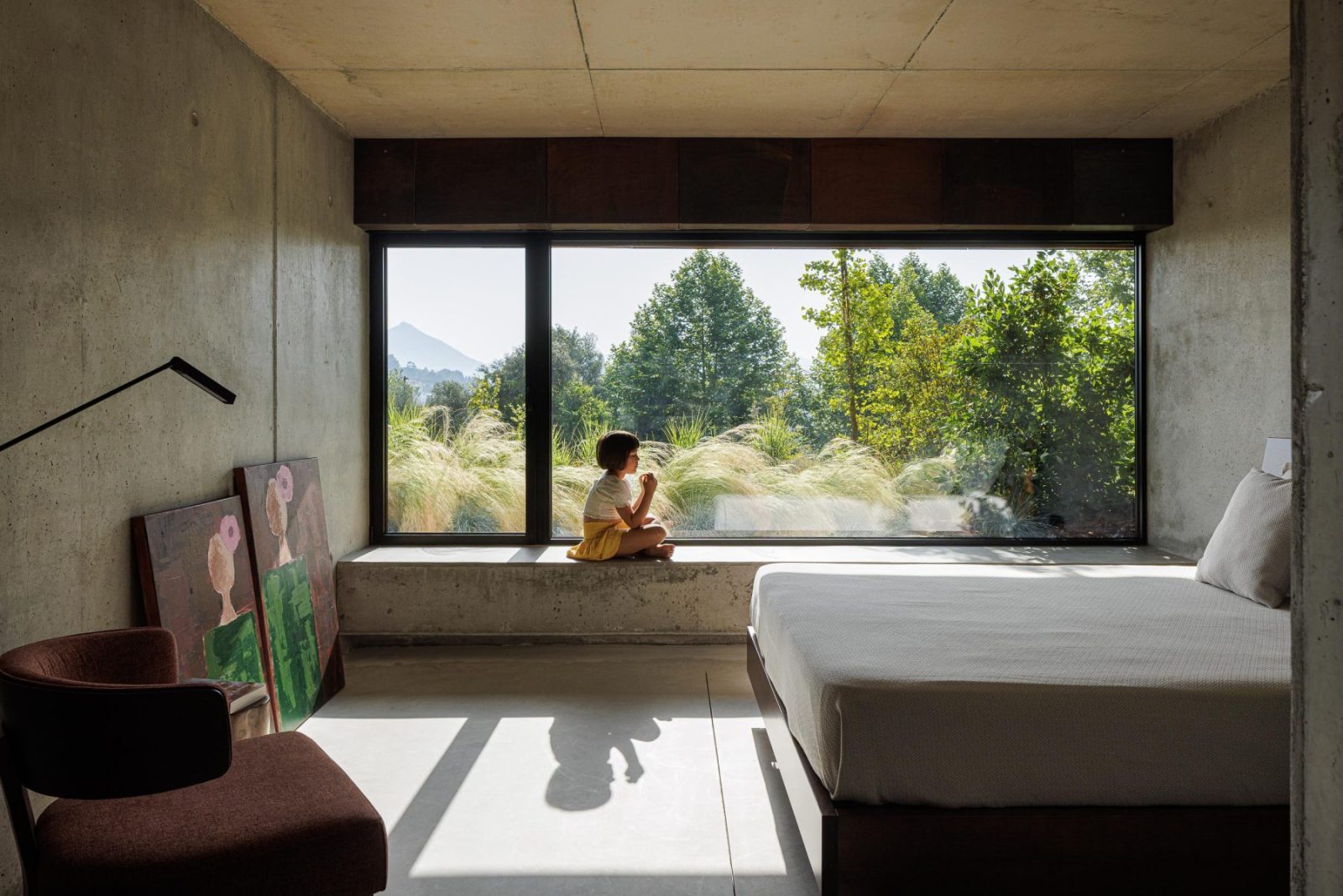
All built-in furniture was custom-designed to align with the architectural narrative. While the selection of furnishings and objects was carefully curated to reinforce the project’s conceptual coherence and material language.
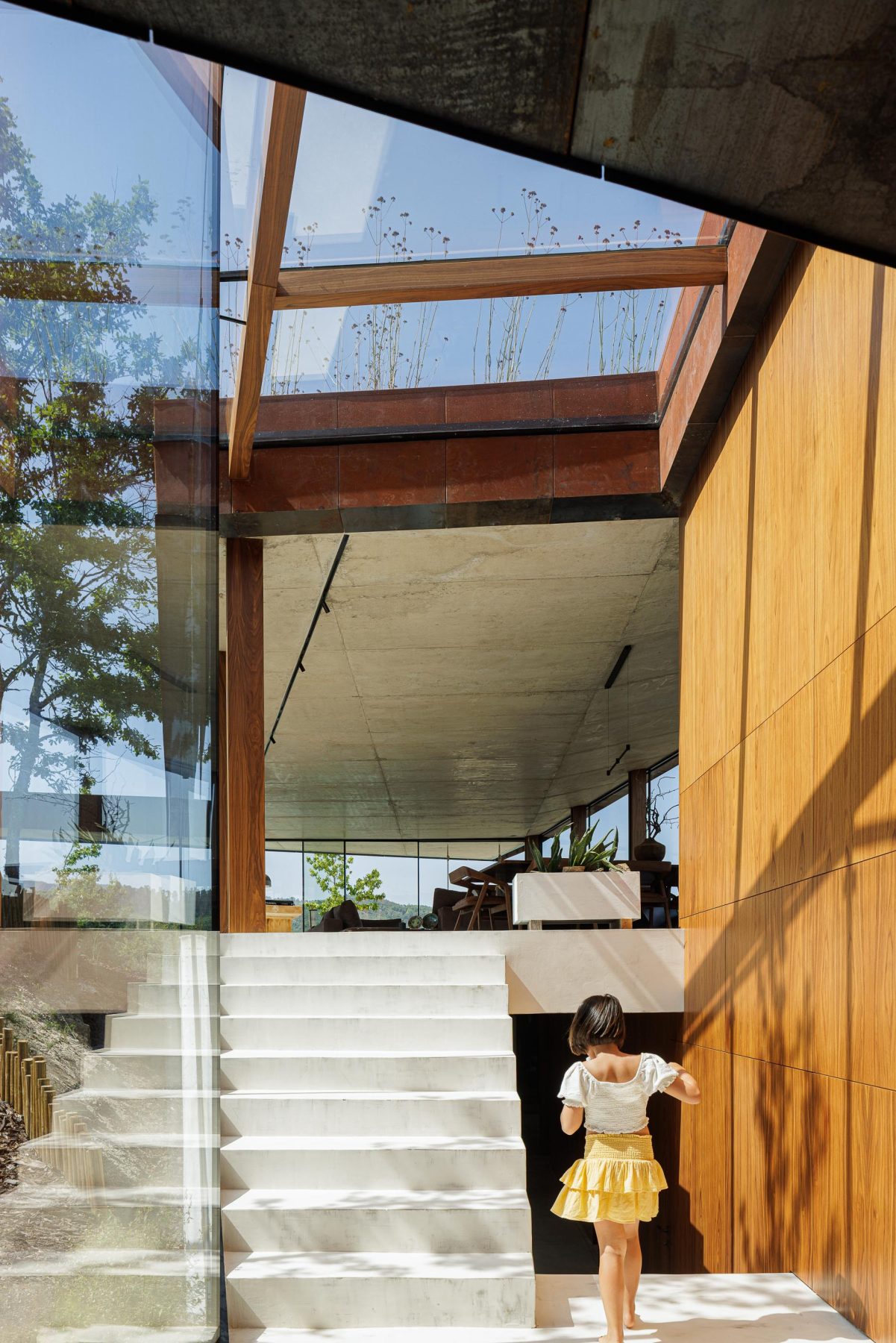
Sustainability and environmental performance are integral to the design strategy.
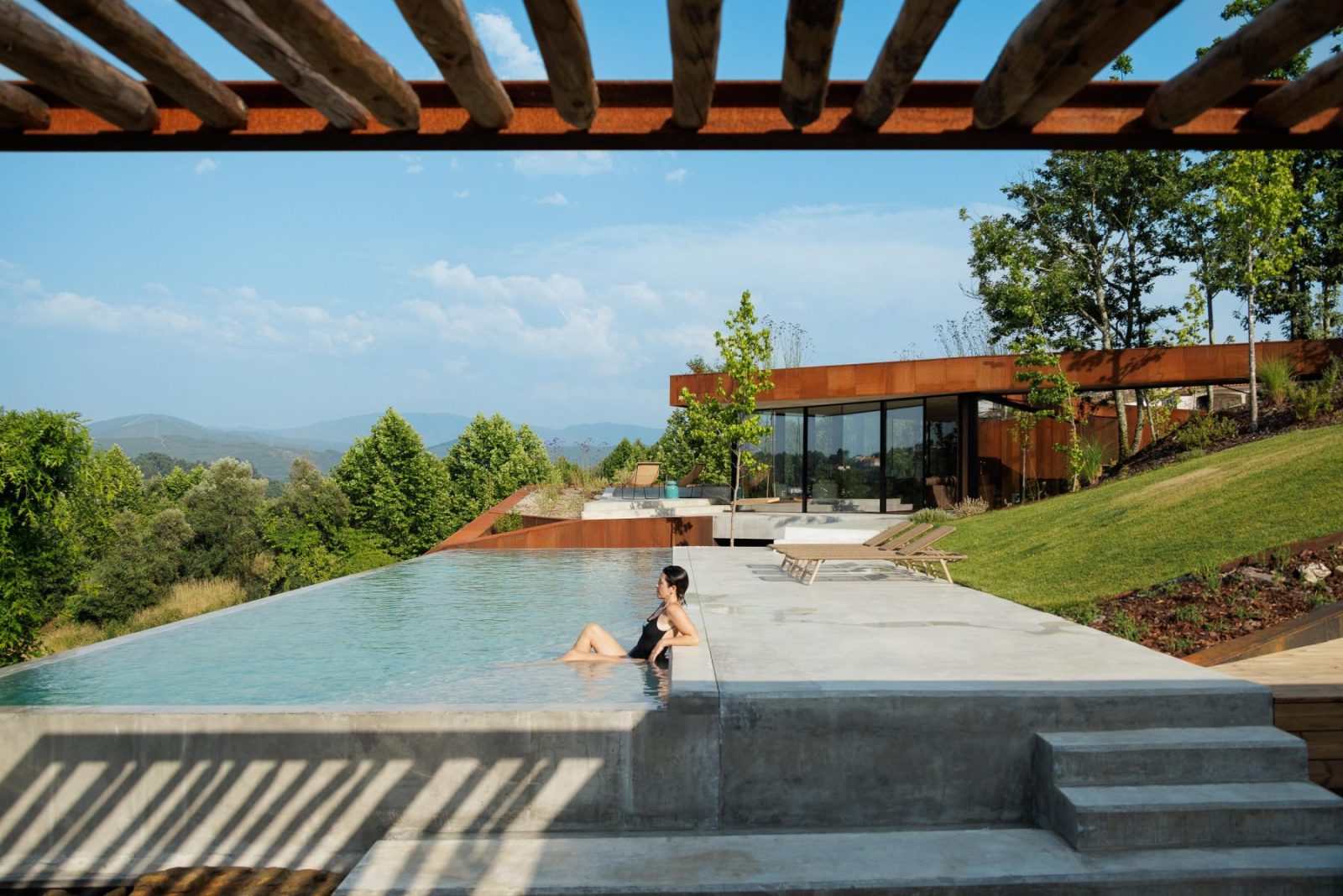
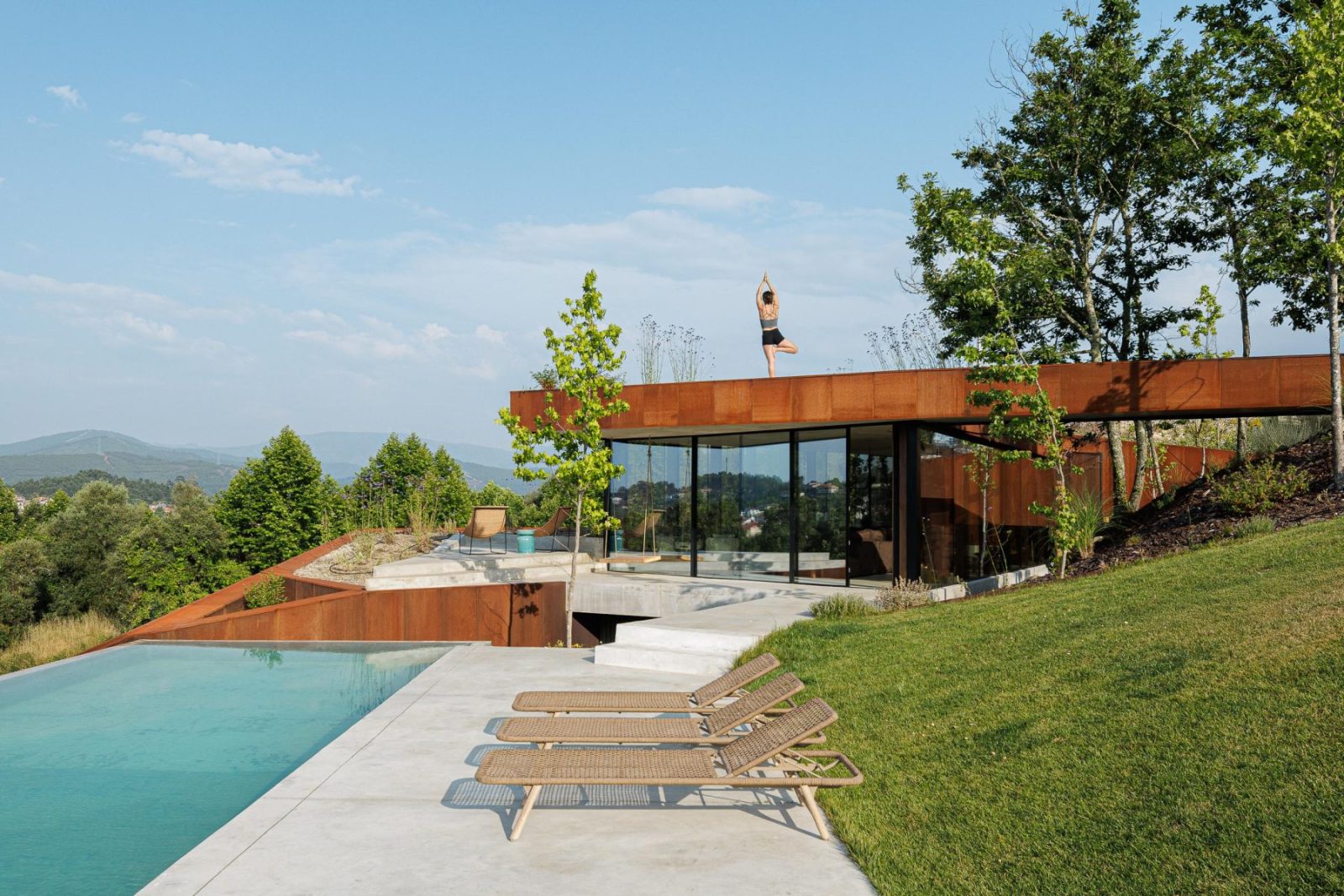
Green roofs, rainwater harvesting systems, photovoltaic panels, deciduous vegetation for seasonal shading, strategically planted trees, and integrated home automation collectively contribute to a highly energy-efficient and environmentally responsive dwelling.
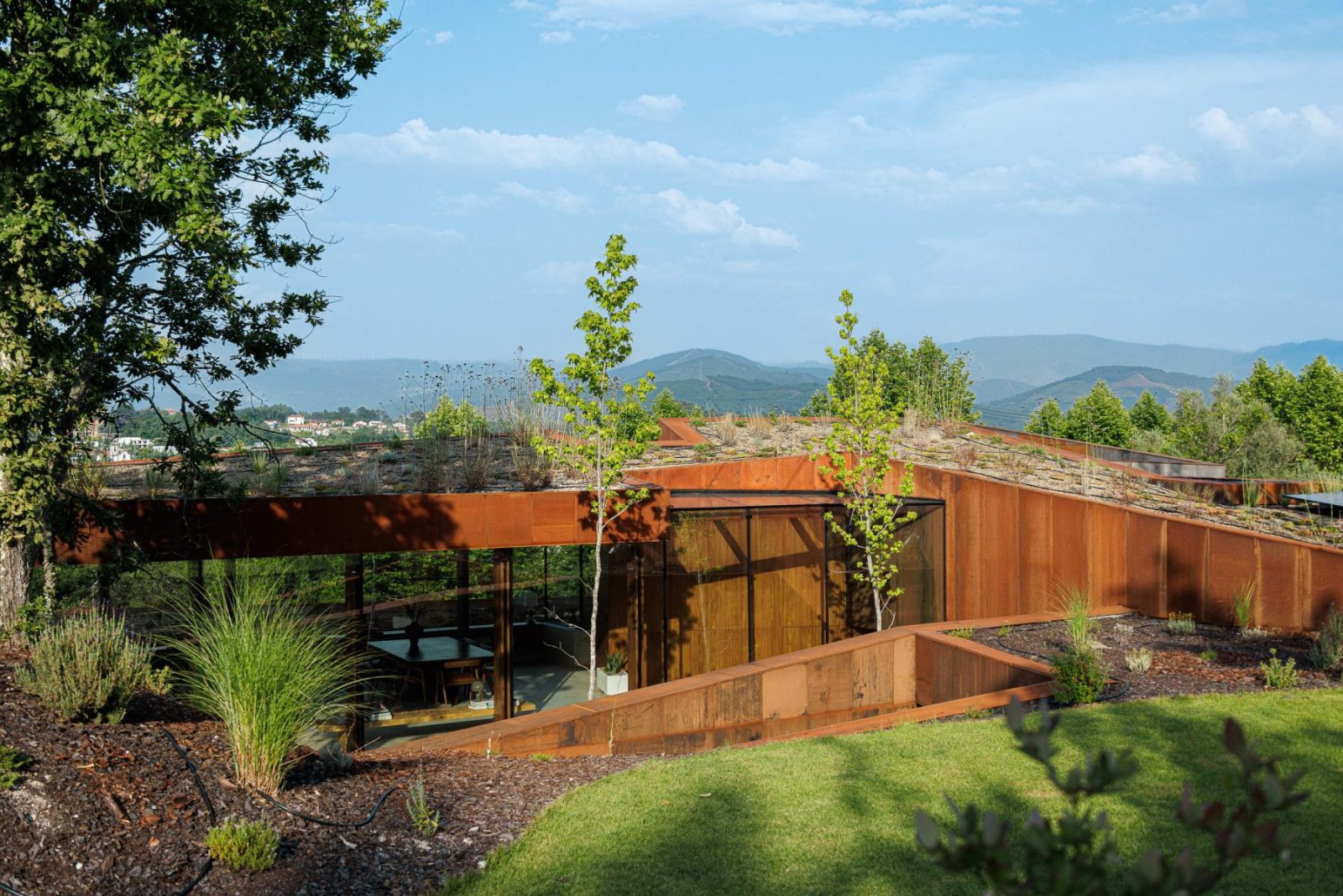
The external spaces are conceived as natural extensions of the interior program, fostering a fluid indoor–outdoor living experience. A sequence of patios, a garden populated with native and aromatic species, an accessible green roof for contemplation, an outdoor kitchen with wood-fired oven, an exterior fireplace, a heated jacuzzi, and an infinity pool embedded within a naturalistic pond compose a layered landscape environment. Together, these elements articulate a contemporary dwelling that balances social life with introspection, while maintaining an immersive and continuous dialogue with nature.
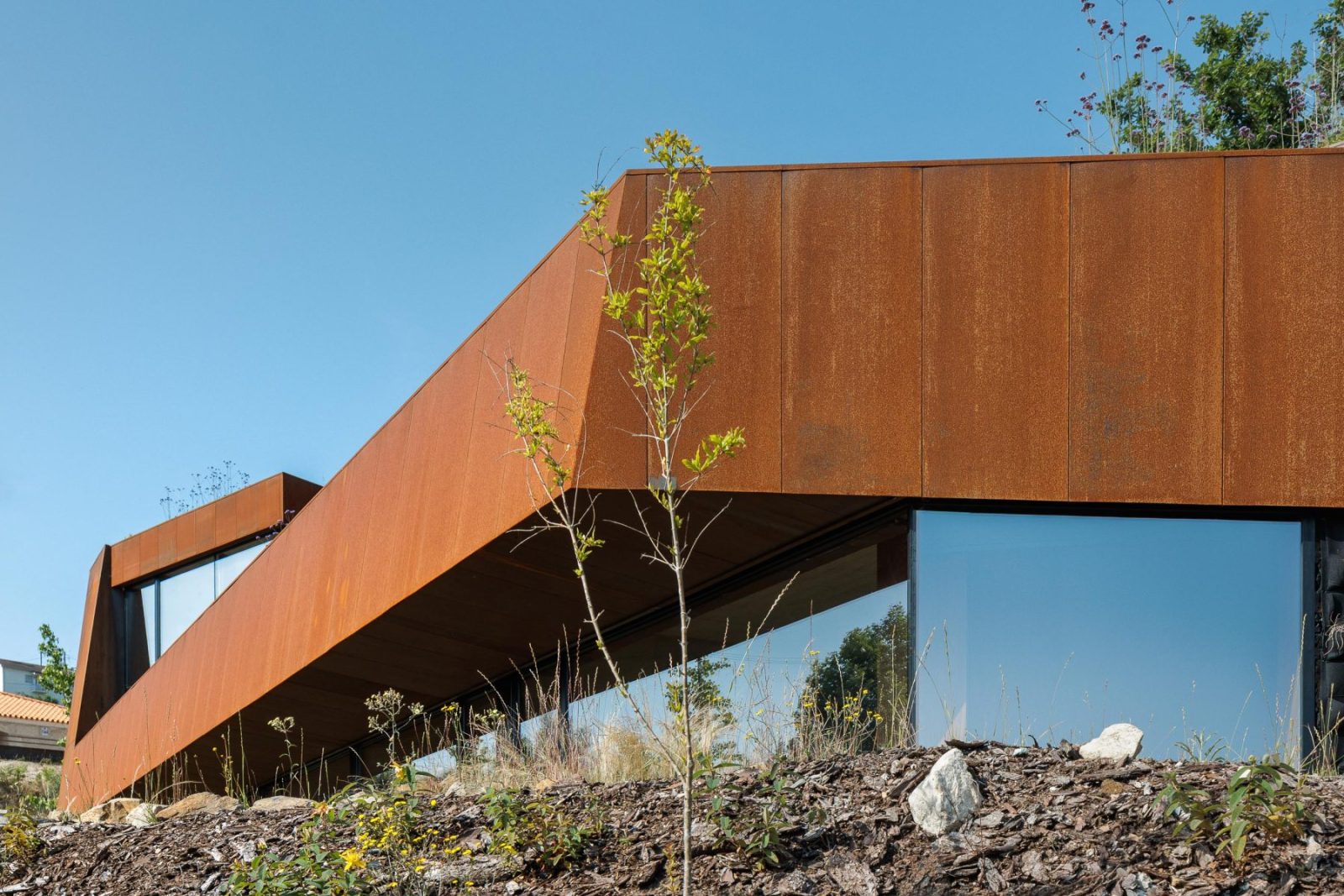
Embedded within the landscape and shaped by memory, topography, and climate, Casa Corten articulates a quiet yet powerful architectural narrative where industrial heritage, material authenticity, and environmental responsiveness converge.
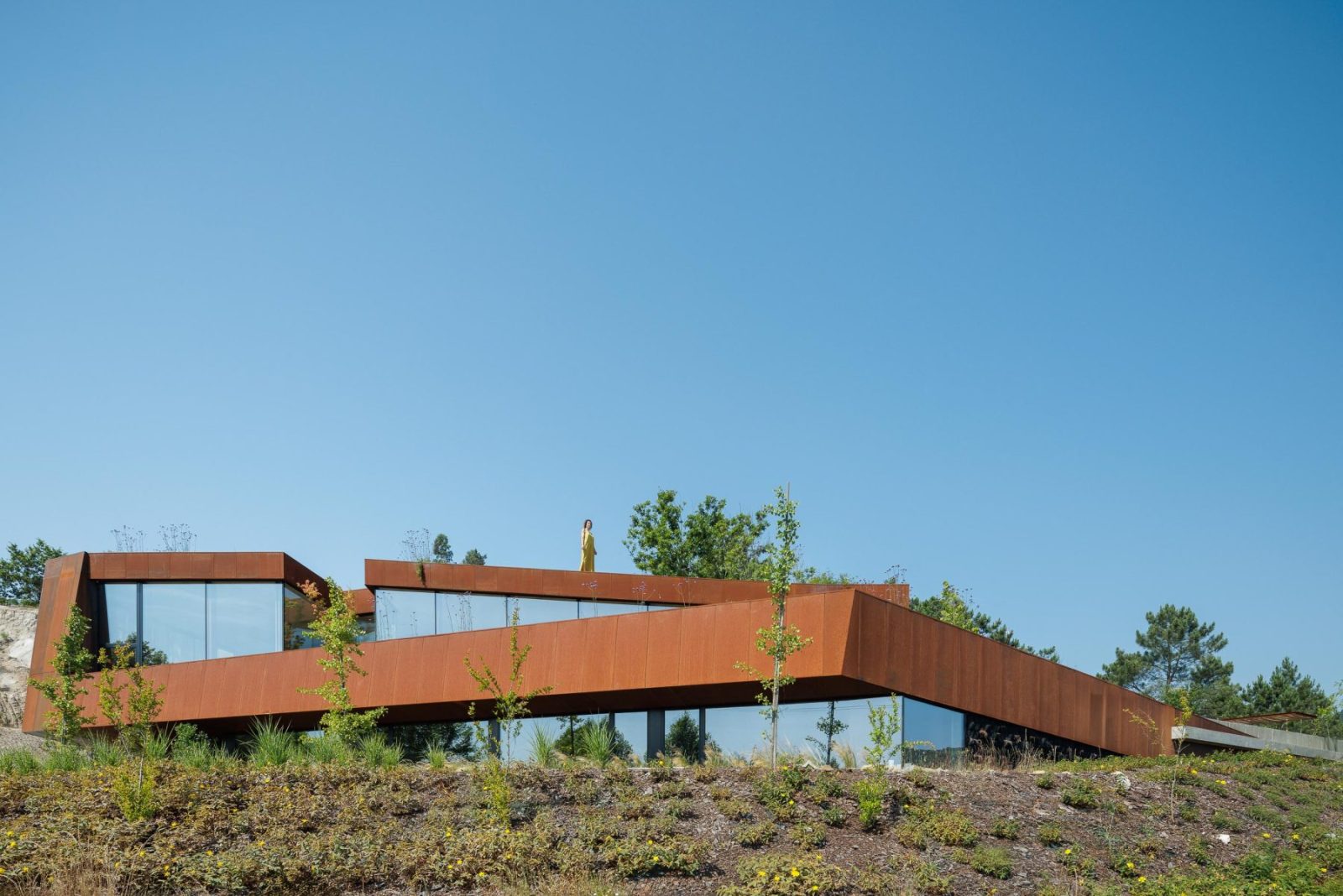
Through fragmented volumes, green roofs, and a corten-clad volume that dissolves into the terrain, the house transcends adaptation, becoming an inhabitable extension of the site itself.
Facts & Credits
Project title: Casa Corten
Architecture: HPA Arquitetura e Investimentos
Responsible Architect: Hugo Pereira
Location: Celorico de Basto
Year of completion: 2025
Area: 495,50 m2
Photographer: Ivo Tavares Studio
READ ALSO: Dream Houses: Wunderwerk Reinterprets the “Tsknetian Wall” Inviting the Forest into Domestic Life in the Hills of Tbilisi, Georgia