The New Workplace explores how contemporary offices balance flexibility, craft, and identity. From adaptive reuse to bespoke interventions, each project rethinks spatial hierarchy, materiality, and light, framing work as an experience rather than a routine. Steel, concrete, timber, and glass converge to create environments that are simultaneously resilient and human, reflecting evolving professional cultures while celebrating texture, tactility, and the quiet poetry of everyday occupation.
A former industrial building in Milan’s Bicocca district is transformed by Balance Architettura into a contemporary workspace through minimal intervention and structural preservation. Exposing the original iron framework, the project introduces flexible interiors and a translucent facade, creating a light-responsive environment bridging industrial heritage with evolving work models.
Located in Milan’s Bicocca district, Bicocca Superlab is the LEED Gold redevelopment of a 6,500-square-meter office building, originally part of the historic metallurgy Breda Siderurgica industrial complex.
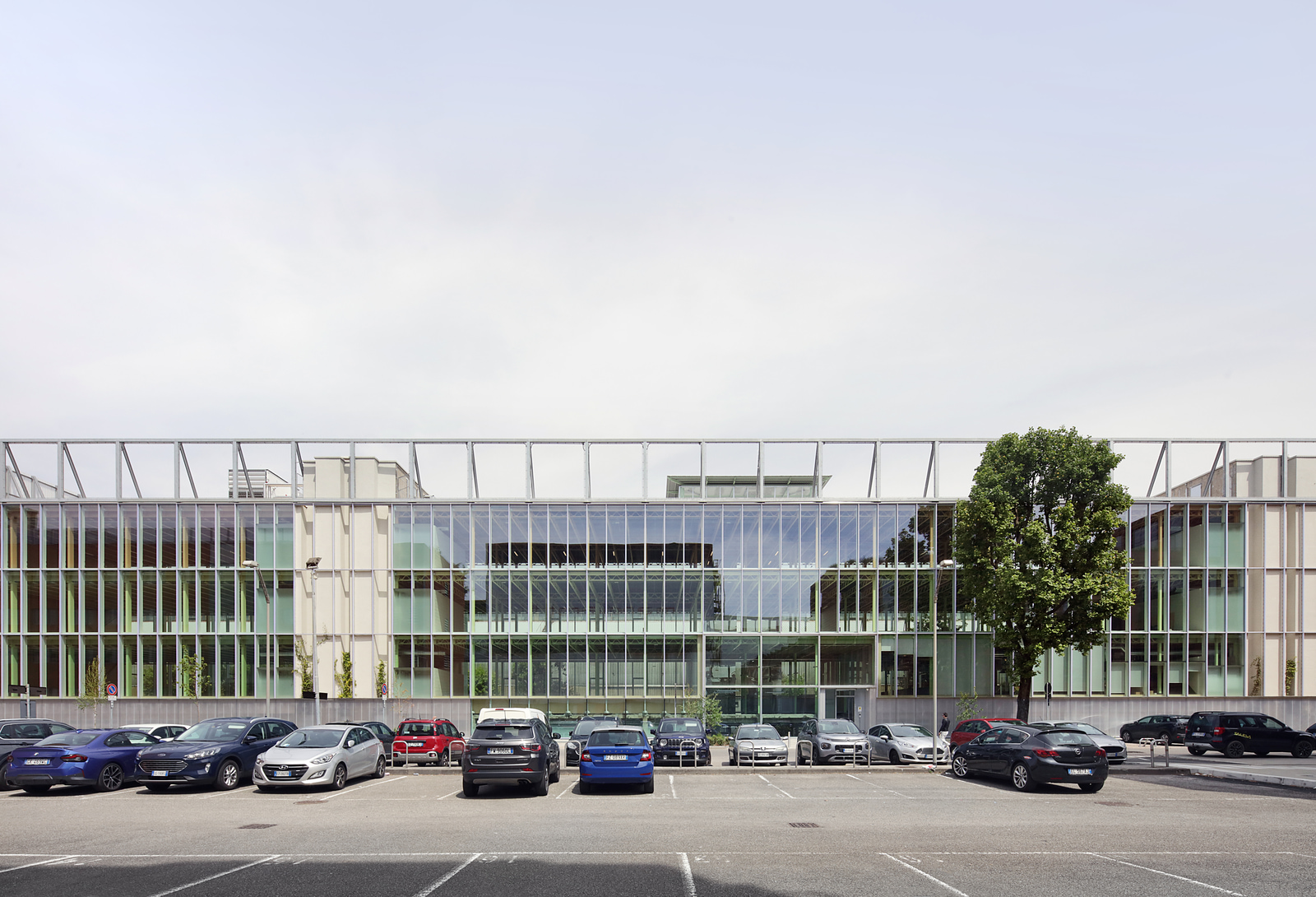
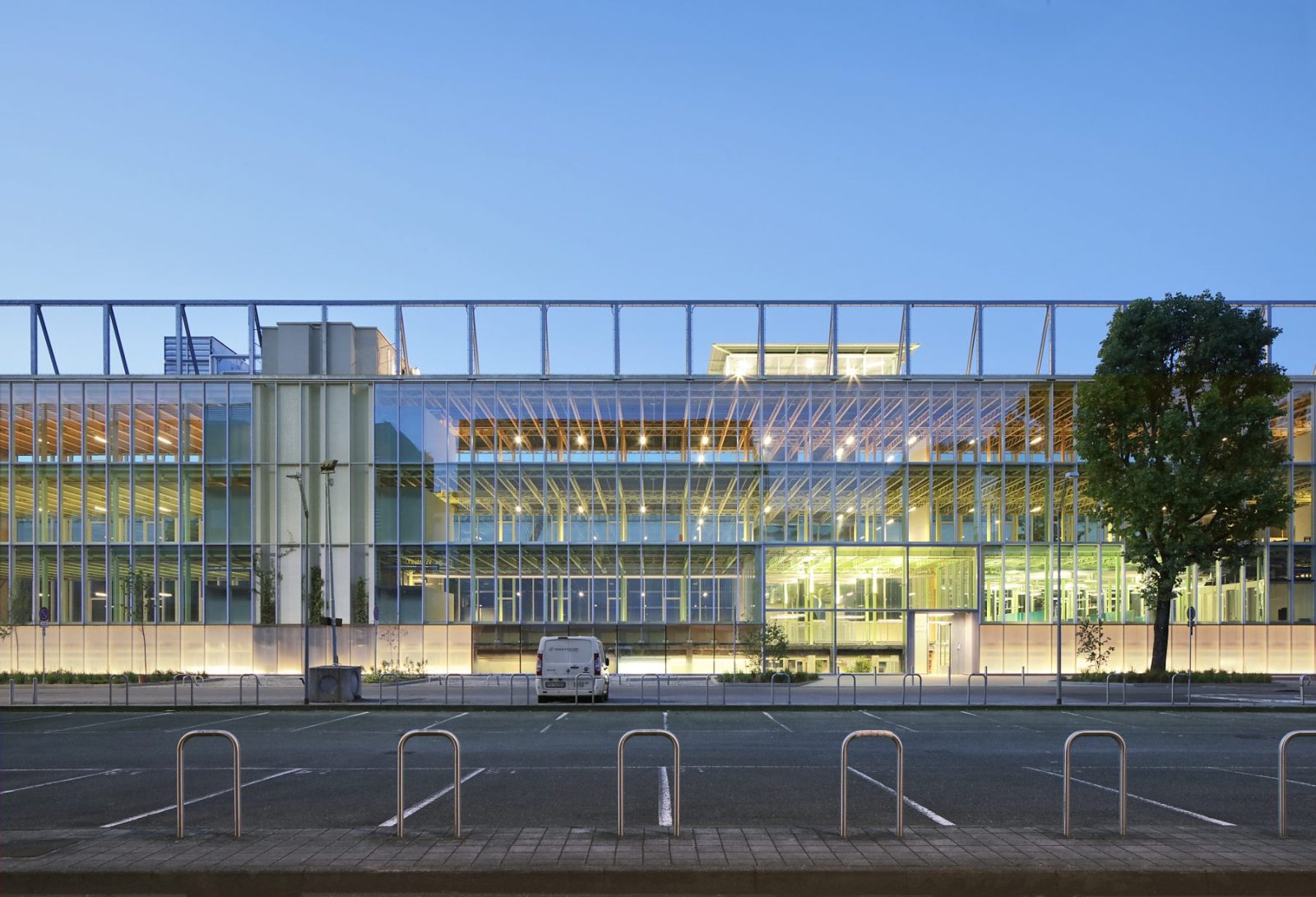
The project adopts a strategy of comprehensive renovation, preserving both the interior and exterior while maintaining the existing structure.
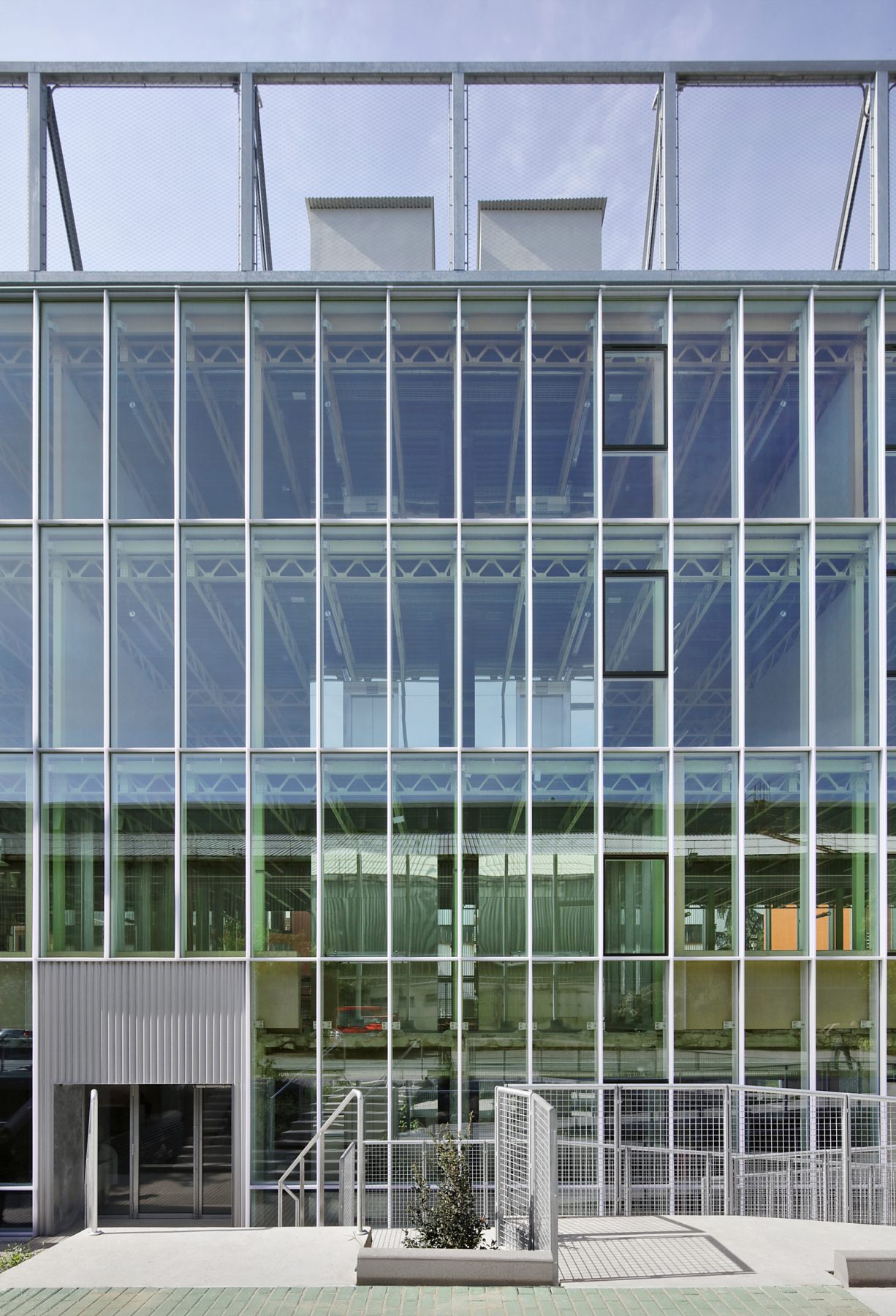
The intervention is grounded in the intention to retain the building’s industrial memory, positioning the pre-existing framework—defined by precision and structural clarity—as the primary architectural asset.
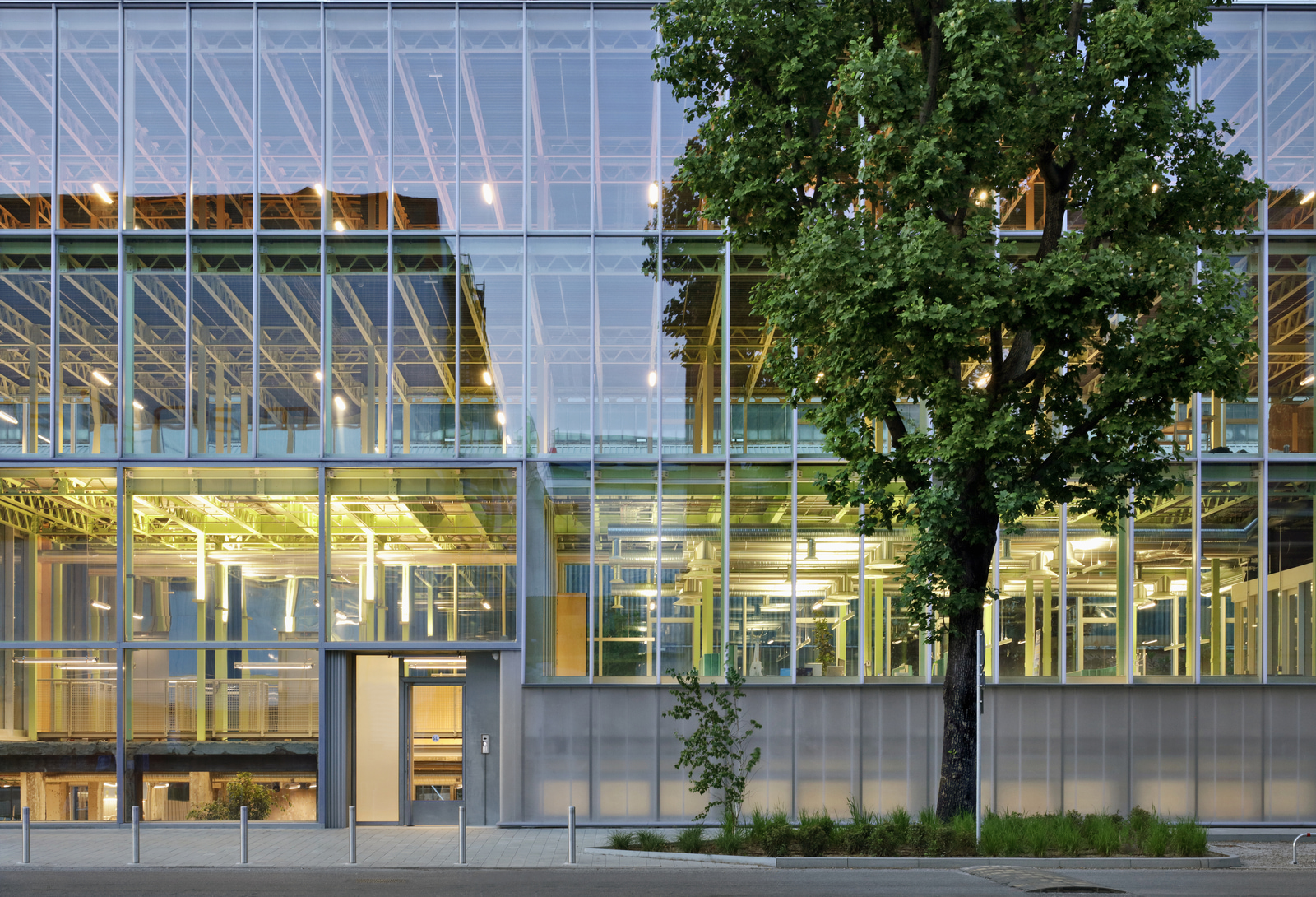
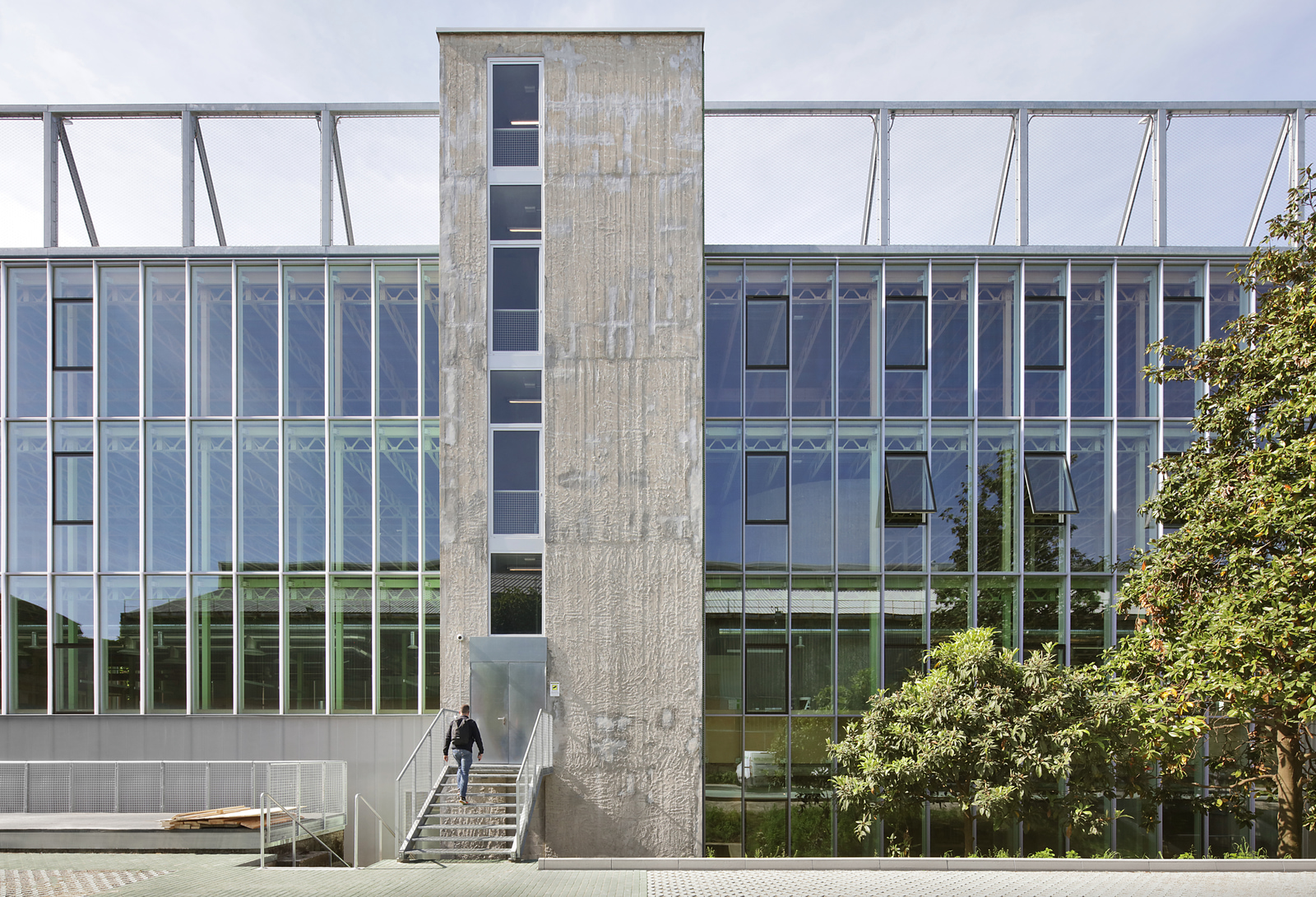
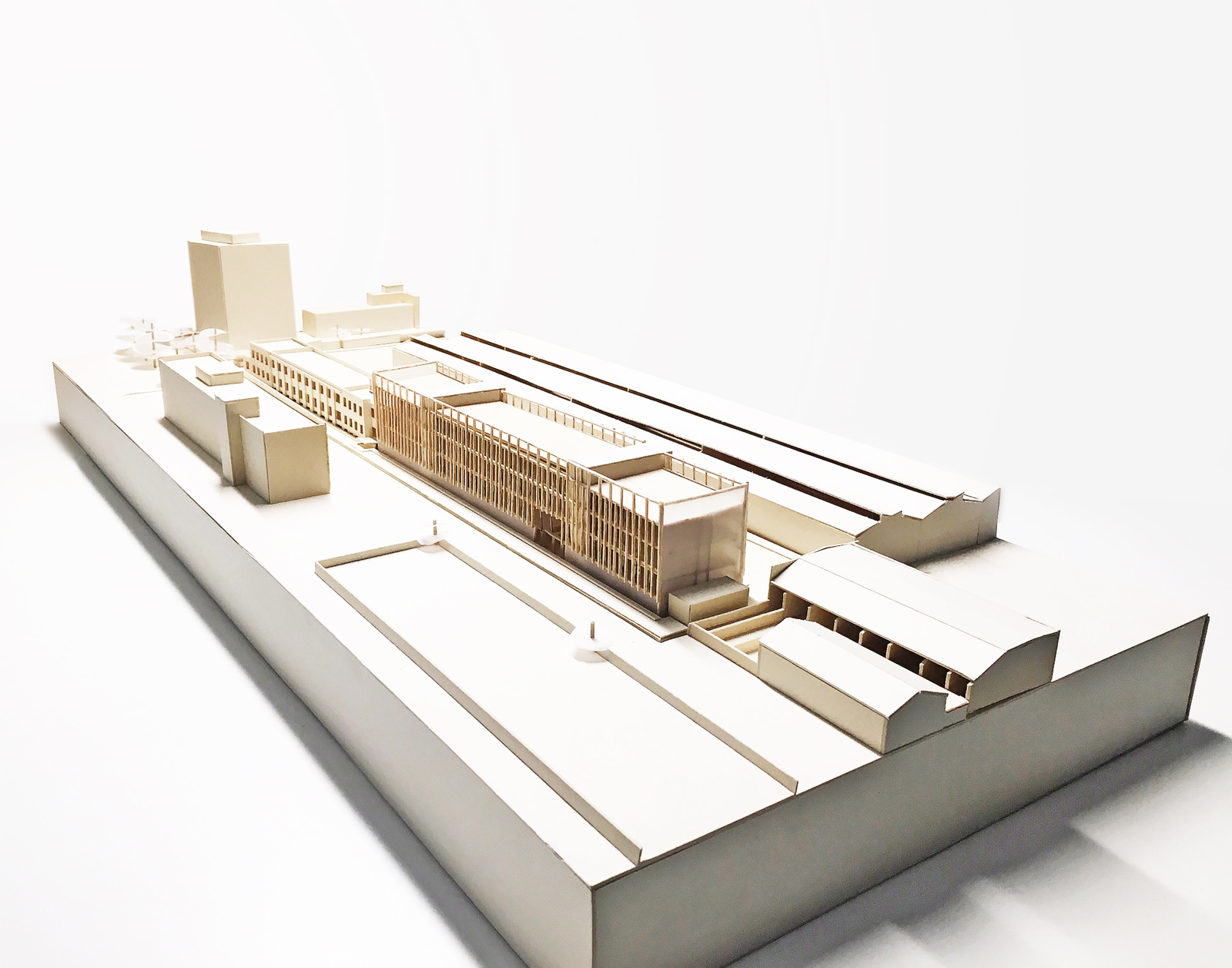
Extending approximately 100 meters in length, the building, now often described as a “horizontal skyscraper,” reflects the scale and legacy of Milan’s industrial past.
The Bicocca district, once a major manufacturing hub populated by industries such as Pirelli, Magneti Marelli, and Breda, has evolved into a key academic and innovation center, anchored by the University of Milan-Bicocca. Within this shifting urban landscape, the project establishes a dialogue between heritage and contemporary modes of work.
Architectural Project
The architectural strategy centers on the exposure and enhancement of the original structural system.
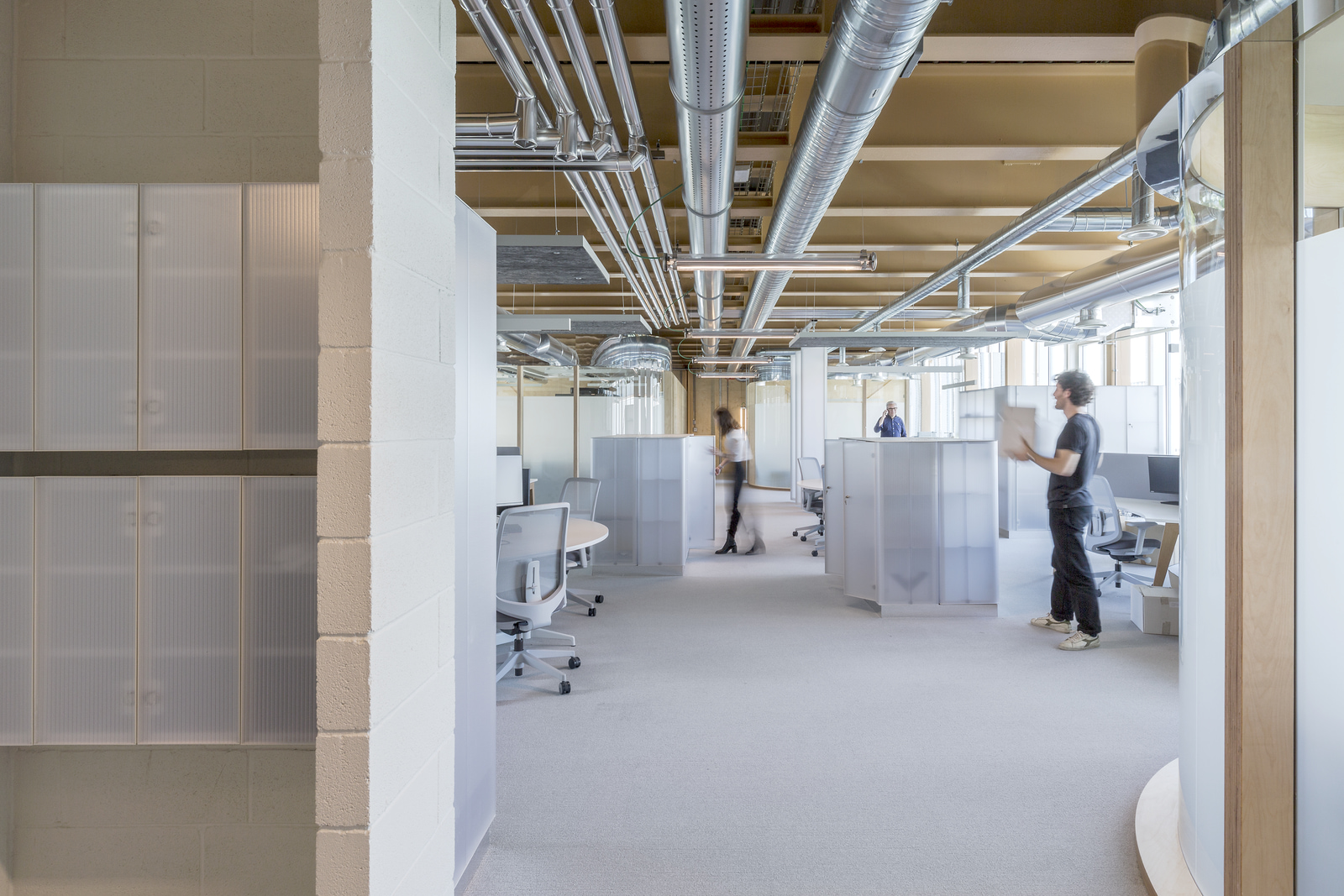
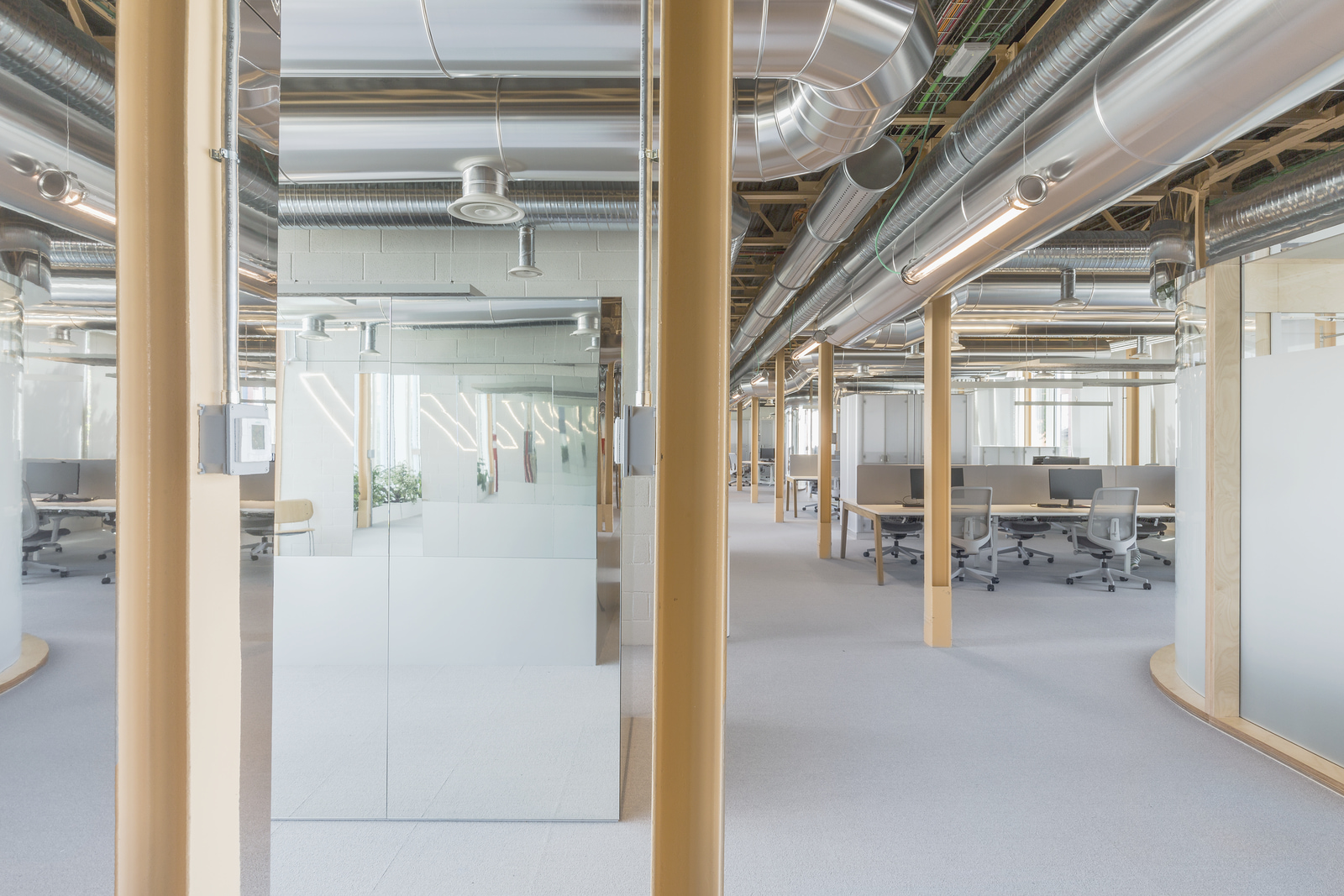
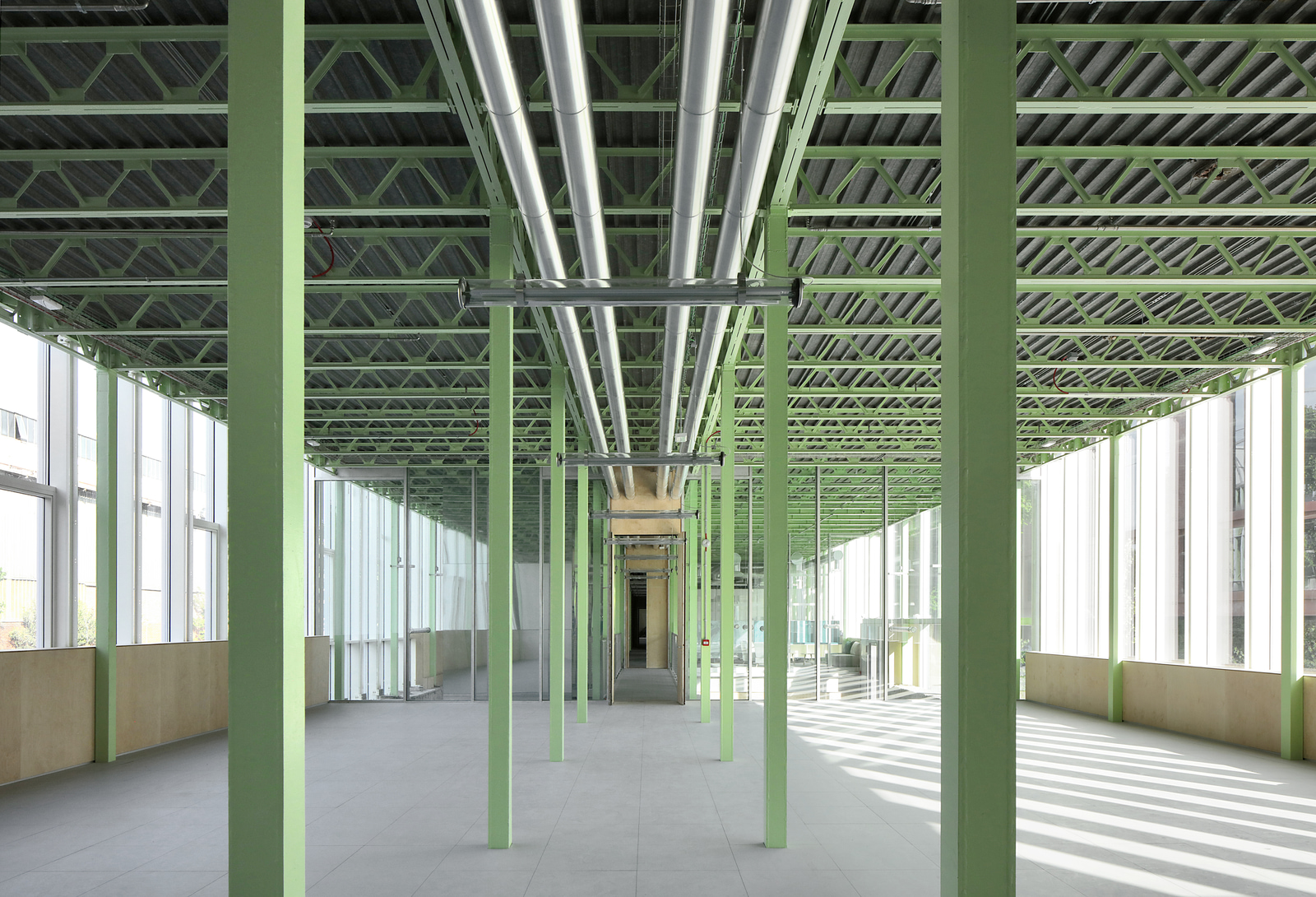
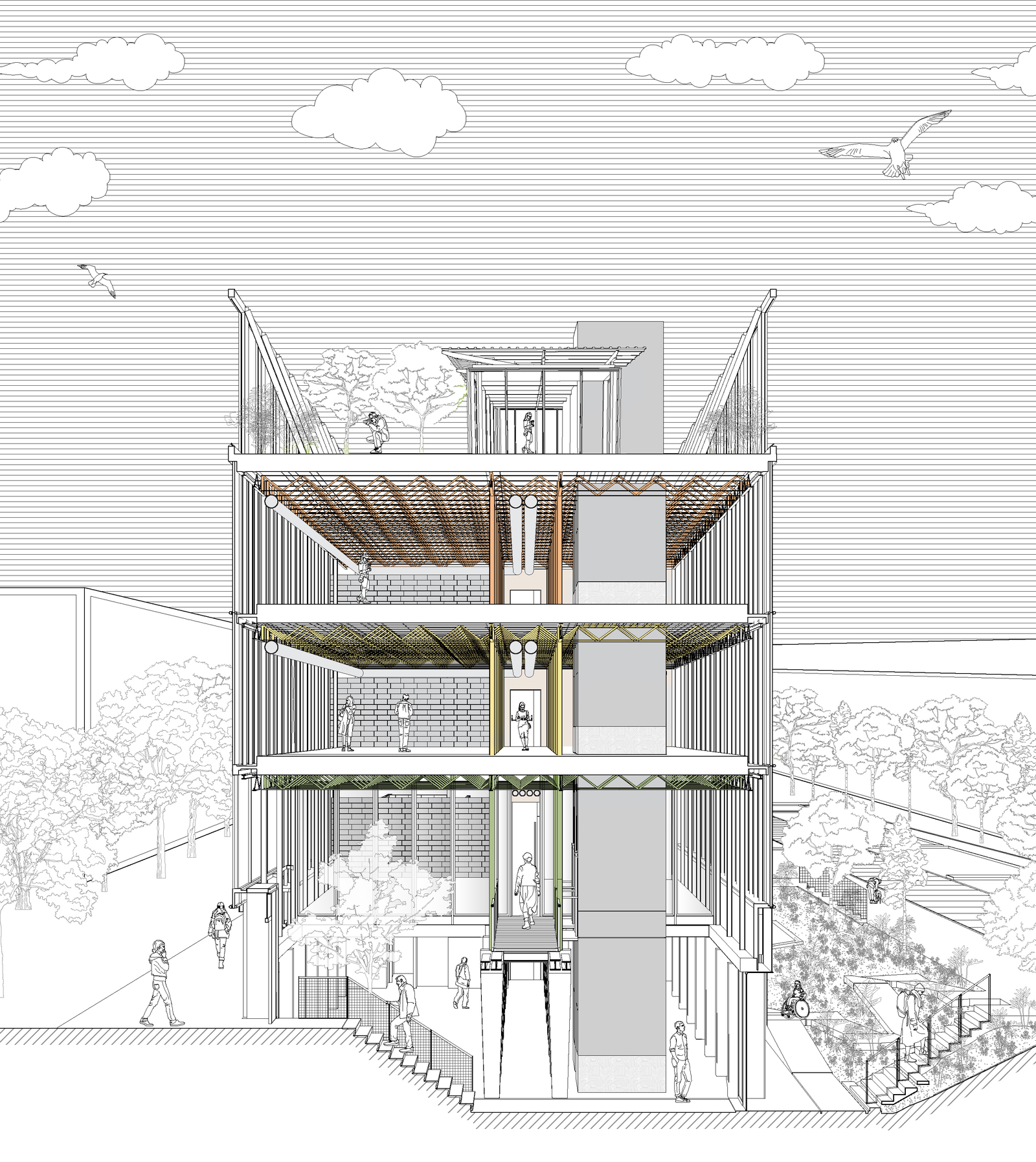
The slender iron framework is revealed through the removal of internal partitions and finishes, allowing the spatial logic of the building to emerge.
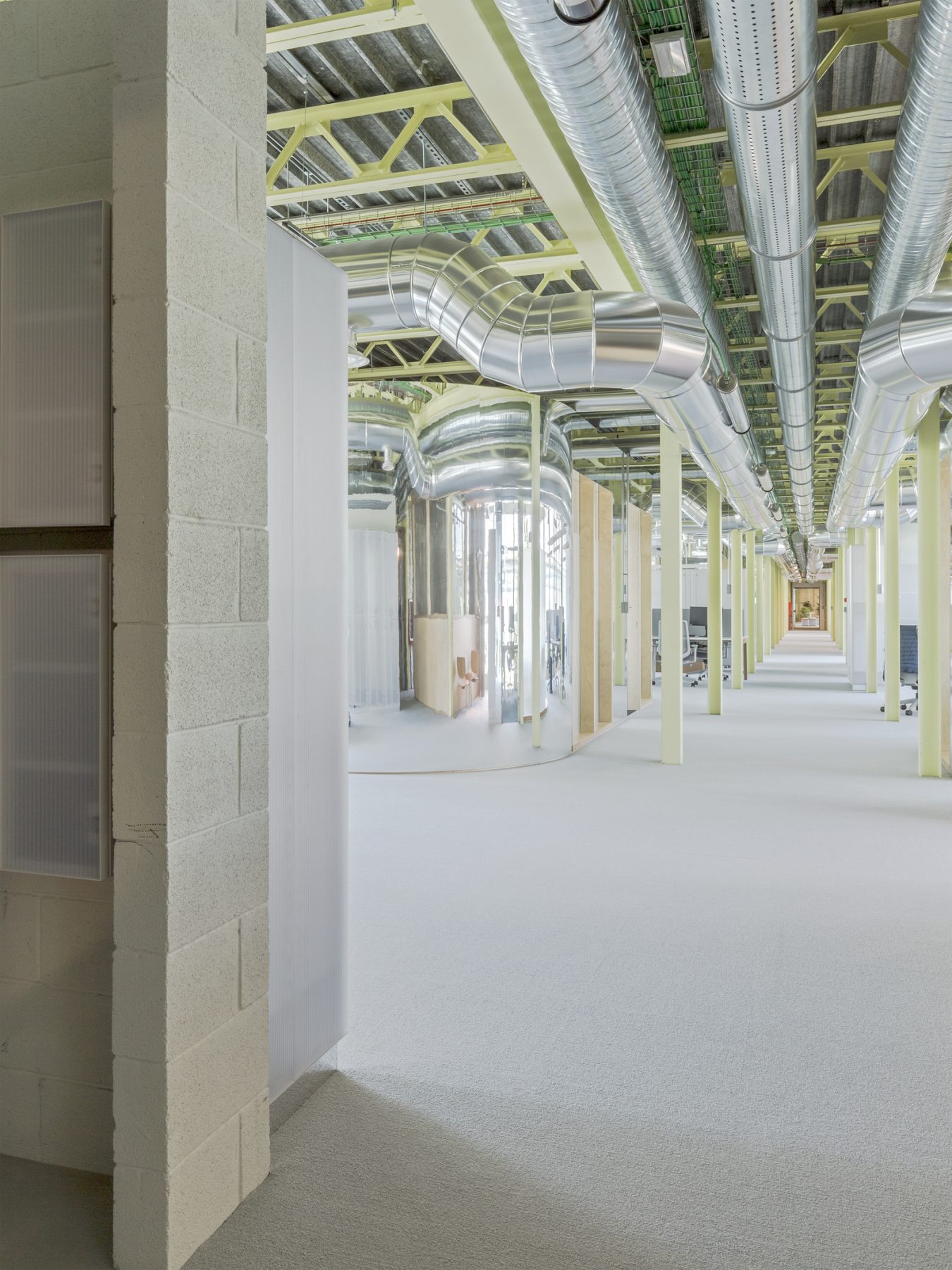
Designed in the 1950s with an efficient use of materials and a refined structural articulation, the truss system is preserved and emphasized as a defining feature.
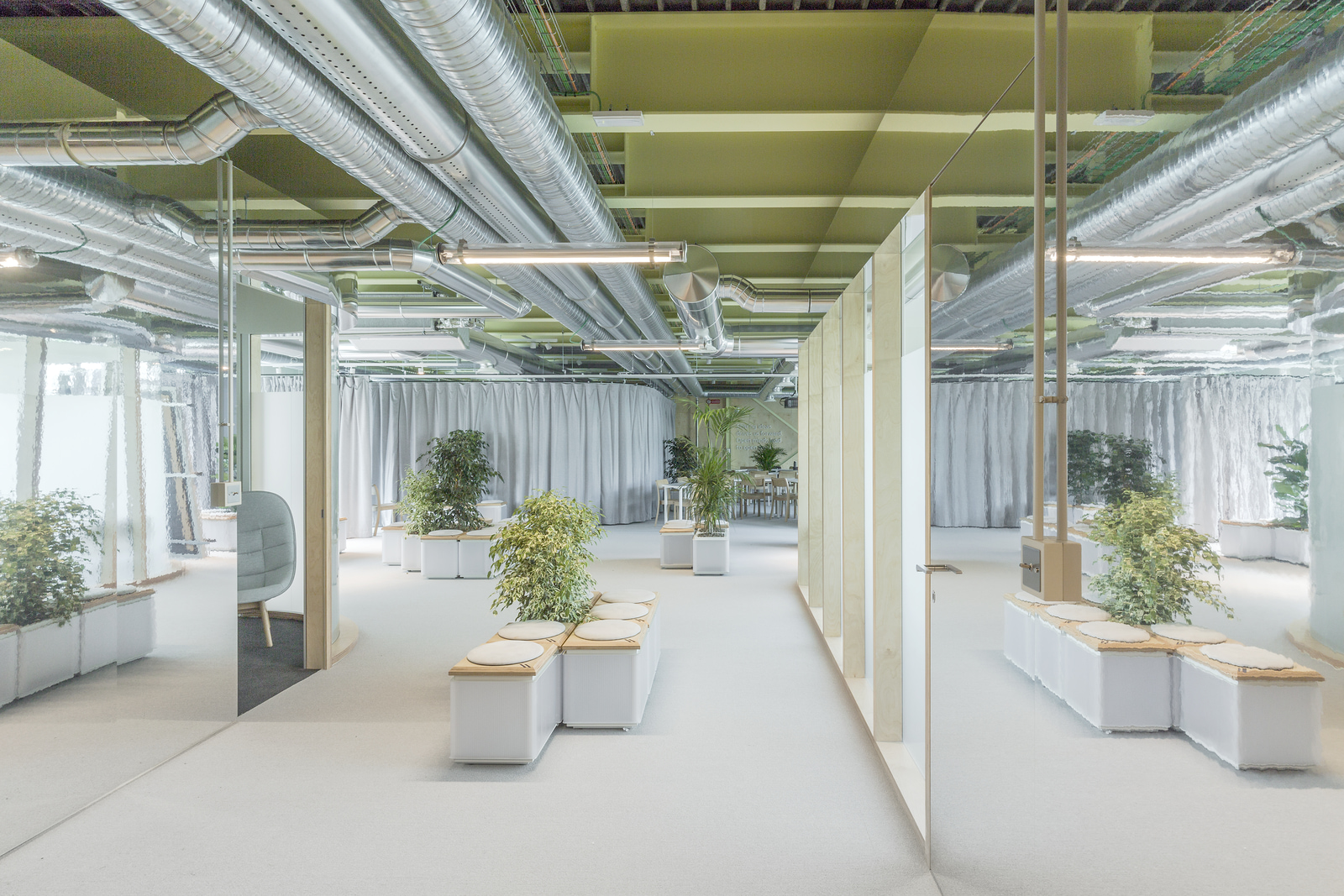
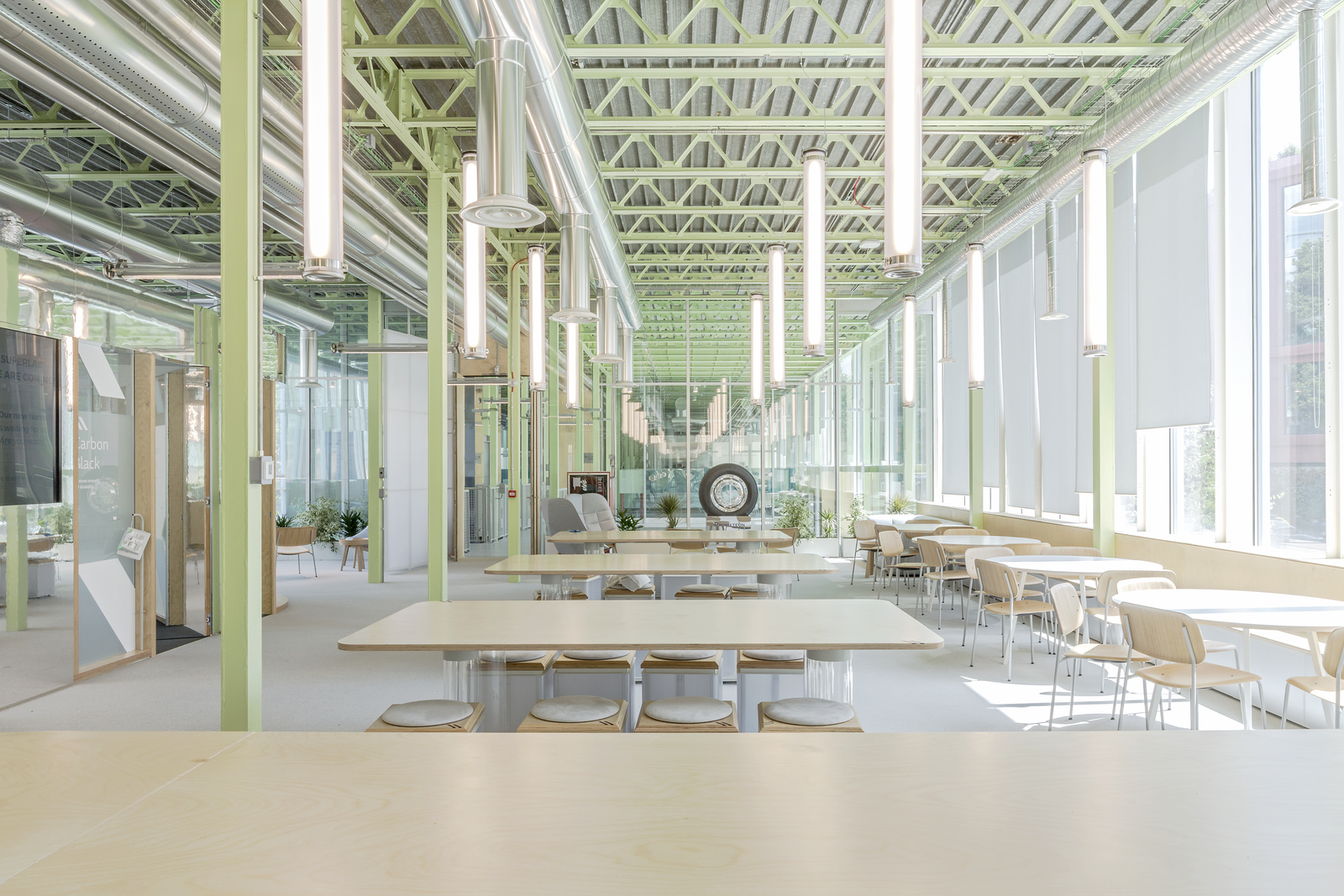
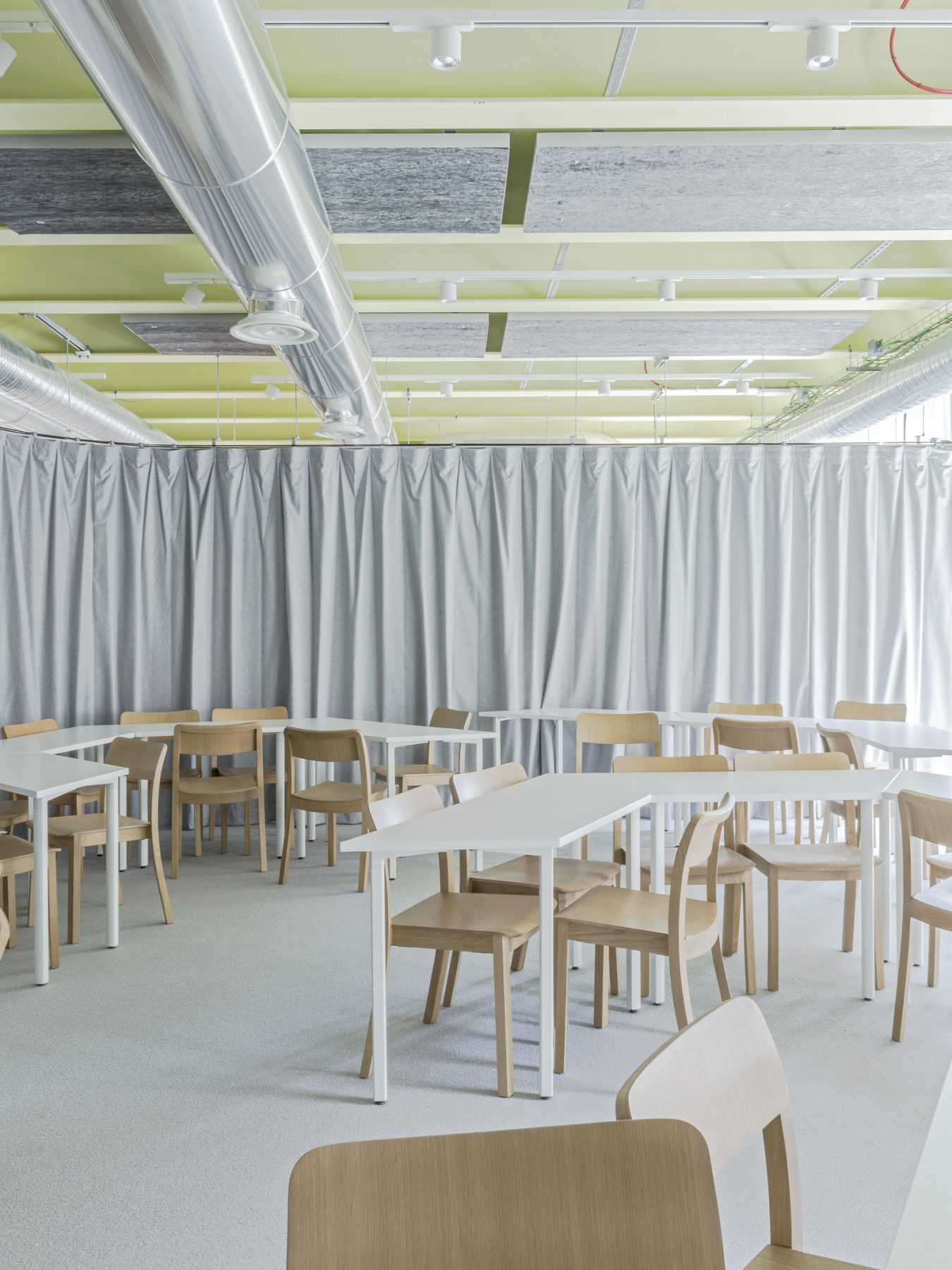
The intervention is intentionally minimal, focusing on reconfiguring circulation and program while ensuring that all new insertions remain independent from the existing structure.
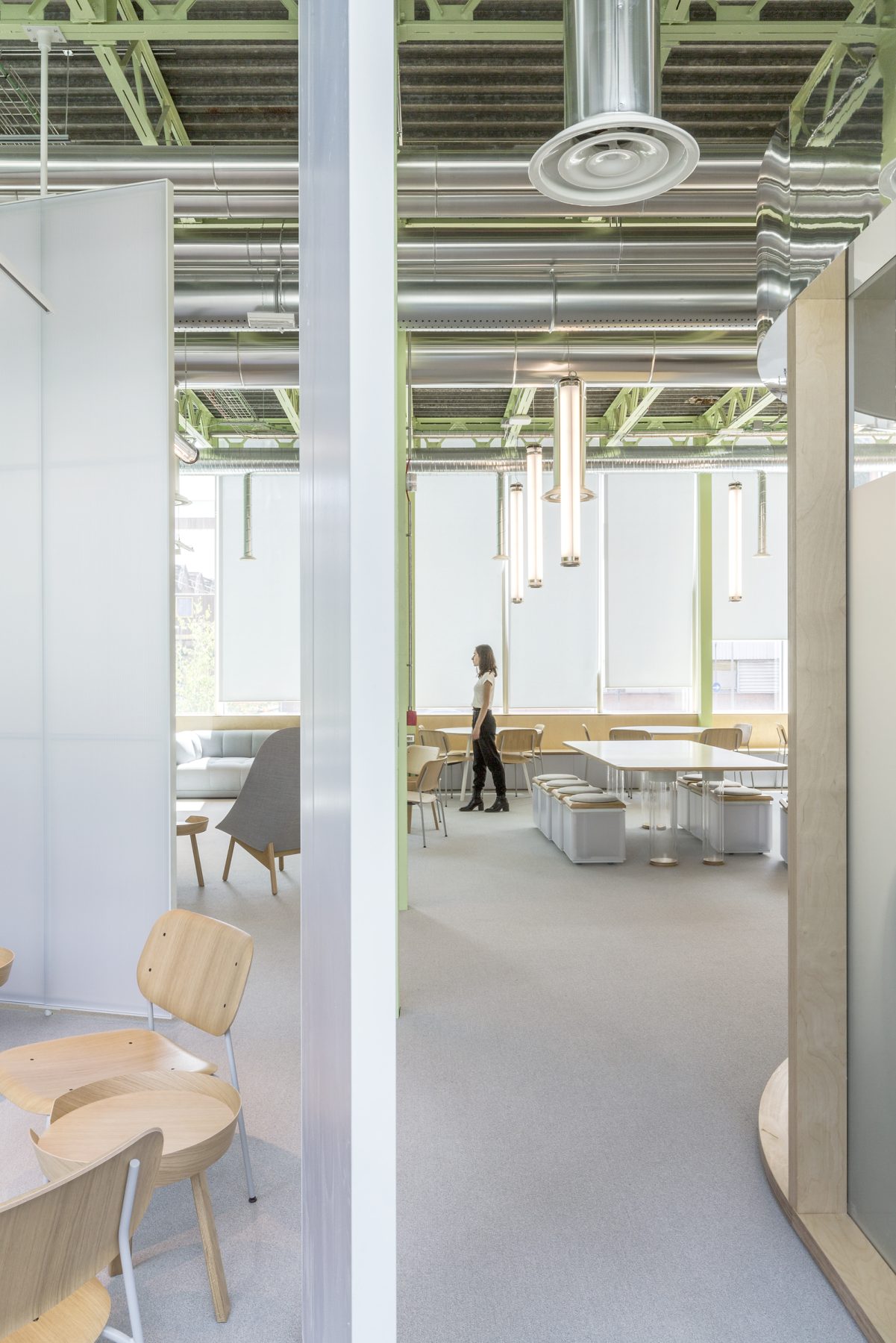
The former basement level is reinterpreted as the primary entrance floor, transformed into a sequence of double-height spaces accommodating reception, shared amenities, and public functions. Exposed concrete surfaces—retained in their raw and imperfect state—convey an aesthetic of the unfinished, reinforcing a conceptual approach that values authenticity and process.
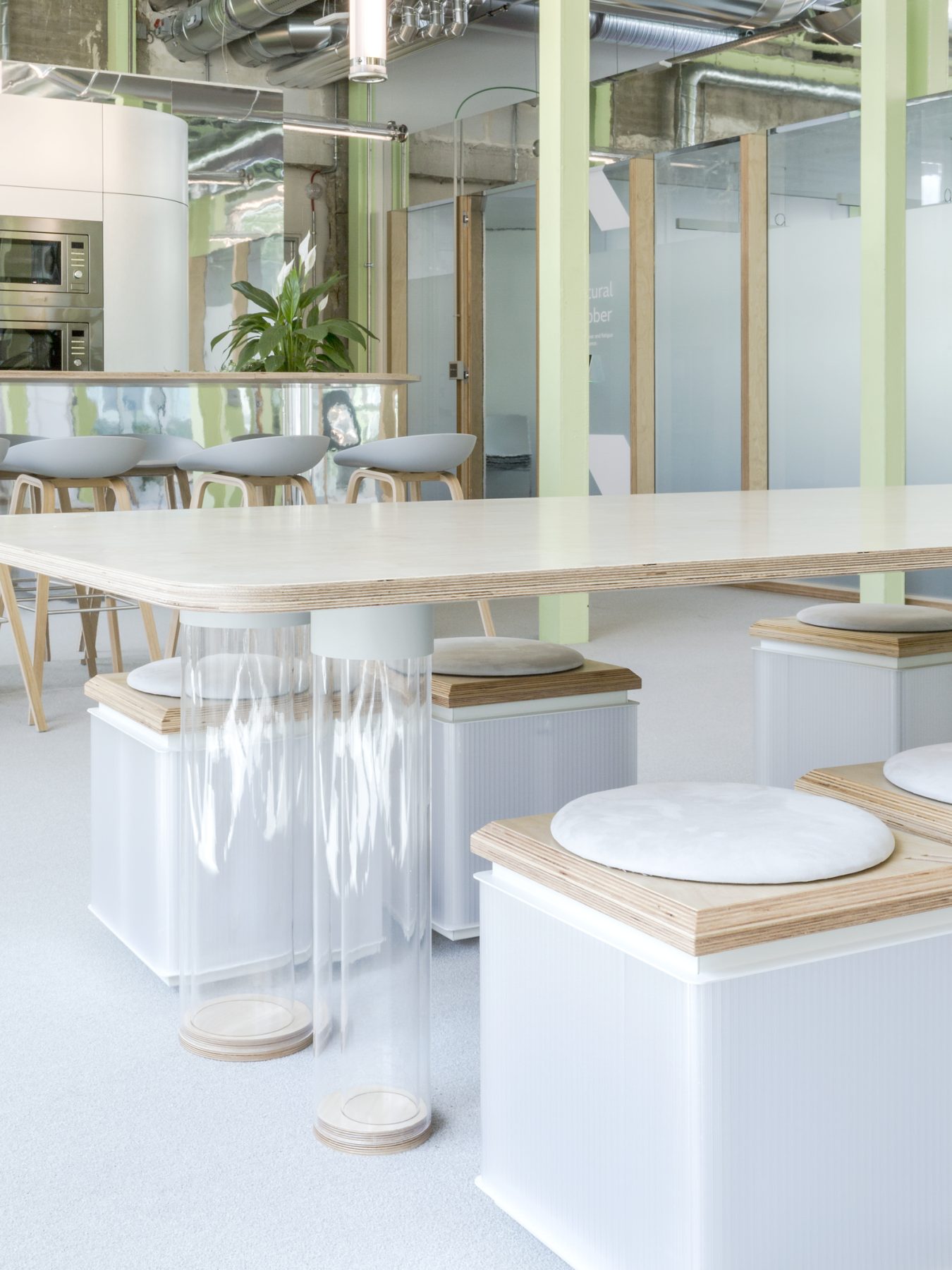
The redevelopment extends to the internal courtyard, where new green areas, landscape interventions, and improved pedestrian and cycle connections enhance permeability.
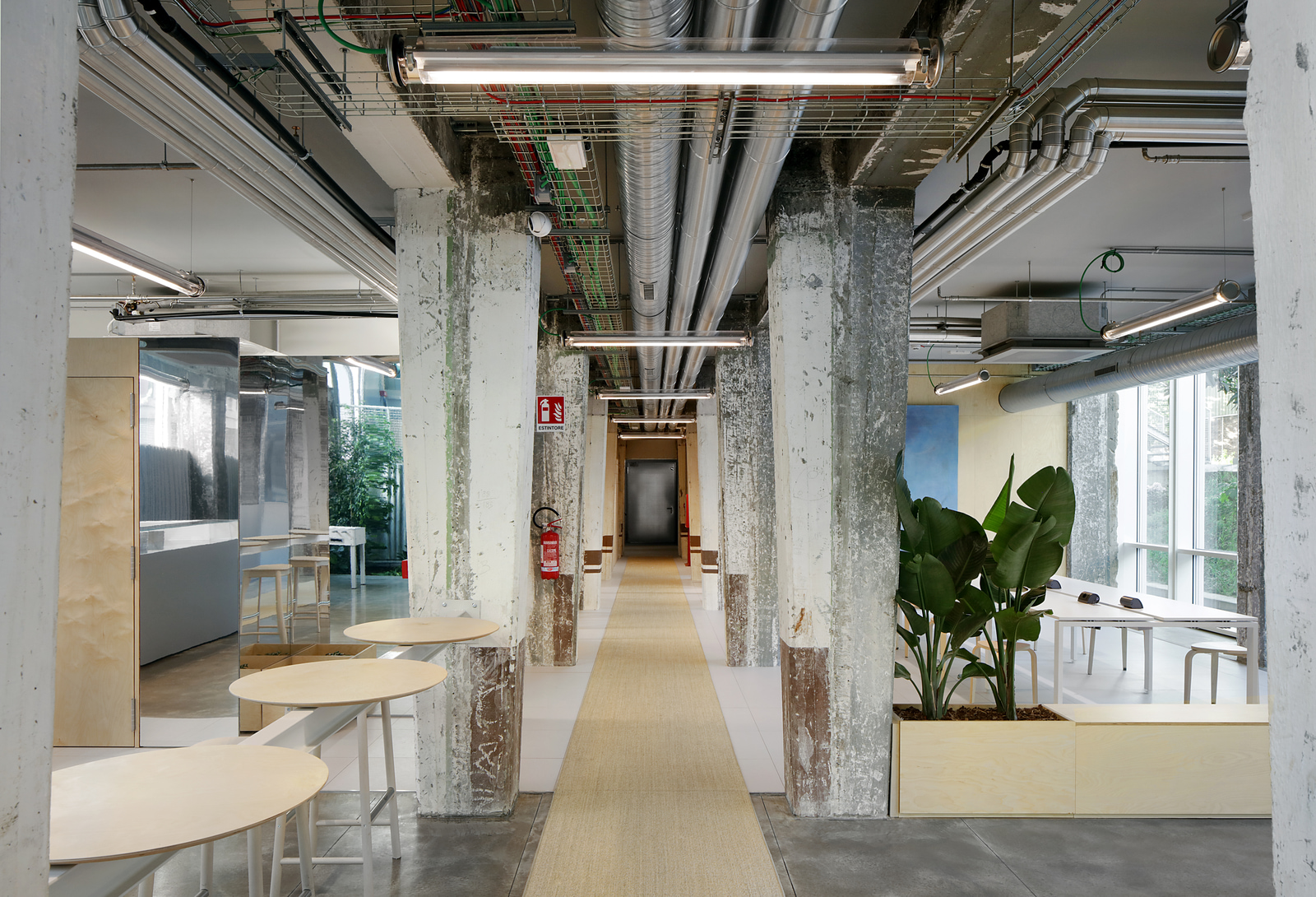
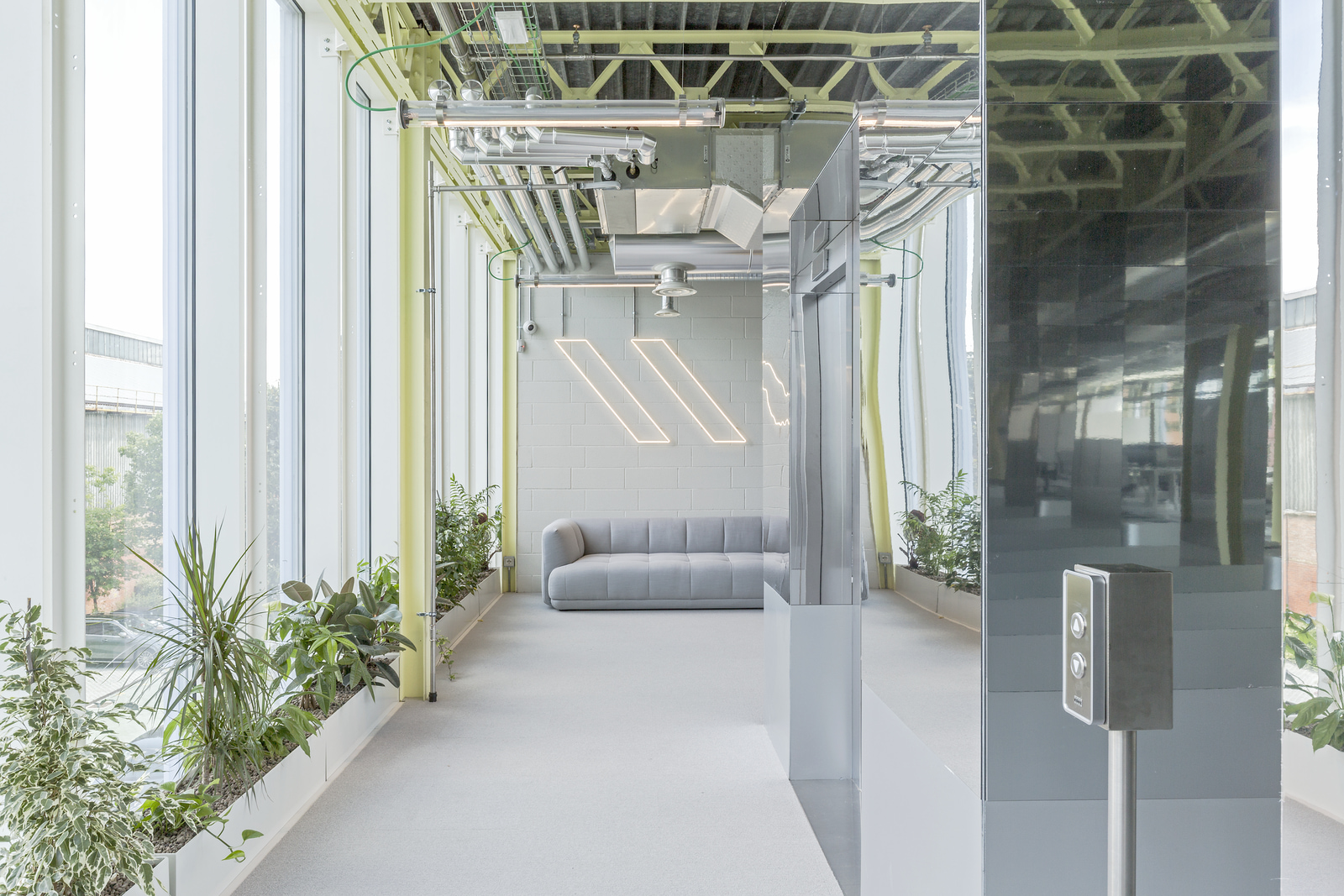
At the core of the spatial experience, the entrance hall integrates vegetation, circulation elements, and communal functions, including a publicly accessible coffee shop that reinforces the building’s openness to the city.
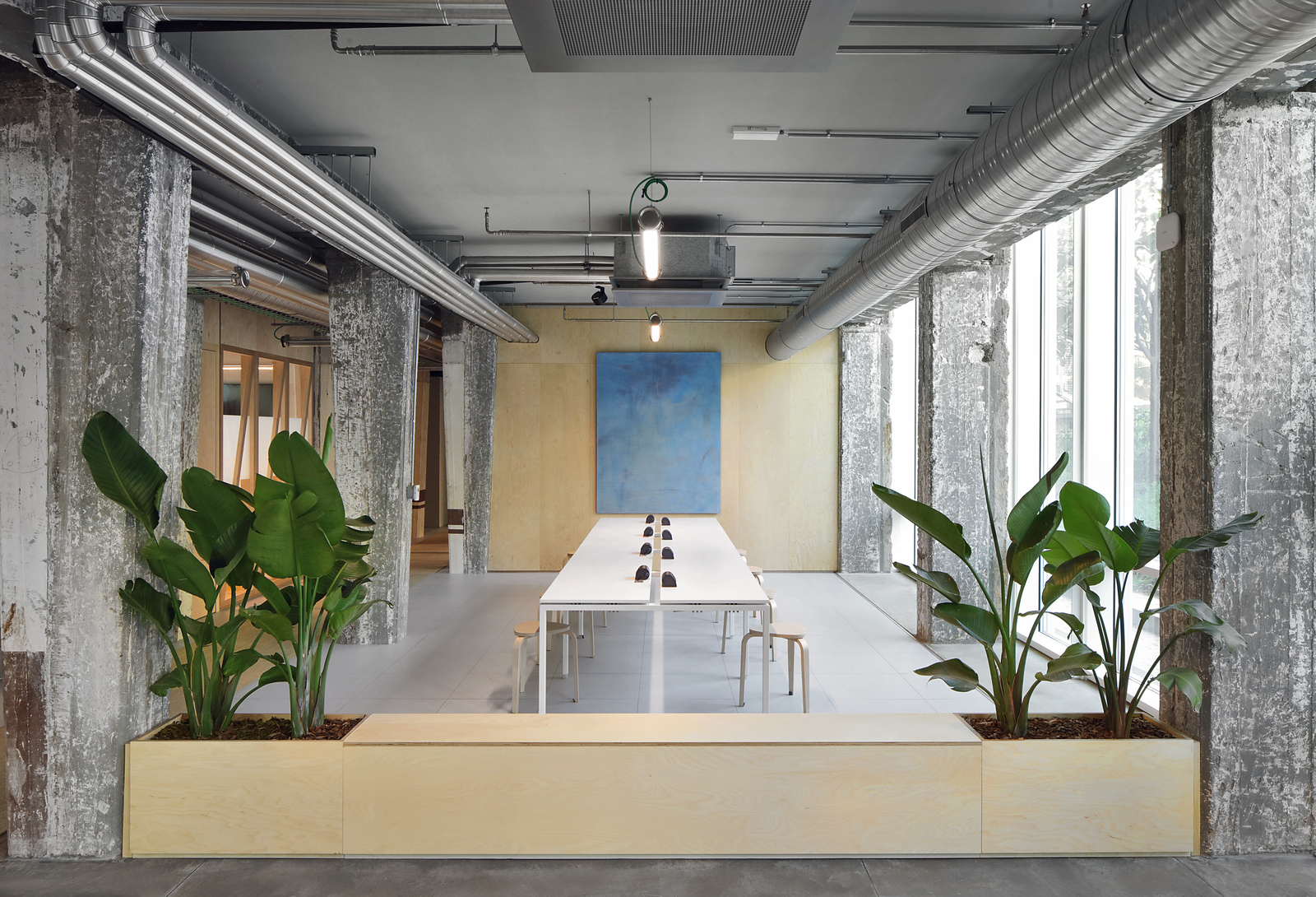
The facade composition emerges as a key architectural gesture, mediating between interior and exterior while defining the project’s contemporary identity.
Materials
Material exploration is central to the project’s architectural expression.
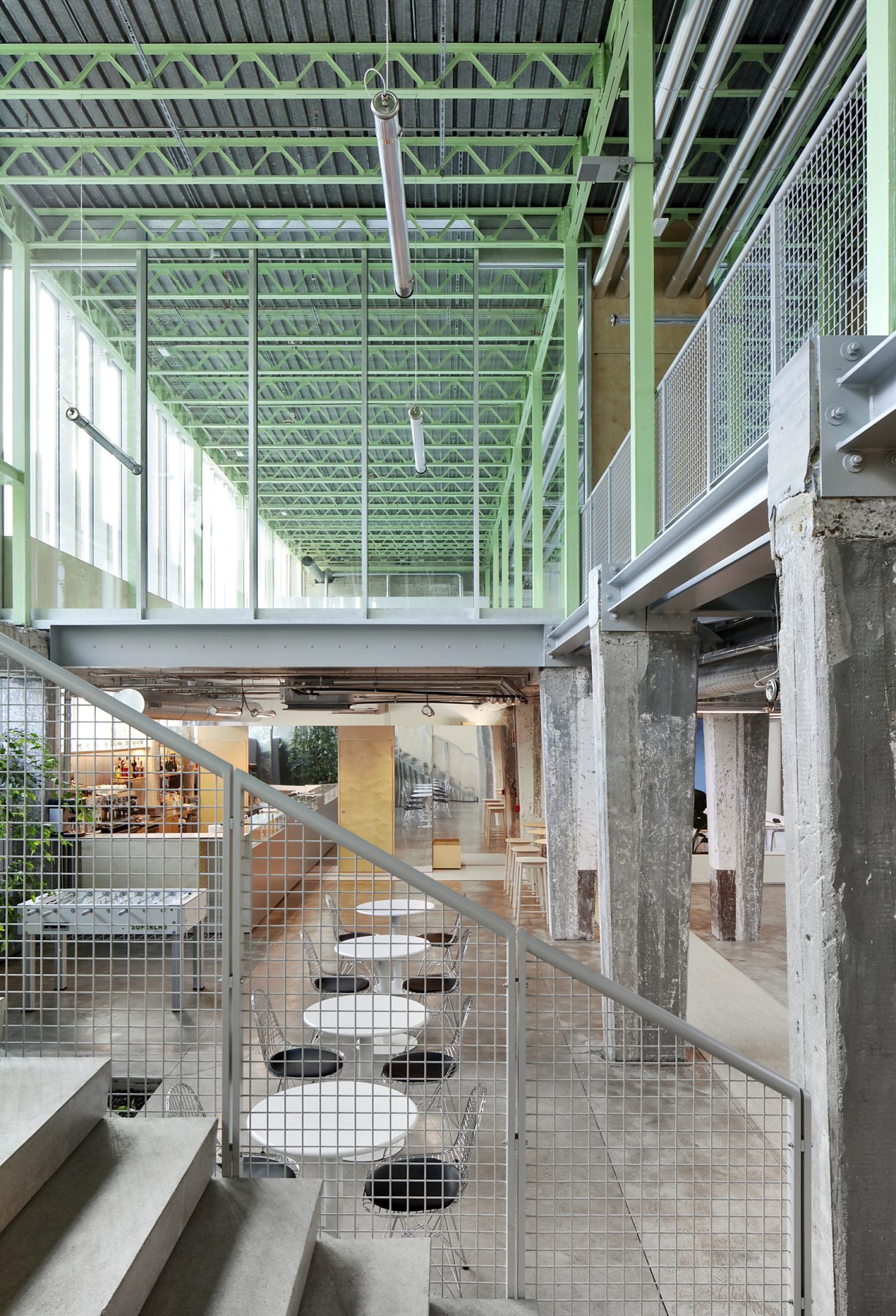
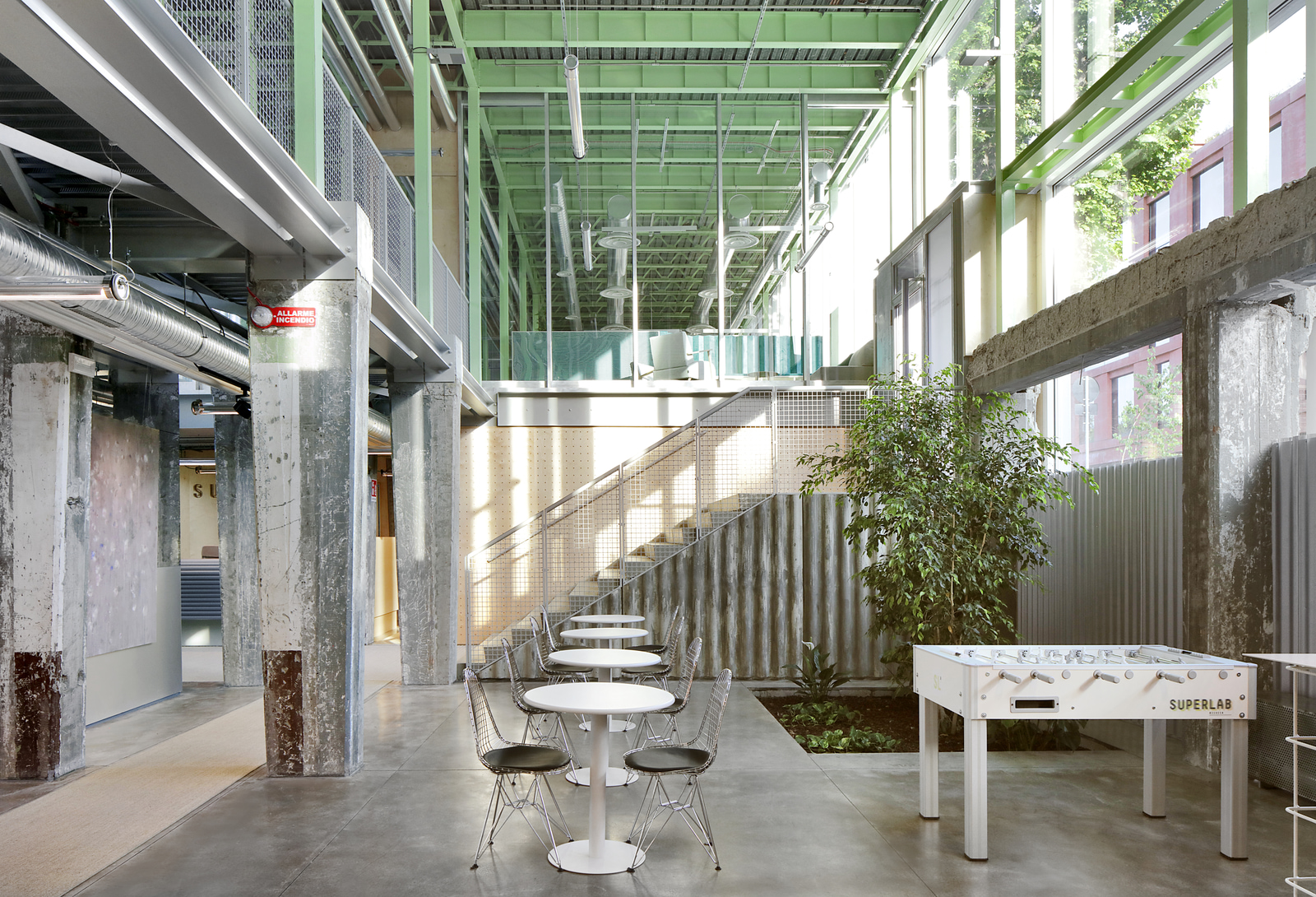
The facade is conceived as a lightweight curtain wall composed of transparent, recyclable silicone rubber elements, introducing an innovative approach to envelope design. This material choice enables a dynamic interaction with light, allowing the building to shift in appearance throughout the day and into the night.
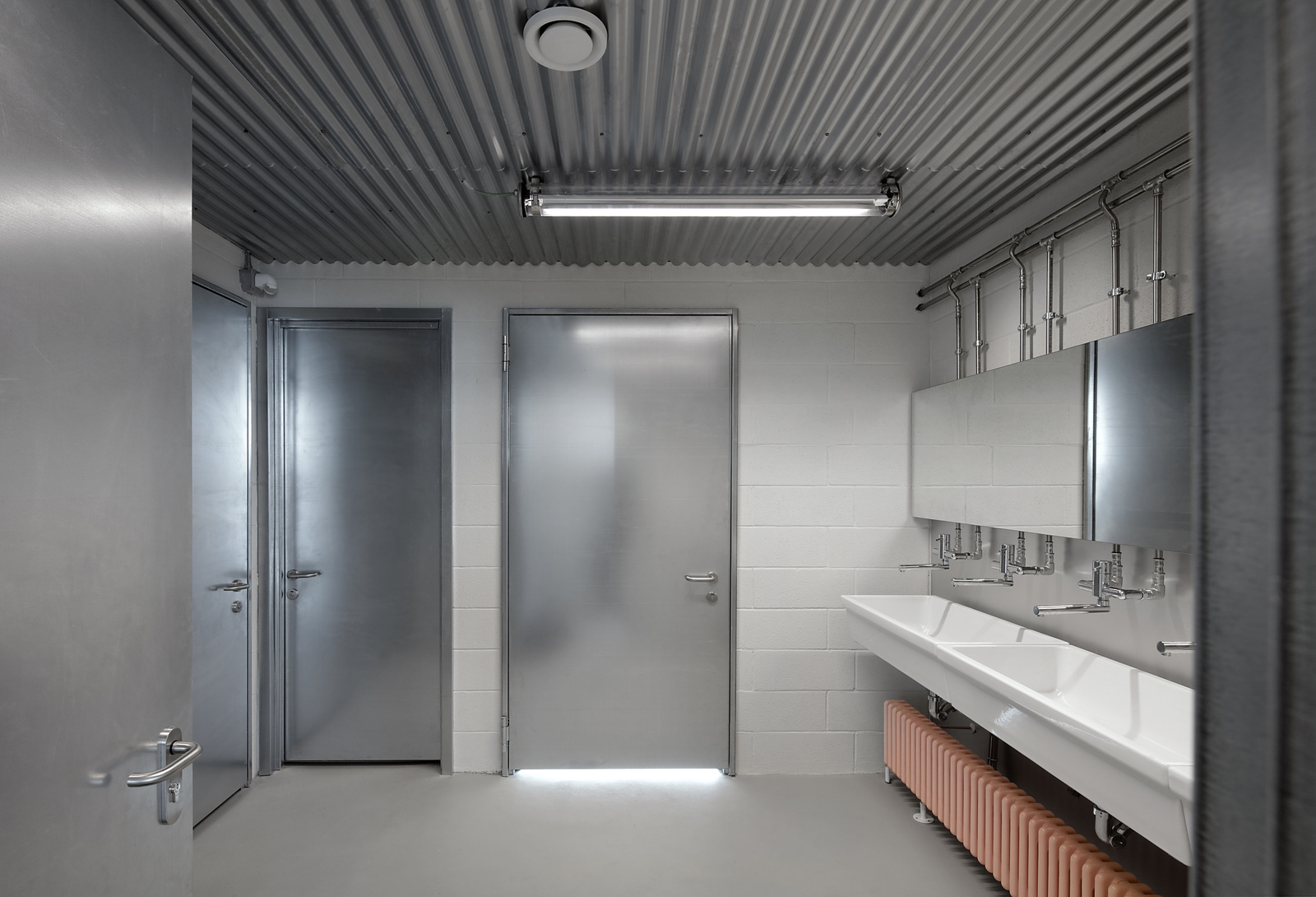
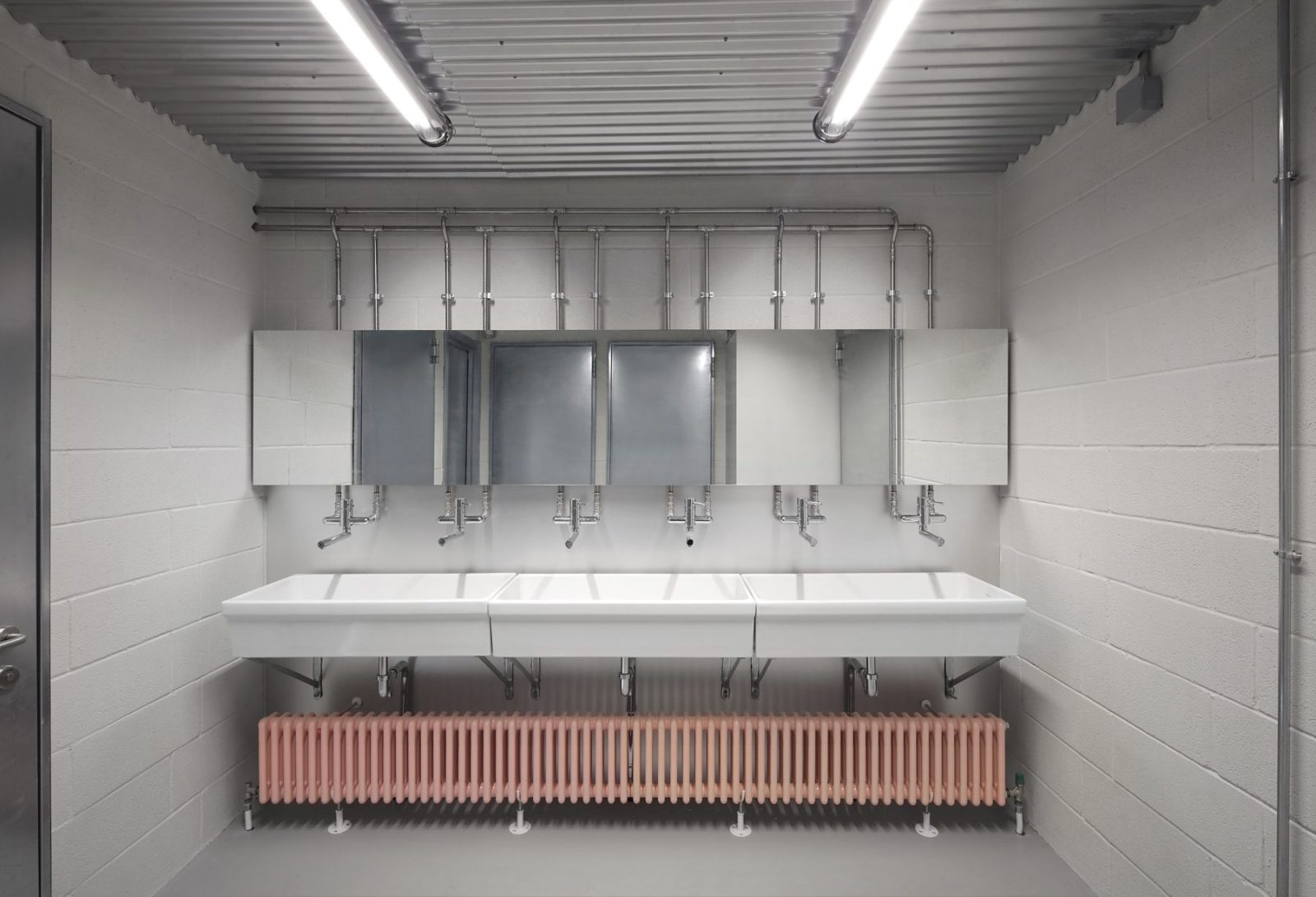
Internally, the exposed structural system is complemented by subtle chromatic interventions, with each level defined by a distinct tonal identity.
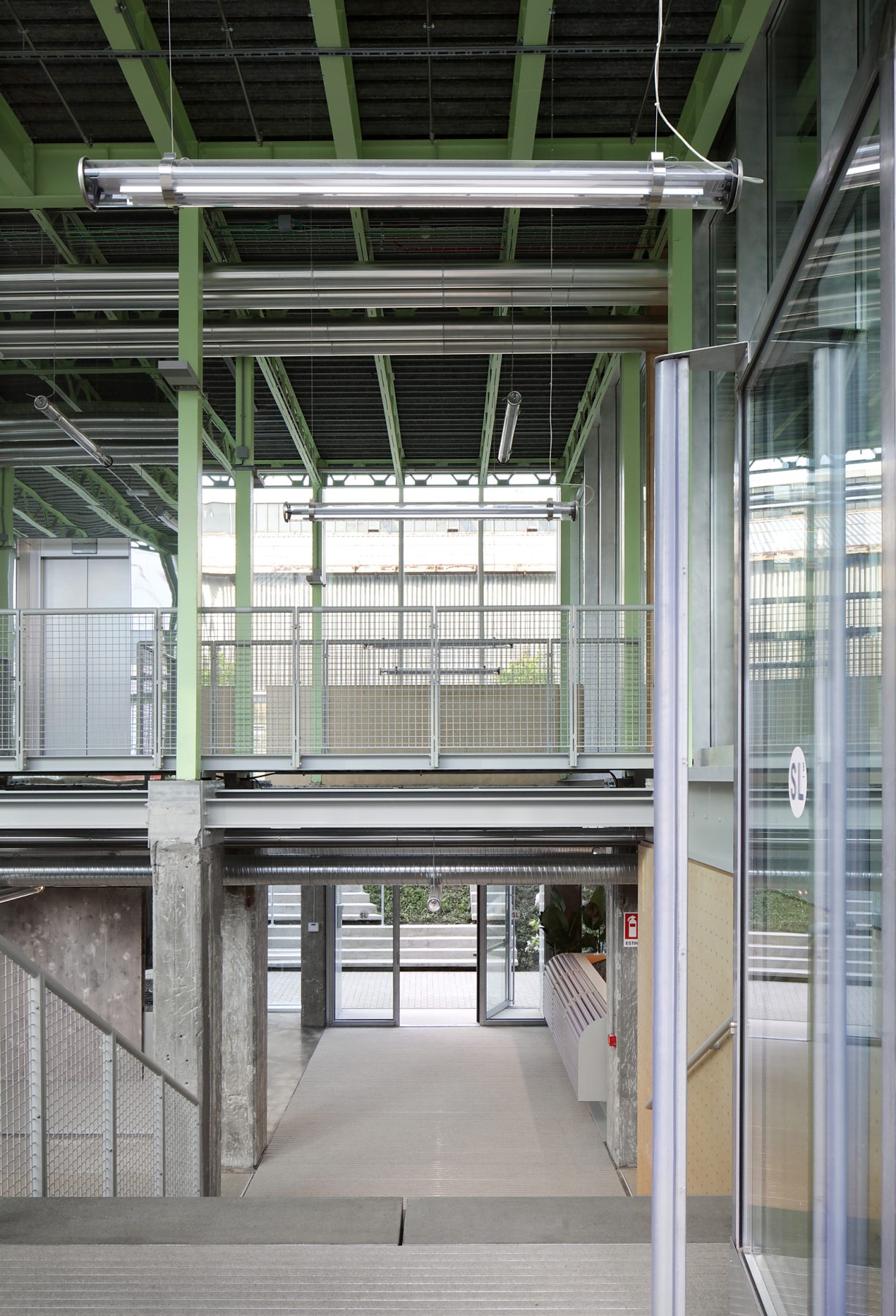
The palette remains closely tied to the inherent qualities of materials—concrete, steel, and wood—while selective color applications serve to abstract the existing framework and underscore the project’s contemporary character.
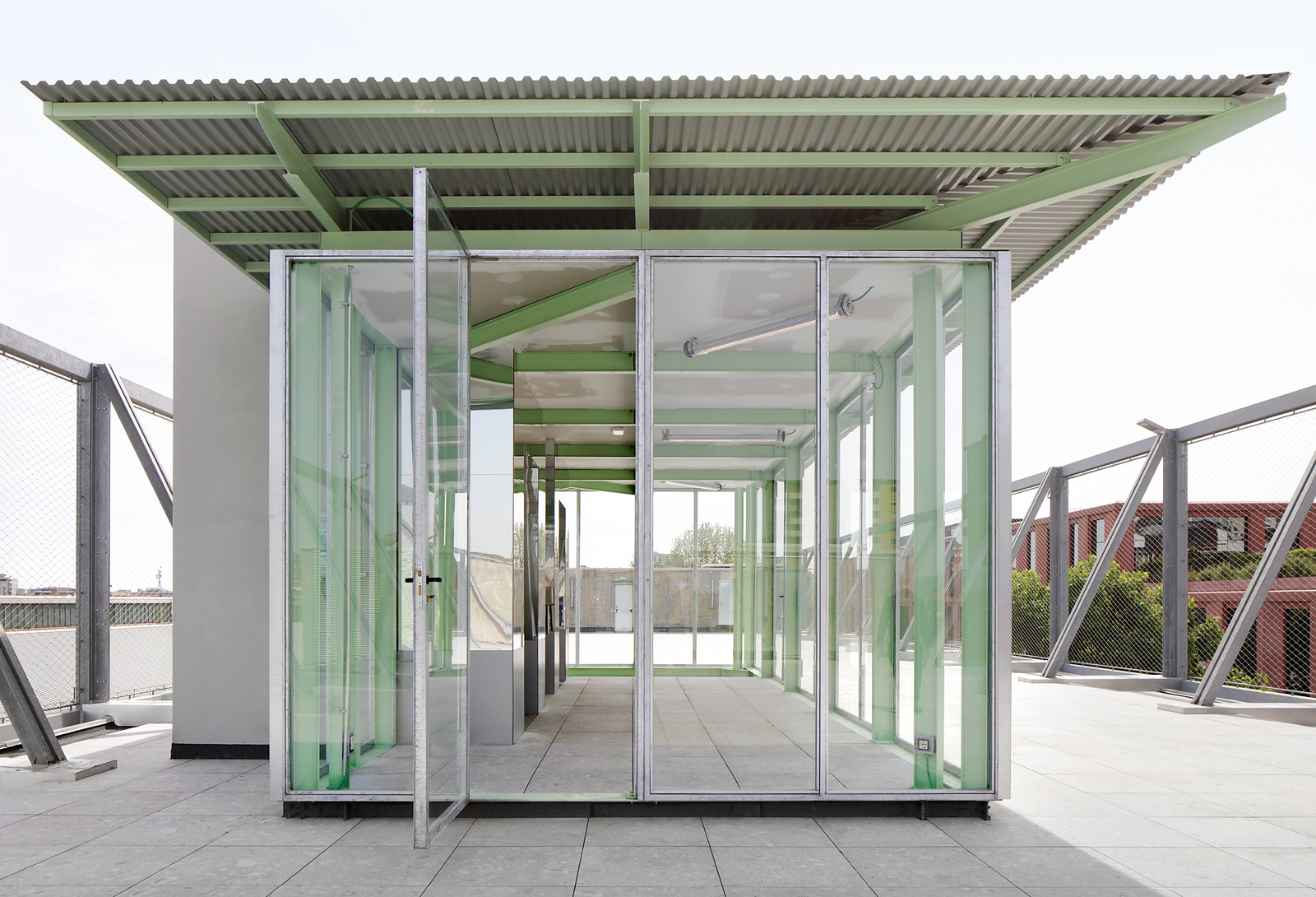
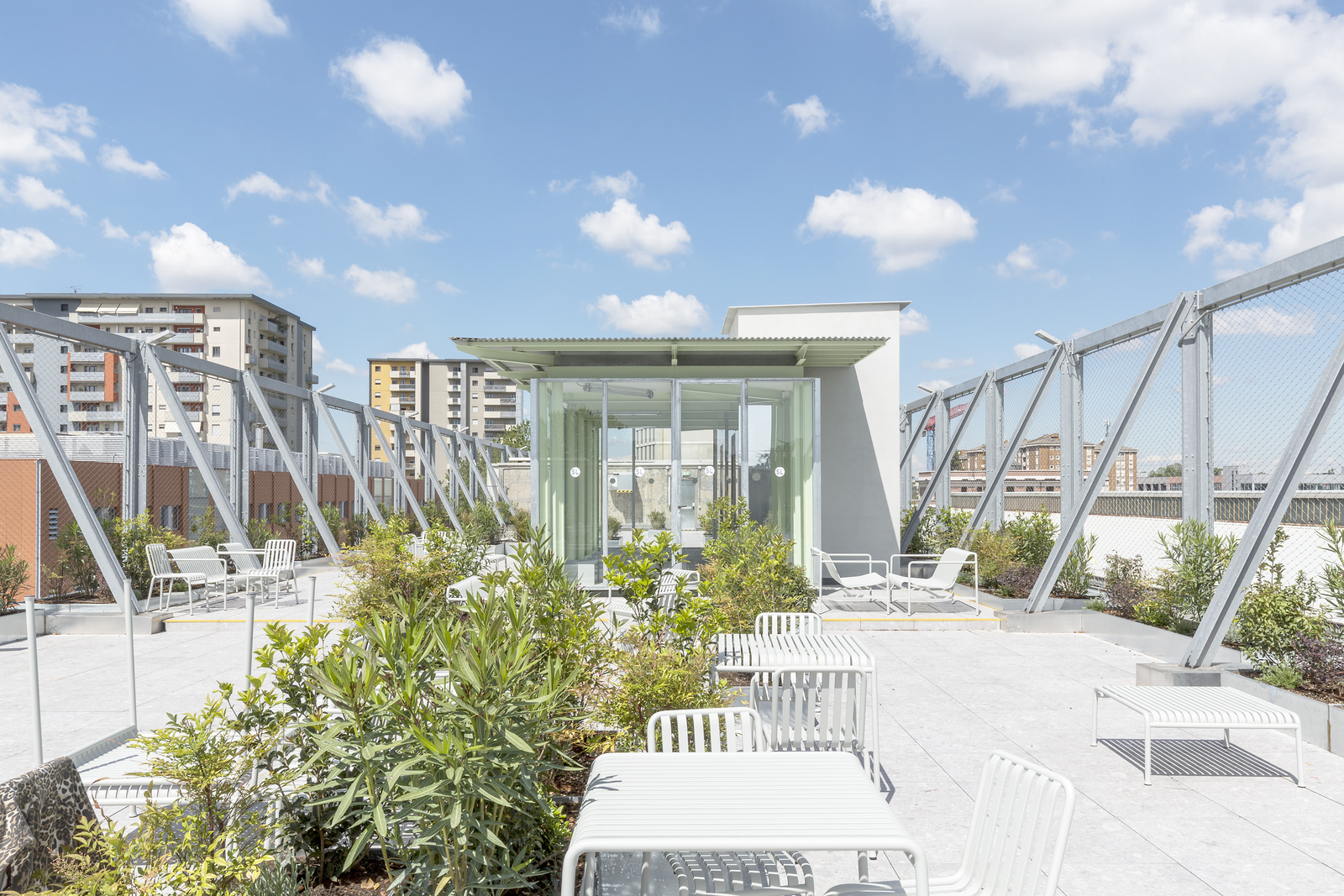
At night, the building reaches its full expressive potential, with the translucent facade revealing the internal structure.
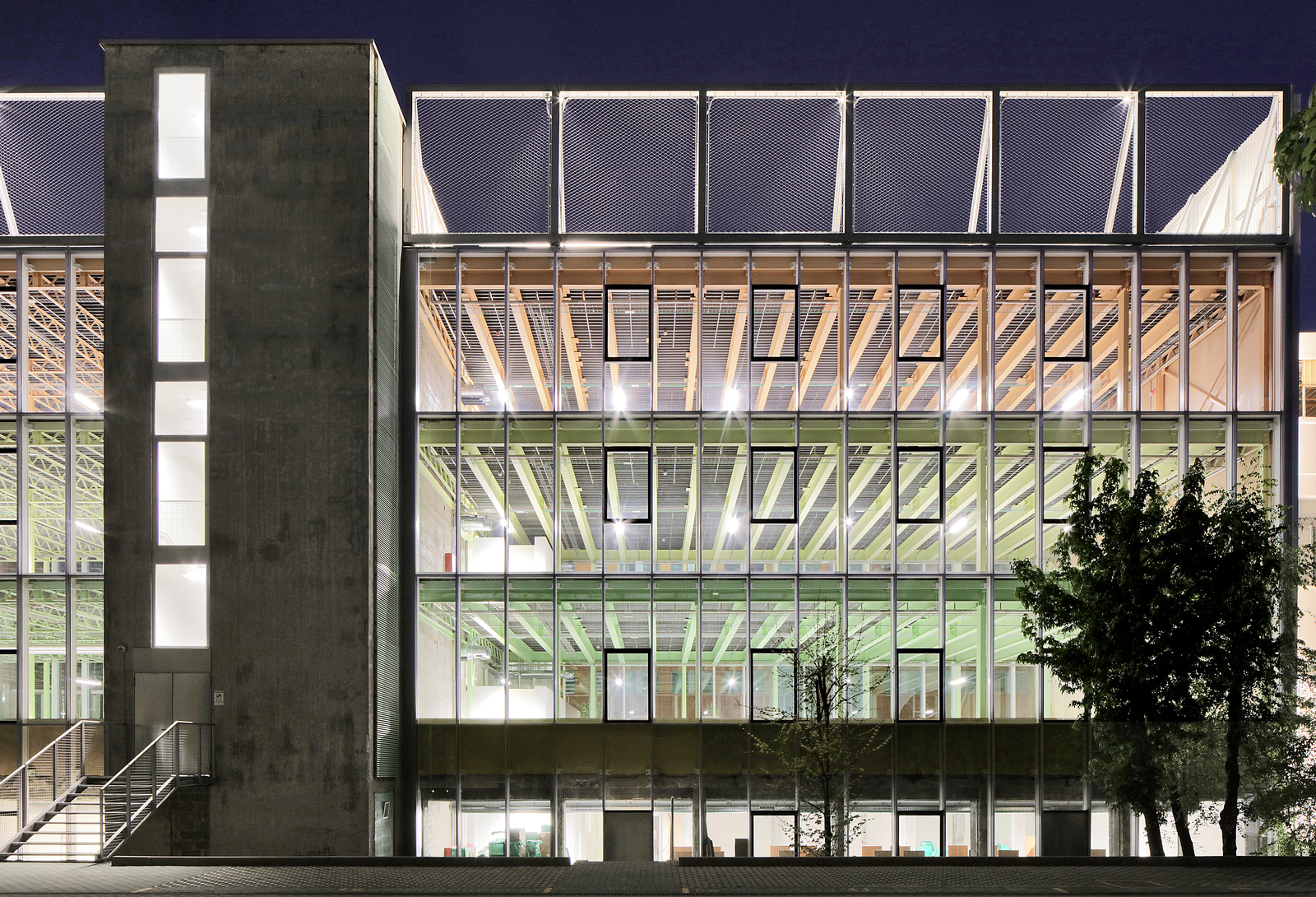
The result is a luminous architectural presence that exposes its own construction, transforming the building into a visible articulation of its spatial and structural logic.
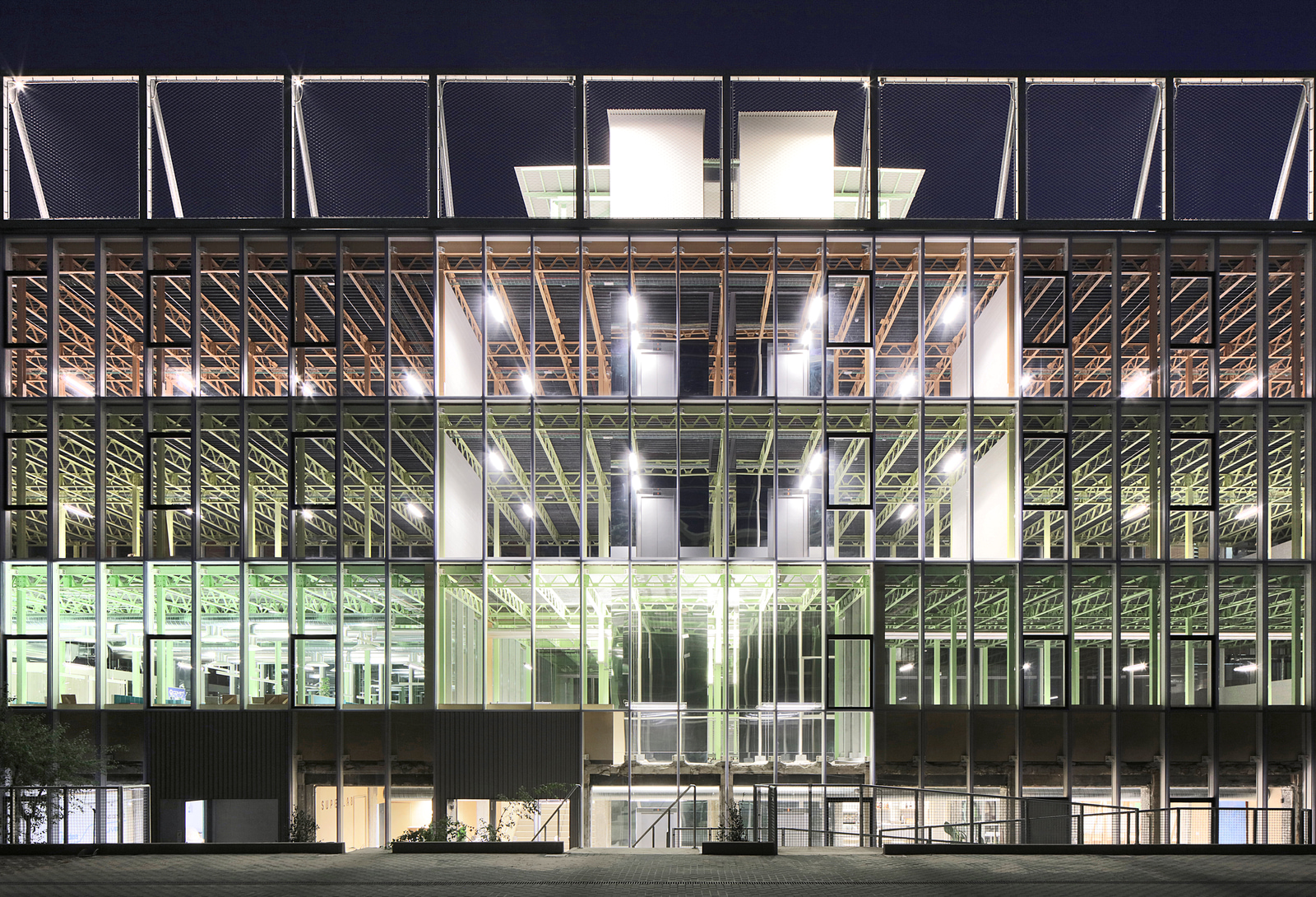
“The facade consists of transparent recyclable silicone rubber pressers and mullions, which act with light at different times of day, and at night the building exposes its internal organs and ribs.”
Plans
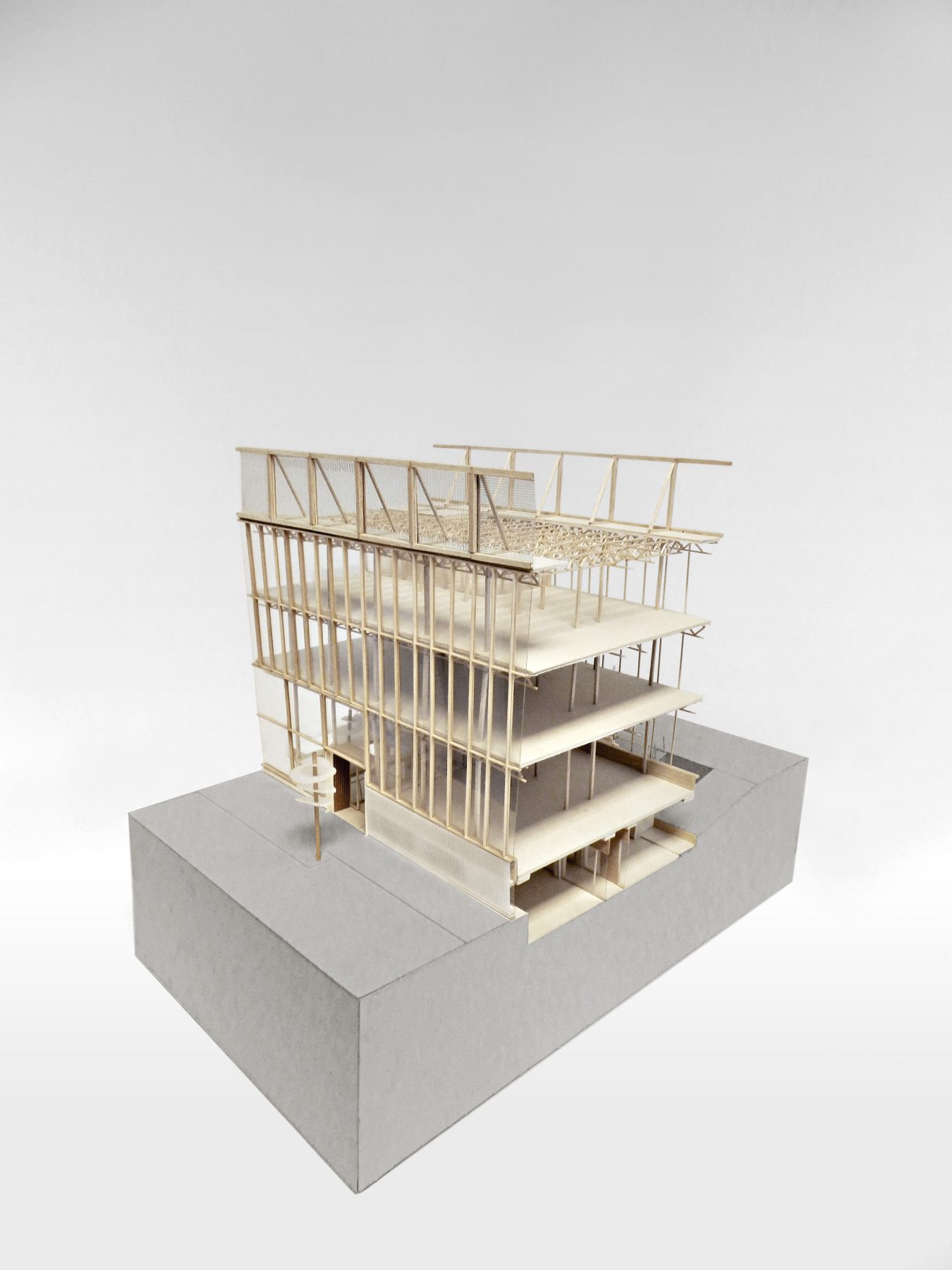
Models
Facts & Credits
Project title: Bicocca Superlab
Project location: Milan, Italy
Architecture: Balance Architettura
Project Team: Alberto Lester, Jacopo Bracco, Davide Menini, Alejandro Mora, Giorgio Salza, Giulia Barrera, Ayla, Alessandro Stante, Nicola Acciaro, Sofia Zuccaro, Matteo Dossetto, Stefania Mijac, Eugenia Macchia, Francesca Riva, Ottavia Mangiaracina
Photography: Filip Dujardin (Belgium), Beppe Giardino (Italy)