The architect’s office explores the studio as both laboratory and mirror of architectural thought. The series examines how space, ritual, tools, and collaboration shape design culture. From intimate ateliers to larger practices, these workplaces reveal values and ambitions—where ideas are tested and identities take form, moving from paper and digital drawing toward the built world.
Sornells 21, the shared workspace of T.O.T Studio and Paloma Bau in Valencia’s Ruzafa district, translates atmospheres of Tokyo’s urban culture into a contemporary studio environment. Conceived through T.O.T’s conceptual vision and materialized architecturally by Paloma Bau, the project reflects the complementary essence of both practices. References to tiled streets, izakaya bars and onsen spaces shape its spatial narrative, while mirrors, custom furniture and a central bar structure the rhythms of working, meeting and exchange. Its flexible layout and multifunctional elements allow the studio to host diverse uses, from coworking and meetings to exhibitions, presentations and collective gatherings within a cohesive architectural framework.
Ausiàs Pérez of T.O.T Studio and Paloma Bau present Sornells 21, their shared studio in Valencia’s Ruzafa neighborhood, the result of the transformation of a former commercial unit into a creative workspace informed by the urban imagination of Tokyo.
The intervention combines a clear conceptual framework with a precise material strategy, shaping a workplace where design culture, collaboration and daily rituals coexist within a cohesive spatial narrative.
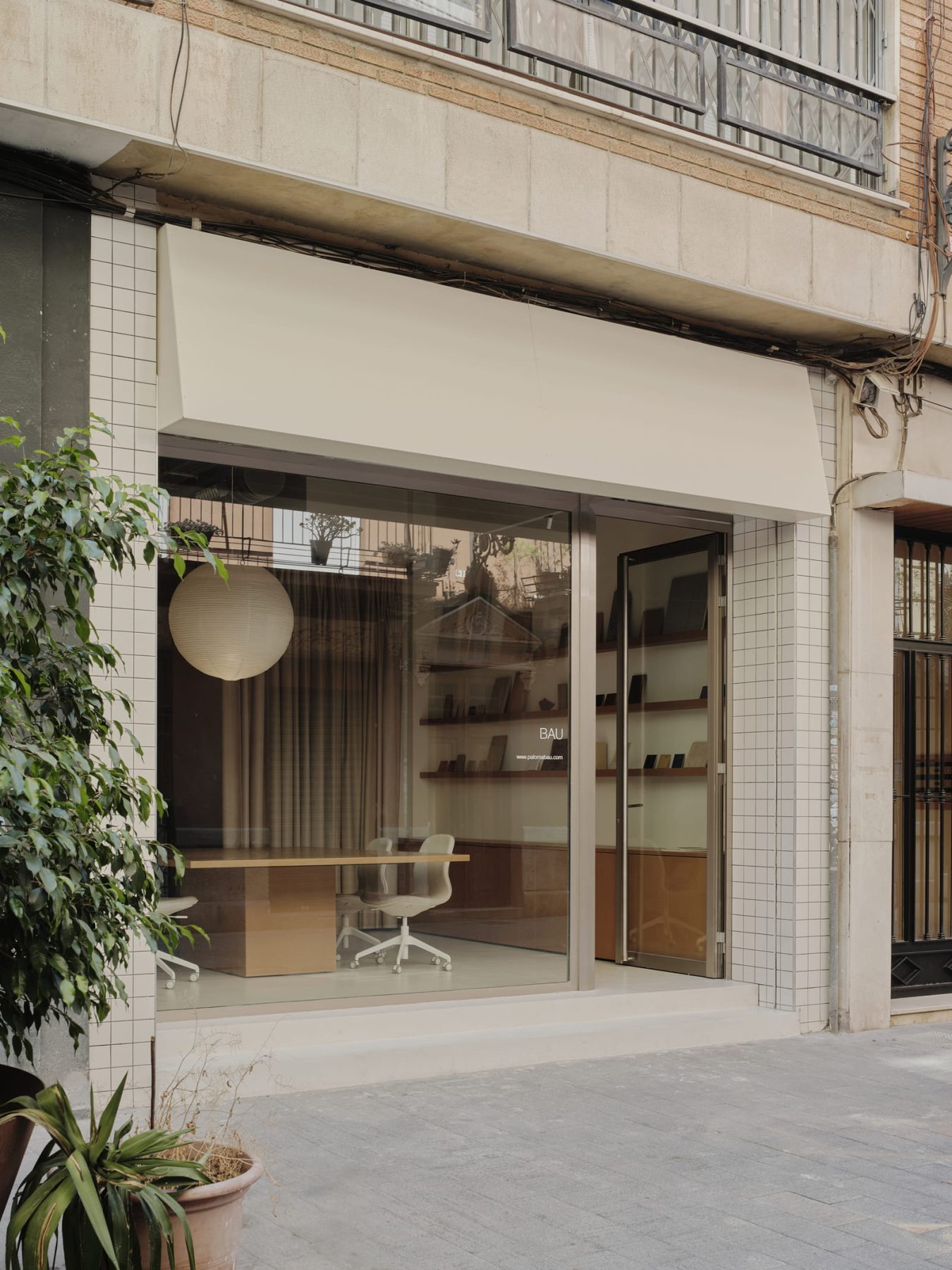
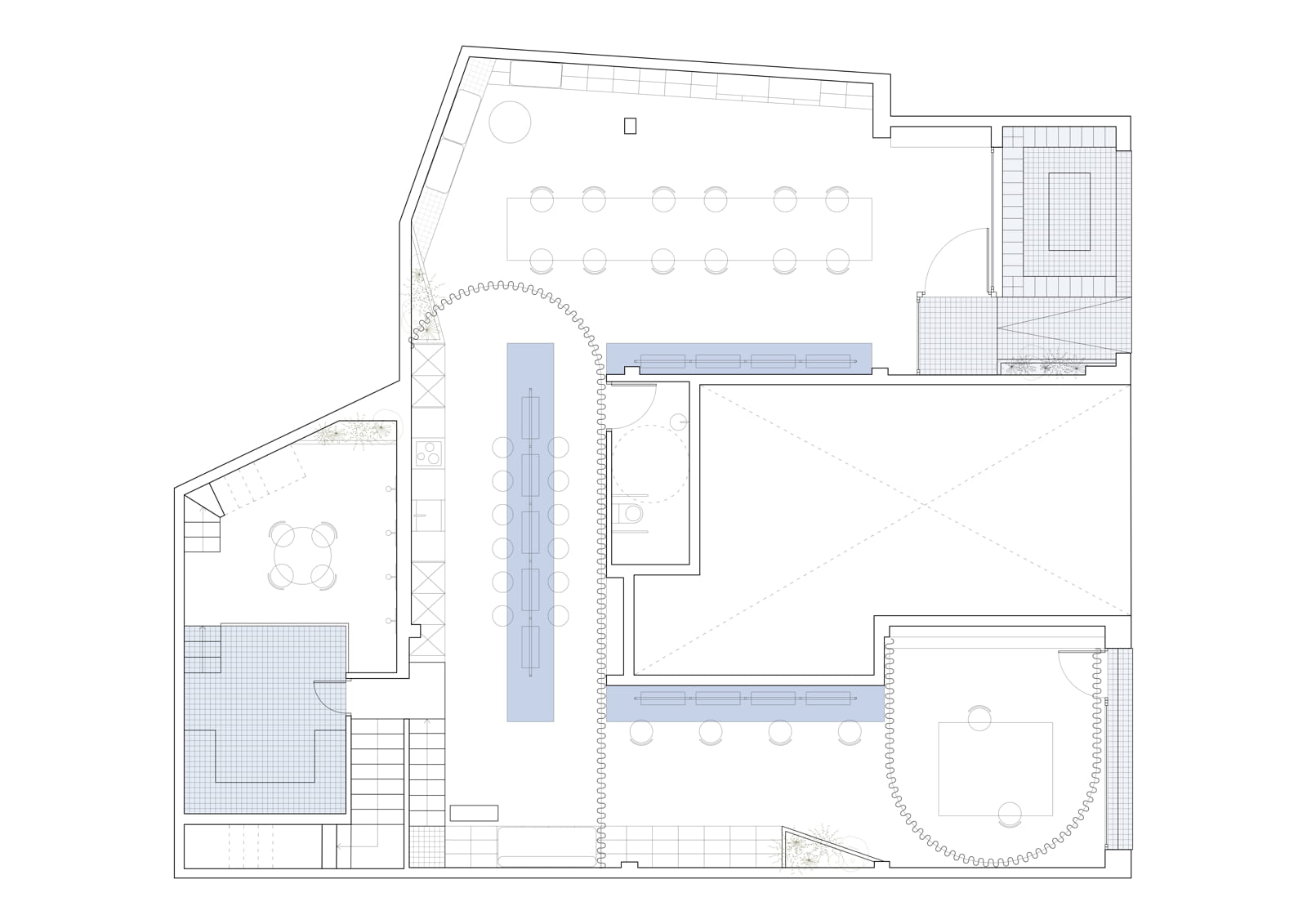
Located at 21 Sornells Street—along a pedestrian route linking Ruzafa Market with the surrounding residential fabric—the 170 sqm U-shaped premises with dual street access accommodates both teams and a small community of creative professionals. The project emerged from an organic collaboration: Pérez’s return to the city coincided with Paloma Bau’s search for a new studio. Rather than a purely strategic alliance, the initiative reflects a shared intention to construct an environment where different disciplines, methodologies and working languages can overlap, and where architecture itself encourages encounters and spontaneous synergies. In this sense, the office operates simultaneously as laboratory and mirror of each practice’s design ethos.
Context and concept
From the outset, T.O.T led the conceptual development of the project, while Paloma Bau’s team undertook its architectural materialization.
This division of roles aligns with the identity of both practices: the speculative and strategic orientation of T.O.T and Paloma Bau’s capacity to translate abstract ideas into spatial, material and geometric precision.
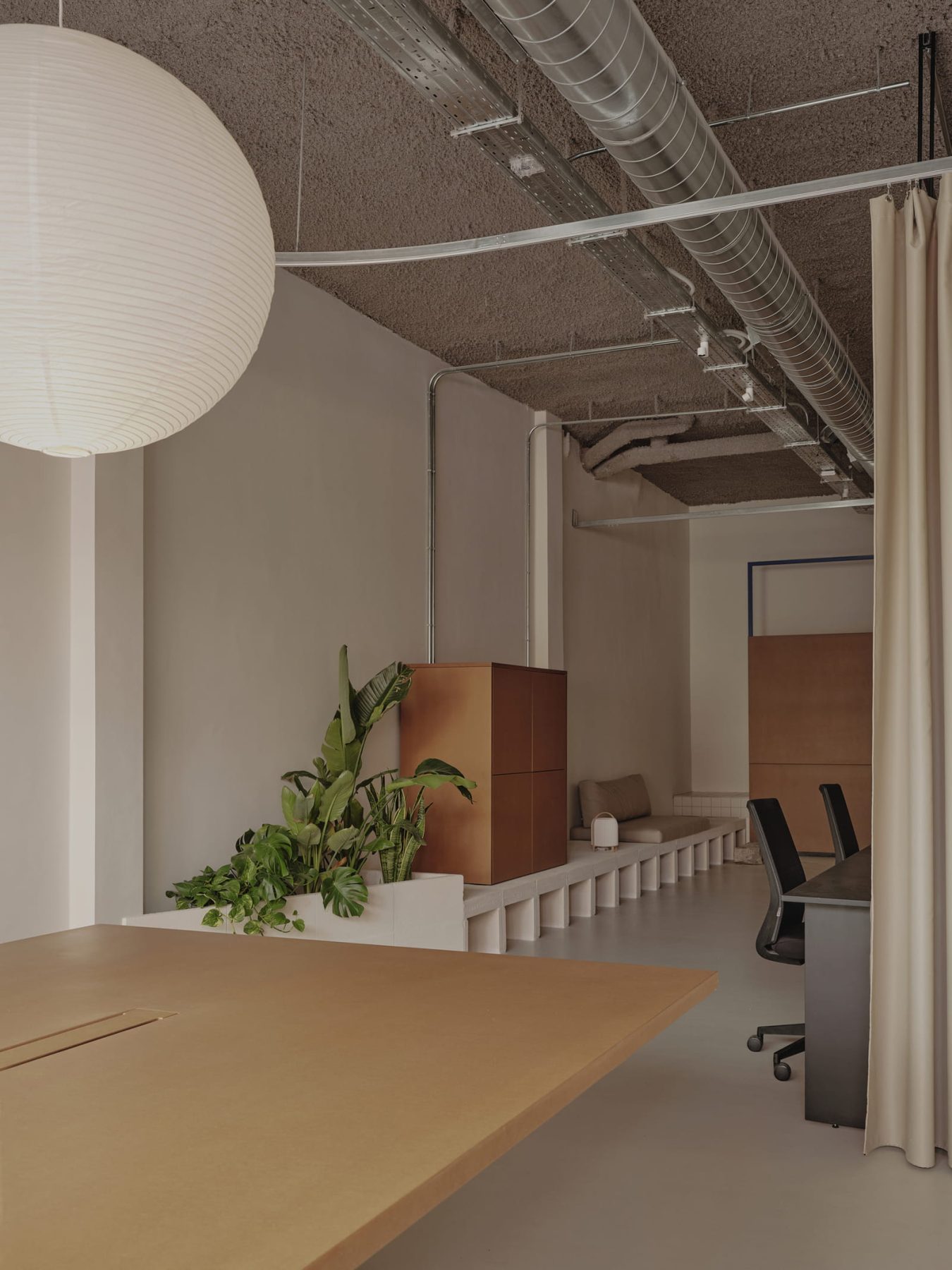
The starting point was the reinterpretation of everyday spatial atmospheres from Tokyo, translated into a flexible workspace in Valencia.
Rather than a literal thematic reference, the project proposes an architectural reading of three recognizable Japanese urban situations: the ceramic-tiled street, the izakaya bar and the relaxed environment of the onsen.
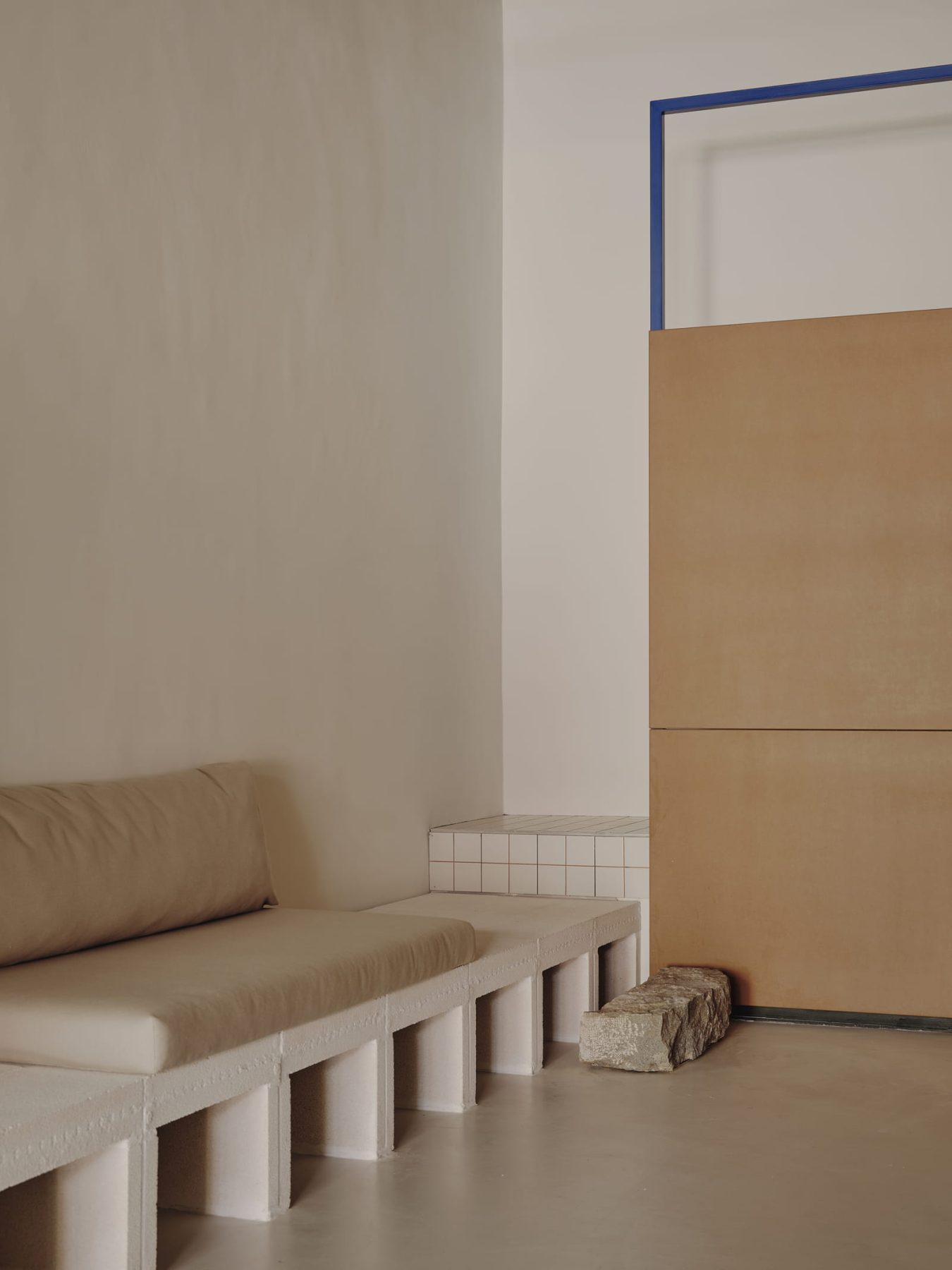
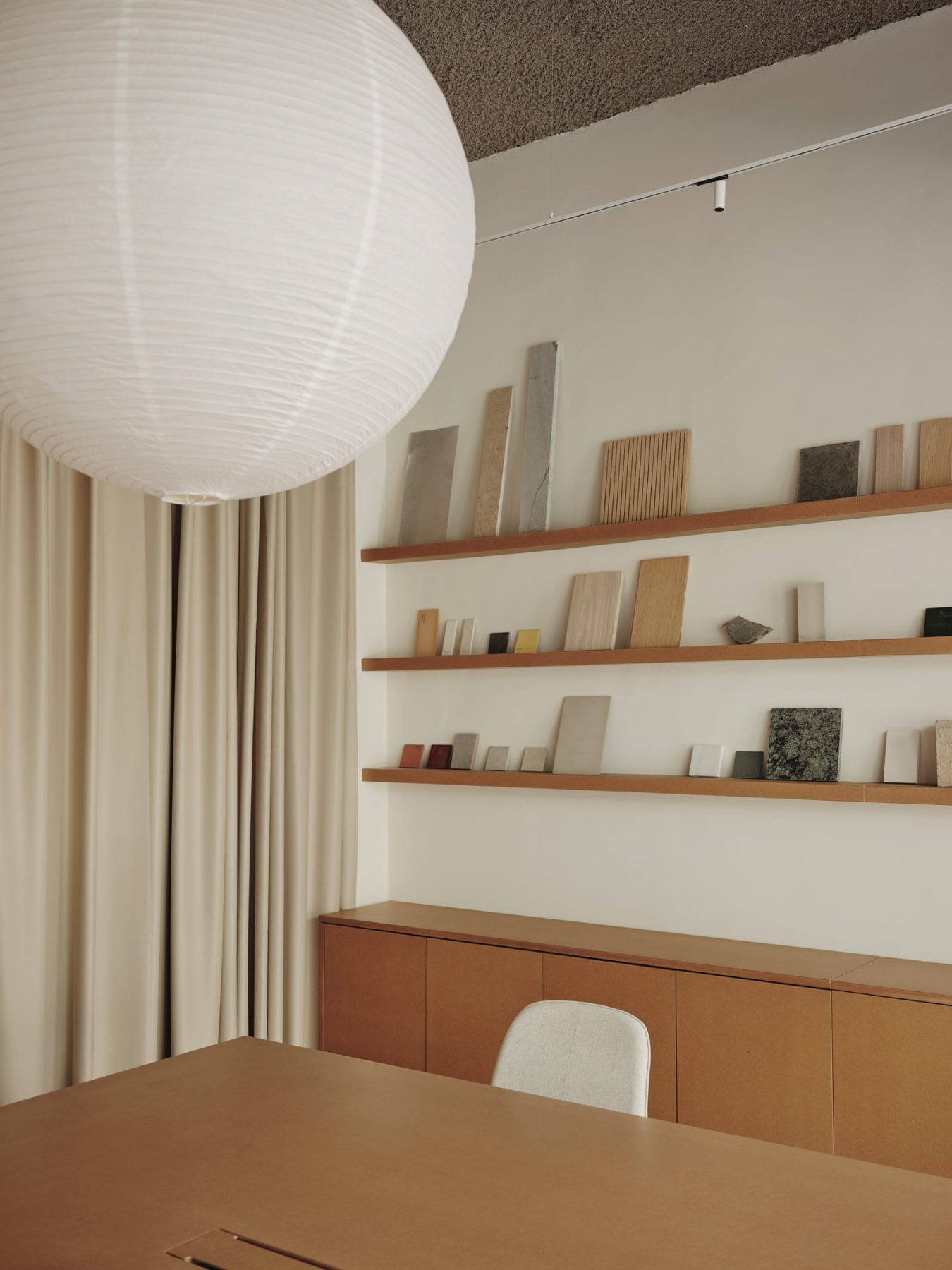
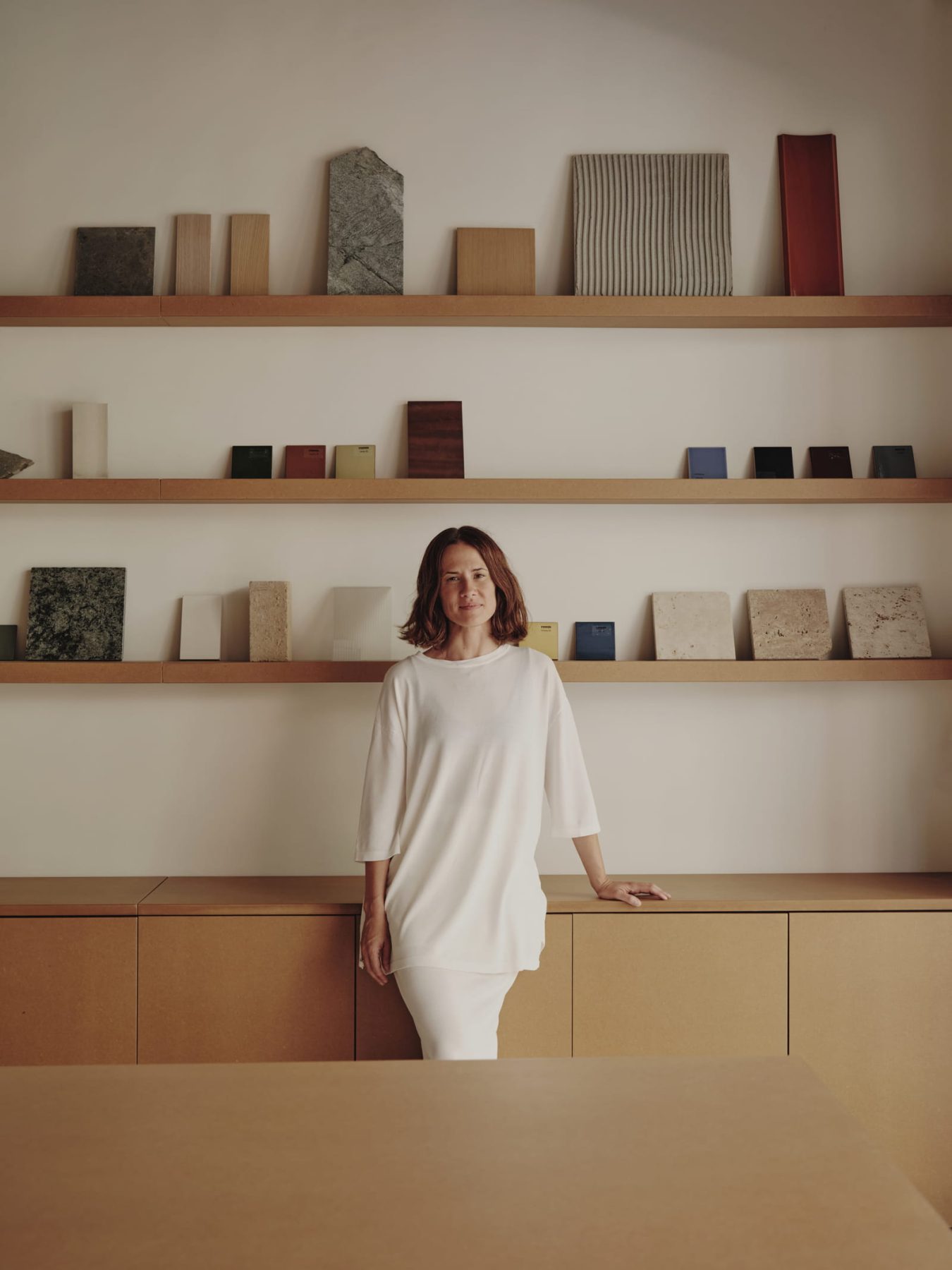
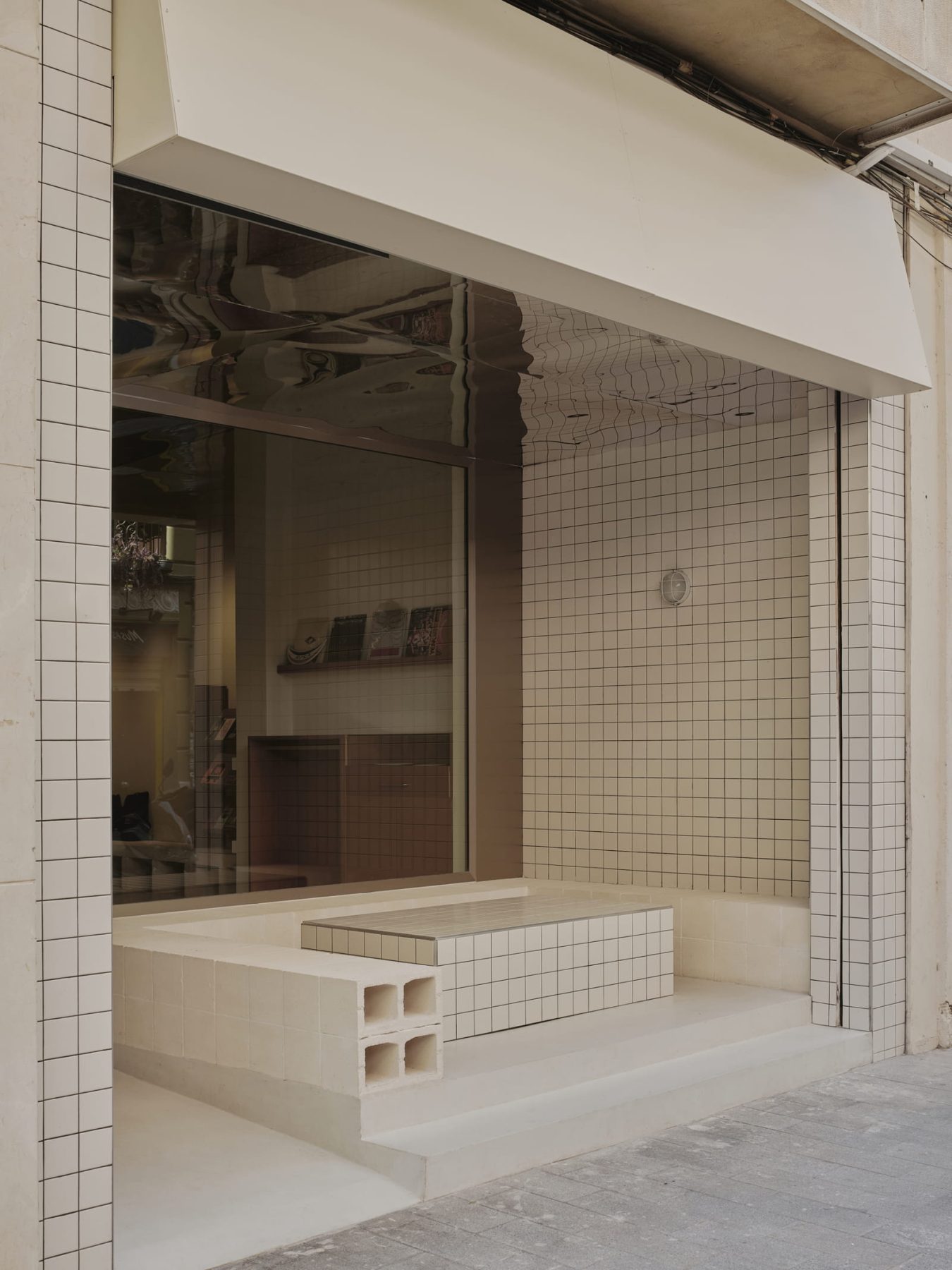
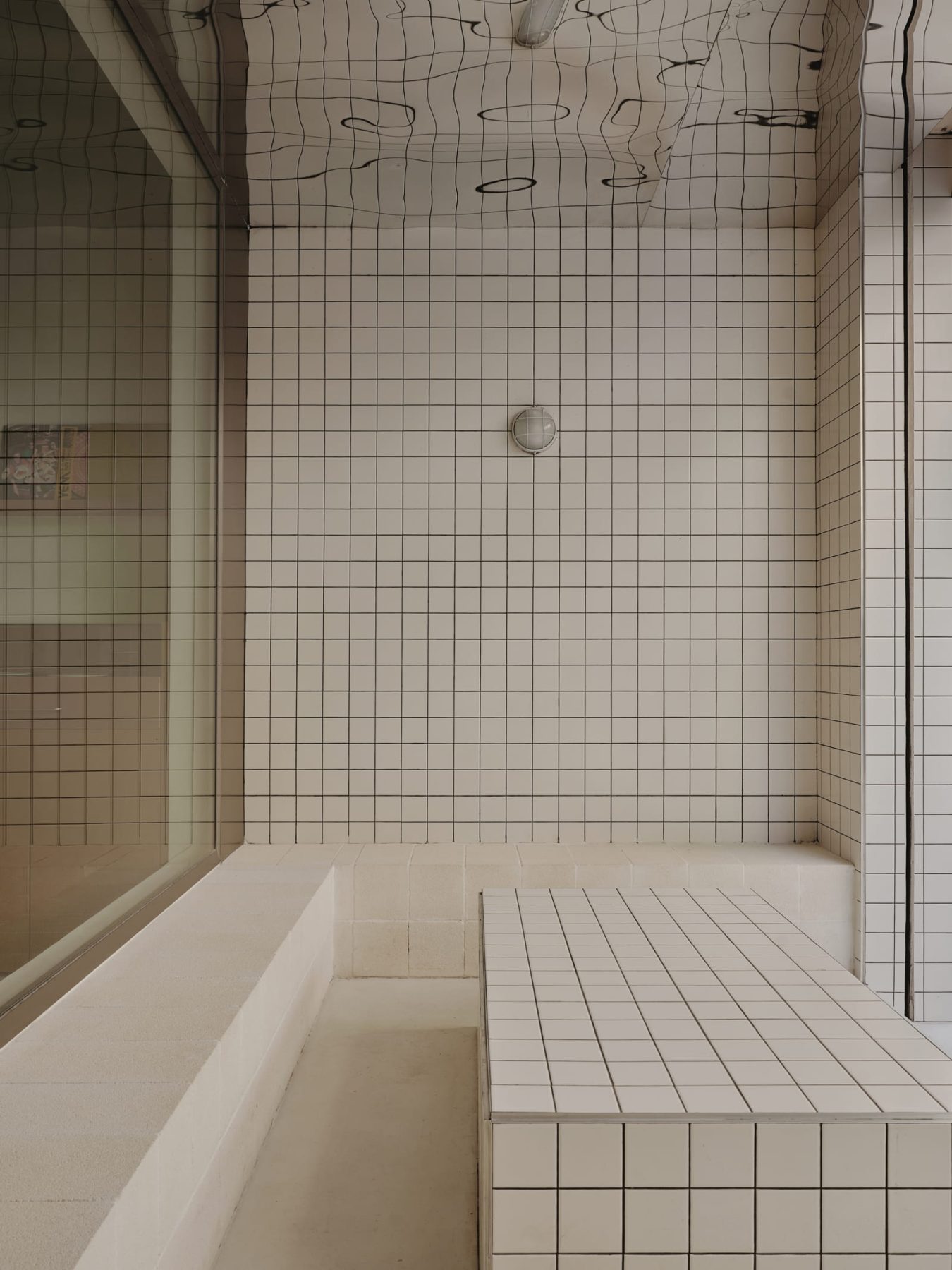
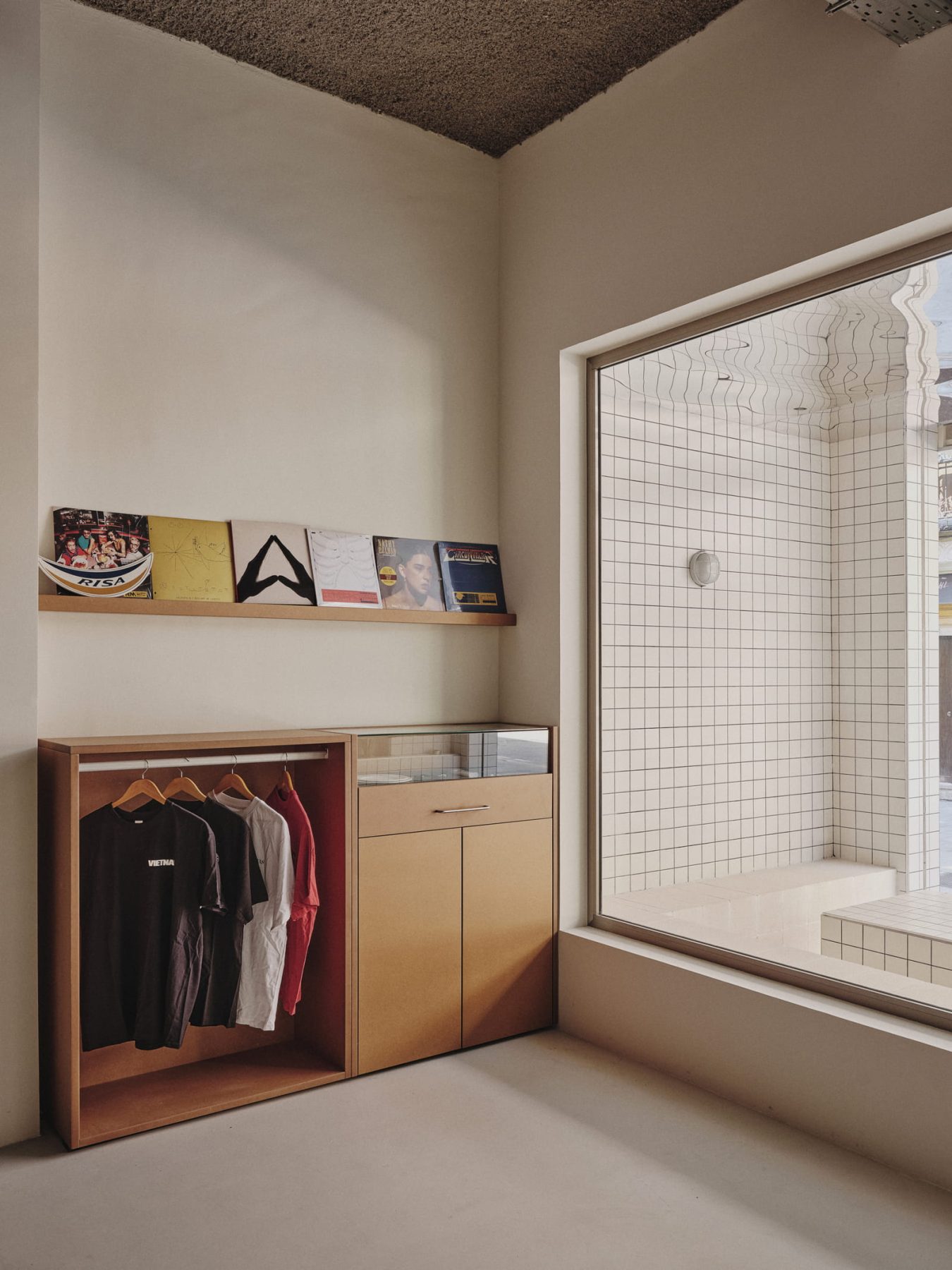
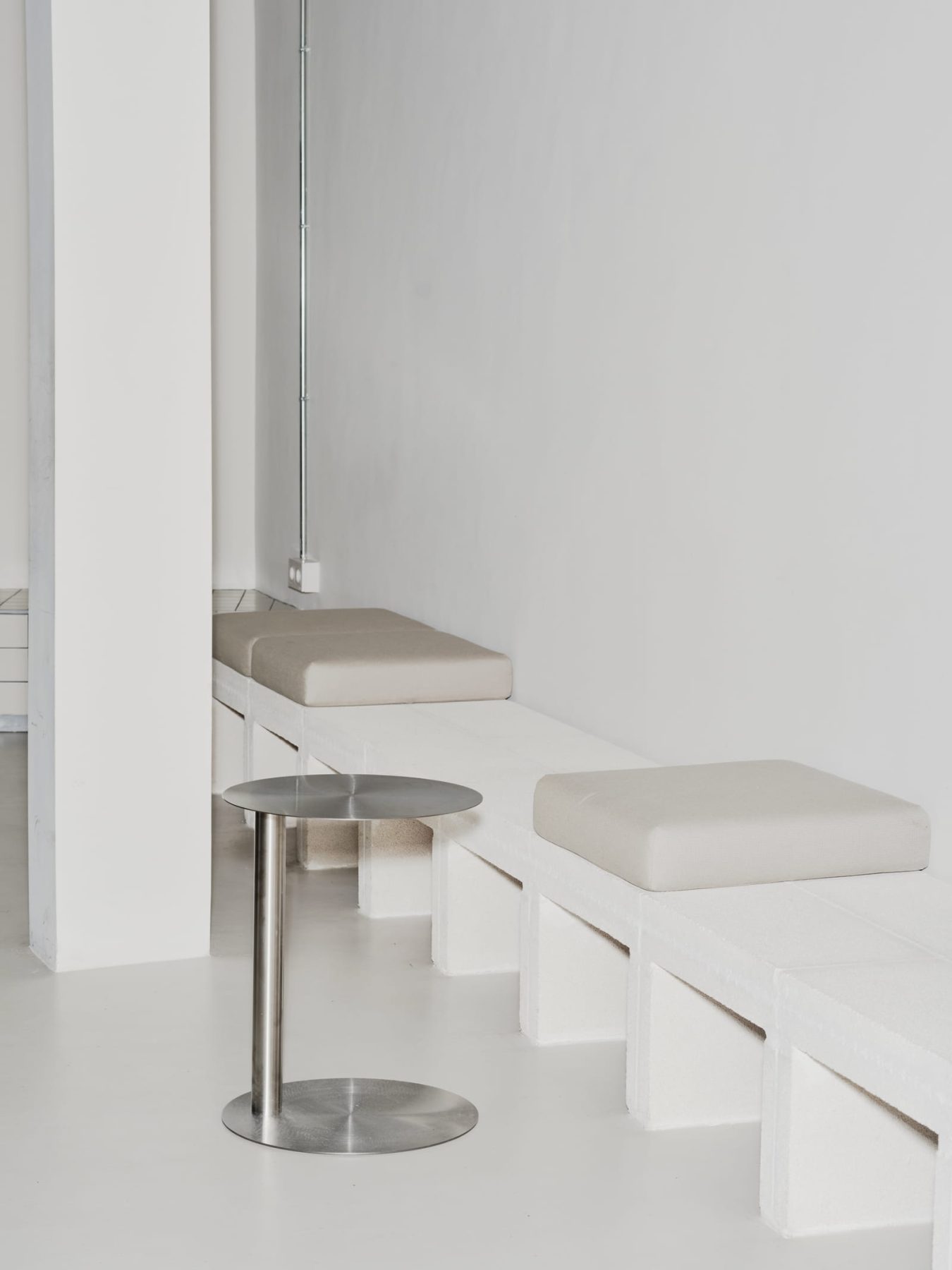
The arrival sequence is conceived as a conceptual threshold. The entrance adopts the material logic of many Tokyo façades, where white 10×10 ceramic tiles wrap entire surfaces. Here, the same tile creates a clean, almost exterior-like vestibule, amplified by a large ceiling mirror that doubles the perceived volume and subtly alters proportions. The device generates the sensation of remaining outdoors even after entering, deliberately blurring the boundary between street and studio. A solid white concrete bench introduces one of the project’s recurring materials, anticipating its structural presence throughout the space.
Space and organization
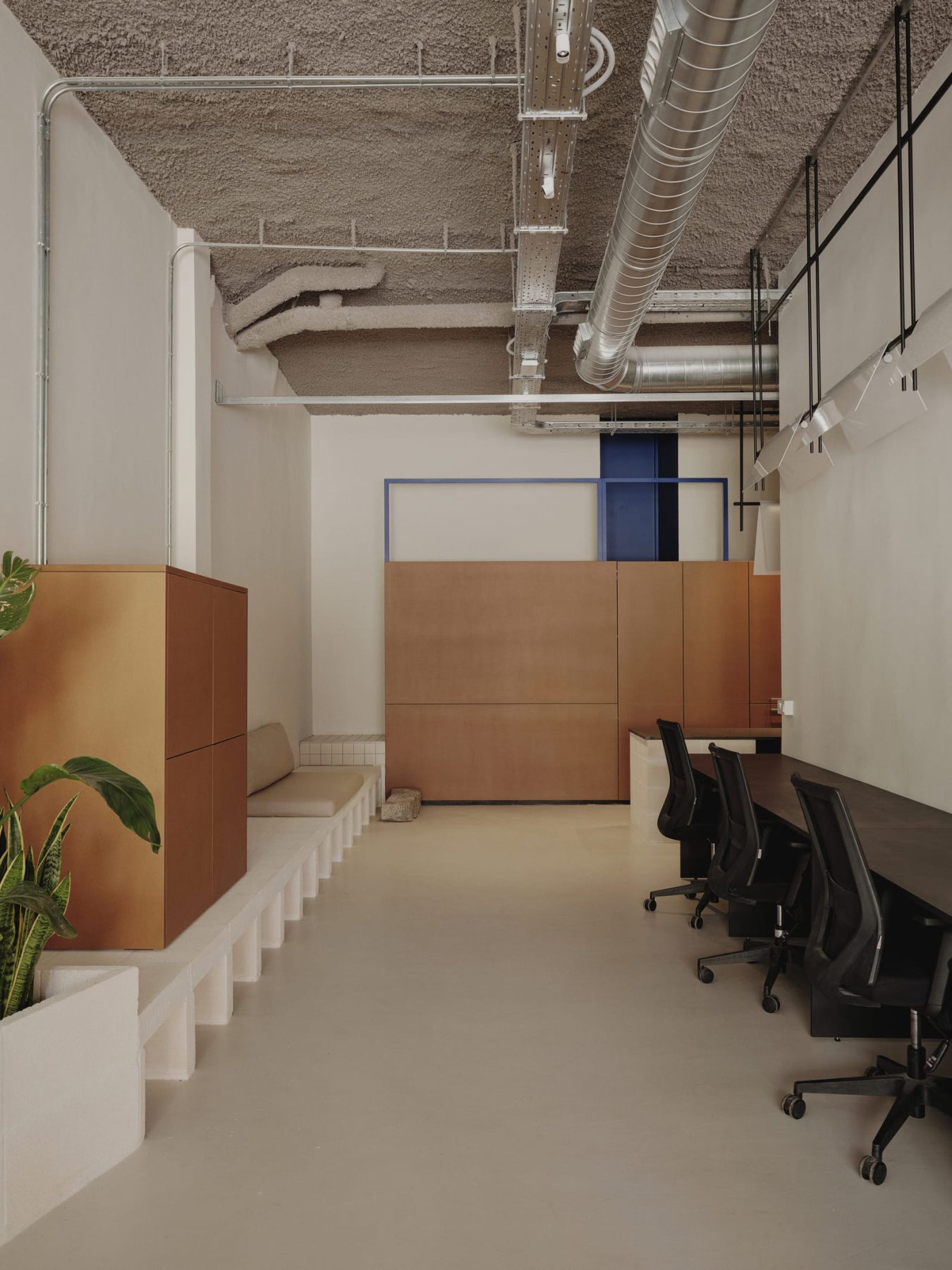
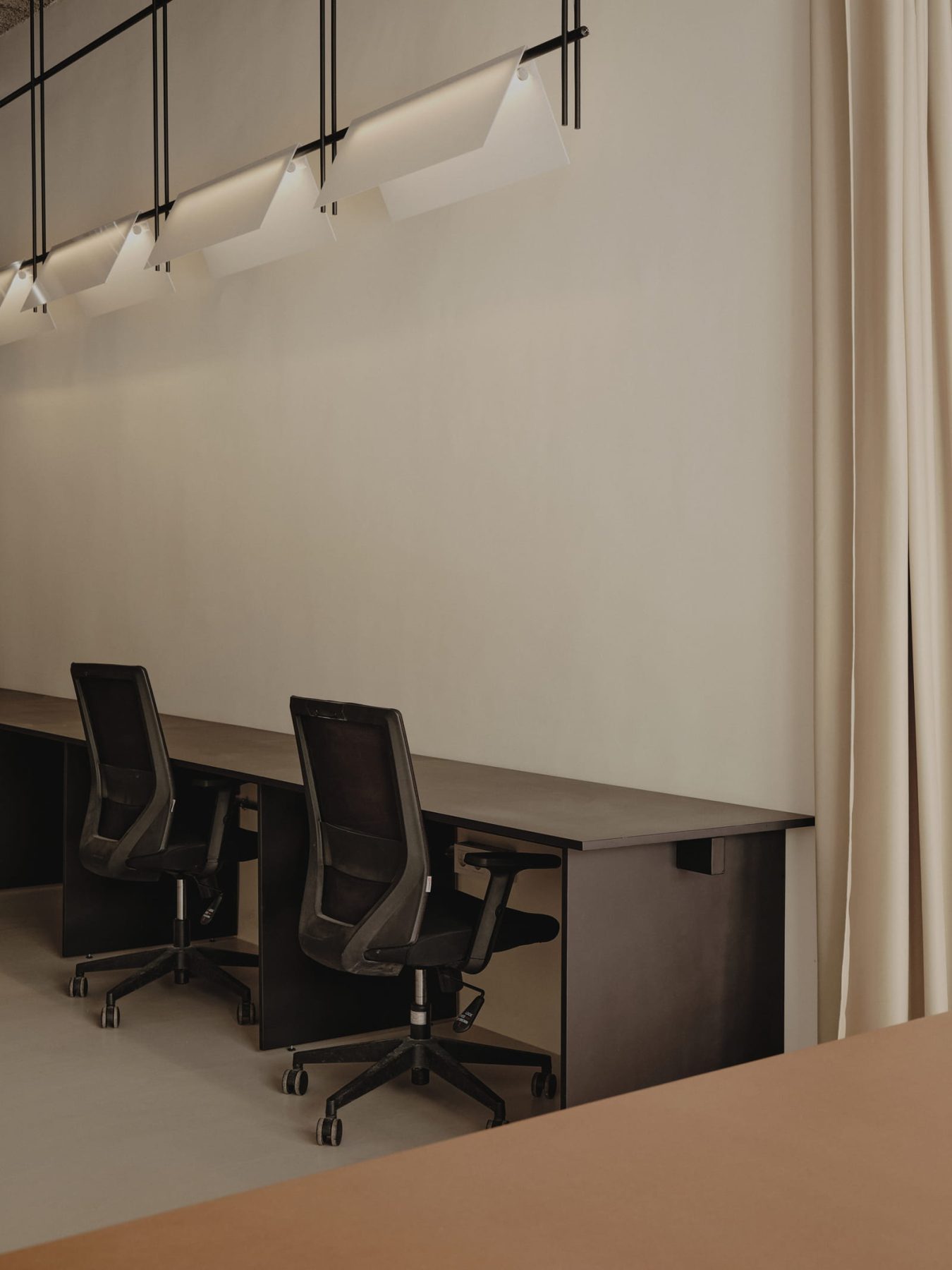
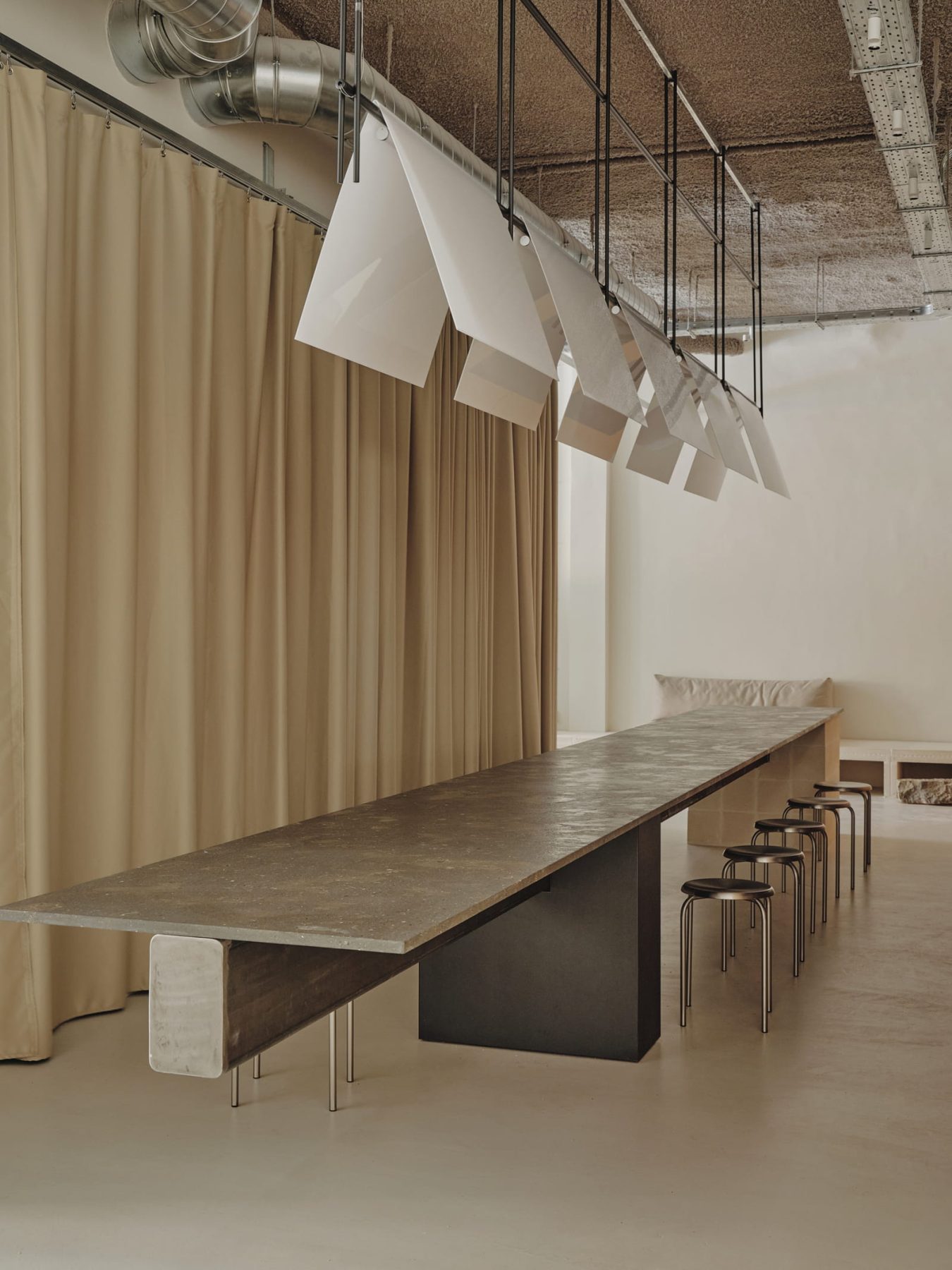
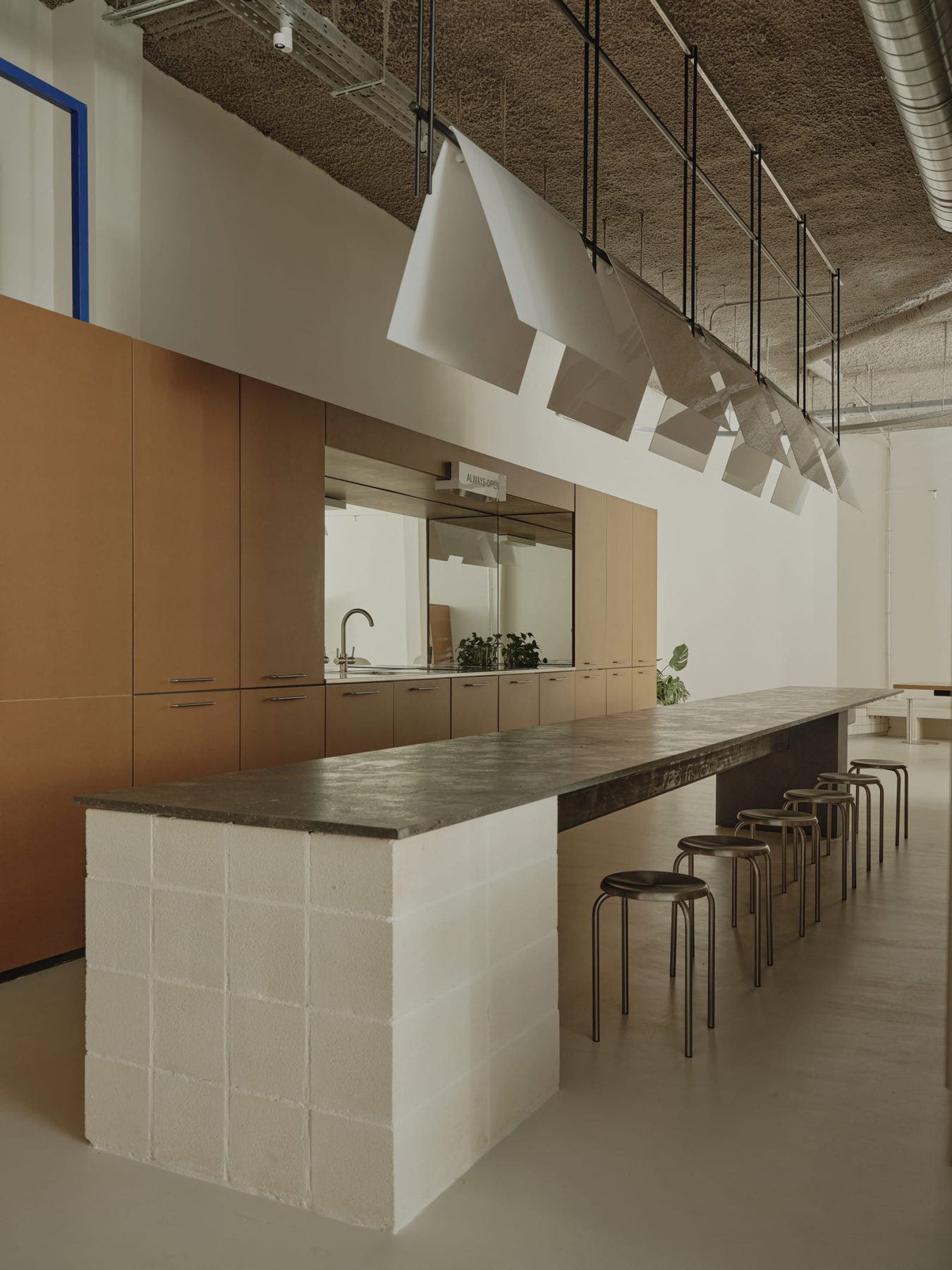
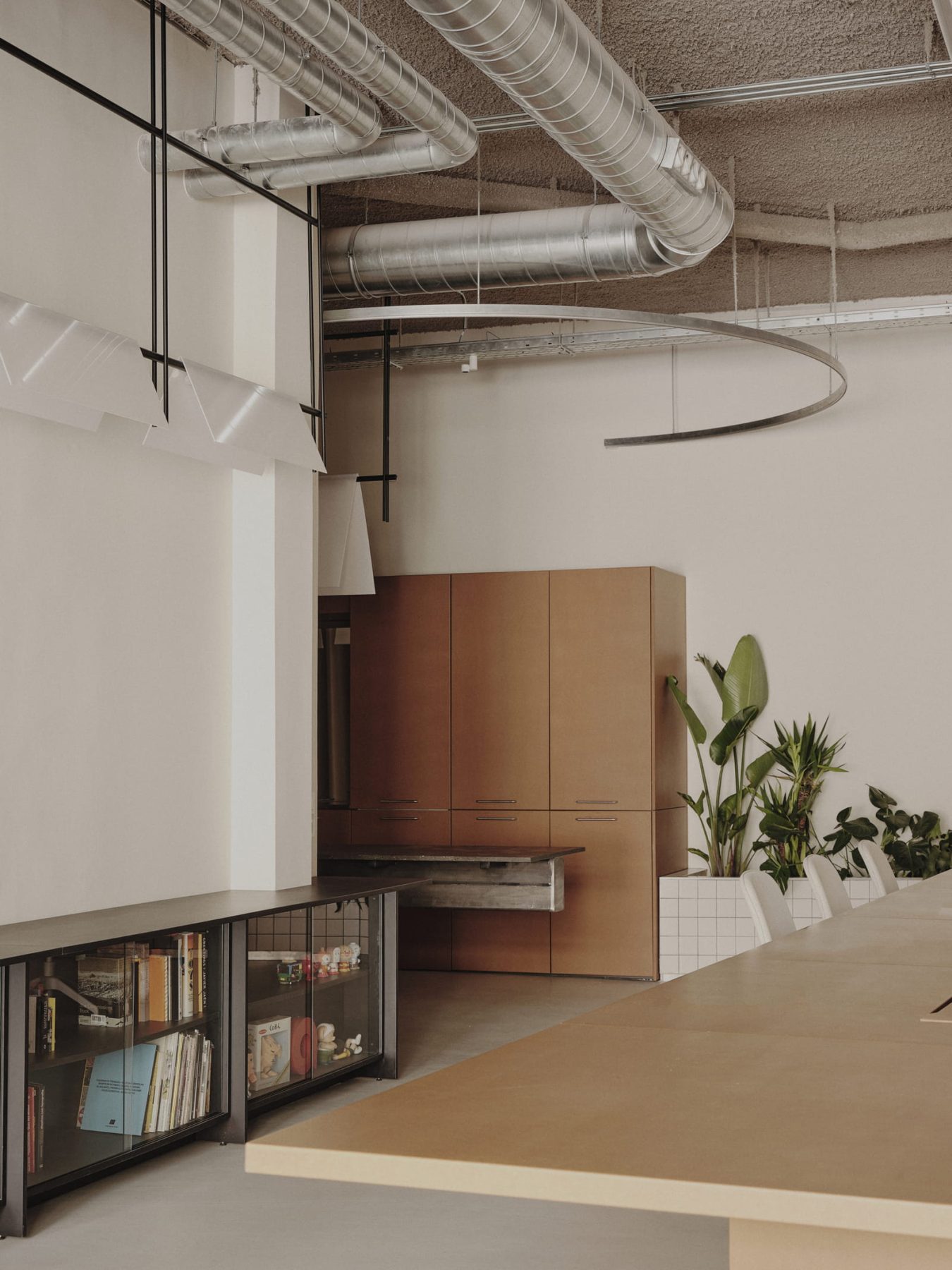
Beyond this threshold, the studio is organized around its central element: a large bar that runs longitudinally through the U-shaped plan. Executed in black-tinted MDF, coloured in mass to preserve the texture of the material, this piece structures circulation, work and social interaction simultaneously. It functions as coworking surface, display platform and communal hub.
At its core, the bar incorporates a 7.20-metre-long partially cantilevered table resolved with a steel structure, black San Vicente stone and a sculptural white block leg.
Designed to seat nearly twenty people, the table enables the studio to shift seamlessly between work environment, dining space, tasting area, presentation venue or meeting setting, reinforcing the office’s adaptable character.
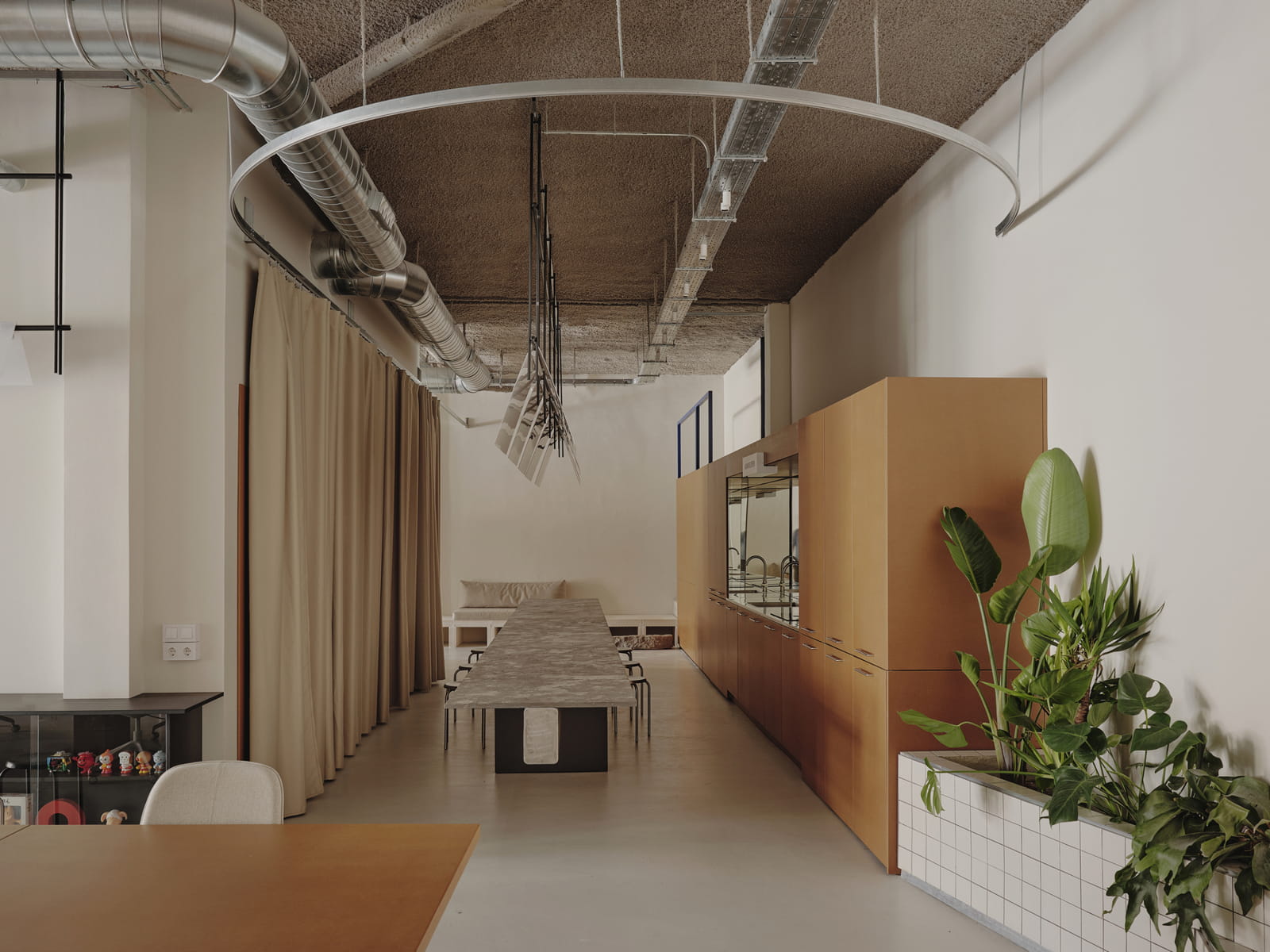
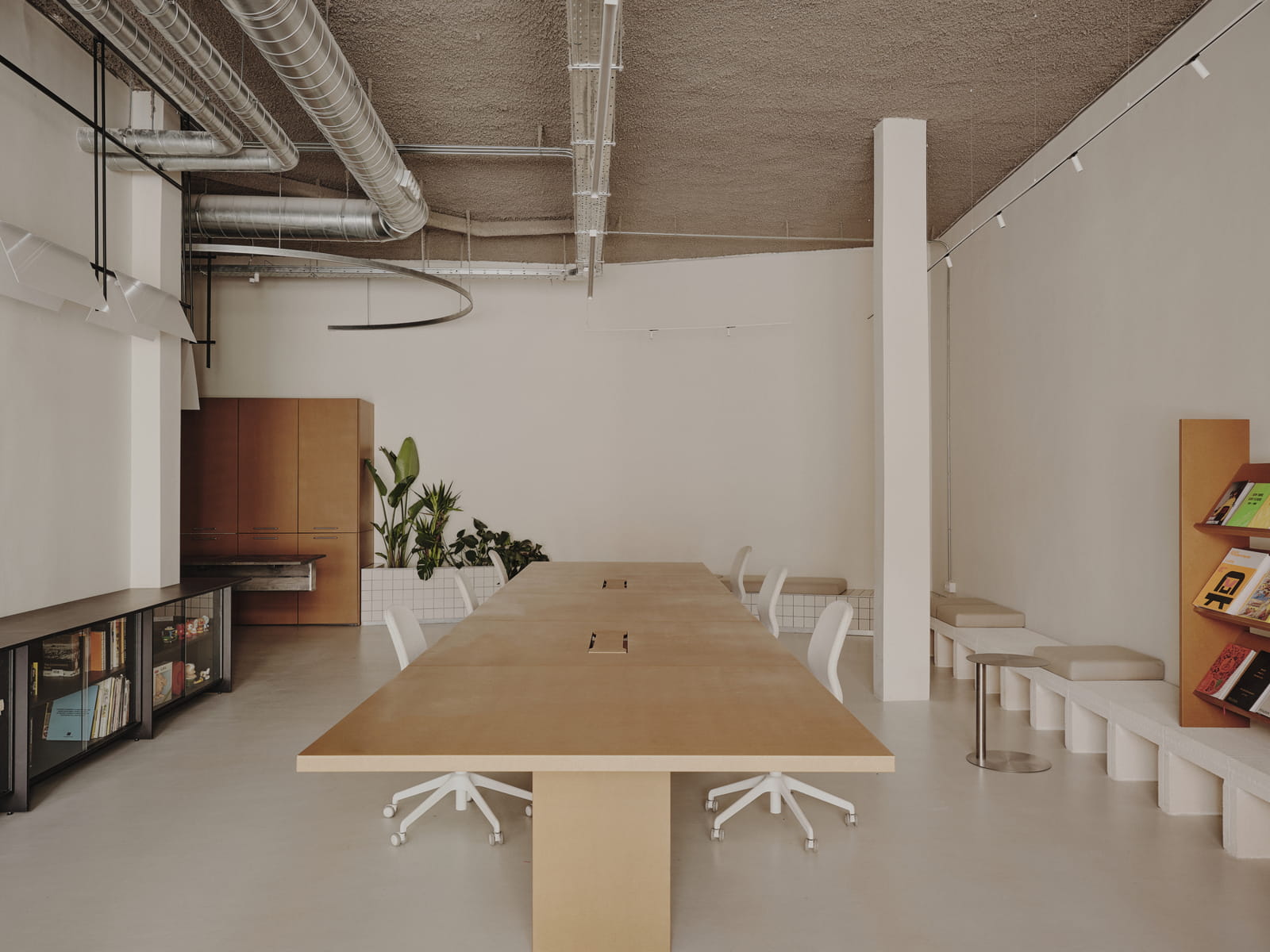
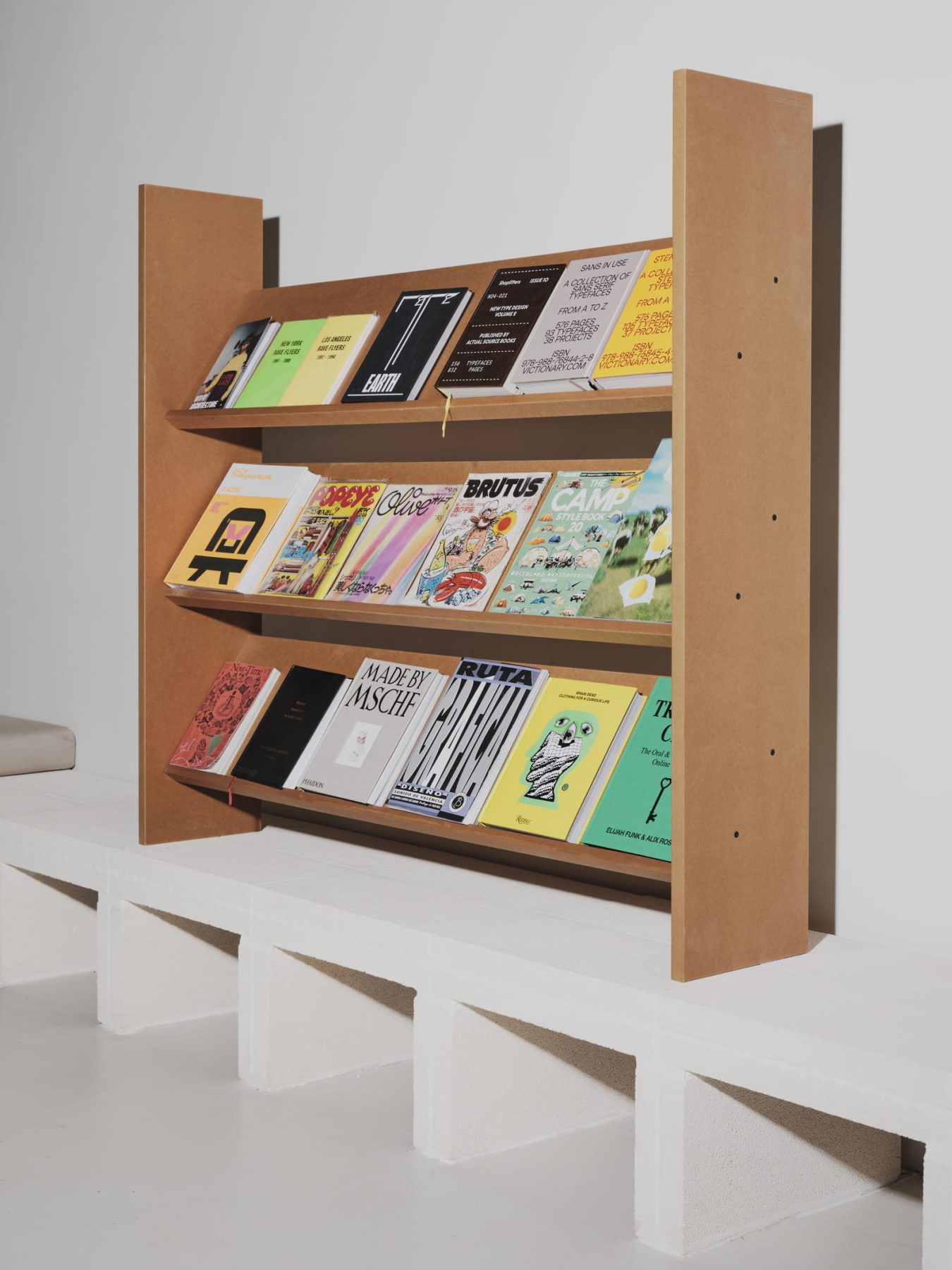
Perimeter white block benches and a continuous rail system installed throughout the space further support its exhibition capacity, allowing for the flexible and continuous display of objects and graphic material.
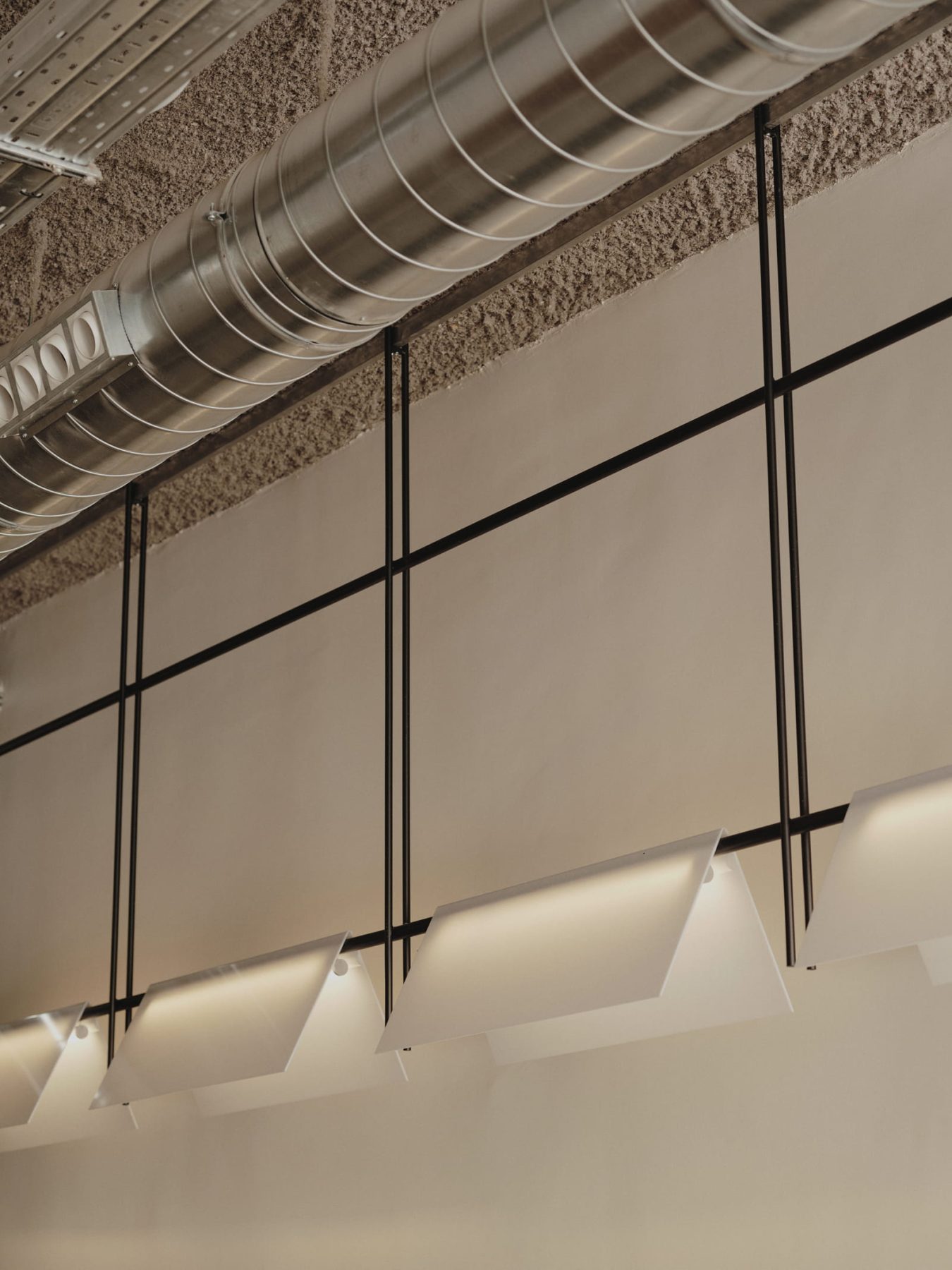
Above the bar, a bespoke longitudinal luminaire—specifically designed for the project and inspired by Noren, the textile curtains marking thresholds in Japanese taverns and shops—introduces a horizontal rhythm that reinforces the spatial scale while contributing to a warm, contained atmosphere.
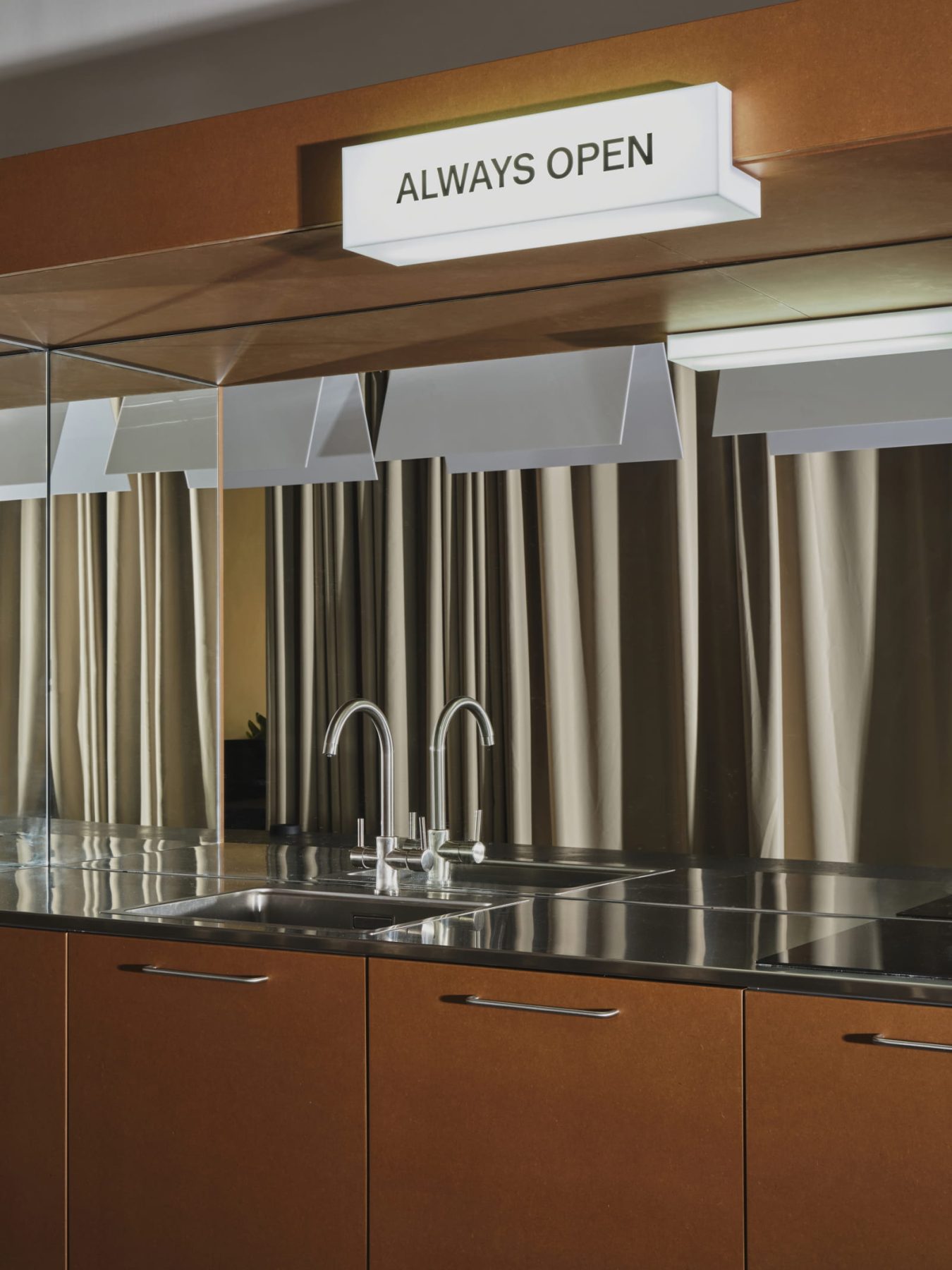
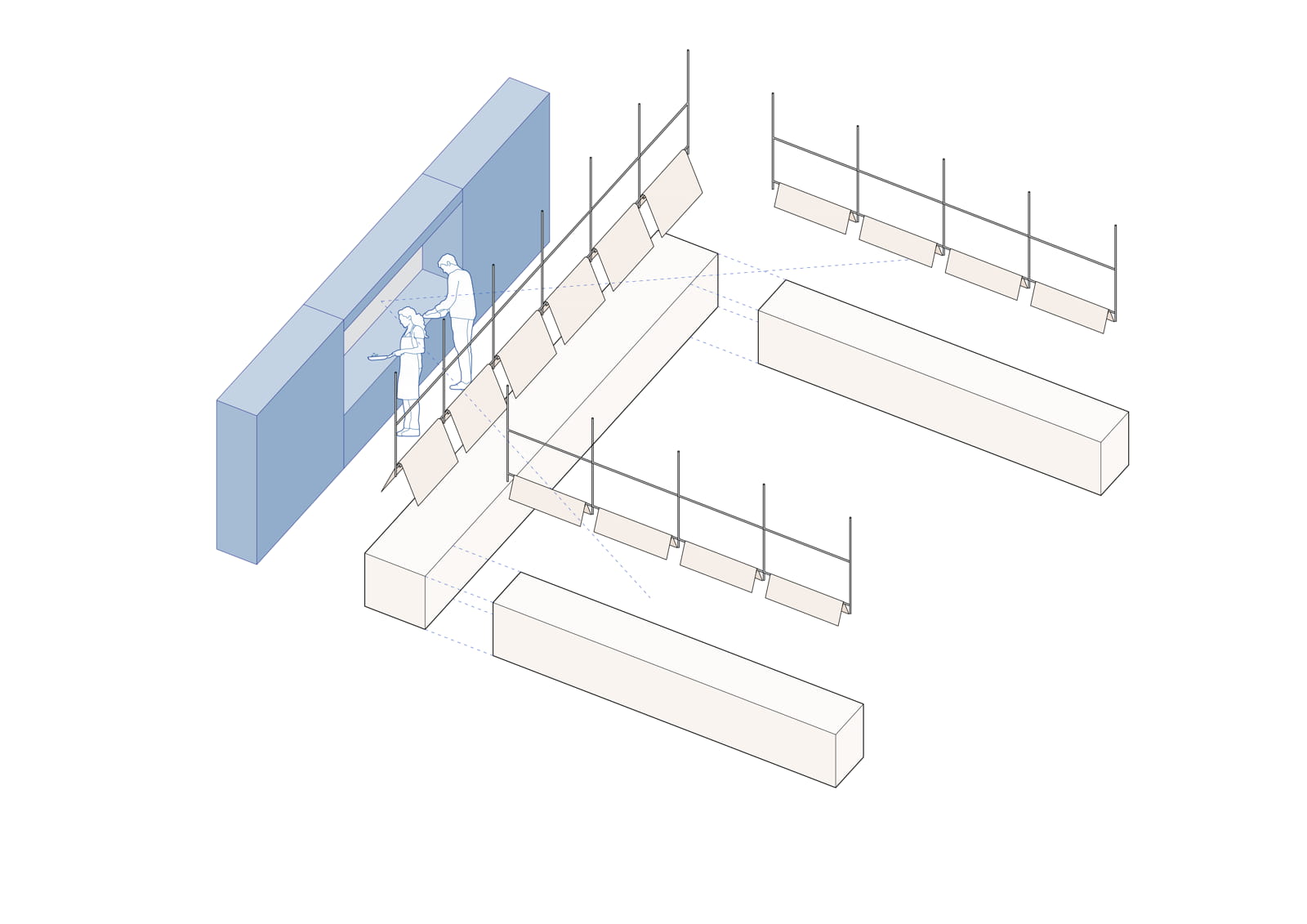
A singular spatial decision is the placement of the kitchen outside the bar, inverting the conventional izakaya layout. This apparent contradiction is resolved through a mirror positioned opposite the kitchen, reflecting the cook and symbolically reintegrating their presence into the bar’s interior. Together with the entrance mirror, this gesture forms part of a broader perceptual strategy in which subtle inversions of expected spatial logic generate coherent yet unexpected situations.
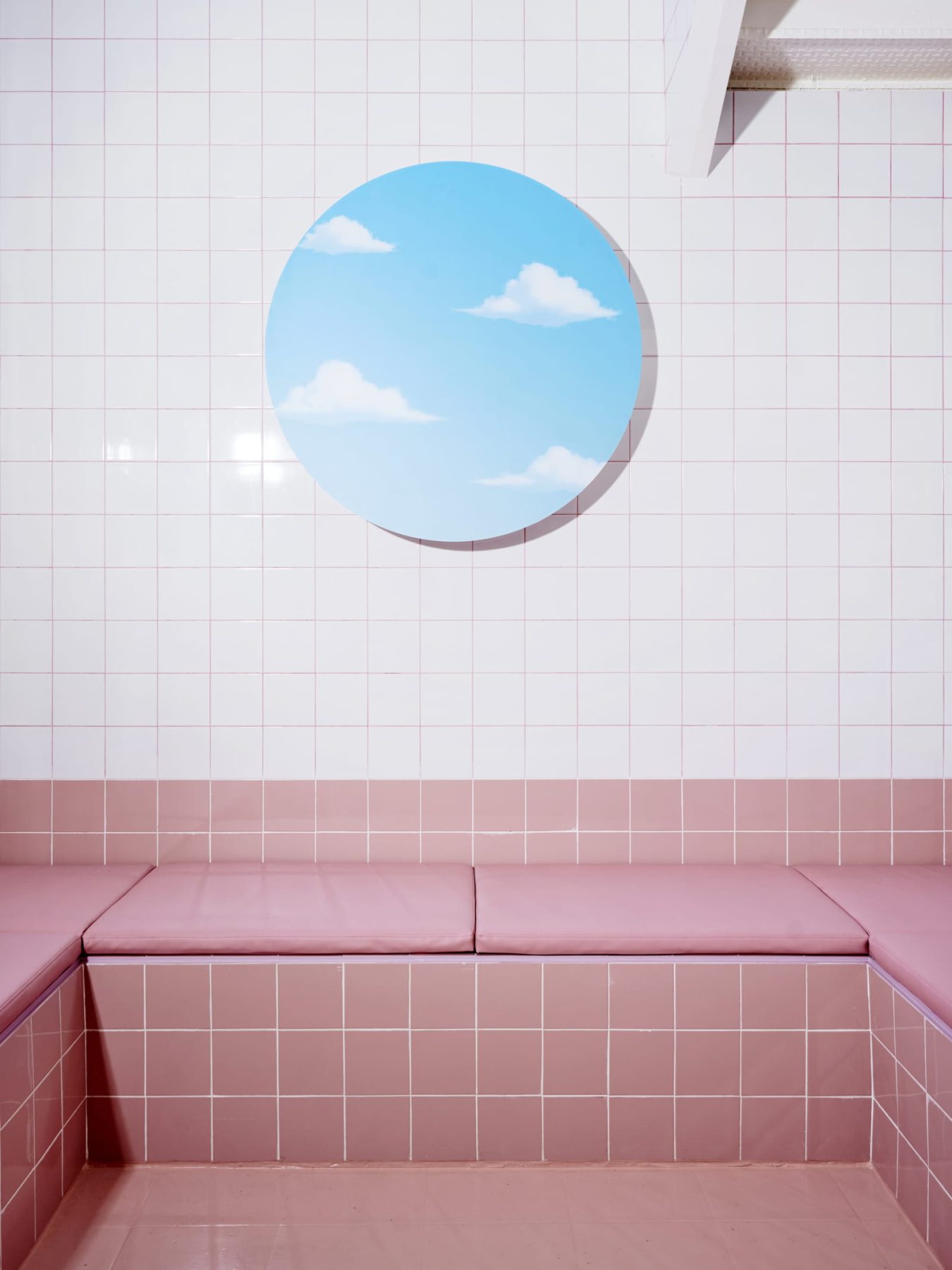
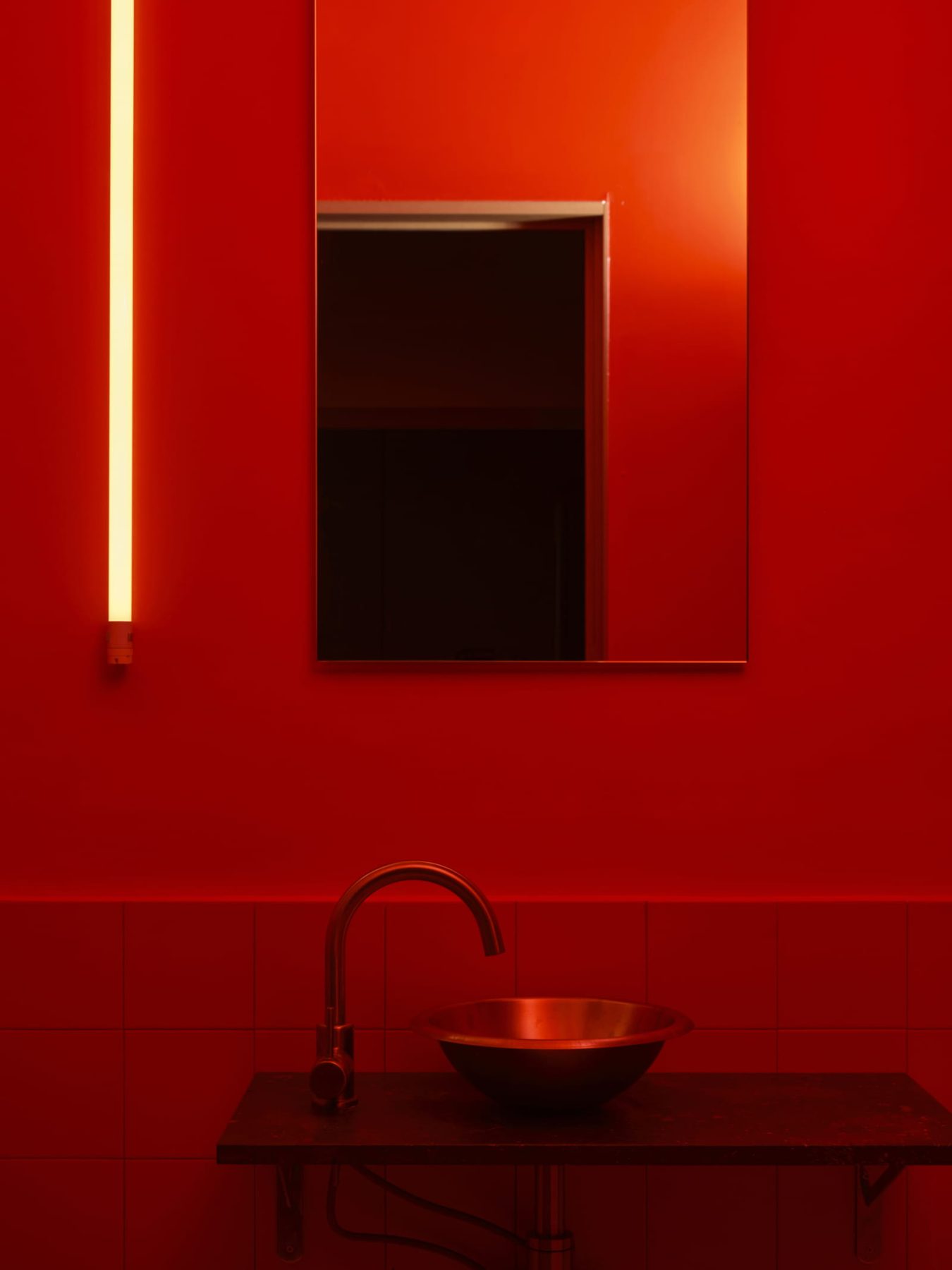
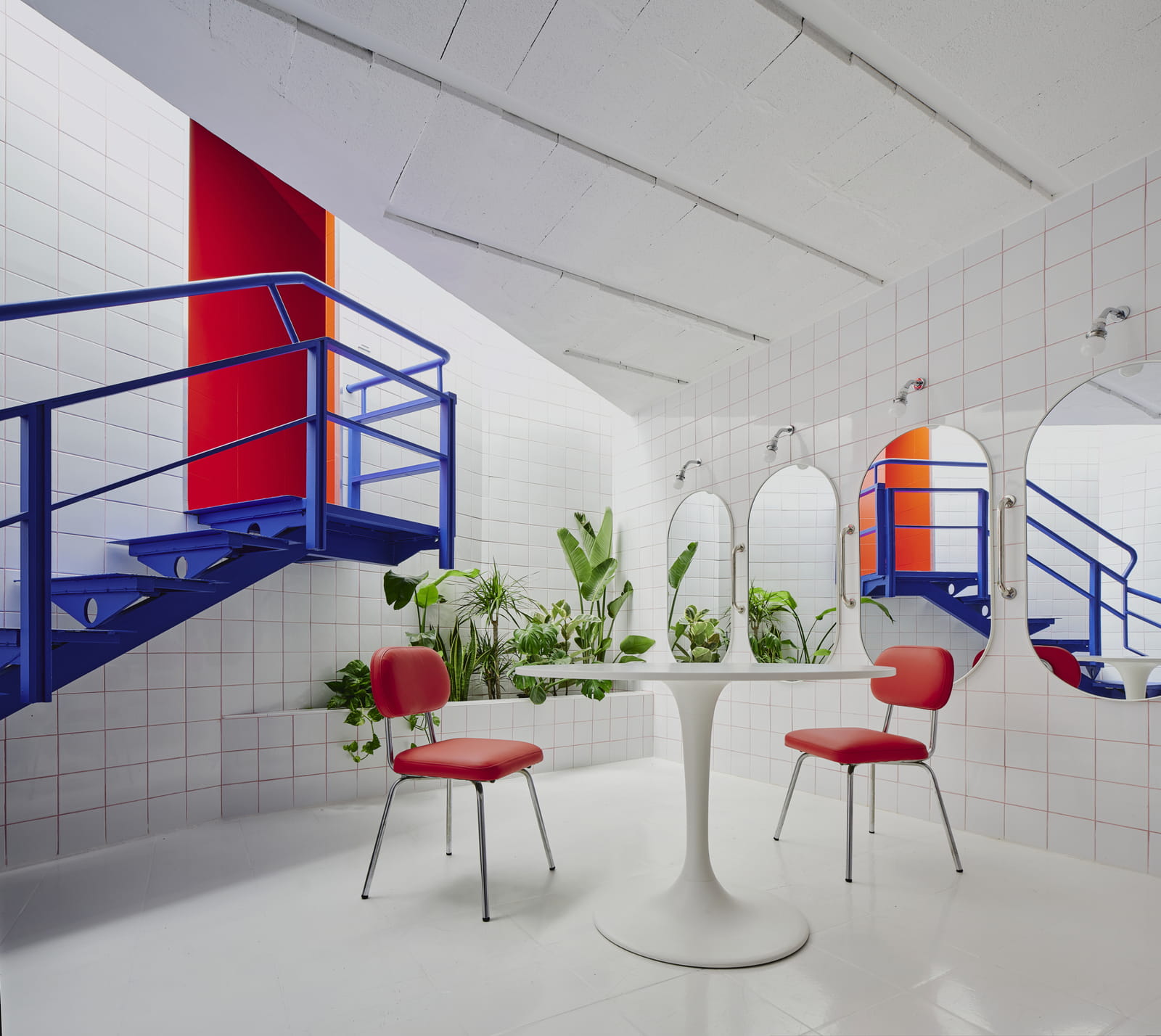
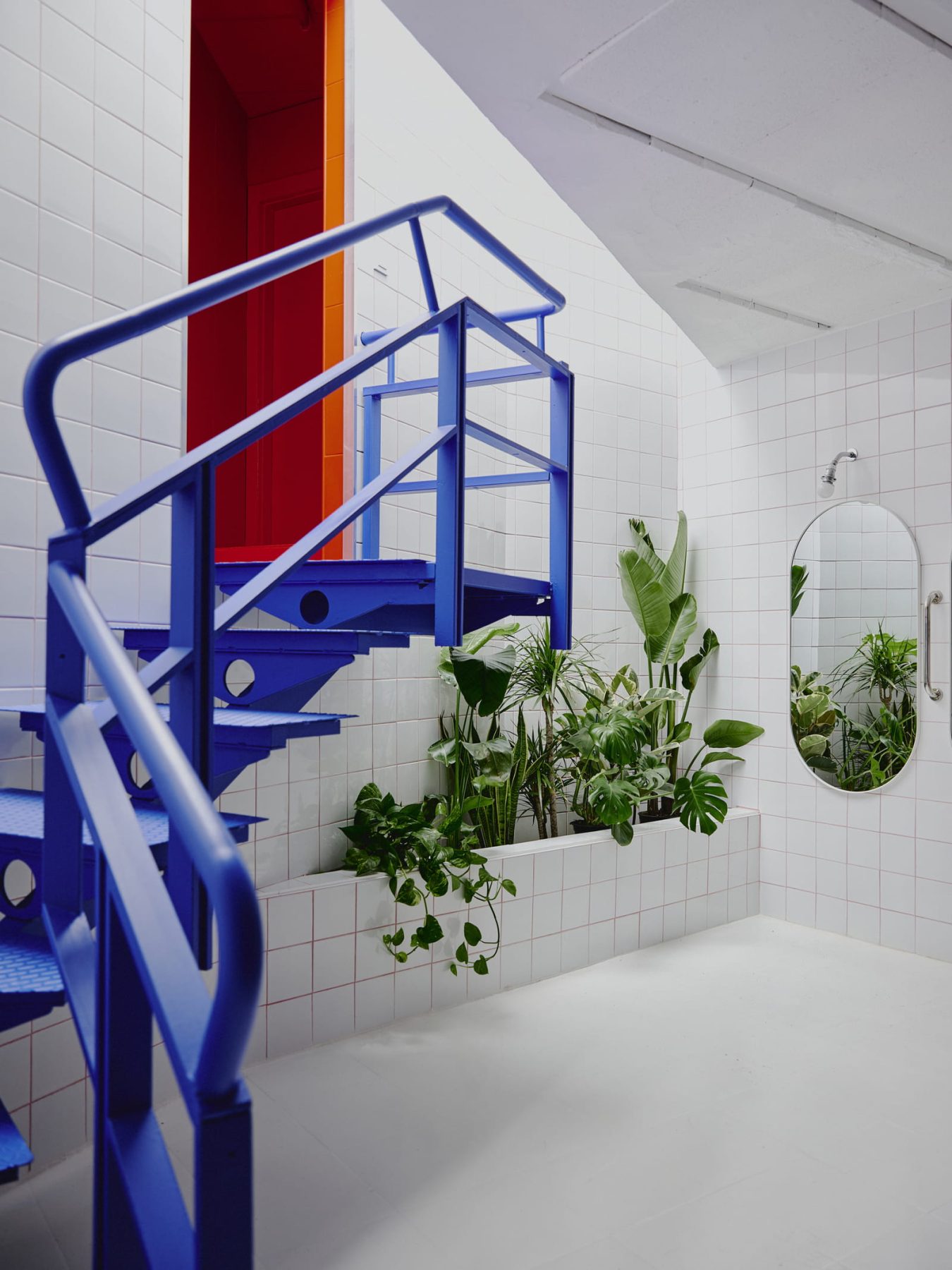
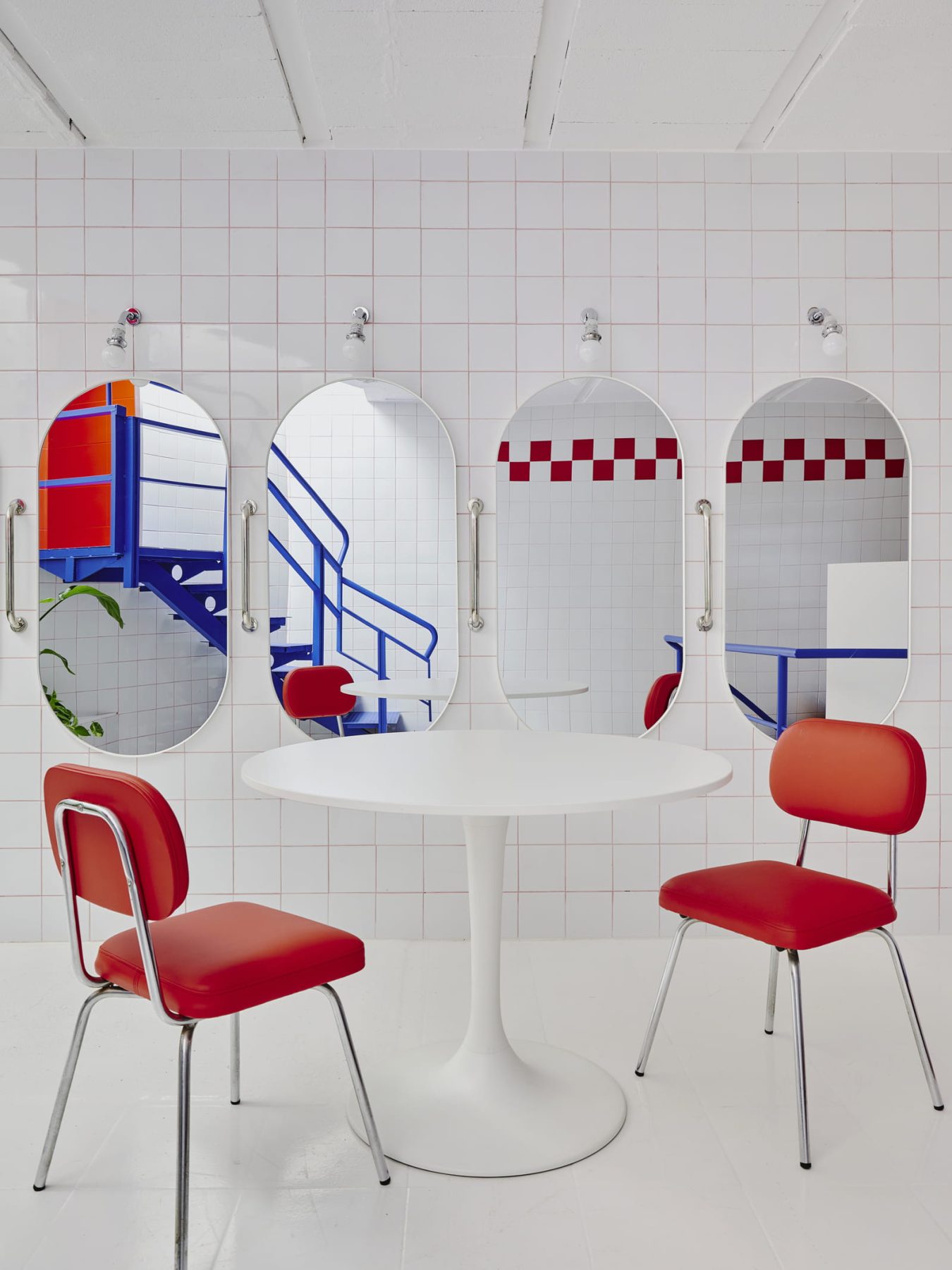
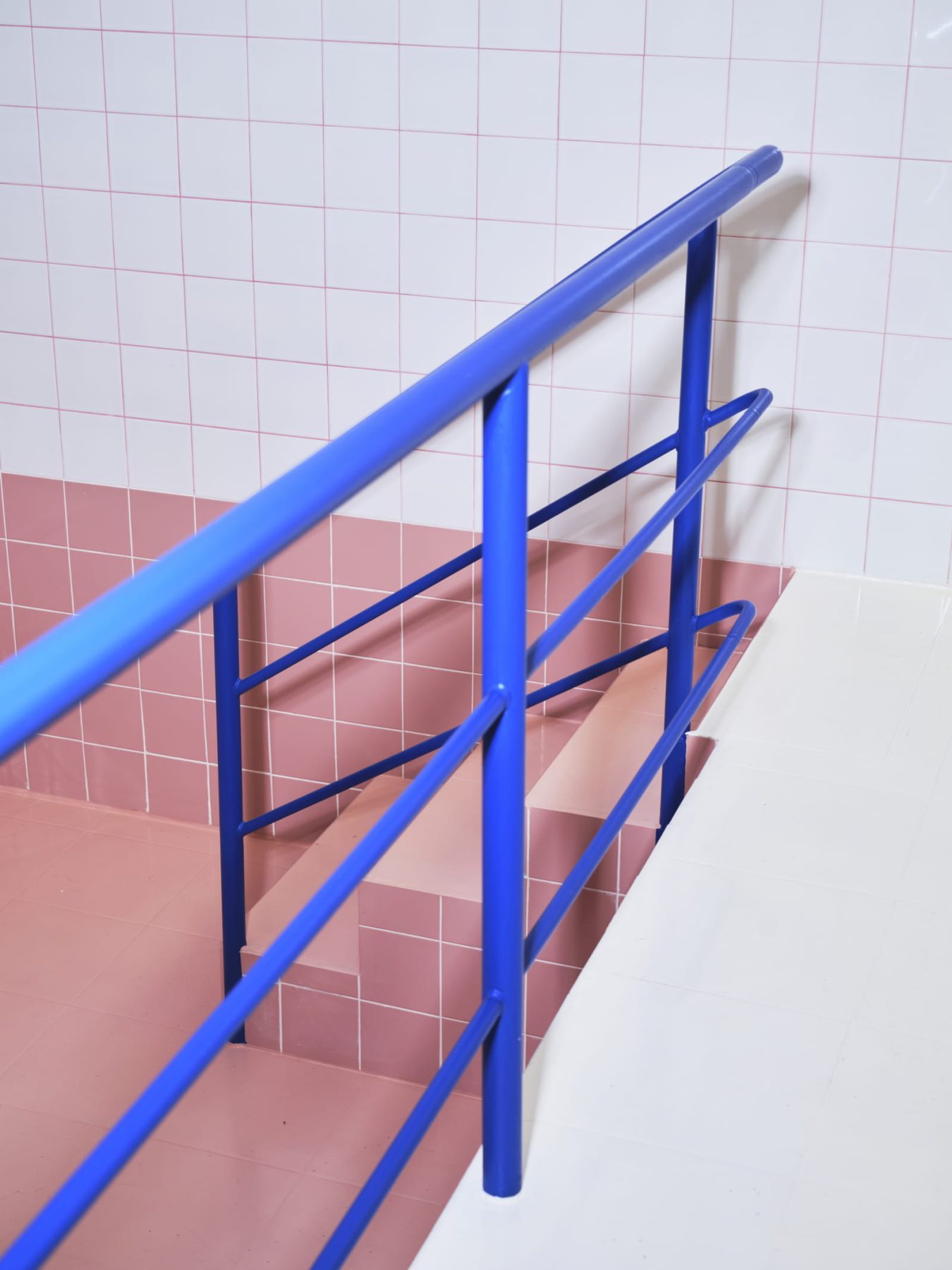
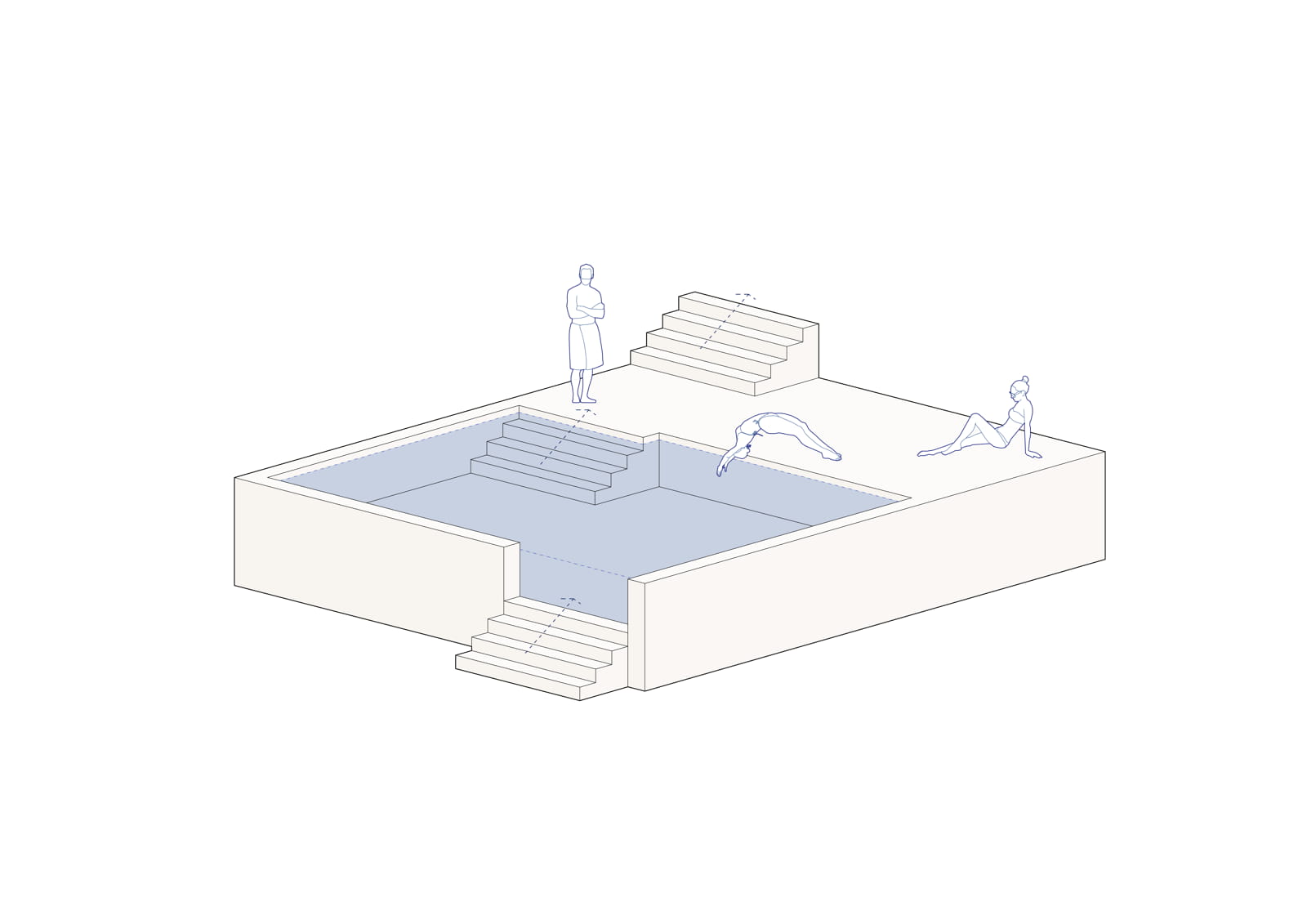
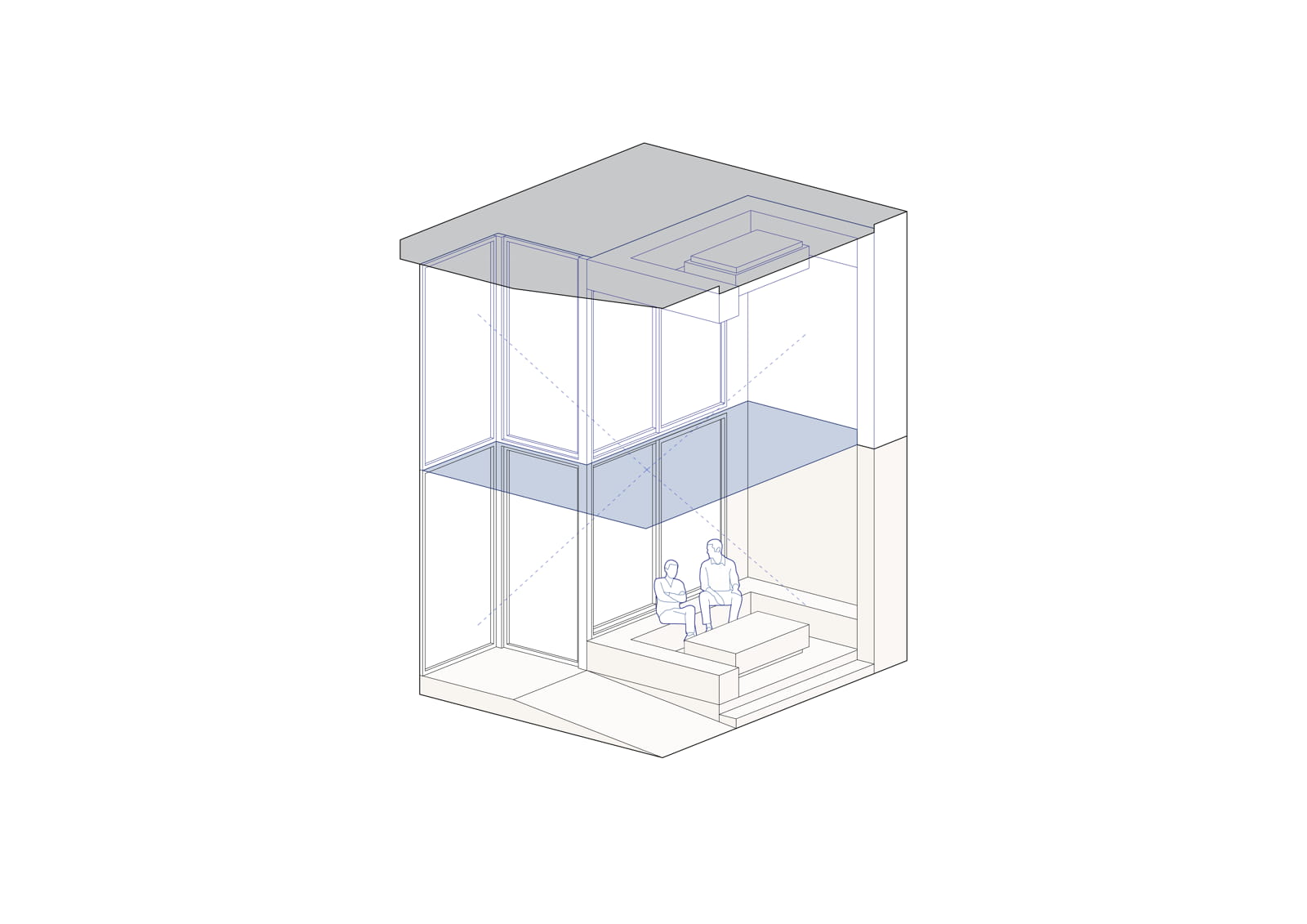
The project’s second conceptual realm occupies one of the original recesses of the premises and functions as a meeting room inspired by the atmosphere of the onsen, deliberately diverging from the overall sobriety of the studio. Accessed via a small stair concealed within the kitchen paneling, a glimpse of a Klein blue door signals the shift in mood. A tatami-like perimeter element acts as a threshold, complemented by a granite piece referencing traditional Japanese domestic entrances. Inside, chromatic intensity, shower-head luminaires, mirrors with bath-area handrails and a false skylight incorporating a small planter create a more playful and experimental spatial image, where a neon sky ironically replaces the customary Mount Fuji imagery associated with onsen settings. Adjacent bathrooms finished in an intense red reinforce the contrast and introduce a slightly provocative note within the narrative sequence.
Materiality
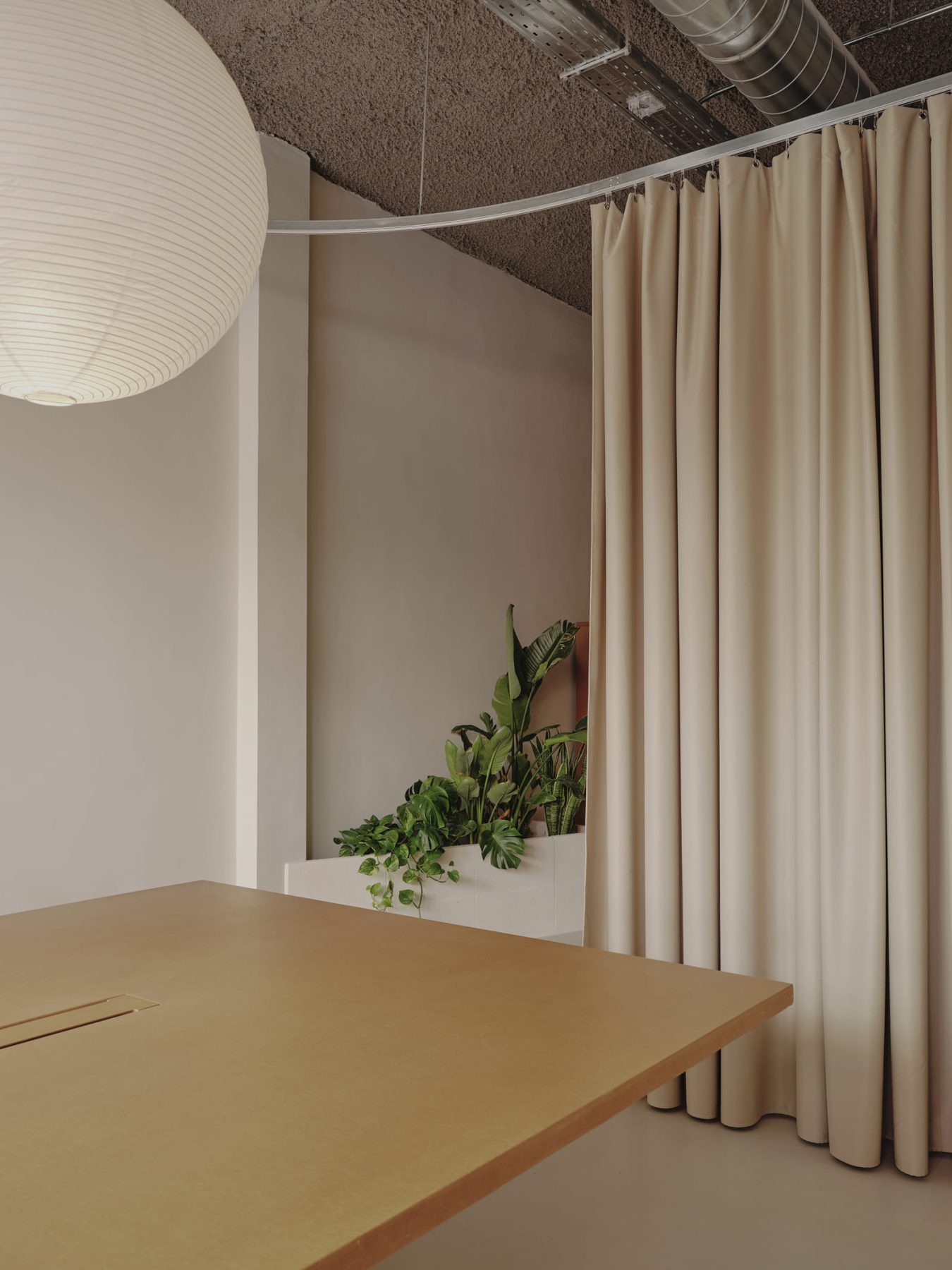
The material strategy follows a logic of coherence and repetition, characteristic of Paloma Bau’s approach. A light microcement floor unifies the entire space, providing continuity and homogeneous luminosity. The sprayed cellulose ceiling operates as both technical and acoustic surface, leaving installations and curtain rails exposed and enabling the subdivision of space through textile elements. The curved lines of these rails introduce a softer, more dynamic reading that subtly disrupts the overall orthogonality.
Perimeter white block tatami elements allow for sitting, informal meetings or event use, and in some areas also function as planters, reinforcing the idea of an active, multi-layered workspace. Work furniture—including tables, kitchen units and storage—is executed in raw MDF through a simple and legible construction system designed to coexist with the fixed architectural elements and the studio’s exhibition character. All bespoke pieces were manufactured by the Valencian firm Lebrel Furniture.
Lighting and furniture
The lighting scheme combines technical fixtures by Arkoslight, a brand recurrently used in the studio’s projects, with decorative rice-paper lamps and specific solutions such as the stainless-steel luminaire developed for T.O.T. This balance between technical precision and diffused warmth produces an atmosphere that is controlled yet welcoming, aligned with the dual condition of the space as workplace and social setting.
Largely custom-designed, the furniture integrates into the project’s broader material narrative and reinforces its flexible vocation, enabling simultaneous uses and fluid transitions without altering the spatial structure.
A multifunctional creative workplace
Sornells 21 operates not only as an architecture and design studio but as a shared platform for working, collaborating, meeting and hosting events.
Its spatial configuration supports multiple uses without complex transformations, reflecting contemporary modes of practice where production, presentation and exchange occur within the same environment.
By transforming an irregularly shaped commercial unit into a cohesive and adaptable interior landscape, the project foregrounds the architect’s office as an evolving workspace—one where daily rituals, tools and collective interactions actively shape design culture and the transition from conceptual exploration to the built world.
Facts & Credits
Title Sornells 21
Typology Interior, Workspace, Office
Location Valencia, Spain
Area 170 m2
Status Completed, 2025
Architecture & Interior Design Paloma Bau Estudio
Photography David Zarzoso
Text by the authors