A Whimsical Reuse series explores refined architectural transformations where history is reinterpreted through poetic interventions and contemporary craft. Forgotten spaces gain new life, revealing a dialogue between memory, material, and contemporary ways of living.
On the edge of Paesana, beneath the imposing profile of Monviso, a modest 1960s house becomes the ground for a subtle architectural reversal. With Casa BM, ErranteArchitetture transforms a neglected structure into a spatial and environmental statement that reorders its fragmented suburban context. Through simple and raw materials, artistic research and self-building techniques the project reframes domestic life while restoring meaning and orientation to a peripheral landscape of the Po Valley.
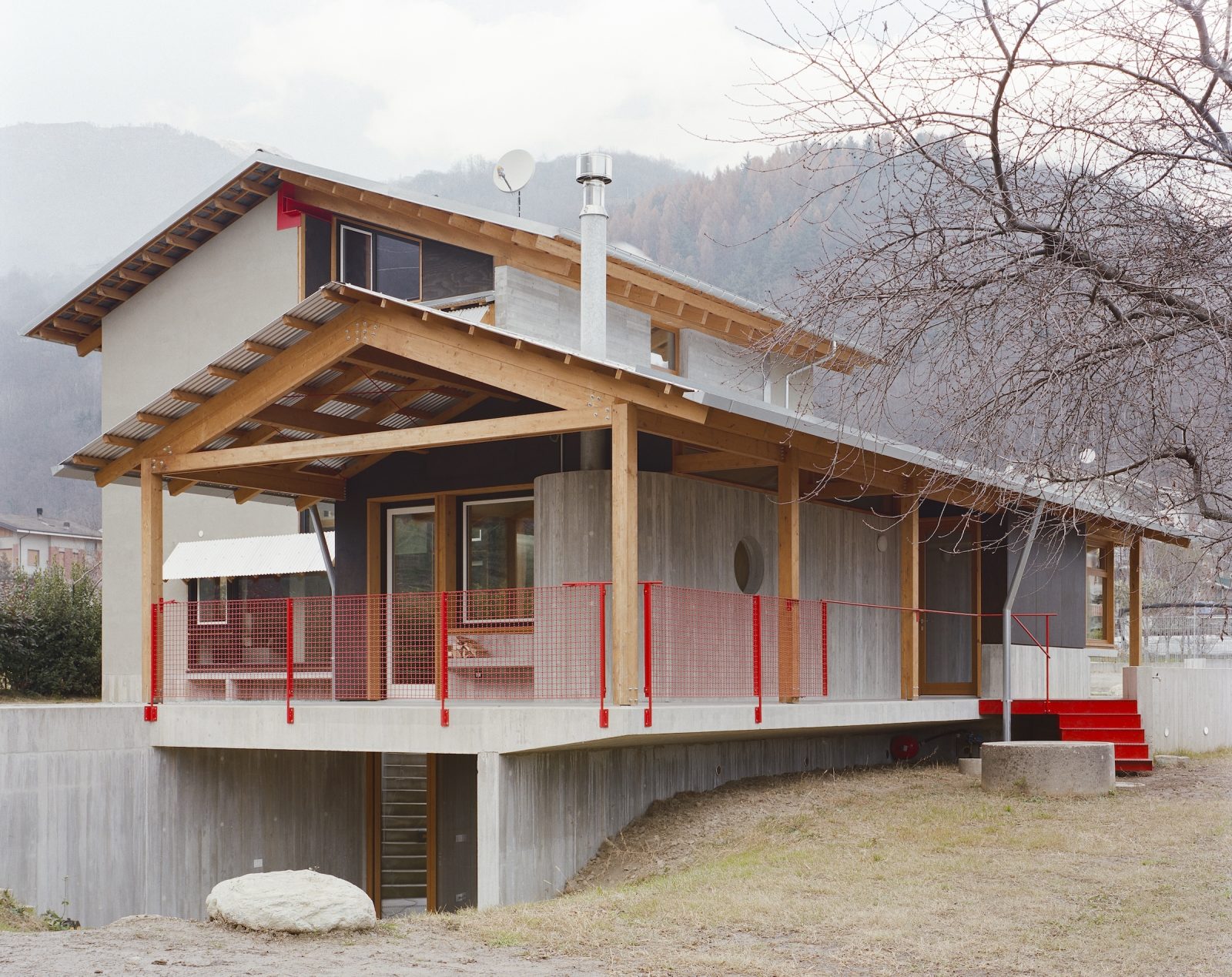
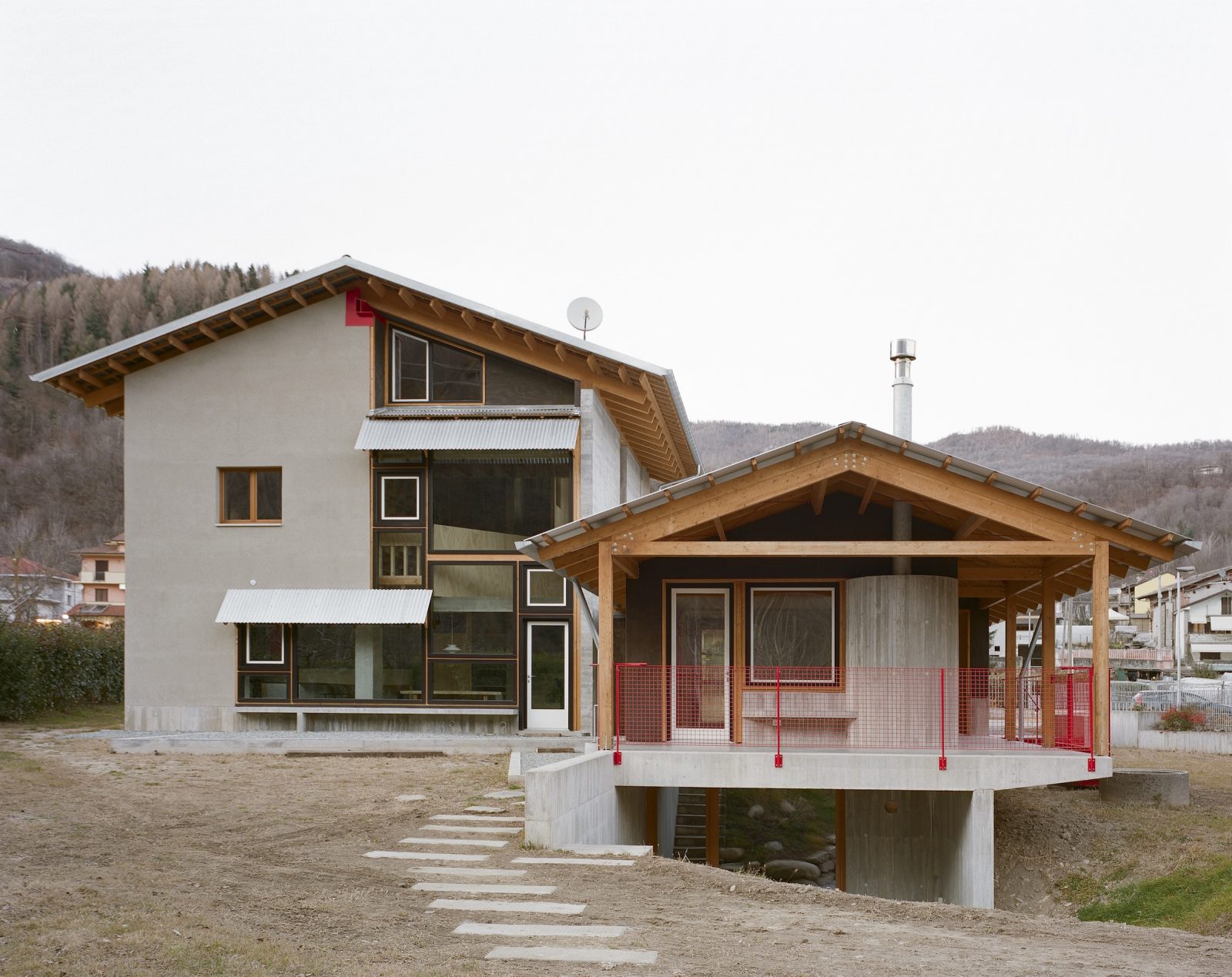
At the entrance to the Po Valley, in the province of Cuneo, Casa BM does not announce itself through formal excess. Its compact volume blends into a heterogeneous suburban fabric of apartment blocks and ungainly detached houses. Yet behind this quiet presence lies a radical act of domestic transformation.
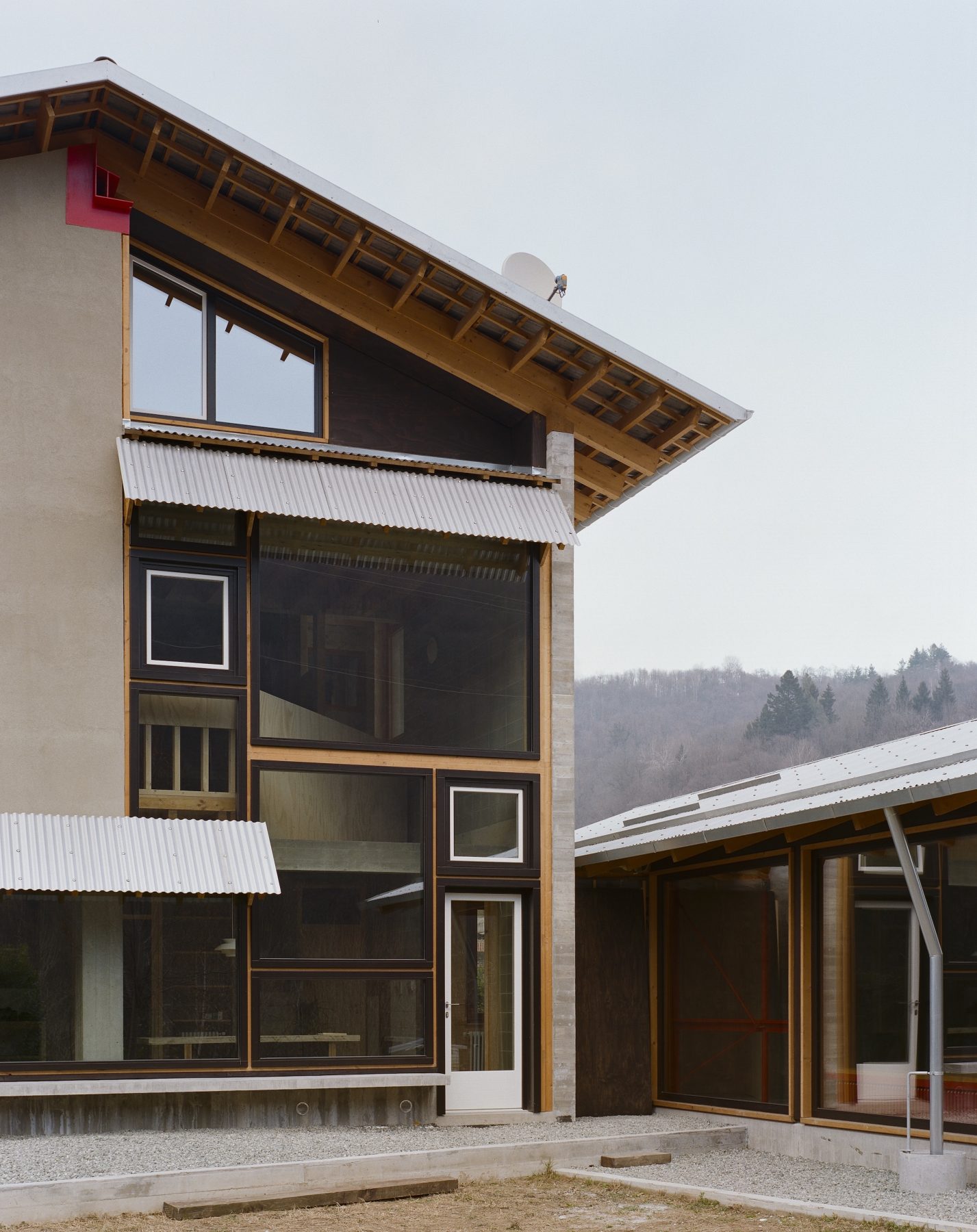
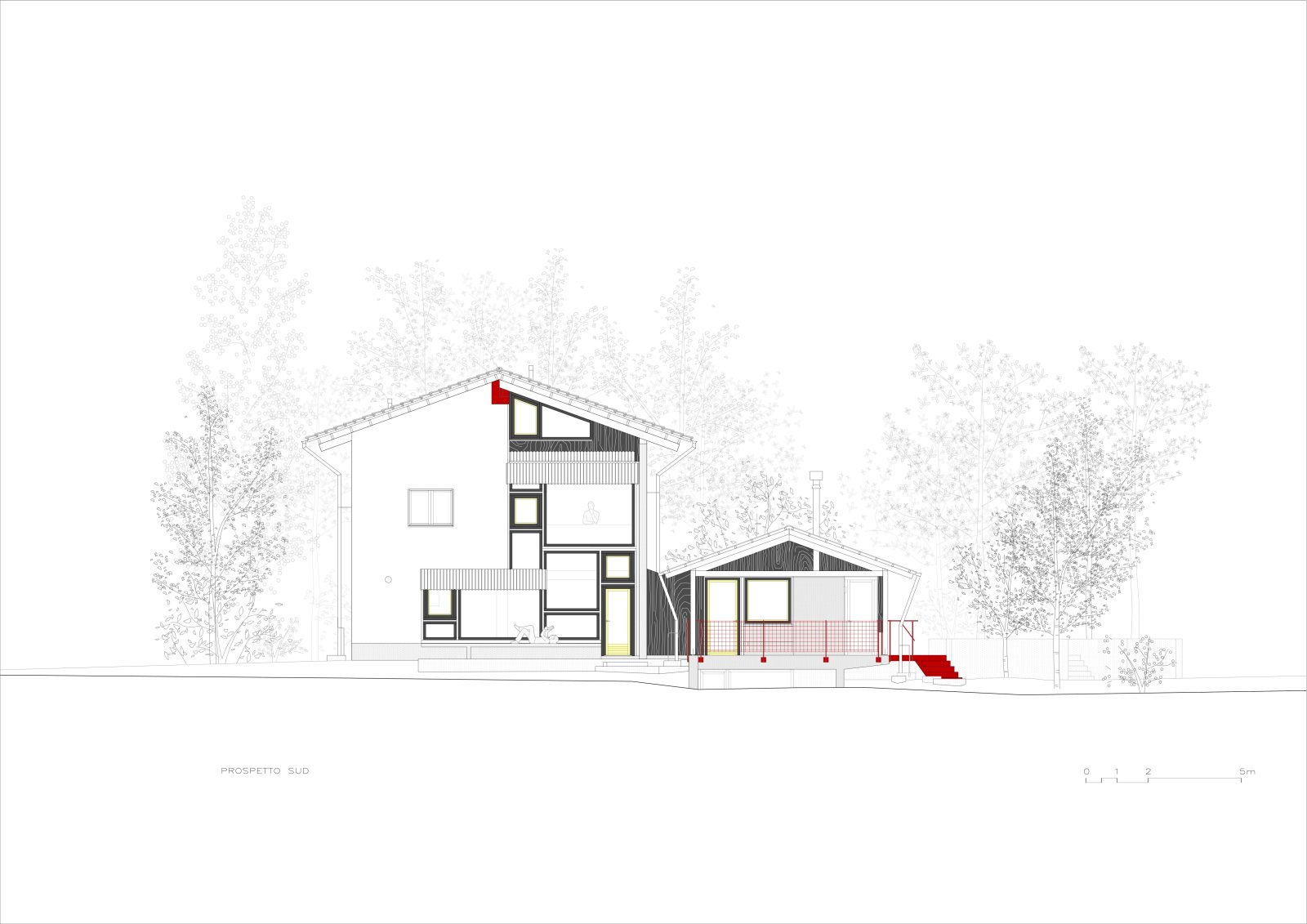
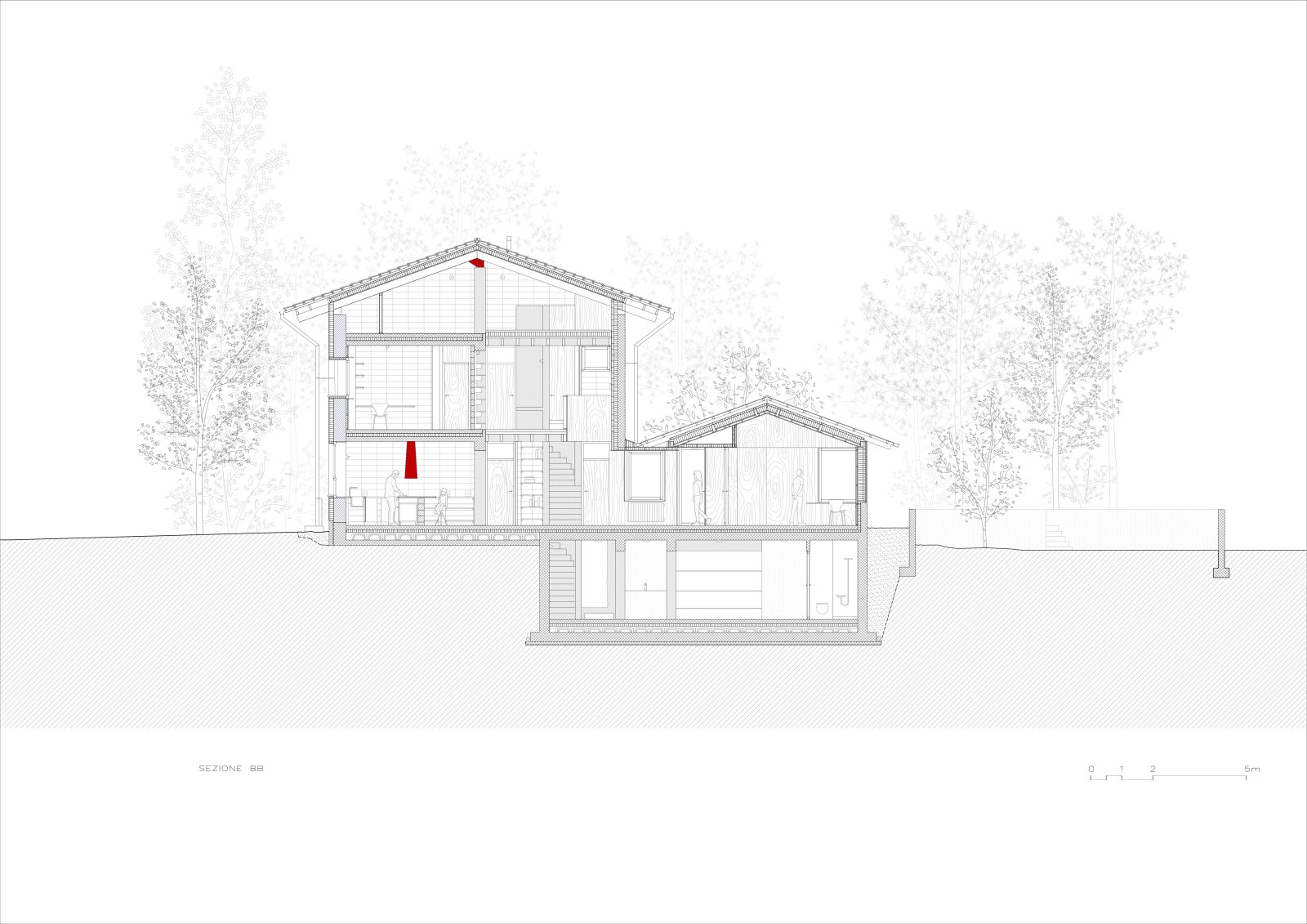
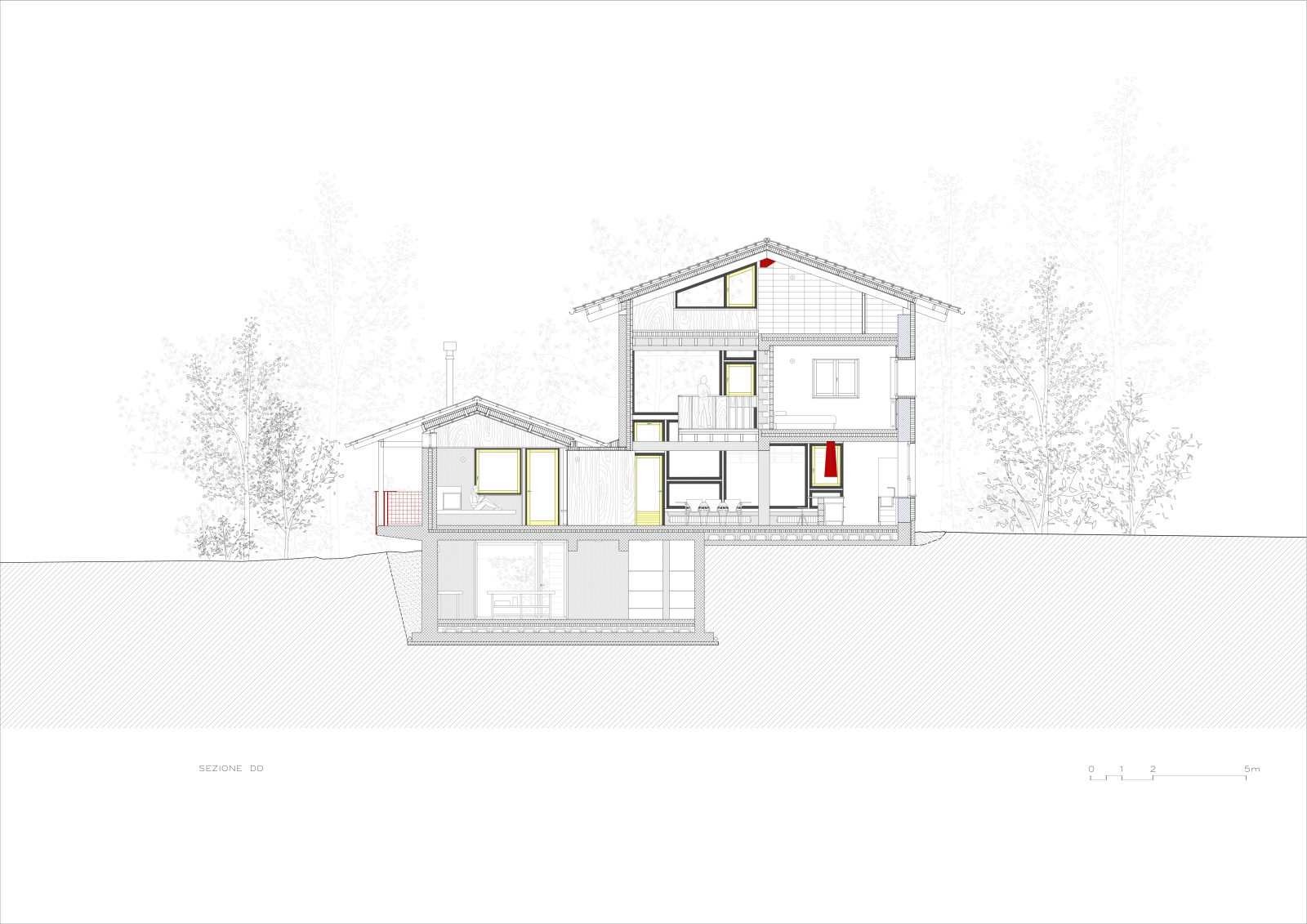
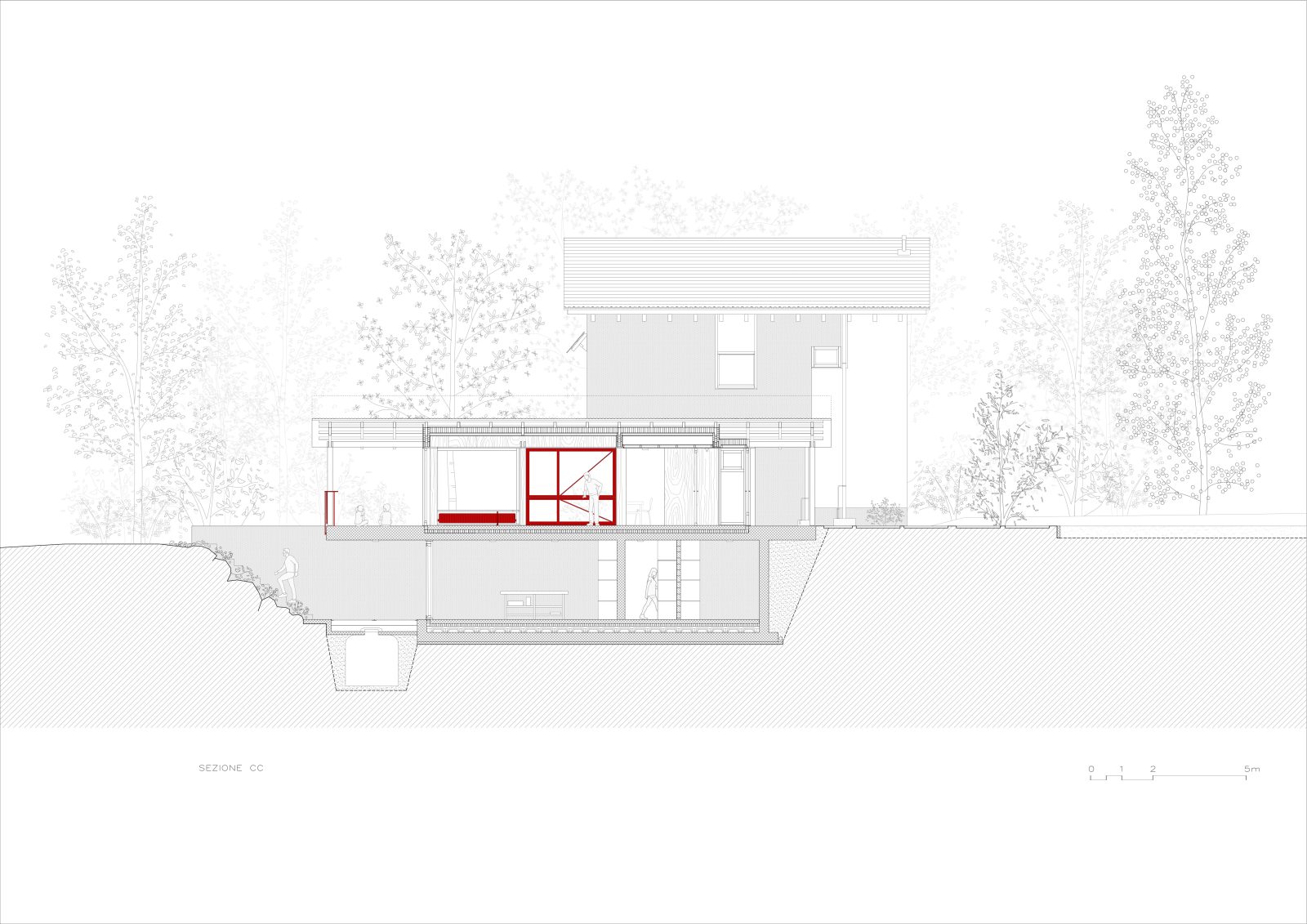
The project by ErranteArchitetture — founded by Sarah Becchio and Paolo Borghino — reworks a disused two-storey dwelling from the 1960s, extending it into a 450 m² contemporary residence. A new single-storey pavilion is added to the east, generating an L-shaped plan that overturns the house’s original orientation. Where the former layout privileged the road, the new composition opens southward to the garden, pastures, and the distant mountain horizon, only meters from the Po River.
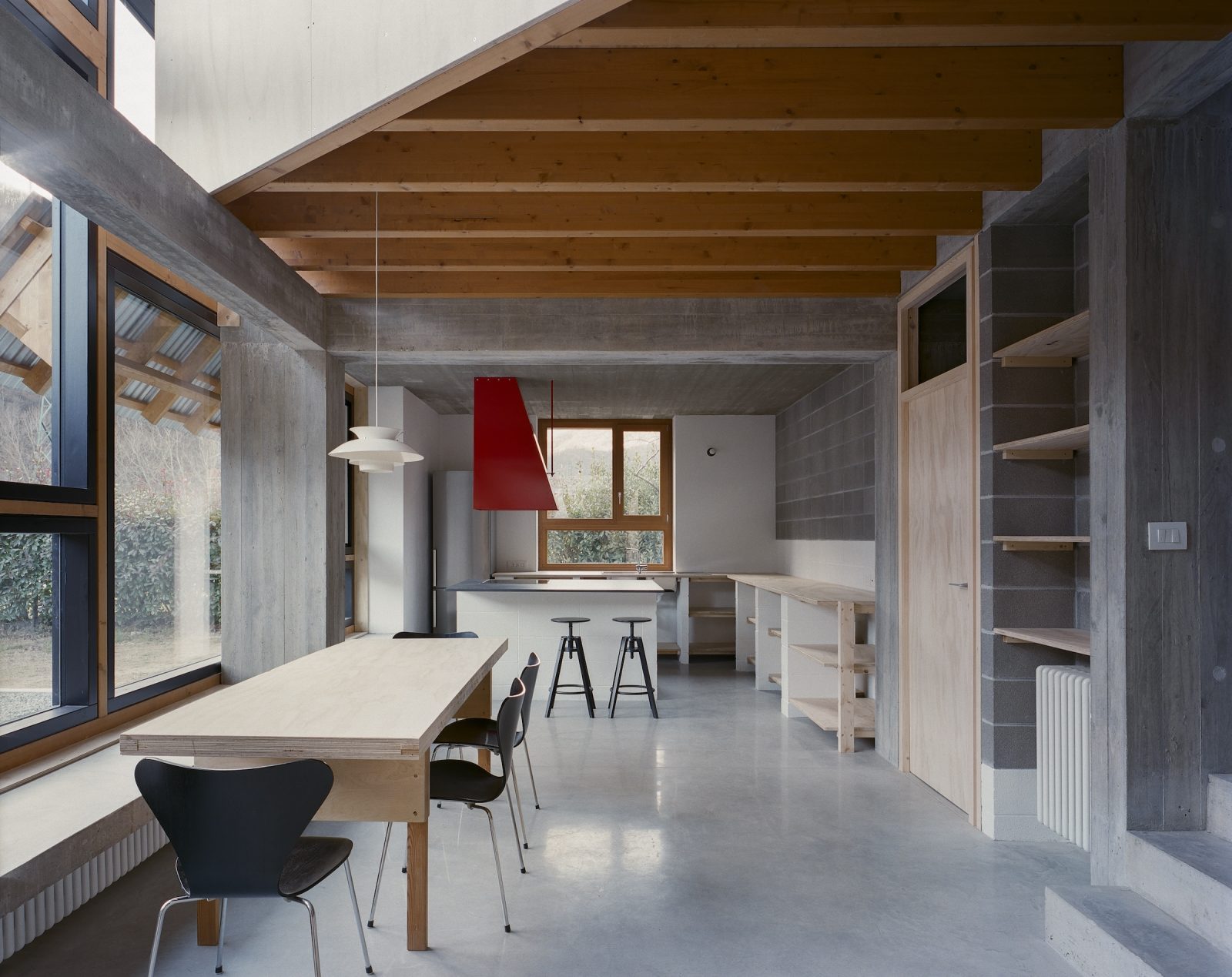
This inversion is the project’s indispensable gesture: an operation that brings order to the site’s contradictions and redefines the building’s relationship with its surroundings.
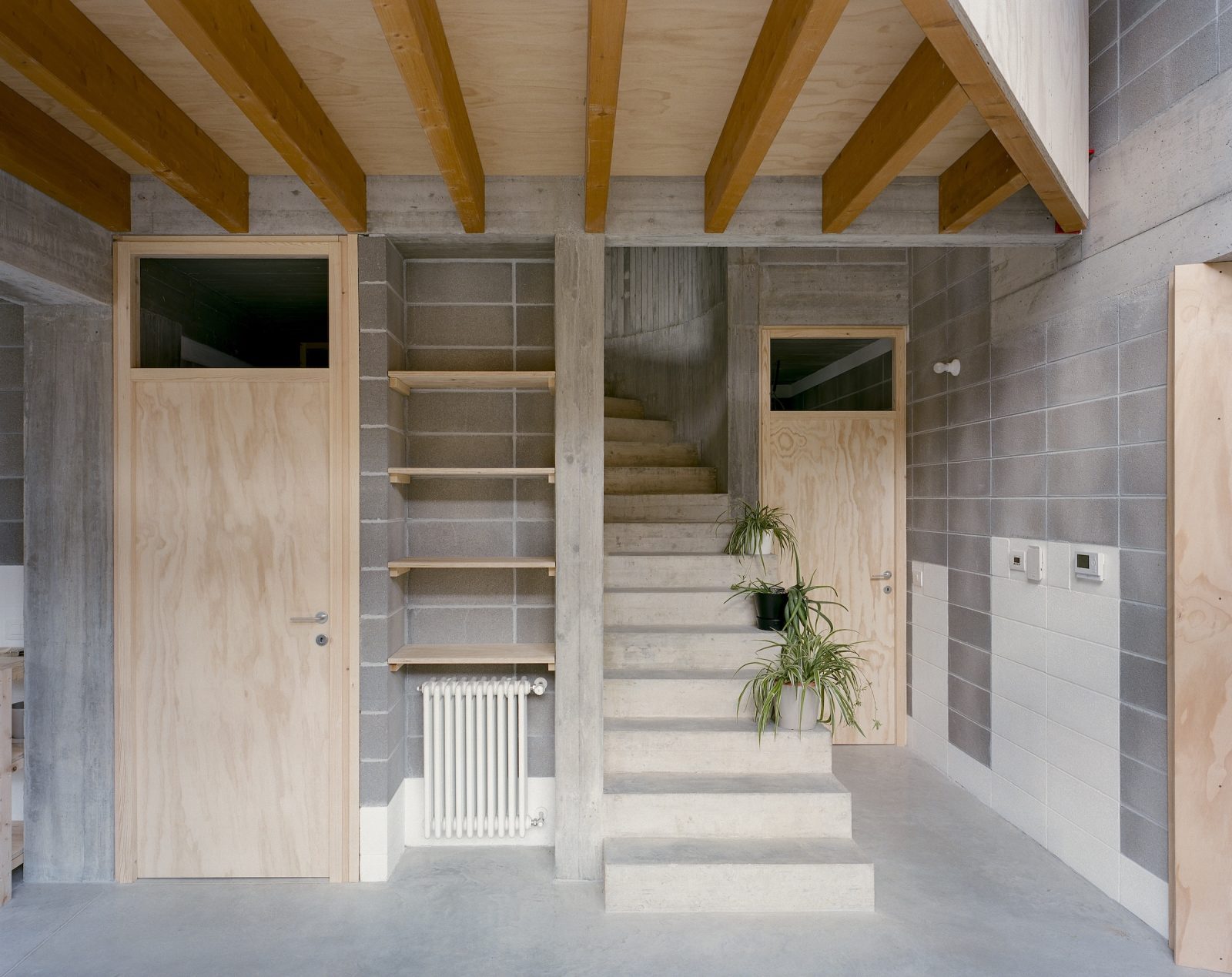
A full-height glazed façade, a porch, and a terrace establish continuity between interior and landscape, while a nearly blind reinforced-concrete wall shields the house from the intrusive proximity of a neighboring apartment block.
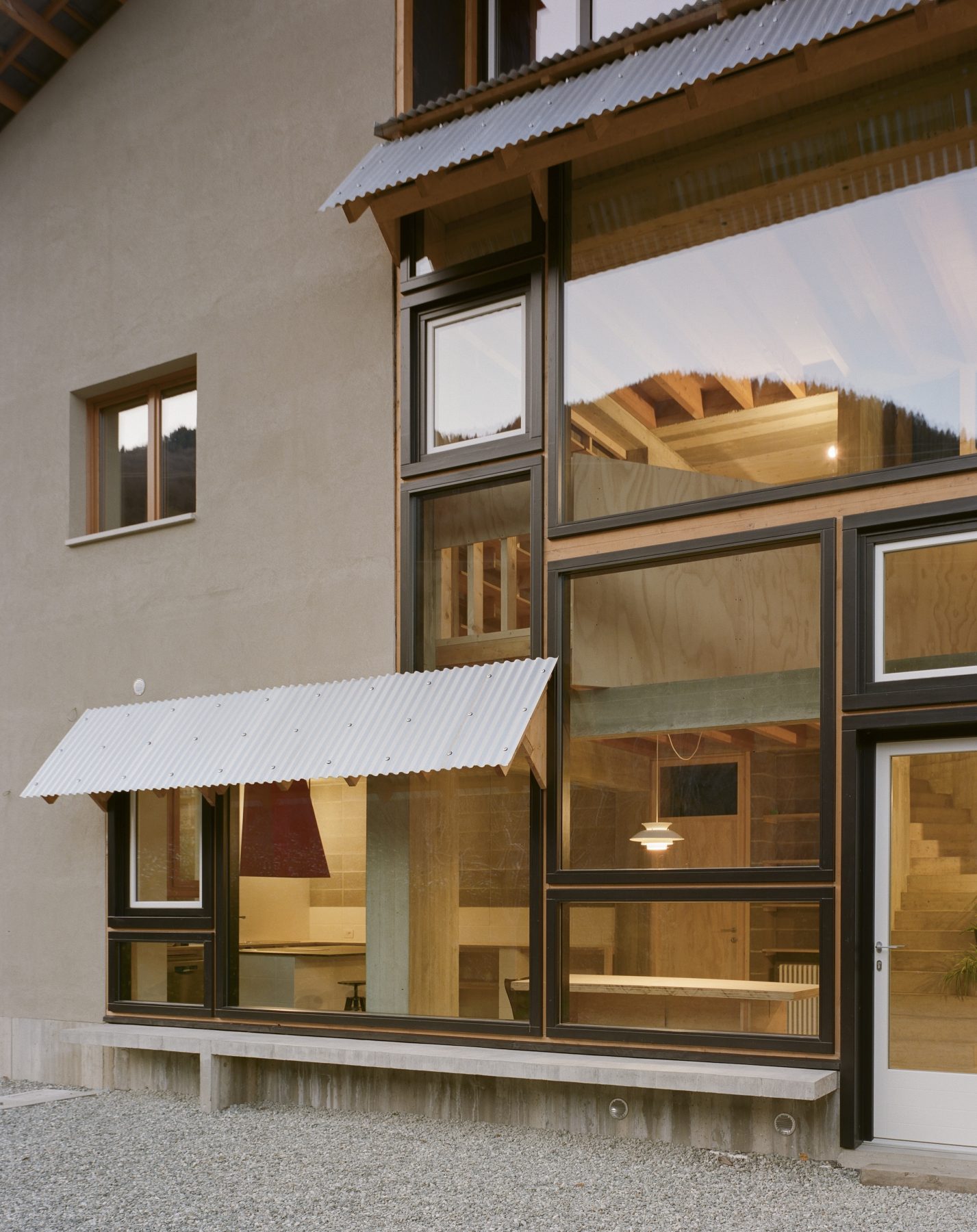
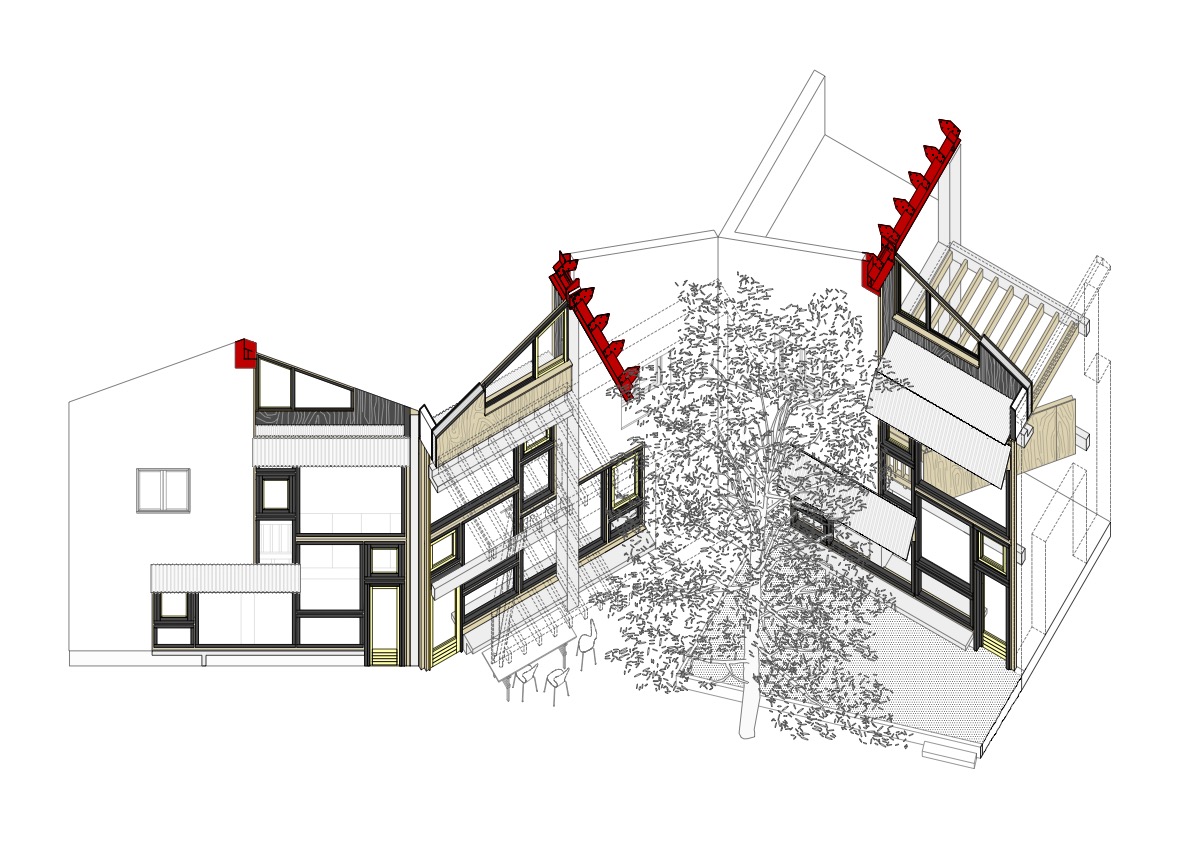
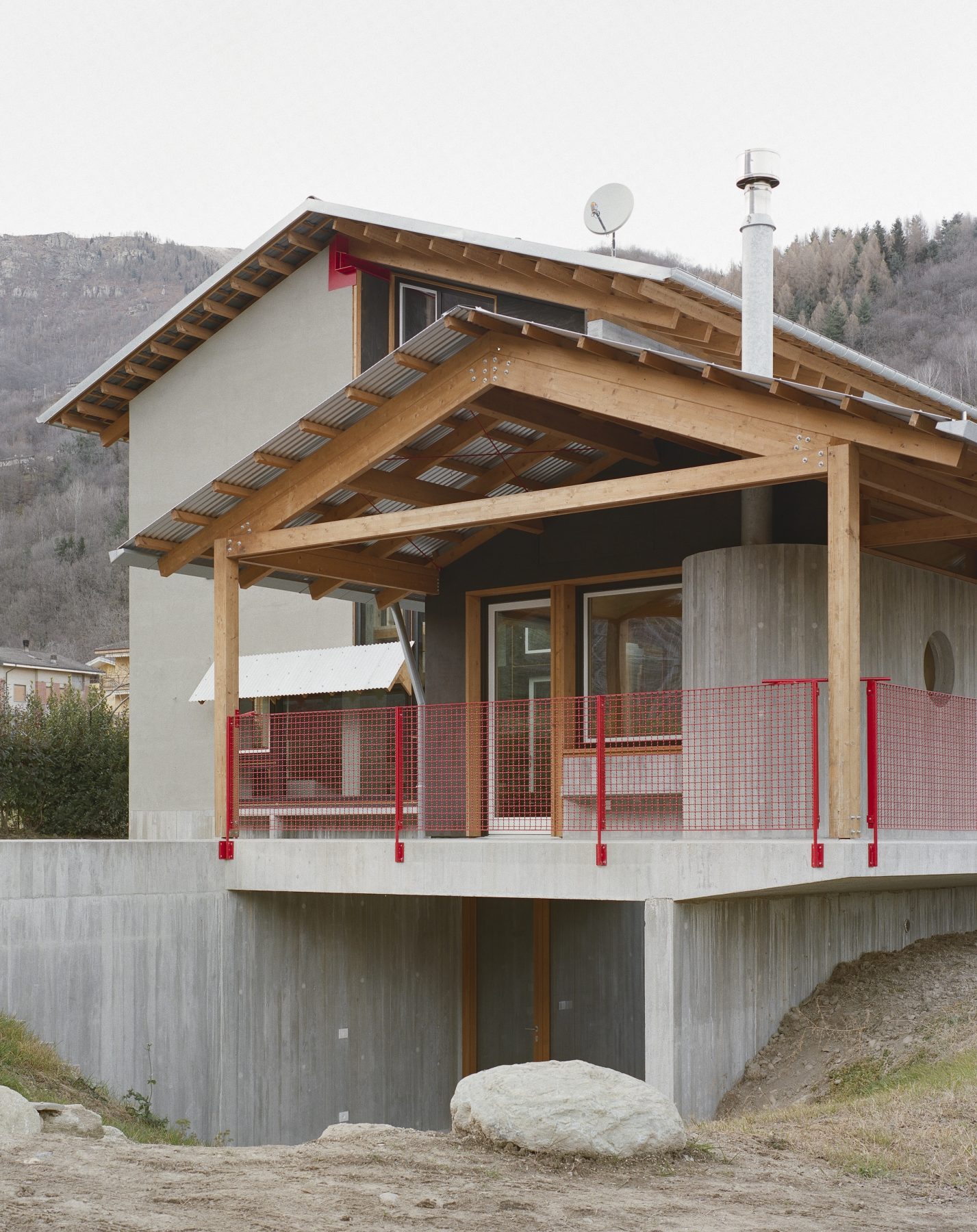
Of the original structure, the external shell is largely preserved, upgraded with high-thermal-mass insulation and revised openings. Inside, however, the house is dismantled and recomposed.
Roof and slabs are replaced, allowing new spatial sequences that disregard the old envelope. The ground floor now hosts kitchen and dining areas, while the upper level accommodates sleeping spaces and a study, tightly connected to the new pavilion.
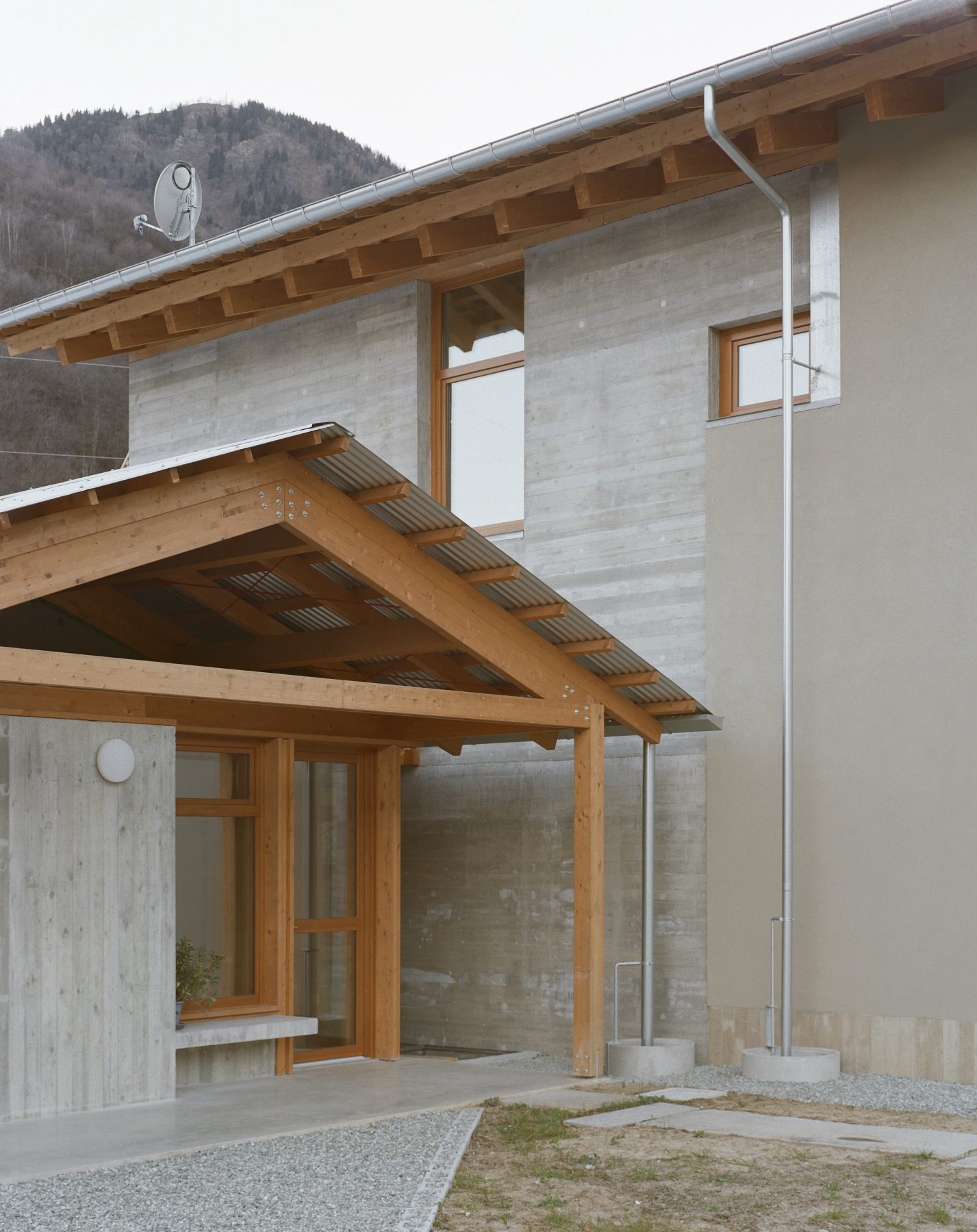
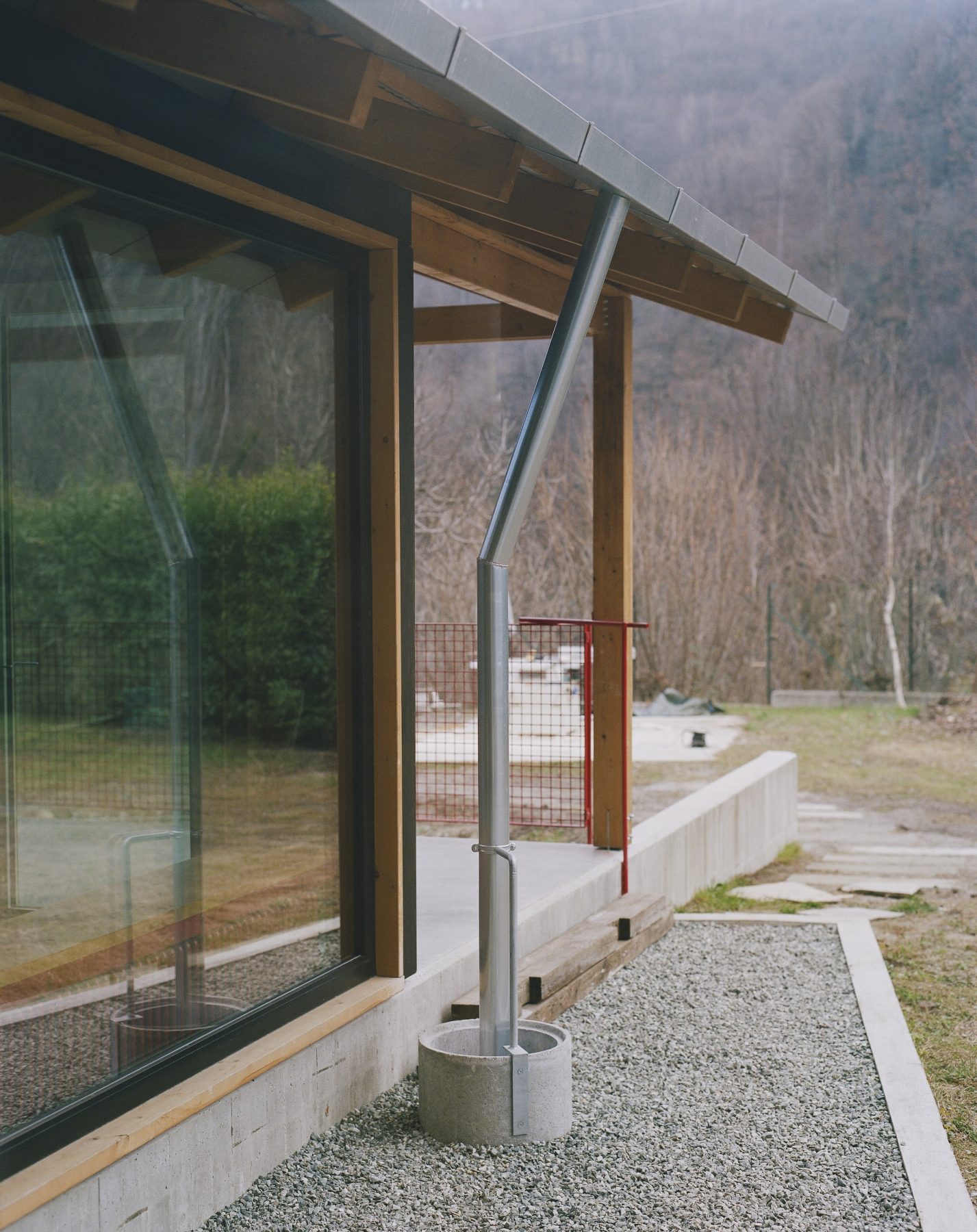
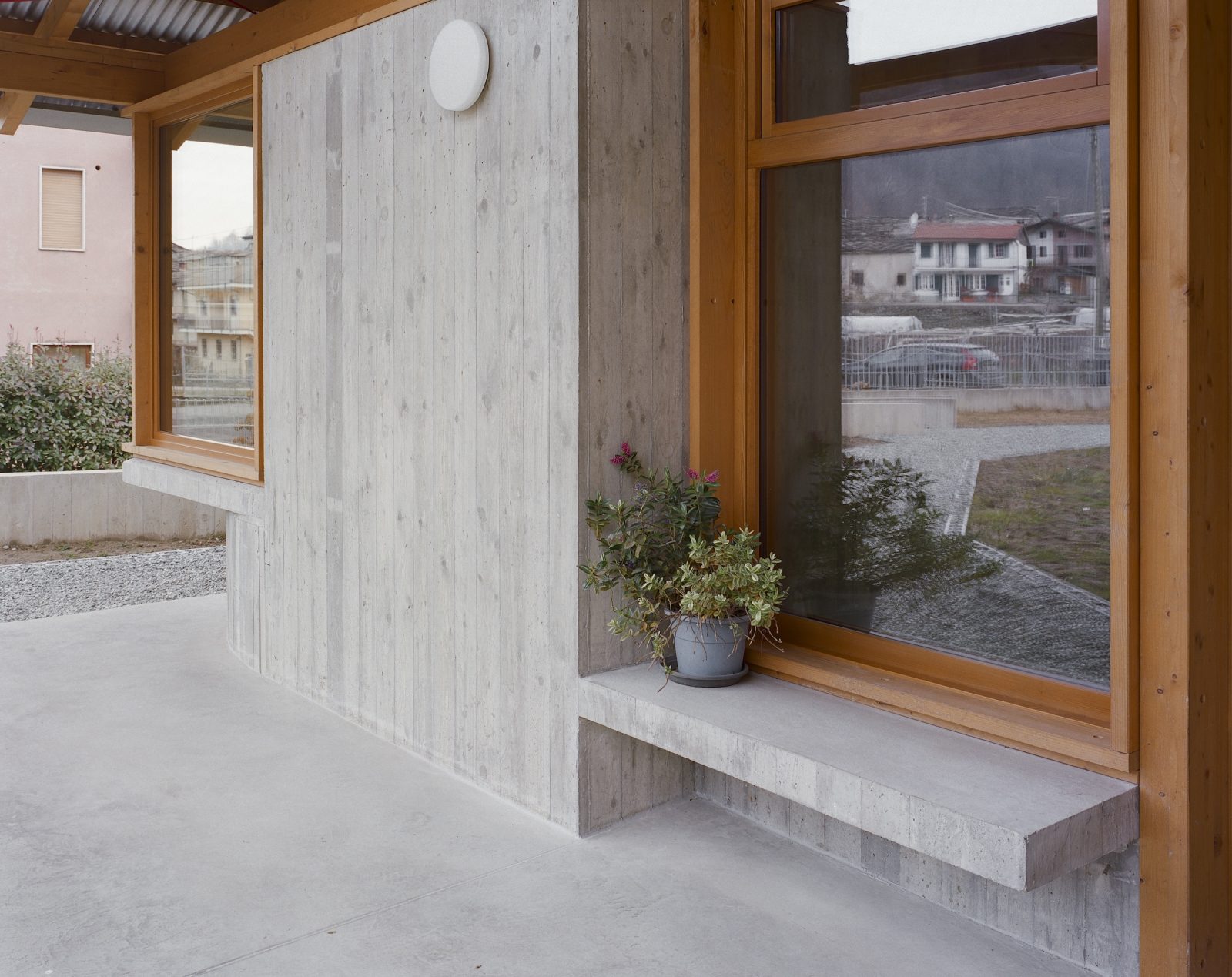
The pavilion continues the same logic of selective openness. Large western openings frame the garden and landscape; to the east, a covered passage runs alongside a concrete wall, gradually widening into a porch beneath the extended pitched roof. A recessed terrace mediates between living spaces and the sloping terrain, while a deep-set window draws light into a semi-basement workshop.
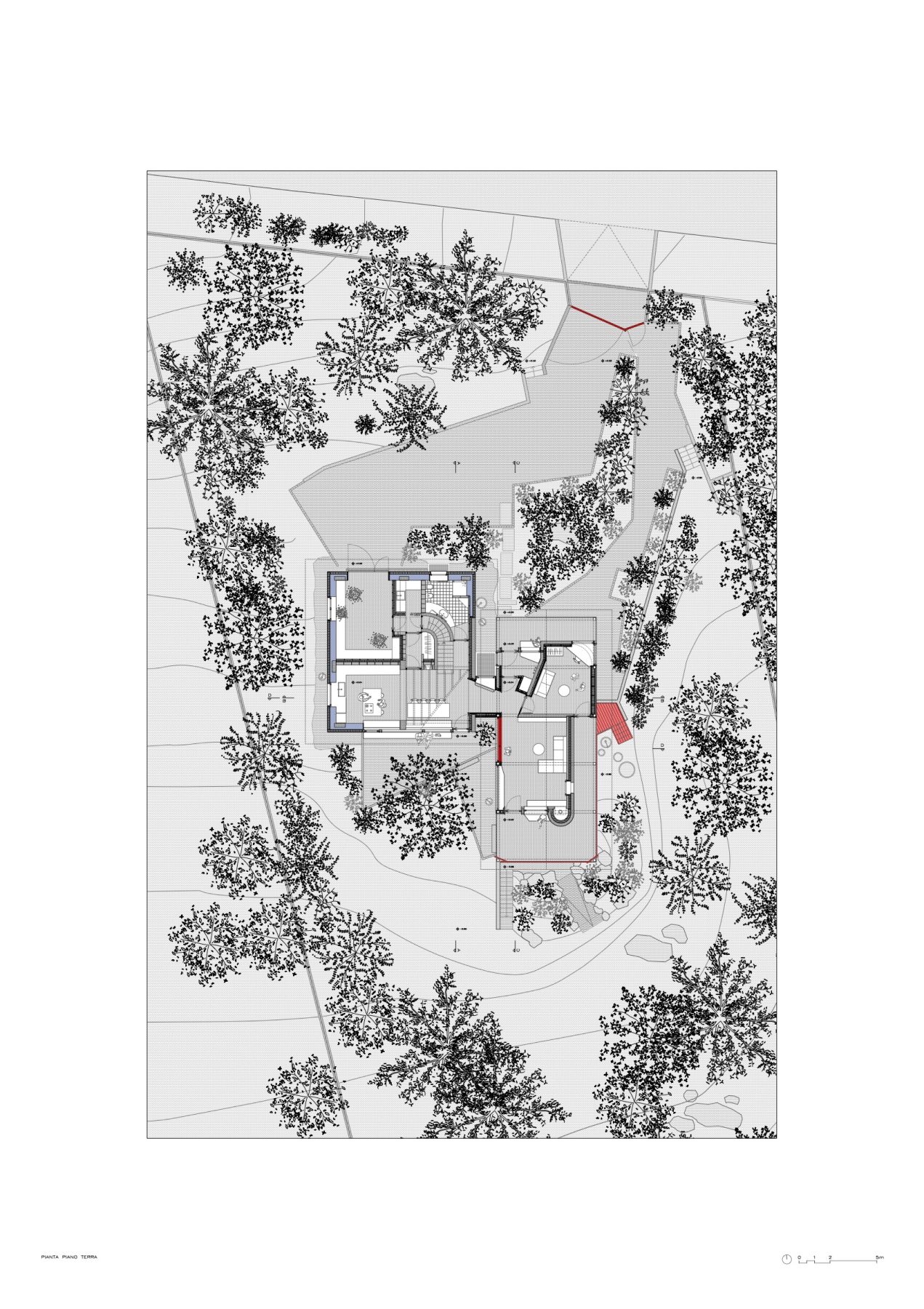
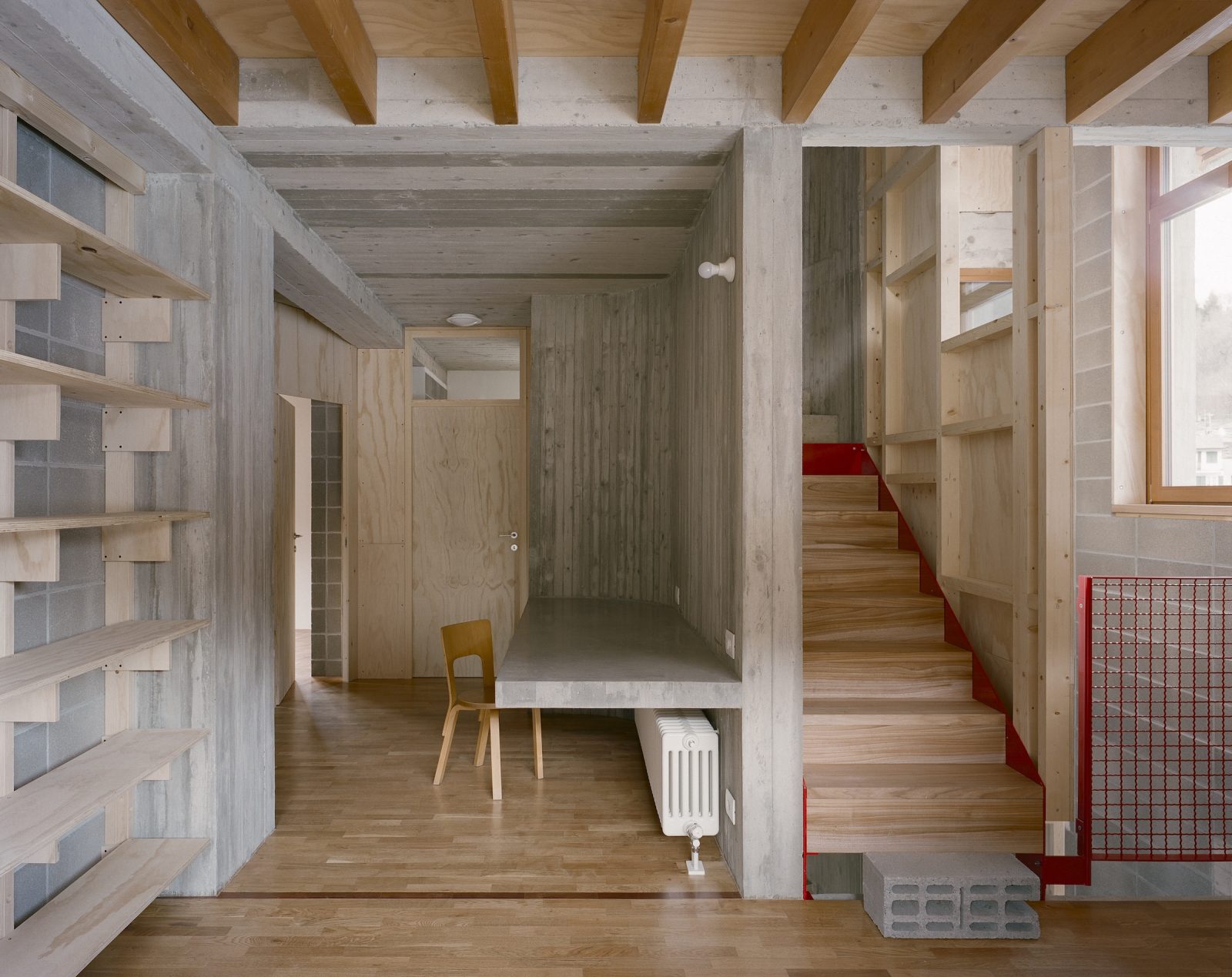
Internally, space is treated as a field for experimentation combining artistic research and self-construction practices.
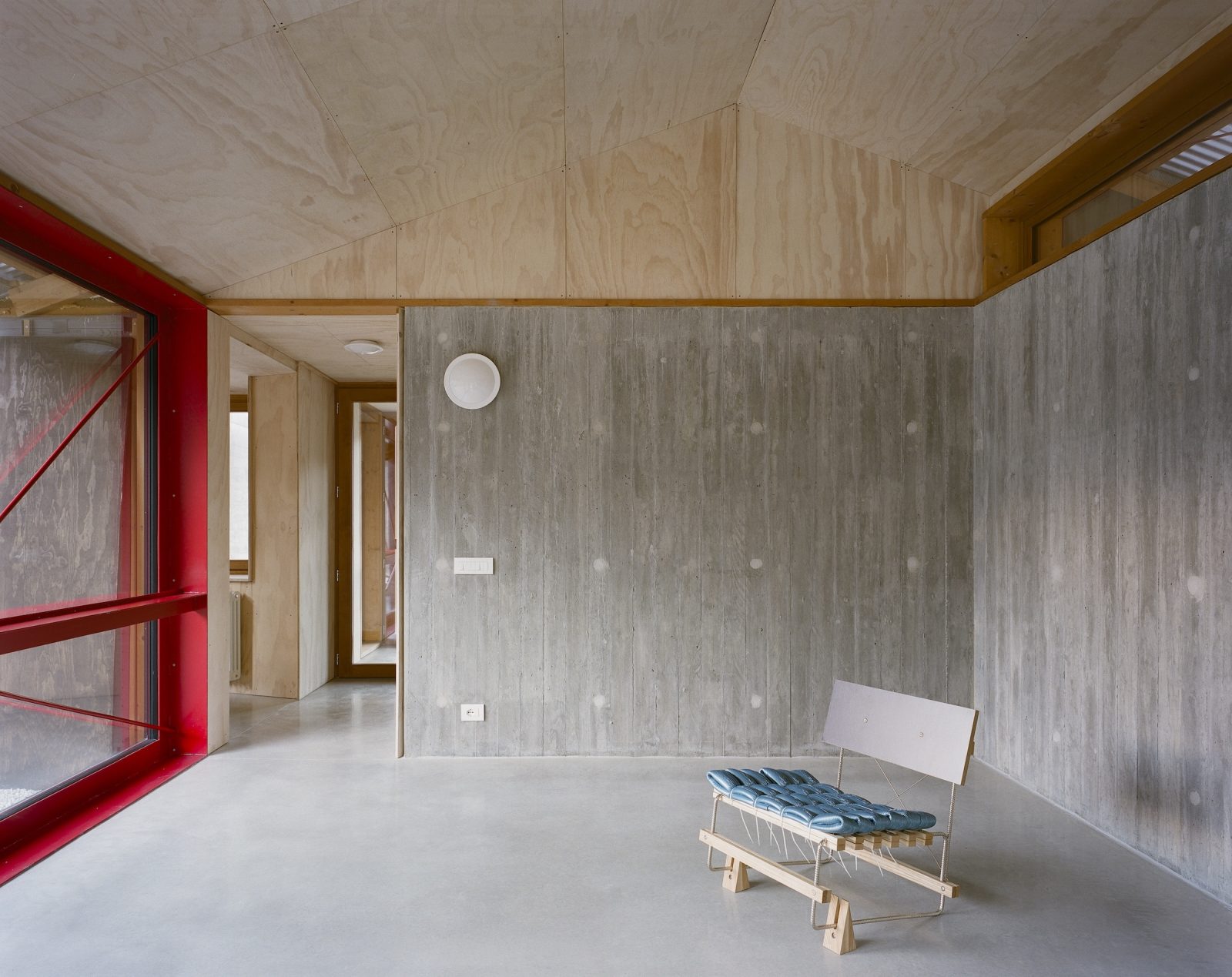
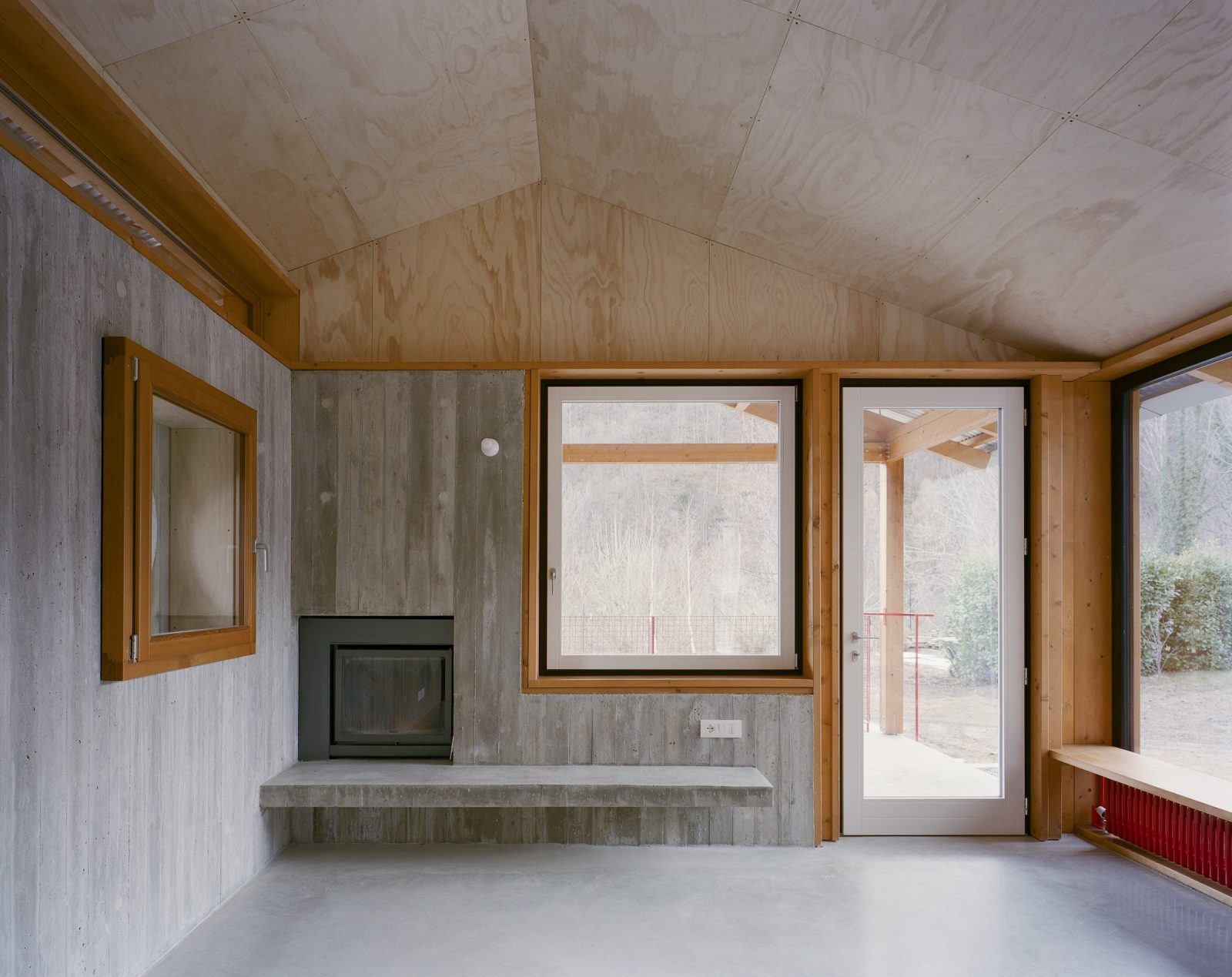
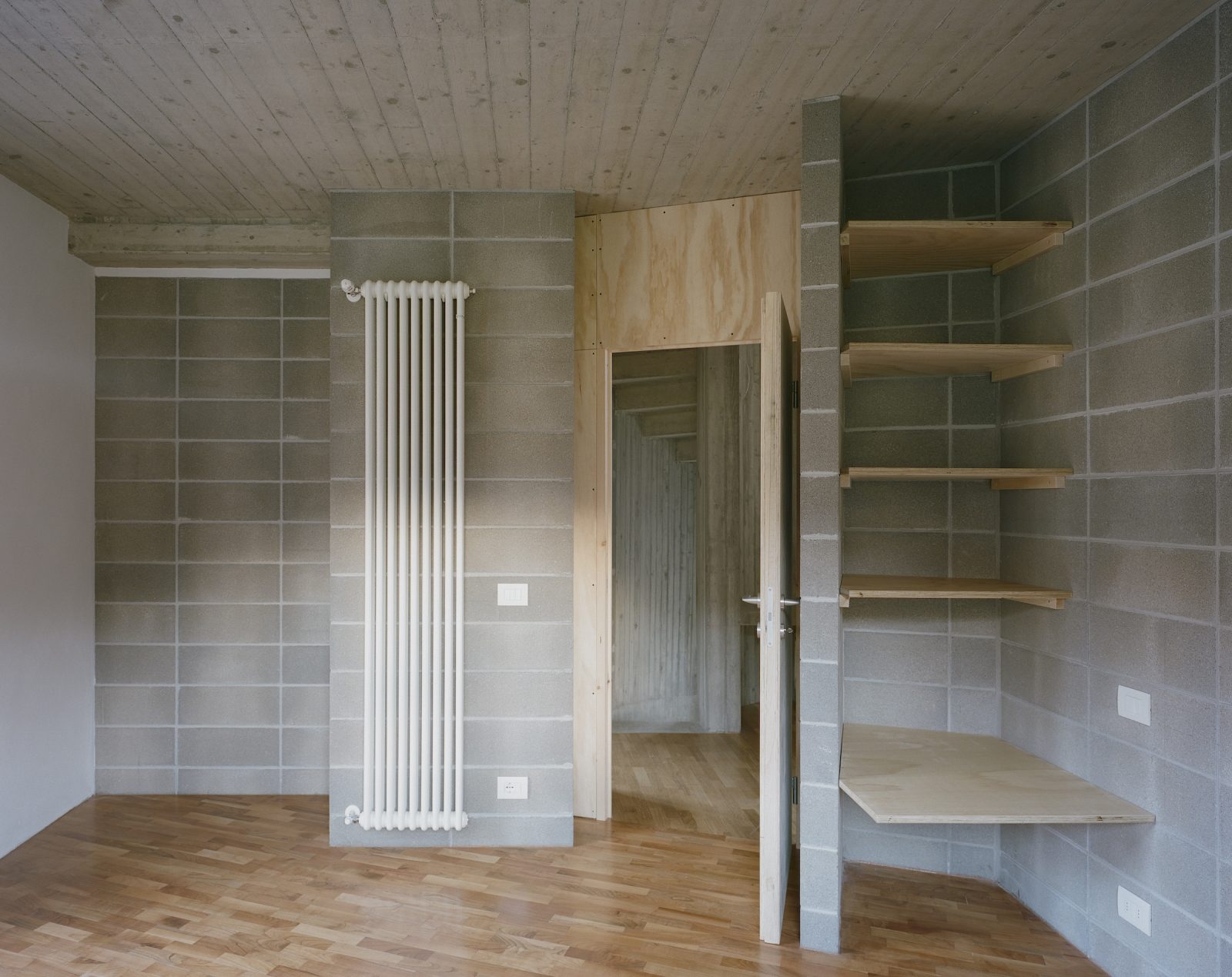
Simple and raw materials — exposed concrete, pine plywood panels, concrete blocks — define the domestic and work areas, enriched by built-in furniture such as benches, shelves, and desks. Visual sequences, double heights, and diagonal perspectives enhance the perception of continuity between levels and between inside and outside.
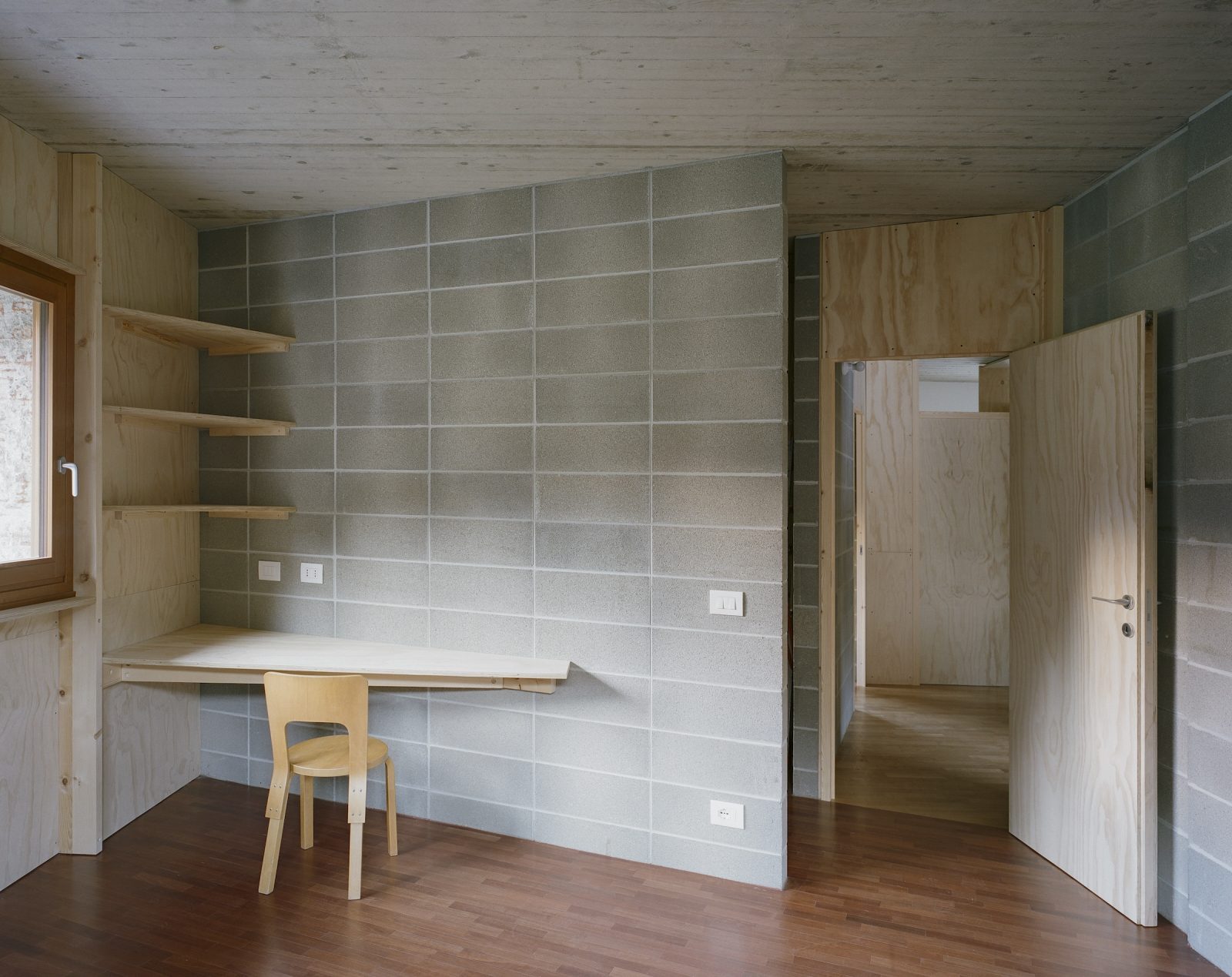
Many custom-designed details reveal an intent to experiment with ordinary elements: railings, gutters and downpipes, roof bracings, the fence along the road, and even the ridge beam of the existing building testify to a design attitude seeking unexpected potential within the commonplace.
Surprising yet familiar, Casa BM stands as an original but not alien construction, capable of redefining a peripheral fragment of territory by combining rigor and liveliness.
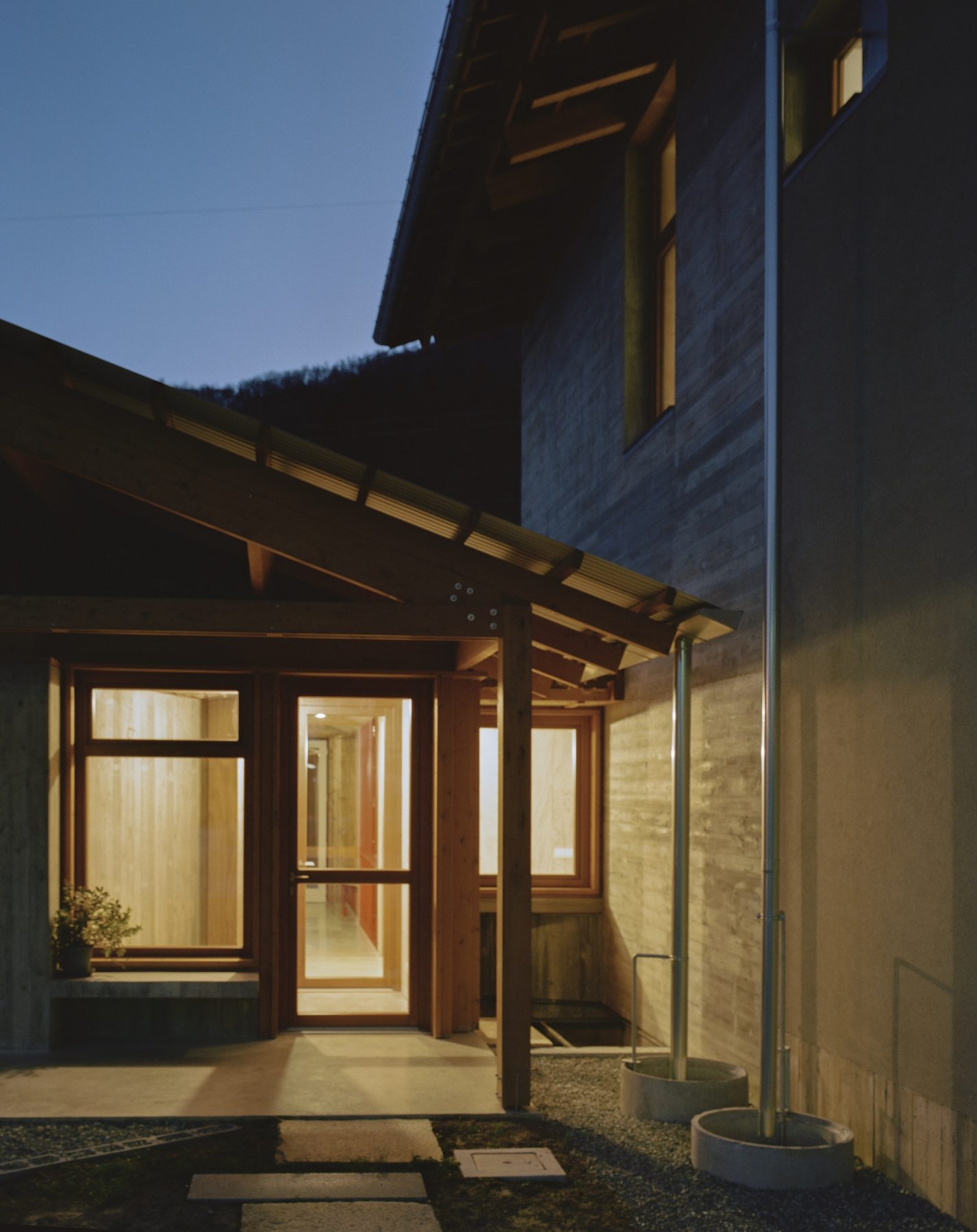
The work of ErranteArchitetture thus defines itself through subtle deviation rather than contrast, suggesting the possibility of coexisting with the limits and contradictions of much of Italy’s conventional suburban building fabric. This project enhances what already existed, restoring dignity to the built landscape of the Po Valley through a few decisive, carefully measured gestures.
Facts & Credits
Project title Casa BM
Typology Residential, Renovation
Location Paesana (Cuneo), Italy
Client Private
Architecture ErranteArchitetture
Design Team Sarah Becchio and Paolo Borghino with: Andrea Loi, Francesco Sordo, Ilaria Boggiatto, Emma Colella, Margherita Randazzo (collaborators)
Site construction supervision Paolo Borghino
Structural design and Construction site safety Fabio Borello
Construction company Local companies + Self-construction
Window and door frames BrunettoLegno
Supply of construction timber Clen Legnami
Design 12/2016 – 12/2018
Construction 10/2019 – 01/2025
Gross floor area 320 square meters for the existing building, 130 square meters for the pavilion
Net living area 140 square meters for the existing building, 50 square meters for the pavilion
Photography Luca Bosco
Text provided by the architects