A Whimsical Reuse explores refined architectural transformations where history is reinterpreted through poetic interventions and contemporary craft. Forgotten spaces gain new life, revealing a dialogue between memory, material, and contemporary ways of living.
Set within the dense urban fabric of Olhão, House in Olhão II by Estudio ODS Arquitectos reimagines a former fish canning factory as a contemporary dwelling. Rather than erasing the past, the project embraces the building’s industrial envelope, weaving domestic life into its robust shell through courtyards, light-filled voids, and tactile material contrasts.
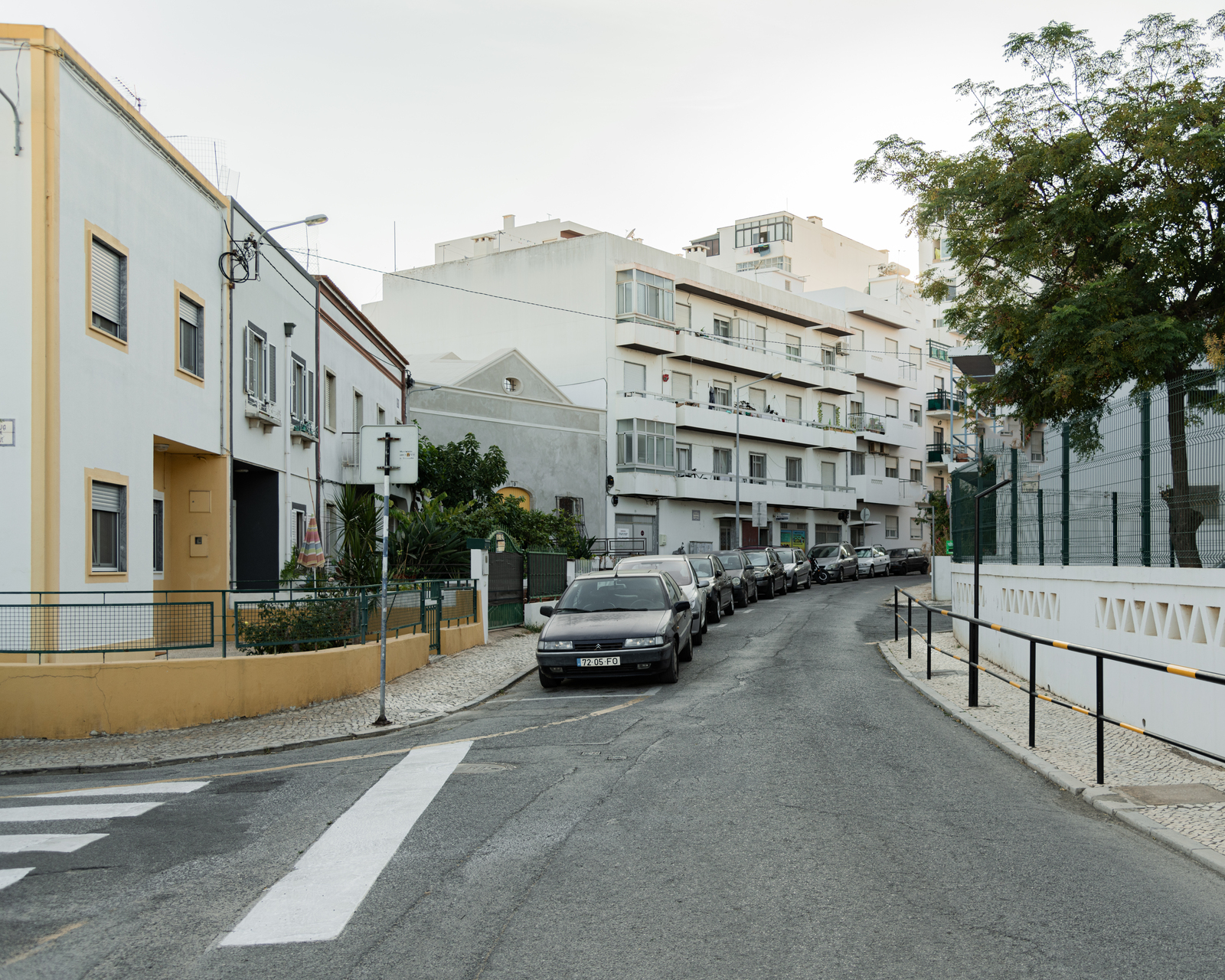
House in Olhão II occupies a surviving fragment of an early 20th-century industrial complex once dedicated to fish canning, located on Rua João da Rosa. Originally one of five factory buildings positioned at the city’s edge for proximity to the railway, the structure bears witness to Olhão’s industrial expansion, particularly during the World Wars. As production intensified, workers’ housing gradually colonized the area, reshaping it into a residential neighborhood. With the industry’s decline in the 1970s, four of the factories were demolished, leaving this building as the last physical trace of that productive era.
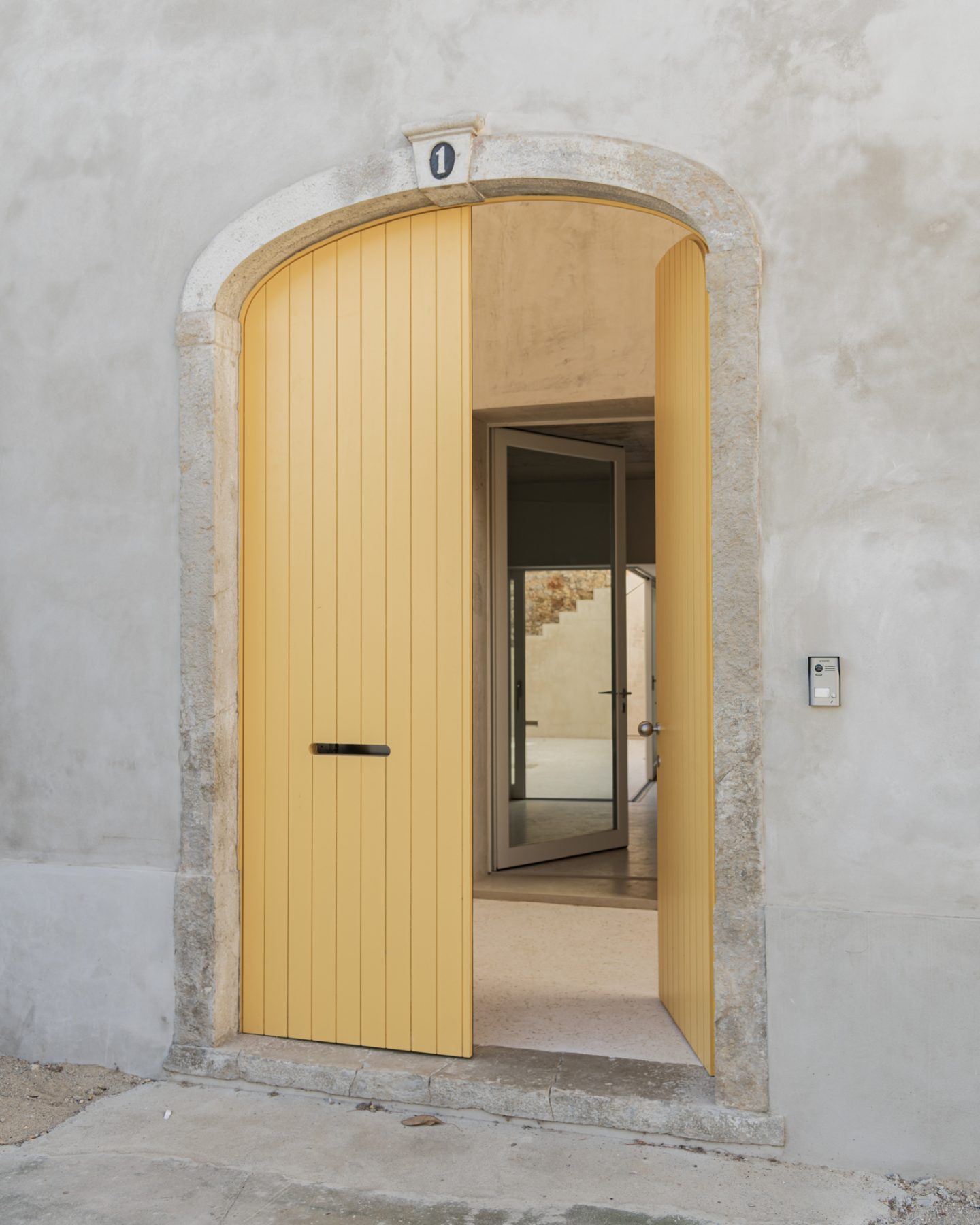
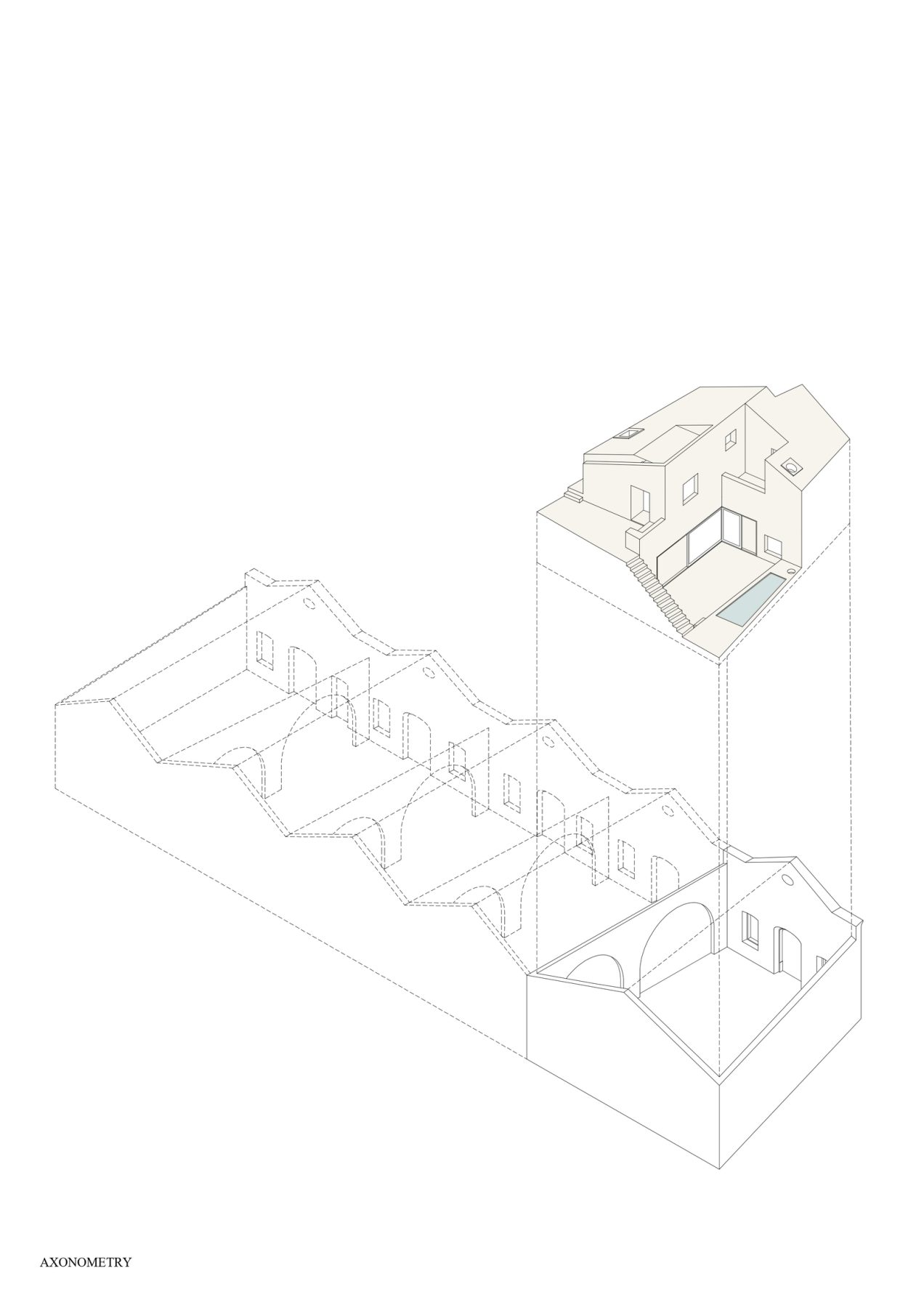
In converting the remaining factory into a residence, the architects favored a reuse strategy that respects both its robust structure and its historical memory.
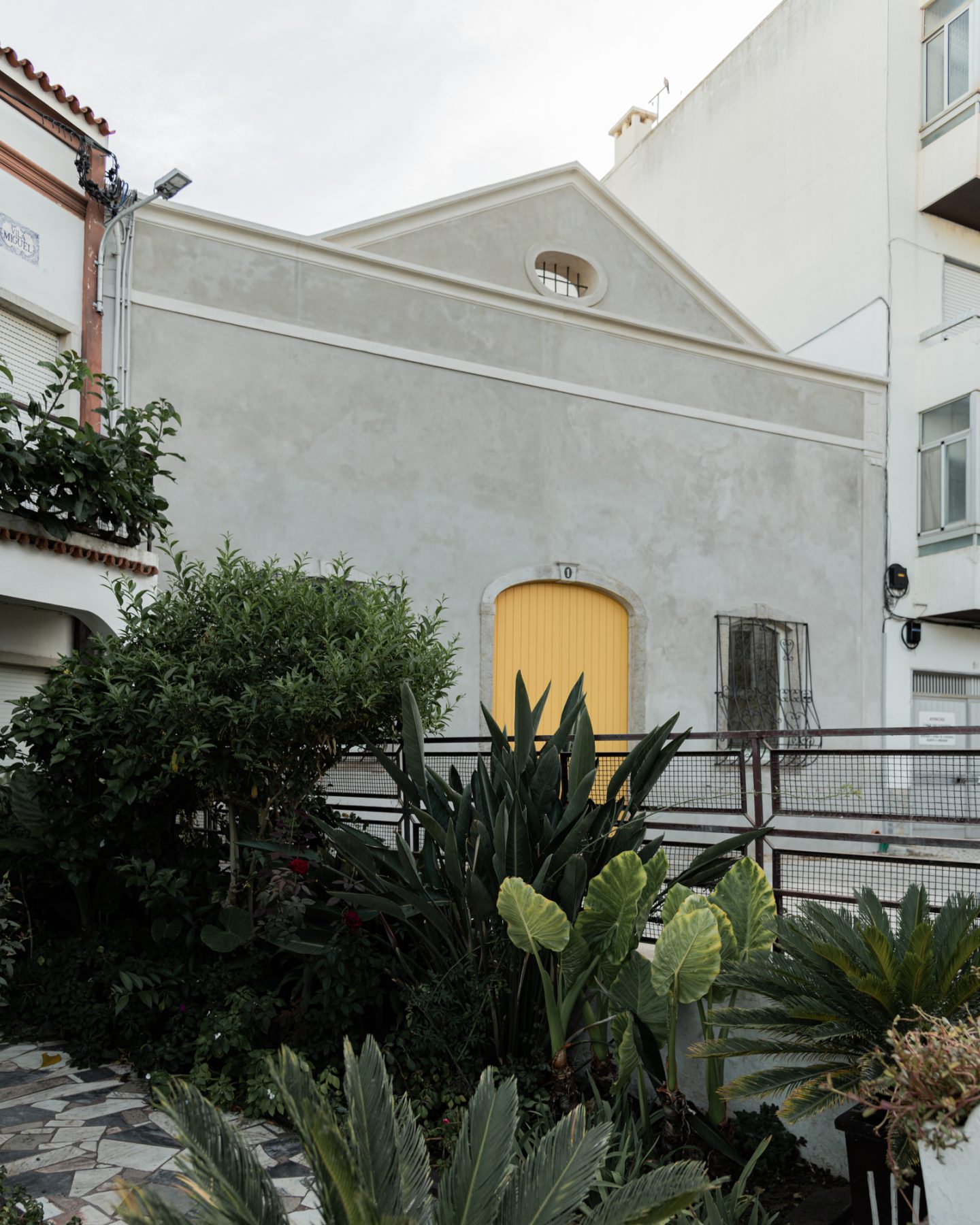
The intervention preserves the entire perimeter and volumetric envelope, allowing the domestic program to unfold within the existing industrial framework rather than replacing it.
The northern façade was carefully maintained, retaining its characteristic stone-framed openings. New window frames subtly update the elevations, while the introduction of a yellow pigment signals the building’s new domestic identity without denying its past.
This chromatic gesture acts as both marker and mediator between old and new.
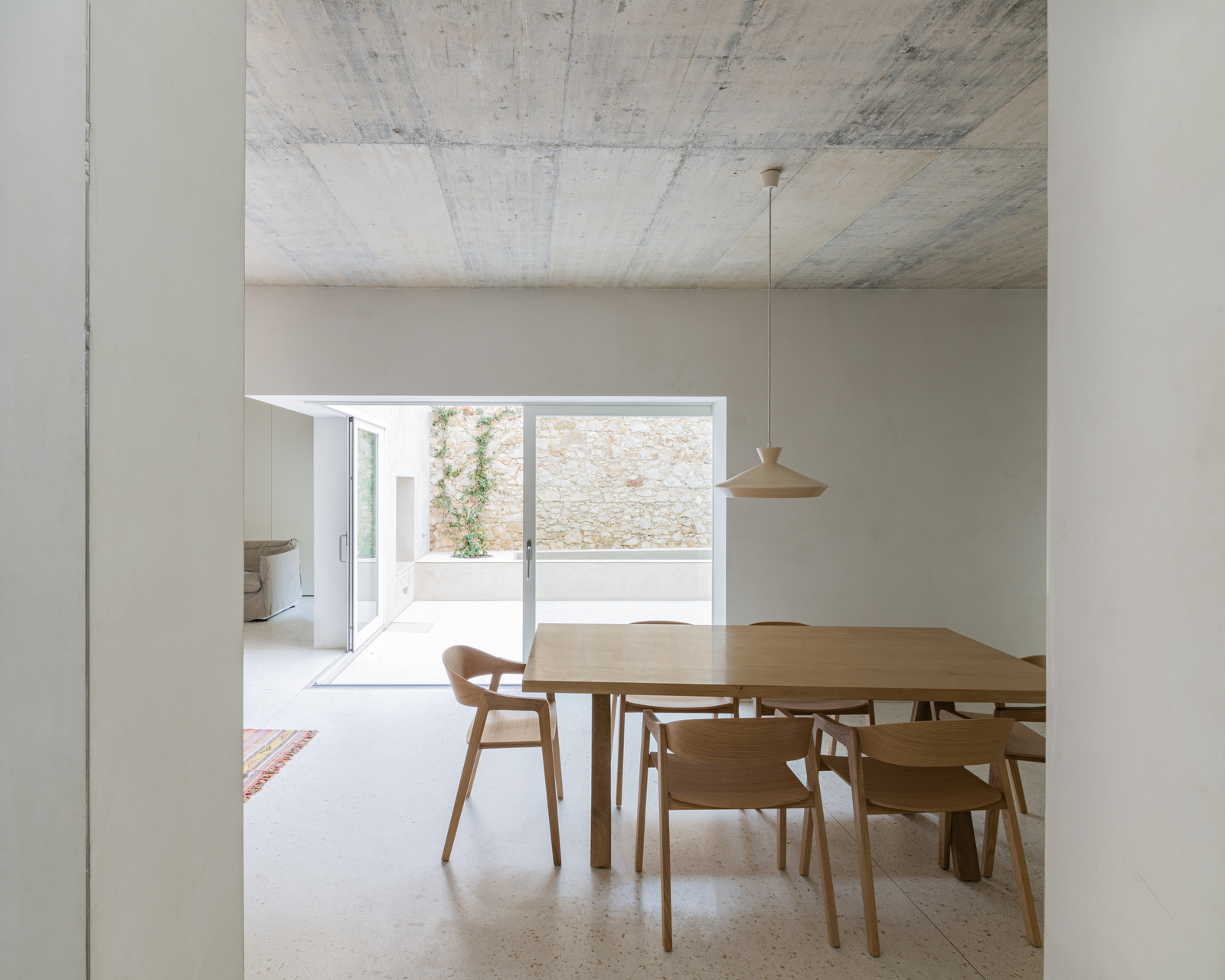
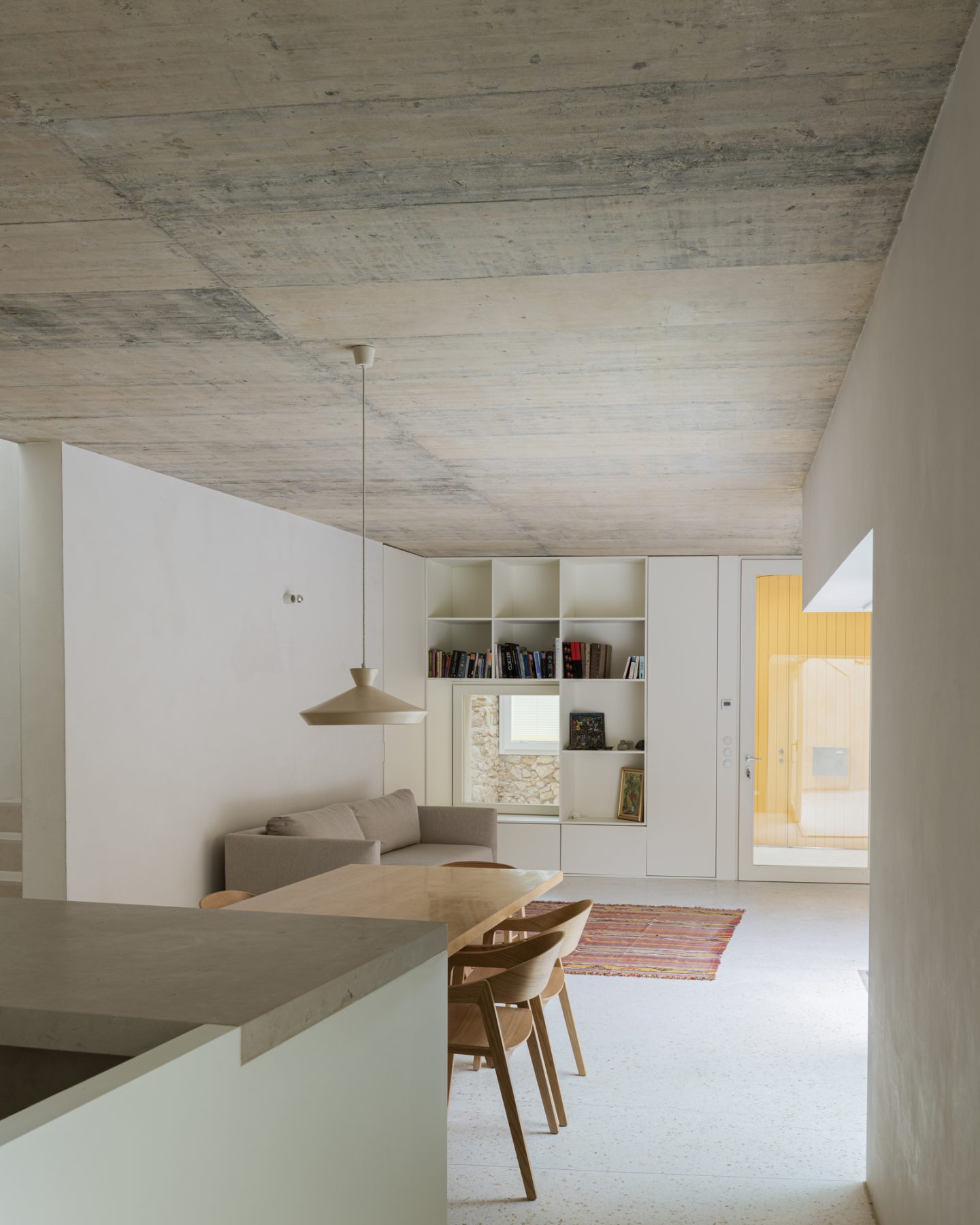
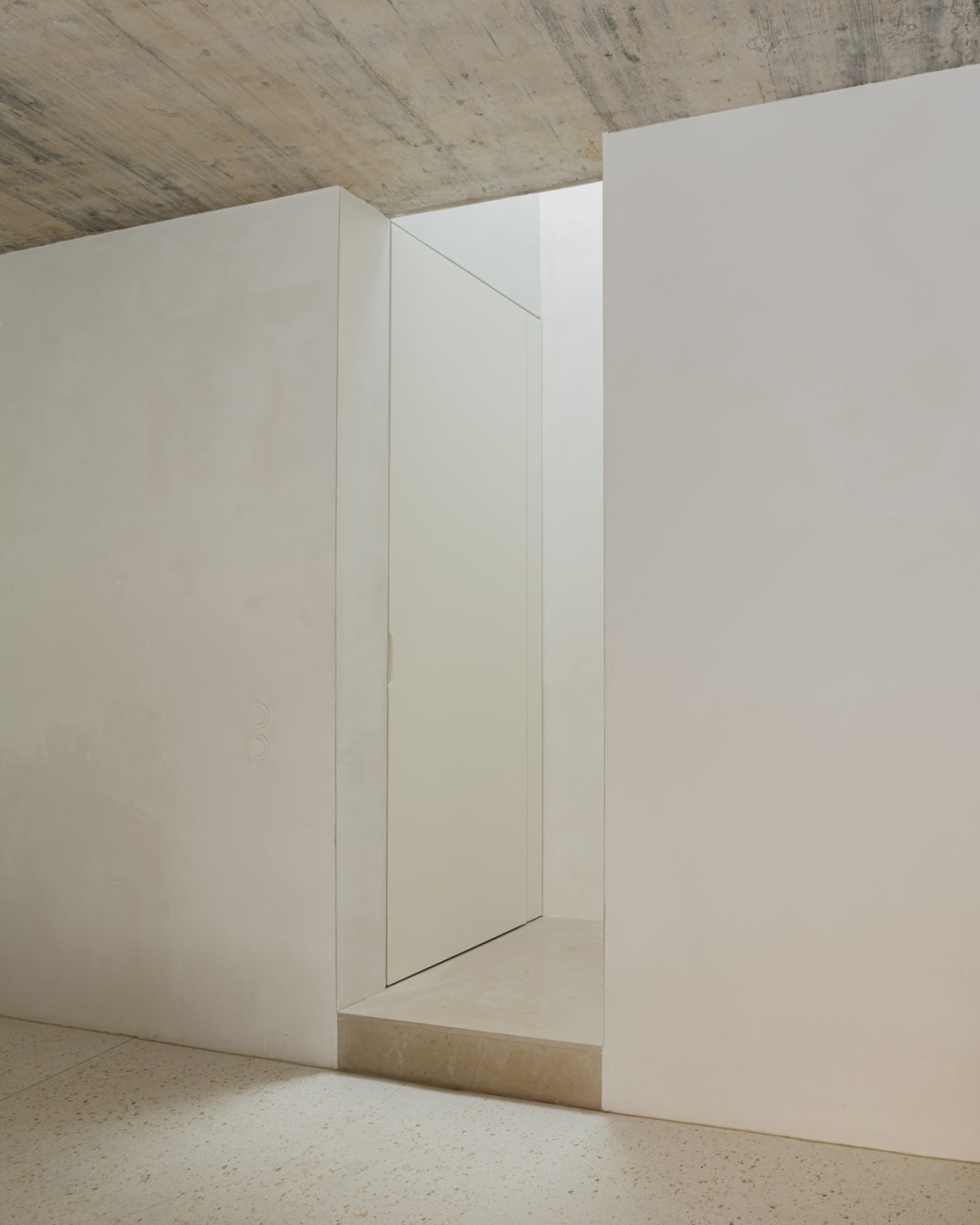
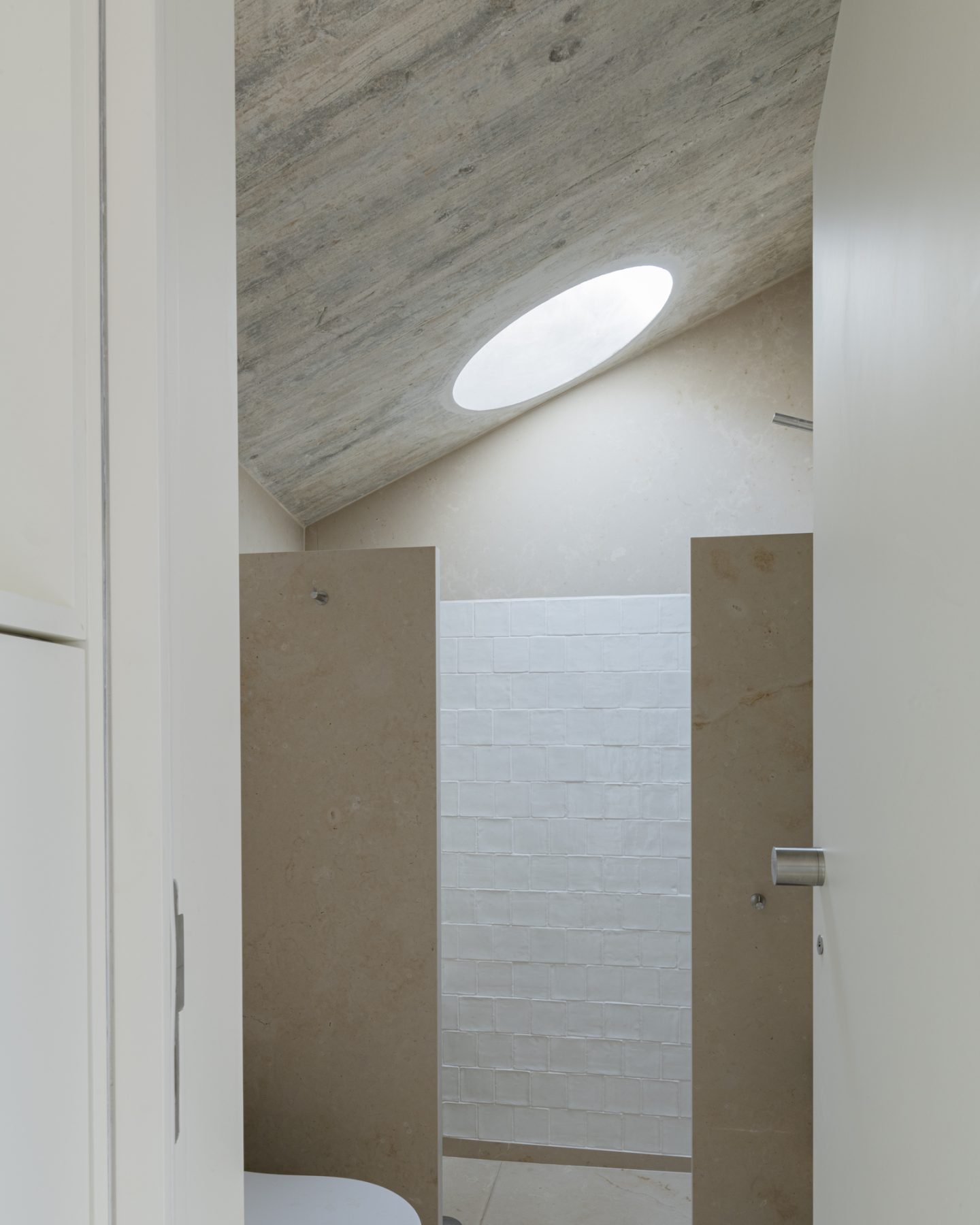
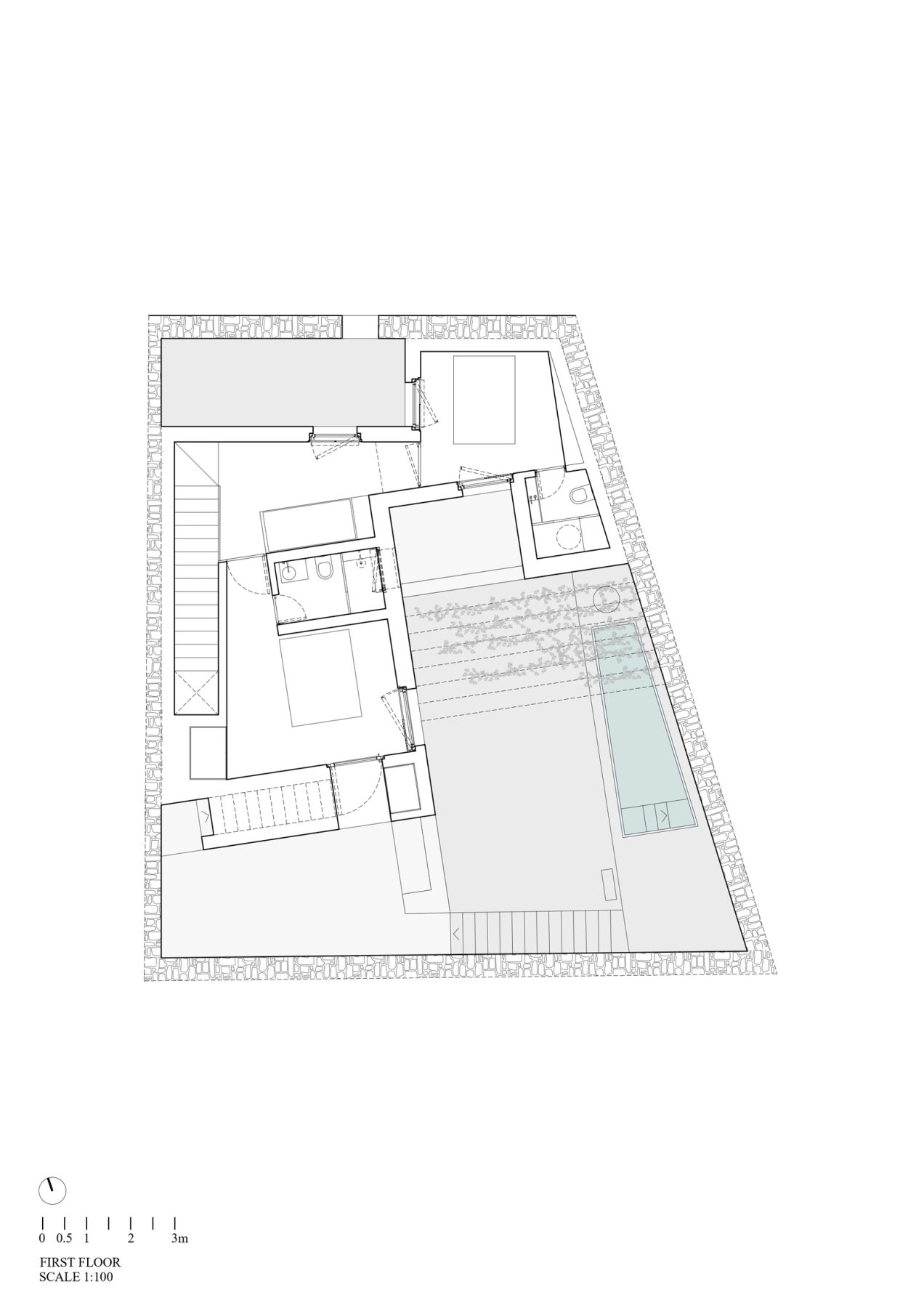
Inside, a new architectural volume echoes the original gabled industrial form, establishing a clear dialogue with the existing shell. Strategic subtractions from this volume generate two courtyards that structure daily life and enhance environmental performance. The smaller entry courtyard functions as a transitional antechamber between street and home, filtering light, encouraging cross-ventilation, and softening the threshold between public and private realms.

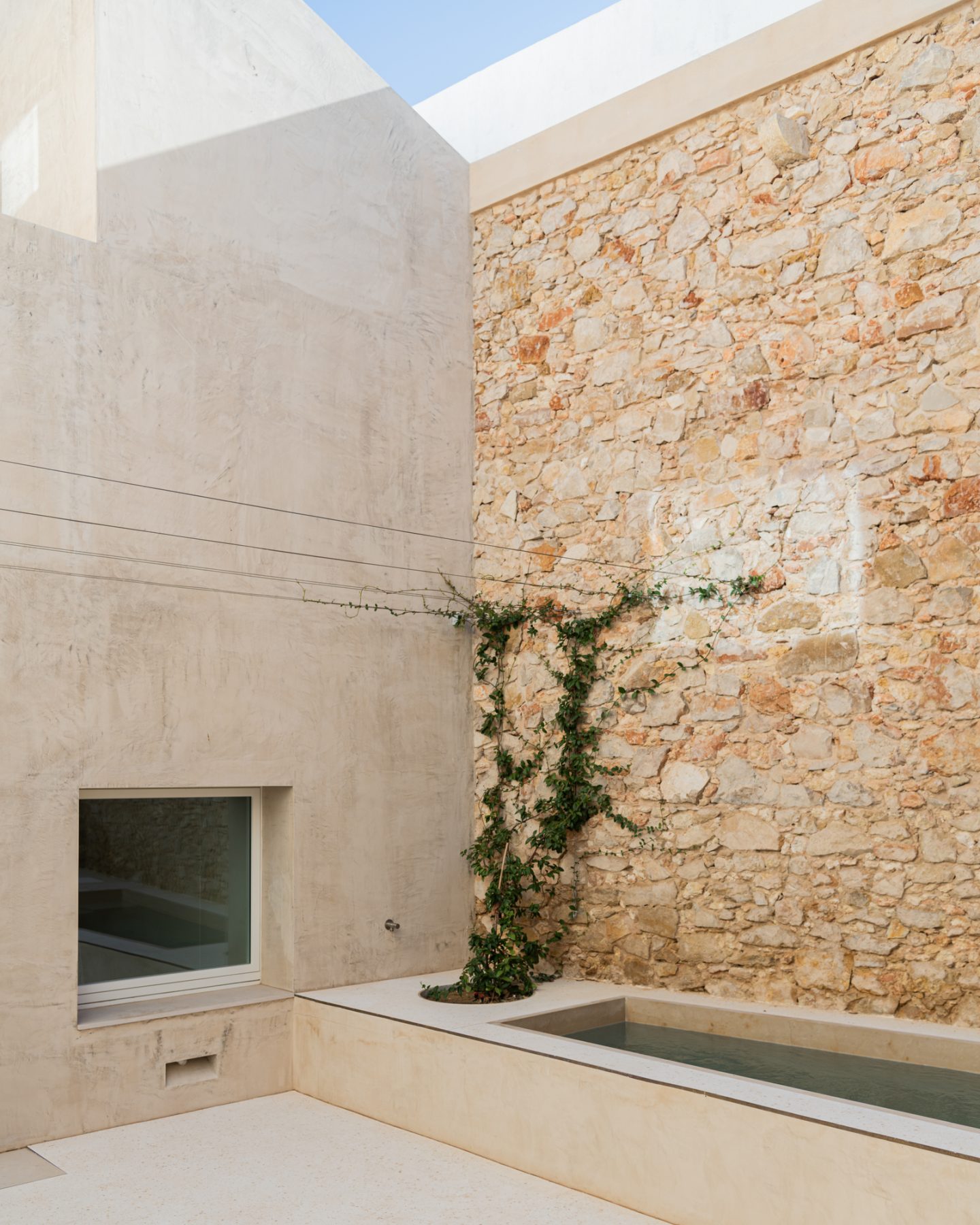
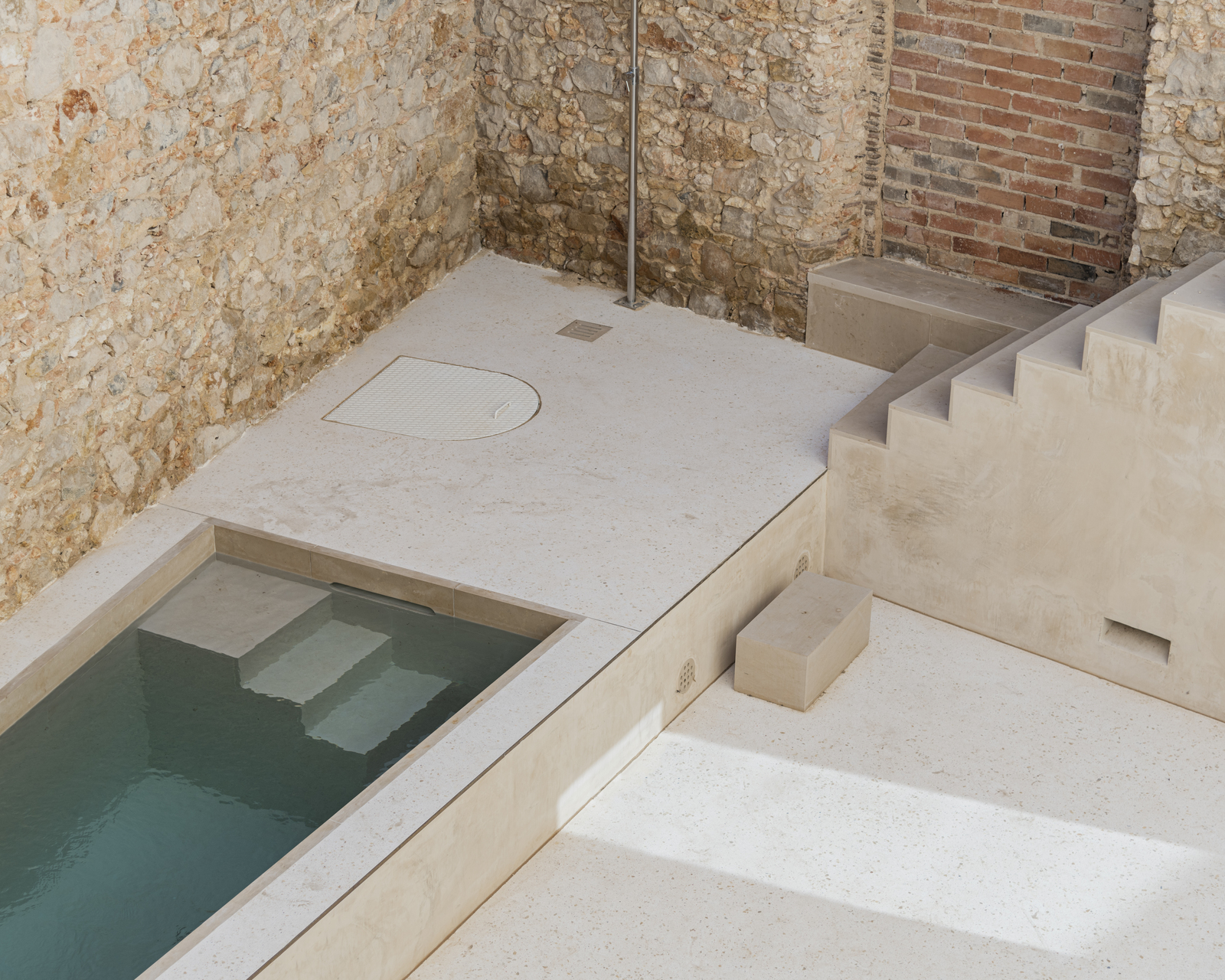
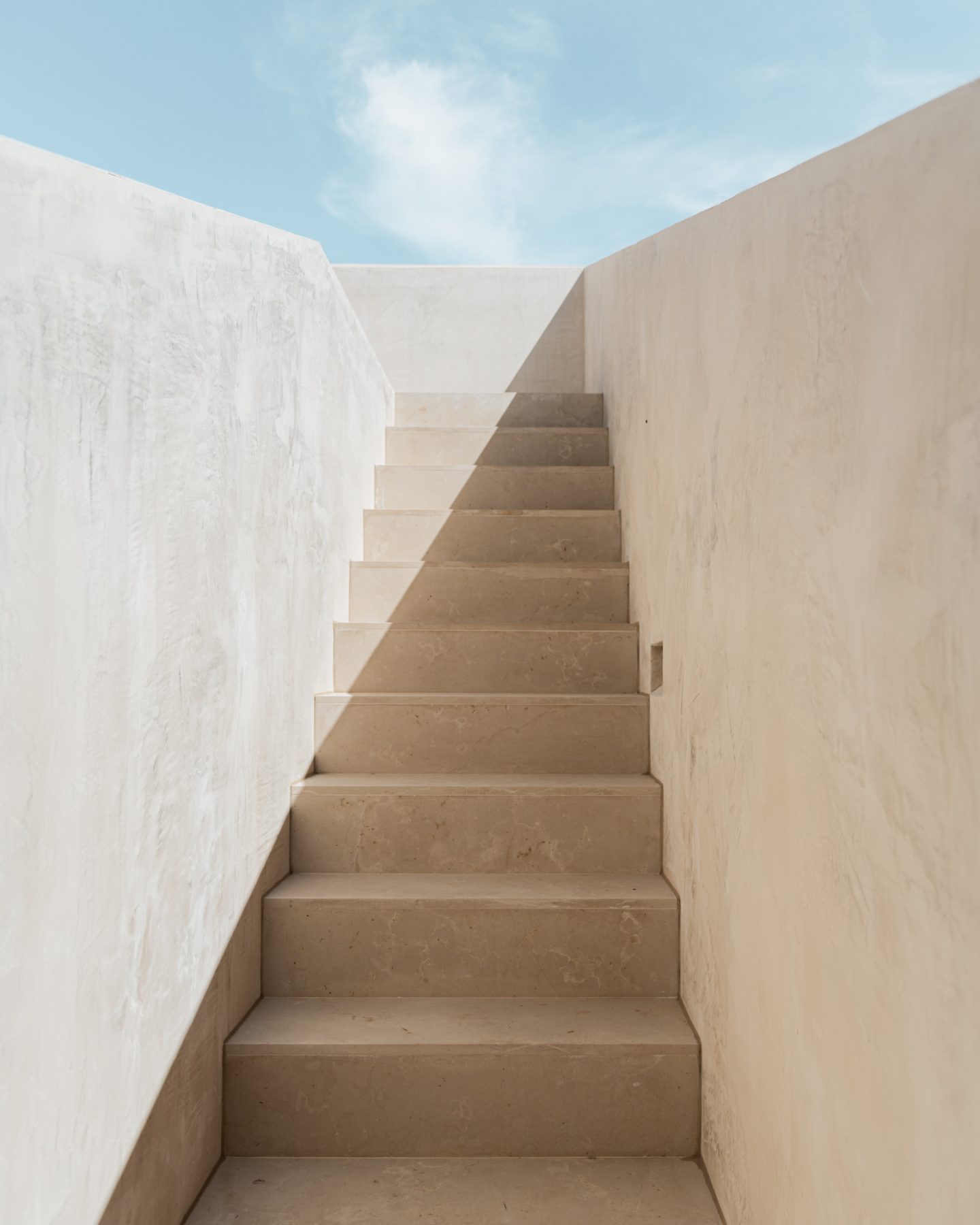
To the south, a larger central courtyard becomes the heart of the house. It connects directly to the living room and kitchen, bringing light, air and outdoor living into the compact urban block. From this ground-level space, a sequence of terraces ascends toward the roof, extending the domestic landscape vertically and reinforcing the continuous interplay between interior and exterior.
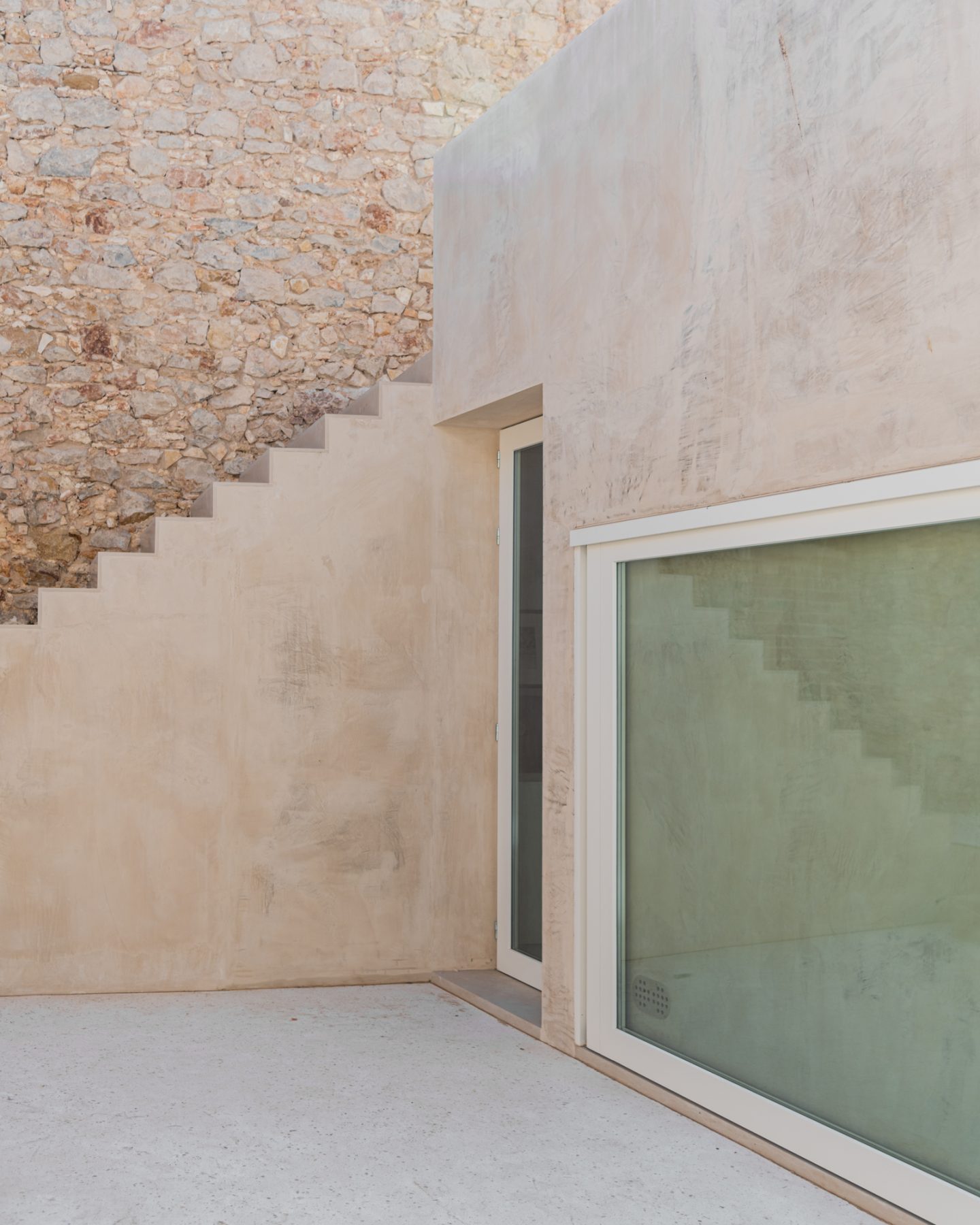
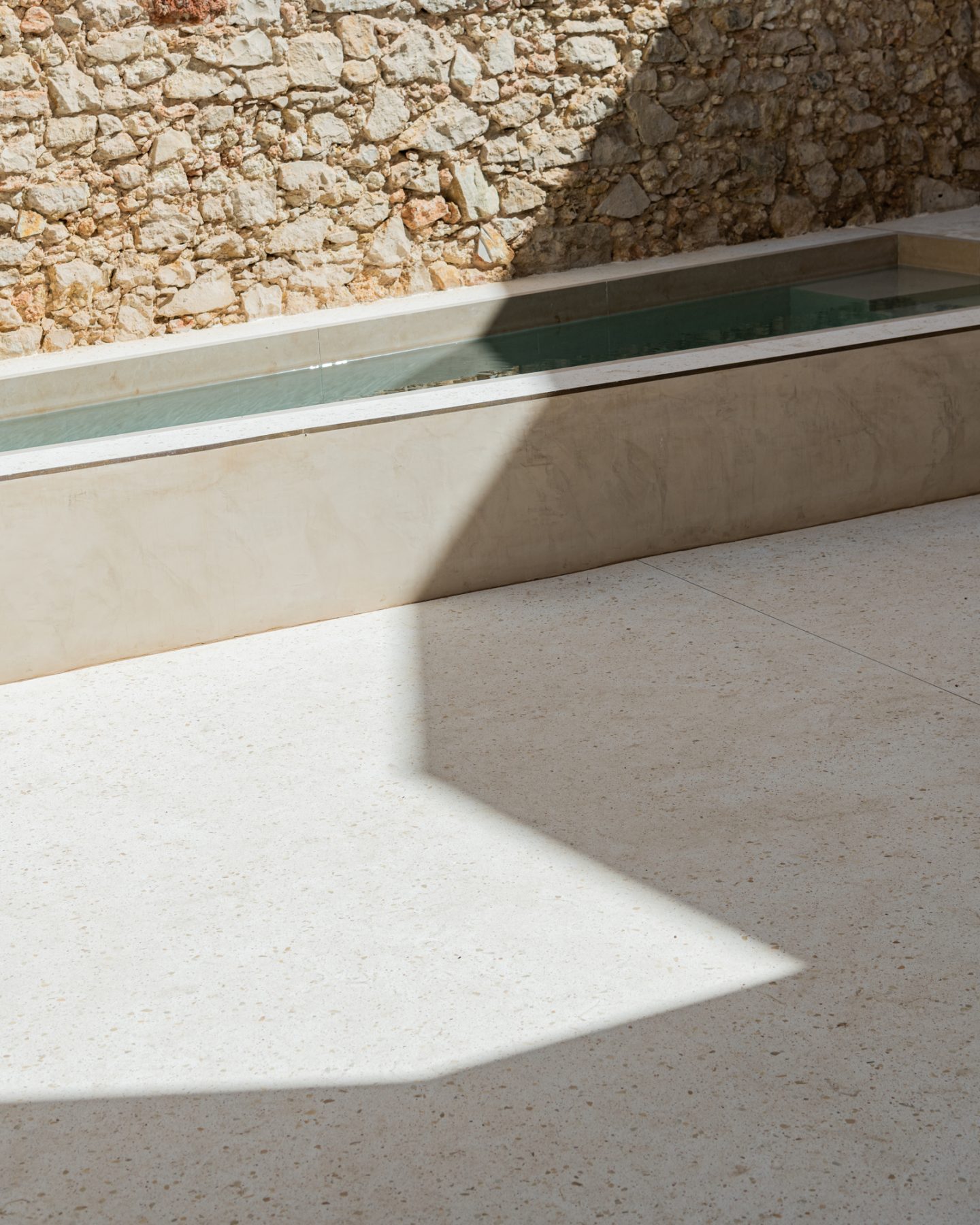
Within the courtyard, a modest water tank and climbing vegetation enrich the sensory experience. The sound of moving water and the shifting patterns of light and shadow lend the space a contemplative, ever-changing character throughout the day.
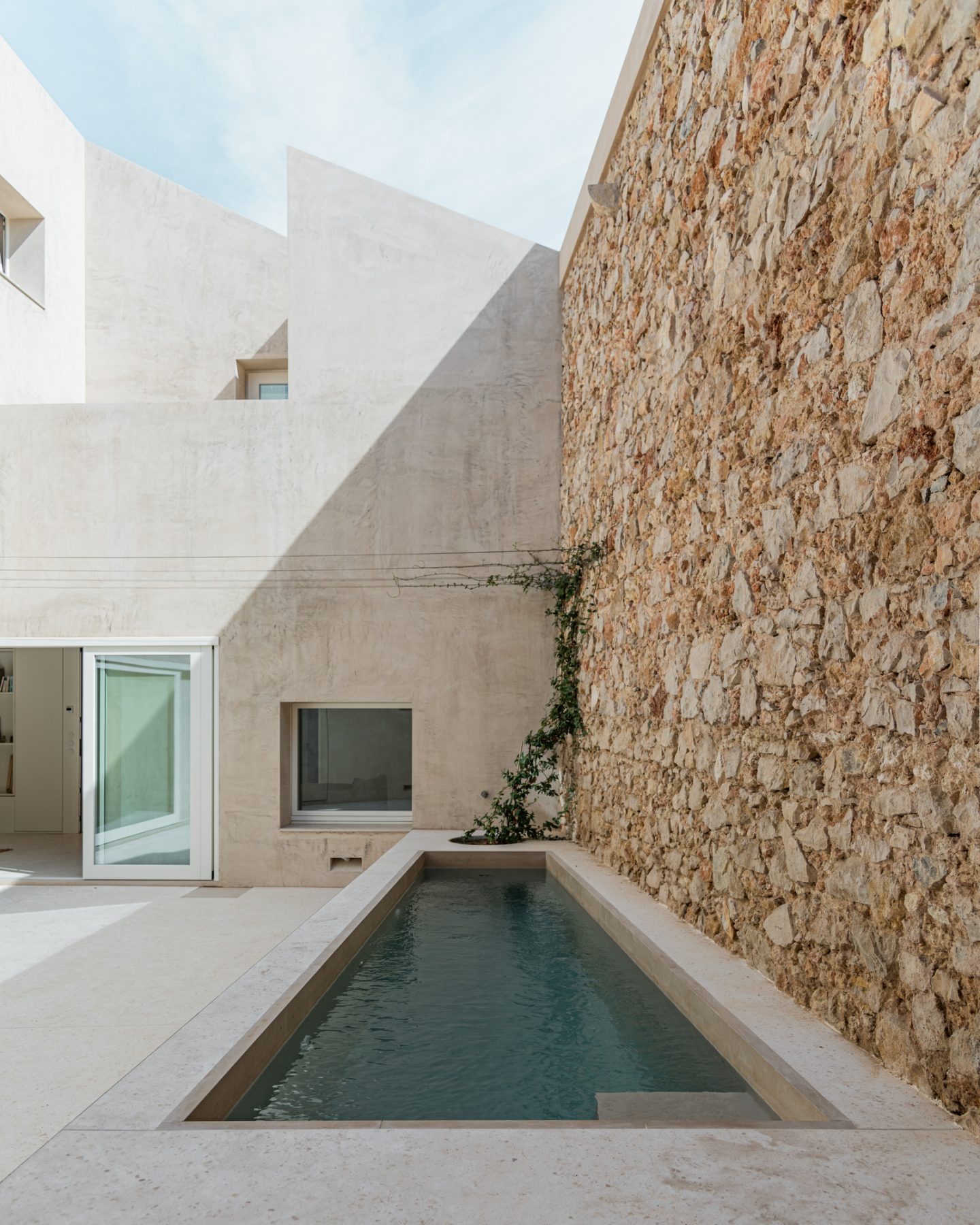
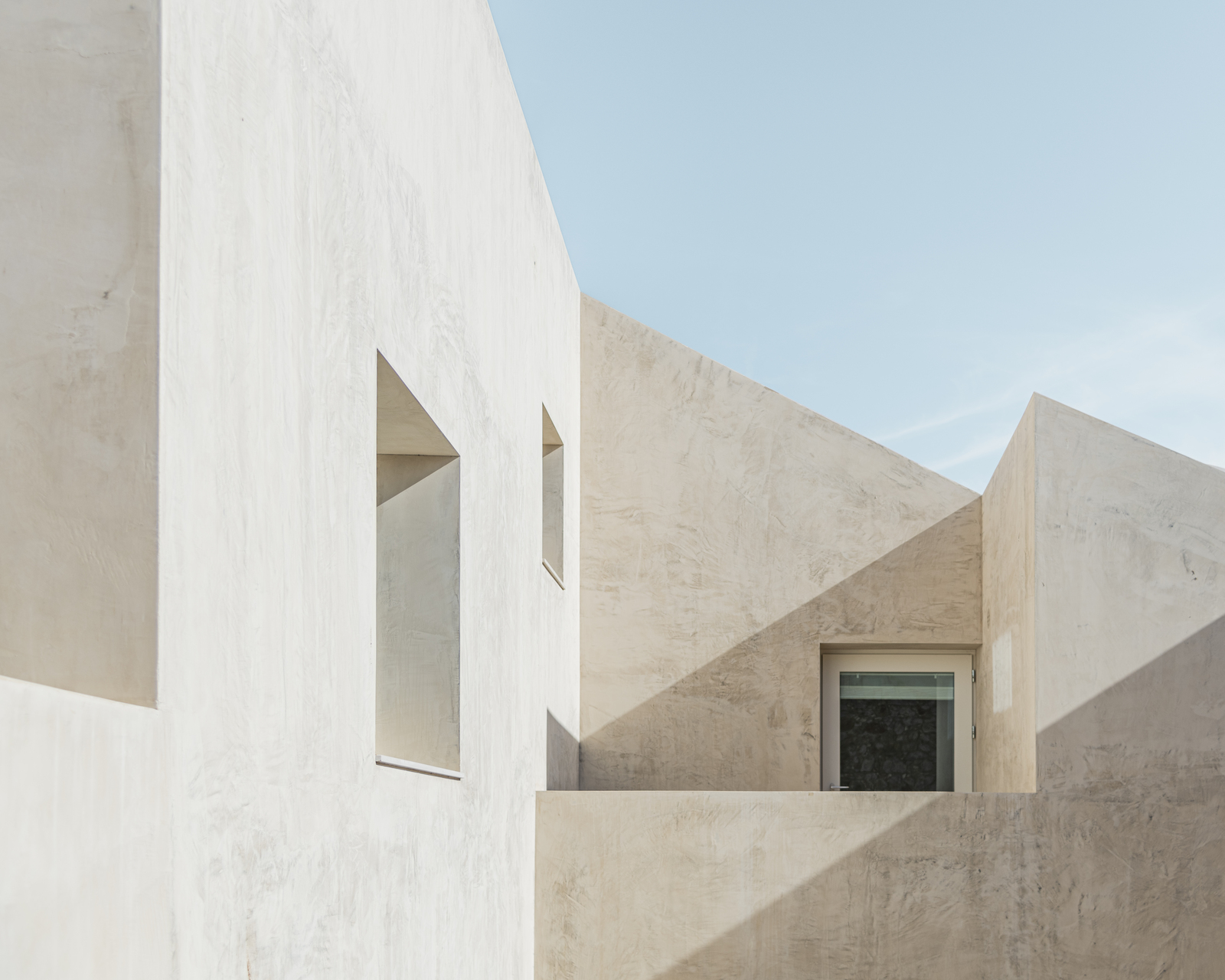
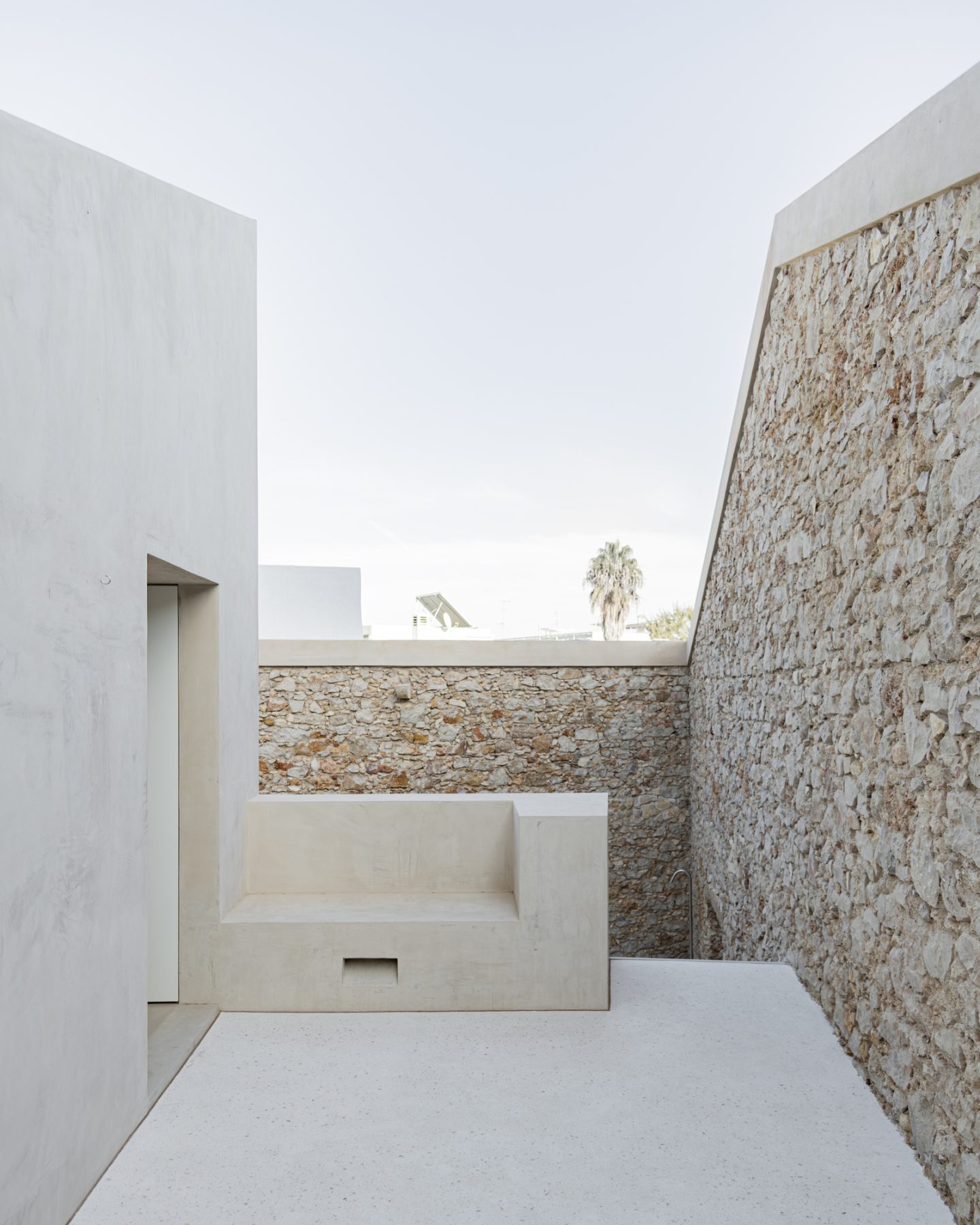
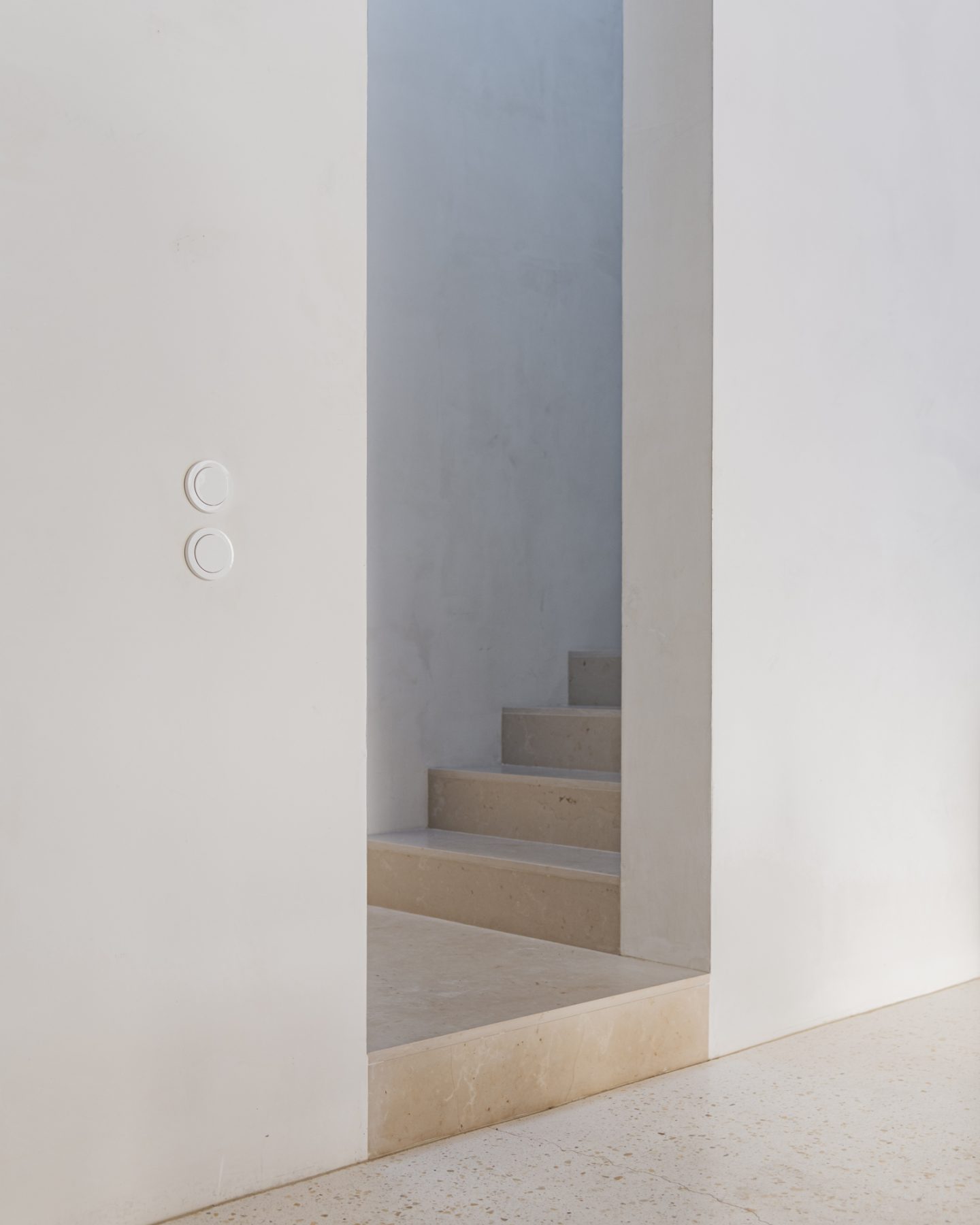
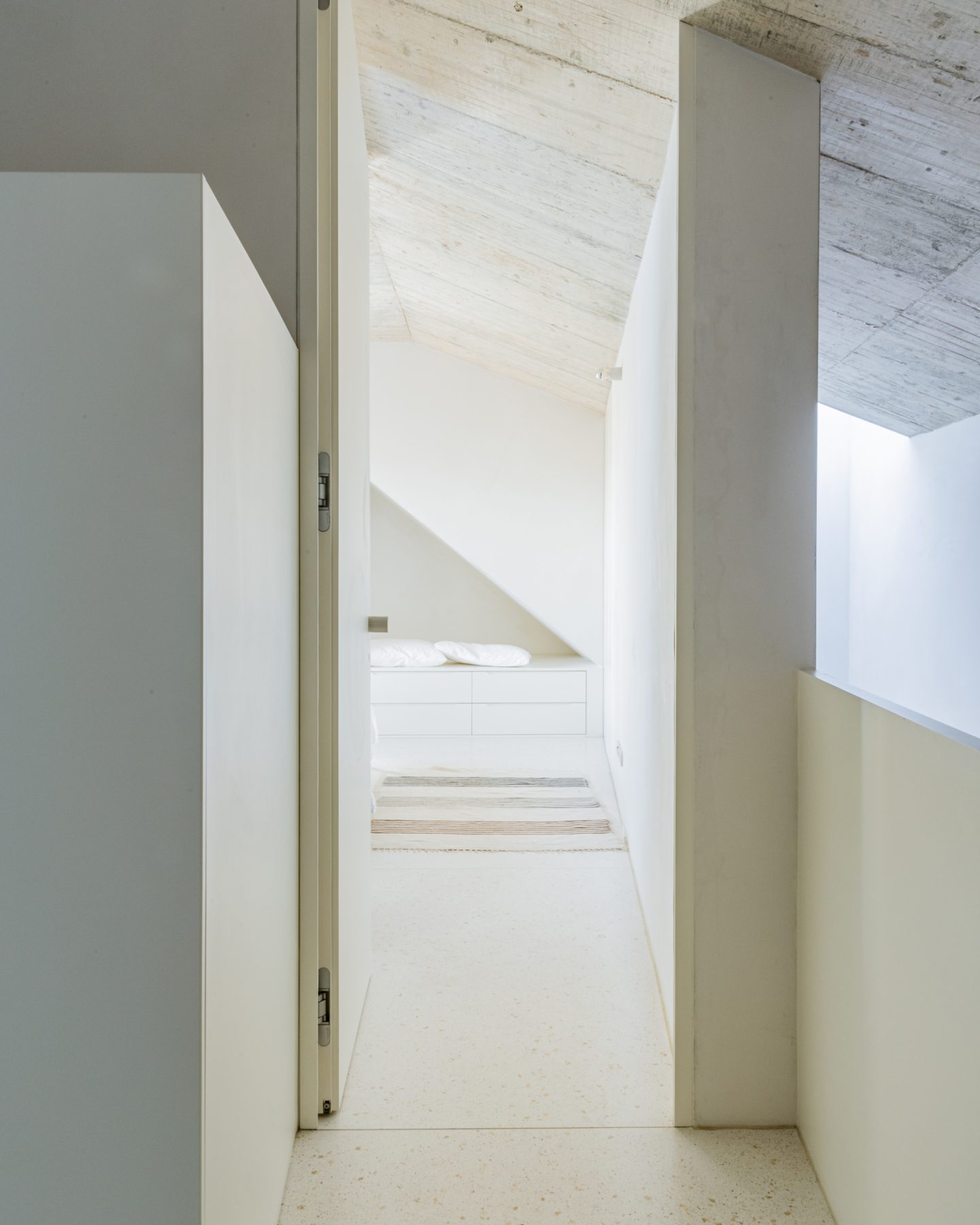
Material choices reinforce the project’s dual narrative. The original stone masonry remains exposed, celebrating its tactile quality and historic presence, while new interventions, natural pigmented lime plasters, terrazzo flooring, natural stone and exposed concrete, introduce a contemporary layer. Together, these elements compose a restrained yet expressive architecture where memory and everyday life coexist, transforming an industrial shell into a calm and intimate dwelling.

Facts & Credits
Project title House in Olhão II
Typology Reuse, Rehabilitation, Residential
Location Rua João da Rosa, Olhão, Portugal
Architecture Estudio ODS Arquitectos
Architects Bruno Oliveira, Marlene dos Santos
Collaborators Andreia Martins, Edite Borges
Structural Engineers Pró-Gótica, Rui Graça e Costa
Electrical and Telecommunications Installations Simergia, Paulo Escobar
HVAC Installations Zona Térmica, Filipe Martins
General Contractor Falmafer – Construções Lda
Client Private
Built Area 180.00 m²
Completion Date 2024
List of Suppliers
Façade Finishes Secil
Electrical Devices Berker
Lighting Equipment THPG, Patrícia Lobo Atelier
Taps/Faucets OFA
Interior Joinery WoodWork
Exterior Joinery Carpintaria Mateus, Lda
Natural Stone Mármistoi – Industria de Mármores e Granitos
Photography Frederico Martinho
Text provided by the architects