The European Commission and the Fundació Mies van der Rohe are proud to announce the 40 shortlisted works for the 2026 European Union Prize for Contemporary Architecture / Mies van der Rohe Awards. This year’s edition, supported by the European Union’s Creative Europe Programme, received 410 nominations, which were thoroughly analysed and discussed by the seven-member jury – President Smiljan Radić, Carl Bäckstrand, Chris Briffa, Zaiga Gaile, Tina Gregorič, Nikolaus Hirsch, and Rosa Rull – before drawing up the shortlist.
The 40 shortlisted works offer an updated panorama of European architecture over the past two years, revealing how practices are reshaping public space, sustainability, and social impact across the continent. The selection spans 36 cities in 18 countries and covers 15 architecture programs, reflecting a striking diversity of scales, contexts, and approaches — from major urban interventions to small rural projects. Architecture studios range from newly founded teams to decades-old practices, many working through compact architectural cores supported by multidisciplinary collaborators, showing how fresh perspectives and collective expertise are driving innovation today.
Over three days in Barcelona, the jury examined the current state of architecture in Europe, reflecting on the dual goal of delivering high-quality design for all while contributing to advancing the climate objectives of the European Green Deal.
The 40 shortlisted works exemplify how architects are responding to the responsibility of designing ethically, sustainably, and with long- term social impact.
They also demonstrate the importance of collaboration between architecture, urban planning, governance, and investment, as many projects had to navigate limited budgets that shaped their final form. This highlights how financial support remains a crucial factor in enabling ambitious, high-quality architecture. “Freshness” emerged as a recurring theme, highlighting the jury’s appreciation for works that bring new ideas, perspectives, and energy to the public realm, confirming architecture as a vital, forward-looking force at the heart of society.
Geographic diversity
The shortlisted works span 36 cities across 30 regions and 18 countries, illustrating the diversity of contemporary architecture in Europe and beyond. Austria hosts 1 work (Vienna); Belgium has 3 (Charleroi, Kortrijk, and Ixelles); Croatia features 2 (Dubrovnik and Zagreb); the Czech Republic hosts 1 (Karlovy Vary); and Denmark has 4 (Copenhagen-4). Finland hosts 1 (Tampere), while France features 9 works (Laguiole, Arles, La Bouëxière, Lit-et-Mixe, Vannes, Paris, Châtenay-Malabry, Arpajon, and Sallanches). Hungary has 1 work (Debrecen); Italy hosts 2 (Milan and Bologna); Lithuania features 1 (Panevėžys); Norway has 2 (Kautokeino and Sømna); Poland hosts 1 (Warsaw); Portugal features 1 (Lisbon); Slovakia has 1 (Bernolákovo); Slovenia hosts 1 (Ljubljana); Spain features 7 (Barcelona-2, Logroño, Olot, Palencia, Terrassa and Villanueva de Sigena), Sweden has 1 (Linköping) and Tunisia has 1 work (Kébili Governorate). From major metropolitan centers to villages of just a few hundred inhabitants, this selection reflects a wide spectrum of architectural environments.
Programs and typologies
The 40 shortlisted works represent 15 different programmes, including culture (8), mixed use (6), education (5), landscape (4), single houses (3), and sport and leisure (3), alongside works addressing collective housing, infrastructure, urban planning, ephemeral architecture, health, industrial facilities, social welfare, and commerce. They encompass 21 regeneration works, 17 new constructions, and 2 extensions, illustrating the diverse strategies through which contemporary architecture addresses social, cultural, and environmental challenges.
Check out the 40 shortlisted works 2026 here!
Austria
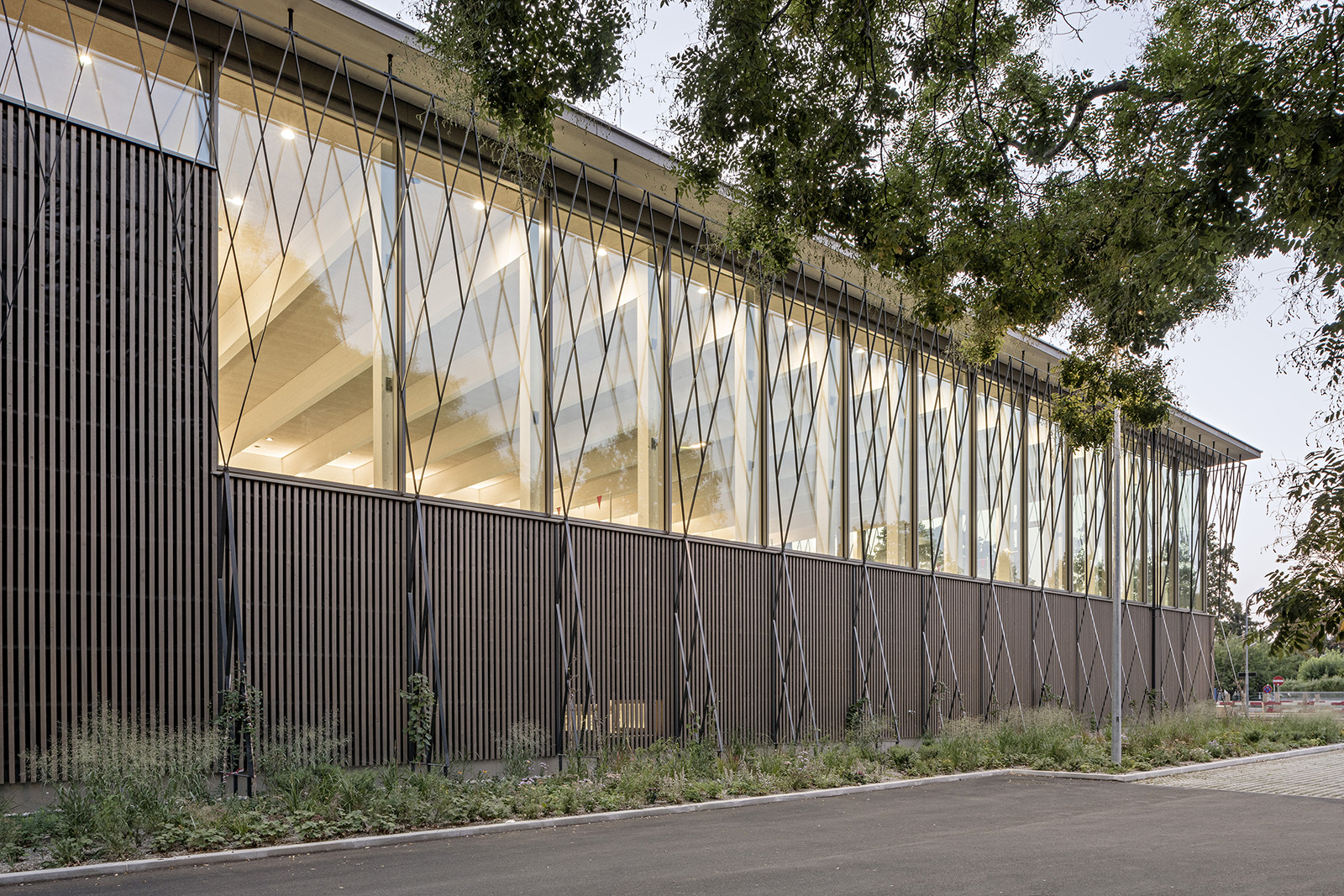
01) Public Swimming Pool Großfeldsiedlung, by illiz architektur
The training swimming facility in Vienna’s Großfeldsiedlung connects to the existing indoor pool from the early 1980s by means of two cantilevered bridges. A three-dimensional, vegetated steel structure envelops the glazed timber-construction swimming hall with a green veil.
Belgium
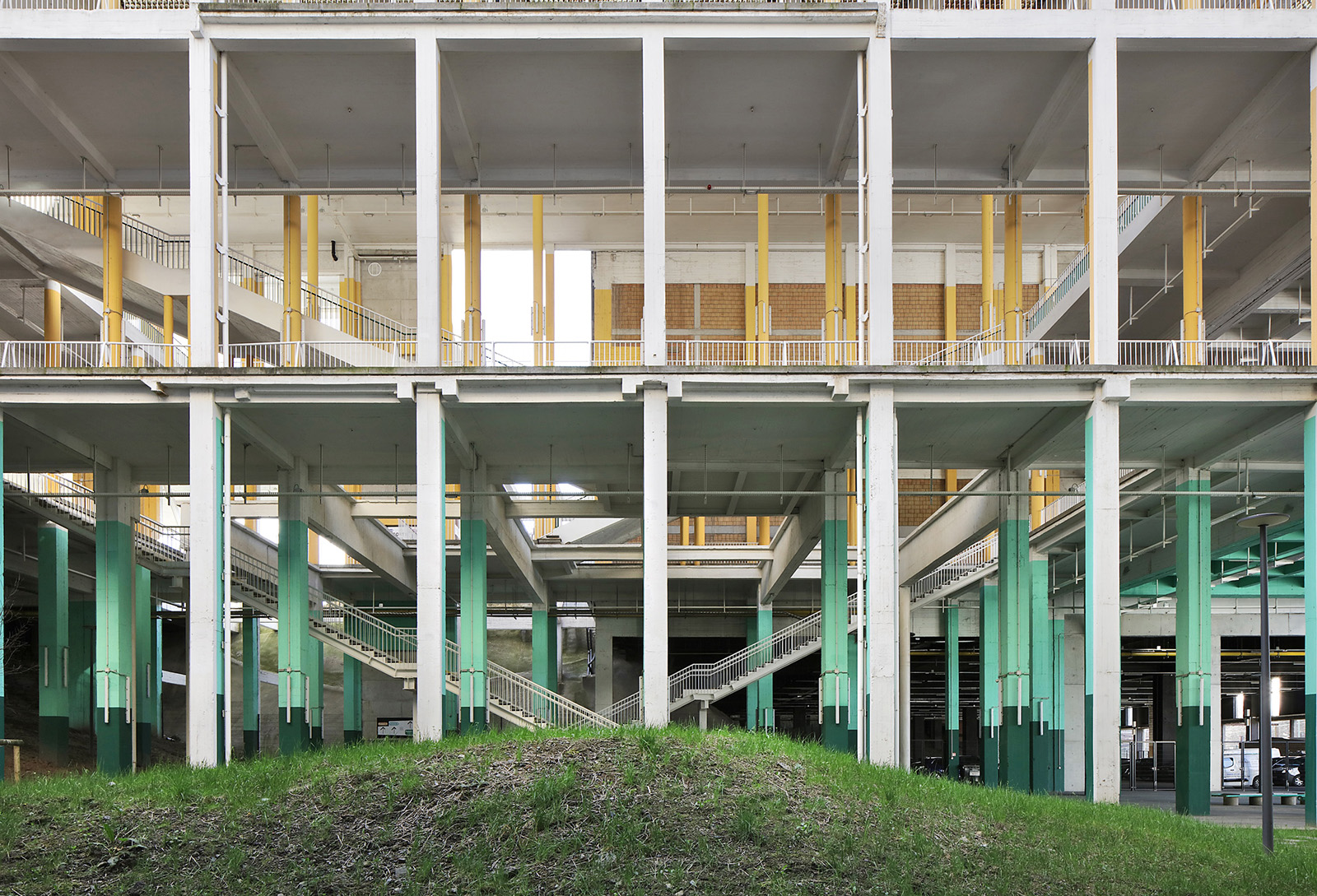
02) Charleroi Palais des Expositions, by AgwA, architecten jan de vylder inge vinck
Renovation of a 1950s convention centre. The stripped central hall transforms into covered urban terraces. Targeted interventions prioritize flexibility and circulation. Demineralization turns black ground into a continuous green park. The building as it was but never seen before.
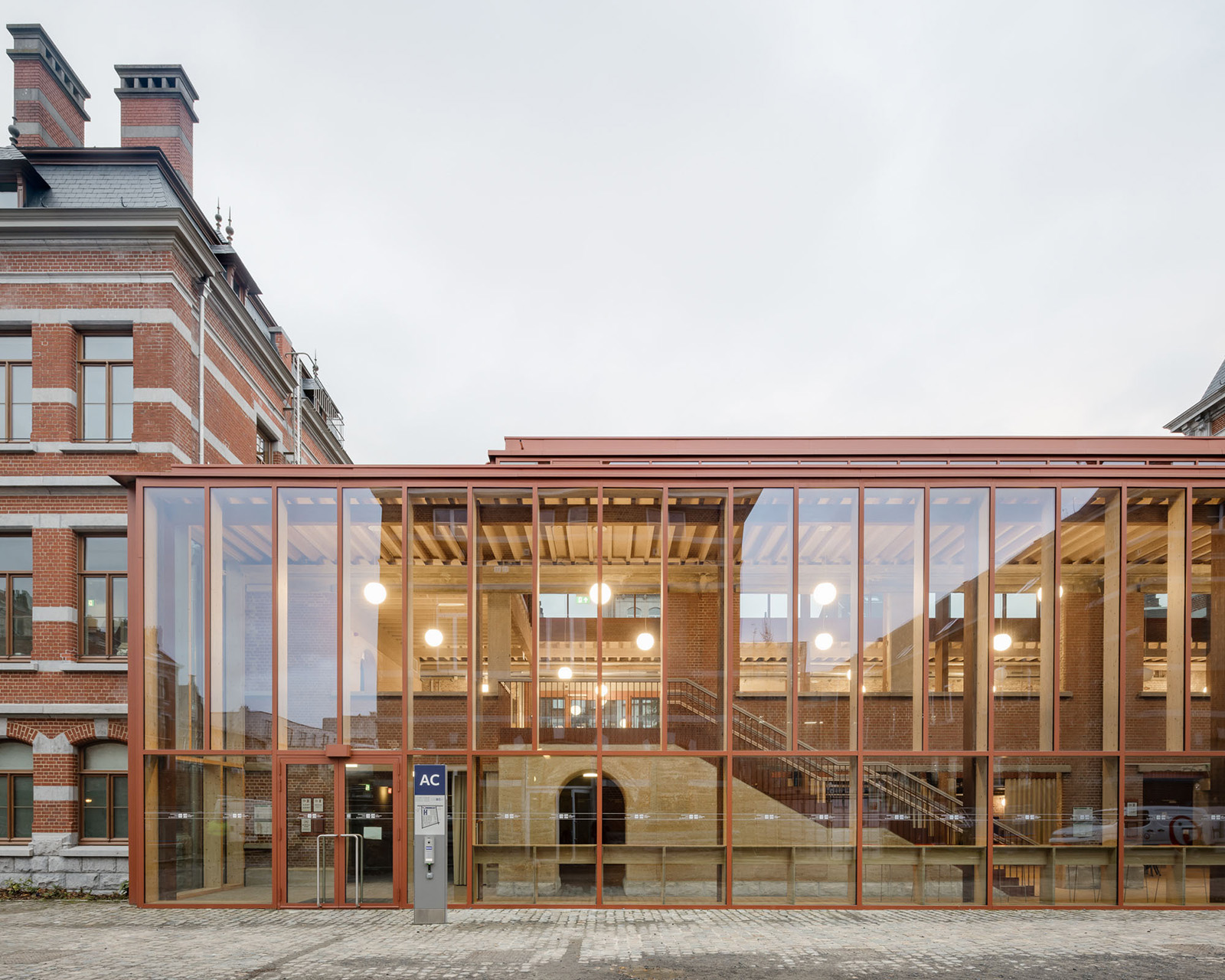
03) USquare Feder, by Callebaut architecten, BC architects & studies, evr-Architecten bvba, VK architects+engineers
Usquare Feder exemplifies urban mining at the architectural scale. The project valorises existing structures and reclaims on-site resources to create a new research and living environment. Through circular design and bio-based innovation, it redefines how heritage can host contemporary uses.
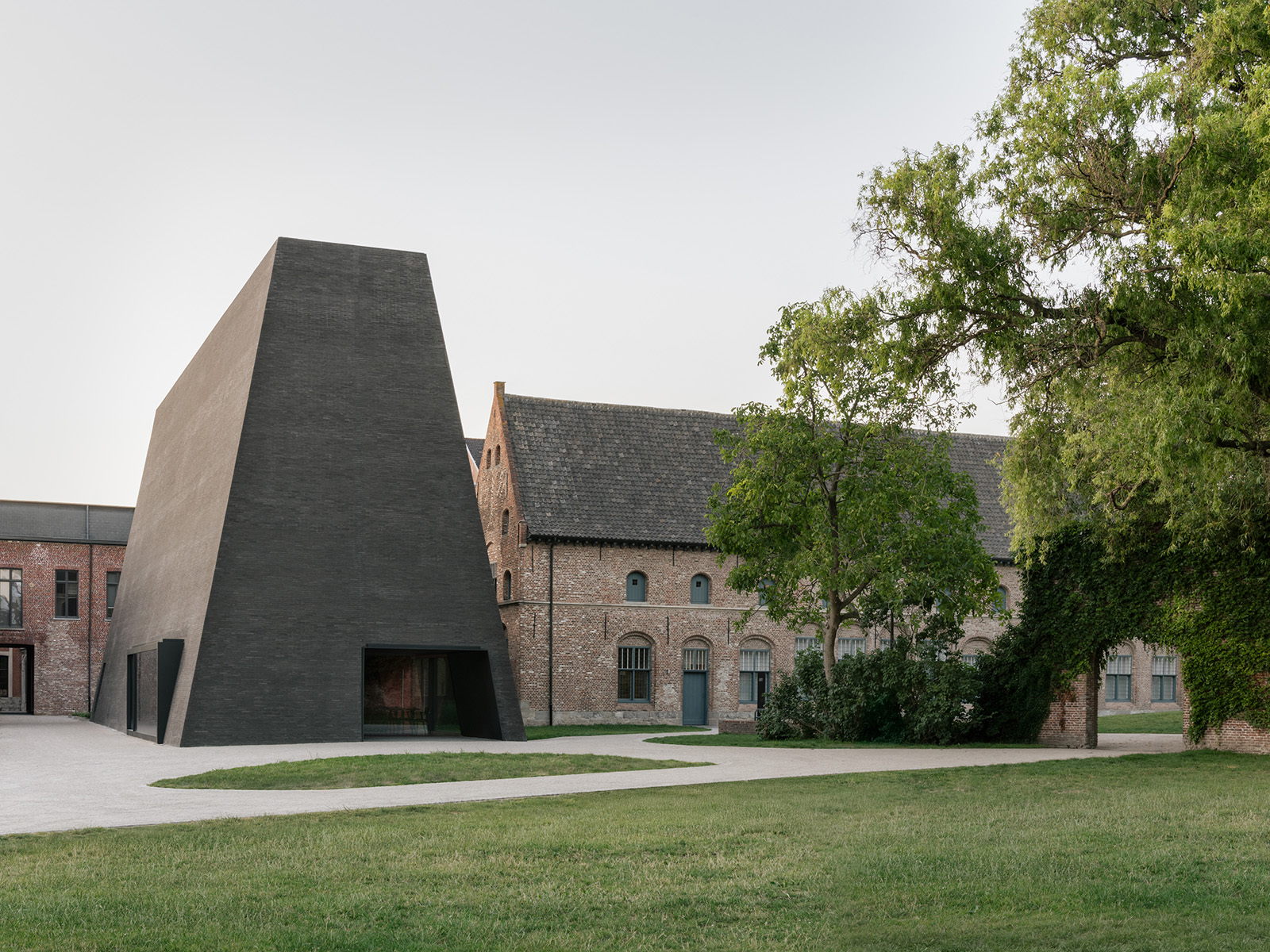
04) Abby Kortrijk, by Barozzi Veiga, Tab Architects
The project for Abby Kortrijk extends and transforms the historically significant Groeninge Abbey into an art space for site-specific exhibitions and public events. The new architecture—a series of well-considered interventions—enhances the site’s history while providing new spaces for the future.
Croatia
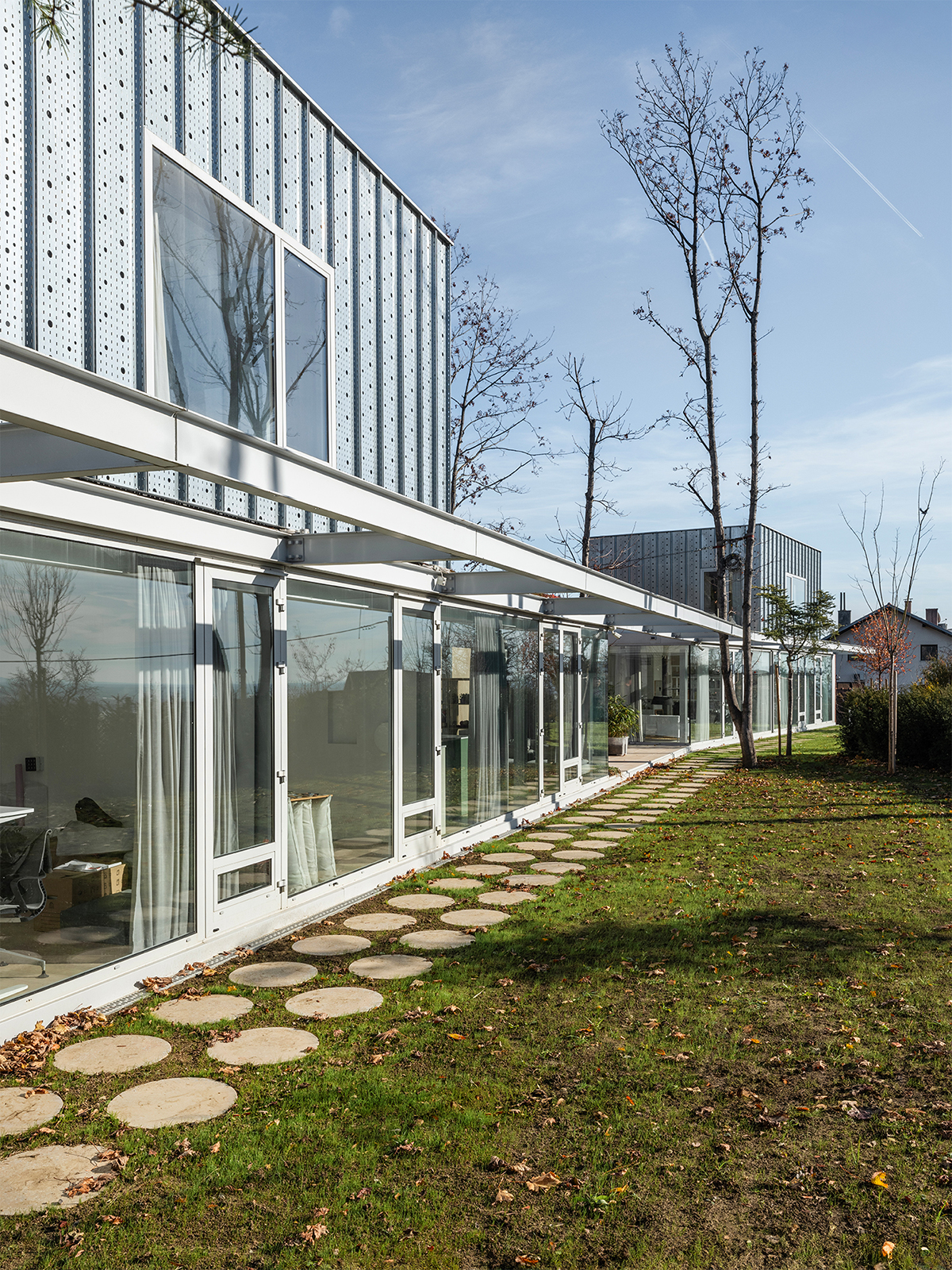
05) Double Villa Bukovac, by njiric+ arhitekti
The project is determined by the need to create an affordable habitat for two generations of the architect’s family. Restricted budget resulted in a highly condensed scheme of two tiny houses packed tightly, but keeping the villa-like qualities and generational autonomy. Living apart together (LAT)
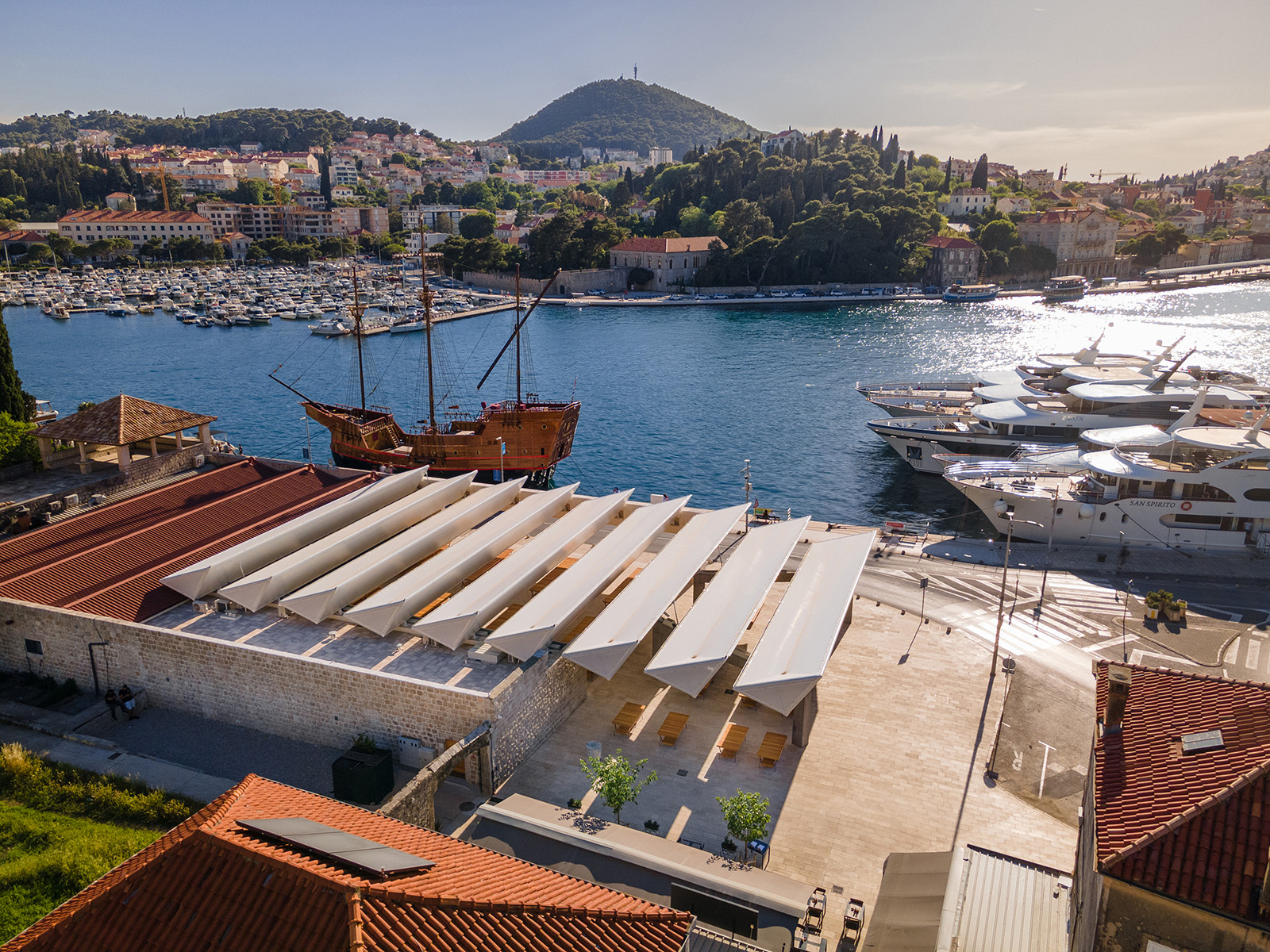
06) Gruž Market in Dubrovnik, by ARP / Peračić-Veljačić
Adjustable and carefully shaped canopy/roof, lightweight and optimistic in its appearance, floats above the marketplace and articulates spatial and cultural relations. At once, it gives integrity to the market square, new life to the heritage, public climatic shelter and new identity to the city.
Czech Republic
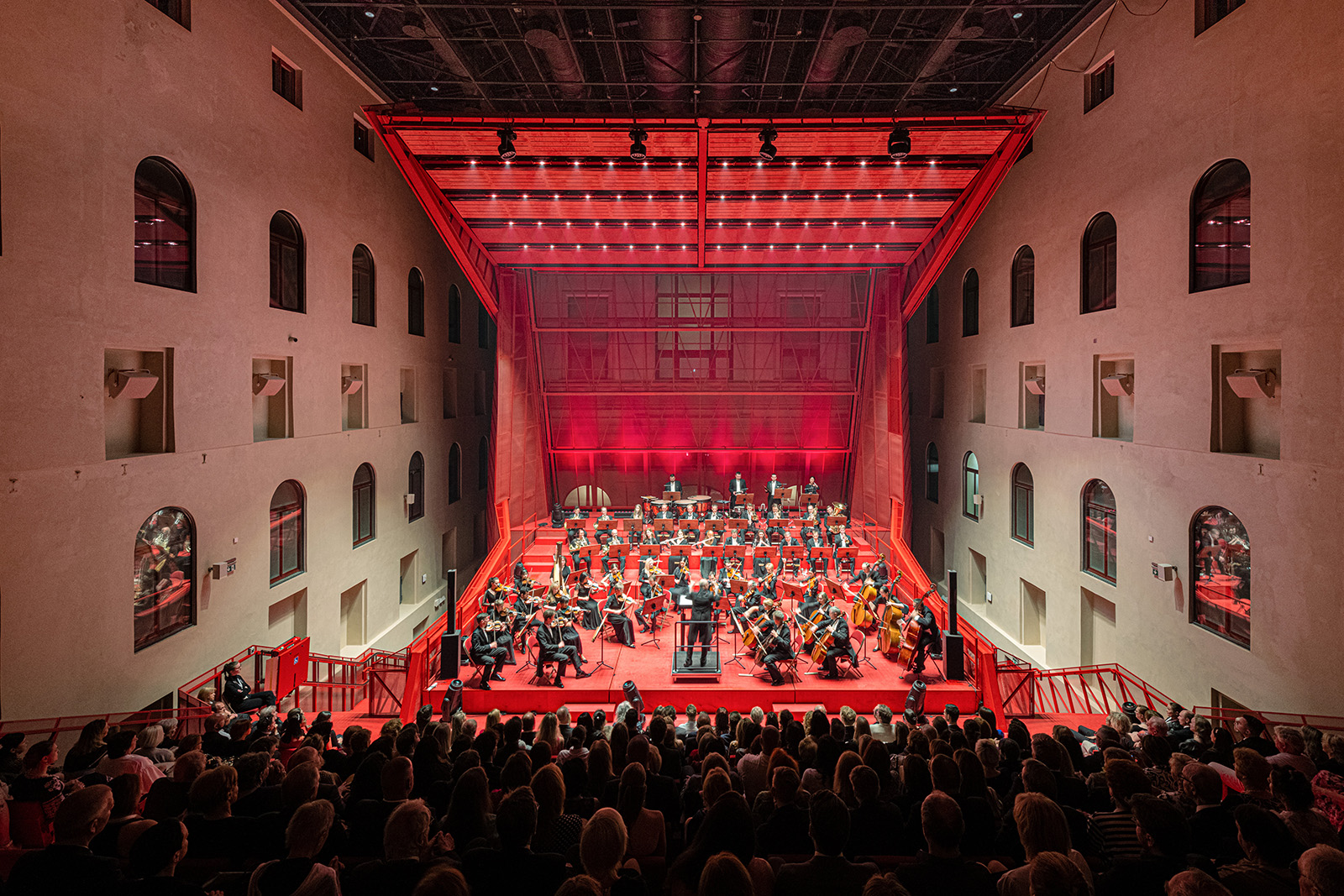
07) Multifunctional Hall in Imperial Spa, by Petr Hájek ARCHITEKTI
The Imperial Spa (design by Fellner & Helmer) in Karlovy Vary (UNESCO), a 19th-century listed national cultural monument, has been reborn as a cultural centre. At its core – a new heart – a freestanding steel-and-wood “robot” transforms the space into a concert, dance, cinema or theatre hall.
Denmark
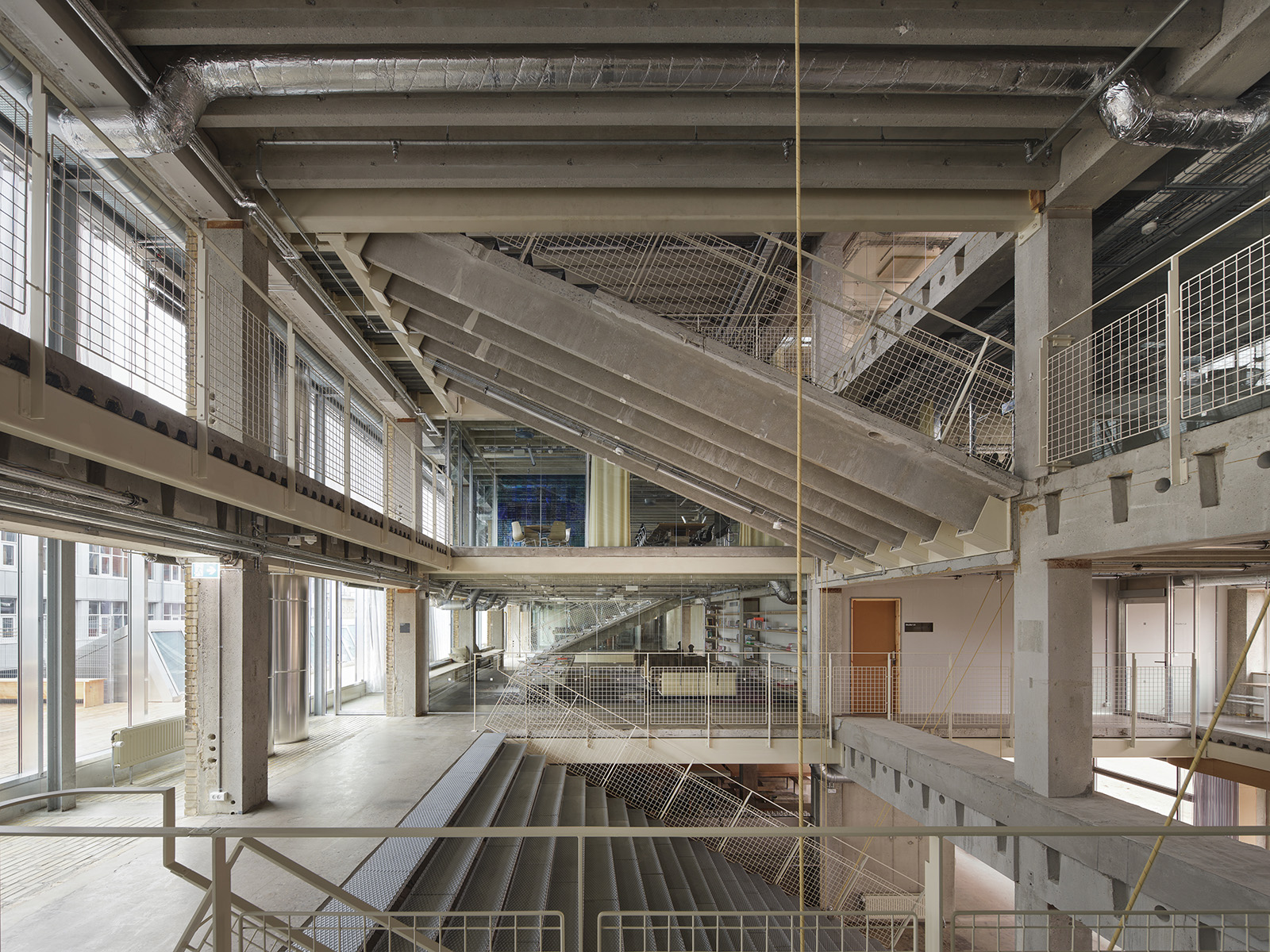
08) Thoravej 29, by pihlmann architects
Thoravej 29 transforms a 1967 factory in Copenhagen into a public hub for art and community. Through unconventional studies and execution, 95% of the materials stayed on site, showing how existing buildings – even the disregarded – can be revitalised through curiously caring for what is at hand.
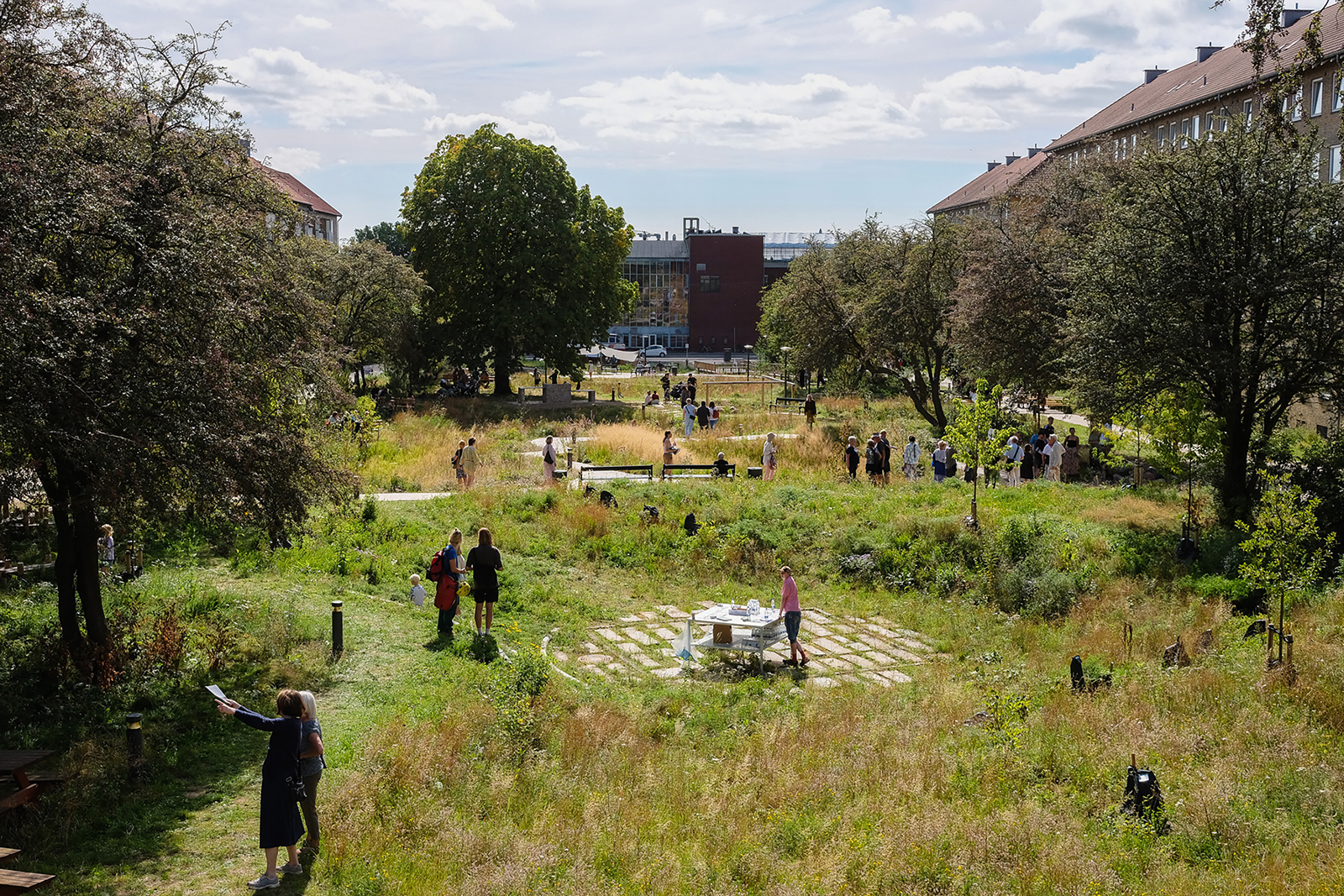
09) Grønningen-Bispeparken, by SLA
Grønningen-Bispeparken is Copenhagen’s latest and most radical climate park to date, where form follows nature and architecture’s foremost task is to create spaces for life – all life. Rainwater flows through a series of stormwater basins, which, when dry, double as social places for the community.
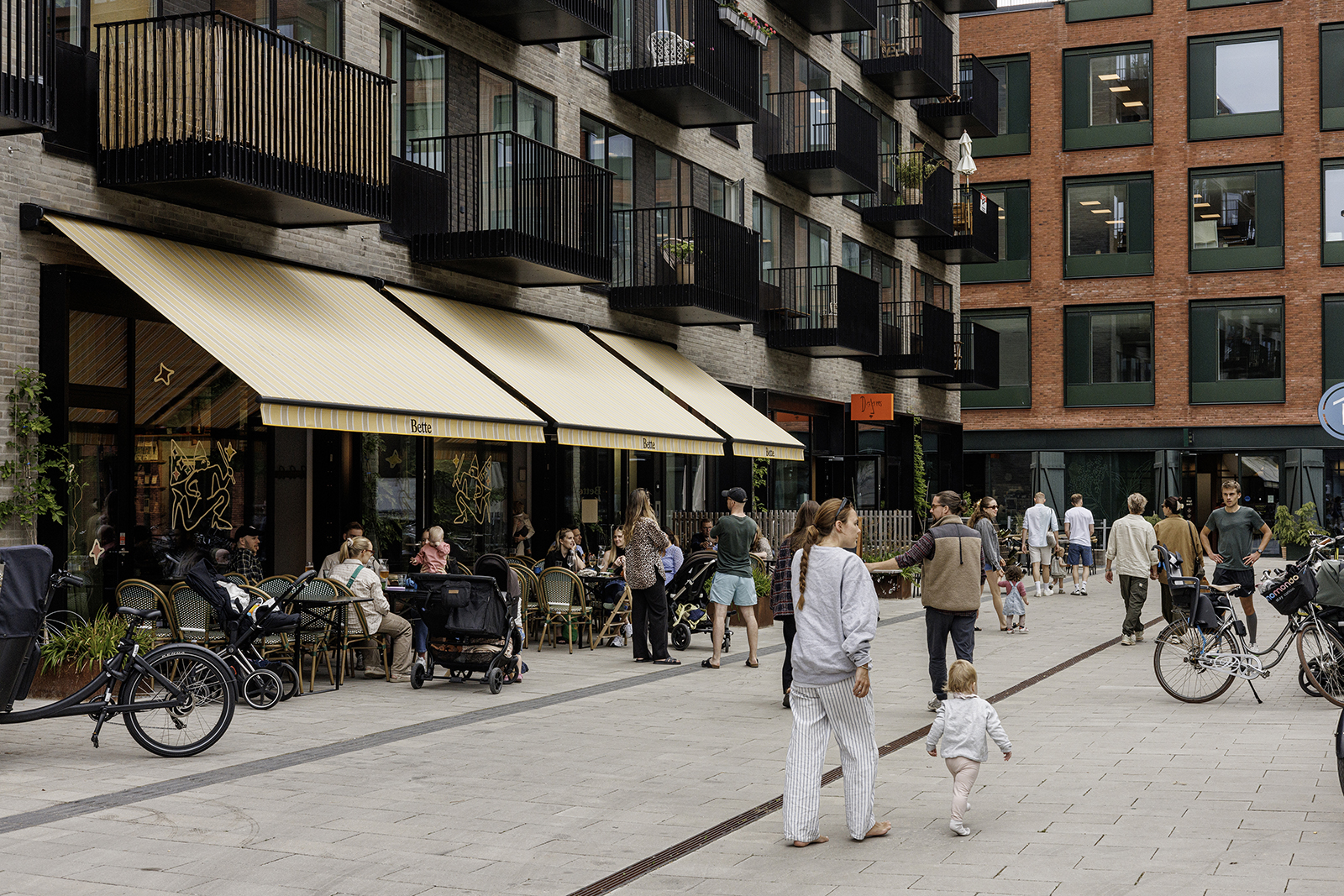
10) Masterplan for Carlsberg Byen, by entasis
The urbanization of Carlsberg Brewery pose a question of importance for most European city: How do we create an urban district that unite environmental, social, economic and architectural sustainability with experienced quality? The entasis answer was to embrace the complexity of a true city.
The jury’s evaluation took into account both works that renew existing buildings and those that introduce new construction. They considered the variety of ways in which existing buildings and spaces are transformed: through extensions, heritage consolidation, partial demolition and reconstruction, restoration, interventions on existing structures, reuse of materials on-site and in other works, or the use of local materials to adapt and transform. Observed across buildings, infrastructure, and public spaces, these approaches demonstrate how thoughtful design can combine creativity, sustainability, and respect for context, giving renewed life to the built environment.
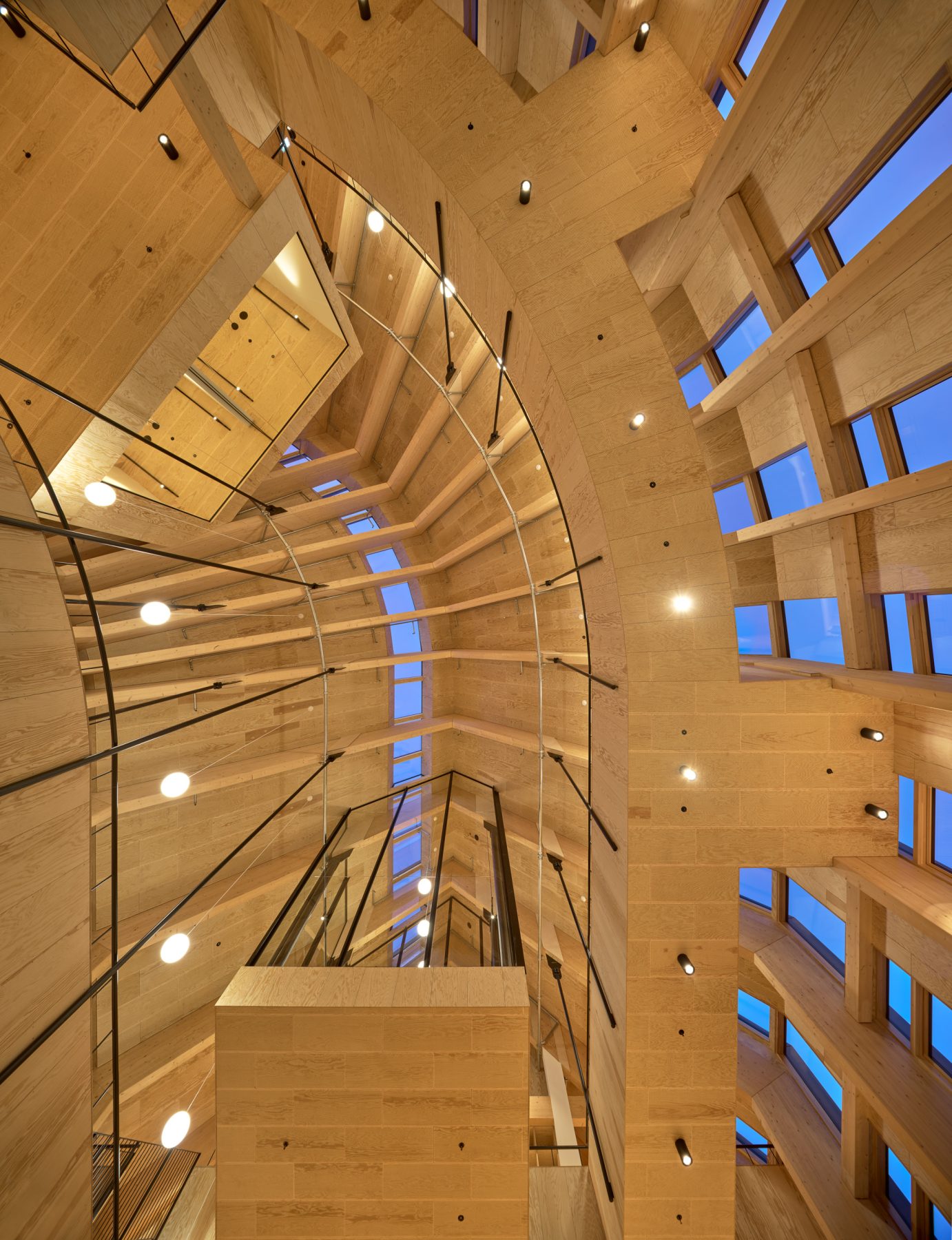
11) Centre for Health, by Dorte Mandrup A/S
Centre for Health demonstrates architecture’s transformative potential, using thoughtful design to restore dignity, promote activity, support rehabilitation and enhance life quality for people affected by lifestyle-related illnesses. A new community space using low carbon building techniques.
Finland
12) Tammela Stadium, by JKMM Architects
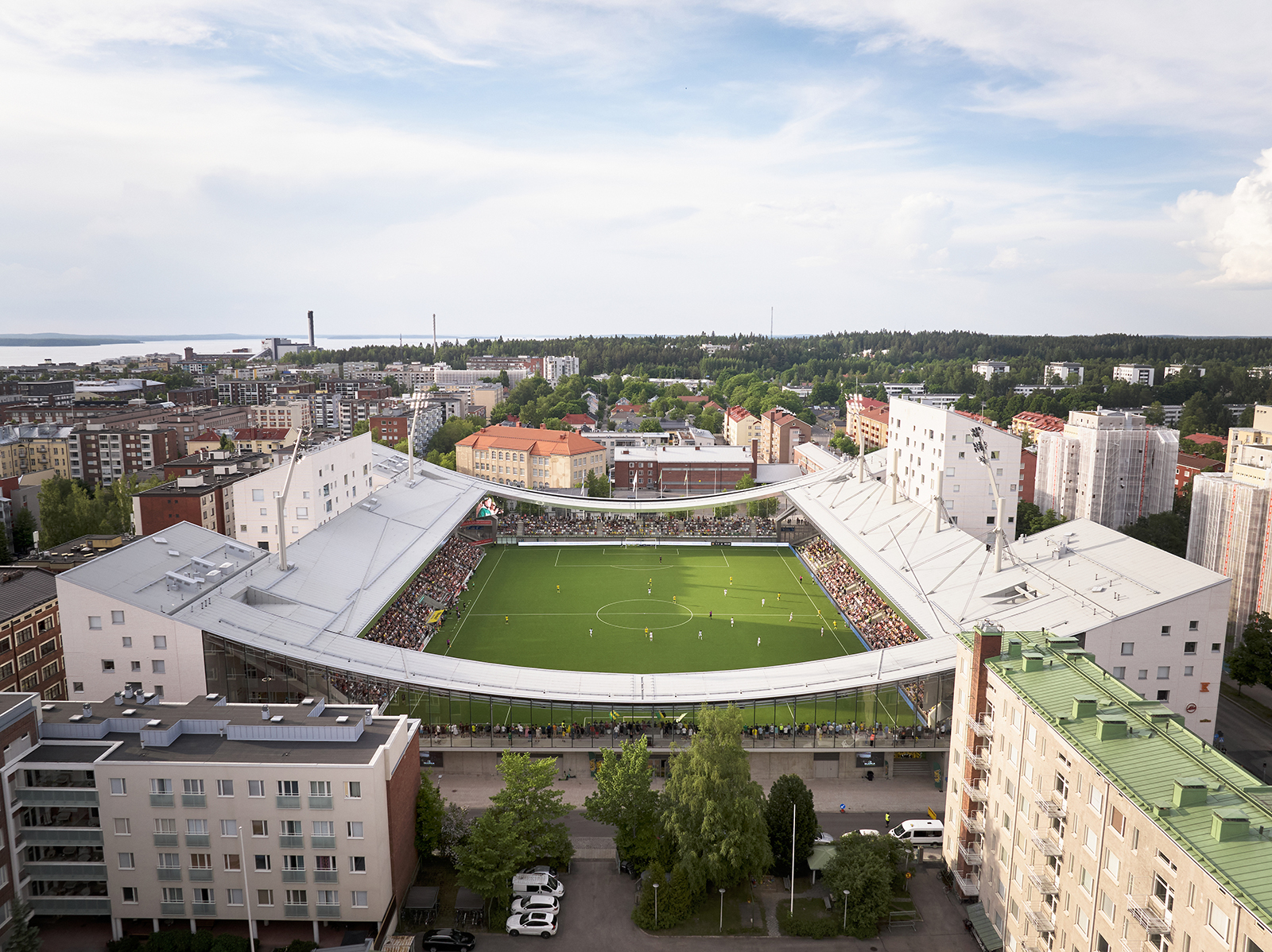
Tammela Stadium transforms a historic football ground in central Tampere into Finland’s first hybrid stadium block, combining top-tier football facilities with housing, commerce centre, and public spaces – embodying sustainable, dense city living and a thriving sense of community.
France
13) M37 house in Contis, by BAST, LITTORAL
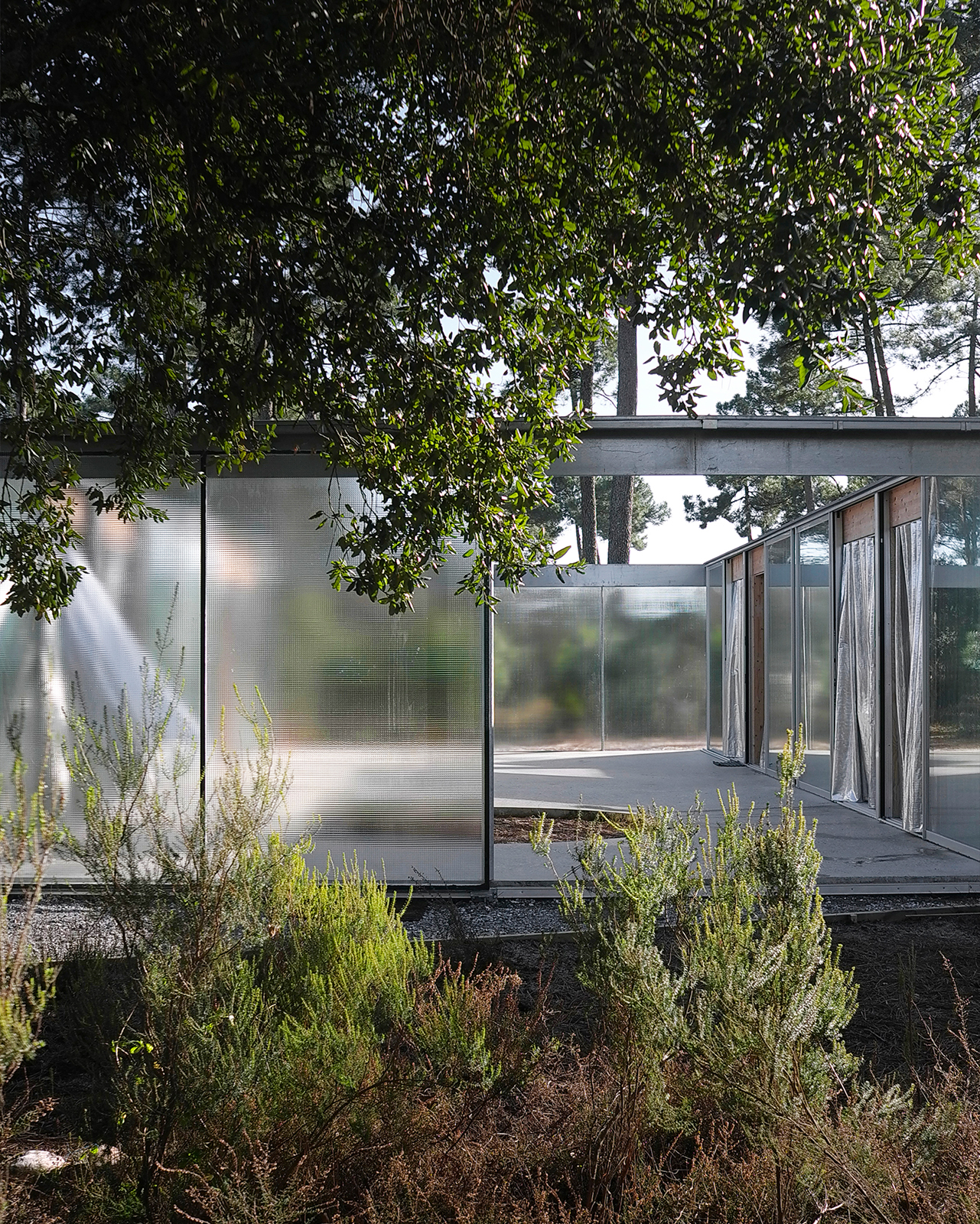
This house for a retired couple is located in a seaside housing development without cutting down any trees. Compact, it creates its own outdoor space: a patio separating the house from the outbuilding. With a wooden frame, flat roof and windows facing the patio, it blends in with the forest.
14) Third Place Flow, by Office Zola architectes
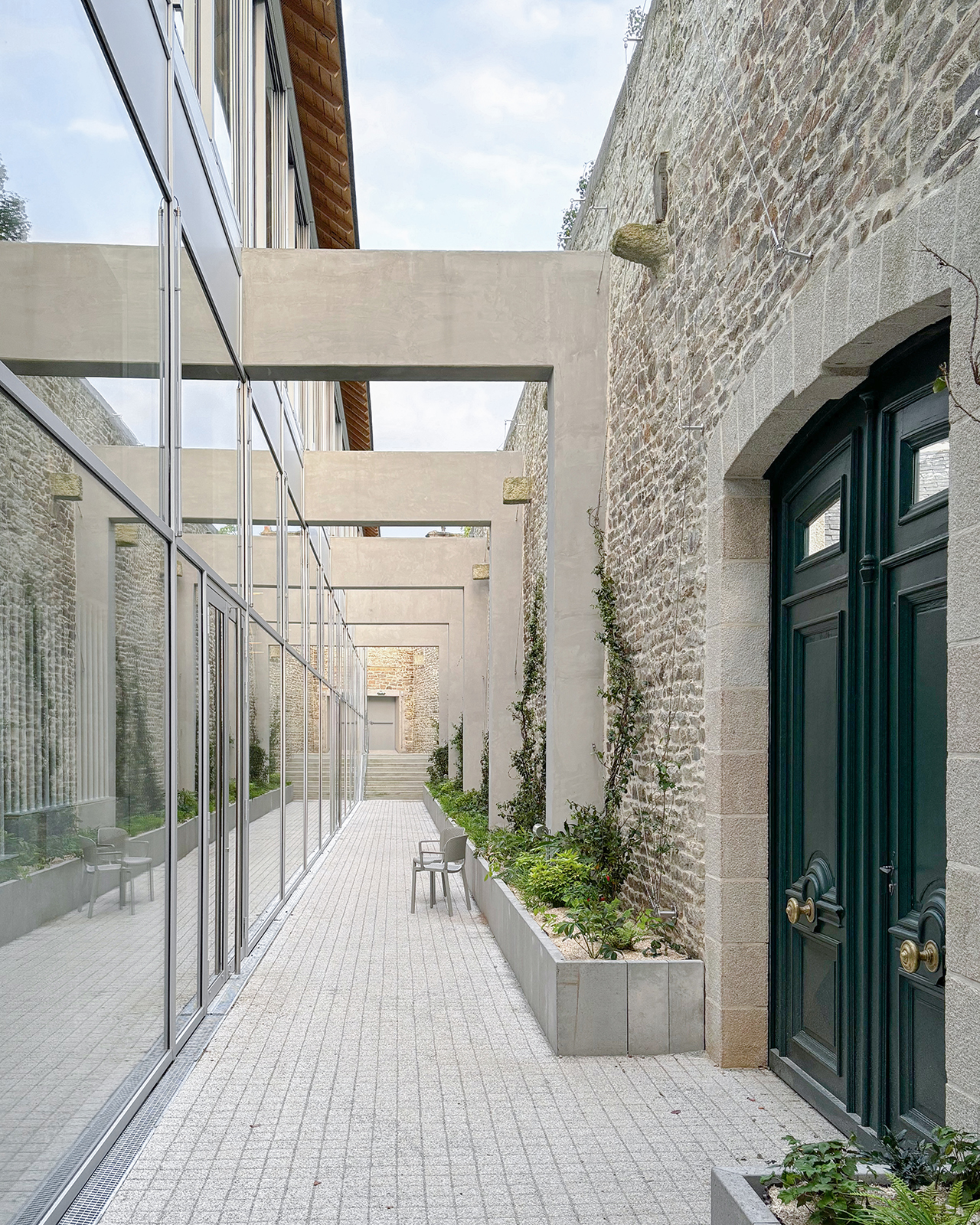
Facing Vannes railway station, the transformation of a former industrial complex reinvents a neglected site into a luminous, flexible third place devoted to wellbeing, work, and social exchange. The project reconciles heritage and contemporaneity through a restrained and sensitive architecture.
15) Lot 8, LUMA Arles – Renovation of Le Magasin Électrique, by ASSEMBLE, Atelier Luma, BC architects & studies
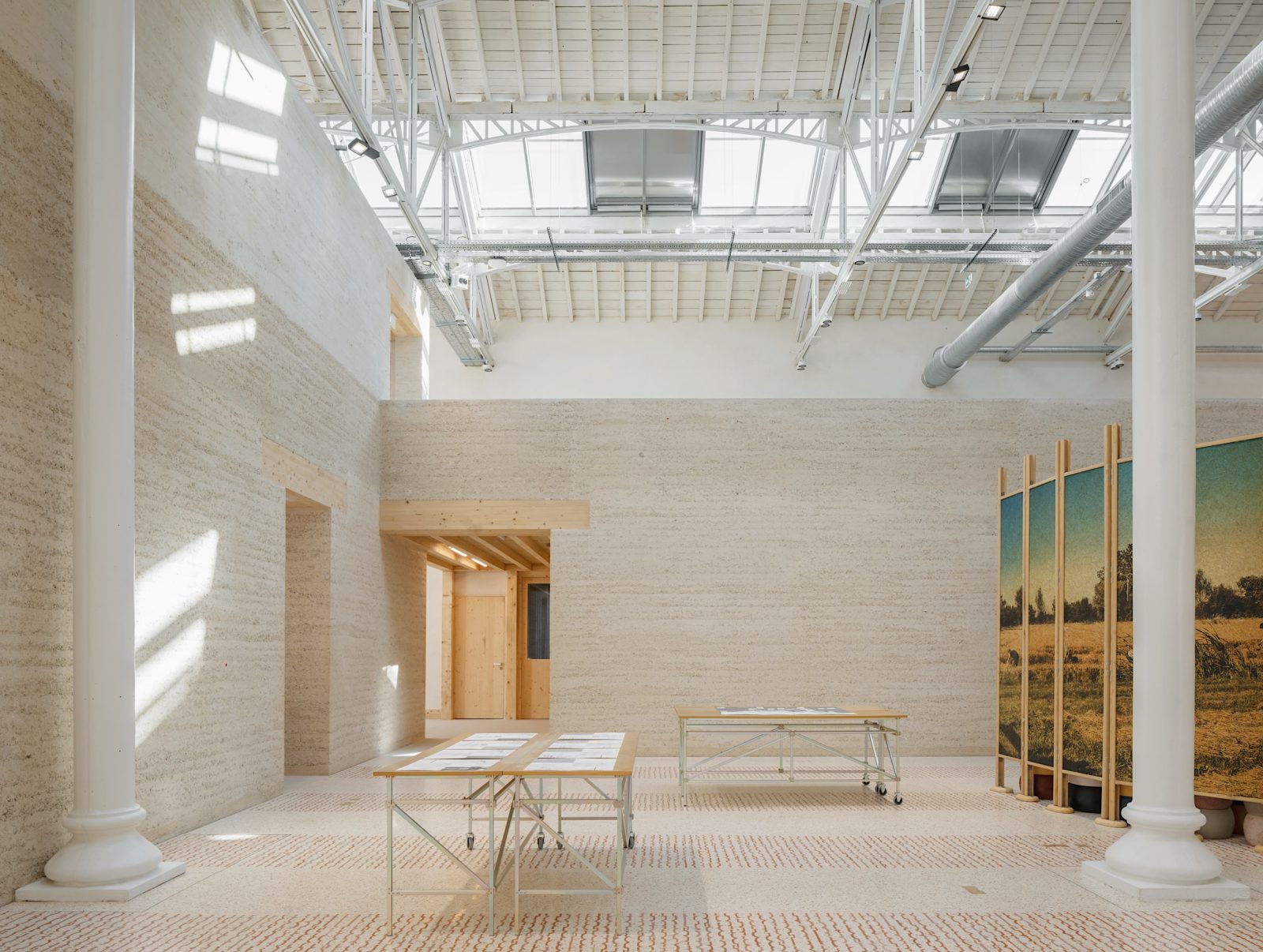
In 2019 the Luma Foundation commissioned Assemble and BC Architects to transform a 19th-Century train depot in Arles into Atelier LUMA, a design lab exemplifying bioregional design, using Camargue resources, regenerative materials and local knowledge for a sustainable, socially engaged architecture.
16) 206 Lafayette – Restructuring and Densification of a Mixed-Use Block Including Offices, Social Housing and Stores, by DATA ARCHITECTES, THINK TANK architecture
206 Rue Lafayette in Paris transforms a dense urban plot while preserving 80% of the existing buildings. Through a strategy of architectural addition and subtraction, the project integrates housing, offices, and retail spaces, revealing the site’s richness and balancing heritage with contemporary uses.
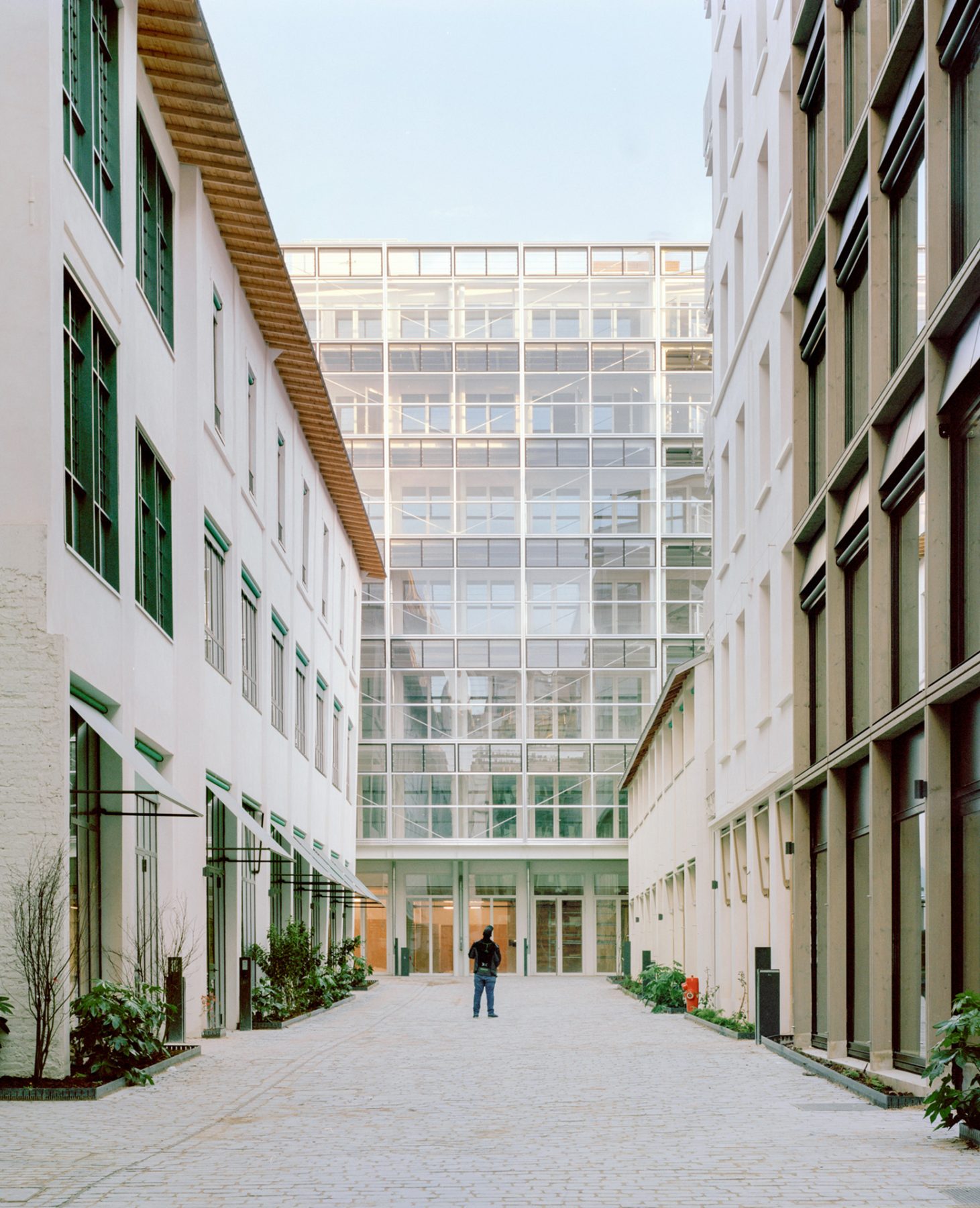
17) Multi-Service Cultural Centre Le Foirail, by Betillon & Freyermuth*, Crypto Architectes
A radical hall in Laguiole, open and reversible, rooted in a proud rural territory with limited means. Rejecting pastiche, it acts as a unifying public space, a flexible machine-building able to adapt over time and nurture collective energy and local identity. Built with local resources set to grow.
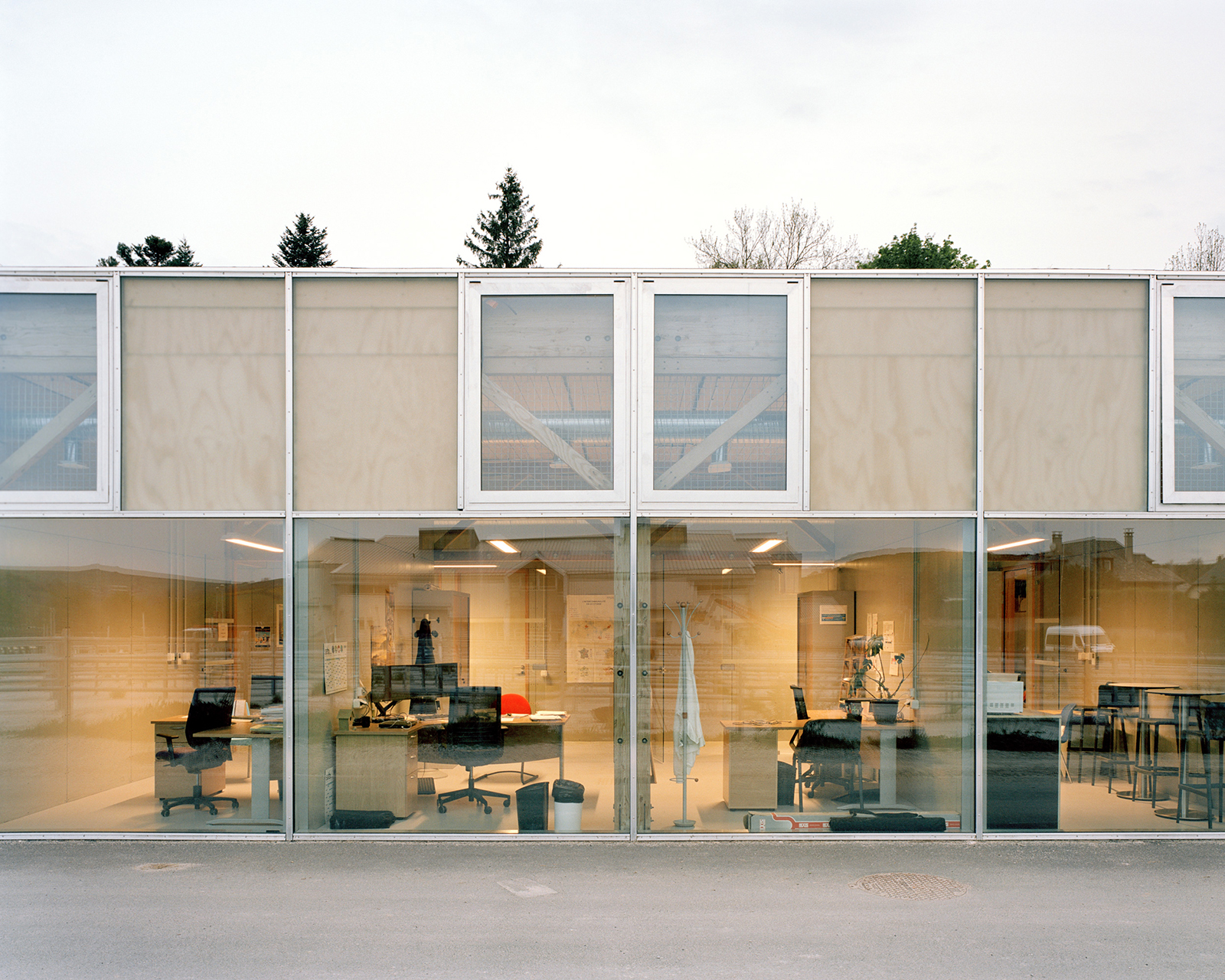
18) Josephine Baker – Marie-Jose Perec Sports and Cultural Centre, by onze04
The project creates a new cultural and sports facility hosting regional competitions. It forms a major hub integrating existing facilities and reconnecting the area with neighbouring districts. Its textile-roof hall offers natural light and ventilation, becoming a symbolic urban landmark.

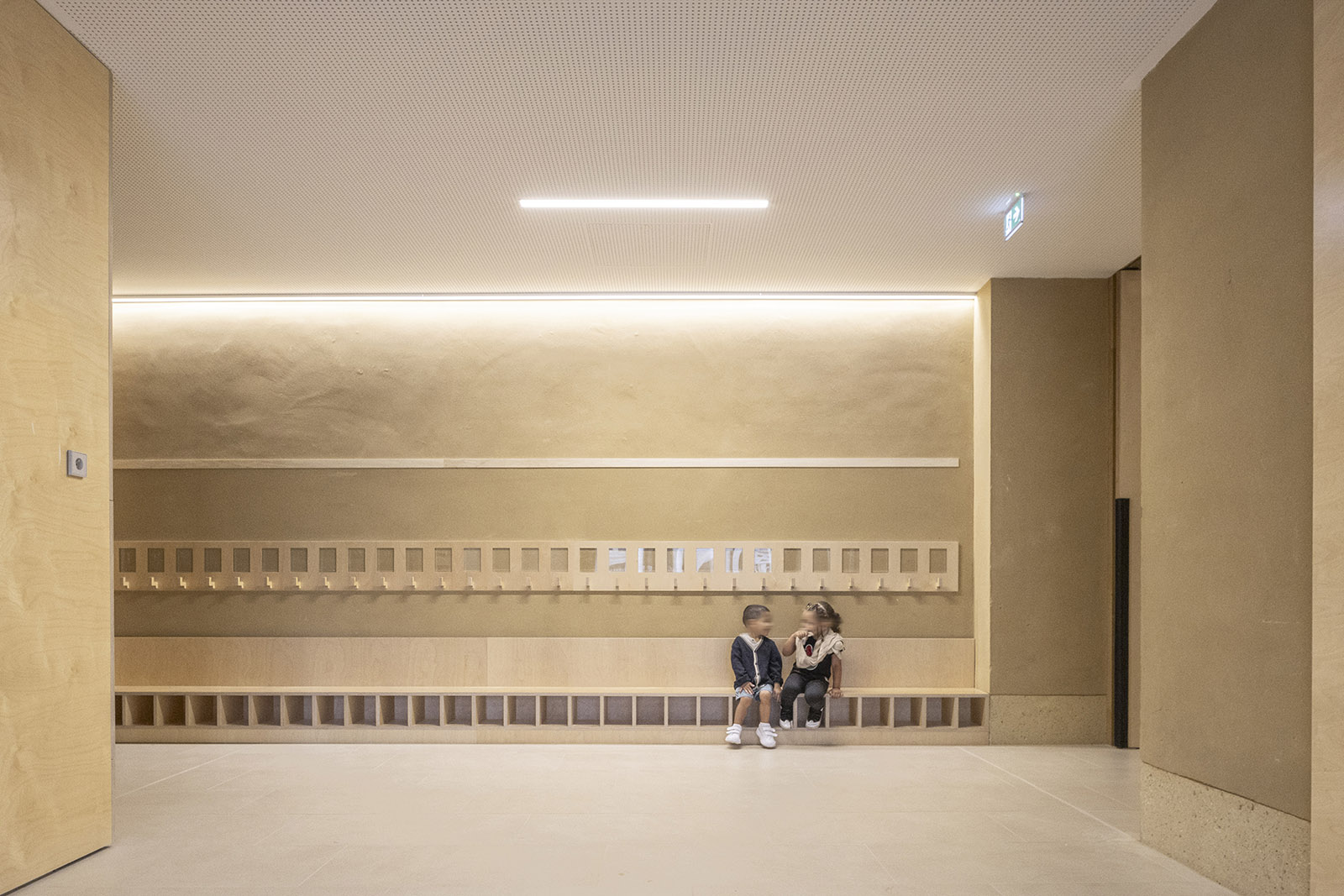
19) Seed School: Growing Schools from Rammed Earth, Wood, and Recycled Concrete, by a+ samueldelmas architectes urbanistes
The project’s guiding principle was to create an ideal learning and growing environment for children within a building designed with the right amount of the right material in the right place. It prioritized local sourcing, reused materials, bio and geo-based resources, and raw/finished solutions.
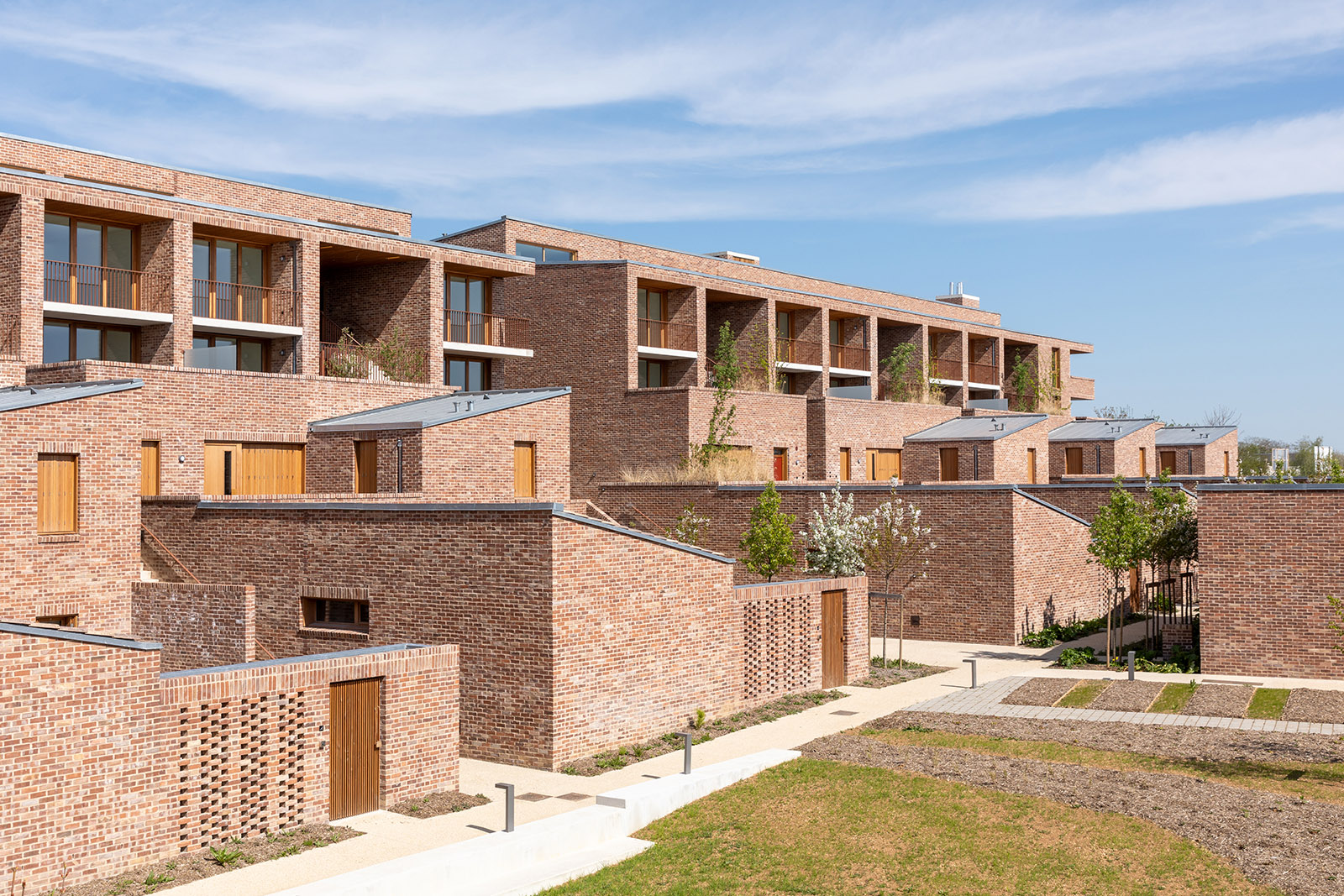
20) 56 Social Dwellings, by Jean et Aline Harari architectes
This mixed brick-and-wood development combines several residential typologies, including 15 patio houses in the lower section, 22 split-level duplex apartments, one large 10-room apartment, three duplex units, and 15 flats arranged around a connecting alleyway and a generous central garden.
21) School of Music, Dance and Theater, by LINK architectes, Doucerain Lièvre Delziani Architectes
Anchored between town and nature in Sallanches, the EMDT school engages in dialogue with the alpine landscape. Organized on one level around a central patio, it fosters openness and exchange. Built in local wood and zinc, it blends sustainability with a strong, site-specific identity.

Hungary
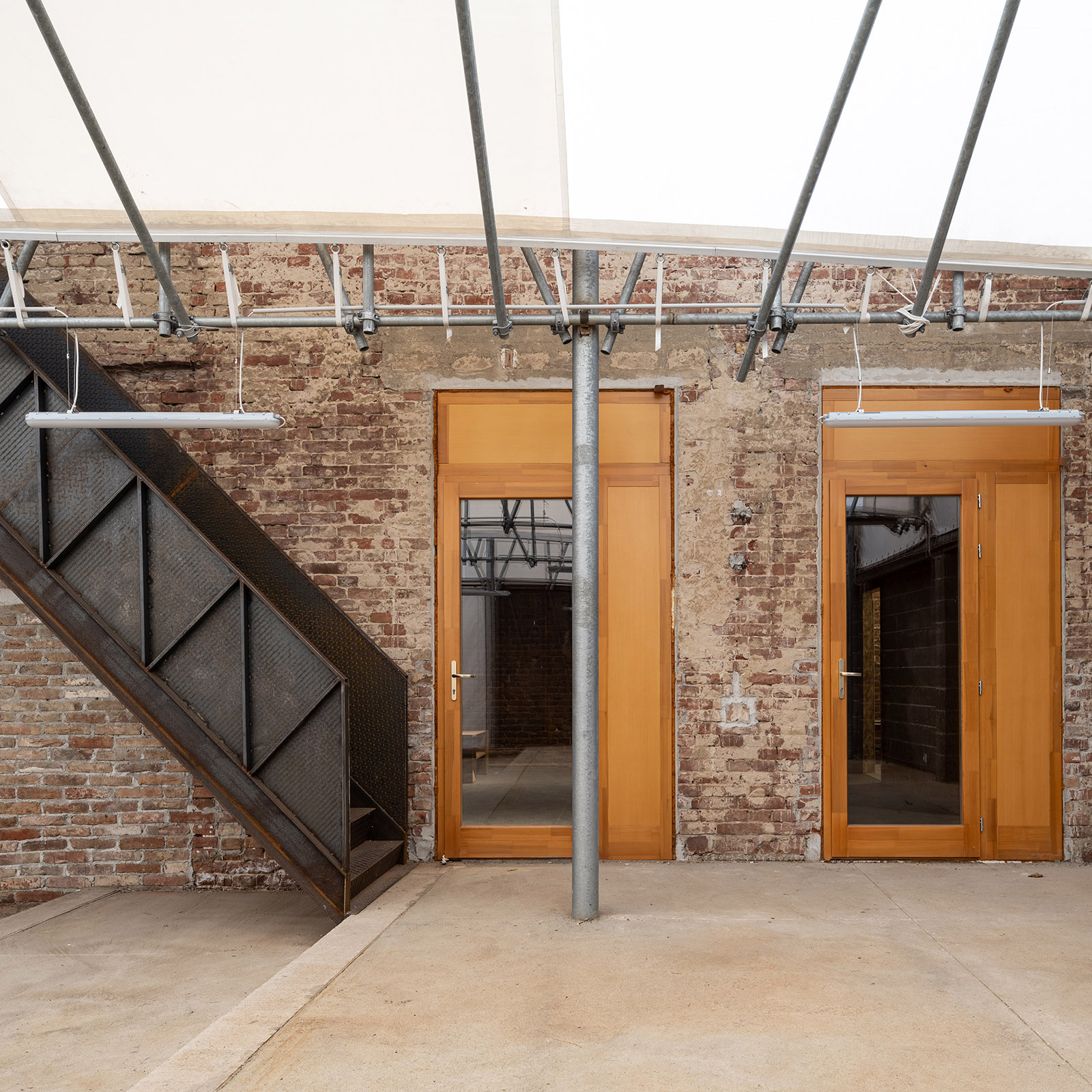
22) The Dryer Workshop, by dmb műterem Ltd.
The project creates an incubator house for the Department of Architecture, University of Debrecen by renovating a dilapidated building. The bricoleur’s attentiveness to the existing structure is in every detail – exposed surfaces, courtyard roof, evoking the old leather-drying space of the building.
Italy
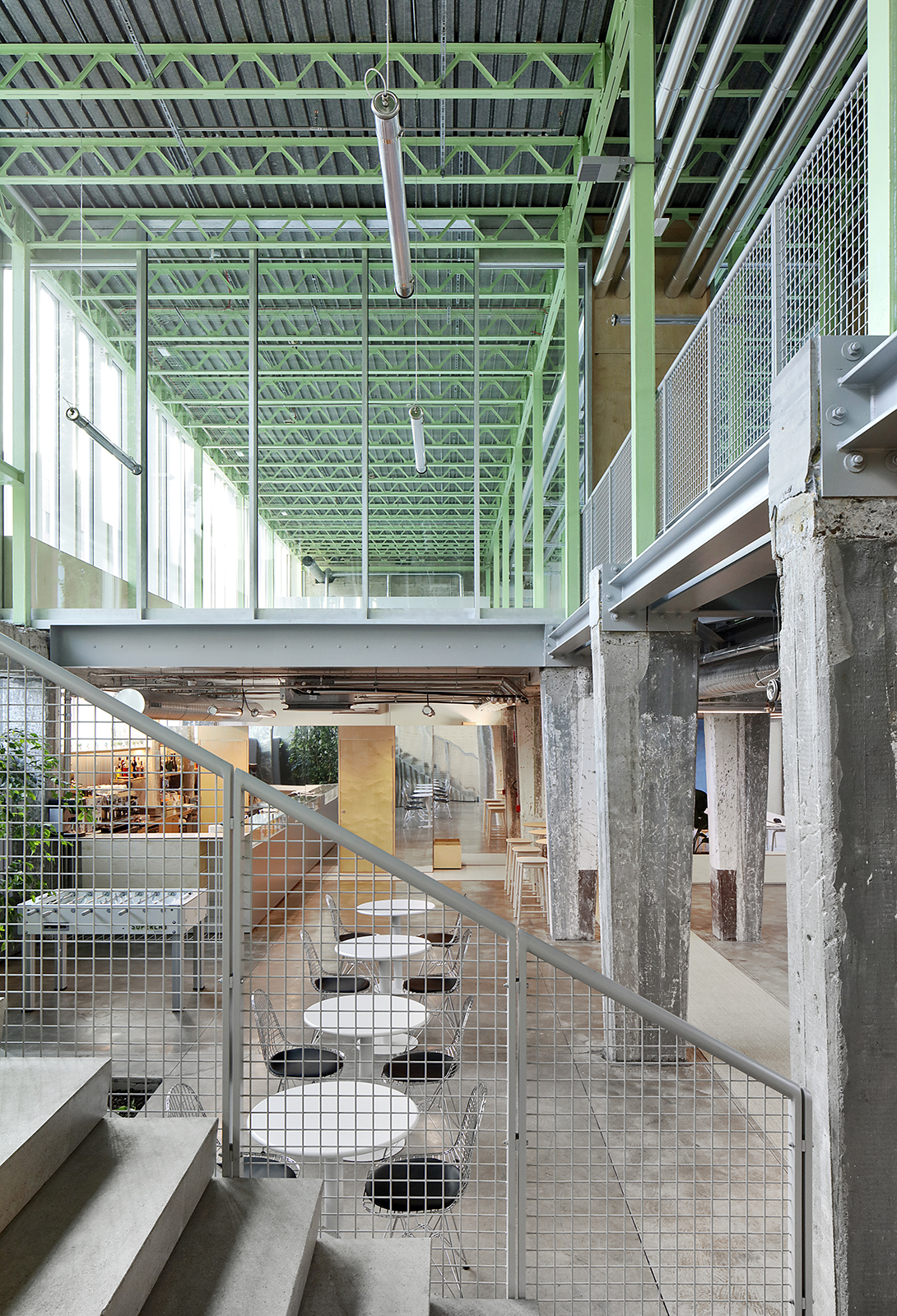
23) Bicocca Superlab, by BALANCE ARCHITETTURA
Bicocca Superlab is an urban regeneration project transforming a former industrial building into a carbon neutral workplace, merging exposed structure, adaptive spatial strategies and a light-reactive facade as a contemporary model of ethical innovation through a essential architectural approach.
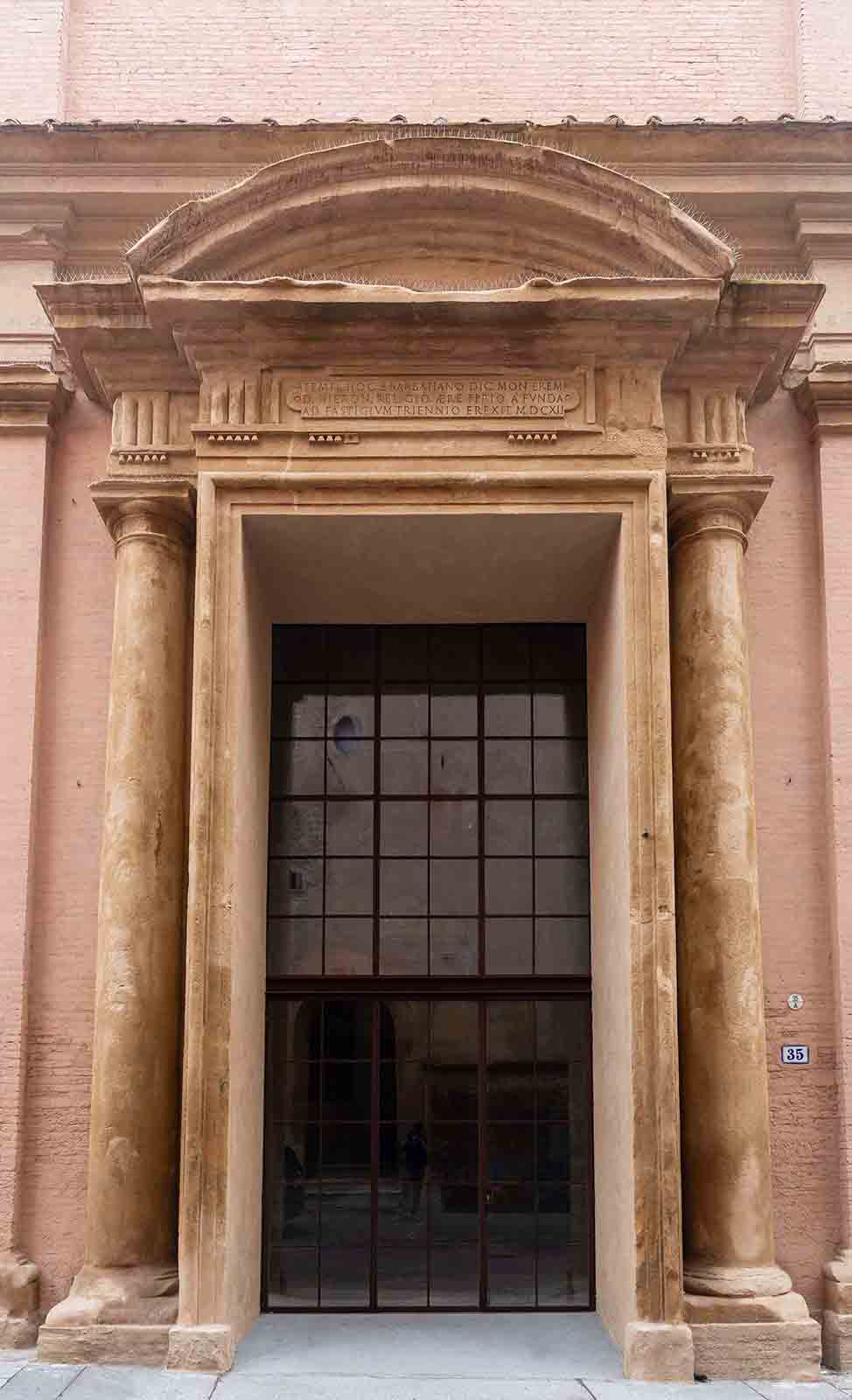
24) The Project of Time – Restoration of the Former Church of San Barbaziano, by Studio Poggioli
The restoration of the former church of San Barbaziano returns a centuries-old building to the city as a state cultural venue. The project intervention preserves its character as an urban ruin, celebrating historical stratifications through conservative restoration and contemporary insertions.
Lithuania
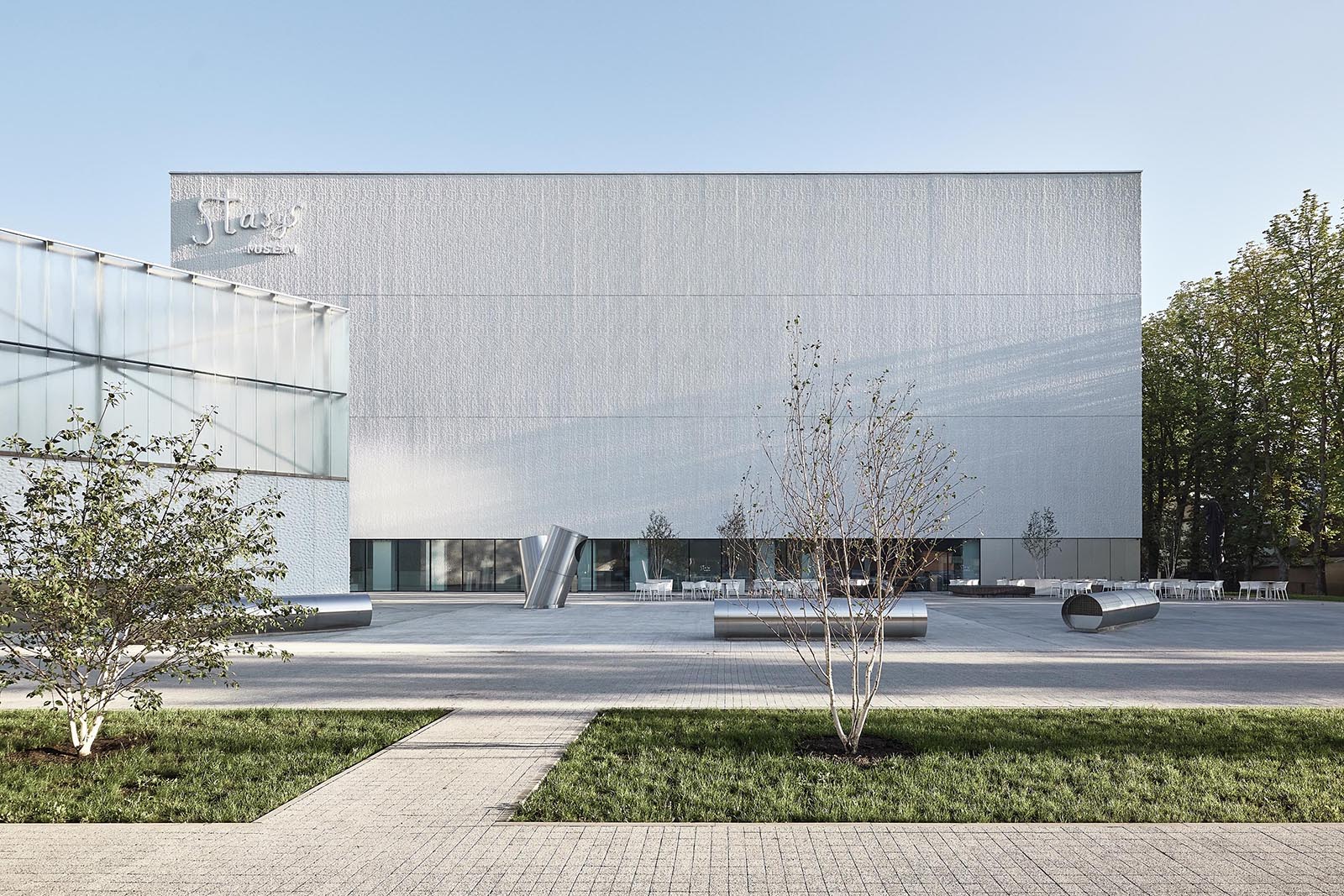
25) Stasys Museum, by IMPLMNT Architects
Simplicity, logic, imagination – these are the three keywords that describe the project. Simplicity is expressed through the form of the building, logic through the layout, the building itself encodes the elements of the imagination that are discovered by the visitor to the building or public space.
Norway
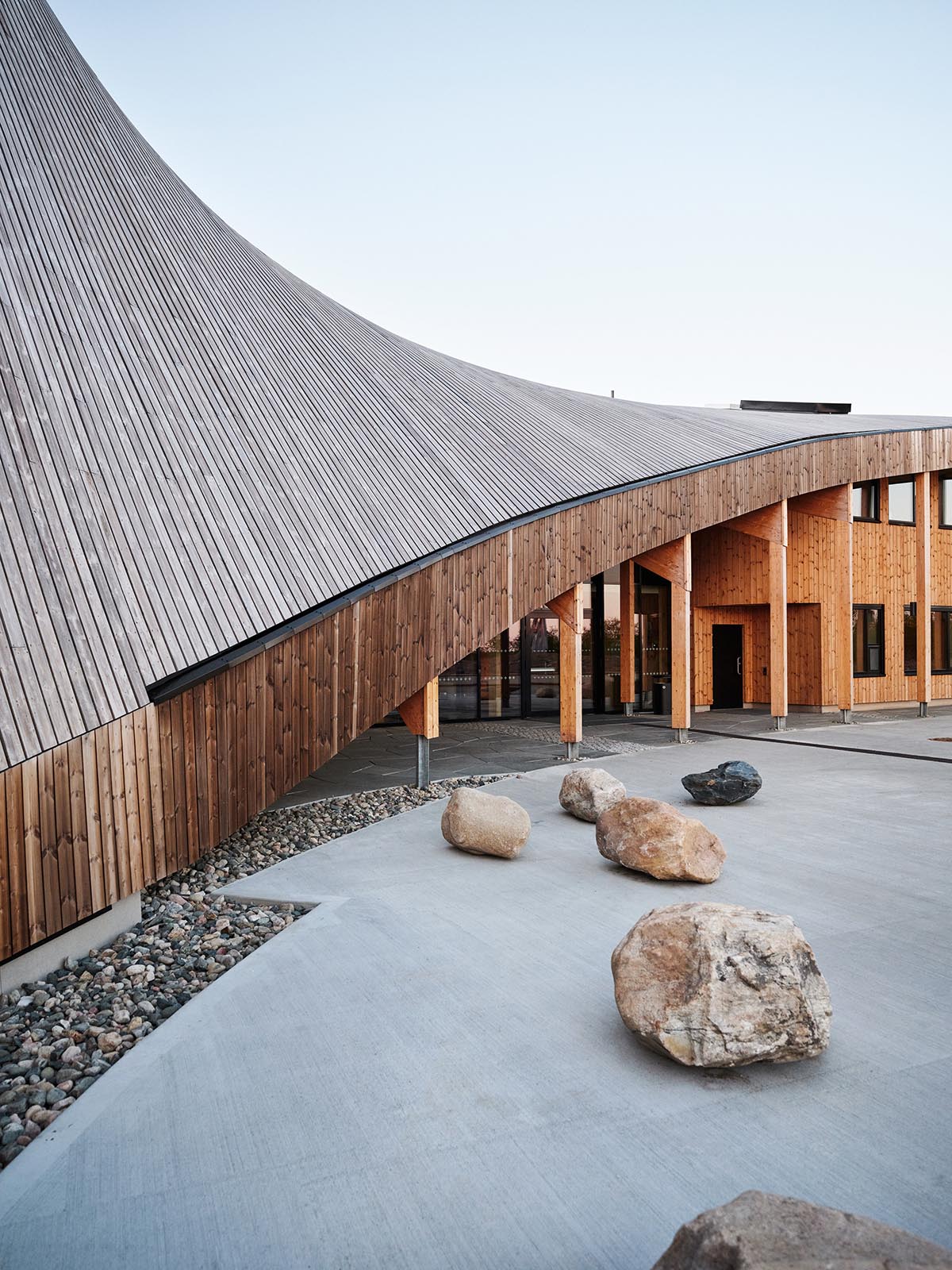
26) Čoarvemátta – Sámi Theater, High School and Reindeer Herding School, by 70°N arkitektur, Joar Nango, Snøhetta
Čoarvemátta is a cultural and educational hub in Kautokeino. Inspired by Sámi heritage, it blends architecture with nature, supports reindeer herding and duodji, and fosters community. The building serves as a bearer and transmitter of Sámi culture through education and cultural expression.
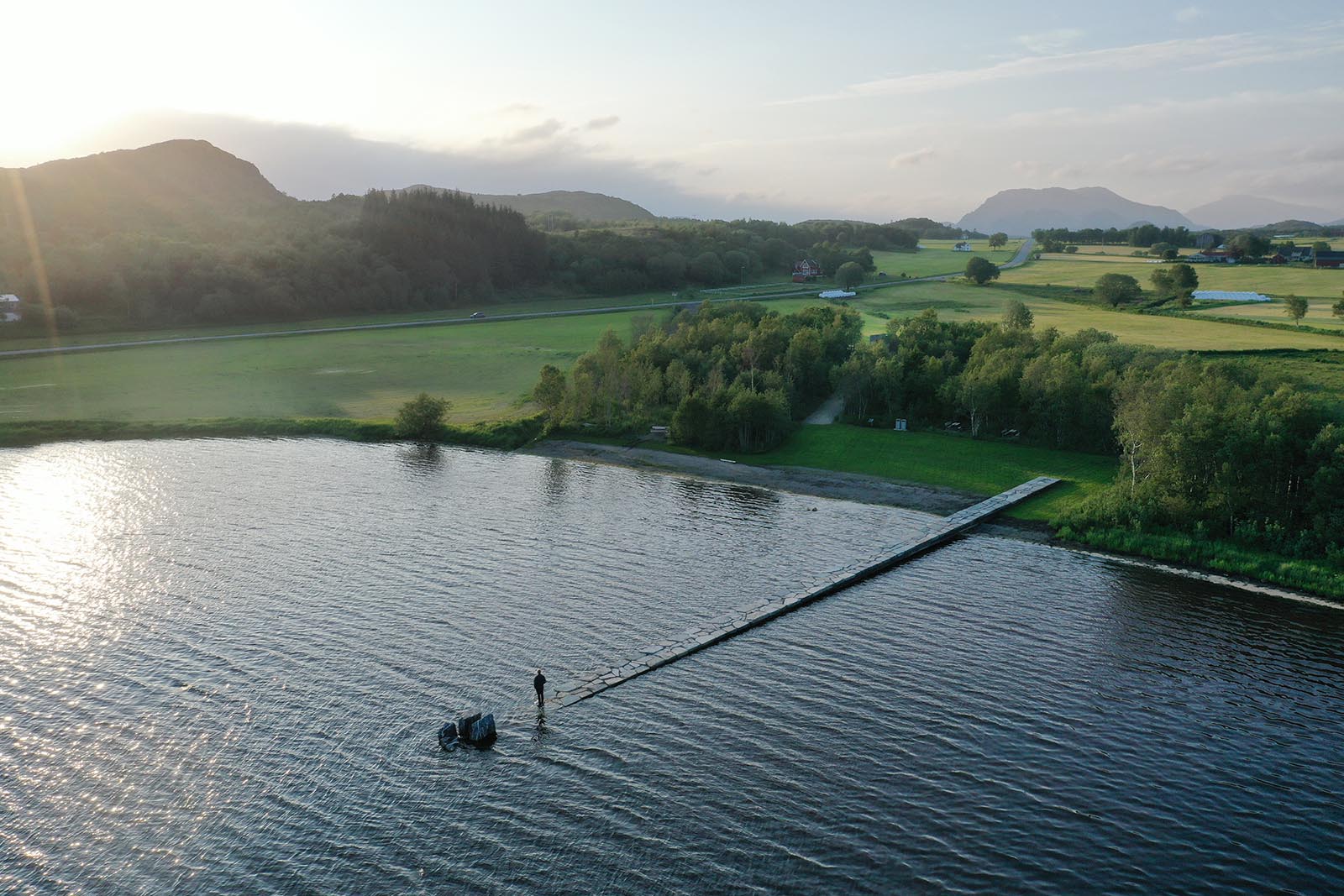
27) Sundshopen – Norwegian Scenic Routes, by Rever & Drage Architects
Restoration of a long-used community bathing site at Sundshopen, where a new stone and timber jetty, dense forest with a path, and a small service building reconnect local residents and visitors with the landscape’s social, cultural, and ecological heritage.
Poland
28) Warsaw Uprising Mound, by TopoScape, Archigrest
The Warsaw Uprising Mound is a park built atop a post-war landfill. It intertwines commemoration with everyday life, and a reclaimed brownfield with biodiversity. Reflecting on reconstruction, reuse, and nature’s resilience, it envisions a hopeful scenario for landscapes after catastrophe.

Read more about the project here!
Portugal
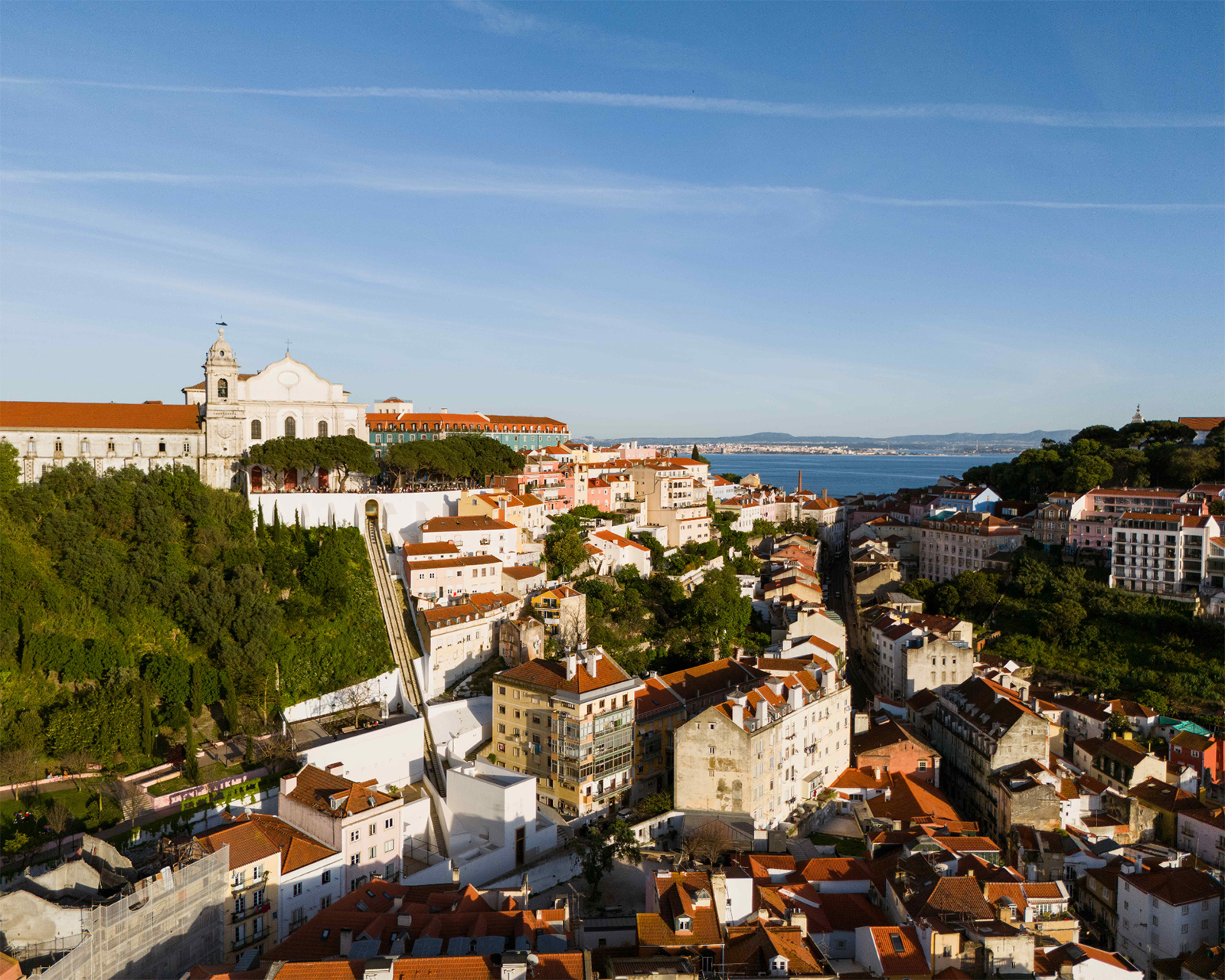
29) Graça Funicular, by Atelier Bugio
In the context of a new dynamic promoting inclusive mobility and encouraging the use of public transport, the accessibility between the city’s downtown and the Castle hill was rethought, creating a continuous route that links the Miradouro da Graça to the Mouraria neighbourhood.
Slovakia
30) Extension of a Primary School – New School Pavilion and Multipurpose Hall, by BAKYTA ARCHITEKTI
The project addresses the need to increase the capacity of the existing primary school in the village of Bernolákovo, near the capital of Slovakia – Bratislava. The task was also to create facilities for sports activities for the school, but also for the public and its cultural and social life.

Slovenia
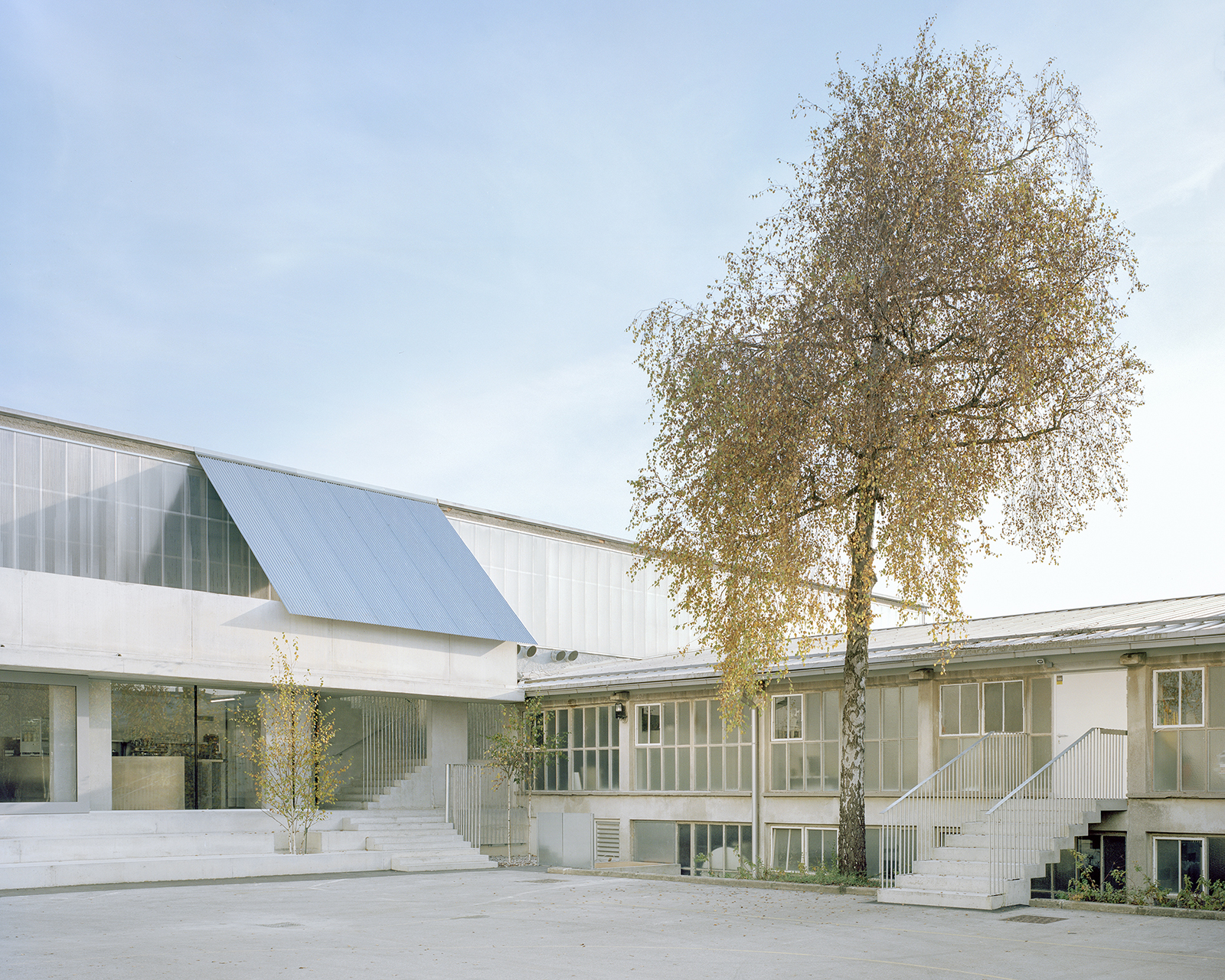
31) Temporary Spaces for Slovenian National Theatre Drama, by Vidic Grohar Arhitekti
The project involves adaptive reuse of a former industrial hall in to Temporary National Theatre, during renovation of its historic building in the city, preserving its architectural elements while addressing contemporary performance needs and ensuring cultural and architectural sustainability.
Spain
32) Interventions in the Monastery of Santa Maria de Sijena, by Pemán y Franco, Sebastián Arquitectos
It is the intervention in the ruined areas of a monastery founded in 1188, closely linked to the Crown of Aragon and with a complex evolution, which suffered a destructive fire in 1936 and which currently, once the criteria of intervention have been established, is immersed in a process of recovery of its architectural values

33) 10K House, by TAKK // Mireia Luzárraga + Alejandro Muiño
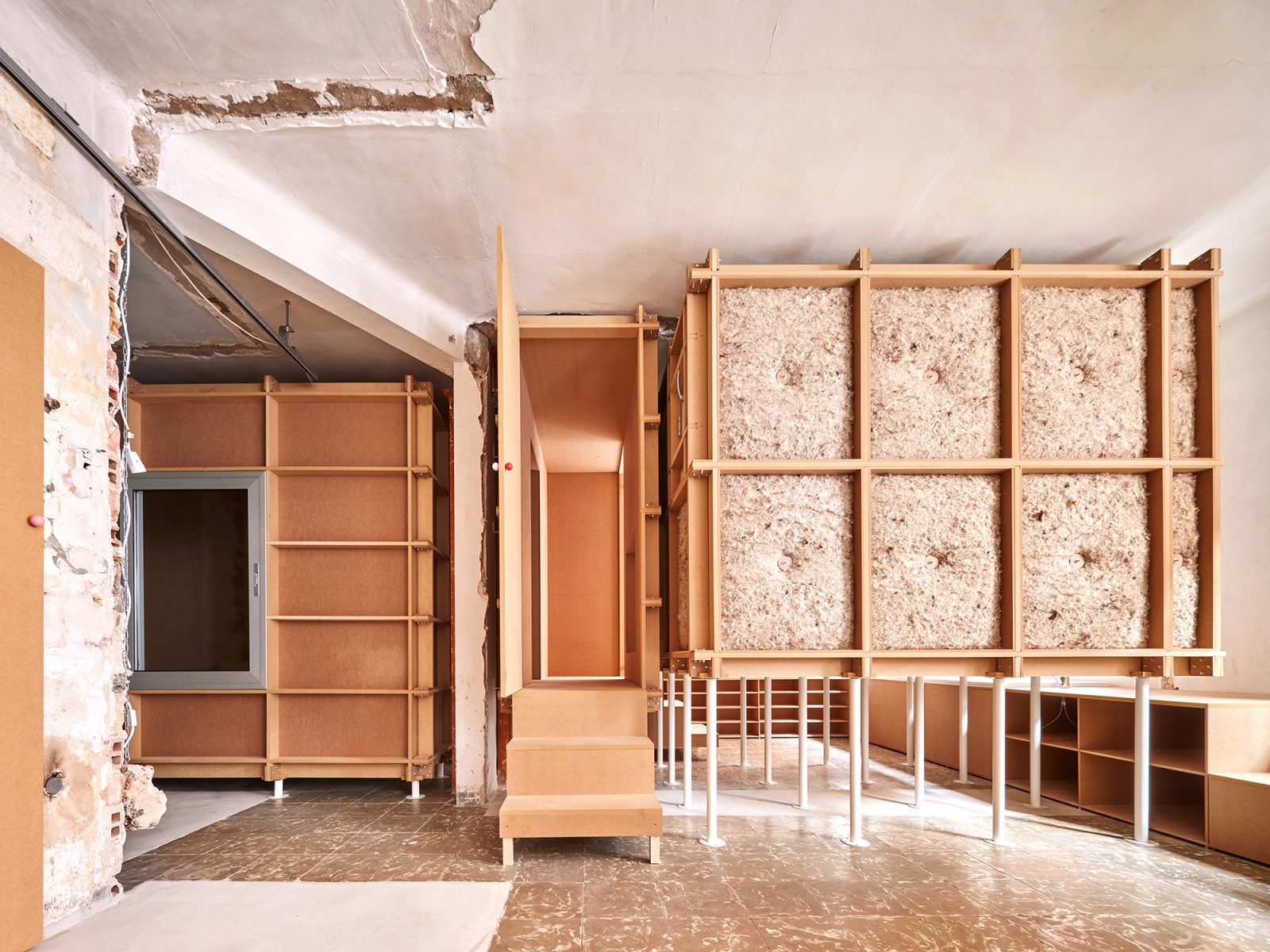
“10k House” is the refurbishment of a 50 m² flat in Barcelona, carried out with a material execution budget of only 10,000 euros, aiming to update the home according to new models of use and environmental awareness within the framework of the current affordable housing crisis and climate change.
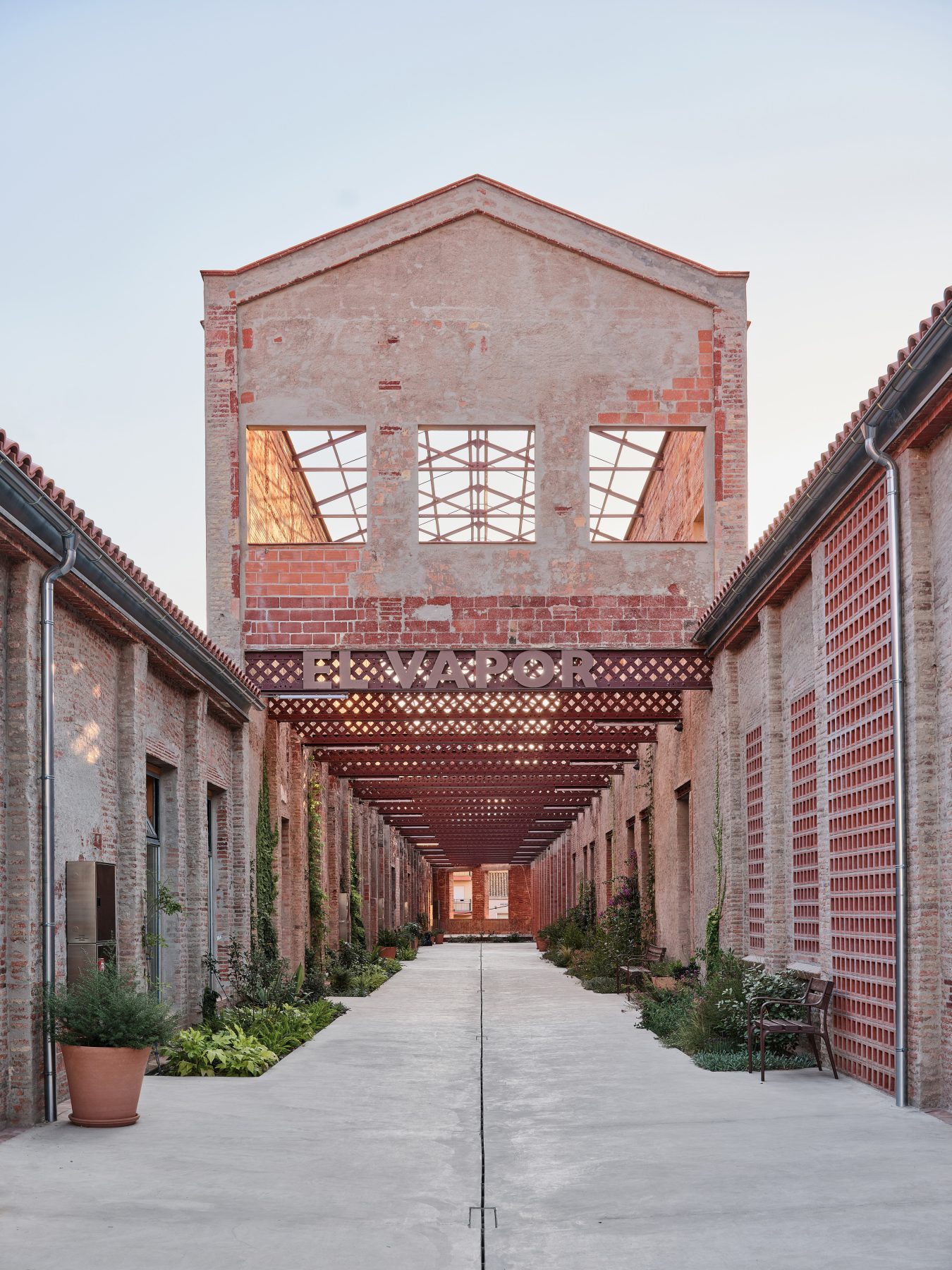
34) Rehabilitation of Vapor Cortès – Prodis 1923, by H ARQUITECTES
The new Prodis headquarters transforms the old Vapor Marquès warehouses into an inclusive center organized around a recovered passage that becomes a new street for the city. The new intervention introduces wooden structures, skylights, and passive systems while respecting its original character.
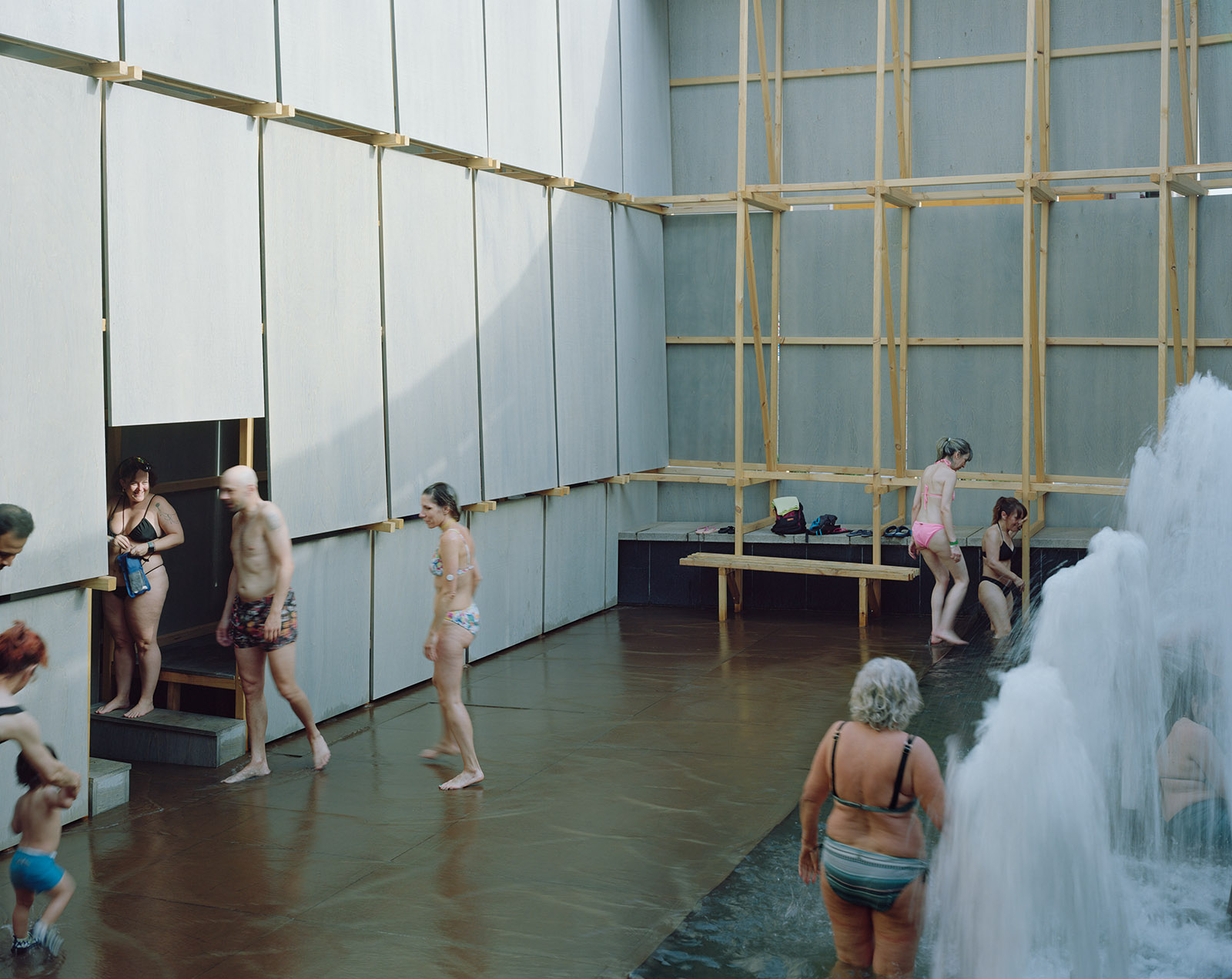
35) Round About Baths, by Leopold Banchini Architects
Round About Baths is a temporary public bath that transforms an inaccessible roundabout fountain in Logroño into a communal space. It challenges car-dominated urban planning by creating a site for care, ritual, and civic intimacy at the heart of traffic.
Read more about the project here!
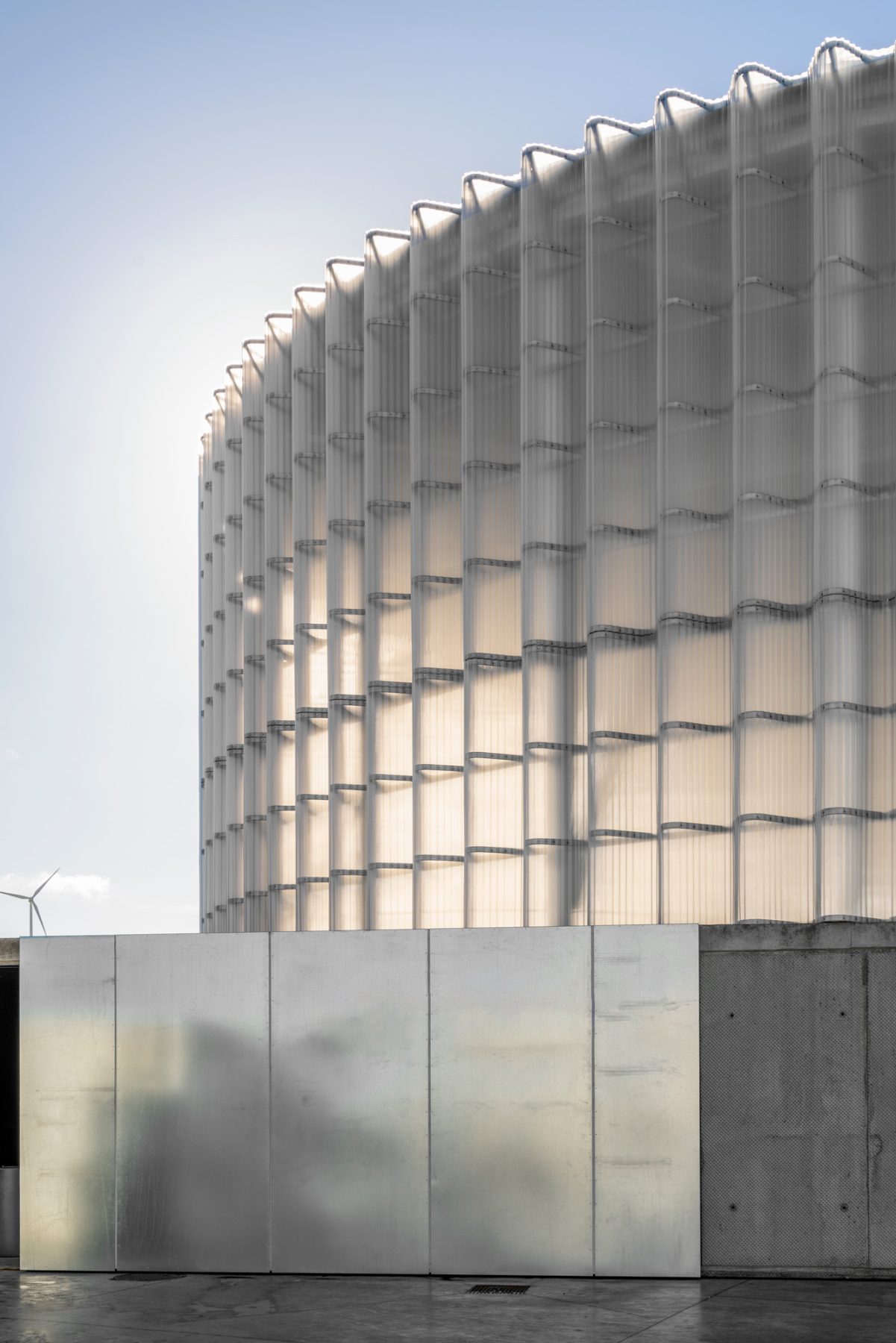
36) DH Ecoenergy Plant #1, by FRPO Rodríguez & Oriol
This small building is the visible part of a whole that remains hidden from view. It is the head of a new energy infrastructure for the city of Palencia. A District Heating network promoted by the company DH Ecoenergías, a brave pioneer in the energy transformation of Spanish cities.
37) GREENH@USE 140 Social Housing in 22@ BCN, by peris+toral.arquitectes, L3J Tècnics Associats
Mixed-use social housing project with senior, rental, and refugee units. A bioclimatic atrium that reduces energy demand through its thermodynamic performance while fostering community life, and a prefabricated structure that minimizes concrete use, CO₂ emissions, and construction time.
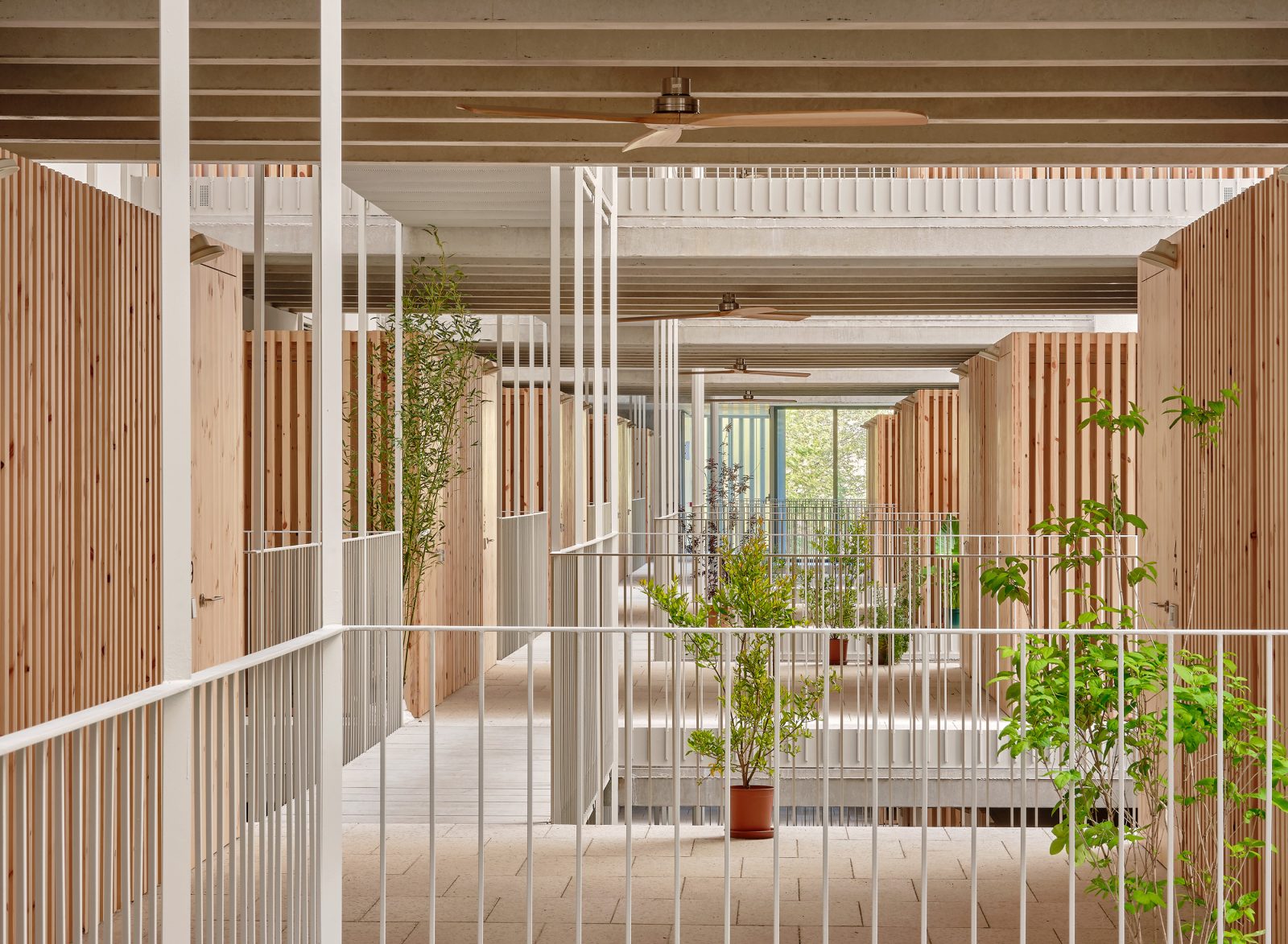
38) Plaça Major – Public Space. Heritage, Housing and Urban Life, by Un Parell d’Arquitectes, Pep de Solà-Morales Arquitectes, Quim Domene
The project aims to regenerate the Plaça Major of Olot, highlighting heritage, rehabilitating façades and reactivating vacant homes. With the community, a reurbanitzation project is dismissed, and investment is made in the buildings, given their role in defining the character of the space.

Sweden
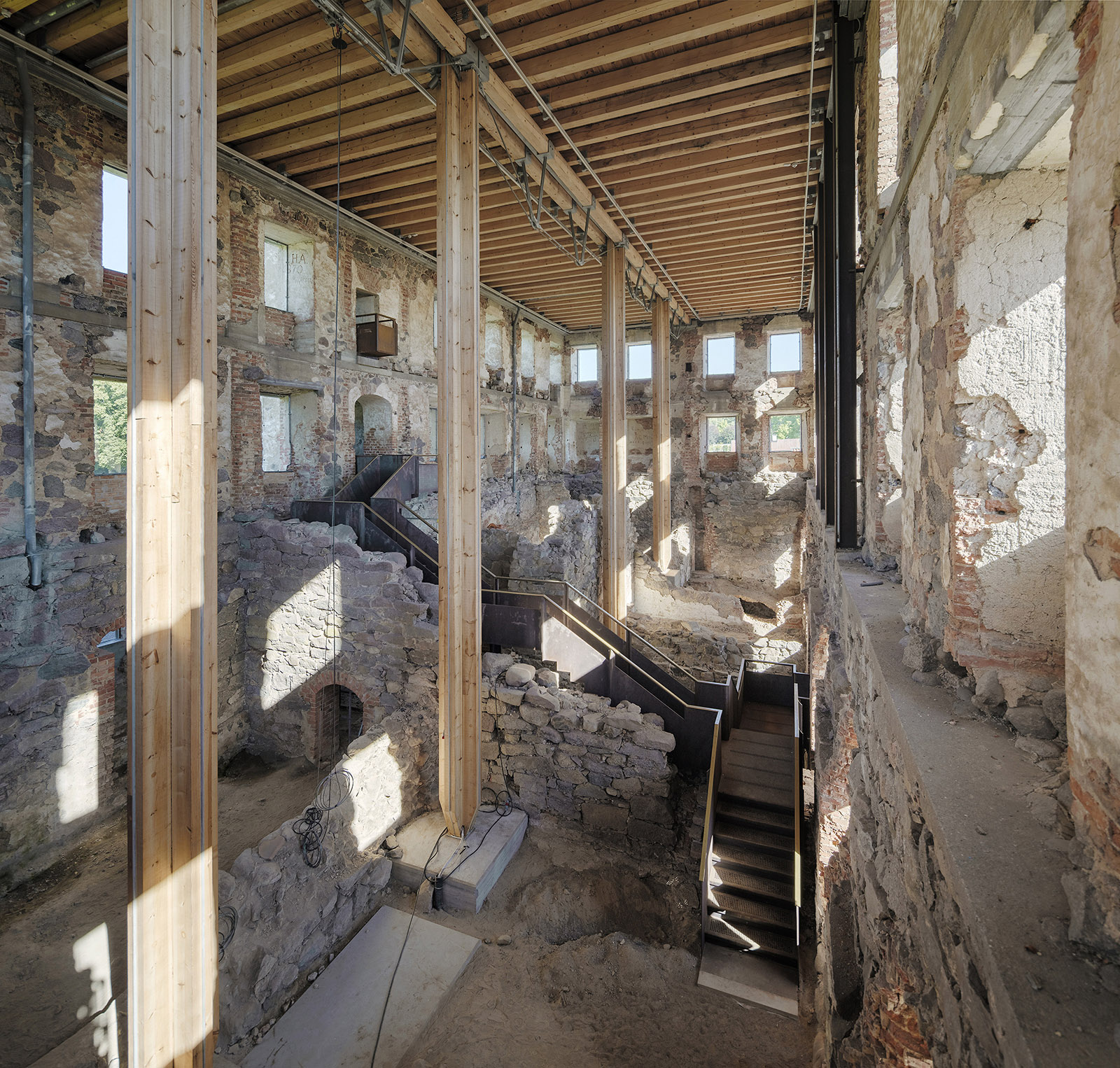
39) Stjärnorp Castle Ruin, by Wikerstål Arkitekter / Tengbom Arkitekter
Stjärnorp Castle was built in 1654-62. After a violent fire in 1789 the main building remained a ruin, unprotected for 236 years. Over the last ten years an extensive and careful conservation has been carried out, including masonry repair and new additions to ensure the preservation for the ruins future.
Tunisia
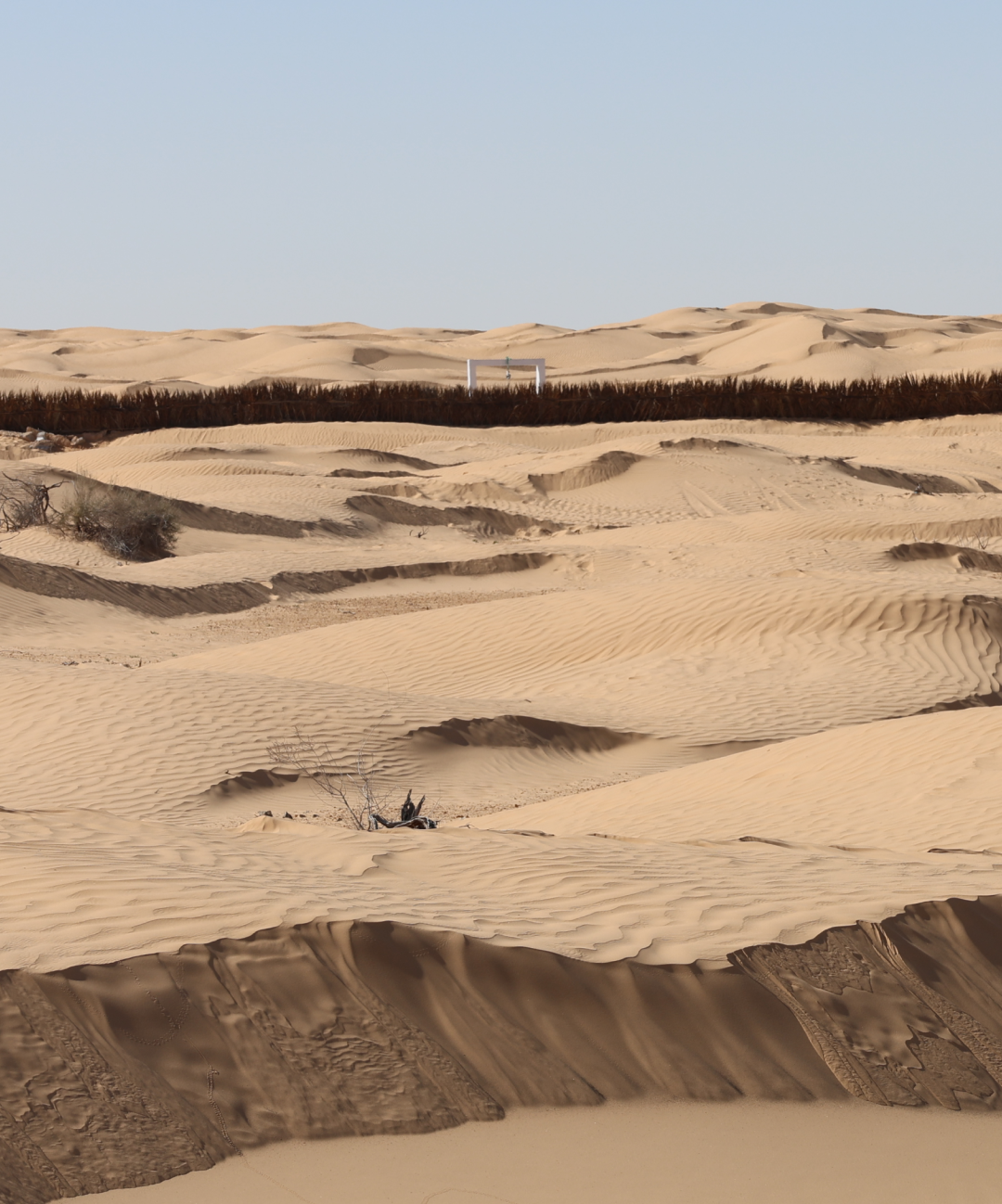
40) Land of Wells, by Collective Bled el Abar
Rehabilitating the Bir Ettin well is a key step in the Bled el Abar (‘Land of the Wells’ in Arabic) project. The initiative focuses on restoring water points in the Tunisian Sahara with local communities, using existing resources. Its goal is to safeguard life—both human and non-human—in the desert.
“Over my 30 years of working with heritage, I’ve learned how to connect the past with contemporary thinking. Seeing the final selection of 40 shortlisted works, including emerging architects, fills my heart with joy – it shows how architecture can honor memory while shaping the future.” Zaiga Gaile, architect, conservator and founder of Zaigas Gailes Birojs.
“Architecture today should also surprise, inspire, and explore what is possible. The most compelling works combine innovation with respect for existing structures, materials, and communities. By rethinking regeneration, reuse, and collective housing, we can create architecture that not only serves people but also expands the creative potential of our profession.” Tina Gregorič, architect, educator and co-founder of Dekleva Gregorič Architects.
“Architecture today carries an extraordinary responsibility. It’s not just about designing buildings – it’s about shaping the spaces where people live, meet, and interact. From regenerating existing structures to innovating with sustainable materials, architecture can address social, environmental, and cultural challenges simultaneously. I am particularly inspired by works that enhance public spaces, foster biodiversity, and demonstrate Europe’s diverse approaches to design. These works show the real potential of architecture to guide our cities – and our societies – through this period of profound change.” Carl Bäckstrand, architect and Deputy CEO at White Arkitekter.
Calendar
8 January 2026: Announcement of the shortlist
February 2026: Announcement of the finalist works
April 2026: Announcement of the winners
May 2026: EUmies Awards Days with conferences, debates, exhibitions, and Awards
Ceremony at the Mies van der Rohe Pavilion in Barcelona
Ma-June: Out&About programme and travelling exhibitions
EUmies Awards Out&About
Starting in April 2026, the EUmies Awards Out&About programme will bring these works closer to the public through visits, lectures, and events with their authors, enabling wider access and understanding. The works can also be explored virtually at eumiesawards.com.
EUmies Awards Days 2026
The EUmies Awards Days will take place on 11 and 12 May 2026 in Barcelona, within the framework of Barcelona World Capital of Architecture 2026. Events will include:
The Awards Ceremony at the Mies van der Rohe Pavilion
Debates, conferences, and presentations with winners, finalists, clients, and past participants
The EUmies Awards exhibition
The launch of the EUmies Awards Out&About programme
Partners
The EUmies Awards are organised by Fundació Mies van der Rohe and the European Commission, with support from the EU Creative Europe Programme. The Awards are anchored in a strong European architectural ecosystem through institutional partnerships with the Architects’ Council of Europe (ACE) and the European Association for Architectural Education (EAAE), and developed in collaboration with World Architects and the European Cultural Centre (Venice). Sponsors include Jung, Jansen, and Zumtobel, with additional support from USM and Hotel Alma Barcelona. The Advisory Committee ensures the Awards’ relevance and impact across Europe.