‘Rural Living’ explores how architecture intersects with rural landscapes and agricultural ways of life, questioning how we inhabit non-urban land.
Across varied geographies and cultures, contemporary architecture is rethinking small-scale structures in natural landscapes. Cabins, shelters, and pavilions are conceived as sensitive, site-specific interventions that mediate between habitation, ecology, and memory rather than as isolated objects. Often modular, reversible, or impermanent, these projects emphasize lightness, adaptability, and minimal impact, using timber, reused materials, and flexible systems as ethical approaches to sustainability. Functioning as retreats, communal refuges, or spaces for healing and reflection, they privilege experience over scale and presence over permanence. Collectively, they propose alternative models of inhabitation that slow down time, respect local histories, and position nature as the primary protagonist.
Contemporary shepherds’ huts in Serra da Esperança, Belmonte by Filipe Pina Arquitectura
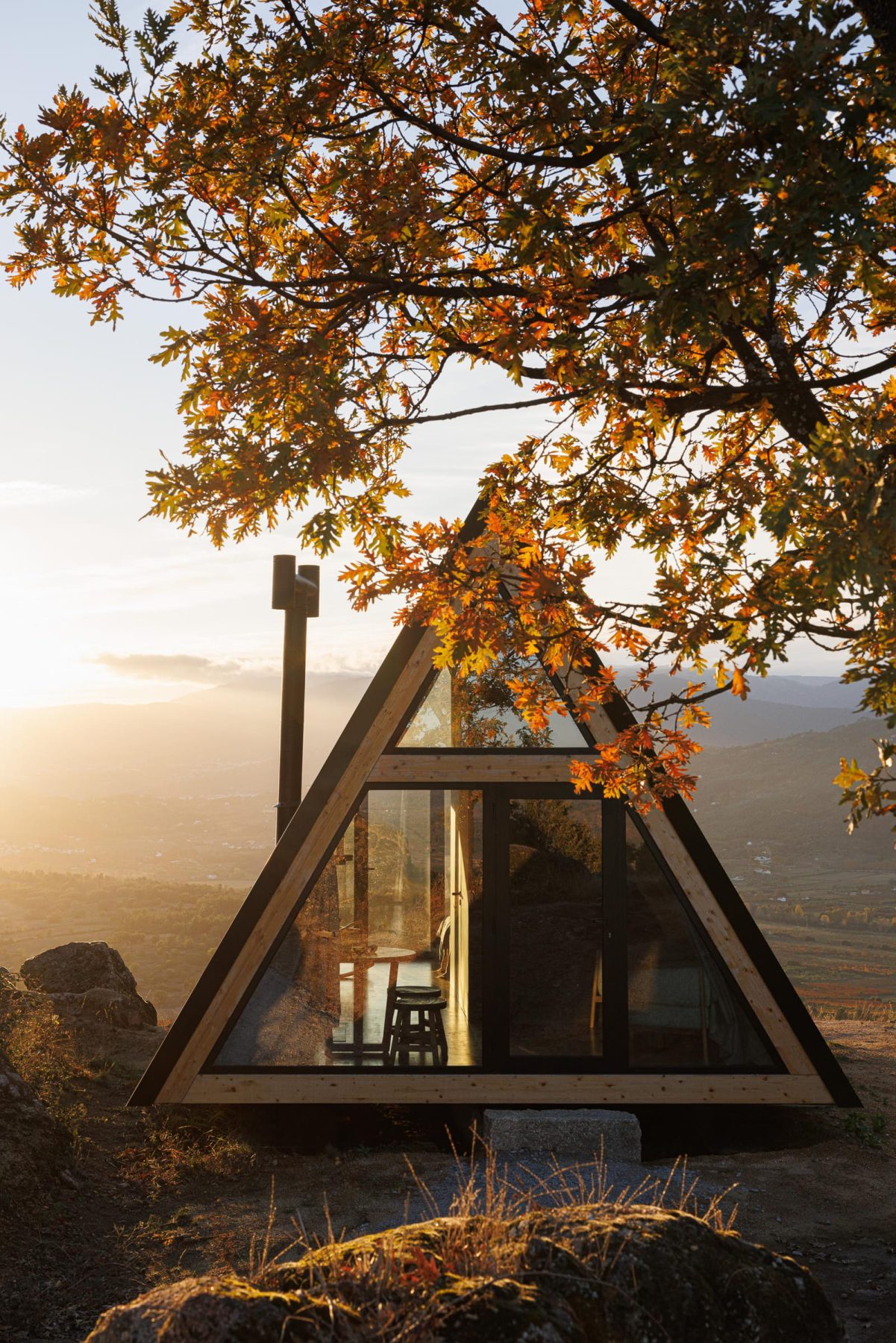
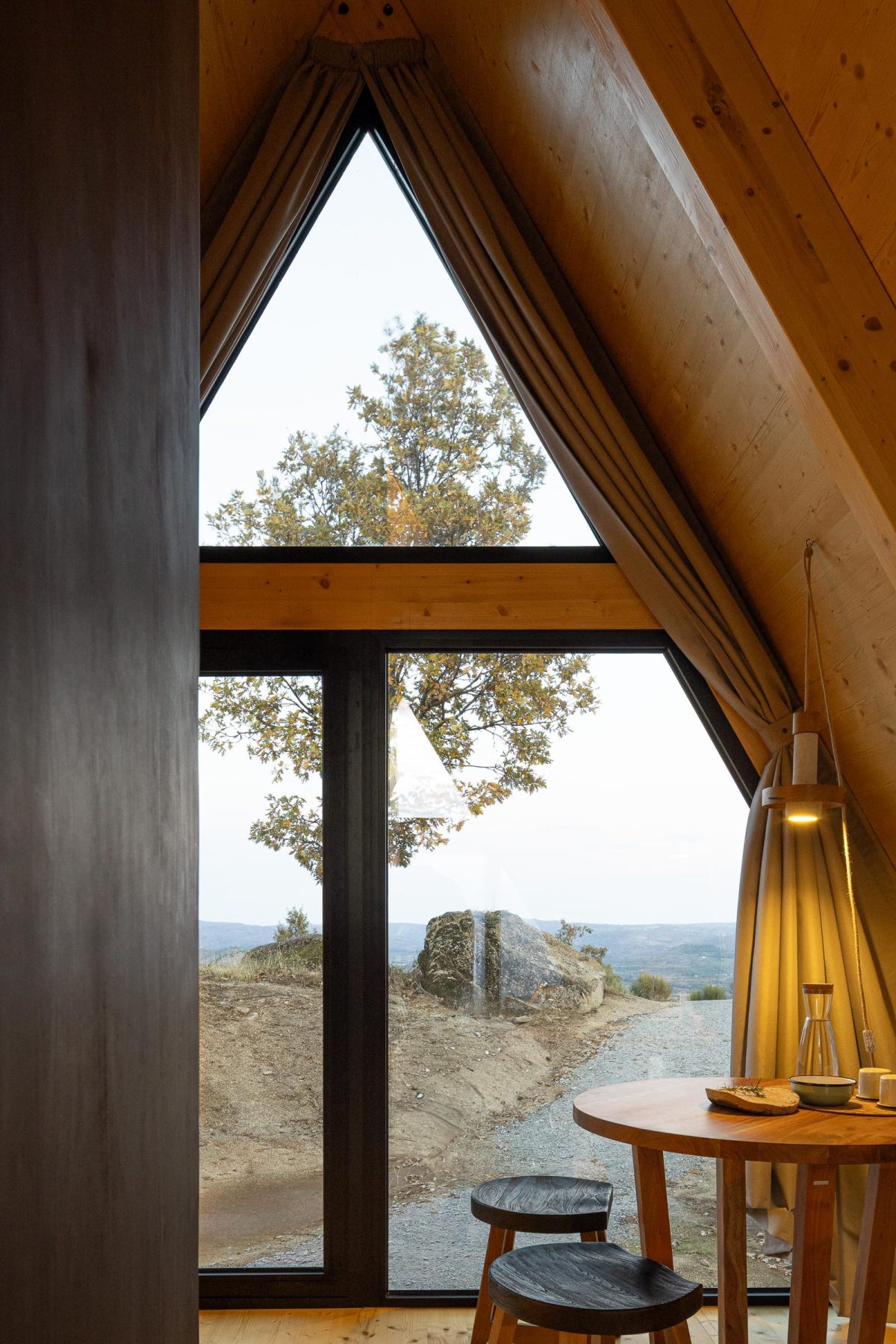
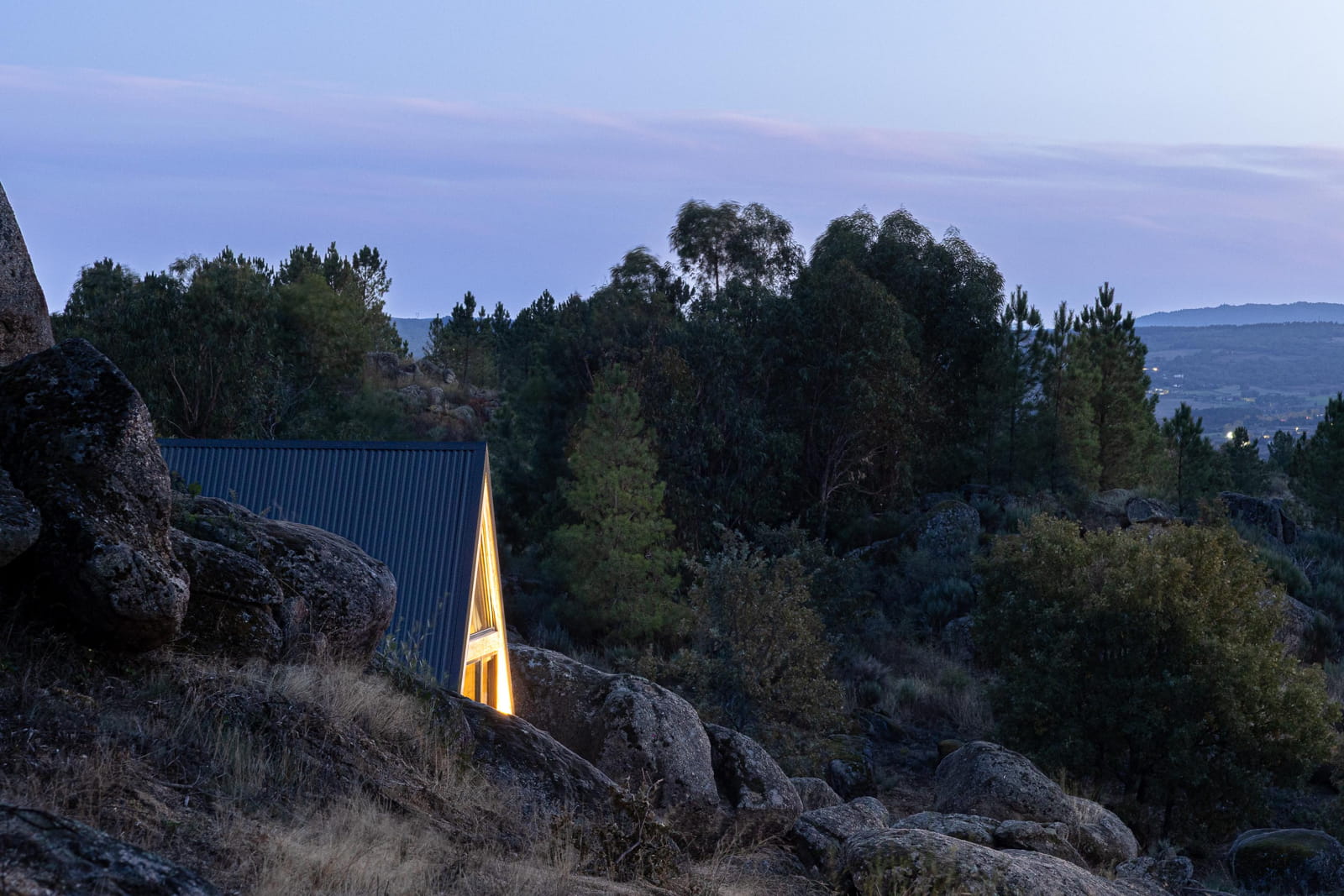
The Mountain Shelters are part of the Vagar Country House development in Belmonte, Portugal, conceived as a site-specific and modular architectural system rooted in the natural and cultural landscape of the Serra da Esperança. Set within nearly 250 hectares of untouched terrain, the project responds to the challenge of creating contemporary shelters inspired by the traditional shepherd structures known as Choças, reinterpreting their principles through a contemporary architectural language.
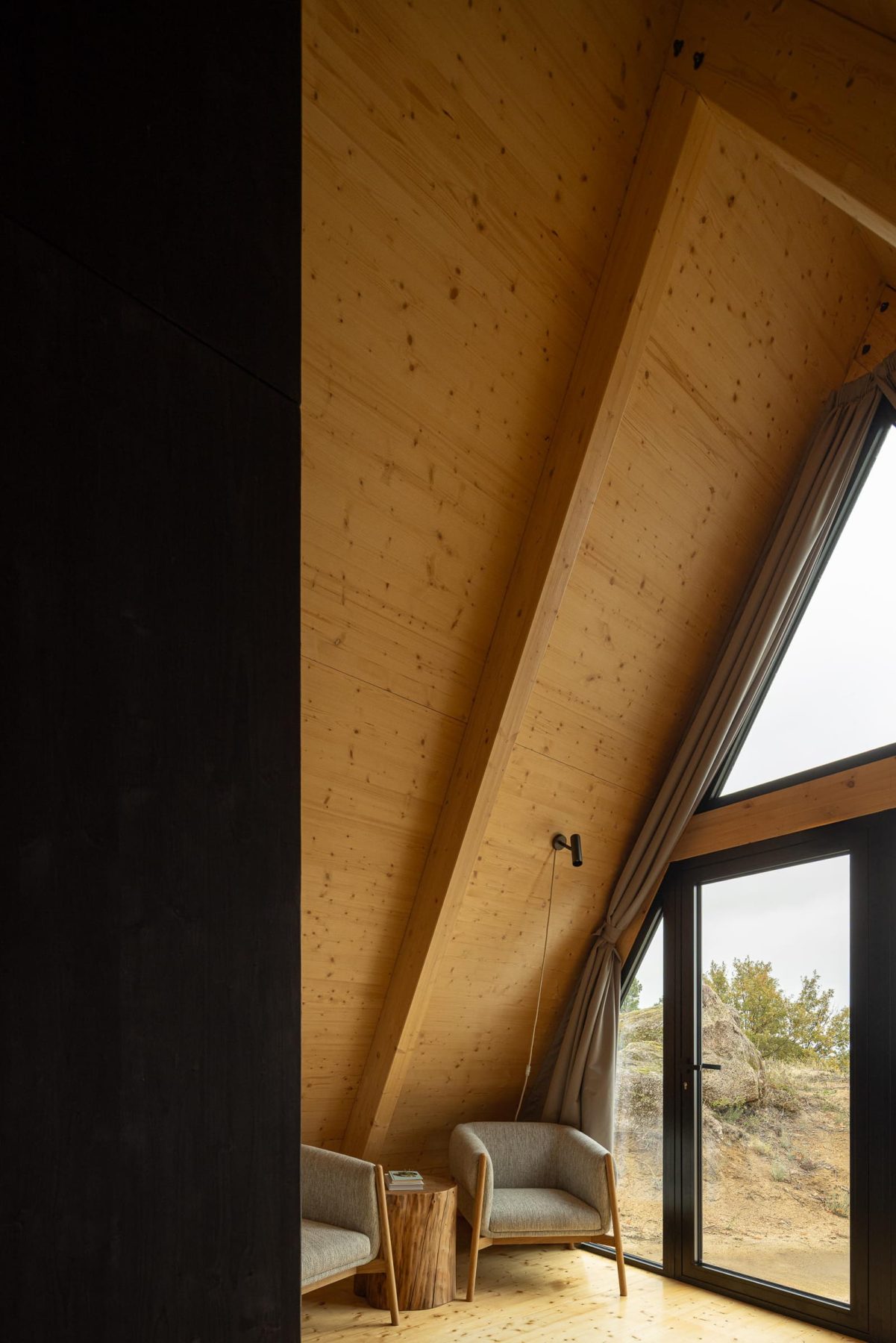
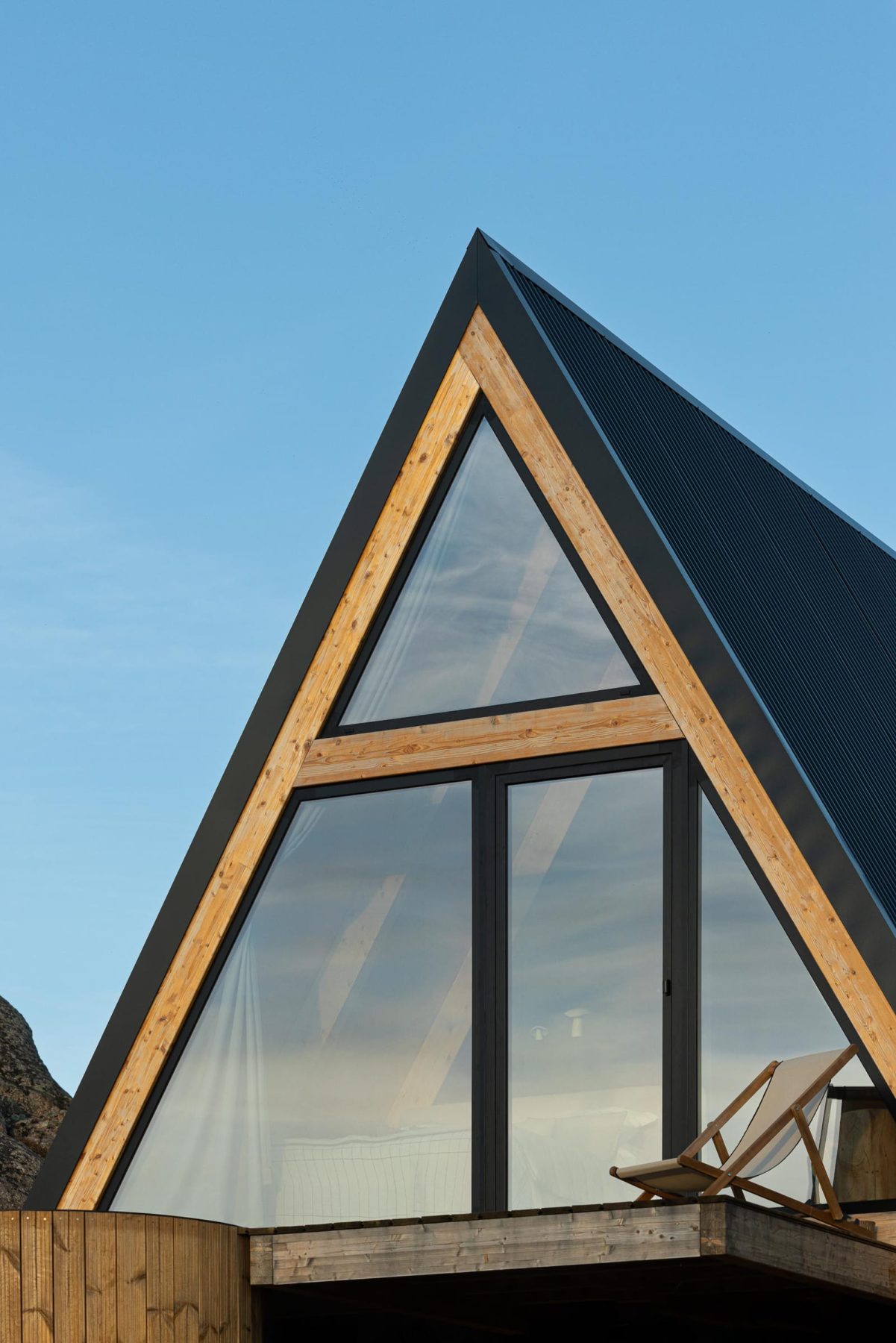
Three shelters are carefully positioned within the mountainous landscape, oriented toward the Cova da Beira valley and the Serra da Estrela. Their placement respects the site’s topography, vegetation, and rocky formations, ensuring minimal visual and ecological impact while offering immersive views. Camouflaged within their surroundings, the shelters preserve and reinforce the area’s ecological and landscape heritage, fostering a strong connection between architecture and nature.
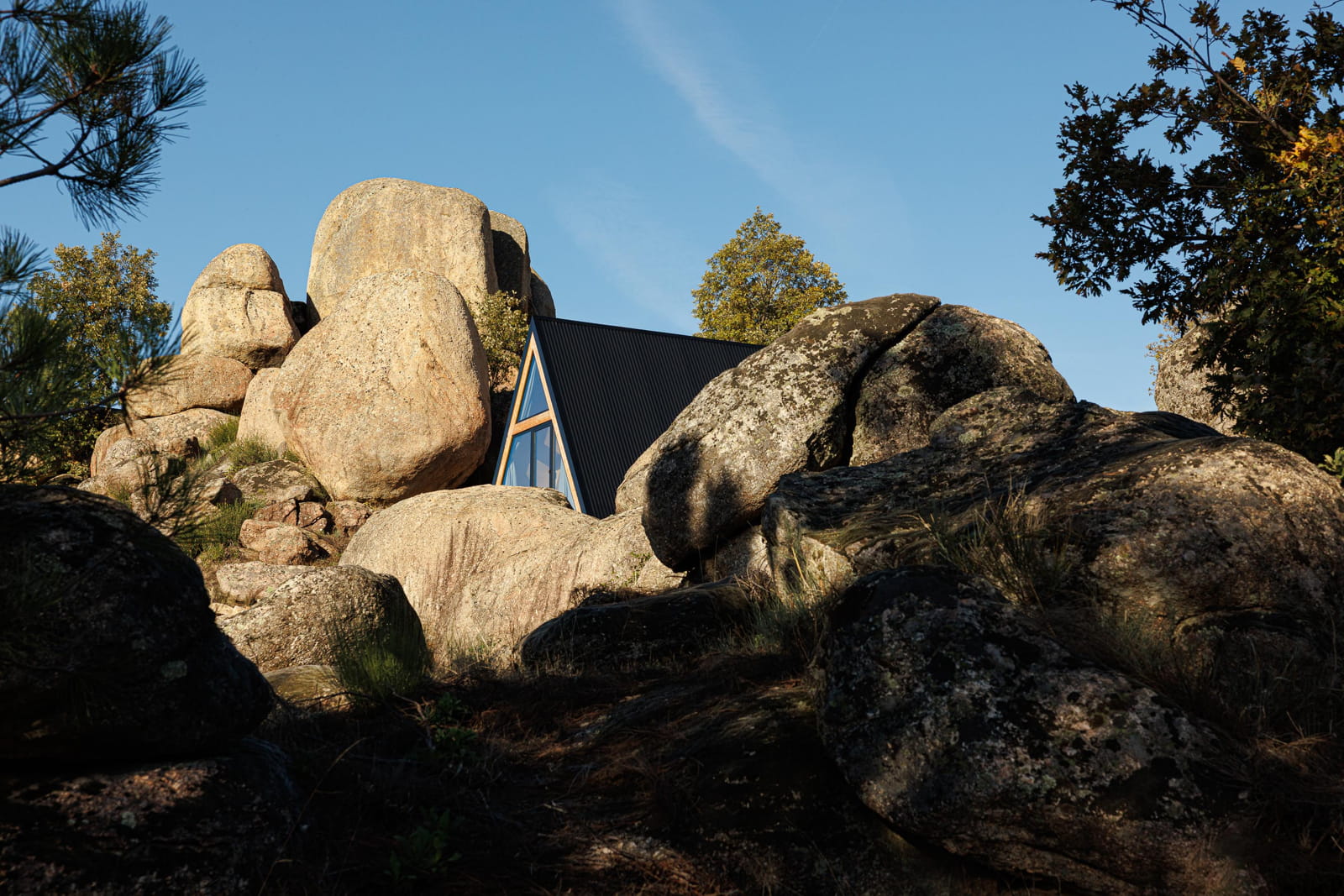
Architecturally, each shelter takes the form of a compact equilateral triangular prism, conceived as a single, efficient volume. The modular system allows independent use as workspaces or guest refuges. Inside, a central service core separates living and sleeping areas, while generous glazed openings blur the boundary between interior and exterior. Built from certified wood, the shelters emphasize durability, sustainability, and natural aging, positioning architecture as a tool for environmental awareness and landscape conservation.
Pavilion in the Oaks in Monte Sereno, California by Mork-Ulnes Architects
Designed by Mork-Ulnes Architects, this dual-purpose wellness and entertainment pavilion responds to the clients’ desire for a space that balances introspection and sociability. Accommodating exercise, yoga, meditation, and quiet retreat alongside gatherings with family and friends, the pavilion functions as a flexible architectural environment, easily shifting between private and communal modes of use.
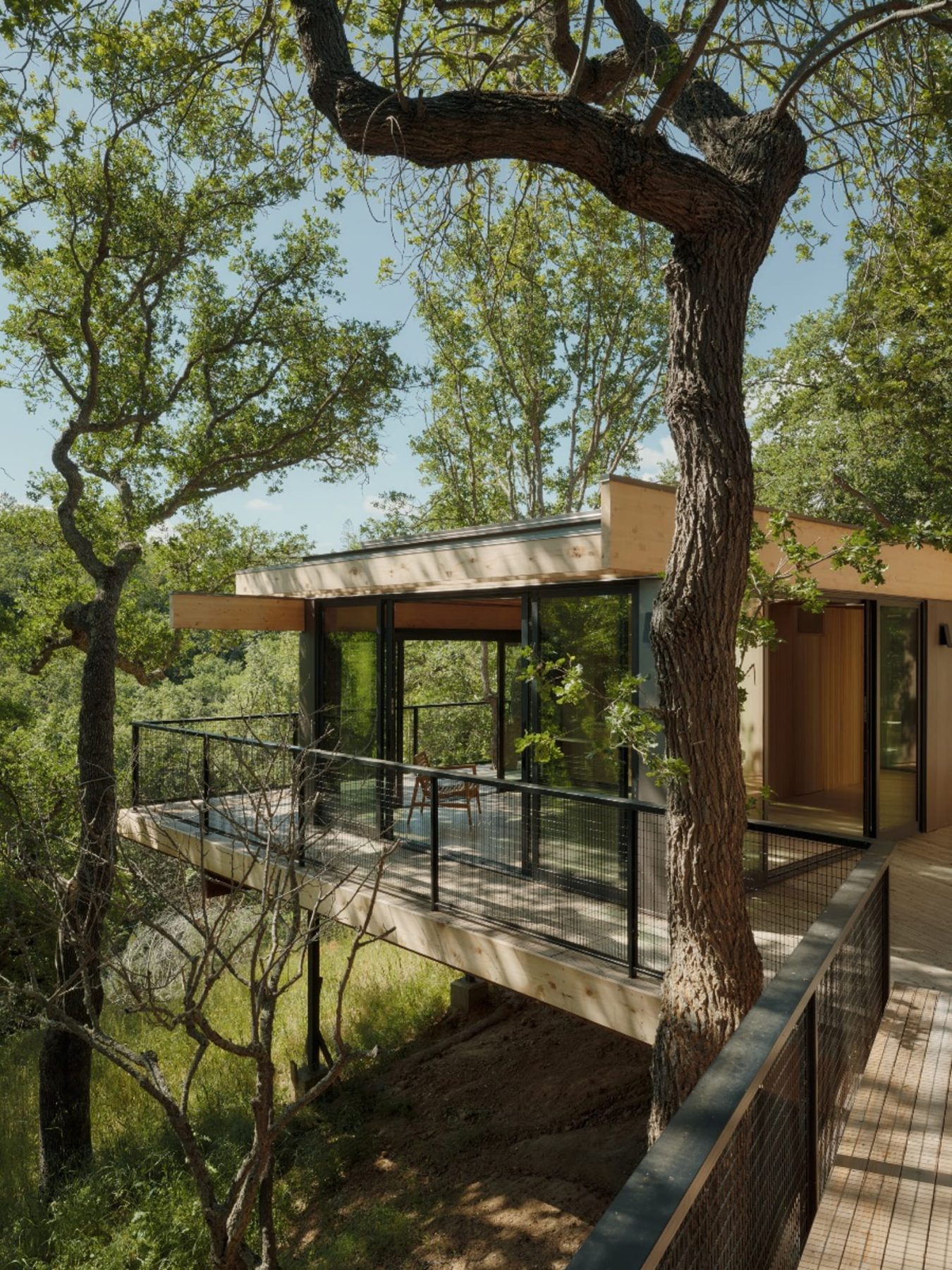
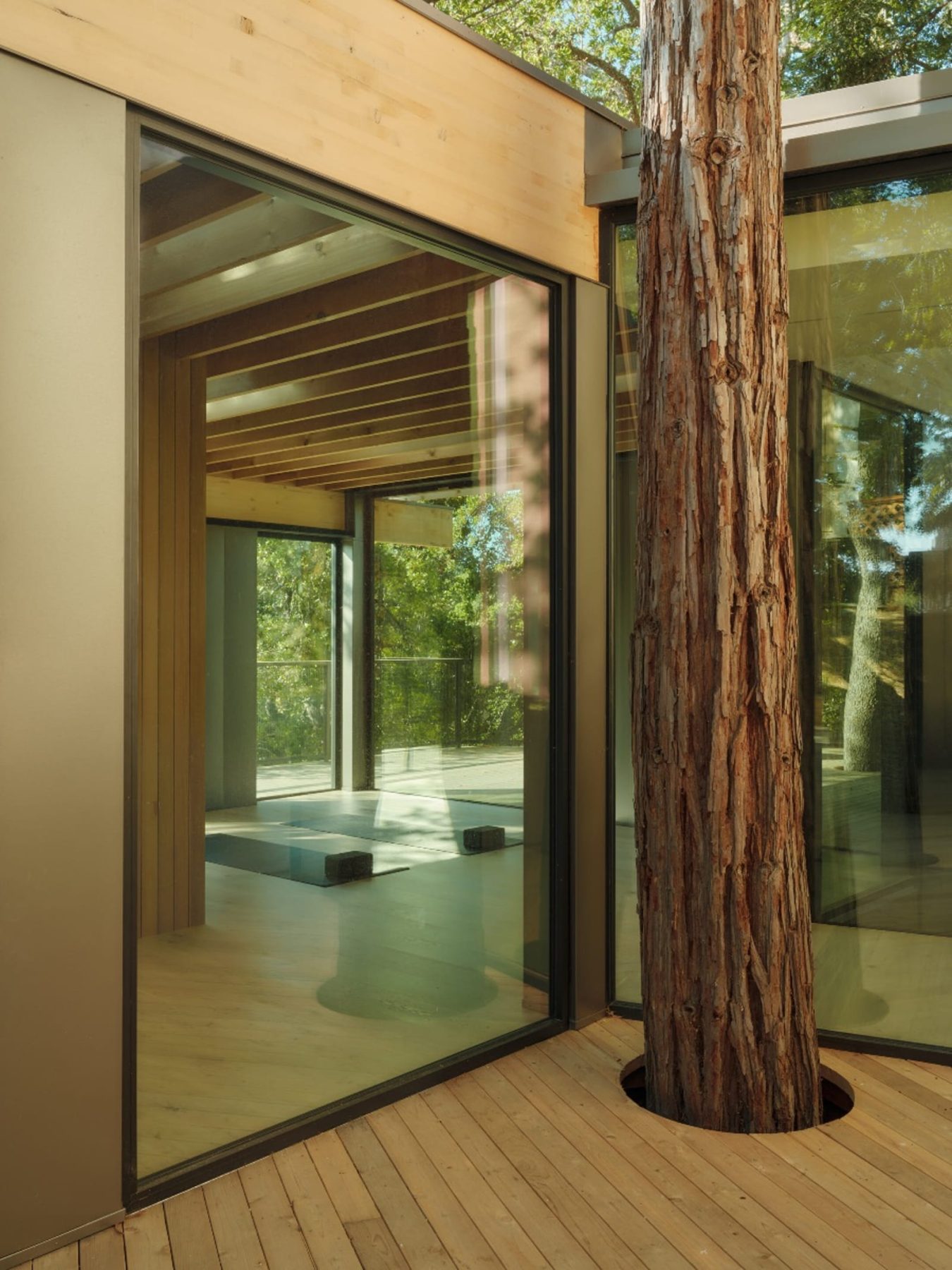
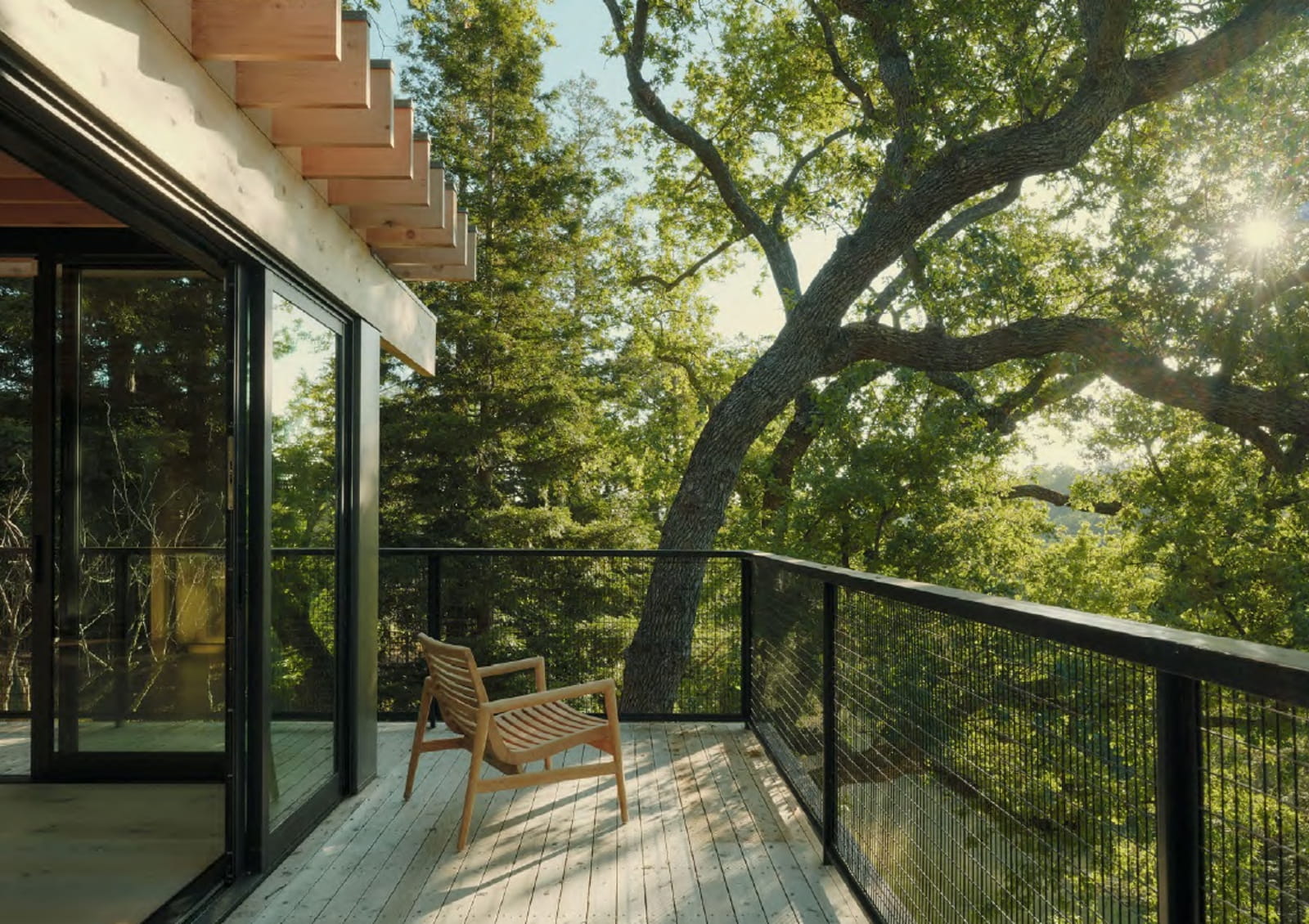
Set on a steep hillside within a dense canopy of mature redwood and oak trees, the pavilion is carefully integrated into its natural surroundings. Rather than clearing the site, the design preserves existing vegetation, allowing trees to puncture the elevated deck and become integral spatial elements. Raised on slender columns, the volume floats above the terrain, aligns with the walk-out basement of the existing 1970s home, and connects via a lightweight bridge. Positioned opposite the main residence, it helps define an open courtyard used as a central outdoor gathering space.
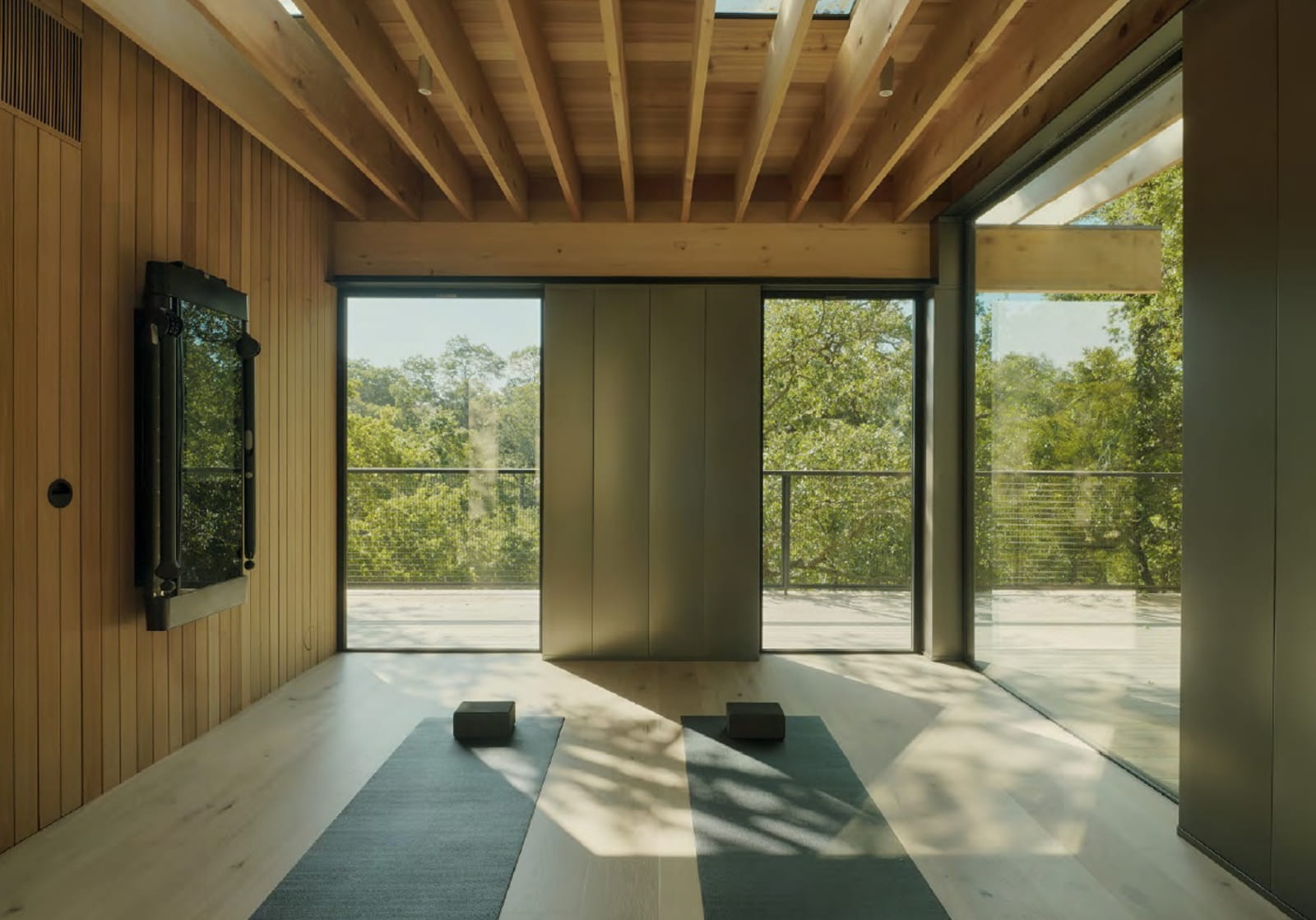
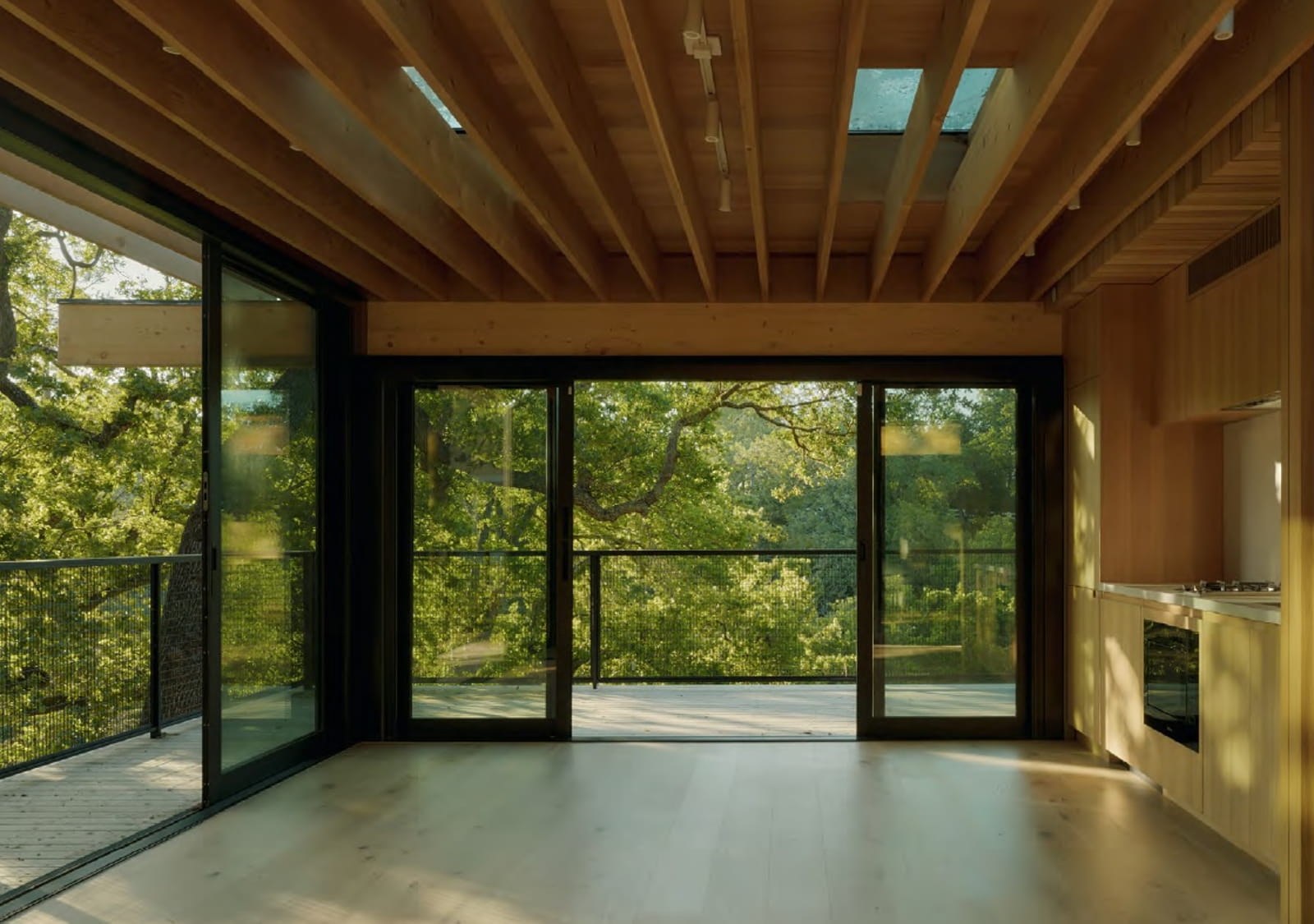
Inside, the program is organized around a central cedar-clad volume containing the sauna and service spaces, surrounded by operable sliding doors that allow the interior to adapt as needed. Exposed cedar roof framing and skylights filter daylight into the pavilion, creating shifting light and shadow that echo the experience of sitting beneath the surrounding trees, drawing the landscape into the architecture.
Earthboat Cave in Shirakaba-ko, Nagano, Japan by PAN- PROJECTS
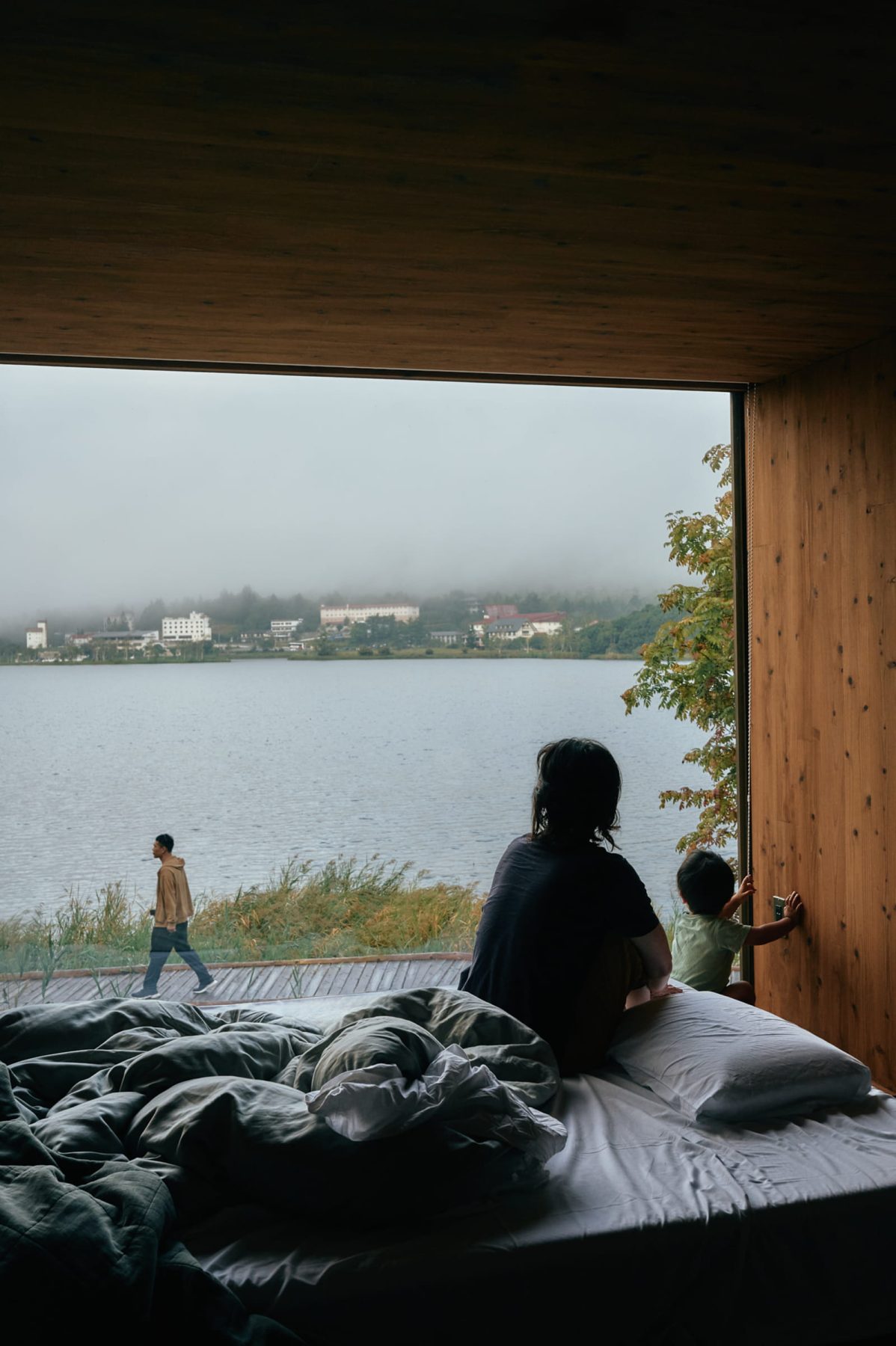
Earthboat Cave is a compact timber retreat set within the lakeside forest of Shirakabako, developed as part of Earthboat’s ongoing exploration of “nature escape” as an alternative to dense urban living. Conceived as a place of calm and immersion, the project prioritizes reconnection with the natural environment through minimal architectural intervention and a deliberate sense of stillness.
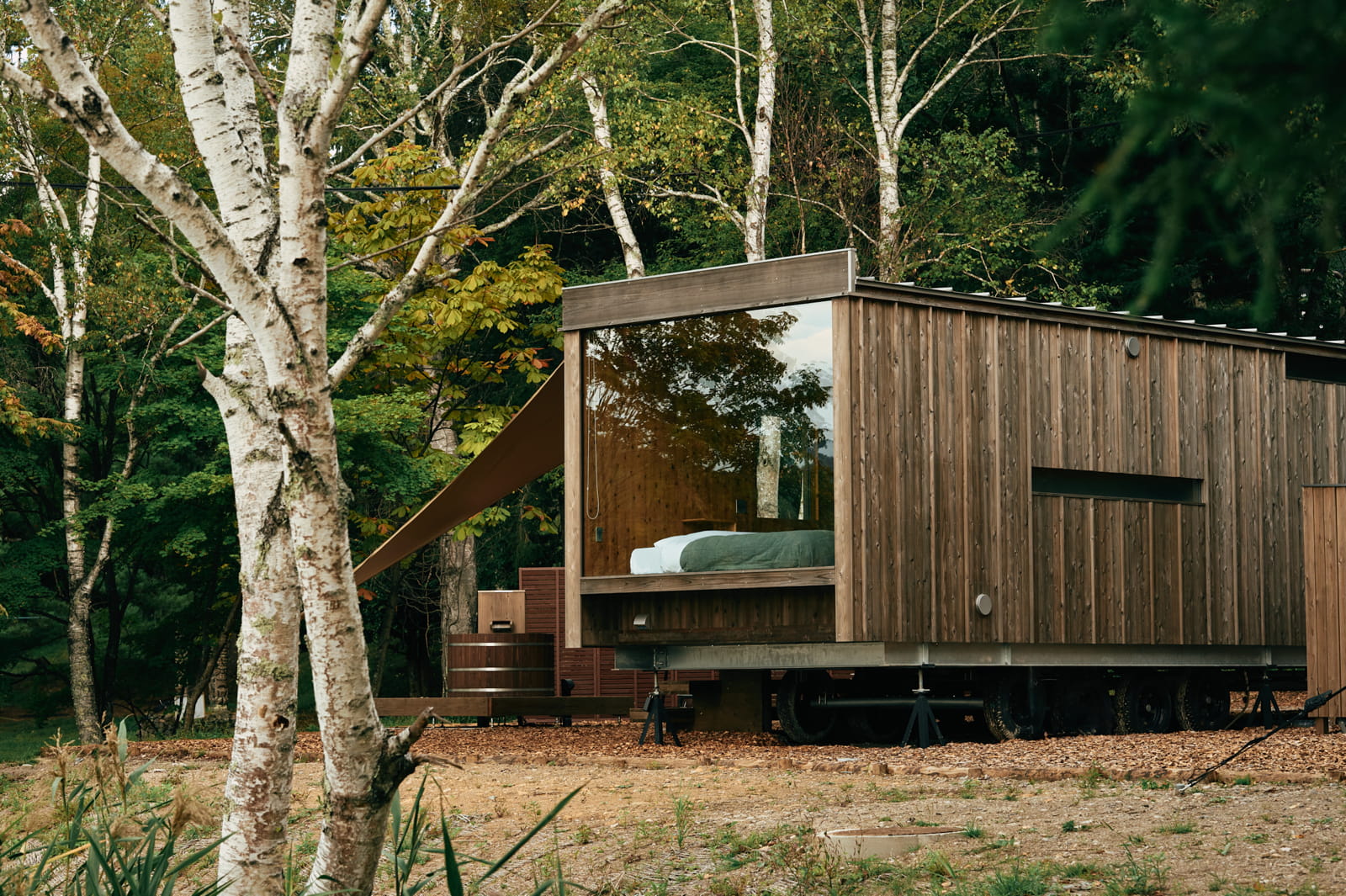
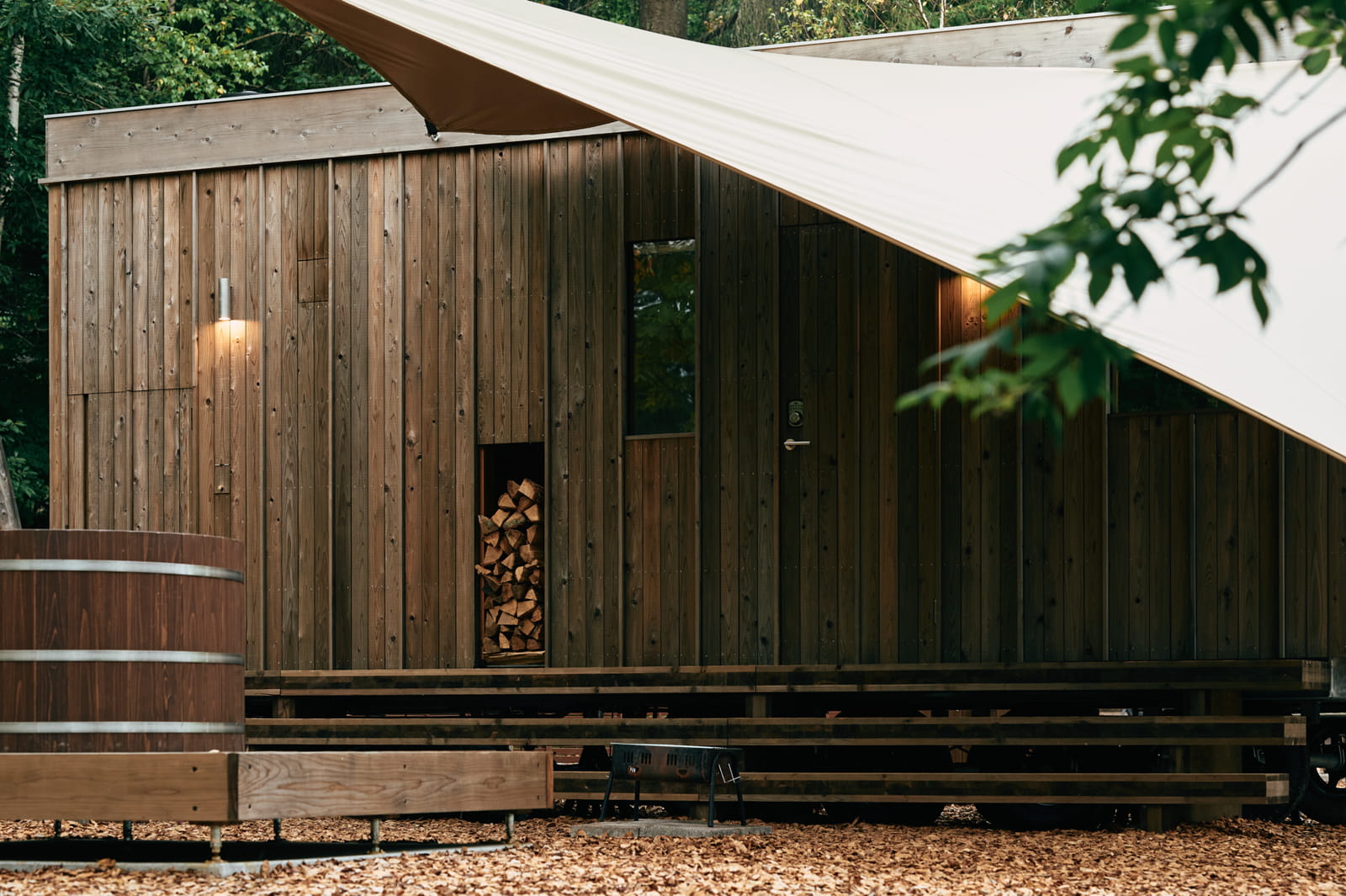
Constructed entirely from Japanese cedar cross-laminated timber (CLT), the cabin emphasizes warmth, durability, and tactile richness. Interior surfaces are left exposed, allowing the timber to age naturally and reflect the passage of time. Installed without foundations, the structure rests lightly on the ground, preserving the forest floor and allowing for relocation—reinforcing its low-impact, reversible character. The architecture acts quietly within the landscape, maintaining a respectful dialogue with its surroundings.
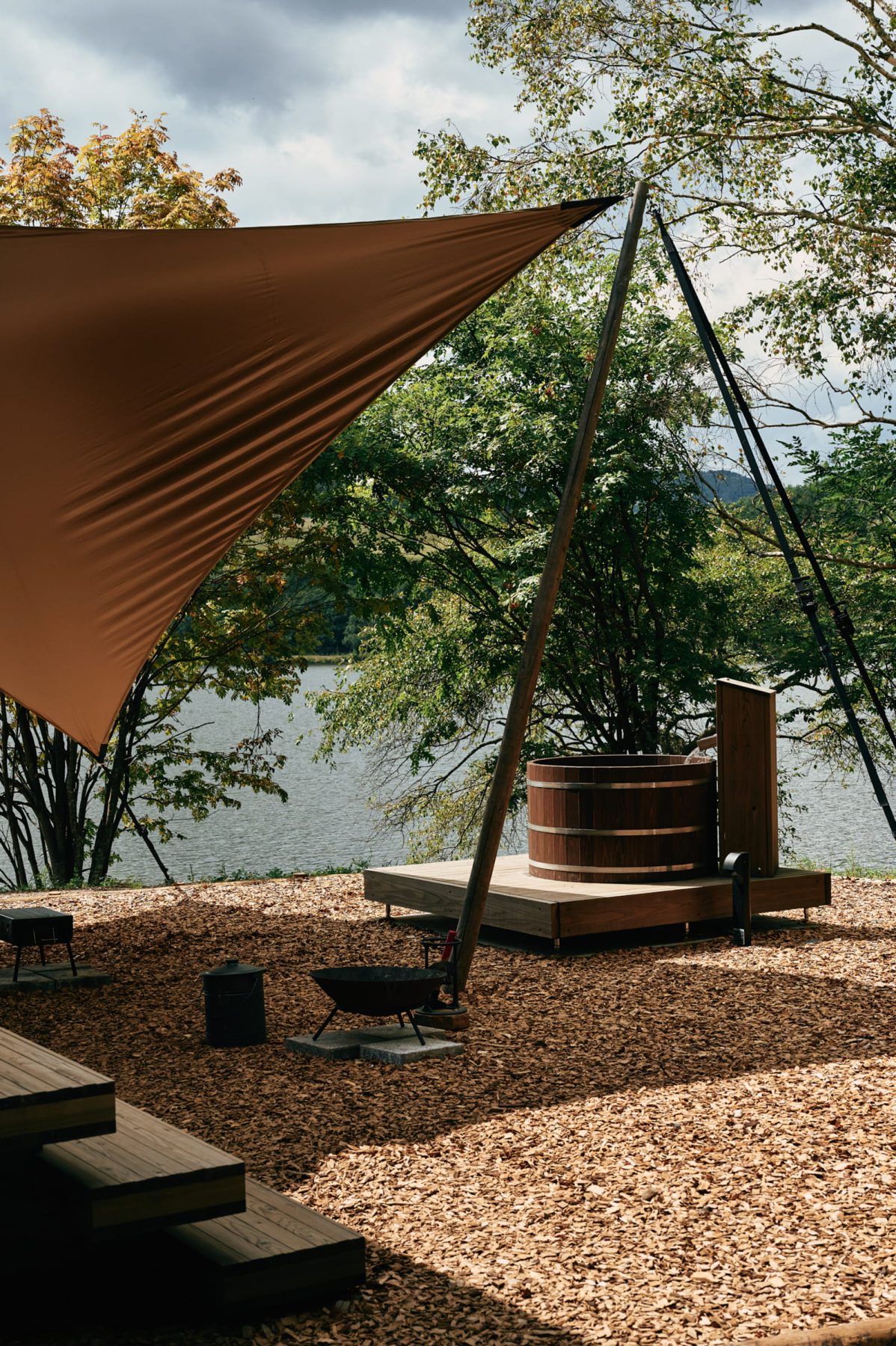
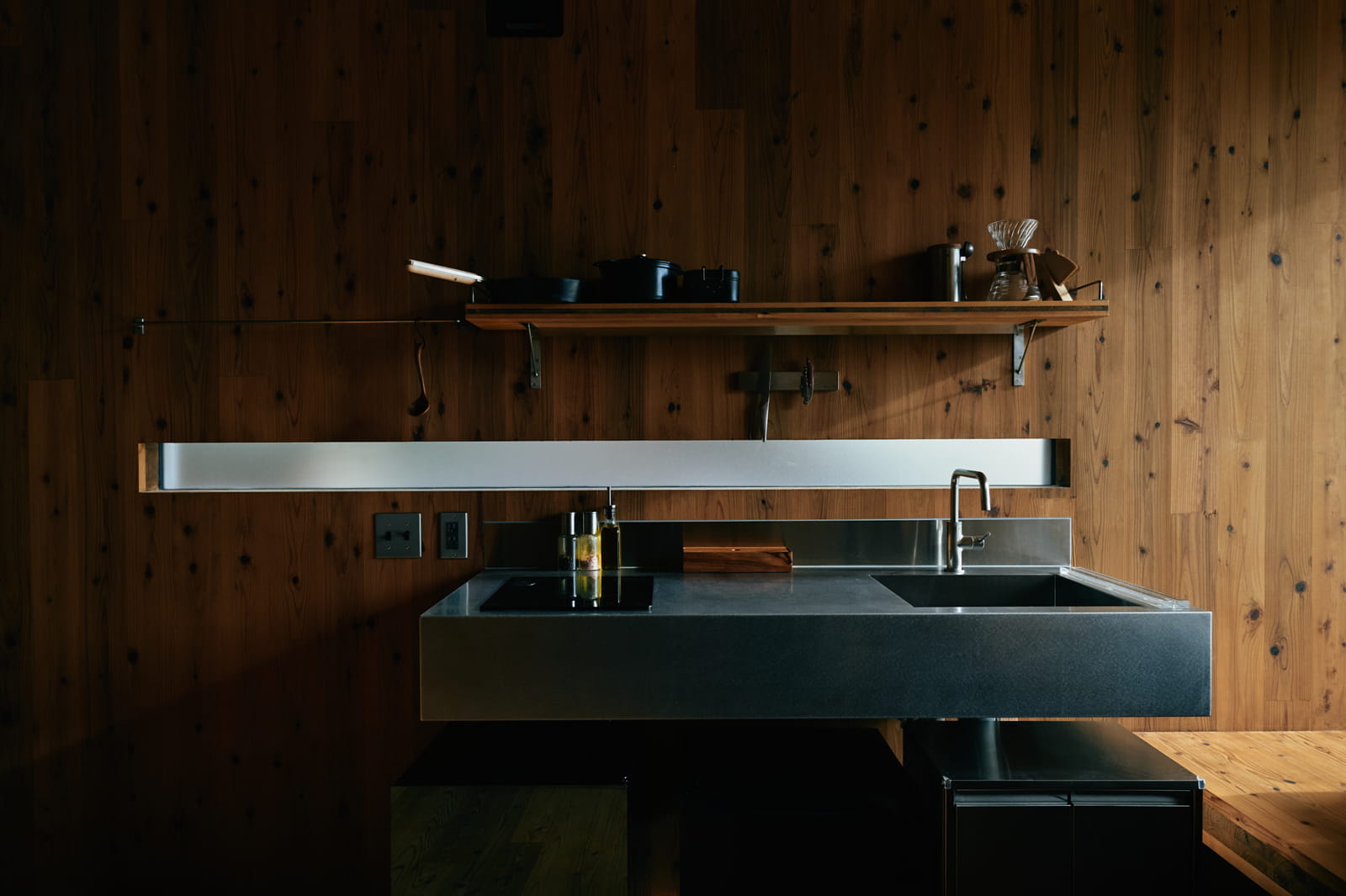
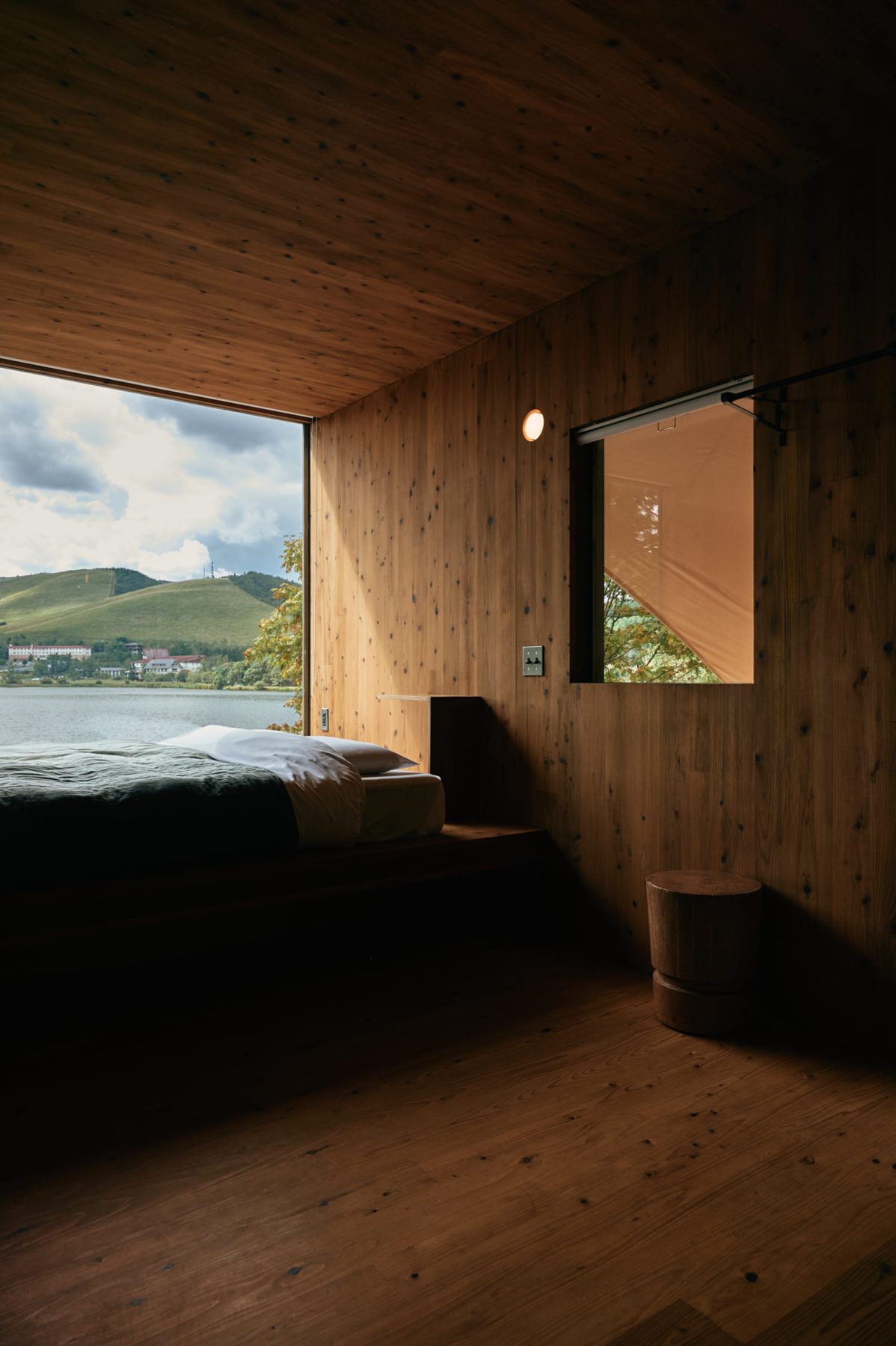
Designed around outdoor living, Earthboat Cave extends daily life beyond its compact interior. A sauna opens directly to the exterior, while outdoor steps, fireplaces, and gathering areas encourage engagement with the forest and lakeside setting. Inside, the layout remains simple, supporting cooking, rest, and contemplation. A large opening frames the lake, drawing shifting light and weather into the space and positioning the project as a sensitive, landscape-driven model of small-scale hospitality.
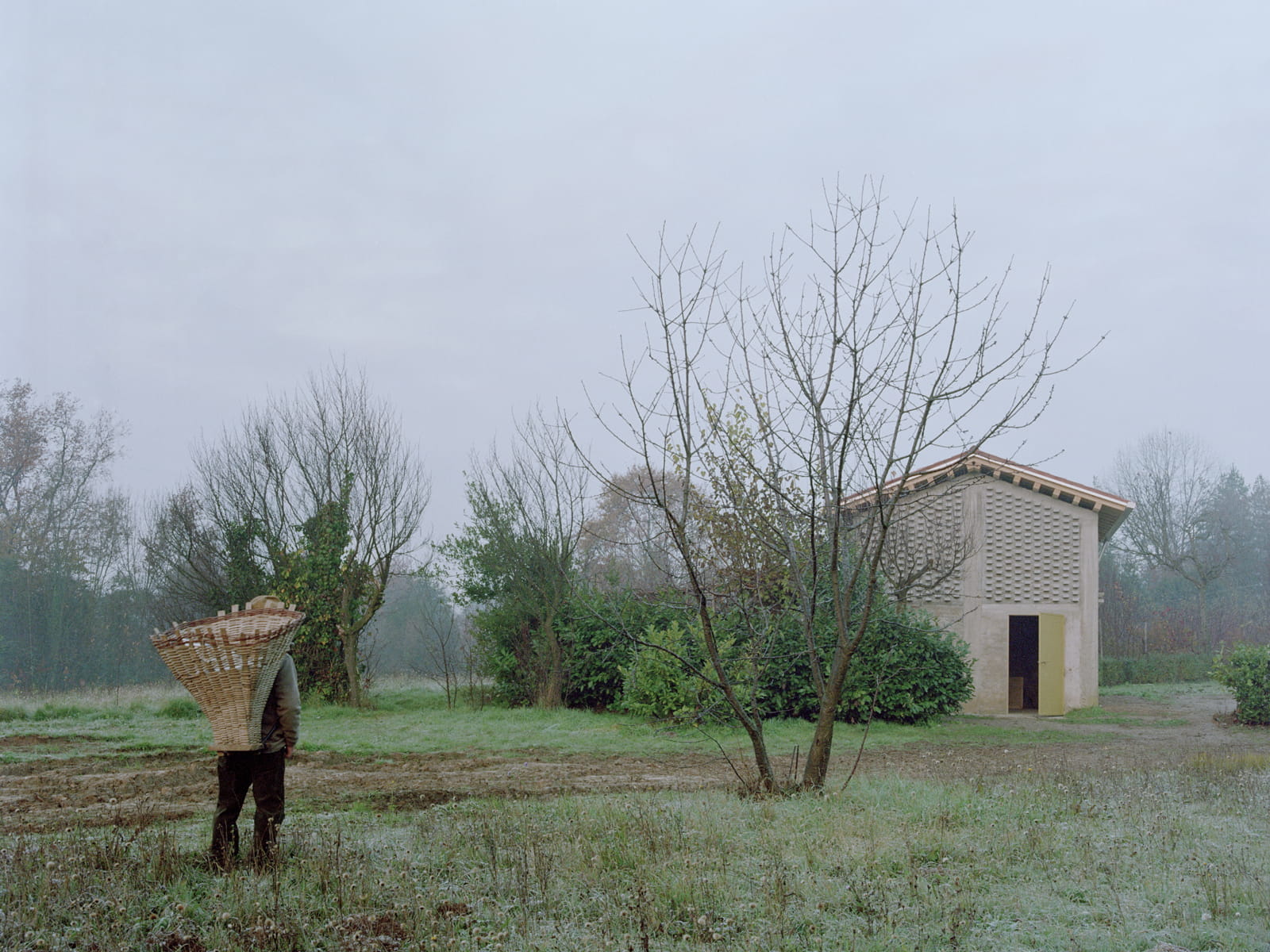
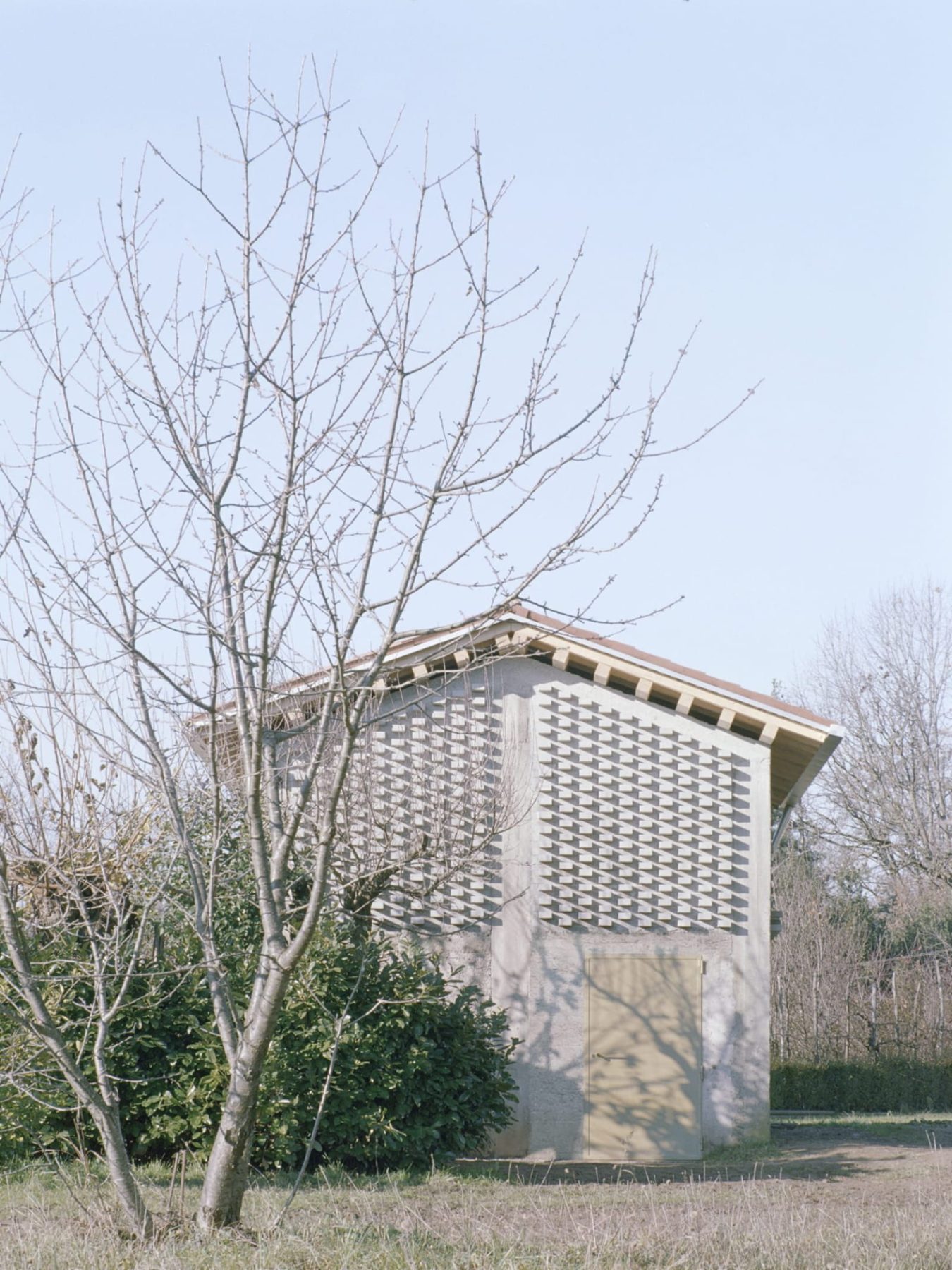
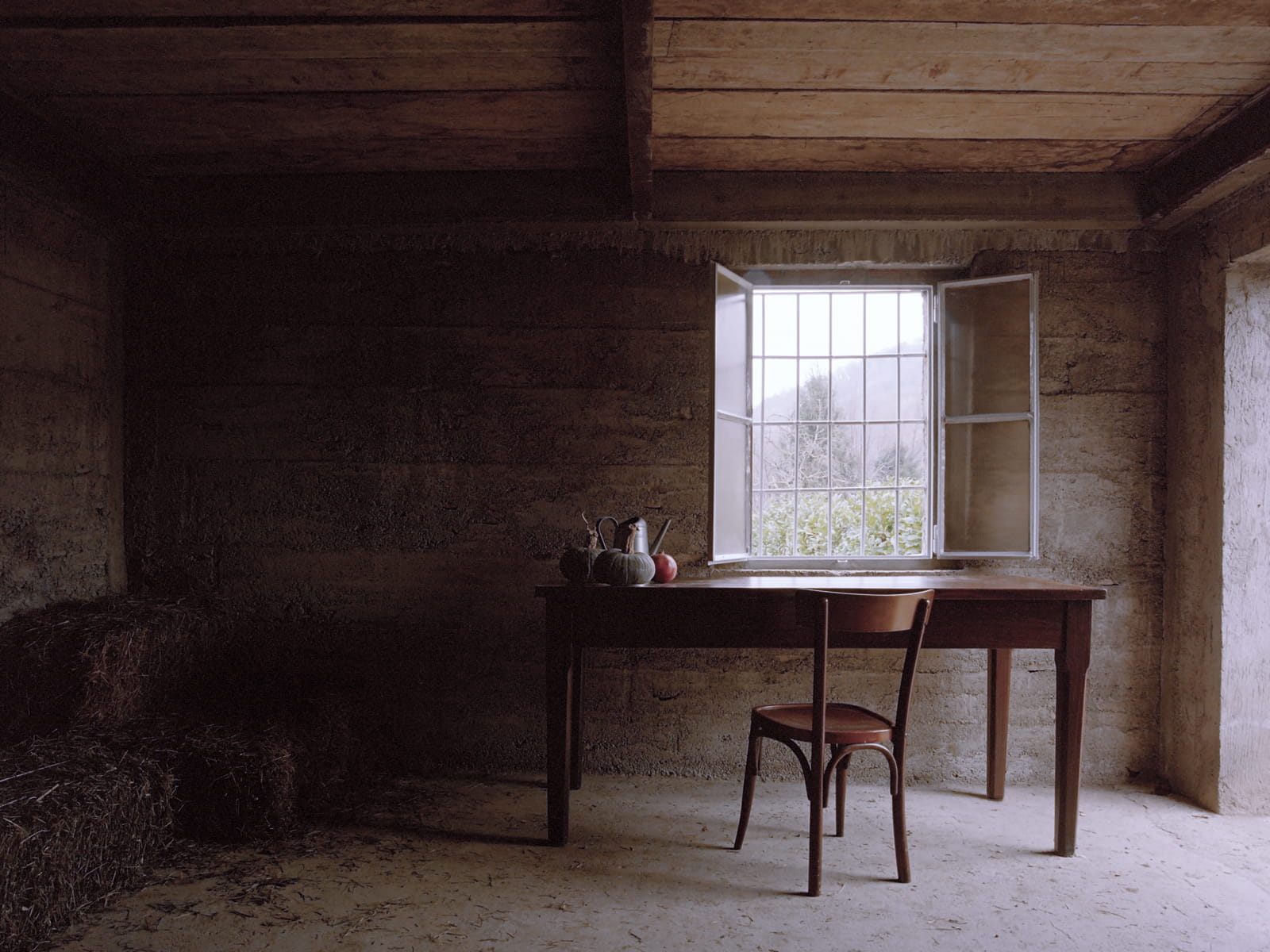
Rural Living: the Mulberry Refuge by a25architetti in Montevecchia, Italy is an architecture of care
The Mulberry Refuge at the foot of the hills of Montevecchia was restructured by a25architetti as a modest, meaningful intervention that transforms a small rural structure into a shared shelter for people and tools. Rooted in memory, physical labor, and collective rural heritage, the Refuge embodies an architecture of care by honoring everyday life and showing how rural architecture can evolve to support craftsmanship, social exchange, and continuity between past and present.
Read more about the project, here!
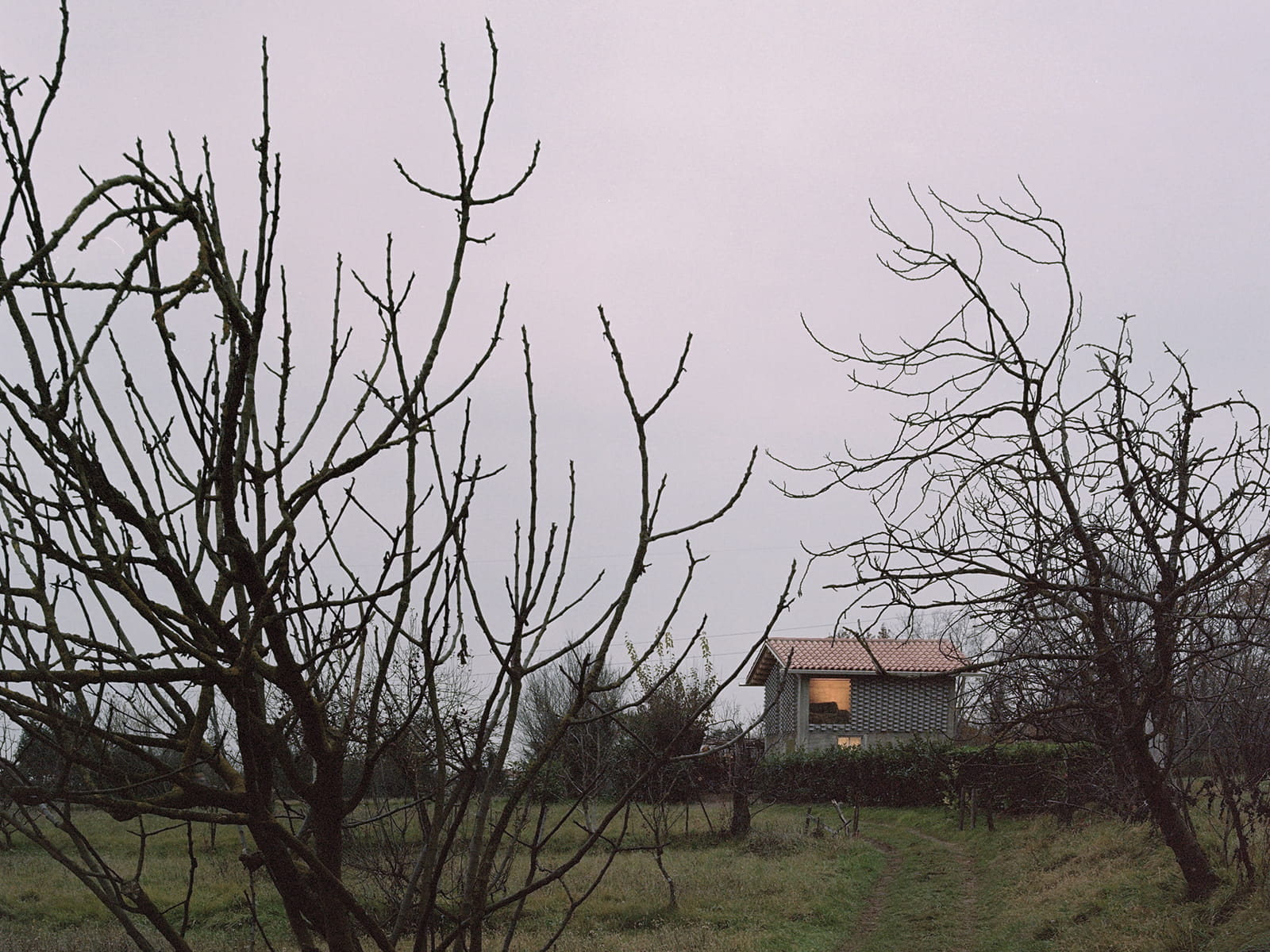
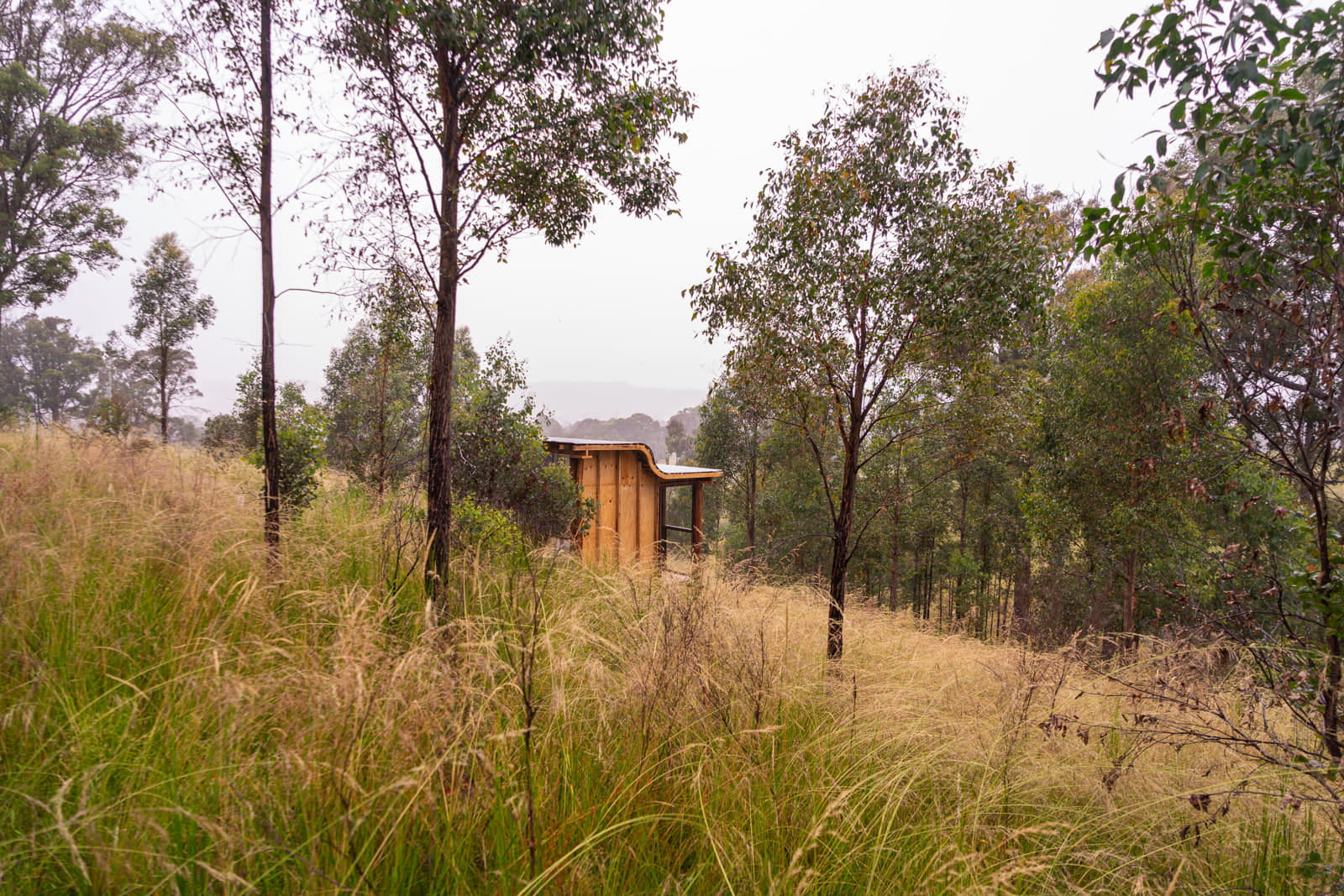
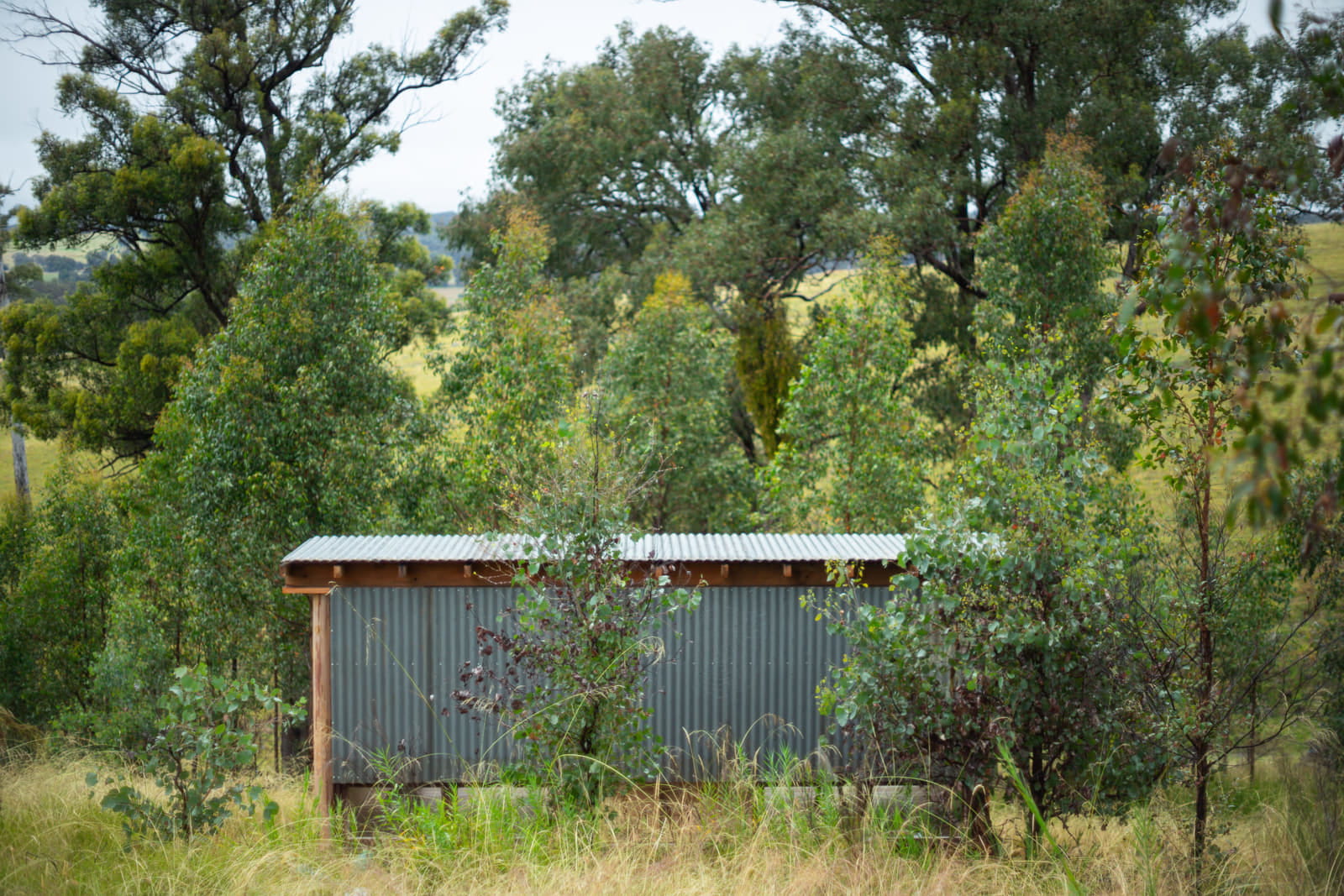
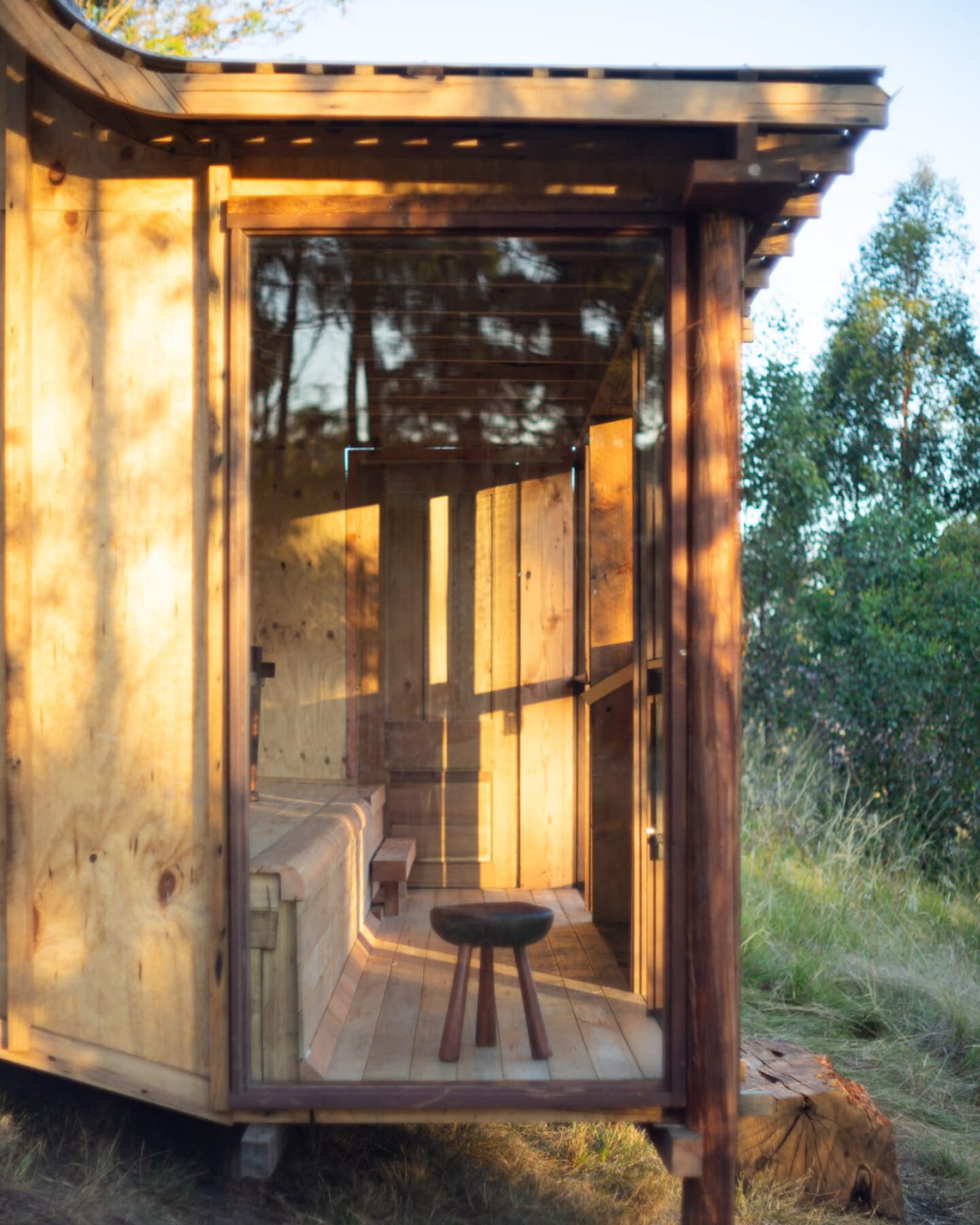
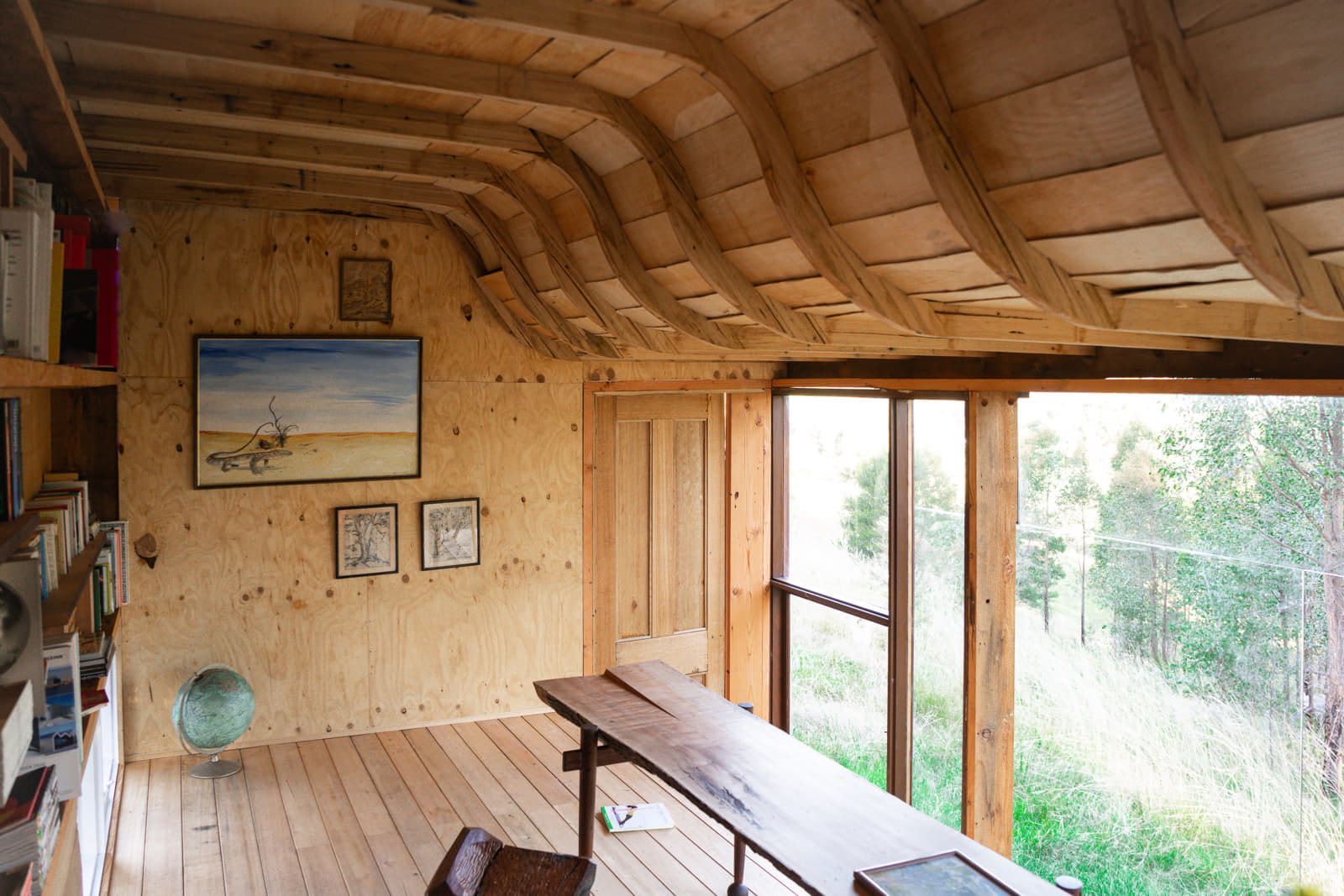
‘A place to watch the trees grow’ in the rural community of Sarsfield | by Green Studio
Α public library cabin as a healing exercise, as a symbol of human-nature connection, landscape recovery and community power in the aftermath of the devastating bushfires in Victoria, Australia. Located in the rural community of Sarsfield, this small-scale shelter, designed by Green Studio and created with reused materials, is a place to reflect and watch the trees grow.
Read more about the project, here!