A neglected corner of Brno’s historic centre has been transformed into a thoughtful alternative to the traditional Christmas market. On Římské náměstí, architects Peer Collective, artist Kateřina Šedá, the non-profit Renadi, and the Brno-střed Municipal District present the Christmas Festival of Bad Habits – a public space installation that replaces consumerism with calm, reflection, and shared experience.
At the heart of the concept is a guided path of self-reflection based on Šedá’s long-term project The National Collection of Bad Habits. Peer Collective’s temporary structure of modular trusses and red-and-white curtains creates eighteen intimate “rooms” in the open air, inviting visitors to slow down and consider their own habits as they move through the space. After dark, the installation becomes an open-air gallery with projected testimonies and ambient soundscapes. The route culminates in a central “confessional” – not a market stall but a set of six booths where visitors can share experiences and symbolically lay aside their bad habits. Simple spatial adjustments, including a barrier-free surface and a no-alcohol policy, further support the festival’s intent to create a safe, inclusive environment for all.
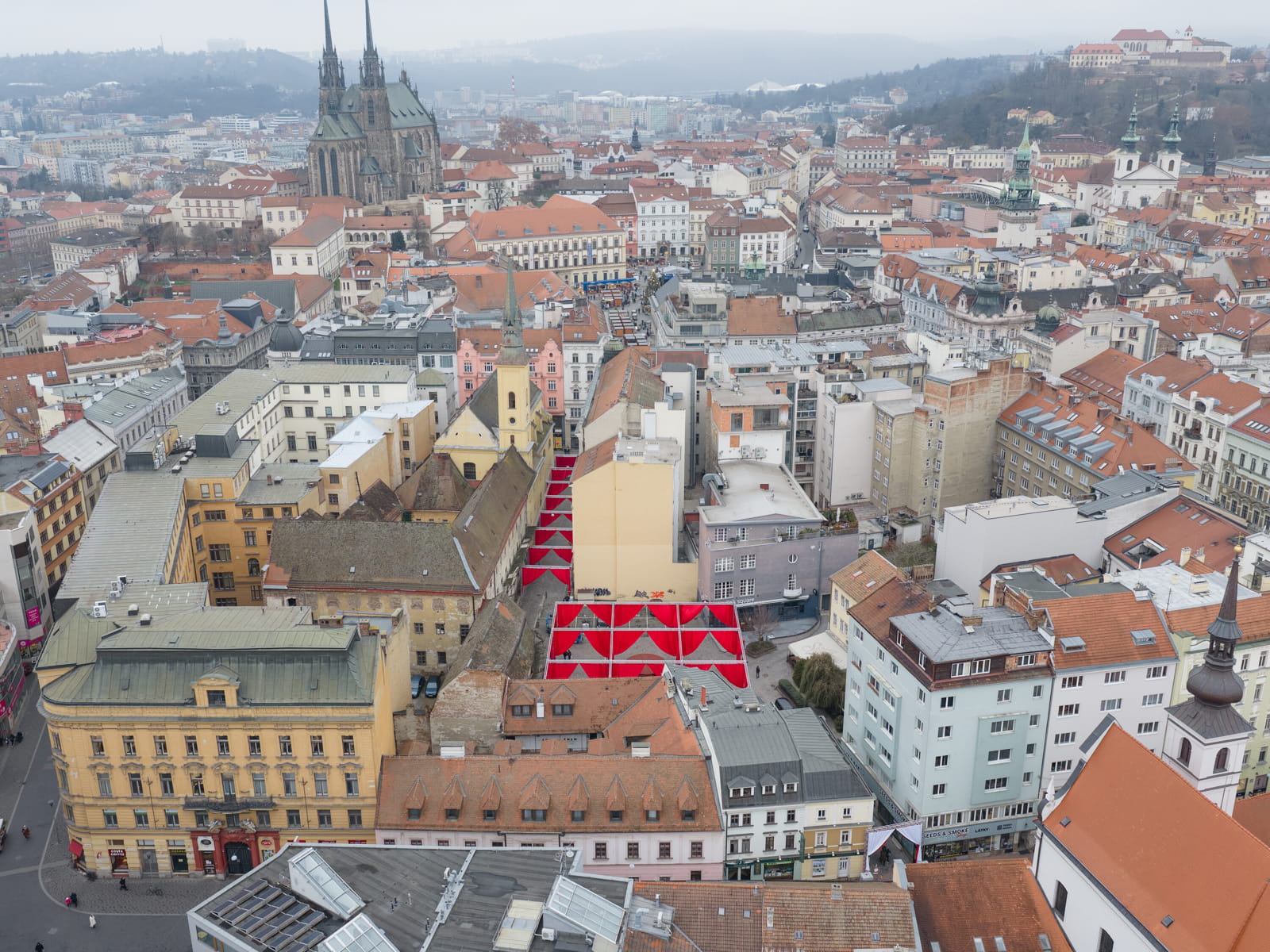
Path to Self-Reflection
The project emerged from an initiative by the non-profit organization Renadi, whose long-term work focuses on creating safe and inclusive environments during the holiday season, particularly for those living at society’s margins.
Conceived as a sober, non-commercial space free from alcohol and economic pressure, the festival challenges the dominant narrative of Christmas as an event of excess.
In collaboration with the Brno-střed Municipal District, Renadi invited Kateřina Šedá—an artist whose practice consistently investigates the formation of social bonds—to reimagine the square as a platform for collective introspection.
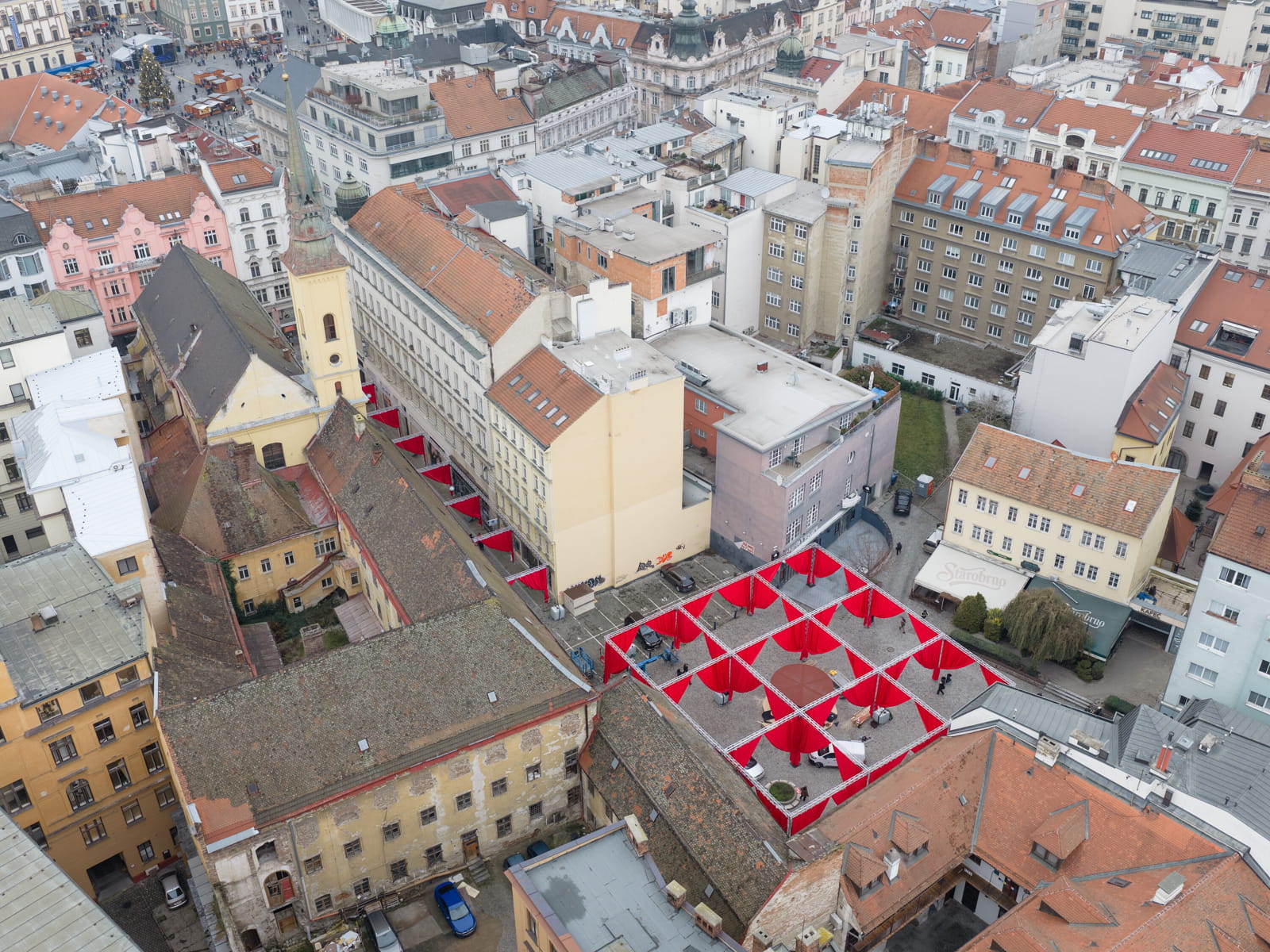
Šedá responded by integrating the initiative with her long-running research project, The National Collection of Bad Habits, which systematically maps everyday rituals, weaknesses, and behavioral patterns within Czech society. The central metaphor became a journey toward self-transformation, unfolding within the public realm and culminating in a confessional space embedded at the heart of the square.
Architects from Peer Collective were subsequently invited to translate this narrative into spatial form, resulting in a project that reinterprets the archetype of the Christmas market as an experiential sequence rather than a site of exchange.
“Christmas today often amplifies our worst habits rather than offering relief from them,” Šedá observes. “The pressure to consume, to perform, to endure. We wanted to create a space where people could pause, reflect, and momentarily step outside that cycle.”
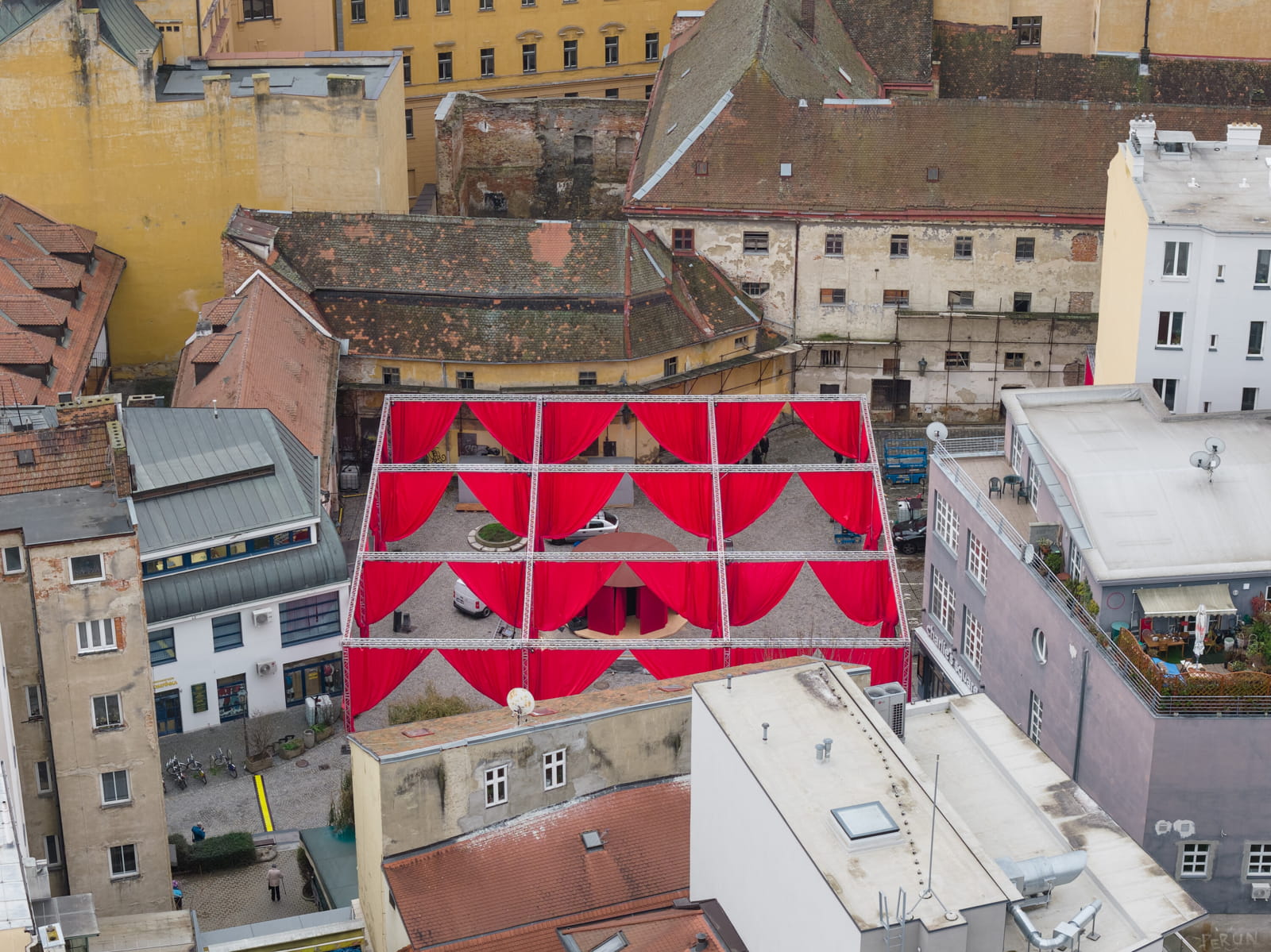
The festival is therefore structured as a continuous path of self-reflection. Visitors move through a series of situations that confront them with their own habits, drawing directly from the material of The National Collection of Bad Habits. Along the route, personal weaknesses are named, compared, and ultimately symbolically set aside within the confessional object. What began as a socially focused initiative thus expands into an open, inclusive framework—addressing both individuals facing profound personal struggles and those simply seeking a moment of heightened awareness.
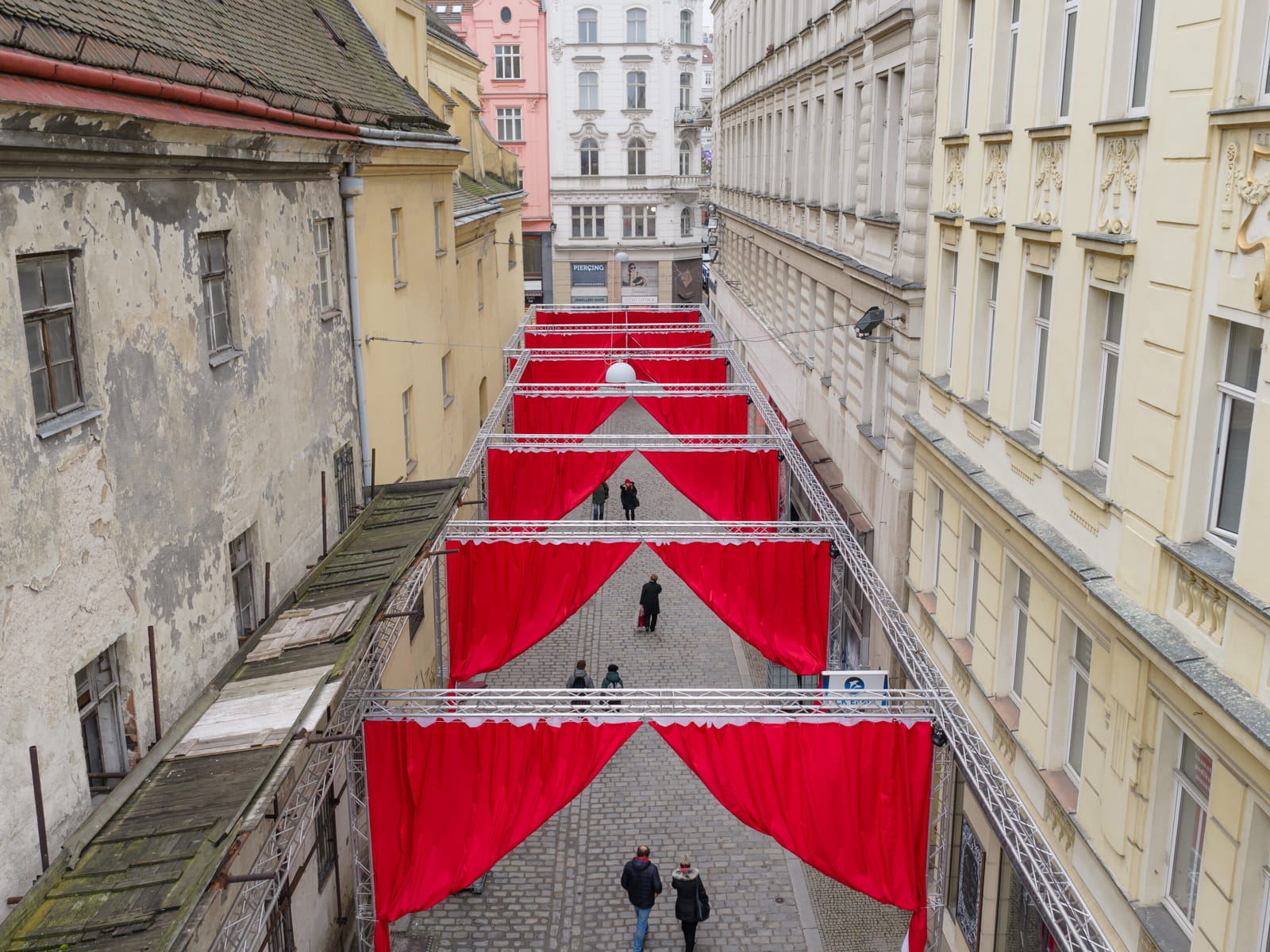
Variability of Public Space
Peer Collective translated the project’s conceptual framework into a restrained yet evocative architectural language.
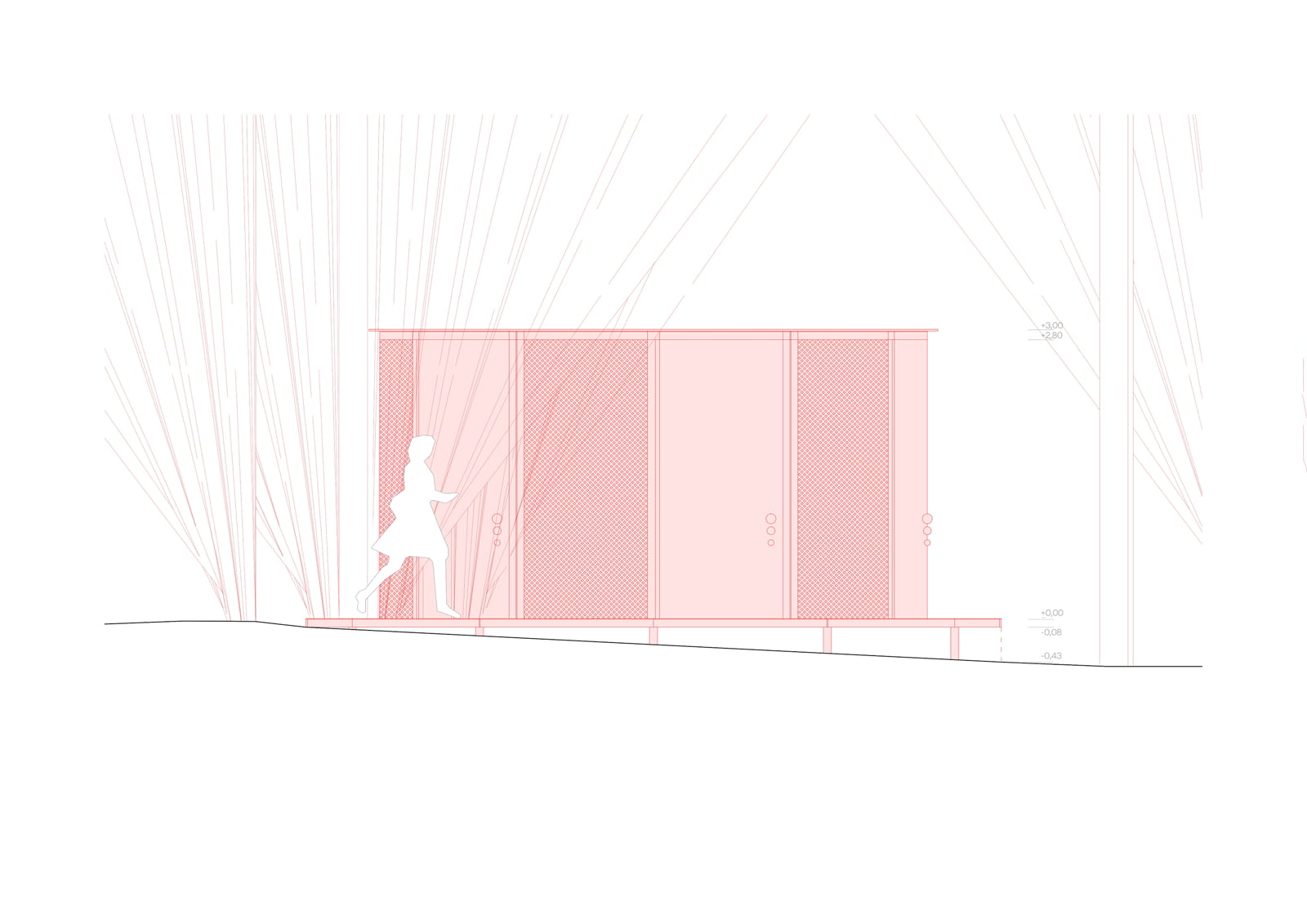
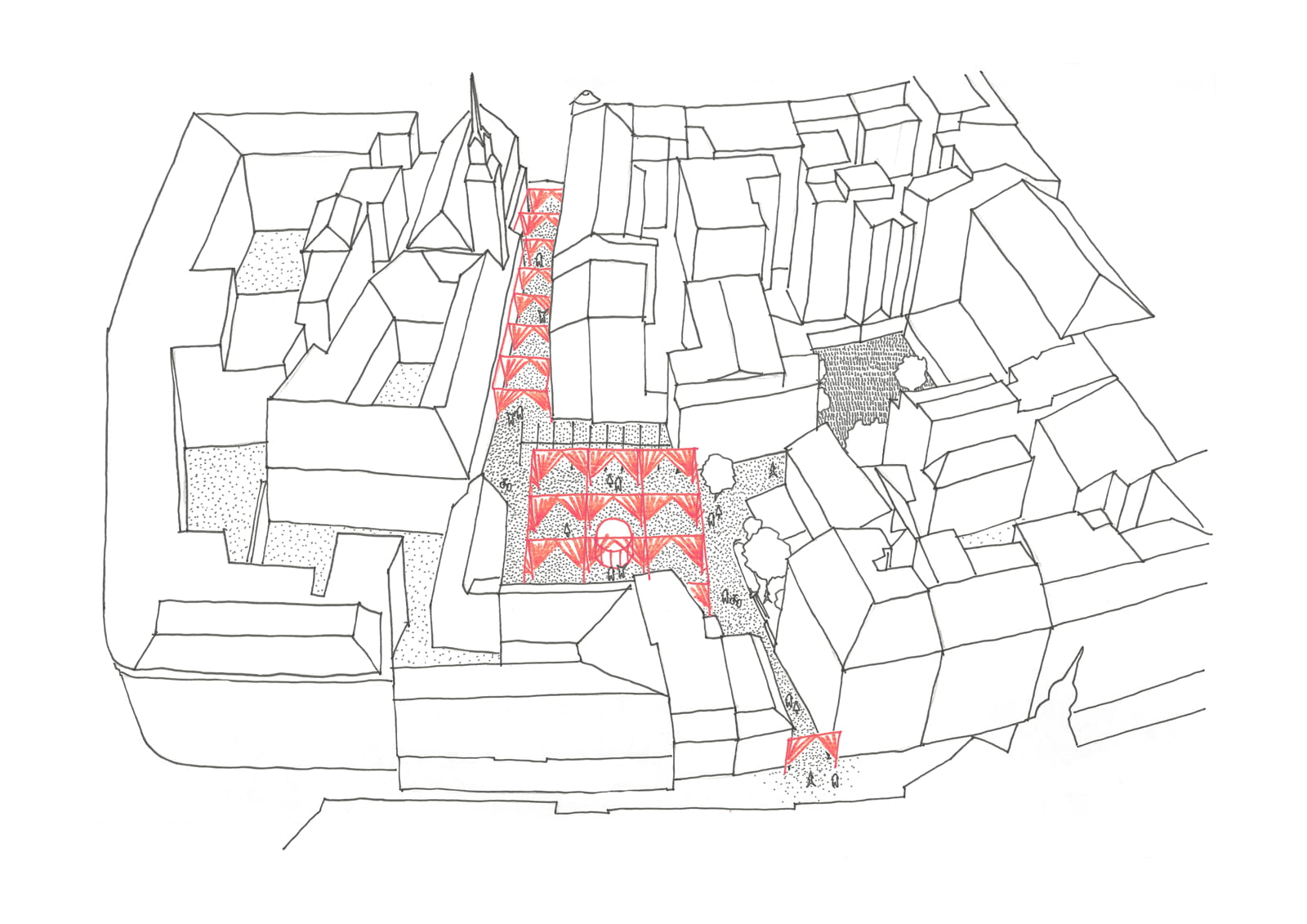
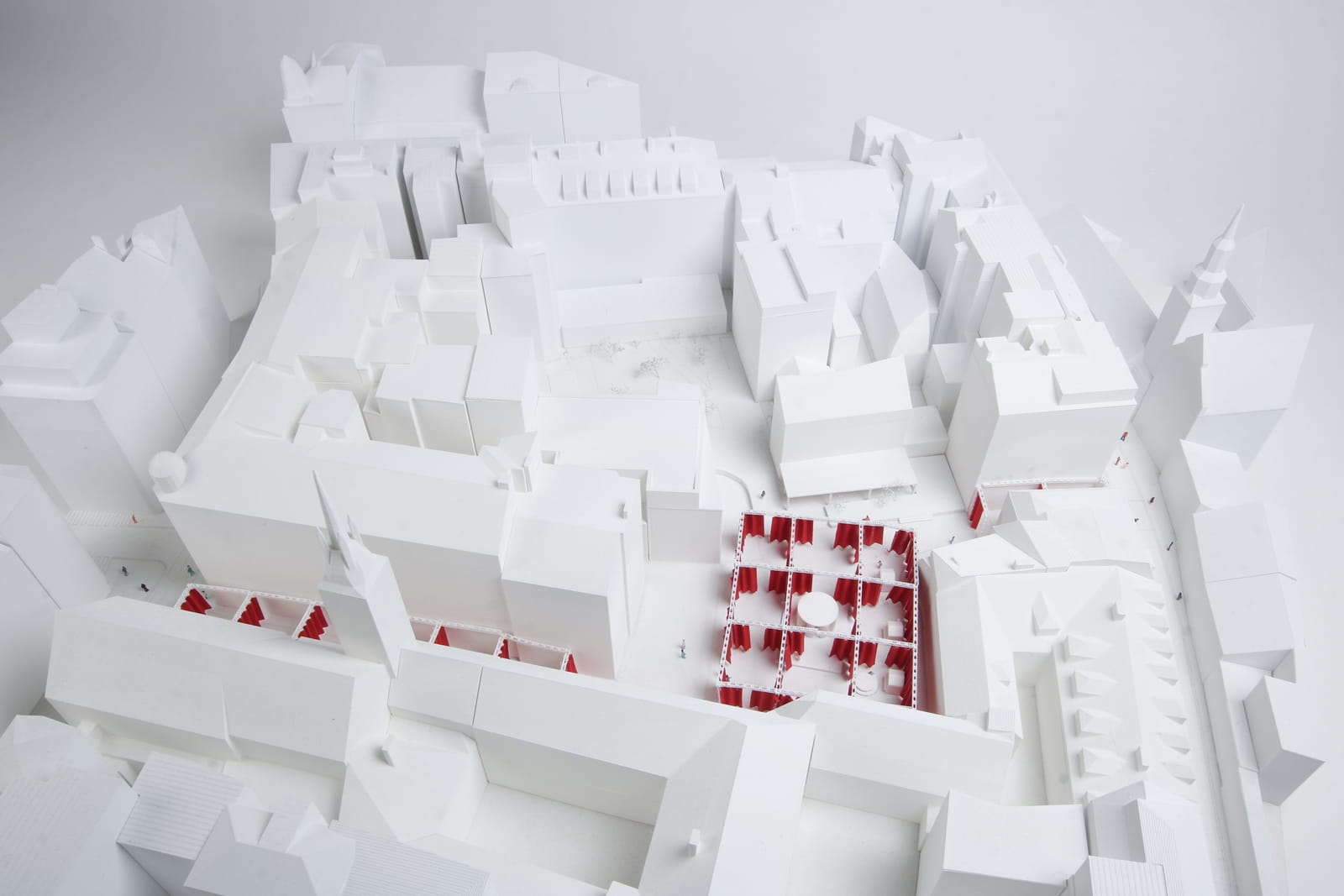
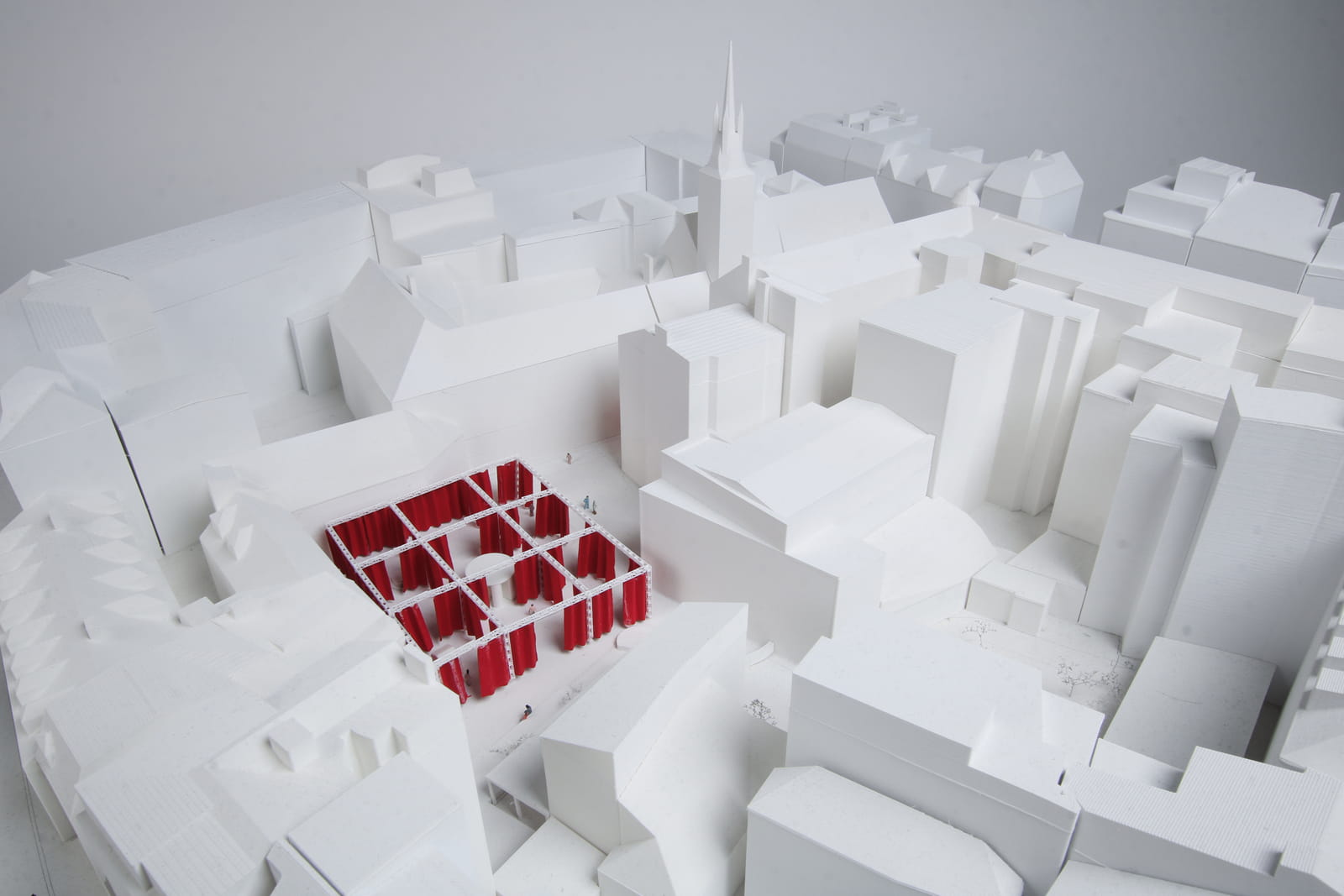
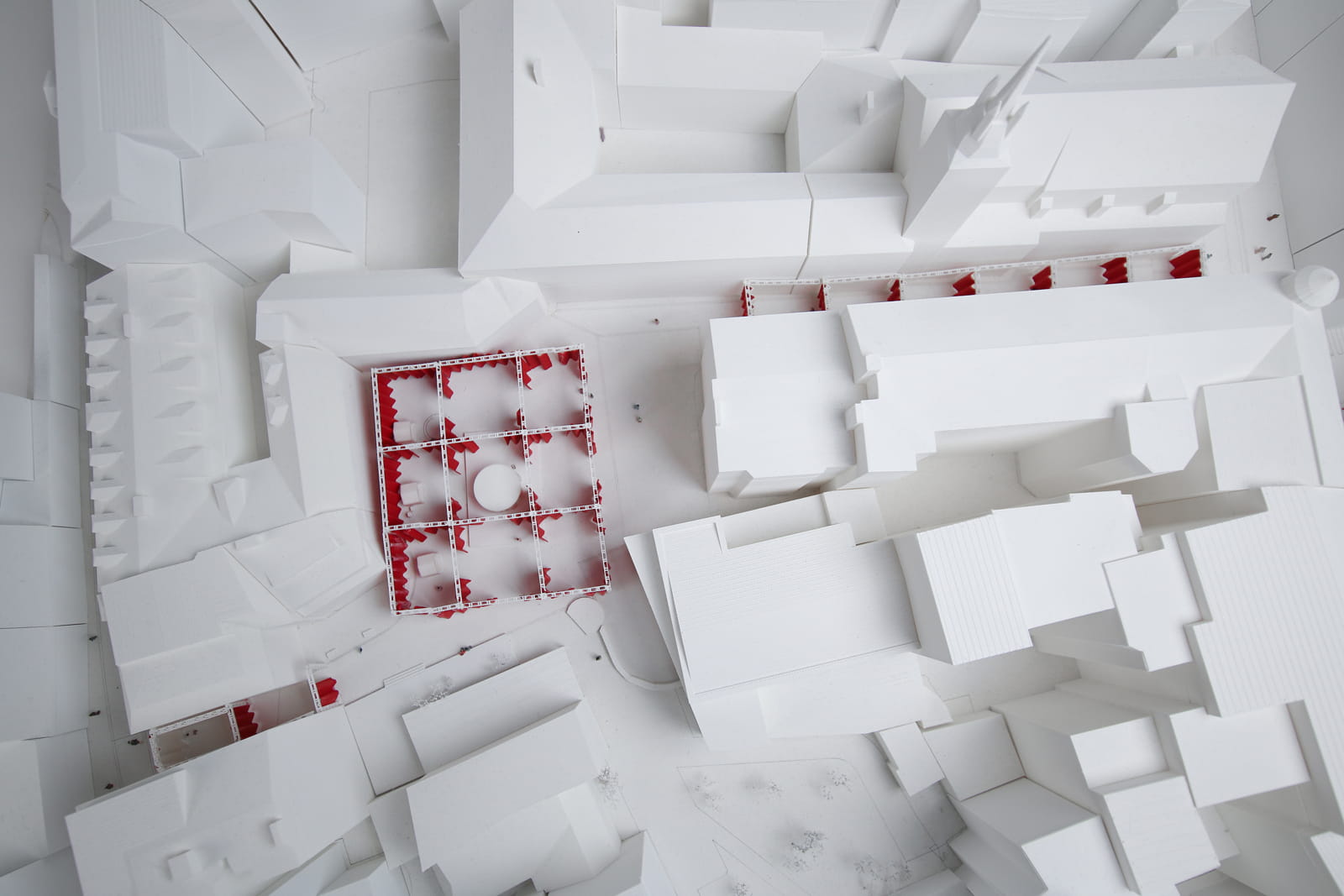
Employing modular truss structures typically associated with temporary stages, the architects established a lightweight scaffold from which expansive white and red textile curtains are suspended.
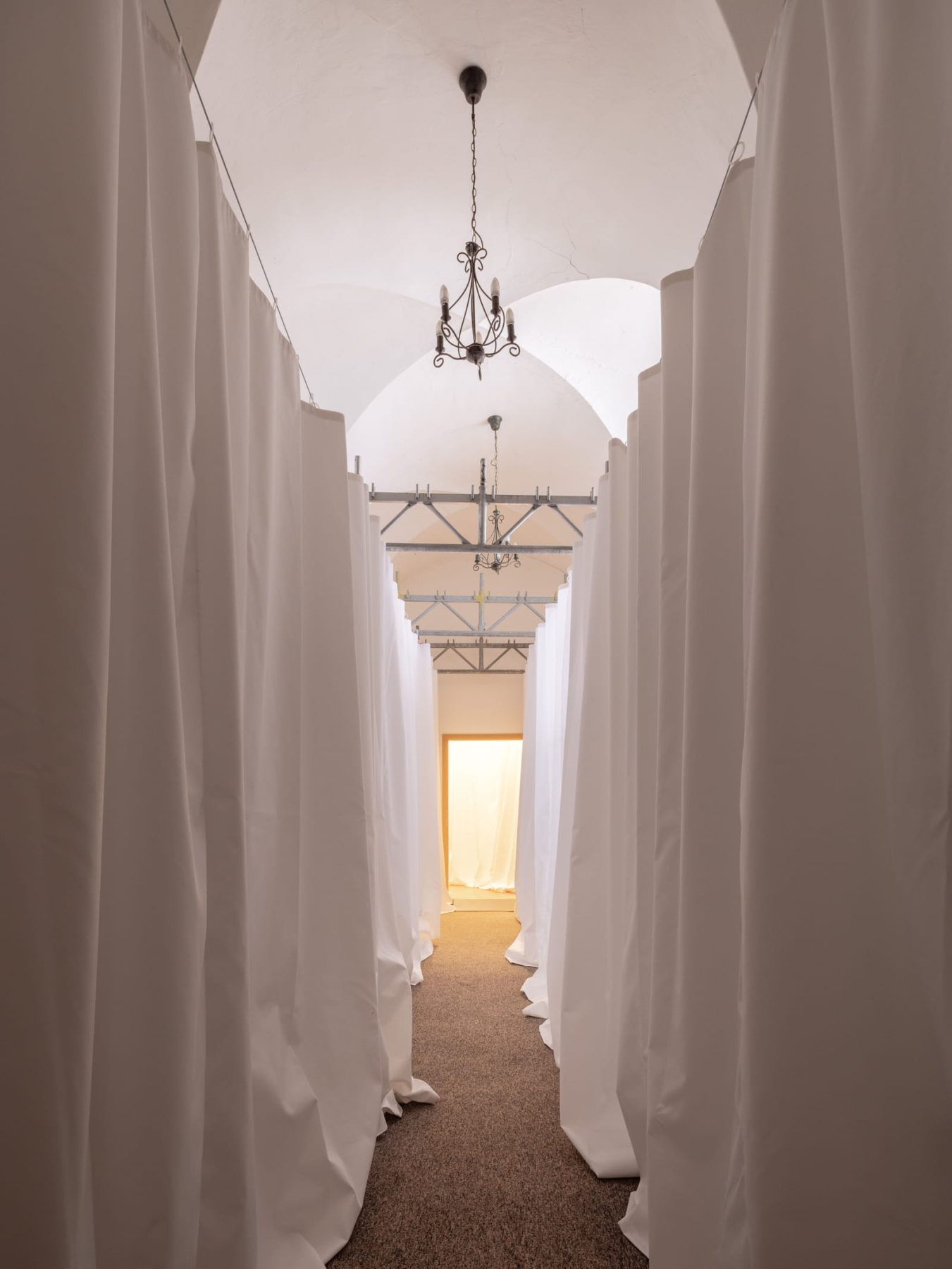
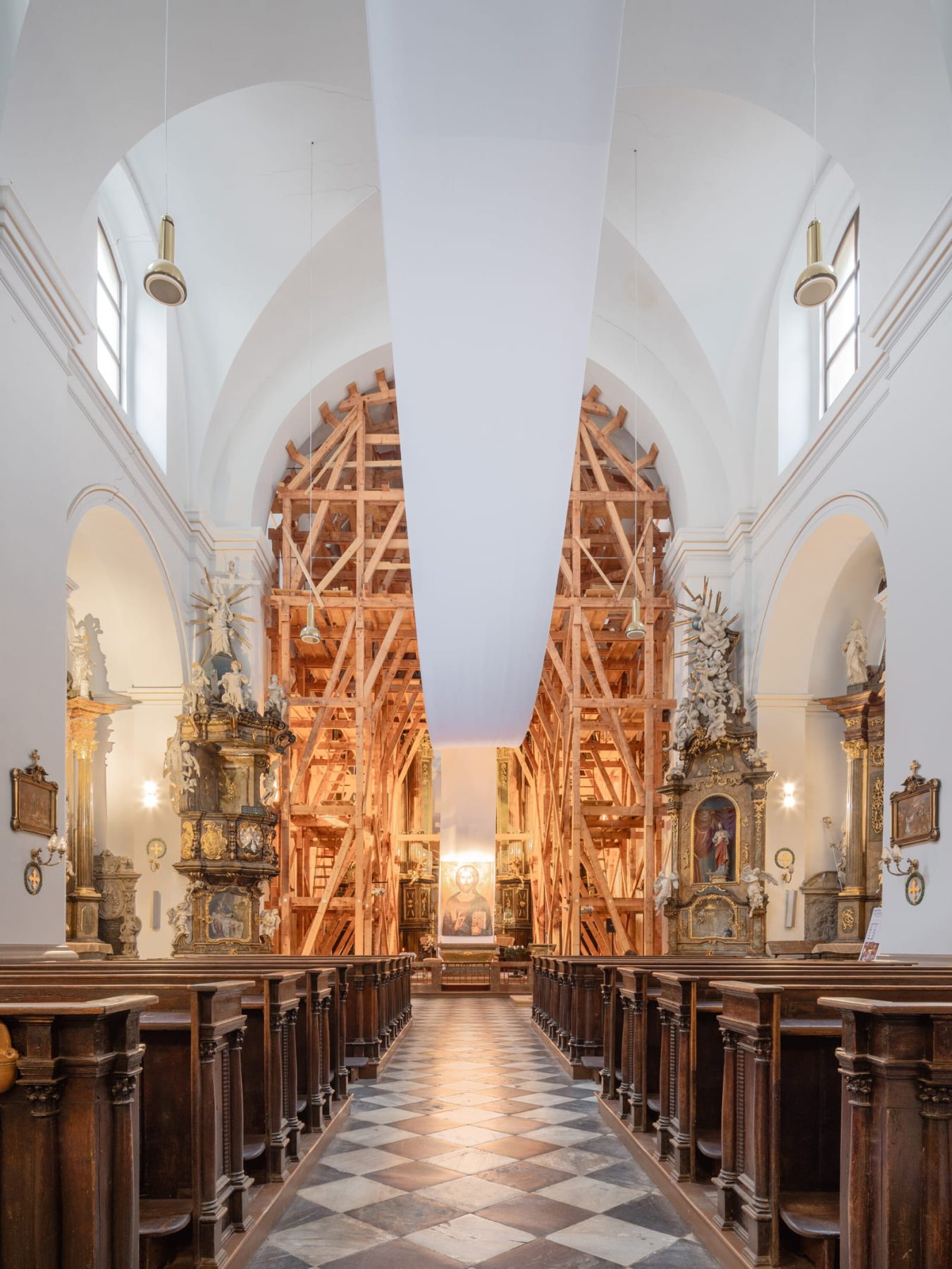
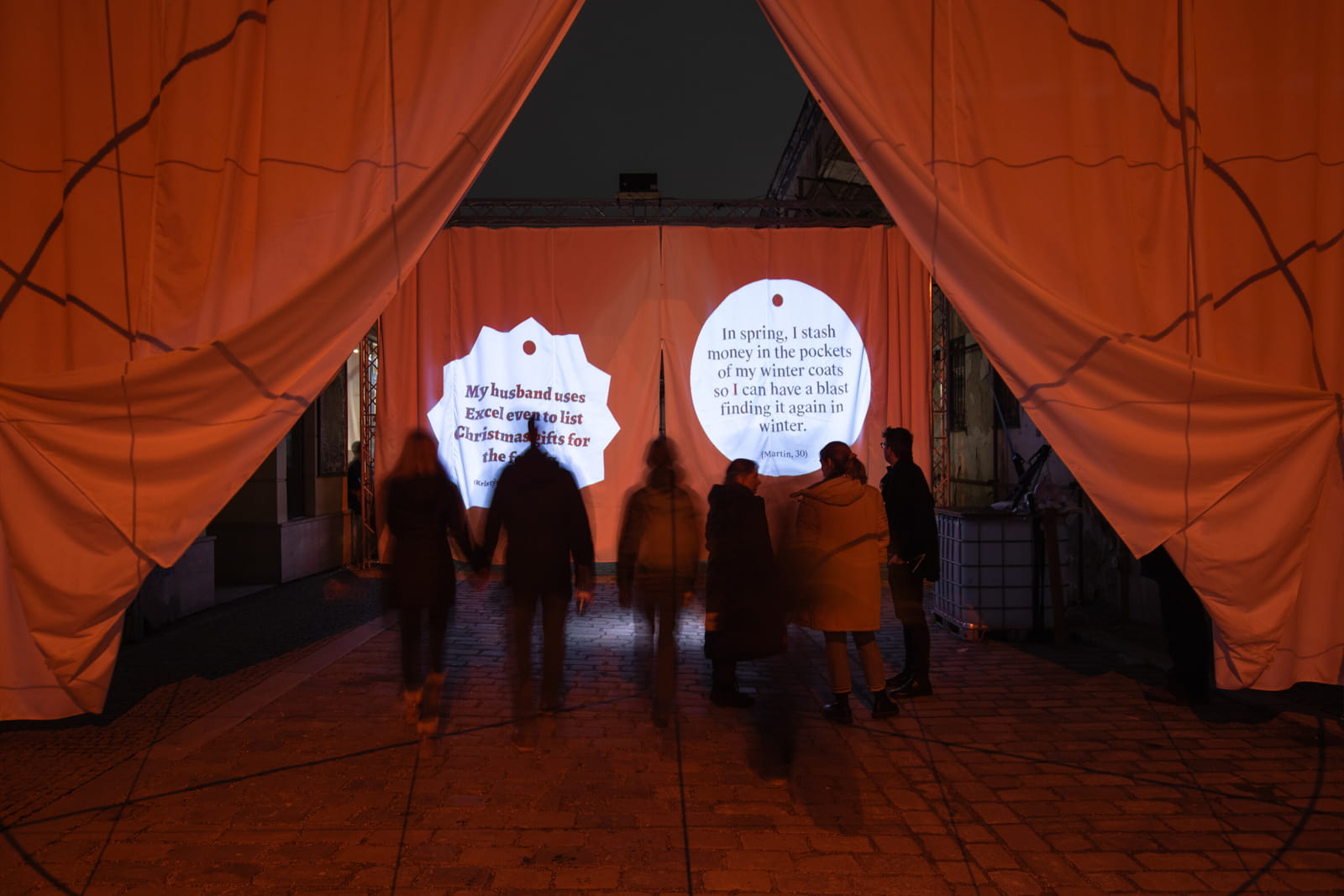
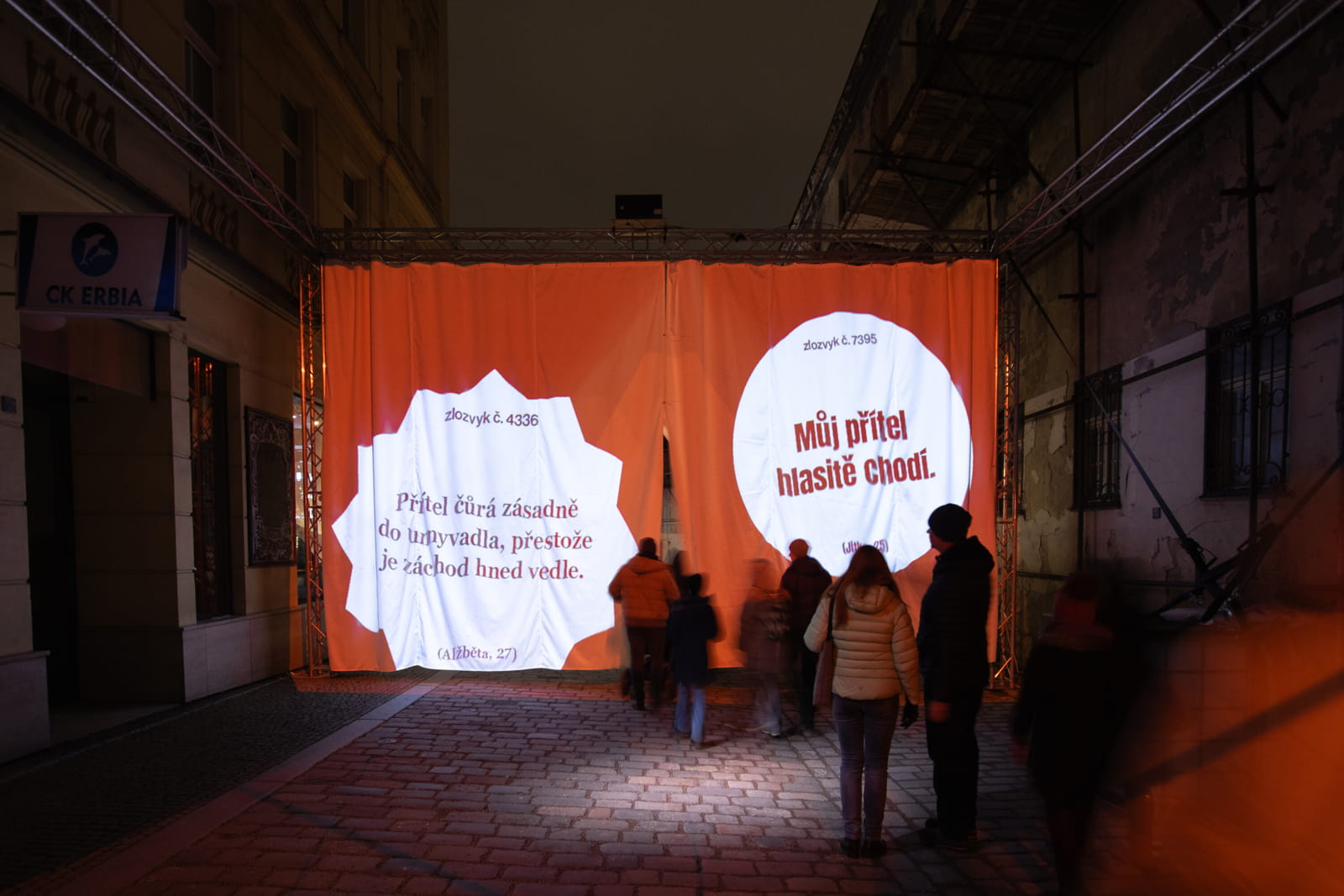
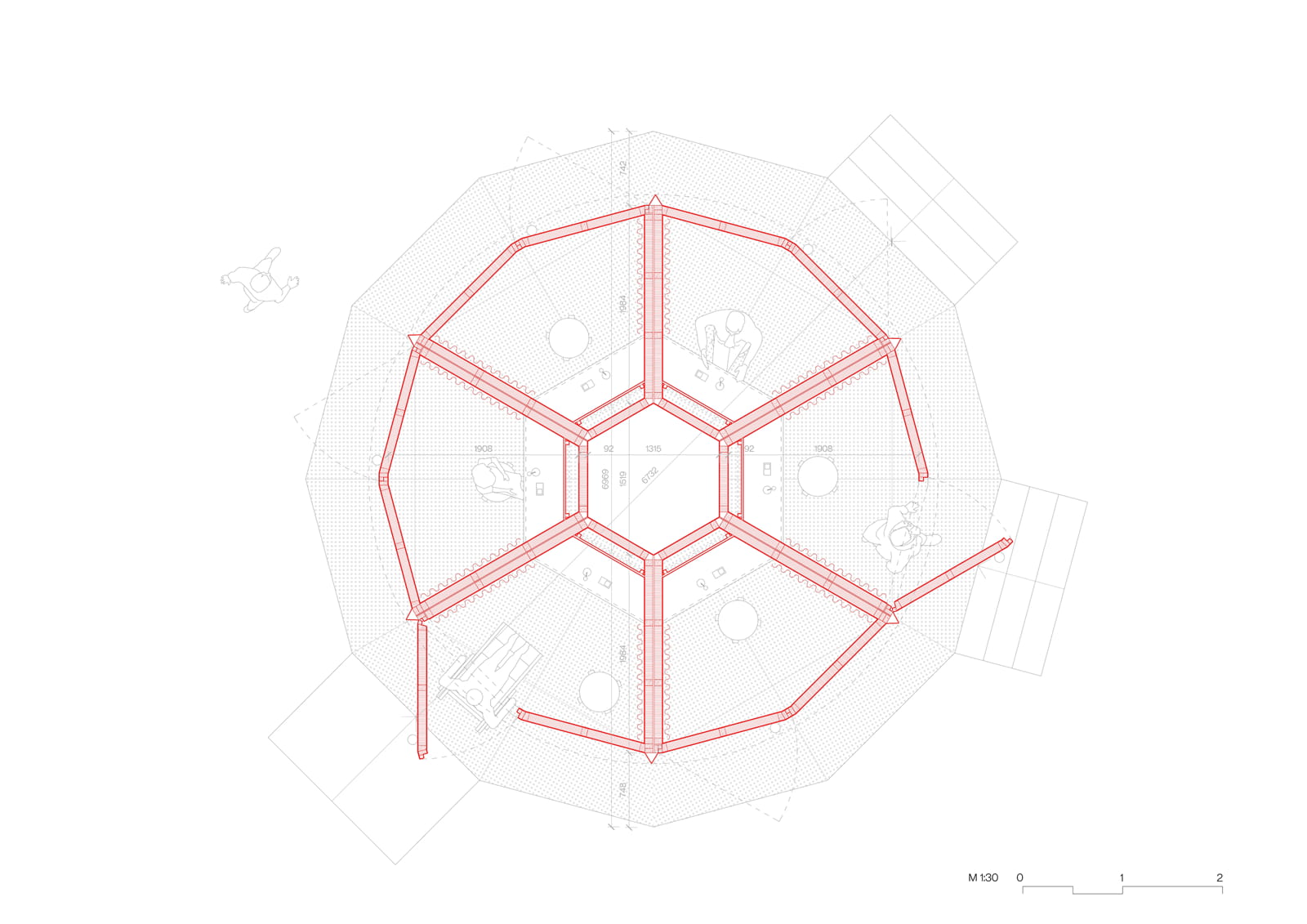
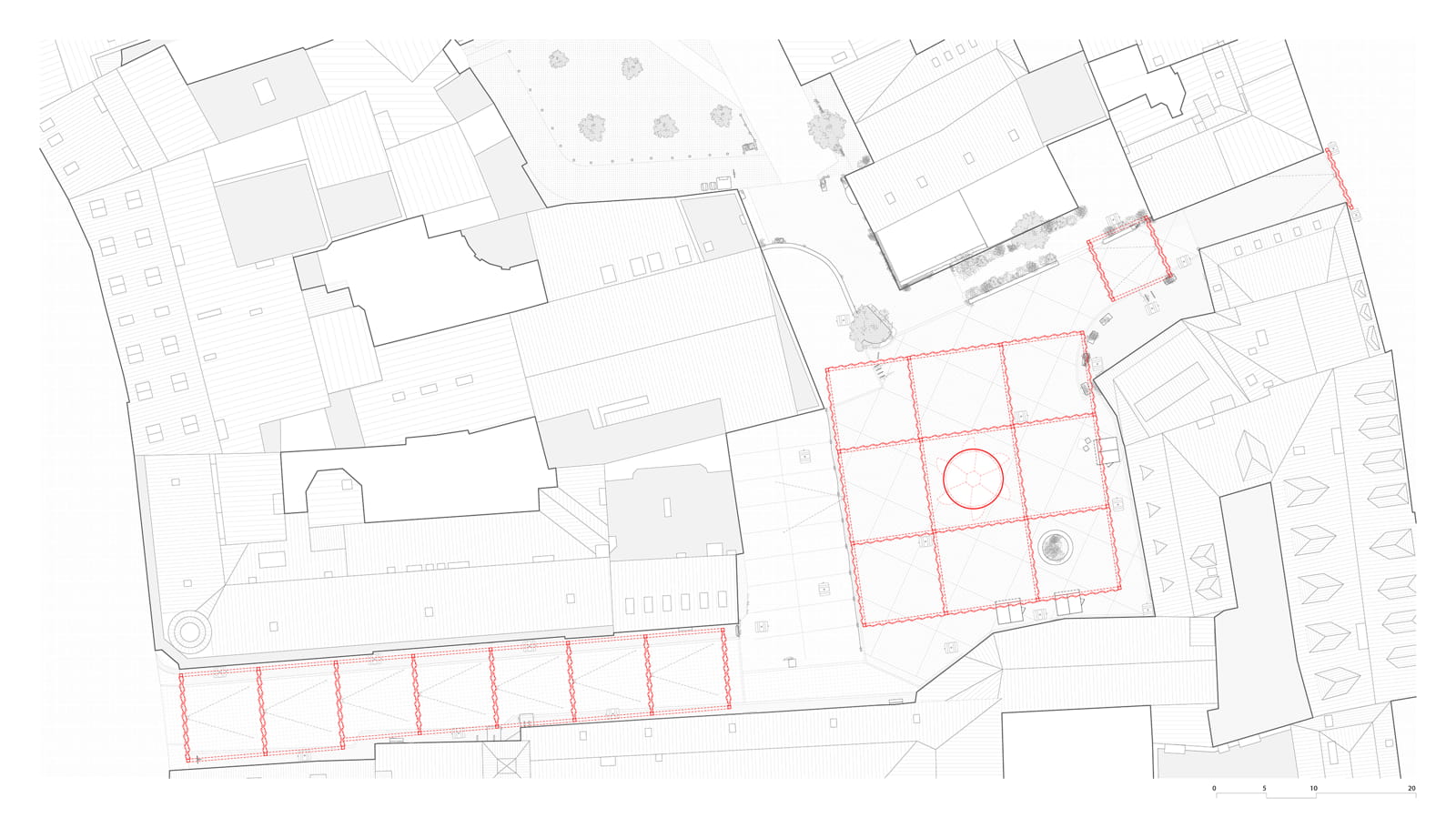
These elements subdivide the square into eighteen spatial “chambers”—a porous sequence of thresholds, corridors, and framed views that evoke the intimacy of interior spaces while remaining fully exposed to the city.
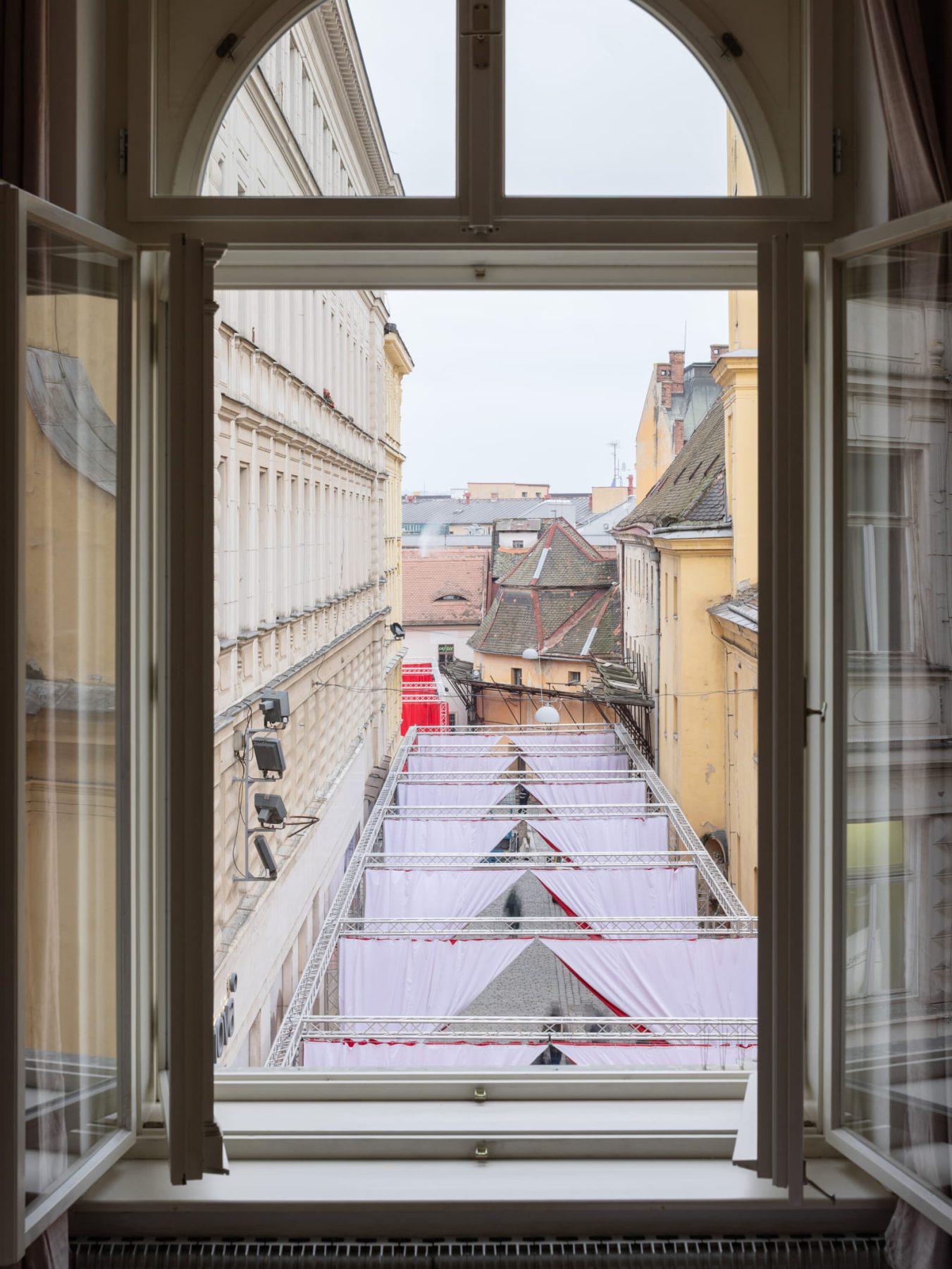
Spanning 2,478 m²—approximately the area of ten tennis courts—the installation operates as an urban scenography that challenges conventional notions of festive space.
The curtains function as soft barriers, simultaneously separating and connecting, inviting visitors to cross thresholds both physical and psychological. This ephemeral architecture offers moments of solitude without withdrawal, allowing individual reflection to coexist with urban collectivity.
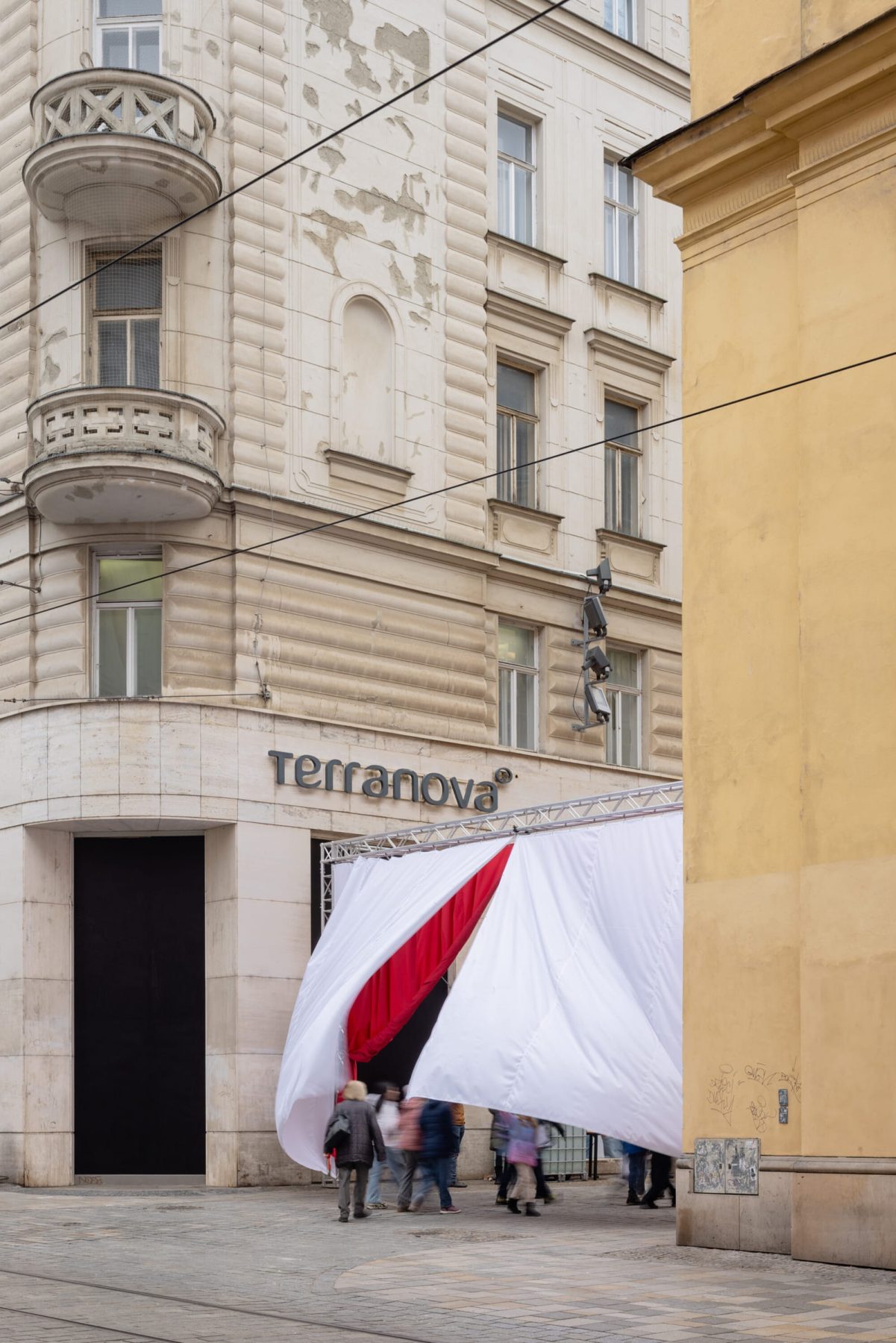
After nightfall, the square assumes a different character. Statements and testimonies drawn from Šedá’s National Collection of Bad Habits are projected onto the white fabric surfaces, accompanied by subdued lighting and ambient sound. The installation becomes an open-air gallery—situated between public display and private confession—where the city itself becomes a medium for introspection.
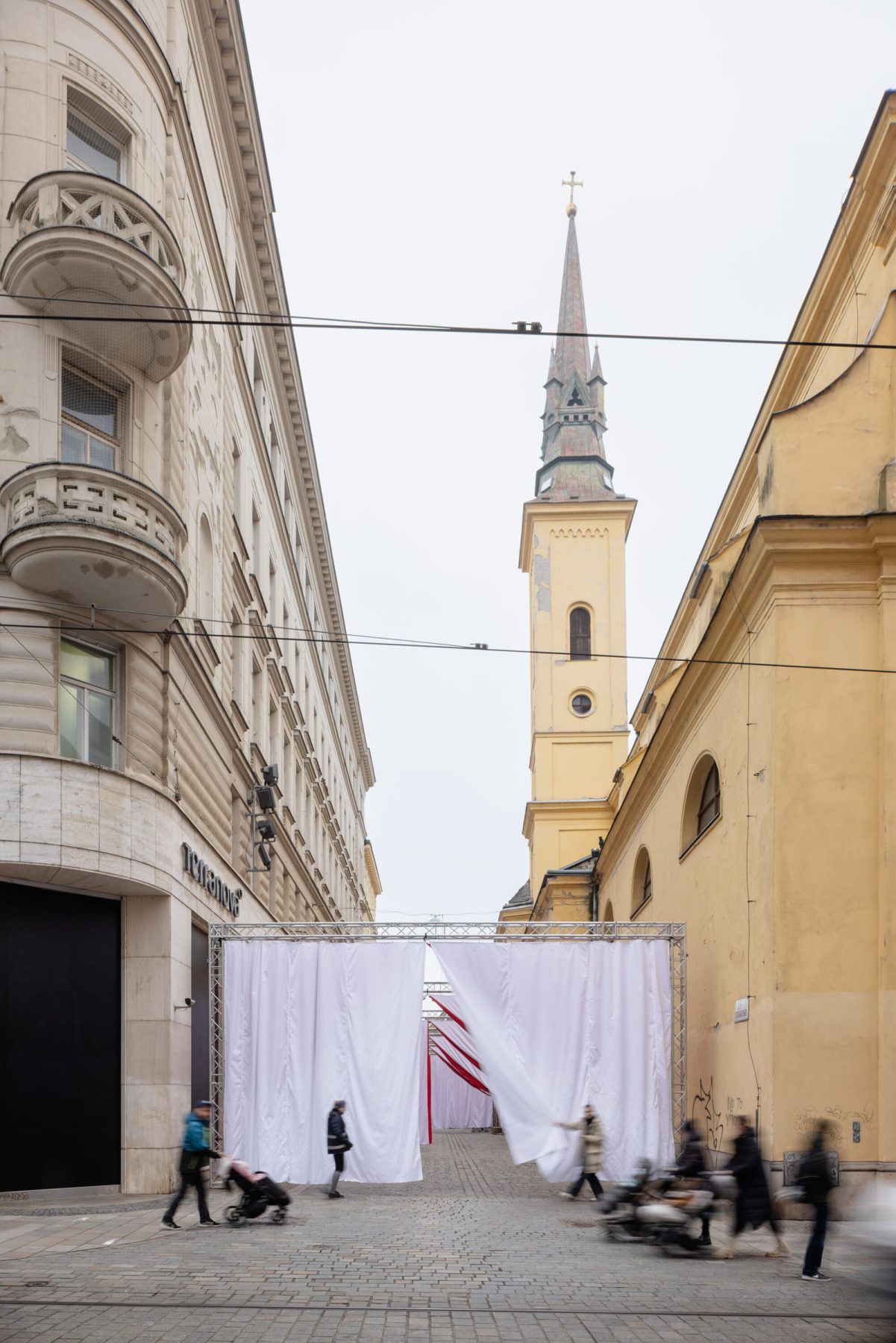
“We did not want architecture to serve as a decorative backdrop,” note the architects of Peer Collective. “The space only exists through participation. Meaning emerges through movement, presence, and interaction.” In contrast to the sonic and visual overload typical of Christmas markets, the festival cultivates restraint, silence, and shared attention.
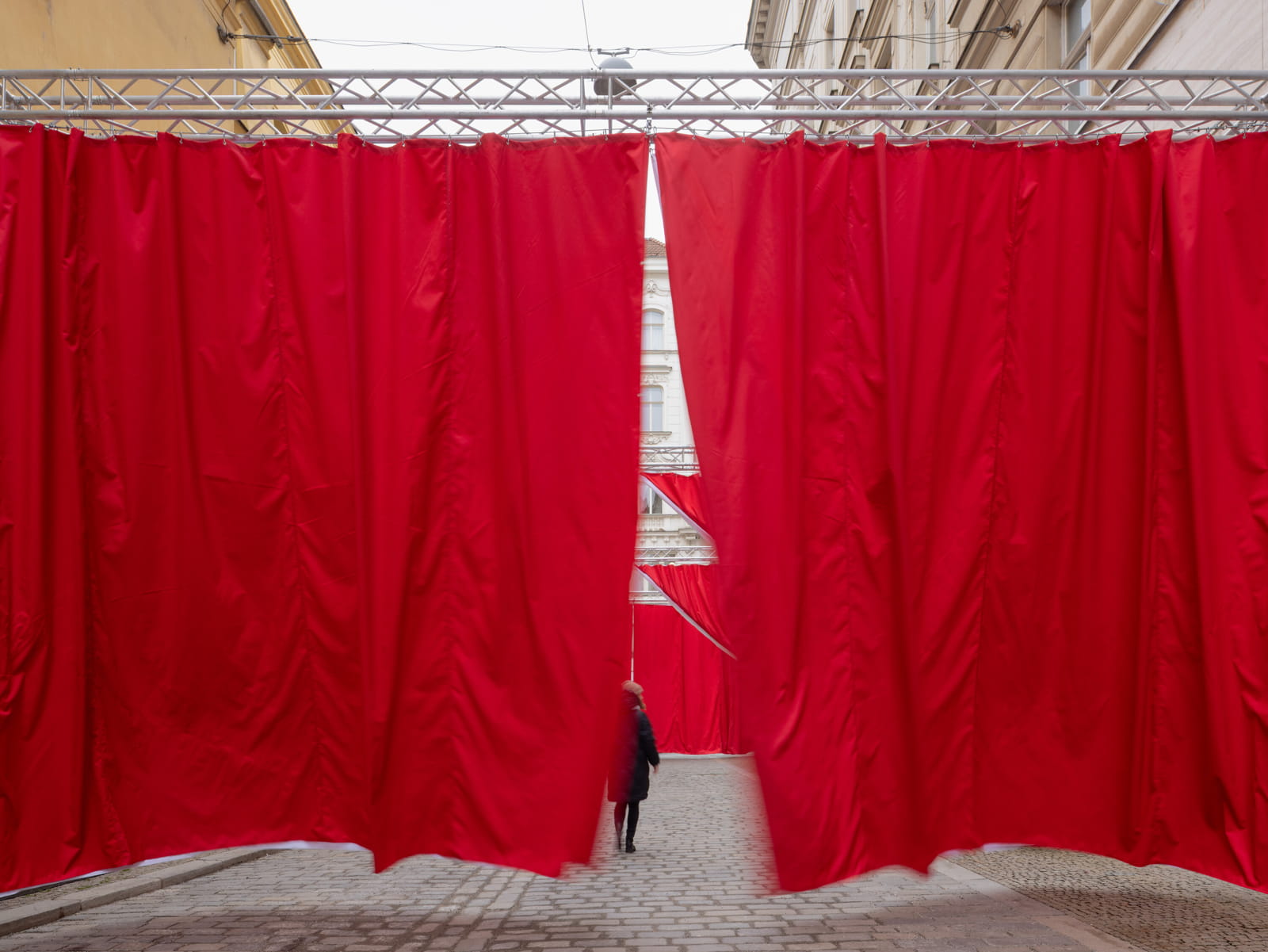
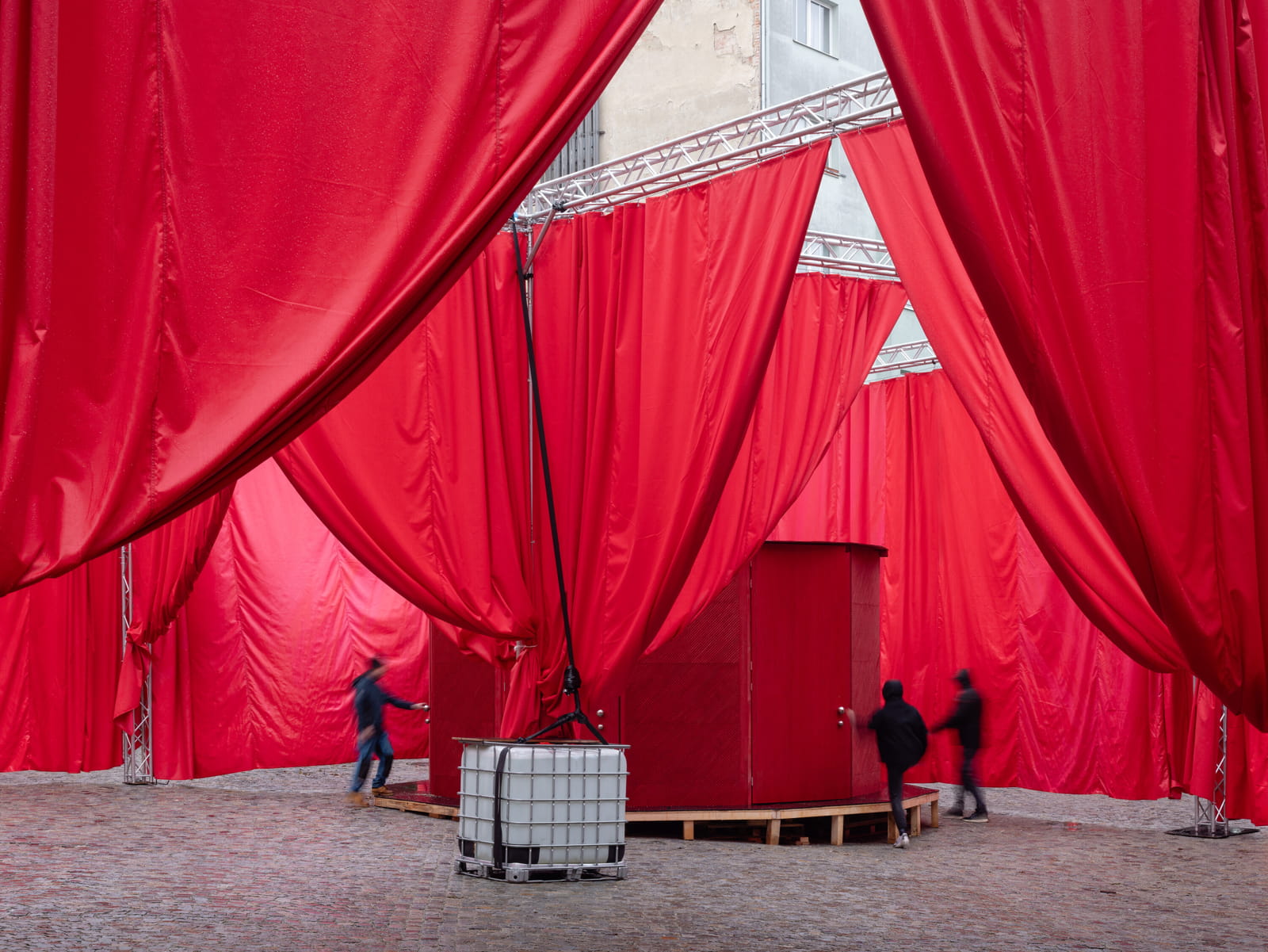
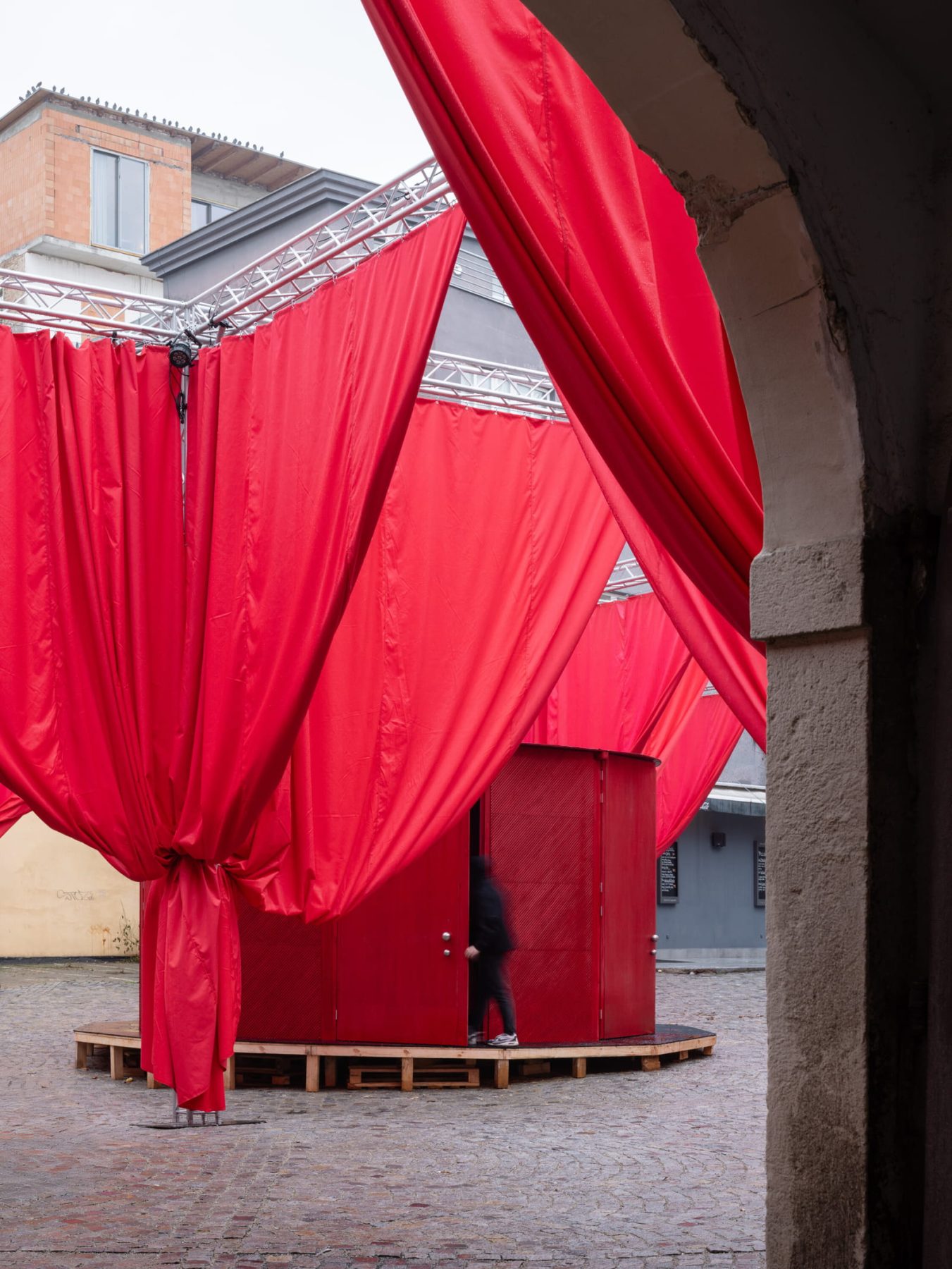
At the spatial and symbolic centre of the project stands the confessional object.
Six individual booths replace the familiar market stalls; instead of goods, they host narratives—of failure, repetition, and the possibility of change. An interactive audiovisual system responds to visitors’ inputs, weaving individual confessions into a collective, evolving archive.
Exiting behind the red curtains, visitors re-enter the city—marked by a subtle but deliberate shift in tempo.
City Accessible to All
The project’s ambition to remove barriers extends beyond symbolism into the physical transformation of the site. The square’s uneven surface was carefully leveled using fine gravel and minimal intervention, ensuring full accessibility for wheelchair users, parents with strollers, and those with limited mobility.
The process itself became participatory: residents contributed to shaping the ground during an autumn community event, embedding collective authorship into the project’s foundation.

Alcohol sales were intentionally excluded, addressing not only physical but also social and psychological thresholds. In doing so, the festival establishes a space that is radically inclusive—one that allows encounters across social differences without hierarchy or exclusion. Temporarily, Římské náměstí becomes something else entirely: a place where the city slows down, and where Christmas is reimagined not as consumption, but as reflection.
Drawings

Model


About authors
Peer is a collective and architectural studio based in Brno, Czech Republic. It is a loose association of architects and other creative individuals whose joint efforts began during their studies.
The dynamic team shares a vision of architecture as an evolving discipline that must constantly undergo experimentation and exploration in order to truly serve people and their lives. “In our Brno studio, every project begins with a discussion around the concept. We meet, debate, and experiment together, exploring possible solutions and testing their feasibility through virtual reality, physical models, visualizations – or simply with a pencil and paper,” explain the authors.
Peer’s work is also defined by an emphasis on international cooperation. This led to a win in a competition for a project on the corner of Revoluční Street, in which the collective joined forces with the Paris studio Muoto (Revoluční 30, 1st place in the competition). The collective is also currently working with Muoto on a project for a visitor center and the opening of the Budweiser Budvar complex (Open Budweiser Budvar, 1st place in the competition). Other projects include, for example, the new headquarters of the National Cyber and Information Security Agency in Brno (NÚKIB, 2nd place in the competition).
The word “peer” means colleague or equal. Being part of Peer Collective is above all about equality. That is why there is no leader in this group and the authors work together on each project. “We want everyone involved in a project to feel that they’ve contributed an equal share. The outcome is then truly a collective work,” explains Daniel Struhařík, the initiator of the entire project.

Kateřina Šedá is a Czech artist whose work is close to social architecture. In 1999–2005 she studied at the Academy of Fine Arts in Prague with Professor Vladimír Kokolia.
In her work, Kateřina Šedá focuses on socially-conceived events, often employing dozens or hundreds of people who have nothing to do with art. The events mostly take place right in villages or city streets. The purpose of experimenting with interpersonal relationships is to bring those involved out of their stereotypes or social isolation. She tries to induce a lasting change in their behaviour by means of their own (provoked) activity and a new usage of everyday resources.
She is the author of a number of socially conceived projects that she realised in the Czech Republic and abroad – from SF Moma in San Francisco and Tate Modern in London to Documenta in Kassel and the Venice Biennale. She is the recipient of the 2017 Architect of the Year award, the Magnesia Litera award for journalism, the Most Beautiful Czech Book award, the Jindřich Chalupecký Award, and the Contemporary Art Society Award. She has published more than thirty books and publications, mapping her individual projects in detail. She lectures about her work at schools, in cultural centres and galleries, but also in villages and small towns, trying to give an idea about her work to large audiences, and thus prompt them to their own activity.
Facts & Credits
Title Christmas Festival of Bad Habits
Typology Installation, Festival
Location Římské náměstí, Františkánská ulice, Brno, Czech Republic
Status Completed, 2025
Αuthor and Αrt concept Kateřina Šedá
Architecture Peer Collective (Daniel Struhařík, Georgi Dimitrov, Ondřej Válek)
Design Team Vojtěch Heralecký, Jakub Čevela, Jan Urbášek, Radim Koutný, Monika Matějkovičová, Aneta Báčová
Idea initiator Renadi
Graphic design Kristína Drinková
Photography Matej Hakár, Jan Urbášek [Peer Collective]
Text by the authors