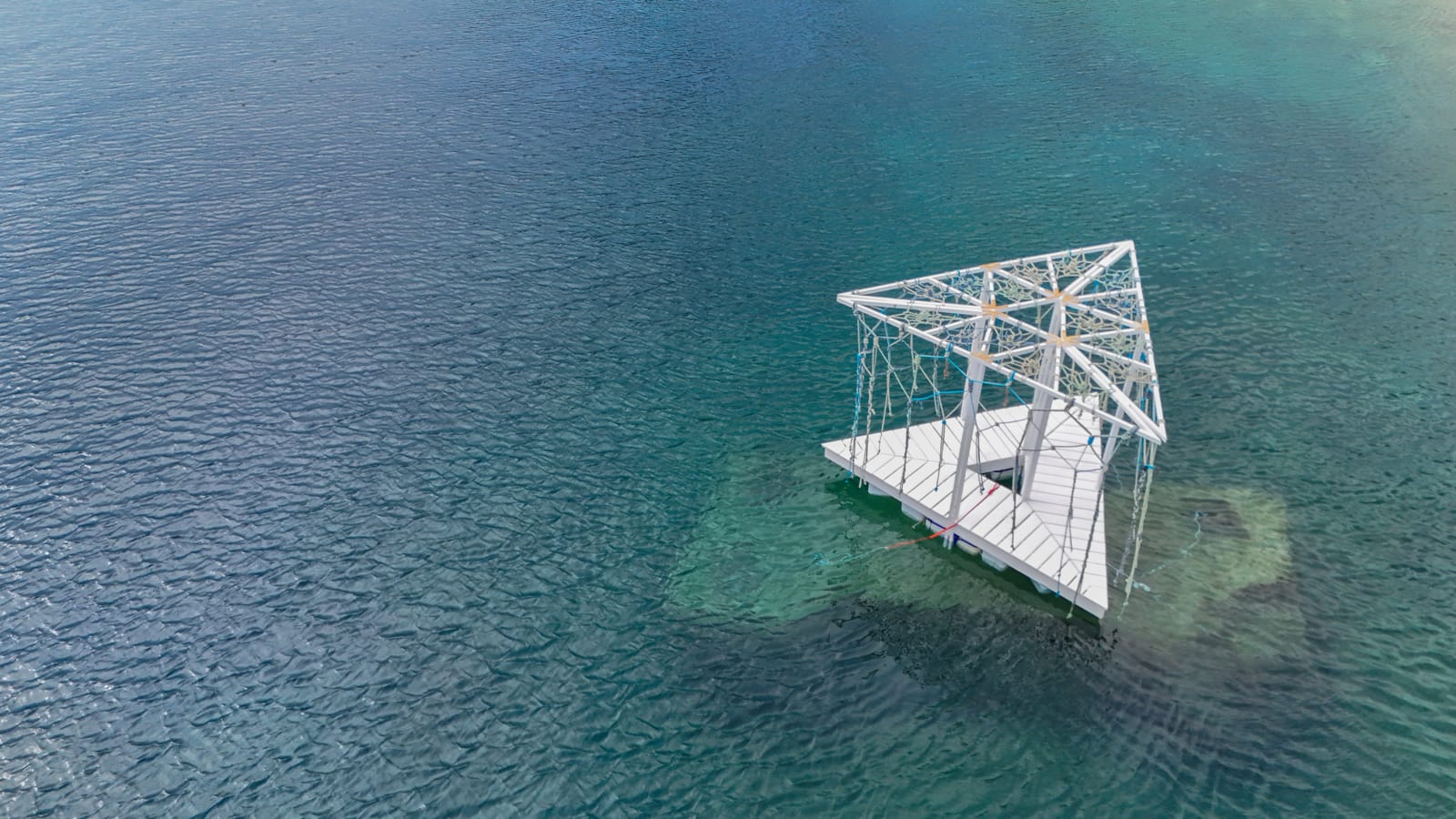
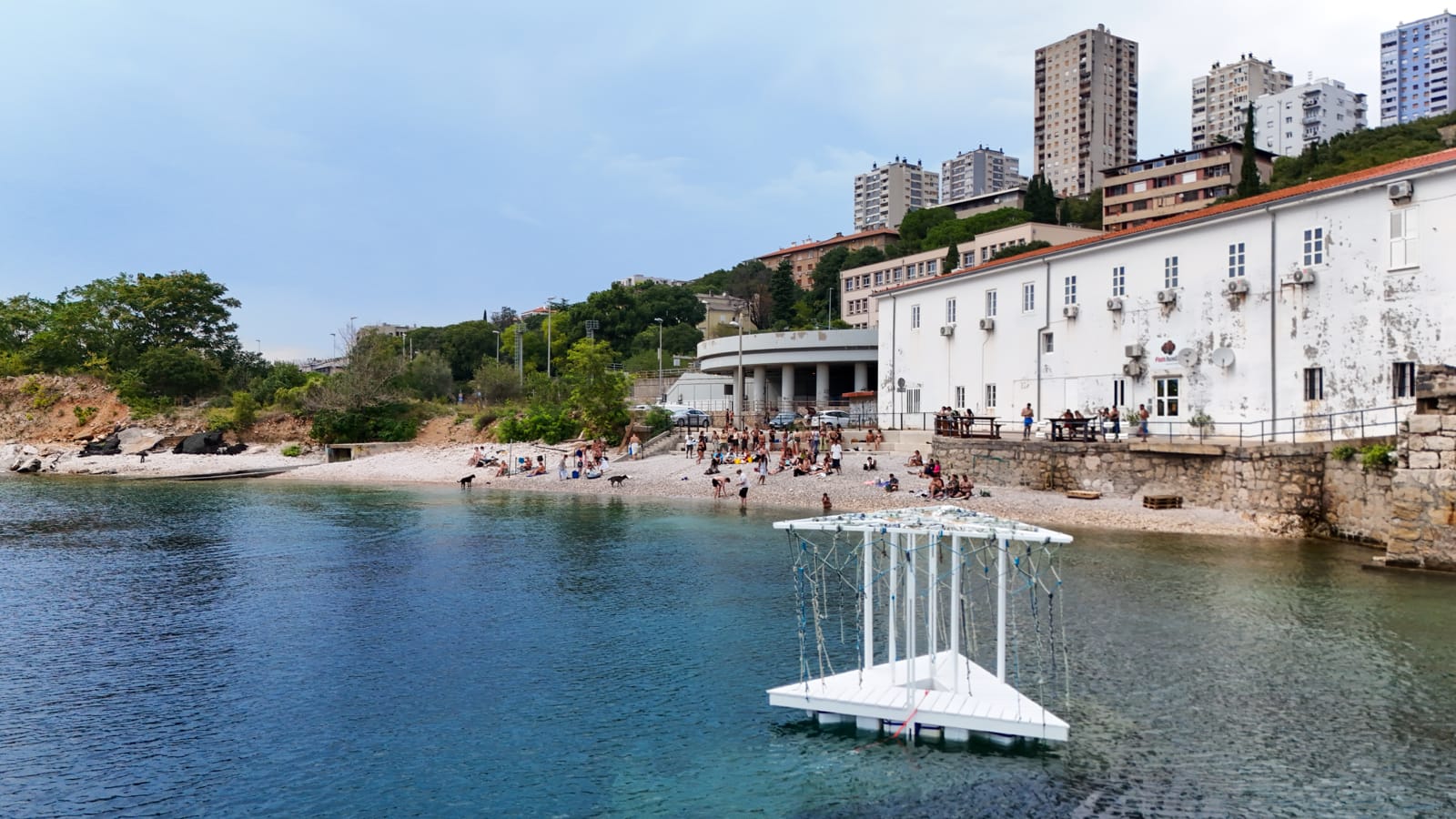
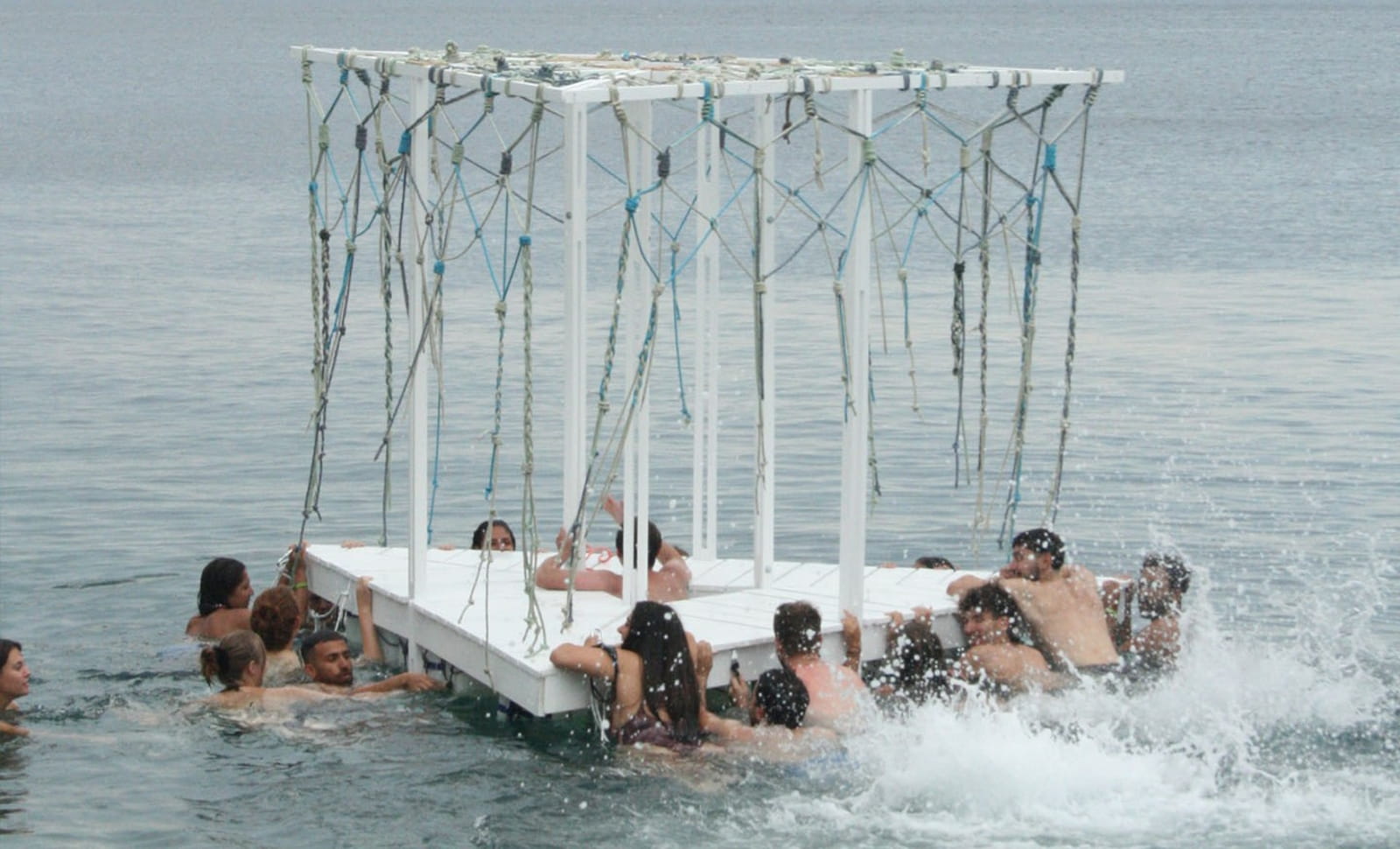
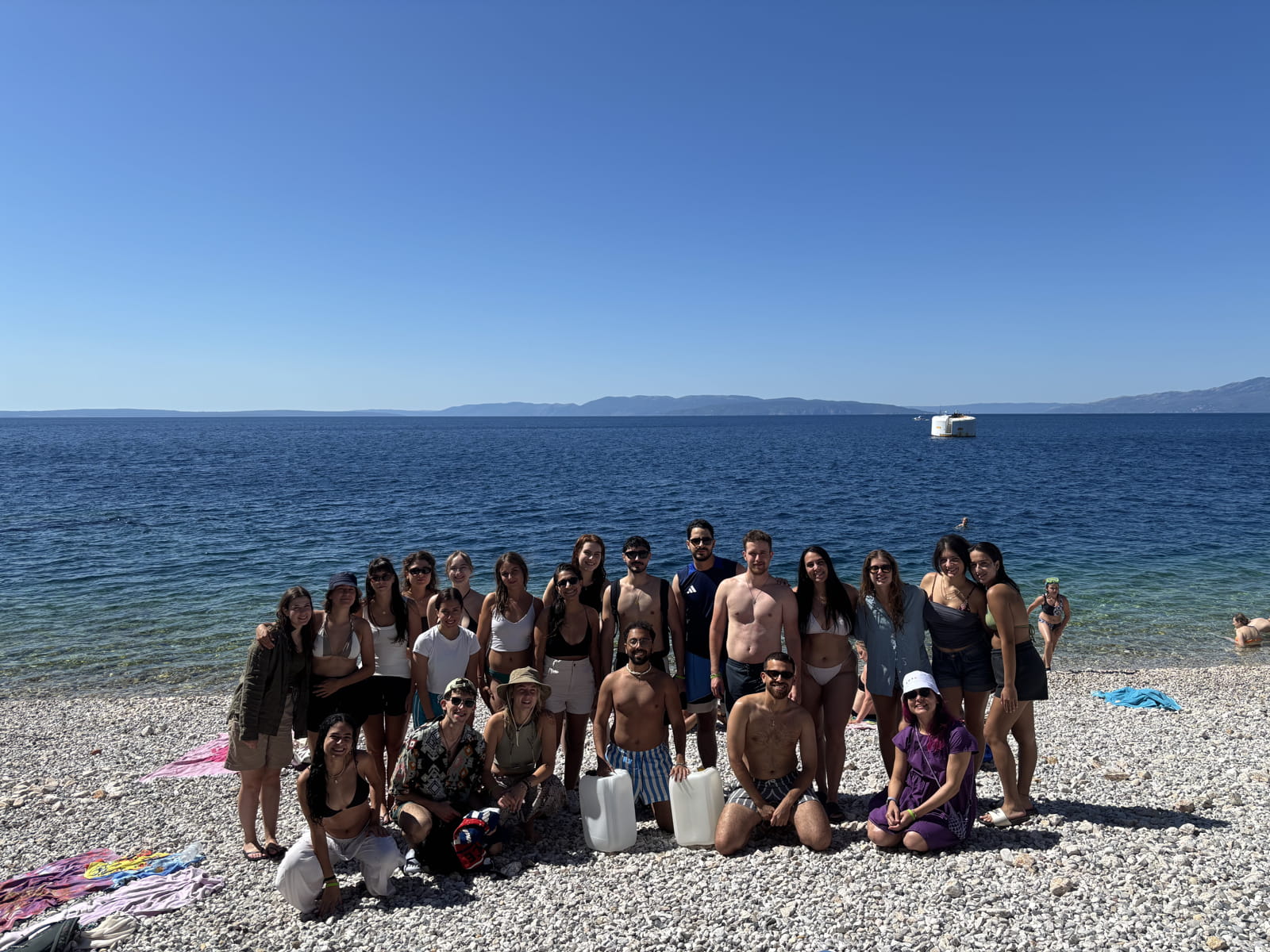
In the context of a co-creation workshop in Rijeka, Croatia, tutored by Leda Demetriadou, Ahmad El Zu’bi, and Stefanie Zins, the ‘PlivaTri’ pavilion was participatorily designed and constructed as a floating structure that reimagines the edge between land and sea. Built with locally sourced recycled materials, developed as a modular form, and capable of being used both in and out of the water, the pavilion activates the beach’s public space while providing a comfortable place to rest, socialize, and play.
Project Description
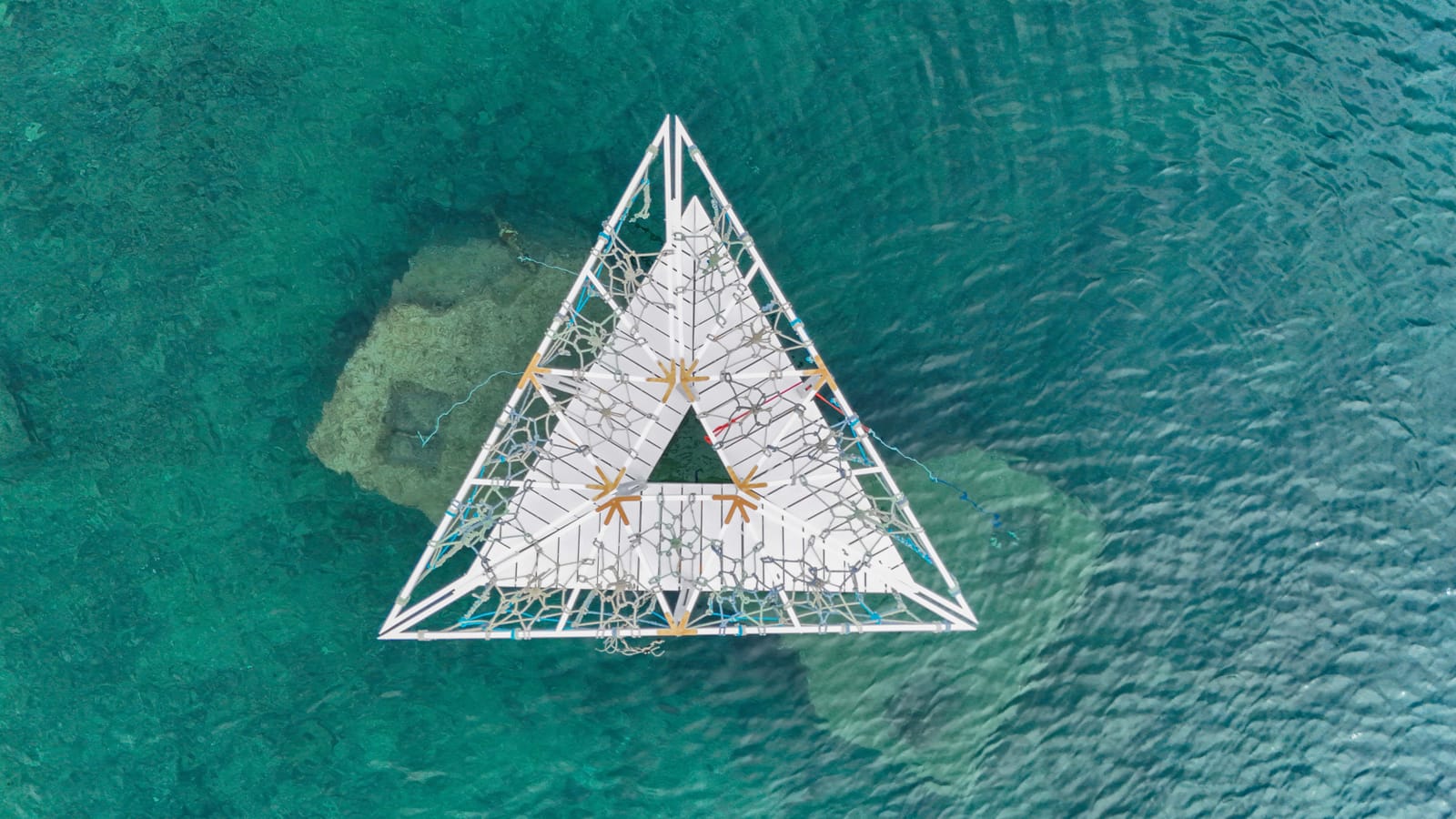
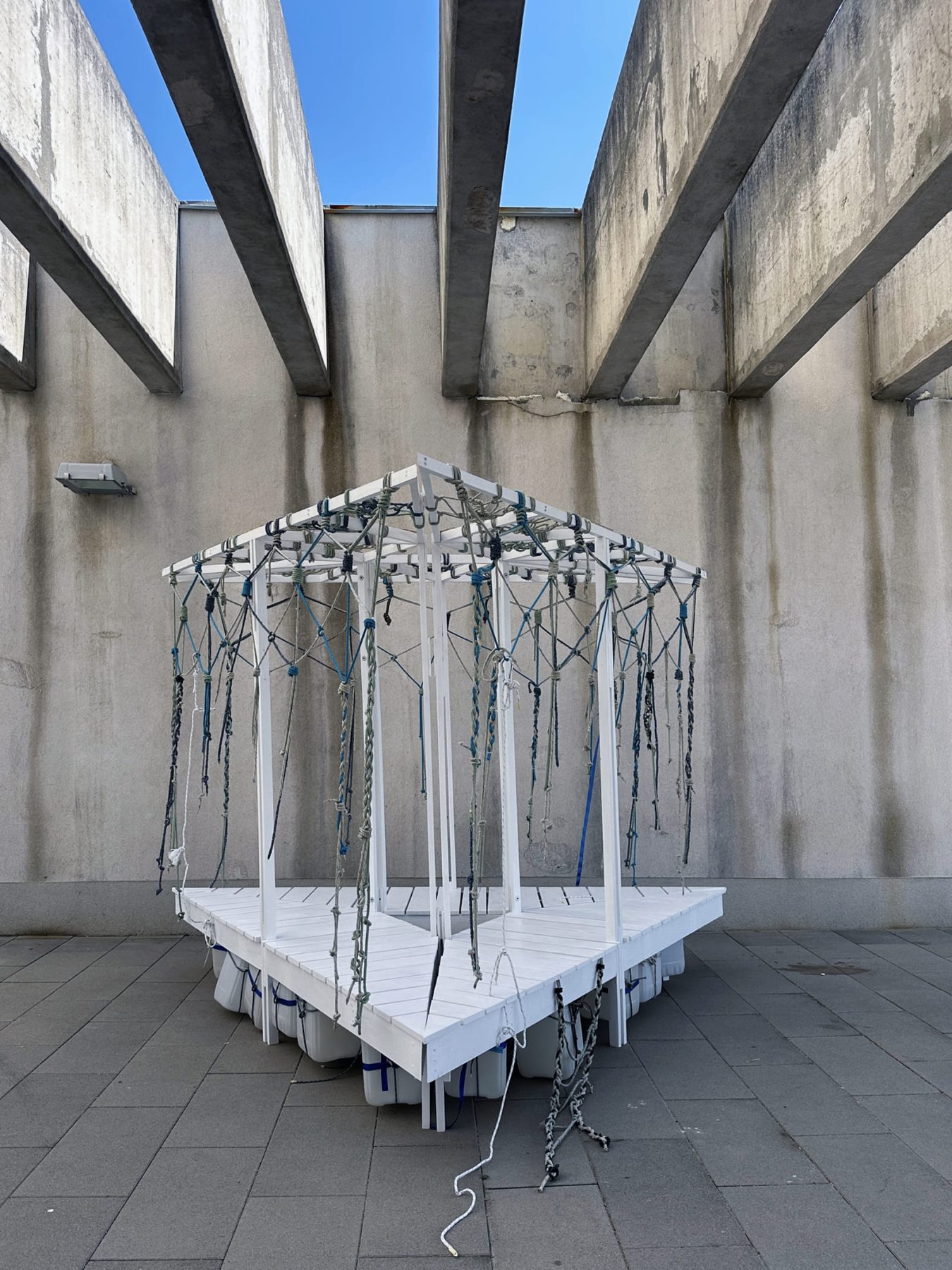
‘PlivaTri’ is a floating triangular pavilion anchored off the coast of Rijeka, conceived as a modern-day temple in the sea. Designed to counter the lack of comfortable public beach space, it invites visitors into a sensory dialogue with the water, city, and port.
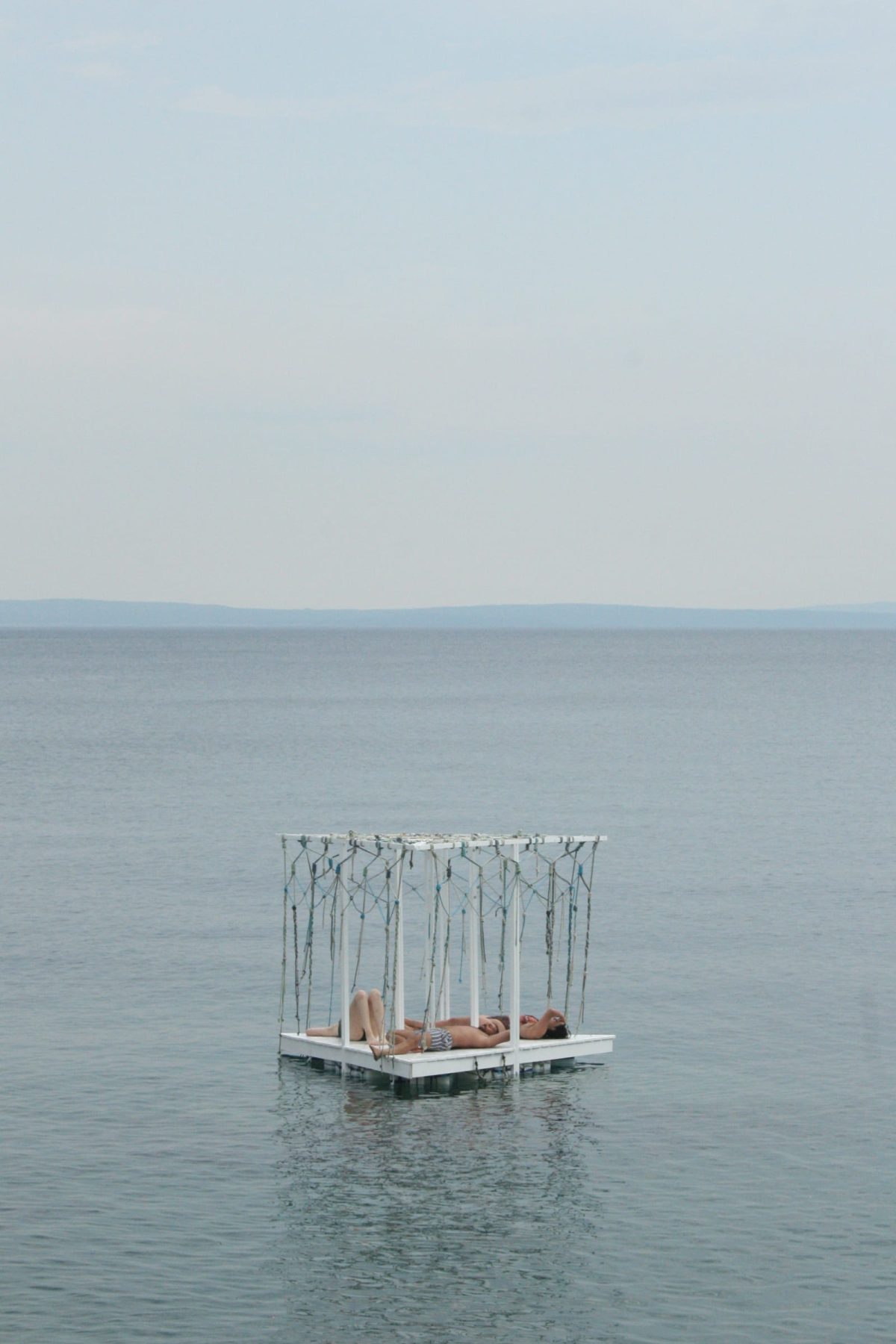
Its geometric form contrasts the organic flow of the Adriatic, while its open centre and surrounding walkway offers space for swimming, lounging, or gathering in reflection.
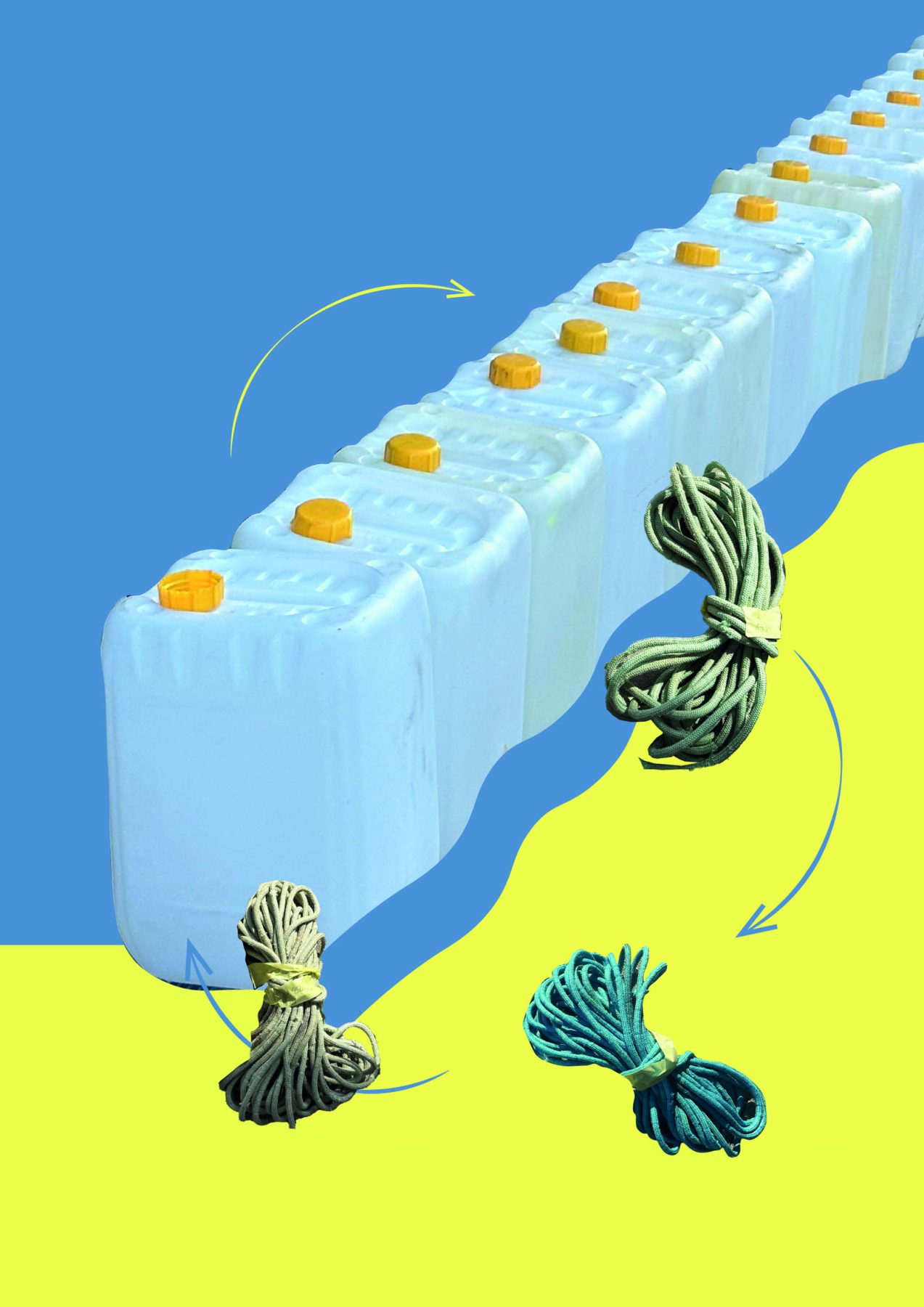
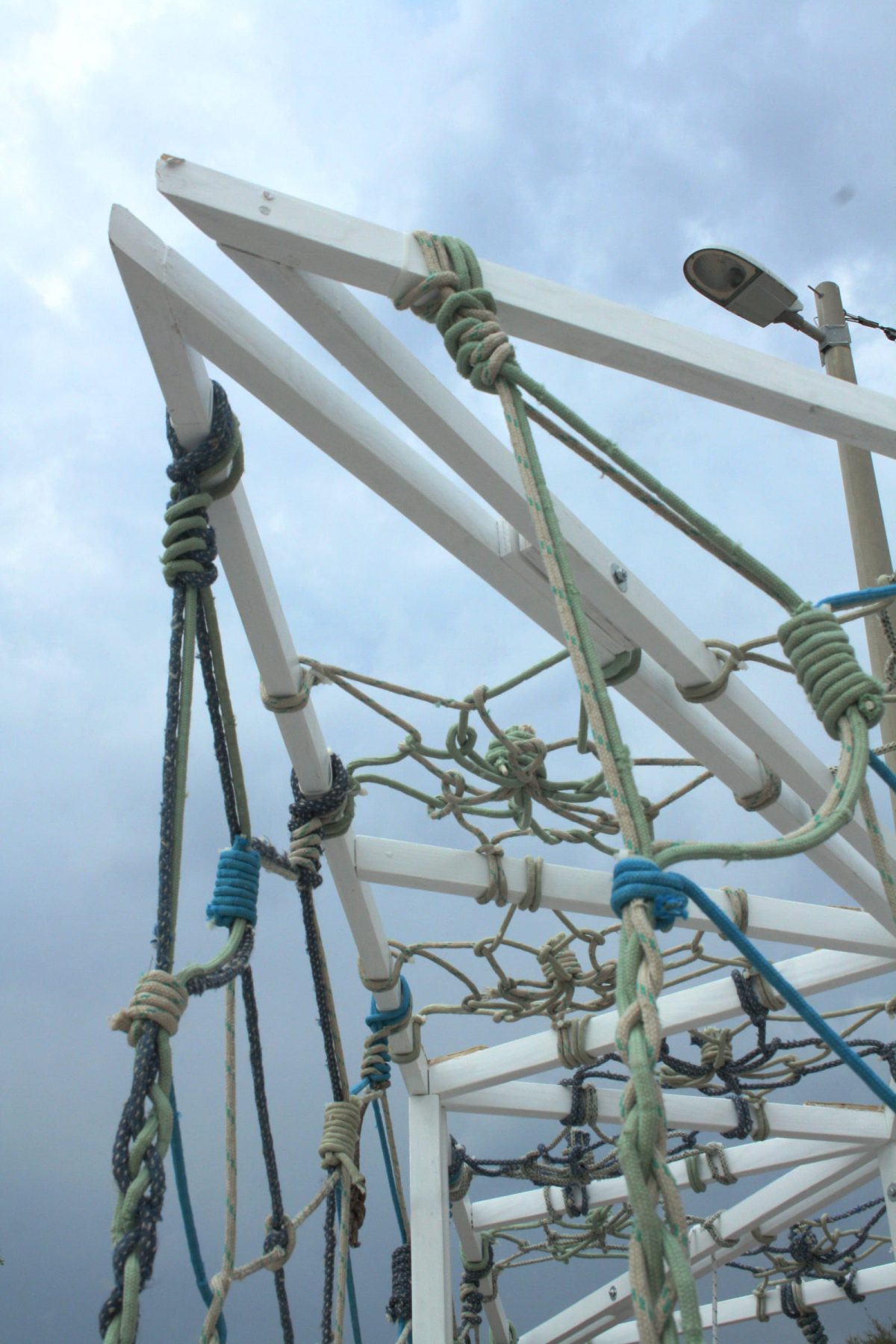
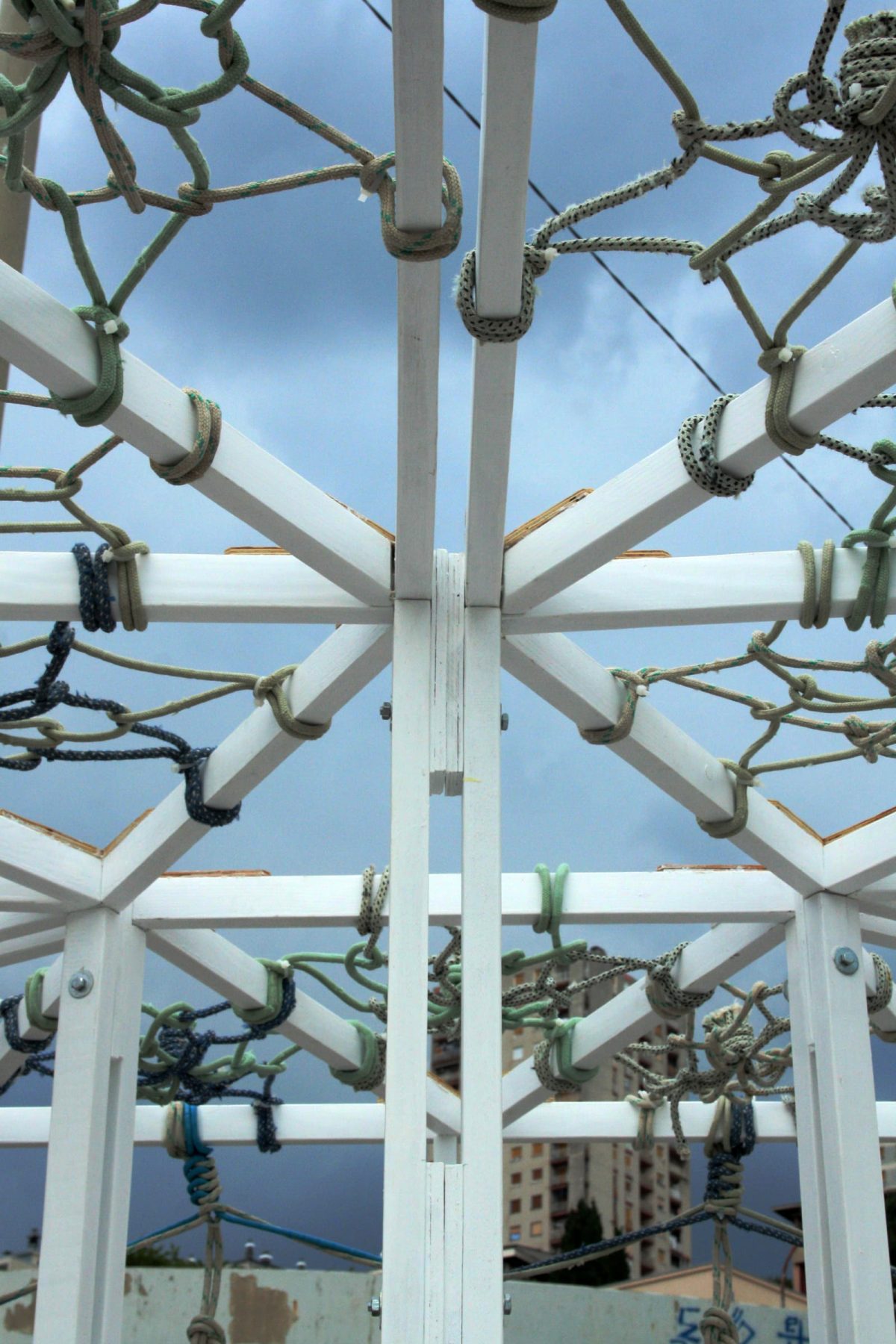
Built using sustainable materials like recycled gallons and ropes and designed with participatory design techniques, ‘PlivaTri’ merges environmental consciousness with Rijeka’s industrial heritage.
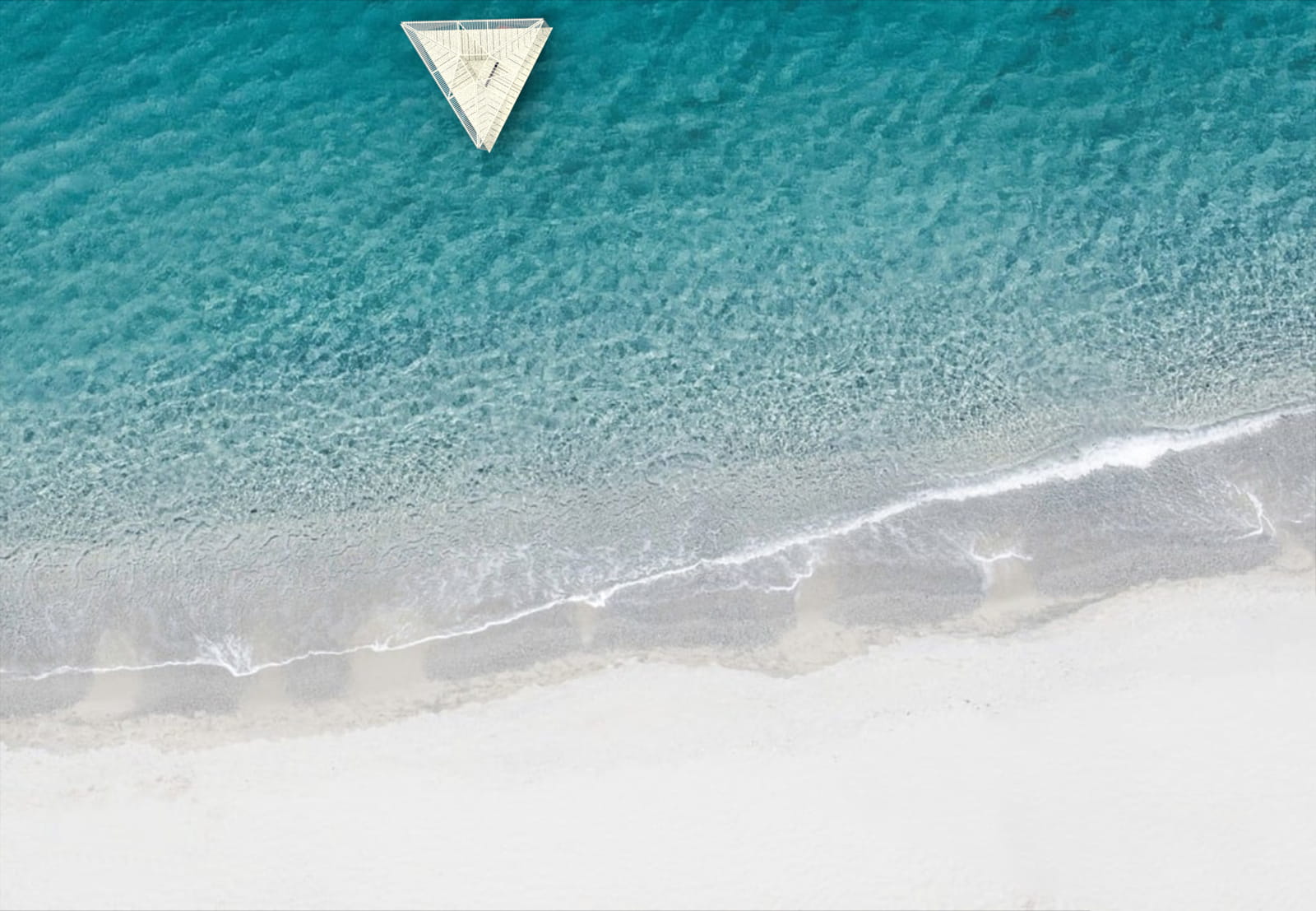
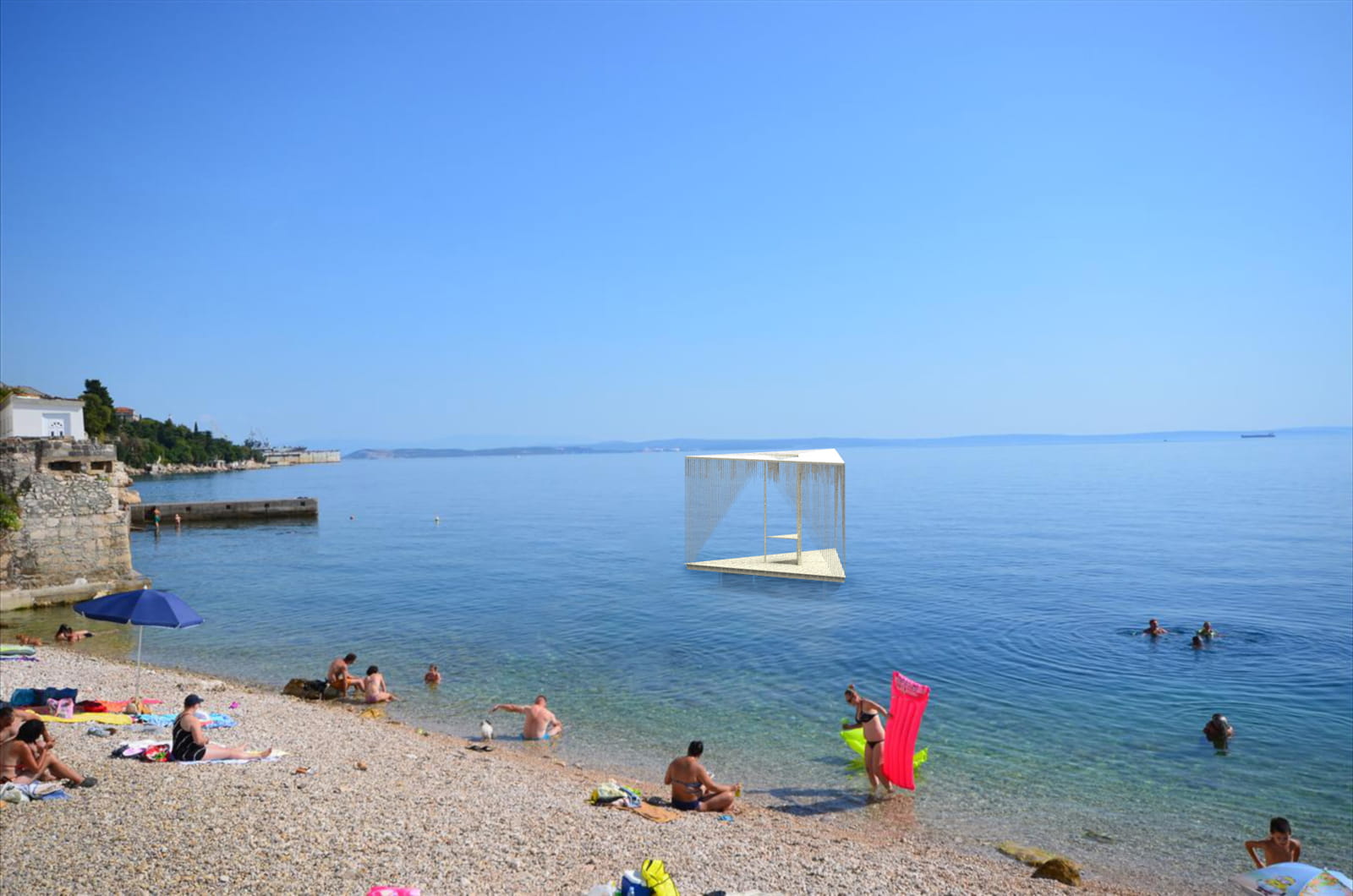
As the sun moves and the wind stirs the ropes the pavilion becomes a living structure, shifting in mood and lighting throughout the day.
More than a platform for play or pause, ‘PlivaTri’ is an invitation to reimagine the edge between land and sea.
Design Approach
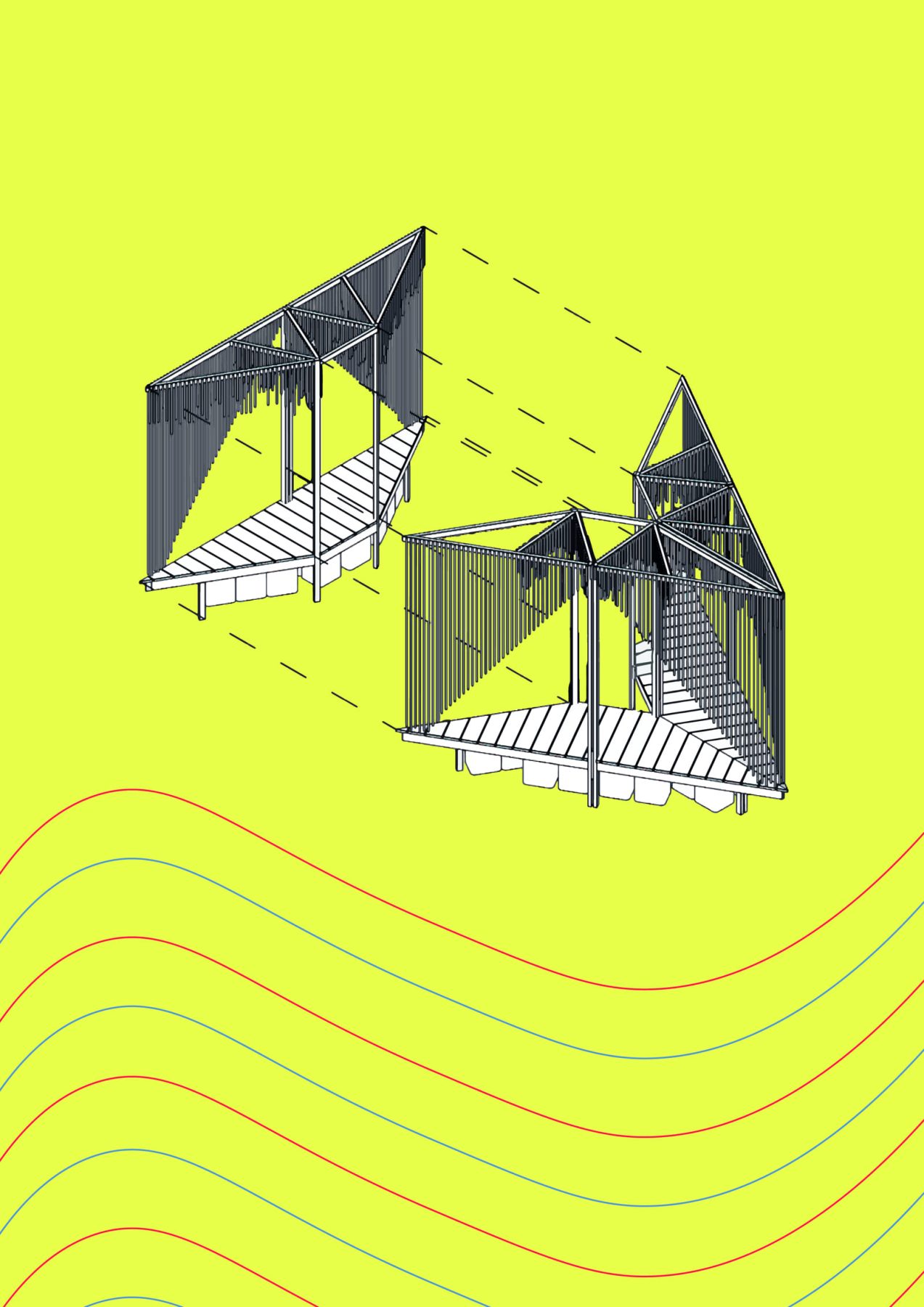
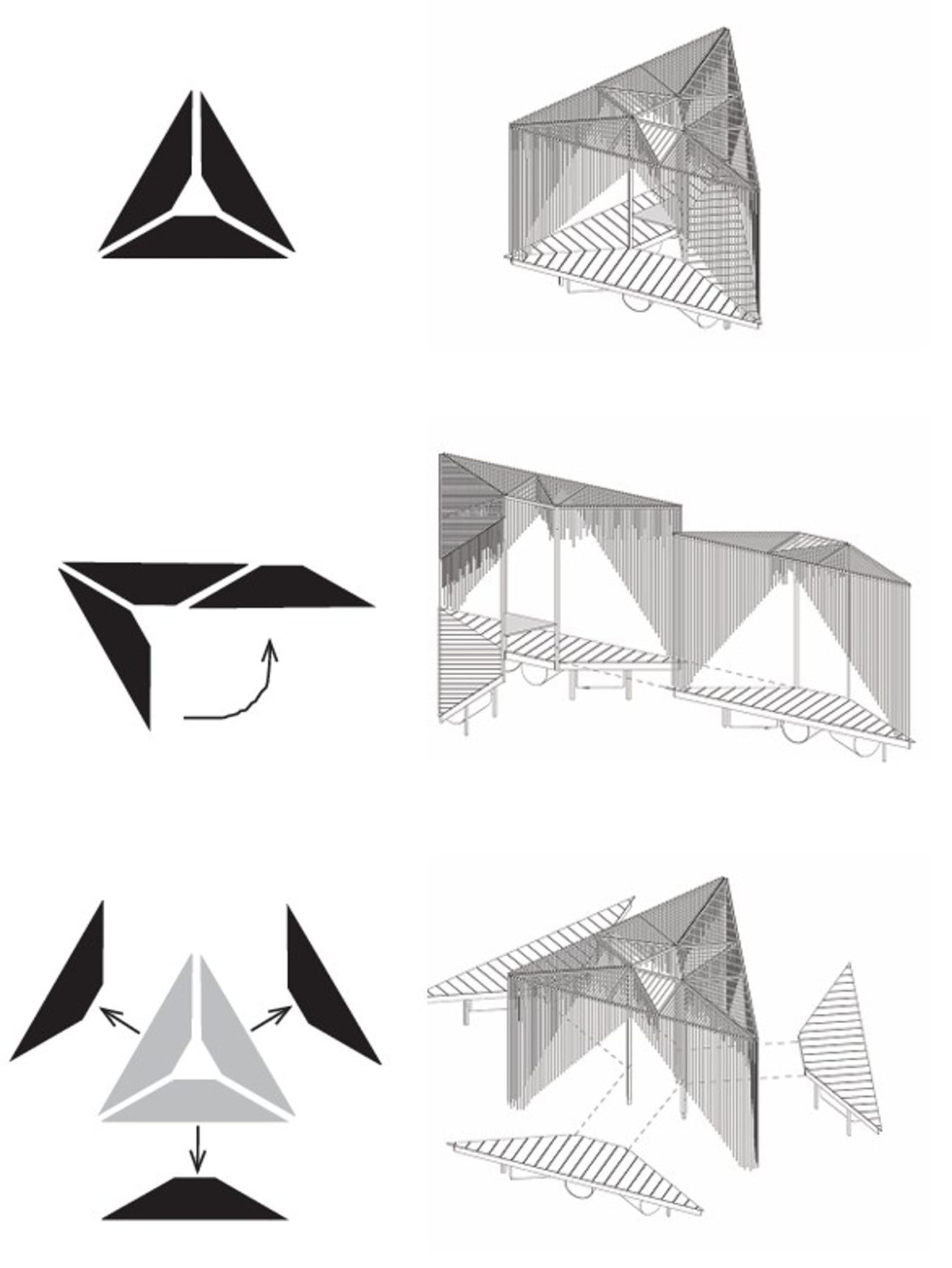
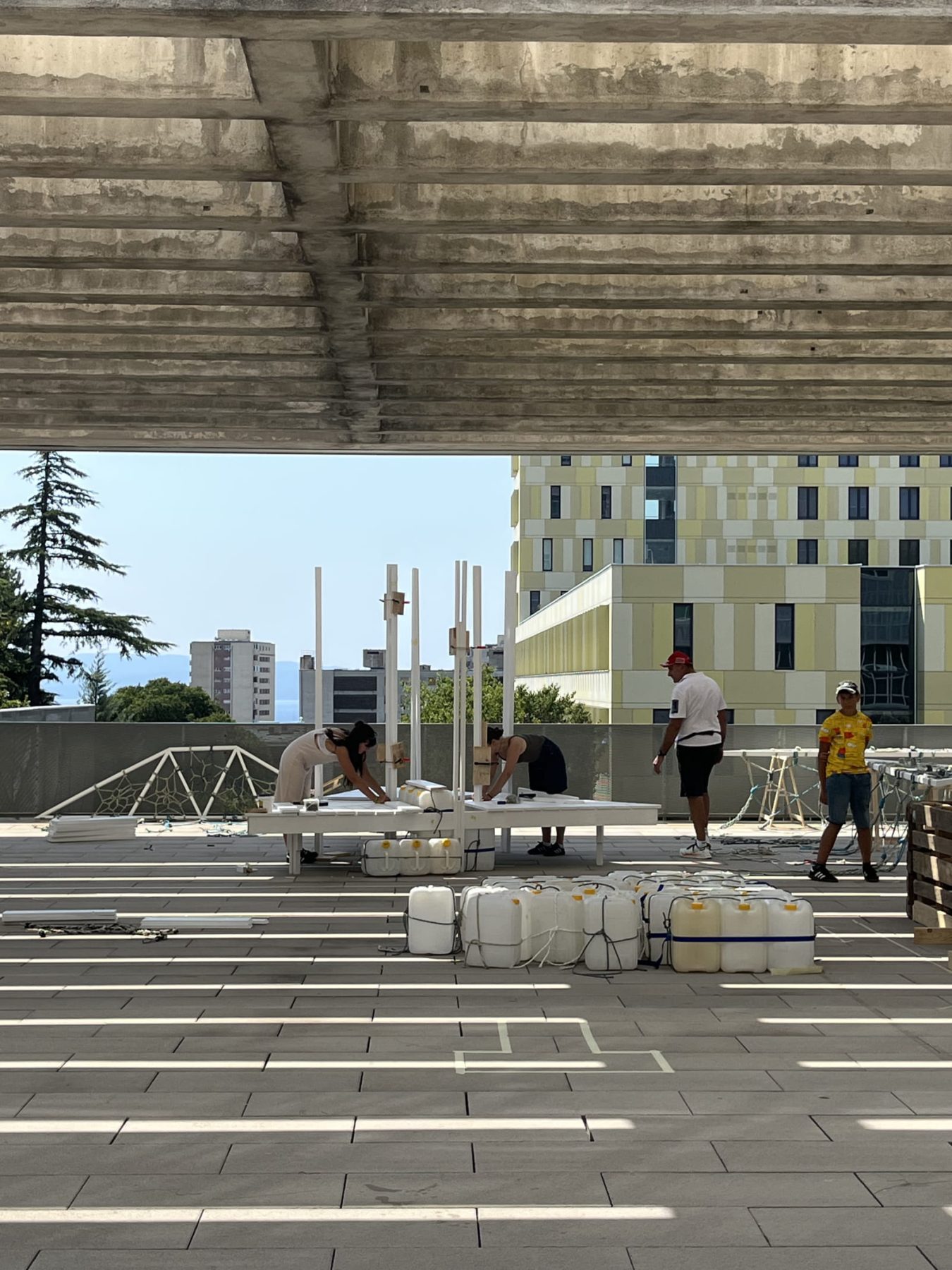
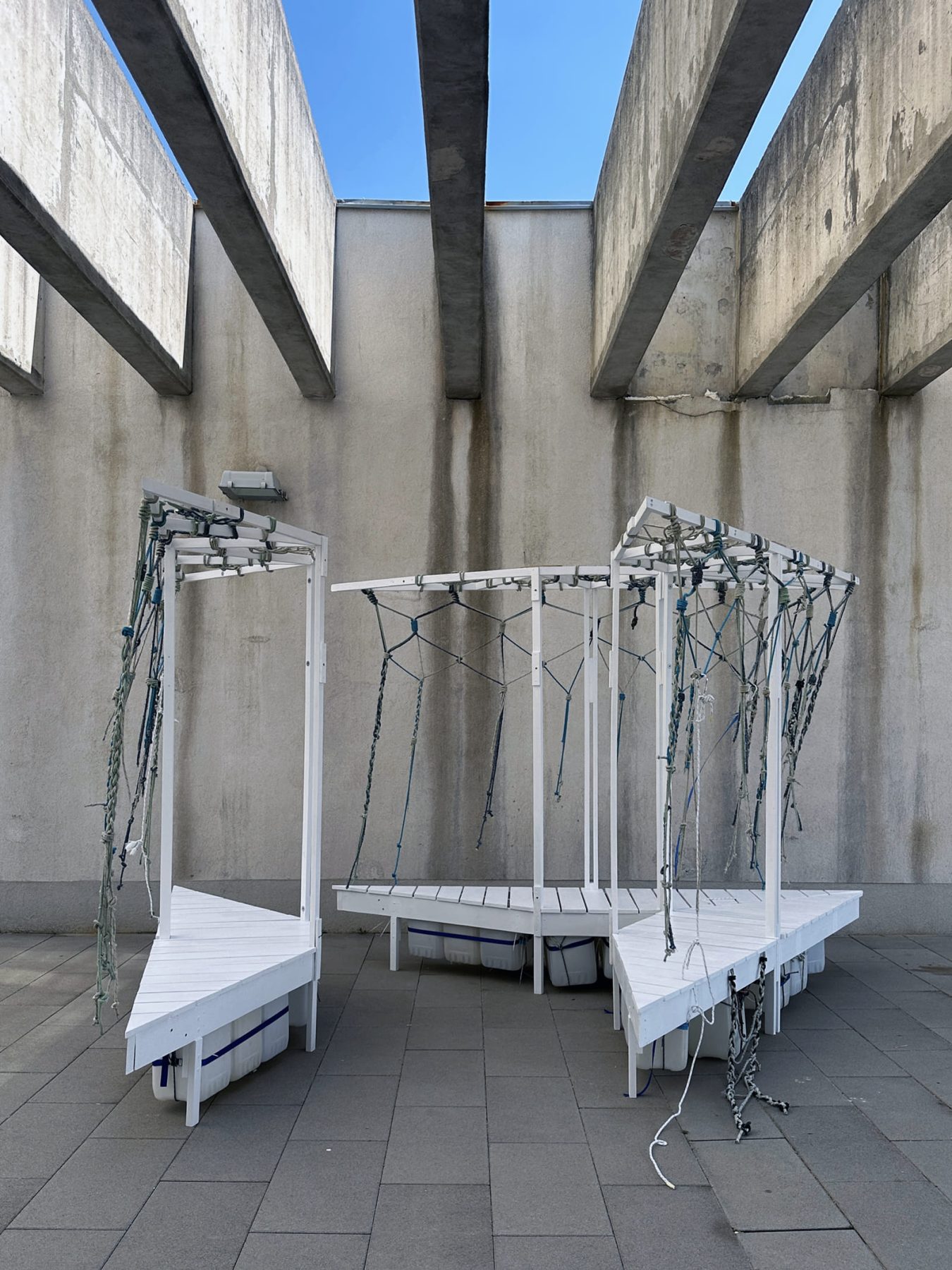
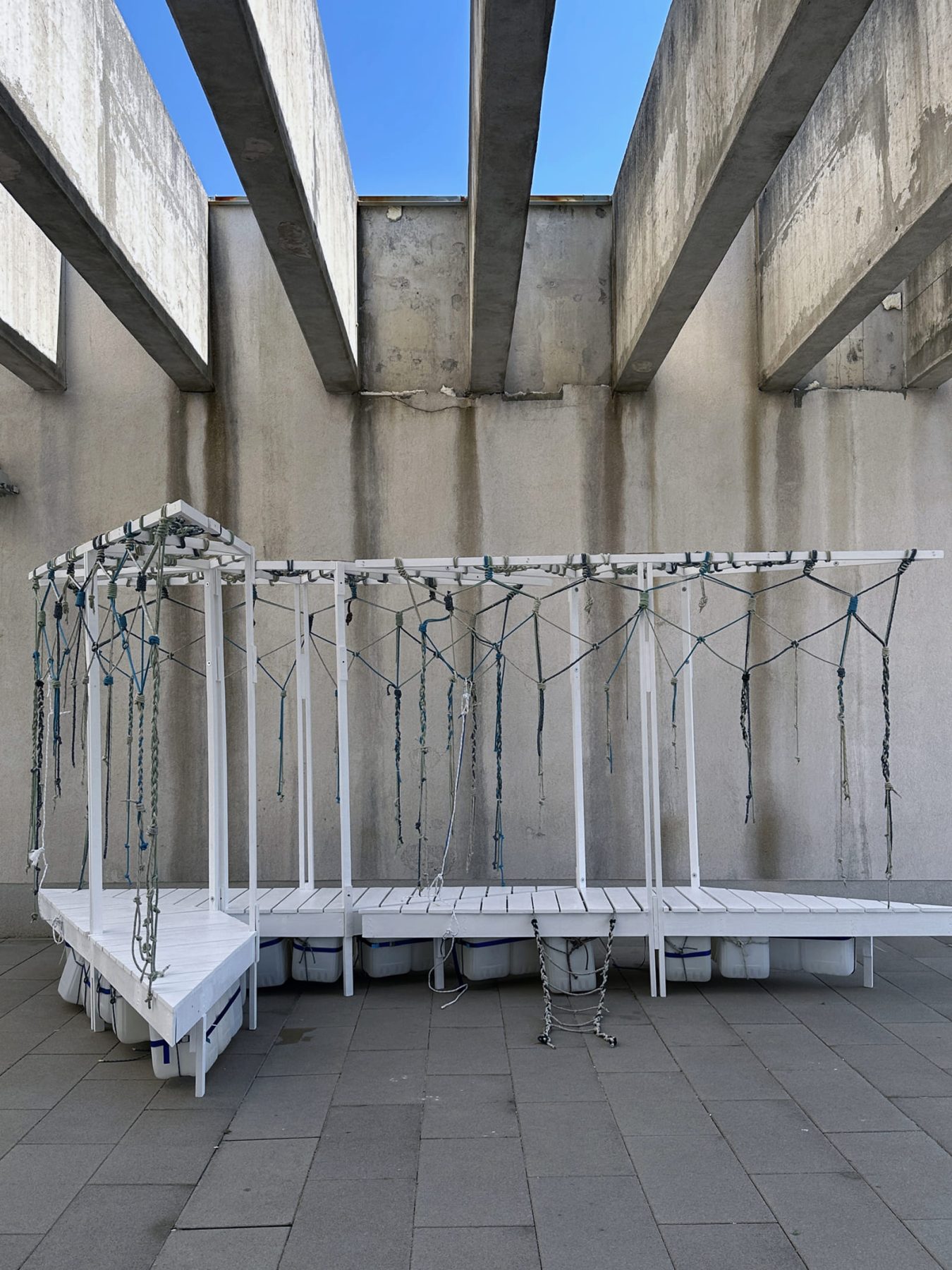
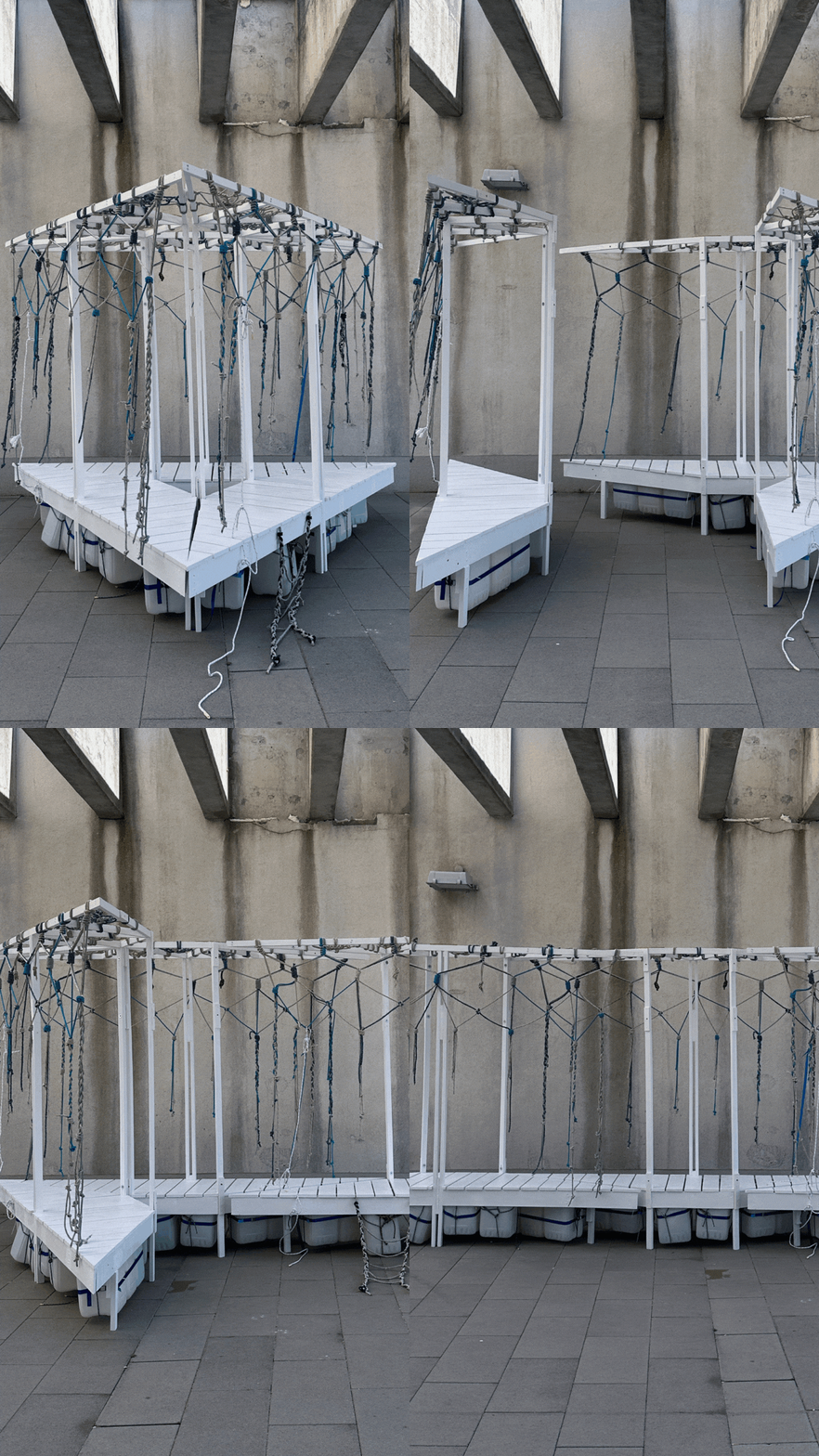
The pavilion revitalizes the beach using repurposed local materials like gallons and recycled ropes. Designed in three modular units, it can be arranged in different ways. Also, to extend its life beyond the 15-day workshop, we partnered with a Rijeka based NGO called “Urbani Separe” that will continue using the pavilion in and out of the water.
Way of Working
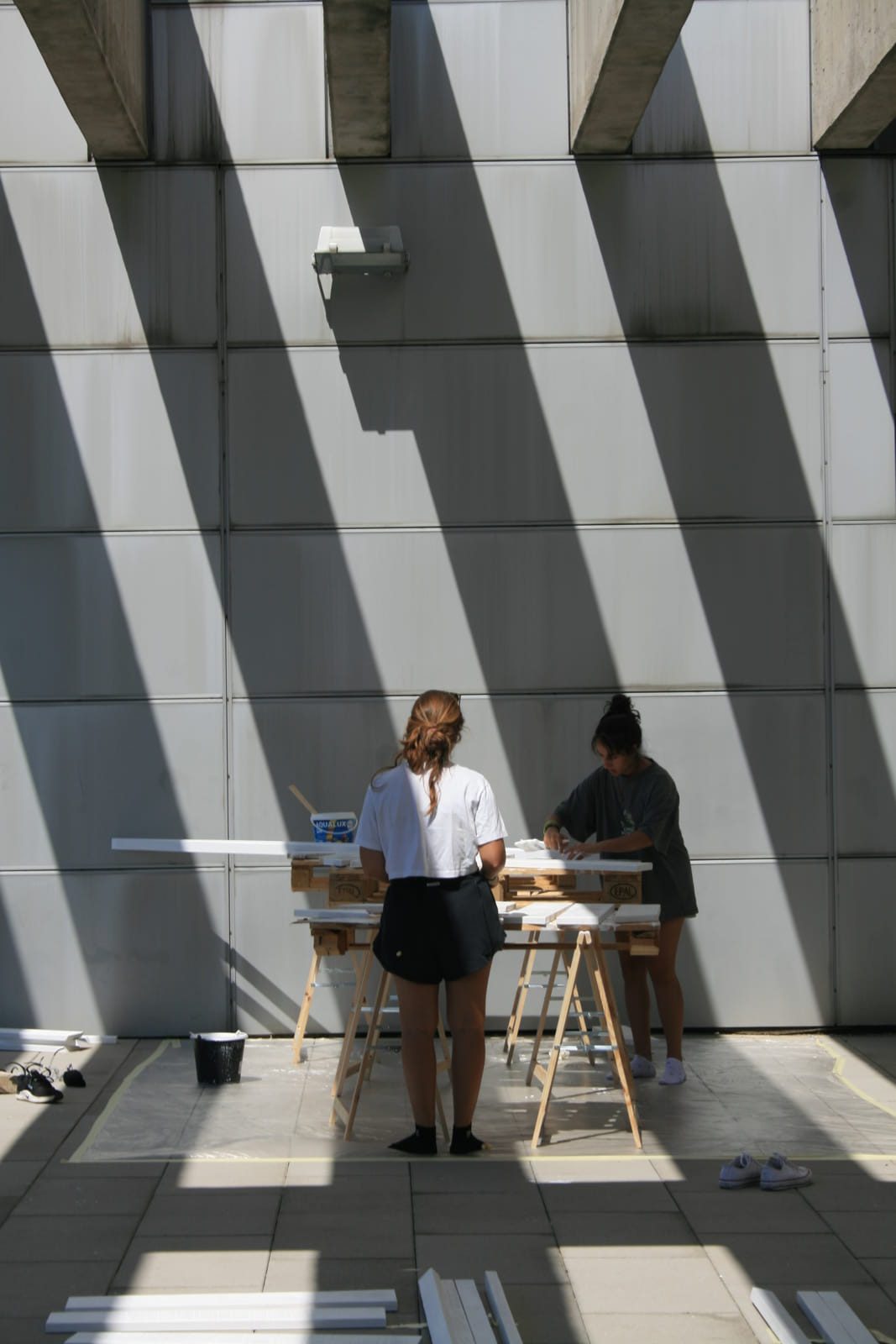
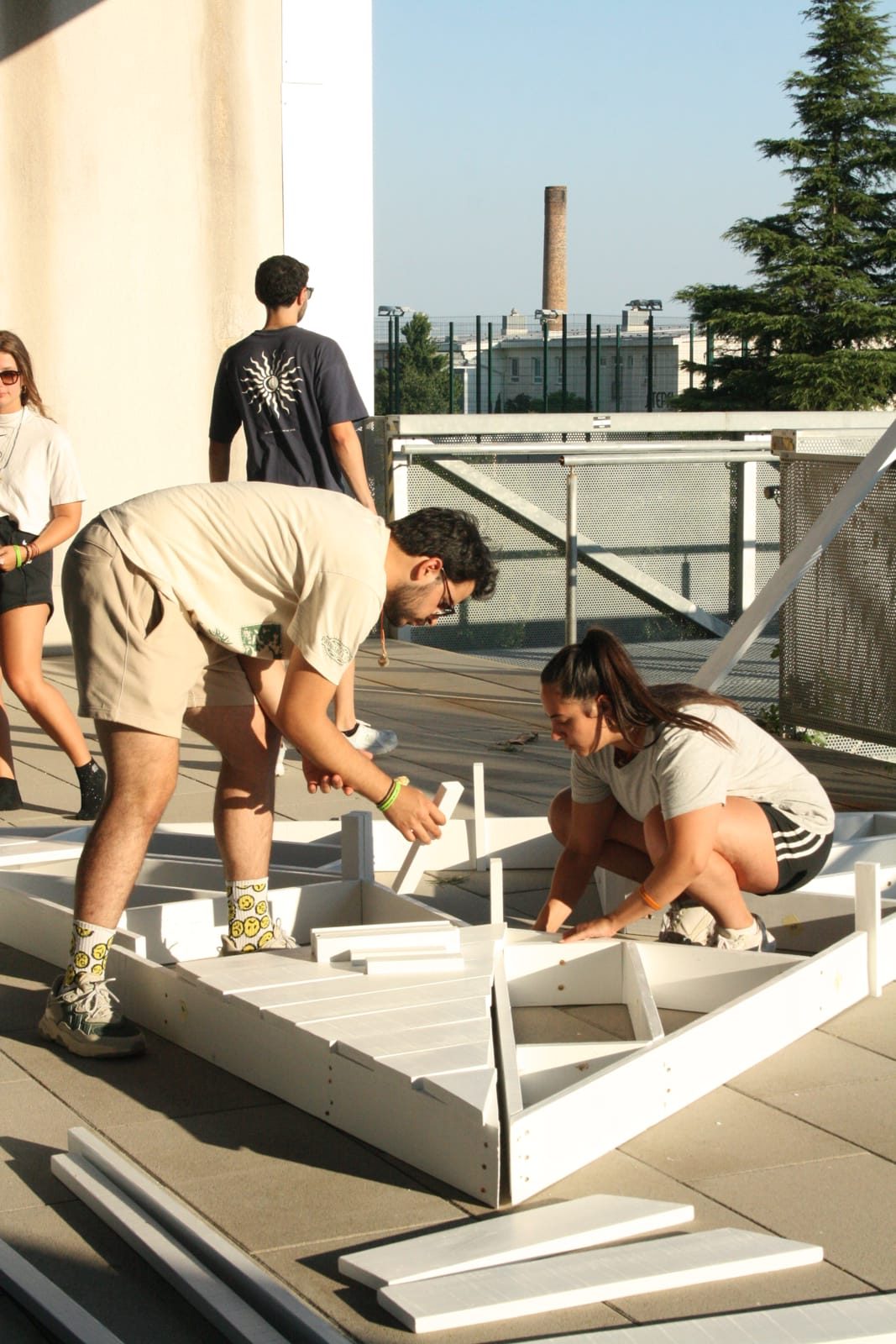
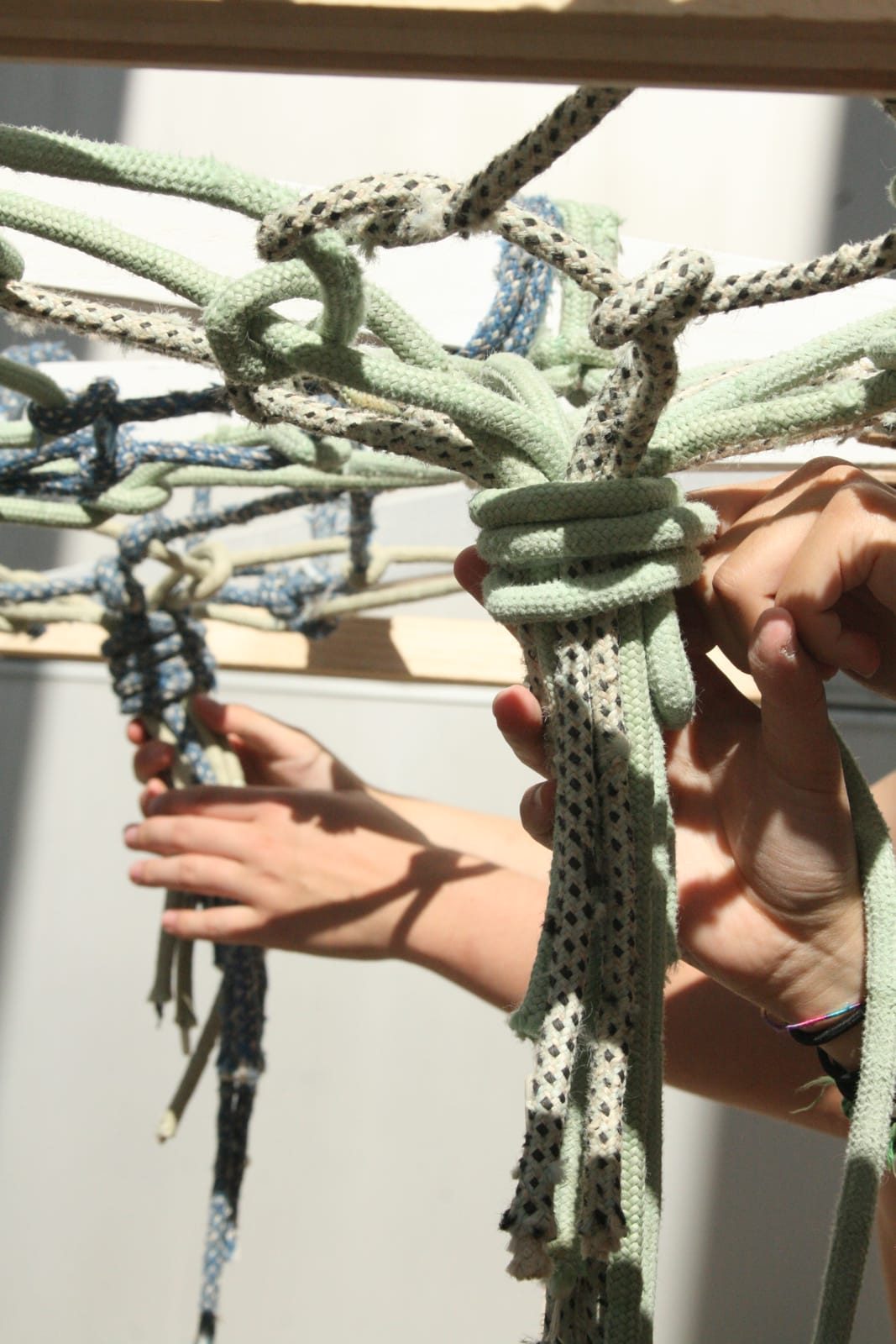
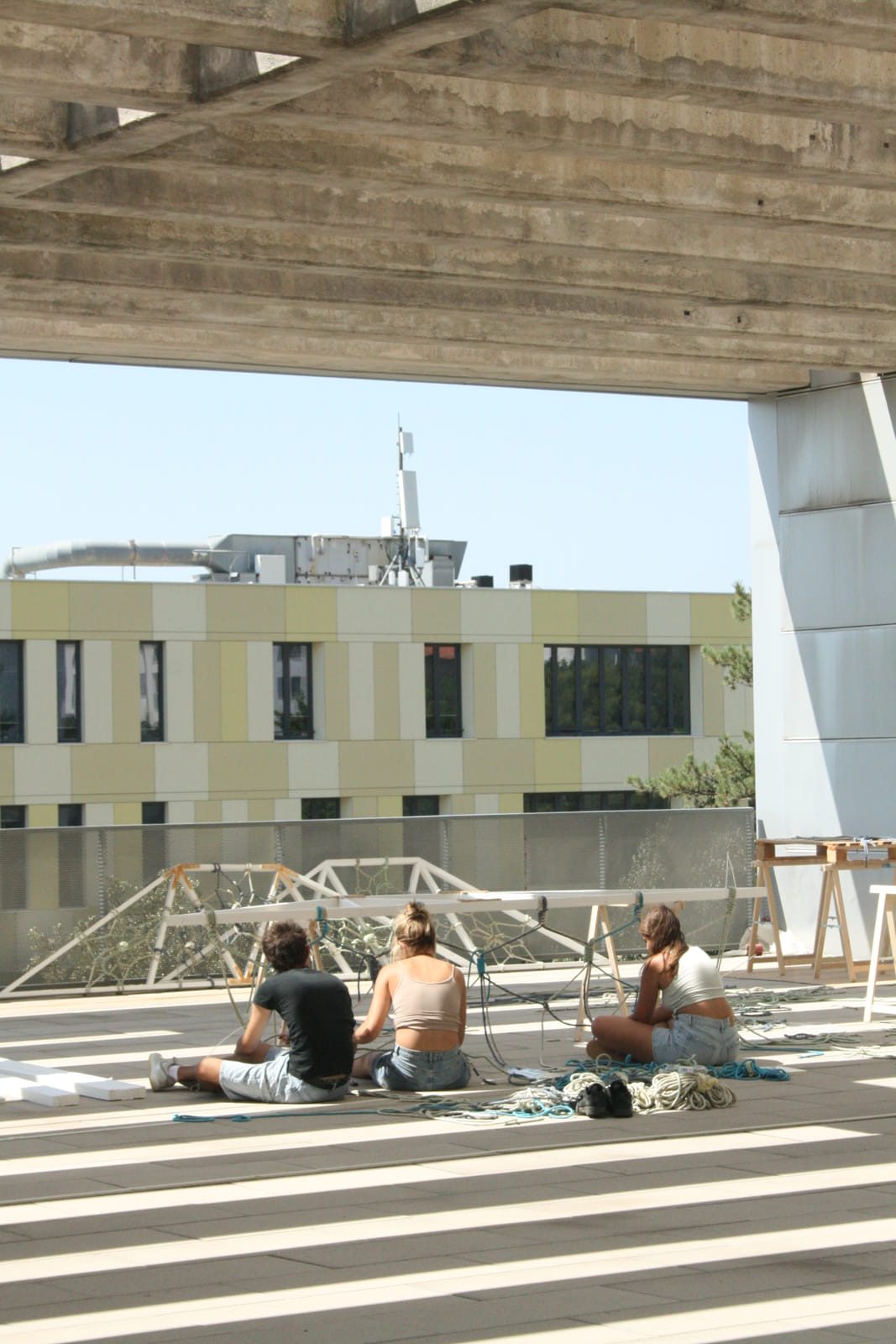
The project was mostly pre-designed by the tutors due to its complexity. Still, it was essential to include the participants’ ideas and perspectives into the design.
To achieve this, we held two co-creation sessions:
- Redesigning the central part of the pavilion
- Designing the decorative rope element
Design Process
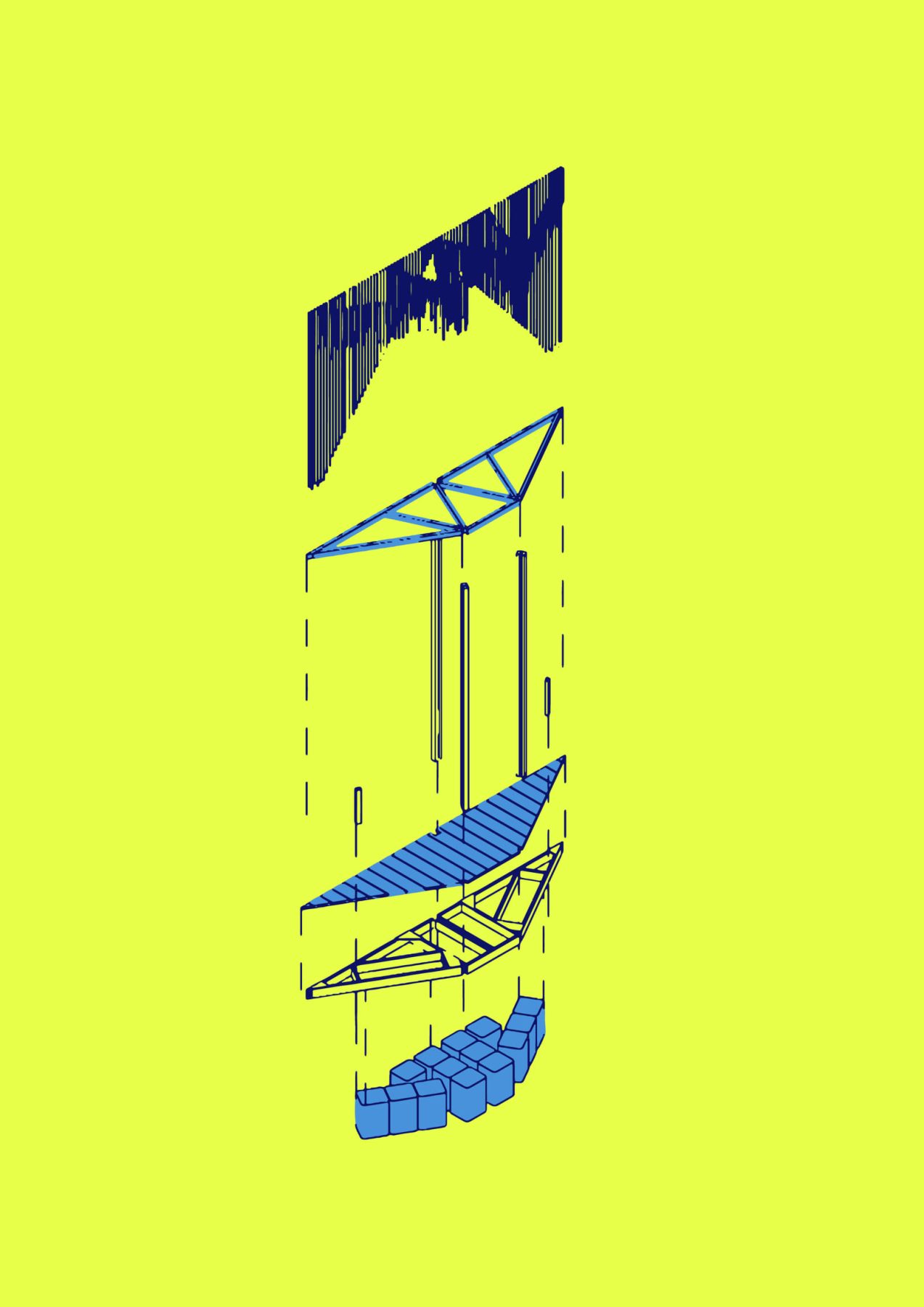
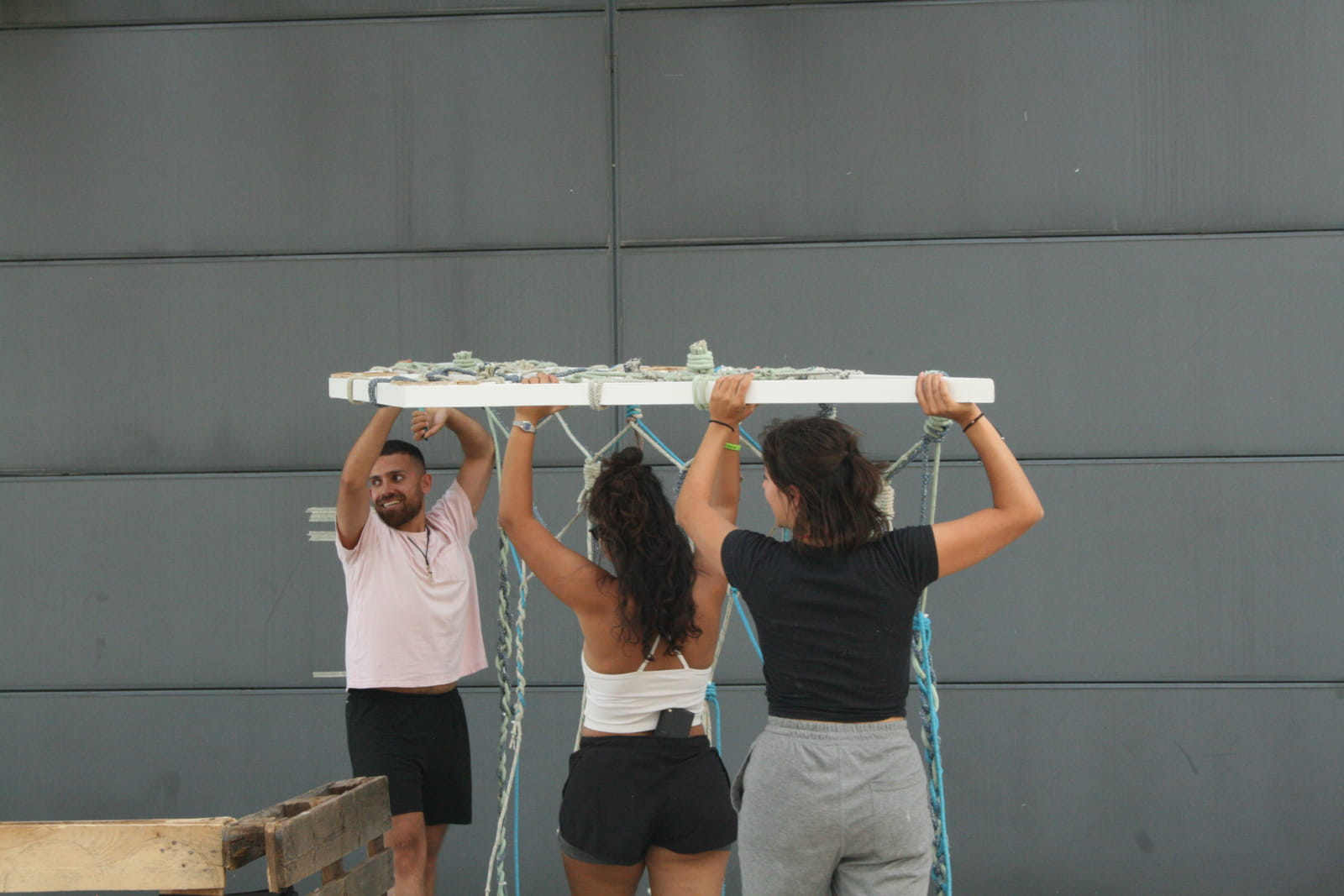
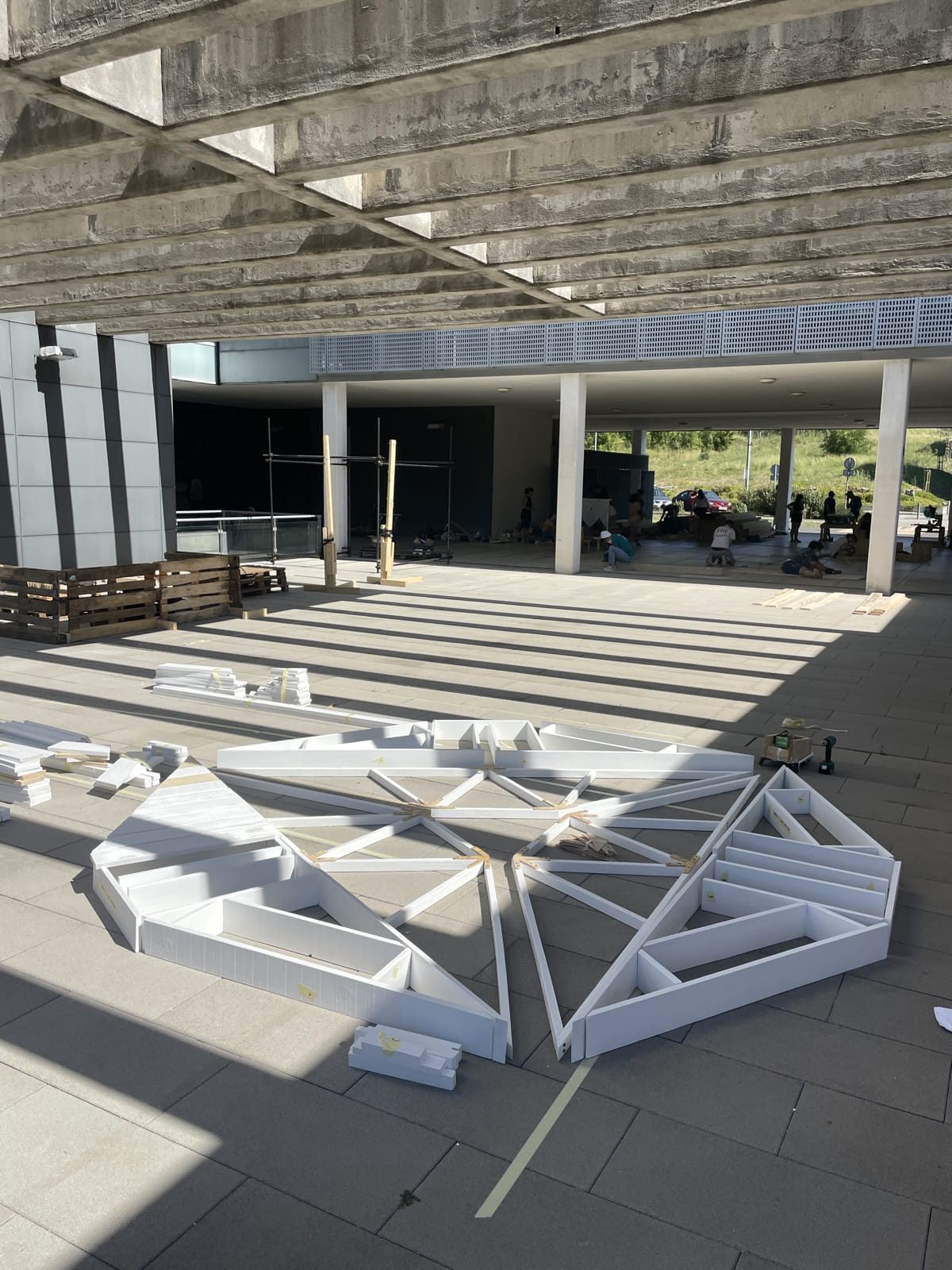
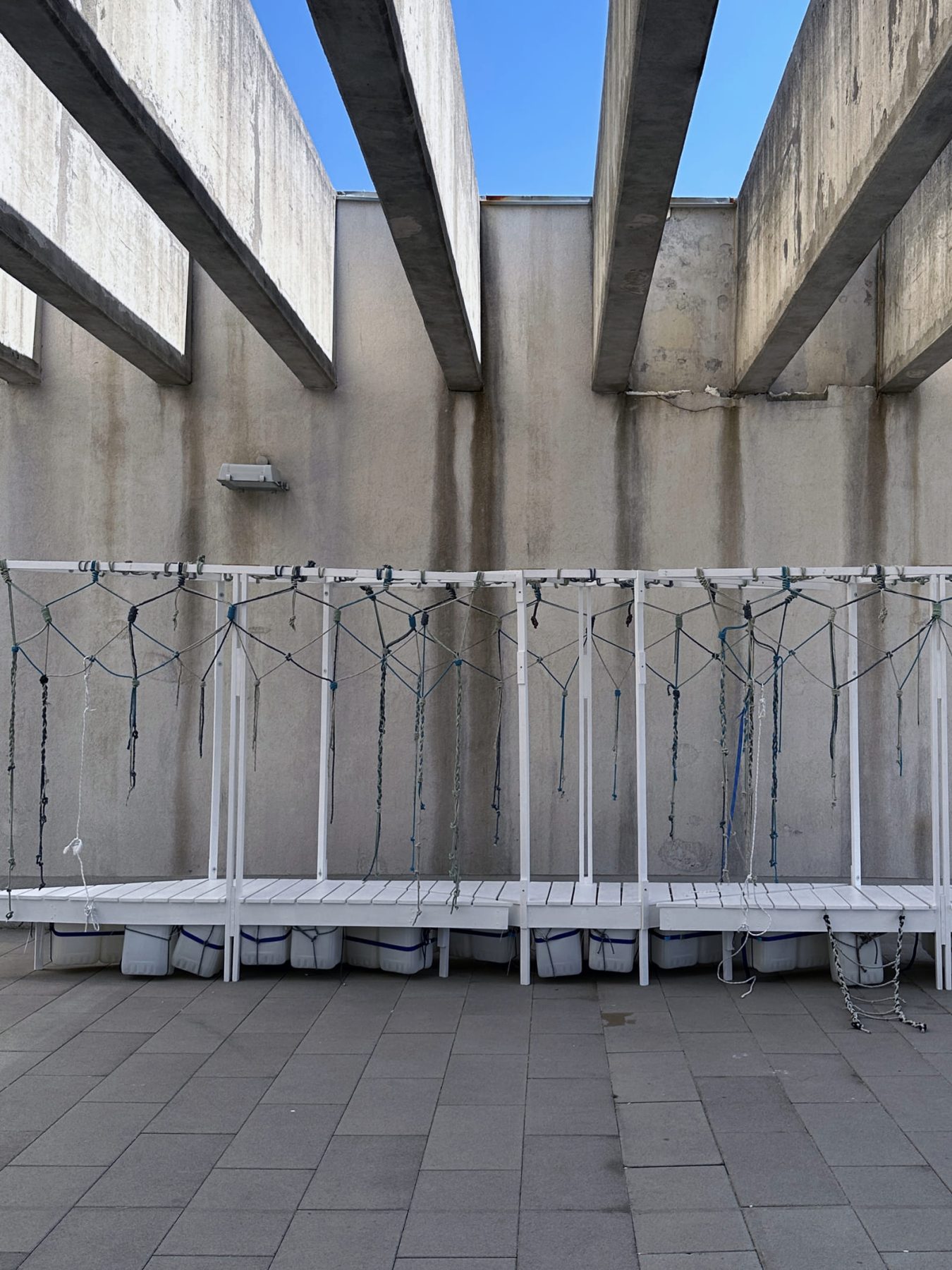
The pavilion is designed as three modules, each consisting of five parts: gallons, base structure, columns, ceiling structure, and decorative ropes. A detailed cutsheet was created to specify the material quantities needed for each module and ensure the limited materials were used efficiently.
What’s Next?
The pavilion was given to an NGO called “Urbani Separe”. “Urbani Separe” works to strengthen the capacities of communities in Rijeka through participatory programs that directly address their needs and, through culture, influence the quality of their lives, enrich and activate public space. The pavilion will be used in pop-up events in Rijeka, in or out of the water.
Facts & Credits
Title ‘PlivaTri’: A Floating Pavilion – Meds, Croatia Design Workshop ’25
Typology Design Workshop
Location Rijeka, Croatia
Tutors Leda Demetriadou – Cyprus, Ahmad El Zu’bi – Lebanon, Stefanie Zins – Romania
Collaborator MEDS design workshop
Team Simona Lazić – Serbia, Mila Čarapić – Serbia, Gaja Bergant – Slovenia, Luka Mijajlović – Serbia, Klaudiusz Szwajka – Poland, Sude Vural – Türkiye, Mathew Gindy – Egypt, Ahmed Bader – Libya, Sherry Gendy – Egypt, Irene Favero – Italy, Pegi Pika Lešnik – Slovenia, Kagan Karabulut – Türkiye, Daria Ciesiolkiewicz – Poland, Valeriia Stavitskaia – Russia, Sofia Burin Leonardos – Brasil, Ema Marušič – Slovenia, Lara Wschiansky – Switzerland, Lynn El Onaissy – Lebanon, Joya Yazbeck – Lebanon
Text by the authors