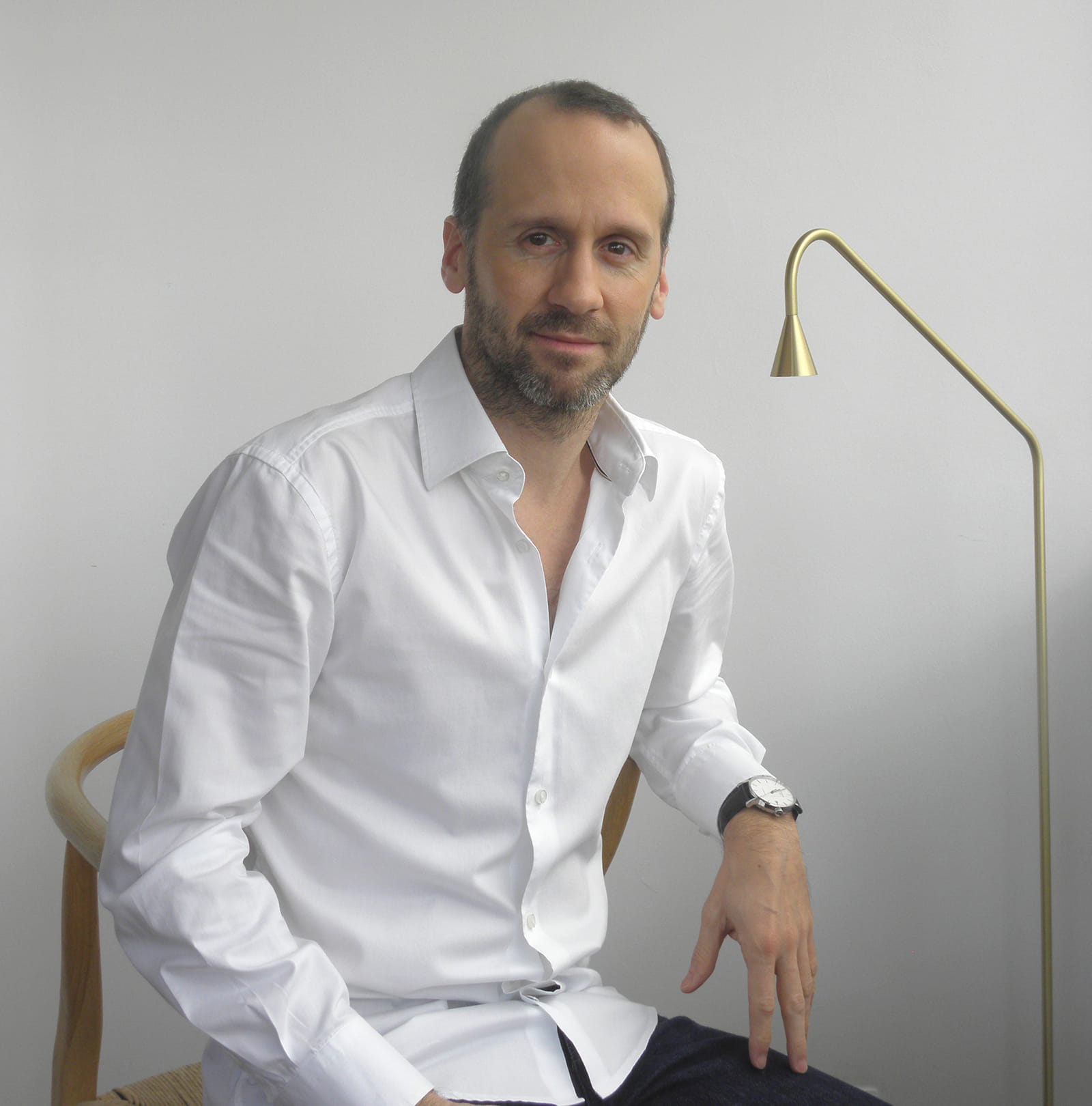
In FEATURED ARCHITECT series by Archisearch, we collect and present the local and international creative studios that emerge and stand out, in the architectural field nowadays, while promoting – with distinctive character, spontaneity, and courage – the relevant issues pertained to architectural as well as artistic theory and practice. In the middle of autumn, we introduce João Cepeda, a Portuguese architect dedicated to exploring the unique natural landscapes of his country through architectural scenarios and conceptual residential design.
The Design Philosophy
Constantly striving for the essence. Prone to eschew fashion or trends of any kind or “ism”.
Does not acknowledge problems or questions of ‘form’ – only of construction. Does not contemplate ‘form’ as a goal or cause ‘per se’ – only as the result of an informed intricate process (not as the motive, only as a consequence). Dismisses, thus, ‘form’ as an objective by itself – or in other words, (mere) ‘formalism’.
Focuses on restoring the architectural practice’s agenda to what it should (exclusively) belong to, and which (still) remains as its (sole) core support –
materiality and its pure construction design. Considers these as grounding and embodying the discipline’s (only) possible creative tools – and ultimately, the architect’s (specific) potential themes.
Ponders that architecture should just be itself – and not some (subliminal) ‘symbol’ aiming to metaphorically depict something else. In a time that celebrates the frivolous and nonessential, and in which detail, refinement and (slow) absorption are (usually) neglected or half forgotten, he essays within a tradition of an architecture of ‘resistance’, one that speaks and communicates nothing more than its very own (silent) language. Significance, conceptualization and value come afterwards – they lie in the eye of the beholder, and not of the former.
Believes that each project bears the imprint of its own circumstances. Though seeking for the acuity of very precise answers to each specific problem, he strives for a particular ‘constellation’: the ambiguity of an (anonymous) spatial ‘composite conglomerate’, that allows for (and specifically responds to) a certain use, but that can (occasionally or eventually) be freed from its purpose – spaces in (constant) expectation, and not merely the (usual) principle of “form follows function”. Hence, each project synthesizes a unique and unrepeatable (poetic) endeavor.
Refers Japan as a defining experience in his life. In Japan, he was guided through a line of local customs and traditions, and enlightened to their exquisite culture. As such, he learned their evocative vision of the mundane, and the beauty of impermanence. In short, to accept ‘space’ as one accepts ‘time’ –
with its share of (in)finiteness, transience, unpredictability, melancholy and ineffableness.
Ever since, he became interested in presence, and in reconciling built spaces with their sense of belonging, memory, harmony and grace – like an endless ‘elegy’ to what is continuously both perennial and ephemeral.
Practices architecture as a secular discipline that, among and together with coordinating several areas of expertise, (still) possesses its own autonomy.
Although claiming that, every so often, it may reach a timeless artistic existence, he regards architecture as an “art” solely through its Greek ancient essence and meaning, the original root-word “techné” – a specific way of knowledge or ‘know-how’, that operates with its own specific means (or a particular, intuitive but concrete sense of doing, which arises from both accumulated experience and sensibility – or in other words, from both practice and theory).
Hence, he interprets architecture as
an art of designing,
an art of building,
an art of inhabiting –
and, ultimately,
an art of living.
The Works
House in Ribeira dos Moinhos
Amidst a mountainous severity, a small stream river cuts its presence. Time and climate – the ultimate artisans.
From this panorama, large blocks of sawn local granite appear, sheltering a small house. Just like the river, this house represents a (brief) moment of “reconciliation” with Nature. As a founding essence, all of its ‘humid’ spaces emphasize a feeling of refuge and nostalgia – like an ‘elegy’ to the memory of the region’s (almost lost) thermal theme.
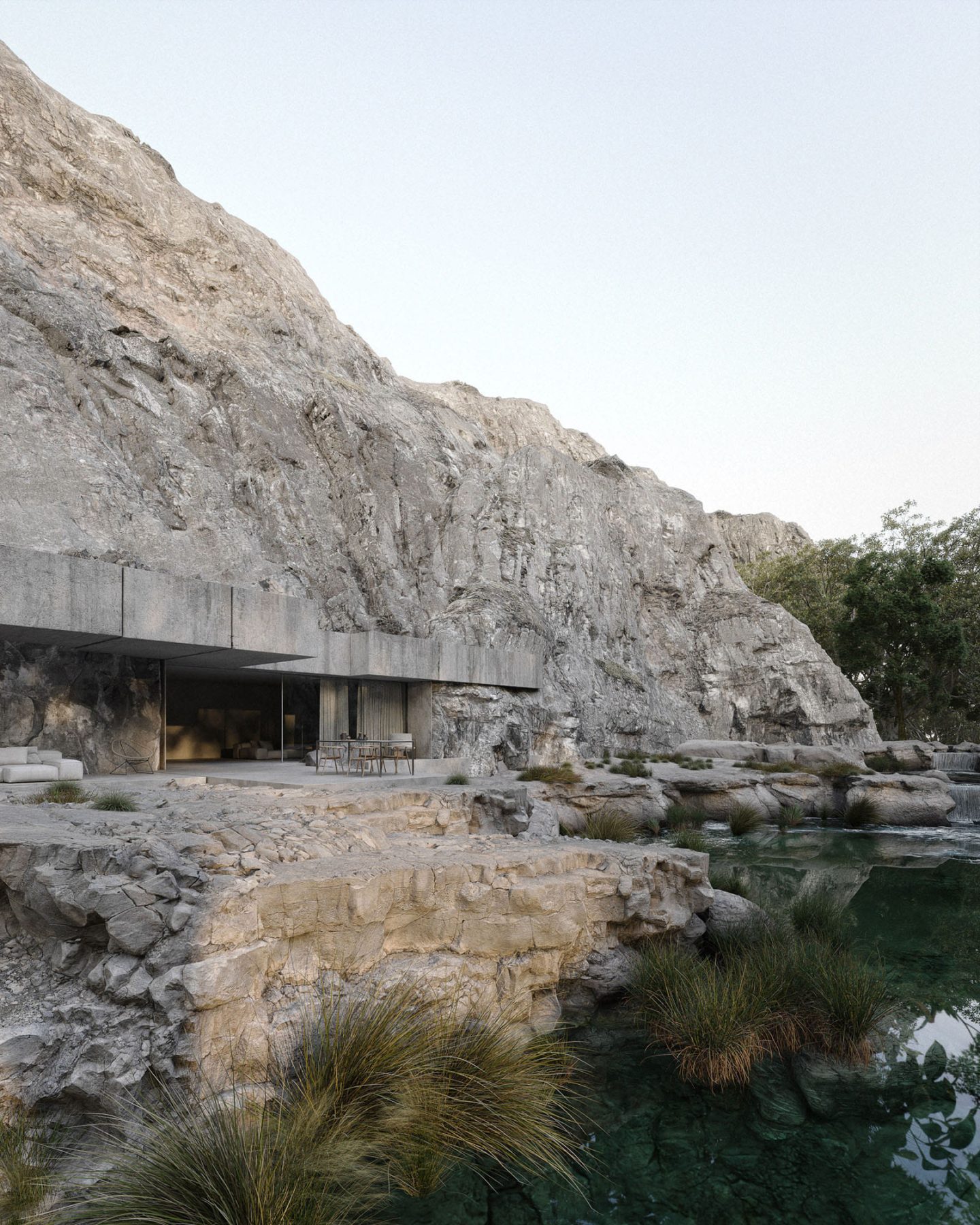
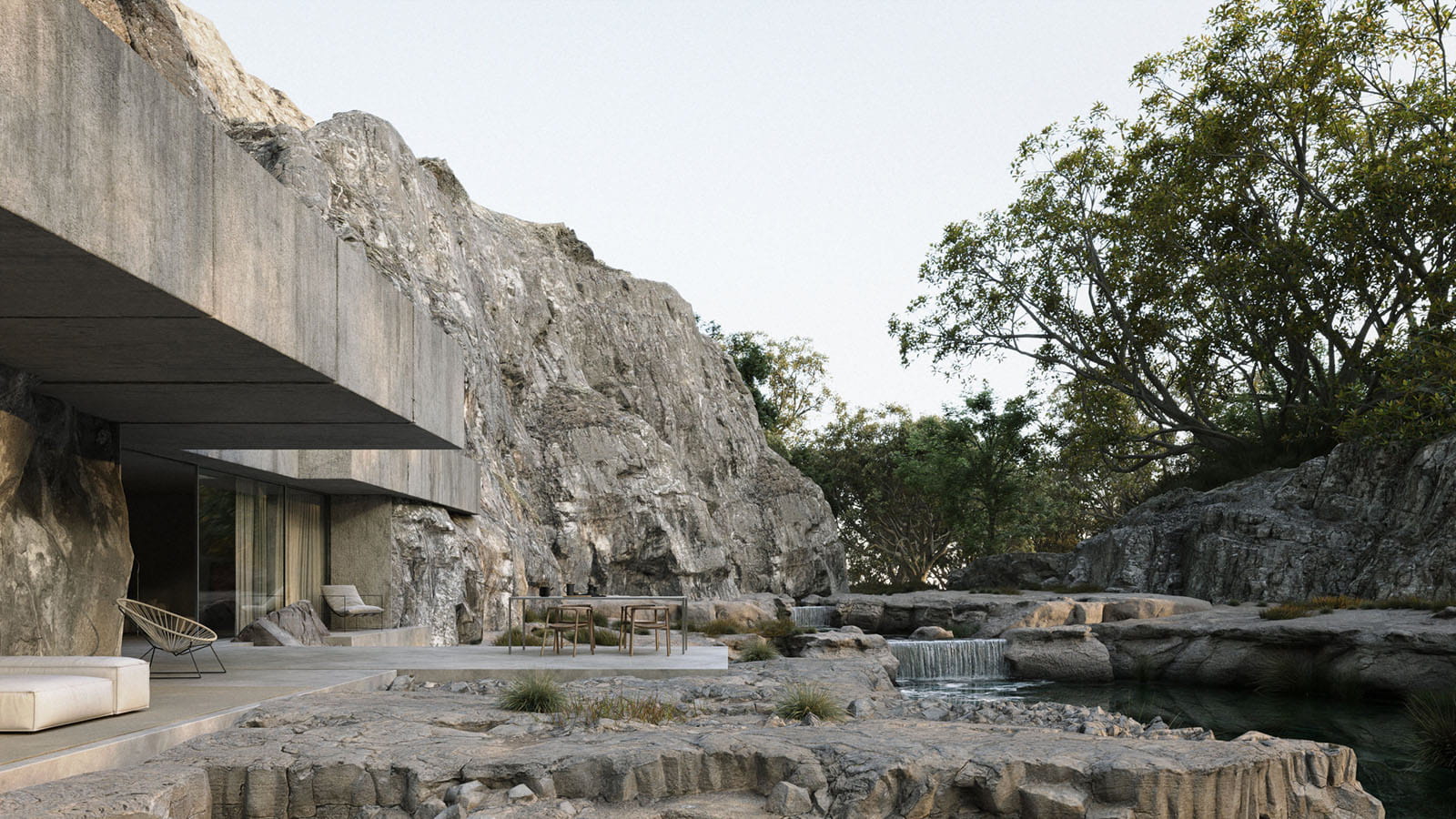
The bathroom spaces and a ‘rocky patio’ complete a simple residential program: a private bedroom secluded to the rear, and a large living room facing east, and the (locally called) “ribeira dos Moinhos”.


The idea of a unified but fragmentable space. An environment with its own character – although, in a way, anonymous and banal. A precise design answer for a specific use – albeit ‘open’ and (almost) ambiguous.
All these premises seek, not the (vulgar) principle of the ‘form that follows function’, but rather the design answer that allows for use, and that can (occasionally) be freed from it.
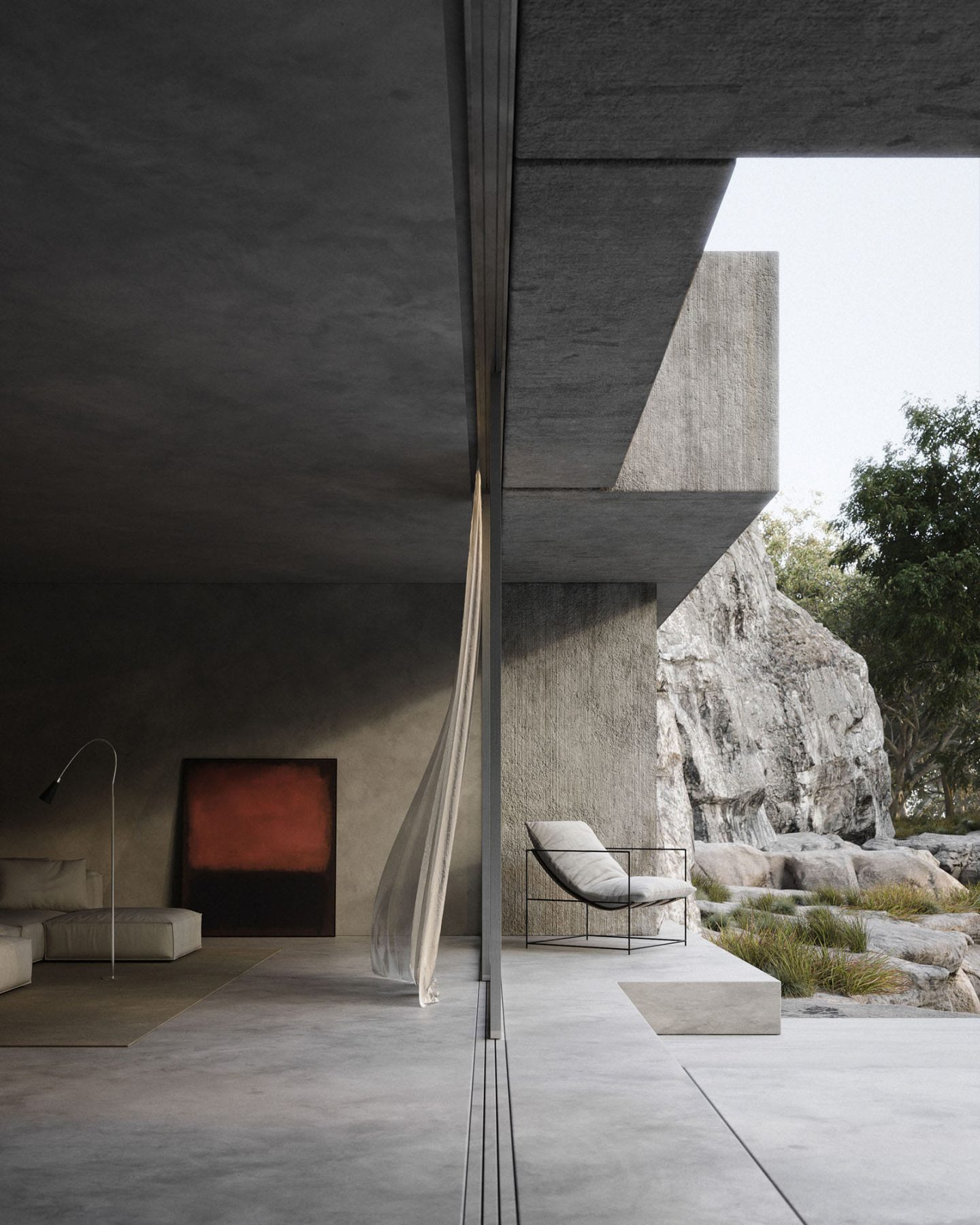
After all, as history shows us, ‘configuration’ and ‘functionality’ are as close a relationship as they are an unpredictable identity. Álvaro Siza usually says that “Nature is Nature, architecture is geometry”. As Umberto Eco tells us, “we are condemned to find forms that harmonize with Nature, completing it; and Nature always triumphs – but subjugated to our disturbances.”
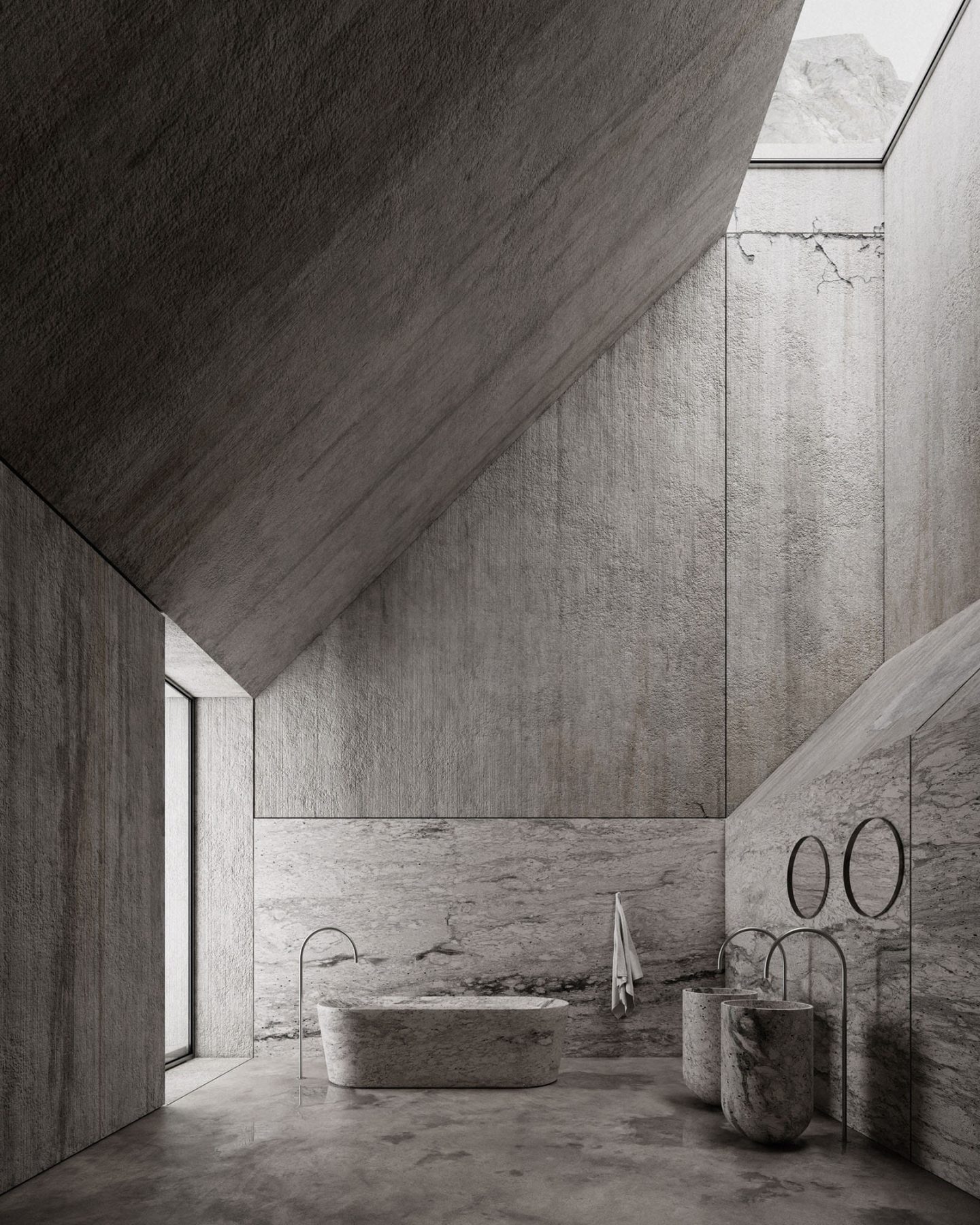
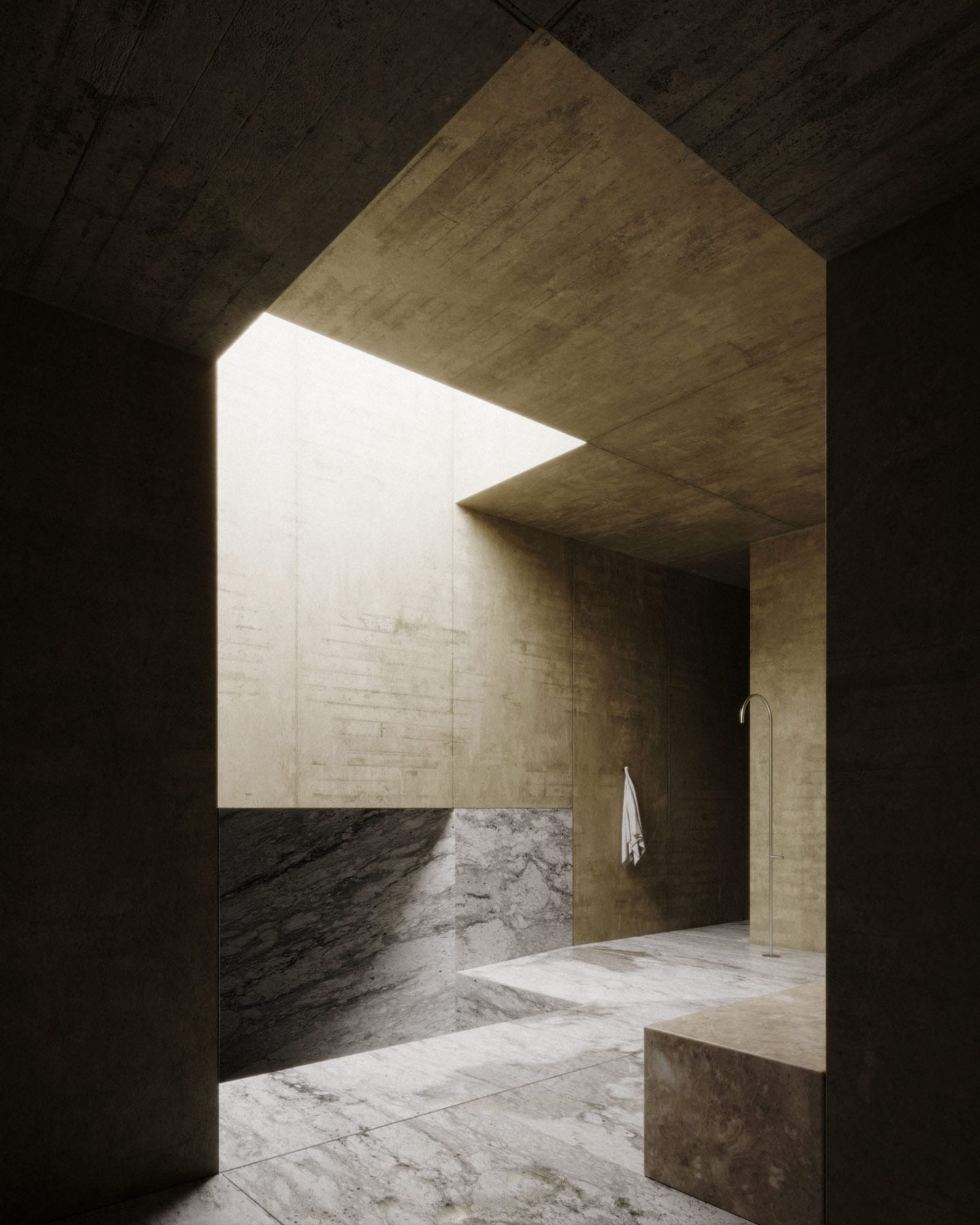
This will (always) be the role of architecture. As Herberto Helder once wrote, “space does not exist, it is a metaphor for time”. This is (exactly) how this house is, just (old) stone – just crafted by time. “Excavated” between the rocky cliffs, a fraction of life becomes perennial – (in)finitely petrified.
Facts & Credits
Title House in Ribeira dos Moinhos
Typology Architecture, Residency
Location Castelo Branco, Portugal
Year 2023
Status Under Construction
Architecture João Cepeda Architect’s office
Images João Cepeda Architect’s office + Alexandra Sinitaru
Text by the authors
House in Estremoz
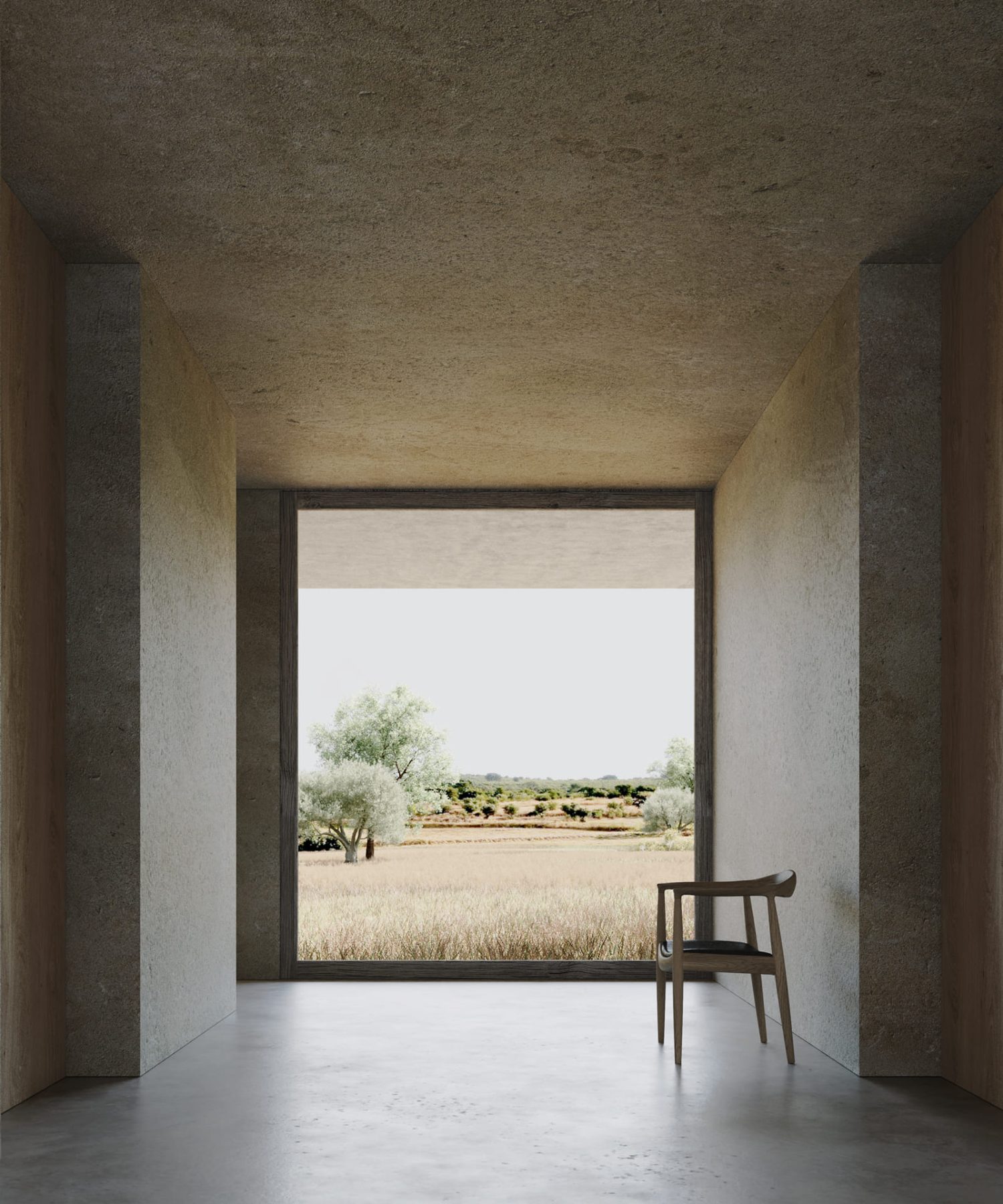
The torrid sun, the bluest sky, and the sounding gusty winds in the wild vegetation frame the ambiance setting.
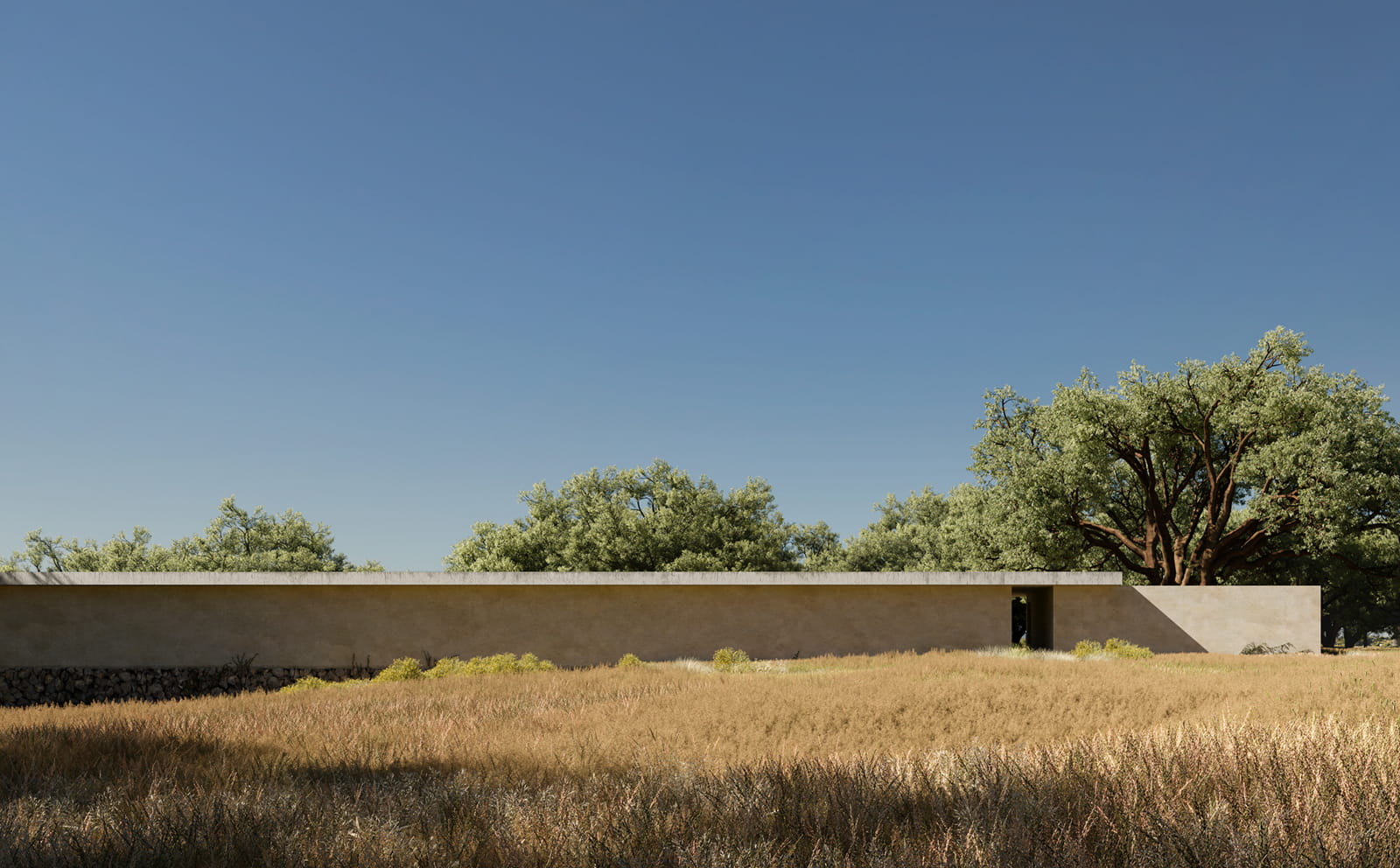
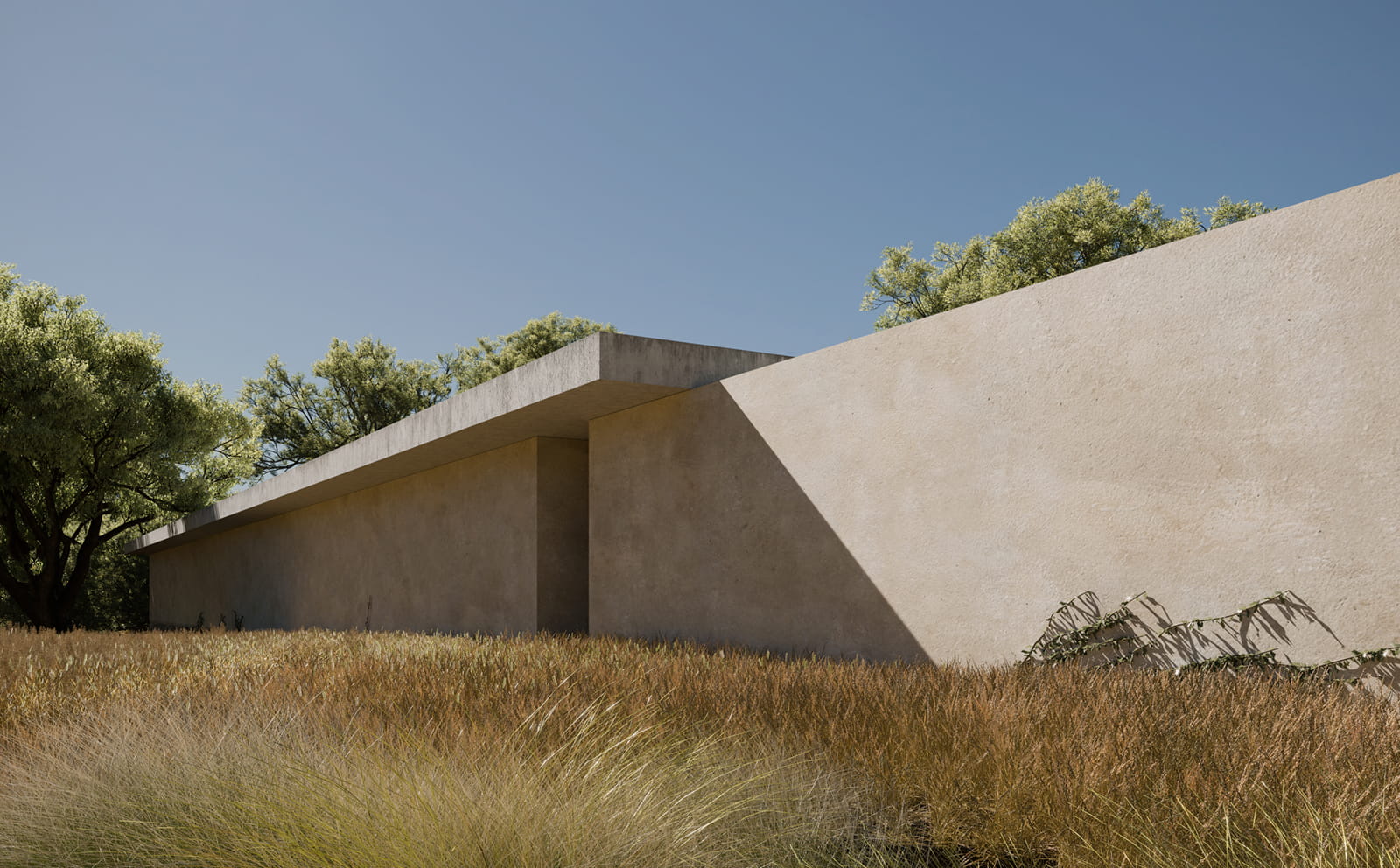

A ruin of an ancient stone wall acts as a remembrance. A remembrance of the past – a sense of the passage of time. Reminding that the new always rests upon the reminiscent.

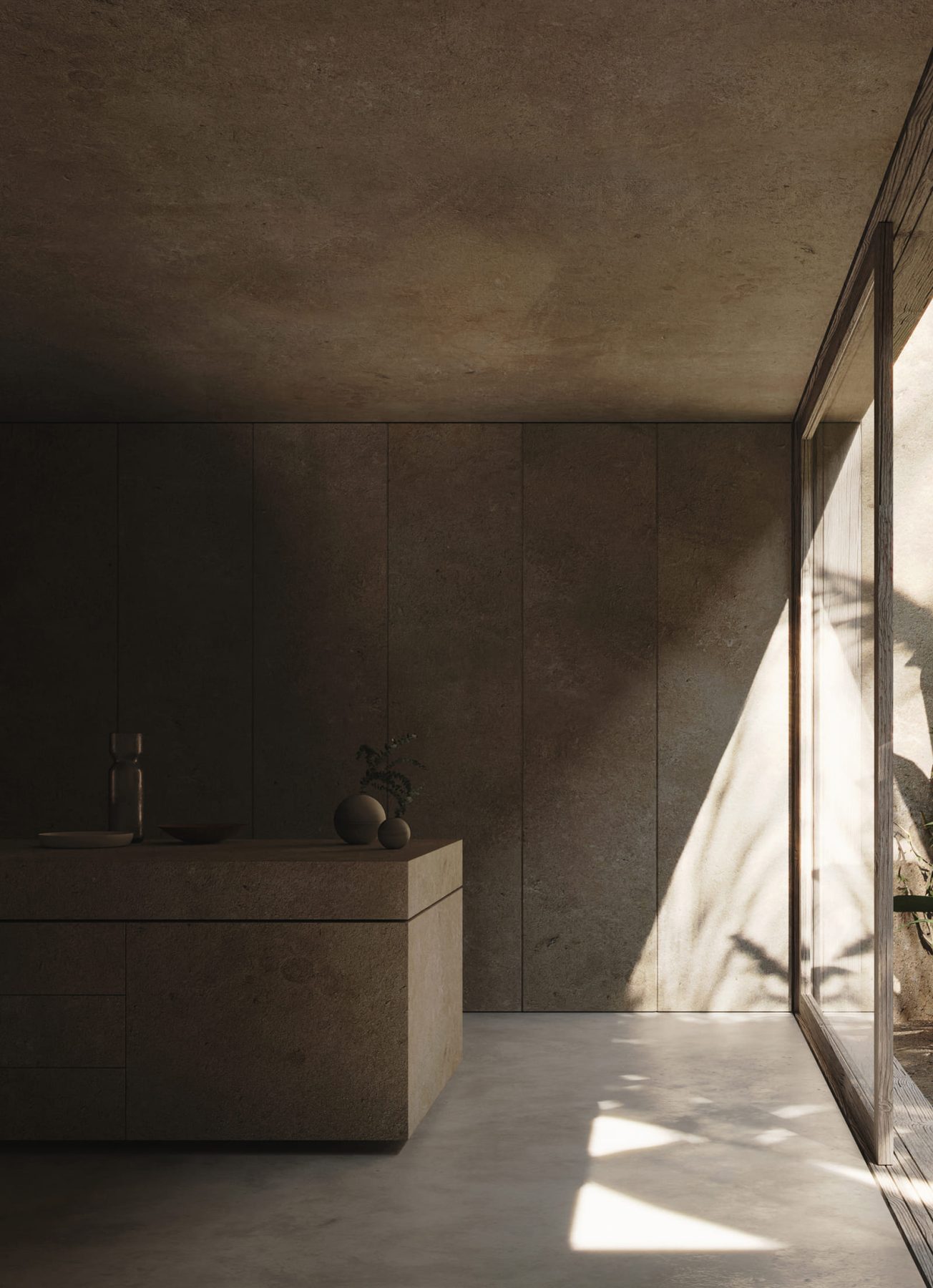
“The past is the future of the present.
The art of space – and life – lies in a constant readjustment to our surroundings.”
Kakuzo Okakura
Facts & Credits
Title House in Estremoz
Typology Architecture, Residence
Location Estremoz, Portugal
Year 2020
Status Under Construction
Architecture João Cepeda Architect’s office
Photographer Pol Masip
Images João Cepeda Architect’s office + Alexandra Sinitaru
Text by the authors
House near Serra da Estrela
A vast green scenery, seemingly endless.


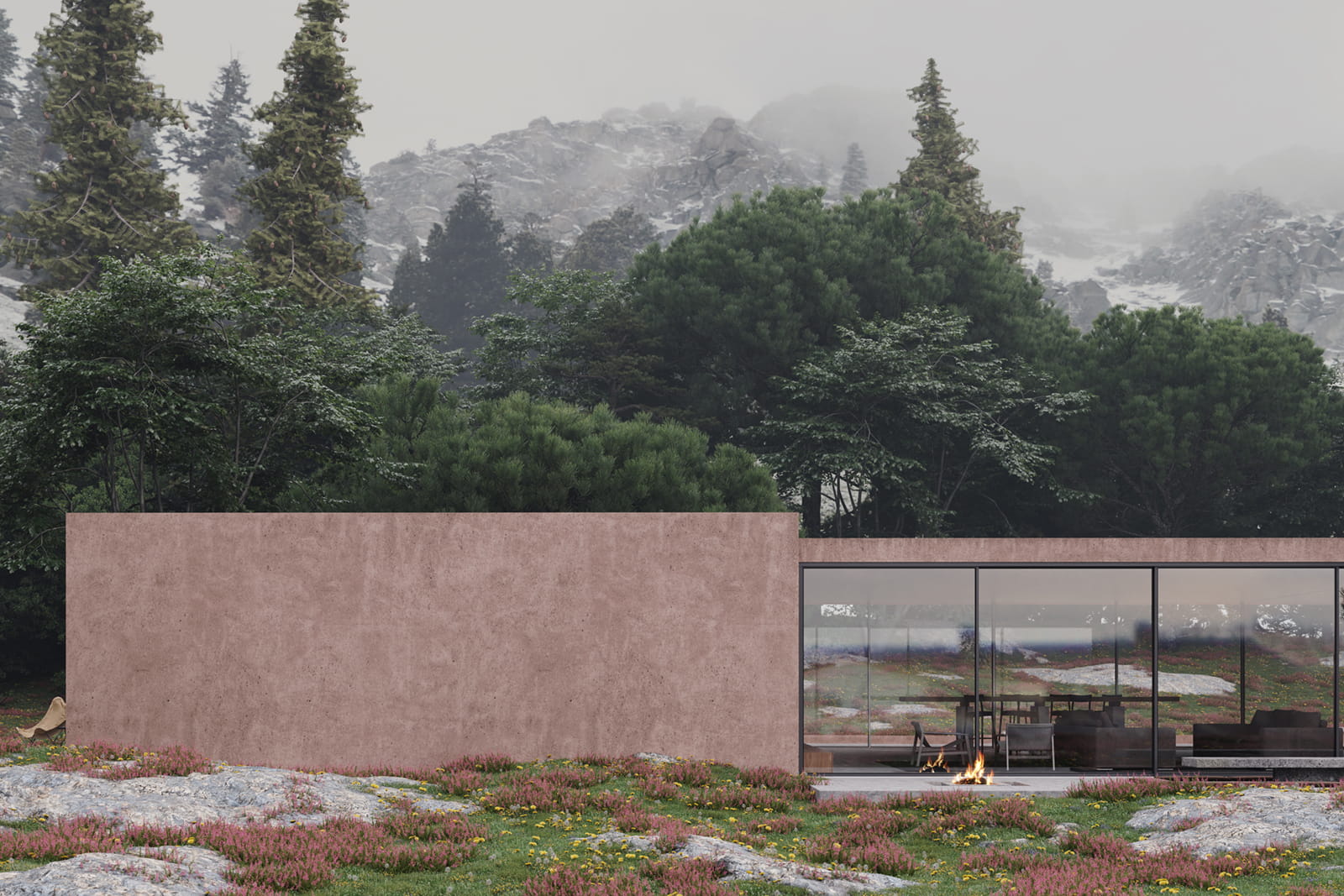
An earth-pigmented concrete mass sits on a rocky plateau. Sheltered by the mountains, the construction frames the inexorable changing nature.


Life, and time, unveil themselves, exactly as they are –
(in)finite.
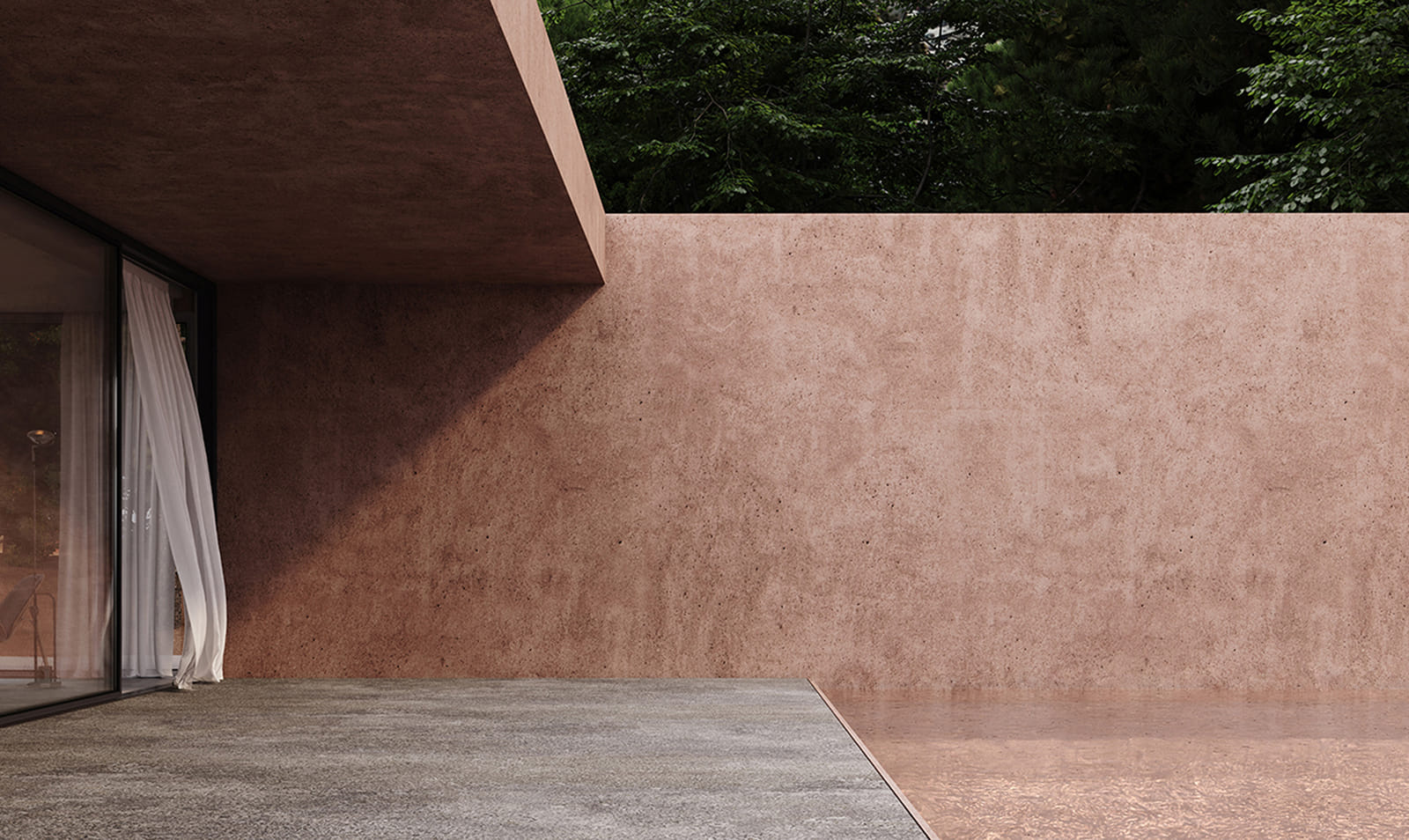
“Space is a metaphor of time.”
Herberto Helder
Project House near Serra da Estrela
Typology Architecture, Residence
Location Belmonte, Portugal
Year 2020
Status Under Construction
Architecture João Cepeda Architect’s office
Images João Cepeda Architect’s office + Alexandra Sinitaru
Text by the authors
Bio
João Cepeda is a Portuguese architect. Graduated by the Technical University of Lisbon (Portugal) and, awarded with a “Merit Grant” from the Swiss Confederation, by the École Polytechnique Fédérale de Lausanne (Switzerland), obtaining his Master in Architecture. Integrated, in Switzerland, the Laboratoire de Production Architecturale, from the Swiss architect Harry Gugger, former main partner of the Swiss architectural firm Herzog & De Meuron. Worked in Paris, as a research fellow, at the Fondation Le Corbusier (2012). Participated in the 14th Architecture Venice Biennale (2012).
Authored the book “Nadir Afonso, Architect” (2013), a monographic work about the architecture of the renowned Portuguese painter-architect Nadir Afonso, who worked with Le Corbusier and Oscar Niemeyer.
Worked in Japan, in Tokyo, at the architectural office of Shinichi Ogawa (2013-2014). Worked in Lisbon, at Frederico Valsassina’s architectural office (2015-2019).
Published in Portugal, Spain, France, Italy, Switzerland, Germany, Hungary, Russia, Turkey, USA, Brazil, Mexico, Japan, China, Singapore, India and Thailand, he has also collaborated with numerous entities, publications, exhibitions, conferences, debates, talks and round tables, and with different cultural media channels, by authoring several articles, chronicles, essays and papers, integrating scientific committees, or giving various presentations, testimonies and interviews.
Established his own practice since 2019, while simultaneously developing his Architecture PhD as an awarded grantee at the Faculty of Architecture of the University of Porto (Portugal), and as an integrated associate researcher at its Center for Studies in Architecture and Urbanism, within the “Theory and Design Practices” research group.
Highlighted as one of the most promising Portuguese architecture emerging studios, in a recent selection and exhibition shown at Casa da Arquitectura in Porto, Matosinhos (2024).