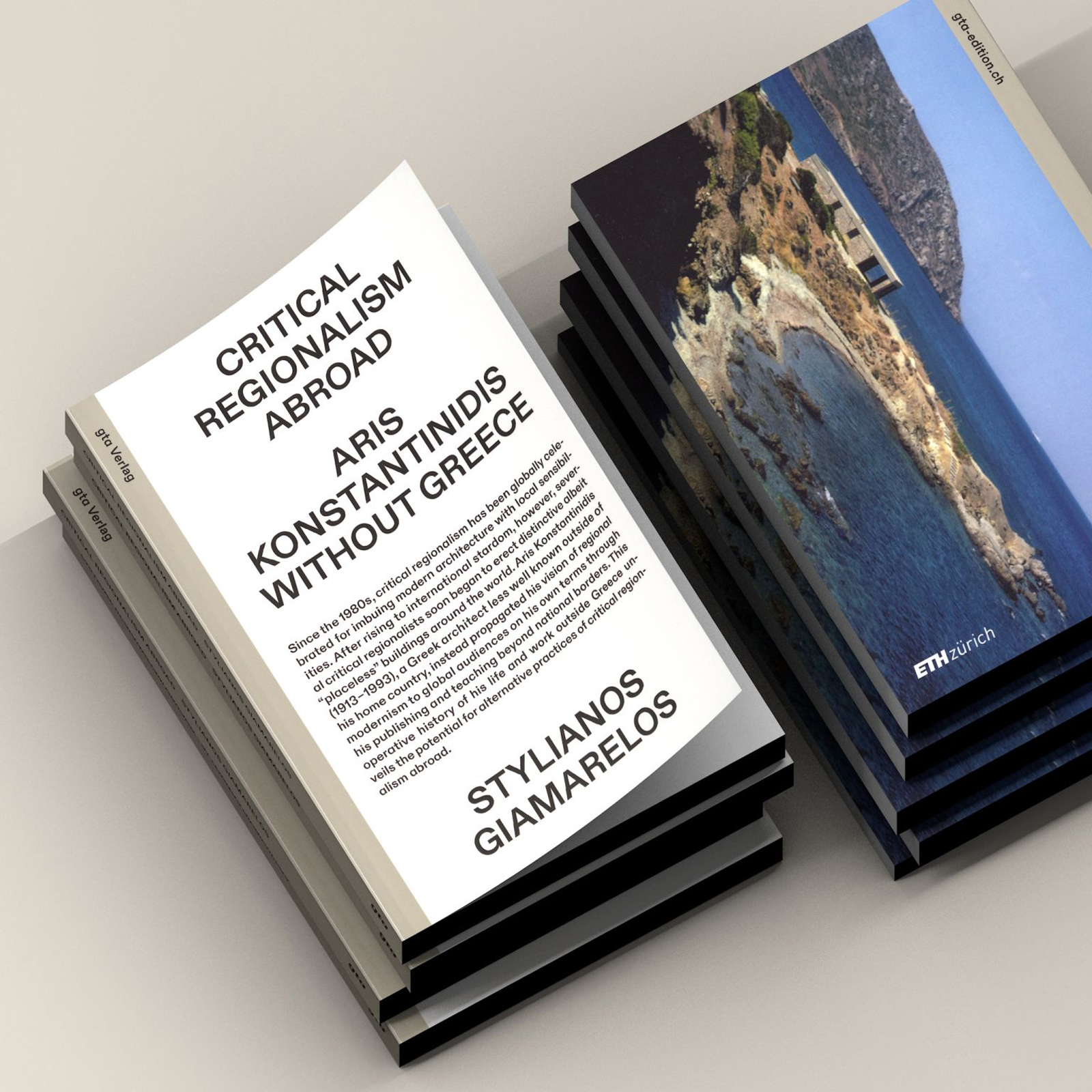
Since the 1980s, critical regionalism has been globally celebrated for imbuing modern architecture with local sensibilities. After rising to international stardom, however, several critical regionalists soon began to erect distinctive albeit “placeless” buildings around the world. In his book “Critical Regionalism Abroad: Aris Konstantinidis without Greece”, Stelios Giamarelos works on how the week known Greek architect propagated his vision of regional modernism to global audiences on his own terms through his publishing and teaching beyond national borders.
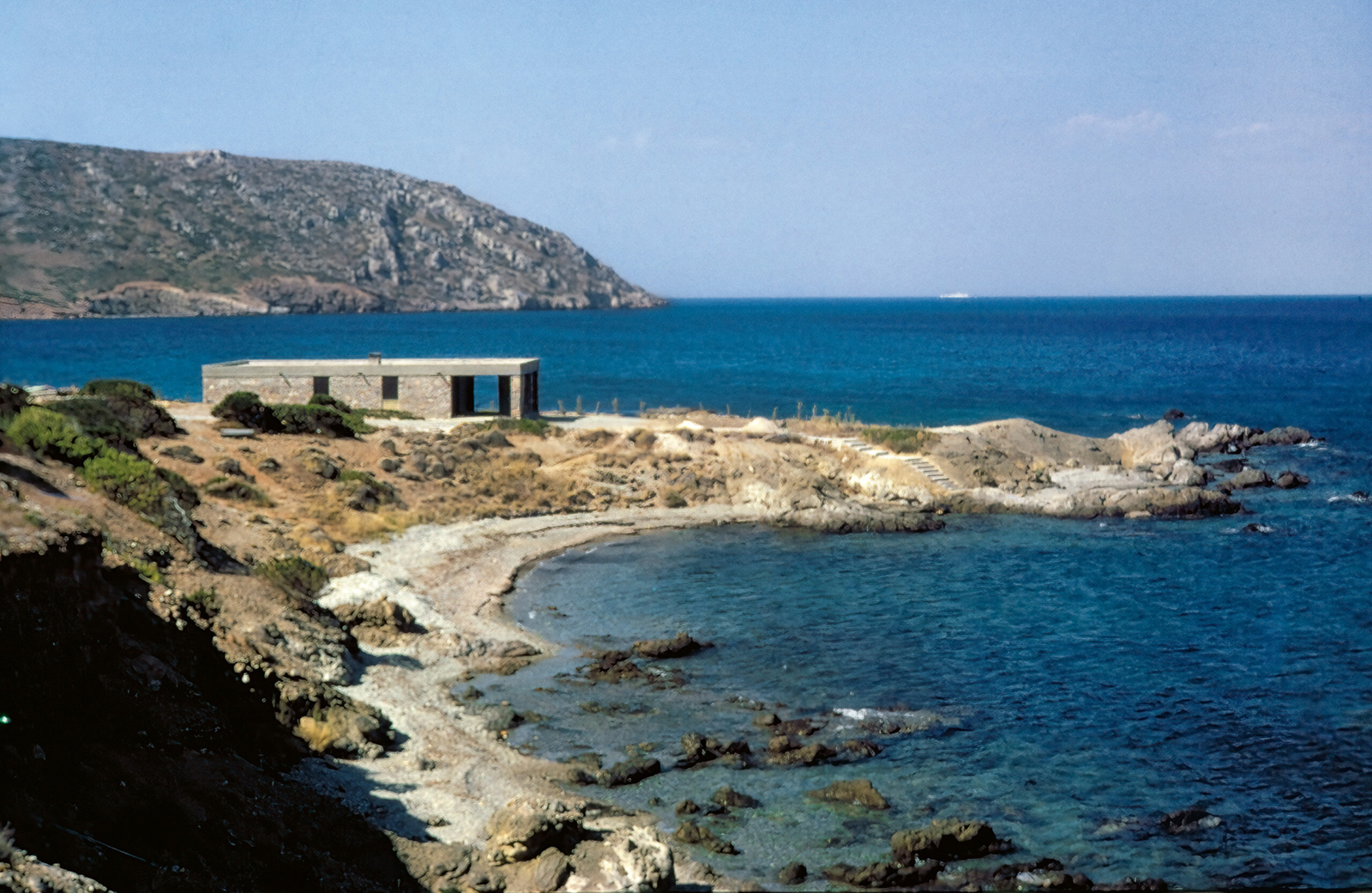
Aris Konstantinidis (1913–1993), a Greek architect less well known outside of his home country, instead propagated his vision of regional modernism to global audiences on his own terms through his publishing and teaching beyond national borders.
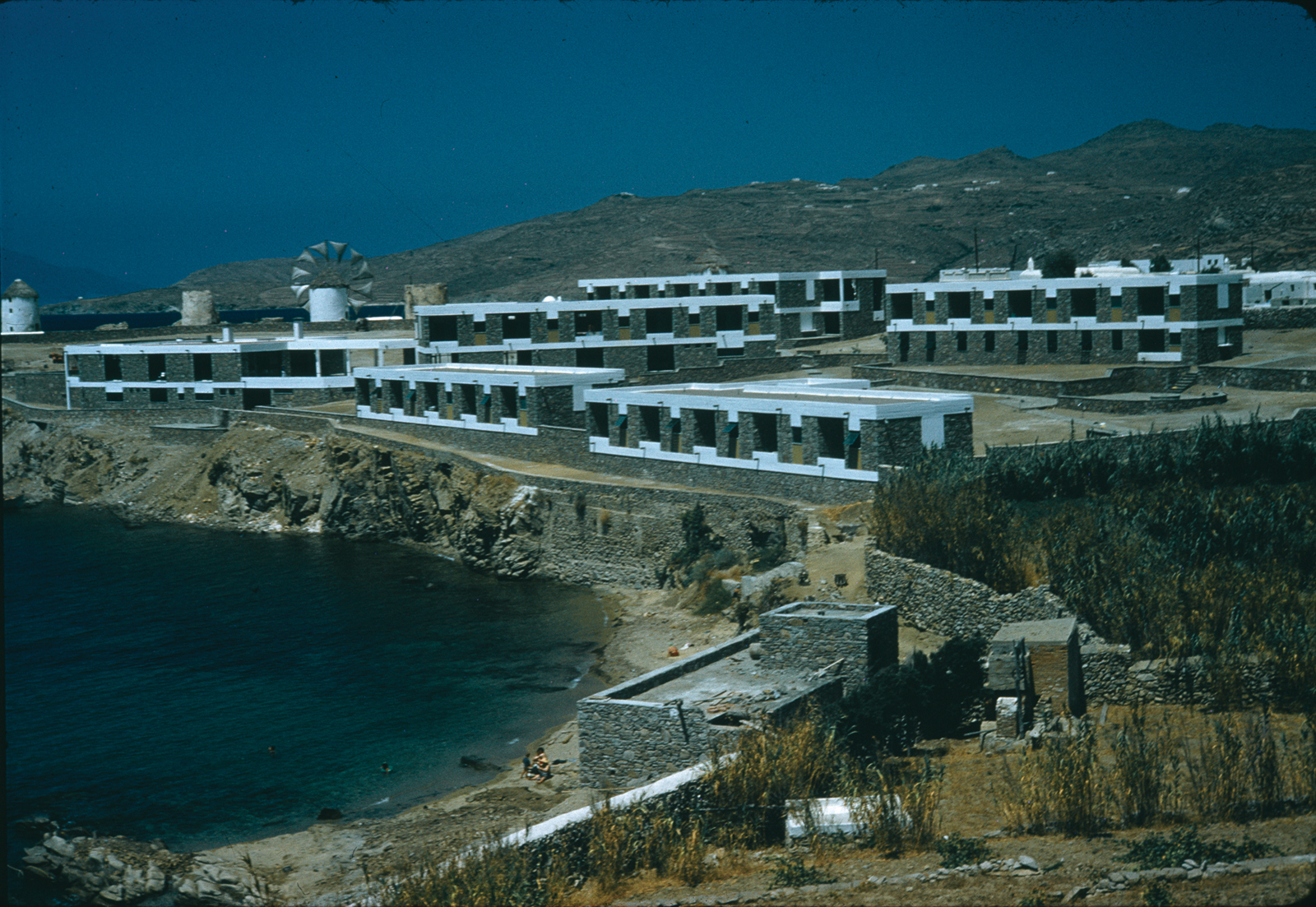
This operative history of his life and work outside Greece unveils the potential for alternative practices of critical regionalism abroad.
The book forms part of gta edition, a peer-reviewed series of short monographs and edited volumes that take a fresh and provocative look at seemingly well-known aspects of architectural history, thus engaging in contemporary historiography and the production of theory in architecture.
The volumes of the series are published as paperbacks, as open-access PDFs, and in HTML.
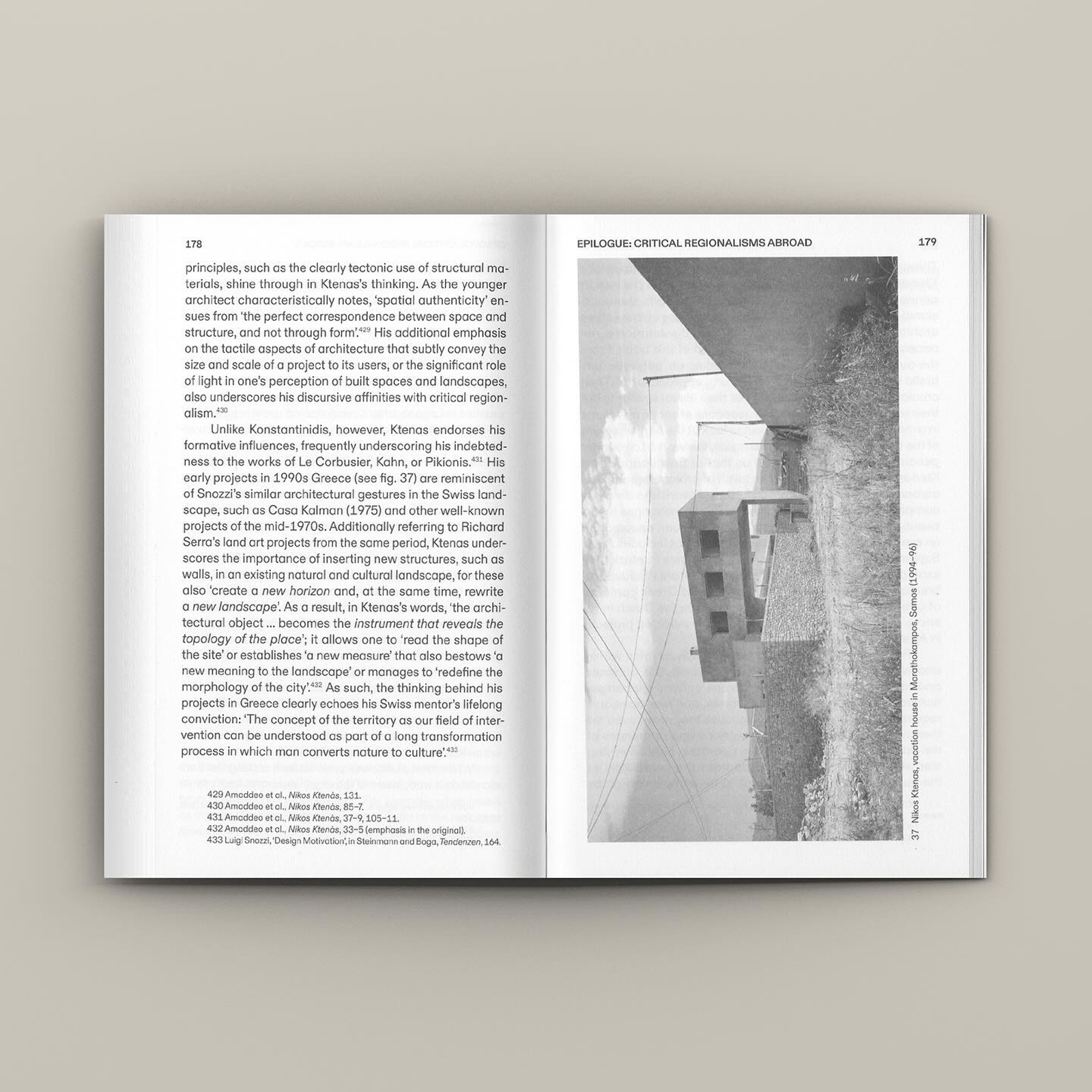
Praise for Critical Regionalism Abroad
‘Even if existing scholarship on Konstantinidis and his work had at least hinted at such an inconsistency (between a “local” and a “global” Konstantinidis), no one had seriously addressed the temporal gap in his biography, when the Greek architect emigrates to teach at ETH Zurich for three years (1967–70). For the first time, Giamarelos delves into this undisturbed layer of history and presents us with an unknown side of Konstantinidis, innovatively filling a gap in our knowledge.
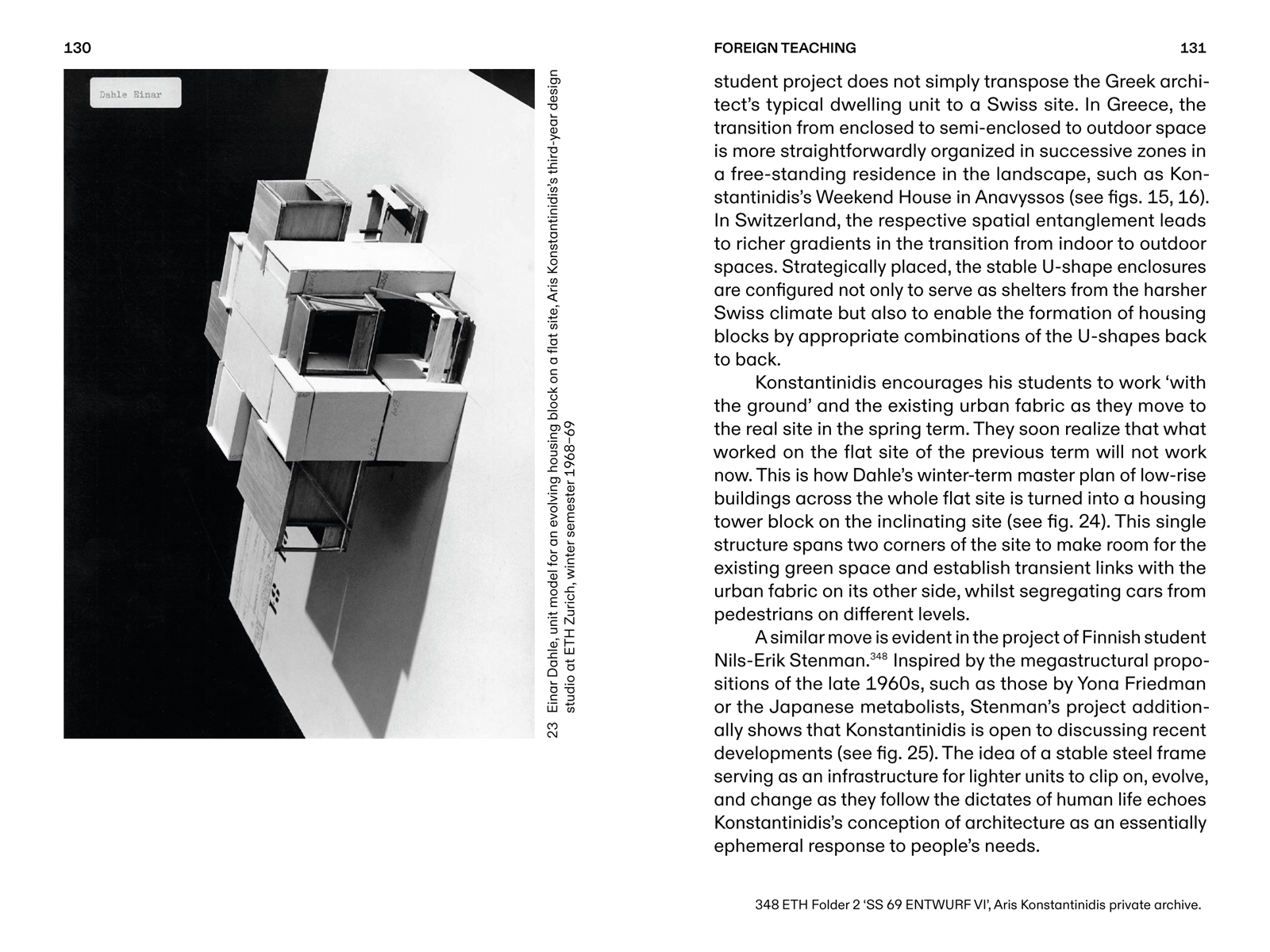
In addition, Giamarelos analyses projects by Konstantinidis’s students to show how these adapted to their tutor’s theoretical imperatives, and complements his research by conducting interviews with those who were still available from that time; an entire piece of history that was hitherto unknown in Greece.
But the inquiry does not stop here, as Giamarelos also gives us an “epilogue”, in which he advances the cause of critical regionalism even further.’
Dimitris Philippidis, emeritus professor, School of Architecture, National Technical University of Athens, ‘Aspects of critical regionalism in architecture’, Η Εφημερίδα των Συντακτών, 20–21 September 2025.
‘Stylianos Giamarelos has written a small but beautiful book on Aris Konstantinidis’s pure architecture, his life, his beliefs, his teaching and his methods–not to mention his position within the Canon of Critical Regionalism that put him up front with Alvar Aalto, Jørn Utzon and Rudolf Schwarz (the latter as Modernist as the other two, in my opinion, despite being frequently associated with “the Other Modern”). Aalto’s organic architecture is of course emblematic, and impossible to be copied without maintaining the traces of its origin within a module of one millimeter.
The other two follow a structuralist approach: Utzon does so still in an organic way, while Schwarz’s architecture is raw in a beautiful Brutalist way, not unlike that of Konstantinidis. I was fortunate enough to meet both Utzon and the main figure of this study; while Utzon’s architecture might be more playful than that of Konstantinidis, both are deeply embedded in the language of vernacular architecture and the essence of materiality, including the texture and colour of the building material in use. In my mind, this is the real Brutalist way in architecture.
The book is about Konstantinidis’s ups and downs, at home and abroad, including in Switzerland where he teaches for three years; this is also the period in which I happened to encounter his genius, his warmth and his positive stubbornness. Back in the late 1960s, Konstantinidis became one of my favourite architects and my beloved professor when he moved from Athens to Switzerland to become guest professor at ETH Zürich for a short period. He left his wife behind and fled from the military junta of right-wing Colonels that ruled between 1967 and 1974.
The Greek architect only taught at ETH from October 1967 to August 1970. It is important to note that I always considered myself to be the last “Modernist” at the school, as I followed Alfred Roth’s classes for two semesters, then Aris Konstantinidis for two semesters, then Dolf Schnebli for two semesters, and completed my studies for a Diploma in Architectural Design under Alfred Roth’s supervision (because Konstantinidis was no longer available to supervise my work in the winter semester of 1970). But this whole Modernist run started for me with the two introductory semesters by the famous Bernhard Hoesli, Hans Ess, and Adolf Max Vogt, followed by Paul Hofer and Walter Custer, in 1965–66. The path was defined for me then, and I did not walk it without pressure or hardship. Nights after nights on the drawing board, away from bed, with nothing to gain but the smell and flair of architecture, accompanied by the Beatles and Leonard Cohen.
Stylianos Giamarelos describes some of the internal conflicts at ETH Zürich, including the Swiss students’ uprisings of 1968, none of which supported local or guest professors. I am now as old as Konstantinidis was when he left this world; depressed, because his work was not understood, he perished. The others’ goal was happiness, his was understanding and meaning. Alas.
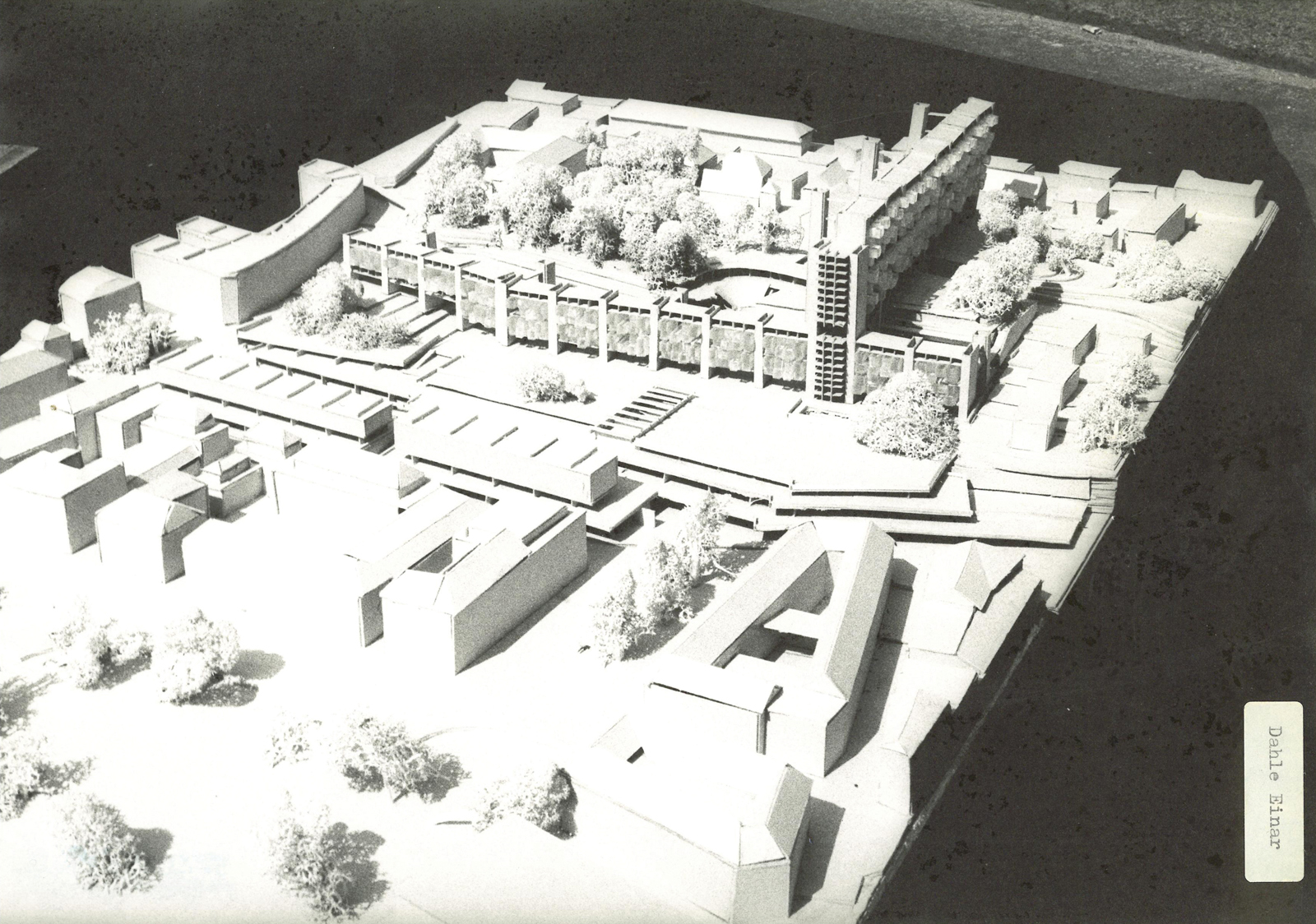
Stylianos Giamarelos, himself a significant Greek scholar and practitioner has offered us a broader understanding of the great Greek architect, showing why Konstantinidis deserves a rightful place in the Canon of Modern Architecture. Of course, I am proud to be among the young students that Konstantinidis met in Zürich and that I have been included in his archives to be mentioned in this very book on him today; for this reason, I also hesitated to review it. But in the end I did, because I owed it to my former professor who made me believe in architecture and planning and contributed to my understanding of material, structure and space back then. I regret that I did not get to see him again after we both left Zurich. Shame on me. But I will never forget him.
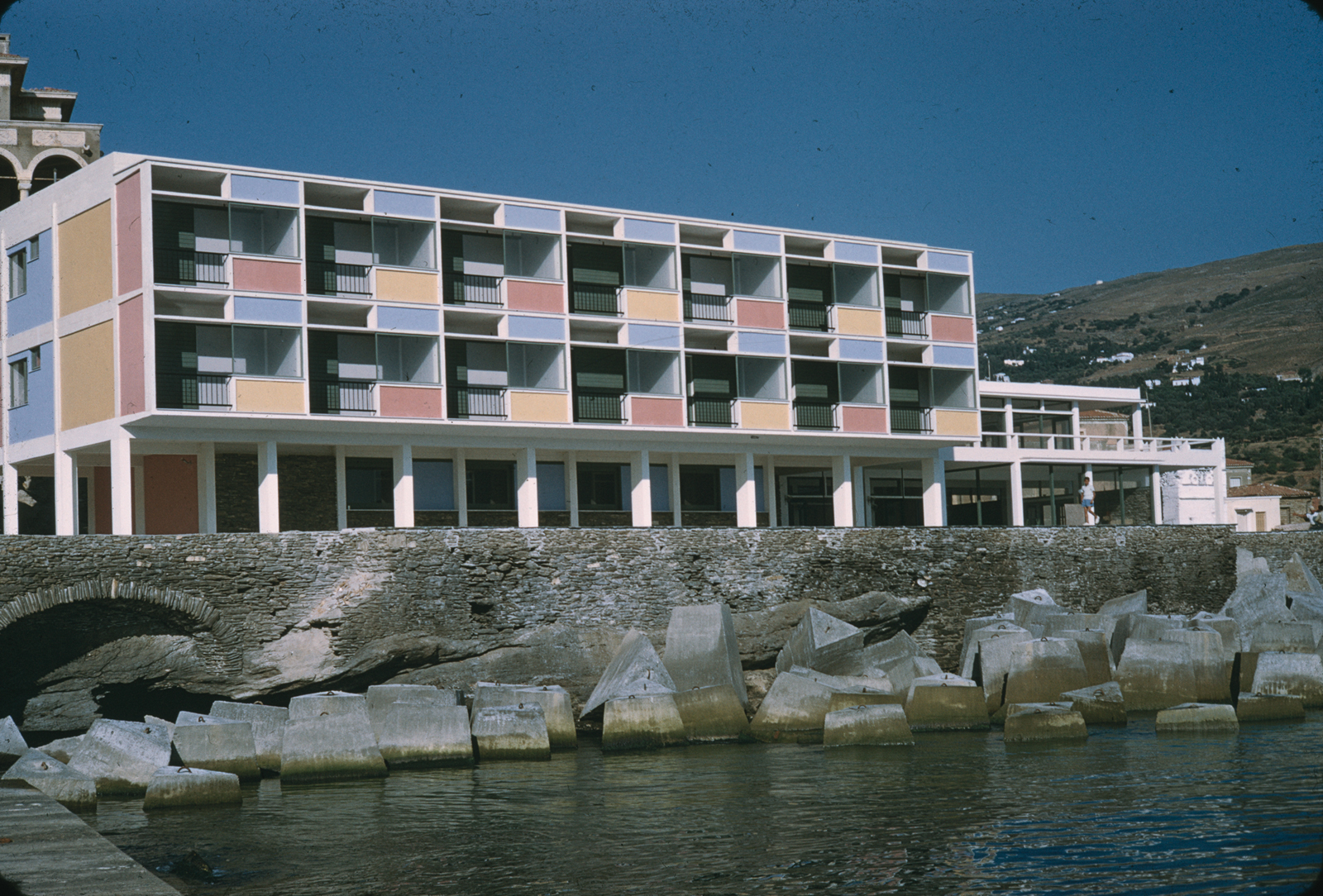
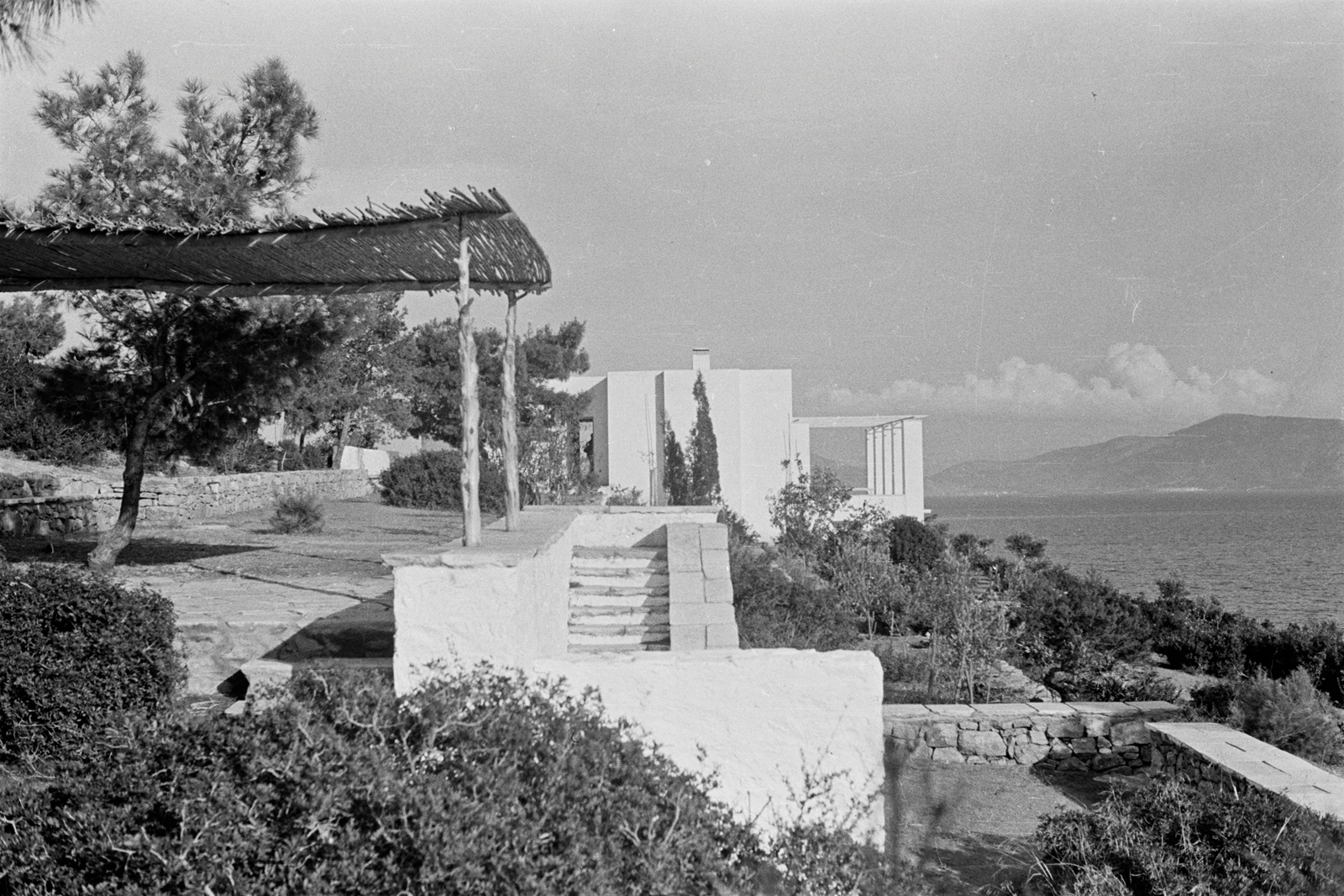
His hotel ‘Xenia’ on Mykonos was worth both the money and the effort it required to get there. Now the Weekend House in Anavyssos is next on my list. Both projects share qualities with the best architecture of the 1960s, including the Brutalist Convent and Church by Franz Wozak and Christian Norberg-Schulz at Stabekk, in Norway, with its yellow-brick masonry topped by the fair-faced horizontal band of the concrete slab; a holistic composition that attests to the power of real Brutalism in tectonics and materiality–not to the extent of Konstantinidis’s work, but still. Paths taken or not taken are, after all, part of the discussion in this interesting and lovely book. Knut Hamsun would have loved walking these paths. He was convicted, but he lived on. So will Aris Konstantinidis.’
Einar (Aina) Dahle, emeritus professor, Oslo School of Architecture and Design, ‘On Overgrown Paths’, 25 September 2025.
Einar Dahle (alias Aina Dahle) is Professor Emeritus of AHO Oslo School of Architecture and Design, where he taught from 1985 to 2016. He is a Norwegian prizewinning architect with a Diploma from ETH-Zürich after having studied Mathematics and Theology at the University of Oslo. Dahle has also served as Diploma examiner at NTH/ NTNU Trondheim, guest professor at RWTH-Aachen and external examiner at ETH-Zürich, and taught at Master’s courses at msa Münster School of Architecture, Westfalen. He has won several prizes for his high-quality architectural projects and competition entries, and has written numerous articles and books on architecture. Owing to his award-winning work, he has also served as juror for architectural competitions in Norway and abroad. He is a member of The Norwegian Architects Association (MNAL) and has been a member of the Swiss Engineers and Architects Association (SIA) since 1971.
Facts & Credits
Book title Critical Regionalism Abroad: Aris Konstantinidis without Greece
Author Stylianos Giamarelos
Cover Photo credit Aris Konstantinidis private archive (Aris Konstantinidis, Weekend House in Anavyssos, 1962–64)
Publisher gta Verlag
Designed by Reinhard Schmidt, Nadine Wüthrich, Urs Hofer