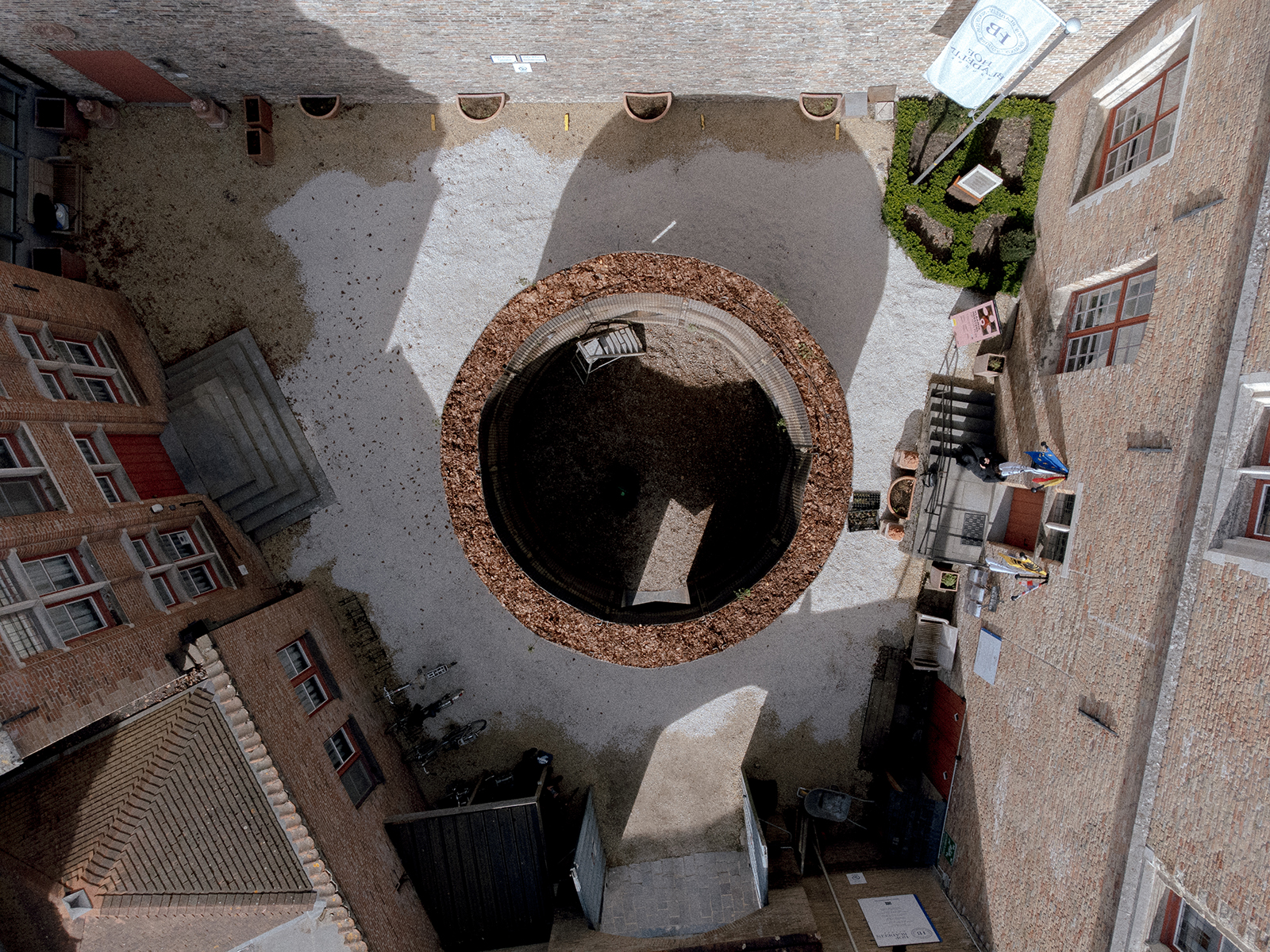
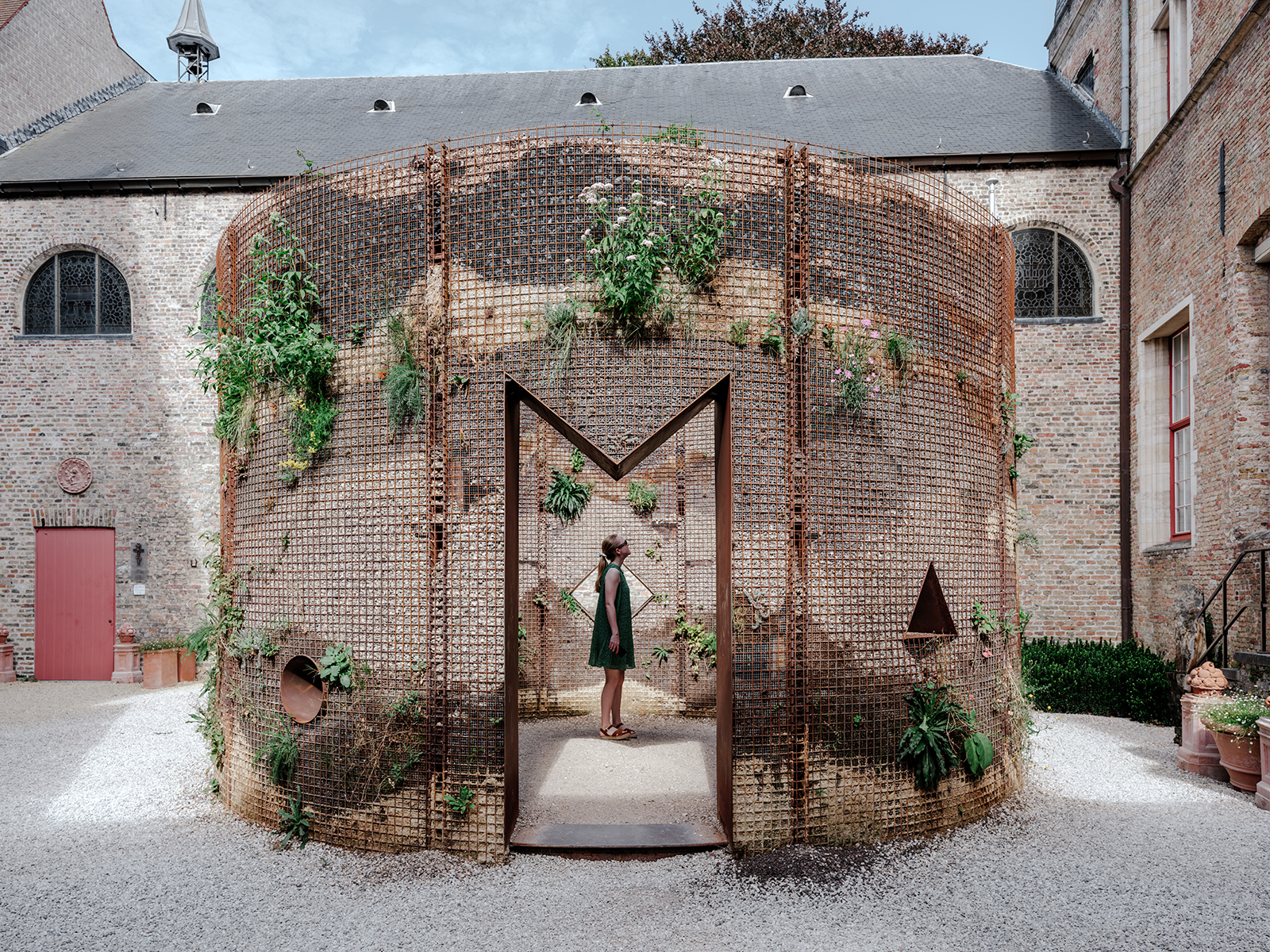
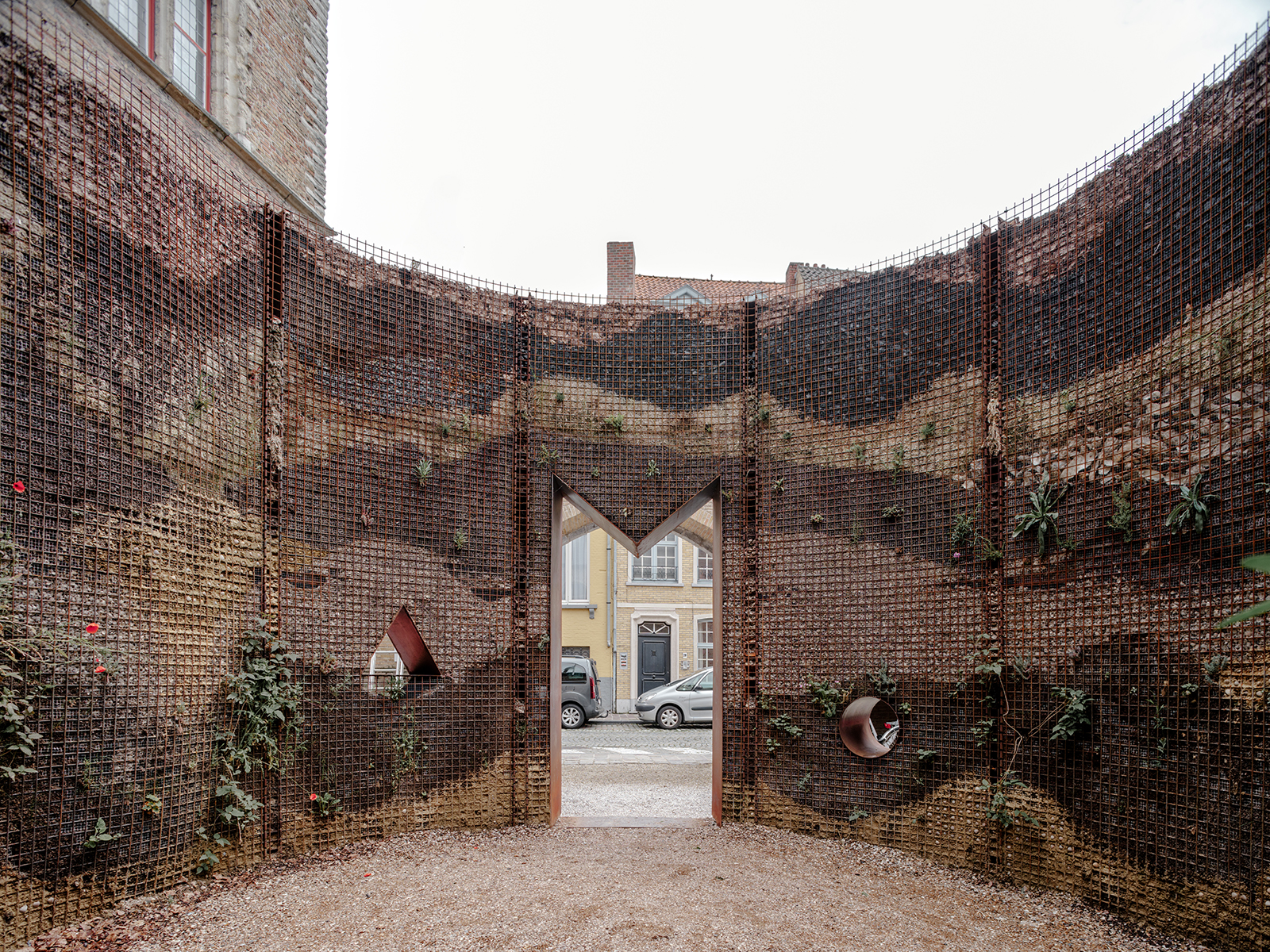
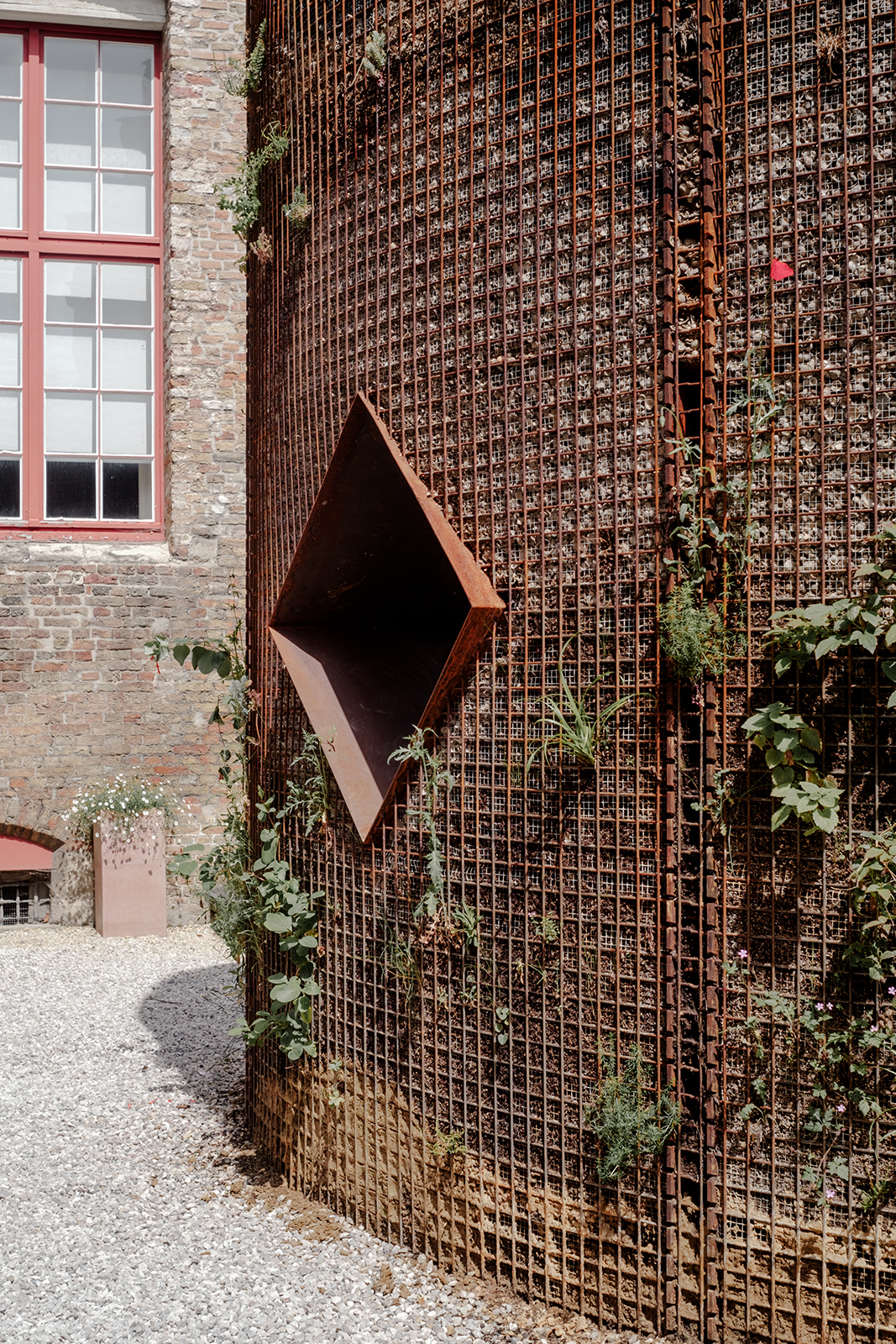
Studio Ossidiana has placed Earthsea Pavilion, a cylindrical installation that connects land and sea, history and nature, in the courtyard of the 15th-century city palace, Hof Bladelin. Inspired by Bruges’ rich history and its link to the sea, the Rotterdam-based firm with Italian roots allows the substrata – as seen in archaeological surveys – to surface in Earthsea Pavilion.
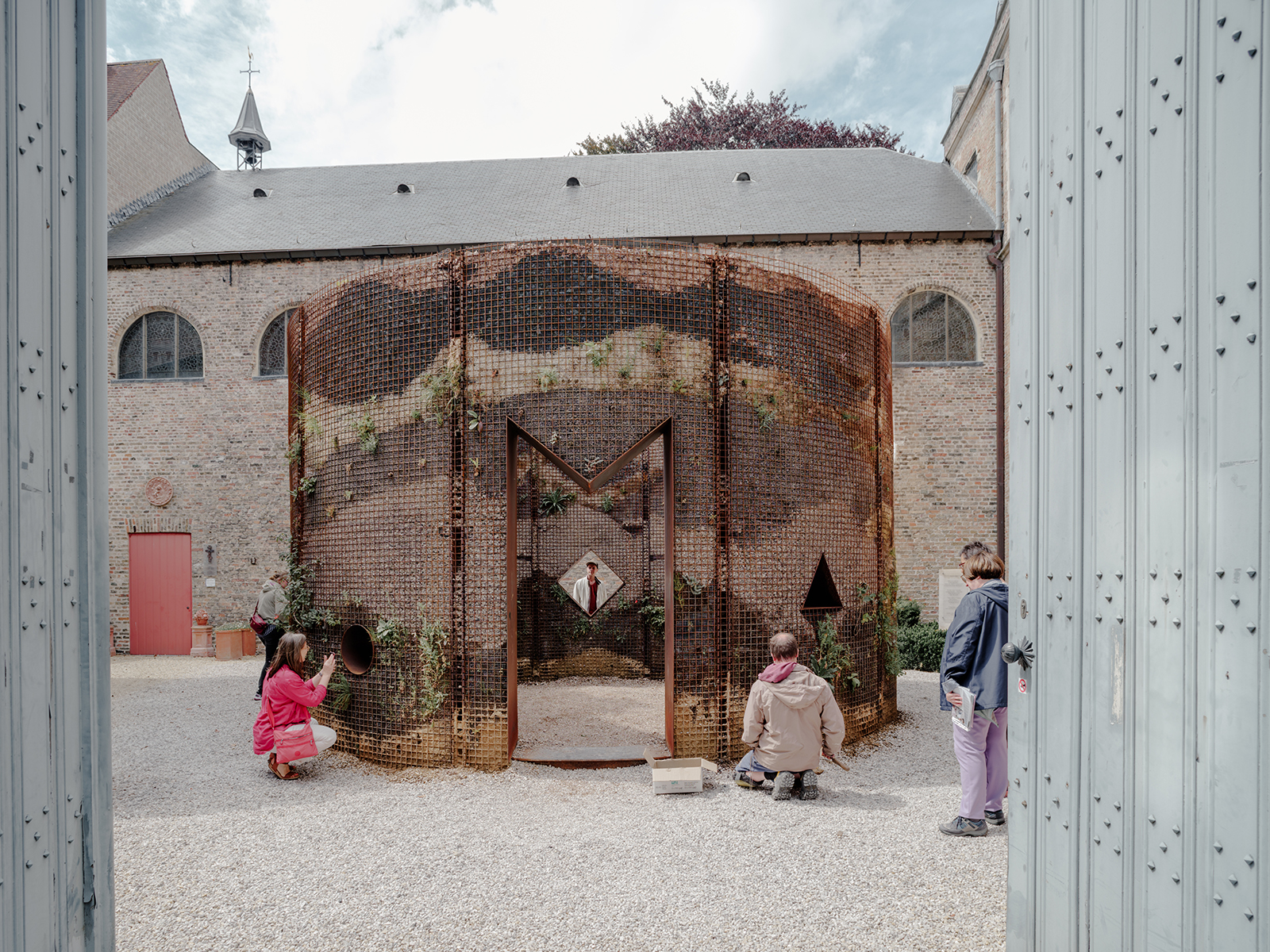
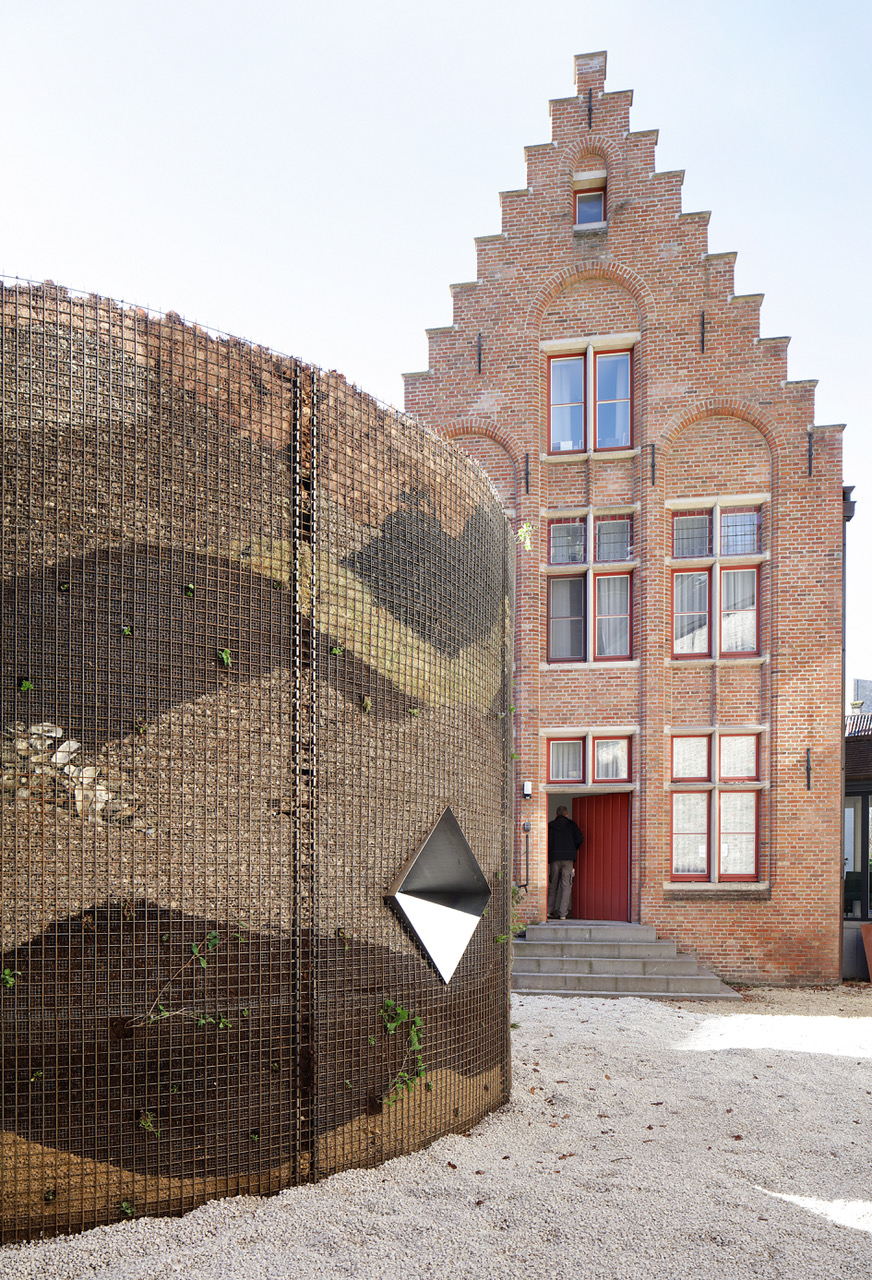
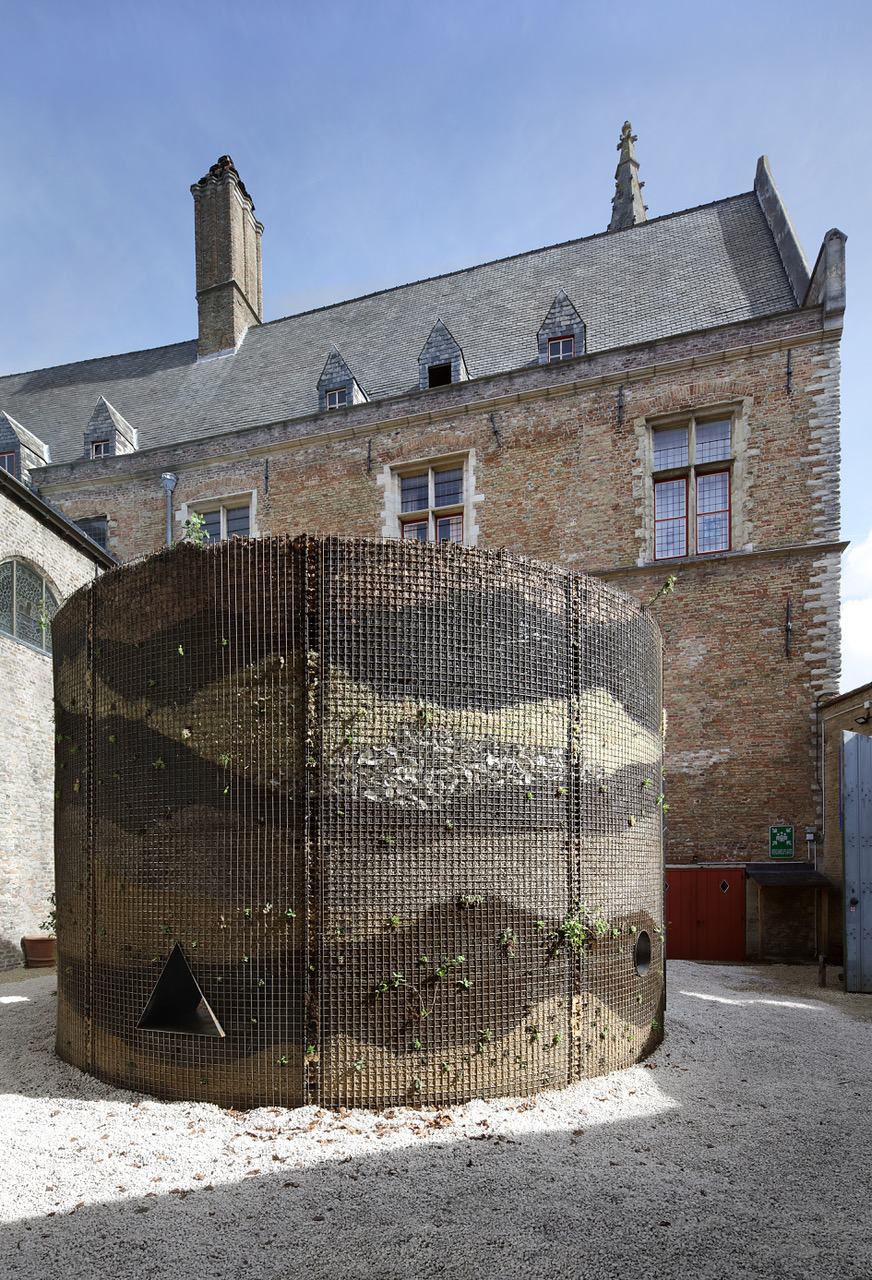
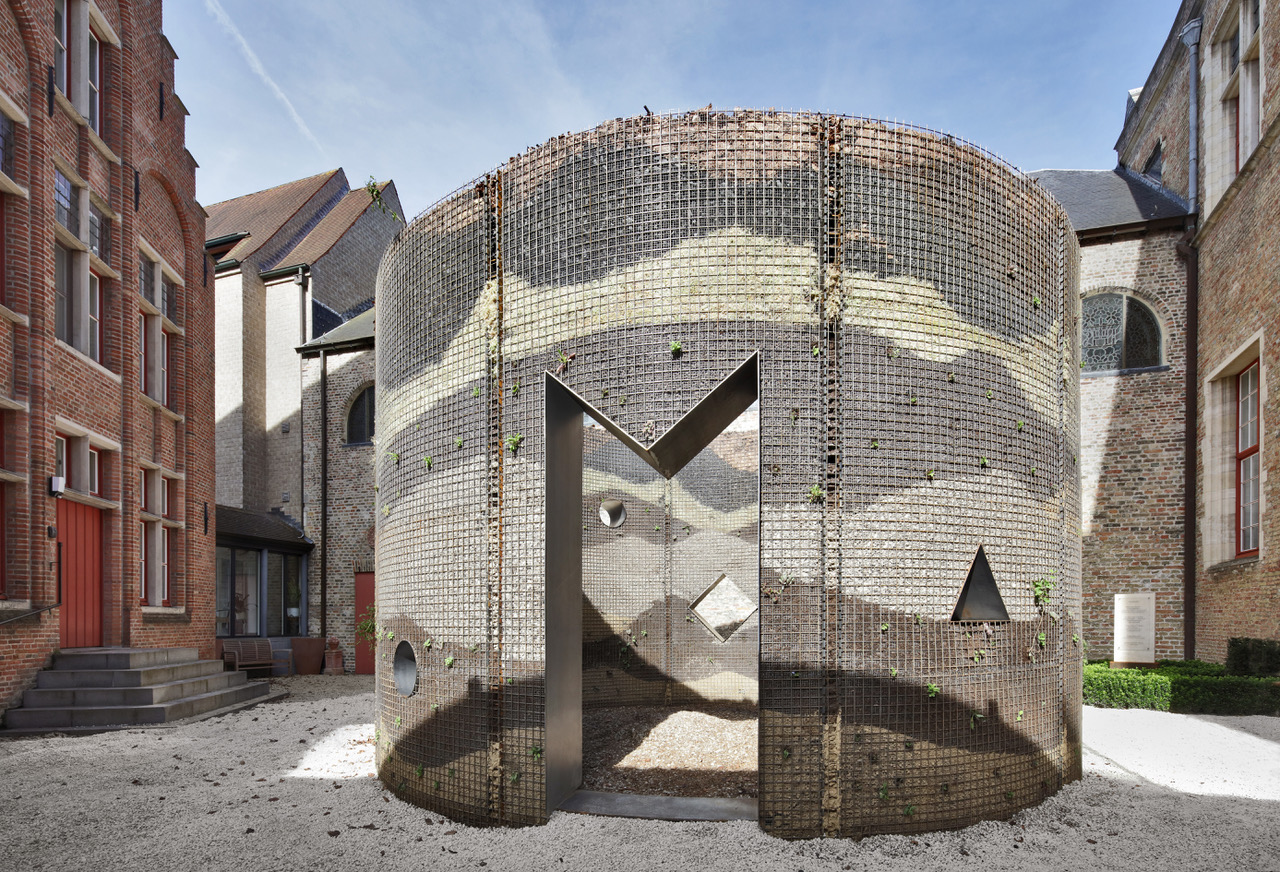
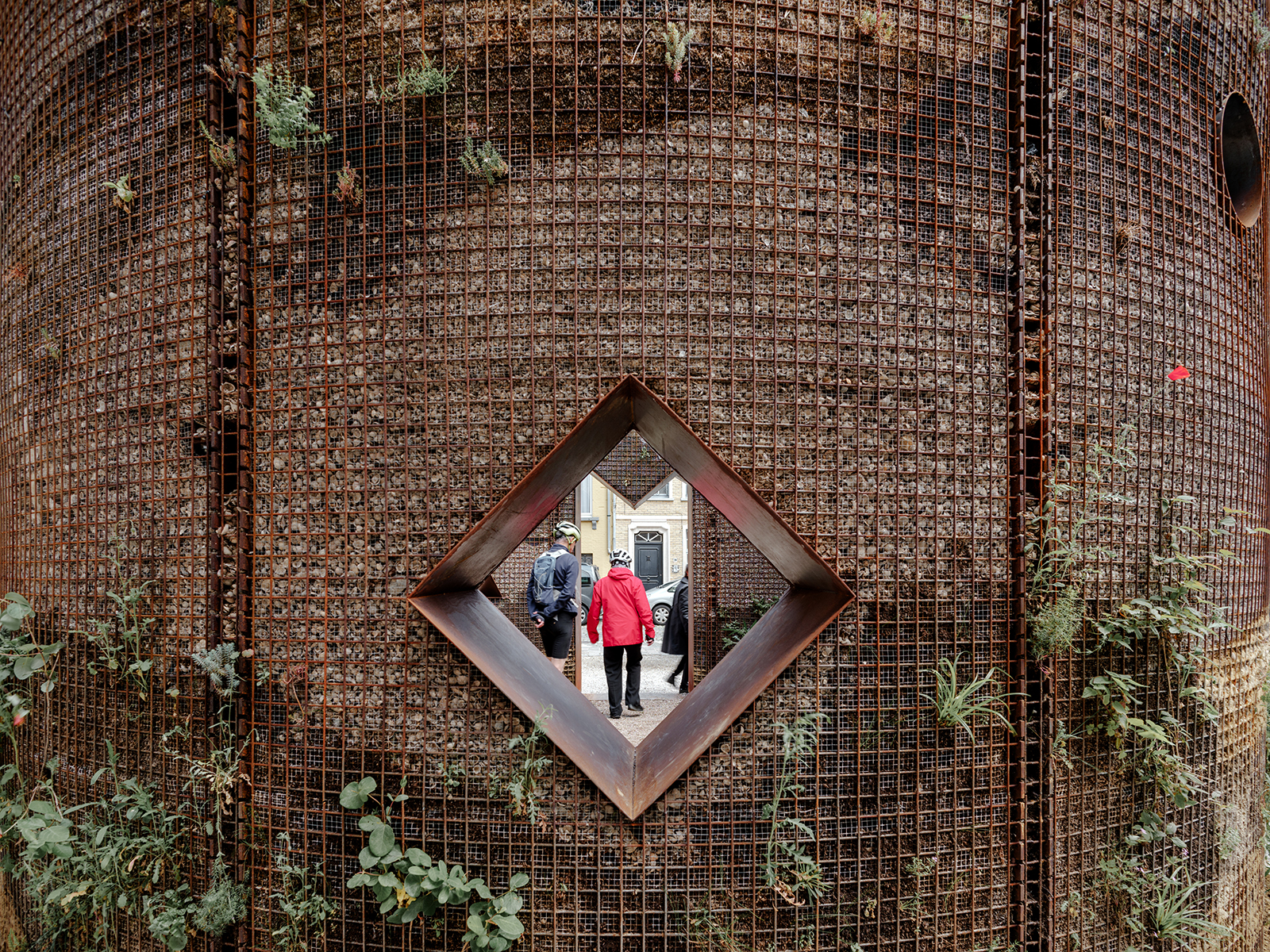
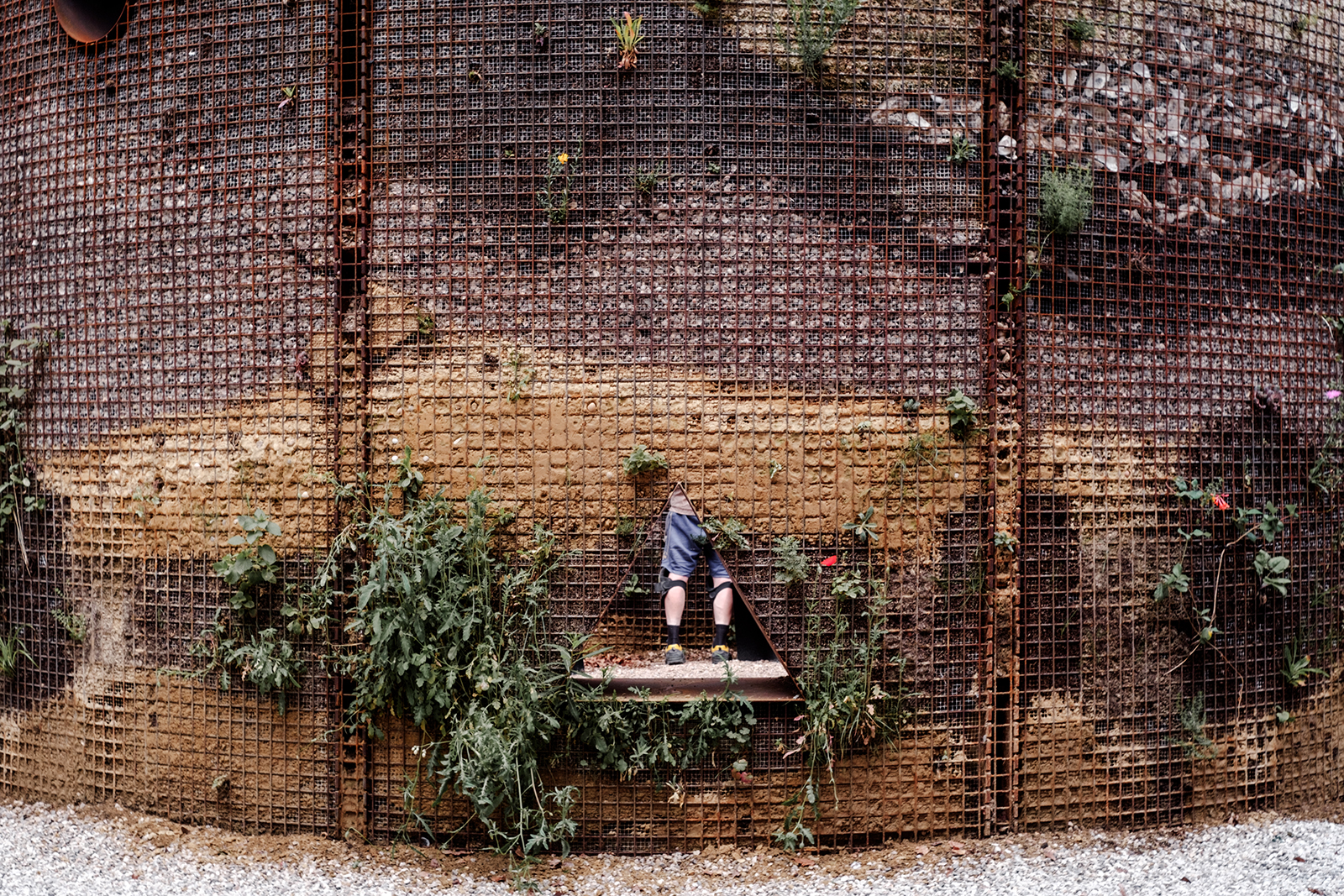
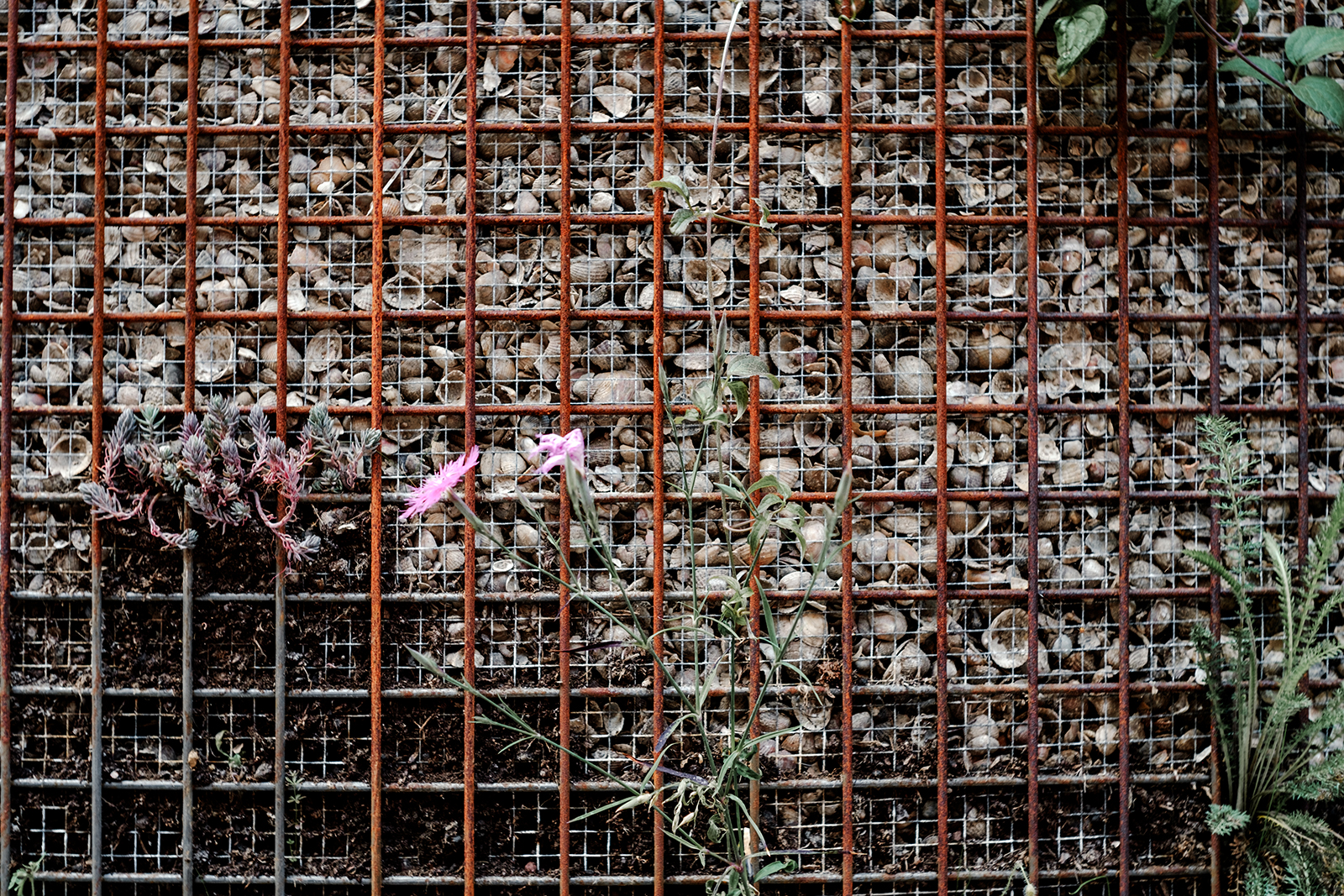
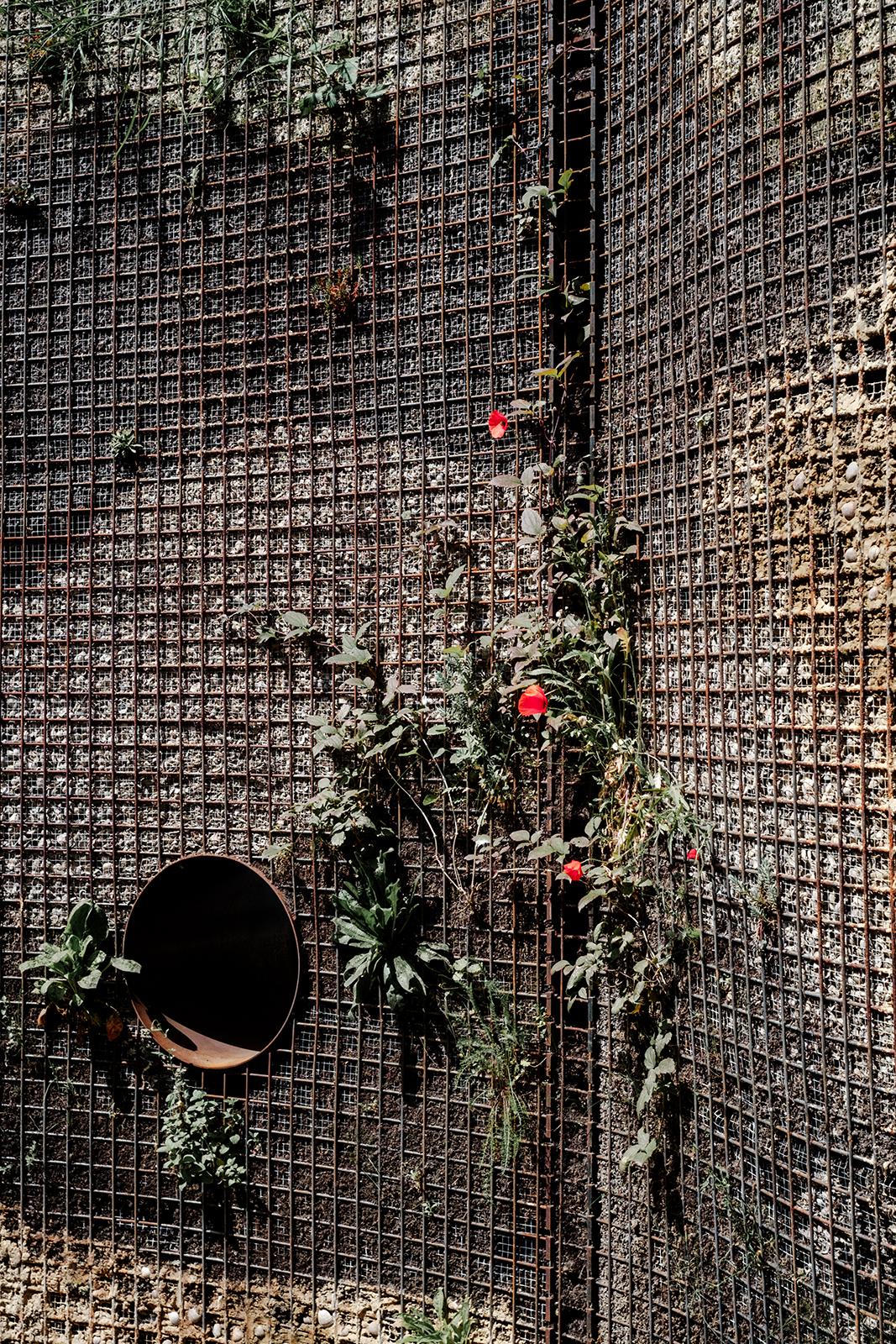
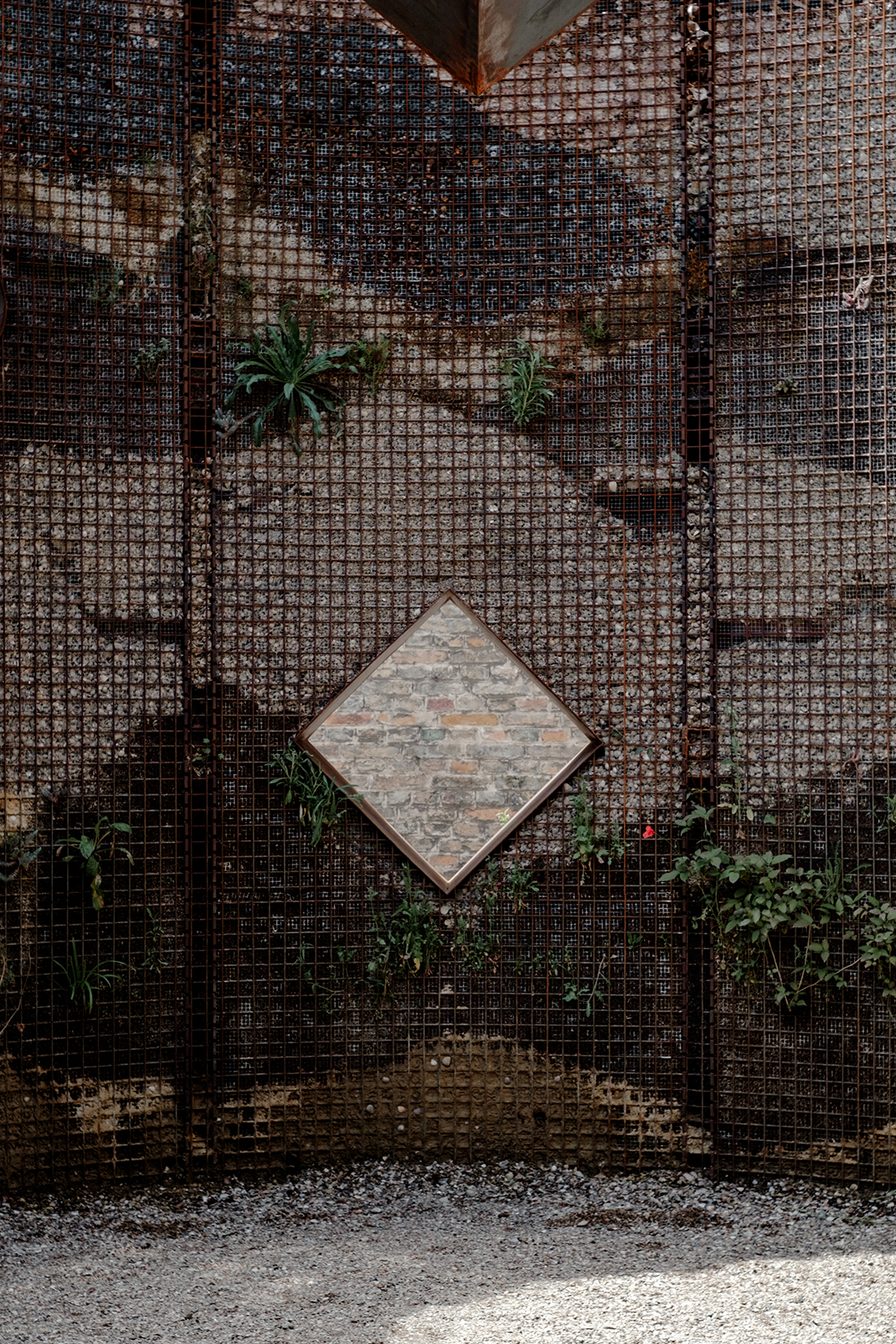
The 6-metre-wide silo is composed of different materials, stacked on top of each other like individual ecosystems. A metal grid – filled with earth, peat, shells and leaves – invites visitors to dissect the layers in more detail. Mixed into the construction are plants and flowers (in seed form) that – like the material layers themselves – will transform over time.
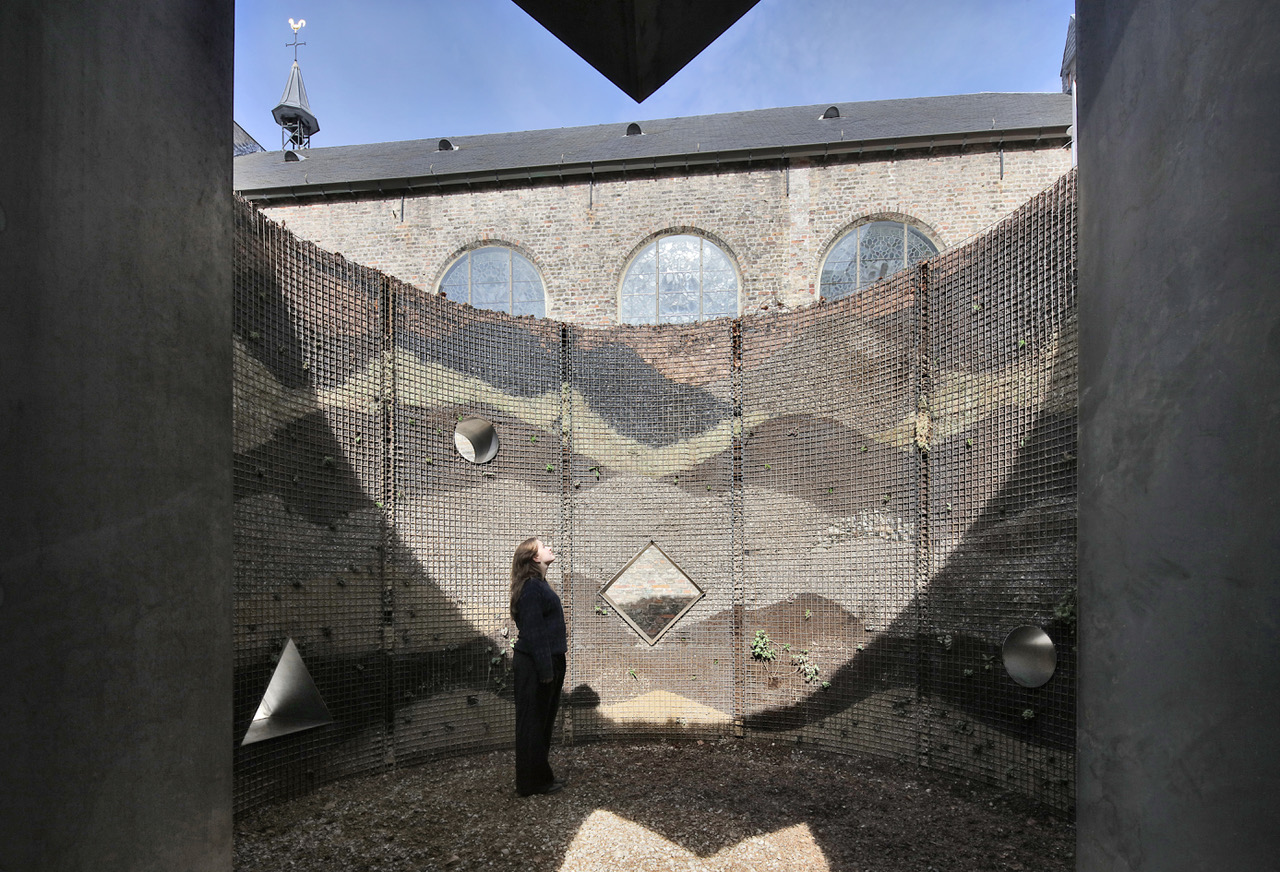
As a result, the work will change during the spring and summer months of the Bruges Triennial 2024, always providing new nutrients and becoming a natural pole of attraction for anyone seeking a sanctuary in the heart of the city.
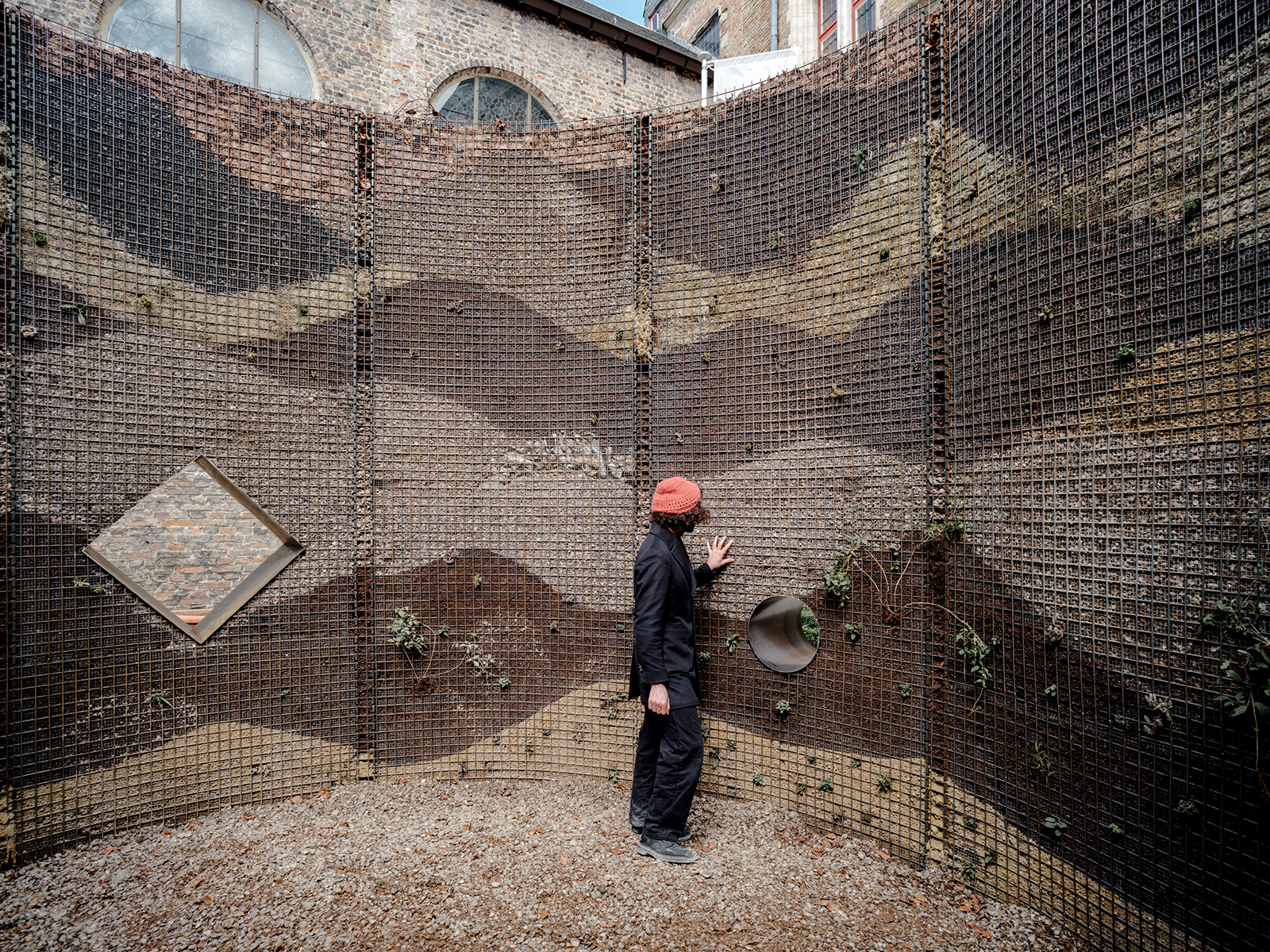
Earthsea Pavilion brings nature back into the metropolis. It is an invitation to stop and pause, a space for discovery, a breeding ground for walkers, birds, flowers and insects.
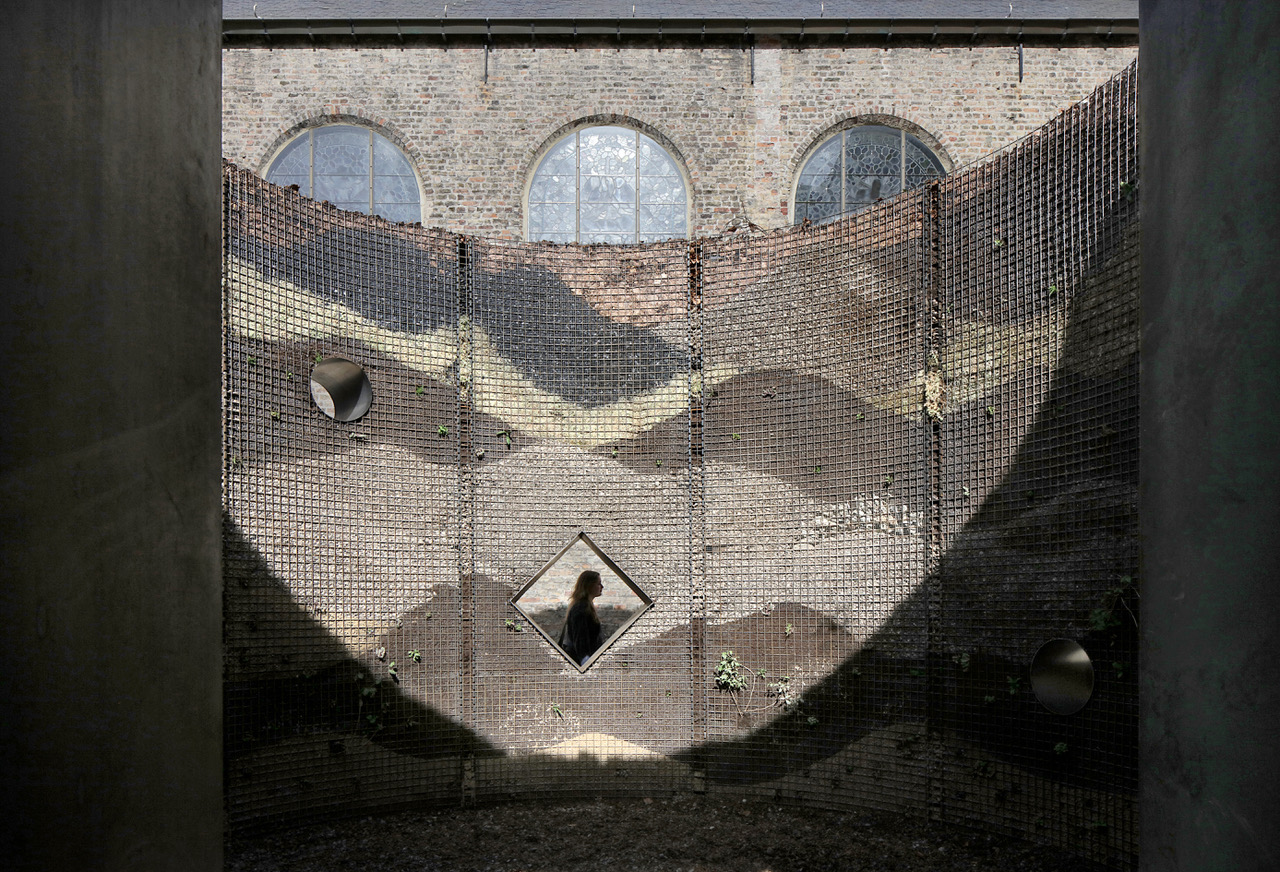
The pavilion occupies a site that breathes history: Hof Bladelin, a building whose story dates to the year 1435. This spacious residence was commissioned by Pieter Bladelin – advisor to the Duke of Burgundy, Philip the Good – and subsequently owned by the House of Medici, the eminent Florentine banking family that continued to build their empire from this medieval satellite. The site not only symbolises the growth and prosperity of Bruges in the Golden Age, but also the topical issues that arise in a UNESCO World Heritage context: how to ensure that historic properties do not become ghosts of the past, but continue to be dynamic and resonant buildings, both now and in the future?
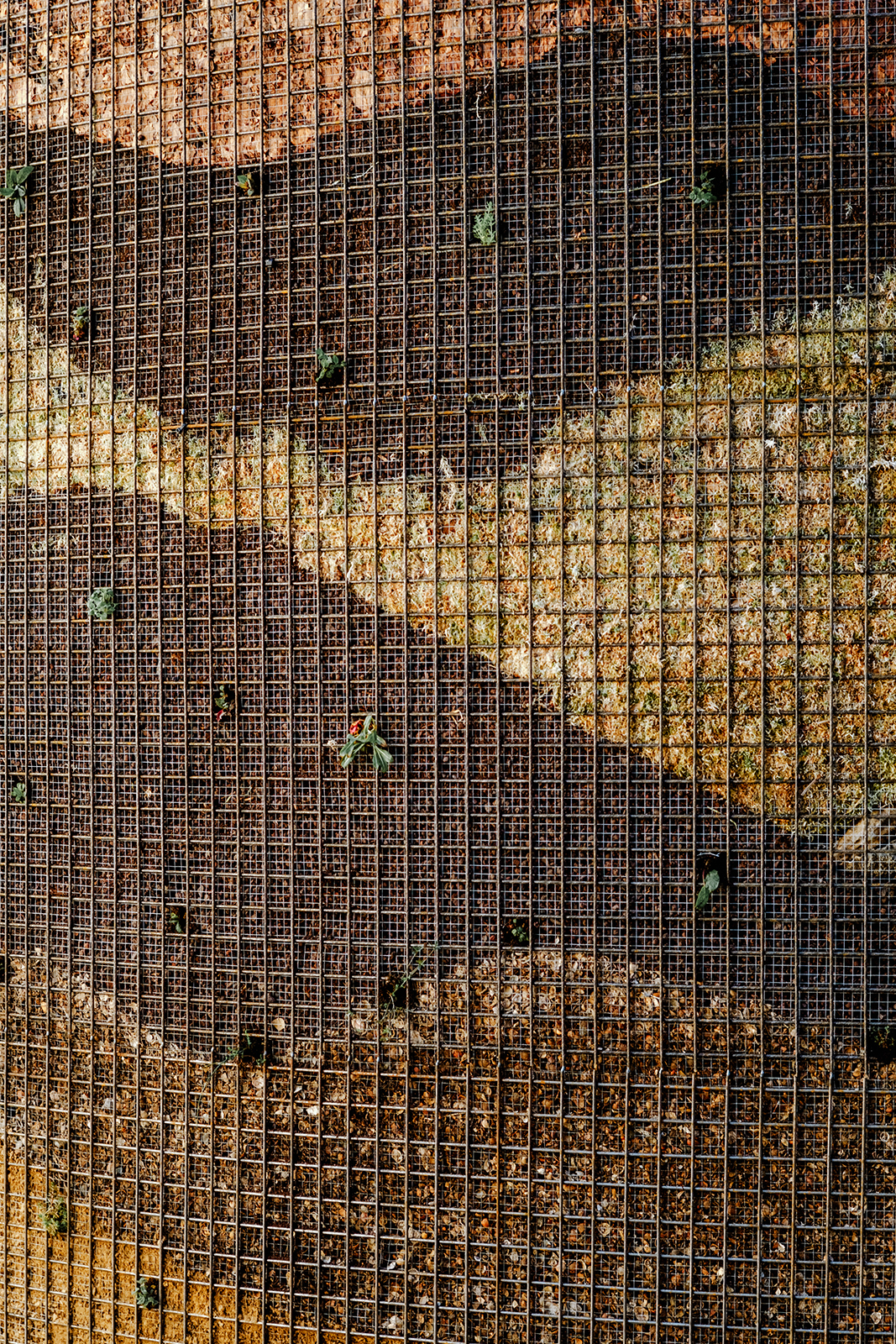
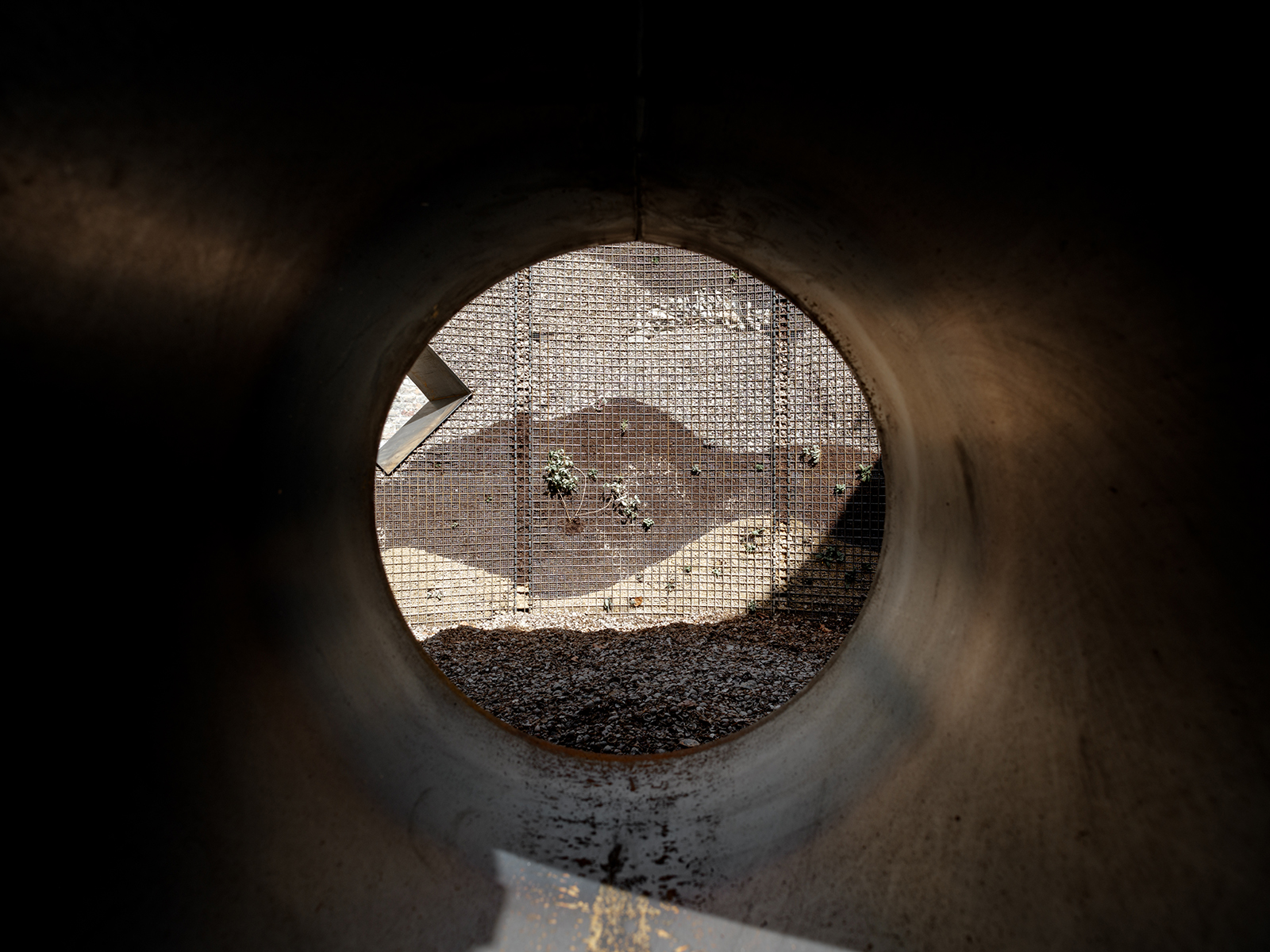
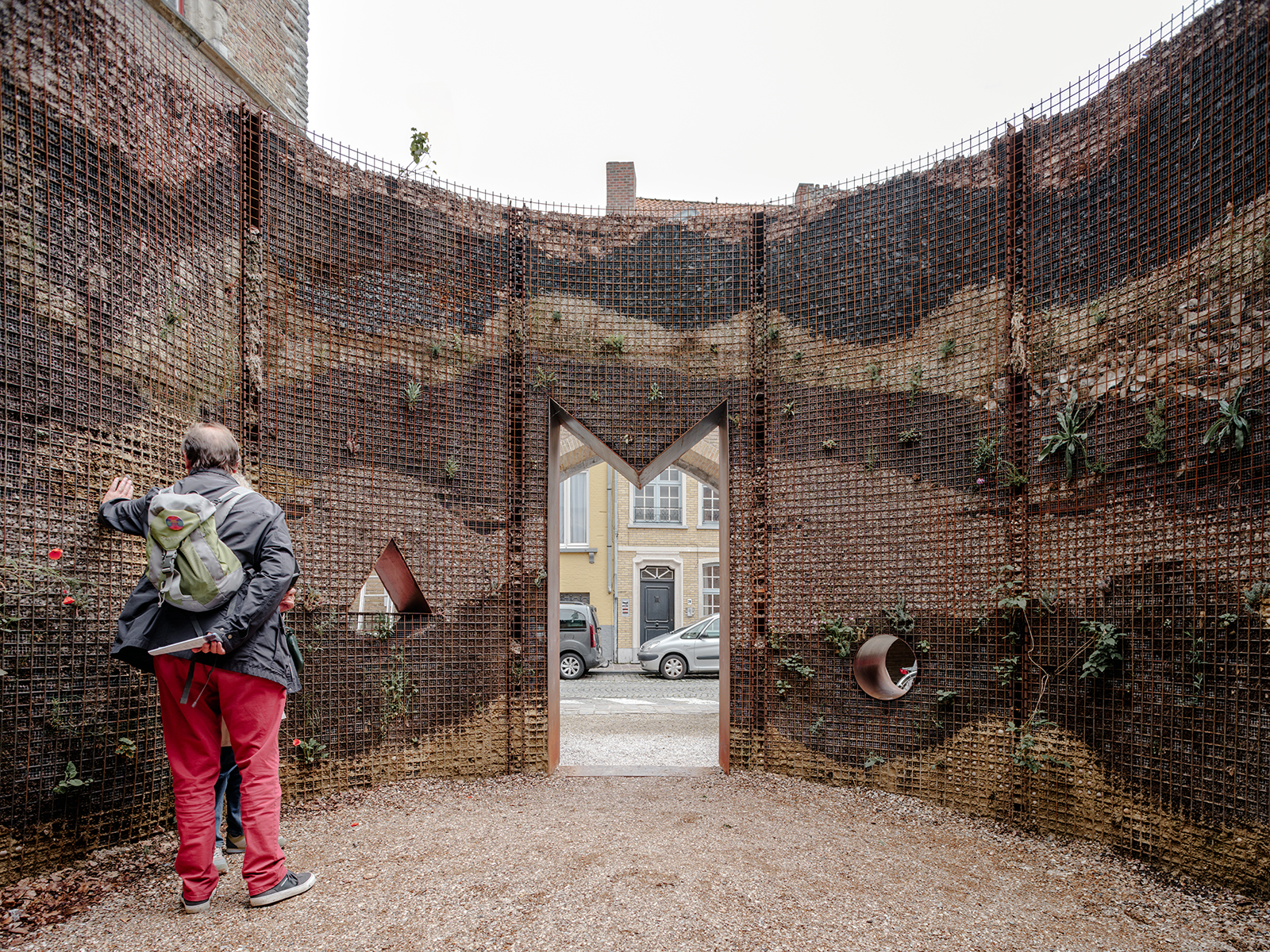
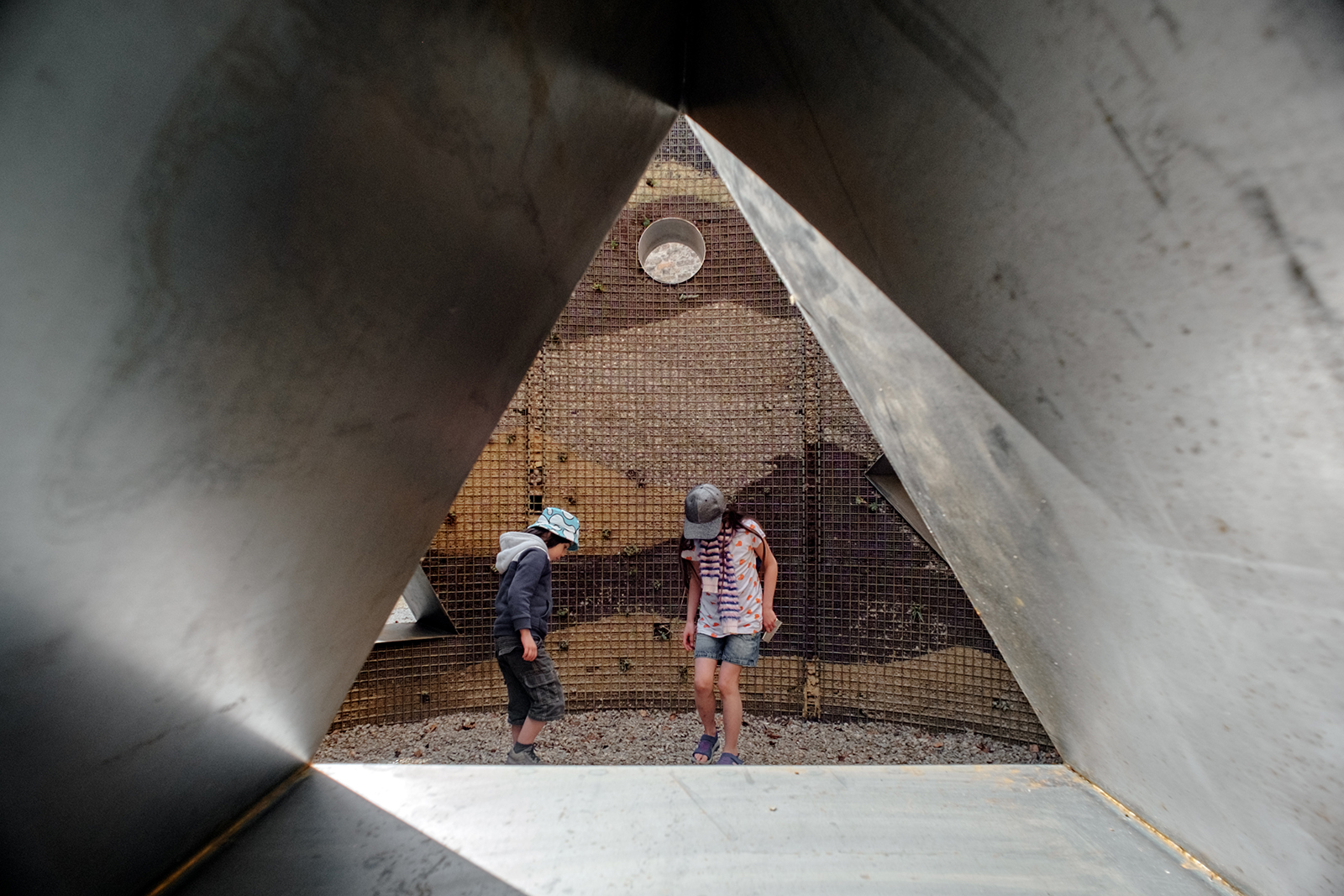
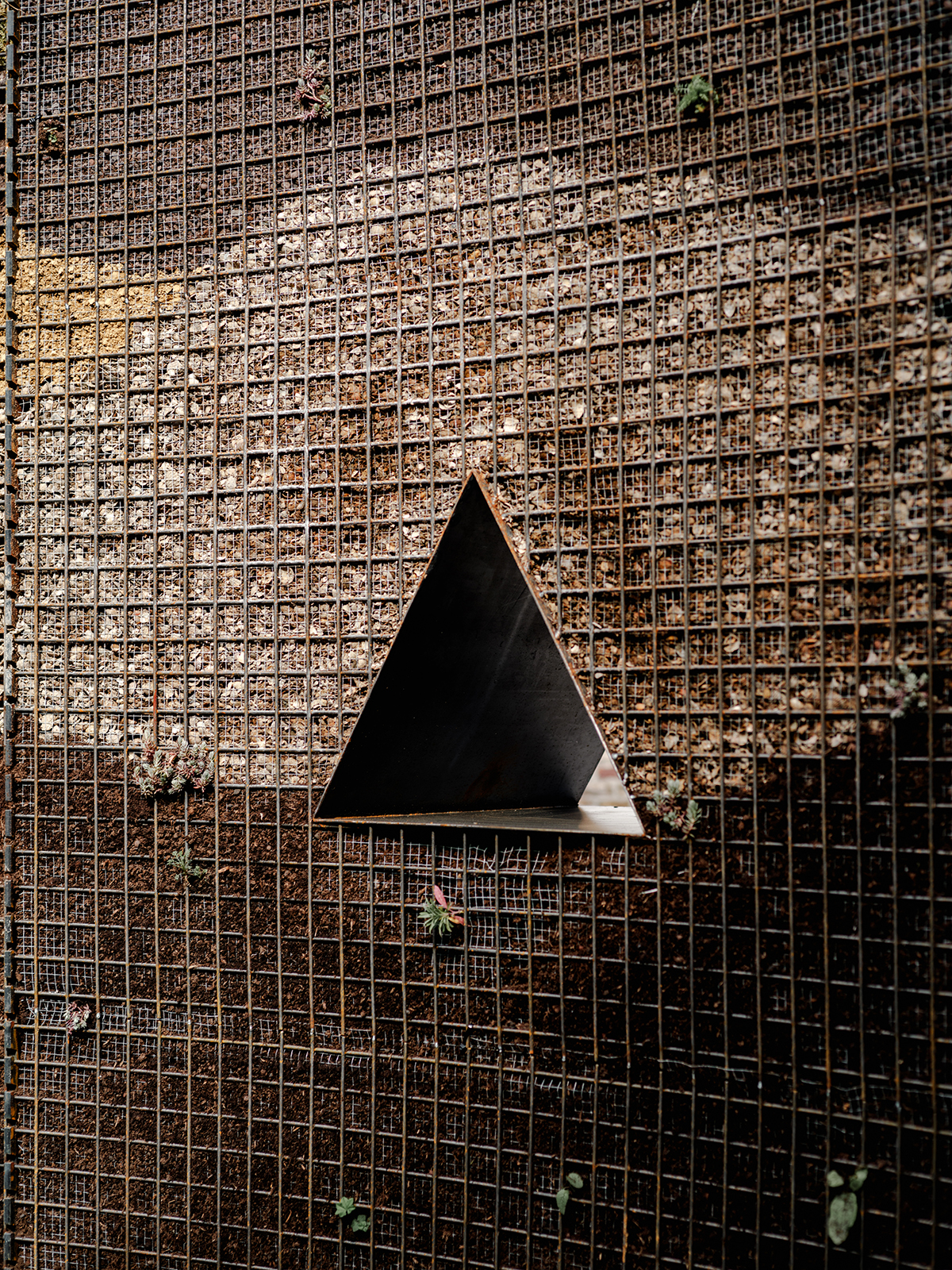
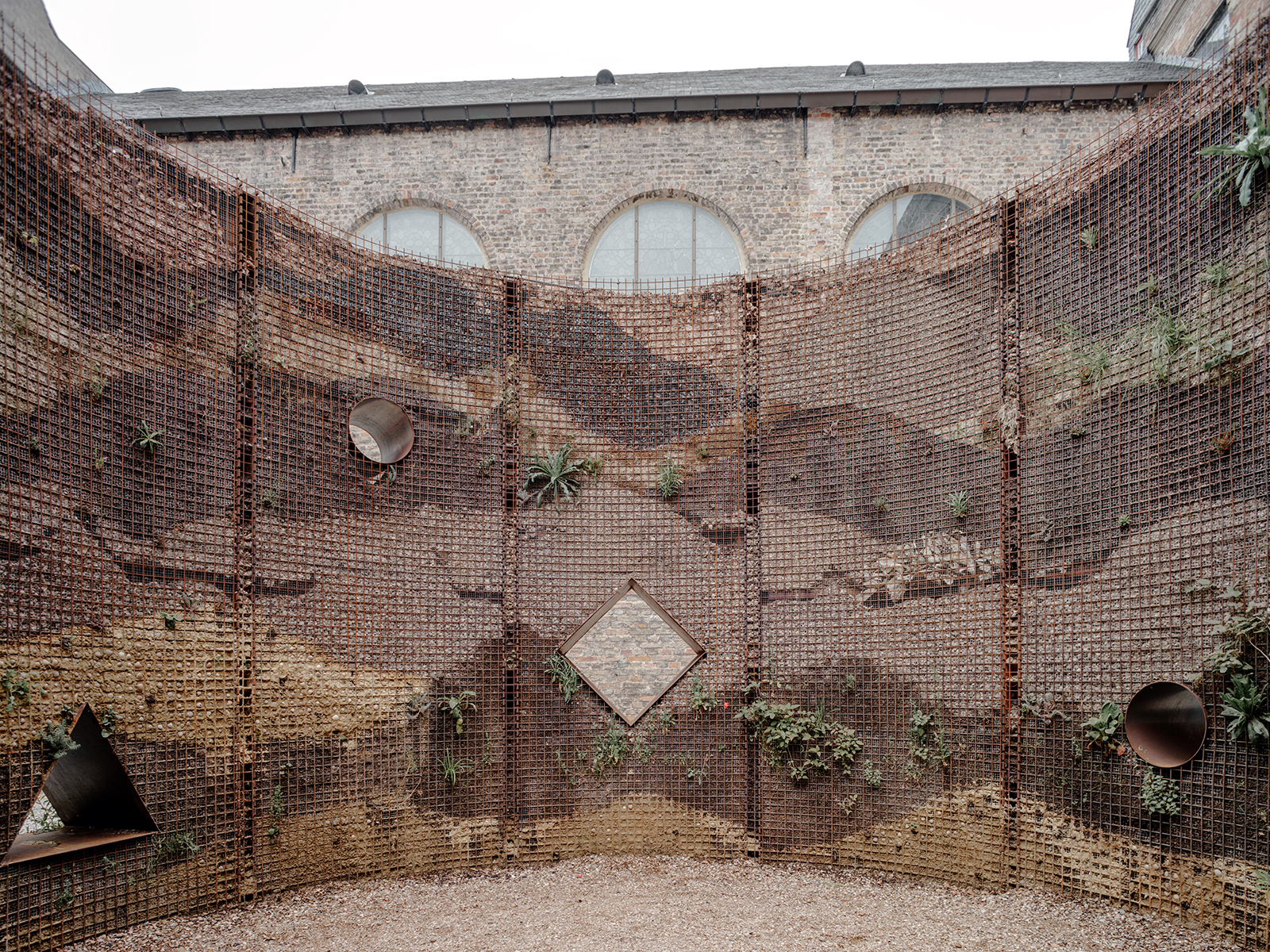
“Earthsea Pavilion is a living organism, a contemporary chimera made of minerals, plants, animals, organic matter, fungi and bacteria, collectively composing a new soil. It is both a garden and a building, a place of encounter and exchange between people and other forms of life. We find shelter within it as it grows, breathes, and changes over time, reacting to the weather as well as to the actions of its human and non-human inhabitants. We wander across it while its layers settle, while strata of organic matter become fertile soil, while water is filtered through its earthly walls, birds and bumble bees nest and build their hives, and fungi develop their web of relations.”
Facts & Credits
Project title Earthsea Pavilion
Typology Landscape
Location Bruges, Belgium
Context Bruges Triennial 2024: Spaces of Possibility (Contemporary art and architecture in the world heritage city of Bruges – From Saturday 13 April to Sunday 1 September)
Architecture Studio Ossidiana
Team Giovanni Bellotti, Alessandra Covini with Pedro Daniel Pantaleone, Viktoria Bacheva, Emanuele Volpe, Konstantin Beck
With the support of Istituto Italiano di Cultura and Creative Industries Fund NL
Special thanks to Klaas van der Molen, Felix Madrazo, Reto Rey, Olivier Schoenmaker, Maarten Meevis, Peter Mensinga, Asnate Bockis
Photography Riccardo de Vecchi, Filip Dujardin
Text provided by the architects