Situated within the Cycladic landscape and beyond, Omniview practice crafts architecture by fusing traditional aesthetics and local construction techniques with the innovation of parametric design. The result is spaces where handmade elements interact seamlessly with digitally fabricated ones. Selected “Neo-Cycladic” works are presented here and represent their architectural approach.
A challenge sets the “Neo-Cycladic” Question
The Cyclades hold one of the most iconic architectural identities in the world. White cubic volumes, blue openings, narrow alleys, stone walls, and the stark contrast of geometry against the Aegean light have become a global shorthand for the Greek islands.
This recognisability is both asset and burden. It drives the tourist economy and fuels real-estate demand, yet it also risks turning architecture into a postcard image, repeated endlessly without depth.
For architects working in the islands, the challenge is to show that Cycladic architecture is not a static relic but a living language.
Planning regulations and preservation frameworks often encourage strict imitation, while investors and developers frequently request the familiar “Cycladic look” as a marketing tool. The result can be an architecture that satisfies expectations but fails to evolve.
The Omniview Cycladic Ethos
Omniview crafts Cycladic architecture and interiors by fusing the timeless qualities of traditional island aesthetics and indigenous construction with the innovation of parametric design.
The studio reimagines contemporary Cycladic typologies through advanced architectural methods while grounding every decision in the authenticity and tactile intelligence of local building know-how. Indigenous craftsmanship becomes the medium through which progressive design processes are materialised, so each space retains its natural soul and distinct character.
Omniview’s Neo-Cycladic Manifesto
The familiar geometry of the Cyclades is not replicated; it is deconstructed, reinterpreted, and recomposed within a Neo-Cycladic parametric language that generates spatial compositions, motifs, and patterns rooted in tradition and expressed for today.
In the Aegean light, where white walls meet the sea, this approach reframes the Cycladic spirit for a new era. Work begins with the honest language of the islands—materials, hand-shaped textures, and enduring geometric clarity—and subjects it to precise computational design.
Stone, lime, and timber, once shaped solely by the human hand, are joined with digital precision to yield spaces that feel grounded in memory and fully present.
The outcome is an architecture of measured duality: intimate and expansive, stable in its connection to place and open in its expression. Spaces appear as if they have always belonged to the landscape, yet they could only have been conceived now. Through this synthesis, Omniview advances a neo-Mediterranean way of living that is tactile, connected to nature, and attuned to the cosmopolitan character of the Cyclades.
Omniview’s Neo-Cycladic Approach
The process begins with the language of geometry, materials, and craftsmanship and continues through a progressive methodology that allows forms to be deconstructed, adapted, and reassembled into coherent patterns and spatial sequences. Indigenous techniques are not abandoned; they are instrumentalised to give material authenticity and depth to contemporary design. The result is a modern expression that remains firmly grounded in place and responsive to the present moment.
About Omniview Design
Omniview Design is an Athens-based architecture studio founded in 2013 by brothers Dimitris and John Tsigos. From the outset, the practice has worked across scales—residences, hotels, leisure spaces and interiors—bringing together advanced digital design with the material depth of traditional craftsmanship. Its identity rests on the idea that Cycladic and Mediterranean architecture can be reinterpreted through parametric methods, producing buildings and spaces that are both rooted in place and expressed in contemporary form.
Beyond Greece, Omniview has begun to establish a clear international presence. The most visible example is Nammos Cannes, the French Riviera outpost of the well-known hospitality brand, where the studio reimagined the Riviera’s yacht-club heritage with precise geometry, crafted materials and a Mediterranean sensibility. Alongside this, Omniview has presented concept work for developments in the Middle East, including a residential tower in Dubai, signalling its ambitions in fast-growing global markets.
By combining computational design with construction intelligence, Omniview positions itself as both a custodian of architectural heritage and a driver of innovation. Its projects in Greece—from landmark residences like One Kleomenous in Athens to contemporary hospitality destinations in Mykonos—now stand in dialogue with international commissions, underlining the studio’s ambition to project a Neo-Cycladic vision onto the global stage.
Selected “Neo – Cycladic” Works
Mykonos Earth Suites is a boutique hotel located at Megali Ammos, a short walk from the town of Mykonos. Designed as an adults-only retreat, it comprises fifteen suites with a pool, bar and restaurant, all oriented towards uninterrupted views of the Aegean.
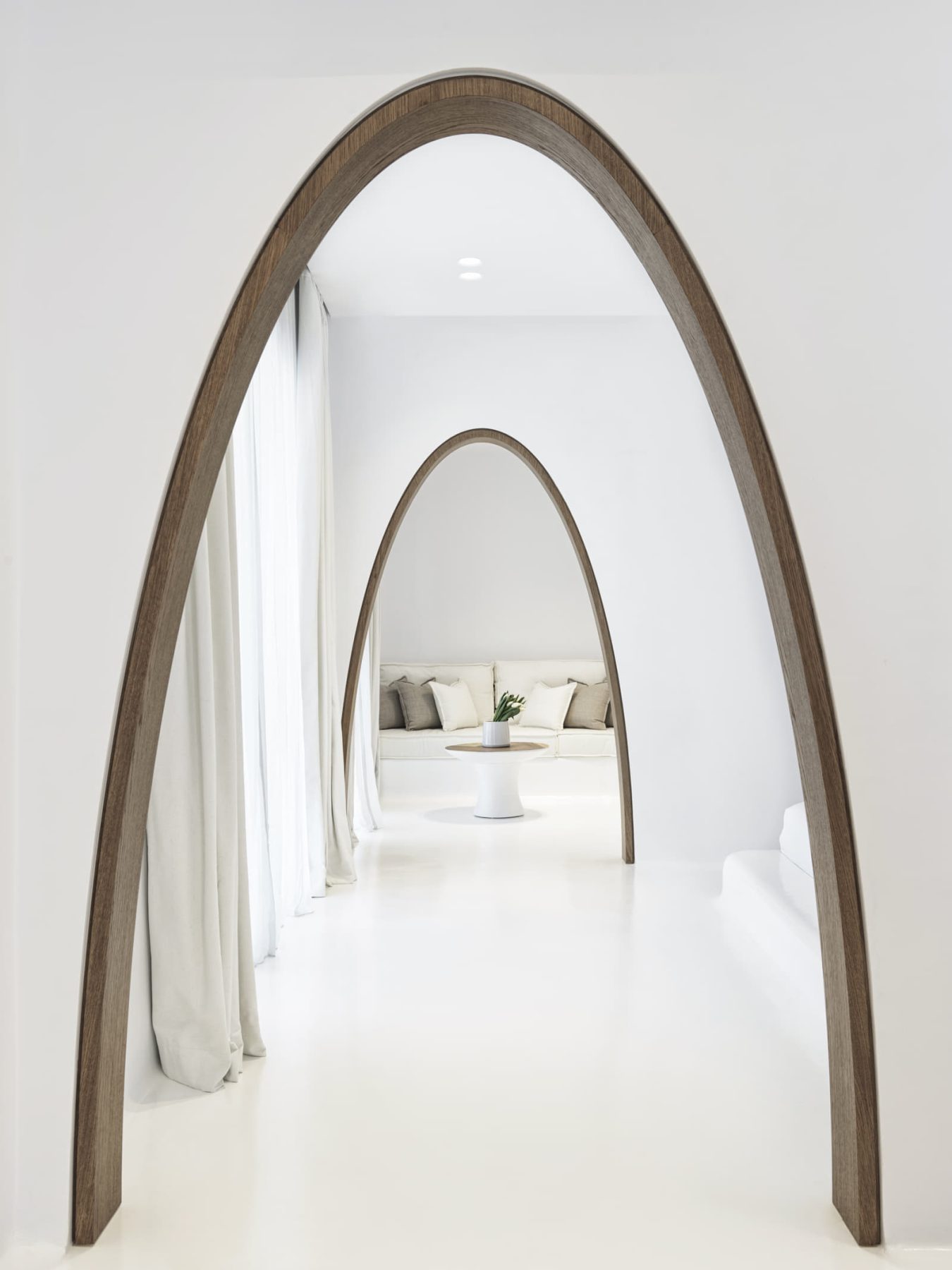
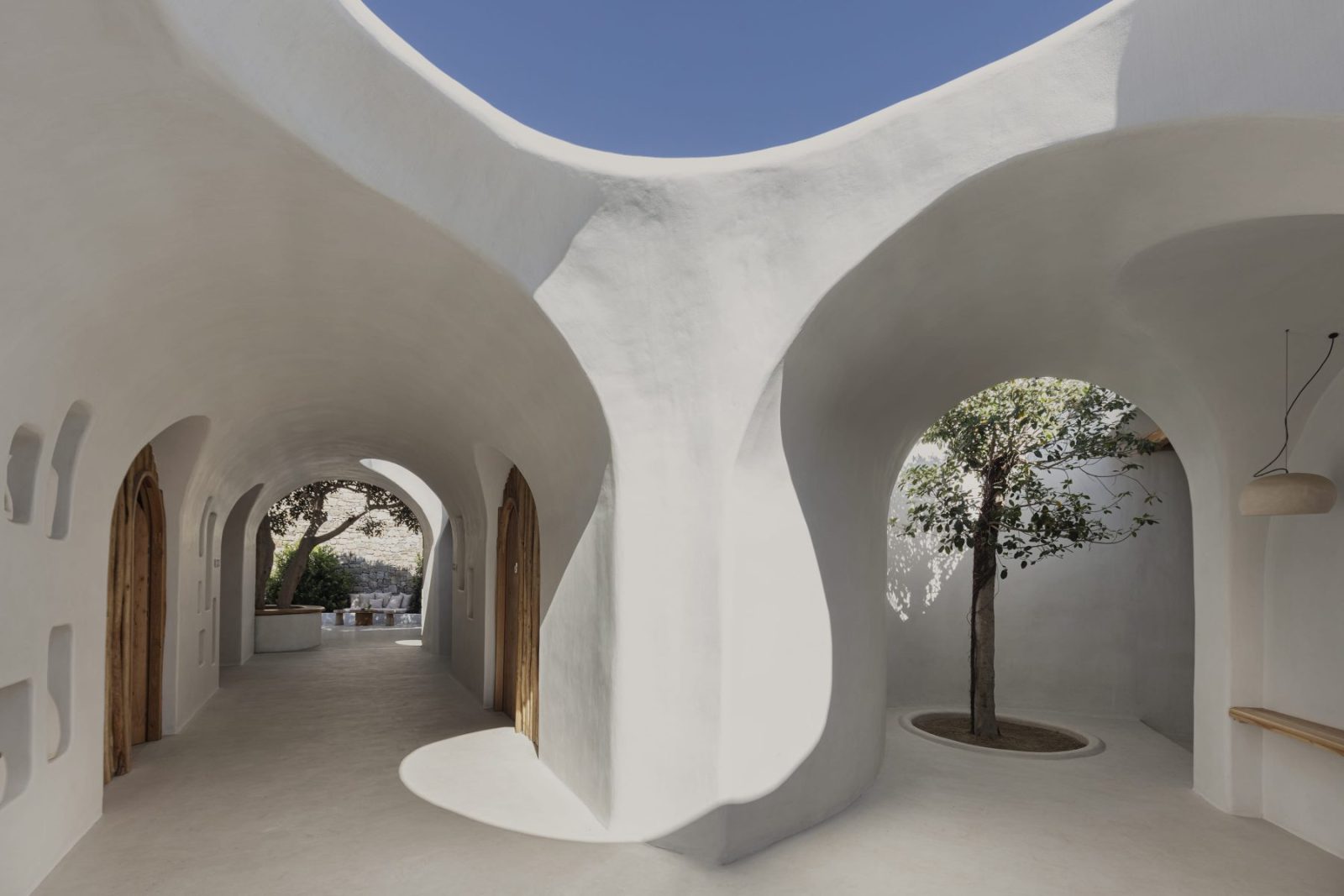
The concept draws directly from two enduring features of Cycladic tradition: arches and built-in forms.
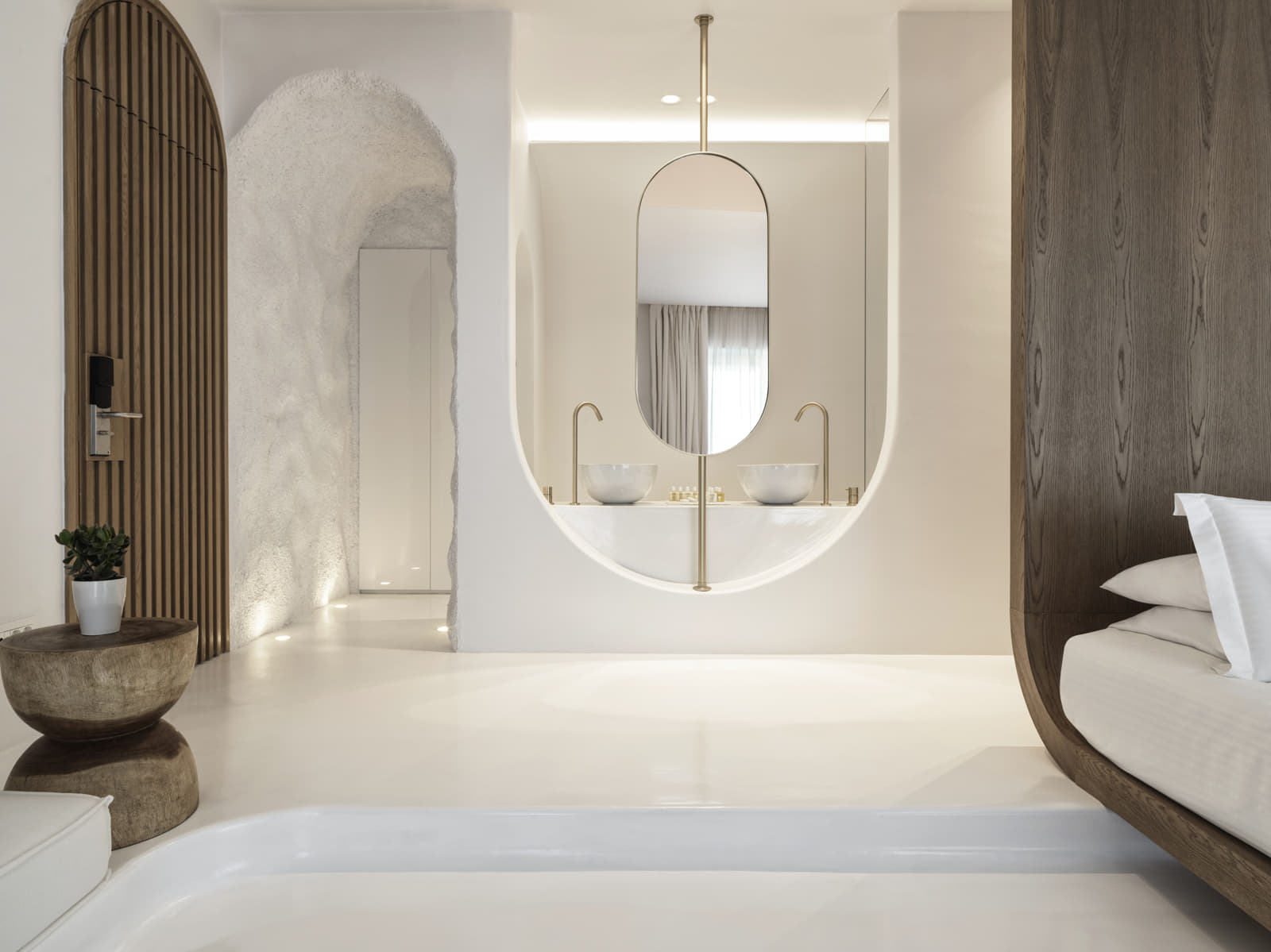
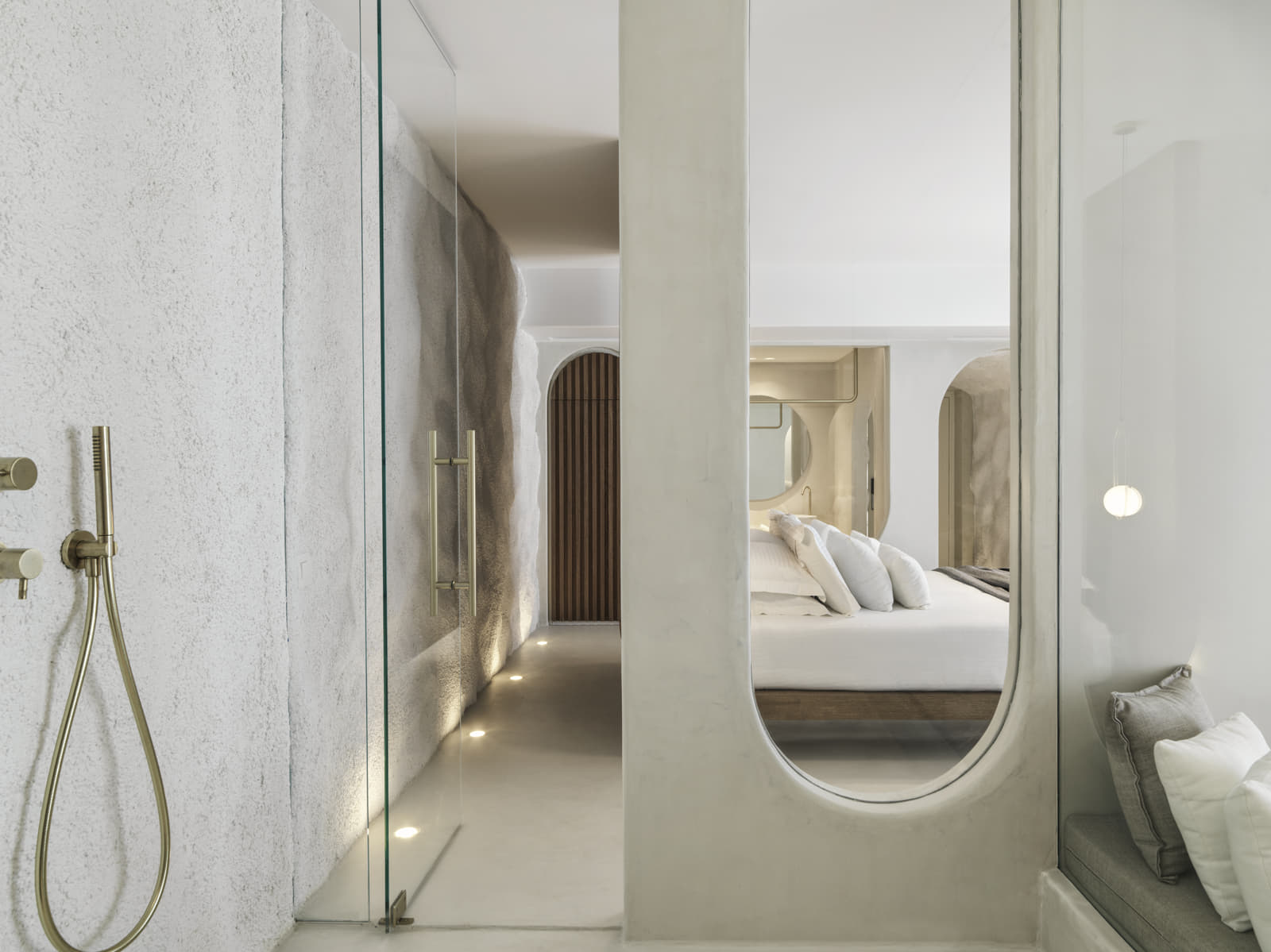
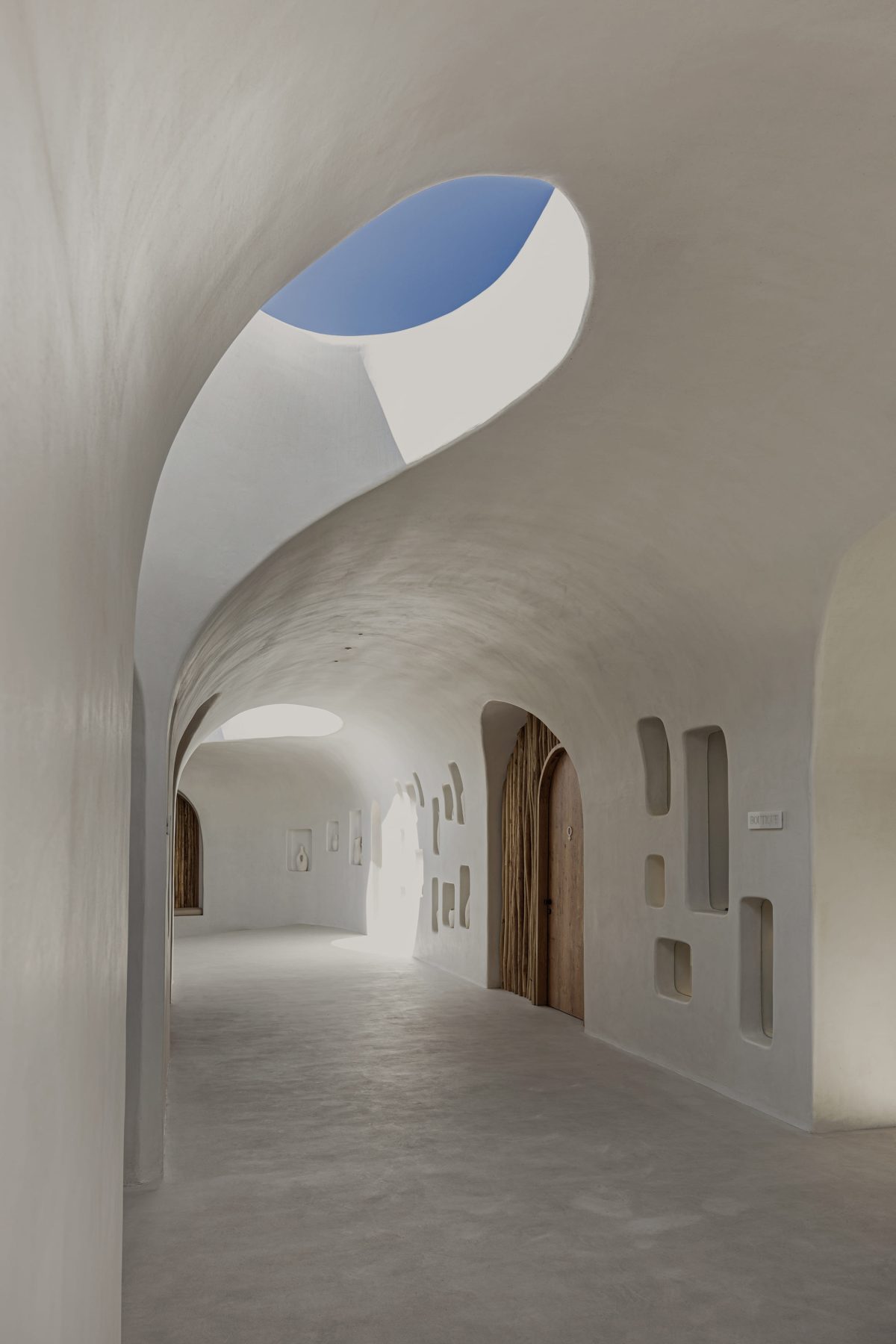
Arches are rearticulated not only as openings but also as passages and furniture elements, while built-in structures and the “topography” of the floor integrate beds, basins and lounge areas into a continuous spatial sequence.
The material palette is restrained yet tactile, combining white cement mortar with natural wood and stone, accented by selected golden details.
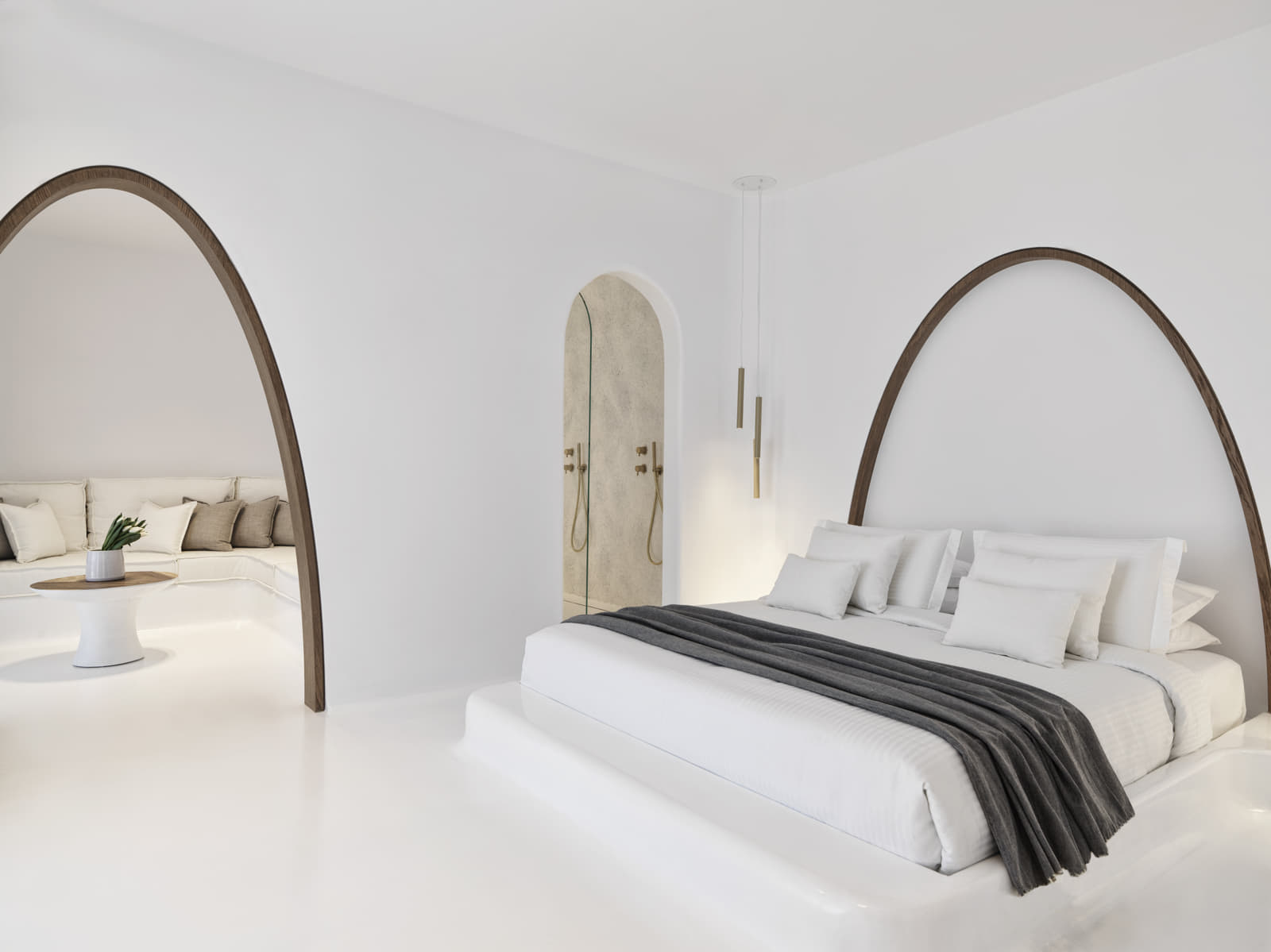
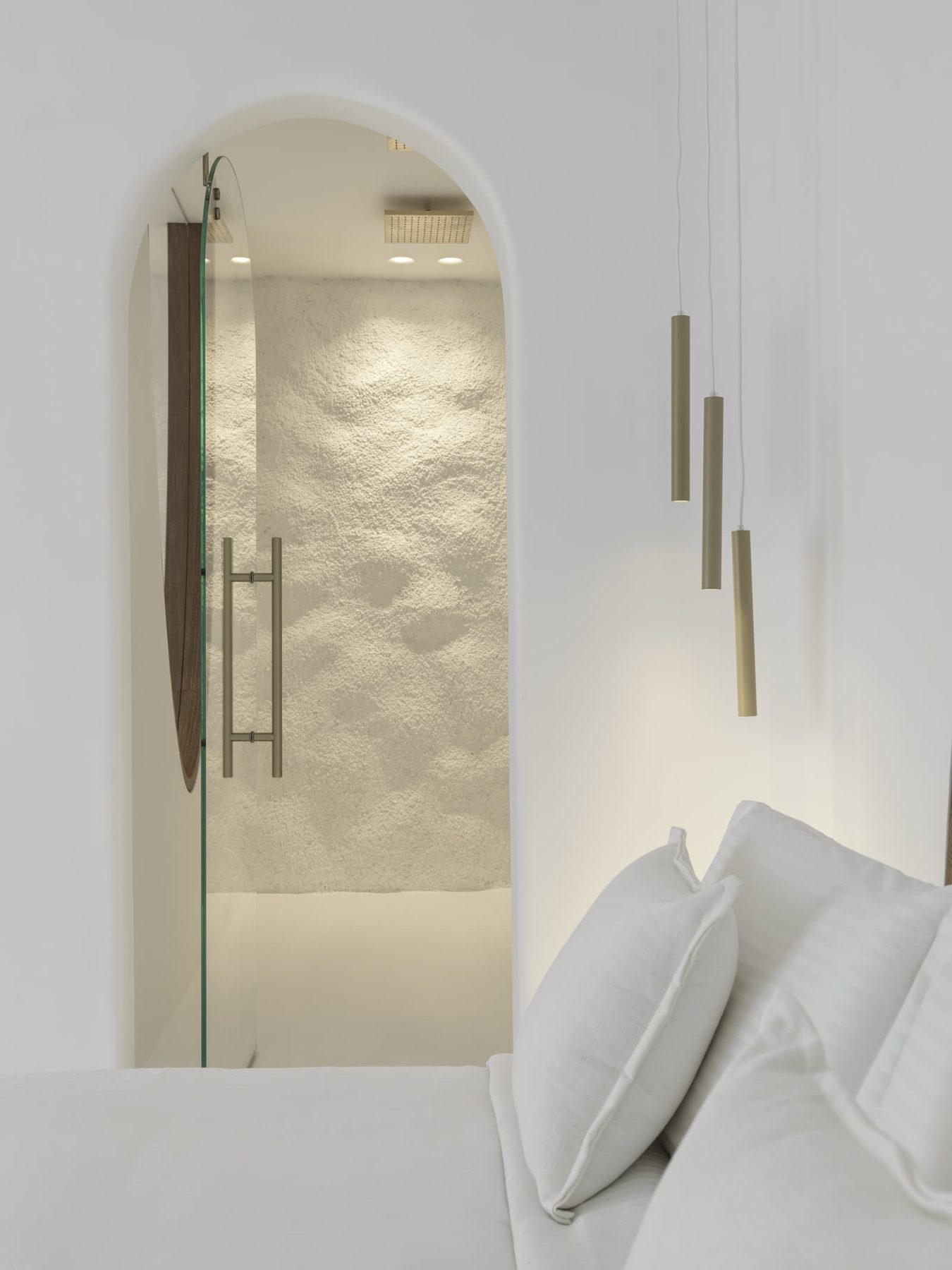
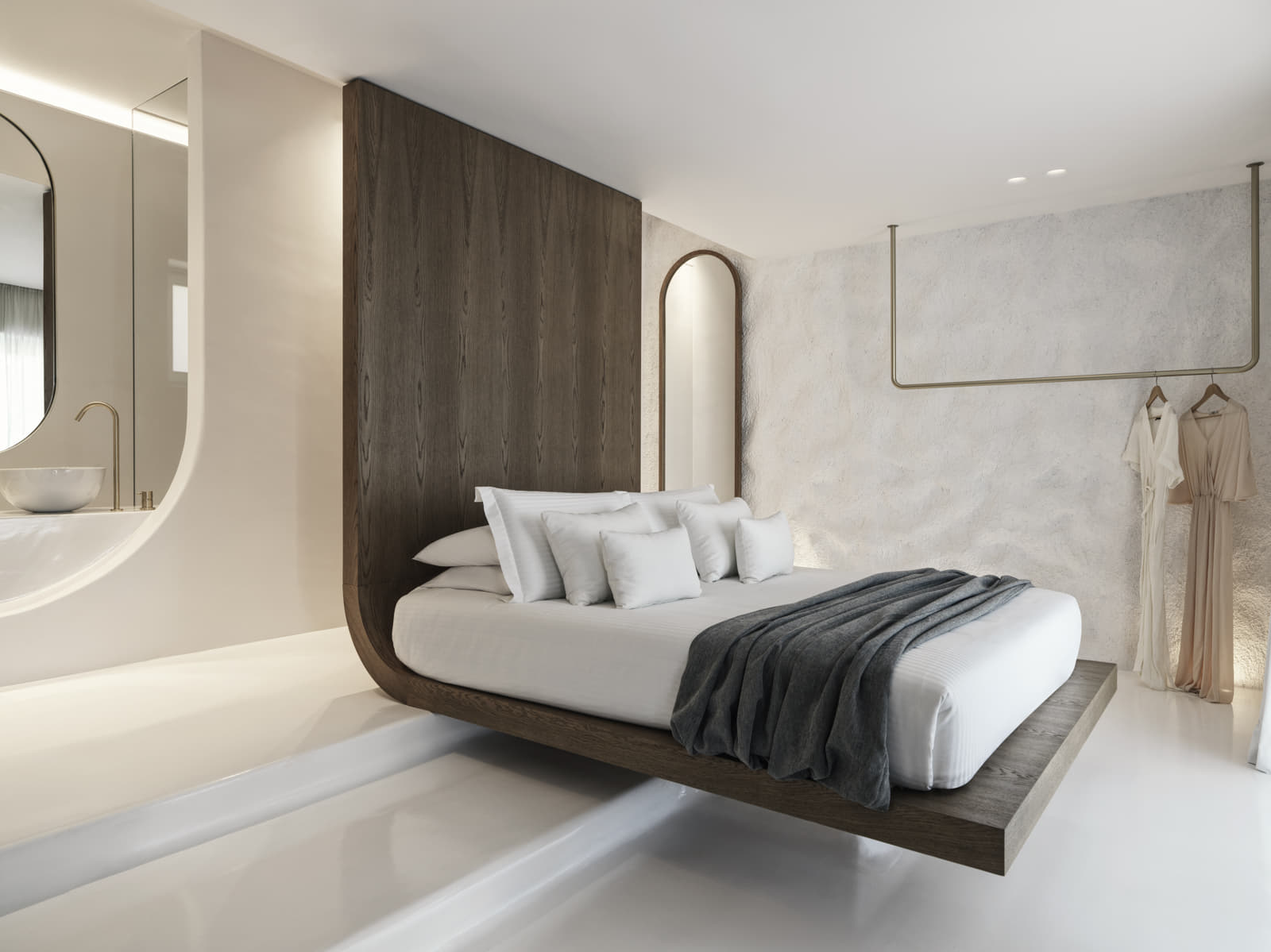
Omniview’s design frames the hotel as both contemporary and grounded, translating familiar elements of island architecture into a coherent interior language that preserves their authenticity while adapting them to a modern hospitality experience.
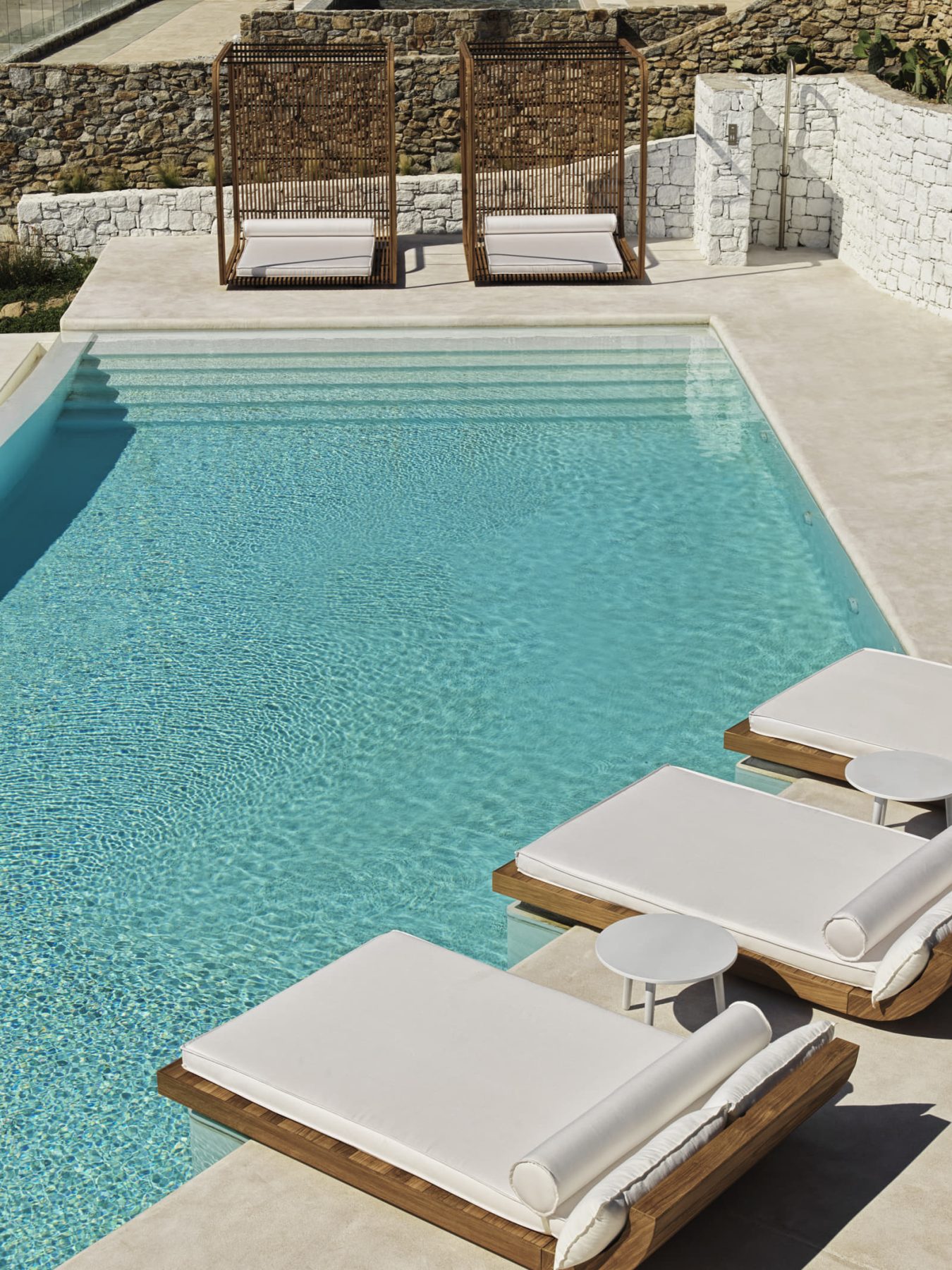
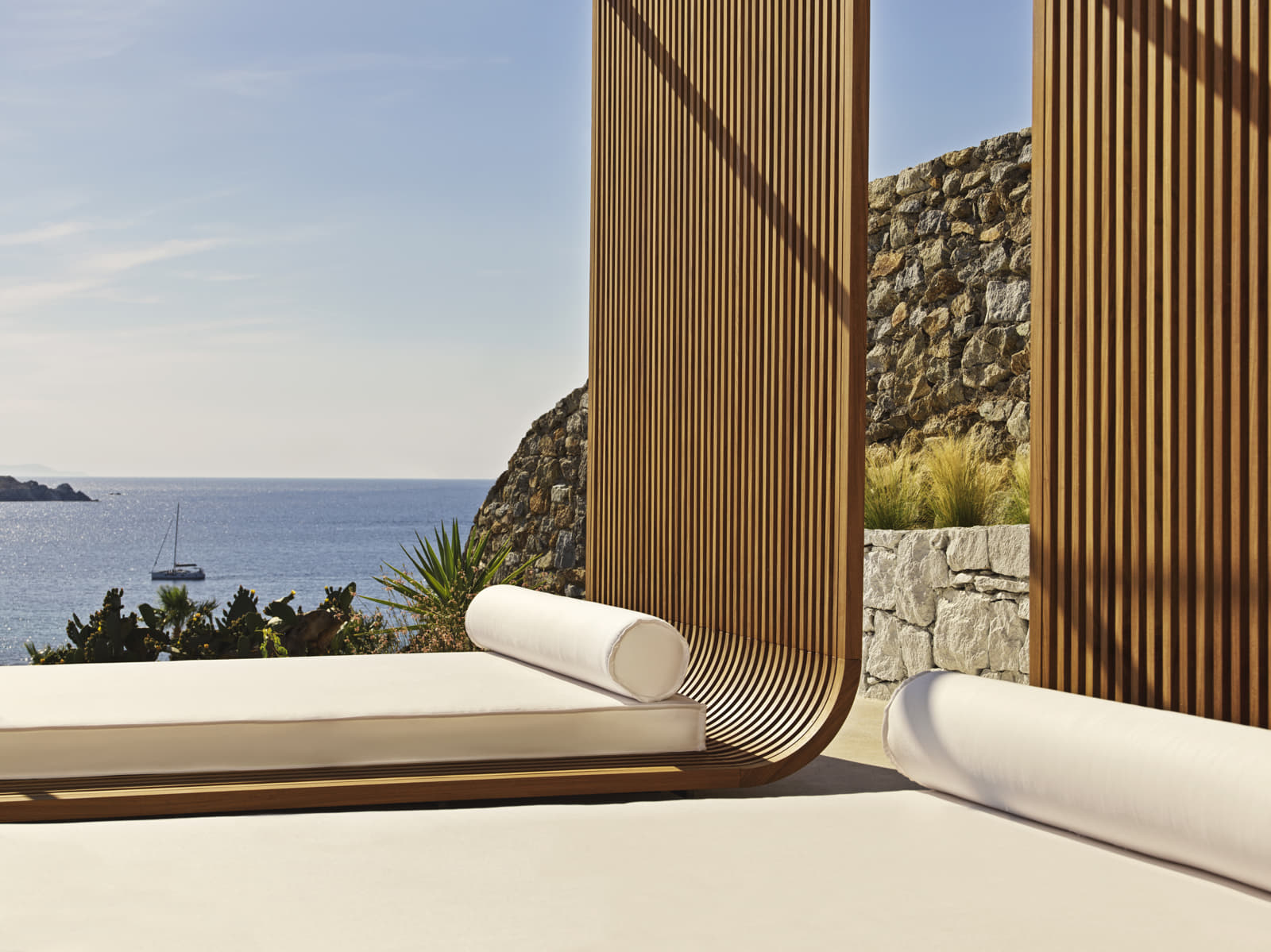
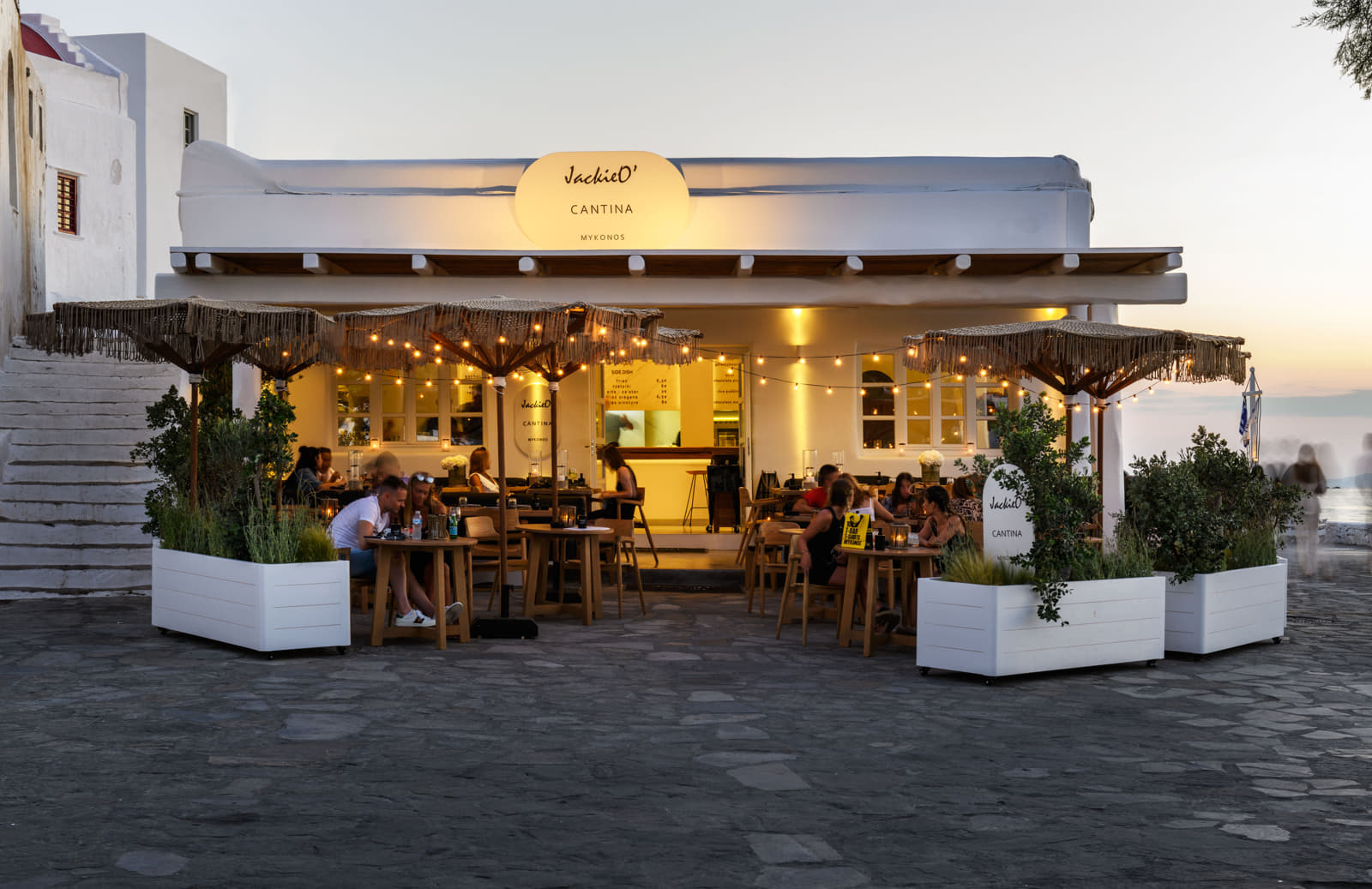
Jackie ‘O Cantina in Chora, Mykonos, is the most recent addition to the Jackie ‘O family of venues and was completed in 2021 with design by Omniview.
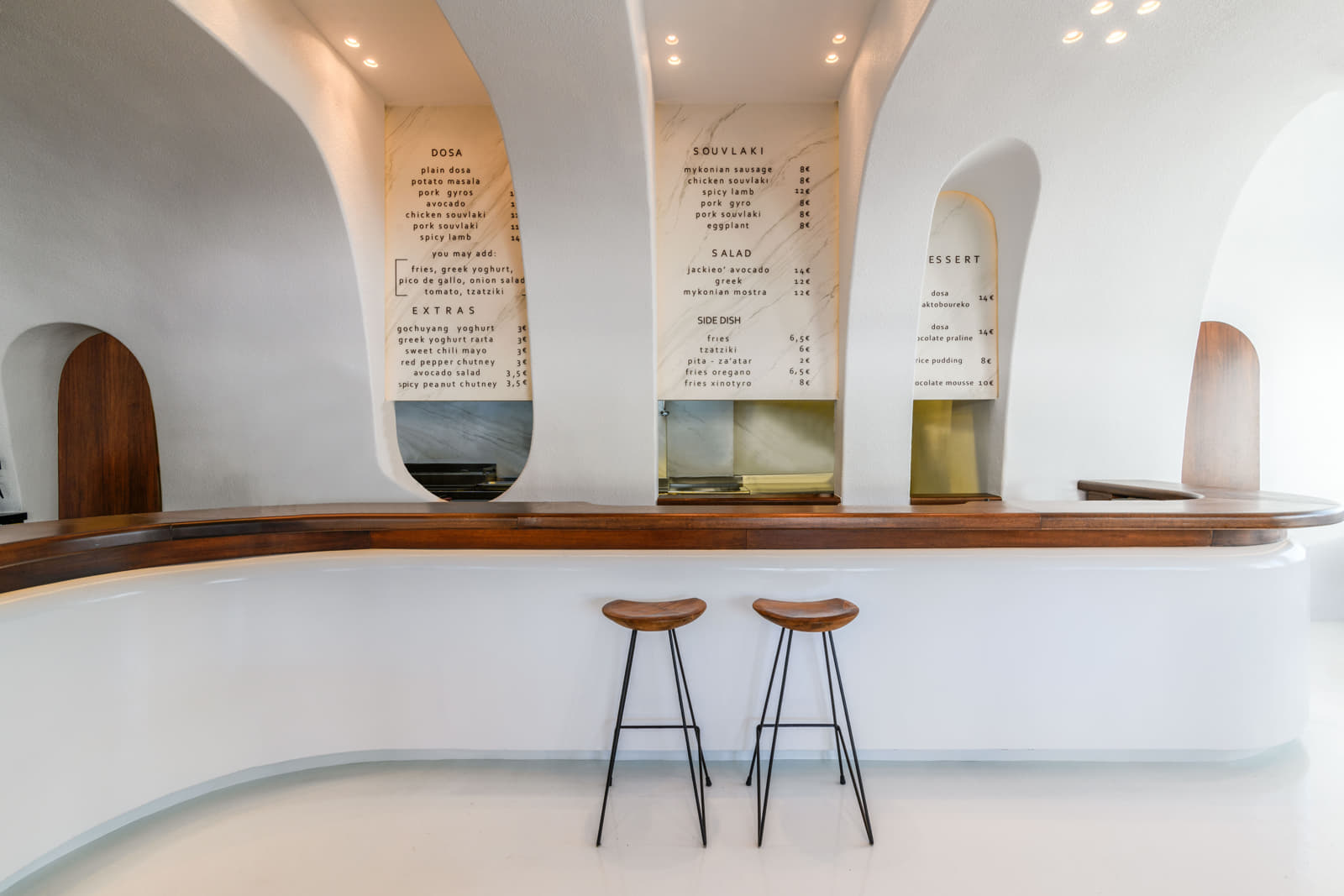
Conceived as a contemporary homage to the small chapels scattered across the Aegean, the space translates their modest forms into a sculptural, almost monastic interior that feels both minimal and charged with presence.
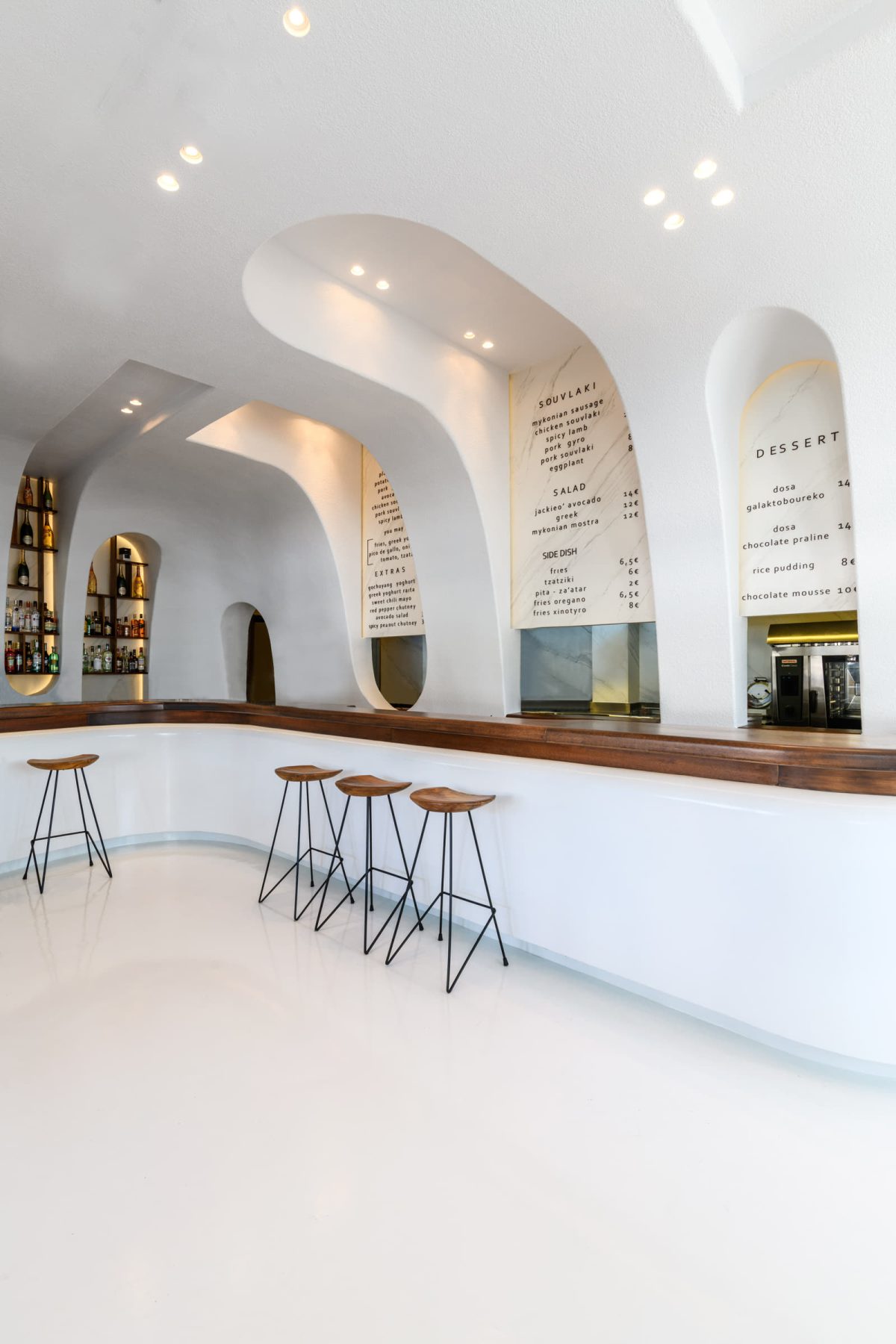
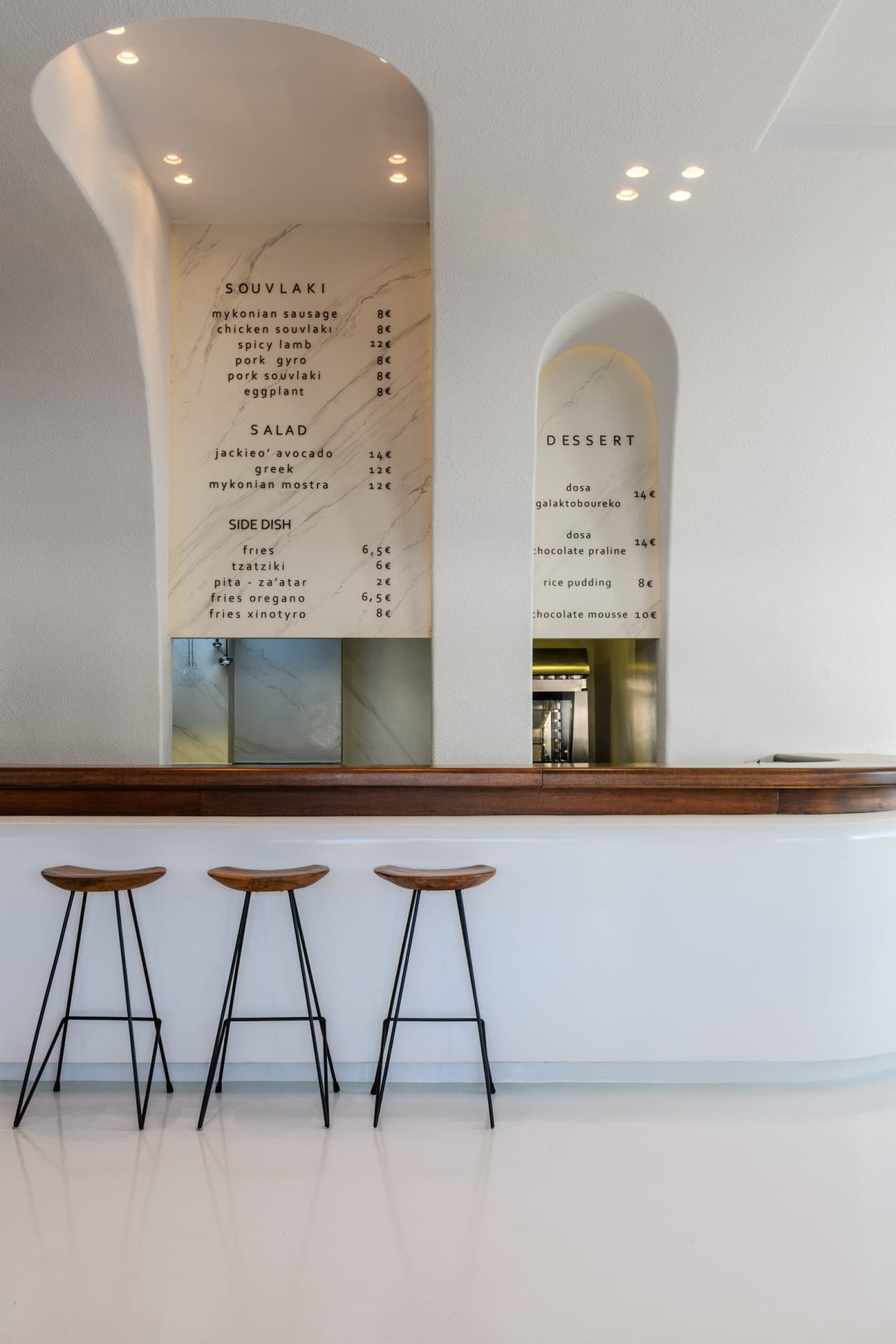
The design is organised around a series of extruded curves and arches that define circulation, frame the bar, and form custom display elements. This architectural rhythm establishes a calm continuity while offering a distinctive identity aligned with the Jackie ‘O brand.
Materials are restrained yet carefully composed: screed concrete and white-toned marble provide clarity and brightness, while dark wood details anchor the bar and shelving with warmth and precision.
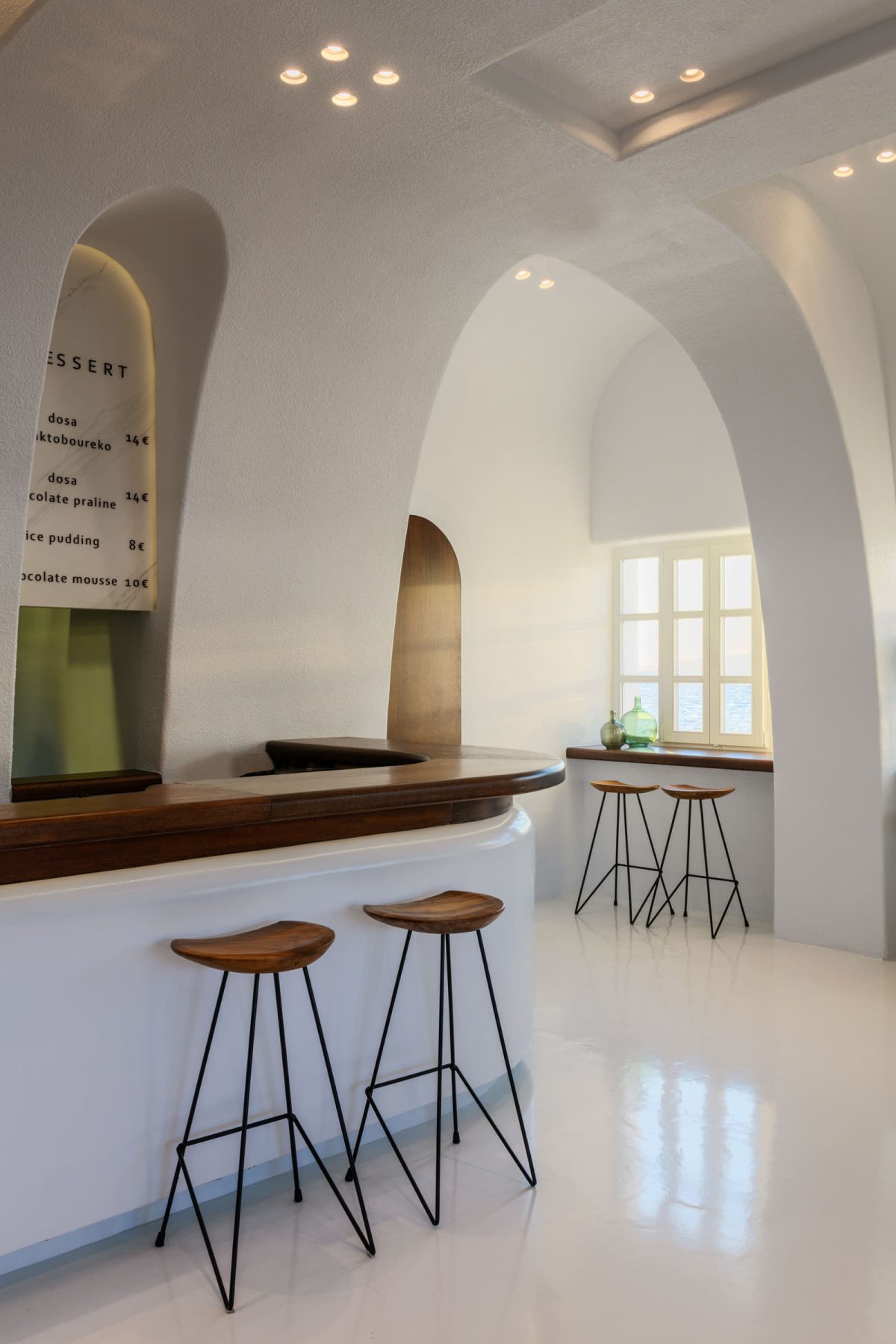
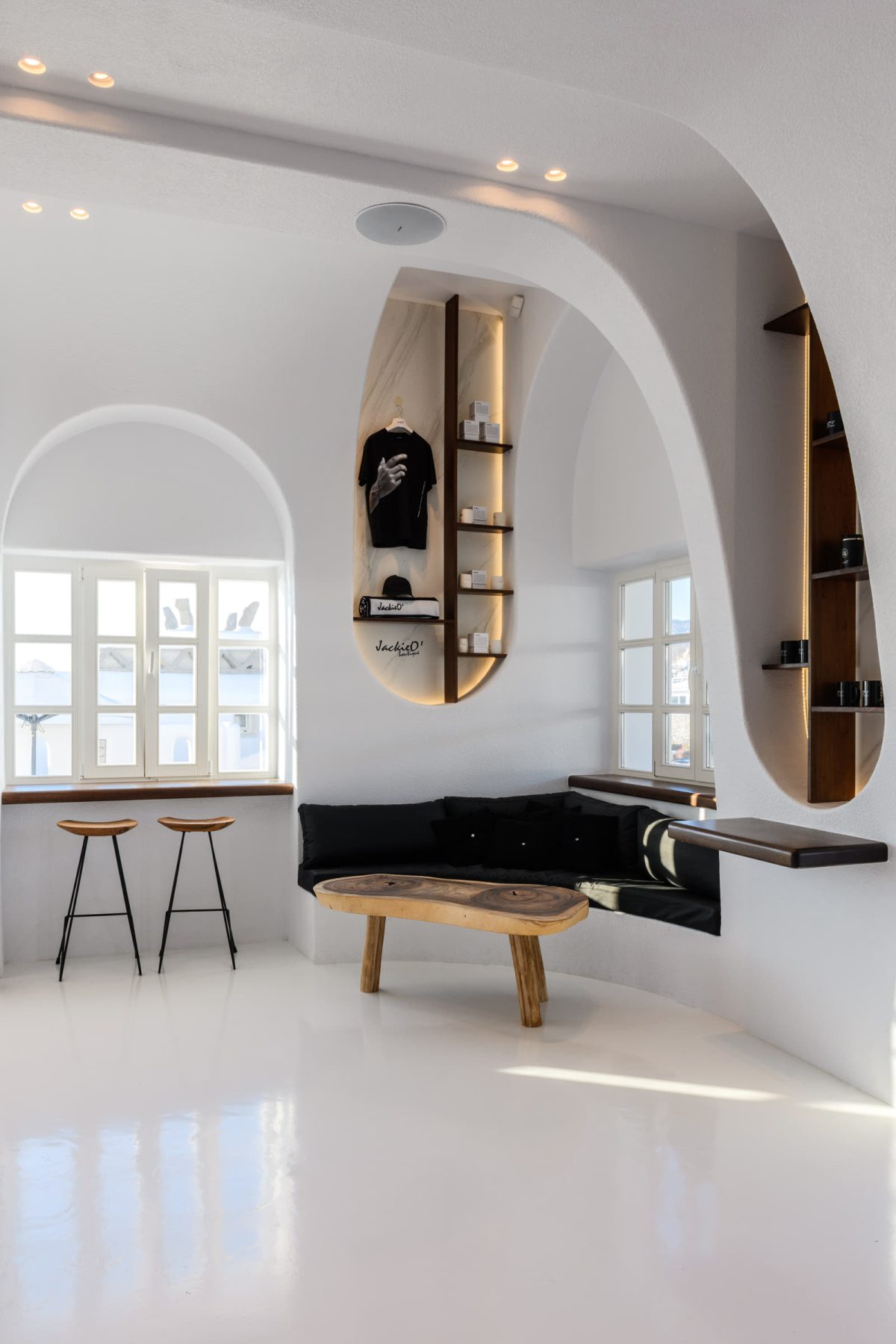
The project was quickly recognised beyond Greece, selected as a finalist in the 2022 Architizer A+Awards in the Restaurants category (<1,000 sq ft). Through this work, Omniview demonstrates how local references and contemporary fabrication can merge into a hospitality space that is intimate in scale, international in appeal, and deeply embedded in the atmosphere of Mykonos town.
Lovia Hotel in Mykonos is a boutique property designed by Omniview on the hillside above Chora, where it opens to expansive views of the Aegean. The project was led by Principal Architect Dimitri Tsigos with a dedicated design team and photographed by Christos Drazos and Kostas Mitropoulos.
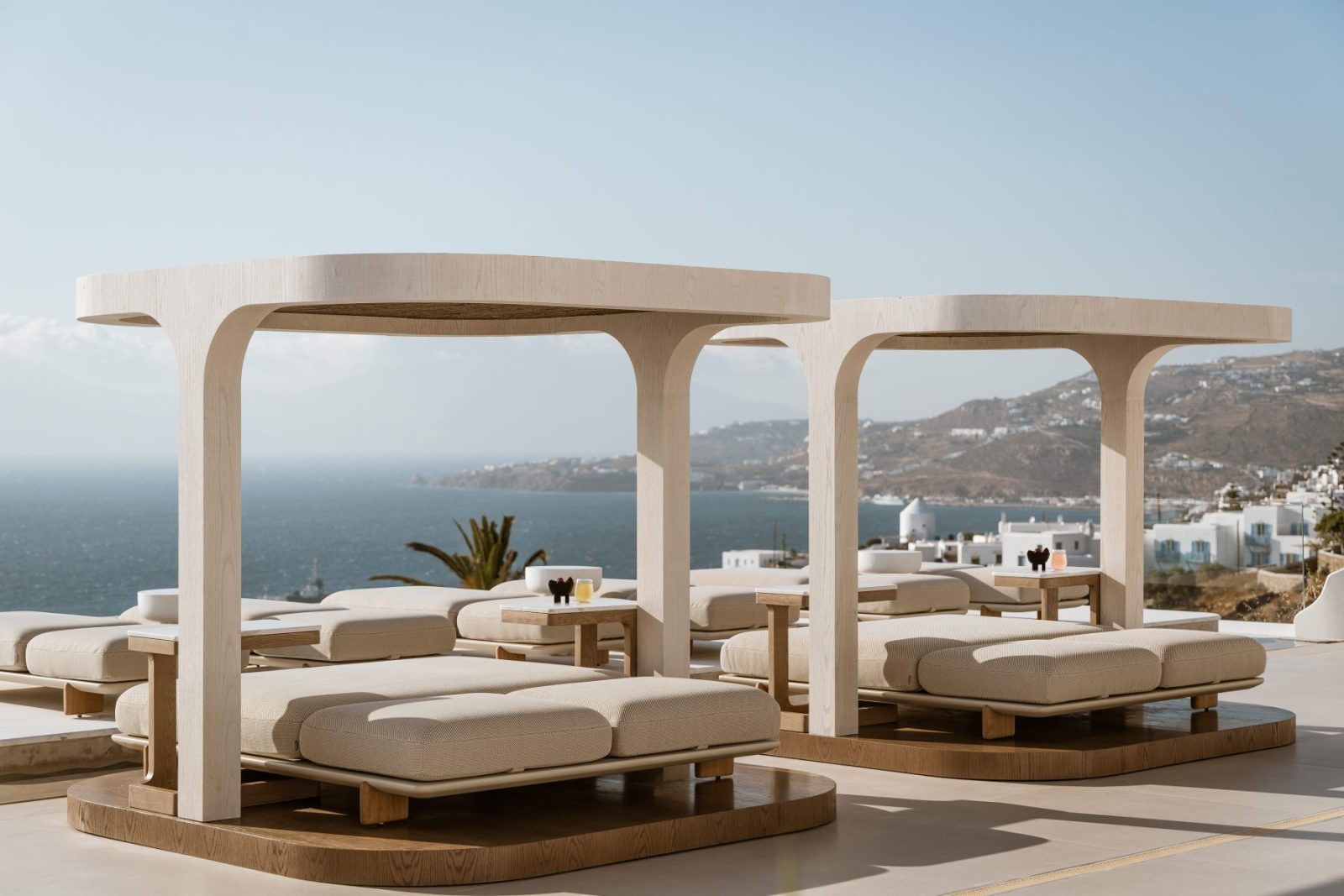
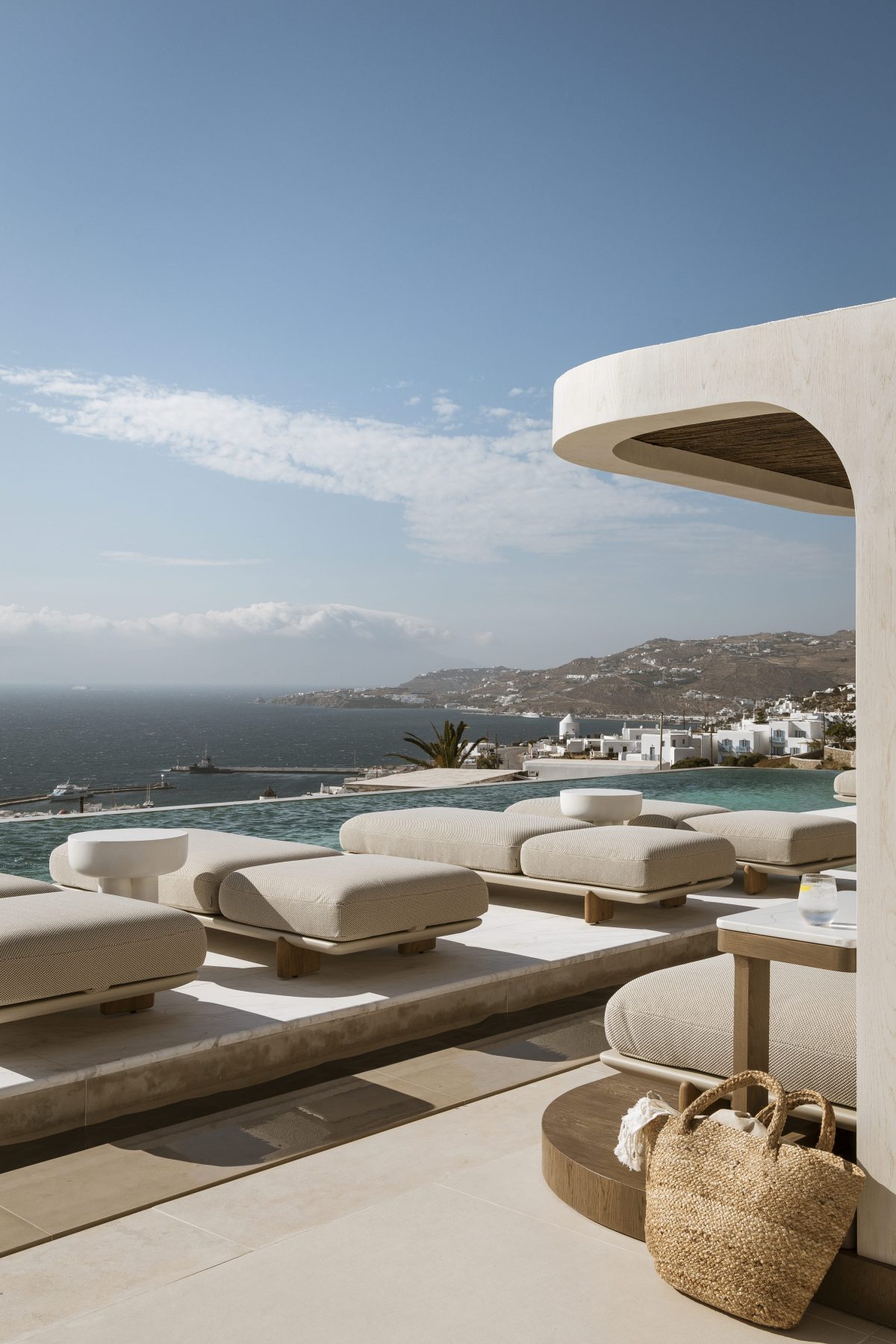
The hotel comprises twenty-one rooms and suites, each conceived with a distinct palette.
Some interiors are rendered in whites and soft pastels with marble detailing, while others adopt earthier tones, with screed concrete and dark wood creating a grounded atmosphere.
This variation gives the hotel a rhythm of contrasts, ensuring that every suite feels individual while remaining part of a coherent whole.
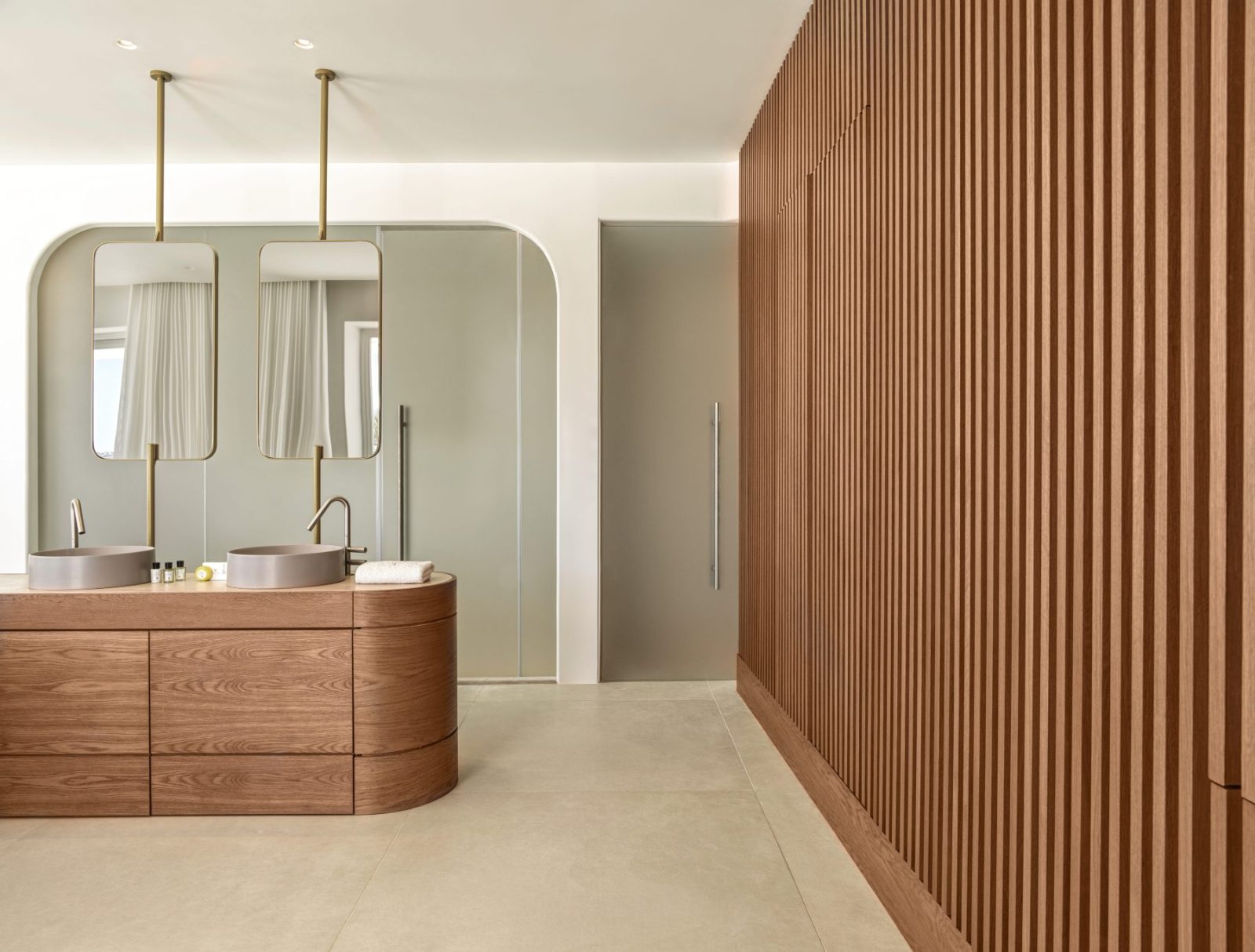
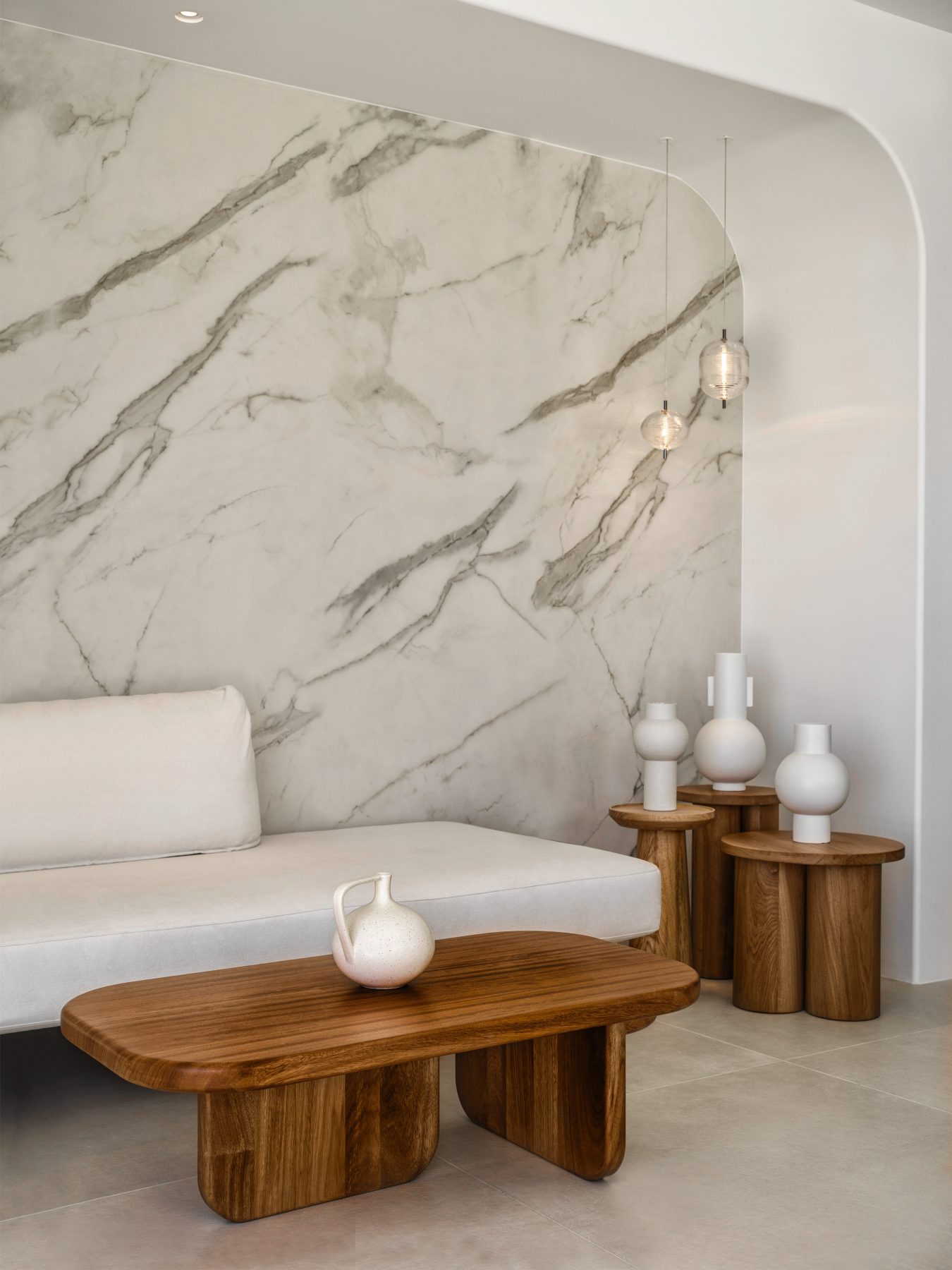
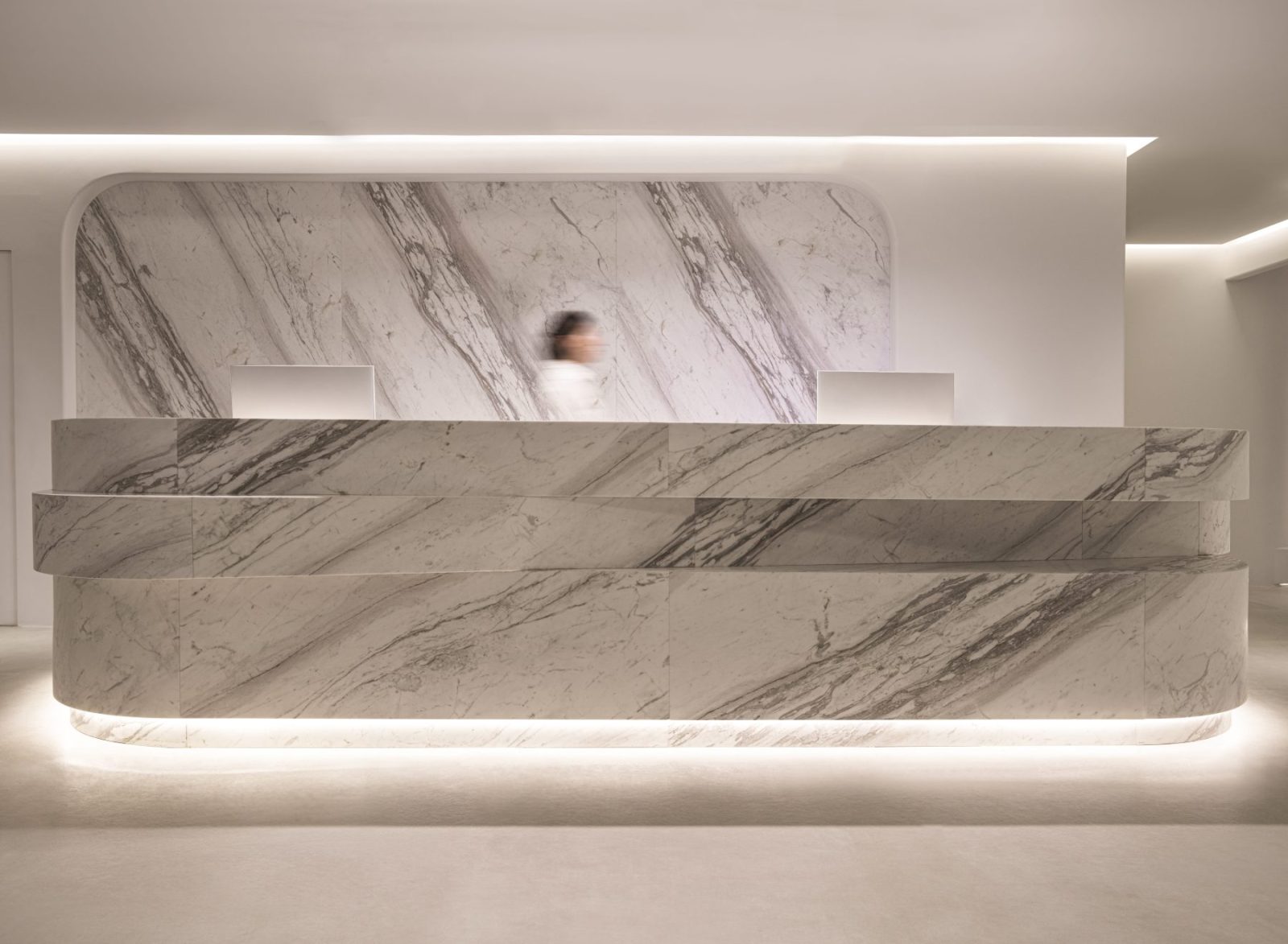
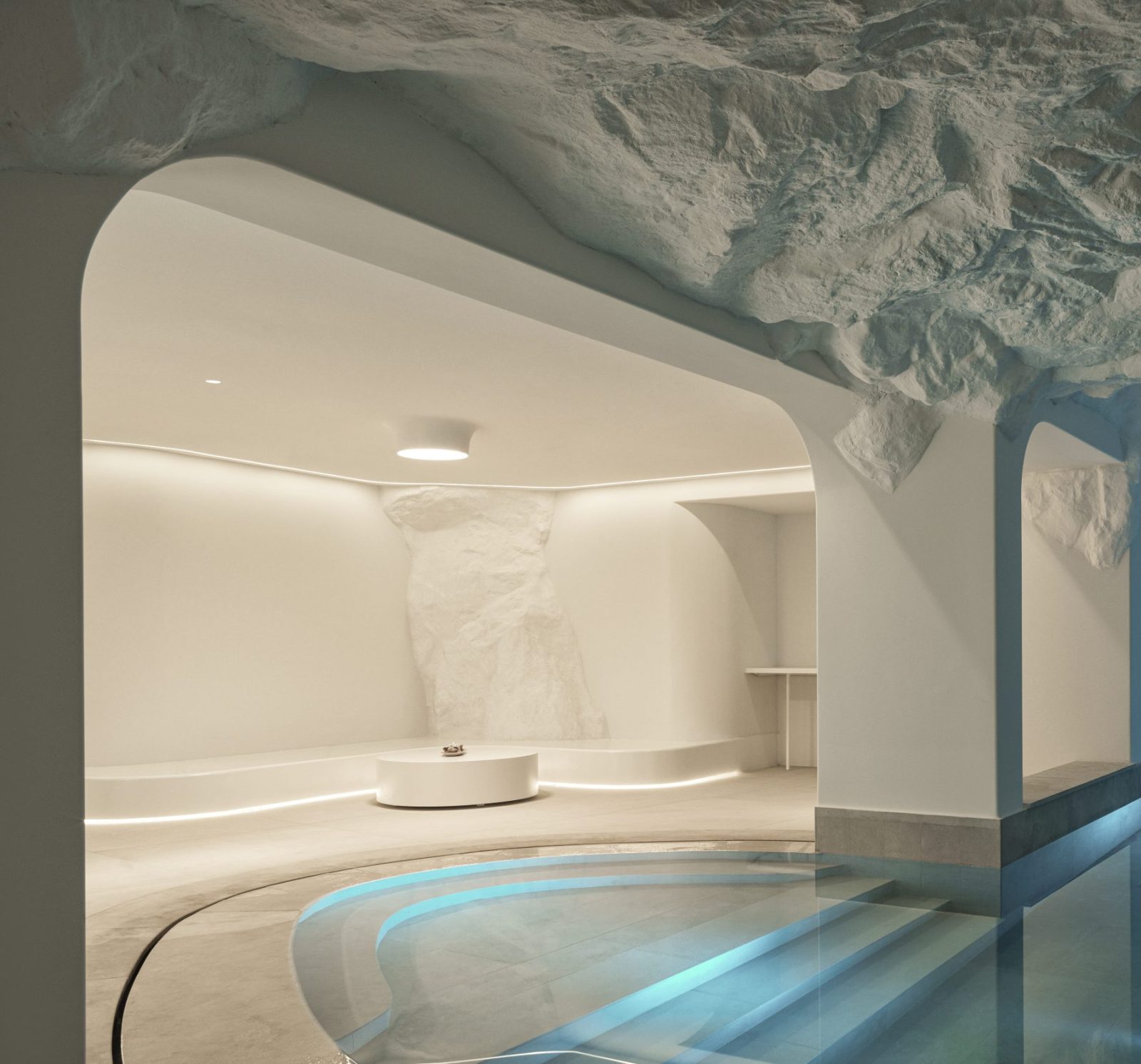
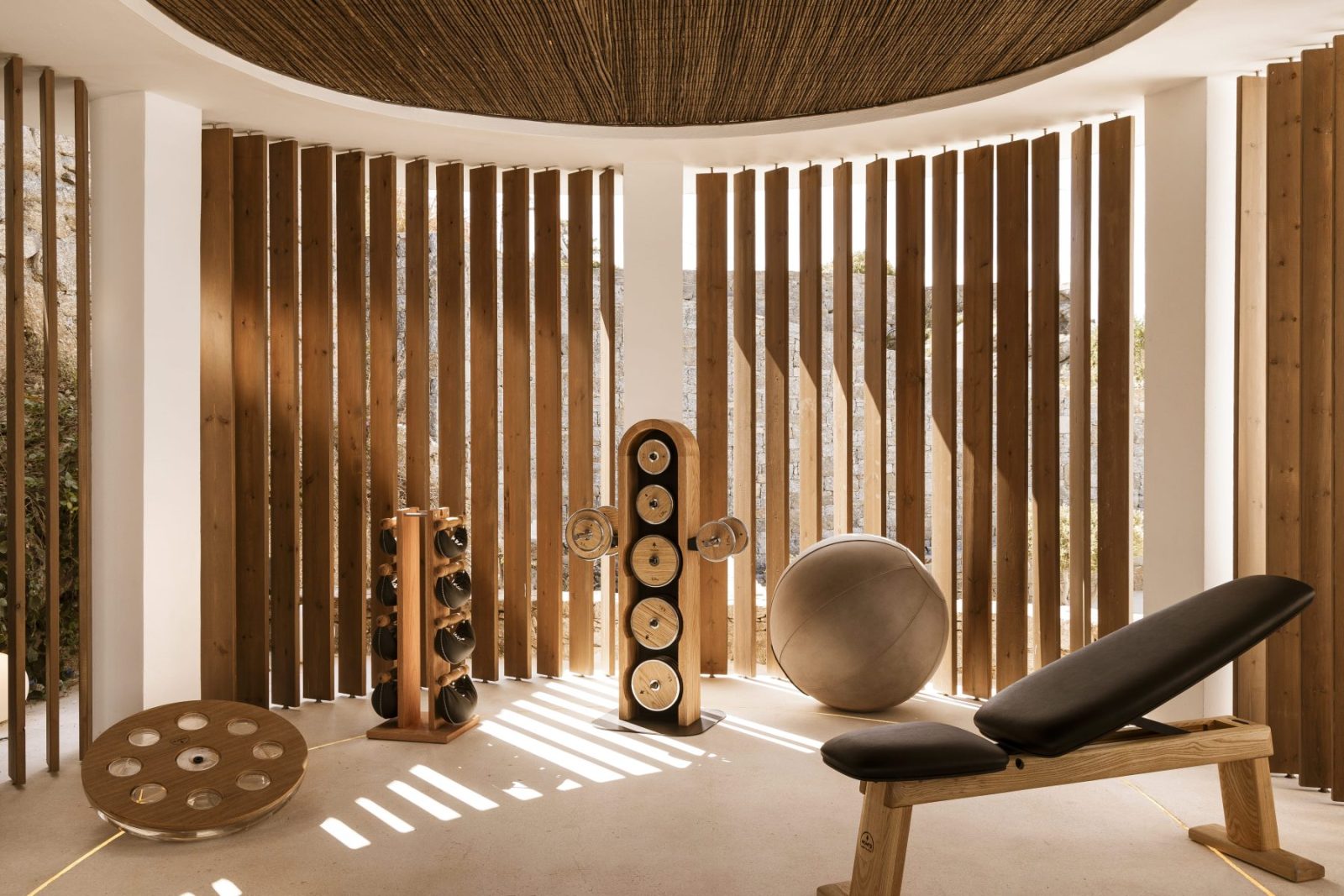
Common areas are defined by bespoke elements: the reception and bar are sculpted from marble, establishing a clear architectural statement on arrival. The restaurant and lounge frame the horizon, while the spa and gym are set towards the rear for greater privacy. In these more secluded areas, ceiling treatments reference the rocky topography of the island, bringing the surrounding landscape into the interior experience.
Through Lovia, Omniview translates the Cycladic spirit into a contemporary language of hospitality, where material precision, spatial clarity and a strong dialogue with the setting combine to offer an environment at once calm, tactile and deeply connected to Mykonos.
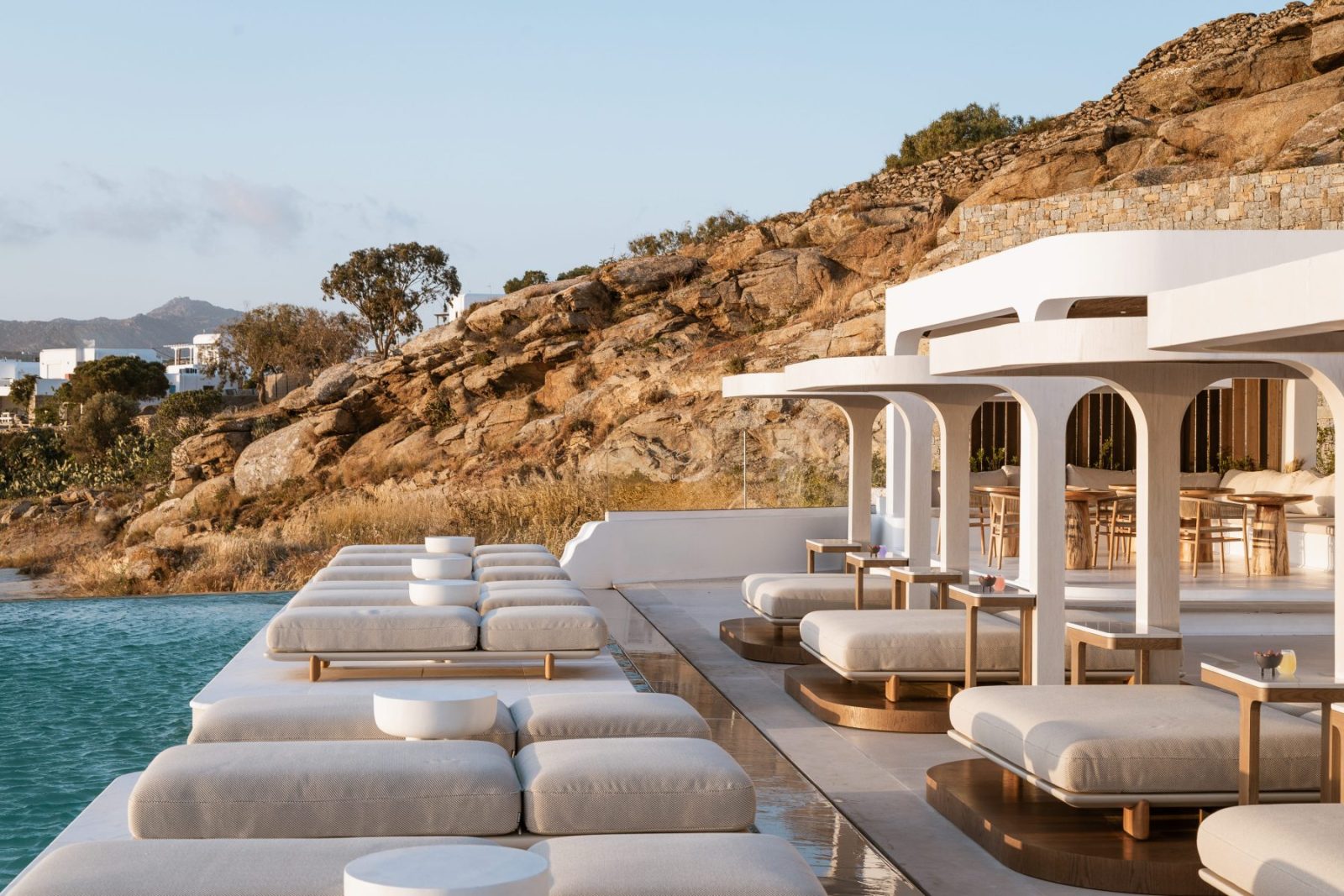
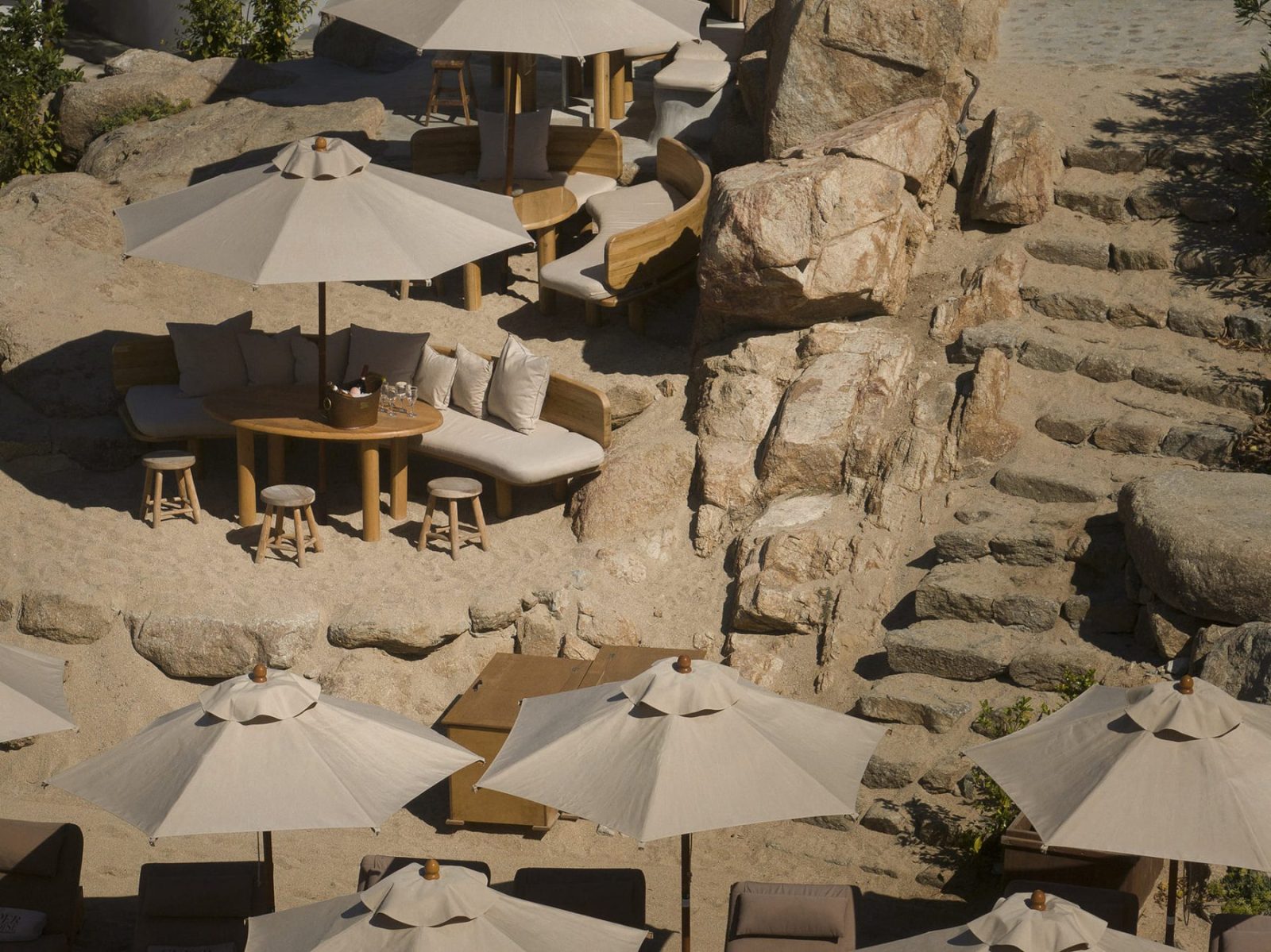
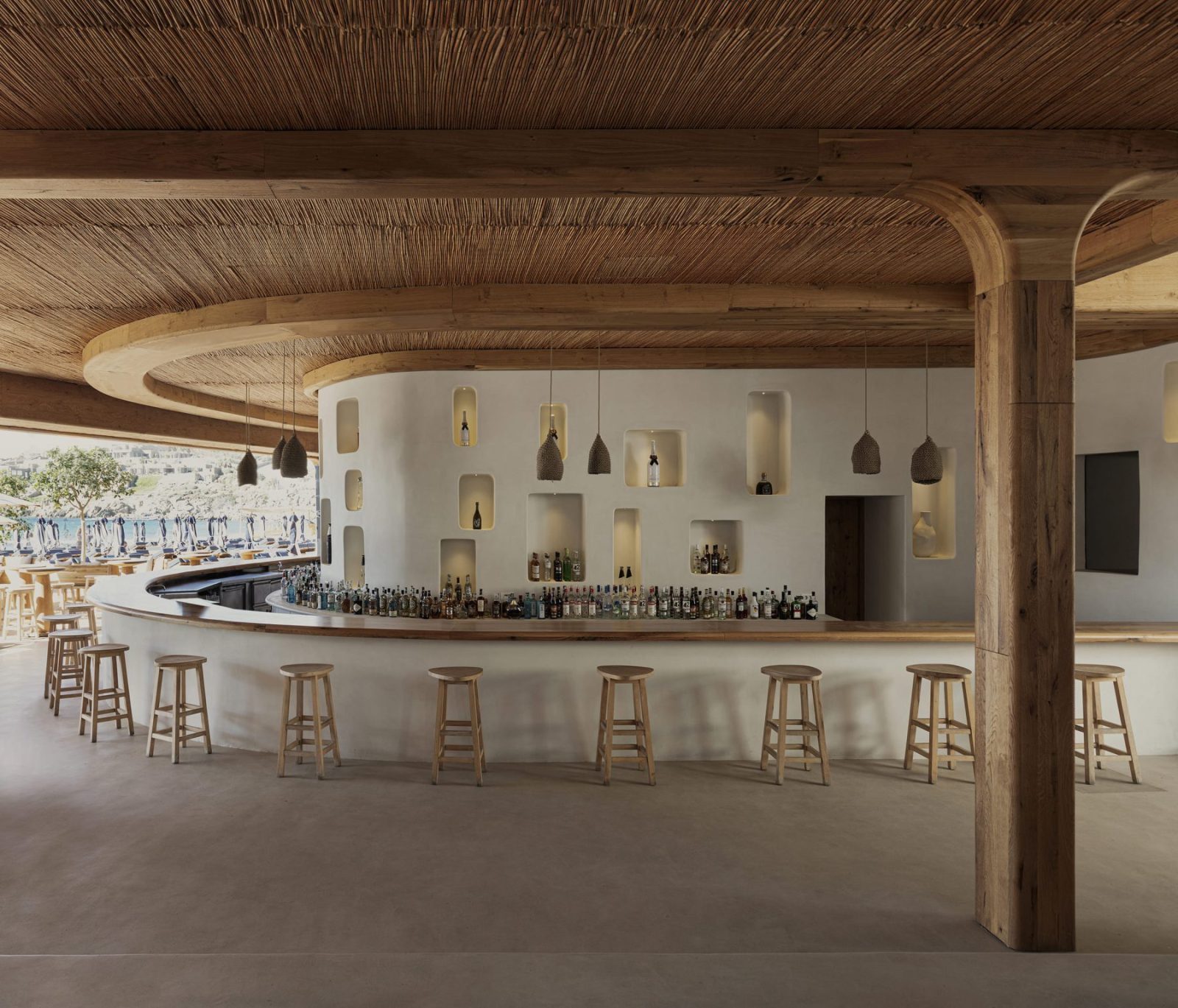
Super Paradise Beach Club in Mykonos, the island’s first beach bar dating back to 1971, was reimagined by Omniview in 2022 as a destination that balances heritage with contemporary hospitality. The design brief sought to capture the carefree spirit of the original venue while introducing a new architectural language that the studio describes as “future retro,” blending the spontaneity of island leisure with the precision of advanced design.
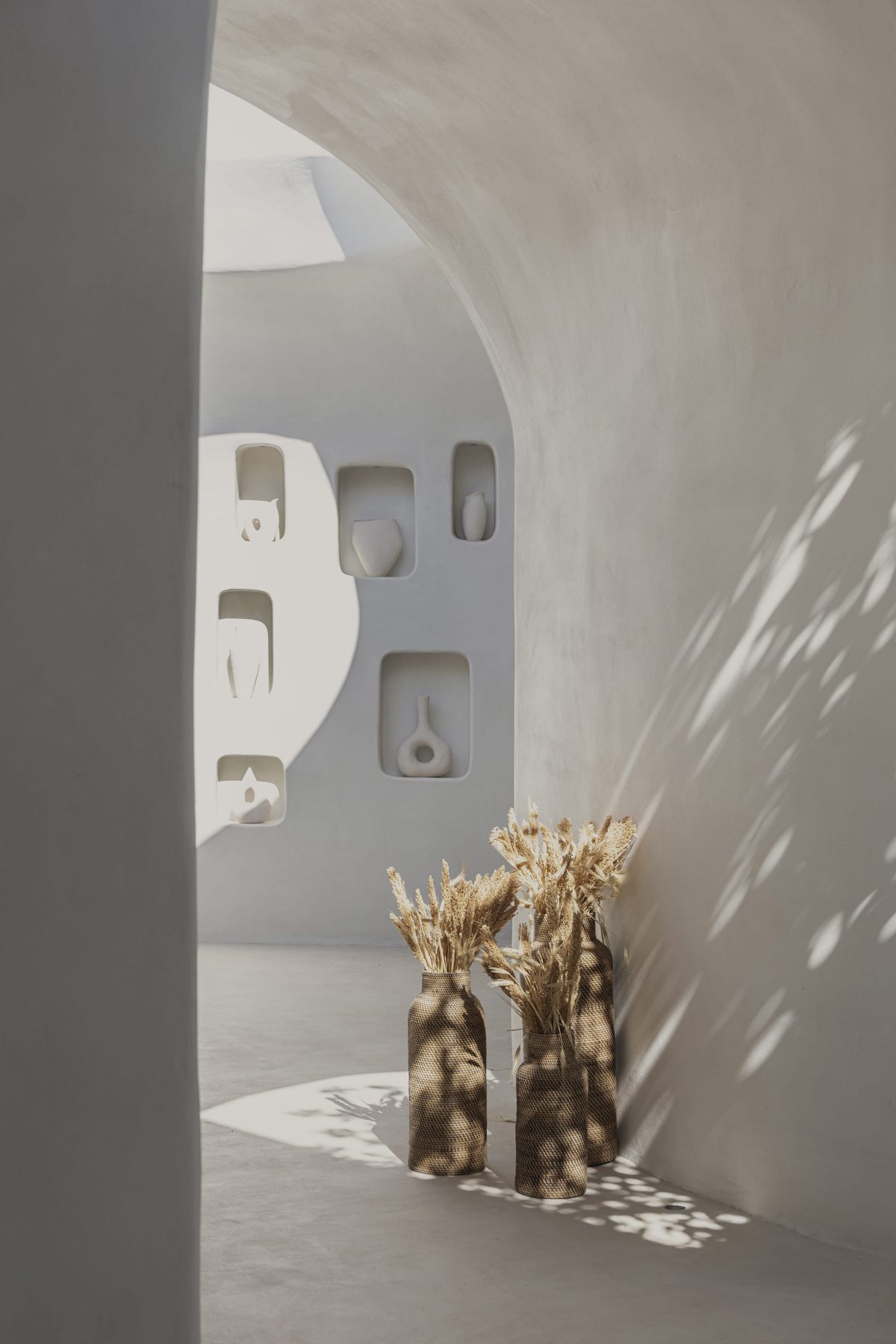
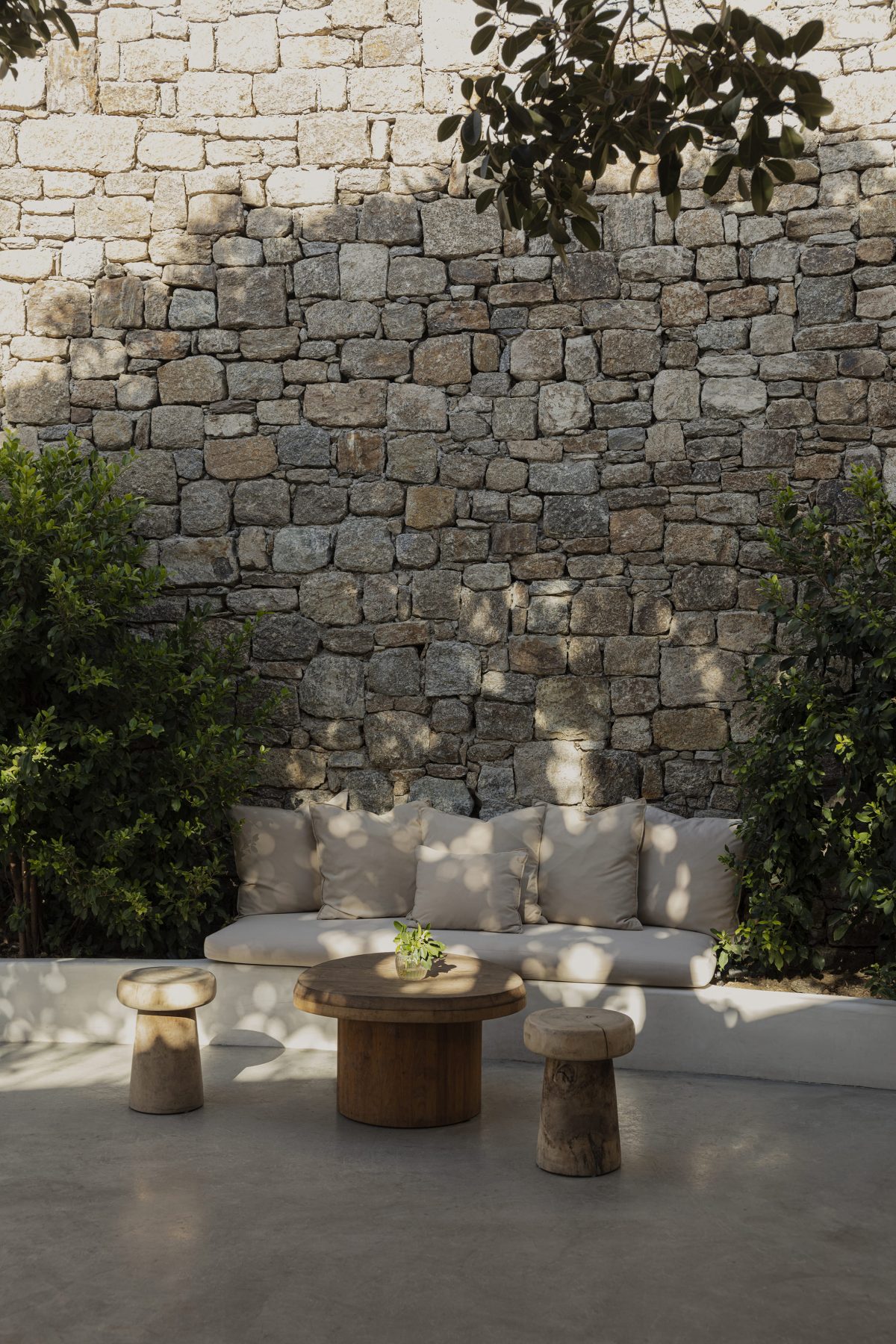
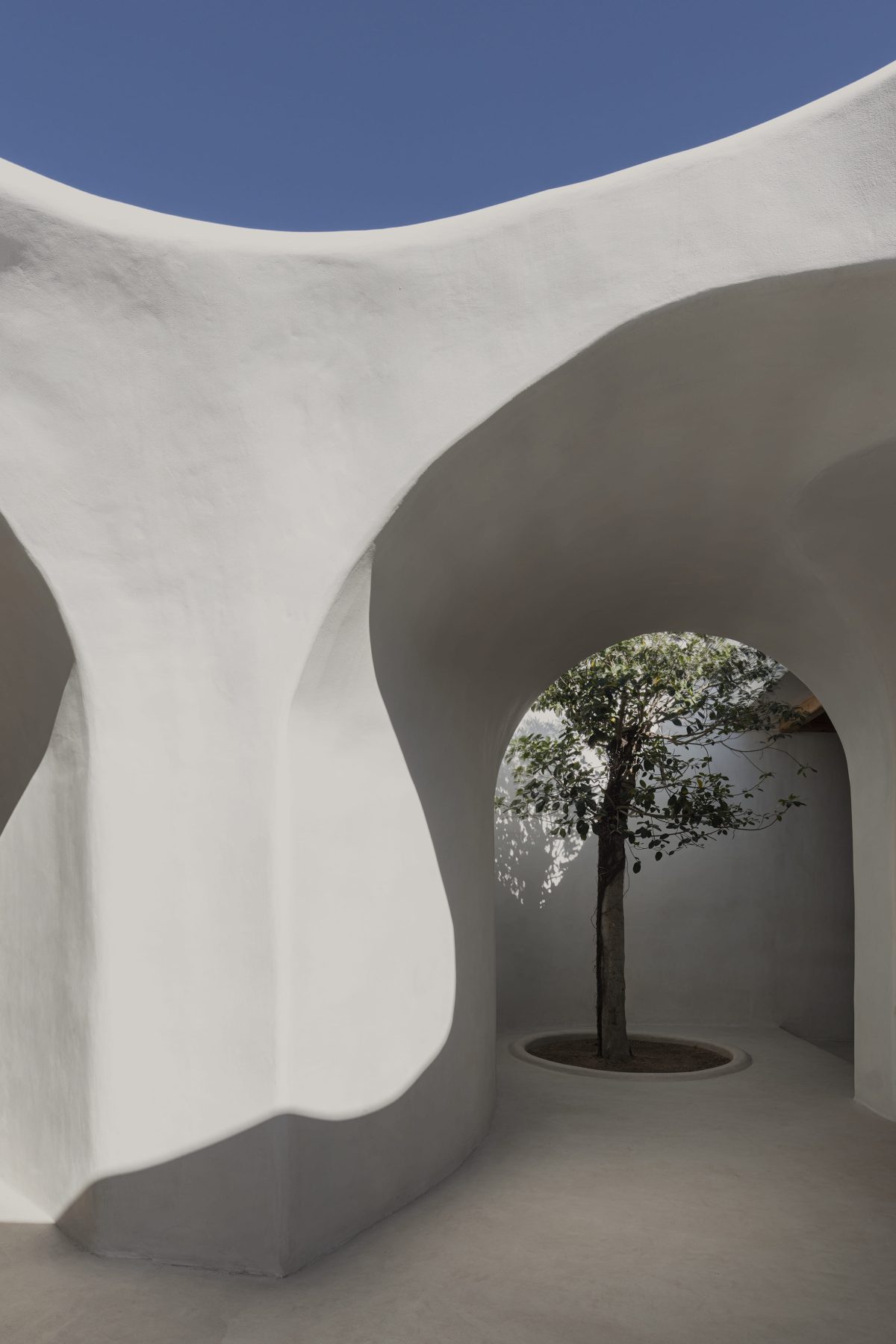
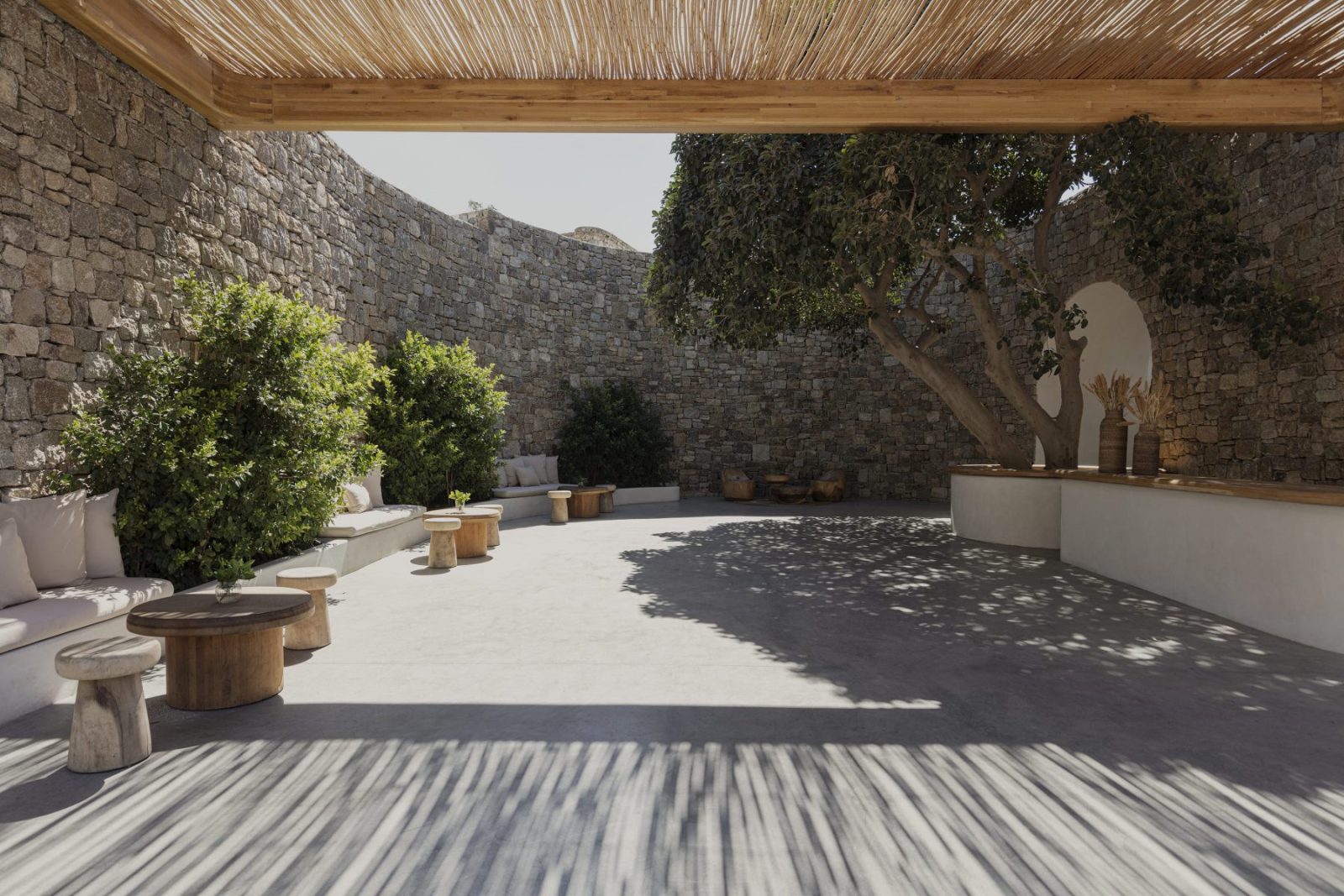
Indigenous Cycladic elements are reinterpreted throughout: arches and groin vaults are abstracted into pergola structures, while built-in wall niches and curved surfaces shape the rhythm of the interiors and bar areas.
These forms, deconstructed and recomposed through computational methods, produce spaces that feel both rooted in memory and newly imagined.
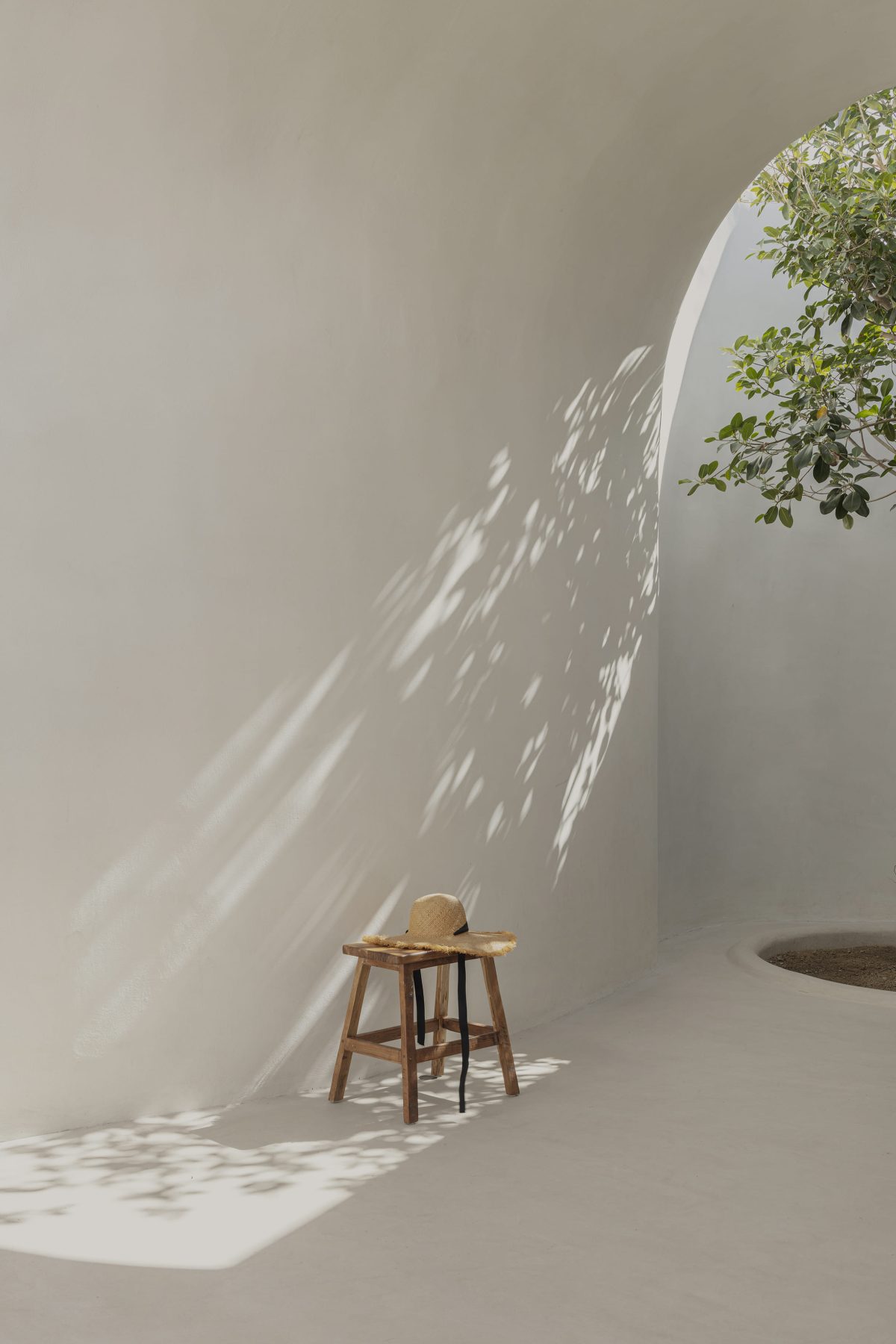
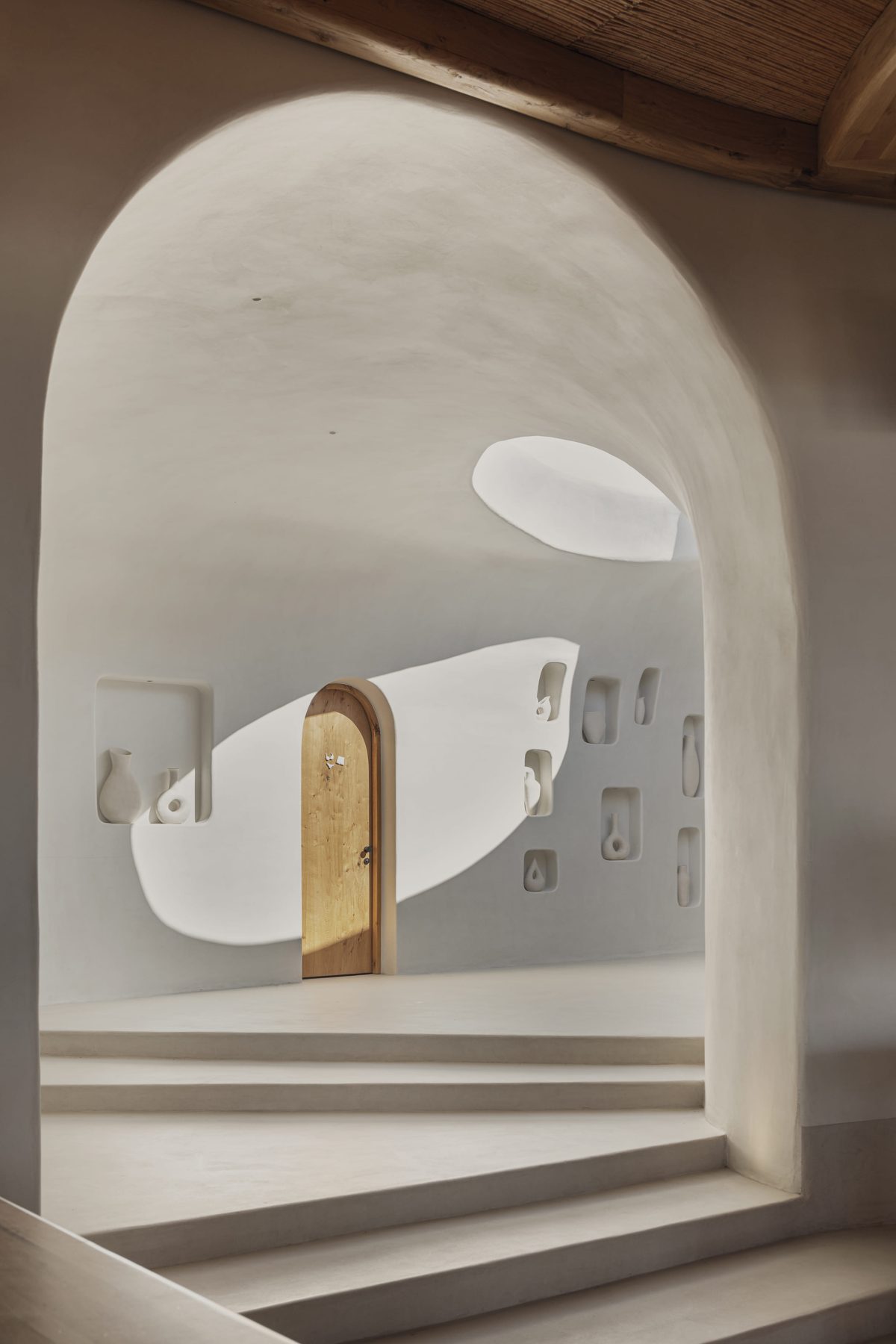
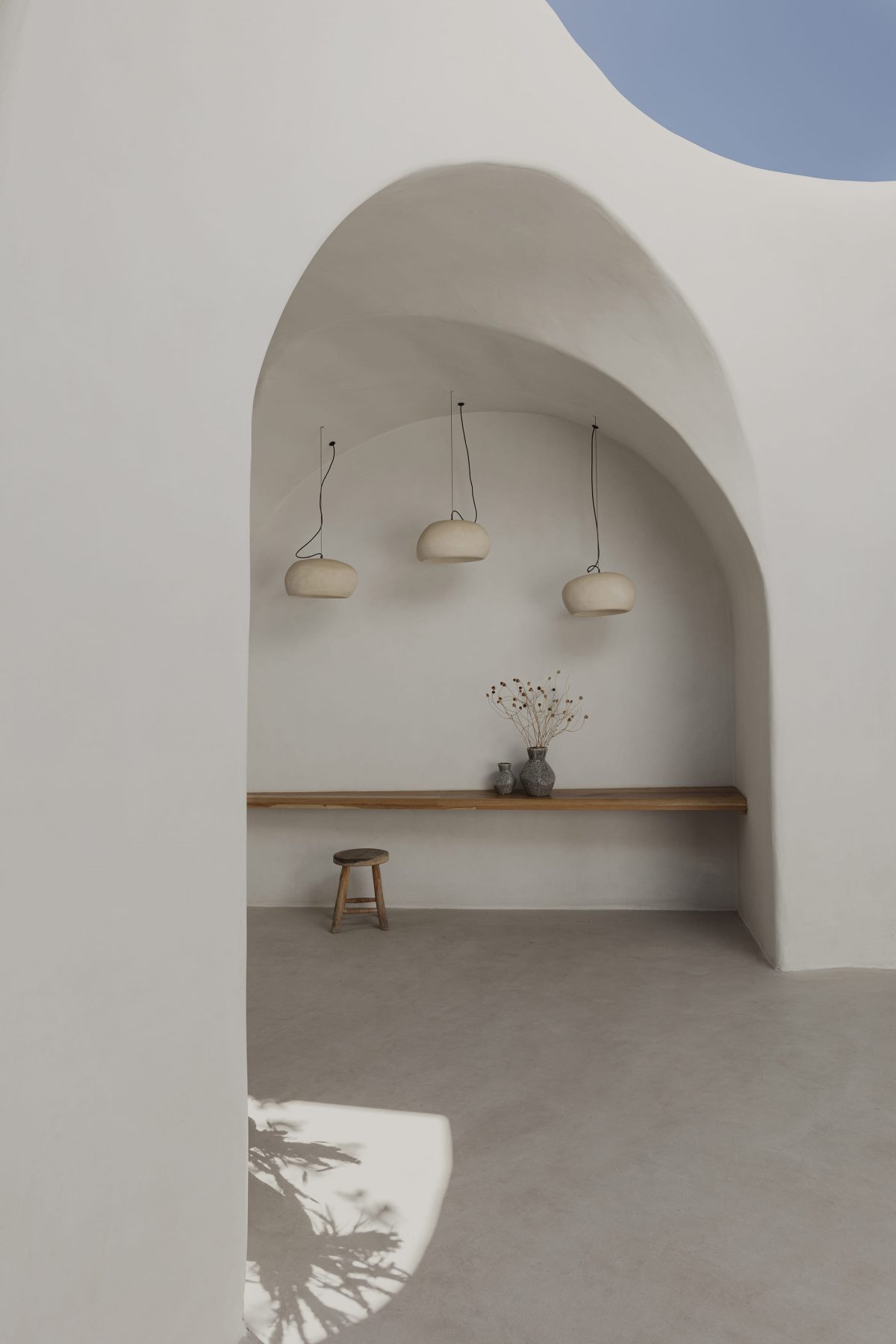
The atmosphere combines ease and sophistication, maintaining the raw energy of Mykonos’s beach culture while framing it in a cohesive spatial identity. This synthesis was recognised internationally, with the project receiving the BIG SEE Tourism Design Award 2022, confirming its success in translating a historic meeting point of island life into a hospitality landmark for today.
Villa Kampani is one of the most historic houses in the centre of Mykonos, originally built in the 1850s for the island’s mayor, a lineage that also gave its name to nearby Akti Kampani, known locally as Gialos.
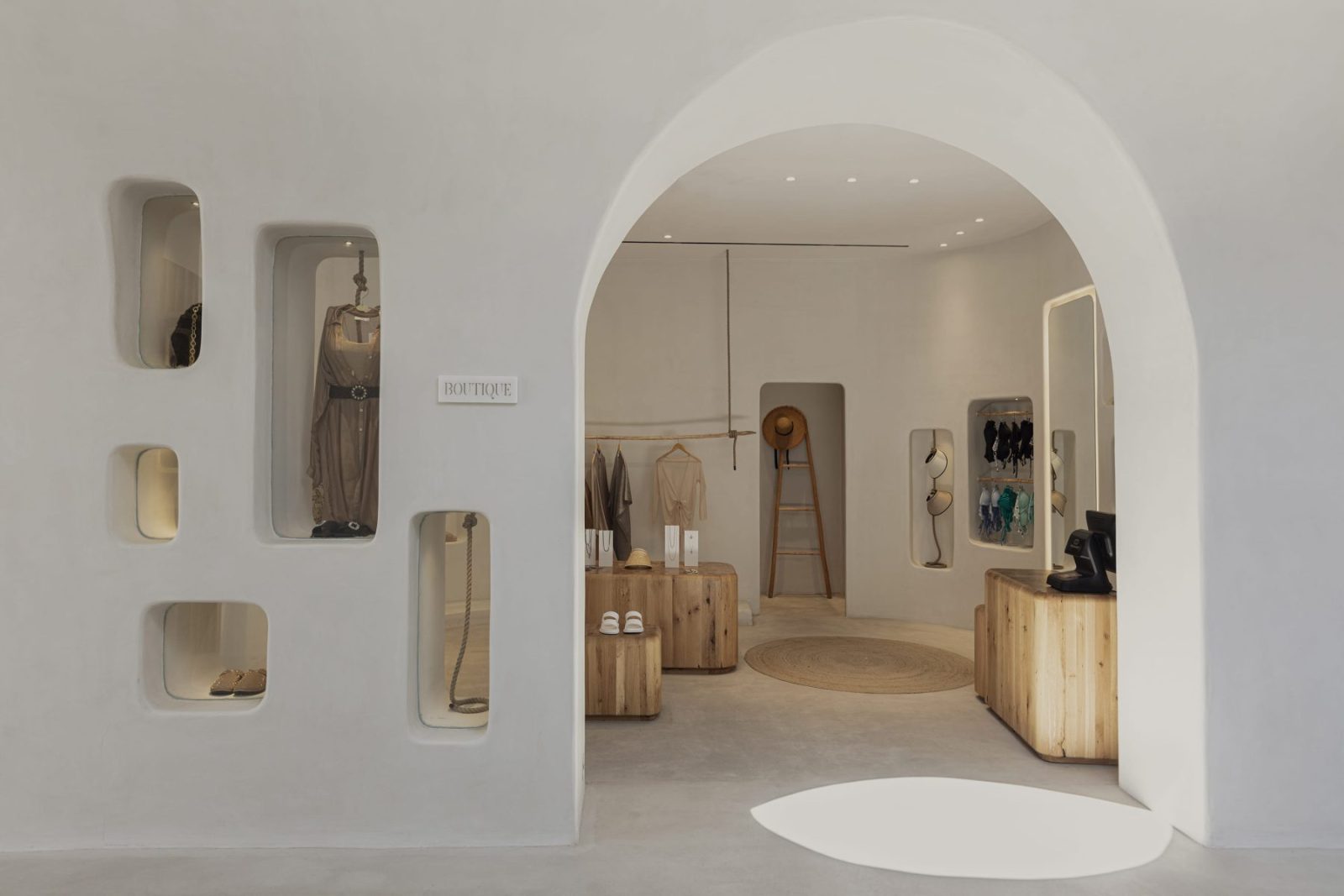
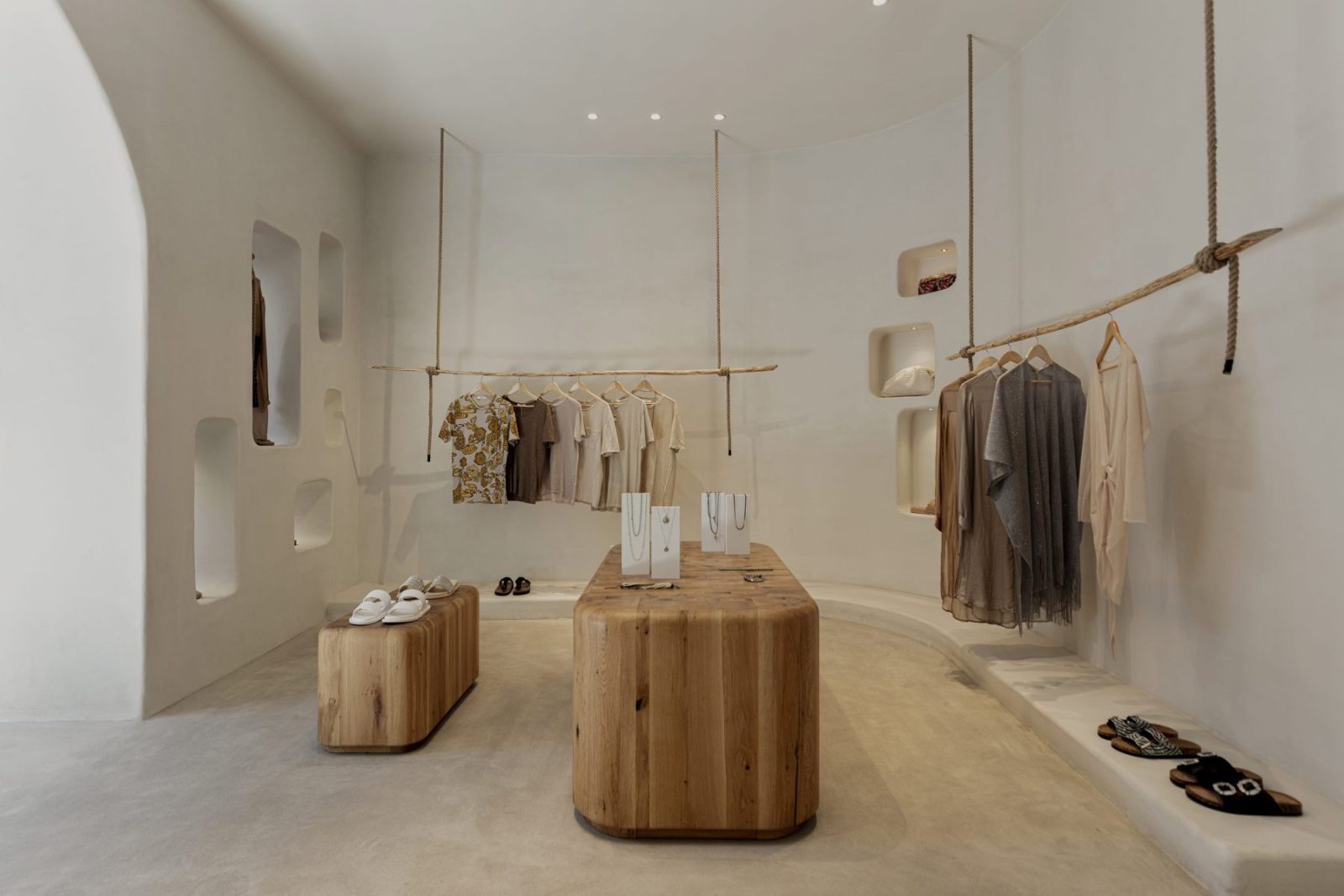
The house itself is an architectural hybrid, combining the vernacular of the Cyclades with neoclassical elements more typical of Athens, a duality that defines its singular character.
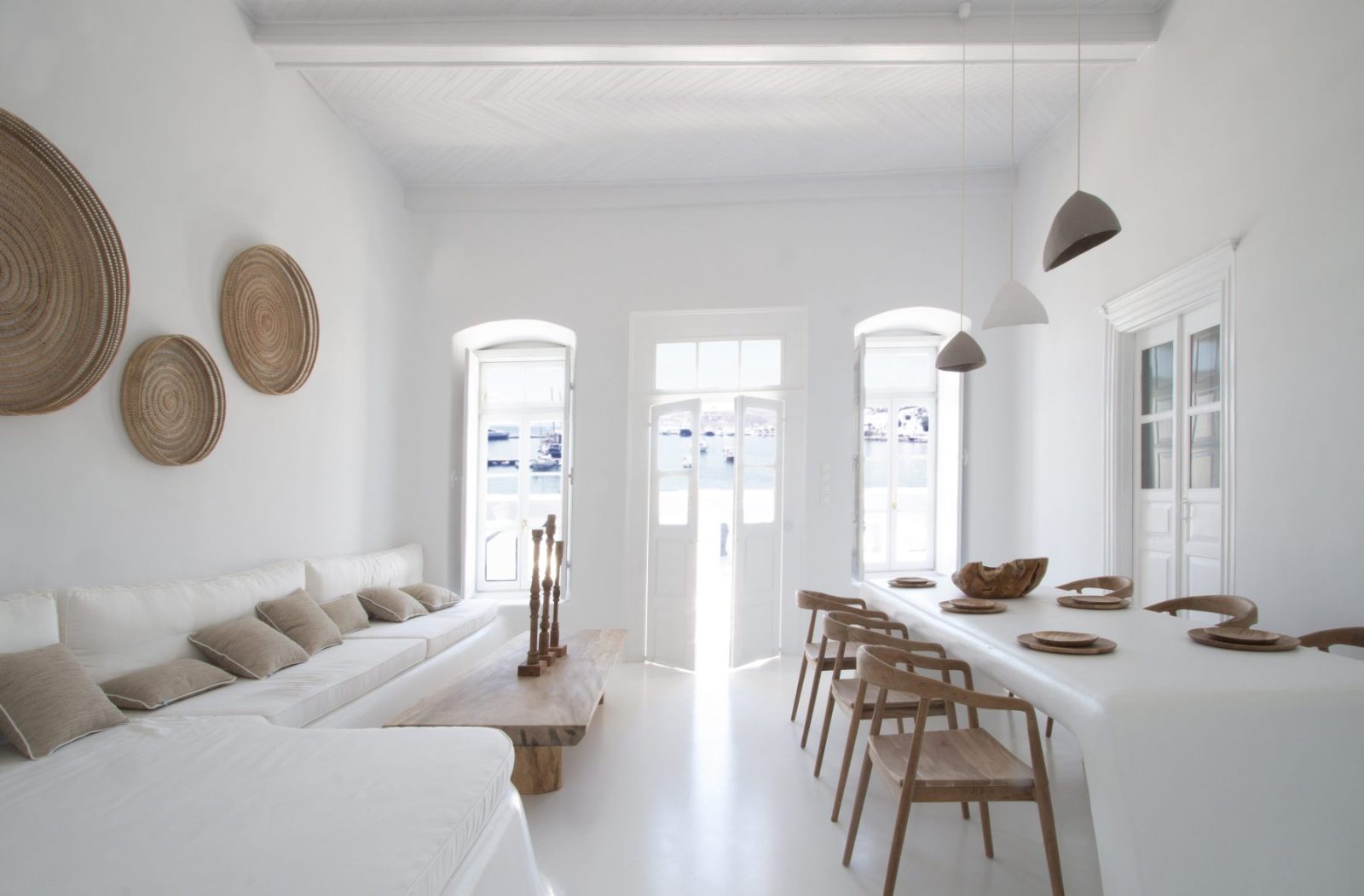
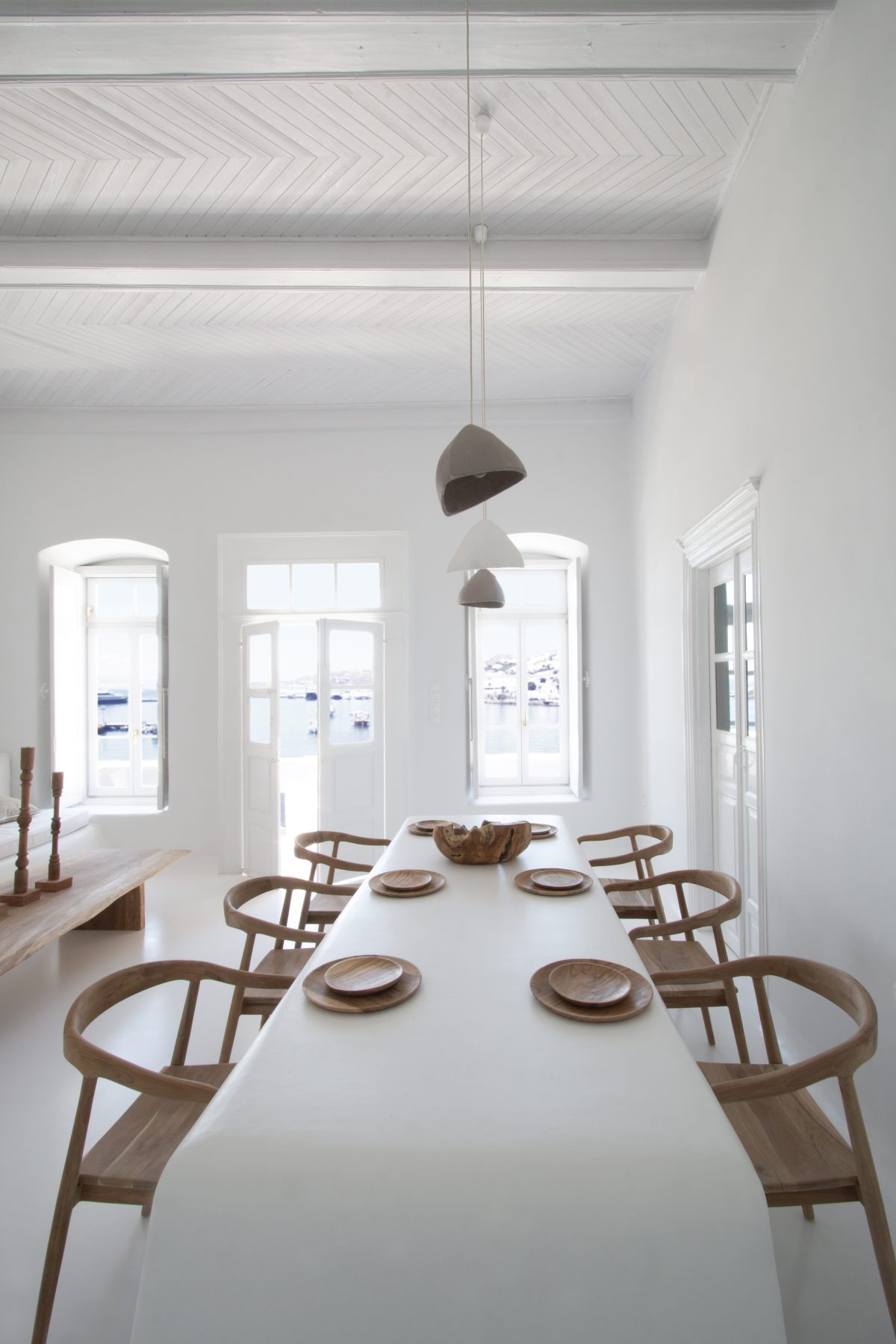
Omniview’s restoration took this tension as its guiding principle, seeking to balance Cycladic fluidity and raw simplicity with the refinement of neoclassical interiors. On the ground level, avant-garde Cycladic forms appear in screed-concrete couches and tables, complemented by organically shaped solid-wood beds. Above, a handcrafted white fishbone ceiling—an inversion of traditional neoclassical flooring—brings an unexpected layer of elegance while maintaining a contemporary edge.
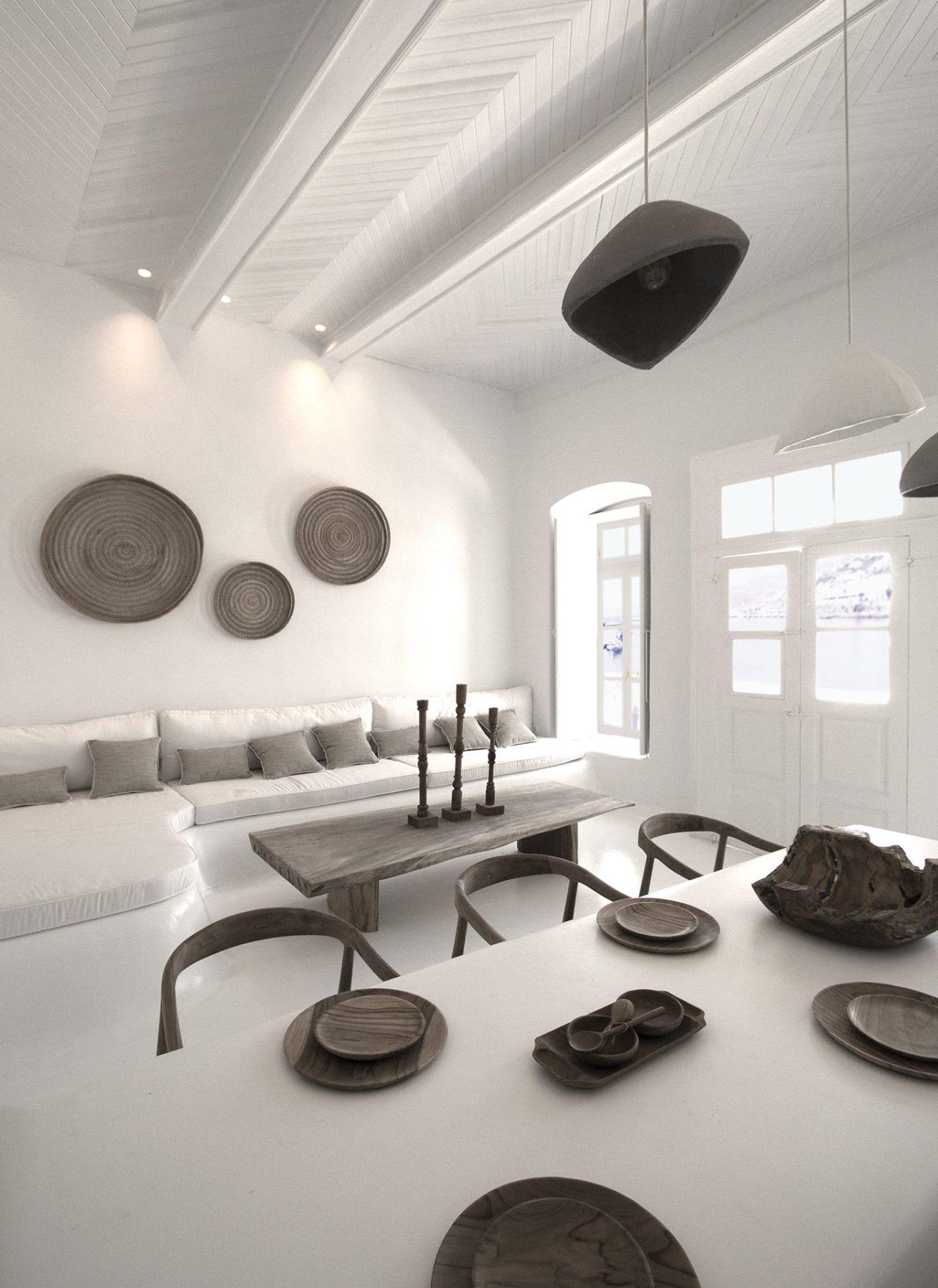
The dialogue between old and new continues throughout. In the kitchen, an antique unit with visible patina stands alongside a minimalist modern counterpart, and in the bathrooms clarity is expressed through clean, unembellished Cycladic forms.
The result is a restoration that does not erase contradiction but allows two architectural languages to coexist.
Villa Kampani is at once Cycladic and neoclassical, rooted in local memory yet distinctly present, an interior world where history and modern design remain in constant conversation.