The IMAGE OF THE CITY series selects and presents student works that reimagine the urban environment offering visionary reinterpretations of contemporary Greek cities.
Vertical Gazing. Unseen Presences in Thessaloniki’s Cityscape
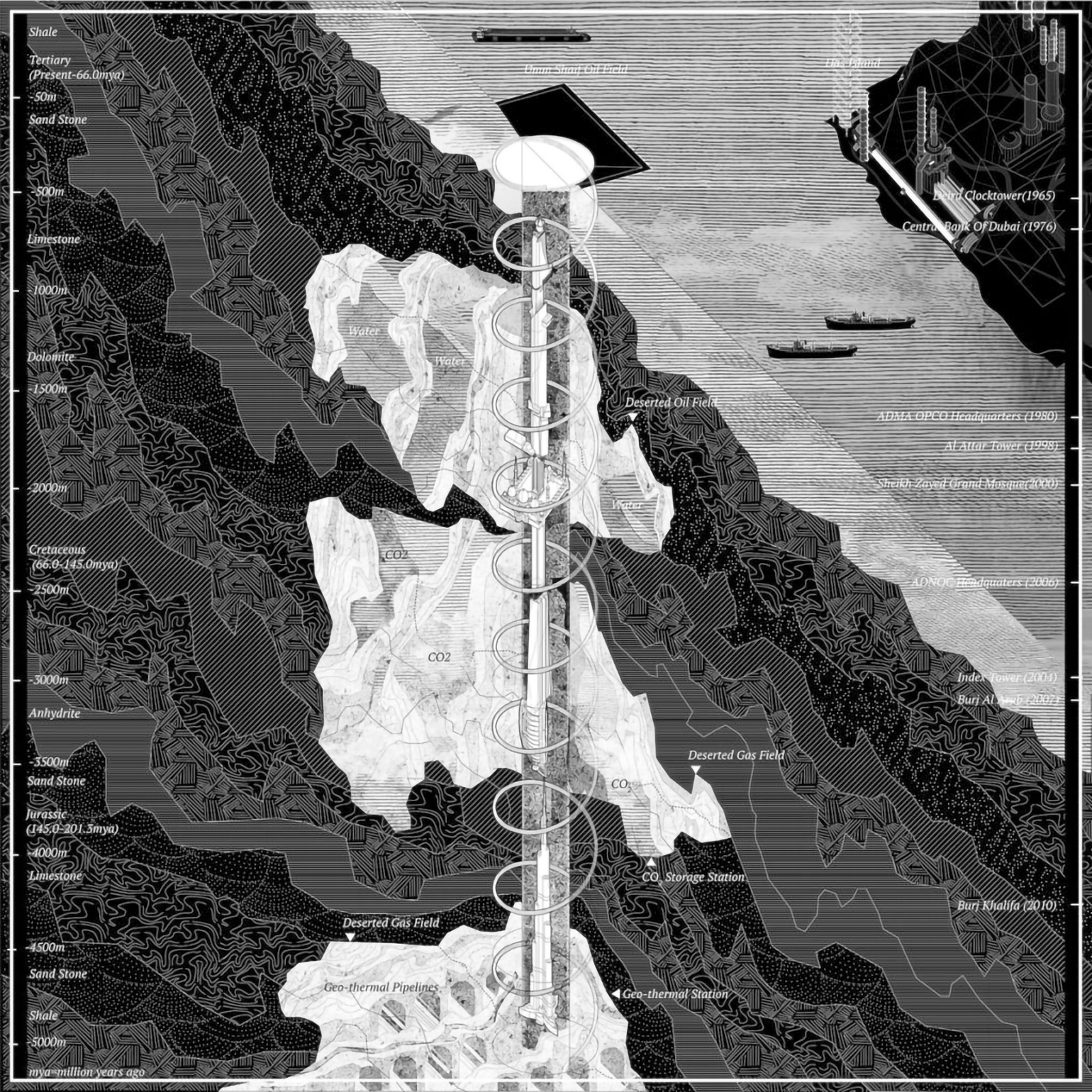
This study seeks to uncover an alternative way of perceiving the city, one that emerges from the conventional horizontal and vertical perspective, applied here to Thessaloniki.
The starting point is a remark by the historian Egon Friedell. He claimed that the clarity of the Greek–Mediterranean atmosphere, though revealing the horizon clearly, deprives the Greek spirit of the ability to think in terms of perspective. This observation sparked the idea that the character of a place fundamentally shapes the way it is experienced and perceived. It inspired an investigation beyond the binary of horizontal and vertical perception towards a richer, more layered reading of the urban landscape.
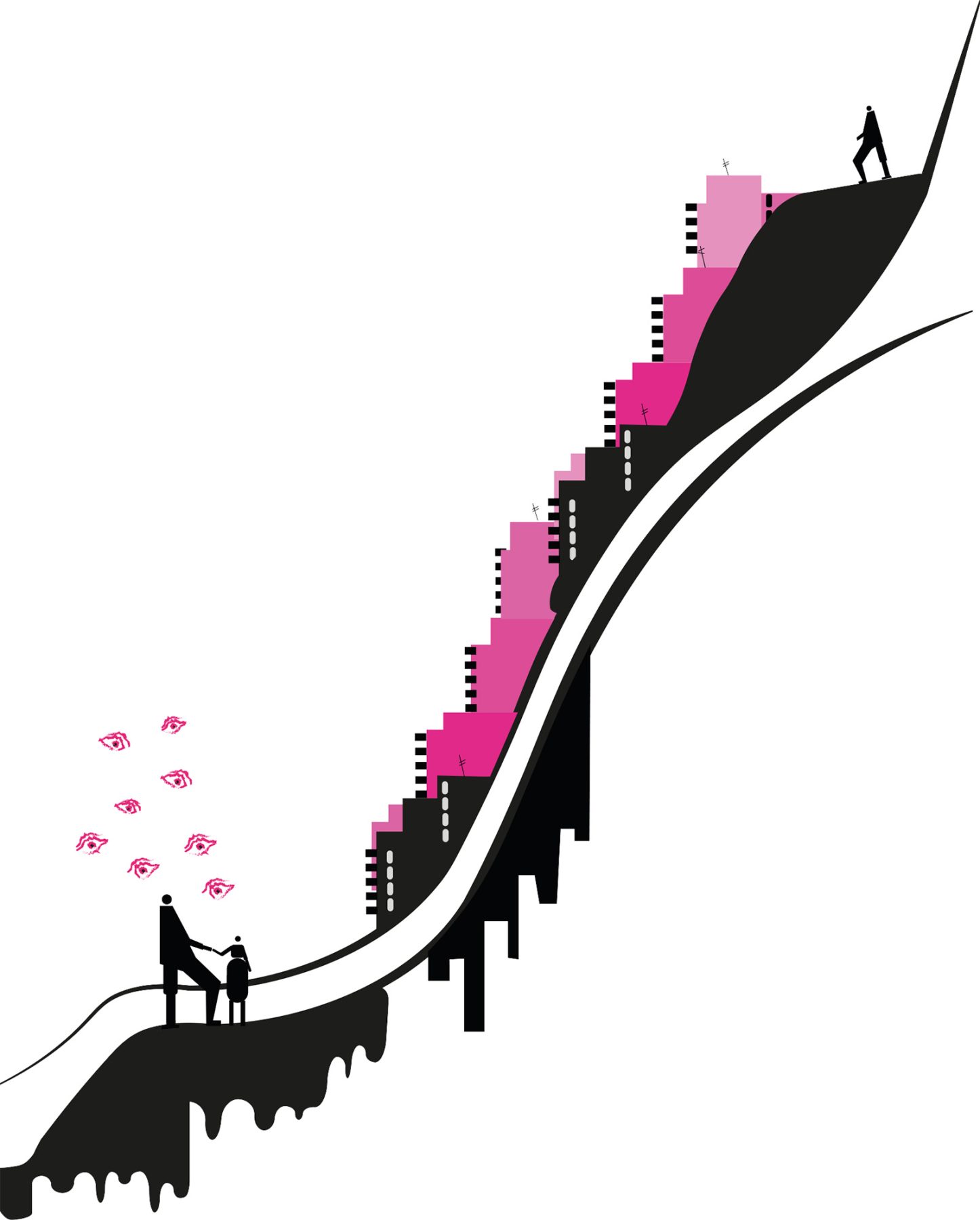
To articulate this third gaze, the two established axes — horizontal and vertical — were first examined, revealing their unique qualities. Yet, a dialectical approach between them proved inadequate to fully capture the complexity of the cityscape.
Out of this necessity emerged the concept of The Third Gaze, which combines:
- The embodiment and engagement with the street, drawing from horizontal perception, and
- The attention to the city’s vertical syntax, where body, head, and gaze trace vertical movement, yet with opposing intentions and qualities compared to the purely vertical perspective.
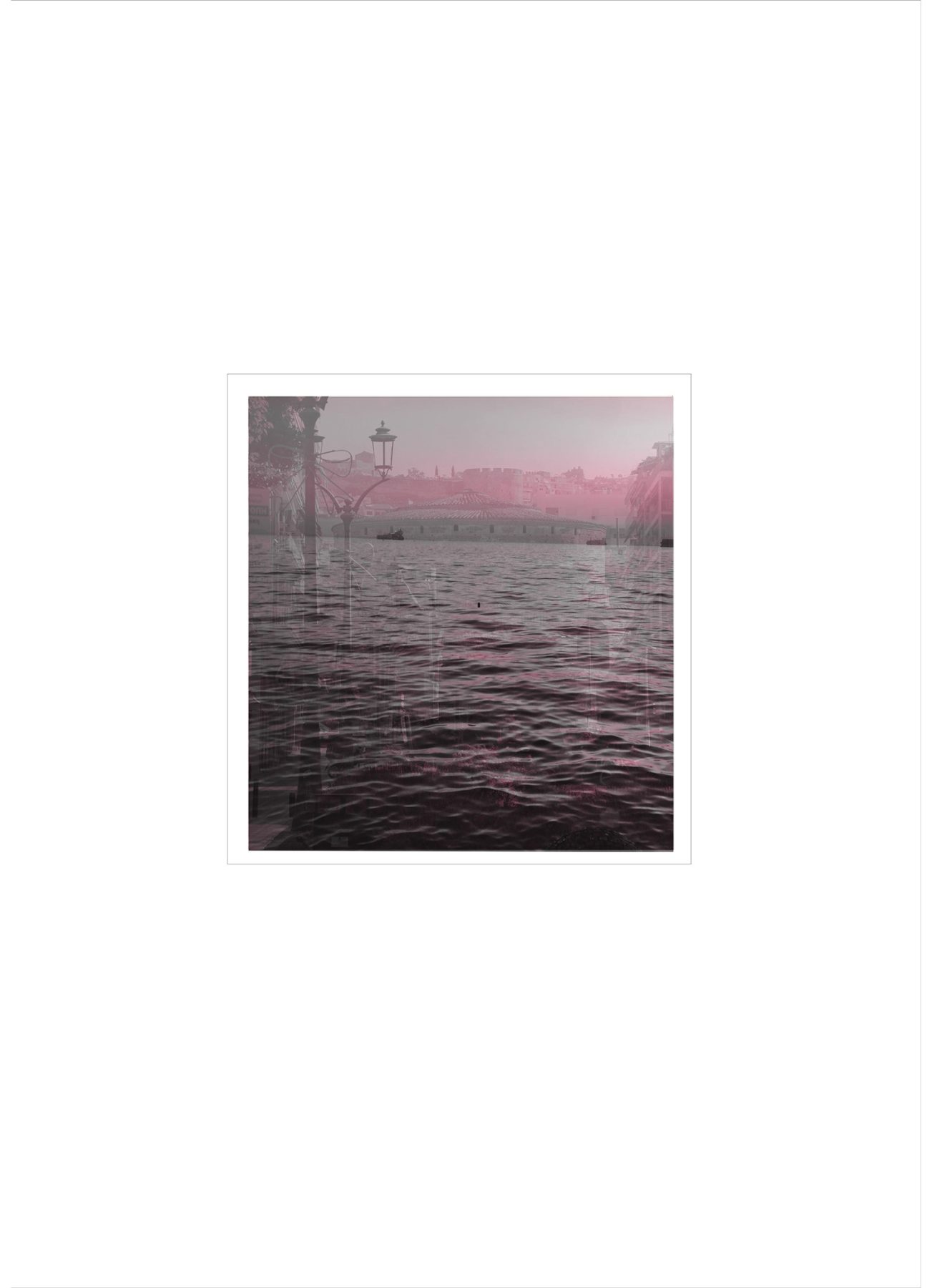
This kind of gaze is explored in relation to the notion of urban flânerie, a form of experiential navigation of the city, transforming the observer into a different kind of flâneur, one who traces the hidden environments embedded in the vertical dimension of the urban fabric.
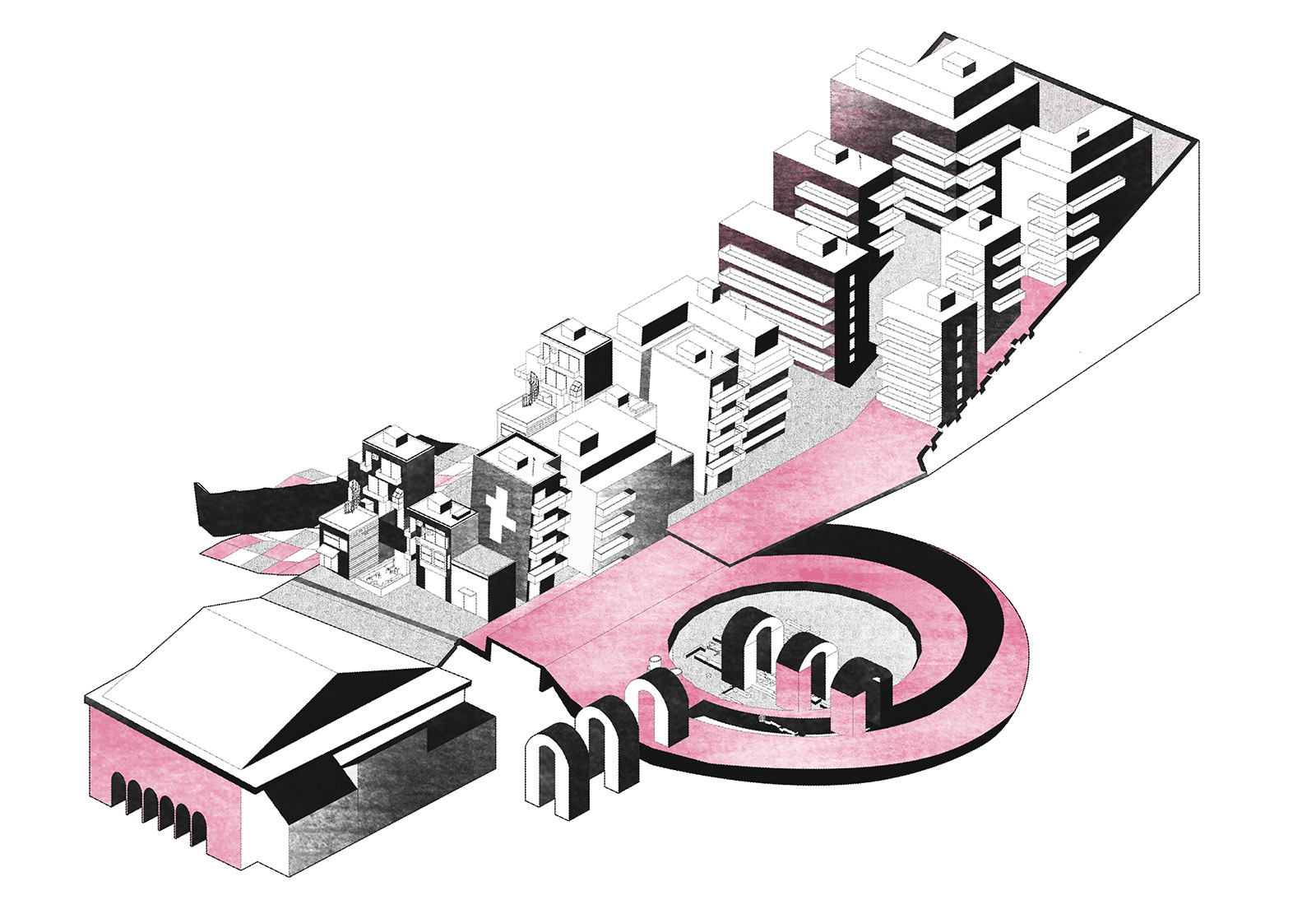
Thessaloniki serves as the field of application, through a triadic spatial and conceptual schema:
Underground — Ground — Overground, translated into:
Stratigraphy — Topography — Polykatoikia [apartment block].
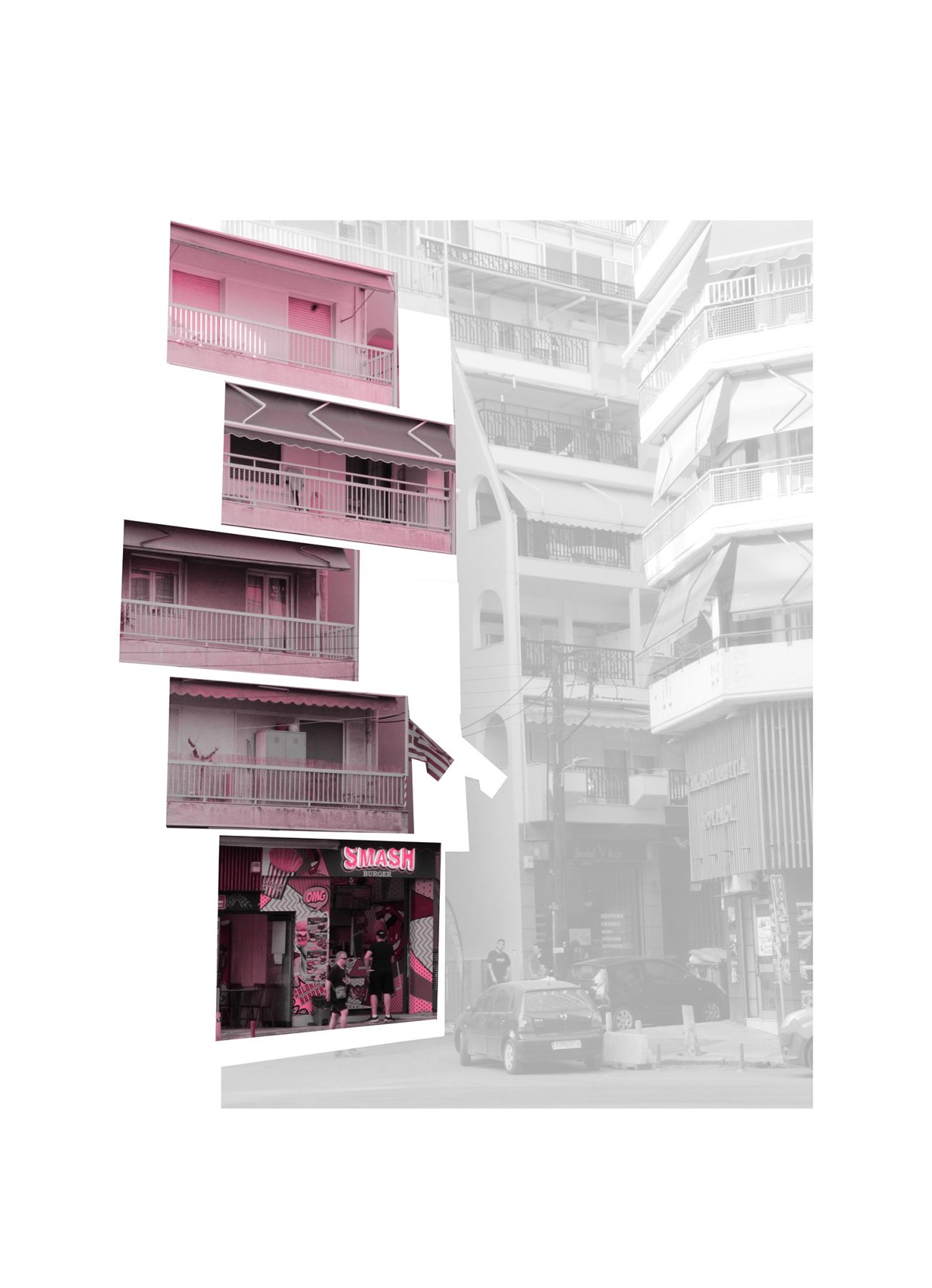
These three strata are examined to reveal how they guide the gaze into a kind of zenithal crescendo: from the material traces of the past below ground, to the upward tendencies of the city’s natural relief, and finally, to the full vertical expression embodied in the typology of polykatoikia.
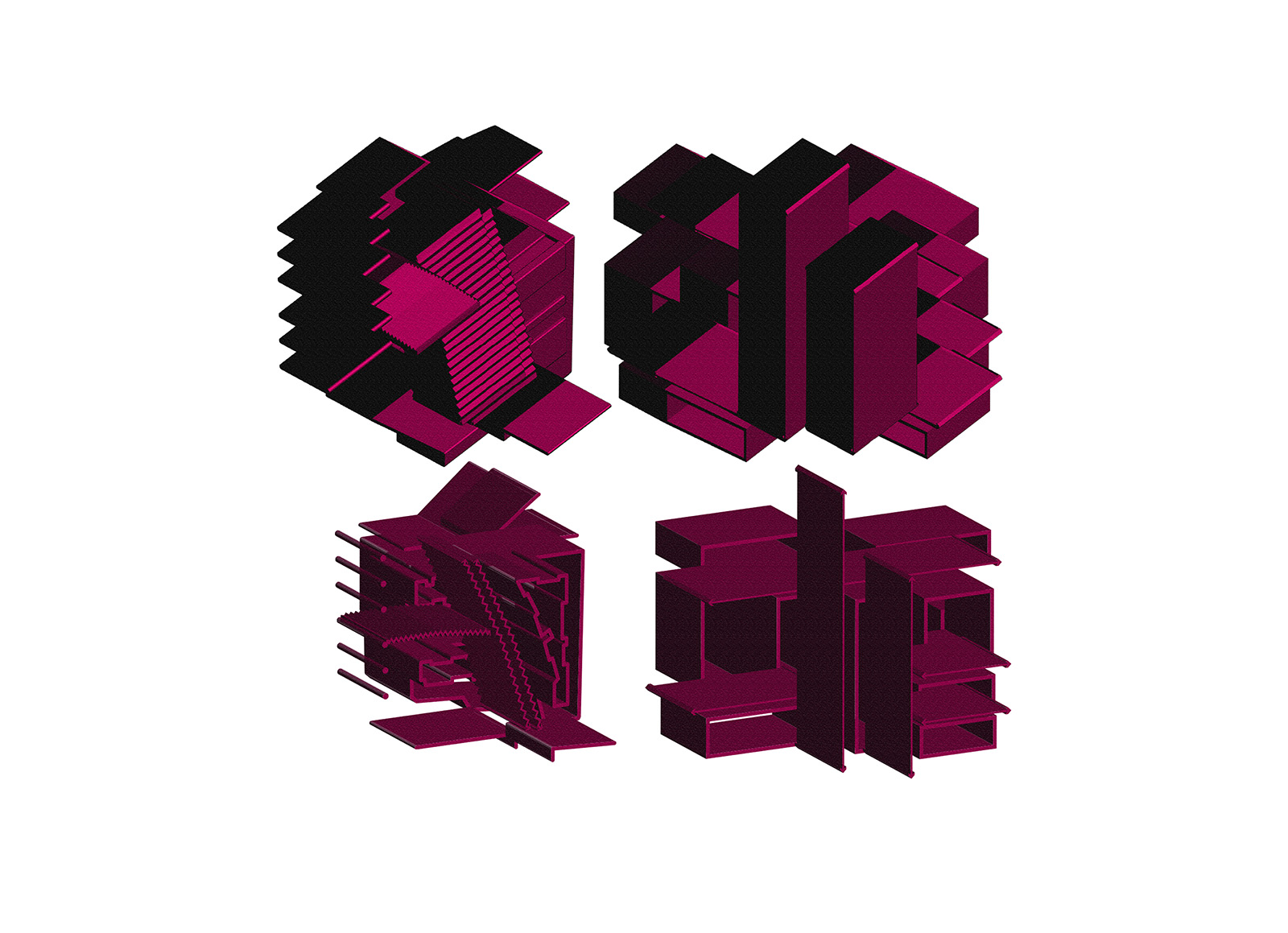
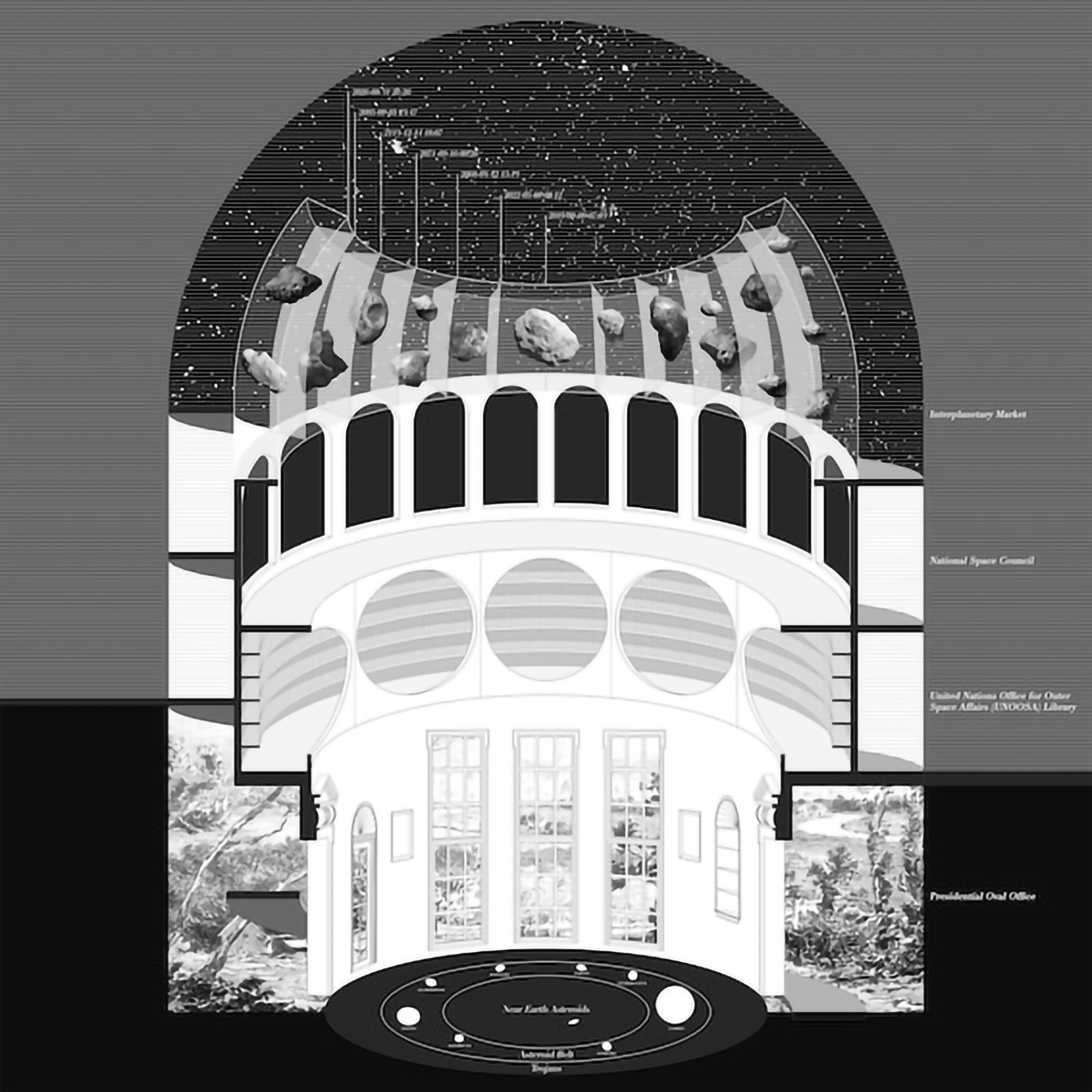
To visualize this idea, aspects of all three layers were intertwined into a spatial construct born of collective memory and imagination, functioning as an urban capriccio that reawakens the city’s memory. This construction reads the urban landscape as a palimpsest, not only of space, but of experience, where past and present coexist almost equally.
Here, representation becomes a way of transcending the limits of material space, allowing for the coexistence and activation of different temporal layers.
Moreover, through the lens of the Third Gaze, the city unfolds into the following typologies:
- The City as Topography
- The City as Stratigraphy
- The City as an Optical Labyrinth
- The Folded City
- The City as a Stage
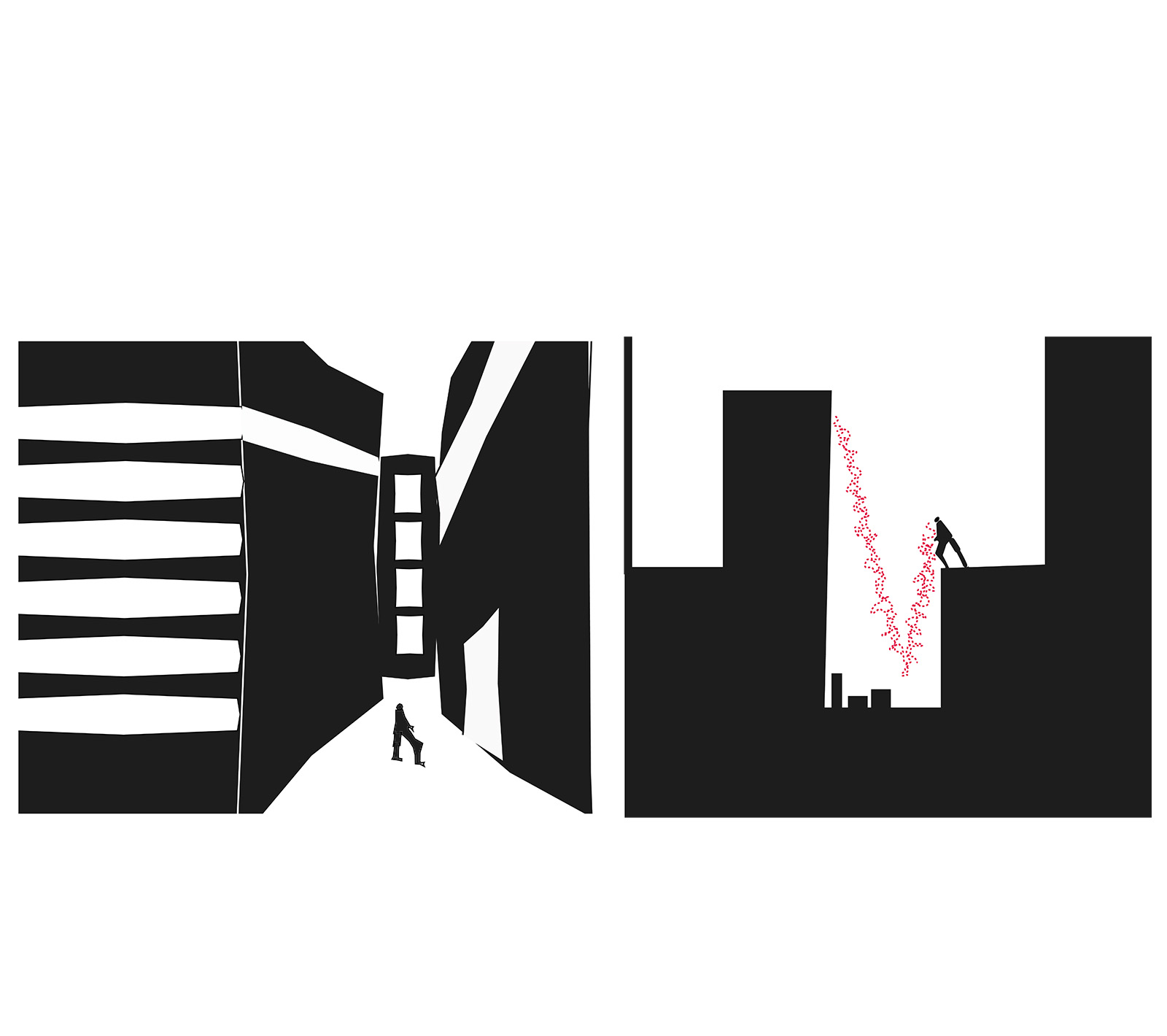
The Third Gaze does not claim to introduce an entirely new mode of perception. Rather, it proposes a reflective re-reading of the city’s vertical inscription, offering an alternative interpretative lens.
It is an experiential way of seeing that engages with the city beyond conventional perspectives∙ a different way of making sense of the urban fabric.
Facts & Credits
Project title Vertical Gazing. Unseen Presences in Thessaloniki’s Cityscape
Typology Research Thesis
Academic semester June 2025
Student Dimitra Argyropoulou
Supervisor Dimitris Gourdoukis
Institution Aristotle University of Thessaloniki
When the temporary becomes permanent…: Redevelopment of the refugee settlement «Agioi Anargyroi I» in Larnaca
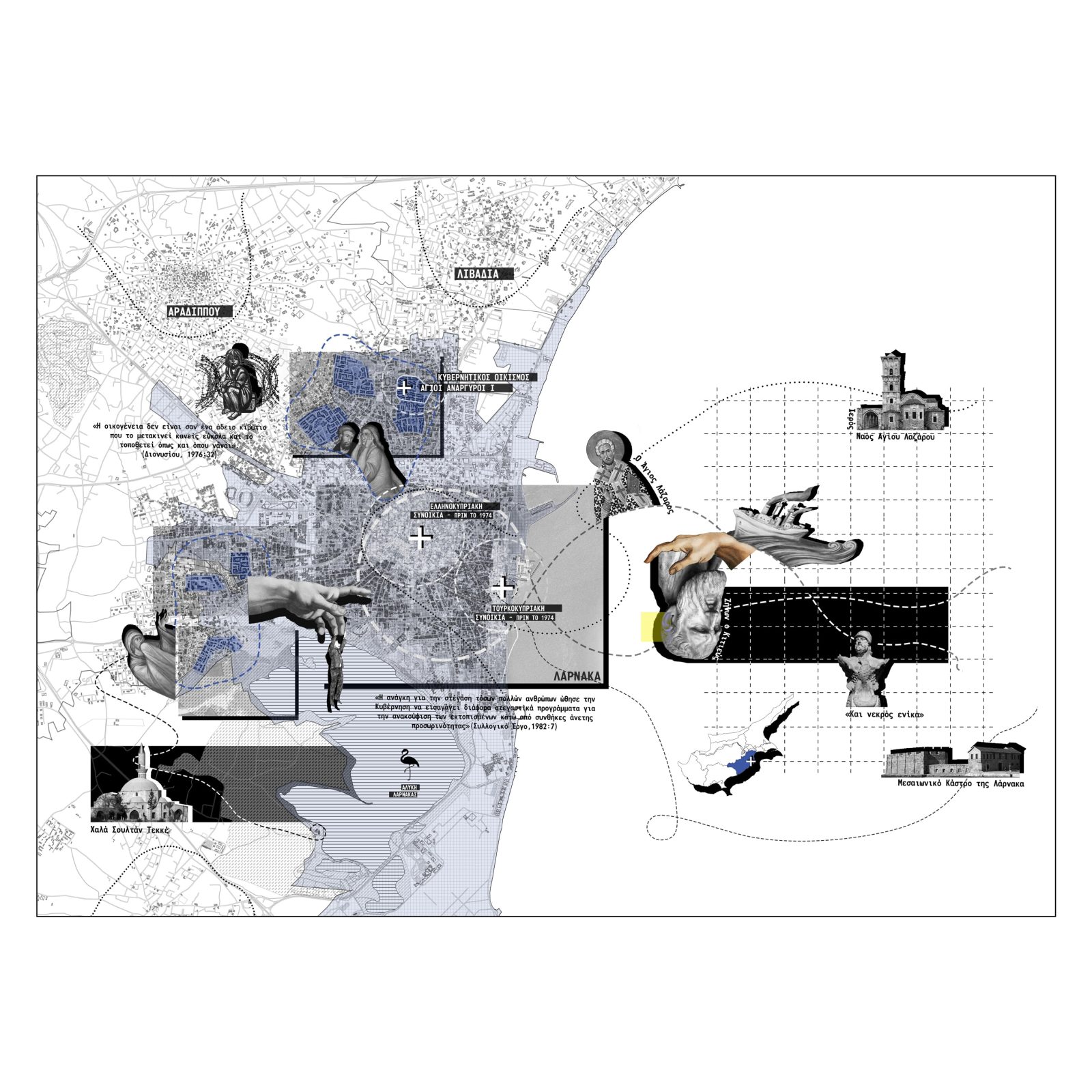
Since the 1960s, the Republic of Cyprus has faced significant housing challenges, primarily due to the economic difficulties of a large portion of its population. Following the Turkish invasion of 1974, the situation worsened dramatically as thousands of refugees were displaced from their homes. The Department of Town Planning and Housing (DTPH) undertook the creation of refugee settlements, initially designed as temporary housing solutions for the displaced, with the hope that resolving the Cyprus problem would allow their return to their ancestral homes.
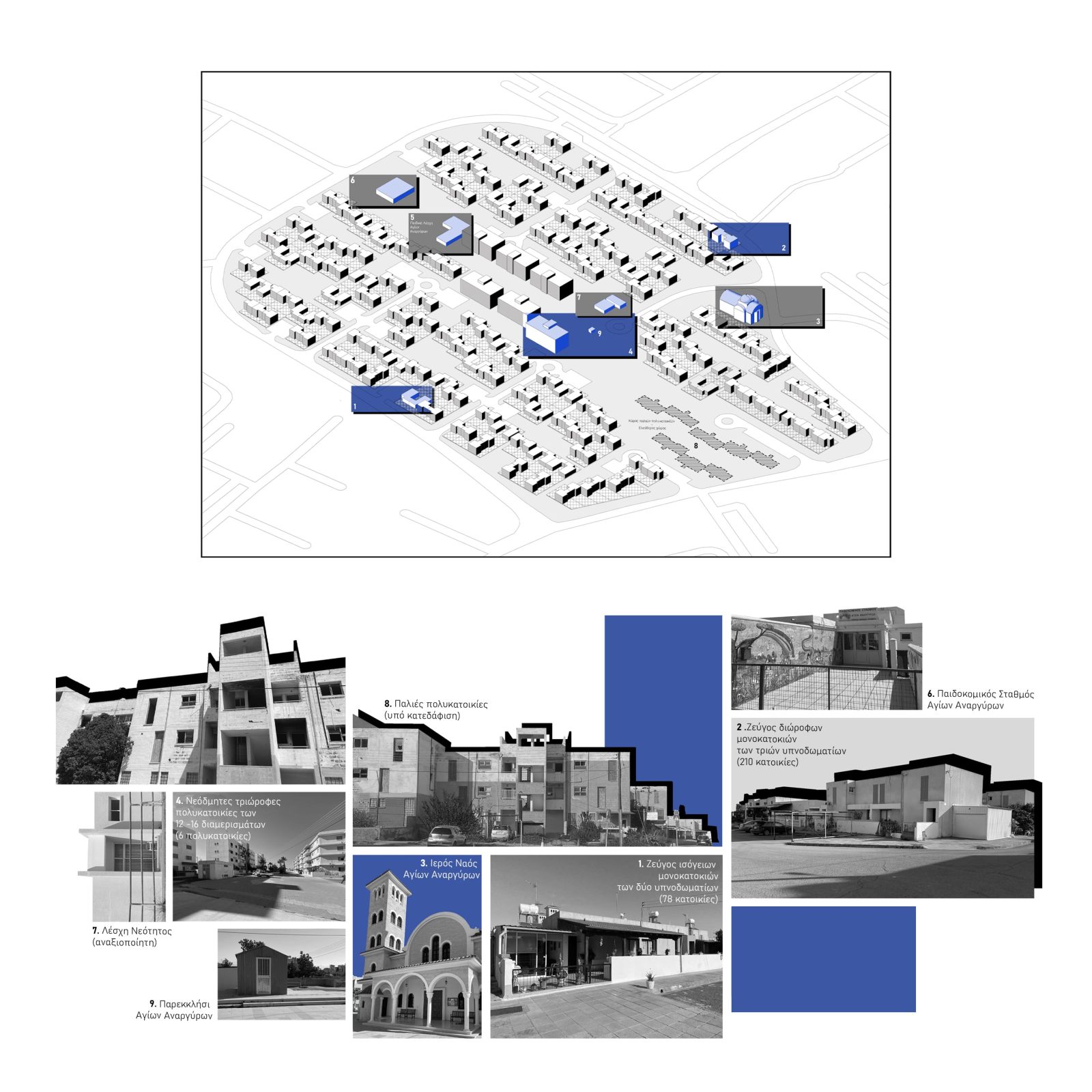
The settlement of “Ayioi Anargyroi I” in Larnaca serves as a characteristic example of this initiative. However, over time, the area has experienced significant decline. Signs of neglect, social isolation, and criminal activity are evident, while the gradual ghettoization, combined withνa lack of affordable housing for low-income families, highlights the urgent need for redevelopment.
This study focuses on the potential revitalization of the settlement, aiming to address its social and spatial challenges while promoting its “urban weaving” into the broader urban fabric of Larnaca.
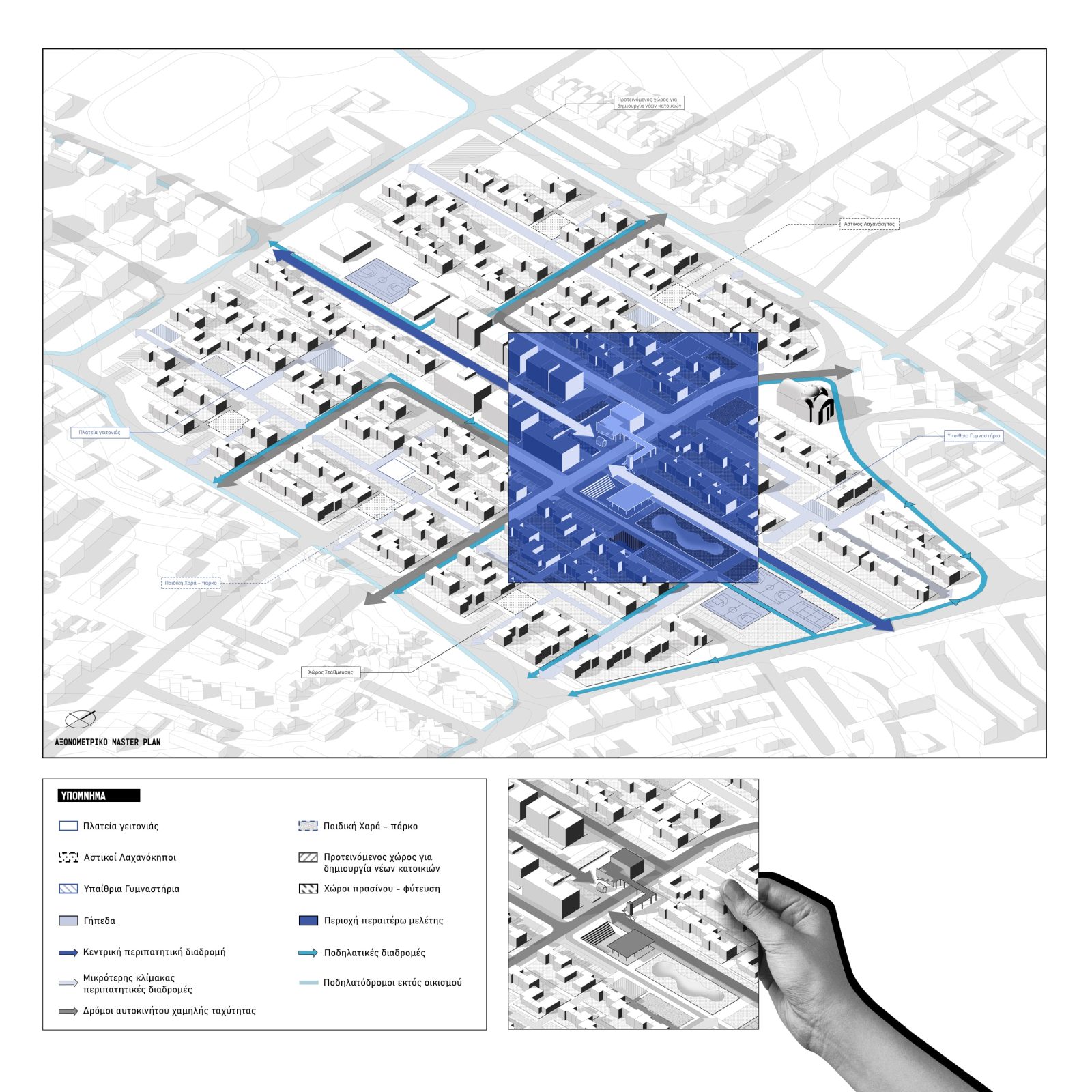
The approach involves redevelopment on three levels: the settlement, the neighborhood, and the individual dwelling. On the settlement level, the proposals include the creation of functional public spaces and infrastructure improvements. At the neighborhood level, the emphasis is on fostering social interaction and strengthening community bonds. Finally, at the dwelling level, improving living conditions is a key priority.
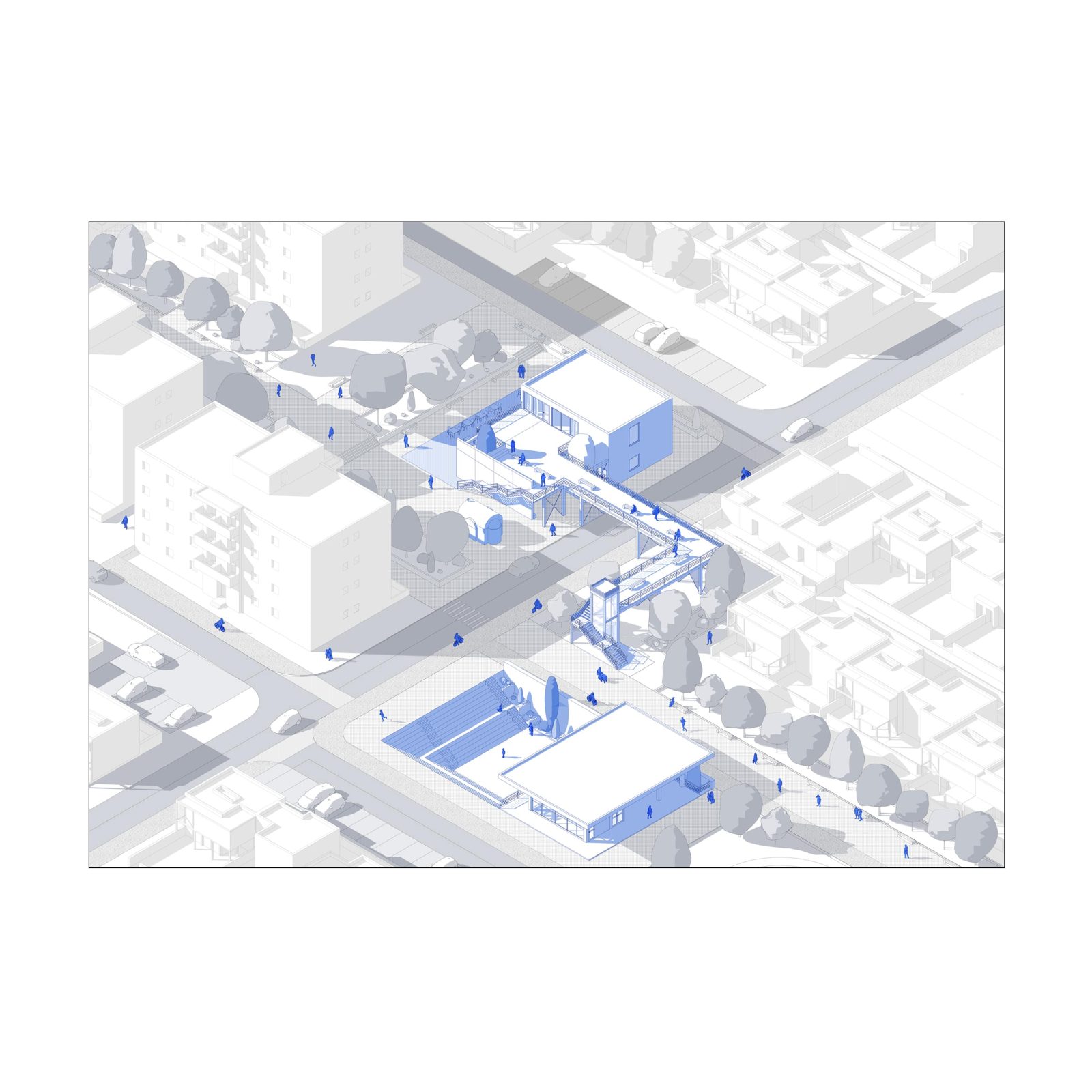
The ultimate goal is to encourage the return of the younger generation of refugees, attract new residents, and strengthen social cohesion. Through this multi-level redevelopment, “Ayioi Anargyroi I” has the potential to become a model for sustainable urban development, addressing housing challenges while contributing to the overall growth and vitality of Larnaca.
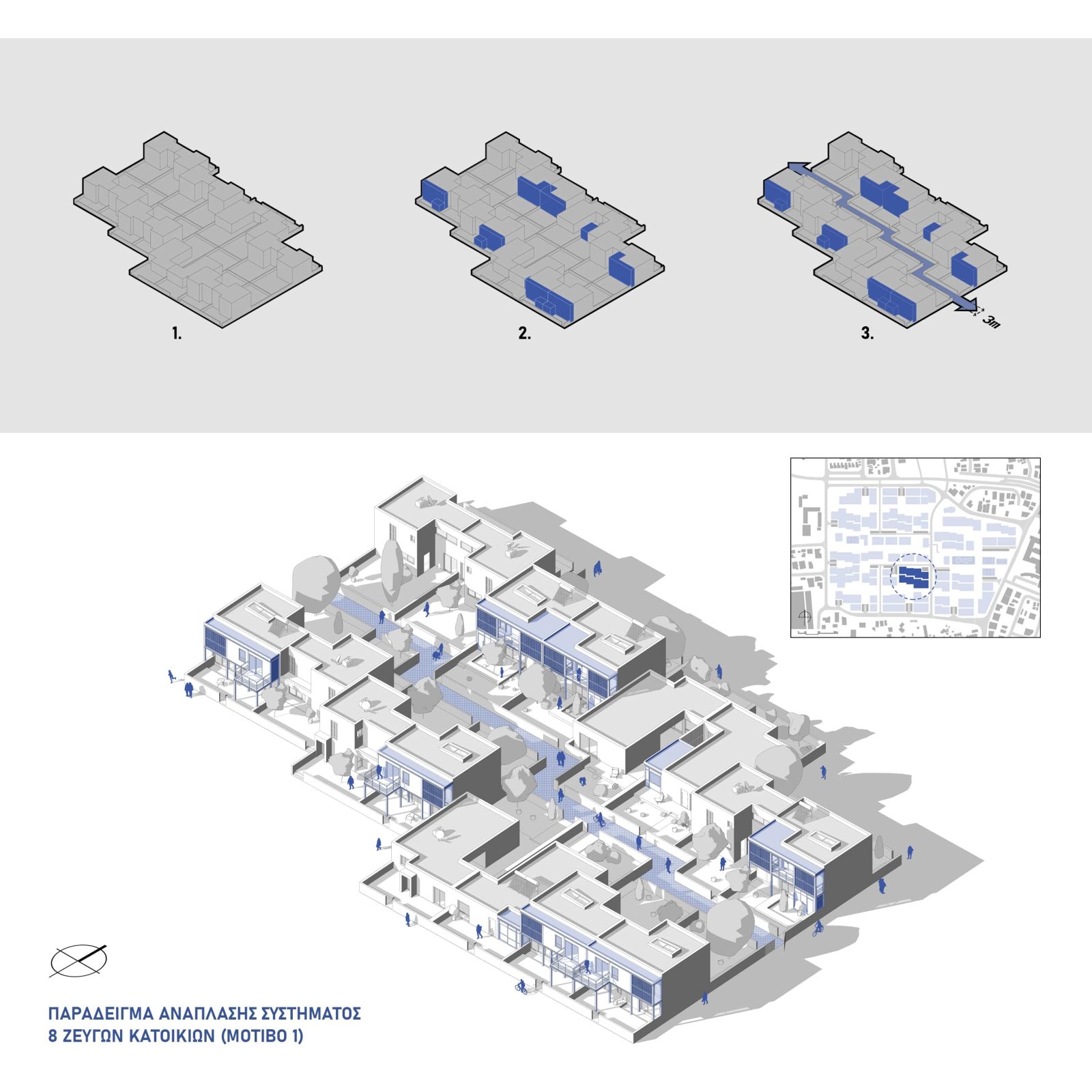
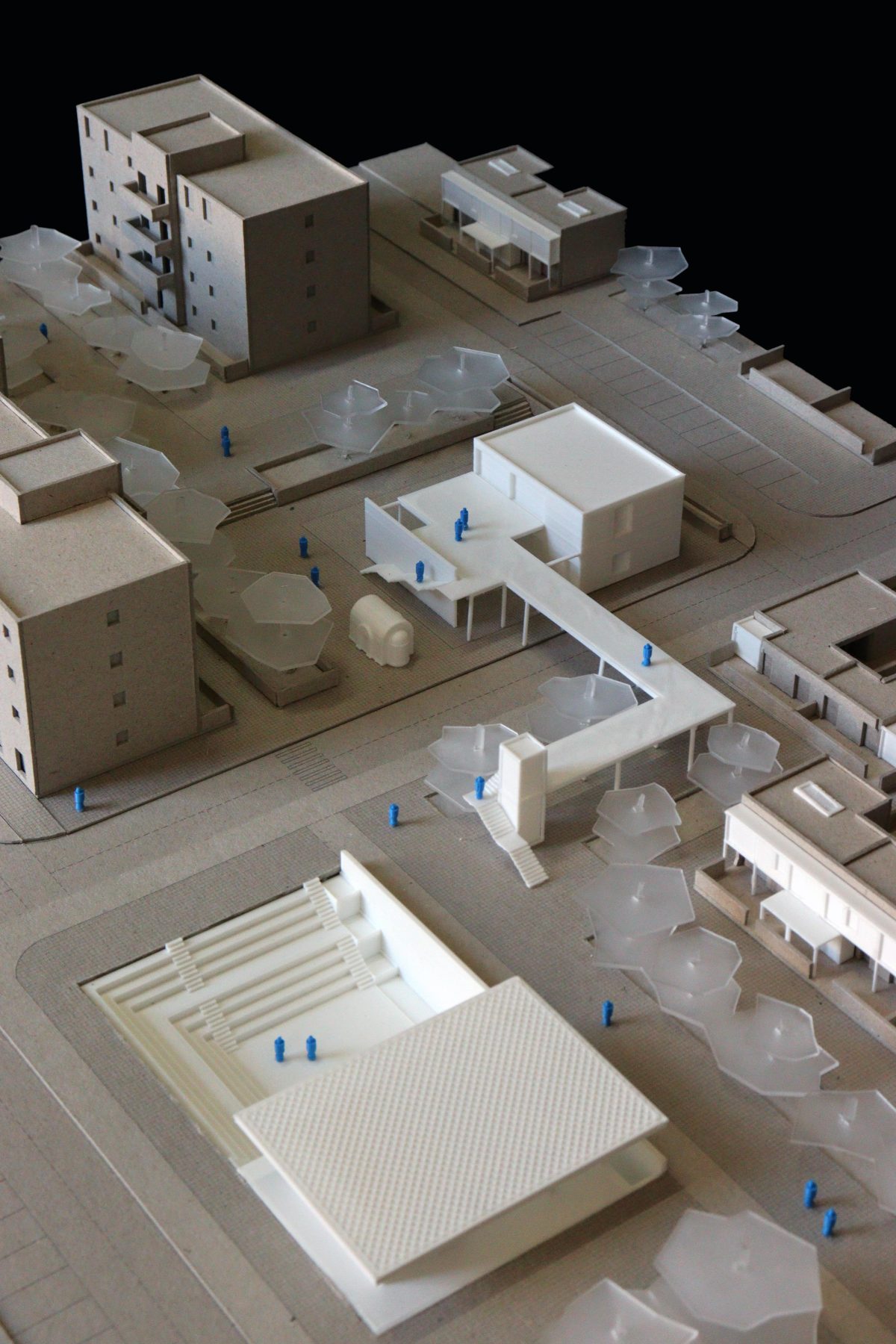
This thesis highlights an important topic, as it proposes solutions for the regeneration of refugee settlements in Cyprus, something that has not been attempted before. This process required extensive archival research, in-depth study, and several visits to the settlements in order to fully understand the challenges and potential of these areas. It is hoped that this work will serve as a catalyst for further research on the subject, with the aim of leading to substantial changes thatwill address long-standing social and spatial issues, promoting sustainable development in these historically significant areas.
Facts & Credits
Project title When the temporary becomes permanent…: Redevelopment of the refugee settlement «Agioi Anargyroi I» in Larnaca
Typology Diploma Thesis
Academic semester September 2024
Student Pavlos Christodoulou
Supervisor Dimitra Nikolaou
Supervision for the archival research Kostas Tsiambaos
Institution School of Architecture NTUA
Photographs of the model Εleana Kitsiou
Domestic scenes in Athens – Activating the void in the urban landscape of Exarcheia
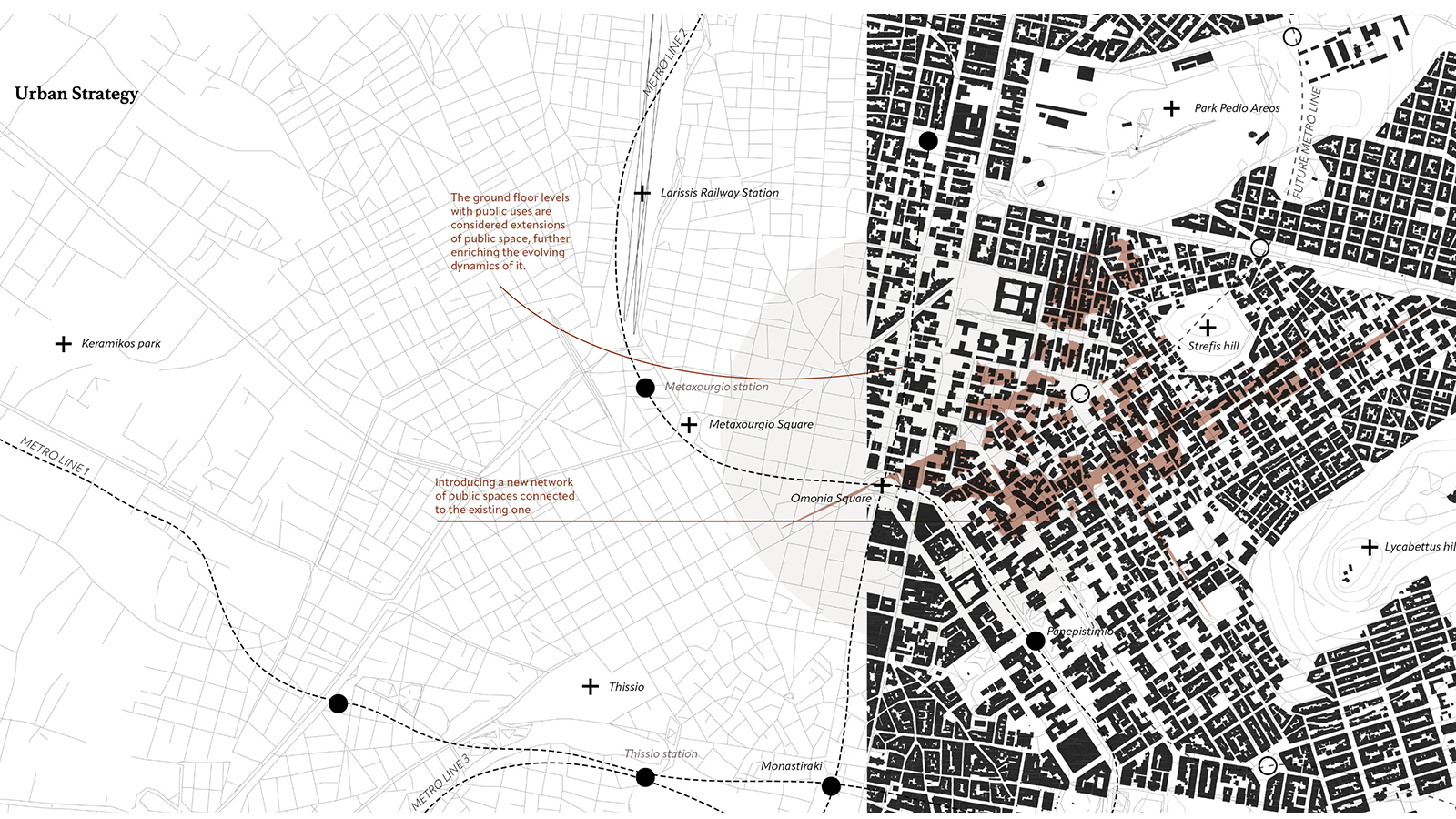
Ioanna Platania in her Master’s thesis entitled “Domestic scenes in Athens – Activating the void in the urban landscape of Exarcheia” perceives the lack of public spaces in the city of Athens as a sign of an urban design that prioritizes individualism over collectivism. The project develops a strategy of ‘reshaping’ the city’s urban environment, focusing on incorporating domesticity into unused urban spaces. This spatial approach tends to blur the boundaries between private and public spaces. This project thoroughly examines the urban landscape of Athens and proposes a new strategy to address the issue of the lack of public spaces in the densely packed city. The scarcity of public spaces in Athens is a critical problem that stems from an urban design that prioritises individualism over collectivism.
As a result, the city has a fragmented urban environment with no cohesive public spaces or regulations. It is crucial to implement effective planning strategies to reshape the city’s urban environment and establish a balance between personal interests and communal needs.
This study aims to uncover Athens’ public spaces’ potential for revitalisation and infusion of new dimensions by examining the cityscape, including the interior part of the blocks and ground- level activities.
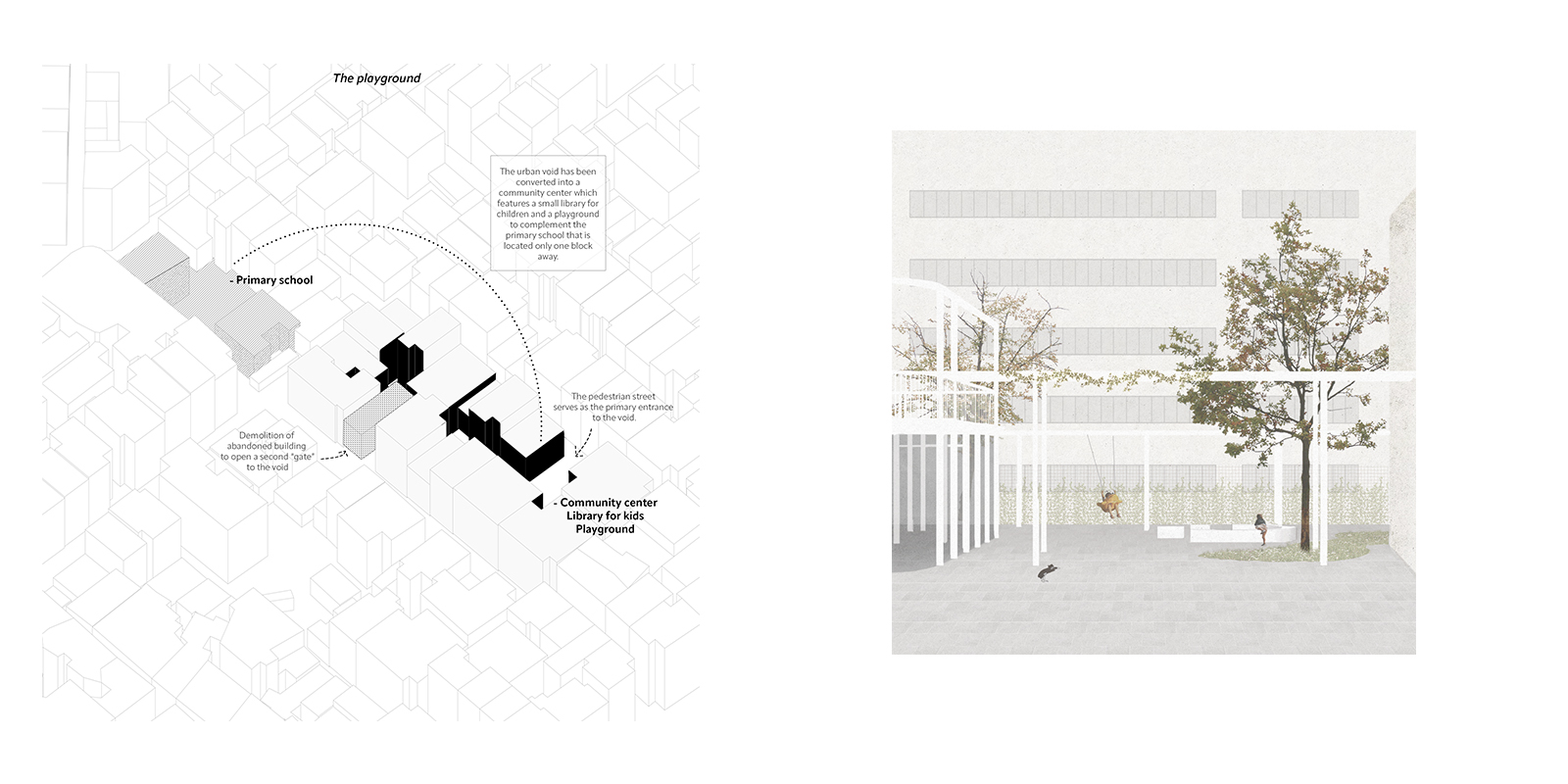
The design approach focuses on incorporating domesticity into Athens’ urban environment. The aim is to transform unused urban spaces into domestic scenes to revitalise and activate these areas throughout the city. These neglected spaces can be transformed into popular hubs and host new activities that integrate the idea of domesticity in the urban landscape. The main strategy is to create a network of domestic exteriors within the blocks that are integrated into the existing network of public spaces.
By integrating elements and qualities of domestic environments, these neglected areas can be filled with a sense of familiarity, comfort, and human scale, creating intimate settings where residents can connect and interact.
Drawing inspiration from the world of theatre, these domestic scenes become fascinating microcosms within the larger urban fabric narrative.
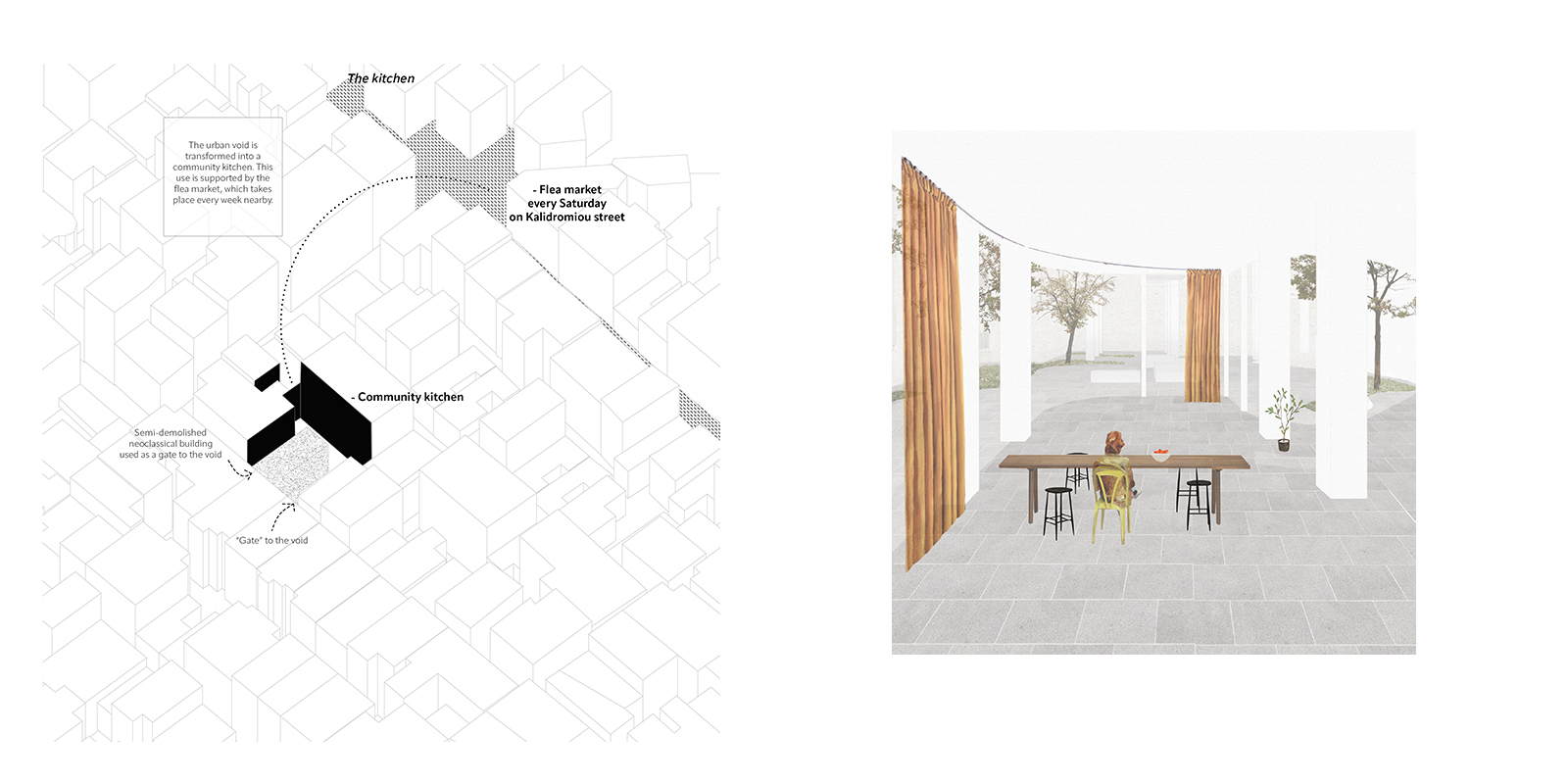
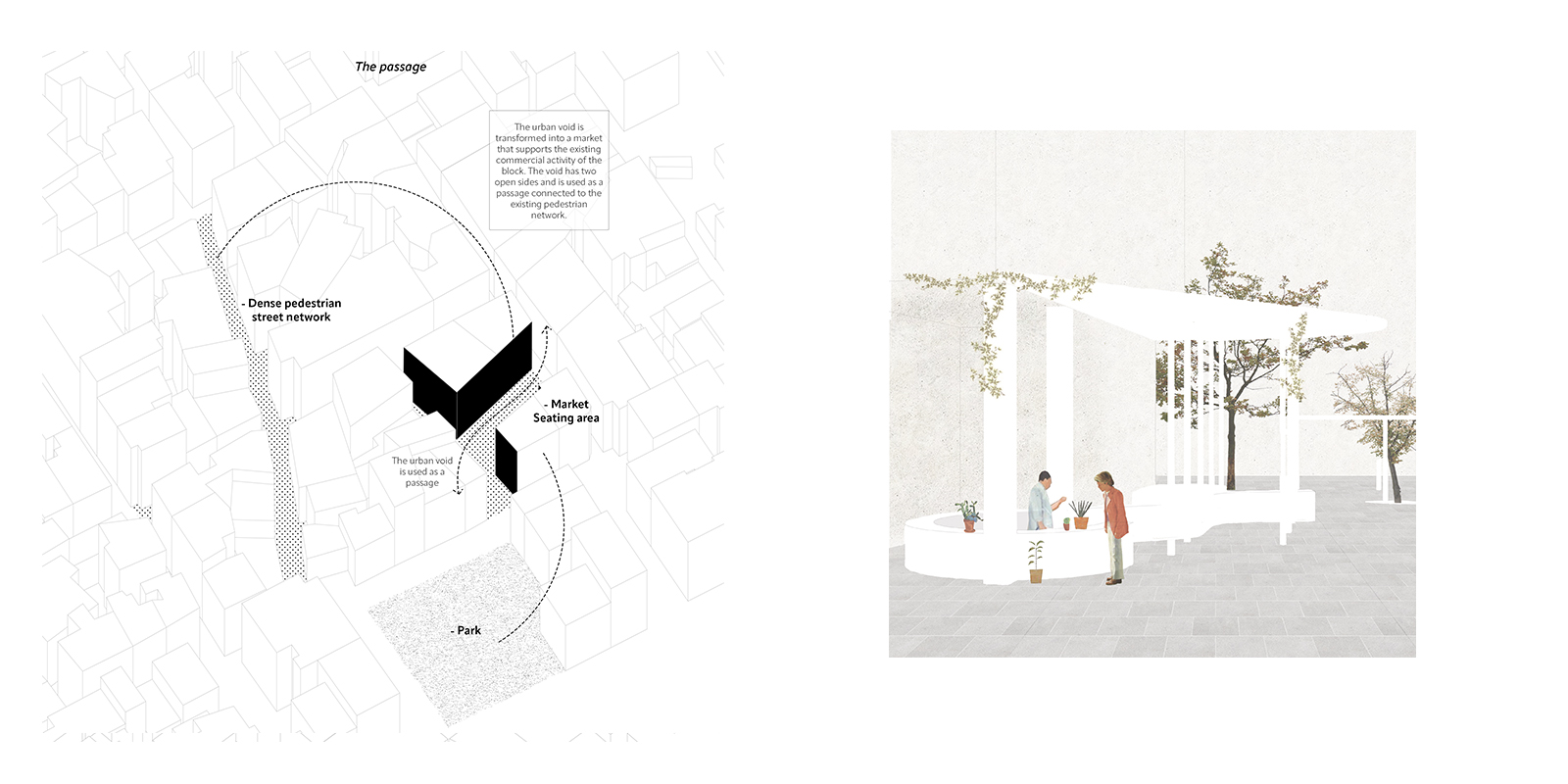
The case studies are three blocks in the urban context of Exarheia neighborhood, The human scale proportions of the voids and the existing sting character of these spaces transform this space into a scene created by the residents. Elements such as light, shadow, materials and vegetation further enrich these scenes, which now have a domestic-like use, such as a living room, a kitchen and a playroom.
The transformation into a community centre and a playground mimics the playroom of a domestic setting. The kitchen is a more functional area in a domestic setting that serves as a space for meal preparations, food storage and culinary experiences. The “living room”, which is one of the most important spaces in a house, can be integrated by creating a flea market or a seating area.
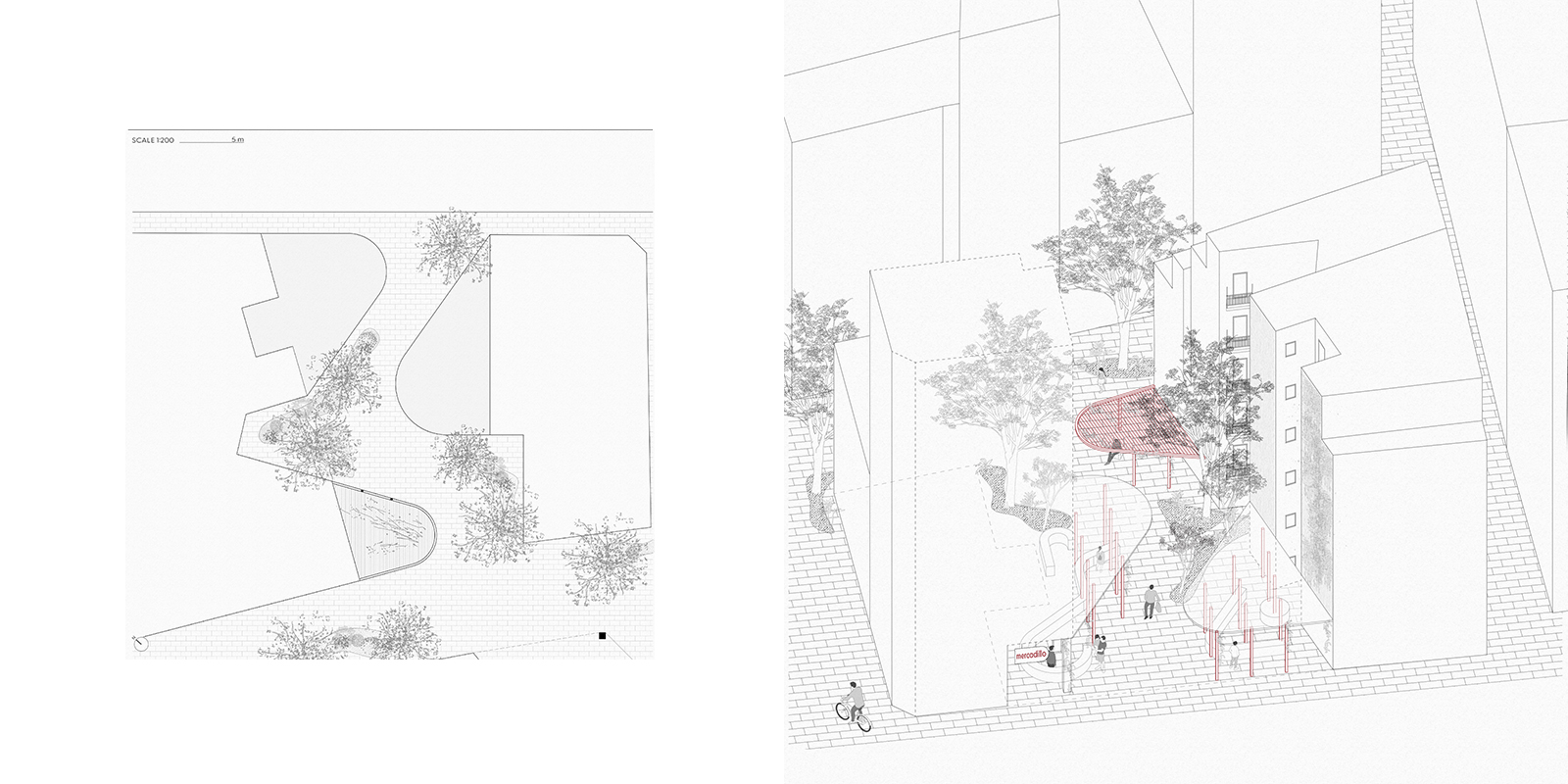
These spaces can be customised to the needs of the residents, by using steel structures that can be transformed into elements of different scales. This approach can greatly improve the daily life of residents and enrich the public space with different qualities, ultimately contributing to a more vibrant and cohesive city, while this urban technique can be widely used to blur the boundaries between private and public spaces, creating more human-centred public areas throughout the city.
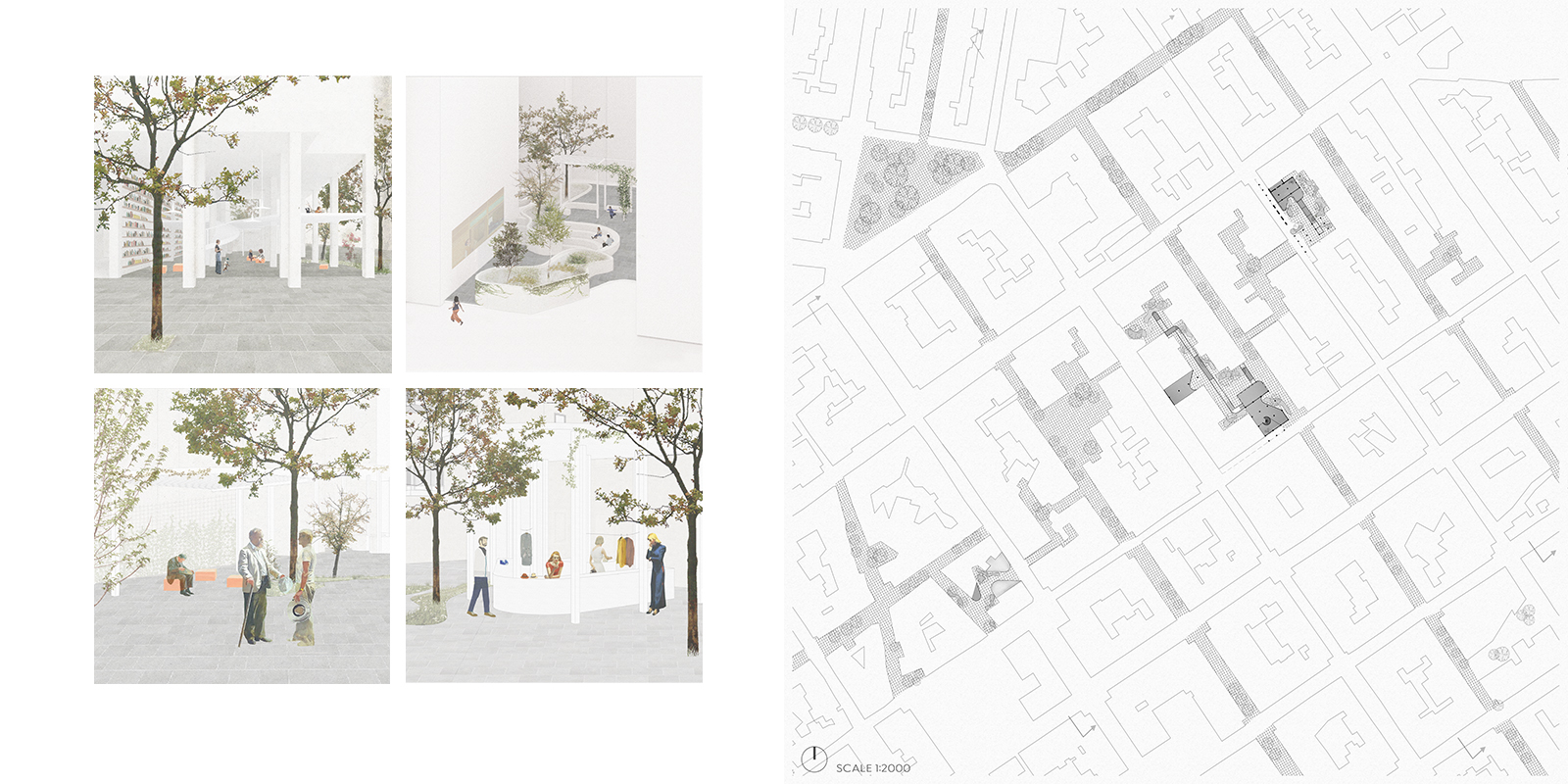
The proposed urban strategy aims to balance private and public, resulting in a cityscape that embraces its diverse architectural heritage, while also promoting communal vitality. Through this research, I hope to establish a comprehensive and academically sound framework for revitalising Athens’ urban landscape, redefining its public spaces, and ensuring a sustainable future for the city.
Read the full thesis article here!
Facts & Credits
Project title Domestic scenes in Athens – Activationg the void in the urban landscape of Exarcheia
Type Master’s thesis project
Student Ioanna Platania
Supervisor Xavier Llobet Ribeiro, Eduardo Bru Bistuer, Ignacio López Alonso
Presentation date September 2023
University Universitat Politècnica de Catalunya, Barcelona (UPC)
Text by the author
Design proposal | a network of pocket parks (neighborhood of Gouva, Athens – Greece)
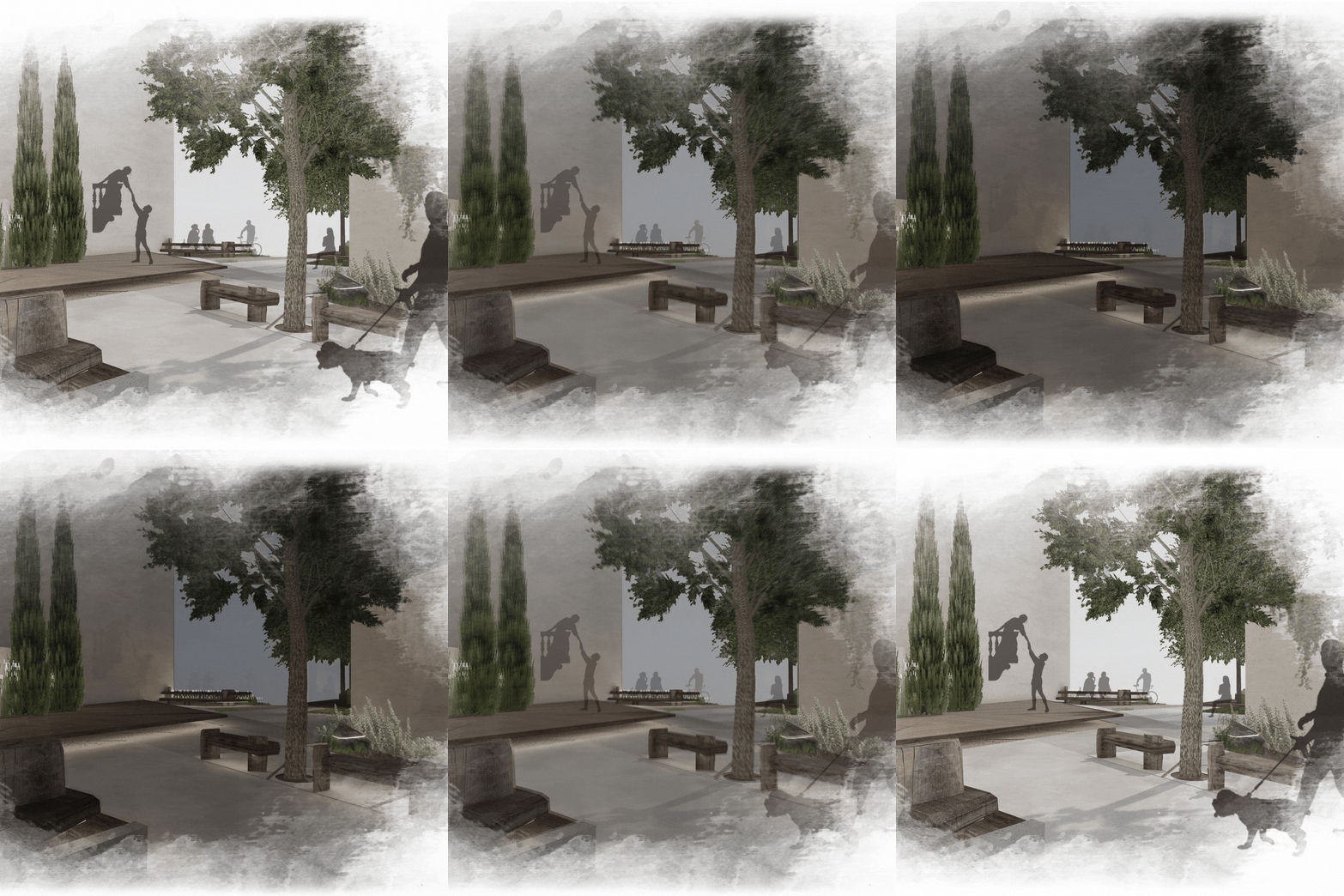
This diploma thesis by Eirini Papadatou is a typological study and indexation of existing small-scale parks and corresponding urban voids in Athens, specifically in the Gouva neighborhood. Its objective is the creation of a design manual for pocket parks in this neighborhood, intended for future application.
The aim of the project is to transform urban voids into everyday leisure spaces for residents — small oases of green in the dense urban environment.
Study Area – Gouva Neighborhood
27 urban voids were identified for the study, including parking lots, small parks, abandoned lots, and empty plots from demolished buildings. The characteristics of each space were recorded and categorized according to their typology. Findings indicate that frequent pedestrian routes significantly increase with the addition of pocket parks, enhancing neighborhood mobility. Over time, this can foster a safer environment, a more vibrant community, and increased social interaction among residents. After studying the entire area and its urban voids, three sites were selected for the proposed design of pocket parks that would function as a green network across Gouva.
Urban Design Manual
An urban design manual was developed focusing on innovative design strategies adapted to the features of each park (e.g., entrances, acoustics, visual qualities). It includes guidelines for creating sensory-rich spaces of disconnection using elements such as water features, green walls, selected planting, and artistic interventions. The approach is based on 17 design parameters that ensure coherence across the park network and enhance the neighborhood’s sensory experience. The unified design language fosters a cohesive urban ecosystem that supports movement, use, and environmental benefits, such as:
- Improved air quality
- Reduction of heat islands
- Increased biodiversity
- Promotion of physical activity and social cohesion
The manual serves as a flexible guide for designing parks within this network. Where exact instructions are not provided, designers are encouraged to combine suggested elements or apply their own judgment.
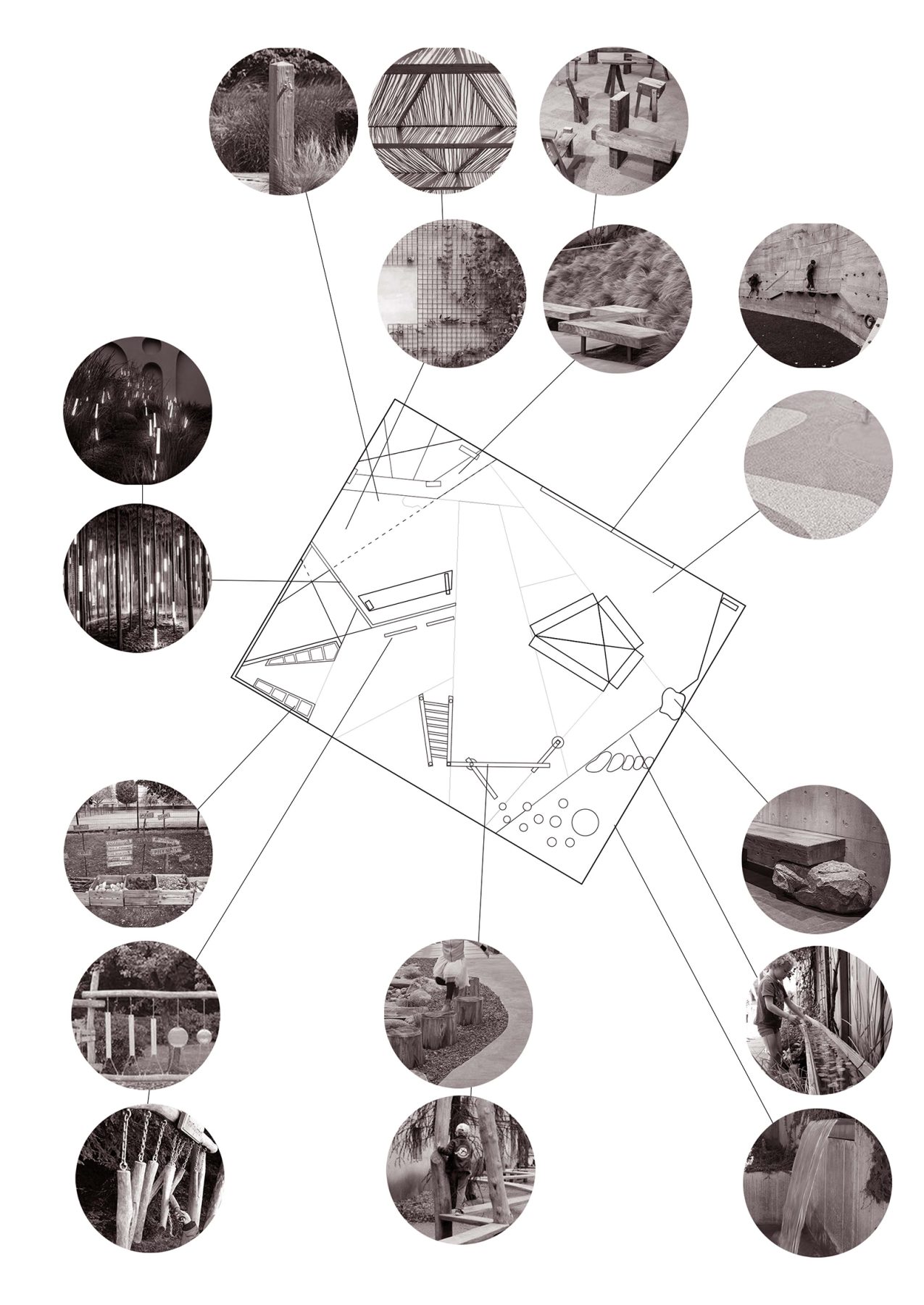
Layout desgin methodology
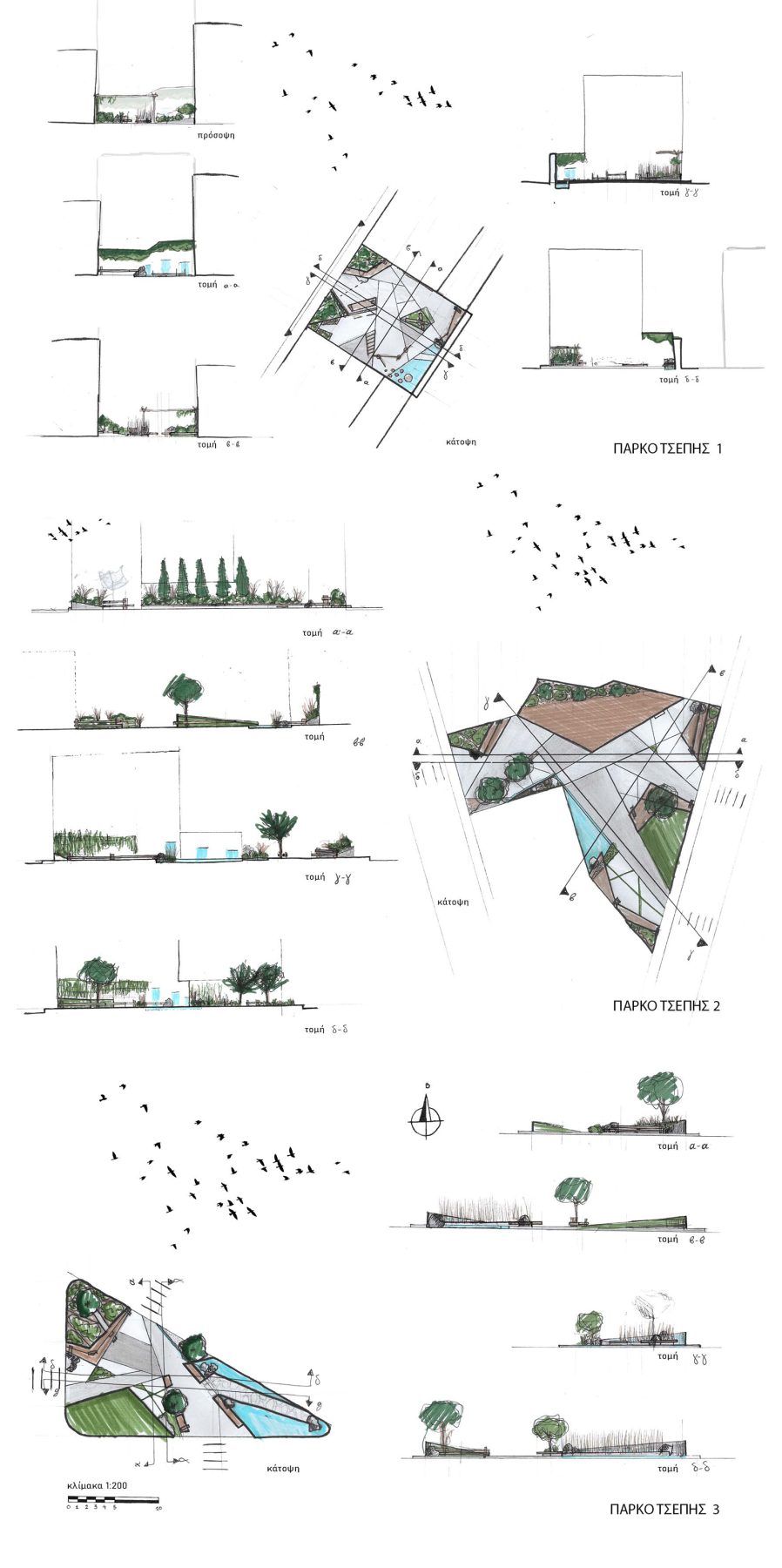
A methodology for site selection and positioning of features was established. Based on the manual, user needs, and the design methodology, layout proposals were developed for the three selected parks to align with the manual’s goals.
Concept: The Marsh
The concept is inspired by the belief that Gouva was once a marshland, which has since disappeared. This historical reference forms the conceptual basis of the design — to symbolically revive this lost identity through thematic pocket parks network with ecological and cultural significance.
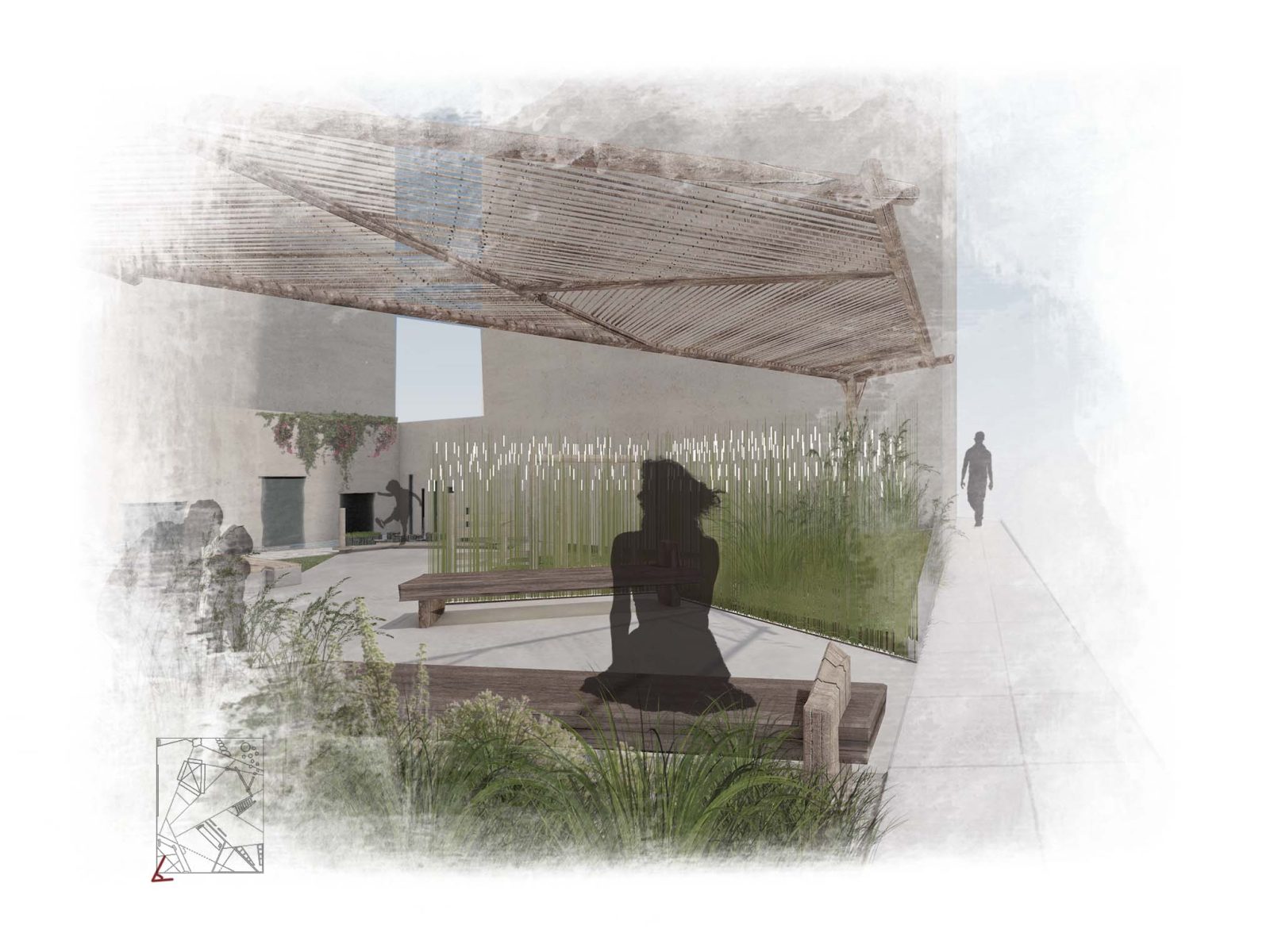
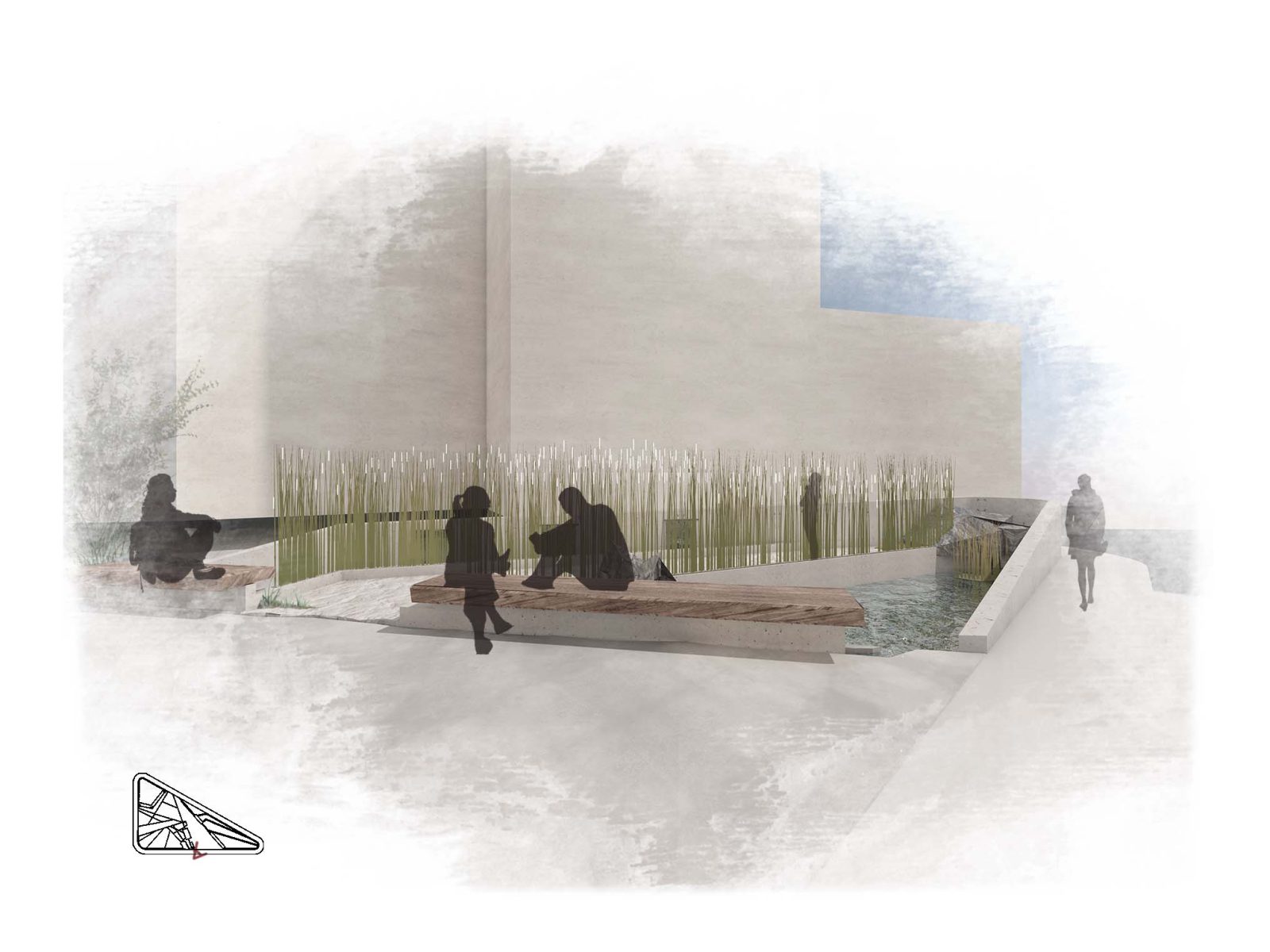
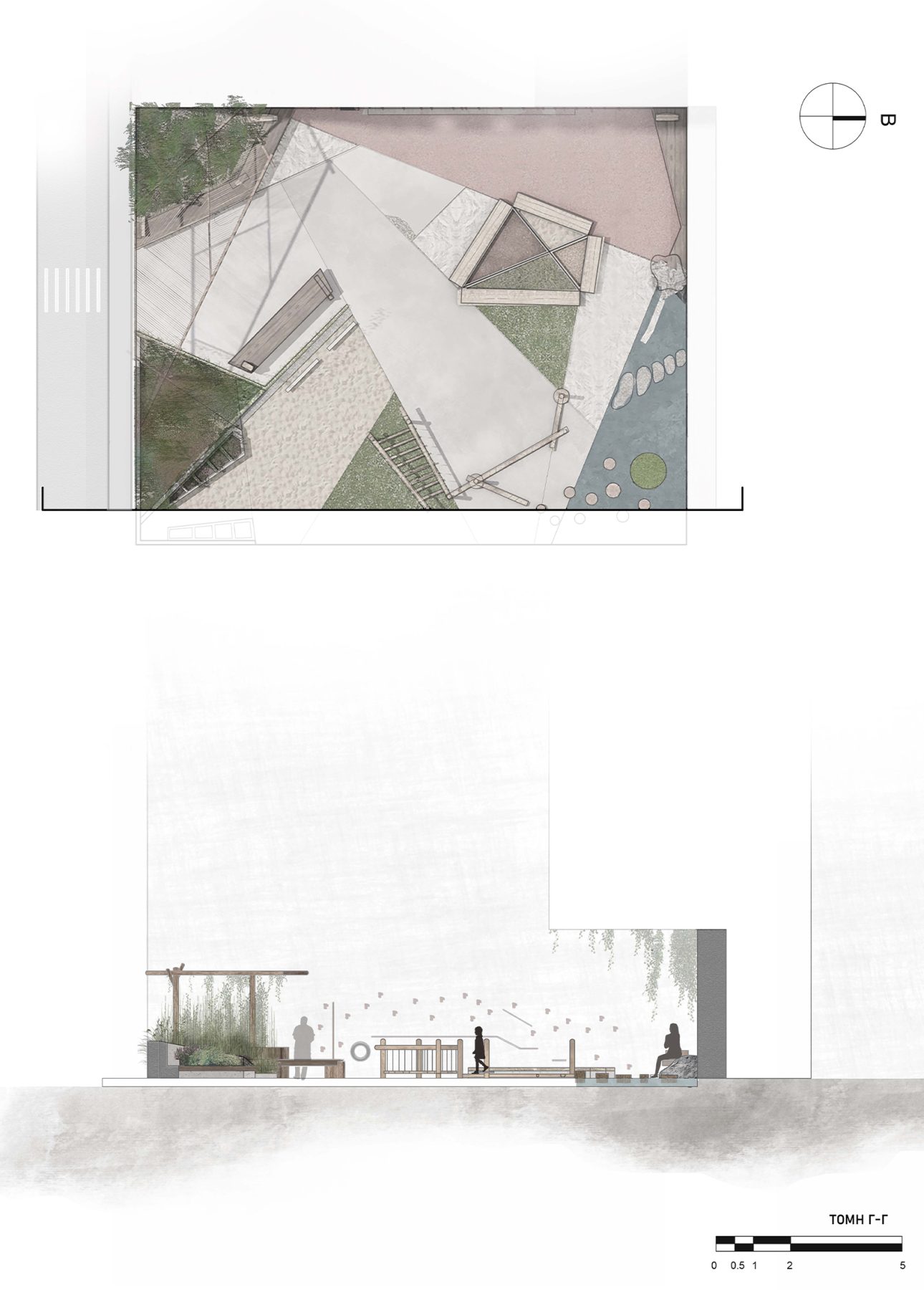
The marsh theme informs the spatial qualities and design language: verticality, fluidity, unity, and reflection. Using focal elements tied to this concept and the design methodology, the parks gain a recognizable identity. Passersby can instantly perceive them as part of a unified network. Diagrams of uses for the 3 pocket parks following the design manual and the users’ needs.
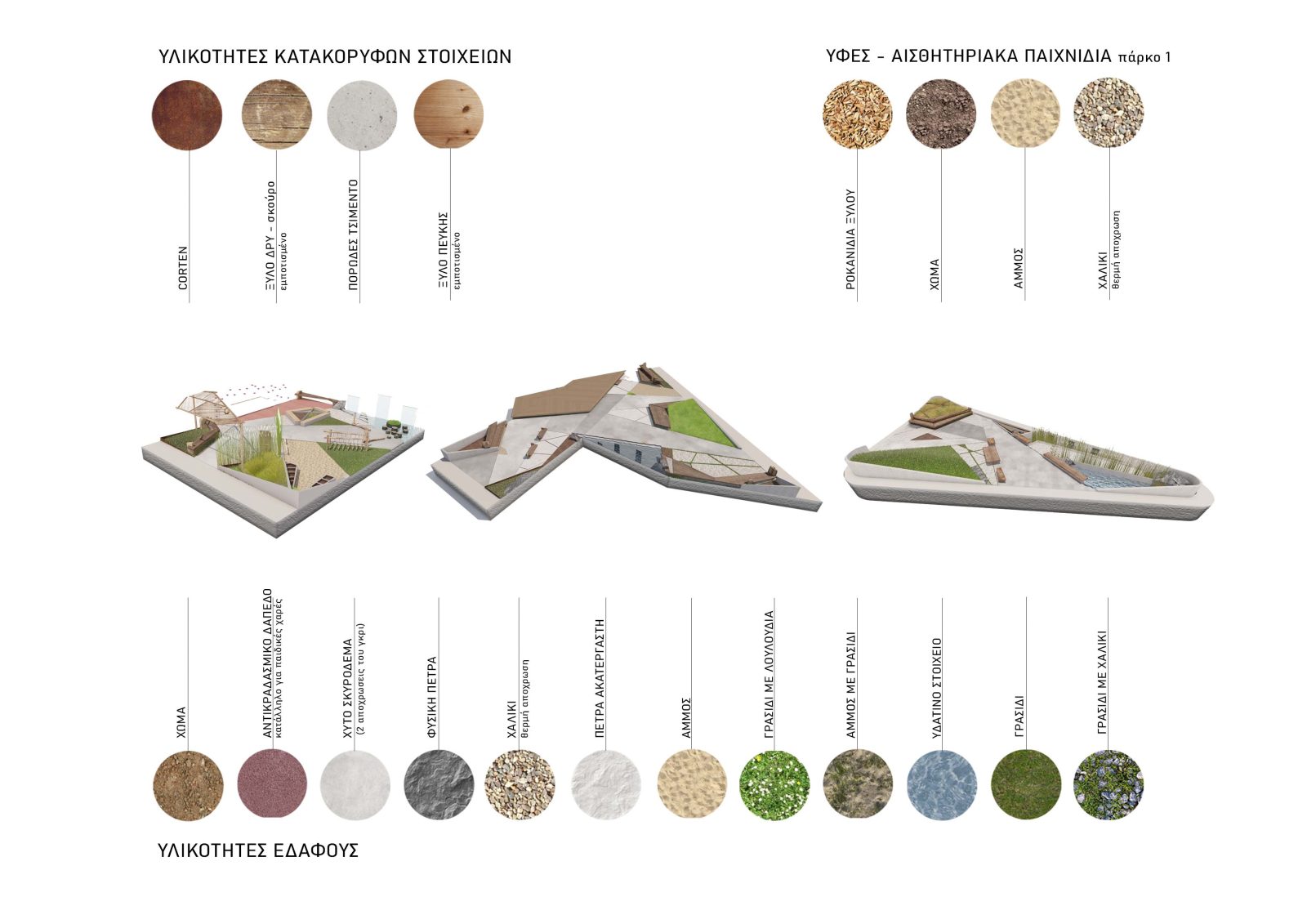 Each park was assigned functional programs based on user needs and site-specific observations. These uses are always defined with the users in mind and positioned accordingly. The initial layout for Pocket Park 1 is shown as an example.
Facts & Credits
Project title Design proposal | a network of pocket parks (neighborhood of Gouva, Athens – Greece)
Typology Diploma thesis
Academic semester February 2024
Student Eirini Papadatou
Supervisor Constantine Bouras
Institution Department of Interior Architecture, University of West Attica